•  
China Compound Eye Project (Phase I) in Chongqing

China Compound Eye Project (Phase I) in Chongqing

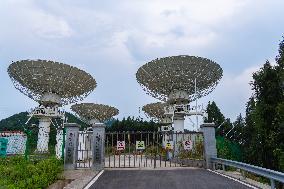
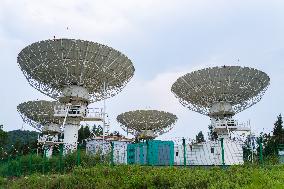
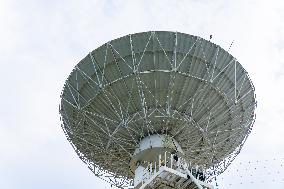
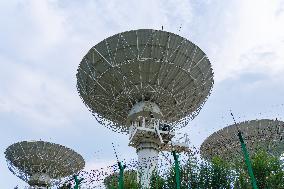
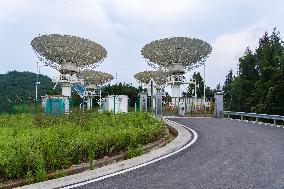
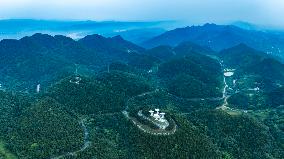
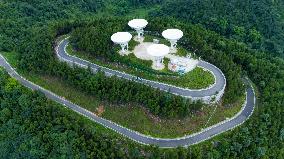
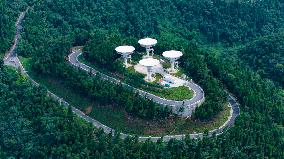
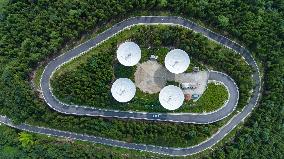
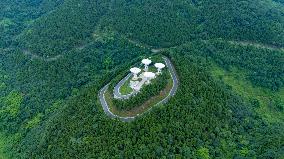
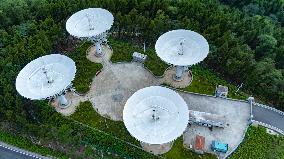
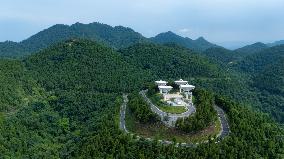
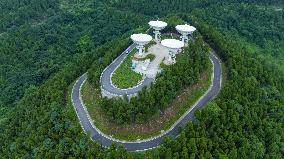
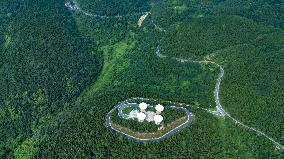
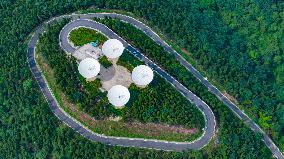
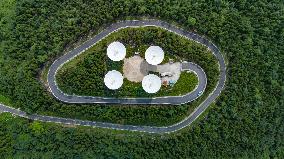
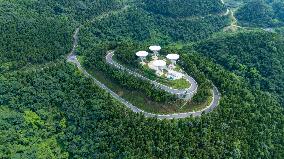
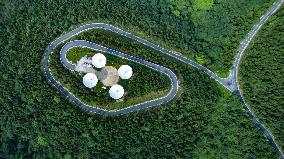
CHONGQING, CHINA - JULY 13, 2024 - China Compound Eye Project (Phase I) in Liangjiang New Area in Chongqing, China, July 13, 2024. "China Compound Eye" is a deep space detection radar planned by Chongqing Innovation Center of Beijing Institute of Technology in Chongqing, which can realize the observation of asteroids and Earth-like planets hundreds of millions of kilometers away. The "China Compound Eye" is a distributed radar consisting of 25 to 36 small antennas, each with a diameter of 25 meters, and one large antenna.

  •  
China Compound Eye Project (Phase I) in Chongqing

China Compound Eye Project (Phase I) in Chongqing

CHONGQING, CHINA - JULY 13, 2024 - China Compound Eye Project (Phase I) in Liangjiang New Area in Chongqing, China, July 13, 2024. "China Compound Eye" is a deep space detection radar planned by Chongqing Innovation Center of Beijing Institute of Technology in Chongqing, which can realize the observation of asteroids and Earth-like planets hundreds of millions of kilometers away. The "China Compound Eye" is a distributed radar consisting of 25 to 36 small antennas, each with a diameter of 25 meters, and one large antenna.

  •  
China Compound Eye Project (Phase I) in Chongqing

China Compound Eye Project (Phase I) in Chongqing

CHONGQING, CHINA - JULY 13, 2024 - China Compound Eye Project (Phase I) in Liangjiang New Area in Chongqing, China, July 13, 2024. "China Compound Eye" is a deep space detection radar planned by Chongqing Innovation Center of Beijing Institute of Technology in Chongqing, which can realize the observation of asteroids and Earth-like planets hundreds of millions of kilometers away. The "China Compound Eye" is a distributed radar consisting of 25 to 36 small antennas, each with a diameter of 25 meters, and one large antenna.

  •  
China Compound Eye Project (Phase I) in Chongqing

China Compound Eye Project (Phase I) in Chongqing

CHONGQING, CHINA - JULY 13, 2024 - China Compound Eye Project (Phase I) in Liangjiang New Area in Chongqing, China, July 13, 2024. "China Compound Eye" is a deep space detection radar planned by Chongqing Innovation Center of Beijing Institute of Technology in Chongqing, which can realize the observation of asteroids and Earth-like planets hundreds of millions of kilometers away. The "China Compound Eye" is a distributed radar consisting of 25 to 36 small antennas, each with a diameter of 25 meters, and one large antenna.

  •  
China Compound Eye Project (Phase I) in Chongqing

China Compound Eye Project (Phase I) in Chongqing

CHONGQING, CHINA - JULY 13, 2024 - China Compound Eye Project (Phase I) in Liangjiang New Area in Chongqing, China, July 13, 2024. "China Compound Eye" is a deep space detection radar planned by Chongqing Innovation Center of Beijing Institute of Technology in Chongqing, which can realize the observation of asteroids and Earth-like planets hundreds of millions of kilometers away. The "China Compound Eye" is a distributed radar consisting of 25 to 36 small antennas, each with a diameter of 25 meters, and one large antenna.

  •  
China Compound Eye Project (Phase I) in Chongqing

China Compound Eye Project (Phase I) in Chongqing

CHONGQING, CHINA - JULY 13, 2024 - China Compound Eye Project (Phase I) in Liangjiang New Area in Chongqing, China, July 13, 2024. "China Compound Eye" is a deep space detection radar planned by Chongqing Innovation Center of Beijing Institute of Technology in Chongqing, which can realize the observation of asteroids and Earth-like planets hundreds of millions of kilometers away. The "China Compound Eye" is a distributed radar consisting of 25 to 36 small antennas, each with a diameter of 25 meters, and one large antenna.

  •  
China Compound Eye Project (Phase I) in Chongqing

China Compound Eye Project (Phase I) in Chongqing

CHONGQING, CHINA - JULY 13, 2024 - China Compound Eye Project (Phase I) in Liangjiang New Area in Chongqing, China, July 13, 2024. "China Compound Eye" is a deep space detection radar planned by Chongqing Innovation Center of Beijing Institute of Technology in Chongqing, which can realize the observation of asteroids and Earth-like planets hundreds of millions of kilometers away. The "China Compound Eye" is a distributed radar consisting of 25 to 36 small antennas, each with a diameter of 25 meters, and one large antenna.

  •  
China Compound Eye Project (Phase I) in Chongqing

China Compound Eye Project (Phase I) in Chongqing

CHONGQING, CHINA - JULY 13, 2024 - China Compound Eye Project (Phase I) in Liangjiang New Area in Chongqing, China, July 13, 2024. "China Compound Eye" is a deep space detection radar planned by Chongqing Innovation Center of Beijing Institute of Technology in Chongqing, which can realize the observation of asteroids and Earth-like planets hundreds of millions of kilometers away. The "China Compound Eye" is a distributed radar consisting of 25 to 36 small antennas, each with a diameter of 25 meters, and one large antenna.

  •  
China Compound Eye Project (Phase I) in Chongqing

China Compound Eye Project (Phase I) in Chongqing

CHONGQING, CHINA - JULY 13, 2024 - China Compound Eye Project (Phase I) in Liangjiang New Area in Chongqing, China, July 13, 2024. "China Compound Eye" is a deep space detection radar planned by Chongqing Innovation Center of Beijing Institute of Technology in Chongqing, which can realize the observation of asteroids and Earth-like planets hundreds of millions of kilometers away. The "China Compound Eye" is a distributed radar consisting of 25 to 36 small antennas, each with a diameter of 25 meters, and one large antenna.

  •  
China Compound Eye Project (Phase I) in Chongqing

China Compound Eye Project (Phase I) in Chongqing

CHONGQING, CHINA - JULY 13, 2024 - China Compound Eye Project (Phase I) in Liangjiang New Area in Chongqing, China, July 13, 2024. "China Compound Eye" is a deep space detection radar planned by Chongqing Innovation Center of Beijing Institute of Technology in Chongqing, which can realize the observation of asteroids and Earth-like planets hundreds of millions of kilometers away. The "China Compound Eye" is a distributed radar consisting of 25 to 36 small antennas, each with a diameter of 25 meters, and one large antenna.

  •  
China Compound Eye Project (Phase I) in Chongqing

China Compound Eye Project (Phase I) in Chongqing

CHONGQING, CHINA - JULY 13, 2024 - China Compound Eye Project (Phase I) in Liangjiang New Area in Chongqing, China, July 13, 2024. "China Compound Eye" is a deep space detection radar planned by Chongqing Innovation Center of Beijing Institute of Technology in Chongqing, which can realize the observation of asteroids and Earth-like planets hundreds of millions of kilometers away. The "China Compound Eye" is a distributed radar consisting of 25 to 36 small antennas, each with a diameter of 25 meters, and one large antenna.

  •  
China Compound Eye Project (Phase I) in Chongqing

China Compound Eye Project (Phase I) in Chongqing

CHONGQING, CHINA - JULY 13, 2024 - China Compound Eye Project (Phase I) in Liangjiang New Area in Chongqing, China, July 13, 2024. "China Compound Eye" is a deep space detection radar planned by Chongqing Innovation Center of Beijing Institute of Technology in Chongqing, which can realize the observation of asteroids and Earth-like planets hundreds of millions of kilometers away. The "China Compound Eye" is a distributed radar consisting of 25 to 36 small antennas, each with a diameter of 25 meters, and one large antenna.

  •  
China Compound Eye Project (Phase I) in Chongqing

China Compound Eye Project (Phase I) in Chongqing

CHONGQING, CHINA - JULY 13, 2024 - China Compound Eye Project (Phase I) in Liangjiang New Area in Chongqing, China, July 13, 2024. "China Compound Eye" is a deep space detection radar planned by Chongqing Innovation Center of Beijing Institute of Technology in Chongqing, which can realize the observation of asteroids and Earth-like planets hundreds of millions of kilometers away. The "China Compound Eye" is a distributed radar consisting of 25 to 36 small antennas, each with a diameter of 25 meters, and one large antenna.

  •  
China Compound Eye Project (Phase I) in Chongqing

China Compound Eye Project (Phase I) in Chongqing

CHONGQING, CHINA - JULY 13, 2024 - China Compound Eye Project (Phase I) in Liangjiang New Area in Chongqing, China, July 13, 2024. "China Compound Eye" is a deep space detection radar planned by Chongqing Innovation Center of Beijing Institute of Technology in Chongqing, which can realize the observation of asteroids and Earth-like planets hundreds of millions of kilometers away. The "China Compound Eye" is a distributed radar consisting of 25 to 36 small antennas, each with a diameter of 25 meters, and one large antenna.

  •  
China Compound Eye Project (Phase I) in Chongqing

China Compound Eye Project (Phase I) in Chongqing

CHONGQING, CHINA - JULY 13, 2024 - China Compound Eye Project (Phase I) in Liangjiang New Area in Chongqing, China, July 13, 2024. "China Compound Eye" is a deep space detection radar planned by Chongqing Innovation Center of Beijing Institute of Technology in Chongqing, which can realize the observation of asteroids and Earth-like planets hundreds of millions of kilometers away. The "China Compound Eye" is a distributed radar consisting of 25 to 36 small antennas, each with a diameter of 25 meters, and one large antenna.

  •  
China Compound Eye Project (Phase I) in Chongqing

China Compound Eye Project (Phase I) in Chongqing

CHONGQING, CHINA - JULY 13, 2024 - China Compound Eye Project (Phase I) in Liangjiang New Area in Chongqing, China, July 13, 2024. "China Compound Eye" is a deep space detection radar planned by Chongqing Innovation Center of Beijing Institute of Technology in Chongqing, which can realize the observation of asteroids and Earth-like planets hundreds of millions of kilometers away. The "China Compound Eye" is a distributed radar consisting of 25 to 36 small antennas, each with a diameter of 25 meters, and one large antenna.

  •  
China Compound Eye Project (Phase I) in Chongqing

China Compound Eye Project (Phase I) in Chongqing

CHONGQING, CHINA - JULY 13, 2024 - China Compound Eye Project (Phase I) in Liangjiang New Area in Chongqing, China, July 13, 2024. "China Compound Eye" is a deep space detection radar planned by Chongqing Innovation Center of Beijing Institute of Technology in Chongqing, which can realize the observation of asteroids and Earth-like planets hundreds of millions of kilometers away. The "China Compound Eye" is a distributed radar consisting of 25 to 36 small antennas, each with a diameter of 25 meters, and one large antenna.

  •  
China Compound Eye Project (Phase I) in Chongqing

China Compound Eye Project (Phase I) in Chongqing

CHONGQING, CHINA - JULY 13, 2024 - China Compound Eye Project (Phase I) in Liangjiang New Area in Chongqing, China, July 13, 2024. "China Compound Eye" is a deep space detection radar planned by Chongqing Innovation Center of Beijing Institute of Technology in Chongqing, which can realize the observation of asteroids and Earth-like planets hundreds of millions of kilometers away. The "China Compound Eye" is a distributed radar consisting of 25 to 36 small antennas, each with a diameter of 25 meters, and one large antenna.

  •  
Nasa Reveals First Look At Asteroid Sample

Nasa Reveals First Look At Asteroid Sample

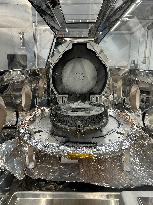
Handout photo dated September 26, 2023 shows OSIRIS REx Asteroid Sample Return lid opening at Building 31 Astromaterials Curation Facility. Nasa officials in Houston displayed images of salt-and-pepper chunks of rock and particles of dark space dust that were brought back to Earth from the asteroid, Bennu, and described initial scientific observations about the material. The mission, Osiris-Rex, concluded in September when a capsule containing the collection of asteroid samples re-entered through the Earth’s atmosphere and was recovered in the Utah desert. As technicians pried into the external container, they found that some of the material leaked out. Scientists were able to perform a quick analysis that revealed some early findings. The asteroid bits included waterlogged clay minerals. Their presence could help solve how Earth became a water planet. Asteroids similar to Bennu may have crashed into Earth, filling our oceans. Photo by Robert Markowitz/Nasa via ABACAPRESS.COM

  •  
Nasa Reveals First Look At Asteroid Sample

Nasa Reveals First Look At Asteroid Sample

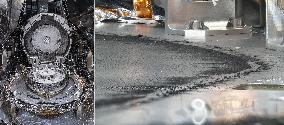
Handout photo dated October 12, 2023 shows Asteroid particles coat the base of the OSIRIS-REx science canister. Nasa officials in Houston displayed images of salt-and-pepper chunks of rock and particles of dark space dust that were brought back to Earth from the asteroid, Bennu, and described initial scientific observations about the material. The mission, Osiris-Rex, concluded in September when a capsule containing the collection of asteroid samples re-entered through the Earth’s atmosphere and was recovered in the Utah desert. As technicians pried into the external container, they found that some of the material leaked out. Scientists were able to perform a quick analysis that revealed some early findings. The asteroid bits included waterlogged clay minerals. Their presence could help solve how Earth became a water planet. Asteroids similar to Bennu may have crashed into Earth, filling our oceans. Photo by Dante Lauretta/Nasa via ABACAPRESS.COM

  •  
Nasa Reveals First Look At Asteroid Sample

Nasa Reveals First Look At Asteroid Sample

Handout photo dated October 12, 2023 shows stromaterials processor Mari Montoya and OSIRIS-REx curation team members set the TAGSAM (Touch and Go Sample Acquisition Mechanism) down in the canister glovebox after removing it from the canister base and flipping it over. Nasa officials in Houston displayed images of salt-and-pepper chunks of rock and particles of dark space dust that were brought back to Earth from the asteroid, Bennu, and described initial scientific observations about the material. The mission, Osiris-Rex, concluded in September when a capsule containing the collection of asteroid samples re-entered through the Earth’s atmosphere and was recovered in the Utah desert. As technicians pried into the external container, they found that some of the material leaked out. Scientists were able to perform a quick analysis that revealed some early findings. The asteroid bits included waterlogged clay minerals. Their presence could help solve how Earth became a water planet. Asteroids similar to Bennu may

  •  
Nasa Reveals First Look At Asteroid Sample

Nasa Reveals First Look At Asteroid Sample

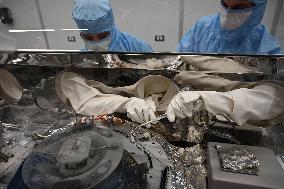
Handout photo dated October 12, 2023 shows astromaterials processors Mari Montoya, left, and Curtis Calva, right, use tools to collect asteroid particles from the base of the OSIRIS-REx science canister. Nasa officials in Houston displayed images of salt-and-pepper chunks of rock and particles of dark space dust that were brought back to Earth from the asteroid, Bennu, and described initial scientific observations about the material. The mission, Osiris-Rex, concluded in September when a capsule containing the collection of asteroid samples re-entered through the Earth’s atmosphere and was recovered in the Utah desert. As technicians pried into the external container, they found that some of the material leaked out. Scientists were able to perform a quick analysis that revealed some early findings. The asteroid bits included waterlogged clay minerals. Their presence could help solve how Earth became a water planet. Asteroids similar to Bennu may have crashed into Earth, filling our oceans. Photo by Nasa via A

  •  
Nasa Reveals First Look At Asteroid Sample

Nasa Reveals First Look At Asteroid Sample

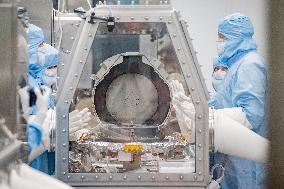
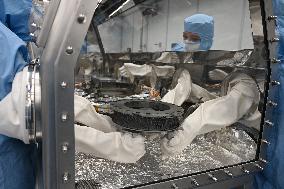
Handout photo dated September 27, 2023 shows a view inside a glass and stainless steel glovebox containing the OSIRIS-REx asteroid sample return canister. Nasa officials in Houston displayed images of salt-and-pepper chunks of rock and particles of dark space dust that were brought back to Earth from the asteroid, Bennu, and described initial scientific observations about the material. The mission, Osiris-Rex, concluded in September when a capsule containing the collection of asteroid samples re-entered through the Earth’s atmosphere and was recovered in the Utah desert. As technicians pried into the external container, they found that some of the material leaked out. Scientists were able to perform a quick analysis that revealed some early findings. The asteroid bits included waterlogged clay minerals. Their presence could help solve how Earth became a water planet. Asteroids similar to Bennu may have crashed into Earth, filling our oceans. Photo by Dante Lauretta/Nasa via ABACAPRESS.COM

  •  
View Of Comet Helps Solve Mystery Of Earth's Abundant Water

View Of Comet Helps Solve Mystery Of Earth's Abundant Water

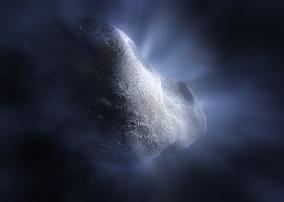
Handout - This artist’s concept of Comet 238P/Read shows the main belt comet sublimating—its water ice vaporising as its orbit approaches the Sun. This is significant, as the sublimation is what distinguishes comets from asteroids, creating their distinctive tail and hazy halo, or coma. The James Webb Space Telescope’s detection of water vapor at Comet Read is a major benchmark in the study of main belt comets, and in the broader investigation of the origin of Earth’s abundant water. NASA's James Webb Space Telescope has enabled another long-sought scientific breakthrough, this time for solar system scientists studying the origins of Earth's abundant water. Using Webb's NIRSpec (Near-Infrared Spectrograph) instrument, astronomers have confirmed gas – specifically water vapor – around a comet in the main asteroid belt for the first time, indicating that water ice from the primordial solar system can be preserved in that region. Comet Read is a main belt comet – an object that resides in the main asteroid belt

  •  
View Of Comet Helps Solve Mystery Of Earth's Abundant Water

View Of Comet Helps Solve Mystery Of Earth's Abundant Water

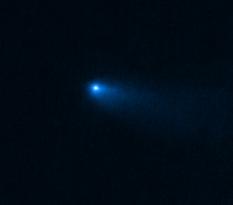
Handout - This image of Comet 238P/Read was captured by the NIRCam (Near-Infrared Camera) instrument on NASA’s James Webb Space Telescope on September 8, 2022. It displays the hazy halo, called the coma, and tail that are characteristic of comets, as opposed to asteroids. The dusty coma and tail result from the vaporization of ices as the Sun warms the main body of the comet. NASA's James Webb Space Telescope has enabled another long-sought scientific breakthrough, this time for solar system scientists studying the origins of Earth's abundant water. Using Webb's NIRSpec (Near-Infrared Spectrograph) instrument, astronomers have confirmed gas – specifically water vapor – around a comet in the main asteroid belt for the first time, indicating that water ice from the primordial solar system can be preserved in that region. Comet Read is a main belt comet – an object that resides in the main asteroid belt but which periodically displays a halo, or coma, and tail like a comet. Main belt comets themselves are a fair

  •  
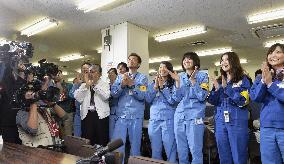
Hayabusa2 space probe successfully launched

Hayabusa2 space probe successfully launched

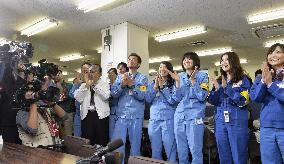
TANEGASHIMA, Japan - Staff applaud on Dec. 3, 2014, at the Tanegashima Space Center in the southwestern Japanese prefecture of Kagoshima after the asteroid explorer Hayabusa2 was separated from the H-IIA F26 following liftoff. Hayabusa2's mission is to explore one of the C-type asteroids in the universe and bring retrieved materials to Earth.

  •  
Guarding Japan's satellites from space debris

Guarding Japan's satellites from space debris

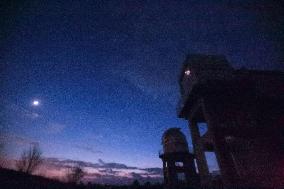
TOKYO, Japan - Photo taken on Nov. 17, 2012 shows the Bisei spaceguard center in Ihara, Okayama Prefecture, where the Japan Spaceguard Association observes space debris and asteroids with the aid of optical telescopes and other devices. The image is not clear due to ultrasensitive photographing. (Photo by Makoto Hori)

  •  
Japanese astronaut simply wants to go back to outer space

Japanese astronaut simply wants to go back to outer space

TSUKUBA, Japan - Japanese astronaut Koichi Wakata (3rd from L in a photo released by NASA) said on July 25 he is willing to go to the moon, Mars, asteroids or anywhere in the outer space if there is a project for him to participate in. Wakata made the comments from Florida in a teleconference with reporters in Japan. He is currently undergoing a weeklong training mission at an underwater laboratory off Florida, which was established about 19 meters below sea level for the training of astronauts for future space exploration. (Kyodo)

  •  
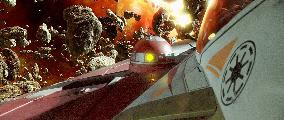
Star Wars:Attack Of The Clones (2002)

Star Wars:Attack Of The Clones (2002)

Space Battle Film: Star Wars: Episode Ii - Attack Of The Clones (USA 2002) Director: George Lucas 16 May 2002 Date: 16 May 2002

  •  
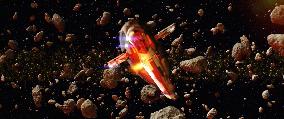
Star Wars:Attack Of The Clones (2002)

Star Wars:Attack Of The Clones (2002)

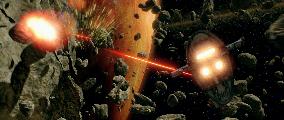
Jedi Fighter In Asteroid Field Film: Star Wars: Episode Ii - Attack Of The Clones (USA 2002) Director: George Lucas 16 May 2002 Date: 16 May 2002

  •  
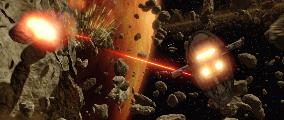
Star Wars:Attack Of The Clones (2002)

Star Wars:Attack Of The Clones (2002)

Spacecraft & Asteroid Field Film: Star Wars: Episode Ii - Attack Of The Clones (USA 2002) Director: George Lucas 16 May 2002 ゥ Lucasfilm Ltd. & TM. All Rights Reserved. Date: 16 May 2002

  •  
STAR WARS: EPISODE II - ATTACK OF THE CLONES

STAR WARS: EPISODE II - ATTACK OF THE CLONES

STAR WARS: EPISODE II - ATTACK OF THE CLONES STAR WARS: EPISODE II - ATTACK OF THE CLONES Date: 2002

  •  
Hayabusa2 space probe successfully launched

Hayabusa2 space probe successfully launched

TANEGASHIMA, Japan - Staff applaud on Dec. 3, 2014, at the Tanegashima Space Center in the southwestern Japanese prefecture of Kagoshima after the asteroid explorer Hayabusa2 was separated from the H-IIA F26 following liftoff. Hayabusa2's mission is to explore one of the C-type asteroids in the universe and bring retrieved materials to Earth. (Kyodo)

  •  
Japan's space unit to monitor threats to satellites

Japan's space unit to monitor threats to satellites

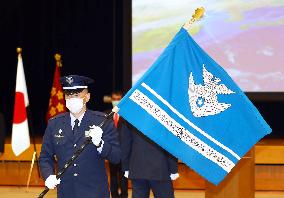
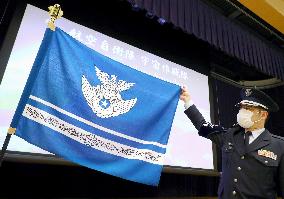
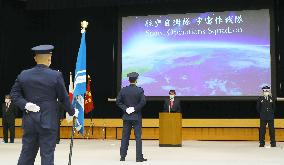
A ceremony is held in Tokyo on May 18, 2020, to mark the launch of the Air Self-Defense Force's space unit tasked with monitoring space debris, asteroids and other threats to artificial satellites. (Pool photo) (Kyodo) ==Kyodo

  •  
Japan's space unit to monitor threats to satellites

Japan's space unit to monitor threats to satellites

A ceremony is held in Tokyo on May 18, 2020, to mark the launch of the Air Self-Defense Force's space unit tasked with monitoring space debris, asteroids and other threats to artificial satellites. (Pool photo) (Kyodo) ==Kyodo

  •  
Japan's space unit to monitor threats to satellites

Japan's space unit to monitor threats to satellites

Japanese Defense Minister Taro Kono (2nd from R) makes a speech at a ceremony in Tokyo on May 18, 2020, to mark the launch of the Air Self-Defense Force's space unit tasked with monitoring space debris, asteroids and other threats to artificial satellites. (Pool photo) (Kyodo) ==Kyodo

  •  
Japan's space unit to monitor threats to satellites

Japan's space unit to monitor threats to satellites

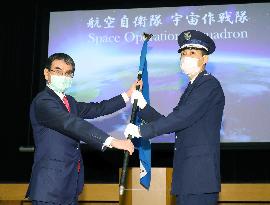
Japanese Defense Minister Taro Kono (L) attends a ceremony in Tokyo on May 18, 2020, to mark the launch of the Air Self-Defense Force's space unit tasked with monitoring space debris, asteroids and other threats to artificial satellites. (Pool photo) (Kyodo) ==Kyodo

  •  
Japan's space unit to monitor threats to satellites

Japan's space unit to monitor threats to satellites

Japanese Defense Minister Taro Kono (L) attends a ceremony in Tokyo on May 18, 2020, to mark the launch of the Air Self-Defense Force's space unit tasked with monitoring space debris, asteroids and other threats to artificial satellites. (Pool photo) (Kyodo) ==Kyodo

  • Main
  • Top
  • Editorial
  • Creative
  • About Us
  • About ILG
  • Terms of use
  • Company
  • BEHIND
  • Price List
  • Single Plan
  • Monthly Plan
  • Services
  • Shooting
  • Rights Clearance
  • Support
  • FAQ
  • How To Buy
  • Contact Us
  • Become a Partner

© KYODO NEWS IMAGES INC

All Rights Reserved.

  • Editorial
  • Olympics
  • News
  • Sports
  • Japan
  • Tech
  • Royal
  • Disaster
  • NorthKorea
  • Old Japan
  • SNS
  • Creative
  • Food
  • Japan
  • Landscape
  • Animal
  • Popular
  • #Ukraine
  • #China
  • #coronavirus
  • #N. Korea
  • #Thailand
  • #Russia
  • #Ukraine
  • #China
  • #coronavirus
  • #N. Korea
  • #Thailand
  • #Russia
  • Food
  • Japan
  • Landscape
  • Animal
  • Olympics
  • News
  • Sports
  • Japan
  • Tech
  • Royal
  • Disaster
  • NorthKorea
  • Old Japan
  • SNS