•  
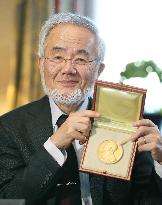
Japanese Nobel laureate Ohsumi shows his medal

Japanese Nobel laureate Ohsumi shows his medal

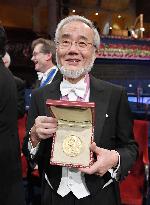
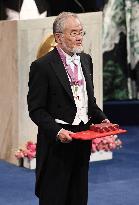
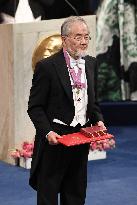
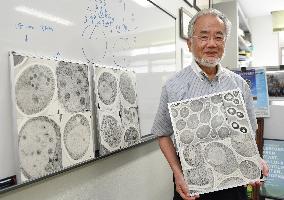
Nobel laureate Yoshinori Ohsumi shows his medal to reporters in Stockholm on Dec. 12, 2016. Ohsumi was awarded the prize in physiology or medicine for elucidating "autophagy," an intracellular process that degrades and recycles proteins. (Kyodo) ==Kyodo

  •  
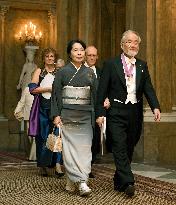
Japanese Nobel laureate Ohsumi in Stockholm

Japanese Nobel laureate Ohsumi in Stockholm

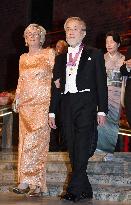
Nobel laureate Yoshinori Ohsumi (R front), together with his wife Mariko, head to a banquet hosted by Sweden's King Carl XVI Gustaf in Stockholm on Dec. 11, 2016. Ohsumi was awarded the Nobel Prize in physiology or medicine for elucidating "autophagy," an intracellular process that degrades and recycles proteins. (Kyodo) ==Kyodo

  •  
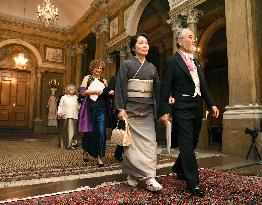
Japanese Nobel laureate Ohsumi in Stockholm

Japanese Nobel laureate Ohsumi in Stockholm

Nobel laureate Yoshinori Ohsumi (R front), together with his wife Mariko, head to a banquet hosted by Sweden's King Carl XVI Gustaf in Stockholm on Dec. 11, 2016. Ohsumi was awarded the Nobel Prize in physiology or medicine for elucidating "autophagy," an intracellular process that degrades and recycles proteins. (Kyodo) ==Kyodo

  •  
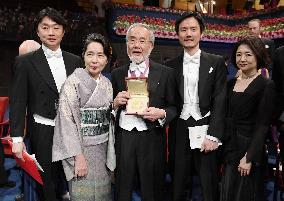
Japanese scientist Ohsumi receives Nobel Prize

Japanese scientist Ohsumi receives Nobel Prize

Nobel laureate Yoshinori Ohsumi (C) poses for photos, together with his wife Mariko (2nd from L), after attending an award ceremony in Stockholm on Dec. 10, 2016. Ohsumi was awarded the Nobel Prize in physiology or medicine for elucidating "autophagy," an intracellular process that degrades and recycles proteins. (Kyodo) ==Kyodo

  •  
Japanese scientist Ohsumi receives Nobel Prize

Japanese scientist Ohsumi receives Nobel Prize

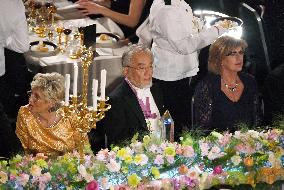
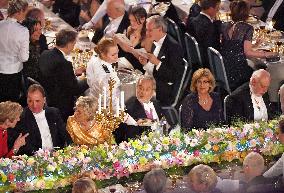
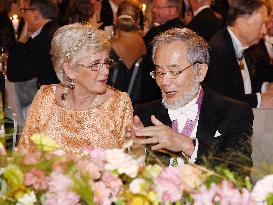
Nobel laureate Yoshinori Ohsumi (C) attends a banquet in Stockholm on Dec. 10, 2016. Ohsumi was awarded the Nobel Prize in physiology or medicine for elucidating "autophagy," an intracellular process that degrades and recycles proteins. (Kyodo) ==Kyodo

  •  
Japanese scientist Ohsumi receives Nobel Prize

Japanese scientist Ohsumi receives Nobel Prize

Nobel laureate Yoshinori Ohsumi (C) attends a banquet in Stockholm on Dec. 10, 2016. Ohsumi was awarded the Nobel Prize in physiology or medicine for elucidating "autophagy," an intracellular process that degrades and recycles proteins. (Kyodo) ==Kyodo

  •  
Japanese scientist Ohsumi receives Nobel Prize

Japanese scientist Ohsumi receives Nobel Prize

Nobel laureate Yoshinori Ohsumi (R) attends a banquet in Stockholm on Dec. 10, 2016. Ohsumi was awarded the Nobel Prize in physiology or medicine for elucidating "autophagy," an intracellular process that degrades and recycles proteins. (Kyodo) ==Kyodo

  •  
Japanese scientist Ohsumi receives Nobel prize

Japanese scientist Ohsumi receives Nobel prize

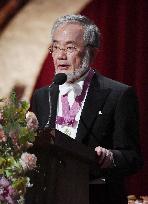
Nobel laureate Yoshinori Ohsumi gives a speech during a banquet following an award ceremony in Stockholm on Dec. 10, 2016. Ohsumi was awarded the Nobel prize in physiology or medicine for elucidating "autophagy," an intracellular process that degrades and recycles proteins. (Kyodo) ==Kyodo

  •  
Japanese scientist Ohsumi receives Nobel prize

Japanese scientist Ohsumi receives Nobel prize

Nobel laureate Yoshinori Ohsumi arrives at the venue for a banquet in Stockholm on Dec. 10, 2016, with his wife Mariko seen behind him. Ohsumi was awarded the Nobel prize in physiology or medicine for elucidating "autophagy," an intracellular process that degrades and recycles proteins. (Kyodo) ==Kyodo

  •  
Japanese scientist Ohsumi receives Nobel prize

Japanese scientist Ohsumi receives Nobel prize

Nobel laureate Yoshinori Ohsumi shows his medal after an award ceremony in Stockholm on Dec. 10, 2016. Ohsumi was awarded the Nobel prize in physiology or medicine for elucidating "autophagy," an intracellular process that degrades and recycles proteins. (Kyodo) ==Kyodo

  •  
Japanese scientist Ohsumi receives Nobel prize

Japanese scientist Ohsumi receives Nobel prize

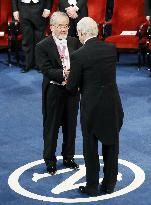
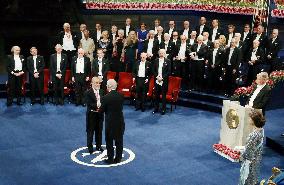
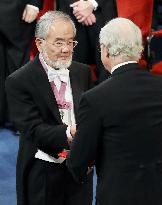
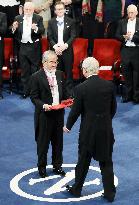
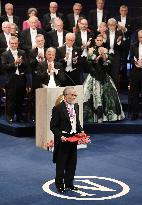
Nobel laureate Yoshinori Ohsumi (L) receives a medal and diploma from Swedish King Carl XVI Gustaf at an award ceremony in Stockholm on Dec. 10, 2016. Ohsumi was awarded the Nobel prize in physiology or medicine for elucidating "autophagy," an intracellular process that degrades and recycles proteins. (Pool photo)(Kyodo) ==Kyodo

  •  
Japanese scientist Ohsumi receives Nobel prize

Japanese scientist Ohsumi receives Nobel prize

Nobel laureate Yoshinori Ohsumi receives a medal and diploma from Swedish King Carl XVI Gustaf at an award ceremony in Stockholm on Dec. 10, 2016. Ohsumi was awarded the Nobel prize in physiology or medicine for elucidating "autophagy," an intracellular process that degrades and recycles proteins. (Pool photo)(Kyodo) ==Kyodo

  •  
Japanese scientist Ohsumi receives Nobel prize

Japanese scientist Ohsumi receives Nobel prize

Nobel laureate Yoshinori Ohsumi (L) receives a medal and diploma from Swedish King Carl XVI Gustaf at an award ceremony in Stockholm on Dec. 10, 2016. Ohsumi was awarded the Nobel prize in physiology or medicine for elucidating "autophagy," an intracellular process that degrades and recycles proteins. (Pool photo)(Kyodo) ==Kyodo

  •  
Japanese scientist Ohsumi receives Nobel prize

Japanese scientist Ohsumi receives Nobel prize

Nobel laureate Yoshinori Ohsumi (L) receives a medal and diploma from Swedish King Carl XVI Gustaf at an award ceremony in Stockholm on Dec. 10, 2016. Ohsumi was awarded the Nobel prize in physiology or medicine for elucidating "autophagy," an intracellular process that degrades and recycles proteins. (Pool photo)(Kyodo) ==Kyodo

  •  
Japanese scientist Ohsumi receives Nobel prize

Japanese scientist Ohsumi receives Nobel prize

Japanese scientist Yoshinori Ohsumi receives the Nobel Prize in physiology or medicine for his research on cell recycling, at an award ceremony in Stockholm on Dec. 10, 2016. Ohsumi elucidated "autophagy," an intracellular process that degrades and recycles proteins. (Kyodo) ==Kyodo

  •  
Japanese scientist Ohsumi receives Nobel prize

Japanese scientist Ohsumi receives Nobel prize

Japanese scientist Yoshinori Ohsumi receives the Nobel Prize in physiology or medicine for his research on cell recycling, at an award ceremony in Stockholm on Dec. 10, 2016. Ohsumi elucidated "autophagy," an intracellular process that degrades and recycles proteins. (Kyodo) ==Kyodo

  •  
Japanese scientist Ohsumi receives Nobel prize

Japanese scientist Ohsumi receives Nobel prize

Japanese scientist Yoshinori Ohsumi receives the Nobel Prize in physiology or medicine for his research on cell recycling, at an award ceremony in Stockholm on Dec. 10, 2016. Ohsumi elucidated "autophagy," an intracellular process that degrades and recycles proteins. (Kyodo) ==Kyodo

  •  
Japanese scientist Ohsumi receives Nobel prize

Japanese scientist Ohsumi receives Nobel prize

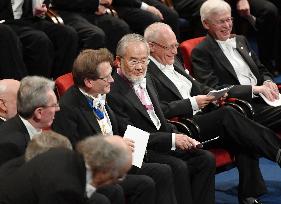
Japanese scientist Yoshinori Ohsumi (C) talks with other Nobel prize laureates during the award ceremony in Stockholm on Dec. 10, 2016. Ohsumi was awarded the Nobel prize in physiology or medicine for elucidating "autophagy," an intracellular process that degrades and recycles proteins. (Kyodo) ==Kyodo

  •  
Japanese scientist Ohsumi receives Nobel prize

Japanese scientist Ohsumi receives Nobel prize

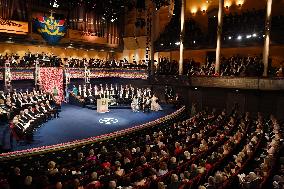
Photo shows a concert hall in Stockholm, at which the Nobel Prize Award Ceremony took place on Dec. 10, 2016. Japanese scientist Yoshinori Ohsumi was awarded the Nobel prize in physiology or medicine for elucidating "autophagy," an intracellular process that degrades and recycles proteins. (Kyodo) ==Kyodo

  •  
Japanese scientist Ohsumi receives Nobel prize

Japanese scientist Ohsumi receives Nobel prize

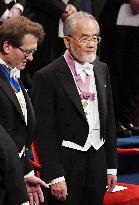
Japanese scientist Yoshinori Ohsumi arrives at a concert hall in Stockholm to attend the Nobel Prize Award Ceremony on Dec. 10, 2016. Ohsumi was awarded the Nobel prize in physiology or medicine for elucidating "autophagy," an intracellular process that degrades and recycles proteins. (Kyodo) ==Kyodo

  •  
Japanese scientist Ohsumi receives Nobel prize

Japanese scientist Ohsumi receives Nobel prize

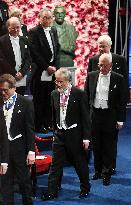
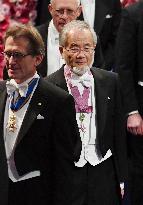
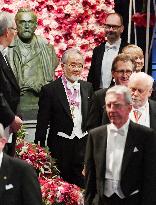
Japanese scientist Yoshinori Ohsumi (C on front) arrives at a concert hall in Stockholm to attend the Nobel Prize Award Ceremony on Dec. 10, 2016. Ohsumi was awarded the Nobel prize in physiology or medicine for elucidating "autophagy," an intracellular process that degrades and recycles proteins. (Kyodo) ==Kyodo

  •  
Japanese scientist Ohsumi receives Nobel prize

Japanese scientist Ohsumi receives Nobel prize

Japanese scientist Yoshinori Ohsumi (C) arrives at a concert hall in Stockholm to attend the Nobel Prize Award Ceremony on Dec. 10, 2016. Ohsumi was awarded the Nobel prize in physiology or medicine for elucidating "autophagy," an intracellular process that degrades and recycles proteins. (Kyodo) ==Kyodo

  •  
Japanese scientist Ohsumi receives Nobel prize

Japanese scientist Ohsumi receives Nobel prize

Japanese scientist Yoshinori Ohsumi (C) arrives at a concert hall in Stockholm to attend the Nobel Prize Award Ceremony on Dec. 10, 2016. Ohsumi was awarded the Nobel prize in physiology or medicine for elucidating "autophagy," an intracellular process that degrades and recycles proteins. (Kyodo) ==Kyodo

  •  
Nobel laureate Osumi meets with PM Abe

Nobel laureate Osumi meets with PM Abe

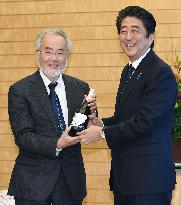
Yoshinori Osumi (L), winner of Nobel Prize in physiology or medicine for discovering and elucidating mechanisms for autophagy, meets with Prime Minister Shinzo Abe at the prime minister's office in Tokyo on Oct. 31, 2016. Osumi presented a bottle of Japanese sake, which carries an illustration depicting autophagy, to the premier. (Kyodo) ==Kyodo

  •  
Nobel laureate Osumi meets with PM Abe

Nobel laureate Osumi meets with PM Abe

Yoshinori Osumi (L), winner of Nobel Prize in physiology or medicine for discovering and elucidating mechanisms for autophagy, meets with Prime Minister Shinzo Abe at the prime minister's office in Tokyo on Oct. 31, 2016. Osumi presented a bottle of Japanese sake, which carries an illustration depicting autophagy, to the premier. (Kyodo) ==Kyodo

  •  
Novel laureate Ohsumi, wife at press conference

Novel laureate Ohsumi, wife at press conference

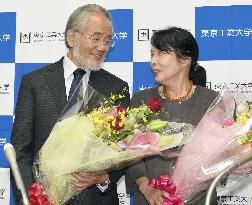
Japanese scientist Yoshinori Ohsumi (L), 71, and his wife Mariko, 69, pose for photos with flowers during a press conference at the Tokyo Institute of Technology campus in Yokohama on Oct. 4, 2016. The honorary professor at the institute won the Nobel Prize in physiology or medicine for elucidating mechanisms for autophagy. (Kyodo) ==Kyodo

  •  
Novel laureate Ohsumi, wife at press conference

Novel laureate Ohsumi, wife at press conference

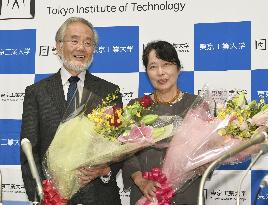
Japanese scientist Yoshinori Ohsumi (L), 71, and his wife Mariko, 69, pose for photos with flowers during a press conference at the Tokyo Institute of Technology campus in Yokohama on Oct. 4, 2016. The honorary professor at the institute won the Nobel Prize in physiology or medicine for elucidating mechanisms for autophagy. (Kyodo) ==Kyodo

  •  
Nobel laureate's wife meets reporters

Nobel laureate's wife meets reporters

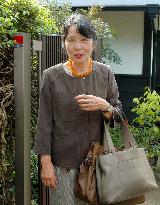
Mariko Ohsumi, wife of Japanese scientist Yoshinori Ohsumi, leaves Oiso, near Tokyo, on Oct. 4, 2016, for Yokohama, where the couple is to attend a press conference as the 71-year-old honorary professor at the Tokyo Institute of Technology won the Nobel Prize in physiology or medicine for elucidating mechanisms for autophagy. (Kyodo) ==Kyodo

  •  
Nobel laureate's wife meets reporters

Nobel laureate's wife meets reporters

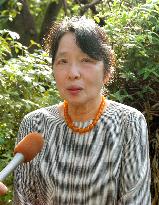
Mariko Ohsumi, wife of Japanese scientist Yoshinori Ohsumi, meets with reporters in Oiso, near Tokyo, on Oct. 4, 2016, a day after the 71-year-old honorary professor at the Tokyo Institute of Technology won the Nobel Prize in physiology or medicine for elucidating mechanisms for autophagy. The couple lives in the coastal town. (Kyodo) ==Kyodo

  •  
Nobel laureate Ohsumi meets with reporters

Nobel laureate Ohsumi meets with reporters

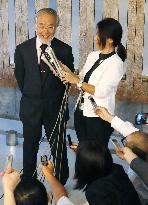
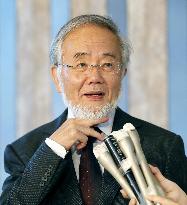
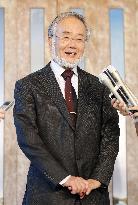
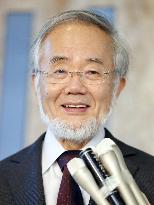
Japanese scientist Yoshinori Ohsumi meets with reporters in Tokyo on Oct. 4, 2016, a day after the announcement that he won the Nobel Prize in physiology or medicine for elucidating mechanisms for autophagy. The 71-year-old honorary professor at the Tokyo Institute of Technology said he had slept only for three and a half hours the previous night. (Kyodo) ==Kyodo

  •  
Nobel laureate Ohsumi meets with reporters

Nobel laureate Ohsumi meets with reporters

Japanese scientist Yoshinori Ohsumi meets with reporters in Tokyo on Oct. 4, 2016, a day after the announcement that he won the Nobel Prize in physiology or medicine for elucidating mechanisms for autophagy. The 71-year-old honorary professor at the Tokyo Institute of Technology said he had slept only for three and a half hours the previous night. (Kyodo) ==Kyodo

  •  
Nobel laureate Ohsumi meets with reporters

Nobel laureate Ohsumi meets with reporters

Japanese scientist Yoshinori Ohsumi meets with reporters in Tokyo on Oct. 4, 2016, a day after the announcement that he won the Nobel Prize in physiology or medicine for elucidating mechanisms for autophagy. The 71-year-old honorary professor at the Tokyo Institute of Technology said he had slept only for three and a half hours the previous night. (Kyodo) ==Kyodo

  •  
Nobel laureate Ohsumi meets with reporters

Nobel laureate Ohsumi meets with reporters

Japanese scientist Yoshinori Ohsumi meets with reporters in Tokyo on Oct. 4, 2016, a day after the announcement that he won the Nobel Prize in physiology or medicine for elucidating mechanisms for autophagy. The 71-year-old honorary professor at the Tokyo Institute of Technology said he had slept only for three and a half hours the previous night. (Kyodo) ==Kyodo

  •  
Nobel laureate's wife talks with husband on phone

Nobel laureate's wife talks with husband on phone

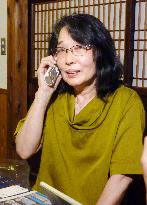
Mariko Ohsumi, wife of Japanese scientist Yoshinori Ohsumi, talks with her husband on the phone at their home in Oiso, near Tokyo, on Oct. 3, 2016, when it was announced that the honorary professor at the Tokyo Institute of Technology won the Nobel Prize in physiology or medicine for elucidating mechanisms for autophagy. (Kyodo) ==Kyodo

  •  
Japan's Ohsumi wins Nobel for work on "self-eating" mechanism in cells

Japan's Ohsumi wins Nobel for work on "self-eating" mechanism in cells

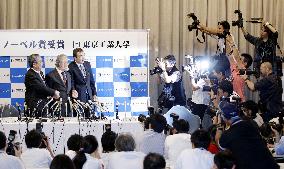
Japanese scientist Yoshinori Ohsumi (2nd from L) poses for photos at the end of a press conference in Tokyo on Oct. 3, 2016, after winning the Nobel Prize in physiology or medicine for elucidating mechanisms for autophagy, an intracellular process that degrades and recycles proteins. (Kyodo) ==Kyodo

  •  
Japanese scientist Yoshinori Osumi wins Nobel Prize in medicine

Japanese scientist Yoshinori Osumi wins Nobel Prize in medicine

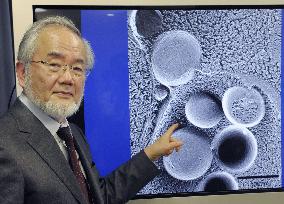
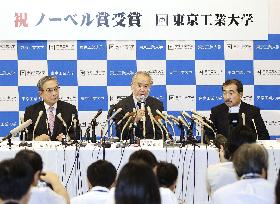
Yoshinori Osumi (C), a Tokyo Institute of Technology professor emeritus, speaks at a press conference in Tokyo on Oct. 3, 2016, after winning the Nobel Prize in physiology or medicine for discovering and elucidating mechanisms for autophagy, an intracellular process that degrades and recycles proteins. (Kyodo) ==Kyodo

  •  
Japanese scientist Yoshinori Osumi wins Nobel Prize in medicine

Japanese scientist Yoshinori Osumi wins Nobel Prize in medicine

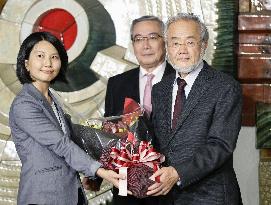
Yoshinori Osumi (R), a Tokyo Institute of Technology professor emeritus, receives flowers at the university's campus in Tokyo on Oct. 3, 2016, after winning the Nobel Prize in physiology or medicine for discovering and elucidating mechanisms for autophagy, an intracellular process that degrades and recycles proteins. (Kyodo) ==Kyodo

  •  
Japanese scientist Yoshinori Osumi wins Nobel Prize in medicine

Japanese scientist Yoshinori Osumi wins Nobel Prize in medicine

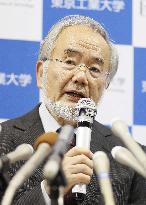
Yoshinori Osumi, a Tokyo Institute of Technology professor emeritus, speaks at a press conference in Tokyo on Oct. 3, 2016, after winning the Nobel Prize in physiology or medicine for discovering and elucidating mechanisms for autophagy, an intracellular process that degrades and recycles proteins. (Kyodo) ==Kyodo

  •  
Japanese scientist Yoshinori Osumi wins Nobel Prize in medicine

Japanese scientist Yoshinori Osumi wins Nobel Prize in medicine

Yoshinori Osumi, a Tokyo Institute of Technology professor emeritus, speaks to reporters at the university's campus in Yokohama on Oct. 3, 2016, after winning the Nobel Prize in physiology or medicine for discovering and elucidating mechanisms for autophagy, an intracellular process that degrades and recycles proteins. (Kyodo) ==Kyodo

  •  
Japanese scientist Yoshinori Osumi wins Nobel Prize in medicine

Japanese scientist Yoshinori Osumi wins Nobel Prize in medicine

Yoshinori Osumi, a Tokyo Institute of Technology professor emeritus, speaks to reporters at the university's campus in Yokohama on Oct. 3, 2016, after winning the Nobel Prize in physiology or medicine for discovering and elucidating mechanisms for autophagy, an intracellular process that degrades and recycles proteins. (Kyodo) ==Kyodo

  •  
Japanese scientist Yoshinori Osumi wins Nobel Prize in medicine

Japanese scientist Yoshinori Osumi wins Nobel Prize in medicine

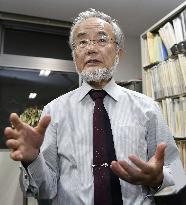
File photo taken in March 2015 shows Japanese scientist Yoshinori Osumi attending a press conference in Tokyo after winning the Canada Gairdner International Award. Osumi won the 2016 Nobel Prize in physiology or medicine on Oct. 3 for discovering and elucidating mechanisms for autophagy, an intracellular process that degrades and recycles proteins. (Kyodo) ==Kyodo

  •  
Japanese scientist Yoshinori Osumi wins Nobel Prize in medicine

Japanese scientist Yoshinori Osumi wins Nobel Prize in medicine

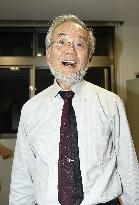
Yoshinori Osumi, a Tokyo Institute of Technology professor emeritus, reacts at the university's campus in Yokohama on Oct. 3, 2016, after winning the Nobel Prize in physiology or medicine for discovering and elucidating mechanisms for autophagy, an intracellular process that degrades and recycles proteins. (Kyodo) ==Kyodo

  •  
Japanese scientist Yoshinori Osumi wins Nobel Prize in medicine

Japanese scientist Yoshinori Osumi wins Nobel Prize in medicine

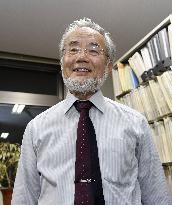
File photo taken in July 2016 shows Yoshinori Osumi, a Tokyo Institute of Technology professor emeritus, at the university's campus in Yokohama. Osumi won the 2016 Nobel Prize in physiology or medicine on Oct. 3 for discovering and elucidating mechanisms for autophagy, an intracellular process that degrades and recycles proteins. (Kyodo) ==Kyodo

  •  
Japanese scientist Yoshinori Osumi wins Nobel Prize in medicine

Japanese scientist Yoshinori Osumi wins Nobel Prize in medicine

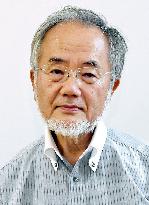
Undated photo shows Japanese scientist Yoshinori Osumi, who was awarded the Nobel Prize in physiology or medicine on Oct. 3, 2016, for discovering and elucidating mechanisms for autophagy, an intracellular process that degrades and recycles proteins. (Kyodo) ==Kyodo

  • Main
  • Top
  • Editorial
  • Creative
  • About Us
  • About ILG
  • Terms of use
  • Company
  • BEHIND
  • Price List
  • Single Plan
  • Monthly Plan
  • Services
  • Shooting
  • Rights Clearance
  • Support
  • FAQ
  • How To Buy
  • Contact Us
  • Become a Partner

© KYODO NEWS IMAGES INC

All Rights Reserved.

  • Editorial
  • Olympics
  • News
  • Sports
  • Japan
  • Tech
  • Royal
  • Disaster
  • NorthKorea
  • Old Japan
  • SNS
  • Creative
  • Food
  • Japan
  • Landscape
  • Animal
  • Popular
  • #Ukraine
  • #Russia
  • #coronavirus
  • #N. Korea
  • #Thailand
  • #China
  • #Ukraine
  • #Russia
  • #coronavirus
  • #N. Korea
  • #Thailand
  • #China
  • Food
  • Japan
  • Landscape
  • Animal
  • Olympics
  • News
  • Sports
  • Japan
  • Tech
  • Royal
  • Disaster
  • NorthKorea
  • Old Japan
  • SNS