•  
Women Social Cohesion Camp in Aleppo Syria

Women Social Cohesion Camp in Aleppo Syria

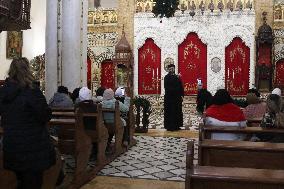
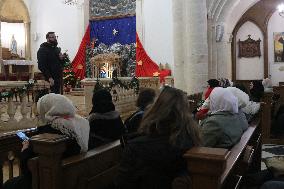
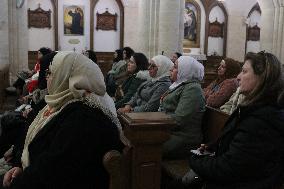
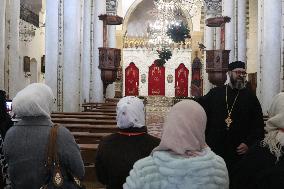
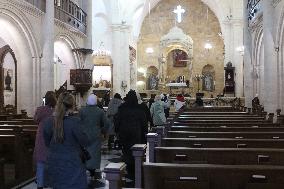
Women sit inside a church during an informational visit as part of a scouting camp in Aleppo, Syria on December 13, 2025. The camp brings together more than 20 women from diverse religious, cultural and social backgrounds as part of an initiative aimed at strengthening social cohesion and building women-led support networks. Organized by “Women’s Bridges” under the auspices of the Support and Stability Unit, the initiative focuses on women as key actors in peacebuilding through community facilitation, cross-identity dialogue and the design of locally driven initiatives, and includes visits to mosques, churches and the alleyways of Aleppo’s Old City to foster cultural exchange and shared understanding. Photo by Hibatullah Barakat/Middle East Images/ABACAPRESS.COM

  •  
Women Social Cohesion Camp in Aleppo Syria

Women Social Cohesion Camp in Aleppo Syria

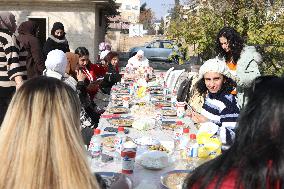
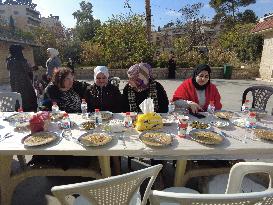
Women sit around a table during a communal meal at a scouting camp in Aleppo, Syria on December 12, 2025. The camp brings together more than 20 women from diverse religious, cultural and social backgrounds as part of an initiative aimed at strengthening social cohesion and building women-led support networks. Organized by “Women’s Bridges” under the auspices of the Support and Stability Unit, the initiative focuses on women as key actors in peacebuilding through community facilitation, cross-identity dialogue and the design of locally driven initiatives, and includes visits to mosques, churches and the alleyways of Aleppo’s Old City to foster cultural exchange and shared understanding. Photo by Hibatullah Barakat/Middle East Images/ABACAPRESS.COM

  •  
Women Social Cohesion Camp in Aleppo Syria

Women Social Cohesion Camp in Aleppo Syria

Women sit inside a church during an informational visit as part of a scouting camp in Aleppo, Syria on December 13, 2025. The camp brings together more than 20 women from diverse religious, cultural and social backgrounds as part of an initiative aimed at strengthening social cohesion and building women-led support networks. Organized by “Women’s Bridges” under the auspices of the Support and Stability Unit, the initiative focuses on women as key actors in peacebuilding through community facilitation, cross-identity dialogue and the design of locally driven initiatives, and includes visits to mosques, churches and the alleyways of Aleppo’s Old City to foster cultural exchange and shared understanding. Photo by Hibatullah Barakat/Middle East Images/ABACAPRESS.COM

  •  
Women Social Cohesion Camp in Aleppo Syria

Women Social Cohesion Camp in Aleppo Syria

Women sit inside a church during an informational visit as part of a scouting camp in Aleppo, Syria on December 13, 2025. The camp brings together more than 20 women from diverse religious, cultural and social backgrounds as part of an initiative aimed at strengthening social cohesion and building women-led support networks. Organized by “Women’s Bridges” under the auspices of the Support and Stability Unit, the initiative focuses on women as key actors in peacebuilding through community facilitation, cross-identity dialogue and the design of locally driven initiatives, and includes visits to mosques, churches and the alleyways of Aleppo’s Old City to foster cultural exchange and shared understanding. Photo by Hibatullah Barakat/Middle East Images/ABACAPRESS.COM

  •  
Women Social Cohesion Camp in Aleppo Syria

Women Social Cohesion Camp in Aleppo Syria

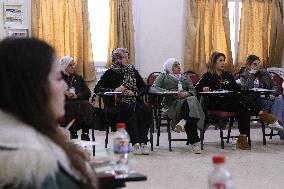
Women sit in a discussion circle during a group session at a scouting camp in Aleppo, Syria on December 12, 2025. The camp brings together more than 20 women from diverse religious, cultural and social backgrounds as part of an initiative aimed at strengthening social cohesion and building women-led support networks. Organized by “Women’s Bridges” under the auspices of the Support and Stability Unit, the initiative focuses on women as key actors in peacebuilding through community facilitation, cross-identity dialogue and the design of locally driven initiatives, and includes visits to mosques, churches and the alleyways of Aleppo’s Old City to foster cultural exchange and shared understanding. Photo by Hibatullah Barakat/Middle East Images/ABACAPRESS.COM

  •  
Women Social Cohesion Camp in Aleppo Syria

Women Social Cohesion Camp in Aleppo Syria

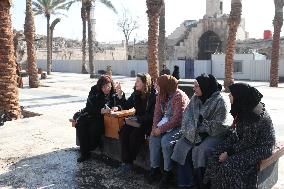
Women sit together in a public space in Old Aleppo during a group tour as part of a scouting camp in Aleppo, Syria on December 13, 2025. The camp brings together more than 20 women from diverse religious, cultural and social backgrounds as part of an initiative aimed at strengthening social cohesion and building women-led support networks. Organized by “Women’s Bridges” under the auspices of the Support and Stability Unit, the initiative focuses on women as key actors in peacebuilding through community facilitation, cross-identity dialogue and the design of locally driven initiatives, and includes visits to mosques, churches and the alleyways of Aleppo’s Old City to foster cultural exchange and shared understanding. Photo by Hibatullah Barakat/Middle East Images/ABACAPRESS.COM

  •  
Women Social Cohesion Camp in Aleppo Syria

Women Social Cohesion Camp in Aleppo Syria

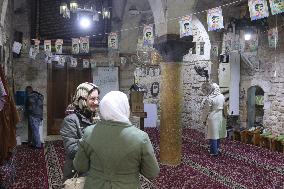
Women stand inside a mosque during a guided visit as part of a scouting camp in Aleppo, Syria on December 13, 2025. The camp brings together more than 20 women from diverse religious, cultural and social backgrounds as part of an initiative aimed at strengthening social cohesion and building women-led support networks. Organized by “Women’s Bridges” under the auspices of the Support and Stability Unit, the initiative focuses on women as key actors in peacebuilding through community facilitation, cross-identity dialogue and the design of locally driven initiatives, and includes visits to mosques, churches and the alleyways of Aleppo’s Old City to foster cultural exchange and shared understanding. Photo by Hibatullah Barakat/Middle East Images/ABACAPRESS.COM

  •  
Women Social Cohesion Camp in Aleppo Syria

Women Social Cohesion Camp in Aleppo Syria

Women sit inside a church during an informational visit as part of a scouting camp in Aleppo, Syria on December 13, 2025. The camp brings together more than 20 women from diverse religious, cultural and social backgrounds as part of an initiative aimed at strengthening social cohesion and building women-led support networks. Organized by “Women’s Bridges” under the auspices of the Support and Stability Unit, the initiative focuses on women as key actors in peacebuilding through community facilitation, cross-identity dialogue and the design of locally driven initiatives, and includes visits to mosques, churches and the alleyways of Aleppo’s Old City to foster cultural exchange and shared understanding. Photo by Hibatullah Barakat/Middle East Images/ABACAPRESS.COM

  •  
Women Social Cohesion Camp in Aleppo Syria

Women Social Cohesion Camp in Aleppo Syria

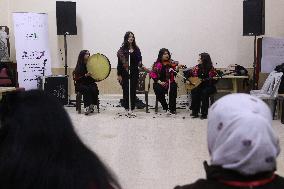
Women perform music during a cultural activity at a scouting camp in Aleppo, Syria on December 12, 2025. The camp brings together more than 20 women from diverse religious, cultural and social backgrounds as part of an initiative aimed at strengthening social cohesion and building women-led support networks. Organized by “Women’s Bridges” under the auspices of the Support and Stability Unit, the initiative focuses on women as key actors in peacebuilding through community facilitation, cross-identity dialogue and the design of locally driven initiatives, and includes visits to mosques, churches and the alleyways of Aleppo’s Old City to foster cultural exchange and shared understanding. Photo by Hibatullah Barakat/Middle East Images/ABACAPRESS.COM

  •  
Women Social Cohesion Camp in Aleppo Syria

Women Social Cohesion Camp in Aleppo Syria

Women walk inside a church during a group visit as part of a scouting camp in Aleppo, Syria on December 13, 2025. The camp brings together more than 20 women from diverse religious, cultural and social backgrounds as part of an initiative aimed at strengthening social cohesion and building women-led support networks. Organized by “Women’s Bridges” under the auspices of the Support and Stability Unit, the initiative focuses on women as key actors in peacebuilding through community facilitation, cross-identity dialogue and the design of locally driven initiatives, and includes visits to mosques, churches and the alleyways of Aleppo’s Old City to foster cultural exchange and shared understanding. Photo by Hibatullah Barakat/Middle East Images/ABACAPRESS.COM

  •  
Women Social Cohesion Camp in Aleppo Syria

Women Social Cohesion Camp in Aleppo Syria

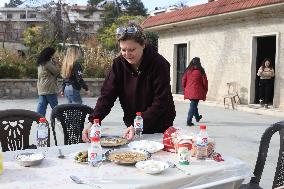
A woman arranges a table ahead of a communal meal during a scouting camp in Aleppo, Syria on December 12, 2025. The camp brings together more than 20 women from diverse religious, cultural and social backgrounds as part of an initiative aimed at strengthening social cohesion and building women-led support networks. Organized by “Women’s Bridges” under the auspices of the Support and Stability Unit, the initiative focuses on women as key actors in peacebuilding through community facilitation, cross-identity dialogue and the design of locally driven initiatives, and includes visits to mosques, churches and the alleyways of Aleppo’s Old City to foster cultural exchange and shared understanding. Photo by Hibatullah Barakat/Middle East Images/ABACAPRESS.COM

  •  
Women Social Cohesion Camp in Aleppo Syria

Women Social Cohesion Camp in Aleppo Syria

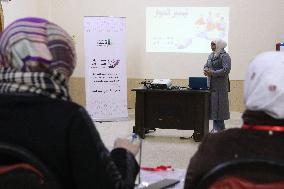
A facilitator addresses participants during a training session at a scouting camp in Aleppo, Syria on December 12, 2025. The camp brings together more than 20 women from diverse religious, cultural and social backgrounds as part of an initiative aimed at strengthening social cohesion and building women-led support networks. Organized by “Women’s Bridges” under the auspices of the Support and Stability Unit, the initiative focuses on women as key actors in peacebuilding through community facilitation, cross-identity dialogue and the design of locally driven initiatives, and includes visits to mosques, churches and the alleyways of Aleppo’s Old City to foster cultural exchange and shared understanding. Photo by Hibatullah Barakat/Middle East Images/ABACAPRESS.COM

  •  
Women Social Cohesion Camp in Aleppo Syria

Women Social Cohesion Camp in Aleppo Syria

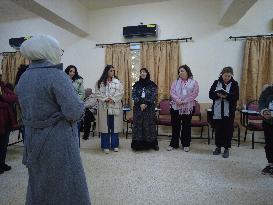
Women stand in a discussion circle during a workshop session at a scouting camp in Aleppo, Syria on December 12, 2025. The camp brings together more than 20 women from diverse religious, cultural and social backgrounds as part of an initiative aimed at strengthening social cohesion and building women-led support networks. Organized by “Women’s Bridges” under the auspices of the Support and Stability Unit, the initiative focuses on women as key actors in peacebuilding through community facilitation, cross-identity dialogue and the design of locally driven initiatives, and includes visits to mosques, churches and the alleyways of Aleppo’s Old City to foster cultural exchange and shared understanding. Photo by Hibatullah Barakat/Middle East Images/ABACAPRESS.COM

  •  
Women Social Cohesion Camp in Aleppo Syria

Women Social Cohesion Camp in Aleppo Syria

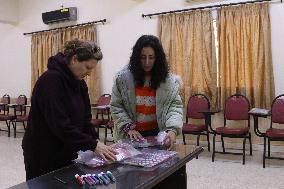
Women organize workshop materials during a group activity at a scouting camp in Aleppo, Syria on December 12, 2025. The camp brings together more than 20 women from diverse religious, cultural and social backgrounds as part of an initiative aimed at strengthening social cohesion and building women-led support networks. Organized by “Women’s Bridges” under the auspices of the Support and Stability Unit, the initiative focuses on women as key actors in peacebuilding through community facilitation, cross-identity dialogue and the design of locally driven initiatives, and includes visits to mosques, churches and the alleyways of Aleppo’s Old City to foster cultural exchange and shared understanding. Photo by Hibatullah Barakat/Middle East Images/ABACAPRESS.COM

  •  
Women Social Cohesion Camp in Aleppo Syria

Women Social Cohesion Camp in Aleppo Syria

Women sit around a table during a scouting camp in Aleppo, Syria on December 12, 2025. The camp brings together more than 20 women from diverse religious, cultural and social backgrounds as part of an initiative aimed at strengthening social cohesion and building women-led support networks. Organized by “Women’s Bridges” under the auspices of the Support and Stability Unit, the initiative focuses on women as key actors in peacebuilding through community facilitation, cross-identity dialogue and the design of locally driven initiatives, and includes visits to mosques, churches and the alleyways of Aleppo’s Old City to foster cultural exchange and shared understanding. Photo by Hibatullah Barakat/Middle East Images/ABACAPRESS.COM

  •  
Women Social Cohesion Camp in Aleppo Syria

Women Social Cohesion Camp in Aleppo Syria

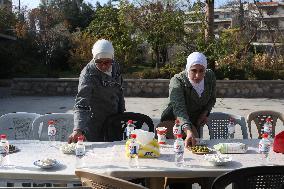
Women arrange a table ahead of a communal meal during a scouting camp in Aleppo, Syria on December 12, 2025. The camp brings together more than 20 women from diverse religious, cultural and social backgrounds as part of an initiative aimed at strengthening social cohesion and building women-led support networks. Organized by “Women’s Bridges” under the auspices of the Support and Stability Unit, the initiative focuses on women as key actors in peacebuilding through community facilitation, cross-identity dialogue and the design of locally driven initiatives, and includes visits to mosques, churches and the alleyways of Aleppo’s Old City to foster cultural exchange and shared understanding. Photo by Hibatullah Barakat/Middle East Images/ABACAPRESS.COM

  •  
Women Social Cohesion Camp in Aleppo Syria

Women Social Cohesion Camp in Aleppo Syria

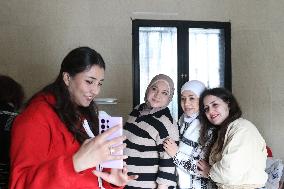
Women pose for a photograph during a scouting camp in Aleppo, Syria on December 12, 2025. The camp brings together more than 20 women from diverse religious, cultural and social backgrounds as part of an initiative aimed at strengthening social cohesion and building women-led support networks. Organized by “Women’s Bridges” under the auspices of the Support and Stability Unit, the initiative focuses on women as key actors in peacebuilding through community facilitation, cross-identity dialogue and the design of locally driven initiatives, and includes visits to mosques, churches and the alleyways of Aleppo’s Old City to foster cultural exchange and shared understanding. Photo by Hibatullah Barakat/Middle East Images/ABACAPRESS.COM

  •  
Winners of the 101 Women Entrepreneurs - Strasbourg

Winners of the 101 Women Entrepreneurs - Strasbourg

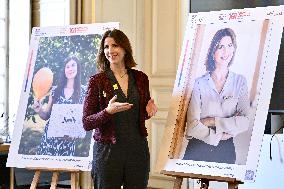
Jacques Witkowski, Prefect of the Grand Est region, invited the press to the Prefectural Hotel for the inauguration of an exhibition dedicated to the ten winners of the “101 Women Entrepreneurs” award for the Grand Est region. The exhibition highlights the careers, commitments, and successes of these women entrepreneurs from various professional backgrounds. It pays tribute to the diversity, creativity, and determination of women who contribute to the country's economic and social dynamism through their projects and businesses. November 21, 2025, Strasbourg, Eastern France. Photo by Nicolas Roses/ABACAPRESS.COM

  •  
Winners of the 101 Women Entrepreneurs - Strasbourg

Winners of the 101 Women Entrepreneurs - Strasbourg

Jacques Witkowski, Prefect of the Grand Est region, invited the press to the Prefectural Hotel for the inauguration of an exhibition dedicated to the ten winners of the “101 Women Entrepreneurs” award for the Grand Est region. The exhibition highlights the careers, commitments, and successes of these women entrepreneurs from various professional backgrounds. It pays tribute to the diversity, creativity, and determination of women who contribute to the country's economic and social dynamism through their projects and businesses. November 21, 2025, Strasbourg, Eastern France. Photo by Nicolas Roses/ABACAPRESS.COM

  •  
Winners of the 101 Women Entrepreneurs - Strasbourg

Winners of the 101 Women Entrepreneurs - Strasbourg

Jacques Witkowski, Prefect of the Grand Est region, invited the press to the Prefectural Hotel for the inauguration of an exhibition dedicated to the ten winners of the “101 Women Entrepreneurs” award for the Grand Est region. The exhibition highlights the careers, commitments, and successes of these women entrepreneurs from various professional backgrounds. It pays tribute to the diversity, creativity, and determination of women who contribute to the country's economic and social dynamism through their projects and businesses. November 21, 2025, Strasbourg, Eastern France. Photo by Nicolas Roses/ABACAPRESS.COM

  •  
Winners of the 101 Women Entrepreneurs - Strasbourg

Winners of the 101 Women Entrepreneurs - Strasbourg

Jacques Witkowski, Prefect of the Grand Est region, invited the press to the Prefectural Hotel for the inauguration of an exhibition dedicated to the ten winners of the “101 Women Entrepreneurs” award for the Grand Est region. The exhibition highlights the careers, commitments, and successes of these women entrepreneurs from various professional backgrounds. It pays tribute to the diversity, creativity, and determination of women who contribute to the country's economic and social dynamism through their projects and businesses. November 21, 2025, Strasbourg, Eastern France. Photo by Nicolas Roses/ABACAPRESS.COM

  •  
Winners of the 101 Women Entrepreneurs - Strasbourg

Winners of the 101 Women Entrepreneurs - Strasbourg

Jacques Witkowski, Prefect of the Grand Est region, invited the press to the Prefectural Hotel for the inauguration of an exhibition dedicated to the ten winners of the “101 Women Entrepreneurs” award for the Grand Est region. The exhibition highlights the careers, commitments, and successes of these women entrepreneurs from various professional backgrounds. It pays tribute to the diversity, creativity, and determination of women who contribute to the country's economic and social dynamism through their projects and businesses. November 21, 2025, Strasbourg, Eastern France. Photo by Nicolas Roses/ABACAPRESS.COM

  •  
Winners of the 101 Women Entrepreneurs - Strasbourg

Winners of the 101 Women Entrepreneurs - Strasbourg

Jacques Witkowski, Prefect of the Grand Est region, invited the press to the Prefectural Hotel for the inauguration of an exhibition dedicated to the ten winners of the “101 Women Entrepreneurs” award for the Grand Est region. The exhibition highlights the careers, commitments, and successes of these women entrepreneurs from various professional backgrounds. It pays tribute to the diversity, creativity, and determination of women who contribute to the country's economic and social dynamism through their projects and businesses. November 21, 2025, Strasbourg, Eastern France. Photo by Nicolas Roses/ABACAPRESS.COM

  •  
Winners of the 101 Women Entrepreneurs - Strasbourg

Winners of the 101 Women Entrepreneurs - Strasbourg

Jacques Witkowski, Prefect of the Grand Est region, invited the press to the Prefectural Hotel for the inauguration of an exhibition dedicated to the ten winners of the “101 Women Entrepreneurs” award for the Grand Est region. The exhibition highlights the careers, commitments, and successes of these women entrepreneurs from various professional backgrounds. It pays tribute to the diversity, creativity, and determination of women who contribute to the country's economic and social dynamism through their projects and businesses. November 21, 2025, Strasbourg, Eastern France. Photo by Nicolas Roses/ABACAPRESS.COM

  •  
Winners of the 101 Women Entrepreneurs - Strasbourg

Winners of the 101 Women Entrepreneurs - Strasbourg

Jacques Witkowski, Prefect of the Grand Est region, invited the press to the Prefectural Hotel for the inauguration of an exhibition dedicated to the ten winners of the “101 Women Entrepreneurs” award for the Grand Est region. The exhibition highlights the careers, commitments, and successes of these women entrepreneurs from various professional backgrounds. It pays tribute to the diversity, creativity, and determination of women who contribute to the country's economic and social dynamism through their projects and businesses. November 21, 2025, Strasbourg, Eastern France. Photo by Nicolas Roses/ABACAPRESS.COM

  •  
Winners of the 101 Women Entrepreneurs - Strasbourg

Winners of the 101 Women Entrepreneurs - Strasbourg

Jacques Witkowski, Prefect of the Grand Est region, invited the press to the Prefectural Hotel for the inauguration of an exhibition dedicated to the ten winners of the “101 Women Entrepreneurs” award for the Grand Est region. The exhibition highlights the careers, commitments, and successes of these women entrepreneurs from various professional backgrounds. It pays tribute to the diversity, creativity, and determination of women who contribute to the country's economic and social dynamism through their projects and businesses. November 21, 2025, Strasbourg, Eastern France. Photo by Nicolas Roses/ABACAPRESS.COM

  •  
Winners of the 101 Women Entrepreneurs - Strasbourg

Winners of the 101 Women Entrepreneurs - Strasbourg

Jacques Witkowski, Prefect of the Grand Est region, invited the press to the Prefectural Hotel for the inauguration of an exhibition dedicated to the ten winners of the “101 Women Entrepreneurs” award for the Grand Est region. The exhibition highlights the careers, commitments, and successes of these women entrepreneurs from various professional backgrounds. It pays tribute to the diversity, creativity, and determination of women who contribute to the country's economic and social dynamism through their projects and businesses. November 21, 2025, Strasbourg, Eastern France. Photo by Nicolas Roses/ABACAPRESS.COM

  •  
Winners of the 101 Women Entrepreneurs - Strasbourg

Winners of the 101 Women Entrepreneurs - Strasbourg

Jacques Witkowski, Prefect of the Grand Est region, invited the press to the Prefectural Hotel for the inauguration of an exhibition dedicated to the ten winners of the “101 Women Entrepreneurs” award for the Grand Est region. The exhibition highlights the careers, commitments, and successes of these women entrepreneurs from various professional backgrounds. It pays tribute to the diversity, creativity, and determination of women who contribute to the country's economic and social dynamism through their projects and businesses. November 21, 2025, Strasbourg, Eastern France. Photo by Nicolas Roses/ABACAPRESS.COM

  •  
Winners of the 101 Women Entrepreneurs - Strasbourg

Winners of the 101 Women Entrepreneurs - Strasbourg

Jacques Witkowski, Prefect of the Grand Est region, invited the press to the Prefectural Hotel for the inauguration of an exhibition dedicated to the ten winners of the “101 Women Entrepreneurs” award for the Grand Est region. The exhibition highlights the careers, commitments, and successes of these women entrepreneurs from various professional backgrounds. It pays tribute to the diversity, creativity, and determination of women who contribute to the country's economic and social dynamism through their projects and businesses. November 21, 2025, Strasbourg, Eastern France. Photo by Nicolas Roses/ABACAPRESS.COM

  •  
Winners of the 101 Women Entrepreneurs - Strasbourg

Winners of the 101 Women Entrepreneurs - Strasbourg

Jacques Witkowski, Prefect of the Grand Est region, invited the press to the Prefectural Hotel for the inauguration of an exhibition dedicated to the ten winners of the “101 Women Entrepreneurs” award for the Grand Est region. The exhibition highlights the careers, commitments, and successes of these women entrepreneurs from various professional backgrounds. It pays tribute to the diversity, creativity, and determination of women who contribute to the country's economic and social dynamism through their projects and businesses. November 21, 2025, Strasbourg, Eastern France. Photo by Nicolas Roses/ABACAPRESS.COM

  •  
Tie-Dye Technique Of Bai Ethnic Group - Chin

Tie-Dye Technique Of Bai Ethnic Group - Chin

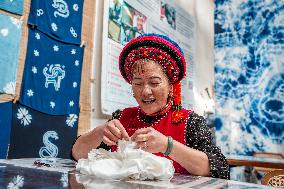
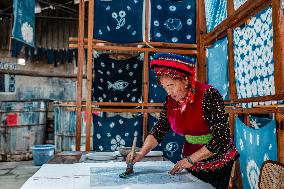
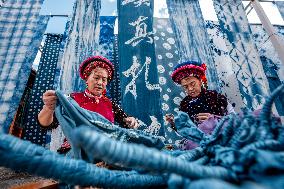
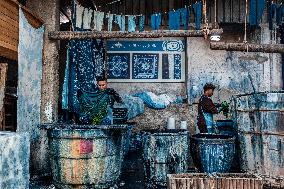
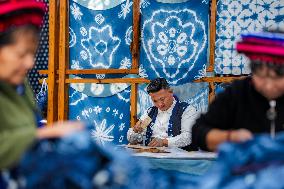
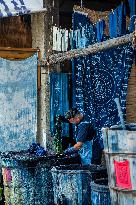
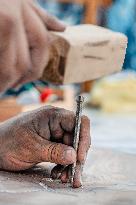
Duan Yuan, an inheritor of the tie-dye technique of Bai ethnic group, makes tie-dye designs in a dyehouse in Zhoucheng Village of Dali Bai Autonomous Prefecture, southwest China's Yunnan Province, November 21, 2025. Known as the hometown of the tie-dye technique of Bai ethnic group, Zhoucheng Village hosts over 200 households engaging in tie-dye businesses, with the number of employees exceeding 4,000. As a traditional folk technique of the Bai ethnic group, tie-dye boasts a history spanning over a thousand years and was included in the first batch of China's national intangible cultural heritage list in 2006. Tying and dyeing are the core steps in the process of making indigo tie-dye products. Artisans use needles and threads to create various patterns on the fabric, which are then dyed with plant-based dyes, resulting in blue backgrounds adorned with vivid white patterns. Photo by Hu Chao/Xinhua/ABACAPRESS.COM

  •  
Tie-Dye Technique Of Bai Ethnic Group - Chin

Tie-Dye Technique Of Bai Ethnic Group - Chin

Duan Yinmei, an inheritor of the tie-dye technique of Bai ethnic group, creates knots on fabrics in a dyehouse in Zhoucheng Village of Dali Bai Autonomous Prefecture, southwest China's Yunnan Province, November 21, 2025. Known as the hometown of the tie-dye technique of Bai ethnic group, Zhoucheng Village hosts over 200 households engaging in tie-dye businesses, with the number of employees exceeding 4,000. As a traditional folk technique of the Bai ethnic group, tie-dye boasts a history spanning over a thousand years and was included in the first batch of China's national intangible cultural heritage list in 2006. Tying and dyeing are the core steps in the process of making indigo tie-dye products. Artisans use needles and threads to create various patterns on the fabric, which are then dyed with plant-based dyes, resulting in blue backgrounds adorned with vivid white patterns. Photo by Hu Chao/Xinhua/ABACAPRESS.COM

  •  
Tie-Dye Technique Of Bai Ethnic Group - Chin

Tie-Dye Technique Of Bai Ethnic Group - Chin

A woman experiences the tie-dye technique of Bai ethnic group in a dyehouse in Zhoucheng Village of Dali Bai Autonomous Prefecture, southwest China's Yunnan Province, November 21, 2025. Known as the hometown of the tie-dye technique of Bai ethnic group, Zhoucheng Village hosts over 200 households engaging in tie-dye businesses, with the number of employees exceeding 4,000. As a traditional folk technique of the Bai ethnic group, tie-dye boasts a history spanning over a thousand years and was included in the first batch of China's national intangible cultural heritage list in 2006. Tying and dyeing are the core steps in the process of making indigo tie-dye products. Artisans use needles and threads to create various patterns on the fabric, which are then dyed with plant-based dyes, resulting in blue backgrounds adorned with vivid white patterns. Photo by Hu Chao/Xinhua/ABACAPRESS.COM

  •  
Tie-Dye Technique Of Bai Ethnic Group - Chin

Tie-Dye Technique Of Bai Ethnic Group - Chin

Duan Yinmei, an inheritor of the tie-dye technique of Bai ethnic group, dyes patterns on fabrics in a dyehouse in Zhoucheng Village of Dali Bai Autonomous Prefecture, southwest China's Yunnan Province, November 21, 2025. Known as the hometown of the tie-dye technique of Bai ethnic group, Zhoucheng Village hosts over 200 households engaging in tie-dye businesses, with the number of employees exceeding 4,000. As a traditional folk technique of the Bai ethnic group, tie-dye boasts a history spanning over a thousand years and was included in the first batch of China's national intangible cultural heritage list in 2006. Tying and dyeing are the core steps in the process of making indigo tie-dye products. Artisans use needles and threads to create various patterns on the fabric, which are then dyed with plant-based dyes, resulting in blue backgrounds adorned with vivid white patterns. Photo by Hu Chao/Xinhua/ABACAPRESS.COM

  •  
Tie-Dye Technique Of Bai Ethnic Group - Chin

Tie-Dye Technique Of Bai Ethnic Group - Chin

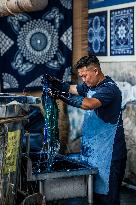
Duan Yuan, an inheritor of the tie-dye technique of Bai ethnic group, rinses dyed fabrics in a dyehouse in Zhoucheng Village of Dali Bai Autonomous Prefecture, southwest China's Yunnan Province, November 21, 2025. Known as the hometown of the tie-dye technique of Bai ethnic group, Zhoucheng Village hosts over 200 households engaging in tie-dye businesses, with the number of employees exceeding 4,000. As a traditional folk technique of the Bai ethnic group, tie-dye boasts a history spanning over a thousand years and was included in the first batch of China's national intangible cultural heritage list in 2006. Tying and dyeing are the core steps in the process of making indigo tie-dye products. Artisans use needles and threads to create various patterns on the fabric, which are then dyed with plant-based dyes, resulting in blue backgrounds adorned with vivid white patterns. Photo by Hu Chao/Xinhua/ABACAPRESS.COM

  •  
Tie-Dye Technique Of Bai Ethnic Group - Chin

Tie-Dye Technique Of Bai Ethnic Group - Chin

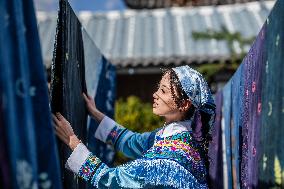
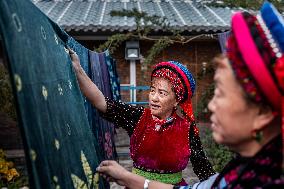
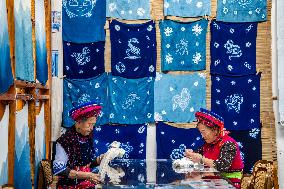
Duan Yinmei (L), an inheritor of the tie-dye technique of Bai ethnic group, and handicraftsman Duan Lilan dry tie-dye fabrics in a dyehouse in Zhoucheng Village of Dali Bai Autonomous Prefecture, southwest China's Yunnan Province, November 21, 2025. Known as the hometown of the tie-dye technique of Bai ethnic group, Zhoucheng Village hosts over 200 households engaging in tie-dye businesses, with the number of employees exceeding 4,000. As a traditional folk technique of the Bai ethnic group, tie-dye boasts a history spanning over a thousand years and was included in the first batch of China's national intangible cultural heritage list in 2006. Tying and dyeing are the core steps in the process of making indigo tie-dye products. Artisans use needles and threads to create various patterns on the fabric, which are then dyed with plant-based dyes, resulting in blue backgrounds adorned with vivid white patterns. Photo by Hu Chao/Xinhua/ABACAPRESS.COM

  •  
Tie-Dye Technique Of Bai Ethnic Group - Chin

Tie-Dye Technique Of Bai Ethnic Group - Chin

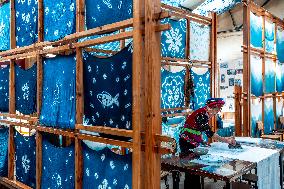
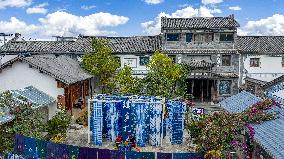
An aerial drone photo shows a scene at a dyehouse in Zhoucheng Village of Dali Bai Autonomous Prefecture, southwest China's Yunnan Province, November 21, 2025. Known as the hometown of the tie-dye technique of Bai ethnic group, Zhoucheng Village hosts over 200 households engaging in tie-dye businesses, with the number of employees exceeding 4,000. As a traditional folk technique of the Bai ethnic group, tie-dye boasts a history spanning over a thousand years and was included in the first batch of China's national intangible cultural heritage list in 2006. Tying and dyeing are the core steps in the process of making indigo tie-dye products. Artisans use needles and threads to create various patterns on the fabric, which are then dyed with plant-based dyes, resulting in blue backgrounds adorned with vivid white patterns. Photo by Hu Chao/Xinhua/ABACAPRESS.COM

  •  
Tie-Dye Technique Of Bai Ethnic Group - Chin

Tie-Dye Technique Of Bai Ethnic Group - Chin

Duan Yinmei (L), an inheritor of the tie-dye technique of Bai ethnic group, and handicraftsman Duan Lilan untie knots on fabrics in a dyehouse in Zhoucheng Village of Dali Bai Autonomous Prefecture, southwest China's Yunnan Province, November 21, 2025. Known as the hometown of the tie-dye technique of Bai ethnic group, Zhoucheng Village hosts over 200 households engaging in tie-dye businesses, with the number of employees exceeding 4,000. As a traditional folk technique of the Bai ethnic group, tie-dye boasts a history spanning over a thousand years and was included in the first batch of China's national intangible cultural heritage list in 2006. Tying and dyeing are the core steps in the process of making indigo tie-dye products. Artisans use needles and threads to create various patterns on the fabric, which are then dyed with plant-based dyes, resulting in blue backgrounds adorned with vivid white patterns. Photo by Hu Chao/Xinhua/ABACAPRESS.COM

  •  
Tie-Dye Technique Of Bai Ethnic Group - Chin

Tie-Dye Technique Of Bai Ethnic Group - Chin

Duan Yinmei (L), an inheritor of the tie-dye technique of Bai ethnic group, and handicraftsman Duan Lilan untie knots on fabrics in a dyehouse in Zhoucheng Village of Dali Bai Autonomous Prefecture, southwest China's Yunnan Province, November 21, 2025. Known as the hometown of the tie-dye technique of Bai ethnic group, Zhoucheng Village hosts over 200 households engaging in tie-dye businesses, with the number of employees exceeding 4,000. As a traditional folk technique of the Bai ethnic group, tie-dye boasts a history spanning over a thousand years and was included in the first batch of China's national intangible cultural heritage list in 2006. Tying and dyeing are the core steps in the process of making indigo tie-dye products. Artisans use needles and threads to create various patterns on the fabric, which are then dyed with plant-based dyes, resulting in blue backgrounds adorned with vivid white patterns. Photo by Hu Chao/Xinhua/ABACAPRESS.COM

  •  
Tie-Dye Technique Of Bai Ethnic Group - Chin

Tie-Dye Technique Of Bai Ethnic Group - Chin

Duan Yuan (L), an inheritor of the tie-dye technique of Bai ethnic group, dyes fabrics in a dyehouse in Zhoucheng Village of Dali Bai Autonomous Prefecture, southwest China's Yunnan Province, November 21, 2025. Known as the hometown of the tie-dye technique of Bai ethnic group, Zhoucheng Village hosts over 200 households engaging in tie-dye businesses, with the number of employees exceeding 4,000. As a traditional folk technique of the Bai ethnic group, tie-dye boasts a history spanning over a thousand years and was included in the first batch of China's national intangible cultural heritage list in 2006. Tying and dyeing are the core steps in the process of making indigo tie-dye products. Artisans use needles and threads to create various patterns on the fabric, which are then dyed with plant-based dyes, resulting in blue backgrounds adorned with vivid white patterns. Photo by Hu Chao/Xinhua/ABACAPRESS.COM

  •  
Tie-Dye Technique Of Bai Ethnic Group - Chin

Tie-Dye Technique Of Bai Ethnic Group - Chin

Duan Yuan, an inheritor of the tie-dye technique of Bai ethnic group, makes tie-dye designs in a dyehouse in Zhoucheng Village of Dali Bai Autonomous Prefecture, southwest China's Yunnan Province, November 21, 2025. Known as the hometown of the tie-dye technique of Bai ethnic group, Zhoucheng Village hosts over 200 households engaging in tie-dye businesses, with the number of employees exceeding 4,000. As a traditional folk technique of the Bai ethnic group, tie-dye boasts a history spanning over a thousand years and was included in the first batch of China's national intangible cultural heritage list in 2006. Tying and dyeing are the core steps in the process of making indigo tie-dye products. Artisans use needles and threads to create various patterns on the fabric, which are then dyed with plant-based dyes, resulting in blue backgrounds adorned with vivid white patterns. Photo by Hu Chao/Xinhua/ABACAPRESS.COM

  •  
Tie-Dye Technique Of Bai Ethnic Group - Chin

Tie-Dye Technique Of Bai Ethnic Group - Chin

Duan Yuan, an inheritor of the tie-dye technique of Bai ethnic group, dyes fabrics in a dyehouse in Zhoucheng Village of Dali Bai Autonomous Prefecture, southwest China's Yunnan Province, November 21, 2025. Known as the hometown of the tie-dye technique of Bai ethnic group, Zhoucheng Village hosts over 200 households engaging in tie-dye businesses, with the number of employees exceeding 4,000. As a traditional folk technique of the Bai ethnic group, tie-dye boasts a history spanning over a thousand years and was included in the first batch of China's national intangible cultural heritage list in 2006. Tying and dyeing are the core steps in the process of making indigo tie-dye products. Artisans use needles and threads to create various patterns on the fabric, which are then dyed with plant-based dyes, resulting in blue backgrounds adorned with vivid white patterns. Photo by Hu Chao/Xinhua/ABACAPRESS.COM

  •  
Tie-Dye Technique Of Bai Ethnic Group - Chin

Tie-Dye Technique Of Bai Ethnic Group - Chin

Duan Yuan, an inheritor of the tie-dye technique of Bai ethnic group, dyes fabrics in a dyehouse in Zhoucheng Village of Dali Bai Autonomous Prefecture, southwest China's Yunnan Province, November 21, 2025. Known as the hometown of the tie-dye technique of Bai ethnic group, Zhoucheng Village hosts over 200 households engaging in tie-dye businesses, with the number of employees exceeding 4,000. As a traditional folk technique of the Bai ethnic group, tie-dye boasts a history spanning over a thousand years and was included in the first batch of China's national intangible cultural heritage list in 2006. Tying and dyeing are the core steps in the process of making indigo tie-dye products. Artisans use needles and threads to create various patterns on the fabric, which are then dyed with plant-based dyes, resulting in blue backgrounds adorned with vivid white patterns. Photo by Hu Chao/Xinhua/ABACAPRESS.COM

  •  
Tie-Dye Technique Of Bai Ethnic Group - Chin

Tie-Dye Technique Of Bai Ethnic Group - Chin

Duan Yuan, an inheritor of the tie-dye technique of Bai ethnic group, makes tie-dye designs in a dyehouse in Zhoucheng Village of Dali Bai Autonomous Prefecture, southwest China's Yunnan Province, November 21, 2025. Known as the hometown of the tie-dye technique of Bai ethnic group, Zhoucheng Village hosts over 200 households engaging in tie-dye businesses, with the number of employees exceeding 4,000. As a traditional folk technique of the Bai ethnic group, tie-dye boasts a history spanning over a thousand years and was included in the first batch of China's national intangible cultural heritage list in 2006. Tying and dyeing are the core steps in the process of making indigo tie-dye products. Artisans use needles and threads to create various patterns on the fabric, which are then dyed with plant-based dyes, resulting in blue backgrounds adorned with vivid white patterns. Photo by Hu Chao/Xinhua/ABACAPRESS.COM

  •  
Tie-Dye Technique Of Bai Ethnic Group - Chin

Tie-Dye Technique Of Bai Ethnic Group - Chin

Duan Yinmei, an inheritor of the tie-dye technique of Bai ethnic group, unties knots on fabrics in a dyehouse in Zhoucheng Village of Dali Bai Autonomous Prefecture, southwest China's Yunnan Province, November 21, 2025. Known as the hometown of the tie-dye technique of Bai ethnic group, Zhoucheng Village hosts over 200 households engaging in tie-dye businesses, with the number of employees exceeding 4,000. As a traditional folk technique of the Bai ethnic group, tie-dye boasts a history spanning over a thousand years and was included in the first batch of China's national intangible cultural heritage list in 2006. Tying and dyeing are the core steps in the process of making indigo tie-dye products. Artisans use needles and threads to create various patterns on the fabric, which are then dyed with plant-based dyes, resulting in blue backgrounds adorned with vivid white patterns. Photo by Hu Chao/Xinhua/ABACAPRESS.COM

  •  
Tie-Dye Technique Of Bai Ethnic Group - Chin

Tie-Dye Technique Of Bai Ethnic Group - Chin

Duan Yinmei, an inheritor of the tie-dye technique of Bai ethnic group, dyes patterns on fabrics in a dyehouse in Zhoucheng Village of Dali Bai Autonomous Prefecture, southwest China's Yunnan Province, November 21, 2025. Known as the hometown of the tie-dye technique of Bai ethnic group, Zhoucheng Village hosts over 200 households engaging in tie-dye businesses, with the number of employees exceeding 4,000. As a traditional folk technique of the Bai ethnic group, tie-dye boasts a history spanning over a thousand years and was included in the first batch of China's national intangible cultural heritage list in 2006. Tying and dyeing are the core steps in the process of making indigo tie-dye products. Artisans use needles and threads to create various patterns on the fabric, which are then dyed with plant-based dyes, resulting in blue backgrounds adorned with vivid white patterns. Photo by Hu Chao/Xinhua/ABACAPRESS.COM

  •  
Tie-Dye Technique Of Bai Ethnic Group - Chin

Tie-Dye Technique Of Bai Ethnic Group - Chin

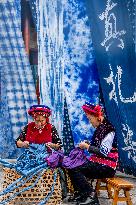
Duan Yinmei (R), an inheritor of the tie-dye technique of Bai ethnic group, and handicraftsman Duan Lilan create knots on fabrics in a dyehouse in Zhoucheng Village of Dali Bai Autonomous Prefecture, southwest China's Yunnan Province, November 21, 2025. Known as the hometown of the tie-dye technique of Bai ethnic group, Zhoucheng Village hosts over 200 households engaging in tie-dye businesses, with the number of employees exceeding 4,000. As a traditional folk technique of the Bai ethnic group, tie-dye boasts a history spanning over a thousand years and was included in the first batch of China's national intangible cultural heritage list in 2006. Tying and dyeing are the core steps in the process of making indigo tie-dye products. Artisans use needles and threads to create various patterns on the fabric, which are then dyed with plant-based dyes, resulting in blue backgrounds adorned with vivid white patterns. Photo by Hu Chao/Xinhua/ABACAPRESS.COM

  •  
Daily life in Tacheng City

Daily life in Tacheng City

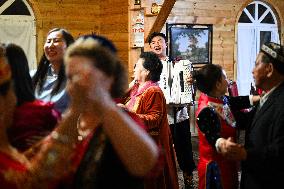
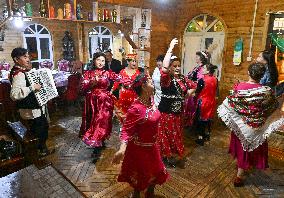
A guest from Kazakh ethnic group plays accordion after a meal while other guests dance at the agritainment of Ma Xiuhua in Tacheng City, northwest China's Xinjiang Uygur Autonomous Region, September 17, 2025. Ma Xiuhua, 60, is a native of Tacheng. Together with her husband, she built an agritainment named "Friends Manor" in their hometown, where they welcome guests from all over the country. Tacheng is home to over 20 ethnic groups, with a population of less than 160,000. Members of Ma's family themselves come from a variety of ethnic backgrounds. Whenever guests arrive at "Friends Manor," Ma greets them with warm hospitality, treating them to her signature homemade dishes and fresh fruits harvested right from the courtyard. She often invites them to sing and dance together, letting the joyful mood fill the air. Xinjiang is a multiethnic region and the agritainment of Ma is expecting more friends from various ethnic groups. (Xinhua/Xin Yuewei)

  •  
Daily life in Tacheng City

Daily life in Tacheng City

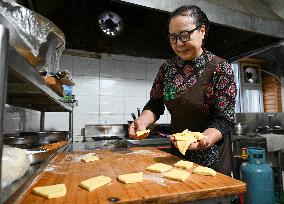
Ma Xiuhua makes a dish of Kazakh ethnic group in Tacheng City, northwest China's Xinjiang Uygur Autonomous Region, September 17, 2025. Ma Xiuhua, 60, is a native of Tacheng. Together with her husband, she built an agritainment named "Friends Manor" in their hometown, where they welcome guests from all over the country. Tacheng is home to over 20 ethnic groups, with a population of less than 160,000. Members of Ma's family themselves come from a variety of ethnic backgrounds. Whenever guests arrive at "Friends Manor," Ma greets them with warm hospitality, treating them to her signature homemade dishes and fresh fruits harvested right from the courtyard. She often invites them to sing and dance together, letting the joyful mood fill the air. Xinjiang is a multiethnic region and the agritainment of Ma is expecting more friends from various ethnic groups. (Xinhua/Chen Shuo)

  •  
Daily life in Tacheng City

Daily life in Tacheng City

Guests dance after a meal at the agritainment of Ma Xiuhua in Tacheng City, northwest China's Xinjiang Uygur Autonomous Region, September 17, 2025. Ma Xiuhua, 60, is a native of Tacheng. Together with her husband, she built an agritainment named "Friends Manor" in their hometown, where they welcome guests from all over the country. Tacheng is home to over 20 ethnic groups, with a population of less than 160,000. Members of Ma's family themselves come from a variety of ethnic backgrounds. Whenever guests arrive at "Friends Manor," Ma greets them with warm hospitality, treating them to her signature homemade dishes and fresh fruits harvested right from the courtyard. She often invites them to sing and dance together, letting the joyful mood fill the air. Xinjiang is a multiethnic region and the agritainment of Ma is expecting more friends from various ethnic groups. Photo by Wang Fei/Xinhua/ABACAPRESS/COM

  • Main
  • Top
  • Editorial
  • Creative
  • About Us
  • About ILG
  • Terms of use
  • Company
  • BEHIND
  • Price List
  • Single Plan
  • Monthly Plan
  • Services
  • Shooting
  • Rights Clearance
  • Support
  • FAQ
  • How To Buy
  • Contact Us
  • Become a Partner

© KYODO NEWS IMAGES INC

All Rights Reserved.

  • Editorial
  • Olympics
  • News
  • Sports
  • Japan
  • Tech
  • Royal
  • Disaster
  • NorthKorea
  • Old Japan
  • SNS
  • Creative
  • Food
  • Japan
  • Landscape
  • Animal
  • Popular
  • #Ukraine
  • #Russia
  • #coronavirus
  • #N. Korea
  • #Thailand
  • #China
  • #Ukraine
  • #Russia
  • #coronavirus
  • #N. Korea
  • #Thailand
  • #China
  • Food
  • Japan
  • Landscape
  • Animal
  • Olympics
  • News
  • Sports
  • Japan
  • Tech
  • Royal
  • Disaster
  • NorthKorea
  • Old Japan
  • SNS