•  
CHINA-JIANGSU-5G TELECOM TOWERS (CN)

CHINA-JIANGSU-5G TELECOM TOWERS (CN)

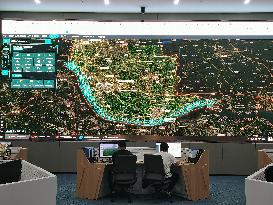
(240720) -- NANJING, July 20, 2024 Photo by Xinhua/ABACAPRESS.COM) -- This photo taken on June 13, 2024 shows a command center that monitors pollution, illegal sand mining and other behaviors along the section of Yangtze River in Taizhou City, east China's Jiangsu Province. With over 3.8 million 5G base stations now operational across China, the widespread adoption of 5G is delivering substantial benefits to both individuals and businesses, offering unprecedented convenience and a wealth of opportunities. TO GO WITH "Across China: What 5G telecom towers can offer in China's digitalization" Photo by Xinhua/ABACAPRESS.COM/Jiang Wenqian)

  •  

Sudanese children exposed to violence, psychological harm amid conflict

STORY: Sudanese children exposed to violence, psychological harm amid conflict SHOOTING TIME: May 28, 2024 DATELINE: May 29, 2024 LENGTH: 00:02:45 LOCATION: Khartoum CATEGORY: SOCIETY SHOTLIST: 1. various of children playing on a street in Omdurman city 2. SOUNDBITE 1 (Arabic): AHMED ADAM, Sudanese citizen 3. various of children inside a school in Omdurman city 4. SOUNDBITE 2 (Arabic): SADIYA AL-RASHEED, Sudanese activist 5. various of children inside a school 6. SOUNDBITE 3 (Arabic): KHALID MOMEN, Sudanese citizen 7. various of children inside a school 8. SOUNDBITE 4 (Arabic): EHAB HASHIM, Sudanese social researcher 9. various of children inside a school STORYLINE: The fighting between the Sudanese Armed Forces (SAF) and the paramilitary Rapid Support Forces (RSF) has not only exposed Sudanese children to violence resulting in death, injury, displacement, deprivation of education, and forced recruitment, but also caused psychological disorders and behaviors associated with fear and anxiety. SOUNDBITE 1 (

  •  
AmazingAnhui | Primate research team of Anhui University protects unique species in Huangshan

AmazingAnhui | Primate research team of Anhui University protects unique species in Huangshan

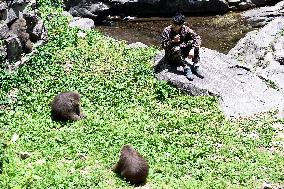
(240521) -- HUANGSHAN, May 21, 2024 (Xinhua) -- Zhang Tong, a doctoral candidate of Anhui University primate research team, records behaviors of Huangshan stump-tailed macaques in Fuxi Village of Tangkou Township in Huangshan, east China's Anhui Province, May 15, 2024. Huangshan Stump-tailed Macaque (Macaca thibetana huangshanensis), a species unique to Huangshan area of China, often showing up in groups in dense forests and canyons, climbing branches and cliffs with ease, is under China's second-class national protection. In 1983, Anhui University and Kyoto University carried out scientific and technological cooperation with a primate field research base established in Fuxi Village at the foot of Huangshan mountain to conduct ecological investigation of Huangshan stump-tailed macaques. Over the past 40 years, abundant first-hand data on Huangshan stump-tailed macaques were obtained as Anhui University extensively cooperated with many universities and research institutes, revealing living habits, behavi

  •  
AmazingAnhui | Primate research team of Anhui University protects unique species in Huangshan

AmazingAnhui | Primate research team of Anhui University protects unique species in Huangshan

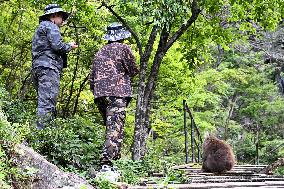
(240521) -- HUANGSHAN, May 21, 2024 (Xinhua) -- Zhang Tong (R) and Gao Xin, members of Anhui University primate research team, record behaviors of Huangshan stump-tailed macaques in Fuxi Village of Tangkou Township in Huangshan, east China's Anhui Province, May 15, 2024. Huangshan Stump-tailed Macaque (Macaca thibetana huangshanensis), a species unique to Huangshan area of China, often showing up in groups in dense forests and canyons, climbing branches and cliffs with ease, is under China's second-class national protection. In 1983, Anhui University and Kyoto University carried out scientific and technological cooperation with a primate field research base established in Fuxi Village at the foot of Huangshan mountain to conduct ecological investigation of Huangshan stump-tailed macaques. Over the past 40 years, abundant first-hand data on Huangshan stump-tailed macaques were obtained as Anhui University extensively cooperated with many universities and research institutes, revealing living habits, beha

  •  

Sustainability anchor for development in 21st century, says UNGA president

STORY: Sustainability anchor for development in 21st century, says UNGA president SHOOTING TIME: April 5, 2024 DATELINE: April 8, 2024 LENGTH: 00:04:54 LOCATION: UN Headquarters CATEGORY: POLITICS SHOTLIST: 1. various of the interview with Xinhua at the UN headquarters 2. SOUNDBITE 1 (English): DENNIS FRANCIS, President of the 78th session of the UN General Assembly 3. various of the interview with Xinhua at the UN headquarters 4. SOUNDBITE 2 (English): DENNIS FRANCIS, President of the 78th session of the UN General Assembly 5. various of the interview STORYLINE: "Development in the 21st century will need to be anchored in sustainability," Dennis Francis, president of the 78th session of the UN General Assembly (UNGA), said on Friday. During an exclusive interview with Xinhua at the UN headquarters in New York, Francis emphasized the stark contrast between the development models of the 20th and 21st centuries, stressing the urgent need to shift economic strategies and behaviors towards more sustainable pa

  •  

Egypt's central bank raises interest rates by 200 bps to ease inflation

STORY: Egypt's central bank raises interest rates by 200 bps to ease inflation SHOOTING TIME: Feb. 1, 2024 DATELINE: Feb. 2, 2024 LENGTH: 00:00:54 LOCATION: Cairo CATEGORY: ECONOMY SHOTLIST: 1. various of the Central Bank of Egypt 2. various of an accountant counting Egyptian banknotes 3. various of a market STORYLINE: The Central Bank of Egypt (CBE) raised its overnight interest rates by 200 basis points (bps) on Thursday over uncertainty surrounding the inflation outlook. The rate hike brings the lending rate to 22.25 percent and the deposit rate to 21.25 percent. "Widespread inflationary pressures remain elevated, continuing to impact pricing and consumption behaviors," the bank said in a statement. Egypt's annual headline and core inflation continued to decelerate, recording 33.7 percent and 34.2 percent in December 2023. However, geopolitical uncertainty and ongoing maritime trade disruptions continue to raise domestic and global inflationary pressures. The meeting came amid the co

  •  

Oldest zoo in Myanmar celebrates 118th anniversary

STORY: Oldest zoo in Myanmar celebrates 118th anniversary SHOOTING TIME: Jan. 25, 2024 DATELINE: Jan. 26, 2024 LENGTH: 00:05:00 LOCATION: YANGON, Myanmar CATEGORY: SOCIETY SHOTLIST: 1. various of Yangon Zoological Garden 2. various of people visiting the zoo STORYLINE: Myanmar's oldest zoo Yangon Zoological Garden celebrated its 118th anniversary on Thursday. A four-day ceremony starting from Thursday is being held at the zoo, featuring animal presentations, a gallery sharing knowledge about wildlife animals, a music band, dance performances, games for children, magic shows and a market fair. The Yangon Zoological Garden, opened in January 1906, provides visitors with education about wild animals and relaxation, allowing visitors to witness the behaviors of the animals and their habits, Warden of the Yangon Zoological Garden Than Myint Tun told Xinhua. Students can study botany and zoology, Than Myint Tun said, adding that the zoo also supports breeding programs to preserve endangered species. At prese

  •  
CHINA-GUANGDONG-SHENZHEN-CHILD-FRIENDLY CITY (CN)

CHINA-GUANGDONG-SHENZHEN-CHILD-FRIENDLY CITY (CN)

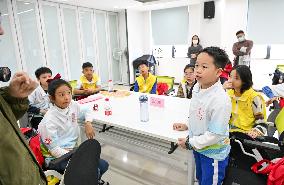
(231119) -- SHENZHEN, Nov. 19, 2023 (Xinhua) -- Members of a children's deliberation organization are engaged in a discussion on child-friendly measures and behaviors at the women's and children's activity center of Luohu District in Shenzhen, south China's Guangdong Province, Nov. 18, 2023. Shenzhen launched China's first guidelines for building a child-friendly city eight years ago. Since then the city has been rolling out a spate of measures spearheading the construction towards this aim. Statistics shows that by October of 2023, 452 city-level child-friendly bases and over 1,260 children's parks of various categories have been set up to gradually improve children's activity space and educational facilities in Shenzhen. In the meantime, 580 children's deliberation organizations, 761 children's homes at different communities and more than 1, 270 nurseries have emerged to enrich children's life and bring convenience for children's travelling. The word "child-friendly" in Shenzhen has been successfully

  •  
The Kurds of Khorasan - Iran

The Kurds of Khorasan - Iran

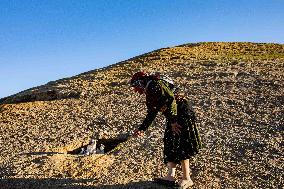
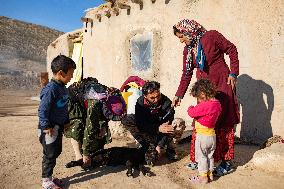
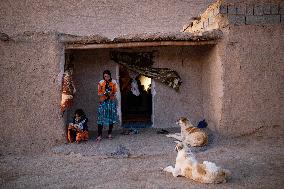
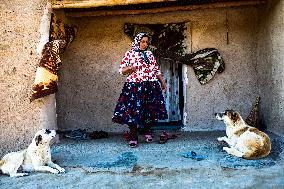
Hadi's mother is playing with puppies that are kept and bred to become herding dogs. They are one of the Kurdish nomadic families of Kermanj who were forced to migrate from their homeland to these areas to protect the eastern borders of Iran, and during this period they lost many of their cultural characteristics and behaviors. They are animal husbandry now and still speak Kurdish, but the clothes they wear are no longer Kurdish and their behaviors have completely changed and most of them do not even know where their original birthplace was. Golestan, Iran, February 2, 2022. Photo by Younes Mohammad/Middle East Images/ABACAPRESS.COM

  •  
The Kurds of Khorasan - Iran

The Kurds of Khorasan - Iran

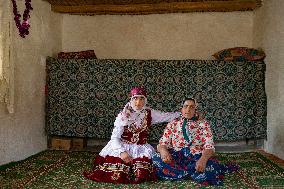
Faezeh and her mother, Asmar, taking a pose for a portrait with her traditional clothes at her house. They are one of the Kurdish nomadic families of Kermanj who were forced to migrate from their homeland to these areas to protect the eastern borders of Iran, and during this period they lost many of their cultural characteristics and behaviors. They are animal husbandry now and still speak Kurdish, but the clothes they wear are no longer Kurdish and their behaviors have completely changed and most of them do not even know where their original birthplace was. Golestan, Iran, March 2, 2022. Photo by Younes Mohammad/Middle East Images/ABACAPRESS.COM

  •  
The Kurds of Khorasan - Iran

The Kurds of Khorasan - Iran

Faezeh, Hadi's daughter, taking a pose for a portrait with her traditional clothes at Hadi's house. They are one of the Kurdish nomadic families of Kermanj who were forced to migrate from their homeland to these areas to protect the eastern borders of Iran, and during this period they lost many of their cultural characteristics and behaviors. They are animal husbandry now and still speak Kurdish, but the clothes they wear are no longer Kurdish and their behaviors have completely changed and most of them do not even know where their original birthplace was. Golestan, Iran, March 2, 2022. Photo by Younes Mohammad/Middle East Images/ABACAPRESS.COM

  •  
The Kurds of Khorasan - Iran

The Kurds of Khorasan - Iran

Hadi's parent, taking a pose for a portrait while his mother weard traditional clothes at Hadi's house. They are one of the Kurdish nomadic families of Kermanj who were forced to migrate from their homeland to these areas to protect the eastern borders of Iran, and during this period they lost many of their cultural characteristics and behaviors. They are animal husbandry now and still speak Kurdish, but the clothes they wear are no longer Kurdish and their behaviors have completely changed and most of them do not even know where their original birthplace was. Golestan, Iran, March 2, 2022. Photo by Younes Mohammad/Middle East Images/ABACAPRESS.COM

  •  
The Kurds of Khorasan - Iran

The Kurds of Khorasan - Iran

Faezeh, Hadi's daughter, taking a pose for a portrait with her traditional clothes at Hadi's house. They are one of the Kurdish nomadic families of Kermanj who were forced to migrate from their homeland to these areas to protect the eastern borders of Iran, and during this period they lost many of their cultural characteristics and behaviors. They are animal husbandry now and still speak Kurdish, but the clothes they wear are no longer Kurdish and their behaviors have completely changed and most of them do not even know where their original birthplace was. Golestan, Iran, March 2, 2022. Photo by Younes Mohammad/Middle East Images/ABACAPRESS.COM

  •  
The Kurds of Khorasan - Iran

The Kurds of Khorasan - Iran

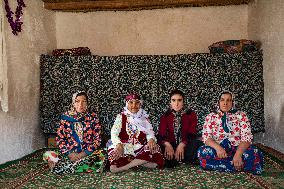
Some of members of Hadi's family, taking a pose for a portrait at Hadi's house. They are one of the Kurdish nomadic families of Kermanj who were forced to migrate from their homeland to these areas to protect the eastern borders of Iran, and during this period they lost many of their cultural characteristics and behaviors. They are animal husbandry now and still speak Kurdish, but the clothes they wear are no longer Kurdish and their behaviors have completely changed and most of them do not even know where their original birthplace was. Golestan, Iran, March 2, 2022. Photo by Younes Mohammad/Middle East Images/ABACAPRESS.COM

  •  
The Kurds of Khorasan - Iran

The Kurds of Khorasan - Iran

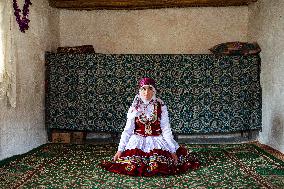
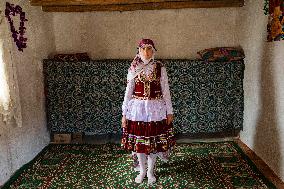
Hadi's mother, taking a pose for a portrait with her traditional clothes at Hadi's house. They are one of the Kurdish nomadic families of Kermanj who were forced to migrate from their homeland to these areas to protect the eastern borders of Iran, and during this period they lost many of their cultural characteristics and behaviors. They are animal husbandry now and still speak Kurdish, but the clothes they wear are no longer Kurdish and their behaviors have completely changed and most of them do not even know where their original birthplace was. Golestan, Iran, March 2, 2022. Photo by Younes Mohammad/Middle East Images/ABACAPRESS.COM

  •  
The Kurds of Khorasan - Iran

The Kurds of Khorasan - Iran

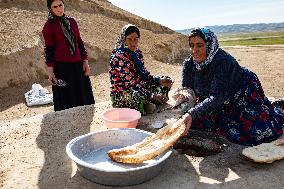
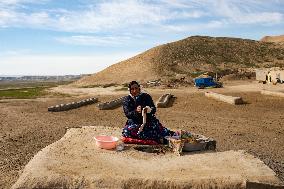
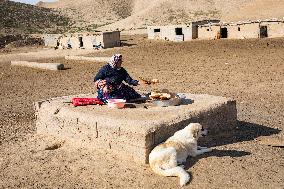
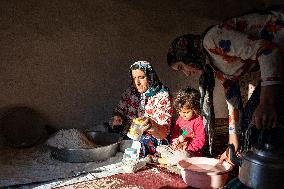
Asmar is baking traditional bread. They are one of the Kurdish nomadic families of Kermanj who were forced to migrate from their homeland to these areas to protect the eastern borders of Iran, and during this period they lost many of their cultural characteristics and behaviors. They are animal husbandry now and still speak Kurdish, but the clothes they wear are no longer Kurdish and their behaviors have completely changed and most of them do not even know where their original birthplace was. Golestan, Iran, March 2, 2022. Photo by Younes Mohammad/Middle East Images/ABACAPRESS.COM

  •  
The Kurds of Khorasan - Iran

The Kurds of Khorasan - Iran

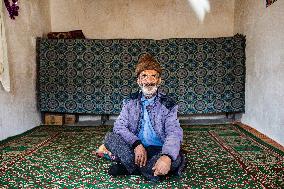
Amir, Hadi's father, taking a pose for a portrait at Hadi's house. They are one of the Kurdish nomadic families of Kermanj who were forced to migrate from their homeland to these areas to protect the eastern borders of Iran, and during this period they lost many of their cultural characteristics and behaviors. They are animal husbandry now and still speak Kurdish, but the clothes they wear are no longer Kurdish and their behaviors have completely changed and most of them do not even know where their original birthplace was. Golestan, Iran, March 2, 2022. Photo by Younes Mohammad/Middle East Images/ABACAPRESS.COM

  •  
The Kurds of Khorasan - Iran

The Kurds of Khorasan - Iran

Asmar is baking traditional bread. They are one of the Kurdish nomadic families of Kermanj who were forced to migrate from their homeland to these areas to protect the eastern borders of Iran, and during this period they lost many of their cultural characteristics and behaviors. They are animal husbandry now and still speak Kurdish, but the clothes they wear are no longer Kurdish and their behaviors have completely changed and most of them do not even know where their original birthplace was. Golestan, Iran, March 2, 2022. Photo by Younes Mohammad/Middle East Images/ABACAPRESS.COM

  •  
The Kurds of Khorasan - Iran

The Kurds of Khorasan - Iran

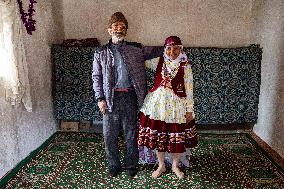
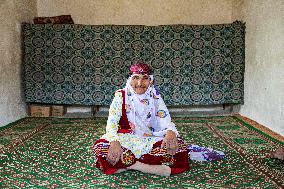
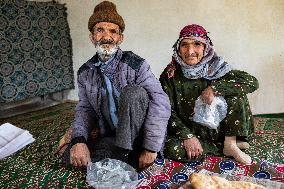
Hadi's parents before lunch at Hadi's house. They are one of the Kurdish nomadic families of Kermanj who were forced to migrate from their homeland to these areas to protect the eastern borders of Iran, and during this period they lost many of their cultural characteristics and behaviors. They are animal husbandry now and still speak Kurdish, but the clothes they wear are no longer Kurdish and their behaviors have completely changed and most of them do not even know where their original birthplace was. Golestan, Iran, March 2, 2022. Photo by Younes Mohammad/Middle East Images/ABACAPRESS.COM

  •  
The Kurds of Khorasan - Iran

The Kurds of Khorasan - Iran

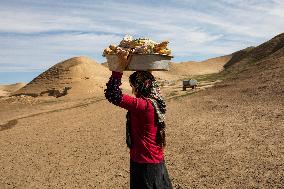
Faezeh puts the baked and prepared bread on her head and takes it home. They are one of the Kurdish nomadic families of Kermanj who were forced to migrate from their homeland to these areas to protect the eastern borders of Iran, and during this period they lost many of their cultural characteristics and behaviors. They are animal husbandry now and still speak Kurdish, but the clothes they wear are no longer Kurdish and their behaviors have completely changed and most of them do not even know where their original birthplace was. Golestan, Iran, March 2, 2022. Photo by Younes Mohammad/Middle East Images/ABACAPRESS.COM

  •  
The Kurds of Khorasan - Iran

The Kurds of Khorasan - Iran

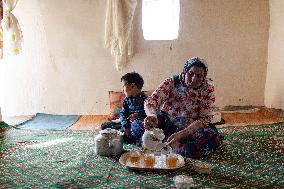
Asmar is preparing and giving tea to the guests. They are one of the Kurdish nomadic families of Kermanj who were forced to migrate from their homeland to these areas to protect the eastern borders of Iran, and during this period they lost many of their cultural characteristics and behaviors. They are animal husbandry now and still speak Kurdish, but the clothes they wear are no longer Kurdish and their behaviors have completely changed and most of them do not even know where their original birthplace was. Golestan, Iran, March 2, 2022. Photo by Younes Mohammad/Middle East Images/ABACAPRESS.COM

  •  
The Kurds of Khorasan - Iran

The Kurds of Khorasan - Iran

Asmar is baking traditional bread. They are one of the Kurdish nomadic families of Kermanj who were forced to migrate from their homeland to these areas to protect the eastern borders of Iran, and during this period they lost many of their cultural characteristics and behaviors. They are animal husbandry now and still speak Kurdish, but the clothes they wear are no longer Kurdish and their behaviors have completely changed and most of them do not even know where their original birthplace was. Golestan, Iran, March 2, 2022. Photo by Younes Mohammad/Middle East Images/ABACAPRESS.COM

  •  
The Kurds of Khorasan - Iran

The Kurds of Khorasan - Iran

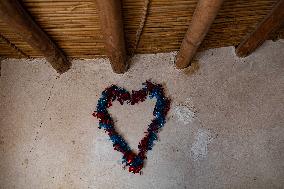
A handmade heart on the wall of the Hadi's room. They do not have just this room and one more kitchen. They are one of the Kurdish nomadic families of Kermanj who were forced to migrate from their homeland to these areas to protect the eastern borders of Iran, and during this period they lost many of their cultural characteristics and behaviors. They are animal husbandry now and still speak Kurdish, but the clothes they wear are no longer Kurdish and their behaviors have completely changed and most of them do not even know where their original birthplace was. Golestan, Iran, March 2, 2022. Photo by Younes Mohammad/Middle East Images/ABACAPRESS.COM

  •  
The Kurds of Khorasan - Iran

The Kurds of Khorasan - Iran

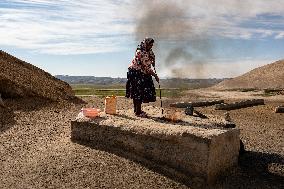
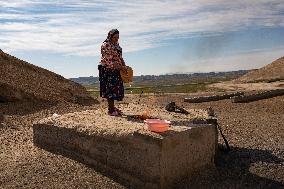
Asmar is warming up and preparing the oven for baking traditional bread. They are one of the Kurdish nomadic families of Kermanj who were forced to migrate from their homeland to these areas to protect the eastern borders of Iran, and during this period they lost many of their cultural characteristics and behaviors. They are animal husbandry now and still speak Kurdish, but the clothes they wear are no longer Kurdish and their behaviors have completely changed and most of them do not even know where their original birthplace was. Golestan, Iran, March 2, 2022. Photo by Younes Mohammad/Middle East Images/ABACAPRESS.COM

  •  
The Kurds of Khorasan - Iran

The Kurds of Khorasan - Iran

Asmar is warming up and preparing the oven for baking traditional bread. They are one of the Kurdish nomadic families of Kermanj who were forced to migrate from their homeland to these areas to protect the eastern borders of Iran, and during this period they lost many of their cultural characteristics and behaviors. They are animal husbandry now and still speak Kurdish, but the clothes they wear are no longer Kurdish and their behaviors have completely changed and most of them do not even know where their original birthplace was. Golestan, Iran, March 2, 2022. Photo by Younes Mohammad/Middle East Images/ABACAPRESS.COM

  •  
The Kurds of Khorasan - Iran

The Kurds of Khorasan - Iran

Asmar is warming up and preparing the oven for baking traditional bread. They are one of the Kurdish nomadic families of Kermanj who were forced to migrate from their homeland to these areas to protect the eastern borders of Iran, and during this period they lost many of their cultural characteristics and behaviors. They are animal husbandry now and still speak Kurdish, but the clothes they wear are no longer Kurdish and their behaviors have completely changed and most of them do not even know where their original birthplace was. Golestan, Iran, March 2, 2022. Photo by Younes Mohammad/Middle East Images/ABACAPRESS.COM

  •  
The Kurds of Khorasan - Iran

The Kurds of Khorasan - Iran

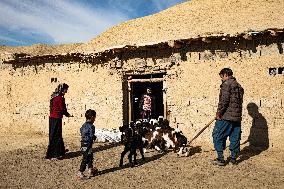
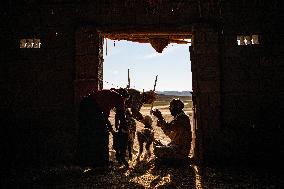
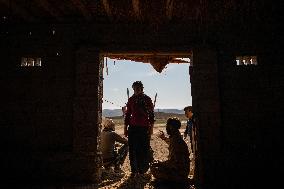
Hadi and other family members lead the lambs into lamb stalls after they have been adequately fed. They are one of the Kurdish nomadic families of Kermanj who were forced to migrate from their homeland to these areas to protect the eastern borders of Iran, and during this period they lost many of their cultural characteristics and behaviors. They are animal husbandry now and still speak Kurdish, but the clothes they wear are no longer Kurdish and their behaviors have completely changed and most of them do not even know where their original birthplace was. Golestan, Iran, March 2, 2022. Photo by Younes Mohammad/Middle East Images/ABACAPRESS.COM

  •  
The Kurds of Khorasan - Iran

The Kurds of Khorasan - Iran

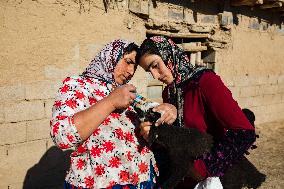
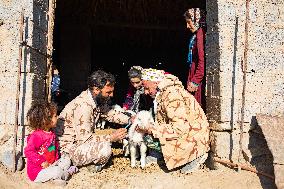
Asmar and her daughter, are injecting some medicine into the eyes of one of the sick lambs. They are one of the Kurdish nomadic families of Kermanj who were forced to migrate from their homeland to these areas to protect the eastern borders of Iran, and during this period they lost many of their cultural characteristics and behaviors. They are animal husbandry now and still speak Kurdish, but the clothes they wear are no longer Kurdish and their behaviors have completely changed and most of them do not even know where their original birthplace was. Golestan, Iran, March 2, 2022. Photo by Younes Mohammad/Middle East Images/ABACAPRESS.COM

  •  
The Kurds of Khorasan - Iran

The Kurds of Khorasan - Iran

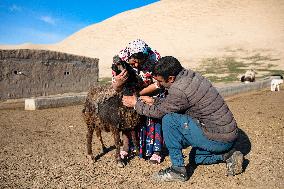
Mahdi and a number of family members are injecting medicine into the lambs, so far they have only been breastfed, and they are going to go out with the herd for grazing for the first time, and this medicine will help them digest the fodder. They are one of the Kurdish nomadic families of Kermanj who were forced to migrate from their homeland to these areas to protect the eastern borders of Iran, and during this period they lost many of their cultural characteristics and behaviors. They are animal husbandry now and still speak Kurdish, but the clothes they wear are no longer Kurdish and their behaviors have completely changed and most of them do not even know where their original birthplace was. Golestan, Iran, March 2, 2022. Photo by Younes Mohammad/Middle East Images/ABACAPRESS.COM

  •  
The Kurds of Khorasan - Iran

The Kurds of Khorasan - Iran

Mahdi and a number of family members are resting after injecting medicine into the lambs, so far they have only been breastfed, and they are going to go out with the herd for grazing for the first time, and this medicine will help them digest the fodder. They are one of the Kurdish nomadic families of Kermanj who were forced to migrate from their homeland to these areas to protect the eastern borders of Iran, and during this period they lost many of their cultural characteristics and behaviors. They are animal husbandry now and still speak Kurdish, but the clothes they wear are no longer Kurdish and their behaviors have completely changed and most of them do not even know where their original birthplace was. Golestan, Iran, March 2, 2022. Photo by Younes Mohammad/Middle East Images/ABACAPRESS.COM

  •  
The Kurds of Khorasan - Iran

The Kurds of Khorasan - Iran

Mehdi, his wife and his mother while their kids are watching, are helping and treating one of the sick lambs. They want to scratch a part of the lambs body to get some blood out and eventually lower the lamb's blood pressure. They are one of the Kurdish nomadic families of Kermanj who were forced to migrate from their homeland to these areas to protect the eastern borders of Iran, and during this period they lost many of their cultural characteristics and behaviors. They are animal husbandry now and still speak Kurdish, but the clothes they wear are no longer Kurdish and their behaviors have completely changed and most of them do not even know where their original birthplace was. Golestan, Iran, March 2, 2022. Photo by Younes Mohammad/Middle East Images/ABACAPRESS.COM

  •  
The Kurds of Khorasan - Iran

The Kurds of Khorasan - Iran

Faezeh and a number of family members are injecting medicine into the lambs, so far they have only been breastfed, and they are going to go out with the herd for grazing for the first time, and this medicine will help them digest the fodder. They are one of the Kurdish nomadic families of Kermanj who were forced to migrate from their homeland to these areas to protect the eastern borders of Iran, and during this period they lost many of their cultural characteristics and behaviors. They are animal husbandry now and still speak Kurdish, but the clothes they wear are no longer Kurdish and their behaviors have completely changed and most of them do not even know where their original birthplace was. Golestan, Iran, March 2, 2022. Photo by Younes Mohammad/Middle East Images/ABACAPRESS.COM

  •  
The Kurds of Khorasan - Iran

The Kurds of Khorasan - Iran

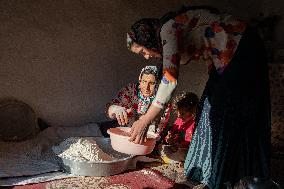
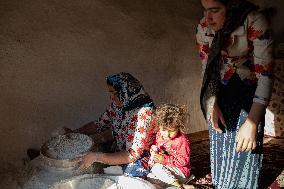
Asmar and his daughter Faezeh, are preparing dough in the kitchen to make and cook the daily bread. They are one of the Kurdish nomadic families of Kermanj who were forced to migrate from their homeland to these areas to protect the eastern borders of Iran, and during this period they lost many of their cultural characteristics and behaviors. They are animal husbandry now and still speak Kurdish, but the clothes they wear are no longer Kurdish and their behaviors have completely changed and most of them do not even know where their original birthplace was. Golestan, Iran, March 2, 2022. Photo by Younes Mohammad/Middle East Images/ABACAPRESS.COM

  •  
The Kurds of Khorasan - Iran

The Kurds of Khorasan - Iran

Mahdi and a number of family members are injecting medicine into the lambs, so far they have only been breastfed, and they are going to go out with the herd for grazing for the first time, and this medicine will help them digest the fodder. They are one of the Kurdish nomadic families of Kermanj who were forced to migrate from their homeland to these areas to protect the eastern borders of Iran, and during this period they lost many of their cultural characteristics and behaviors. They are animal husbandry now and still speak Kurdish, but the clothes they wear are no longer Kurdish and their behaviors have completely changed and most of them do not even know where their original birthplace was. Golestan, Iran, March 2, 2022. Photo by Younes Mohammad/Middle East Images/ABACAPRESS.COM

  •  
The Kurds of Khorasan - Iran

The Kurds of Khorasan - Iran

Asmar and his daughter Faezeh, are preparing dough in the kitchen to make and cook the daily bread. They are one of the Kurdish nomadic families of Kermanj who were forced to migrate from their homeland to these areas to protect the eastern borders of Iran, and during this period they lost many of their cultural characteristics and behaviors. They are animal husbandry now and still speak Kurdish, but the clothes they wear are no longer Kurdish and their behaviors have completely changed and most of them do not even know where their original birthplace was. Golestan, Iran, March 2, 2022. Photo by Younes Mohammad/Middle East Images/ABACAPRESS.COM

  •  
The Kurds of Khorasan - Iran

The Kurds of Khorasan - Iran

Hadi and his wife Asmar, are injecting medicine into one of the sick sheep. They are one of the Kurdish nomadic families of Kermanj who were forced to migrate from their homeland to these areas to protect the eastern borders of Iran, and during this period they lost many of their cultural characteristics and behaviors. They are animal husbandry now and still speak Kurdish, but the clothes they wear are no longer Kurdish and their behaviors have completely changed and most of them do not even know where their original birthplace was. Golestan, Iran, March 2, 2022. Photo by Younes Mohammad/Middle East Images/ABACAPRESS.COM

  •  
The Kurds of Khorasan - Iran

The Kurds of Khorasan - Iran

Asmar and his daughter Faezeh, are preparing dough in the kitchen to make and cook the daily bread. They are one of the Kurdish nomadic families of Kermanj who were forced to migrate from their homeland to these areas to protect the eastern borders of Iran, and during this period they lost many of their cultural characteristics and behaviors. They are animal husbandry now and still speak Kurdish, but the clothes they wear are no longer Kurdish and their behaviors have completely changed and most of them do not even know where their original birthplace was. Golestan, Iran, March 2, 2022. Photo by Younes Mohammad/Middle East Images/ABACAPRESS.COM

  •  
The Kurds of Khorasan - Iran

The Kurds of Khorasan - Iran

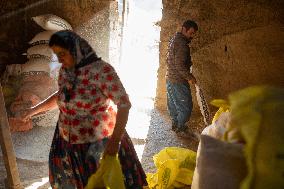
Hadi and his wife Asmar, are preparing hay and sheep food in the fodder barn. They are one of the Kurdish nomadic families of Kermanj who were forced to migrate from their homeland to these areas to protect the eastern borders of Iran, and during this period they lost many of their cultural characteristics and behaviors. They are animal husbandry now and still speak Kurdish, but the clothes they wear are no longer Kurdish and their behaviors have completely changed and most of them do not even know where their original birthplace was. Golestan, Iran, March 2, 2022. Photo by Younes Mohammad/Middle East Images/ABACAPRESS.COM

  •  
The Kurds of Khorasan - Iran

The Kurds of Khorasan - Iran

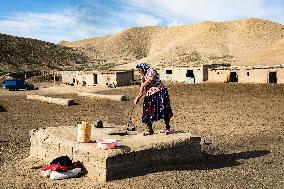
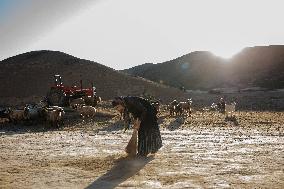
Faezeh, Hadi's daughter, is sweeping in front of their place of residence. They are one of the Kurdish nomadic families of Kermanj who were forced to migrate from their homeland to these areas to protect the eastern borders of Iran, and during this period they lost many of their cultural characteristics and behaviors. They are animal husbandry now and still speak Kurdish, but the clothes they wear are no longer Kurdish and their behaviors have completely changed and most of them do not even know where their original birthplace was. Golestan, Iran, March 2, 2022. Photo by Younes Mohammad/Middle East Images/ABACAPRESS.COM

  •  
The Kurds of Khorasan - Iran

The Kurds of Khorasan - Iran

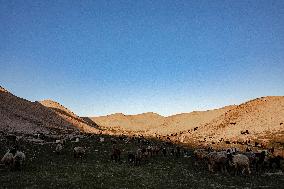
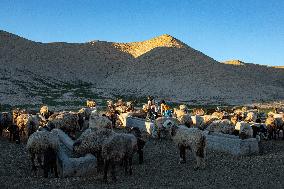
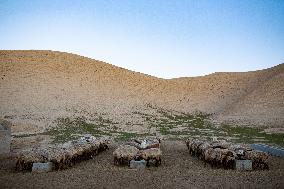
View from around Hadi's house where the herd are feeding. They are one of the Kurdish nomadic families of Kermanj who were forced to migrate from their homeland to these areas to protect the eastern borders of Iran, and during this period they lost many of their cultural characteristics and behaviors. They are animal husbandry now and still speak Kurdish, but the clothes they wear are no longer Kurdish and their behaviors have completely changed and most of them do not even know where their original birthplace was. Golestan, Iran, March 2, 2022. Photo by Younes Mohammad/Middle East Images/ABACAPRESS.COM

  •  
The Kurds of Khorasan - Iran

The Kurds of Khorasan - Iran

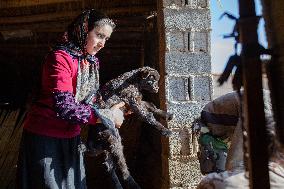
Asmar and his daughter Faezeh are carrying newborn lambs that are kept separate and away from the mother sheep. They are one of the Kurdish nomadic families of Kermanj who were forced to migrate from their homeland to these areas to protect the eastern borders of Iran, and during this period they lost many of their cultural characteristics and behaviors. They are animal husbandry now and still speak Kurdish, but the clothes they wear are no longer Kurdish and their behaviors have completely changed and most of them do not even know where their original birthplace was. Golestan, Iran, March 2, 2022. Photo by Younes Mohammad/Middle East Images/ABACAPRESS.COM

  •  
The Kurds of Khorasan - Iran

The Kurds of Khorasan - Iran

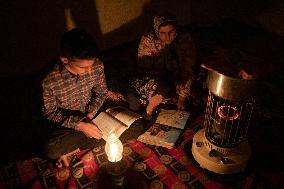
Ali, The Hadi's only son, with his youngest sister are studying their lessons inside their parents room using a lantern, because they don't have electricity. They are one of the Kurdish nomadic families of Kermanj who were forced to migrate from their homeland to these areas to protect the eastern borders of Iran, and during this period they lost many of their cultural characteristics and behaviors. They are animal husbandry now and still speak Kurdish, but the clothes they wear are no longer Kurdish and their behaviors have completely changed and most of them do not even know where their original birthplace was. Golestan, Iran, February 2, 2022. Photo by Younes Mohammad/Middle East Images/ABACAPRESS.COM

  •  
The Kurds of Khorasan - Iran

The Kurds of Khorasan - Iran

The two youngest Hadi's daughter are studying their lessons outside of their home because there is no enough light inside and they don't have electricity. They are one of the Kurdish nomadic families of Kermanj who were forced to migrate from their homeland to these areas to protect the eastern borders of Iran, and during this period they lost many of their cultural characteristics and behaviors. They are animal husbandry now and still speak Kurdish, but the clothes they wear are no longer Kurdish and their behaviors have completely changed and most of them do not even know where their original birthplace was. Golestan, Iran, February 2, 2022. Photo by Younes Mohammad/Middle East Images/ABACAPRESS.COM

  •  
The Kurds of Khorasan - Iran

The Kurds of Khorasan - Iran

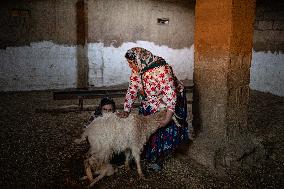
Asmar and her daughter Faezeh are breastfeeding a newborn lamb that are kept separate and away from the mother sheep. They are one of the Kurdish nomadic families of Kermanj who were forced to migrate from their homeland to these areas to protect the eastern borders of Iran, and during this period they lost many of their cultural characteristics and behaviors. They are animal husbandry now and still speak Kurdish, but the clothes they wear are no longer Kurdish and their behaviors have completely changed and most of them do not even know where their original birthplace was. Golestan, Iran, February 2, 2022. Photo by Younes Mohammad/Middle East Images/ABACAPRESS.COM

  •  
The Kurds of Khorasan - Iran

The Kurds of Khorasan - Iran

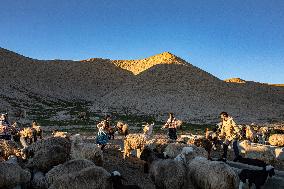
A view of the around Hadi's house that mother and lactating sheep are breastfeeding newborn lambs that are kept separate and away from the herd. They are one of the Kurdish nomadic families of Kermanj who were forced to migrate from their homeland to these areas to protect the eastern borders of Iran, and during this period they lost many of their cultural characteristics and behaviors. They are animal husbandry now and still speak Kurdish, but the clothes they wear are no longer Kurdish and their behaviors have completely changed and most of them do not even know where their original birthplace was. Golestan, Iran, February 2, 2022. Photo by Younes Mohammad/Middle East Images/ABACAPRESS.COM

  •  
The Kurds of Khorasan - Iran

The Kurds of Khorasan - Iran

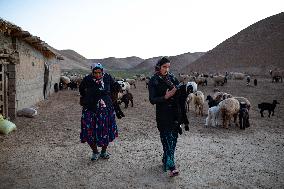
Hadi's daughters are looking for mother and lactating sheep to breastfeeding newborn lambs that are kept separate and away from the herd. They are one of the Kurdish nomadic families of Kermanj who were forced to migrate from their homeland to these areas to protect the eastern borders of Iran, and during this period they lost many of their cultural characteristics and behaviors. They are animal husbandry now and still speak Kurdish, but the clothes they wear are no longer Kurdish and their behaviors have completely changed and most of them do not even know where their original birthplace was. Golestan, Iran, February 2, 2022. Photo by Younes Mohammad/Middle East Images/ABACAPRESS.COM

  •  
The Kurds of Khorasan - Iran

The Kurds of Khorasan - Iran

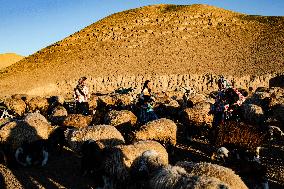
Hadi and his family are looking for mother and lactating sheep to breastfeeding newborn lambs that are kept separate and away from the herd. They are one of the Kurdish nomadic families of Kermanj who were forced to migrate from their homeland to these areas to protect the eastern borders of Iran, and during this period they lost many of their cultural characteristics and behaviors. They are animal husbandry now and still speak Kurdish, but the clothes they wear are no longer Kurdish and their behaviors have completely changed and most of them do not even know where their original birthplace was. Golestan, Iran, February 2, 2022. Photo by Younes Mohammad/Middle East Images/ABACAPRESS.COM

  •  
The Kurds of Khorasan - Iran

The Kurds of Khorasan - Iran

Hadi's family are looking for mother and lactating sheep to breastfeeding newborn lambs that are kept separate and away from the herd. They are one of the Kurdish nomadic families of Kermanj who were forced to migrate from their homeland to these areas to protect the eastern borders of Iran, and during this period they lost many of their cultural characteristics and behaviors. They are animal husbandry now and still speak Kurdish, but the clothes they wear are no longer Kurdish and their behaviors have completely changed and most of them do not even know where their original birthplace was. Golestan, Iran, February 2, 2022. Photo by Younes Mohammad/Middle East Images/ABACAPRESS.COM

  •  
The Kurds of Khorasan - Iran

The Kurds of Khorasan - Iran

Faezeh, the Hadi's daughter, having Pitcher in her hands is coming out of the kitchen, which is also her and her sisters and brother bedroom. She was forced to stop going to school because of helping her parents with household chores. They are one of the Kurdish nomadic families of Kermanj who were forced to migrate from their homeland to these areas to protect the eastern borders of Iran, and during this period they lost many of their cultural characteristics and behaviors. They are animal husbandry now and still speak Kurdish, but the clothes they wear are no longer Kurdish and their behaviors have completely changed and most of them do not even know where their original birthplace was. Golestan, Iran, February 2, 2022. Photo by Younes Mohammad/Middle East Images/ABACAPRESS.COM

  •  
The Kurds of Khorasan - Iran

The Kurds of Khorasan - Iran

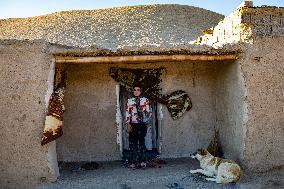
Hadi's wife, Asmar, comes out of the kitchen which is also their children's bedroom to feed the chickens, roosters and dogs. They are one of the Kurdish nomadic families of Kermanj who were forced to migrate from their homeland to these areas to protect the eastern borders of Iran, and during this period they lost many of their cultural characteristics and behaviors. They are animal husbandry now and still speak Kurdish, but the clothes they wear are no longer Kurdish and their behaviors have completely changed and most of them do not even know where their original birthplace was. Golestan, Iran, February 2, 2022. Photo by Younes Mohammad/Middle East Images/ABACAPRESS.COM

  • Main
  • Top
  • Editorial
  • Creative
  • About Us
  • About ILG
  • Terms of use
  • Company
  • BEHIND
  • Price List
  • Single Plan
  • Monthly Plan
  • Services
  • Shooting
  • Rights Clearance
  • Support
  • FAQ
  • How To Buy
  • Contact Us
  • Become a Partner

© KYODO NEWS IMAGES INC

All Rights Reserved.

  • Editorial
  • Olympics
  • News
  • Sports
  • Japan
  • Tech
  • Royal
  • Disaster
  • NorthKorea
  • Old Japan
  • SNS
  • Creative
  • Food
  • Japan
  • Landscape
  • Animal
  • Popular
  • #Ukraine
  • #Russia
  • #coronavirus
  • #N. Korea
  • #China
  • #Thailand
  • #Ukraine
  • #Russia
  • #coronavirus
  • #N. Korea
  • #China
  • #Thailand
  • Food
  • Japan
  • Landscape
  • Animal
  • Olympics
  • News
  • Sports
  • Japan
  • Tech
  • Royal
  • Disaster
  • NorthKorea
  • Old Japan
  • SNS