•  

China: Zoo Monkey Gifts Apple Slices to Woman After She Strokes its Hand

On March 7, 2026, at a zoo in Inner Mongolia, northern China, a video captured a woman holding and gently stroking a monkey's hand through a hole in a glass barrier. The monkey appeared relaxed and seemed to enjoy the contact, before suddenly turning and running away. A short while later, it returned carrying two pieces of apple and passed them through the hole to the woman, who appeared delighted by the unexpected gesture.

  •  
Paris Carnival 2025 - France

Paris Carnival 2025 - France

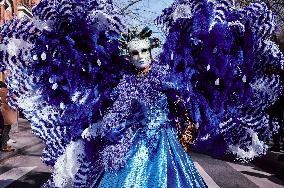
A performer in an elaborate blue costume poses during the Promenade du Boeuf Gras in Paris, on March 2, 2025. The parade, known for its extravagant costumes and theatrical performances, dates back to the Middle Ages and features a symbolic procession led by the “Fat Ox,” a nod to historic French feasting customs before Lent. Photo by Olivia Bonnamour/ABACAPRESS.COM

  •  
Illumination event in Tokyo

Illumination event in Tokyo

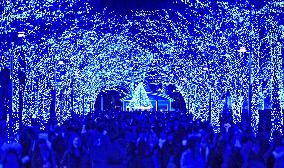
A tree-lined street in Tokyo's Shibuya area is illuminated with about 600,000 blue LED lights on Dec. 22, 2024.

  •  

UK: Japanese Imperial Couple State Visit – The Mall Carriage Procession

Japan's Emperor Naruhito and Empress Masako commenced their 3-day state visit to the UK on Tuesday, June 25. King Charles and Queen Camilla met the imperial couple on Horse Guards Parade before traveling on royal carriages down The Mall to Buckingham Palace for a state banquet.

  •  

UK: Japanese Imperial Couple State Visit – The Mall Carriage Procession 2

Japan's Emperor Naruhito and Empress Masako commenced their 3-day state visit to the UK on Tuesday, June 25. King Charles and Queen Camilla met the imperial couple on Horse Guards Parade before traveling on royal carriages down The Mall to Buckingham Palace for a state banquet.

  •  
US, Japan And South Korea Hold Drills In Disputed Sea

US, Japan And South Korea Hold Drills In Disputed Sea

Handout photo dated April 11, 2024 shows Sailors signal an F/A-18F Super Hornet from the “Black Knights” of Strike Fighter Squadron (VFA) 154, right, and an F/A-18E Super Hornet from the “Blue Blasters” of VFA-34 aboard the Nimitz-class aircraft carrier USS Theodore Roosevelt (CVN 71) during a trilateral exercise in the U.S. 7th Fleet area of responsibility. A U.S. carrier strike group led by the USS Theodore Roosevelt has held a two-day joint exercise with its allies Japan and South Korea as U.S. President Joe Biden met for talks with leaders from Japan and the Philippines at the White House. The military and diplomatic maneuvers are meant to strengthen the partners’ solidarity in the face of what they see as China’s aggressive military actions in the region. A number of U.S. and South Korean guided missile destroyers and a Japanese warship joined the drills in the disputed East China Sea, where worries about China’s territorial claims are rising. U.S. Navy photo by Mass Communication Specialist Seaman Appre

  •  
Illumination event in Tokyo

Illumination event in Tokyo

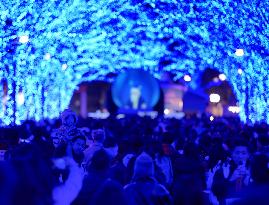
A tree-lined street in Tokyo's Shibuya area is illuminated with about 770,000 blue LED lights on Dec. 21, 2023.

  •  
Lab-Grown Human Embryos Offer New Research Hope

Lab-Grown Human Embryos Offer New Research Hope

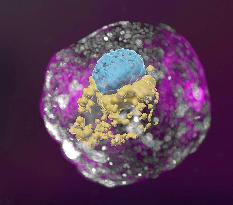
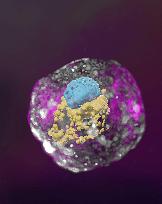
Handout photo shows a stem-cell derived human embryo model showing blue cells (embryo), yellow cells (yolk sac) and pink cells (placenta). Scientists have grown an entity that closely resembles an early human embryo, without using sperm, eggs or a womb. The Weizmann Institute team say their "embryo model", made using stem cells, looks like a textbook example of a real 14-day-old embryo. It even released hormones that turned a pregnancy test positive in the lab. The ambition for embryo models is to provide an ethical way of understanding the earliest moments of our lives. The researchers, led by Palestinian scientist Jacob Hanna at the Weizmann Institute in Israel, harnessed the power of embryonic stem cells, which can become any kind of cell. They produced embryo models up to 14 days old, which is the legal limit for human embryo lab research in many countries, and the point at which organs like the brain begin to develop. The researchers say their work differs from those of other teams because it uses chemic

  •  
Lab-Grown Human Embryos Offer New Research Hope

Lab-Grown Human Embryos Offer New Research Hope

Handout photo shows a stem-cell derived human embryo model showing blue cells (embryo), yellow cells (yolk sac) and pink cells (placenta). Scientists have grown an entity that closely resembles an early human embryo, without using sperm, eggs or a womb. The Weizmann Institute team say their "embryo model", made using stem cells, looks like a textbook example of a real 14-day-old embryo. It even released hormones that turned a pregnancy test positive in the lab. The ambition for embryo models is to provide an ethical way of understanding the earliest moments of our lives. The researchers, led by Palestinian scientist Jacob Hanna at the Weizmann Institute in Israel, harnessed the power of embryonic stem cells, which can become any kind of cell. They produced embryo models up to 14 days old, which is the legal limit for human embryo lab research in many countries, and the point at which organs like the brain begin to develop. The researchers say their work differs from those of other teams because it uses chemic

  •  
Osaka river lit up blue

Osaka river lit up blue

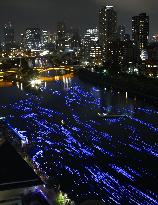
About 40,000 blue LED balls light up the river running through central Osaka on July 7, 2023, following a three-year hiatus due to the COVID-19 pandemic.

  •  
Osaka river lit up blue

Osaka river lit up blue

About 40,000 blue LED balls light up the river running through central Osaka on July 7, 2023, following a three-year hiatus due to the COVID-19 pandemic.

  •  

Soccer: Moriyasu stays on as Japan manager after World Cup run

The Japan Football Association retained Hajime Moriyasu as men's national team manager Wednesday after he led them to the round of 16 at this year's World Cup in Qatar after topping their tough group. The 54-year-old becomes the first manager to remain in the post following a World Cup since Japan's 1998 debut in France and will be tasked with steering the Samurai Blue toward the 2026 World Cup, to be co-hosted by the United States, Mexico and Canada. "I'm extremely honored while also bracing myself for the difficult mission ahead and the weight of responsibility that comes with the job,

  •  
Tokyo Skytree lit up in 4 colors

Tokyo Skytree lit up in 4 colors

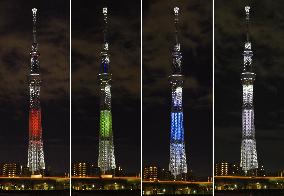
TOKYO, Japan - Tokyo Skytree, the world's tallest free-standing tower, is illuminated in the three primary colors of red, green and blue (from L) and their combined color of white (far R) with LED lighting in Tokyo on Dec. 11, 2014, in an event to celebrate three Japan-born winners of the Nobel Prize in Physics for 2014 for developing an efficient blue LED.

  •  
Nagoya landmarks lit by blue LEDs to hail Nobel prize

Nagoya landmarks lit by blue LEDs to hail Nobel prize

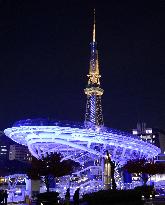
NAGOYA, Japan - The Nagoya TV Tower and the Oasis 21 complex (foreground) are illuminated in blue with light-emitting diodes in Nagoya on Dec. 10, 2014, in celebration of the winning of the Nobel Prize in Physics by Nagoya University professor Hiroshi Amano and Meijo University professor Isamu Akasaki for inventing the blue LED. Both universities are located in the central Japan city. Another Japanese scientist, University of California professor Shuji Nakamura, also shared the honor for the same invention.

  •  
Fixer helps Nobel laureate in blue LED invention

Fixer helps Nobel laureate in blue LED invention

STOCKHOLM, Sweden - Akio Ishida, a senior researcher at the Japan Science and Technology Agency, speaks after listening to commemorative lectures by three Japanese winners of the 2014 Nobel Prize in Physics in Stockholm on Dec. 8, 2014. Ishida played a leading role in linking the work of Isamu Akasaki, one of the three Nobel laureates and the world's first inventor of a blue light-emitting diode, with LED manufacturers.

  •  
Nobel laureate Nakamura wins U.S. prize for engineering

Nobel laureate Nakamura wins U.S. prize for engineering

WASHINGTON, United States, March 2 Kyodo - Shuji Nakamura, a Japanese-born professor at the University of California, Santa Barbara, poses in Washington on Feb. 24, 2015, after receiving the Charles Stark Draper Prize for Engineering from the National Academy of Engineering. Nakamura, a co-winner of the 2014 Nobel Prize in Physics for his invention of a high-brightness blue LED, received the U.S. award together with four others, including Nick Holonyak, an American engineer known as the "Father of LED."

  •  
Nobel winner Nakamura extends olive branch to former employer Nichia

Nobel winner Nakamura extends olive branch to former employer Nichia

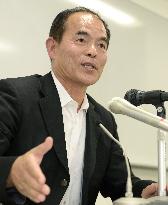
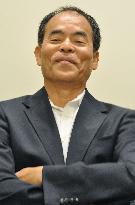
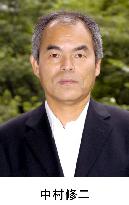
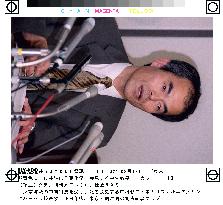
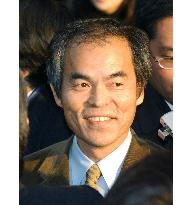
TOKYO, Japan - Shuji Nakamura, one of the three Japan-born scientists awarded the 2014 Nobel Prize in Physics, smiles during a press conference in Tokyo's Shinjuku Ward on Nov. 3, 2014. The 60-year-old professor at the University of California, Santa Barbara, said he wants to rebuild ties with former employer Nichia Corp., despite launching a lawsuit against the chemical maker over patent rights to his groundbreaking blue light-emitting diode technology. "My Nobel Prize was made possible because Nichia led the world in LEDs," Nakamura said.

  •  
Nobel winner Nakamura extends olive branch to former employer Nichia

Nobel winner Nakamura extends olive branch to former employer Nichia

TOKYO, Japan - Shuji Nakamura, one of the three Japan-born scientists awarded the 2014 Nobel Prize in Physics, holds a press conference in Tokyo's Shinjuku Ward on Nov. 3, 2014. The 60-year-old professor at the University of California, Santa Barbara, said he wants to rebuild ties with former employer Nichia Corp., despite launching a lawsuit against the chemical maker over patent rights to his groundbreaking blue light-emitting diode technology. "My Nobel Prize was made possible because Nichia led the world in LEDs," Nakamura said.

  •  
Nobel laureates Akasaki, Amano attend press conference

Nobel laureates Akasaki, Amano attend press conference

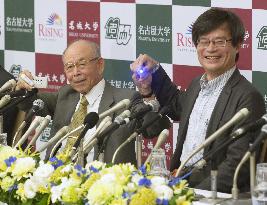
NAGOYA, Japan - Nobel laureates Hiroshi Amano (R) and Isamu Akasaki show blue light-emitting diodes during their joint press conference at Nagoya University in the central Japan city of Nagoya on Oct. 10, 2014. The two won the Nobel Prize in Physics together with another researcher for inventing the blue LED.

  •  
3 awarded Nobel Prize for inventing blue LED

3 awarded Nobel Prize for inventing blue LED

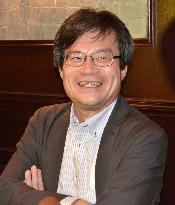
GRENOBLE, France - Photo taken on Oct. 7, 2014, in Grenoble, France, shows Japan's Hiroshi Amano, a Nagoya University professor, who met with reporters after winning the Nobel Prize in Physics together with two other researchers. Amano was visiting France for joint research.

  •  
2 Japanese, American awarded Nobel Prize for inventing blue LED

2 Japanese, American awarded Nobel Prize for inventing blue LED

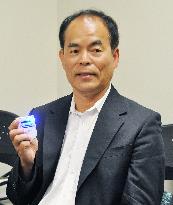
LOS ANGELES, United States - Shuji Nakamura, professor at the University of California in Santa Barbara, holds a blue light-emitting diode at the university on Oct. 7, 2014, after being jointly awarded the Nobel Prize in Physics 2014 for the invention of efficient blue light-emitting diodes, along with Hiroshi Amano, professor at Nagoya University, and Isamu Akasaki, professor at Meijo University.

  •  
2 Japanese, American awarded Nobel Prize for inventing blue LED

2 Japanese, American awarded Nobel Prize for inventing blue LED

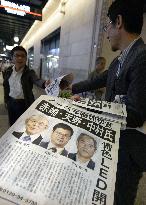
OSAKA, Japan - Newspaper extra editions, reporting the awarding of the Nobel Prize in Physics 2014 to two Japanese and a Japanese-born American physicists, are handed out to passers-by in Osaka's Namba district on Oct. 7, 2014. Two Japanese physicists -- Isamu Akasaki and Hiroshi Amano -- and Japanese-born American Shuji Nakamura were awarded the prize for the invention of efficient blue light-emitting diodes.

  •  
2 Japanese, American awarded Nobel Prize for inventing blue LED

2 Japanese, American awarded Nobel Prize for inventing blue LED

LOS ANGELES, United States - Shuji Nakamura, professor at the University of California in Santa Barbara, meets the press at the university on Oct. 7, 2014, after being jointly awarded the Nobel Prize in Physics 2014 for the invention of efficient blue light-emitting diodes, along with Hiroshi Amano, professor at Nagoya University, and Isamu Akasaki, professor at Meijo University.

  •  
2 Japanese, American awarded Nobel Prize for inventing blue LED

2 Japanese, American awarded Nobel Prize for inventing blue LED

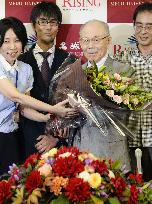
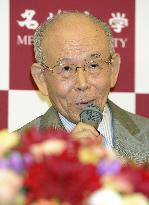
NAGOYA, Japan - Isamu Akasaki, professor at Meijo University, receives flowers from members of his laboratory at the university in Nagoya on Oct. 7, 2014, after being jointly awarded the Nobel Prize in Physics 2014 for the invention of efficient blue light-emitting diodes, along with Shuji Nakamura, professor at the University of California in Santa Barbara, and Hiroshi Amano, professor at Nagoya University.

  •  
2 Japanese, American awarded Nobel Prize for inventing blue LED

2 Japanese, American awarded Nobel Prize for inventing blue LED

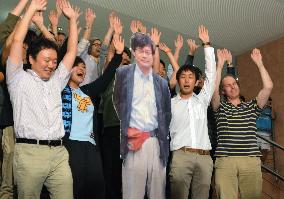
NAGOYA, Japan - Nagoya University students, surrounding a life-size cutout of professor Hiroshi Amano, celebrate at the university on Oct. 7, 2014, after Amano was jointly awarded the 2014 Nobel Prize in Physics for the invention of efficient blue light-emitting diodes, along with Shuji Nakamura, professor at the University of California in Santa Barbara, and Isamu Akasaki, professor at Meijo University.

  •  
2 Japanese, American awarded Nobel Prize for inventing blue LED

2 Japanese, American awarded Nobel Prize for inventing blue LED

NAGOYA, Japan - Isamu Akasaki, professor at Meijo University, holds a press conference at the university in Nagoya on Oct. 7, 2014, after being jointly awarded the Nobel Prize in Physics 2014 for the invention of efficient blue light-emitting diodes, along with Shuji Nakamura, professor at the University of California in Santa Barbara, and Hiroshi Amano, professor at Nagoya University.

  •  
2 Japanese, American awarded Nobel Prize for inventing blue LED

2 Japanese, American awarded Nobel Prize for inventing blue LED

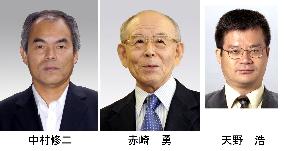
TOKYO, Japan - Combined photo shows (from L) Shuji Nakamura, professor at the University of California in Santa Barbara, Isamu Akasaki, professor at Meijo University in Nagoya, and Hiroshi Amano, professor at Nagoya University, who were jointly awarded the Nobel Prize in Physics 2014 on Oct. 7, 2014, for the invention of efficient blue light-emitting diodes. Akasaki and Amano are Japanese and Nakamura is a Japanese-born American.

  •  
Skytree lit up by colors in red, white, blue

Skytree lit up by colors in red, white, blue

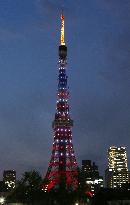
TOKYO, Japan - Tokyo Skytree, the world's tallest broadcasting tower at 634 meters, is lit up by LED lights in red, white and blue -- the colors of the Stars and Stripes flag -- on April 23, 2014, as U.S. President Barak Obama arrived in Tokyo for a three-day state visit to Japan.

  •  
LED 'fireflies' light up Tokyo river

LED 'fireflies' light up Tokyo river

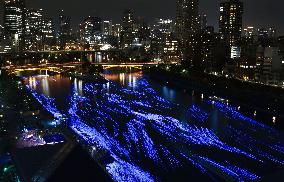
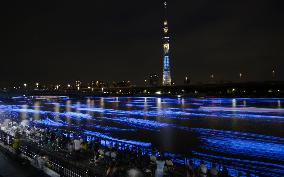
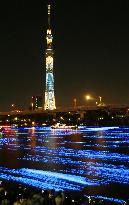
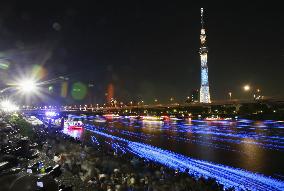
TOKYO, Japan - Photo shows Tokyo Sky Tree in Tokyo's Taito Ward towering over the Sumida River, with its surface lit up in blue by 100,000 light-emitting diode bulbs, mimicking fireflies, during an event called "Tokyo Firefly" on the night of May 25, 2013. Participants bought LED bulbs measuring 8.5 centimeters in diameter, each containing a solar panel and a rechargeable battery, and threw them into the river. The bulbs were collected by fishermen using a net downstream for reuse.

  •  
'LED fireflies' light up Tokyo river

'LED fireflies' light up Tokyo river

TOKYO, Japan - Photo shows Tokyo Sky Tree in Tokyo's Taito Ward towering over the Sumida River, with its surface lit up in blue by 100,000 bulbs containing light-emitting diodes, mimicking fireflies, during an event called ''Tokyo Firefly'' on May 6, 2012. Participants bought bulbs measuring 8.5 centimeters in diameter, each containing an LED charged with solar power, and threw them into the river. The bulbs were collected by the organizers using a net downstream.

  •  
'LED fireflies' light up Tokyo river

'LED fireflies' light up Tokyo river

TOKYO, Japan - Photo shows Tokyo Sky Tree in Tokyo's Taito Ward towering over the Sumida River, with its surface lit up in blue by 100,000 bulbs containing light-emitting diodes, mimicking fireflies, during an event called ''Tokyo Firefly'' on May 6, 2012. Participants bought bulbs measuring 8.5 centimeters in diameter, each containing an LED charged with solar power, and threw them into the river. The bulbs were collected by the organizers using a net downstream.

  •  
'LED fireflies' light up Tokyo river

'LED fireflies' light up Tokyo river

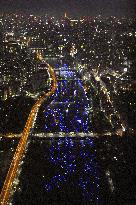
TOKYO, Japan - Photo taken from a Kyodo News helicopter shows the Sumida River in Tokyo's Taito Ward with its surface lit up in blue by 100,000 bulbs containing light-emitting diodes, mimicking fireflies, during an event called ''Tokyo Firefly'' on May 6, 2012. Participants bought bulbs measuring 8.5 centimeters in diameter, each containing an LED charged with solar power, and threw them into the river. The bulbs were collected by the organizers using a net downstream.

  •  
Blue LED inventor Nakamura to receive Emmy Award

Blue LED inventor Nakamura to receive Emmy Award

TOKYO, Japan - File photo shows Shuji Nakamura, a Japanese professor at the University of California at Santa Barbara who developed light-emitting diodes used for a range of products. Nakamura has been named as a winner of the Technology & Engineering Emmy Award, according to the National Academy of Television Arts & Sciences.

  •  
Blue LED inventor Nakamura awarded Millennium Technology Prize

Blue LED inventor Nakamura awarded Millennium Technology Prize

HELSINKI, Finland - Shuji Nakamura, a Japanese professor at the University of California at Santa Barbara who developed light-emitting diodes used for a range of products, speaks to reporters before receiving the 2006 Millennium Technology Prize in Helsinki on Sept. 8.

  •  
England vs Paraguay in World Cup

England vs Paraguay in World Cup

FRANKFURT, Germany - Paraguay players in blue jerseys jump to block a free kick by England's David Beckham during the first half of the Group B opener at the World Cup finals in Frankfurt's FIFA World Cup Stadium on June 10. The kick led to an own goal by Paraguay defender Carlos Gamarra (4) to give England a 1-0 lead in the third minute.

  •  
Roh calls Koizumi's Yasukuni visits 'unacceptable'

Roh calls Koizumi's Yasukuni visits 'unacceptable'

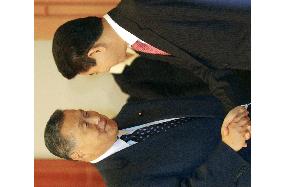
SEOUL, South Korea - Former Japanese Prime Minister Yoshiro Mori (L) and South Korean President Roh Moo Hyun shake hands at the Blue House presidential office in Seoul on Nov. 10. A group of Japanese lawmakers led by Mori met with Roh.

  •  
Nichia, Nakamura settle high-profile suit on blue LED patent

Nichia, Nakamura settle high-profile suit on blue LED patent

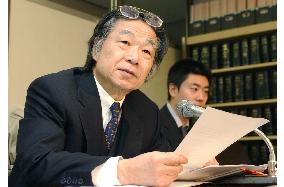
TOKYO, Japan - Hidetsohi Masunaga, a lawyer for Shuji Nakamura who developed the blue light-emitting diode (LED), speaks to reporters in Tokyo on Jan. 11 after Nakamura and Nichia Corp. reached a settlement on their dispute over the patent for the diode.

  •  
(3)Nichia ordered to pay 20 bil. yen to inventor for LED patent

(3)Nichia ordered to pay 20 bil. yen to inventor for LED patent

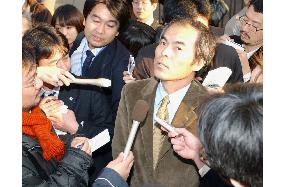
TOKYO, Japan - Shuji Nakamura, who developed the blue light-emitting diode (LED), smiles Jan. 30 during a news conference in Tokyo after the Tokyo District Court ordered Nichia Corp. to pay him 20 billion yen for his transfer of patent rights to the company.

  •  
(2)Nichia ordered to pay 20 bil. yen to inventor for LED patent

(2)Nichia ordered to pay 20 bil. yen to inventor for LED patent

TOKYO, Japan - Shuji Nakamura, who developed the blue light-emitting diode (LED), is surrounded by reporters in front of the Tokyo District Court in central Tokyo after the court ordered Nichia Corp. to pay him 20 billion yen for his transfer of patent rights to the company.

  •  
(1)Nichia ordered to pay 20 bil. yen to inventor for LED patent

(1)Nichia ordered to pay 20 bil. yen to inventor for LED patent

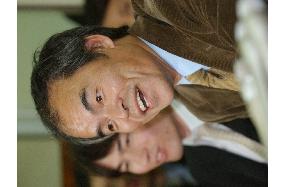
TOKYO, Japan - Shuji Nakamura, who developed the blue light-emitting diode (LED), smiles in front of the Tokyo District Court in central Tokyo on Jan. 30 after the court ordered Nichia Corp. to pay him 20 billion yen for his transfer of patent rights to the company.

  •  
(2)Court denies professor's claim to patent for landmark invention

(2)Court denies professor's claim to patent for landmark invention

TOKYO, Japan - Shuji Nakamura (L), a professor at the University of California, Santa Barbara, speaks at a news conference Sept. 19 after the Tokyo District Court acknowledged Nichia Corp.'s ownership of the patent for a key semiconductor device, rejecting a suit filed by him, the inventor of the blue-color light-emitting diode (LED).

  •  
U.S. Navy command ship Blue Ridge calls at Osaka port

U.S. Navy command ship Blue Ridge calls at Osaka port

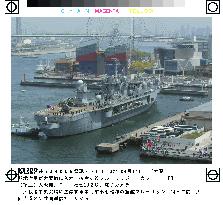
OSAKA, Japan - The U.S. Navy amphibious command ship Blue Ridge enters Osaka port on April 14 to allow its crew three days of rest, the U.S. Navy said. The 19,648-ton flagship of the U.S. Navy's 7th Fleet, based in Yokosuka, Kanagawa Prefecture, left there in January for the Western Pacific and Indian Ocean to ask countries such as the Philippines and Indonesia to cooperate in the U.S.-led antiterrorism campaign.

  •  
Blue-color LED developer sues company for patent, reward

Blue-color LED developer sues company for patent, reward

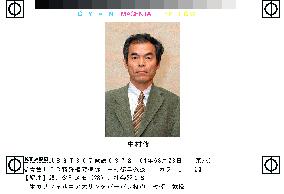
TOKUSHIMA, Japan - Shuji Nakamura (file photo), developer of the blue-color light-emitting diode (LED), filed a lawsuit with the Tokyo District Court on Aug. 23, demanding 2 billion yen and recognition that the semiconductor patent belongs to him. Nakamura, professor at the University of California, Santa Barbara, sued Nichia Corp., where he worked as an engineer until 1999, saying the company made unreasonable profits through its exclusive use of the blue-color LED patent.

  •  
Kim hails Pyongyang's pledge on missile moratorium

Kim hails Pyongyang's pledge on missile moratorium

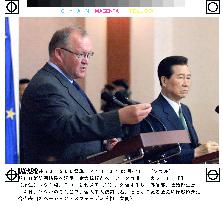
SEOUL, South Korea - President Kim Dae Jung (R) and Swedish Prime Minister Goran Persson (L) speak at a joint news conference following their talks at the Blue House presidential palace in Seoul on May 4. Kim welcomed North Korea's promise to maintain its moratorium on missile testing until 2003, made in talks in Pyongyang the previous day between North Korean leader Kim Jong Il and a top-level European Union delegation led by Persson.

  •  
NCB begins operations under new owners

NCB begins operations under new owners

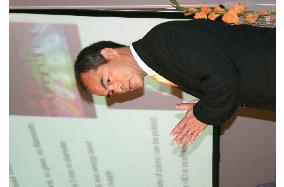
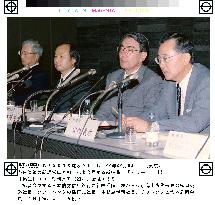
TOKYO, Japan - Nippon Credit Bank (NCB) opens Sept. 4 for its first official day of business under the ownership of a consortium led by Internet investor Softbank Corp., following 21 months of state control that ended Sept. 1. The new management is expected to adopt a plan to rename the institution Aozora Bank in January 2001. Aozora means ''blue sky'' in Japanese. Photo shows new NCB executives (from L to R) of Kokei Higuchi, president of Tokio Marine & Fire Insurance Co., Masayoshi Son, president of Softbank Corp., Tadayo Homma, a former executive director of the Bank of Japan, who is expected to become president of the new bank, and Yoshihiko Miyauchi, chairman of Orix Corp.

  •  
NCB to make fresh start as 'Aozora Bank'

NCB to make fresh start as 'Aozora Bank'

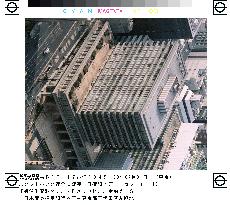
TOKYO, Japan - File photo shows the Tokyo headquarters of the nationalized Nippon Credit Bank (NCB), which was sold to a consortium led by Internet investor Softbank Corp. on Sept. 1. The group plans to rename it ''Aozora Bank'' -- the Japanese word for blue sky -- on Jan. 1 next year.

  •  

Dutch art exhibition echoes ancient Chinese culture

STORY: Dutch art exhibition echoes ancient Chinese culture DATELINE: May 17, 2022 LENGTH: 00:00:45 LOCATION: DELFT, the Netherlands CATEGORY: CULTURE SHOTLIST: 1. various of the exhibition STORYLINE: Delft, the Dutch city renowned for its blue pottery, is hosting an international exhibition of pottery artworks that pays tribute to an ancient Chinese culture dating back thousands of years. The six-week exhibition, entitled Echoes of Majiayao, brings together some 60 pieces of pottery artworks created by a group of 14 artists from nine countries after they had returned from an artist-in-residence project led by Dutch artist Simone Haak on the Majiayao culture in northwest China. The Majiayao culture is in the upper reaches of the Yellow River and its tributaries. With more than 5,000 years of history, it forms a significant part of the origin of the Chinese civilization. Delft Mayor Marja van Bijsterveldt said the exhibition "confirms the bond we have in Delft with China, especially when it comes to ceram

  •  
THE NETHERLANDS-DELFT-ANCIENT CHINESE CULTURE-EXHIBITION-POTTERY ARTWORKS

THE NETHERLANDS-DELFT-ANCIENT CHINESE CULTURE-EXHIBITION-POTTERY ARTWORKS

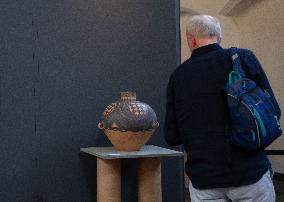
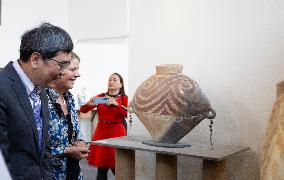
(220514) -- DELFT (THE NETHERLANDS), May 14, 2022 (Xinhua) -- A man views an exhibit at an exhibition of pottery artworks entitled Echoes of Majiayao in Delft, the Netherlands, on May 14, 2022. Delft, the Dutch city renowned for its blue pottery, launched on Saturday an international exhibition of pottery artworks that pays tribute to an ancient Chinese culture dating back thousands of years. The exhibition, entitled Echoes of Majiayao, brought together some 60 pieces of pottery artworks created by a group of 14 artists from nine countries, after they had returned from an artist-in-residence project led by Dutch artist Simone Haak on the Majiayao culture in north-west China. The Majiayao culture is in the upper reaches of the Yellow River and its tributaries. With more than 5,000 years of history, it forms a significant part of the origin of the Chinese civilization. (Photo by Sylvia Lederer/Xinhua)

  •  
THE NETHERLANDS-DELFT-ANCIENT CHINESE CULTURE-EXHIBITION-POTTERY ARTWORKS

THE NETHERLANDS-DELFT-ANCIENT CHINESE CULTURE-EXHIBITION-POTTERY ARTWORKS

(220514) -- DELFT (THE NETHERLANDS), May 14, 2022 (Xinhua) -- Delft Mayor Marja van Bijsterveldt (2nd L) and Chinese Ambassador to the Netherlands Tan Jian (1st L) view an exhibit at an exhibition of pottery artworks entitled Echoes of Majiayao in Delft, the Netherlands, on May 14, 2022. Delft, the Dutch city renowned for its blue pottery, launched on Saturday an international exhibition of pottery artworks that pays tribute to an ancient Chinese culture dating back thousands of years. The exhibition, entitled Echoes of Majiayao, brought together some 60 pieces of pottery artworks created by a group of 14 artists from nine countries, after they had returned from an artist-in-residence project led by Dutch artist Simone Haak on the Majiayao culture in north-west China. The Majiayao culture is in the upper reaches of the Yellow River and its tributaries. With more than 5,000 years of history, it forms a significant part of the origin of the Chinese civilization. (Photo by Sylvia Lederer/Xinhua)

  •  
U.S. Navy command ship Blue Ridge calls at Osaka port

U.S. Navy command ship Blue Ridge calls at Osaka port

OSAKA, Japan - The U.S. Navy amphibious command ship Blue Ridge enters Osaka port on April 14 to allow its crew three days of rest, the U.S. Navy said. The 19,648-ton flagship of the U.S. Navy's 7th Fleet, based in Yokosuka, Kanagawa Prefecture, left there in January for the Western Pacific and Indian Ocean to ask countries such as the Philippines and Indonesia to cooperate in the U.S.-led antiterrorism campaign.

  • Main
  • Top
  • Editorial
  • Creative
  • About Us
  • About ILG
  • Terms of use
  • Company
  • BEHIND
  • Price List
  • Single Plan
  • Monthly Plan
  • Services
  • Shooting
  • Rights Clearance
  • Support
  • FAQ
  • How To Buy
  • Contact Us
  • Become a Partner

© KYODO NEWS IMAGES INC

All Rights Reserved.

  • Editorial
  • Olympics
  • News
  • Sports
  • Japan
  • Tech
  • Royal
  • Disaster
  • NorthKorea
  • Old Japan
  • SNS
  • Creative
  • Food
  • Japan
  • Landscape
  • Animal
  • Popular
  • #Ukraine
  • #Thailand
  • #coronavirus
  • #N. Korea
  • #China
  • #Russia
  • #Ukraine
  • #Thailand
  • #coronavirus
  • #N. Korea
  • #China
  • #Russia
  • Food
  • Japan
  • Landscape
  • Animal
  • Olympics
  • News
  • Sports
  • Japan
  • Tech
  • Royal
  • Disaster
  • NorthKorea
  • Old Japan
  • SNS