•  
CHINA-SHAANXI-XI'AN-NEW MUSEUM (CN)

CHINA-SHAANXI-XI'AN-NEW MUSEUM (CN)

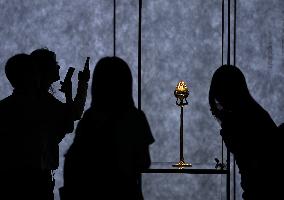
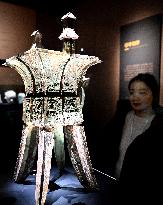
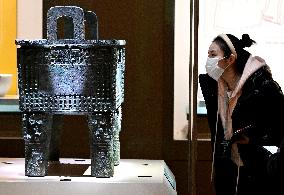
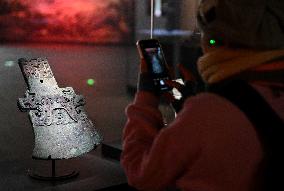
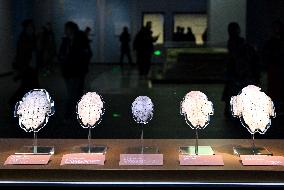
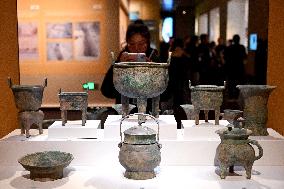
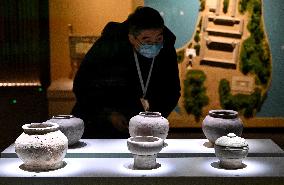
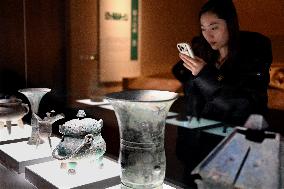
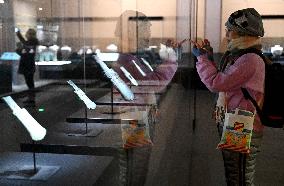
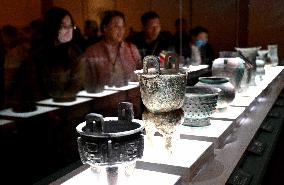
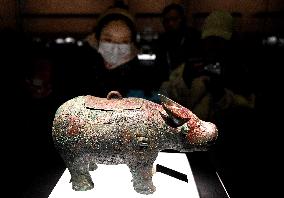
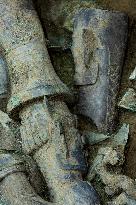
(240518) -- XI'AN, May 18, 2024 (Xinhua) -- People look at a bronzeware at the Qin Han Museum of the Shaanxi History Museum in Xi'an, capital of northwest China's Shaanxi Province, May 18, 2024. A new museum that focuses on ancient Chinese civilization in the Qin Dynasty (221 BC-207 BC) and Han Dynasty (202 BC-AD 220) officially opened to the public on Saturday in northwest China's Shaanxi Province. The Qin Han Museum of the Shaanxi History Museum, a subsidiary of Shaanxi History Museum, is the first museum in China that provides visitors with a panoramic view of the origin, development and contributions of Qin and Han civilizations. Since its trial run began in late 2023, the museum has attracted more than 300,000 visitors. (Xinhua/Li Yibo)

  •  
(HenanPixels)CHINA-HENAN-YINXU MUSEUM-NEW BUILDING-OPEN (CN)

(HenanPixels)CHINA-HENAN-YINXU MUSEUM-NEW BUILDING-OPEN (CN)

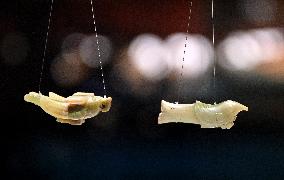
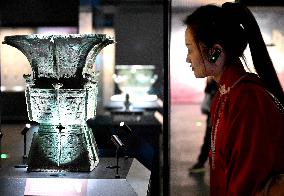
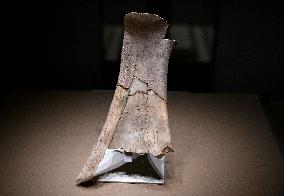
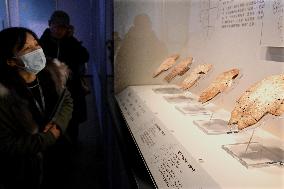
(240226) -- ANYANG, Feb. 26, 2024 (Xinhua) -- A visitor looks at an exhibit at the new building of Yinxu Museum in Anyang, central China's Henan Province, Feb. 26, 2024. A new building of the Yinxu Museum in Anyang officially opened to the public on Monday. Located near the archaeological site of the Yin Ruins, which is the location of the last capital of the Shang Dynasty (1600 B.C.-1046 B.C.), the expanded Yinxu Museum is the first national major archaeological museum to comprehensively present the Shang civilization. The new building boasts an exhibition area of 22,000 square meters, where nearly 4,000 items or sets of cultural relics, including bronzeware, pottery, jade objects, and oracle bones, are on display. The museum's old building was constructed in 2005. As archaeological work at the Yin Ruins continued to yield results, the building's mere 1,500-square-meter exhibition area became insufficient to effectively conserve and showcase the relics. This sparked the planning of the new building, and its

  •  
(HenanPixels)CHINA-HENAN-YINXU MUSEUM-NEW BUILDING-OPEN (CN)

(HenanPixels)CHINA-HENAN-YINXU MUSEUM-NEW BUILDING-OPEN (CN)

(240226) -- ANYANG, Feb. 26, 2024 (Xinhua) -- Exhibits are pictured at the new building of Yinxu Museum in Anyang, central China's Henan Province, Feb. 26, 2024. A new building of the Yinxu Museum in Anyang officially opened to the public on Monday. Located near the archaeological site of the Yin Ruins, which is the location of the last capital of the Shang Dynasty (1600 B.C.-1046 B.C.), the expanded Yinxu Museum is the first national major archaeological museum to comprehensively present the Shang civilization. The new building boasts an exhibition area of 22,000 square meters, where nearly 4,000 items or sets of cultural relics, including bronzeware, pottery, jade objects, and oracle bones, are on display. The museum's old building was constructed in 2005. As archaeological work at the Yin Ruins continued to yield results, the building's mere 1,500-square-meter exhibition area became insufficient to effectively conserve and showcase the relics. This sparked the planning of the new building, and its construc

  •  
(HenanPixels)CHINA-HENAN-YINXU MUSEUM-NEW BUILDING-OPEN (CN)

(HenanPixels)CHINA-HENAN-YINXU MUSEUM-NEW BUILDING-OPEN (CN)

(240226) -- ANYANG, Feb. 26, 2024 (Xinhua) -- A visitor looks at an exhibit at the new building of Yinxu Museum in Anyang, central China's Henan Province, Feb. 26, 2024. A new building of the Yinxu Museum in Anyang officially opened to the public on Monday. Located near the archaeological site of the Yin Ruins, which is the location of the last capital of the Shang Dynasty (1600 B.C.-1046 B.C.), the expanded Yinxu Museum is the first national major archaeological museum to comprehensively present the Shang civilization. The new building boasts an exhibition area of 22,000 square meters, where nearly 4,000 items or sets of cultural relics, including bronzeware, pottery, jade objects, and oracle bones, are on display. The museum's old building was constructed in 2005. As archaeological work at the Yin Ruins continued to yield results, the building's mere 1,500-square-meter exhibition area became insufficient to effectively conserve and showcase the relics. This sparked the planning of the new building, and its

  •  

New museum building opens at China's Shang Dynasty capital archaeological site

STORY: New museum building opens at China's Shang Dynasty capital archaeological site SHOOTING TIME: Feb. 26, 2024 DATELINE: Feb. 26, 2024 LENGTH: 00:01:33 LOCATION: ZHENGZHOU, China CATEGORY: CULTURE SHOTLIST: 1. various of the Yinxu Museum 2. STANDUP (English): YUAN YUEMING, Xinhua correspondent 3. SOUNDBITE (Chinese): HE YULING, Deputy chief of Anyang station under the Institute of Archaeology, Chinese Academy of Social Sciences 4. various of the Yinxu Museum STORYLINE: STANDUP (English): YUAN YUEMING, Xinhua correspondent "The new building of the Yinxu Museum in central China's Henan Province opened to the public on Monday. It offers a glimpse of the Shang civilization more than 3,000 years ago. As a new landmark of the World Heritage Site Yin Ruins, the museum showcases a diverse range of cultural relics, including bronzeware, pottery, jade objects, and oracle bones." Located near the archaeological site of the Yin Ruins, which is the location of the last capital of the Shang Dynasty (1600 B.C.-1046

  •  
(HenanPixels)CHINA-HENAN-YINXU MUSEUM-NEW BUILDING-OPEN (CN)

(HenanPixels)CHINA-HENAN-YINXU MUSEUM-NEW BUILDING-OPEN (CN)

(240226) -- ANYANG, Feb. 26, 2024 (Xinhua) -- A visitor views an exhibit at the new building of Yinxu Museum in Anyang, central China's Henan Province, Feb. 26, 2024. A new building of the Yinxu Museum in Anyang officially opened to the public on Monday. Located near the archaeological site of the Yin Ruins, which is the location of the last capital of the Shang Dynasty (1600 B.C.-1046 B.C.), the expanded Yinxu Museum is the first national major archaeological museum to comprehensively present the Shang civilization. The new building boasts an exhibition area of 22,000 square meters, where nearly 4,000 items or sets of cultural relics, including bronzeware, pottery, jade objects, and oracle bones, are on display. The museum's old building was constructed in 2005. As archaeological work at the Yin Ruins continued to yield results, the building's mere 1,500-square-meter exhibition area became insufficient to effectively conserve and showcase the relics. This sparked the planning of the new building, and its con

  •  
(HenanPixels)CHINA-HENAN-YINXU MUSEUM-NEW BUILDING-OPEN (CN)

(HenanPixels)CHINA-HENAN-YINXU MUSEUM-NEW BUILDING-OPEN (CN)

(240226) -- ANYANG, Feb. 26, 2024 (Xinhua) -- A visitor takes a photo of an exhibit at the new building of Yinxu Museum in Anyang, central China's Henan Province, Feb. 26, 2024. A new building of the Yinxu Museum in Anyang officially opened to the public on Monday. Located near the archaeological site of the Yin Ruins, which is the location of the last capital of the Shang Dynasty (1600 B.C.-1046 B.C.), the expanded Yinxu Museum is the first national major archaeological museum to comprehensively present the Shang civilization. The new building boasts an exhibition area of 22,000 square meters, where nearly 4,000 items or sets of cultural relics, including bronzeware, pottery, jade objects, and oracle bones, are on display. The museum's old building was constructed in 2005. As archaeological work at the Yin Ruins continued to yield results, the building's mere 1,500-square-meter exhibition area became insufficient to effectively conserve and showcase the relics. This sparked the planning of the new building,

  •  
(HenanPixels)CHINA-HENAN-YINXU MUSEUM-NEW BUILDING-OPEN (CN)

(HenanPixels)CHINA-HENAN-YINXU MUSEUM-NEW BUILDING-OPEN (CN)

(240226) -- ANYANG, Feb. 26, 2024 (Xinhua) -- An exhibit is pictured at the new building of Yinxu Museum in Anyang, central China's Henan Province, Feb. 26, 2024. A new building of the Yinxu Museum in Anyang officially opened to the public on Monday. Located near the archaeological site of the Yin Ruins, which is the location of the last capital of the Shang Dynasty (1600 B.C.-1046 B.C.), the expanded Yinxu Museum is the first national major archaeological museum to comprehensively present the Shang civilization. The new building boasts an exhibition area of 22,000 square meters, where nearly 4,000 items or sets of cultural relics, including bronzeware, pottery, jade objects, and oracle bones, are on display. The museum's old building was constructed in 2005. As archaeological work at the Yin Ruins continued to yield results, the building's mere 1,500-square-meter exhibition area became insufficient to effectively conserve and showcase the relics. This sparked the planning of the new building, and its constru

  •  
(HenanPixels)CHINA-HENAN-YINXU MUSEUM-NEW BUILDING-OPEN (CN)

(HenanPixels)CHINA-HENAN-YINXU MUSEUM-NEW BUILDING-OPEN (CN)

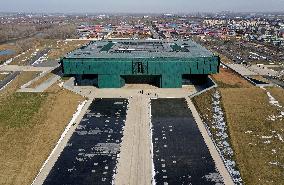
(240226) -- ANYANG, Feb. 26, 2024 (Xinhua) -- An aerial drone photo shows the new building of Yinxu Museum in Anyang, central China's Henan Province, Feb. 23, 2024. A new building of the Yinxu Museum in Anyang officially opened to the public on Monday. Located near the archaeological site of the Yin Ruins, which is the location of the last capital of the Shang Dynasty (1600 B.C.-1046 B.C.), the expanded Yinxu Museum is the first national major archaeological museum to comprehensively present the Shang civilization. The new building boasts an exhibition area of 22,000 square meters, where nearly 4,000 items or sets of cultural relics, including bronzeware, pottery, jade objects, and oracle bones, are on display. The museum's old building was constructed in 2005. As archaeological work at the Yin Ruins continued to yield results, the building's mere 1,500-square-meter exhibition area became insufficient to effectively conserve and showcase the relics. This sparked the planning of the new building, and its const

  •  
(HenanPixels)CHINA-HENAN-YINXU MUSEUM-NEW BUILDING-OPEN (CN)

(HenanPixels)CHINA-HENAN-YINXU MUSEUM-NEW BUILDING-OPEN (CN)

(240226) -- ANYANG, Feb. 26, 2024 (Xinhua) -- Exhibits are pictured at the new building of Yinxu Museum in Anyang, central China's Henan Province, Feb. 26, 2024. A new building of the Yinxu Museum in Anyang officially opened to the public on Monday. Located near the archaeological site of the Yin Ruins, which is the location of the last capital of the Shang Dynasty (1600 B.C.-1046 B.C.), the expanded Yinxu Museum is the first national major archaeological museum to comprehensively present the Shang civilization. The new building boasts an exhibition area of 22,000 square meters, where nearly 4,000 items or sets of cultural relics, including bronzeware, pottery, jade objects, and oracle bones, are on display. The museum's old building was constructed in 2005. As archaeological work at the Yin Ruins continued to yield results, the building's mere 1,500-square-meter exhibition area became insufficient to effectively conserve and showcase the relics. This sparked the planning of the new building, and its construc

  •  
(HenanPixels)CHINA-HENAN-YINXU MUSEUM-NEW BUILDING-OPEN (CN)

(HenanPixels)CHINA-HENAN-YINXU MUSEUM-NEW BUILDING-OPEN (CN)

(240226) -- ANYANG, Feb. 26, 2024 (Xinhua) -- A visitor takes a photo of exhibits at the new building of Yinxu Museum in Anyang, central China's Henan Province, Feb. 26, 2024. A new building of the Yinxu Museum in Anyang officially opened to the public on Monday. Located near the archaeological site of the Yin Ruins, which is the location of the last capital of the Shang Dynasty (1600 B.C.-1046 B.C.), the expanded Yinxu Museum is the first national major archaeological museum to comprehensively present the Shang civilization. The new building boasts an exhibition area of 22,000 square meters, where nearly 4,000 items or sets of cultural relics, including bronzeware, pottery, jade objects, and oracle bones, are on display. The museum's old building was constructed in 2005. As archaeological work at the Yin Ruins continued to yield results, the building's mere 1,500-square-meter exhibition area became insufficient to effectively conserve and showcase the relics. This sparked the planning of the new building, an

  •  
(HenanPixels)CHINA-HENAN-YINXU MUSEUM-NEW BUILDING-OPEN (CN)

(HenanPixels)CHINA-HENAN-YINXU MUSEUM-NEW BUILDING-OPEN (CN)

(240226) -- ANYANG, Feb. 26, 2024 (Xinhua) -- A visitor views exhibits at the new building of Yinxu Museum in Anyang, central China's Henan Province, Feb. 26, 2024. A new building of the Yinxu Museum in Anyang officially opened to the public on Monday. Located near the archaeological site of the Yin Ruins, which is the location of the last capital of the Shang Dynasty (1600 B.C.-1046 B.C.), the expanded Yinxu Museum is the first national major archaeological museum to comprehensively present the Shang civilization. The new building boasts an exhibition area of 22,000 square meters, where nearly 4,000 items or sets of cultural relics, including bronzeware, pottery, jade objects, and oracle bones, are on display. The museum's old building was constructed in 2005. As archaeological work at the Yin Ruins continued to yield results, the building's mere 1,500-square-meter exhibition area became insufficient to effectively conserve and showcase the relics. This sparked the planning of the new building, and its const

  •  
(HenanPixels)CHINA-HENAN-YINXU MUSEUM-NEW BUILDING-OPEN (CN)

(HenanPixels)CHINA-HENAN-YINXU MUSEUM-NEW BUILDING-OPEN (CN)

(240226) -- ANYANG, Feb. 26, 2024 (Xinhua) -- A visitor takes a photo of exhibits at the new building of Yinxu Museum in Anyang, central China's Henan Province, Feb. 26, 2024. A new building of the Yinxu Museum in Anyang officially opened to the public on Monday. Located near the archaeological site of the Yin Ruins, which is the location of the last capital of the Shang Dynasty (1600 B.C.-1046 B.C.), the expanded Yinxu Museum is the first national major archaeological museum to comprehensively present the Shang civilization. The new building boasts an exhibition area of 22,000 square meters, where nearly 4,000 items or sets of cultural relics, including bronzeware, pottery, jade objects, and oracle bones, are on display. The museum's old building was constructed in 2005. As archaeological work at the Yin Ruins continued to yield results, the building's mere 1,500-square-meter exhibition area became insufficient to effectively conserve and showcase the relics. This sparked the planning of the new building, an

  •  
(HenanPixels)CHINA-HENAN-YINXU MUSEUM-NEW BUILDING-OPEN (CN)

(HenanPixels)CHINA-HENAN-YINXU MUSEUM-NEW BUILDING-OPEN (CN)

(240226) -- ANYANG, Feb. 26, 2024 (Xinhua) -- A visitor takes a photo of an exhibit at the new building of Yinxu Museum in Anyang, central China's Henan Province, Feb. 26, 2024. A new building of the Yinxu Museum in Anyang officially opened to the public on Monday. Located near the archaeological site of the Yin Ruins, which is the location of the last capital of the Shang Dynasty (1600 B.C.-1046 B.C.), the expanded Yinxu Museum is the first national major archaeological museum to comprehensively present the Shang civilization. The new building boasts an exhibition area of 22,000 square meters, where nearly 4,000 items or sets of cultural relics, including bronzeware, pottery, jade objects, and oracle bones, are on display. The museum's old building was constructed in 2005. As archaeological work at the Yin Ruins continued to yield results, the building's mere 1,500-square-meter exhibition area became insufficient to effectively conserve and showcase the relics. This sparked the planning of the new building,

  •  
(HenanPixels)CHINA-HENAN-YINXU MUSEUM-NEW BUILDING-OPEN (CN)

(HenanPixels)CHINA-HENAN-YINXU MUSEUM-NEW BUILDING-OPEN (CN)

(240226) -- ANYANG, Feb. 26, 2024 (Xinhua) -- A visitor views exhibits at the new building of Yinxu Museum in Anyang, central China's Henan Province, Feb. 26, 2024. A new building of the Yinxu Museum in Anyang officially opened to the public on Monday. Located near the archaeological site of the Yin Ruins, which is the location of the last capital of the Shang Dynasty (1600 B.C.-1046 B.C.), the expanded Yinxu Museum is the first national major archaeological museum to comprehensively present the Shang civilization. The new building boasts an exhibition area of 22,000 square meters, where nearly 4,000 items or sets of cultural relics, including bronzeware, pottery, jade objects, and oracle bones, are on display. The museum's old building was constructed in 2005. As archaeological work at the Yin Ruins continued to yield results, the building's mere 1,500-square-meter exhibition area became insufficient to effectively conserve and showcase the relics. This sparked the planning of the new building, and its const

  •  
(HenanPixels)CHINA-HENAN-YINXU MUSEUM-NEW BUILDING-OPEN (CN)

(HenanPixels)CHINA-HENAN-YINXU MUSEUM-NEW BUILDING-OPEN (CN)

(240226) -- ANYANG, Feb. 26, 2024 (Xinhua) -- Visitor view exhibits at the new building of Yinxu Museum in Anyang, central China's Henan Province, Feb. 26, 2024. A new building of the Yinxu Museum in Anyang officially opened to the public on Monday. Located near the archaeological site of the Yin Ruins, which is the location of the last capital of the Shang Dynasty (1600 B.C.-1046 B.C.), the expanded Yinxu Museum is the first national major archaeological museum to comprehensively present the Shang civilization. The new building boasts an exhibition area of 22,000 square meters, where nearly 4,000 items or sets of cultural relics, including bronzeware, pottery, jade objects, and oracle bones, are on display. The museum's old building was constructed in 2005. As archaeological work at the Yin Ruins continued to yield results, the building's mere 1,500-square-meter exhibition area became insufficient to effectively conserve and showcase the relics. This sparked the planning of the new building, and its construc

  •  
(HenanPixels)CHINA-HENAN-YINXU MUSEUM-NEW BUILDING-OPEN (CN)

(HenanPixels)CHINA-HENAN-YINXU MUSEUM-NEW BUILDING-OPEN (CN)

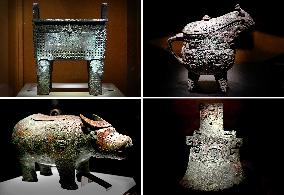
(240226) -- ANYANG, Feb. 26, 2024 (Xinhua) -- The combo photo shows exhibits at the new building of Yinxu Museum in Anyang, central China's Henan Province, Feb. 23, 2024. A new building of the Yinxu Museum in Anyang officially opened to the public on Monday. Located near the archaeological site of the Yin Ruins, which is the location of the last capital of the Shang Dynasty (1600 B.C.-1046 B.C.), the expanded Yinxu Museum is the first national major archaeological museum to comprehensively present the Shang civilization. The new building boasts an exhibition area of 22,000 square meters, where nearly 4,000 items or sets of cultural relics, including bronzeware, pottery, jade objects, and oracle bones, are on display. The museum's old building was constructed in 2005. As archaeological work at the Yin Ruins continued to yield results, the building's mere 1,500-square-meter exhibition area became insufficient to effectively conserve and showcase the relics. This sparked the planning of the new building, and its

  •  
(HenanPixels)CHINA-HENAN-YINXU MUSEUM-NEW BUILDING-OPEN (CN)

(HenanPixels)CHINA-HENAN-YINXU MUSEUM-NEW BUILDING-OPEN (CN)

(240226) -- ANYANG, Feb. 26, 2024 (Xinhua) -- A visitor views an exhibit at the new building of Yinxu Museum in Anyang, central China's Henan Province, Feb. 26, 2024. A new building of the Yinxu Museum in Anyang officially opened to the public on Monday. Located near the archaeological site of the Yin Ruins, which is the location of the last capital of the Shang Dynasty (1600 B.C.-1046 B.C.), the expanded Yinxu Museum is the first national major archaeological museum to comprehensively present the Shang civilization. The new building boasts an exhibition area of 22,000 square meters, where nearly 4,000 items or sets of cultural relics, including bronzeware, pottery, jade objects, and oracle bones, are on display. The museum's old building was constructed in 2005. As archaeological work at the Yin Ruins continued to yield results, the building's mere 1,500-square-meter exhibition area became insufficient to effectively conserve and showcase the relics. This sparked the planning of the new building, and its con

  •  

New building of museum at Shang Dynasty capital site to open this month

STORY: New building of museum at Shang Dynasty capital site to open this month SHOOTING TIME: Feb. 22, 2024 DATELINE: Feb. 23, 2024 LENGTH: 00:00:27 LOCATION: ANYANG, China CATEGORY: CULTURE SHOTLIST: 1. various of cultural relics of the Yinxu Museum STORYLINE: The new building of the Yinxu Museum at the Yin Ruins, the site of the last capital of the Shang Dynasty (1600 B.C.-1046 B.C.), will open to the public on Feb. 26. The announcement was made at a press conference held by the National Cultural Heritage Administration on Monday in Beijing. The museum, located in the city of Anyang in central China's Henan Province, will showcase nearly 4,000 items or sets of cultural relics, including bronzeware, pottery, jade objects, and oracle bones. The exhibition features a vast quantity and diverse range of cultural artifacts, with over three-quarters of the relics making their debut appearances. The Yin Ruins is the first documented late Shang Dynasty capital site in China, as confirmed by archaeological exc

  •  

HK Palace Museum unveils special exhibition on cultural treasures from Sanxingdui Ruins

STORY: HK Palace Museum unveils special exhibition on cultural treasures from Sanxingdui Ruins DATELINE: Sept. 27, 2023 LENGTH: 00:02:03 LOCATION: HONG KONG, China CATEGORY: CULTURE SHOTLIST: 1. various of the exhibition 2. SOUNDBITE (English): SHENGYU WANG, Assistant curator of Hong Kong Palace Museum STORYLINE: The Hong Kong Palace Museum (HKPM) unveiled Tuesday a special exhibition featuring new archaeological discoveries at world-renowned Sanxingdui Ruins. Fifty-five important items, including bronzeware, jade and goldware, unearthed in the most recent excavations at the Sanxingdui Ruins between 2020 and 2022, are among the 120 artifacts on display. SOUNDBITE (English): SHENGYU WANG, Assistant curator of Hong Kong Palace Museum "So I think the most fascinating part of our show is that we really want to give you a sense of interdisciplinary and inviting feeling. We also have a lot of multimedia items which help you to see the details of the objects. So some of the objects which are 3D printed now in

  •  
CHINA-QINGHAI-ANCIENT TOMBS-DISCOVERY (CN)

CHINA-QINGHAI-ANCIENT TOMBS-DISCOVERY (CN)

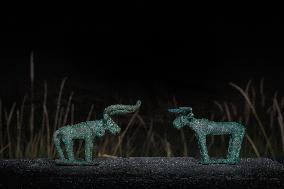
(230828) -- XINING, Aug. 28, 2023 (Xinhua) -- This undated photo provided by Qinghai provincial research academy of cultural heritage and archaeology shows bronzeware unearthed from the ruins located in Balong Township in Dulan County, northwest China's Qinghai Province. TO GO WITH "Over 3,200 tombs found in 3,000-year-old ruins in China's plateau province" (Xinhua)

  •  

Southwest China's bronze culture put on display in Chengdu

STORY: Southwest China's bronze culture put on display in Chengdu DATELINE: May 28, 2023 LENGTH: 00:02:29 LOCATION: CHENGDU, China CATEGORY: CULTURE SHOTLIST: 1. various of the exhibition 2. SOUNDBITE (Chinese): YANG JIANHUA, Curator STORYLINE: An exhibition featuring the Bronze civilization in the southwest region of China opened Saturday in the southwestern city of Chengdu, the capital of Sichuan Province. It shows the social features, religious beliefs, and artistic aesthetics of southwest China in ancient times, and reveals the unified and diversified development pattern of the Chinese civilization. A total of 294 pieces or sets of precious cultural relics, mainly bronzeware from as early as the Neolithic Age and as late as the Qin and Han dynasties (221 B.C.-220 A.D.), are on display at the Jinsha Site Museum. SOUNDBITE (Chinese): YANG JIANHUA, Curator "The exhibition brings together 294 pieces (sets) of precious cultural relics from the collections of 32 museums in five provincial-level regions

  •  

HK Palace Museum to showcase cultural treasures from Sanxingdui Ruins

STORY: HK Palace Museum to showcase cultural treasures from Sanxingdui Ruins DATELINE: May 23, 2023 LENGTH: 00:01:20 LOCATION: HONG KONG, China CATEGORY: CULTURE SHOTLIST: 1. various of signing ceremony 2. various of cultural treasures from Sanxingdui Ruins 3. SOUNDBITE 1 (Chinese): TANG FEI, President of the Sichuan Provincial Cultural Relics and Archeology Research Institute 4. SOUNDBITE 2 (Chinese): LOUIS NG, Director of the HKPM 5. various of cultural treasures from Sanxingdui Ruins STORYLINE: The Hong Kong Palace Museum (HKPM) on Monday announced it will showcase 120 precious cultural relics from the world-renowned Sanxingdui Ruins in a four-month exhibition slated to begin in late September this year. The exhibition will focus on new archaeological discoveries in southwest China's Sichuan Province represented by Sanxingdui. Cultural relics such as bronzeware, jade, goldware, and pottery artifacts dating back 2,600 to 3,300 years will be displayed. Most of the exhibits will be showcased outside Sichu

  •  

China's bronze art master injects new vitality into ancient craft

STORY: China's bronze art master injects new vitality into ancient craft DATELINE: March 18, 2023 LENGTH: 0:01:41 LOCATION: HANGZHOU, China CATEGORY: CULTURE SHOTLIST: 1. various of Zhu Bingren 2. SOUNDBITE (Chinese): ZHU BINGREN, Bronze art master STORYLINE: Zhu Bingren is a renowned bronze art master in China. His innovative ideas have helped bring new vitality to the ancient craft. SOUNDBITE (Chinese): ZHU BINGREN, Bronze art master "I'm Zhu Bingren, an inheritor of the national intangible cultural heritage of bronze art. Our family started to make bronze sculptures since my great-grandfather's generation. I'm a fourth-generation sculptor. China's bronze civilization could date back 5,000 years. Bronzeware was of significant importance in Chinese history with its unique charm. It's suave yet with gravitas. In creating various pieces of bronzeware, artists were with great care. To pass on the intangible cultural heritage, we need to learn and try constantly as a way to carry on the memories of generati

  •  

Ancient sculpture remnants reunited at Sanxingdui Ruins

STORY: Ancient sculpture remnants reunited at Sanxingdui Ruins DATELINE: Jan. 4, 2023 LENGTH: 00:00:55 LOCATION: CHENDGU, China CATEGORY: SOCIETY SHOTLIST: 1. various of sculpture remnants STORYLINE: A bronze figure at the famed Sanxingdui Ruins site was successfully matched with another animal bronzeware with the help of a three-dimensional (3D) model, the Sichuan Provincial Cultural Relics and Archeology Research Institute confirmed Monday. The two bronzeware parts are from different sacrificial pits. The combination of the two parts also indicates that the two pits were formed at the same time. Originally discovered in the late 1920s, the Sanxingdui Ruins have been dubbed as one of the world's greatest archaeological findings of the 20th century. Located in the city of Guanghan, the ruins covering an area of 12 square km are believed to be the remnants of the Shu Kingdom, dating back some 4,500 to 3,000 years. So far, more than 50,000 items of bronzeware, jade, goldware, pottery, and ivory artifact

  •  

Retrieved cultural relics exhibited in Shanghai

STORY: Retrieved cultural relics exhibited in Shanghai DATELINE: Oct. 3, 2022 LENGTH: 00:01:02 LOCATION: SHANGHAI, China CATEGORY: CULTURE/ENTERTAINMENT SHOTLIST: 1. exterior of Minhang Museum in Shanghai 2. various of cultural relic objects on display STORYLINE: An exhibition of Chinese cultural relics retrieved from overseas is being held at Minhang Museum in Shanghai. The exhibits include bronze animal heads of the Old Summer Palace in Beijing, as well as more than 40 pieces of bronzeware from ancient times. The exhibition runs from Sept. 26 to Dec. 18. Xinhua News Agency correspondents reporting from Shanghai, China. (XHTV)

  •  

14 ancient tombs unearthed in central China's Hunan

STORY: 14 ancient tombs unearthed in central China's Hunan DATELINE: July 10, 2022 LENGTH: 00:00:43 LOCATION: LEIYANG, China CATEGORY: SOCIETY SHOTLIST: 1. various of the ancient tombs 2. various of the cultural relics found in the tombs STORYLINE: Archaeologists have found 14 tombs dating back to between the Eastern Han Dynasty (25-220) and the Tang Dynasty (618-907) in central China's Hunan Province. They have excavated 8 tombs and unearthed more than 130 relics items, including pottery, porcelain and bronzeware, in a tomb complex in the city of Leiyang, according to the provincial institute of archaeology and cultural relics. Six Eastern Han Dynasty tombs are brick tombs, three of which might have had owners from the same family, said Chen Bin, head of the archaeological team of the tomb complex under the institute. Archaeologists have also discovered a trench 4.5 meters west of the back chamber of the largest tomb, measuring about 0.9 meters in width, nearly 15 meters in length and about 0.1 meters

  •  

Ancient sculpture remnants reunited after 3,000 years

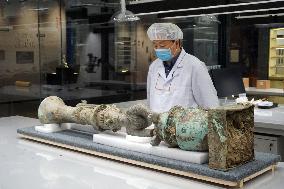
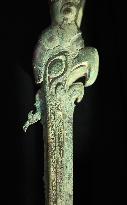
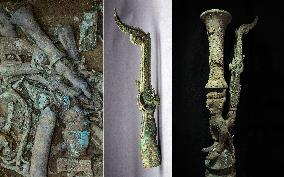
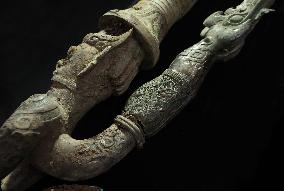
STORY: Ancient sculpture remnants reunited after 3,000 years DATELINE: June 17, 2022 LENGTH: 00:01:06 LOCATION: GUANGHAN, China CATEGORY: SOCIETY SHOTLIST: 1. various of the newly unearthed bronze sculpture 2. various of the combination 3. SOUNDBITE 1 (Chinese): LEI YU, Researcher, Sichuan Provincial Cultural Relics and Archaeology Research Institute STORYLINE: Chinese archaeologists confirmed Thursday that a newly unearthed bronze sculpture at the famed Sanxingdui Ruins site was successfully matched with another bronzeware part after being set apart about 3,000 years ago. The sophisticated bronze sculpture depicts a figure of a human head and snake body, with protruding eyes, tusks, and horns. Above the head is a cinnabar trumpet-shaped zun (an ancient wine vessel) and the figure is linked by its hands and a square pedestal urn-shaped lei (an ancient wine vessel.) Without the rear part of the body, the sculpture was recently excavated from the No. 8 sacrificial pit. Archaeologists later found that anoth

  •  
CHINA-SICHUAN-SANXINGDUI RUINS-BRONZE SCULPTURE-COMBINATION (CN)

CHINA-SICHUAN-SANXINGDUI RUINS-BRONZE SCULPTURE-COMBINATION (CN)

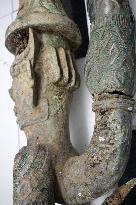
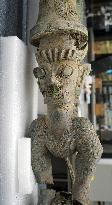
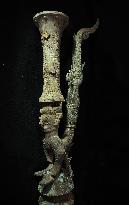
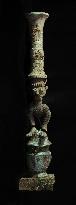
(220616) -- GUANGHAN, June 16, 2022 (Xinhua) -- Photo taken on June 16, 2022 shows part of a successfully matched bronze sculpture that depicts a human-head, snake-body, and bird-claw figure. A newly unearthed bronze sculpture at the famed Sanxingdui Ruins site was successfully matched with another bronzeware part after being set apart about 3,000 years ago, the archaeological team confirmed Thursday. The sophisticated bronze sculpture depicts a figure of a human head and snake body, with protruding eyes, tusks, and horns. Above the head is a cinnabar trumpet-shaped zun (an ancient wine vessel) and the figure is linked by its hands and a square pedestal urn-shaped lei (an ancient wine vessel.) Without the rear part of the body, the sculpture was recently excavated from the No. 8 sacrificial pit. Archaeologists later found that another bronzeware part, which was unearthed from the No. 2 pit in 1986, can perfectly match with the figure's lost body part. The incomplete part wears a tight skirt with c

  •  
CHINA-SICHUAN-SANXINGDUI RUINS-BRONZE SCULPTURE-COMBINATION (CN)

CHINA-SICHUAN-SANXINGDUI RUINS-BRONZE SCULPTURE-COMBINATION (CN)

(220616) -- GUANGHAN, June 16, 2022 (Xinhua) -- Photo taken on June 16, 2022 shows part of a successfully matched bronze sculpture that depicts a human-head, snake-body, and bird-claw figure. A newly unearthed bronze sculpture at the famed Sanxingdui Ruins site was successfully matched with another bronzeware part after being set apart about 3,000 years ago, the archaeological team confirmed Thursday. The sophisticated bronze sculpture depicts a figure of a human head and snake body, with protruding eyes, tusks, and horns. Above the head is a cinnabar trumpet-shaped zun (an ancient wine vessel) and the figure is linked by its hands and a square pedestal urn-shaped lei (an ancient wine vessel.) Without the rear part of the body, the sculpture was recently excavated from the No. 8 sacrificial pit. Archaeologists later found that another bronzeware part, which was unearthed from the No. 2 pit in 1986, can perfectly match with the figure's lost body part. The incomplete part wears a tight skirt with c

  •  
CHINA-SICHUAN-SANXINGDUI RUINS-BRONZE SCULPTURE-COMBINATION (CN)

CHINA-SICHUAN-SANXINGDUI RUINS-BRONZE SCULPTURE-COMBINATION (CN)

(220616) -- GUANGHAN, June 16, 2022 (Xinhua) -- Lei Yu, a researcher of the Sichuan Provincial Cultural Relics and Archeology Research Institute, views a successfully matched bronze sculpture that depicts a human-head, snake-body, and bird-claw figure on June 16, 2022. A newly unearthed bronze sculpture at the famed Sanxingdui Ruins site was successfully matched with another bronzeware part after being set apart about 3,000 years ago, the archaeological team confirmed Thursday. The sophisticated bronze sculpture depicts a figure of a human head and snake body, with protruding eyes, tusks, and horns. Above the head is a cinnabar trumpet-shaped zun (an ancient wine vessel) and the figure is linked by its hands and a square pedestal urn-shaped lei (an ancient wine vessel.) Without the rear part of the body, the sculpture was recently excavated from the No. 8 sacrificial pit. Archaeologists later found that another bronzeware part, which was unearthed from the No. 2 pit in 1986, can perfectly match with t

  •  
CHINA-SICHUAN-SANXINGDUI RUINS-BRONZE SCULPTURE-COMBINATION (CN)

CHINA-SICHUAN-SANXINGDUI RUINS-BRONZE SCULPTURE-COMBINATION (CN)

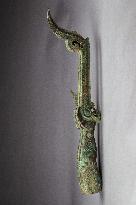
(220616) -- GUANGHAN, June 16, 2022 (Xinhua) -- Photo taken on June 15, 2022 shows a bronzeware part that was unearthed from the No. 2 sacrificial pit in 1986 at the Sanxingdui Ruins site in southwest China's Sichuan Province. A newly unearthed bronze sculpture at the famed Sanxingdui Ruins site was successfully matched with another bronzeware part after being set apart about 3,000 years ago, the archaeological team confirmed Thursday. The sophisticated bronze sculpture depicts a figure of a human head and snake body, with protruding eyes, tusks, and horns. Above the head is a cinnabar trumpet-shaped zun (an ancient wine vessel) and the figure is linked by its hands and a square pedestal urn-shaped lei (an ancient wine vessel.) Without the rear part of the body, the sculpture was recently excavated from the No. 8 sacrificial pit. Archaeologists later found that another bronzeware part, which was unearthed from the No. 2 pit in 1986, can perfectly match with the figure's lost body part. The incom

  •  
CHINA-SICHUAN-SANXINGDUI RUINS-BRONZE SCULPTURE-COMBINATION (CN)

CHINA-SICHUAN-SANXINGDUI RUINS-BRONZE SCULPTURE-COMBINATION (CN)

(220616) -- GUANGHAN, June 16, 2022 (Xinhua) -- Combo photo shows scattered parts of a newly unearthed bronze sculpture (L) at the No. 8 sacrificial pit at the Sanxingdui Ruins site (photo taken by Xinhua journalist Shen Bohan on June 1, 2022); a bronzeware part (C) that was unearthed from the No. 2 sacrificial pit in 1986 (photo taken on June 15, 2022 and provided by Sanxingdui Museum); and the combination of the two parts (photo taken by Lu Haizi on June 15, 2022), in southwest China's Sichuan Province. A newly unearthed bronze sculpture at the famed Sanxingdui Ruins site was successfully matched with another bronzeware part after being set apart about 3,000 years ago, the archaeological team confirmed Thursday. The sophisticated bronze sculpture depicts a figure of a human head and snake body, with protruding eyes, tusks, and horns. Above the head is a cinnabar trumpet-shaped zun (an ancient wine vessel) and the figure is linked by its hands and a square pedestal urn-shaped lei (an ancient wine vesse

  •  
CHINA-SICHUAN-SANXINGDUI RUINS-BRONZE SCULPTURE-COMBINATION (CN)

CHINA-SICHUAN-SANXINGDUI RUINS-BRONZE SCULPTURE-COMBINATION (CN)

(220616) -- GUANGHAN, June 16, 2022 (Xinhua) -- Photo taken on June 15, 2022 shows part of a successfully matched bronze sculpture that depicts a human-head, snake-body, and bird-claw figure, in southwest China's Sichuan Province. A newly unearthed bronze sculpture at the famed Sanxingdui Ruins site was successfully matched with another bronzeware part after being set apart about 3,000 years ago, the archaeological team confirmed Thursday. The sophisticated bronze sculpture depicts a figure of a human head and snake body, with protruding eyes, tusks, and horns. Above the head is a cinnabar trumpet-shaped zun (an ancient wine vessel) and the figure is linked by its hands and a square pedestal urn-shaped lei (an ancient wine vessel.) Without the rear part of the body, the sculpture was recently excavated from the No. 8 sacrificial pit. Archaeologists later found that another bronzeware part, which was unearthed from the No. 2 pit in 1986, can perfectly match with the figure's lost body part. The i

  •  
CHINA-SICHUAN-SANXINGDUI RUINS-BRONZE SCULPTURE-COMBINATION (CN)

CHINA-SICHUAN-SANXINGDUI RUINS-BRONZE SCULPTURE-COMBINATION (CN)

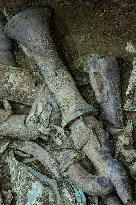
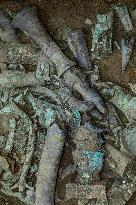
(220616) -- GUANGHAN, June 16, 2022 (Xinhua) -- Photo taken on June 1, 2022 shows scattered parts of a newly unearthed bronze sculpture at the No. 8 sacrificial pit at the Sanxingdui Ruins site in southwest China's Sichuan Province. A newly unearthed bronze sculpture at the famed Sanxingdui Ruins site was successfully matched with another bronzeware part after being set apart about 3,000 years ago, the archaeological team confirmed Thursday. The sophisticated bronze sculpture depicts a figure of a human head and snake body, with protruding eyes, tusks, and horns. Above the head is a cinnabar trumpet-shaped zun (an ancient wine vessel) and the figure is linked by its hands and a square pedestal urn-shaped lei (an ancient wine vessel.) Without the rear part of the body, the sculpture was recently excavated from the No. 8 sacrificial pit. Archaeologists later found that another bronzeware part, which was unearthed from the No. 2 pit in 1986, can perfectly match with the figure's lost body part. The

  •  
CHINA-SICHUAN-SANXINGDUI RUINS-BRONZE SCULPTURE-COMBINATION (CN)

CHINA-SICHUAN-SANXINGDUI RUINS-BRONZE SCULPTURE-COMBINATION (CN)

(220616) -- GUANGHAN, June 16, 2022 (Xinhua) -- Photo taken on June 15, 2022 shows a successfully matched bronze sculpture that depicts a human-head, snake-body, and bird-claw figure, in southwest China's Sichuan Province. A newly unearthed bronze sculpture at the famed Sanxingdui Ruins site was successfully matched with another bronzeware part after being set apart about 3,000 years ago, the archaeological team confirmed Thursday. The sophisticated bronze sculpture depicts a figure of a human head and snake body, with protruding eyes, tusks, and horns. Above the head is a cinnabar trumpet-shaped zun (an ancient wine vessel) and the figure is linked by its hands and a square pedestal urn-shaped lei (an ancient wine vessel.) Without the rear part of the body, the sculpture was recently excavated from the No. 8 sacrificial pit. Archaeologists later found that another bronzeware part, which was unearthed from the No. 2 pit in 1986, can perfectly match with the figure's lost body part. The incomplet

  •  
CHINA-SICHUAN-SANXINGDUI RUINS-BRONZE SCULPTURE-COMBINATION (CN)

CHINA-SICHUAN-SANXINGDUI RUINS-BRONZE SCULPTURE-COMBINATION (CN)

(220616) -- GUANGHAN, June 16, 2022 (Xinhua) -- Photo taken on June 15, 2022 shows a bronzeware part that was unearthed from the No. 2 sacrificial pit in 1986 at the Sanxingdui Ruins site in southwest China's Sichuan Province. A newly unearthed bronze sculpture at the famed Sanxingdui Ruins site was successfully matched with another bronzeware part after being set apart about 3,000 years ago, the archaeological team confirmed Thursday. The sophisticated bronze sculpture depicts a figure of a human head and snake body, with protruding eyes, tusks, and horns. Above the head is a cinnabar trumpet-shaped zun (an ancient wine vessel) and the figure is linked by its hands and a square pedestal urn-shaped lei (an ancient wine vessel.) Without the rear part of the body, the sculpture was recently excavated from the No. 8 sacrificial pit. Archaeologists later found that another bronzeware part, which was unearthed from the No. 2 pit in 1986, can perfectly match with the figure's lost body part. The incom

  •  
CHINA-SICHUAN-SANXINGDUI RUINS-BRONZE SCULPTURE-COMBINATION (CN)

CHINA-SICHUAN-SANXINGDUI RUINS-BRONZE SCULPTURE-COMBINATION (CN)

(220616) -- GUANGHAN, June 16, 2022 (Xinhua) -- Photo taken on June 1, 2022 shows scattered parts of a newly unearthed bronze sculpture at the No. 8 sacrificial pit at the Sanxingdui Ruins site in southwest China's Sichuan Province. A newly unearthed bronze sculpture at the famed Sanxingdui Ruins site was successfully matched with another bronzeware part after being set apart about 3,000 years ago, the archaeological team confirmed Thursday. The sophisticated bronze sculpture depicts a figure of a human head and snake body, with protruding eyes, tusks, and horns. Above the head is a cinnabar trumpet-shaped zun (an ancient wine vessel) and the figure is linked by its hands and a square pedestal urn-shaped lei (an ancient wine vessel.) Without the rear part of the body, the sculpture was recently excavated from the No. 8 sacrificial pit. Archaeologists later found that another bronzeware part, which was unearthed from the No. 2 pit in 1986, can perfectly match with the figure's lost body part. The

  •  
CHINA-SICHUAN-SANXINGDUI RUINS-BRONZE SCULPTURE-COMBINATION (CN)

CHINA-SICHUAN-SANXINGDUI RUINS-BRONZE SCULPTURE-COMBINATION (CN)

(220616) -- GUANGHAN, June 16, 2022 (Xinhua) -- Photo taken on June 1, 2022 shows scattered parts of a newly unearthed bronze sculpture at the No. 8 sacrificial pit at the Sanxingdui Ruins site in southwest China's Sichuan Province. A newly unearthed bronze sculpture at the famed Sanxingdui Ruins site was successfully matched with another bronzeware part after being set apart about 3,000 years ago, the archaeological team confirmed Thursday. The sophisticated bronze sculpture depicts a figure of a human head and snake body, with protruding eyes, tusks, and horns. Above the head is a cinnabar trumpet-shaped zun (an ancient wine vessel) and the figure is linked by its hands and a square pedestal urn-shaped lei (an ancient wine vessel.) Without the rear part of the body, the sculpture was recently excavated from the No. 8 sacrificial pit. Archaeologists later found that another bronzeware part, which was unearthed from the No. 2 pit in 1986, can perfectly match with the figure's lost body part. The

  •  
CHINA-SICHUAN-SANXINGDUI RUINS-BRONZE SCULPTURE-COMBINATION (CN)

CHINA-SICHUAN-SANXINGDUI RUINS-BRONZE SCULPTURE-COMBINATION (CN)

(220616) -- GUANGHAN, June 16, 2022 (Xinhua) -- Photo taken on June 15, 2022 shows a successfully matched bronze sculpture that depicts a human-head, snake-body, and bird-claw figure, in southwest China's Sichuan Province. A newly unearthed bronze sculpture at the famed Sanxingdui Ruins site was successfully matched with another bronzeware part after being set apart about 3,000 years ago, the archaeological team confirmed Thursday. The sophisticated bronze sculpture depicts a figure of a human head and snake body, with protruding eyes, tusks, and horns. Above the head is a cinnabar trumpet-shaped zun (an ancient wine vessel) and the figure is linked by its hands and a square pedestal urn-shaped lei (an ancient wine vessel.) Without the rear part of the body, the sculpture was recently excavated from the No. 8 sacrificial pit. Archaeologists later found that another bronzeware part, which was unearthed from the No. 2 pit in 1986, can perfectly match with the figure's lost body part. The incomplet

  • Main
  • Top
  • Editorial
  • Creative
  • About Us
  • About ILG
  • Terms of use
  • Company
  • BEHIND
  • Price List
  • Single Plan
  • Monthly Plan
  • Services
  • Shooting
  • Rights Clearance
  • Support
  • FAQ
  • How To Buy
  • Contact Us
  • Become a Partner

© KYODO NEWS IMAGES INC

All Rights Reserved.

  • Editorial
  • Olympics
  • News
  • Sports
  • Japan
  • Tech
  • Royal
  • Disaster
  • NorthKorea
  • Old Japan
  • SNS
  • Creative
  • Food
  • Japan
  • Landscape
  • Animal
  • Popular
  • #Ukraine
  • #China
  • #coronavirus
  • #N. Korea
  • #Thailand
  • #Russia
  • #Ukraine
  • #China
  • #coronavirus
  • #N. Korea
  • #Thailand
  • #Russia
  • Food
  • Japan
  • Landscape
  • Animal
  • Olympics
  • News
  • Sports
  • Japan
  • Tech
  • Royal
  • Disaster
  • NorthKorea
  • Old Japan
  • SNS