•  
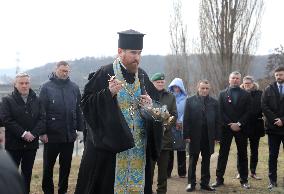
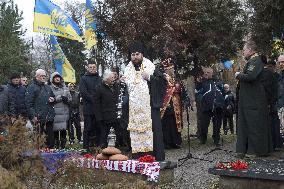
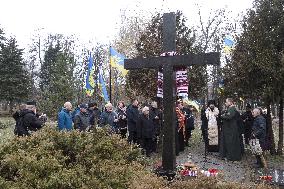
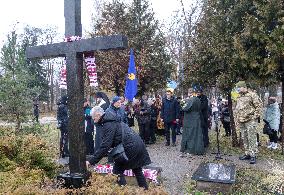
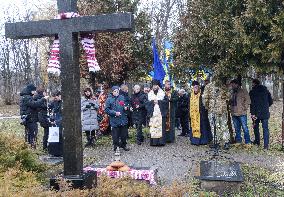
Celebration of Bulgarias Liberation Day in Kyiv

Celebration of Bulgarias Liberation Day in Kyiv

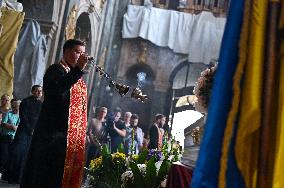
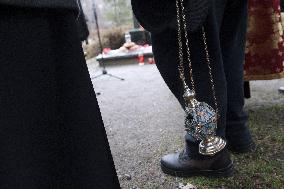
A priest swings a censer during the flower-laying ceremony at the monument to fighters who died for the freedom of Bulgaria in the Tenth Russo-Turkish War (18771878) on Bulgarias Liberation Day in Kyiv, Ukraine, on March 3, 2025. (Photo by Yuliia Ovsiannikova/Ukrinform)

  •  
Celebration of Bulgarias Liberation Day in Kyiv

Celebration of Bulgarias Liberation Day in Kyiv

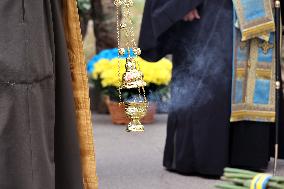
A priest swings a censer during the flower-laying ceremony at the monument to fighters who died for the freedom of Bulgaria in the Tenth Russo-Turkish War (18771878) on Bulgarias Liberation Day in Kyiv, Ukraine, on March 3, 2025. (Photo by Yuliia Ovsiannikova/Ukrinform)

  •  
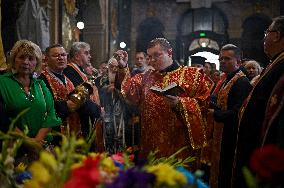
Memorial service for Iryna Farion in Lviv

Memorial service for Iryna Farion in Lviv

LVIV, UKRAINE - JULY 21, 2024 - A priest swings the censer during the memorial service for linguistic professor and former MP Iryna Farion, who was shot dead on the street on July 19, at the Saints Peter and Paul Garrison Church, Lviv, western Ukraine.

  •  
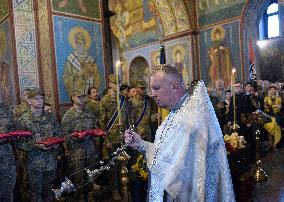
Memorial service for OUN battalion commander Mykola Kokhanivskyi in Kyiv

Memorial service for OUN battalion commander Mykola Kokhanivskyi in Kyiv

KYIV, UKRAINE - JULY 16, 2024 - A priest swings a censer during a memorial service for the commander of the OUN volunteer battalion Mykola Kokhanivskyi, who died near Vovchansk in Kharkiv region on June 10, at St Michaels Golden-Domed Cathedral, Kyiv, capital of Ukraine.

  •  
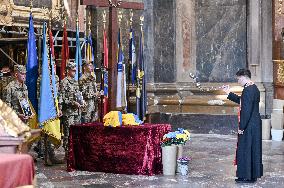
Ashes of UPA commander Yevhen Shtendera buried in Lviv

Ashes of UPA commander Yevhen Shtendera buried in Lviv

LVIV, UKRAINE - JULY 13, 2024 - A priest swings a censer during the funeral ceremony of sotnyk of the Ukrainian Insurgent Army (UPA) Yevhen Shtendera, who died in Canada on August 23, 2022, at the Saints Peter and Paul Garrison Church, Lviv, western Ukraine.

  •  
Requiem for victims of Russian missile strike on Ohmatdyt Hospital in Kyiv

Requiem for victims of Russian missile strike on Ohmatdyt Hospital in Kyiv

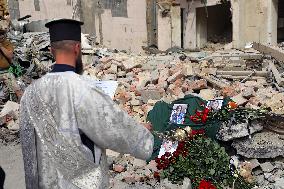
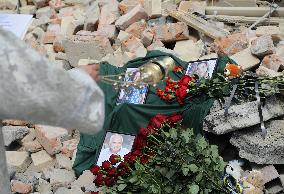
KYIV, UKRAINE - JULY 12, 2024 - A priest swings the censer at the photographs of health professionals killed by the Russian missile attack on the Ohmatdyt National Specialized Childrens Hospital on July 8 during a requiem, Kyiv, capital of Ukraine.

  •  
Requiem for victims of Russian missile strike on Ohmatdyt Hospital in Kyiv

Requiem for victims of Russian missile strike on Ohmatdyt Hospital in Kyiv

KYIV, UKRAINE - JULY 12, 2024 - A priest swings the censer at the photographs of health professionals killed by the Russian missile attack on the Ohmatdyt National Specialized Childrens Hospital on July 8 during a requiem, Kyiv, capital of Ukraine.

  •  
Funeral of Ohmatdyt doctor killed by Russian missile strike in Lviv

Funeral of Ohmatdyt doctor killed by Russian missile strike in Lviv

LVIV, UKRAINE - JULY 10, 2024 - A priest swings the thurible during the funeral ceremony for nephrologist Svitlana Lukianchyk, who died in the Russian missile attack on the Ohmatdyt Childrens Hospital in Kyiv on July 8, at the Saints Peter and Paul Garrison Church, Lviv, western Ukraine.

  •  
XINHUA PHOTOS OF THE DAY

XINHUA PHOTOS OF THE DAY

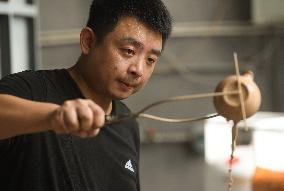
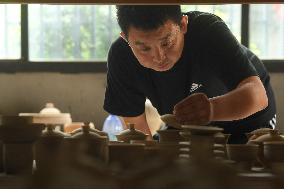
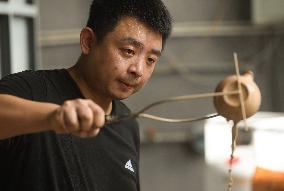
(240712) -- BEIJING, July 12, 2024 Photo by Xinhua/ABACAPRESS.COM) -- Xie Zhenwei applies glaze to a porcelain ware at a kiln in Shabu Township, Huangyan of Taizhou, east China's Zhejiang Province, July 11, 2024. Originated in the Tang Dynasty (618-907) and flourished in the Northern Song Dynasty (960-1127), the Shabu Kilns are considered as transitional kilns during the development of southern celadon industry from Yue Kilns to Longquan Kilns. Xie Zhenwei, a young porcelain artisan and a native of Shabu Township, has been making efforts to reproduce the celadon wares in the style of Shabu Kilns, which is characterized by exquisite carved patterns. To achieve his goal, Xie learned techniques from Yue Kilns and Longquan Kilns and kept using local materials. At present, Xie has successfully made celadon wares like censer, jug and powder boxes, in the style of Shabu Kilns. He also set up a workshop to display the culture of this art. Photo by Xinhua/ABACAPRESS.COM/Weng Xinyang)

  •  
(ZhejiangPictorial)CHINA-ZHEJIANG-SHABU KILNS-CELADON PORCELAIN-ARTISAN (CN)

(ZhejiangPictorial)CHINA-ZHEJIANG-SHABU KILNS-CELADON PORCELAIN-ARTISAN (CN)

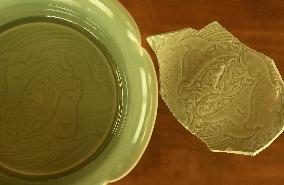
(240711) -- TAIZHOU, July 11, 2024 Photo by Xinhua/ABACAPRESS.COM) -- A piece of ancient Shabu-Kiln celadon ware (R) and a celadon ware made by Xie Zhenwei are pictured in Shabu Township, Huangyan of Taizhou, east China's Zhejiang Province, July 11, 2024. Originated in the Tang Dynasty (618-907) and flourished in the Northern Song Dynasty (960-1127), the Shabu Kilns are considered as transitional kilns during the development of southern celadon industry from Yue Kilns to Longquan Kilns. Xie Zhenwei, a young porcelain artisan and a native of Shabu Township, has been making efforts to reproduce the celadon wares in the style of Shabu Kilns, which is characterized by exquisite carved patterns. To achieve his goal, Xie learned techniques from Yue Kilns and Longquan Kilns and kept using local materials. At present, Xie has successfully made celadon wares like censer, jug and powder boxes, in the style of Shabu Kilns. He also set up a workshop to display the culture of this art. Photo by Xinhua/ABACAPRESS.COM/Weng

  •  
(ZhejiangPictorial)CHINA-ZHEJIANG-SHABU KILNS-CELADON PORCELAIN-ARTISAN (CN)

(ZhejiangPictorial)CHINA-ZHEJIANG-SHABU KILNS-CELADON PORCELAIN-ARTISAN (CN)

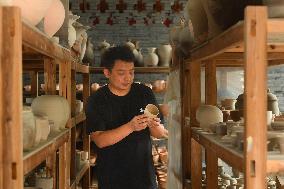
(240711) -- TAIZHOU, July 11, 2024 Photo by Xinhua/ABACAPRESS.COM) -- Xie Zhenwei arranges porcelain wares at a kiln in Shabu Township, Huangyan of Taizhou, east China's Zhejiang Province, July 11, 2024. Originated in the Tang Dynasty (618-907) and flourished in the Northern Song Dynasty (960-1127), the Shabu Kilns are considered as transitional kilns during the development of southern celadon industry from Yue Kilns to Longquan Kilns. Xie Zhenwei, a young porcelain artisan and a native of Shabu Township, has been making efforts to reproduce the celadon wares in the style of Shabu Kilns, which is characterized by exquisite carved patterns. To achieve his goal, Xie learned techniques from Yue Kilns and Longquan Kilns and kept using local materials. At present, Xie has successfully made celadon wares like censer, jug and powder boxes, in the style of Shabu Kilns. He also set up a workshop to display the culture of this art. Photo by Xinhua/ABACAPRESS.COM/Weng Xinyang)

  •  
(ZhejiangPictorial)CHINA-ZHEJIANG-SHABU KILNS-CELADON PORCELAIN-ARTISAN (CN)

(ZhejiangPictorial)CHINA-ZHEJIANG-SHABU KILNS-CELADON PORCELAIN-ARTISAN (CN)

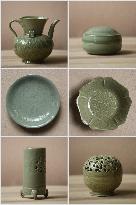
(240711) -- TAIZHOU, July 11, 2024 Photo by Xinhua/ABACAPRESS.COM) -- This combo photo taken on July 11, 2024 shows celadon wares made by Xie Zhenwei in Shabu Township, Huangyan of Taizhou, east China's Zhejiang Province. Originated in the Tang Dynasty (618-907) and flourished in the Northern Song Dynasty (960-1127), the Shabu Kilns are considered as transitional kilns during the development of southern celadon industry from Yue Kilns to Longquan Kilns. Xie Zhenwei, a young porcelain artisan and a native of Shabu Township, has been making efforts to reproduce the celadon wares in the style of Shabu Kilns, which is characterized by exquisite carved patterns. To achieve his goal, Xie learned techniques from Yue Kilns and Longquan Kilns and kept using local materials. At present, Xie has successfully made celadon wares like censer, jug and powder boxes, in the style of Shabu Kilns. He also set up a workshop to display the culture of this art. Photo by Xinhua/ABACAPRESS.COM/Weng Xinyang)

  •  
(ZhejiangPictorial)CHINA-ZHEJIANG-SHABU KILNS-CELADON PORCELAIN-ARTISAN (CN)

(ZhejiangPictorial)CHINA-ZHEJIANG-SHABU KILNS-CELADON PORCELAIN-ARTISAN (CN)

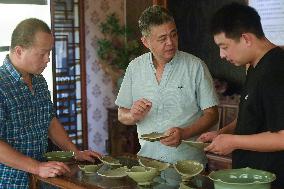
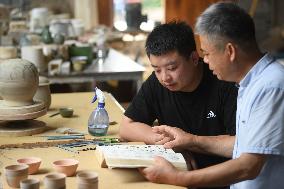
(240711) -- TAIZHOU, July 11, 2024 Photo by Xinhua/ABACAPRESS.COM) -- Luo Yonghua (C), an expert on Shabu Kilns, explains the features of the carved patterns on ancient Shabu-Kiln celadon pieces as Xie Zhenwei (R) listens in Shabu Township, Huangyan of Taizhou, east China's Zhejiang Province, July 11, 2024. Originated in the Tang Dynasty (618-907) and flourished in the Northern Song Dynasty (960-1127), the Shabu Kilns are considered as transitional kilns during the development of southern celadon industry from Yue Kilns to Longquan Kilns. Xie Zhenwei, a young porcelain artisan and a native of Shabu Township, has been making efforts to reproduce the celadon wares in the style of Shabu Kilns, which is characterized by exquisite carved patterns. To achieve his goal, Xie learned techniques from Yue Kilns and Longquan Kilns and kept using local materials. At present, Xie has successfully made celadon wares like censer, jug and powder boxes, in the style of Shabu Kilns. He also set up a workshop to display the cult

  •  
(ZhejiangPictorial)CHINA-ZHEJIANG-SHABU KILNS-CELADON PORCELAIN-ARTISAN (CN)

(ZhejiangPictorial)CHINA-ZHEJIANG-SHABU KILNS-CELADON PORCELAIN-ARTISAN (CN)

(240711) -- TAIZHOU, July 11, 2024 Photo by Xinhua/ABACAPRESS.COM) -- Xie Zhenwei works at a kiln in Shabu Township, Huangyan of Taizhou, east China's Zhejiang Province, July 11, 2024. Originated in the Tang Dynasty (618-907) and flourished in the Northern Song Dynasty (960-1127), the Shabu Kilns are considered as transitional kilns during the development of southern celadon industry from Yue Kilns to Longquan Kilns. Xie Zhenwei, a young porcelain artisan and a native of Shabu Township, has been making efforts to reproduce the celadon wares in the style of Shabu Kilns, which is characterized by exquisite carved patterns. To achieve his goal, Xie learned techniques from Yue Kilns and Longquan Kilns and kept using local materials. At present, Xie has successfully made celadon wares like censer, jug and powder boxes, in the style of Shabu Kilns. He also set up a workshop to display the culture of this art. Photo by Xinhua/ABACAPRESS.COM/Weng Xinyang)

  •  
(ZhejiangPictorial)CHINA-ZHEJIANG-SHABU KILNS-CELADON PORCELAIN-ARTISAN (CN)

(ZhejiangPictorial)CHINA-ZHEJIANG-SHABU KILNS-CELADON PORCELAIN-ARTISAN (CN)

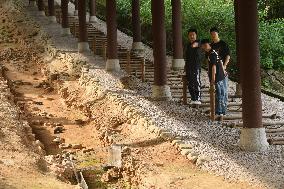
(240711) -- TAIZHOU, July 11, 2024 Photo by Xinhua/ABACAPRESS.COM) -- Xie Zhenwei (L) makes a point as students graduated from a technician college look on during a visit in a relic site of an ancient kiln in Shabu Township, Huangyan of Taizhou, east China's Zhejiang Province, July 11, 2024. Originated in the Tang Dynasty (618-907) and flourished in the Northern Song Dynasty (960-1127), the Shabu Kilns are considered as transitional kilns during the development of southern celadon industry from Yue Kilns to Longquan Kilns. Xie Zhenwei, a young porcelain artisan and a native of Shabu Township, has been making efforts to reproduce the celadon wares in the style of Shabu Kilns, which is characterized by exquisite carved patterns. To achieve his goal, Xie learned techniques from Yue Kilns and Longquan Kilns and kept using local materials. At present, Xie has successfully made celadon wares like censer, jug and powder boxes, in the style of Shabu Kilns. He also set up a workshop to display the culture of this art.

  •  
(ZhejiangPictorial)CHINA-ZHEJIANG-SHABU KILNS-CELADON PORCELAIN-ARTISAN (CN)

(ZhejiangPictorial)CHINA-ZHEJIANG-SHABU KILNS-CELADON PORCELAIN-ARTISAN (CN)

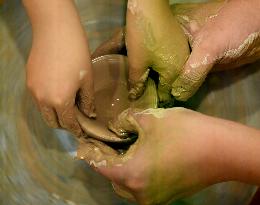
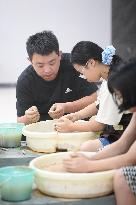
(240711) -- TAIZHOU, July 11, 2024 Photo by Xinhua/ABACAPRESS.COM) -- Xie Zhenwei helps a primary school student make a piece of porcelain in Shabu Township, Huangyan of Taizhou, east China's Zhejiang Province, July 11, 2024. Originated in the Tang Dynasty (618-907) and flourished in the Northern Song Dynasty (960-1127), the Shabu Kilns are considered as transitional kilns during the development of southern celadon industry from Yue Kilns to Longquan Kilns. Xie Zhenwei, a young porcelain artisan and a native of Shabu Township, has been making efforts to reproduce the celadon wares in the style of Shabu Kilns, which is characterized by exquisite carved patterns. To achieve his goal, Xie learned techniques from Yue Kilns and Longquan Kilns and kept using local materials. At present, Xie has successfully made celadon wares like censer, jug and powder boxes, in the style of Shabu Kilns. He also set up a workshop to display the culture of this art. Photo by Xinhua/ABACAPRESS.COM/Weng Xinyang)

  •  
(ZhejiangPictorial)CHINA-ZHEJIANG-SHABU KILNS-CELADON PORCELAIN-ARTISAN (CN)

(ZhejiangPictorial)CHINA-ZHEJIANG-SHABU KILNS-CELADON PORCELAIN-ARTISAN (CN)

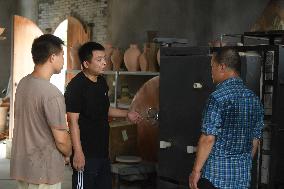
(240711) -- TAIZHOU, July 11, 2024 Photo by Xinhua/ABACAPRESS.COM) -- Xie Zhenwei (C) discusses with his fellows on porcelain-making in Shabu Township, Huangyan of Taizhou, east China's Zhejiang Province, July 11, 2024. Originated in the Tang Dynasty (618-907) and flourished in the Northern Song Dynasty (960-1127), the Shabu Kilns are considered as transitional kilns during the development of southern celadon industry from Yue Kilns to Longquan Kilns. Xie Zhenwei, a young porcelain artisan and a native of Shabu Township, has been making efforts to reproduce the celadon wares in the style of Shabu Kilns, which is characterized by exquisite carved patterns. To achieve his goal, Xie learned techniques from Yue Kilns and Longquan Kilns and kept using local materials. At present, Xie has successfully made celadon wares like censer, jug and powder boxes, in the style of Shabu Kilns. He also set up a workshop to display the culture of this art. Photo by Xinhua/ABACAPRESS.COM/Weng Xinyang)

  •  
(ZhejiangPictorial)CHINA-ZHEJIANG-SHABU KILNS-CELADON PORCELAIN-ARTISAN (CN)

(ZhejiangPictorial)CHINA-ZHEJIANG-SHABU KILNS-CELADON PORCELAIN-ARTISAN (CN)

(240711) -- TAIZHOU, July 11, 2024 Photo by Xinhua/ABACAPRESS.COM) -- Luo Yonghua (R), an expert on Shabu Kilns, shows the traditional carved patterns to Xie Zhenwei in Shabu Township, Huangyan of Taizhou, east China's Zhejiang Province, July 11, 2024. Originated in the Tang Dynasty (618-907) and flourished in the Northern Song Dynasty (960-1127), the Shabu Kilns are considered as transitional kilns during the development of southern celadon industry from Yue Kilns to Longquan Kilns. Xie Zhenwei, a young porcelain artisan and a native of Shabu Township, has been making efforts to reproduce the celadon wares in the style of Shabu Kilns, which is characterized by exquisite carved patterns. To achieve his goal, Xie learned techniques from Yue Kilns and Longquan Kilns and kept using local materials. At present, Xie has successfully made celadon wares like censer, jug and powder boxes, in the style of Shabu Kilns. He also set up a workshop to display the culture of this art. Photo by Xinhua/ABACAPRESS.COM/Weng Xin

  •  
(ZhejiangPictorial)CHINA-ZHEJIANG-SHABU KILNS-CELADON PORCELAIN-ARTISAN (CN)

(ZhejiangPictorial)CHINA-ZHEJIANG-SHABU KILNS-CELADON PORCELAIN-ARTISAN (CN)

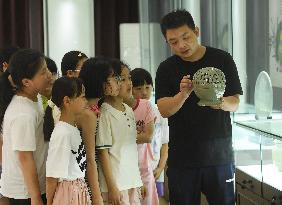
(240711) -- TAIZHOU, July 11, 2024 Photo by Xinhua/ABACAPRESS.COM) -- Xie Zhenwei explains the features of a Shabu-Kiln celadon censer as primary school students listen in Shabu Township, Huangyan of Taizhou, east China's Zhejiang Province, July 11, 2024. Originated in the Tang Dynasty (618-907) and flourished in the Northern Song Dynasty (960-1127), the Shabu Kilns are considered as transitional kilns during the development of southern celadon industry from Yue Kilns to Longquan Kilns. Xie Zhenwei, a young porcelain artisan and a native of Shabu Township, has been making efforts to reproduce the celadon wares in the style of Shabu Kilns, which is characterized by exquisite carved patterns. To achieve his goal, Xie learned techniques from Yue Kilns and Longquan Kilns and kept using local materials. At present, Xie has successfully made celadon wares like censer, jug and powder boxes, in the style of Shabu Kilns. He also set up a workshop to display the culture of this art. Photo by Xinhua/ABACAPRESS.COM/Weng

  •  
(ZhejiangPictorial)CHINA-ZHEJIANG-SHABU KILNS-CELADON PORCELAIN-ARTISAN (CN)

(ZhejiangPictorial)CHINA-ZHEJIANG-SHABU KILNS-CELADON PORCELAIN-ARTISAN (CN)

(240711) -- TAIZHOU, July 11, 2024 Photo by Xinhua/ABACAPRESS.COM) -- Xie Zhenwei gives instruction in a pottery class for primary school students at his studio in Shabu Township, Huangyan of Taizhou, east China's Zhejiang Province, July 11, 2024. Originated in the Tang Dynasty (618-907) and flourished in the Northern Song Dynasty (960-1127), the Shabu Kilns are considered as transitional kilns during the development of southern celadon industry from Yue Kilns to Longquan Kilns. Xie Zhenwei, a young porcelain artisan and a native of Shabu Township, has been making efforts to reproduce the celadon wares in the style of Shabu Kilns, which is characterized by exquisite carved patterns. To achieve his goal, Xie learned techniques from Yue Kilns and Longquan Kilns and kept using local materials. At present, Xie has successfully made celadon wares like censer, jug and powder boxes, in the style of Shabu Kilns. He also set up a workshop to display the culture of this art. Photo by Xinhua/ABACAPRESS.COM/Weng Xinyang)

  •  
(ZhejiangPictorial)CHINA-ZHEJIANG-SHABU KILNS-CELADON PORCELAIN-ARTISAN (CN)

(ZhejiangPictorial)CHINA-ZHEJIANG-SHABU KILNS-CELADON PORCELAIN-ARTISAN (CN)

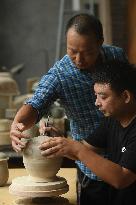
(240711) -- TAIZHOU, July 11, 2024 Photo by Xinhua/ABACAPRESS.COM) -- Longquan celadon artisan Chen Junlin (top) instructs as Xie Zhenwei makes a censer in the style of Shabu Kilns in Shabu Township, Huangyan of Taizhou, east China's Zhejiang Province, July 11, 2024. Originated in the Tang Dynasty (618-907) and flourished in the Northern Song Dynasty (960-1127), the Shabu Kilns are considered as transitional kilns during the development of southern celadon industry from Yue Kilns to Longquan Kilns. Xie Zhenwei, a young porcelain artisan and a native of Shabu Township, has been making efforts to reproduce the celadon wares in the style of Shabu Kilns, which is characterized by exquisite carved patterns. To achieve his goal, Xie learned techniques from Yue Kilns and Longquan Kilns and kept using local materials. At present, Xie has successfully made celadon wares like censer, jug and powder boxes, in the style of Shabu Kilns. He also set up a workshop to display the culture of this art. Photo by Xinhua/ABACAPRE

  •  
(ZhejiangPictorial)CHINA-ZHEJIANG-SHABU KILNS-CELADON PORCELAIN-ARTISAN (CN)

(ZhejiangPictorial)CHINA-ZHEJIANG-SHABU KILNS-CELADON PORCELAIN-ARTISAN (CN)

(240711) -- TAIZHOU, July 11, 2024 Photo by Xinhua/ABACAPRESS.COM) -- Xie Zhenwei applies glaze to a porcelain ware at a kiln in Shabu Township, Huangyan of Taizhou, east China's Zhejiang Province, July 11, 2024. Originated in the Tang Dynasty (618-907) and flourished in the Northern Song Dynasty (960-1127), the Shabu Kilns are considered as transitional kilns during the development of southern celadon industry from Yue Kilns to Longquan Kilns. Xie Zhenwei, a young porcelain artisan and a native of Shabu Township, has been making efforts to reproduce the celadon wares in the style of Shabu Kilns, which is characterized by exquisite carved patterns. To achieve his goal, Xie learned techniques from Yue Kilns and Longquan Kilns and kept using local materials. At present, Xie has successfully made celadon wares like censer, jug and powder boxes, in the style of Shabu Kilns. He also set up a workshop to display the culture of this art. Photo by Xinhua/ABACAPRESS.COM/Weng Xinyang)

  •  
(ZhejiangPictorial)CHINA-ZHEJIANG-SHABU KILNS-CELADON PORCELAIN-ARTISAN (CN)

(ZhejiangPictorial)CHINA-ZHEJIANG-SHABU KILNS-CELADON PORCELAIN-ARTISAN (CN)

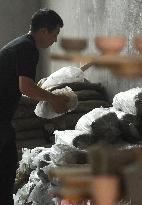
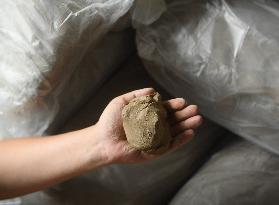
(240711) -- TAIZHOU, July 11, 2024 Photo by Xinhua/ABACAPRESS.COM) -- Xie Zhenwei shows the clay made from local materials for porcelain-making in Shabu Township, Huangyan of Taizhou, east China's Zhejiang Province, July 11, 2024. Originated in the Tang Dynasty (618-907) and flourished in the Northern Song Dynasty (960-1127), the Shabu Kilns are considered as transitional kilns during the development of southern celadon industry from Yue Kilns to Longquan Kilns. Xie Zhenwei, a young porcelain artisan and a native of Shabu Township, has been making efforts to reproduce the celadon wares in the style of Shabu Kilns, which is characterized by exquisite carved patterns. To achieve his goal, Xie learned techniques from Yue Kilns and Longquan Kilns and kept using local materials. At present, Xie has successfully made celadon wares like censer, jug and powder boxes, in the style of Shabu Kilns. He also set up a workshop to display the culture of this art. Photo by Xinhua/ABACAPRESS.COM/Weng Xinyang)

  •  
(ZhejiangPictorial)CHINA-ZHEJIANG-SHABU KILNS-CELADON PORCELAIN-ARTISAN (CN)

(ZhejiangPictorial)CHINA-ZHEJIANG-SHABU KILNS-CELADON PORCELAIN-ARTISAN (CN)

(240711) -- TAIZHOU, July 11, 2024 Photo by Xinhua/ABACAPRESS.COM) -- Xie Zhenwei arranges porcelain wares at a kiln in Shabu Township, Huangyan of Taizhou, east China's Zhejiang Province, July 11, 2024. Originated in the Tang Dynasty (618-907) and flourished in the Northern Song Dynasty (960-1127), the Shabu Kilns are considered as transitional kilns during the development of southern celadon industry from Yue Kilns to Longquan Kilns. Xie Zhenwei, a young porcelain artisan and a native of Shabu Township, has been making efforts to reproduce the celadon wares in the style of Shabu Kilns, which is characterized by exquisite carved patterns. To achieve his goal, Xie learned techniques from Yue Kilns and Longquan Kilns and kept using local materials. At present, Xie has successfully made celadon wares like censer, jug and powder boxes, in the style of Shabu Kilns. He also set up a workshop to display the culture of this art. Photo by Xinhua/ABACAPRESS.COM/Weng Xinyang)

  •  
Funeral of Ihor Yukhnovskyi in Lviv

Funeral of Ihor Yukhnovskyi in Lviv

LVIV, UKRAINE - MARCH 28, 2024 - Metropolitan of Lviv and Sokal Dymytrii swing a censer during a memorial service for academician of the National Academy of Sciences of Ukraine, civil activist and politician, Hero of Ukraine Ihor Yukhnovskyi, 98, who passed away on March 26, at the Cathedral of the Protection of the Theotokos, Lviv, western Ukraine.

  •  
Memorial service for Lithuanian volunteer Tadas Tumas in Kyiv

Memorial service for Lithuanian volunteer Tadas Tumas in Kyiv

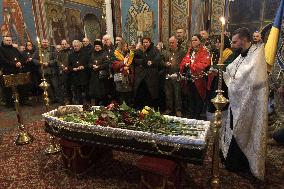
KYIV, UKRAINE - MARCH 7, 2024 - A priest swings the censer at the coffin of Lithuanian volunteer Tadas Tumas who was killed on the front line near Bakhmut, Donetsk Region, on February 23, 2024, during the memorial service at St Michaels Golden-Domed Cathedral, Kyiv, capital of Ukraine.

  •  
Tribute to perished soldiers of 113th Separate Territorial Defence Brigade in Kharkiv

Tribute to perished soldiers of 113th Separate Territorial Defence Brigade in Kharkiv

KHARKIV, UKRAINE - MARCH 2, 2024 - A priest swings a censer to consecrate the grave of a serviceman who perished in the Russia-Ukraine war at a military cemetery in Kharkiv, northeastern Ukraine.

  •  
Memory of Olena Teliha honored in Babyn Yar

Memory of Olena Teliha honored in Babyn Yar

KYIV, UKRAINE - FEBRUARY 21, 2024 - Clergymen hold a memorial service for the late Ukrainian poetess and OUN activist Olena Teliha and her comrades-in-arms who were shot by the Germans on February 21, 1942, at the Memorial Cross in Babyn Yar, Kyiv, capital of Ukraine. This photo cannot be distributed in the Russian Federation.

  •  
Memory of Olena Teliha honored in Babyn Yar

Memory of Olena Teliha honored in Babyn Yar

KYIV, UKRAINE - FEBRUARY 21, 2024 - Clergymen hold a memorial service for the late Ukrainian poetess and OUN activist Olena Teliha and her comrades-in-arms who were shot by the Germans on February 21, 1942, at the Memorial Cross in Babyn Yar, Kyiv, capital of Ukraine. This photo cannot be distributed in the Russian Federation.

  •  
Memory of Olena Teliha honored in Babyn Yar

Memory of Olena Teliha honored in Babyn Yar

KYIV, UKRAINE - FEBRUARY 21, 2024 - Clergymen hold a memorial service for the late Ukrainian poetess and OUN activist Olena Teliha and her comrades-in-arms who were shot by the Germans on February 21, 1942, at the Memorial Cross in Babyn Yar, Kyiv, capital of Ukraine. This photo cannot be distributed in the Russian Federation.

  •  
Memory of Olena Teliha honored in Babyn Yar

Memory of Olena Teliha honored in Babyn Yar

KYIV, UKRAINE - FEBRUARY 21, 2024 - Clergymen hold a memorial service for the late Ukrainian poetess and OUN activist Olena Teliha and her comrades-in-arms who were shot by the Germans on February 21, 1942, at the Memorial Cross in Babyn Yar, Kyiv, capital of Ukraine. This photo cannot be distributed in the Russian Federation.

  •  
Memory of Olena Teliha honored in Babyn Yar

Memory of Olena Teliha honored in Babyn Yar

KYIV, UKRAINE - FEBRUARY 21, 2024 - Clergymen hold a memorial service for the late Ukrainian poetess and OUN activist Olena Teliha and her comrades-in-arms who were shot by the Germans on February 21, 1942, at the Memorial Cross in Babyn Yar, Kyiv, capital of Ukraine. This photo cannot be distributed in the Russian Federation.

  •  
Memory of Olena Teliha honored in Babyn Yar

Memory of Olena Teliha honored in Babyn Yar

KYIV, UKRAINE - FEBRUARY 21, 2024 - Clergymen hold a memorial service for the late Ukrainian poetess and OUN activist Olena Teliha and her comrades-in-arms who were shot by the Germans on February 21, 1942, at the Memorial Cross in Babyn Yar, Kyiv, capital of Ukraine. This photo cannot be distributed in the Russian Federation.

  •  
Memory of Olena Teliha honored in Babyn Yar

Memory of Olena Teliha honored in Babyn Yar

KYIV, UKRAINE - FEBRUARY 21, 2024 - Clergymen hold a memorial service for the late Ukrainian poetess and OUN activist Olena Teliha and her comrades-in-arms who were shot by the Germans on February 21, 1942, at the Memorial Cross in Babyn Yar, Kyiv, capital of Ukraine. This photo cannot be distributed in the Russian Federation.

  •  
Memory of Olena Teliha honored in Babyn Yar

Memory of Olena Teliha honored in Babyn Yar

KYIV, UKRAINE - FEBRUARY 21, 2024 - Clergymen hold a memorial service for the late Ukrainian poetess and OUN activist Olena Teliha and her comrades-in-arms who were shot by the Germans on February 21, 1942, at the Memorial Cross in Babyn Yar, Kyiv, capital of Ukraine. This photo cannot be distributed in the Russian Federation.

  •  
Memory of Olena Teliha honored in Babyn Yar

Memory of Olena Teliha honored in Babyn Yar

KYIV, UKRAINE - FEBRUARY 21, 2024 - Clergymen hold a memorial service for the late Ukrainian poetess and OUN activist Olena Teliha and her comrades-in-arms who were shot by the Germans on February 21, 1942, at the Memorial Cross in Babyn Yar, Kyiv, capital of Ukraine. This photo cannot be distributed in the Russian Federation.

  •  
Memory of Olena Teliha honored in Babyn Yar

Memory of Olena Teliha honored in Babyn Yar

KYIV, UKRAINE - FEBRUARY 21, 2024 - Clergymen hold a memorial service for the late Ukrainian poetess and OUN activist Olena Teliha and her comrades-in-arms who were shot by the Germans on February 21, 1942, at the Memorial Cross in Babyn Yar, Kyiv, capital of Ukraine. This photo cannot be distributed in the Russian Federation.

  •  
All-night vigil in Kyiv on Christmas Eve

All-night vigil in Kyiv on Christmas Eve

KYIV, UKRAINE - DECEMBER 24, 2023 - Priests swing thuribles during the divine liturgy at St Michaels Golden-Domed Cathedral on Christmas Eve, Kyiv, capital of Ukraine.

  •  
Kharkiv remembers 113th Territorial Defence Brigade

Kharkiv remembers 113th Territorial Defence Brigade

KHARKIV, UKRAINE - AUGUST 29, 2023 - A priest holds a thurible during a memorial service for the personnel of the 113th Separate Brigade of the Territorial Defence Forces who perished in a Russian bombardment in March 2022 at a military cemetery in Kharkiv, northeastern Ukraine.

  •  
Kharkiv remembers 113th Territorial Defence Brigade

Kharkiv remembers 113th Territorial Defence Brigade

KHARKIV, UKRAINE - AUGUST 29, 2023 - Metropolitan of Kharkiv and Bohodukhiv Mytrofan conducts a memorial service for the personnel of the 113th Separate Brigade of the Territorial Defence Forces who perished in a Russian bombardment in March 2022 at a military cemetery on the Day of Remembrance of the Defenders of Ukraine, Kharkiv, northeastern Ukraine.

  •  
CHINA-HEILONGJIANG-JAPANESE GERM WARFARE UNIT-NEW EVIDENCE-EXHIBITION (CN)

CHINA-HEILONGJIANG-JAPANESE GERM WARFARE UNIT-NEW EVIDENCE-EXHIBITION (CN)

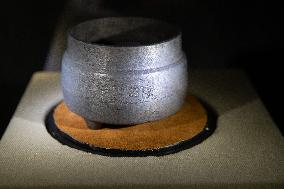
(221214) -- HARBIN, Dec. 14, 2022 (Xinhua) -- This photo taken on Dec. 10, 2022 shows a censer on exhibit at the Museum of Evidence of War Crimes by the Japanese Army Unit 731 in Harbin, capital of northeast China's Heilongjiang Province. More than 20,000 pieces of artifacts and documents are on exhibit for the first time in a museum in northeast China's Heilongjiang Province, testifying crimes against humanity by the notorious Japanese germ warfare army known as Unit 731 during the World War II. Following a preparation since September, the Museum of Evidence of War Crimes by the Japanese Army Unit 731 in Harbin, the provincial capital of Heilongjiang, put on the exhibition earlier this month. TO GO WITH "Across China: New evidence of Japanese germ warfare unit on exhibit" (Xinhua/Zhang Tao)

  •  
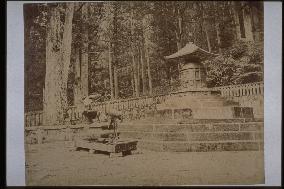
The treasure tower at the Okusha,Toshogu Shrine,Nikko

The treasure tower at the Okusha,Toshogu Shrine,Nikko

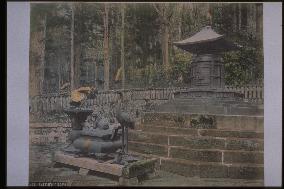
The tomb of first shogun Tokugawa Ieyasu was placed in the inner shrine at Nikko Toshogu. When the stone pagoda, which had replaced an early wooden structure, was destroyed by an earthquake in 1683, the fifth shogun Tsunayoshi rebuilt it in Chinese-style bronze. The crane-shaped candlestick, censer, and vase were gifts from the king of Korean.==Date:unknown, Place:Nikko, Photo:A. Farsari, (Credit:Nagasaki University Library/Kyodo News Images) [Cabinet Number82‐41‐0]

  •  
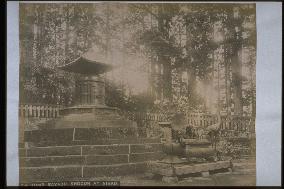
The treasure tower at the Okusha,Toshogu Shrine,Nikko

The treasure tower at the Okusha,Toshogu Shrine,Nikko

The tomb of first shogun Tokugawa Ieyasu was placed in the inner shrine at Nikko Toshogu. When the stone pagoda, which had replaced an early wooden structure, was destroyed by an earthquake in 1683, the fifth shogun Tsunayoshi rebuilt it in Chinese-style bronze. The crane-shaped candlestick, censer, and vase were gifts from the king of Korean.==Date:unknown, Place:Nikko, Photo:unknown, (Credit:Nagasaki University Library/Kyodo News Images) [Cabinet Number54‐41‐2]

  •  
The treasure tower at the Okusha,Toshogu Shrine,Nikko

The treasure tower at the Okusha,Toshogu Shrine,Nikko

The tomb of first shogun Tokugawa Ieyasu was placed in the inner shrine at Nikko Toshogu. When the stone pagoda, which had replaced an early wooden structure, was destroyed by an earthquake in 1683, the fifth shogun Tsunayoshi rebuilt it in Chinese-style bronze. The crane-shaped candlestick, censer, and vase were gifts from the king of Korean.==Date:unknown, Place:Nikko, Photo:unknown, (Credit:Nagasaki University Library/Kyodo News Images) [Cabinet Number54‐38‐0]

  •  
The treasure tower at the Okusha,Toshogu Shrine,Nikko

The treasure tower at the Okusha,Toshogu Shrine,Nikko

The tomb of first shogun Tokugawa Ieyasu was placed in the inner shrine at Nikko Toshogu. When the stone pagoda, which had replaced an early wooden structure, was destroyed by an earthquake in 1683, the fifth shogun Tsunayoshi rebuilt it in Chinese-style bronze. The crane-shaped candlestick, censer, and vase were gifts from the king of Korean.==Date:unknown, Place:Nikko, Photo:unknown, (Credit:Nagasaki University Library/Kyodo News Images) [Cabinet Number54‐14‐0]

  • Main
  • Top
  • Editorial
  • Creative
  • About Us
  • About ILG
  • Terms of use
  • Company
  • BEHIND
  • Price List
  • Single Plan
  • Monthly Plan
  • Services
  • Shooting
  • Rights Clearance
  • Support
  • FAQ
  • How To Buy
  • Contact Us
  • Become a Partner

© KYODO NEWS IMAGES INC

All Rights Reserved.

  • Editorial
  • Olympics
  • News
  • Sports
  • Japan
  • Tech
  • Royal
  • Disaster
  • NorthKorea
  • Old Japan
  • SNS
  • Creative
  • Food
  • Japan
  • Landscape
  • Animal
  • Popular
  • #Ukraine
  • #China
  • #coronavirus
  • #N. Korea
  • #Thailand
  • #Russia
  • #Ukraine
  • #China
  • #coronavirus
  • #N. Korea
  • #Thailand
  • #Russia
  • Food
  • Japan
  • Landscape
  • Animal
  • Olympics
  • News
  • Sports
  • Japan
  • Tech
  • Royal
  • Disaster
  • NorthKorea
  • Old Japan
  • SNS