•  

Portugal: Storm Kristin Triggers Deadly Floods and Landslides, Leaving 850,000 Without Power

Storm Kristin has left at least five dead and caused widespread devastation across central and northern Portugal. Labeled an 'extreme climatic event' by the government, the storm brought hurricane-force winds that triggered over 3,300 emergency incidents and knocked out power to 855,000 residents on Wednesday, January 28. While the peak has passed, major rail lines remain suspended and hundreds of thousands of homes are still without electricity as cleanup efforts continue.

  •  
New EU record for viral disease brought by Tiger mosquitoes

New EU record for viral disease brought by Tiger mosquitoes

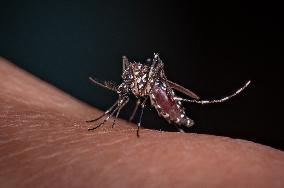
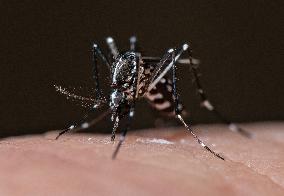
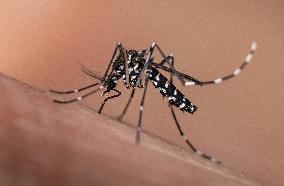
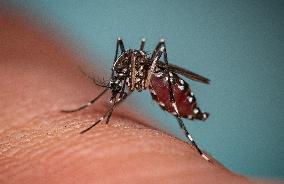
A tiger mosquito (Aedes albopictus, Moustique Tigre ) seen filling of blood while biting a human skin on August 21, 2025 in Paris, France. According to a report, the Asian tiger mosquito is becoming more present in the EU – currently spotted in 16 countries – due to more favourable climatic conditions such as rising temperatures. Photo by Christophe Geyres/ABACAPRESS.COM

  •  
New EU record for viral disease brought by Tiger mosquitoes

New EU record for viral disease brought by Tiger mosquitoes

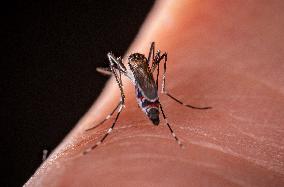
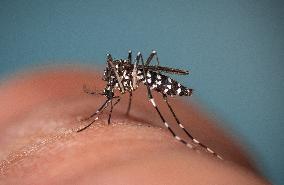
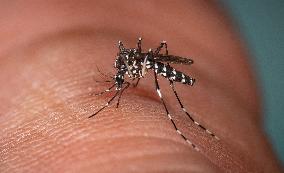
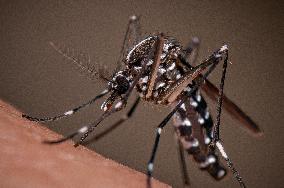
A tiger mosquito (Aedes albopictus, Moustique Tigre ) biting a human skin on August 21, 2025 in Paris, France. According to a report, the Asian tiger mosquito is becoming more present in the EU – currently spotted in 16 countries – due to more favourable climatic conditions such as rising temperatures. Photo by Christophe Geyres/ABACAPRESS.COM

  •  
New EU record for viral disease brought by Tiger mosquitoes

New EU record for viral disease brought by Tiger mosquitoes

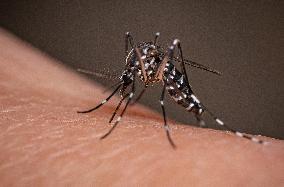
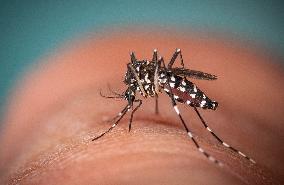
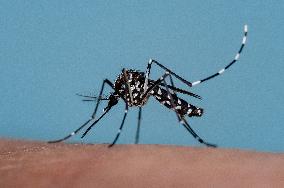
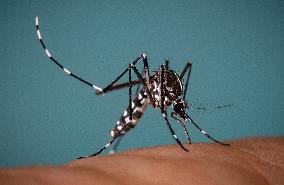
A tiger mosquito (Aedes albopictus, Moustique Tigre ) biting a human skin on August 21, 2025 in Paris, France. According to a report, the Asian tiger mosquito is becoming more present in the EU – currently spotted in 16 countries – due to more favourable climatic conditions such as rising temperatures. Photo by Christophe Geyres/ABACAPRESS.COM

  •  
New EU record for viral disease brought by Tiger mosquitoes

New EU record for viral disease brought by Tiger mosquitoes

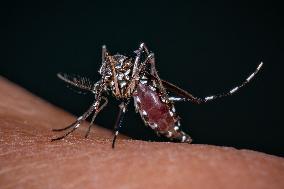
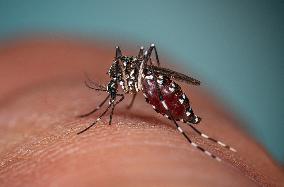
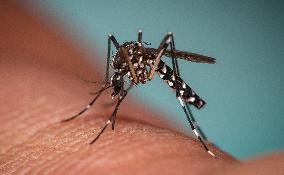
A tiger mosquito (Aedes albopictus, Moustique Tigre ) biting a human skin on August 21, 2025 in Paris, France. According to a report, the Asian tiger mosquito is becoming more present in the EU – currently spotted in 16 countries – due to more favourable climatic conditions such as rising temperatures. Photo by Christophe Geyres/ABACAPRESS.COM

  •  
New EU record for viral disease brought by Tiger mosquitoes

New EU record for viral disease brought by Tiger mosquitoes

A tiger mosquito (Aedes albopictus, Moustique Tigre ) biting a human skin on August 21, 2025 in Paris, France. According to a report, the Asian tiger mosquito is becoming more present in the EU – currently spotted in 16 countries – due to more favourable climatic conditions such as rising temperatures. Photo by Christophe Geyres/ABACAPRESS.COM

  •  
New EU record for viral disease brought by Tiger mosquitoes

New EU record for viral disease brought by Tiger mosquitoes

A tiger mosquito (Aedes albopictus, Moustique Tigre ) biting a human skin on August 21, 2025 in Paris, France. According to a report, the Asian tiger mosquito is becoming more present in the EU – currently spotted in 16 countries – due to more favourable climatic conditions such as rising temperatures. Photo by Christophe Geyres/ABACAPRESS.COM

  •  
New EU record for viral disease brought by Tiger mosquitoes

New EU record for viral disease brought by Tiger mosquitoes

A tiger mosquito (Aedes albopictus, Moustique Tigre ) biting a human skin on August 21, 2025 in Paris, France. According to a report, the Asian tiger mosquito is becoming more present in the EU – currently spotted in 16 countries – due to more favourable climatic conditions such as rising temperatures. Photo by Christophe Geyres/ABACAPRESS.COM

  •  
New EU record for viral disease brought by Tiger mosquitoes

New EU record for viral disease brought by Tiger mosquitoes

A tiger mosquito (Aedes albopictus, Moustique Tigre ) biting a human skin on August 21, 2025 in Paris, France. According to a report, the Asian tiger mosquito is becoming more present in the EU – currently spotted in 16 countries – due to more favourable climatic conditions such as rising temperatures. Photo by Christophe Geyres/ABACAPRESS.COM

  •  
New EU record for viral disease brought by Tiger mosquitoes

New EU record for viral disease brought by Tiger mosquitoes

A tiger mosquito (Aedes albopictus, Moustique Tigre ) biting a human skin on August 21, 2025 in Paris, France. According to a report, the Asian tiger mosquito is becoming more present in the EU – currently spotted in 16 countries – due to more favourable climatic conditions such as rising temperatures. Photo by Christophe Geyres/ABACAPRESS.COM

  •  
New EU record for viral disease brought by Tiger mosquitoes

New EU record for viral disease brought by Tiger mosquitoes

A tiger mosquito (Aedes albopictus, Moustique Tigre ) biting a human skin on August 21, 2025 in Paris, France. According to a report, the Asian tiger mosquito is becoming more present in the EU – currently spotted in 16 countries – due to more favourable climatic conditions such as rising temperatures. Photo by Christophe Geyres/ABACAPRESS.COM

  •  
New EU record for viral disease brought by Tiger mosquitoes

New EU record for viral disease brought by Tiger mosquitoes

A tiger mosquito (Aedes albopictus, Moustique Tigre ) biting a human skin on August 21, 2025 in Paris, France. According to a report, the Asian tiger mosquito is becoming more present in the EU – currently spotted in 16 countries – due to more favourable climatic conditions such as rising temperatures. Photo by Christophe Geyres/ABACAPRESS.COM

  •  
New EU record for viral disease brought by Tiger mosquitoes

New EU record for viral disease brought by Tiger mosquitoes

A tiger mosquito (Aedes albopictus, Moustique Tigre ) biting a human skin on August 21, 2025 in Paris, France. According to a report, the Asian tiger mosquito is becoming more present in the EU – currently spotted in 16 countries – due to more favourable climatic conditions such as rising temperatures. Photo by Christophe Geyres/ABACAPRESS.COM

  •  
New EU record for viral disease brought by Tiger mosquitoes

New EU record for viral disease brought by Tiger mosquitoes

A tiger mosquito (Aedes albopictus, Moustique Tigre ) biting a human skin on August 21, 2025 in Paris, France. According to a report, the Asian tiger mosquito is becoming more present in the EU – currently spotted in 16 countries – due to more favourable climatic conditions such as rising temperatures. Photo by Christophe Geyres/ABACAPRESS.COM

  •  
New EU record for viral disease brought by Tiger mosquitoes

New EU record for viral disease brought by Tiger mosquitoes

A tiger mosquito (Aedes albopictus, Moustique Tigre ) biting a human skin on August 21, 2025 in Paris, France. According to a report, the Asian tiger mosquito is becoming more present in the EU – currently spotted in 16 countries – due to more favourable climatic conditions such as rising temperatures. Photo by Christophe Geyres/ABACAPRESS.COM

  •  
New EU record for viral disease brought by Tiger mosquitoes

New EU record for viral disease brought by Tiger mosquitoes

A tiger mosquito (Aedes albopictus, Moustique Tigre ) biting a human skin on August 21, 2025 in Paris, France. According to a report, the Asian tiger mosquito is becoming more present in the EU – currently spotted in 16 countries – due to more favourable climatic conditions such as rising temperatures. Photo by Christophe Geyres/ABACAPRESS.COM

  •  
New EU record for viral disease brought by Tiger mosquitoes

New EU record for viral disease brought by Tiger mosquitoes

A tiger mosquito (Aedes albopictus, Moustique Tigre ) biting a human skin on August 21, 2025 in Paris, France. According to a report, the Asian tiger mosquito is becoming more present in the EU – currently spotted in 16 countries – due to more favourable climatic conditions such as rising temperatures. Photo by Christophe Geyres/ABACAPRESS.COM

  •  
New EU record for viral disease brought by Tiger mosquitoes

New EU record for viral disease brought by Tiger mosquitoes

A tiger mosquito (Aedes albopictus, Moustique Tigre ) biting a human skin on August 21, 2025 in Paris, France. According to a report, the Asian tiger mosquito is becoming more present in the EU – currently spotted in 16 countries – due to more favourable climatic conditions such as rising temperatures. Photo by Christophe Geyres/ABACAPRESS.COM

  •  
New EU record for viral disease brought by Tiger mosquitoes

New EU record for viral disease brought by Tiger mosquitoes

A tiger mosquito (Aedes albopictus, Moustique Tigre ) biting a human skin on August 21, 2025 in Paris, France. According to a report, the Asian tiger mosquito is becoming more present in the EU – currently spotted in 16 countries – due to more favourable climatic conditions such as rising temperatures. Photo by Christophe Geyres/ABACAPRESS.COM

  •  
Mount Fanjing Matcha Industry - China

Mount Fanjing Matcha Industry - China

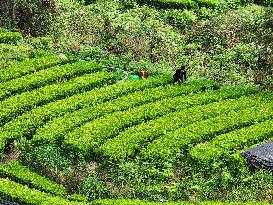
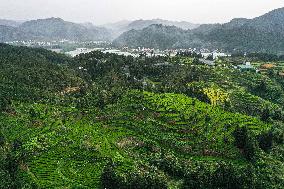
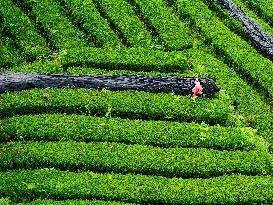
A drone photo shows a farmer weeding at a tea garden in Jiangkou County of Tongren, southwest China's Guizhou Province, on April 16, 2025. Located at the foot of Mount Fanjing, a UNESCO World Heritage Site, Jiangkou County is a powerhouse in the world's matcha industry. The county boasts over 10,000 hectares of tea plantations, nearly a fifth of which are dedicated to matcha production. In 2024, Jiangkou County produced more than 1,200 tonnes of matcha with a total output value of 350 million yuan (about 48.02 million U.S. dollars). The local matcha products have been exported to more than 40 overseas markets. Experts and agronomists believe that Guizhou, located on a plateau, possesses geographical and climatic advantages such as high altitude, low latitude, abundant fog and limited sunlight ideal for growing tea. Therefore, tea produced in this area is green, ecological and organic. Photo by Ou Dongqu/Xinhua/ABACAPRESS.COM

  •  
Mount Fanjing Matcha Industry - China

Mount Fanjing Matcha Industry - China

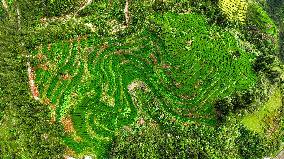
An aerial drone photo shows a tea garden in Jiangkou County of Tongren, southwest China's Guizhou Province, on April 16, 2025. Located at the foot of Mount Fanjing, a UNESCO World Heritage Site, Jiangkou County is a powerhouse in the world's matcha industry. The county boasts over 10,000 hectares of tea plantations, nearly a fifth of which are dedicated to matcha production. In 2024, Jiangkou County produced more than 1,200 tonnes of matcha with a total output value of 350 million yuan (about 48.02 million U.S. dollars). The local matcha products have been exported to more than 40 overseas markets. Experts and agronomists believe that Guizhou, located on a plateau, possesses geographical and climatic advantages such as high altitude, low latitude, abundant fog and limited sunlight ideal for growing tea. Therefore, tea produced in this area is green, ecological and organic. Photo by Yang Wenbin/Xinhua/ABACAPRESS.COM

  •  
Mount Fanjing Matcha Industry - China

Mount Fanjing Matcha Industry - China

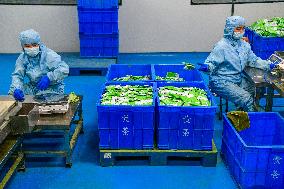
Workers pack matcha powder at a tea industrial park in Jiangkou County of Tongren, southwest China's Guizhou Province, on April 14, 2025. Located at the foot of Mount Fanjing, a UNESCO World Heritage Site, Jiangkou County is a powerhouse in the world's matcha industry. The county boasts over 10,000 hectares of tea plantations, nearly a fifth of which are dedicated to matcha production. In 2024, Jiangkou County produced more than 1,200 tonnes of matcha with a total output value of 350 million yuan (about 48.02 million U.S. dollars). The local matcha products have been exported to more than 40 overseas markets. Experts and agronomists believe that Guizhou, located on a plateau, possesses geographical and climatic advantages such as high altitude, low latitude, abundant fog and limited sunlight ideal for growing tea. Therefore, tea produced in this area is green, ecological and organic. Photo by Yang Wenbin/Xinhua/ABACAPRESS.COM

  •  
Mount Fanjing Matcha Industry - China

Mount Fanjing Matcha Industry - China

A worker packs matcha powder at a tea industrial park in Jiangkou County of Tongren, southwest China's Guizhou Province, on April 14, 2025. Located at the foot of Mount Fanjing, a UNESCO World Heritage Site, Jiangkou County is a powerhouse in the world's matcha industry. The county boasts over 10,000 hectares of tea plantations, nearly a fifth of which are dedicated to matcha production. In 2024, Jiangkou County produced more than 1,200 tonnes of matcha with a total output value of 350 million yuan (about 48.02 million U.S. dollars). The local matcha products have been exported to more than 40 overseas markets. Experts and agronomists believe that Guizhou, located on a plateau, possesses geographical and climatic advantages such as high altitude, low latitude, abundant fog and limited sunlight ideal for growing tea. Therefore, tea produced in this area is green, ecological and organic. Photo by Ou Dongqu/Xinhua/ABACAPRESS.COM

  •  
Mount Fanjing Matcha Industry - China

Mount Fanjing Matcha Industry - China

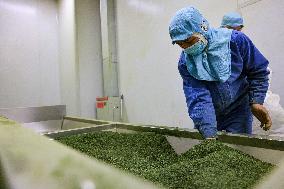
A staff member checks the raw materials for matcha production at a tea industrial park in Jiangkou County of Tongren, southwest China's Guizhou Province, on April 14, 2025. Located at the foot of Mount Fanjing, a UNESCO World Heritage Site, Jiangkou County is a powerhouse in the world's matcha industry. The county boasts over 10,000 hectares of tea plantations, nearly a fifth of which are dedicated to matcha production. In 2024, Jiangkou County produced more than 1,200 tonnes of matcha with a total output value of 350 million yuan (about 48.02 million U.S. dollars). The local matcha products have been exported to more than 40 overseas markets. Experts and agronomists believe that Guizhou, located on a plateau, possesses geographical and climatic advantages such as high altitude, low latitude, abundant fog and limited sunlight ideal for growing tea. Therefore, tea produced in this area is green, ecological and organic. Photo by Ou Dongqu/Xinhua/ABACAPRESS.COM

  •  
Mount Fanjing Matcha Industry - China

Mount Fanjing Matcha Industry - China

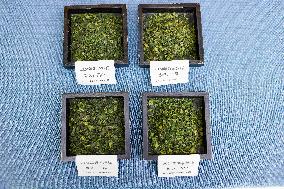
Raw materials for matcha production are on display in a tea industrial park in Jiangkou County of Tongren, southwest China's Guizhou Province, on April 14, 2025. Located at the foot of Mount Fanjing, a UNESCO World Heritage Site, Jiangkou County is a powerhouse in the world's matcha industry. The county boasts over 10,000 hectares of tea plantations, nearly a fifth of which are dedicated to matcha production. In 2024, Jiangkou County produced more than 1,200 tonnes of matcha with a total output value of 350 million yuan (about 48.02 million U.S. dollars). The local matcha products have been exported to more than 40 overseas markets. Experts and agronomists believe that Guizhou, located on a plateau, possesses geographical and climatic advantages such as high altitude, low latitude, abundant fog and limited sunlight ideal for growing tea. Therefore, tea produced in this area is green, ecological and organic. Photo by Ou Dongqu/Xinhua/ABACAPRESS.COM

  •  
Mount Fanjing Matcha Industry - China

Mount Fanjing Matcha Industry - China

A staff member produces matcha at a tea industrial park in Jiangkou County of Tongren, southwest China's Guizhou Province, on April 14, 2025. Located at the foot of Mount Fanjing, a UNESCO World Heritage Site, Jiangkou County is a powerhouse in the world's matcha industry. The county boasts over 10,000 hectares of tea plantations, nearly a fifth of which are dedicated to matcha production. In 2024, Jiangkou County produced more than 1,200 tonnes of matcha with a total output value of 350 million yuan (about 48.02 million U.S. dollars). The local matcha products have been exported to more than 40 overseas markets. Experts and agronomists believe that Guizhou, located on a plateau, possesses geographical and climatic advantages such as high altitude, low latitude, abundant fog and limited sunlight ideal for growing tea. Therefore, tea produced in this area is green, ecological and organic. Photo by Ou Dongqu/Xinhua/ABACAPRESS.COM

  •  
Mount Fanjing Matcha Industry - China

Mount Fanjing Matcha Industry - China

An aerial drone photo shows a farmer applying shading nets at a tea garden in Jiangkou County of Tongren, southwest China's Guizhou Province, on April 16, 2025. Located at the foot of Mount Fanjing, a UNESCO World Heritage Site, Jiangkou County is a powerhouse in the world's matcha industry. The county boasts over 10,000 hectares of tea plantations, nearly a fifth of which are dedicated to matcha production. In 2024, Jiangkou County produced more than 1,200 tonnes of matcha with a total output value of 350 million yuan (about 48.02 million U.S. dollars). The local matcha products have been exported to more than 40 overseas markets. Experts and agronomists believe that Guizhou, located on a plateau, possesses geographical and climatic advantages such as high altitude, low latitude, abundant fog and limited sunlight ideal for growing tea. Therefore, tea produced in this area is green, ecological and organic. Photo by Ou Dongqu/Xinhua/ABACAPRESS.COM

  •  
Mount Fanjing Matcha Industry - China

Mount Fanjing Matcha Industry - China

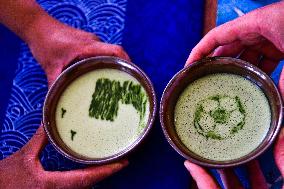
Matcha beverages are displayed at a tea industrial park in Jiangkou County of Tongren, southwest China's Guizhou Province, on April 14, 2025. Located at the foot of Mount Fanjing, a UNESCO World Heritage Site, Jiangkou County is a powerhouse in the world's matcha industry. The county boasts over 10,000 hectares of tea plantations, nearly a fifth of which are dedicated to matcha production. In 2024, Jiangkou County produced more than 1,200 tonnes of matcha with a total output value of 350 million yuan (about 48.02 million U.S. dollars). The local matcha products have been exported to more than 40 overseas markets. Experts and agronomists believe that Guizhou, located on a plateau, possesses geographical and climatic advantages such as high altitude, low latitude, abundant fog and limited sunlight ideal for growing tea. Therefore, tea produced in this area is green, ecological and organic. Photo by Yang Wenbin/Xinhua/ABACAPRESS.COM

  •  
Mount Fanjing Matcha Industry - China

Mount Fanjing Matcha Industry - China

A staff member works at a matcha factory in Jiangkou County of Tongren, southwest China's Guizhou Province, on April 14, 2025. Located at the foot of Mount Fanjing, a UNESCO World Heritage Site, Jiangkou County is a powerhouse in the world's matcha industry. The county boasts over 10,000 hectares of tea plantations, nearly a fifth of which are dedicated to matcha production. In 2024, Jiangkou County produced more than 1,200 tonnes of matcha with a total output value of 350 million yuan (about 48.02 million U.S. dollars). The local matcha products have been exported to more than 40 overseas markets. Experts and agronomists believe that Guizhou, located on a plateau, possesses geographical and climatic advantages such as high altitude, low latitude, abundant fog and limited sunlight ideal for growing tea. Therefore, tea produced in this area is green, ecological and organic. Photo by Ou Dongqu/Xinhua/ABACAPRESS.COM

  •  
Mount Fanjing Matcha Industry - China

Mount Fanjing Matcha Industry - China

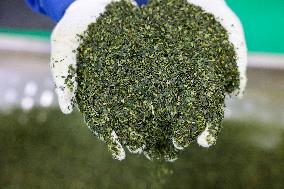
Matcha powder is pictured at a matcha factory in Jiangkou County of Tongren, southwest China's Guizhou Province, on April 14, 2025. Located at the foot of Mount Fanjing, a UNESCO World Heritage Site, Jiangkou County is a powerhouse in the world's matcha industry. The county boasts over 10,000 hectares of tea plantations, nearly a fifth of which are dedicated to matcha production. In 2024, Jiangkou County produced more than 1,200 tonnes of matcha with a total output value of 350 million yuan (about 48.02 million U.S. dollars). The local matcha products have been exported to more than 40 overseas markets. Experts and agronomists believe that Guizhou, located on a plateau, possesses geographical and climatic advantages such as high altitude, low latitude, abundant fog and limited sunlight ideal for growing tea. Therefore, tea produced in this area is green, ecological and organic. Photo by Yang Wenbin/Xinhua/ABACAPRESS.COM

  •  
Mount Fanjing Matcha Industry - China

Mount Fanjing Matcha Industry - China

A staff member makes matcha beverage at a tea industrial park in Jiangkou County of Tongren, southwest China's Guizhou Province, on April 14, 2025. Located at the foot of Mount Fanjing, a UNESCO World Heritage Site, Jiangkou County is a powerhouse in the world's matcha industry. The county boasts over 10,000 hectares of tea plantations, nearly a fifth of which are dedicated to matcha production. In 2024, Jiangkou County produced more than 1,200 tonnes of matcha with a total output value of 350 million yuan (about 48.02 million U.S. dollars). The local matcha products have been exported to more than 40 overseas markets. Experts and agronomists believe that Guizhou, located on a plateau, possesses geographical and climatic advantages such as high altitude, low latitude, abundant fog and limited sunlight ideal for growing tea. Therefore, tea produced in this area is green, ecological and organic. Photo by Ou Dongqu/Xinhua/ABACAPRESS.COM

  •  
Mount Fanjing Matcha Industry - China

Mount Fanjing Matcha Industry - China

A staff member makes matcha beverage at a tea industrial park in Jiangkou County of Tongren, southwest China's Guizhou Province, on April 14, 2025. Located at the foot of Mount Fanjing, a UNESCO World Heritage Site, Jiangkou County is a powerhouse in the world's matcha industry. The county boasts over 10,000 hectares of tea plantations, nearly a fifth of which are dedicated to matcha production. In 2024, Jiangkou County produced more than 1,200 tonnes of matcha with a total output value of 350 million yuan (about 48.02 million U.S. dollars). The local matcha products have been exported to more than 40 overseas markets. Experts and agronomists believe that Guizhou, located on a plateau, possesses geographical and climatic advantages such as high altitude, low latitude, abundant fog and limited sunlight ideal for growing tea. Therefore, tea produced in this area is green, ecological and organic. Photo by Ou Dongqu/Xinhua/ABACAPRESS.COM

  •  
Mount Fanjing Matcha Industry - China

Mount Fanjing Matcha Industry - China

An aerial drone photo shows a tea garden in Jiangkou County of Tongren, southwest China's Guizhou Province, on April 16, 2025. Located at the foot of Mount Fanjing, a UNESCO World Heritage Site, Jiangkou County is a powerhouse in the world's matcha industry. The county boasts over 10,000 hectares of tea plantations, nearly a fifth of which are dedicated to matcha production. In 2024, Jiangkou County produced more than 1,200 tonnes of matcha with a total output value of 350 million yuan (about 48.02 million U.S. dollars). The local matcha products have been exported to more than 40 overseas markets. Experts and agronomists believe that Guizhou, located on a plateau, possesses geographical and climatic advantages such as high altitude, low latitude, abundant fog and limited sunlight ideal for growing tea. Therefore, tea produced in this area is green, ecological and organic. Photo by Ou Dongqu/Xinhua/ABACAPRESS.COM

  •  
A Quokka At Featherdale Wildlife Park - Sydney

A Quokka At Featherdale Wildlife Park - Sydney

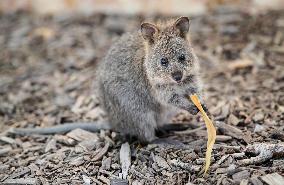
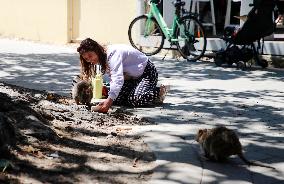
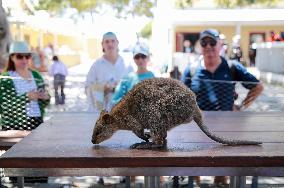
Visitors take photos of a quokka and her baby on the Rottnest Island in Australia, Oct. 25, 2024. Often called "the happiest animal in the world", Quokkas are a small marsupial related to Kangaroos. They have grey-brown fur and small, rounded ears, feeding on fresh, young grasses, leaves and succulents, as well as plant roots. The quokka's range is a small area of southwestern Australia. They inhabit some smaller islands off the coast of Western Australia, particularly Rottnest Island just off Perth. Quokkas there have become very accustomed to humans. The species is listed as vulnerable on the IUCN (The International Union for Conservation of Nature) Red List of threatened species due to habitat loss, climatic factors and predation by feral animals (cats and foxes). Photo by Ma Ping/Xinhua/ABACAPRESS.COM

  •  
A Quokka At Featherdale Wildlife Park - Sydney

A Quokka At Featherdale Wildlife Park - Sydney

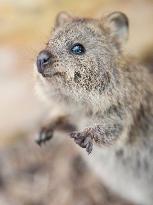
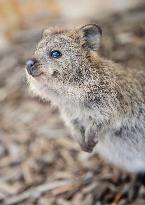
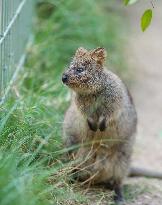
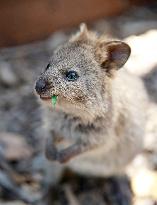
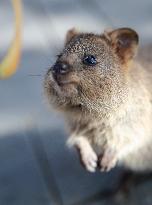
A quokka is seen on the Rottnest Island in Australia, Oct. 25, 2024. Often called "the happiest animal in the world", Quokkas are a small marsupial related to Kangaroos. They have grey-brown fur and small, rounded ears, feeding on fresh, young grasses, leaves and succulents, as well as plant roots. The quokka's range is a small area of southwestern Australia. They inhabit some smaller islands off the coast of Western Australia, particularly Rottnest Island just off Perth. Quokkas there have become very accustomed to humans. The species is listed as vulnerable on the IUCN (The International Union for Conservation of Nature) Red List of threatened species due to habitat loss, climatic factors and predation by feral animals (cats and foxes). Photo by Ma Ping/Xinhua/ABACAPRESS.COM

  •  
A Quokka At Featherdale Wildlife Park - Sydney

A Quokka At Featherdale Wildlife Park - Sydney

A quokka is seen on the Rottnest Island in Australia, Oct. 25, 2024. Often called "the happiest animal in the world", Quokkas are a small marsupial related to Kangaroos. They have grey-brown fur and small, rounded ears, feeding on fresh, young grasses, leaves and succulents, as well as plant roots. The quokka's range is a small area of southwestern Australia. They inhabit some smaller islands off the coast of Western Australia, particularly Rottnest Island just off Perth. Quokkas there have become very accustomed to humans. The species is listed as vulnerable on the IUCN (The International Union for Conservation of Nature) Red List of threatened species due to habitat loss, climatic factors and predation by feral animals (cats and foxes). Photo by Ma Ping/Xinhua/ABACAPRESS.COM

  •  
A Quokka At Featherdale Wildlife Park - Sydney

A Quokka At Featherdale Wildlife Park - Sydney

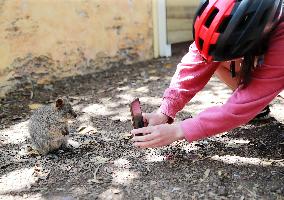
A visitor takes photo of a quokka on the Rottnest Island in Australia, Oct. 25, 2024. Often called "the happiest animal in the world", Quokkas are a small marsupial related to Kangaroos. They have grey-brown fur and small, rounded ears, feeding on fresh, young grasses, leaves and succulents, as well as plant roots. The quokka's range is a small area of southwestern Australia. They inhabit some smaller islands off the coast of Western Australia, particularly Rottnest Island just off Perth. Quokkas there have become very accustomed to humans. The species is listed as vulnerable on the IUCN (The International Union for Conservation of Nature) Red List of threatened species due to habitat loss, climatic factors and predation by feral animals (cats and foxes). Photo by Ma Ping/Xinhua/ABACAPRESS.COM

  •  
A Quokka At Featherdale Wildlife Park - Sydney

A Quokka At Featherdale Wildlife Park - Sydney

A visitor poses for a selfie with a quokka on the Rottnest Island in Australia, Oct. 25, 2024. Often called "the happiest animal in the world", Quokkas are a small marsupial related to Kangaroos. They have grey-brown fur and small, rounded ears, feeding on fresh, young grasses, leaves and succulents, as well as plant roots. The quokka's range is a small area of southwestern Australia. They inhabit some smaller islands off the coast of Western Australia, particularly Rottnest Island just off Perth. Quokkas there have become very accustomed to humans. The species is listed as vulnerable on the IUCN (The International Union for Conservation of Nature) Red List of threatened species due to habitat loss, climatic factors and predation by feral animals (cats and foxes). Photo by Ma Ping/Xinhua/ABACAPRESS.COM

  •  
A Quokka At Featherdale Wildlife Park - Sydney

A Quokka At Featherdale Wildlife Park - Sydney

A quokka is seen on the Rottnest Island in Australia, Oct. 25, 2024. Often called "the happiest animal in the world", Quokkas are a small marsupial related to Kangaroos. They have grey-brown fur and small, rounded ears, feeding on fresh, young grasses, leaves and succulents, as well as plant roots. The quokka's range is a small area of southwestern Australia. They inhabit some smaller islands off the coast of Western Australia, particularly Rottnest Island just off Perth. Quokkas there have become very accustomed to humans. The species is listed as vulnerable on the IUCN (The International Union for Conservation of Nature) Red List of threatened species due to habitat loss, climatic factors and predation by feral animals (cats and foxes). Photo by Ma Ping/Xinhua/ABACAPRESS.COM

  •  
A Quokka At Featherdale Wildlife Park - Sydney

A Quokka At Featherdale Wildlife Park - Sydney

A quokka is seen in the Featherdale Sydney Wildlife Park in Sydney, Australia, Oct. 4, 2024. Often called "the happiest animal in the world", Quokkas are a small marsupial related to Kangaroos. They have grey-brown fur and small, rounded ears, feeding on fresh, young grasses, leaves and succulents, as well as plant roots. The quokka's range is a small area of southwestern Australia. They inhabit some smaller islands off the coast of Western Australia, particularly Rottnest Island just off Perth. Quokkas there have become very accustomed to humans. The species is listed as vulnerable on the IUCN (The International Union for Conservation of Nature) Red List of threatened species due to habitat loss, climatic factors and predation by feral animals (cats and foxes). Photo by Ma Ping/Xinhua/ABACAPRESS.COM

  •  
A Quokka At Featherdale Wildlife Park - Sydney

A Quokka At Featherdale Wildlife Park - Sydney

A quokka is seen on the Rottnest Island in Australia, Oct. 25, 2024. Often called "the happiest animal in the world", Quokkas are a small marsupial related to Kangaroos. They have grey-brown fur and small, rounded ears, feeding on fresh, young grasses, leaves and succulents, as well as plant roots. The quokka's range is a small area of southwestern Australia. They inhabit some smaller islands off the coast of Western Australia, particularly Rottnest Island just off Perth. Quokkas there have become very accustomed to humans. The species is listed as vulnerable on the IUCN (The International Union for Conservation of Nature) Red List of threatened species due to habitat loss, climatic factors and predation by feral animals (cats and foxes). Photo by Ma Ping/Xinhua/ABACAPRESS.COM

  •  
A Quokka At Featherdale Wildlife Park - Sydney

A Quokka At Featherdale Wildlife Park - Sydney

A quokka is seen on the Rottnest Island in Australia, Oct. 25, 2024. Often called "the happiest animal in the world", Quokkas are a small marsupial related to Kangaroos. They have grey-brown fur and small, rounded ears, feeding on fresh, young grasses, leaves and succulents, as well as plant roots. The quokka's range is a small area of southwestern Australia. They inhabit some smaller islands off the coast of Western Australia, particularly Rottnest Island just off Perth. Quokkas there have become very accustomed to humans. The species is listed as vulnerable on the IUCN (The International Union for Conservation of Nature) Red List of threatened species due to habitat loss, climatic factors and predation by feral animals (cats and foxes). Photo by Ma Ping/Xinhua/ABACAPRESS.COM

  •  
A Quokka At Featherdale Wildlife Park - Sydney

A Quokka At Featherdale Wildlife Park - Sydney

A quokka is seen on the Rottnest Island in Australia, Oct. 25, 2024. Often called "the happiest animal in the world", Quokkas are a small marsupial related to Kangaroos. They have grey-brown fur and small, rounded ears, feeding on fresh, young grasses, leaves and succulents, as well as plant roots. The quokka's range is a small area of southwestern Australia. They inhabit some smaller islands off the coast of Western Australia, particularly Rottnest Island just off Perth. Quokkas there have become very accustomed to humans. The species is listed as vulnerable on the IUCN (The International Union for Conservation of Nature) Red List of threatened species due to habitat loss, climatic factors and predation by feral animals (cats and foxes). Photo by Ma Ping/Xinhua/ABACAPRESS.COM

  •  
A Quokka At Featherdale Wildlife Park - Sydney

A Quokka At Featherdale Wildlife Park - Sydney

A quokka is seen in the Featherdale Sydney Wildlife Park in Sydney, Australia, Oct. 4, 2024. Often called "the happiest animal in the world", Quokkas are a small marsupial related to Kangaroos. They have grey-brown fur and small, rounded ears, feeding on fresh, young grasses, leaves and succulents, as well as plant roots. The quokka's range is a small area of southwestern Australia. They inhabit some smaller islands off the coast of Western Australia, particularly Rottnest Island just off Perth. Quokkas there have become very accustomed to humans. The species is listed as vulnerable on the IUCN (The International Union for Conservation of Nature) Red List of threatened species due to habitat loss, climatic factors and predation by feral animals (cats and foxes). Photo by Ma Ping/Xinhua/ABACAPRESS.COM

  •  
Saffron Harvest Season - India

Saffron Harvest Season - India

flowers in a farm in Pampore, 20 km (13 miles) south of Srinagar the summer capital of Indian administered Kashmir, India. The production of Saffron, the precious spice owing to vast acreage, is falling rapidly in Indian Administered Kashmir. Farmers have become concerned at the falling yield of the saffron crop year after year with the changing climatic conditions responsible for a 50 to 60 percent decrease in the yield for the last two decades. on October 17, 2023 in Kashimir, India. Photo by Umer Qadir/Eyepix Group/ABACAPRESS.COM

  •  
Saffron Harvest Season - India

Saffron Harvest Season - India

flowers in a farm in Pampore, 20 km (13 miles) south of Srinagar the summer capital of Indian administered Kashmir, India. The production of Saffron, the precious spice owing to vast acreage, is falling rapidly in Indian Administered Kashmir. Farmers have become concerned at the falling yield of the saffron crop year after year with the changing climatic conditions responsible for a 50 to 60 percent decrease in the yield for the last two decades. on October 17, 2023 in Kashimir, India. Photo by Umer Qadir/Eyepix Group/ABACAPRESS.COM

  •  
Saffron Harvest Season - India

Saffron Harvest Season - India

flowers in a farm in Pampore, 20 km (13 miles) south of Srinagar the summer capital of Indian administered Kashmir, India. The production of Saffron, the precious spice owing to vast acreage, is falling rapidly in Indian Administered Kashmir. Farmers have become concerned at the falling yield of the saffron crop year after year with the changing climatic conditions responsible for a 50 to 60 percent decrease in the yield for the last two decades. on October 17, 2023 in Kashimir, India. Photo by Umer Qadir/Eyepix Group/ABACAPRESS.COM

  •  
Saffron Harvest Season - India

Saffron Harvest Season - India

flowers in a farm in Pampore, 20 km (13 miles) south of Srinagar the summer capital of Indian administered Kashmir, India. The production of Saffron, the precious spice owing to vast acreage, is falling rapidly in Indian Administered Kashmir. Farmers have become concerned at the falling yield of the saffron crop year after year with the changing climatic conditions responsible for a 50 to 60 percent decrease in the yield for the last two decades. on October 17, 2023 in Kashimir, India. Photo by Umer Qadir/Eyepix Group/ABACAPRESS.COM

  •  
Saffron Harvest Season - India

Saffron Harvest Season - India

flowers in a farm in Pampore, 20 km (13 miles) south of Srinagar the summer capital of Indian administered Kashmir, India. The production of Saffron, the precious spice owing to vast acreage, is falling rapidly in Indian Administered Kashmir. Farmers have become concerned at the falling yield of the saffron crop year after year with the changing climatic conditions responsible for a 50 to 60 percent decrease in the yield for the last two decades. on October 17, 2023 in Kashimir, India. Photo by Umer Qadir/Eyepix Group/ABACAPRESS.COM

  •  

Egypt keen to cooperate with China in environmental, climate technologies: minister

STORY: Egypt keen to cooperate with China in environmental, climate technologies: minister DATELINE: Sept. 18, 2023 LENGTH: 00:01:28 LOCATION: Cairo CATEGORY: POLITICS SHOTLIST: 1. various of Nile River 2. various of 1st Environmental and Climate Investment Forum 3. SOUNDBITE (Arabic): YASMINE FOUAD, Egyptian Minister of Environment 4. various of environmental, climate technologies STORYLINE: Yasmine Fouad, Egyptian Minister of Environment, has expressed keen interest in cooperating with China on environmental and climate technologies. The minister said recently that China's environmental and climate technologies are applicable to Egypt, and the opportunities for cooperation between Egypt and China in the field of energy are expanding. SOUNDBITE (Arabic): YASMINE FOUAD, Egyptian Minister of Environment "Egypt wants to use China's environmental and climate technologies because they can be applied everywhere in Egypt according to climatic conditions in these places. Egypt and China can also increase their

  • Main
  • Top
  • Editorial
  • Creative
  • About Us
  • About ILG
  • Terms of use
  • Company
  • BEHIND
  • Price List
  • Single Plan
  • Monthly Plan
  • Services
  • Shooting
  • Rights Clearance
  • Support
  • FAQ
  • How To Buy
  • Contact Us
  • Become a Partner

© KYODO NEWS IMAGES INC

All Rights Reserved.

  • Editorial
  • Olympics
  • News
  • Sports
  • Japan
  • Tech
  • Royal
  • Disaster
  • NorthKorea
  • Old Japan
  • SNS
  • Creative
  • Food
  • Japan
  • Landscape
  • Animal
  • Popular
  • #Ukraine
  • #China
  • #coronavirus
  • #N. Korea
  • #Thailand
  • #Russia
  • #Ukraine
  • #China
  • #coronavirus
  • #N. Korea
  • #Thailand
  • #Russia
  • Food
  • Japan
  • Landscape
  • Animal
  • Olympics
  • News
  • Sports
  • Japan
  • Tech
  • Royal
  • Disaster
  • NorthKorea
  • Old Japan
  • SNS