•  
SWEDEN ROCK 2025

SWEDEN ROCK 2025

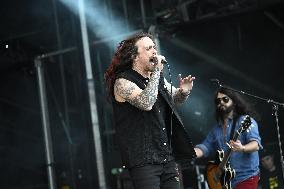
SÖLVESBORG, SWEDEN 20250605The Commoners from Canada at Sweden Rock Festival in Solvesborg, June 5, 2025.Photo: Fredrik Sandberg / TT / Code 10080

  •  
SWEDEN ROCK 2025

SWEDEN ROCK 2025

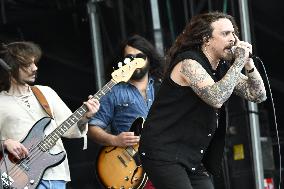
SÖLVESBORG, SWEDEN 20250605The Commoners from Canada at Sweden Rock Festival in Solvesborg, June 5, 2025.Photo: Fredrik Sandberg / TT / Code 10080

  •  
SWEDEN ROCK 2025

SWEDEN ROCK 2025

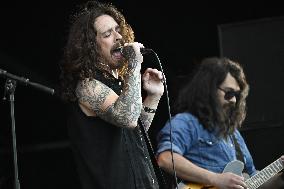
SÖLVESBORG, SWEDEN 20250605The Commoners from Canada at Sweden Rock Festival in Solvesborg, June 5, 2025.Photo: Fredrik Sandberg / TT / Code 10080

  •  
SWEDEN ROCK 2025

SWEDEN ROCK 2025

SÖLVESBORG, SWEDEN 20250605The Commoners from Canada at Sweden Rock Festival in Solvesborg, June 5, 2025.Photo: Fredrik Sandberg / TT / Code 10080

  •  
Female imperial branches

Female imperial branches

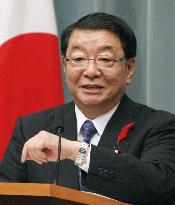
TOKYO, Japan - Chief Cabinet Secretary Osamu Fujimura holds a press conference in Tokyo on Oct. 5, 2012. The government made a proposal the same day on enabling female members of royalty to establish their own imperial family branches after marriage to commoners, amid concern about a decline in the number of royal household members and the heavy burden on the emperor.

  •  
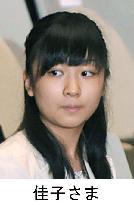
Princess Kako

Princess Kako

TOKYO, Japan - Undated file photo shows Princess Kako, a granddaughter of Japan's Emperor Akihito and Empress Michiko, and the younger daughter of Prince Akishino and Princess Kiko. The government made a proposal on Oct. 5, 2012, on enabling female members of royalty to establish their own imperial family branches after marriage to commoners, amid concern about a decline in the number of royal household members and the heavy burden on the emperor.

  •  
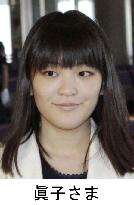
Princess Mako

Princess Mako

TOKYO, Japan - Undated file photo shows Princess Mako, a granddaughter of Japan's Emperor Akihito and Empress Michiko, and the eldest daughter of Prince Akishino and Princess Kiko. The government made a proposal on Oct. 5, 2012, on enabling female members of royalty to establish their own imperial family branches after marriage to commoners, amid concern about a decline in the number of royal household members and the heavy burden on the emperor.

  •  
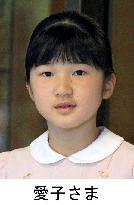
Princess Aiko

Princess Aiko

TOKYO, Japan - Undated file photo shows Princess Aiko, a granddaughter of Japan's Emperor Akihito and Empress Michiko, and daughter of Japanese Crown Prince Naruhito and his wife Crown Princess Masako. The government made a proposal on Oct. 5, 2012, on enabling female members of royalty to establish their own imperial family branches after marriage to commoners, amid concern about a decline in the number of royal household members and the heavy burden on the emperor.

  •  
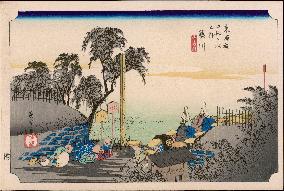
Hiroshige - 53 Stations of the Tokaido - Print 38

Hiroshige - 53 Stations of the Tokaido - Print 38

38 Fujikawa - The head of a daimyo's procession at the entrance to a village, and three peasants making obeisance as it passes. The most frequent user of the highway was the feudal lord with his retinue. Commoners who came across the procession had to kneel down on the ground to pay their respects and stay there until the procession had passed. Utagawa Hiroshige (1797 - 1858). The Fifty-Three Stations of the Tokaido - Hoeido edition (1831-4) Date: 1831 - 1834

  •  
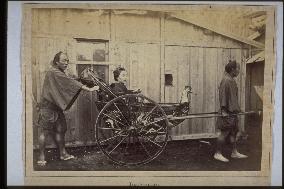
Jinrikisha,a man-pulled cart,decorated with chicken scuplture

Jinrikisha,a man-pulled cart,decorated with chicken scuplture

Carried on page 235 of the February 8, 1873 edition of The Far East. The article states that four years earlier there were no cars such as these but only palanquins for the nobility and commoners. Foreigners brought these types of vehicles into Japan, and entrepreneurs manufactured these boat-shaped baby car-type rickshaws.==Date:First year of Meiji, Place:unknown, Photo:unknown, (Credit:Nagasaki University Library/Kyodo News Images) [Cabinet Number17‐41‐0]

  •  
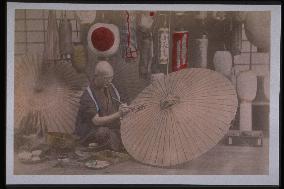
Making unbrellas

Making unbrellas

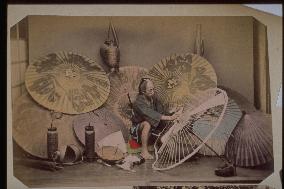
This is a scene in an umbrella workshop. The umbrellas visible here, called bangasa, were used daily by commoners during the Edo Period. The man is writing something on the finished umbrella. It was common practice to write the names of customers or shops on umbrellas.==Date:unknown, Place:unknown, Photo:unknown, (Credit:Nagasaki University Library/Kyodo News Images) [Cabinet Number96‐20‐0]

  •  
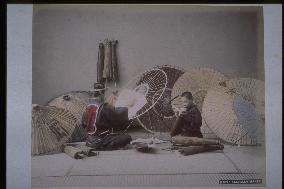
Making unbrellas

Making unbrellas

This is scene in an umbrella workshop. The umbrellas visible here, called bangasa, were used daily by commoners during the Edo Period. The man is pasting sheets of fan-shaped paper called hiragami on the main frame. The boy on the right is applying shibu (persimmon tannin) to an umbrella.==Date:unknown, Place:unknown, Photo:unknown, (Credit:Nagasaki University Library/Kyodo News Images) [Cabinet Number88‐45‐0]

  •  
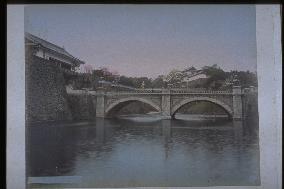
Niju-bashi Bridge,the Imperial Palace

Niju-bashi Bridge,the Imperial Palace

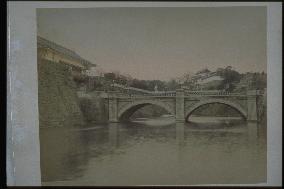
Kakumon Bridge spanning the inner moat (Nijubashi Moat) is said to have been built during the Kansei Period (1789-1801). During the Edo and Meiji Periods, the bridge in the foreground was called Nishinomaru Ote-bashi and the one behind it Nishinomaru Shimojo-bashi. The names currently used by the Imperial House Agency are Imperial Palace Main Gate Stone Bridge and Imperial Palace Main Gate Iron Bridge, respectively. Since 1948, commoners have been allowed to cross these bridges on January 2 and on the Emperor's birthday. Mid-Meiji Period.==Date:unknown, Place:Tokyo, Photo:unknown, (Credit:Nagasaki University Library/Kyodo News Images) [Cabinet Number88‐36‐0]

  •  
Niju-bashi Bridge,the Imperial Palace

Niju-bashi Bridge,the Imperial Palace

Kakumon Bridge spanning the inner moat (Nijubashi Moat) is said to have been built during the Kansei Period (1789-1801). During the Edo and Meiji Periods, the bridge in the foreground was called Nishinomaru Ote-bashi and the one behind it Nishinomaru Shimojo-bashi. The names currently used by the Imperial House Agency are Imperial Palace Main Gate Stone Bridge and Imperial Palace Main Gate Iron Bridge, respectively. Since 1948, commoners have been allowed to cross these bridges on January 2 and on the Emperor's birthday. Mid-Meiji Period.==Date:unknown, Place:Tokyo, Photo:unknown, (Credit:Nagasaki University Library/Kyodo News Images) [Cabinet Number87‐1‐0]

  •  
The approach to Enkakuji Temple,Kamakura

The approach to Enkakuji Temple,Kamakura

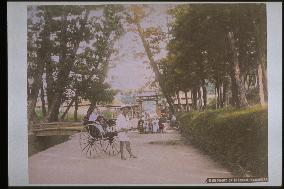
View of the Enkakuji Temple entrance area from the site of present-day Kita-Kamakura Station. There are two gates facing the street in front of the temple. The one in the background is the southeast gate. The temple is on the other side of the bridge. A horse road passes behind the mound on the right. It is possible that commoners were forbidden to use this gate during the Edo Period. The rickshaw in the centre seems to be an early model, indicating that this photograph was taken at the beginning of the Meiji Period.==Date:unknown, Place:Kamakura, Photo:unknown, (Credit:Nagasaki University Library/Kyodo News Images) [Cabinet Number86‐8‐0]

  •  
Enoshima coast

Enoshima coast

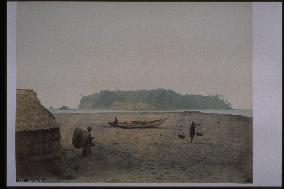
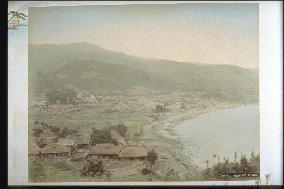
Photographer unknown. Entitled L25 Enoshima. The structure on the left could be a fisherman's shack. The name Enoshima appears in Azumakagami (chronicle of the Kamakura Shogunate) as follows: Mongaku built the Great Benzaiten at Enoshima on April 5th, 1182. Apparently Benten worship spread among commoners and samurai alike and many people visited the site.==Date:unknown, Place:Enoshima, Photo:A. Farsari, (Credit:Nagasaki University Library/Kyodo News Images) [Cabinet Number82‐20‐0]

  •  
Children playing in a small schoolyard

Children playing in a small schoolyard

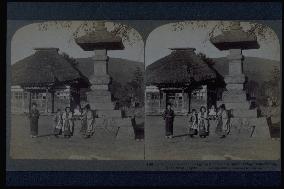
The national school system began in 1872. In those days there were nearly 3,000 terakoya (old style temple schools) in Shinshu (Nagano Prefecture) educating commoners. These temple schools were instrumental in the spread of modern education. Although modern school buildings were built after 1874, Buddhist temples were still being used as schools even in 1904 when this photograph was taken.==Date:1904, Place:Karuizawa, Photo:Underwood, (Credit:Nagasaki University Library/Kyodo News Images) [Cabinet Number97‐63‐0]

  •  
An ox cart

An ox cart

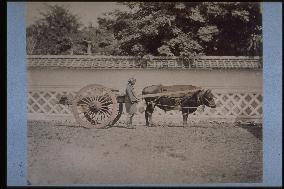
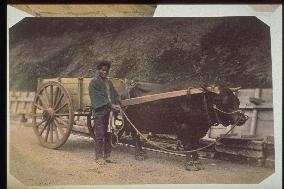
The ox-drawn cart was used to transport luggage. A yoke was placed on the cow, and a tripod protruding from the cart was connected to the yoke for the cow to pull. The cow carriage that noblemen used in the Heian Period was called gissha to differentiate it from that used by commoners.==Date:unknown, Place:unknown, Photo:R. Stillfried, (Credit:Nagasaki University Library/Kyodo News Images) [Cabinet Number76‐39‐0]

  •  
Ishiyamadera Temple

Ishiyamadera Temple

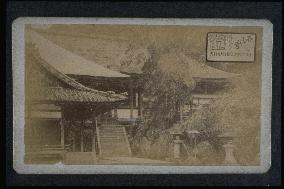
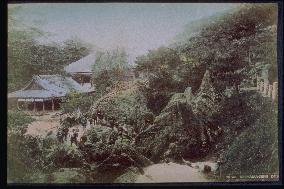
The precincts of Ishiyamadera Temple seen from the front of the Main Hall . During the Heian Period, aristocratic women worshipped at the temple, and in later years it attracted many commoners as the 13th temple in the circuit of the 33 Holy Kannon temple of Western Japan. The Main Hall, just behind the tile-roofed Rennyodo, burned to the ground in 1096 and was later rebuilt.==Date:unknown, Place:Shiga, Photo:unknown, (Credit:Nagasaki University Library/Kyodo News Images) [Cabinet Number71‐42‐0]

  •  
Ishiyamadera Temple

Ishiyamadera Temple

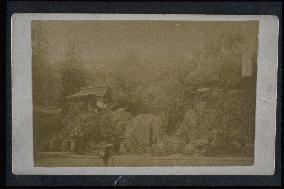
The precincts of Ishiyamadera Temple. During the Heian Period (794-1192), the temple was popular among ladies of the aristocracy. It was designated later as the 13th temple in the circuit of 33 Holy Kannon Temples of Western Japan and gained popularity among commoners. The photograph emphasizes the jagged wollastonite rocks after which the temple is named ( Ishiyama means stone mountain ).==Date:unknown, Place:Shiga, Photo:unknown, (Credit:Nagasaki University Library/Kyodo News Images) [Cabinet Number71‐35‐0]

  •  
A cargo carrier

A cargo carrier

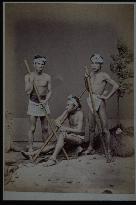
The life of commoners was free and open as shown in this photograph. Men were almost naked on hot days, wearing only head towels, loincloths and straw sandals. These men are most likely gardeners.==Date:unknown, Place:unknown, Photo:unknown, (Credit:Nagasaki University Library/Kyodo News Images) [Cabinet Number69‐47‐0]

  •  
The Hakone post town

The Hakone post town

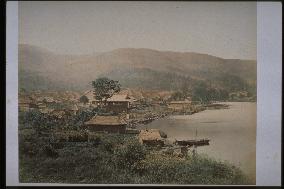
This photo depicts the post town of Hakone viewed from around the old Hakone check point site. The two-storied house behind the tree in the centre is Hatago Hafuya (present-day Hokone Hotel), an inn for commoners. The huge thatched roofed houses behind are, Kawada Honjin, an officially appointed inn for feudal lords, Koma Honjin, Ishiuchi Honjin, and Amano Heizaemon Honjin. Compared to catalogue # 2945, the backyards of honjins appear to be sticking out to Lake Ashinoko. The mountain behind on the left is Mt. Kurakake and the one in the centre is Hakone Pass.==Date:unknown, Place:Hakone, Photo:unknown, (Credit:Nagasaki University Library/Kyodo News Images) [Cabinet Number64‐46‐0]

  •  
A view of Lake Biwa from Ishiyamadera Temple

A view of Lake Biwa from Ishiyamadera Temple

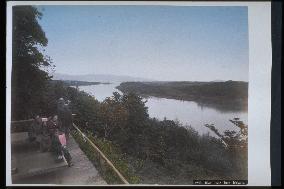
View of Seta River from Tsukimi-tei at Ishiyamadera Temple. During the Heian Period, aristocratic women worshipped at the temple, and in later years it attracted many commoners as the 13th temple in the circuit of 33 Holy Kannon Temples of Western Japan. One of the Eight Scenes of Oumi, it was referred to as Ishiyama-no-Shugetsu (Autumn Moon at Ishiyama Temple). This image appears on postcards and in various photographs.==Date:unknown, Place:Shiga, Photo:unknown, (Credit:Nagasaki University Library/Kyodo News Images) [Cabinet Number59‐23‐0]

  •  
Making unbrellas

Making unbrellas

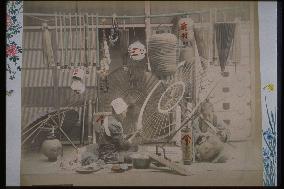
This is scene in an umbrella workshop. The umbrellas visible here, called bangasa, were used daily by commoners during the Edo Period. This is the stage at which the nokigami, is attached to the edge of the spokes to reinforce the outer edge of the umbrella.==Date:unknown, Place:unknown, Photo:unknown, (Credit:Nagasaki University Library/Kyodo News Images) [Cabinet Number57‐1‐2]

  •  
A view of Lake Biwa from Ishiyamadera Temple

A view of Lake Biwa from Ishiyamadera Temple

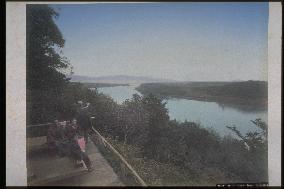
View of Seta River from Tsukimi-tei at Ishiyamadera Temple. During the Heian Period, aristocratic women worshipped at the temple, and in later years it attracted many commoners as the 13th temple in the circuit of 33 Holy Kannon Temples of Western Japan. One of the Eight Scenes of Oumi, it was referred to as Ishiyama-no-Shugetsu (Autumn Moon at Ishiyama Temple). This image appears on postcards and in various photographs.==Date:unknown, Place:Shiga, Photo:unknown, (Credit:Nagasaki University Library/Kyodo News Images) [Cabinet Number52‐18‐0]

  •  
An ox cart

An ox cart

The ox-drawn cart was used to transport luggage. A yoke was placed on the cow, and a tripod protruding from the cart was connected to the yoke for the cow to pull. The cow carriage that noblemen used in the Heian Period was called gissha to differentiate it from that used by commoners.==Date:unknown, Place:unknown, Photo:unknown, (Credit:Nagasaki University Library/Kyodo News Images) [Cabinet Number51‐25‐0]

  •  
Making unbrellas

Making unbrellas

This is scene in an umbrella workshop. The umbrellas visible here, called bangasa, were used daily by commoners during the Edo Period. The man is pasting a fan-shaped sheet of paper called hiragami to the main frame.==Date:unknown, Place:unknown, Photo:unknown, (Credit:Nagasaki University Library/Kyodo News Images) [Cabinet Number51‐11‐0]

  •  
Ishiyamadera Temple

Ishiyamadera Temple

The precincts of Ishiyamadera Temple. During the Heian Period (794-1192), the temple was popular among ladies of the aristocracy. It was designated later as the 13th temple in the circuit of 33 Holy Kannon Temples of Western Japan and gained popularity among commoners. The buildings visible in the background are the Main Hall and Rennyodo. The photograph emphasizes the jagged wollastonite rocks after which the temple is named ( Ishiyama means stone mountain ).==Date:unknown, Place:Shiga, Photo:Tamamura Kozaburo, (Credit:Nagasaki University Library/Kyodo News Images) [Cabinet Number48‐116‐0]

  •  
Palanquin and woman

Palanquin and woman

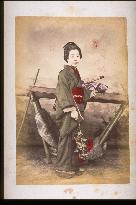
There were many types of palanquins, from the norimono with decorations on all four sides to the simple one for commoners without an enclosure. The Edo Shogunate designated the rank of people who could ride Norimono . The palanquin in the picture is the simplest form called Yamakago .==Date:unknown, Place:unknown, Photo:unknown, (Credit:Nagasaki University Library/Kyodo News Images) [Cabinet Number16‐20‐0]

  •  
View of atami

View of atami

This shows the base of the Izu Peninsula surrounded by mountains in three directions to the south, west and north. The plain is said to be the mouth of a volcano which was located there. The name Atami ( hot sea ) is derived from a hot water spring in the sea. Tokugawa Ieyasu bathed in these springs for the first time in 1597 and, it became a hot spa for warrior lords. After the mid- Edo era, it became popular among commoners, and many spa hotels were built with more than 20 hot springs in the village.==Date:unknown, Place:Atami, Photo:Ogawa Kazumasa, (Credit:Nagasaki University Library/Kyodo News Images) [Cabinet Number5‐34‐0]

  •  
The Dutch and the Japanese Commoners

The Dutch and the Japanese Commoners

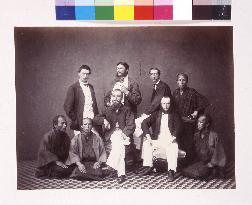
The Dutch and the Japanese Commoners==Date:1865, Place:nagasaki, Photo:A.F. Bauduin, (Credit:Nagasaki University Library/Kyodo News Images)

  •  
Main Hall and Worship Hall at Suwa Shrine

Main Hall and Worship Hall at Suwa Shrine

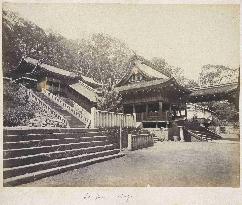
The buildings starting from the right are, Worship Hall, Norito-den Hall, and the Main Hall at Suwa Shrine. Worship Hall is where commoners would worship. The building is made of hinoki (Japanese cypress) in irimoya-zukuri style (a hip-and- gable roof construction) with a hiwadabuki-style roof (Japanese cypress hinoki bark thatching). The right, left , and front walls flip open upwards like awnings. The tablet was written by Sawa Nobuyoshi who became the Kyushu Pacification Officer in 1868. The floor of the Norito-den Hall connected to the passageway is tatami-covered. The building in the far left is the main hall rebuilt in 1869 after burning down in 1857. The chancel enshrines the spirit of the three deities of the Suwa, Morisaki, and Sumiyoshi shrines.==Date:about 1874, Place:Nagasaki, Photo:Ueno Hikoma?, (Credit:Nagasaki University Library/Kyodo News Images)

  •  
Koshima Hospital and the city of Nagasaki

Koshima Hospital and the city of Nagasaki

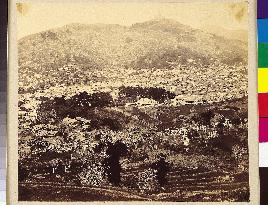
This photo was taken some time during the period spanning the Bakumatsu - end of Meiji Period. Koshima Yojosho is standing in the middle of the photo. A hospital called Koshima Yojosho was built in May 1860 at Sako, Koshima-go, to treat commoners. In 1861, a medical school was built adjacent to the hospital. Pompe van Meerdervoort taught internal medicine and surgery there. The Chinese settlement was in the area of slightly lower elevation on the lower left.==Date:About 1865, Place:Nagasaki, Photo:F. Beato, (Credit:Nagasaki University Library/Kyodo News Images)

  •  
Lawmakers agree to urge gov't to consider female imperial branches

Lawmakers agree to urge gov't to consider female imperial branches

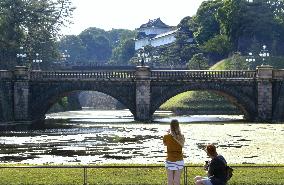
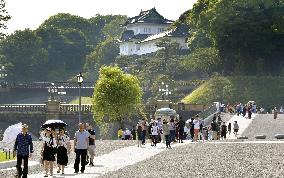
Tourists visit the Imperial Palace in Tokyo on May 30, 2017, when Japanese lawmakers agreed to call on the government to launch a debate on enabling princesses to stay within the imperial family by establishing family branches of their own after they marry commoners, as part of efforts to address the problem of a shrinking royal clan. (Kyodo) ==Kyodo

  •  
Lawmakers agree to urge gov't to consider female imperial branches

Lawmakers agree to urge gov't to consider female imperial branches

Tourists visit the Imperial Palace in Tokyo on May 30, 2017, when Japanese lawmakers agreed to call on the government to launch a debate on enabling princesses to stay within the imperial family by establishing family branches of their own after they marry commoners, as part of efforts to address the problem of a shrinking royal clan. (Kyodo) ==Kyodo

  • Main
  • Top
  • Editorial
  • Creative
  • About Us
  • About ILG
  • Terms of use
  • Company
  • BEHIND
  • Price List
  • Single Plan
  • Monthly Plan
  • Services
  • Shooting
  • Rights Clearance
  • Support
  • FAQ
  • How To Buy
  • Contact Us
  • Become a Partner

© KYODO NEWS IMAGES INC

All Rights Reserved.

  • Editorial
  • Olympics
  • News
  • Sports
  • Japan
  • Tech
  • Royal
  • Disaster
  • NorthKorea
  • Old Japan
  • SNS
  • Creative
  • Food
  • Japan
  • Landscape
  • Animal
  • Popular
  • #Ukraine
  • #China
  • #coronavirus
  • #N. Korea
  • #Russia
  • #Thailand
  • #Ukraine
  • #China
  • #coronavirus
  • #N. Korea
  • #Russia
  • #Thailand
  • Food
  • Japan
  • Landscape
  • Animal
  • Olympics
  • News
  • Sports
  • Japan
  • Tech
  • Royal
  • Disaster
  • NorthKorea
  • Old Japan
  • SNS