•  

Australian research to improve AI diagnosis from chest X-rays

STORY: Australian research to improve AI diagnosis from chest X-rays SHOOTING TIME: Nov. 20, 2023 DATELINE: Nov. 21, 2023 LENGTH: 00:00:31 LOCATION: Canberra CATEGORY: HEALTH/TECHNOLOGY SHOTLIST: 1. various of a radiology hospital STORYLINE: Australian researchers have identified methods for improving artificial intelligence (AI) diagnosis of heart and lung conditions. In a world-first study, a team from the Australian e-Health Research Centre (AEHRC) at the national science agency the Commonwealth Scientific and Industrial Research Organization (CSIRO) compared the accuracy of different AI models in interpreting chest X-rays. They found that by using the optimal combination of an encoder and decoder, automated AI diagnoses of heart and lung conditions from X-ray images can be made 26.9 percent more accurate. Current AI X-ray report generation technology uses an encoder to interpret images and a decoder to produce a report. The AEHRC research was the first globally into which encoder and decode

  •  
(ZhejiangPictorial)CHINA-ZHEJIANG-KAIHUA-PAPERMAKING (CN)

(ZhejiangPictorial)CHINA-ZHEJIANG-KAIHUA-PAPERMAKING (CN)

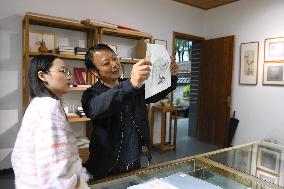
(231110) -- QUZHOU, Nov. 10, 2023 (Xinhua) -- Huang Hongjian (R) shows a visitor the details of the paper he made at his studio in Kaihua County of Quzhou, east China's Zhejiang Province, Nov. 9, 2023. Almost extinct, the traditional skills of making Kaihua paper, a kind of thin and enduring paper according to historical accounts, are now regaining vitality. Huang Hongjian, a 50-year-old farmer born in Kaihua, has been endeavoring to revitalize the skills since 2010 when he set out on a journey of visiting papermaking workshops and reading historical and technical books, trying to decode the making of Kaihua paper. With the support from Fudan University and local government, he finally managed to produce high-quality paper by the end of 2016. Since then, 20 varieties of handmade papers have been developed, meeting the need of ancient book restoring, reprinting, etc. Huang is now working on the setting of technical details for production on a larger scale. "Modern technology and traditional craftsm

  •  
(ZhejiangPictorial)CHINA-ZHEJIANG-KAIHUA-PAPERMAKING (CN)

(ZhejiangPictorial)CHINA-ZHEJIANG-KAIHUA-PAPERMAKING (CN)

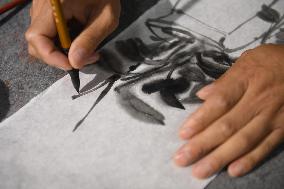
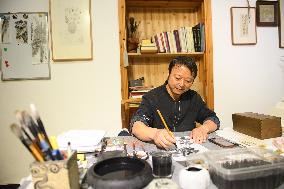
(231110) -- QUZHOU, Nov. 10, 2023 (Xinhua) -- Huang Hongjian paints on a piece of paper he made at his studio in Kaihua County of Quzhou, east China's Zhejiang Province, Nov. 9, 2023. Almost extinct, the traditional skills of making Kaihua paper, a kind of thin and enduring paper according to historical accounts, are now regaining vitality. Huang Hongjian, a 50-year-old farmer born in Kaihua, has been endeavoring to revitalize the skills since 2010 when he set out on a journey of visiting papermaking workshops and reading historical and technical books, trying to decode the making of Kaihua paper. With the support from Fudan University and local government, he finally managed to produce high-quality paper by the end of 2016. Since then, 20 varieties of handmade papers have been developed, meeting the need of ancient book restoring, reprinting, etc. Huang is now working on the setting of technical details for production on a larger scale. "Modern technology and traditional craftsmanship need to be

  •  
(ZhejiangPictorial)CHINA-ZHEJIANG-KAIHUA-PAPERMAKING (CN)

(ZhejiangPictorial)CHINA-ZHEJIANG-KAIHUA-PAPERMAKING (CN)

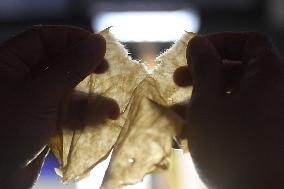
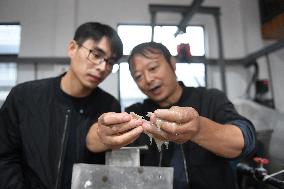
(231110) -- QUZHOU, Nov. 10, 2023 (Xinhua) -- Huang Hongjian shows paper fibers at his studio in Kaihua County of Quzhou, east China's Zhejiang Province, Nov. 9, 2023. Almost extinct, the traditional skills of making Kaihua paper, a kind of thin and enduring paper according to historical accounts, are now regaining vitality. Huang Hongjian, a 50-year-old farmer born in Kaihua, has been endeavoring to revitalize the skills since 2010 when he set out on a journey of visiting papermaking workshops and reading historical and technical books, trying to decode the making of Kaihua paper. With the support from Fudan University and local government, he finally managed to produce high-quality paper by the end of 2016. Since then, 20 varieties of handmade papers have been developed, meeting the need of ancient book restoring, reprinting, etc. Huang is now working on the setting of technical details for production on a larger scale. "Modern technology and traditional craftsmanship need to be combined to enha

  •  
(ZhejiangPictorial)CHINA-ZHEJIANG-KAIHUA-PAPERMAKING (CN)

(ZhejiangPictorial)CHINA-ZHEJIANG-KAIHUA-PAPERMAKING (CN)

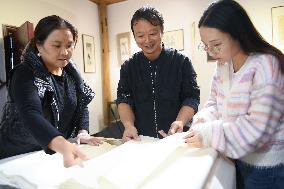
(231110) -- QUZHOU, Nov. 10, 2023 (Xinhua) -- Huang Hongjian (C) and his wife Lai Lifang (L) show a visitor different types of paper they made at Huang's studio in Kaihua County of Quzhou, east China's Zhejiang Province, Nov. 9, 2023. Almost extinct, the traditional skills of making Kaihua paper, a kind of thin and enduring paper according to historical accounts, are now regaining vitality. Huang Hongjian, a 50-year-old farmer born in Kaihua, has been endeavoring to revitalize the skills since 2010 when he set out on a journey of visiting papermaking workshops and reading historical and technical books, trying to decode the making of Kaihua paper. With the support from Fudan University and local government, he finally managed to produce high-quality paper by the end of 2016. Since then, 20 varieties of handmade papers have been developed, meeting the need of ancient book restoring, reprinting, etc. Huang is now working on the setting of technical details for production on a larger scale. "Modern t

  •  
(ZhejiangPictorial)CHINA-ZHEJIANG-KAIHUA-PAPERMAKING (CN)

(ZhejiangPictorial)CHINA-ZHEJIANG-KAIHUA-PAPERMAKING (CN)

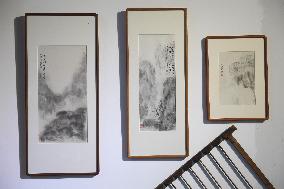
(231110) -- QUZHOU, Nov. 10, 2023 (Xinhua) -- This photo taken on Nov. 9, 2023 shows ink and wash paintings done on modern Kaihua paper at Huang Hongjian's studio in Kaihua County of Quzhou, east China's Zhejiang Province. Almost extinct, the traditional skills of making Kaihua paper, a kind of thin and enduring paper according to historical accounts, are now regaining vitality. Huang Hongjian, a 50-year-old farmer born in Kaihua, has been endeavoring to revitalize the skills since 2010 when he set out on a journey of visiting papermaking workshops and reading historical and technical books, trying to decode the making of Kaihua paper. With the support from Fudan University and local government, he finally managed to produce high-quality paper by the end of 2016. Since then, 20 varieties of handmade papers have been developed, meeting the need of ancient book restoring, reprinting, etc. Huang is now working on the setting of technical details for production on a larger scale. "Modern technology an

  •  
(ZhejiangPictorial)CHINA-ZHEJIANG-KAIHUA-PAPERMAKING (CN)

(ZhejiangPictorial)CHINA-ZHEJIANG-KAIHUA-PAPERMAKING (CN)

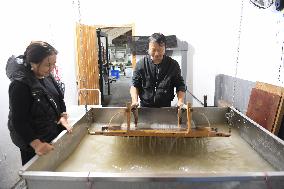
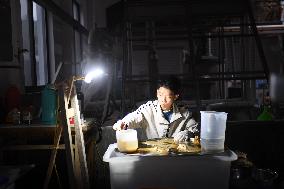
(231110) -- QUZHOU, Nov. 10, 2023 (Xinhua) -- Huang Hongjian (R) sifts the papermaking solution at his studio in Kaihua County of Quzhou, east China's Zhejiang Province, Nov. 9, 2023. Almost extinct, the traditional skills of making Kaihua paper, a kind of thin and enduring paper according to historical accounts, are now regaining vitality. Huang Hongjian, a 50-year-old farmer born in Kaihua, has been endeavoring to revitalize the skills since 2010 when he set out on a journey of visiting papermaking workshops and reading historical and technical books, trying to decode the making of Kaihua paper. With the support from Fudan University and local government, he finally managed to produce high-quality paper by the end of 2016. Since then, 20 varieties of handmade papers have been developed, meeting the need of ancient book restoring, reprinting, etc. Huang is now working on the setting of technical details for production on a larger scale. "Modern technology and traditional craftsmanship need to be

  •  
(ZhejiangPictorial)CHINA-ZHEJIANG-KAIHUA-PAPERMAKING (CN)

(ZhejiangPictorial)CHINA-ZHEJIANG-KAIHUA-PAPERMAKING (CN)

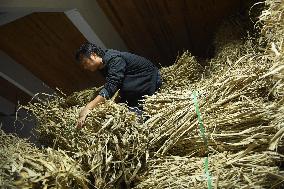
(231110) -- QUZHOU, Nov. 10, 2023 (Xinhua) -- Huang Hongjian piles up the raw material for papermaking at his studio in Kaihua County of Quzhou, east China's Zhejiang Province, Nov. 9, 2023. Almost extinct, the traditional skills of making Kaihua paper, a kind of thin and enduring paper according to historical accounts, are now regaining vitality. Huang Hongjian, a 50-year-old farmer born in Kaihua, has been endeavoring to revitalize the skills since 2010 when he set out on a journey of visiting papermaking workshops and reading historical and technical books, trying to decode the making of Kaihua paper. With the support from Fudan University and local government, he finally managed to produce high-quality paper by the end of 2016. Since then, 20 varieties of handmade papers have been developed, meeting the need of ancient book restoring, reprinting, etc. Huang is now working on the setting of technical details for production on a larger scale. "Modern technology and traditional craftsmanship need

  •  
(ZhejiangPictorial)CHINA-ZHEJIANG-KAIHUA-PAPERMAKING (CN)

(ZhejiangPictorial)CHINA-ZHEJIANG-KAIHUA-PAPERMAKING (CN)

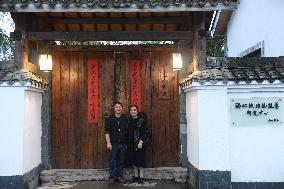
(231110) -- QUZHOU, Nov. 10, 2023 (Xinhua) -- Huang Hongjian and his wife Lai Lifang pose for a photo at Huang's studio in Kaihua County of Quzhou, east China's Zhejiang Province, Nov. 9, 2023. Almost extinct, the traditional skills of making Kaihua paper, a kind of thin and enduring paper according to historical accounts, are now regaining vitality. Huang Hongjian, a 50-year-old farmer born in Kaihua, has been endeavoring to revitalize the skills since 2010 when he set out on a journey of visiting papermaking workshops and reading historical and technical books, trying to decode the making of Kaihua paper. With the support from Fudan University and local government, he finally managed to produce high-quality paper by the end of 2016. Since then, 20 varieties of handmade papers have been developed, meeting the need of ancient book restoring, reprinting, etc. Huang is now working on the setting of technical details for production on a larger scale. "Modern technology and traditional craftsmanship n

  •  
(ZhejiangPictorial)CHINA-ZHEJIANG-KAIHUA-PAPERMAKING (CN)

(ZhejiangPictorial)CHINA-ZHEJIANG-KAIHUA-PAPERMAKING (CN)

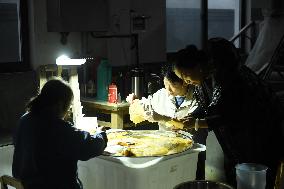
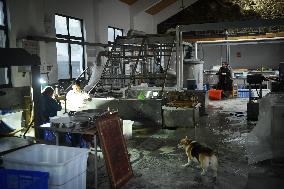
(231110) -- QUZHOU, Nov. 10, 2023 (Xinhua) -- People work at Huang Hongjian's studio in Kaihua County of Quzhou, east China's Zhejiang Province, Nov. 9, 2023. Almost extinct, the traditional skills of making Kaihua paper, a kind of thin and enduring paper according to historical accounts, are now regaining vitality. Huang Hongjian, a 50-year-old farmer born in Kaihua, has been endeavoring to revitalize the skills since 2010 when he set out on a journey of visiting papermaking workshops and reading historical and technical books, trying to decode the making of Kaihua paper. With the support from Fudan University and local government, he finally managed to produce high-quality paper by the end of 2016. Since then, 20 varieties of handmade papers have been developed, meeting the need of ancient book restoring, reprinting, etc. Huang is now working on the setting of technical details for production on a larger scale. "Modern technology and traditional craftsmanship need to be combined to enhance the p

  •  
(ZhejiangPictorial)CHINA-ZHEJIANG-KAIHUA-PAPERMAKING (CN)

(ZhejiangPictorial)CHINA-ZHEJIANG-KAIHUA-PAPERMAKING (CN)

(231110) -- QUZHOU, Nov. 10, 2023 (Xinhua) -- People work at Huang Hongjian's studio in Kaihua County of Quzhou, east China's Zhejiang Province, Nov. 9, 2023. Almost extinct, the traditional skills of making Kaihua paper, a kind of thin and enduring paper according to historical accounts, are now regaining vitality. Huang Hongjian, a 50-year-old farmer born in Kaihua, has been endeavoring to revitalize the skills since 2010 when he set out on a journey of visiting papermaking workshops and reading historical and technical books, trying to decode the making of Kaihua paper. With the support from Fudan University and local government, he finally managed to produce high-quality paper by the end of 2016. Since then, 20 varieties of handmade papers have been developed, meeting the need of ancient book restoring, reprinting, etc. Huang is now working on the setting of technical details for production on a larger scale. "Modern technology and traditional craftsmanship need to be combined to enhance the p

  •  
(ZhejiangPictorial)CHINA-ZHEJIANG-KAIHUA-PAPERMAKING (CN)

(ZhejiangPictorial)CHINA-ZHEJIANG-KAIHUA-PAPERMAKING (CN)

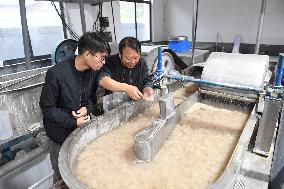
(231110) -- QUZHOU, Nov. 10, 2023 (Xinhua) -- Huang Hongjian (R) and his son Huang Xinkang check the pulp used to make paper at his studio in Kaihua County of Quzhou, east China's Zhejiang Province, Nov. 9, 2023. Almost extinct, the traditional skills of making Kaihua paper, a kind of thin and enduring paper according to historical accounts, are now regaining vitality. Huang Hongjian, a 50-year-old farmer born in Kaihua, has been endeavoring to revitalize the skills since 2010 when he set out on a journey of visiting papermaking workshops and reading historical and technical books, trying to decode the making of Kaihua paper. With the support from Fudan University and local government, he finally managed to produce high-quality paper by the end of 2016. Since then, 20 varieties of handmade papers have been developed, meeting the need of ancient book restoring, reprinting, etc. Huang is now working on the setting of technical details for production on a larger scale. "Modern technology and traditio

  •  
(ZhejiangPictorial)CHINA-ZHEJIANG-KAIHUA-PAPERMAKING (CN)

(ZhejiangPictorial)CHINA-ZHEJIANG-KAIHUA-PAPERMAKING (CN)

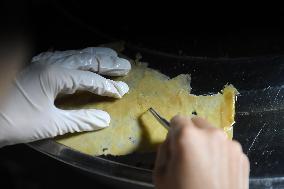
(231110) -- QUZHOU, Nov. 10, 2023 (Xinhua) -- A worker removes impurities on paper at Huang Hongjian's studio in Kaihua County of Quzhou, east China's Zhejiang Province, Nov. 9, 2023. Almost extinct, the traditional skills of making Kaihua paper, a kind of thin and enduring paper according to historical accounts, are now regaining vitality. Huang Hongjian, a 50-year-old farmer born in Kaihua, has been endeavoring to revitalize the skills since 2010 when he set out on a journey of visiting papermaking workshops and reading historical and technical books, trying to decode the making of Kaihua paper. With the support from Fudan University and local government, he finally managed to produce high-quality paper by the end of 2016. Since then, 20 varieties of handmade papers have been developed, meeting the need of ancient book restoring, reprinting, etc. Huang is now working on the setting of technical details for production on a larger scale. "Modern technology and traditional craftsmanship need to be

  •  
(ZhejiangPictorial)CHINA-ZHEJIANG-KAIHUA-PAPERMAKING (CN)

(ZhejiangPictorial)CHINA-ZHEJIANG-KAIHUA-PAPERMAKING (CN)

(231110) -- QUZHOU, Nov. 10, 2023 (Xinhua) -- A worker removes impurities on paper at Huang Hongjian's studio in Kaihua County of Quzhou, east China's Zhejiang Province, Nov. 9, 2023. Almost extinct, the traditional skills of making Kaihua paper, a kind of thin and enduring paper according to historical accounts, are now regaining vitality. Huang Hongjian, a 50-year-old farmer born in Kaihua, has been endeavoring to revitalize the skills since 2010 when he set out on a journey of visiting papermaking workshops and reading historical and technical books, trying to decode the making of Kaihua paper. With the support from Fudan University and local government, he finally managed to produce high-quality paper by the end of 2016. Since then, 20 varieties of handmade papers have been developed, meeting the need of ancient book restoring, reprinting, etc. Huang is now working on the setting of technical details for production on a larger scale. "Modern technology and traditional craftsmanship need to be

  •  
(ZhejiangPictorial)CHINA-ZHEJIANG-KAIHUA-PAPERMAKING (CN)

(ZhejiangPictorial)CHINA-ZHEJIANG-KAIHUA-PAPERMAKING (CN)

(231110) -- QUZHOU, Nov. 10, 2023 (Xinhua) -- Huang Hongjian paints on a piece of paper he made at his studio in Kaihua County of Quzhou, east China's Zhejiang Province, Nov. 9, 2023. Almost extinct, the traditional skills of making Kaihua paper, a kind of thin and enduring paper according to historical accounts, are now regaining vitality. Huang Hongjian, a 50-year-old farmer born in Kaihua, has been endeavoring to revitalize the skills since 2010 when he set out on a journey of visiting papermaking workshops and reading historical and technical books, trying to decode the making of Kaihua paper. With the support from Fudan University and local government, he finally managed to produce high-quality paper by the end of 2016. Since then, 20 varieties of handmade papers have been developed, meeting the need of ancient book restoring, reprinting, etc. Huang is now working on the setting of technical details for production on a larger scale. "Modern technology and traditional craftsmanship need to be

  •  
(ZhejiangPictorial)CHINA-ZHEJIANG-KAIHUA-PAPERMAKING (CN)

(ZhejiangPictorial)CHINA-ZHEJIANG-KAIHUA-PAPERMAKING (CN)

(231110) -- QUZHOU, Nov. 10, 2023 (Xinhua) -- Huang Hongjian (R) and his son Huang Xinkang check the pulp used to make paper at his studio in Kaihua County of Quzhou, east China's Zhejiang Province, Nov. 9, 2023. Almost extinct, the traditional skills of making Kaihua paper, a kind of thin and enduring paper according to historical accounts, are now regaining vitality. Huang Hongjian, a 50-year-old farmer born in Kaihua, has been endeavoring to revitalize the skills since 2010 when he set out on a journey of visiting papermaking workshops and reading historical and technical books, trying to decode the making of Kaihua paper. With the support from Fudan University and local government, he finally managed to produce high-quality paper by the end of 2016. Since then, 20 varieties of handmade papers have been developed, meeting the need of ancient book restoring, reprinting, etc. Huang is now working on the setting of technical details for production on a larger scale. "Modern technology and traditio

  •  
(ZhejiangPictorial)CHINA-ZHEJIANG-KAIHUA-PAPERMAKING (CN)

(ZhejiangPictorial)CHINA-ZHEJIANG-KAIHUA-PAPERMAKING (CN)

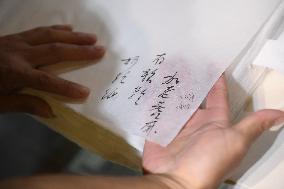
(231110) -- QUZHOU, Nov. 10, 2023 (Xinhua) -- Huang Hongjian shows production notes he made on a type of paper at his studio in Kaihua County of Quzhou, east China's Zhejiang Province, Nov. 9, 2023. Almost extinct, the traditional skills of making Kaihua paper, a kind of thin and enduring paper according to historical accounts, are now regaining vitality. Huang Hongjian, a 50-year-old farmer born in Kaihua, has been endeavoring to revitalize the skills since 2010 when he set out on a journey of visiting papermaking workshops and reading historical and technical books, trying to decode the making of Kaihua paper. With the support from Fudan University and local government, he finally managed to produce high-quality paper by the end of 2016. Since then, 20 varieties of handmade papers have been developed, meeting the need of ancient book restoring, reprinting, etc. Huang is now working on the setting of technical details for production on a larger scale. "Modern technology and traditional craftsmans

  •  
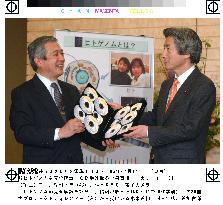
Decoding sequence of human genome completed

Decoding sequence of human genome completed

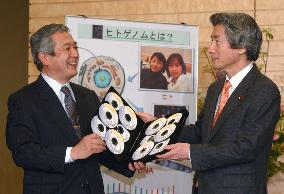
TOKYO, Japan - Yoshiyuki Sakaki (L), Japanese director of a project to decode the sequence of the human genome, presents Prime Minister Junichiro Koizumi with a set of CD-ROMs recording a map of the human genome at the prime minister's office in Tokyo on April 14. The leaders of six countries -- Japan, the United States, Britain, France, Germany and China -- issued a joint statement marking the completion of decoding of the human genome.

  •  
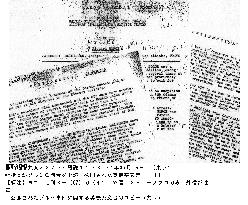
Tokyo police knew of Soviet spy Sorge's spying activities

Tokyo police knew of Soviet spy Sorge's spying activities

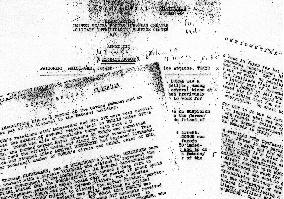
LONDON, Britain - Photo shows a U.S. document in a British MI5 file released to the public on July 5. The document suggests Tokyo police let Richard Sorge, a wartime Soviet spy based in Japan, remain at large in order to decode the ciphers he and other agents were using before they arrested him in October 1941. Sorge, who entered Japan as a correspondent for the German daily Frankfurter Zeitung, was arrested just two months before Japan attacked Pearl Harbor and executed in Japan in 1944.

  •  
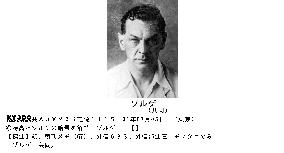
Tokyo police let WWII Soviet spy remain at large

Tokyo police let WWII Soviet spy remain at large

LONDON, Britain - File photo shows Richard Sorge, a wartime Soviet spy based in Japan. According to a U.S. document from a British MI5 file released to the public July 5 in London, Tokyo police let Sorge remain at large to decode ciphers he and other agents were using before they arrested him in October 1941. Sorge entered Japan as a correspondent for the German daily Frankfurter Zeitung.

  •  
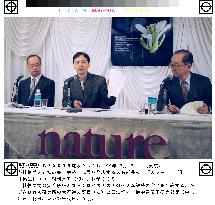
Researchers decode plant genome for 1st time

Researchers decode plant genome for 1st time

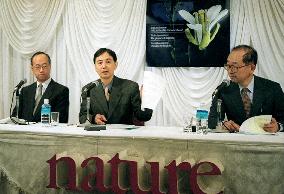
TOKYO, Japan - Michio Oishi (R) and Satoshi Tabata (C), of the Kazusa DNA Research Institute in Kisarazu, Chiba Prefecture, speak at a news conference in Tokyo on Dec. 13. They and researchers in the United States, Britain, France and Germany have succeeded in decoding the genome of a plant for the first time.

  •  
Tokyo police knew of Soviet spy Sorge's spying activities

Tokyo police knew of Soviet spy Sorge's spying activities

LONDON, Britain - Photo shows a U.S. document in a British MI5 file released to the public on July 5. The document suggests Tokyo police let Richard Sorge, a wartime Soviet spy based in Japan, remain at large in order to decode the ciphers he and other agents were using before they arrested him in October 1941. Sorge, who entered Japan as a correspondent for the German daily Frankfurter Zeitung, was arrested just two months before Japan attacked Pearl Harbor and executed in Japan in 1944.

  •  
Decoding sequence of human genome completed

Decoding sequence of human genome completed

TOKYO, Japan - Yoshiyuki Sakaki (L), Japanese director of a project to decode the sequence of the human genome, presents Prime Minister Junichiro Koizumi with a set of CD-ROMs recording a map of the human genome at the prime minister's office in Tokyo on April 14. The leaders of six countries -- Japan, the United States, Britain, France, Germany and China -- issued a joint statement marking the completion of decoding of the human genome. (Kyodo)

  •  
Researchers decode plant genome for 1st time

Researchers decode plant genome for 1st time

TOKYO, Japan - Michio Oishi (R) and Satoshi Tabata (C), of the Kazusa DNA Research Institute in Kisarazu, Chiba Prefecture, speak at a news conference in Tokyo on Dec. 13. They and researchers in the United States, Britain, France and Germany have succeeded in decoding the genome of a plant for the first time.

  • Main
  • Top
  • Editorial
  • Creative
  • About Us
  • About ILG
  • Terms of use
  • Company
  • BEHIND
  • Price List
  • Single Plan
  • Monthly Plan
  • Services
  • Shooting
  • Rights Clearance
  • Support
  • FAQ
  • How To Buy
  • Contact Us
  • Become a Partner

© KYODO NEWS IMAGES INC

All Rights Reserved.

  • Editorial
  • Olympics
  • News
  • Sports
  • Japan
  • Tech
  • Royal
  • Disaster
  • NorthKorea
  • Old Japan
  • SNS
  • Creative
  • Food
  • Japan
  • Landscape
  • Animal
  • Popular
  • #Ukraine
  • #China
  • #coronavirus
  • #N. Korea
  • #Thailand
  • #Russia
  • #Ukraine
  • #China
  • #coronavirus
  • #N. Korea
  • #Thailand
  • #Russia
  • Food
  • Japan
  • Landscape
  • Animal
  • Olympics
  • News
  • Sports
  • Japan
  • Tech
  • Royal
  • Disaster
  • NorthKorea
  • Old Japan
  • SNS