•  
JAPAN-INTEREST RATE POLICY

JAPAN-INTEREST RATE POLICY

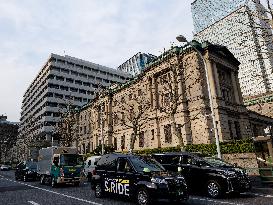
(240319) -- TOKYO, March 19, 2024 (Xinhua) -- The Bank of Japan is pictured in Tokyo, Japan, March 19, 2024. The Bank of Japan (BOJ) on Tuesday decided to end its negative interest rate policy in its first rate hike in 17 years, marking a major shift away from the long-running monetary easing that Japan has seen over the past decade to put an end to deflation. (Xinhua/Zhang Xiaoyu)

  •  
JAPAN-INTEREST RATE POLICY

JAPAN-INTEREST RATE POLICY

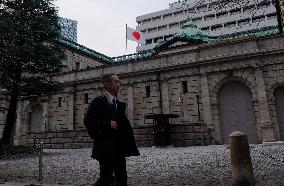
(240319) -- TOKYO, March 19, 2024 (Xinhua) -- A man walks past the Bank of Japan in Tokyo, Japan, March 19, 2024. The Bank of Japan (BOJ) on Tuesday decided to end its negative interest rate policy in its first rate hike in 17 years, marking a major shift away from the long-running monetary easing that Japan has seen over the past decade to put an end to deflation. (Xinhua/Zhang Xiaoyu)

  •  

Bank of Japan ends negative interest rates in historic policy overhaul

STORY: Bank of Japan ends negative interest rates in historic policy overhaul SHOOTING TIME: Earlier footage DATELINE: March 19, 2024 LENGTH: 0:00:41 LOCATION: Tokyo CATEGORY: ECONOMY SHOTLIST: 1. various of the Bank of Japan 2. various of city views in Tokyo STORYLINE: The Bank of Japan (BOJ) on Tuesday decided to end its negative interest rate policy in its first rate hike in 17 years, marking a major shift away from the long-running monetary easing that Japan has seen over the past decade to put an end to deflation. After a two-day policy meeting, the central bank's policy board decided to guide short-term rate to a range of 0 to 0.1 percent, up a fraction from minus 0.1 to 0 percent, judging that its goal of attaining a stable 2 percent inflation is "in sight." "It came into sight that the price stability target of 2 percent would be achieved in a sustainable and stable manner," the BOJ said in a post-meeting statement. On top of returning to positive rates, the BOJ also decided to scrap it

  •  

India's wholesale inflation contracts 0.26 pct in September

STORY: India's wholesale inflation contracts 0.26 pct in September DATELINE: Oct. 18, 2023 LENGTH: 00:01:21 LOCATION: New Delhi CATEGORY: ECONOMY SHOTLIST: 1. shot of India gate 2. various of wholesale market area STORYLINE: India's wholesale price index (WPI) contracted 0.26 percent in September, data released by the Federal Ministry of Commerce and Industry Monday said. "Deflation in September 2023 is primarily due to fall in prices of chemical and chemical products, mineral oils, textiles, basic metals and food products as compared to the corresponding month of previous year," reads a statement issued by the ministry. WPI inflation, an indicator of prices in the wholesale market, rises or falls mainly due to steep increases or decreases in commodity prices globally. WPI Food inflation decreased from 5.62 percent in August 2023 to 1.54 percent in September 2023. The index for the manufactured products group increased 0.36 percent to 140.3 (provisional) in September 2023 from 139.8 (provisional) in Au

  •  

Israeli annual CPI hits 20-year-high of 5.3 pct

STORY: Israeli annual CPI hits 20-year-high of 5.3 pct DATELINE: Jan. 17, 2023 LENGTH: 00:01:20 LOCATION: Jerusalem CATEGORY: ECONOMY SHOTLIST: 1. various of Jerusalem streets 2. various of Prof. Amir Yaron announcing rate increase in October 3. various of people in the streets 4. various of construction 5. various of people in the streets STORYLINE: The consumer price index (CPI) in Israel rose by 5.3 percent in 2022, according to data issued by the Central Bureau of Statistics on Sunday, the highest calendar-year level since 2002 when the annual inflation rate was 6.5 percent. This is a sharp rise from 2020 which recorded a deflation of 0.7 percent and 2021 when the annual CPI was 2.8 percent. Inflation is continuing to rise even though the Israeli central bank has gradually raised the base interest rate from 0.1 percent in April 2022 to 3.75 percent at present. "The global shortage of raw materials continued, and demand still exceeds supply, so even the sharp interest increase still does not

  •  
Ex-Fed chief Bernanke, PM Abe discuss Japan economic outlook

Ex-Fed chief Bernanke, PM Abe discuss Japan economic outlook

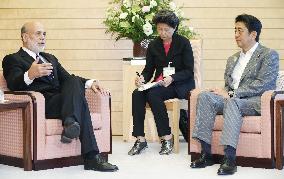
TOKYO, Japan, July 12 Kyodo - Former Federal Reserve Chairman Ben Bernanke (L) holds talks with Japanese Prime Minister Shinzo Abe (R) at the prime minister's office in Tokyo on July 12, 2016. They discussed the outlook for the world economy and what Japan should do to overcome deflation.

  •  
Keidanren chief calls for serious talks over wage hikes

Keidanren chief calls for serious talks over wage hikes

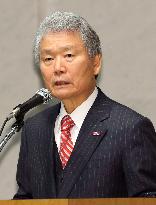
TOKYO, Jan. 25 Kyodo - Sadayuki Sakakibara, chairman of the Japan Business Federation, known as Keidanren, makes a speech in Tokyo on Jan. 25, 2016. Sakakibara called for "thorough negotiations" over wages between management and labor unions to help Japan exit from years of deflation, as annual wage talks shift into full gear.

  •  
Ministers meet with business, labor leaders

Ministers meet with business, labor leaders

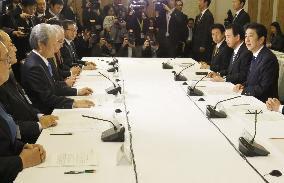
TOKYO, Japan - Japanese Prime Minister Shinzo Abe (far R) and his Cabinet members meet with leaders of business and labor circles on Dec. 16, 2014, in Tokyo. They agreed it is important to boost corporate earnings to bail the nation out of deflation so they can achieve wage hikes and expansion in consumption.

  •  
Election campaign begins with focus on "Abenomics"

Election campaign begins with focus on "Abenomics"

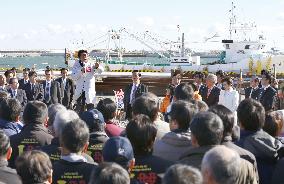
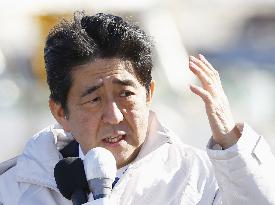
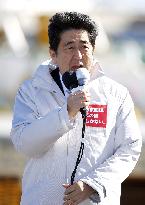
SOMA, Japan - Prime Minister Shinzo Abe kicks off his party's campaign for the Dec. 14 general election in the disaster-hit northeastern Japan city of Soma on Dec. 2, 2014. Abe has said his "Abenomics" policy mix is the only way to end deflation and revive the economy.

  •  
Election campaign begins with focus on "Abenomics"

Election campaign begins with focus on "Abenomics"

SOMA, Japan - Prime Minister Shinzo Abe kicks off his party's campaign for the Dec. 14 general election in the disaster-hit northeastern Japan city of Soma on Dec. 2, 2014. Abe has said his "Abenomics" policy mix is the only way to end deflation and revive the economy.

  •  
Election campaign begins with focus on "Abenomics"

Election campaign begins with focus on "Abenomics"

SOMA, Japan - Prime Minister Shinzo Abe kicks off his party's campaign for the Dec. 14 general election in the disaster-hit northeastern Japan city of Soma on Dec. 2, 2014. Abe has said his "Abenomics" policy mix is the only way to end deflation and revive the economy.

  •  
LDP vows to follow through on Abenomics

LDP vows to follow through on Abenomics

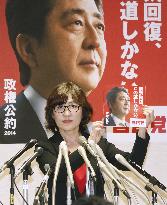
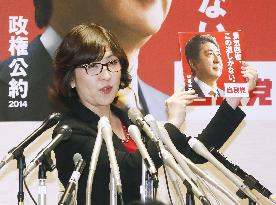
TOKYO, Japan - Tomomi Inada, policy chief of the Liberal Democratic Party, announces the party's policy platform for the Dec. 14 general election in Tokyo, Japan, on Nov. 25, 2014. The ruling party pledged to follow through on Prime Minister Shinzo Abe's attempts to pull Japan out of deflation and revitalize the economy.

  •  
LDP vows to follow through on Abenomics

LDP vows to follow through on Abenomics

TOKYO, Japan - Tomomi Inada, policy chief of the Liberal Democratic Party, announces the party's policy platform for the Dec. 14 general election in Tokyo, Japan, on Nov. 25, 2014. The ruling party pledged to follow through on Prime Minister Shinzo Abe's attempts to pull Japan out of deflation and revitalize the economy.

  •  
PM Abe addresses LDP meeting

PM Abe addresses LDP meeting

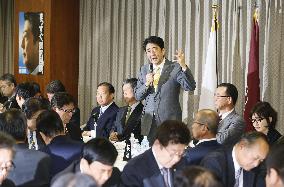
TOKYO, Japan - Japanese Prime Minister Shinzo Abe addresses a meeting of senior local officials of his Liberal Democratic Party in Tokyo on Nov. 25, 2014. The LDP announced its policy platform for the Dec. 14 general election, in which the party pledged to follow through on Abe's attempts to pull Japan out of deflation and revitalize the economy.

  •  
BOJ maintains ultraeasy monetary policy

BOJ maintains ultraeasy monetary policy

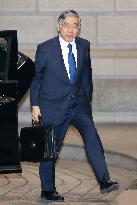
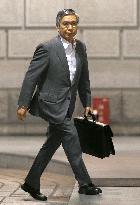
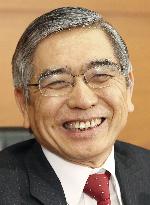
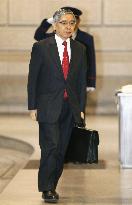
TOKYO, Japan - Haruhiko Kuroda, governor of the Bank of Japan, heads for the BOJ's monetary policy meeting at the central bank's head office in Tokyo on Oct. 31, 2013. In the meeting later that day, the BOJ decided to maintain its ultraeasy monetary policy introduced in April the same year to conquer deflation. (Pool photo)

  •  
BOJ maintains ultraeasy monetary policy

BOJ maintains ultraeasy monetary policy

TOKYO, Japan - Haruhiko Kuroda, governor of the Bank of Japan, heads for the BOJ's monetary policy meeting at the central bank's head office in Tokyo on Oct. 31, 2013. In the meeting later that day, the BOJ decided to maintain its ultraeasy monetary policy introduced in April the same year to conquer deflation. (Pool photo)

  •  
PM Abe gives policy speech

PM Abe gives policy speech

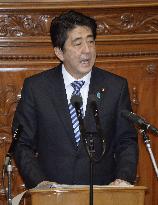
TOKYO, Japan - Japanese Prime Minister Shinzo Abe delivers a policy speech at the opening of an extraordinary Diet session in the House of Representatives plenary session hall in Tokyo on Oct. 15, 2011. Abe said that Japan must make further efforts to beat chronic deflation, announcing his resolve to implement an all-out growth strategy that will encourage companies to raise salaries and expand employment.

  •  
Deflation in Japan on verge of ending

Deflation in Japan on verge of ending

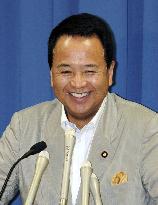
TOKYO, Japan - Fiscal policy minister Akira Amari smiles during a press conference in Tokyo on Aug. 15, 2013 to discuss the government's monthly economic report. In the report, the government asserted that Japan is on the verge of escaping prolonged deflation.

  •  
BOJ governor

BOJ governor

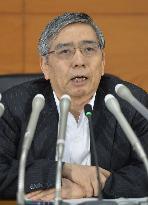
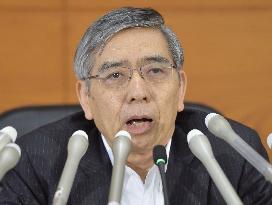
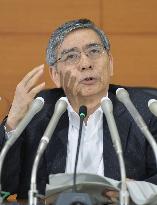
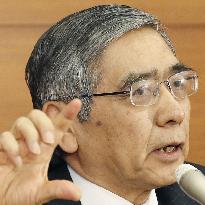
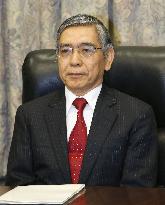
TOKYO, Japan - Bank of Japan Governor Haruhiko Kuroda speaks during a press conference at the central bank's head office in Tokyo on Aug. 8, 2013. Kuroda said that Japan can overcome longstanding deflation even if the sales tax is increased as planned, and called on the government to make progress in securing fiscal health to ensure the effects of the central bank's monetary easing policy.

  •  
BOJ governor

BOJ governor

TOKYO, Japan - Bank of Japan Governor Haruhiko Kuroda speaks during a press conference at the central bank's head office in Tokyo on Aug. 8, 2013. Kuroda said that Japan can overcome longstanding deflation even if the sales tax is increased as planned, and called on the government to make progress in securing fiscal health to ensure the effects of the central bank's monetary easing policy.

  •  
BOJ governor

BOJ governor

TOKYO, Japan - Bank of Japan Governor Haruhiko Kuroda speaks during a press conference at the central bank's head office in Tokyo on Aug. 8, 2013. Kuroda said that Japan can overcome longstanding deflation even if the sales tax is increased as planned, and called on the government to make progress in securing fiscal health to ensure the effects of the central bank's monetary easing policy.

  •  
BOJ policy meeting

BOJ policy meeting

TOKYO, Japan - Bank of Japan Governor Haruhiko Kuroda enters the head office of the central bank for a policy meeting in Tokyo on May 22, 2013. The BOJ decided to maintain its current aggressive monetary easing policy to beat deflation, at a time when the country's consumption and exports have started to recover amid a weakening yen and rising stocks. (Pool photo by Kyodo News)

  •  
BOJ further eases monetary policy

BOJ further eases monetary policy

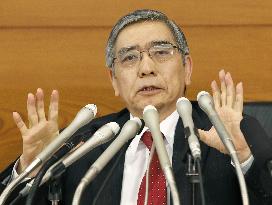
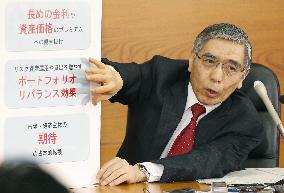
TOKYO, Japan - Bank of Japan Governor Haruhiko Kuroda speaks during a press conference at the BOJ head office in Tokyo on April 4, 2013. The central bank decided to further ease its monetary policy under a new monetary framework, displaying Kuroda's resolve to pursue further monetary easing to achieve a 2 percent inflation target in about 2 years to fight deflation.

  •  
BOJ further eases monetary policy

BOJ further eases monetary policy

TOKYO, Japan - Bank of Japan Governor Haruhiko Kuroda speaks during a press conference at the BOJ head office in Tokyo on April 4, 2013. The central bank decided to further ease its monetary policy under a new monetary framework, displaying Kuroda's resolve to pursue further monetary easing to achieve a 2 percent inflation target in about 2 years to fight deflation.

  •  
BOJ further eases monetary policy

BOJ further eases monetary policy

TOKYO, Japan - Bank of Japan Governor Haruhiko Kuroda speaks during a press conference at the BOJ head office in Tokyo on April 4, 2013. The central bank decided to further ease its monetary policy under a new monetary framework, displaying Kuroda's resolve to pursue further monetary easing to achieve a 2 percent inflation target in about 2 years to fight deflation.

  •  
BOJ further eases monetary policy

BOJ further eases monetary policy

TOKYO, Japan - Bank of Japan Governor Haruhiko Kuroda speaks during a press conference at the BOJ head office in Tokyo on April 4, 2013. The central bank decided to further ease its monetary policy under a new monetary framework, displaying Kuroda's resolve to pursue further monetary easing to achieve a 2 percent inflation target in about 2 years to fight deflation.

  •  
BOJ further eases monetary policy

BOJ further eases monetary policy

TOKYO, Japan - Bank of Japan Governor Haruhiko Kuroda speaks during a press conference at the BOJ head office in Tokyo on April 4, 2013. The central bank decided to further ease its monetary policy under a new monetary framework, displaying Kuroda's resolve to pursue further monetary easing to achieve a 2 percent inflation target in about 2 years to fight deflation.

  •  
BOJ further eases monetary policy

BOJ further eases monetary policy

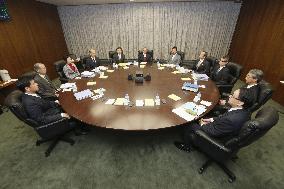
TOKYO, Japan - Bank of Japan policymakers hold a meeting at the central bank's head office in Tokyo on April 4, 2013. The BOJ decided the same day to further ease its monetary policy under a new monetary framework in a bid to achieve a 2 percent inflation target in about 2 years to fight deflation. (Pool photo by Kyodo News)

  •  
BOJ further eases monetary policy

BOJ further eases monetary policy

TOKYO, Japan - New Bank of Japan Governor Haruhiko Kuroda arrives at the BOJ's head office in Tokyo on April 4, 2013. The BOJ decided later in the day to further ease its monetary policy under a new monetary framework in a bid to achieve a 2 percent inflation target in about 2 years to fight deflation. (Pool photo by Kyodo News)

  •  
BOJ further eases monetary policy

BOJ further eases monetary policy

TOKYO, Japan - New Bank of Japan Governor Haruhiko Kuroda attends a policy meeting at the central bank's head office in Tokyo on April 4, 2013. The BOJ decided the same day to further ease its monetary policy under a new monetary framework in a bid to achieve a 2 percent inflation target in about 2 years to fight deflation. (Pool photo by Kyodo News)

  •  
BOJ further eases monetary policy

BOJ further eases monetary policy

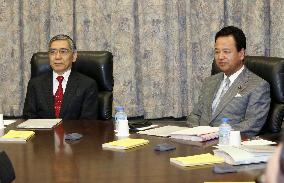
TOKYO, Japan - New Bank of Japan Governor Haruhiko Kuroda (L) and economic revitalization minister Akira Amari attend a policy meeting at the central bank's head office in Tokyo on April 4, 2013. The BOJ decided the same day to further ease its monetary policy under a new monetary framework in a bid to achieve a 2 percent inflation target in about 2 years to fight deflation. (Pool photo by Kyodo News)

  •  
Davos economic forum

Davos economic forum

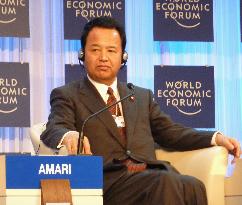
DAVOS, Switzerland - Japan's economic and fiscal policy minister Akira Amari attends the World Economic Forum in Davos, Switzerland, on Jan. 26, 2013. Amari delivered a speech aimed at explaining Japan's policies, recently dubbed "Abenomics," to overcome persistent deflation and stimulate the sluggish economy.

  •  
BOJ introduces 2% inflation target

BOJ introduces 2% inflation target

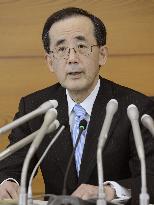
TOKYO, Japan - Bank of Japan Governor Masaaki Shirakawa holds a press conference at the BOJ's head office in Tokyo on Jan. 22, 2013, after a two-day Policy Board meeting. The Japanese central bank entered a new stage of drastic monetary easing the same day, setting a 2 percent inflation target under pressure from Prime Minister Shinzo Abe, who has asked it to take more action to overcome chronic deflation and the strong yen.

  •  
Abe aims to boost Japan economy with tax reforms

Abe aims to boost Japan economy with tax reforms

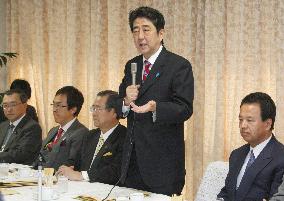
TOKYO, Japan - Shinzo Abe (standing), head of the Liberal Democratic Party, speaks at a meeting of the party's tax panel at the LDP's headquarters in Tokyo on Dec. 21, 2012. Abe, who is set to become Japan's next prime minister, said he will speed up tax reforms to boost the economy, highlighting his aim of fully using fiscal measures to beat chronic deflation in the country.

  •  
Noda announces election pledges

Noda announces election pledges

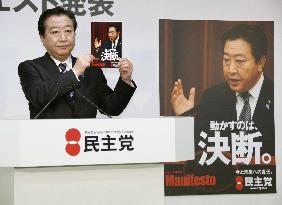
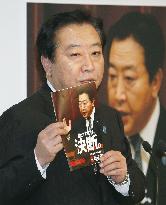
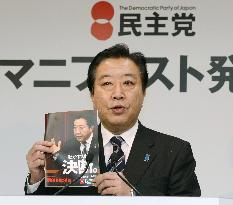
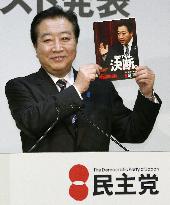
TOKYO, Japan - Prime Minister Yoshihiko Noda announces his Democratic Party of Japan's pledges at the DPJ headquarters in Tokyo's Nagatacho district on Nov. 27, 2012. In the pledges released ahead of the Dec. 16 House of Representatives election, the ruling party promised to phase out nuclear energy in the 2030s and fight deflation by cooperating with the Bank of Japan.

  •  
Noda announces election pledges

Noda announces election pledges

TOKYO, Japan - Prime Minister Yoshihiko Noda announces his Democratic Party of Japan's pledges at the DPJ headquarters in Tokyo's Nagatacho district on Nov. 27, 2012. In the pledges released ahead of the Dec. 16 House of Representatives election, the ruling party promised to phase out nuclear energy in the 2030s and fight deflation by cooperating with the Bank of Japan.

  •  
Noda announces election pledges

Noda announces election pledges

TOKYO, Japan - Prime Minister Yoshihiko Noda announces his Democratic Party of Japan's pledges at the DPJ headquarters in Tokyo's Nagatacho district on Nov. 27, 2012. In the pledges released ahead of the Dec. 16 House of Representatives election, the ruling party promised to phase out nuclear energy in the 2030s and fight deflation by cooperating with the Bank of Japan.

  •  
Noda announces election pledges

Noda announces election pledges

TOKYO, Japan - Prime Minister Yoshihiko Noda announces his Democratic Party of Japan's pledges at the DPJ headquarters in Tokyo's Nagatacho district on Nov. 27, 2012. In the pledges released ahead of the Dec. 16 House of Representatives election, the ruling party promised to phase out nuclear energy in the 2030s and fight deflation by cooperating with the Bank of Japan.

  •  
Shirakawa defends BOJ's monetary policy

Shirakawa defends BOJ's monetary policy

NAGOYA, Japan - Bank of Japan Governor Masaaki Shirakawa holds a press conference in Nagoya on Nov. 26, 2012. In a speech he delivered in the central Japanese city earlier in the day, Shirakawa defended the central bank's monetary policy, saying it has helped stem the yen's rise and that more efforts by the government are important in combating deflation.

  •  
Shirakawa defends BOJ's monetary policy

Shirakawa defends BOJ's monetary policy

NAGOYA, Japan - Bank of Japan Governor Masaaki Shirakawa delivers a speech in Nagoya on Nov. 26, 2012. Shirakawa defended the central bank's monetary policy, saying that it has helped stem the yen's rise and that more efforts by the government are important in combating deflation.

  •  
BOJ decides on additional easing

BOJ decides on additional easing

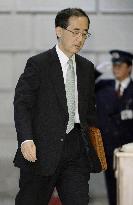
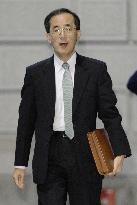
TOKYO, Japan - Bank of Japan Governor Masaaki Shirakawa enters the Japanese central bank in Tokyo on Oct. 30, 2012. The BOJ decided to expand its asset purchase program by 11 trillion yen to 91 trillion yen as additional monetary easing to fight deflation. (Pool photo by Kyodo News)

  •  
BOJ decides on additional easing

BOJ decides on additional easing

TOKYO, Japan - Bank of Japan Governor Masaaki Shirakawa enters the Japanese central bank in Tokyo on Oct. 30, 2012. The BOJ decided to expand its asset purchase program by 11 trillion yen to 91 trillion yen as additional monetary easing to fight deflation. (Pool photo by Kyodo News)

  •  
BOJ decides on additional credit easing

BOJ decides on additional credit easing

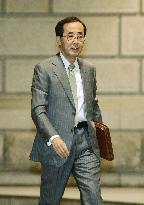
TOKYO, Japan - Bank of Japan Governor Masaaki Shirakawa enters the BOJ head office in Tokyo for a Policy Board meeting on April 27, 2012. At the meeting, the central bank decided to further ease its monetary policy to fight chronic deflation in the country. (Pool photo by Kyodo News)

  •  
BOJ policy meeting

BOJ policy meeting

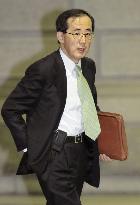
TOKYO, Japan - Bank of Japan Governor Masaaki Shirakawa enters the BOJ's headquarters in Tokyo on Feb. 14, 2012, for a policy board meeting. The Japanese central bank decided to effectively introduce an inflation goal of 1 percent and further eased its monetary policy through an expansion of its asset purchase program in a bid to overcome the prolonged deflation in the country and achieve sustainable growth. (Pool photo by Kyodo News)

  •  
Ex-Foreign Minister Maehara

Ex-Foreign Minister Maehara

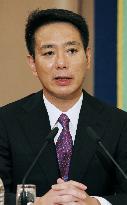
TOKYO, Japan - Former Foreign Minister Seiji Maehara speaks during a press conference at the Japan National Press Club in Tokyo on Aug. 27, 2011, after filing his candidacy for the ruling Democratic Party of Japan's presidential election slated for Aug. 29. Maehara said taxes must not be raised until Japan moves out of deflation, and he would like to serve as prime minister for at least four years.

  •  
Governors urge gov't to halt yen's rise, deflation

Governors urge gov't to halt yen's rise, deflation

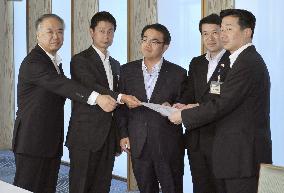
TOKYO, Japan - Japanese governors including Aichi Gov. Hideaki Omura (C), head of a National Governors' Association project team, submit a written request for halting the yen's steep rise and pulling Japan out of deflation to Deputy Chief Cabinet Secretary Tetsuro Fukuyama (R) at the prime minister's office in Tokyo on Aug. 17, 2011.

  •  
BOJ chief Shirakawa in meeting

BOJ chief Shirakawa in meeting

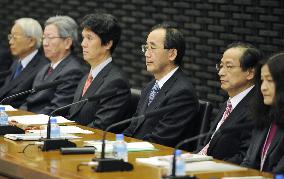
TOKYO, Japan - Bank of Japan Governor Masaaki Shirakawa (3rd from R) attends a quarterly meeting of the central bank's branch managers in Tokyo on Jan. 17, 2011. Shirakawa said the BOJ continues to seek strong monetary easing to help the Japanese economy fight deflation.

  •  
Japan economy steadily moving toward overcoming deflation

Japan economy steadily moving toward overcoming deflation

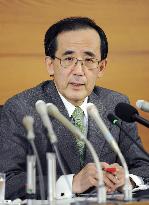
TOKYO, Japan - Bank of Japan Governor Masaaki Shirakawa speaks at a news conference at the BOJ's headquarters in Tokyo on April 30, 2010, after the central bank's Policy Board meeting. Shirakawa said the Japanese economy is ''steadily moving forward'' in overcoming deflation.

  •  
ADB chief Kuroda concerned about Japan's deflation

ADB chief Kuroda concerned about Japan's deflation

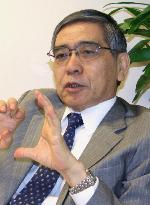
MANILA, Philippines - Asian Development Bank President Haruhiko Kuroda speaks during an interviews with Kyodo News at the ADB headquarters in Manila on March 10, 2010, ahead of an ADB annual general meeting in Uzbekistan in May. Kuroda expressed concern about Japan's deflation at a time when other Asian economies are recovering ahead of the United States and European countries.

  •  
BOJ further eases monetary policy, doubles lending program

BOJ further eases monetary policy, doubles lending program

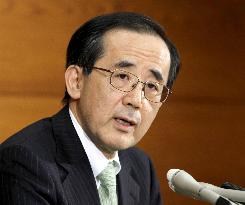
TOKYO, Japan - Bank of Japan Governor Masaaki Shirakawa speaks during a press conference at the bank's headquarters in Tokyo on March 17, 2010, after concluding a two-day policy meeting. The central bank decided the same day to ease its ultra-loose monetary policy further by expanding its three-month funding operation introduced in December to make good on its pledge to contain deflation.

  • Main
  • Top
  • Editorial
  • Creative
  • About Us
  • About ILG
  • Terms of use
  • Company
  • BEHIND
  • Price List
  • Single Plan
  • Monthly Plan
  • Services
  • Shooting
  • Rights Clearance
  • Support
  • FAQ
  • How To Buy
  • Contact Us
  • Become a Partner

© KYODO NEWS IMAGES INC

All Rights Reserved.

  • Editorial
  • Olympics
  • News
  • Sports
  • Japan
  • Tech
  • Royal
  • Disaster
  • NorthKorea
  • Old Japan
  • SNS
  • Creative
  • Food
  • Japan
  • Landscape
  • Animal
  • Popular
  • #Ukraine
  • #Russia
  • #coronavirus
  • #N. Korea
  • #China
  • #Thailand
  • #Ukraine
  • #Russia
  • #coronavirus
  • #N. Korea
  • #China
  • #Thailand
  • Food
  • Japan
  • Landscape
  • Animal
  • Olympics
  • News
  • Sports
  • Japan
  • Tech
  • Royal
  • Disaster
  • NorthKorea
  • Old Japan
  • SNS