•  
RELAY Communications Satellite

RELAY Communications Satellite

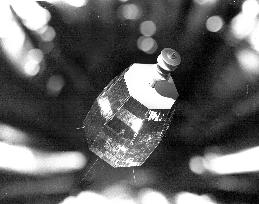
The RELAY communications satellite shown in a December 11, 1962 photo released by NASA. The 172-pound spacecraft eight sided prism is 33 inches high and 29 inches in diameter at tis broad end. The exterior composed of eight honeycomb aluminum panels studded with 8,215 solar cells. The communications satellite prime function will be used for technical experiments although public demonstrations of television, telephone calls, teletype photo facsimile, and high speed data will be transmitted. The 18-inch long wideband communications antenna points toward the Earth while Relay travels through space. Three of the four telemetry antennas are shown extending from the broad end. Mounted on the center panel are special solar cells and diodes which will be tested for radiation damage. Relay 1 was launched atop a Delta B rocket on December 13, 1962, from LC-17A at Cape Canaveral Air Force Station. Credit: NASA via CNP

  •  
Nagoya landmarks lit by blue LEDs to hail Nobel prize

Nagoya landmarks lit by blue LEDs to hail Nobel prize

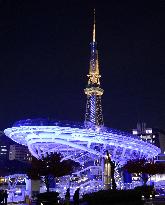
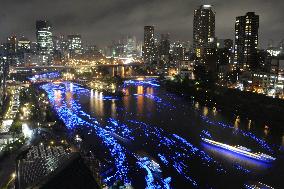
NAGOYA, Japan - The Nagoya TV Tower and the Oasis 21 complex (foreground) are illuminated in blue with light-emitting diodes in Nagoya on Dec. 10, 2014, in celebration of the winning of the Nobel Prize in Physics by Nagoya University professor Hiroshi Amano and Meijo University professor Isamu Akasaki for inventing the blue LED. Both universities are located in the central Japan city. Another Japanese scientist, University of California professor Shuji Nakamura, also shared the honor for the same invention.

  •  
Iris Ohyama, Philips tie up

Iris Ohyama, Philips tie up

TOKYO, Japan - Iris Ohyama Inc. President Kentaro Ohyama (R) and Danny Risberg, head of the Japanese unit of Royal Philips NV, hold a press conference in Tokyo on Jan. 30, 2014. The two companies have entered a tie-up on marketing the Dutch maker's light-emitting diodes in Japan.

  •  
Nobel laureate Nakamura visits education minister

Nobel laureate Nakamura visits education minister

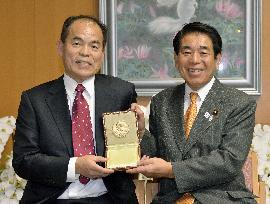
TOKYO, Japan - Shuji Nakamura (L), a Japan-born American professor at the University of California, Santa Barbara, and Japanese Education, Culture, Sports, Science and Technology Minister Hakubun Shimomura pose with Nakamura's Nobel physics prize medal at the education ministry in Tokyo on Jan. 15, 2015, as Nakamura paid a courtesy visit on Shimomura. Nakamura along with two Japanese physicists won the prize last year, for contribution to the development of light-emitting diodes.

  •  
Japan, China hold 1st gov't meeting since leaders' summit

Japan, China hold 1st gov't meeting since leaders' summit

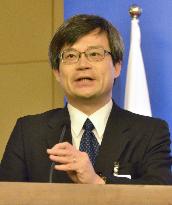
BEIJING, China - Hiroshi Amano, one of the three Japan-born scientists to win this year's Nobel Prize in Physics for inventing efficient blue light-emitting diodes, delivers a speech at the eighth Japan-China Energy Conservation Forum in China's capital Beijing on Dec. 28, 2014. The forum is the first major governmental meeting since Japanese Prime Minister Shinzo Abe's first meeting with Chinese President Xi Jinping on Nov. 10.

  •  
LED lighting marks 100th anniversary of Tokyo Station

LED lighting marks 100th anniversary of Tokyo Station

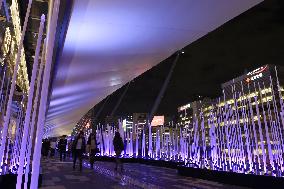
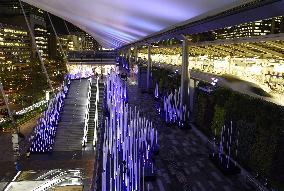
TOKYO, Japan - People walk along a pedestrian deck at the Yaesu exit of JR Tokyo Station in the Japanese capital as illuminations commemorating the 100th anniversary of the station's opening start on Dec. 1, 2014. The attraction, consisting of some 3,000 column-shaped light-emitting diodes, will run through Feb. 14, 2015.

  •  
LED lighting marks 100th anniversary of Tokyo Station

LED lighting marks 100th anniversary of Tokyo Station

TOKYO, Japan - Illuminations along a pedestrian deck at the Yaesu exit of JR Tokyo Station in the Japanese capital start on Dec. 1, 2014, in commemoration of the 100th anniversary of the station's opening. The attraction, consisting of some 3,000 column-shaped light-emitting diodes, will run through Feb. 14, 2015.

  •  
Preview of 'Tunnel of Light' illumination in Kuwana

Preview of 'Tunnel of Light' illumination in Kuwana

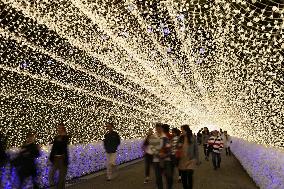
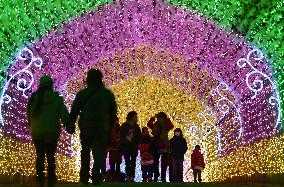
NAGOYA, Japan - People walk in the 200-meter-long "Tunnel of Light" in the Nabana no Sato botanical park in Kuwana, Mie Prefecture, Japan, on Oct. 24, 2014, on the eve of the opening of the park's winter light show. The attraction employs light-emitting diodes.

  •  
Preview of 'Niagara Falls' illumination in Kuwana

Preview of 'Niagara Falls' illumination in Kuwana

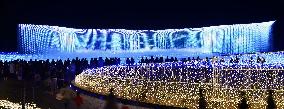
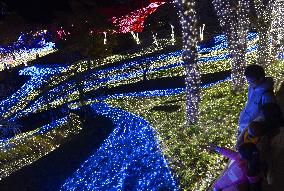
NAGOYA, Japan - People gather in front of the "Niagara Falls" attraction at the Nabana no Sato botanical park in Kuwana, Mie Prefecture, Japan, on Oct. 24, 2014, on the eve of the opening of the park's winter illumination event. The display consists of light-emitting diodes and is more than 100 meters wide.

  •  
New Glico runner billboard debuted

New Glico runner billboard debuted

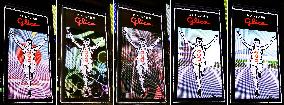
OSAKA, Japan - Ezaki Glico Co. unveils the 6th-generation electronic billboard in the Dotonbori area of Osaka, western Japan, on Oct. 23, 2014. With the application of blue light-emitting diodes, the billboard changes the background once every 15 minutes.

  •  
Glico unveils new runner billboard in Osaka

Glico unveils new runner billboard in Osaka

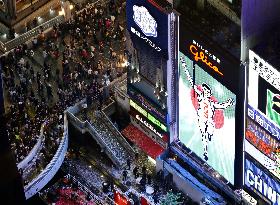
OSAKA, Japan - A new giant electronic billboard of confectionery maker Ezaki Glico Co., featuring the company's signature image of a runner with his hands in the air, is lit up in the Dotonbori area in downtown Osaka on Oct. 23, 2014. The sixth Glico runner billboard since 1935, measuring 20 meters high and 10.38 meters wide, employs around 140,000 energy-efficient light emitting diodes.

  •  
Glico unveils new runner billboard in Osaka

Glico unveils new runner billboard in Osaka

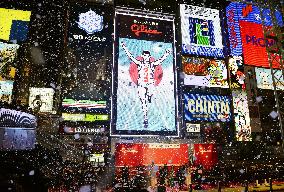
OSAKA, Japan - A new giant electronic billboard of confectionery maker Ezaki Glico Co., featuring the company's signature image of a runner with his hands in the air, is lit up amid scattering confetti during an unveiling ceremony in the Dotonbori area in downtown Osaka on Oct. 23, 2014. The sixth Glico runner billboard since 1935, measuring 20 meters high and 10.38 meters wide, employs around 140,000 energy-efficient light emitting diodes.

  •  
Glico unveils new runner billboard in Osaka

Glico unveils new runner billboard in Osaka

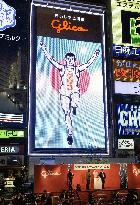
OSAKA, Japan - A new giant electronic billboard of confectionery maker Ezaki Glico Co., featuring the company's signature image of a runner with his hands in the air, is lit up during an unveiling ceremony in the Dotonbori area in downtown Osaka on Oct. 23, 2014. The sixth Glico runner billboard since 1935, measuring 20 meters high and 10.38 meters wide, employs around 140,000 energy-efficient light emitting diodes.

  •  
Nobel winner Nakamura in interview in Tokyo

Nobel winner Nakamura in interview in Tokyo

TOKYO, Japan - Shuji Nakamura speaks in an interview in Tokyo on Oct. 16, 2014, after he was announced as a winner of the 2014 Nobel Prize in Physics for the invention of efficient blue light-emitting diodes.

  •  
Nobel winner Amano to search for solutions to Japan's energy problems

Nobel winner Amano to search for solutions to Japan's energy problems

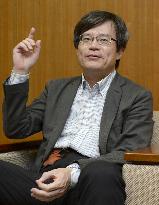
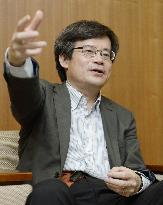
NAGOYA, Japan - Nagoya University professor Hiroshi Amano, one of the three scientists awarded the 2014 Nobel Prize in Physics, is interviewed by Kyodo News in Nagoya on Oct. 10, 2014, three days after the award announcement. Amano said he will remain engaged in research and look for additional ways to apply his groundbreaking work on light-emitting diodes to addressing Japan's energy problems.

  •  
Nobel winner Amano to search for solutions to Japan's energy problems

Nobel winner Amano to search for solutions to Japan's energy problems

NAGOYA, Japan - Nagoya University professor Hiroshi Amano, one of the three scientists awarded the 2014 Nobel Prize in Physics, is interviewed by Kyodo News in Nagoya on Oct. 10, 2014, three days after the award announcement. Amano said he will remain engaged in research and look for additional ways to apply his groundbreaking work on light-emitting diodes to addressing Japan's energy problems.

  •  
Nobel winners Amano, Akasaki show blue LEDs

Nobel winners Amano, Akasaki show blue LEDs

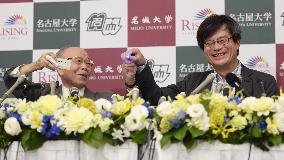
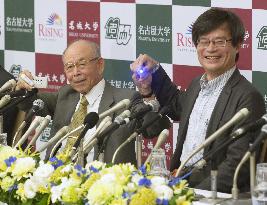
NAGOYA, Japan - Hiroshi Amano (R) and Isamu Akasaki, winners of the Nobel Prize in Physics for 2014, show blue light-emitting diodes at a press conference held at Nagoya University in Nagoya, Japan, on Oct. 10, 2014. Akasaki, Amano and Shuji Nakamura won the prize for the invention of efficient blue LEDs.

  •  
Nobel laureates Akasaki, Amano attend press conference

Nobel laureates Akasaki, Amano attend press conference

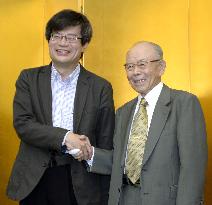
NAGOYA, Japan - Nobel laureates Hiroshi Amano (L) and Isamu Akasaki shake hands on Oct. 10, 2014, at Nagoya University in the central Japan city of Nagoya prior to their joint press conference. The two won the Nobel Prize in Physics together with another researcher for inventing blue light-emitting diodes.

  •  
Nobel laureates Akasaki, Amano attend press conference

Nobel laureates Akasaki, Amano attend press conference

NAGOYA, Japan - Nobel laureates Hiroshi Amano (R) and Isamu Akasaki show blue light-emitting diodes during their joint press conference at Nagoya University in the central Japan city of Nagoya on Oct. 10, 2014. The two won the Nobel Prize in Physics together with another researcher for inventing the blue LED.

  •  
Nobel laureate Amano returns home

Nobel laureate Amano returns home

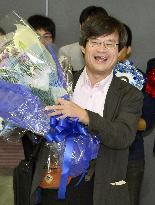
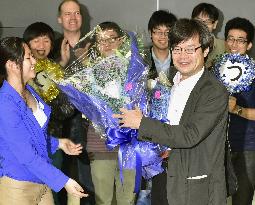
NAGOYA, Japan - Nobel laureate Hiroshi Amano smiles at Chubu International Airport as he receives a bouquet from a student of his Nagoya University laboratory on Oct. 10, 2014, after returning from his business trip to France. Amano won the Nobel Prize in Physics together with two other researchers for the invention of efficient blue light-emitting diodes.

  •  
Nobel laureate Amano returns home

Nobel laureate Amano returns home

NAGOYA, Japan - Nobel laureate Hiroshi Amano receives a bouquet at Chubu International Airport from a student of his Nagoya University laboratory on Oct. 10, 2014, after returning from a business trip to France. Amano won the Nobel Prize in Physics together with two other researchers for the invention of efficient blue light-emitting diodes.

  •  
Fukuoka Tower against backdrop of total lunar eclipse

Fukuoka Tower against backdrop of total lunar eclipse

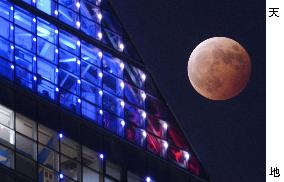
FUKUOKA, Japan - The Fukuoka Tower in Fukuoka, southwestern Japan, is illuminated by light-emitting diodes against the background of a total lunar eclipse on Oct. 8, 2014.

  •  
Nobel laureate Nakamura attends press conference

Nobel laureate Nakamura attends press conference

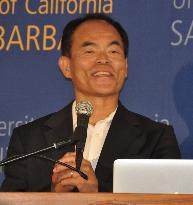
SANTA BARBARA, United States - Nobel laureate Shuji Nakamura attends a press conference on Oct. 7, 2014, at the University of California, Santa Barbara, in the United States. He said he is happy his dream of light-emitting diodes lighting has become a reality.

  •  
Nobel laureate Nakamura attends press conference

Nobel laureate Nakamura attends press conference

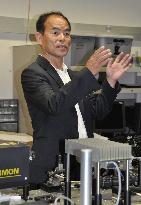
SANTA BARBARA, United States - Nobel laureate Shuji Nakamura talks about his ongoing research at his laboratory at the University of California, Santa Barbara, in the United States on Oct. 7, 2014. He was awarded the Nobel Prize in Physics together with two other researchers for inventing efficient blue light-emitting diodes.

  •  
Fukuoka Tower illuminated with blue LEDs

Fukuoka Tower illuminated with blue LEDs

FUKUOKA, Japan - The 234-meter-tall Fukuoka Tower in the city of Fukuoka, southwestern Japan, is illuminated with blue light-emitting diodes and other lighting equipment on Oct. 7, 2014. Two Japanese scientists and one Japan-born scientist with U.S. citizenship were announced the same day as the winners of this year's Nobel Prize in Physics for the invention of blue LEDs.

  •  
2 Japanese, American awarded Nobel Prize for inventing blue LED

2 Japanese, American awarded Nobel Prize for inventing blue LED

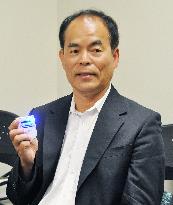
LOS ANGELES, United States - Shuji Nakamura, professor at the University of California in Santa Barbara, holds a blue light-emitting diode at the university on Oct. 7, 2014, after being jointly awarded the Nobel Prize in Physics 2014 for the invention of efficient blue light-emitting diodes, along with Hiroshi Amano, professor at Nagoya University, and Isamu Akasaki, professor at Meijo University.

  •  
2 Japanese, American awarded Nobel Prize for inventing blue LED

2 Japanese, American awarded Nobel Prize for inventing blue LED

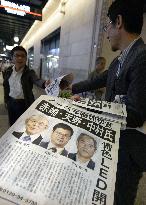
OSAKA, Japan - Newspaper extra editions, reporting the awarding of the Nobel Prize in Physics 2014 to two Japanese and a Japanese-born American physicists, are handed out to passers-by in Osaka's Namba district on Oct. 7, 2014. Two Japanese physicists -- Isamu Akasaki and Hiroshi Amano -- and Japanese-born American Shuji Nakamura were awarded the prize for the invention of efficient blue light-emitting diodes.

  •  
2 Japanese, American awarded Nobel Prize for inventing blue LED

2 Japanese, American awarded Nobel Prize for inventing blue LED

LOS ANGELES, United States - Shuji Nakamura, professor at the University of California in Santa Barbara, meets the press at the university on Oct. 7, 2014, after being jointly awarded the Nobel Prize in Physics 2014 for the invention of efficient blue light-emitting diodes, along with Hiroshi Amano, professor at Nagoya University, and Isamu Akasaki, professor at Meijo University.

  •  
2 Japanese, American awarded Nobel Prize for inventing blue LED

2 Japanese, American awarded Nobel Prize for inventing blue LED

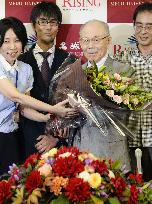
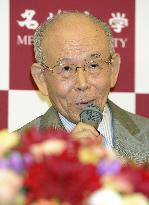
NAGOYA, Japan - Isamu Akasaki, professor at Meijo University, receives flowers from members of his laboratory at the university in Nagoya on Oct. 7, 2014, after being jointly awarded the Nobel Prize in Physics 2014 for the invention of efficient blue light-emitting diodes, along with Shuji Nakamura, professor at the University of California in Santa Barbara, and Hiroshi Amano, professor at Nagoya University.

  •  
2 Japanese, American awarded Nobel Prize for inventing blue LED

2 Japanese, American awarded Nobel Prize for inventing blue LED

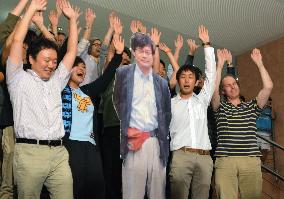
NAGOYA, Japan - Nagoya University students, surrounding a life-size cutout of professor Hiroshi Amano, celebrate at the university on Oct. 7, 2014, after Amano was jointly awarded the 2014 Nobel Prize in Physics for the invention of efficient blue light-emitting diodes, along with Shuji Nakamura, professor at the University of California in Santa Barbara, and Isamu Akasaki, professor at Meijo University.

  •  
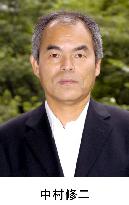
2014 Nobel winner Nakamura in 2005

2014 Nobel winner Nakamura in 2005

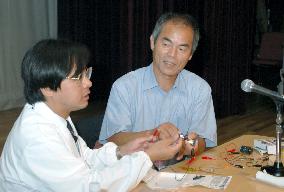
TOKYO, Japan - Shuji Nakamura (R), a Japan-born professor at UC Santa Barbara, conducts an experiment using light-emitting diodes before junior and senior high school students in Sakae village, Nagano Prefecture, central Japan, in July 2005. Nakamura was announced as a winner of the Nobel Prize in Physics 2014 for the invention of efficient blue LEDs along with two other Japanese scientists in October 2014.

  •  
2 Japanese, American awarded Nobel Prize for inventing blue LED

2 Japanese, American awarded Nobel Prize for inventing blue LED

NAGOYA, Japan - Isamu Akasaki, professor at Meijo University, holds a press conference at the university in Nagoya on Oct. 7, 2014, after being jointly awarded the Nobel Prize in Physics 2014 for the invention of efficient blue light-emitting diodes, along with Shuji Nakamura, professor at the University of California in Santa Barbara, and Hiroshi Amano, professor at Nagoya University.

  •  
2 Japanese, American awarded Nobel Prize for inventing blue LED

2 Japanese, American awarded Nobel Prize for inventing blue LED

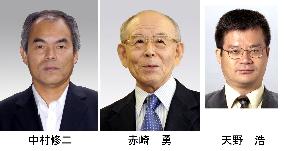
TOKYO, Japan - Combined photo shows (from L) Shuji Nakamura, professor at the University of California in Santa Barbara, Isamu Akasaki, professor at Meijo University in Nagoya, and Hiroshi Amano, professor at Nagoya University, who were jointly awarded the Nobel Prize in Physics 2014 on Oct. 7, 2014, for the invention of efficient blue light-emitting diodes. Akasaki and Amano are Japanese and Nakamura is a Japanese-born American.

  •  
Participants run in glowing costumes

Participants run in glowing costumes

TOKYO, Japan - Participants start running in glowing costumes, some equipped with light-emitting diodes, during the Electric Run nighttime running/walking event in the Inage Kaihin Park in Chiba, east of Tokyo, in July 2014.

  •  
Festival using LEDs takes place on Osaka river

Festival using LEDs takes place on Osaka river

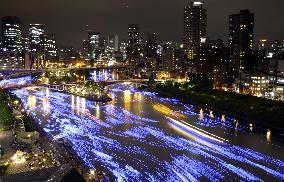
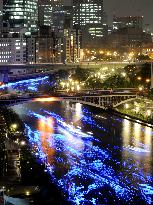
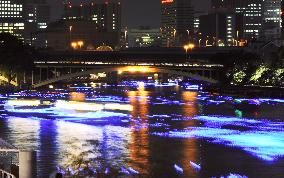
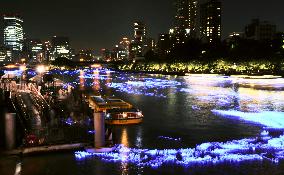
OSAKA, Japan - "The Legend of Heisei Osaka Amanogawa" (Milky Way) festival takes place on July 7, 2014, with some 50,000 light-emitting diodes floating on the surface of the Okawa River running through the central part of Osaka City.

  •  
Large-scale plant farm in Chiba Pref.

Large-scale plant farm in Chiba Pref.

CHIBA, Japan - Photo shows a large-scale vegetable factory on June 5, 2014 in Kashiwa, Chiba Prefecture. The thermally insulated factory east of Tokyo can be operated year-round irrespective of weather and is said to be capable of producing up to 10,000 products per day of such leaf vegetables as lettuce and herbs based on hydroponic cultivation by utilizing light-emitting diodes.

  •  
Illumination event in Sagamihara

Illumination event in Sagamihara

SAGAMIHARA, Japan - Photo taken on the night of Nov. 9, 2012, shows an illumination event called ''Sagamiko Illumillion,'' involving 4 million light-emitting diodes, at Pleasure Forest amusement facility in Sagamihara, Kanagawa Prefecture.

  •  
Illumination event in Sagamihara

Illumination event in Sagamihara

SAGAMIHARA, Japan - Photo taken on the night of Nov. 9, 2012, shows an illumination event called ''Sagamiko Illumillion,'' involving 4 million light-emitting diodes, at Pleasure Forest amusement facility in Sagamihara, Kanagawa Prefecture.

  •  
'LED fireflies' light up Tokyo river

'LED fireflies' light up Tokyo river

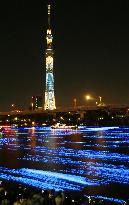
TOKYO, Japan - Photo shows Tokyo Sky Tree in Tokyo's Taito Ward towering over the Sumida River, with its surface lit up in blue by 100,000 bulbs containing light-emitting diodes, mimicking fireflies, during an event called ''Tokyo Firefly'' on May 6, 2012. Participants bought bulbs measuring 8.5 centimeters in diameter, each containing an LED charged with solar power, and threw them into the river. The bulbs were collected by the organizers using a net downstream.

  •  
'LED fireflies' light up Tokyo river

'LED fireflies' light up Tokyo river

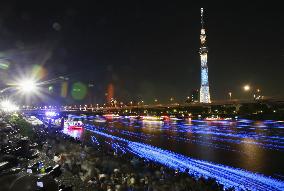
TOKYO, Japan - Photo shows Tokyo Sky Tree in Tokyo's Taito Ward towering over the Sumida River, with its surface lit up in blue by 100,000 bulbs containing light-emitting diodes, mimicking fireflies, during an event called ''Tokyo Firefly'' on May 6, 2012. Participants bought bulbs measuring 8.5 centimeters in diameter, each containing an LED charged with solar power, and threw them into the river. The bulbs were collected by the organizers using a net downstream.

  •  
'LED fireflies' light up Tokyo river

'LED fireflies' light up Tokyo river

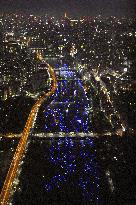
TOKYO, Japan - Photo taken from a Kyodo News helicopter shows the Sumida River in Tokyo's Taito Ward with its surface lit up in blue by 100,000 bulbs containing light-emitting diodes, mimicking fireflies, during an event called ''Tokyo Firefly'' on May 6, 2012. Participants bought bulbs measuring 8.5 centimeters in diameter, each containing an LED charged with solar power, and threw them into the river. The bulbs were collected by the organizers using a net downstream.

  •  
Blue LED inventor Nakamura to receive Emmy Award

Blue LED inventor Nakamura to receive Emmy Award

TOKYO, Japan - File photo shows Shuji Nakamura, a Japanese professor at the University of California at Santa Barbara who developed light-emitting diodes used for a range of products. Nakamura has been named as a winner of the Technology & Engineering Emmy Award, according to the National Academy of Television Arts & Sciences.

  •  
Star Festival illuminations in Osaka river

Star Festival illuminations in Osaka river

OSAKA, Japan - The Okawa river in Osaka, western Japan, is decorated by light-emitting diodes on the Star Festival evening on July 7, 2011.

  •  
Star Festival illuminations in Osaka river

Star Festival illuminations in Osaka river

OSAKA, Japan - The Okawa river in Osaka, western Japan, is decorated by light-emitting diodes on the Star Festival evening on July 7, 2011.

  •  
Osaka tower to be power-saving

Osaka tower to be power-saving

TOKYO, Japan - File photo shows Osaka's signature Tsutenkaku Tower. Hitachi Ltd. said on June 20, 2011, it will replace most neon lights for its advertisements on the tower with light-emitting diodes, in a bid to cut electricity consumption by half and contribute to nationwide energy-saving efforts.

  •  
Paper strips with LED lights released from hot air balloon

Paper strips with LED lights released from hot air balloon

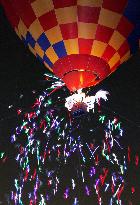
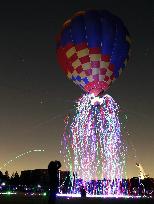
OSAKA, Japan - Paper strips with light-emitting diodes of red, blue, white and green are released from a hot air balloon at Expo Park in Suita, Osaka Prefecture, on Dec. 4, 2010, during a ''Dream Seed Project'' event organized by artists from Kyoto.

  •  
Paper strips with LED lights released from hot air balloon

Paper strips with LED lights released from hot air balloon

OSAKA, Japan - Paper strips with light-emitting diodes of red, blue, white and green are released from a hot air balloon at Expo Park in Suita, Osaka Prefecture, on Dec. 4, 2010, during a ''Dream Seed Project'' event organized by artists from Kyoto.

  •  
Paper strips with LED lights released from hot air balloon

Paper strips with LED lights released from hot air balloon

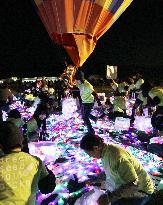
OSAKA, Japan - Participants of the ''Dream Seed Project'', an event organized by artists from Kyoto, look at strips with light-emitting diodes of red, blue, white and green released from a hot air balloon during the event at Expo Park in Suita, Osaka Prefecture, on Dec. 4, 2010.

  •  
''Milky Way'' appears on river in Osaka

''Milky Way'' appears on river in Osaka

OSAKA, Japan - Some 50,000 plastic balls, each measuring 10 centimeters in diameter and containing blue light-emitting diodes and batteries, float on the Okawa River in Osaka on July 7, 2010, to imitate the Milky Way to celebrate the annual ''tanabata'' Star Festival which falls on the day.

  •  
''Milky Way'' appears on river in Osaka

''Milky Way'' appears on river in Osaka

OSAKA, Japan - Some 50,000 plastic balls, each measuring 10 centimeters in diameter and containing blue light-emitting diodes and batteries, float on the Okawa River in Osaka on July 7, 2010, to imitate the Milky Way to celebrate the annual ''tanabata'' Star Festival which falls on the day.

  • Main
  • Top
  • Editorial
  • Creative
  • About Us
  • About ILG
  • Terms of use
  • Company
  • BEHIND
  • Price List
  • Single Plan
  • Monthly Plan
  • Services
  • Shooting
  • Rights Clearance
  • Support
  • FAQ
  • How To Buy
  • Contact Us
  • Become a Partner

© KYODO NEWS IMAGES INC

All Rights Reserved.

  • Editorial
  • Olympics
  • News
  • Sports
  • Japan
  • Tech
  • Royal
  • Disaster
  • NorthKorea
  • Old Japan
  • SNS

  • Creative
  • Food
  • Japan
  • Landscape
  • Animal
  • Popular
  • #Ukraine
  • #Russia
  • #coronavirus
  • #N. Korea
  • #Thailand
  • #China
  • #Ukraine
  • #Russia
  • #coronavirus
  • #N. Korea
  • #Thailand
  • #China
  • Food
  • Japan
  • Landscape
  • Animal
  • Olympics
  • News
  • Sports
  • Japan
  • Tech
  • Royal
  • Disaster
  • NorthKorea
  • Old Japan
  • SNS