•  

Tokyo stocks close mixed on rising interest rates, positive U.S. futures

STORY: Tokyo stocks close mixed on rising interest rates, positive U.S. futures SHOOTING TIME: May 28, 2024 DATELINE: May 29, 2024 LENGTH: 00:01:51 LOCATION: Tokyo CATEGORY: ECONOMY SHOTLIST: 1. various of street view in Tokyo 2. various of Tokyo Stock Exchange 3. various of securities company STORYLINE: Tokyo stocks closed mixed on Tuesday amid concerns over rising long-term interest rates in Japan, while the market's downside was buoyed by positive U.S. stock futures. Japan's benchmark Nikkei stock index, the 225-issue Nikkei Stock Average, ended down 44.65 points, or 0.11 percent, from Monday at 38,855.37. The broader Topix index, meanwhile, finished 2.14 points, or 0.08 percent, higher at 2,768.50. Market watchers here noted the yield on the benchmark 10-year Japanese government bond briefly rose 0.015 percentage point from Monday's close to 1.035 percent, its highest level since April 2012, amid speculation that the Bank of Japan is shifting away from monetary easing measures. The Nikk

  •  

Risks to financial stability in Malaysia remain modest: Fitch Solutions

STORY: Risks to financial stability in Malaysia remain modest: Fitch Solutions DATELINE: April 18, 2023 LENGTH: 00:01:52 LOCATION: Kuala Lumpur CATEGORY: ECONOMY SHOTLIST: 1. various of Kuala Lumpur 2. various of Malaysian Central Bank and bank notes counting machine 3. various of container vessels at Port Klang, Selangor STORYLINE: Fitch Solutions said Monday it believes that downside risks to Malaysia's financial stability remain modest and that banks remain well-positioned to support financial intermediation, despite potential negative spillovers from banking stresses in the United States and Europe. The research house said in a statement that Malaysian banks on aggregate are likely to remain on a stable footing due to robust liquidity and capital buffers, as well as a much less restrictive monetary environment. It said Malaysian banks asset quality has also remained fairly stable despite the phasing out of support measures, and it is not expecting a significant deterioration in the months ahead. Fit

  •  
Japan, S. Africa to work together to combat Ebola epidemic

Japan, S. Africa to work together to combat Ebola epidemic

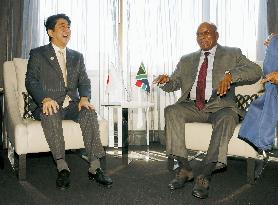
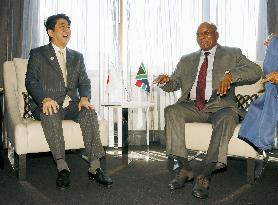
BRISBANE, Australia - Japanese Prime Minister Shinzo Abe (L) and South African President Jacob Zuma meet on Nov. 14, 2014, in Brisbane, Australia, where they visited to attend the Group of 20 summit. They agreed to work together to grapple with the Ebola virus epidemic in West Africa, seen as a serious downside risk to global economic growth. (Pool photo by Kyodo News)

  •  
Japan, S. Africa to work together to combat Ebola epidemic

Japan, S. Africa to work together to combat Ebola epidemic

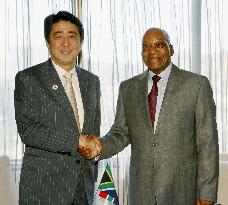
BRISBANE, Australia - Japanese Prime Minister Shinzo Abe (L) and South African President Jacob Zuma shake hands prior to their meeting on Nov. 14, 2014, in Brisbane, Australia, where they visited to attend the Group of 20 summit. They agreed to work together to grapple with the Ebola virus epidemic in West Africa, seen as a serious downside risk to global economic growth. (Pool photo by Kyodo News)

  •  
BOJ Governor Shirakawa at meeting

BOJ Governor Shirakawa at meeting

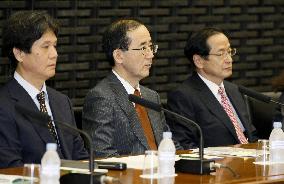
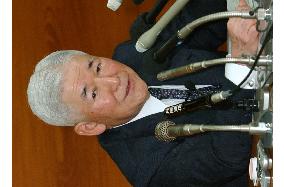
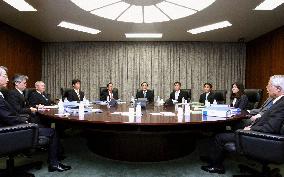
TOKYO, Japan - Bank of Japan Governor Masaaki Shirakawa (C) attends a meeting of branch chiefs at the central bank in Tokyo on Oct. 15, 2010 to assess the impact of the strong yen on the economy. Shirakawa warned the central bank's regional managers that attention should be paid to downside risks to the Japanese economy.

  •  
BOJ weighs monetary easing

BOJ weighs monetary easing

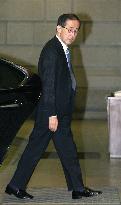
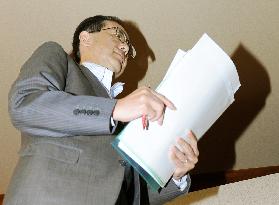
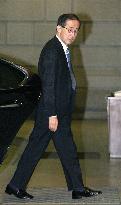
TOKYO, Japan - Bank of Japan Governor Masaaki Shirakawa enters the head office of the central bank in Tokyo for the second day of a two-day policy meeting on Oct. 5, 2010. The meeting, which could unveil additional monetary easing steps, came as the yen's strength adds concern about downside risks to the Japanese economy. (Pool photo)

  •  
BOJ weighs monetary easing

BOJ weighs monetary easing

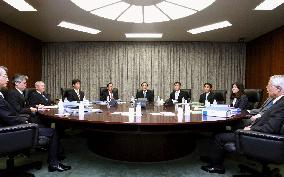
TOKYO, Japan - The Bank of Japan holds the second day of its two-day policy meeting on Oct. 5, 2010, discussing possible additional monetary easing steps, as the yen's strength is adding concern about downside risks to the Japanese economy. (Pool Photo)

  •  
BOJ Governor Shirakawa

BOJ Governor Shirakawa

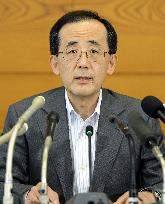
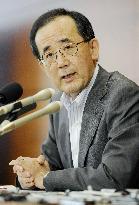
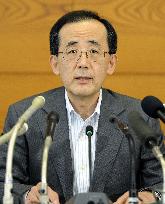
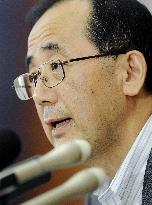
TOKYO, Japan - Bank of Japan Governor Masaaki Shirakawa speaks during a news conference at the bank's head office in Tokyo on Aug. 30, 2010, after the central bank decided at an emergency policy meeting to ease its ultra-easy monetary policy further, given rising downside risks to the economy.

  •  
BOJ decides on additional easing

BOJ decides on additional easing

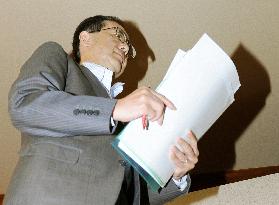
TOKYO, Japan - Bank of Japan Governor Masaaki Shirakawa wraps up a press conference at the central bank's headquarters in Tokyo on Aug. 30, 2010. The BOJ decided at an emergency policy meeting to ease its ultra-easy monetary policy further given increasing downside risks to the economy.

  •  
BOJ decides on additional easing due to economic woes

BOJ decides on additional easing due to economic woes

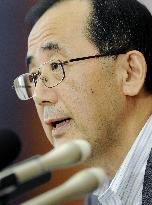
TOKYO, Japan - Bank of Japan Governor Masaaki Shirakawa speaks during a news conference at the central bank's headquarters in Tokyo on Aug. 30, 2010, after the BOJ decided at an emergency policy meeting to ease its ultra-easy monetary grip further given increasing downside risks to the economy.

  •  
BOJ decides on additional easing due to economic woes

BOJ decides on additional easing due to economic woes

TOKYO, Japan - Bank of Japan Governor Masaaki Shirakawa says during a news conference at the bank's head office in Tokyo on Aug. 30, 2010, that the Japanese central bank decided at an emergency policy meeting to ease its ultra-easy monetary grip further given rising downside risks to the economy.

  •  
Downside risks to Japanese economy receding: BOJ's Shirakawa

Downside risks to Japanese economy receding: BOJ's Shirakawa

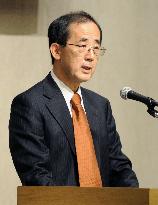
TOKYO, Japan - Bank of Japan Governor Masaaki Shirakawa gives a lecture at a Tokyo hotel on Nov. 4, 2009. He said the downside risks to the Japanese economy have been receding compared with the spring.

  •  
Shirakawa reaffirms BOJ free from bias in interest rate setting

Shirakawa reaffirms BOJ free from bias in interest rate setting

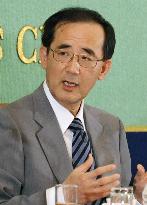
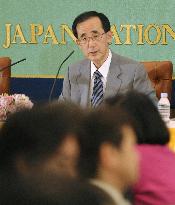
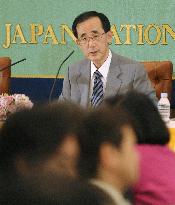
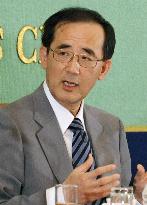
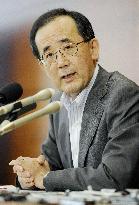
TOKYO, Japan - Bank of Japan Governor Masaaki Shirakawa speaks at a luncheon at the Japan National Press Club in Tokyo on May 12. He stressed downside risks to growth in the country's economy, reaffirming the central bank has ditched its bias toward raising interest rates.

  •  
Shirakawa reaffirms BOJ free from bias in interest rate setting

Shirakawa reaffirms BOJ free from bias in interest rate setting

TOKYO, Japan - Bank of Japan Governor Masaaki Shirakawa speaks at a luncheon at the Japan National Press Club in Tokyo on May 12. He stressed downside risks to growth in the country's economy, reaffirming the central bank has ditched its bias toward raising interest rates.

  •  
Japan economy faces 'downside risks' despite strong growth data: Ota

Japan economy faces 'downside risks' despite strong growth data: Ota

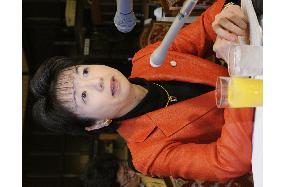
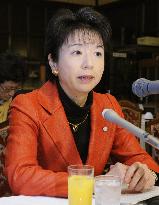
TOKYO, Japan - Economic and fiscal policy minister Hiroko Ota speaks at a press conference after the Cabinet Office announced Japan's gross domestic product data for the October-December quarter on Feb. 14. Ota warned that the Japanese economy faces ''downside risks'' to its growth despite the stronger-than-expected growth figures released by the office.

  •  
BOJ's Fukui says yen rise could eventually threaten economy

BOJ's Fukui says yen rise could eventually threaten economy

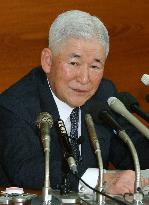
TOKYO, Japan - Bank of Japan (BOJ) Governor Toshihiko Fukui tells a news conference in Tokyo on Jan. 20 that although the yen's recent rise against the dollar is not yet a threat to the nation's economic recovery, it could undermine growth in the future. ''We have not yet concluded that foreign exchange fluctuations pose an immediate threat. But it could become a downside risk,'' he said.

  •  
Gov't sees slowdown in economic recovery

Gov't sees slowdown in economic recovery

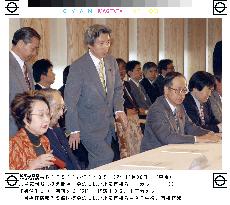
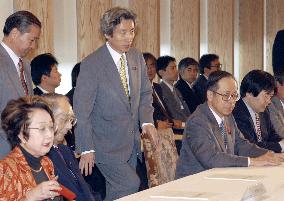
TOKYO, Japan - Prime Minister Junichiro Koizumi takes seat to preside over a meeting of his economic cabinet ministers at his office Oct. 9. A government monthly economic report approved at the meeting acknowledged that Japan's economic recovery has slowed and downside risks to the economy have further increased.

  •  
Report says downside risks to economy increasing

Report says downside risks to economy increasing

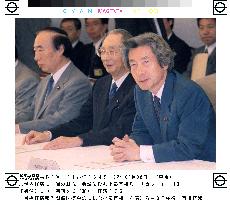
TOKYO, Japan - Prime Minister Junichiro Koizumi (R) is flanked by Finance Minister Masajuro Shiokawa (C) and Labor Minister Chikara Sakaguchi (L) at a meeting of economic cabinet ministers at his office Aug. 8. The meeting endorsed a monthly report on the state of the economy for August. The report warned that downside risks to the Japanese economy stemming from the volatility of global financial markets are increasing.

  •  
Nikkei slips below 12,000

Nikkei slips below 12,000

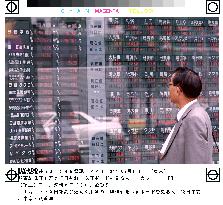
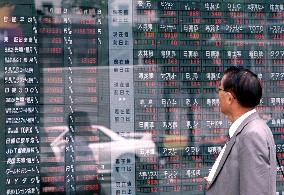
TOKYO, Japan - A man looks at stock quotes displayed in the window of a securities firm in Tokyo's Yaesu district July 18 as the Nikkei Stock Average dipped below 12,000 for the first time in four months in the morning session of the day. The Nikkei last fell below 12,000 on March 15, and the threshold has since served as a downside resistance level for the average.

  •  
Economic risk factors prompted BOJ to cut rate: Hayami

Economic risk factors prompted BOJ to cut rate: Hayami

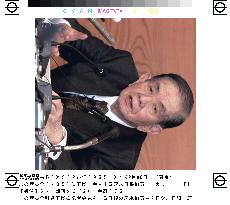
TOKYO, Japan - Bank of Japan Governor Masaru Hayami holds a press conference in Tokyo on Feb. 9. He said the bank's Policy Board decided the same day to cut its discount rate to 0.35% from Feb. 13 due largely to the downside risk factors of the nation's economy, which continues to recover gradually albeit at a slower pace.

  •  

IMF cuts 2022 global growth forecast to 3.2 pct, warns of downside risks

STORY: IMF cuts 2022 global growth forecast to 3.2 pct, warns of downside risks DATELINE: July 27, 2022 LENGTH: 00:00:42 LOCATION: Washington D.C. CATEGORY: ECONOMY SHOTLIST: 1. various of the press conference 2. exterior view of the IMF headquarters in Washington D.C. STORYLINE: The International Monetary Fund (IMF) on Tuesday slashed the global growth forecast for 2022 to 3.2 percent, down by 0.4 percentage point from the April projection, according to its newly released update to the World Economic Outlook (WEO). Several shocks have hit the world economy already weakened by the COVID-19 pandemic, including higher-than-expected inflation worldwide -- especially in the United States and major European economies -- triggering tighter financial conditions, and further negative spillovers from the Ukrainian crisis, the WEO update said. According to the WEO update, global inflation has been revised up due to food and energy prices, and is anticipated to reach 6.6 percent in advanced economies and 9.5 per

  •  

GLOBALink | IMF warns of further downside risks for global economy

STORY: IMF warns of further downside risks for global economy DATELINE: May 25, 2022 LENGTH: 00:02:08 LOCATION: DAVOS, Switzerland CATEGORY: ECONOMY SHOTLIST: 1. STANDUP 1 (English): MARTINA FUCHS, Xinhua reporter 2. SOUNDBITE 1 (English): GITA GOPINATH, First deputy managing director of IMF 3. SOUNDBITE 2 (English): GITA GOPINATH, First deputy managing director of IMF STORYLINE: The International Monetary Fund (IMF) on Tuesday warned of further headwinds for the global economy and spiralling inflation around the world due to the conflict in Ukraine, while voicing that China will remain an engine of growth after the "near-term headwinds". STANDUP 1 (English): MARTINA FUCHS, Xinhua reporter "In April, the International Monetary Fund (IMF) slashed global growth forecast for 2022 to 3.6 percent due to the Russia-Ukraine conflict. Here in the Swiss mountains, at the World Economic Forum, west in Davos, Switzerland, I spoke to Gita Gopinath, the global lender's first deputy managing director about the latest a

  •  

China's growth, stability serve as regional public goods: World Bank economist

STORY: China's growth, stability serve as regional public goods: World Bank economist DATELINE: May 22, 2022 LENGTH: 0:01:55 LOCATION: Bangkok CATEGORY: POLITICS/ECONOMY SHOTLIST: 1. various of China's economic growth 2. SOUNDBITE (English): AADITYA MATTOO, World Bank East Asia and Pacific Chief Economist STORYLINE: A World Bank economist has said China's economic growth and stability have become public goods for the East Asia and Pacific region, providing stability and support to the region. SOUNDBITE 1 (English): AADITYA MATTOO, World Bank East Asia and Pacific Chief Economist "China has become more and more important for this region. In several countries, about one-tenth of value-added or more, in Lao PDR, in Malaysia, in Thailand, in Vietnam, is absorbed in China. So what happens in China matters for the whole region and China's stability and growth, it's like a public good for the region. It has provided stability and support." Despite downside risks, including the Russia-Ukraine conflict, COVID-19

  •  
Japanese researchers detect patterns of stock fluctuations

Japanese researchers detect patterns of stock fluctuations

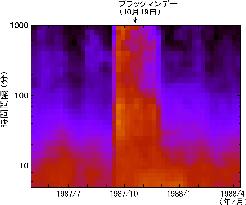
TOKYO, Japan - A University of Tokyo research team led by Ken Kiyono said on Feb. 15 it has discovered a special pattern of stock index fluctuations before and after a market crash, a finding that could pave the way for detecting downside risks for the stock market. The team has analyzed minute fluctuations of the U.S. Standard & Poor's 500 index between 1984 and 1995 and found the special pattern, called critical regime, emerging in the September-December quarter of 1987 that included the Oct. 19 Black Monday crash. The graphic was provided by Ken Kiyono. (Kyodo)

  •  
Japan economy faces 'downside risks' despite strong growth data:

Japan economy faces 'downside risks' despite strong growth data:

TOKYO, Japan - Economic and fiscal policy minister Hiroko Ota speaks at a press conference after the Cabinet Office announced Japan's gross domestic product data for the October-December quarter on Feb. 14. Ota warned that the Japanese economy faces ''downside risks'' to its growth despite the stronger-than-expected growth figures released by the office. (Kyodo)

  •  
Shirakawa reaffirms BOJ free from bias in interest rate setting

Shirakawa reaffirms BOJ free from bias in interest rate setting

TOKYO, Japan - Bank of Japan Governor Masaaki Shirakawa speaks at a luncheon at the Japan National Press Club in Tokyo on May 12. He stressed downside risks to growth in the country's economy, reaffirming the central bank has ditched its bias toward raising interest rates. (Kyodo)

  •  
Shirakawa reaffirms BOJ free from bias in interest rate setting

Shirakawa reaffirms BOJ free from bias in interest rate setting

TOKYO, Japan - Bank of Japan Governor Masaaki Shirakawa speaks at a luncheon at the Japan National Press Club in Tokyo on May 12. He stressed downside risks to growth in the country's economy, reaffirming the central bank has ditched its bias toward raising interest rates. (Kyodo)

  •  
Gov't sees slowdown in economic recovery

Gov't sees slowdown in economic recovery

TOKYO, Japan - Prime Minister Junichiro Koizumi takes seat to preside over a meeting of his economic cabinet ministers at his office Oct. 9. A government monthly economic report approved at the meeting acknowledged that Japan's economic recovery has slowed and downside risks to the economy have further increased. (Kyodo)

  •  
G-7 vows to tackle tax avoidance

G-7 vows to tackle tax avoidance

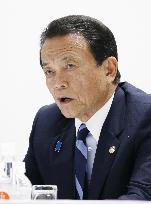
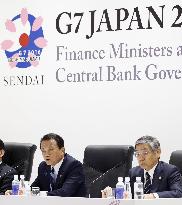
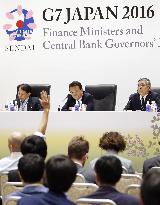
Japanese Finance Minister Taro Aso attends a press conference in Sendai, northeastern Japan, on May 21, 2016, following a meeting of the Group of Seven finance chiefs. The participants pledged to take the lead in international efforts to crack down on tax avoidance, while agreeing to work together on dealing with the downside risks facing the global economy. (Kyodo) ==Kyodo

  •  
G-7 vows to tackle tax avoidance

G-7 vows to tackle tax avoidance

Japanese Finance Minister Taro Aso (L) and Bank of Japan Governor Haruhiko Kuroda attend a press conference in Sendai, northeastern Japan, on May 21, 2016, following a meeting of the Group of Seven finance chiefs. The participants pledged to take the lead in international efforts to crack down on tax avoidance, while agreeing to work together on dealing with the downside risks facing the global economy. (Kyodo) ==Kyodo

  •  
G-7 vows to tackle tax avoidance

G-7 vows to tackle tax avoidance

Japanese Finance Minister Taro Aso (C) and Bank of Japan Governor Haruhiko Kuroda (R) attend a press conference in Sendai, northeastern Japan, on May 21, 2016, following a meeting of the Group of Seven finance chiefs. The participants pledged to take the lead in international efforts to crack down on tax avoidance, while agreeing to work together on dealing with the downside risks facing the global economy. (Kyodo) ==Kyodo

  •  
New BOJ board member cautious about monetary steps

New BOJ board member cautious about monetary steps

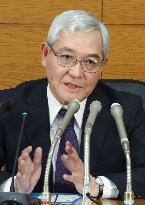
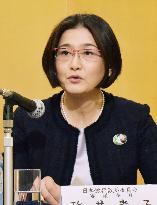
Makoto Sakurai, a new Bank of Japan board member, warns at his inaugural press conference in Tokyo that risks to economic fundamentals need to be examined when contemplating further monetary steps. Sakurai also said the Japanese economy is facing more downside risks than six months ago. (Kyodo) ==Kyodo

  •  
BOJ surprises markets with additional steps to boost economy

BOJ surprises markets with additional steps to boost economy

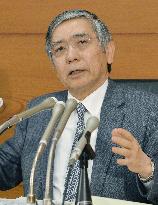
Bank of Japan Governor Haruhiko Kuroda speaks at a press conference in Tokyo on Dec. 18, 2015, after a policy meeting. The central bank's decisions to expand the scope of its asset purchase program and extend the average maturity of its government bond holdings are not intended to respond to downside risks to the economy and prices, Kuroda said. (Kyodo) ==Kyodo

  •  
PM Abe arrives in Istanbul

PM Abe arrives in Istanbul

Japanese Prime Minister Shinzo Abe (C) arrives in Istanbul on Nov. 13, 2015, to attend a meeting of leaders from the Group of 20 major economies. They are set to discuss challenges including downside risks to the global economy amid China's slowdown and how to deal with a continued flood of refugees to Europe. (Kyodo) ==Kyodo

  •  
G-20 start talks, focus on downside risks amid China slowdown

G-20 start talks, focus on downside risks amid China slowdown

Finance ministers and central bank chiefs of the Group of 20 economies gather for commemorative photos in Lima on Oct. 8, 2015. They started talks to share views on downside risks facing the global economy amid China's economic slowdown. (Kyodo) ==Kyodo

  •  
APEC leaders meet in Hawaii

APEC leaders meet in Hawaii

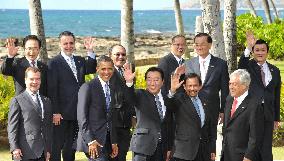
HONOLULU, United States - Leaders of the Asia-Pacific Economic Cooperation forum attend a photo session as they meet in Honolulu, Hawaii, on Nov. 13, 2011. They vowed to deepen cooperation to expand trade and ensure sustainable economic growth, recognizing that there are ''significant downside risks'' to the economy such as the European debt crisis. (Pool photo by Kyodo News)(Kyodo)

  •  
BOJ Governor Shirakawa at meeting

BOJ Governor Shirakawa at meeting

TOKYO, Japan - Bank of Japan Governor Masaaki Shirakawa (C) attends a meeting of branch chiefs at the central bank in Tokyo on Oct. 15, 2010 to assess the impact of the strong yen on the economy. Shirakawa warned the central bank's regional managers that attention should be paid to downside risks to the Japanese economy. (Kyodo)

  •  
BOJ weighs monetary easing

BOJ weighs monetary easing

TOKYO, Japan - Bank of Japan Governor Masaaki Shirakawa enters the head office of the central bank in Tokyo for the second day of a two-day policy meeting on Oct. 5, 2010. The meeting, which could unveil additional monetary easing steps, came as the yen's strength adds concern about downside risks to the Japanese economy. (Pool photo)(Kyodo)

  •  
BOJ Governor Shirakawa

BOJ Governor Shirakawa

TOKYO, Japan - Bank of Japan Governor Masaaki Shirakawa speaks during a news conference at the bank's head office in Tokyo on Aug. 30, 2010, after the central bank decided at an emergency policy meeting to ease its ultra-easy monetary policy further, given rising downside risks to the economy. (Kyodo)

  •  
BOJ decides on additional easing

BOJ decides on additional easing

TOKYO, Japan - Bank of Japan Governor Masaaki Shirakawa wraps up a press conference at the central bank's headquarters in Tokyo on Aug. 30, 2010. The BOJ decided at an emergency policy meeting to ease its ultra-easy monetary policy further given increasing downside risks to the economy. (Kyodo)

  •  
BOJ decides on additional easing due to economic woes

BOJ decides on additional easing due to economic woes

TOKYO, Japan - Bank of Japan Governor Masaaki Shirakawa speaks during a news conference at the central bank's headquarters in Tokyo on Aug. 30, 2010, after the BOJ decided at an emergency policy meeting to ease its ultra-easy monetary grip further given increasing downside risks to the economy. (Kyodo)

  •  
BOJ decides on additional easing due to economic woes

BOJ decides on additional easing due to economic woes

TOKYO, Japan - Bank of Japan Governor Masaaki Shirakawa says during a news conference at the bank's head office in Tokyo on Aug. 30, 2010, that the Japanese central bank decided at an emergency policy meeting to ease its ultra-easy monetary grip further given rising downside risks to the economy. (Kyodo)

  •  
Japan, S. Africa to work together to combat Ebola epidemic

Japan, S. Africa to work together to combat Ebola epidemic

BRISBANE, Australia - Japanese Prime Minister Shinzo Abe (L) and South African President Jacob Zuma meet on Nov. 14, 2014, in Brisbane, Australia, where they visited to attend the Group of 20 summit. They agreed to work together to grapple with the Ebola virus epidemic in West Africa, seen as a serious downside risk to global economic growth. (Pool photo by Kyodo News)(Kyodo)

  •  
APEC leaders meet in Hawaii

APEC leaders meet in Hawaii

HONOLULU, United States - Leaders of the Asia-Pacific Economic Cooperation forum attend a photo session as they meet in Honolulu, Hawaii, on Nov. 13, 2011. They vowed to deepen cooperation to expand trade and ensure sustainable economic growth, recognizing that there are ''significant downside risks'' to the economy such as the European debt crisis. (Pool photo by Kyodo News)(Kyodo)

  •  
BOJ weighs monetary easing

BOJ weighs monetary easing

TOKYO, Japan - The Bank of Japan holds the second day of its two-day policy meeting on Oct. 5, 2010, discussing possible additional monetary easing steps, as the yen's strength is adding concern about downside risks to the Japanese economy. (Pool Photo) (Kyodo)

  •  
Japan PM Suga at economic report meeting

Japan PM Suga at economic report meeting

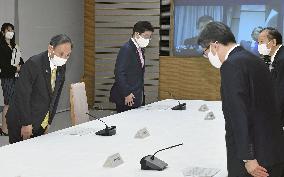
Japanese Prime Minister Yoshihide Suga (L) attends a meeting on the government's monthly economic report in Tokyo on Nov. 25, 2020. The government retained its view that the Japanese economy is "picking up" in its assessment for November, but it also warned of downside risks from the global resurgence of coronavirus infections.

  •  
BOJ policymaker warns of downside risks to prices

BOJ policymaker warns of downside risks to prices

Bank of Japan Policy Board member Takako Masai speaks at a press conference in Kobe on Dec. 6, 2017. Masai warned of "significant downside risks" to prices in Japan, citing the uncertain outlook for increased product and service prices. (Kyodo) ==Kyodo

  •  
Downside risks to Japanese economy receding: BOJ's Shirakawa

Downside risks to Japanese economy receding: BOJ's Shirakawa

TOKYO, Japan - Bank of Japan Governor Masaaki Shirakawa gives a lecture at a Tokyo hotel on Nov. 4, 2009. He said the downside risks to the Japanese economy have been receding compared with the spring. (Kyodo)

  •  
BOJ's Fukui says yen rise could eventually threaten economy

BOJ's Fukui says yen rise could eventually threaten economy

TOKYO, Japan - Bank of Japan (BOJ) Governor Toshihiko Fukui tells a news conference in Tokyo on Jan. 20 that although the yen's recent rise against the dollar is not yet a threat to the nation's economic recovery, it could undermine growth in the future. ''We have not yet concluded that foreign exchange fluctuations pose an immediate threat. But it could become a downside risk,'' he said. (Kyodo)

  •  
Nikkei slips below 12,000

Nikkei slips below 12,000

TOKYO, Japan - A man looks at stock quotes displayed in the window of a securities firm in Tokyo's Yaesu district July 18 as the Nikkei Stock Average dipped below 12,000 for the first time in four months in the morning session of the day. The Nikkei last fell below 12,000 on March 15, and the threshold has since served as a downside resistance level for the average.

  • Main
  • Top
  • Editorial
  • Creative
  • About Us
  • About ILG
  • Terms of use
  • Company
  • BEHIND
  • Price List
  • Single Plan
  • Monthly Plan
  • Services
  • Shooting
  • Rights Clearance
  • Support
  • FAQ
  • How To Buy
  • Contact Us
  • Become a Partner

© KYODO NEWS IMAGES INC

All Rights Reserved.

  • Editorial
  • Olympics
  • News
  • Sports
  • Japan
  • Tech
  • Royal
  • Disaster
  • NorthKorea
  • Old Japan
  • SNS
  • Creative
  • Food
  • Japan
  • Landscape
  • Animal
  • Popular
  • #Ukraine
  • #China
  • #coronavirus
  • #N. Korea
  • #Thailand
  • #Russia
  • #Ukraine
  • #China
  • #coronavirus
  • #N. Korea
  • #Thailand
  • #Russia
  • Food
  • Japan
  • Landscape
  • Animal
  • Olympics
  • News
  • Sports
  • Japan
  • Tech
  • Royal
  • Disaster
  • NorthKorea
  • Old Japan
  • SNS