•  
Lake Urmia Environmental Disaster - Iran

Lake Urmia Environmental Disaster - Iran

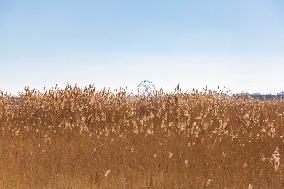
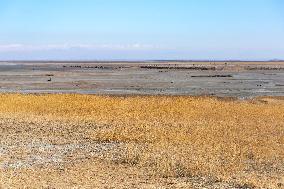
A view shows dry reeds on the dry bed of Lake Urmia in northwestern Iran on December 20, 2025. Lake Urmia, once the largest lake in the Middle East, has dramatically shrunk due to prolonged drought, the damming of rivers feeding the lake, and extensive groundwater extraction in the surrounding area. Although increased rainfall and water diversion briefly helped restore water levels in 2019, renewed drought and administrative mismanagement in the early 2020s reversed the trend, and satellite imagery shows the lake has almost entirely dried up by September 2025. Photo by Morteza Aminoroayayi/Middle East Images/ABACAPRESS.COM

  •  
Lake Urmia Environmental Disaster - Iran

Lake Urmia Environmental Disaster - Iran

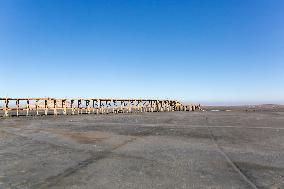
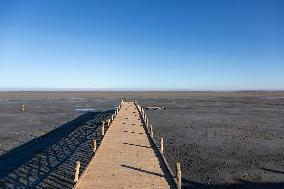
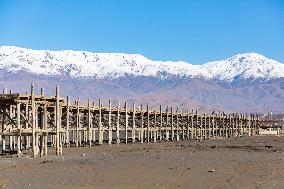
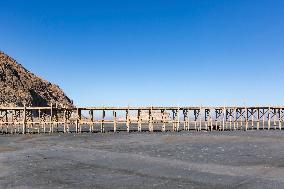
A view shows a wooden pier on the dry bed of Lake Urmia in northwestern Iran on December 20, 2025. Lake Urmia, once the largest lake in the Middle East, has dramatically shrunk due to prolonged drought, the damming of rivers feeding the lake, and extensive groundwater extraction in the surrounding area. Although increased rainfall and water diversion briefly helped restore water levels in 2019, renewed drought and administrative mismanagement in the early 2020s reversed the trend, and satellite imagery shows the lake has almost entirely dried up by September 2025. Photo by Morteza Aminoroayayi/Middle East Images/ABACAPRESS.COM

  •  
Lake Urmia Environmental Disaster - Iran

Lake Urmia Environmental Disaster - Iran

A view shows a wooden pier on the dry bed of Lake Urmia in northwestern Iran on December 20, 2025. Lake Urmia, once the largest lake in the Middle East, has dramatically shrunk due to prolonged drought, the damming of rivers feeding the lake, and extensive groundwater extraction in the surrounding area. Although increased rainfall and water diversion briefly helped restore water levels in 2019, renewed drought and administrative mismanagement in the early 2020s reversed the trend, and satellite imagery shows the lake has almost entirely dried up by September 2025. Photo by Morteza Aminoroayayi/Middle East Images/ABACAPRESS.COM

  •  
Lake Urmia Environmental Disaster - Iran

Lake Urmia Environmental Disaster - Iran

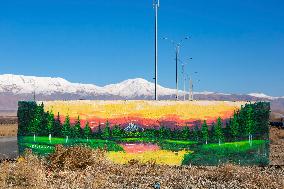
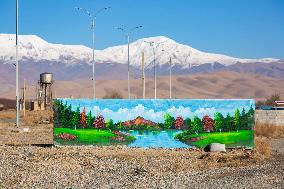
A view shows a mural depicting a landscape painted on a concrete wall near Sharafkhaneh port at Lake Urmia in northwestern Iran on December 19, 2025. Lake Urmia, once the largest lake in the Middle East, has dramatically shrunk due to prolonged drought, the damming of rivers feeding the lake, and extensive groundwater extraction in the surrounding area. Although increased rainfall and water diversion briefly helped restore water levels in 2019, renewed drought and administrative mismanagement in the early 2020s reversed the trend, and satellite imagery shows the lake has almost entirely dried up by September 2025. Photo by Morteza Aminoroayayi/Middle East Images/ABACAPRESS.COM

  •  
Lake Urmia Environmental Disaster - Iran

Lake Urmia Environmental Disaster - Iran

A view shows dry grass and the dry bed of Lake Urmia in northwestern Iran on December 20, 2025. Lake Urmia, once the largest lake in the Middle East, has dramatically shrunk due to prolonged drought, the damming of rivers feeding the lake, and extensive groundwater extraction in the surrounding area. Although increased rainfall and water diversion briefly helped restore water levels in 2019, renewed drought and administrative mismanagement in the early 2020s reversed the trend, and satellite imagery shows the lake has almost entirely dried up by September 2025. Photo by Morteza Aminoroayayi/Middle East Images/ABACAPRESS.COM

  •  
Lake Urmia Environmental Disaster - Iran

Lake Urmia Environmental Disaster - Iran

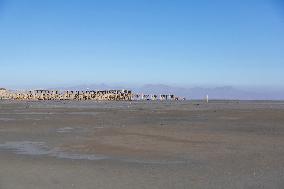
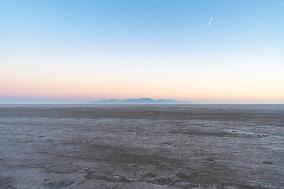
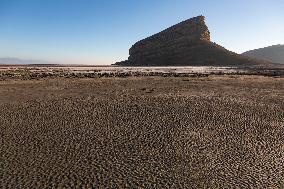
A view shows the dry bed of Lake Urmia in northwestern Iran on December 19, 2025. Lake Urmia, once the largest lake in the Middle East, has dramatically shrunk due to prolonged drought, the damming of rivers feeding the lake, and extensive groundwater extraction in the surrounding area. Although increased rainfall and water diversion briefly helped restore water levels in 2019, renewed drought and administrative mismanagement in the early 2020s reversed the trend, and satellite imagery shows the lake has almost entirely dried up by September 2025. Photo by Morteza Aminoroayayi/Middle East Images/ABACAPRESS.COM

  •  
Lake Urmia Environmental Disaster - Iran

Lake Urmia Environmental Disaster - Iran

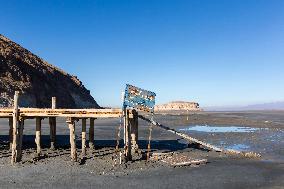
A view shows a rusty sign next to a wooden pier on the dry bed of Lake Urmia in northwestern Iran on December 20, 2025. Lake Urmia, once the largest lake in the Middle East, has dramatically shrunk due to prolonged drought, the damming of rivers feeding the lake, and extensive groundwater extraction in the surrounding area. Although increased rainfall and water diversion briefly helped restore water levels in 2019, renewed drought and administrative mismanagement in the early 2020s reversed the trend, and satellite imagery shows the lake has almost entirely dried up by September 2025. Photo by Morteza Aminoroayayi/Middle East Images/ABACAPRESS.COM

  •  
Lake Urmia Environmental Disaster - Iran

Lake Urmia Environmental Disaster - Iran

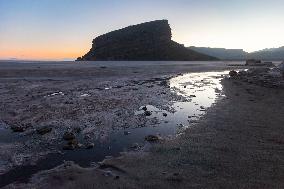
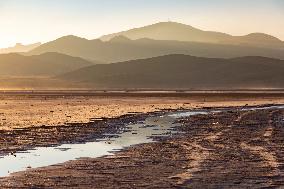
A view shows a shallow stream near a rocky cliff on the bed of Lake Urmia in northwestern Iran on December 19, 2025. Lake Urmia, once the largest lake in the Middle East, has dramatically shrunk due to prolonged drought, the damming of rivers feeding the lake, and extensive groundwater extraction in the surrounding area. Although increased rainfall and water diversion briefly helped restore water levels in 2019, renewed drought and administrative mismanagement in the early 2020s reversed the trend, and satellite imagery shows the lake has almost entirely dried up by September 2025. Photo by Morteza Aminoroayayi/Middle East Images/ABACAPRESS.COM

  •  
Lake Urmia Environmental Disaster - Iran

Lake Urmia Environmental Disaster - Iran

A view shows a wooden pier on the dry bed of Lake Urmia in northwestern Iran on December 20, 2025. Lake Urmia, once the largest lake in the Middle East, has dramatically shrunk due to prolonged drought, the damming of rivers feeding the lake, and extensive groundwater extraction in the surrounding area. Although increased rainfall and water diversion briefly helped restore water levels in 2019, renewed drought and administrative mismanagement in the early 2020s reversed the trend, and satellite imagery shows the lake has almost entirely dried up by September 2025. Photo by Morteza Aminoroayayi/Middle East Images/ABACAPRESS.COM

  •  
Lake Urmia Environmental Disaster - Iran

Lake Urmia Environmental Disaster - Iran

A view shows tire tracks running alongside a shallow stream on the bed of Lake Urmia in northwestern Iran on December 19, 2025. Lake Urmia, once the largest lake in the Middle East, has dramatically shrunk due to prolonged drought, the damming of rivers feeding the lake, and extensive groundwater extraction in the surrounding area. Although increased rainfall and water diversion briefly helped restore water levels in 2019, renewed drought and administrative mismanagement in the early 2020s reversed the trend, and satellite imagery shows the lake has almost entirely dried up by September 2025. Photo by Morteza Aminoroayayi/Middle East Images/ABACAPRESS.COM

  •  
Lake Urmia Environmental Disaster - Iran

Lake Urmia Environmental Disaster - Iran

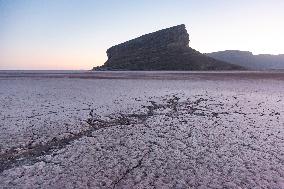
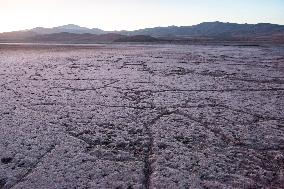
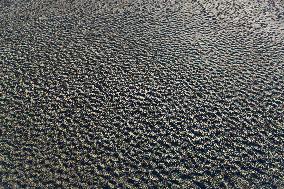
Salt formations cover the cracked surface of the dried bed of Lake Urmia in northwestern Iran on December 19, 2025. Lake Urmia, once the largest lake in the Middle East, has dramatically shrunk due to prolonged drought, the damming of rivers feeding the lake and extensive groundwater extraction in the surrounding area. Although increased rainfall and water diversion briefly helped restore water levels in 2019, renewed drought and administrative mismanagement in the early 2020s reversed the trend, and satellite imagery shows the lake has almost entirely dried up by September 2025. Photo by Morteza Aminoroayayi/Middle East Images/ABACAPRESS.COM

  •  
Lake Urmia Environmental Disaster - Iran

Lake Urmia Environmental Disaster - Iran

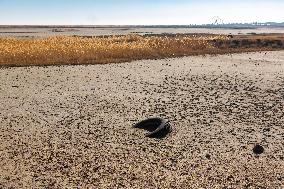
A discarded tire sits near dry reeds on the dry bed of Lake Urmia in northwestern Iran on December 20, 2025. Lake Urmia, once the largest lake in the Middle East, has dramatically shrunk due to prolonged drought, the damming of rivers feeding the lake, and extensive groundwater extraction in the surrounding area. Although increased rainfall and water diversion briefly helped restore water levels in 2019, renewed drought and administrative mismanagement in the early 2020s reversed the trend, and satellite imagery shows the lake has almost entirely dried up by September 2025. Photo by Morteza Aminoroayayi/Middle East Images/ABACAPRESS.COM

  •  
Lake Urmia Environmental Disaster - Iran

Lake Urmia Environmental Disaster - Iran

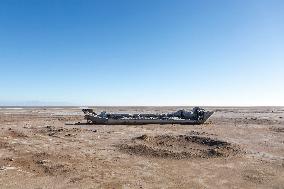
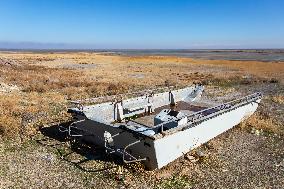
Remnants of a boat sit on the dry bed of Lake Urmia in northwestern Iran on December 19, 2025. Lake Urmia, once the largest lake in the Middle East, has dramatically shrunk due to prolonged drought, the damming of rivers feeding the lake, and extensive groundwater extraction in the surrounding area. Although increased rainfall and water diversion briefly helped restore water levels in 2019, renewed drought and administrative mismanagement in the early 2020s reversed the trend, and satellite imagery shows the lake has almost entirely dried up by September 2025. Photo by Morteza Aminoroayayi/Middle East Images/ABACAPRESS.COM

  •  
Lake Urmia Environmental Disaster - Iran

Lake Urmia Environmental Disaster - Iran

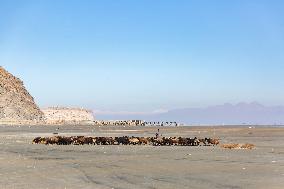
A shepherd guides a flock of sheep on the dry bed of Lake Urmia in northwestern Iran on December 20, 2025. Lake Urmia, once the largest lake in the Middle East, has dramatically shrunk due to prolonged drought, the damming of rivers feeding the lake, and extensive groundwater extraction in the surrounding area. Although increased rainfall and water diversion briefly helped restore water levels in 2019, renewed drought and administrative mismanagement in the early 2020s reversed the trend, and satellite imagery shows the lake has almost entirely dried up by September 2025. Photo by Morteza Aminoroayayi/Middle East Images/ABACAPRESS.COM

  •  
Lake Urmia Environmental Disaster - Iran

Lake Urmia Environmental Disaster - Iran

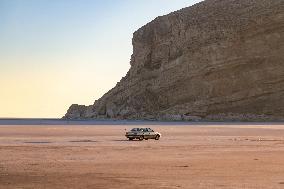
A car drives near a rocky cliff on the dry bed of Lake Urmia in northwestern Iran on December 19, 2025. Lake Urmia, once the largest lake in the Middle East, has dramatically shrunk due to prolonged drought, the damming of rivers feeding the lake, and extensive groundwater extraction in the surrounding area. Although increased rainfall and water diversion briefly helped restore water levels in 2019, renewed drought and administrative mismanagement in the early 2020s reversed the trend, and satellite imagery shows the lake has almost entirely dried up by September 2025. Photo by Morteza Aminoroayayi/Middle East Images/ABACAPRESS.COM

  •  
Lake Urmia Environmental Disaster - Iran

Lake Urmia Environmental Disaster - Iran

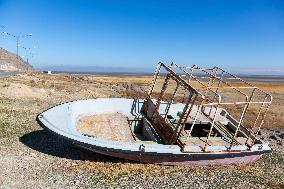
A rusty boat sits next to a road near Lake Urmia in northwestern Iran on December 20, 2025. Lake Urmia, once the largest lake in the Middle East, has dramatically shrunk due to prolonged drought, the damming of rivers feeding the lake, and extensive groundwater extraction in the surrounding area. Although increased rainfall and water diversion briefly helped restore water levels in 2019, renewed drought and administrative mismanagement in the early 2020s reversed the trend, and satellite imagery shows the lake has almost entirely dried up by September 2025. Photo by Morteza Aminoroayayi/Middle East Images/ABACAPRESS.COM

  •  
Lake Urmia Environmental Disaster - Iran

Lake Urmia Environmental Disaster - Iran

A view shows a wooden pier on the dry bed of Lake Urmia in northwestern Iran on December 19, 2025. Lake Urmia, once the largest lake in the Middle East, has dramatically shrunk due to prolonged drought, the damming of rivers feeding the lake, and extensive groundwater extraction in the surrounding area. Although increased rainfall and water diversion briefly helped restore water levels in 2019, renewed drought and administrative mismanagement in the early 2020s reversed the trend, and satellite imagery shows the lake has almost entirely dried up by September 2025. Photo by Morteza Aminoroayayi/Middle East Images/ABACAPRESS.COM

  •  
Lake Urmia Environmental Disaster - Iran

Lake Urmia Environmental Disaster - Iran

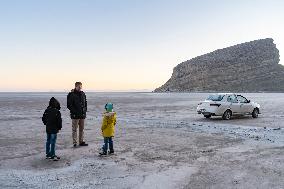
A man and two children stand near a car and a rocky cliff on the dry bed of Lake Urmia in northwestern Iran on December 19, 2025. Lake Urmia, once the largest lake in the Middle East, has dramatically shrunk due to prolonged drought, the damming of rivers feeding the lake, and extensive groundwater extraction in the surrounding area. Although increased rainfall and water diversion briefly helped restore water levels in 2019, renewed drought and administrative mismanagement in the early 2020s reversed the trend, and satellite imagery shows the lake has almost entirely dried up by September 2025. Photo by Morteza Aminoroayayi/Middle East Images/ABACAPRESS.COM

  •  
Lake Urmia Environmental Disaster - Iran

Lake Urmia Environmental Disaster - Iran

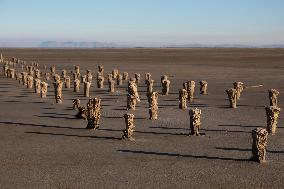
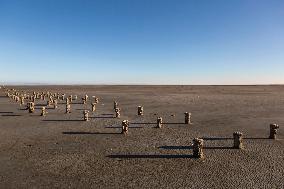
A view shows rows of wooden posts protruding from the dry bed of Lake Urmia in northwestern Iran on December 20, 2025. Lake Urmia, once the largest lake in the Middle East, has dramatically shrunk due to prolonged drought, the damming of rivers feeding the lake, and extensive groundwater extraction in the surrounding area. Although increased rainfall and water diversion briefly helped restore water levels in 2019, renewed drought and administrative mismanagement in the early 2020s reversed the trend, and satellite imagery shows the lake has almost entirely dried up by September 2025. Photo by Morteza Aminoroayayi/Middle East Images/ABACAPRESS.COM

  •  
Lake Urmia Environmental Disaster - Iran

Lake Urmia Environmental Disaster - Iran

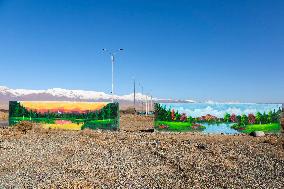
A view shows murals depicting nature scenes painted on concrete walls near Sharafkhaneh port at Lake Urmia in northwestern Iran on December 19, 2025. Lake Urmia, once the largest lake in the Middle East, has dramatically shrunk due to prolonged drought, the damming of rivers feeding the lake, and extensive groundwater extraction in the surrounding area. Although increased rainfall and water diversion briefly helped restore water levels in 2019, renewed drought and administrative mismanagement in the early 2020s reversed the trend, and satellite imagery shows the lake has almost entirely dried up by September 2025. Photo by Morteza Aminoroayayi/Middle East Images/ABACAPRESS.COM

  •  
Lake Urmia Environmental Disaster - Iran

Lake Urmia Environmental Disaster - Iran

A view shows the dry bed of Lake Urmia in northwestern Iran on December 19, 2025. Lake Urmia, once the largest lake in the Middle East, has dramatically shrunk due to prolonged drought, the damming of rivers feeding the lake, and extensive groundwater extraction in the surrounding area. Although increased rainfall and water diversion briefly helped restore water levels in 2019, renewed drought and administrative mismanagement in the early 2020s reversed the trend, and satellite imagery shows the lake has almost entirely dried up by September 2025. Photo by Morteza Aminoroayayi/Middle East Images/ABACAPRESS.COM

  •  
Lake Urmia Environmental Disaster - Iran

Lake Urmia Environmental Disaster - Iran

A view shows a wooden pier on the dry bed of Lake Urmia in northwestern Iran on December 20, 2025. Lake Urmia, once the largest lake in the Middle East, has dramatically shrunk due to prolonged drought, the damming of rivers feeding the lake, and extensive groundwater extraction in the surrounding area. Although increased rainfall and water diversion briefly helped restore water levels in 2019, renewed drought and administrative mismanagement in the early 2020s reversed the trend, and satellite imagery shows the lake has almost entirely dried up by September 2025. Photo by Morteza Aminoroayayi/Middle East Images/ABACAPRESS.COM

  •  
Lake Urmia Environmental Disaster - Iran

Lake Urmia Environmental Disaster - Iran

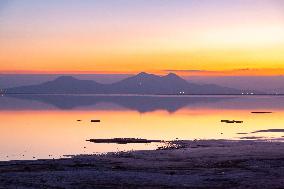
A view shows reflections on the surface of Lake Urmia in northwestern Iran on December 18, 2025. Lake Urmia, once the largest lake in the Middle East, has dramatically shrunk due to prolonged drought, the damming of rivers feeding the lake, and extensive groundwater extraction in the surrounding area. Although increased rainfall and water diversion briefly helped restore water levels in 2019, renewed drought and administrative mismanagement in the early 2020s reversed the trend, and satellite imagery shows the lake has almost entirely dried up by September 2025. Photo by Morteza Aminoroayayi/Middle East Images/ABACAPRESS.COM

  •  
Lake Urmia Environmental Disaster - Iran

Lake Urmia Environmental Disaster - Iran

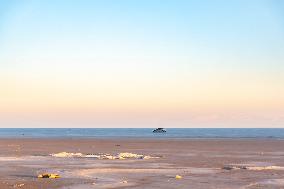
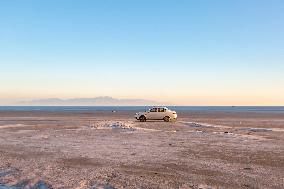
A car drives on the dry bed of Lake Urmia in northwestern Iran on December 19, 2025. Lake Urmia, once the largest lake in the Middle East, has dramatically shrunk due to prolonged drought, the damming of rivers feeding the lake, and extensive groundwater extraction in the surrounding area. Although increased rainfall and water diversion briefly helped restore water levels in 2019, renewed drought and administrative mismanagement in the early 2020s reversed the trend, and satellite imagery shows the lake has almost entirely dried up by September 2025. Photo by Morteza Aminoroayayi/Middle East Images/ABACAPRESS.COM

  •  
Lake Urmia Environmental Disaster - Iran

Lake Urmia Environmental Disaster - Iran

A view shows a mural depicting a landscape painted on a concrete wall near Sharafkhaneh port at Lake Urmia in northwestern Iran on December 19, 2025. Lake Urmia, once the largest lake in the Middle East, has dramatically shrunk due to prolonged drought, the damming of rivers feeding the lake, and extensive groundwater extraction in the surrounding area. Although increased rainfall and water diversion briefly helped restore water levels in 2019, renewed drought and administrative mismanagement in the early 2020s reversed the trend, and satellite imagery shows the lake has almost entirely dried up by September 2025. Photo by Morteza Aminoroayayi/Middle East Images/ABACAPRESS.COM

  •  
Lake Urmia Environmental Disaster - Iran

Lake Urmia Environmental Disaster - Iran

A view shows rows of wooden posts protruding from the dry bed of Lake Urmia in northwestern Iran on December 20, 2025. Lake Urmia, once the largest lake in the Middle East, has dramatically shrunk due to prolonged drought, the damming of rivers feeding the lake, and extensive groundwater extraction in the surrounding area. Although increased rainfall and water diversion briefly helped restore water levels in 2019, renewed drought and administrative mismanagement in the early 2020s reversed the trend, and satellite imagery shows the lake has almost entirely dried up by September 2025. Photo by Morteza Aminoroayayi/Middle East Images/ABACAPRESS.COM

  •  
Lake Urmia Environmental Disaster - Iran

Lake Urmia Environmental Disaster - Iran

Salt formations cover the cracked surface of the dried bed of Lake Urmia in northwestern Iran on December 19, 2025. Lake Urmia, once the largest lake in the Middle East, has dramatically shrunk due to prolonged drought, the damming of rivers feeding the lake and extensive groundwater extraction in the surrounding area. Although increased rainfall and water diversion briefly helped restore water levels in 2019, renewed drought and administrative mismanagement in the early 2020s reversed the trend, and satellite imagery shows the lake has almost entirely dried up by September 2025. Photo by Morteza Aminoroayayi/Middle East Images/ABACAPRESS.COM

  •  
Lake Urmia Environmental Disaster - Iran

Lake Urmia Environmental Disaster - Iran

Remains of a boat sits near the dry bed of Lake Urmia in northwestern Iran on December 20, 2025. Lake Urmia, once the largest lake in the Middle East, has dramatically shrunk due to prolonged drought, the damming of rivers feeding the lake, and extensive groundwater extraction in the surrounding area. Although increased rainfall and water diversion briefly helped restore water levels in 2019, renewed drought and administrative mismanagement in the early 2020s reversed the trend, and satellite imagery shows the lake has almost entirely dried up by September 2025. Photo by Morteza Aminoroayayi/Middle East Images/ABACAPRESS.COM

  •  
Lake Urmia Environmental Disaster - Iran

Lake Urmia Environmental Disaster - Iran

A car drives on the dry bed of Lake Urmia in northwestern Iran on December 19, 2025. Lake Urmia, once the largest lake in the Middle East, has dramatically shrunk due to prolonged drought, the damming of rivers feeding the lake, and extensive groundwater extraction in the surrounding area. Although increased rainfall and water diversion briefly helped restore water levels in 2019, renewed drought and administrative mismanagement in the early 2020s reversed the trend, and satellite imagery shows the lake has almost entirely dried up by September 2025. Photo by Morteza Aminoroayayi/Middle East Images/ABACAPRESS.COM

  •  
Lake Urmia Environmental Disaster - Iran

Lake Urmia Environmental Disaster - Iran

A view shows the dry bed of Lake Urmia in northwestern Iran on December 19, 2025. Lake Urmia, once the largest lake in the Middle East, has dramatically shrunk due to prolonged drought, the damming of rivers feeding the lake, and extensive groundwater extraction in the surrounding area. Although increased rainfall and water diversion briefly helped restore water levels in 2019, renewed drought and administrative mismanagement in the early 2020s reversed the trend, and satellite imagery shows the lake has almost entirely dried up by September 2025. Photo by Morteza Aminoroayayi/Middle East Images/ABACAPRESS.COM

  •  
Lake Urmia Environmental Disaster - Iran

Lake Urmia Environmental Disaster - Iran

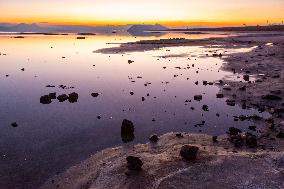
A view shows scattered rocks and shallow water in parts of Lake Urmia in northwestern Iran on December 18, 2025. Lake Urmia, once the largest lake in the Middle East, has dramatically shrunk due to prolonged drought, the damming of rivers feeding the lake, and extensive groundwater extraction in the surrounding area. Although increased rainfall and water diversion briefly helped restore water levels in 2019, renewed drought and administrative mismanagement in the early 2020s reversed the trend, and satellite imagery shows the lake has almost entirely dried up by September 2025. Photo by Morteza Aminoroayayi/Middle East Images/ABACAPRESS.COM

  •  

US: Two Dead After San Gabriel River Flooding in Texas

Severe flooding over the weekend along the San Gabriel River in Williamson County, Texas, has left two people dead and one still missing. Torrential rain on Saturday morning (July 5) caused the river to swell more than 36 feet (approximately 10 meters), inundating popular swimming areas and dramatically reshaping the landscape.

  •  
Health Workers Support Palestine in Brussels - Belgium

Health Workers Support Palestine in Brussels - Belgium

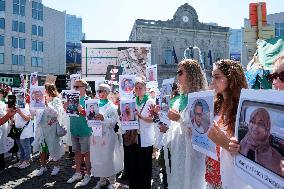
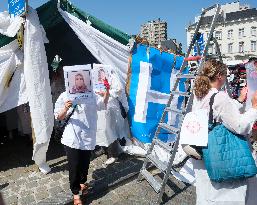
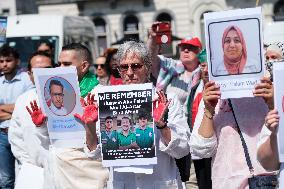
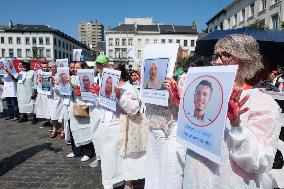
Belgique, Bruxelles, le 19 juin 2025 : rassemblement de personnels de santé européens en soutien aux personnels soignants de Gaza et à la population civile palestinienne. Les soignants demandent l'arrêt immédiat et inconditionnel des attaques sur les infrastructures et le personnel de santé Around 150 people demonstrate for an immediate and unconditional cessation of attacks on health infrastructure and personnel, the free and safe movement of humanitarian aid, and concrete sanctions from the European Union and its Member States in Place of Luxembourg, in front of the European Parliament on June 19, 2025 in Brussels, Belgium. According to the World Health Organization (WHO), as of May 24, 2025, 94% of hospitals in the Gaza Strip were damaged or destroyed. Since October 2023, 697 attacks have targeted healthcare infrastructure and services. At the end of May, only 2,000 hospital beds remained available for more than 2 million residents, a dramatically insufficient number. Photo by Thierry Monasse/ANDBZ/ABACAPR

  •  
Health Workers Support Palestine in Brussels - Belgium

Health Workers Support Palestine in Brussels - Belgium

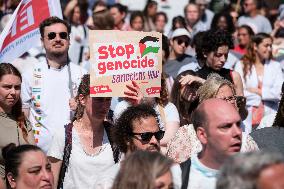
Belgique, Bruxelles, le 19 juin 2025 : rassemblement de personnels de santé européens en soutien aux personnels soignants de Gaza et à la population civile palestinienne. Les soignants demandent l'arrêt immédiat et inconditionnel des attaques sur les infrastructures et le personnel de santé Around 150 people demonstrate for an immediate and unconditional cessation of attacks on health infrastructure and personnel, the free and safe movement of humanitarian aid, and concrete sanctions from the European Union and its Member States in Place of Luxembourg, in front of the European Parliament on June 19, 2025 in Brussels, Belgium. According to the World Health Organization (WHO), as of May 24, 2025, 94% of hospitals in the Gaza Strip were damaged or destroyed. Since October 2023, 697 attacks have targeted healthcare infrastructure and services. At the end of May, only 2,000 hospital beds remained available for more than 2 million residents, a dramatically insufficient number. Photo by Thierry Monasse/ANDBZ/ABACAPR

  •  
Health Workers Support Palestine in Brussels - Belgium

Health Workers Support Palestine in Brussels - Belgium

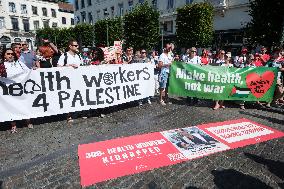
Belgique, Bruxelles, le 19 juin 2025 : rassemblement de personnels de santé européens en soutien aux personnels soignants de Gaza et à la population civile palestinienne. Les soignants demandent l'arrêt immédiat et inconditionnel des attaques sur les infrastructures et le personnel de santé Around 150 people demonstrate for an immediate and unconditional cessation of attacks on health infrastructure and personnel, the free and safe movement of humanitarian aid, and concrete sanctions from the European Union and its Member States in Place of Luxembourg, in front of the European Parliament on June 19, 2025 in Brussels, Belgium. According to the World Health Organization (WHO), as of May 24, 2025, 94% of hospitals in the Gaza Strip were damaged or destroyed. Since October 2023, 697 attacks have targeted healthcare infrastructure and services. At the end of May, only 2,000 hospital beds remained available for more than 2 million residents, a dramatically insufficient number. Photo by Thierry Monasse/ANDBZ/ABACAPR

  •  
Health Workers Support Palestine in Brussels - Belgium

Health Workers Support Palestine in Brussels - Belgium

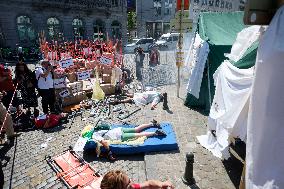
Belgique, Bruxelles, le 19 juin 2025 : rassemblement de personnels de santé européens en soutien aux personnels soignants de Gaza et à la population civile palestinienne. Les soignants demandent l'arrêt immédiat et inconditionnel des attaques sur les infrastructures et le personnel de santé Around 150 people demonstrate for an immediate and unconditional cessation of attacks on health infrastructure and personnel, the free and safe movement of humanitarian aid, and concrete sanctions from the European Union and its Member States in Place of Luxembourg, in front of the European Parliament on June 19, 2025 in Brussels, Belgium. According to the World Health Organization (WHO), as of May 24, 2025, 94% of hospitals in the Gaza Strip were damaged or destroyed. Since October 2023, 697 attacks have targeted healthcare infrastructure and services. At the end of May, only 2,000 hospital beds remained available for more than 2 million residents, a dramatically insufficient number. Photo by Thierry Monasse/ANDBZ/ABACAPR

  •  
Health Workers Support Palestine in Brussels - Belgium

Health Workers Support Palestine in Brussels - Belgium

Belgique, Bruxelles, le 19 juin 2025 : rassemblement de personnels de santé européens en soutien aux personnels soignants de Gaza et à la population civile palestinienne. Les soignants demandent l'arrêt immédiat et inconditionnel des attaques sur les infrastructures et le personnel de santé Around 150 people demonstrate for an immediate and unconditional cessation of attacks on health infrastructure and personnel, the free and safe movement of humanitarian aid, and concrete sanctions from the European Union and its Member States in Place of Luxembourg, in front of the European Parliament on June 19, 2025 in Brussels, Belgium. According to the World Health Organization (WHO), as of May 24, 2025, 94% of hospitals in the Gaza Strip were damaged or destroyed. Since October 2023, 697 attacks have targeted healthcare infrastructure and services. At the end of May, only 2,000 hospital beds remained available for more than 2 million residents, a dramatically insufficient number. Photo by Thierry Monasse/ANDBZ/ABACAPR

  •  
Health Workers Support Palestine in Brussels - Belgium

Health Workers Support Palestine in Brussels - Belgium

Belgique, Bruxelles, le 19 juin 2025 : rassemblement de personnels de santé européens en soutien aux personnels soignants de Gaza et à la population civile palestinienne. Les soignants demandent l'arrêt immédiat et inconditionnel des attaques sur les infrastructures et le personnel de santé Around 150 people demonstrate for an immediate and unconditional cessation of attacks on health infrastructure and personnel, the free and safe movement of humanitarian aid, and concrete sanctions from the European Union and its Member States in Place of Luxembourg, in front of the European Parliament on June 19, 2025 in Brussels, Belgium. According to the World Health Organization (WHO), as of May 24, 2025, 94% of hospitals in the Gaza Strip were damaged or destroyed. Since October 2023, 697 attacks have targeted healthcare infrastructure and services. At the end of May, only 2,000 hospital beds remained available for more than 2 million residents, a dramatically insufficient number. Photo by Thierry Monasse/ANDBZ/ABACAPR

  •  
Health Workers Support Palestine in Brussels - Belgium

Health Workers Support Palestine in Brussels - Belgium

Belgique, Bruxelles, le 19 juin 2025 : rassemblement de personnels de santé européens en soutien aux personnels soignants de Gaza et à la population civile palestinienne. Les soignants demandent l'arrêt immédiat et inconditionnel des attaques sur les infrastructures et le personnel de santé Around 150 people demonstrate for an immediate and unconditional cessation of attacks on health infrastructure and personnel, the free and safe movement of humanitarian aid, and concrete sanctions from the European Union and its Member States in Place of Luxembourg, in front of the European Parliament on June 19, 2025 in Brussels, Belgium. According to the World Health Organization (WHO), as of May 24, 2025, 94% of hospitals in the Gaza Strip were damaged or destroyed. Since October 2023, 697 attacks have targeted healthcare infrastructure and services. At the end of May, only 2,000 hospital beds remained available for more than 2 million residents, a dramatically insufficient number. Photo by Thierry Monasse/ANDBZ/ABACAPR

  •  

China: Lightning Strikes Through Rainbow as Sunset Paints Sky in Inner Mongolia

This is the stunning moment that a rare mix of lightning and rainbow lit up the sky, capturing a breathtaking scene that also featured sunset and colorful clouds. On May 11, 2025, in Hohhot, Inner Mongolia, the video showed a rare atmospheric phenomenon where a bolt of lightning slashed through the sky as a vivid rainbow arched across the horizon. As the sun began to set, casting an orange hue over the clouds, onlookers were treated to a mesmerizing display where multiple natural elements, lightning, rainbow, sunset, and painted clouds, had converged in one frame. The lightning bolt flashed dramatically across the sky just beneath the arc of the rainbow, creating a moment of natural beauty that was rarely seen together. The video ended with the lightning fading into the distance as the rainbow slowly dissolved into the dusky sky.

  •  

China: Cloud Fall Cascades Over Nanchuan’s Jinfo Mountain

This is the stunning moment that a mesmerizing waterfall cascaded down the eastern slope of Jinfo Mountain, leaving viewers in awe with its “cloud fall”-like appearance. On May 10, 2025, in Nanchuan District, Chongqing, the video showed thick white clouds dramatically tumbling down the mountain slope like a massive waterfall. The breathtaking spectacle occurred at the eastern foothills of Jinfo Mountain, a region that is known for its unique topography, which contributed to the formation of such rare natural phenomena. In the video, the clouds poured over the ridge in powerful streams, creating the illusion of liquid mist plunging from the peak. According to local meteorological explanations, the “cloud fall” was formed due to a specific combination of warm and cool airflows along the mountain slope. When temperatures rose on one side of the mountain, clouds were pushed by the wind toward the cooler side, creating a “cloud fall”. The video ended with the rolling clouds continuing their dramatic descent, blanketing the forested slopes below in a sea of mist.

  •  
Mourinho grabs Galatasaray manager's nose after Fenerbahce defeat in Istanbul

Mourinho grabs Galatasaray manager's nose after Fenerbahce defeat in Istanbul

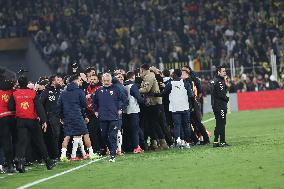
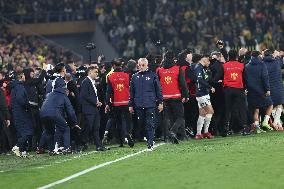
Fenerbahce v Galatasaray during the Turkish Cup, Quarter Final at Sukru Saracoglu, in Istanbul, Turkey, on April 2, 2025 . Fenerbahce coach Jose Mourinho reacts as Fenerbahce and Galatasaray players clash. A mass scuffle had broken out between both sets of players, with the referee sending three players off, two from Galatasaray, and after the final whistle Mourinho appeared to pinch Okan Buruk's nose who then fell dramatically to the ground. Photo by Yusuf Dursun/DIA Images/ABACAPRESS.COM

  •  
Mourinho grabs Galatasaray manager's nose after Fenerbahce defeat in Istanbul

Mourinho grabs Galatasaray manager's nose after Fenerbahce defeat in Istanbul

Fenerbahce v Galatasaray during the Turkish Cup, Quarter Final at Sukru Saracoglu, in Istanbul, Turkey, on April 2, 2025 . Fenerbahce coach Jose Mourinho reacts as Fenerbahce and Galatasaray players clash. A mass scuffle had broken out between both sets of players, with the referee sending three players off, two from Galatasaray, and after the final whistle Mourinho appeared to pinch Okan Buruk's nose who then fell dramatically to the ground. Photo by Saycan/DIA Images/ABACAPRESS.COM

  •  
Mourinho grabs Galatasaray manager's nose after Fenerbahce defeat in Istanbul

Mourinho grabs Galatasaray manager's nose after Fenerbahce defeat in Istanbul

Fenerbahce v Galatasaray during the Turkish Cup, Quarter Final at Sukru Saracoglu, in Istanbul, Turkey, on April 2, 2025 . Fenerbahce coach Jose Mourinho reacts as Fenerbahce and Galatasaray players clash. A mass scuffle had broken out between both sets of players, with the referee sending three players off, two from Galatasaray, and after the final whistle Mourinho appeared to pinch Okan Buruk's nose who then fell dramatically to the ground. Photo by Murat Akbas/DIA Images/ABACAPRESS.COM

  •  
Mourinho grabs Galatasaray manager's nose after Fenerbahce defeat in Istanbul

Mourinho grabs Galatasaray manager's nose after Fenerbahce defeat in Istanbul

Fenerbahce v Galatasaray during the Turkish Cup, Quarter Final at Sukru Saracoglu, in Istanbul, Turkey, on April 2, 2025 . Fenerbahce coach Jose Mourinho reacts as Fenerbahce and Galatasaray players clash. A mass scuffle had broken out between both sets of players, with the referee sending three players off, two from Galatasaray, and after the final whistle Mourinho appeared to pinch Okan Buruk's nose who then fell dramatically to the ground. Photo by Murat Akbas/DIA Images/ABACAPRESS.COM

  •  
Mourinho grabs Galatasaray manager's nose after Fenerbahce defeat in Istanbul

Mourinho grabs Galatasaray manager's nose after Fenerbahce defeat in Istanbul

Fenerbahce v Galatasaray during the Turkish Cup, Quarter Final at Sukru Saracoglu, in Istanbul, Turkey, on April 2, 2025 . Fenerbahce coach Jose Mourinho reacts as Fenerbahce and Galatasaray players clash. A mass scuffle had broken out between both sets of players, with the referee sending three players off, two from Galatasaray, and after the final whistle Mourinho appeared to pinch Okan Buruk's nose who then fell dramatically to the ground. Photo by Murat Akbas/DIA Images/ABACAPRESS.COM

  •  
Mourinho grabs Galatasaray manager's nose after Fenerbahce defeat in Istanbul

Mourinho grabs Galatasaray manager's nose after Fenerbahce defeat in Istanbul

Fenerbahce v Galatasaray during the Turkish Cup, Quarter Final at Sukru Saracoglu, in Istanbul, Turkey, on April 2, 2025 . Fenerbahce coach Jose Mourinho reacts as Fenerbahce and Galatasaray players clash. A mass scuffle had broken out between both sets of players, with the referee sending three players off, two from Galatasaray, and after the final whistle Mourinho appeared to pinch Okan Buruk's nose who then fell dramatically to the ground. Photo by Saycan/DIA Images/ABACAPRESS.COM

  •  
Mourinho grabs Galatasaray manager's nose after Fenerbahce defeat in Istanbul

Mourinho grabs Galatasaray manager's nose after Fenerbahce defeat in Istanbul

Fenerbahce v Galatasaray during the Turkish Cup, Quarter Final at Sukru Saracoglu, in Istanbul, Turkey, on April 2, 2025 . Fenerbahce coach Jose Mourinho reacts as Fenerbahce and Galatasaray players clash. A mass scuffle had broken out between both sets of players, with the referee sending three players off, two from Galatasaray, and after the final whistle Mourinho appeared to pinch Okan Buruk's nose who then fell dramatically to the ground. Photo by Saycan/DIA Images/ABACAPRESS.COM

  •  
Mourinho grabs Galatasaray manager's nose after Fenerbahce defeat in Istanbul

Mourinho grabs Galatasaray manager's nose after Fenerbahce defeat in Istanbul

Fenerbahce v Galatasaray during the Turkish Cup, Quarter Final at Sukru Saracoglu, in Istanbul, Turkey, on April 2, 2025 . Fenerbahce coach Jose Mourinho reacts as Fenerbahce and Galatasaray players clash. A mass scuffle had broken out between both sets of players, with the referee sending three players off, two from Galatasaray, and after the final whistle Mourinho appeared to pinch Okan Buruk's nose who then fell dramatically to the ground. Photo by Yusuf Dursun/DIA Images/ABACAPRESS.COM

  •  
Mourinho grabs Galatasaray manager's nose after Fenerbahce defeat in Istanbul

Mourinho grabs Galatasaray manager's nose after Fenerbahce defeat in Istanbul

Fenerbahce v Galatasaray during the Turkish Cup, Quarter Final at Sukru Saracoglu, in Istanbul, Turkey, on April 2, 2025 . Fenerbahce coach Jose Mourinho reacts as Fenerbahce and Galatasaray players clash. A mass scuffle had broken out between both sets of players, with the referee sending three players off, two from Galatasaray, and after the final whistle Mourinho appeared to pinch Okan Buruk's nose who then fell dramatically to the ground. Photo by Saycan/DIA Images/ABACAPRESS.COM

  • Main
  • Top
  • Editorial
  • Creative
  • About Us
  • About ILG
  • Terms of use
  • Company
  • BEHIND
  • Price List
  • Single Plan
  • Monthly Plan
  • Services
  • Shooting
  • Rights Clearance
  • Support
  • FAQ
  • How To Buy
  • Contact Us
  • Become a Partner

© KYODO NEWS IMAGES INC

All Rights Reserved.

  • Editorial
  • Olympics
  • News
  • Sports
  • Japan
  • Tech
  • Royal
  • Disaster
  • NorthKorea
  • Old Japan
  • SNS
  • Creative
  • Food
  • Japan
  • Landscape
  • Animal
  • Popular
  • #Ukraine
  • #Thailand
  • #coronavirus
  • #N. Korea
  • #Russia
  • #China
  • #Ukraine
  • #Thailand
  • #coronavirus
  • #N. Korea
  • #Russia
  • #China
  • Food
  • Japan
  • Landscape
  • Animal
  • Olympics
  • News
  • Sports
  • Japan
  • Tech
  • Royal
  • Disaster
  • NorthKorea
  • Old Japan
  • SNS