•  
Tie-Dye Technique Of Bai Ethnic Group - Chin

Tie-Dye Technique Of Bai Ethnic Group - Chin

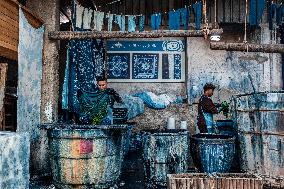
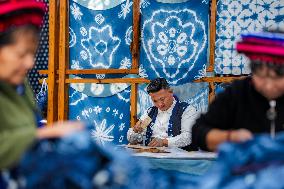
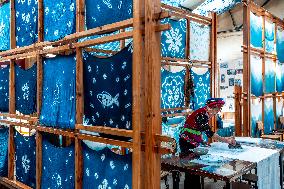
Duan Yuan, an inheritor of the tie-dye technique of Bai ethnic group, makes tie-dye designs in a dyehouse in Zhoucheng Village of Dali Bai Autonomous Prefecture, southwest China's Yunnan Province, November 21, 2025. Known as the hometown of the tie-dye technique of Bai ethnic group, Zhoucheng Village hosts over 200 households engaging in tie-dye businesses, with the number of employees exceeding 4,000. As a traditional folk technique of the Bai ethnic group, tie-dye boasts a history spanning over a thousand years and was included in the first batch of China's national intangible cultural heritage list in 2006. Tying and dyeing are the core steps in the process of making indigo tie-dye products. Artisans use needles and threads to create various patterns on the fabric, which are then dyed with plant-based dyes, resulting in blue backgrounds adorned with vivid white patterns. Photo by Hu Chao/Xinhua/ABACAPRESS.COM

  •  
Tie-Dye Technique Of Bai Ethnic Group - Chin

Tie-Dye Technique Of Bai Ethnic Group - Chin

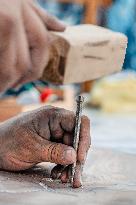
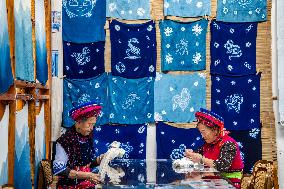
Duan Yinmei, an inheritor of the tie-dye technique of Bai ethnic group, creates knots on fabrics in a dyehouse in Zhoucheng Village of Dali Bai Autonomous Prefecture, southwest China's Yunnan Province, November 21, 2025. Known as the hometown of the tie-dye technique of Bai ethnic group, Zhoucheng Village hosts over 200 households engaging in tie-dye businesses, with the number of employees exceeding 4,000. As a traditional folk technique of the Bai ethnic group, tie-dye boasts a history spanning over a thousand years and was included in the first batch of China's national intangible cultural heritage list in 2006. Tying and dyeing are the core steps in the process of making indigo tie-dye products. Artisans use needles and threads to create various patterns on the fabric, which are then dyed with plant-based dyes, resulting in blue backgrounds adorned with vivid white patterns. Photo by Hu Chao/Xinhua/ABACAPRESS.COM

  •  
Tie-Dye Technique Of Bai Ethnic Group - Chin

Tie-Dye Technique Of Bai Ethnic Group - Chin

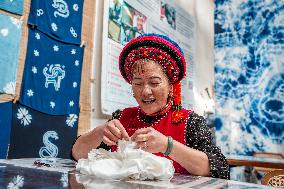
A woman experiences the tie-dye technique of Bai ethnic group in a dyehouse in Zhoucheng Village of Dali Bai Autonomous Prefecture, southwest China's Yunnan Province, November 21, 2025. Known as the hometown of the tie-dye technique of Bai ethnic group, Zhoucheng Village hosts over 200 households engaging in tie-dye businesses, with the number of employees exceeding 4,000. As a traditional folk technique of the Bai ethnic group, tie-dye boasts a history spanning over a thousand years and was included in the first batch of China's national intangible cultural heritage list in 2006. Tying and dyeing are the core steps in the process of making indigo tie-dye products. Artisans use needles and threads to create various patterns on the fabric, which are then dyed with plant-based dyes, resulting in blue backgrounds adorned with vivid white patterns. Photo by Hu Chao/Xinhua/ABACAPRESS.COM

  •  
Tie-Dye Technique Of Bai Ethnic Group - Chin

Tie-Dye Technique Of Bai Ethnic Group - Chin

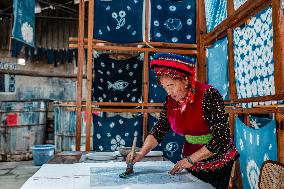
Duan Yinmei, an inheritor of the tie-dye technique of Bai ethnic group, dyes patterns on fabrics in a dyehouse in Zhoucheng Village of Dali Bai Autonomous Prefecture, southwest China's Yunnan Province, November 21, 2025. Known as the hometown of the tie-dye technique of Bai ethnic group, Zhoucheng Village hosts over 200 households engaging in tie-dye businesses, with the number of employees exceeding 4,000. As a traditional folk technique of the Bai ethnic group, tie-dye boasts a history spanning over a thousand years and was included in the first batch of China's national intangible cultural heritage list in 2006. Tying and dyeing are the core steps in the process of making indigo tie-dye products. Artisans use needles and threads to create various patterns on the fabric, which are then dyed with plant-based dyes, resulting in blue backgrounds adorned with vivid white patterns. Photo by Hu Chao/Xinhua/ABACAPRESS.COM

  •  
Tie-Dye Technique Of Bai Ethnic Group - Chin

Tie-Dye Technique Of Bai Ethnic Group - Chin

Duan Yuan, an inheritor of the tie-dye technique of Bai ethnic group, rinses dyed fabrics in a dyehouse in Zhoucheng Village of Dali Bai Autonomous Prefecture, southwest China's Yunnan Province, November 21, 2025. Known as the hometown of the tie-dye technique of Bai ethnic group, Zhoucheng Village hosts over 200 households engaging in tie-dye businesses, with the number of employees exceeding 4,000. As a traditional folk technique of the Bai ethnic group, tie-dye boasts a history spanning over a thousand years and was included in the first batch of China's national intangible cultural heritage list in 2006. Tying and dyeing are the core steps in the process of making indigo tie-dye products. Artisans use needles and threads to create various patterns on the fabric, which are then dyed with plant-based dyes, resulting in blue backgrounds adorned with vivid white patterns. Photo by Hu Chao/Xinhua/ABACAPRESS.COM

  •  
Tie-Dye Technique Of Bai Ethnic Group - Chin

Tie-Dye Technique Of Bai Ethnic Group - Chin

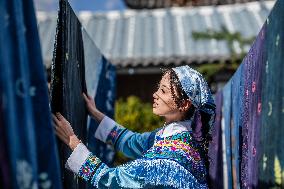
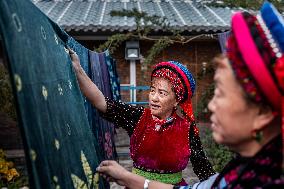
Duan Yinmei (L), an inheritor of the tie-dye technique of Bai ethnic group, and handicraftsman Duan Lilan dry tie-dye fabrics in a dyehouse in Zhoucheng Village of Dali Bai Autonomous Prefecture, southwest China's Yunnan Province, November 21, 2025. Known as the hometown of the tie-dye technique of Bai ethnic group, Zhoucheng Village hosts over 200 households engaging in tie-dye businesses, with the number of employees exceeding 4,000. As a traditional folk technique of the Bai ethnic group, tie-dye boasts a history spanning over a thousand years and was included in the first batch of China's national intangible cultural heritage list in 2006. Tying and dyeing are the core steps in the process of making indigo tie-dye products. Artisans use needles and threads to create various patterns on the fabric, which are then dyed with plant-based dyes, resulting in blue backgrounds adorned with vivid white patterns. Photo by Hu Chao/Xinhua/ABACAPRESS.COM

  •  
Tie-Dye Technique Of Bai Ethnic Group - Chin

Tie-Dye Technique Of Bai Ethnic Group - Chin

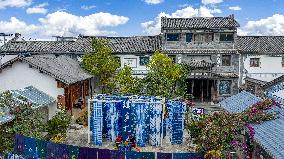
An aerial drone photo shows a scene at a dyehouse in Zhoucheng Village of Dali Bai Autonomous Prefecture, southwest China's Yunnan Province, November 21, 2025. Known as the hometown of the tie-dye technique of Bai ethnic group, Zhoucheng Village hosts over 200 households engaging in tie-dye businesses, with the number of employees exceeding 4,000. As a traditional folk technique of the Bai ethnic group, tie-dye boasts a history spanning over a thousand years and was included in the first batch of China's national intangible cultural heritage list in 2006. Tying and dyeing are the core steps in the process of making indigo tie-dye products. Artisans use needles and threads to create various patterns on the fabric, which are then dyed with plant-based dyes, resulting in blue backgrounds adorned with vivid white patterns. Photo by Hu Chao/Xinhua/ABACAPRESS.COM

  •  
Tie-Dye Technique Of Bai Ethnic Group - Chin

Tie-Dye Technique Of Bai Ethnic Group - Chin

Duan Yinmei (L), an inheritor of the tie-dye technique of Bai ethnic group, and handicraftsman Duan Lilan untie knots on fabrics in a dyehouse in Zhoucheng Village of Dali Bai Autonomous Prefecture, southwest China's Yunnan Province, November 21, 2025. Known as the hometown of the tie-dye technique of Bai ethnic group, Zhoucheng Village hosts over 200 households engaging in tie-dye businesses, with the number of employees exceeding 4,000. As a traditional folk technique of the Bai ethnic group, tie-dye boasts a history spanning over a thousand years and was included in the first batch of China's national intangible cultural heritage list in 2006. Tying and dyeing are the core steps in the process of making indigo tie-dye products. Artisans use needles and threads to create various patterns on the fabric, which are then dyed with plant-based dyes, resulting in blue backgrounds adorned with vivid white patterns. Photo by Hu Chao/Xinhua/ABACAPRESS.COM

  •  
Tie-Dye Technique Of Bai Ethnic Group - Chin

Tie-Dye Technique Of Bai Ethnic Group - Chin

Duan Yinmei (L), an inheritor of the tie-dye technique of Bai ethnic group, and handicraftsman Duan Lilan untie knots on fabrics in a dyehouse in Zhoucheng Village of Dali Bai Autonomous Prefecture, southwest China's Yunnan Province, November 21, 2025. Known as the hometown of the tie-dye technique of Bai ethnic group, Zhoucheng Village hosts over 200 households engaging in tie-dye businesses, with the number of employees exceeding 4,000. As a traditional folk technique of the Bai ethnic group, tie-dye boasts a history spanning over a thousand years and was included in the first batch of China's national intangible cultural heritage list in 2006. Tying and dyeing are the core steps in the process of making indigo tie-dye products. Artisans use needles and threads to create various patterns on the fabric, which are then dyed with plant-based dyes, resulting in blue backgrounds adorned with vivid white patterns. Photo by Hu Chao/Xinhua/ABACAPRESS.COM

  •  
Tie-Dye Technique Of Bai Ethnic Group - Chin

Tie-Dye Technique Of Bai Ethnic Group - Chin

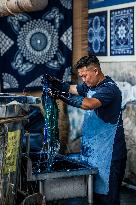
Duan Yuan (L), an inheritor of the tie-dye technique of Bai ethnic group, dyes fabrics in a dyehouse in Zhoucheng Village of Dali Bai Autonomous Prefecture, southwest China's Yunnan Province, November 21, 2025. Known as the hometown of the tie-dye technique of Bai ethnic group, Zhoucheng Village hosts over 200 households engaging in tie-dye businesses, with the number of employees exceeding 4,000. As a traditional folk technique of the Bai ethnic group, tie-dye boasts a history spanning over a thousand years and was included in the first batch of China's national intangible cultural heritage list in 2006. Tying and dyeing are the core steps in the process of making indigo tie-dye products. Artisans use needles and threads to create various patterns on the fabric, which are then dyed with plant-based dyes, resulting in blue backgrounds adorned with vivid white patterns. Photo by Hu Chao/Xinhua/ABACAPRESS.COM

  •  
Tie-Dye Technique Of Bai Ethnic Group - Chin

Tie-Dye Technique Of Bai Ethnic Group - Chin

Duan Yuan, an inheritor of the tie-dye technique of Bai ethnic group, makes tie-dye designs in a dyehouse in Zhoucheng Village of Dali Bai Autonomous Prefecture, southwest China's Yunnan Province, November 21, 2025. Known as the hometown of the tie-dye technique of Bai ethnic group, Zhoucheng Village hosts over 200 households engaging in tie-dye businesses, with the number of employees exceeding 4,000. As a traditional folk technique of the Bai ethnic group, tie-dye boasts a history spanning over a thousand years and was included in the first batch of China's national intangible cultural heritage list in 2006. Tying and dyeing are the core steps in the process of making indigo tie-dye products. Artisans use needles and threads to create various patterns on the fabric, which are then dyed with plant-based dyes, resulting in blue backgrounds adorned with vivid white patterns. Photo by Hu Chao/Xinhua/ABACAPRESS.COM

  •  
Tie-Dye Technique Of Bai Ethnic Group - Chin

Tie-Dye Technique Of Bai Ethnic Group - Chin

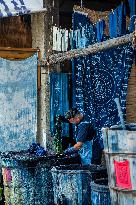
Duan Yuan, an inheritor of the tie-dye technique of Bai ethnic group, dyes fabrics in a dyehouse in Zhoucheng Village of Dali Bai Autonomous Prefecture, southwest China's Yunnan Province, November 21, 2025. Known as the hometown of the tie-dye technique of Bai ethnic group, Zhoucheng Village hosts over 200 households engaging in tie-dye businesses, with the number of employees exceeding 4,000. As a traditional folk technique of the Bai ethnic group, tie-dye boasts a history spanning over a thousand years and was included in the first batch of China's national intangible cultural heritage list in 2006. Tying and dyeing are the core steps in the process of making indigo tie-dye products. Artisans use needles and threads to create various patterns on the fabric, which are then dyed with plant-based dyes, resulting in blue backgrounds adorned with vivid white patterns. Photo by Hu Chao/Xinhua/ABACAPRESS.COM

  •  
Tie-Dye Technique Of Bai Ethnic Group - Chin

Tie-Dye Technique Of Bai Ethnic Group - Chin

Duan Yuan, an inheritor of the tie-dye technique of Bai ethnic group, dyes fabrics in a dyehouse in Zhoucheng Village of Dali Bai Autonomous Prefecture, southwest China's Yunnan Province, November 21, 2025. Known as the hometown of the tie-dye technique of Bai ethnic group, Zhoucheng Village hosts over 200 households engaging in tie-dye businesses, with the number of employees exceeding 4,000. As a traditional folk technique of the Bai ethnic group, tie-dye boasts a history spanning over a thousand years and was included in the first batch of China's national intangible cultural heritage list in 2006. Tying and dyeing are the core steps in the process of making indigo tie-dye products. Artisans use needles and threads to create various patterns on the fabric, which are then dyed with plant-based dyes, resulting in blue backgrounds adorned with vivid white patterns. Photo by Hu Chao/Xinhua/ABACAPRESS.COM

  •  
Tie-Dye Technique Of Bai Ethnic Group - Chin

Tie-Dye Technique Of Bai Ethnic Group - Chin

Duan Yuan, an inheritor of the tie-dye technique of Bai ethnic group, makes tie-dye designs in a dyehouse in Zhoucheng Village of Dali Bai Autonomous Prefecture, southwest China's Yunnan Province, November 21, 2025. Known as the hometown of the tie-dye technique of Bai ethnic group, Zhoucheng Village hosts over 200 households engaging in tie-dye businesses, with the number of employees exceeding 4,000. As a traditional folk technique of the Bai ethnic group, tie-dye boasts a history spanning over a thousand years and was included in the first batch of China's national intangible cultural heritage list in 2006. Tying and dyeing are the core steps in the process of making indigo tie-dye products. Artisans use needles and threads to create various patterns on the fabric, which are then dyed with plant-based dyes, resulting in blue backgrounds adorned with vivid white patterns. Photo by Hu Chao/Xinhua/ABACAPRESS.COM

  •  
Tie-Dye Technique Of Bai Ethnic Group - Chin

Tie-Dye Technique Of Bai Ethnic Group - Chin

Duan Yinmei, an inheritor of the tie-dye technique of Bai ethnic group, unties knots on fabrics in a dyehouse in Zhoucheng Village of Dali Bai Autonomous Prefecture, southwest China's Yunnan Province, November 21, 2025. Known as the hometown of the tie-dye technique of Bai ethnic group, Zhoucheng Village hosts over 200 households engaging in tie-dye businesses, with the number of employees exceeding 4,000. As a traditional folk technique of the Bai ethnic group, tie-dye boasts a history spanning over a thousand years and was included in the first batch of China's national intangible cultural heritage list in 2006. Tying and dyeing are the core steps in the process of making indigo tie-dye products. Artisans use needles and threads to create various patterns on the fabric, which are then dyed with plant-based dyes, resulting in blue backgrounds adorned with vivid white patterns. Photo by Hu Chao/Xinhua/ABACAPRESS.COM

  •  
Tie-Dye Technique Of Bai Ethnic Group - Chin

Tie-Dye Technique Of Bai Ethnic Group - Chin

Duan Yinmei, an inheritor of the tie-dye technique of Bai ethnic group, dyes patterns on fabrics in a dyehouse in Zhoucheng Village of Dali Bai Autonomous Prefecture, southwest China's Yunnan Province, November 21, 2025. Known as the hometown of the tie-dye technique of Bai ethnic group, Zhoucheng Village hosts over 200 households engaging in tie-dye businesses, with the number of employees exceeding 4,000. As a traditional folk technique of the Bai ethnic group, tie-dye boasts a history spanning over a thousand years and was included in the first batch of China's national intangible cultural heritage list in 2006. Tying and dyeing are the core steps in the process of making indigo tie-dye products. Artisans use needles and threads to create various patterns on the fabric, which are then dyed with plant-based dyes, resulting in blue backgrounds adorned with vivid white patterns. Photo by Hu Chao/Xinhua/ABACAPRESS.COM

  •  
Tie-Dye Technique Of Bai Ethnic Group - Chin

Tie-Dye Technique Of Bai Ethnic Group - Chin

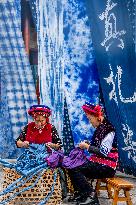
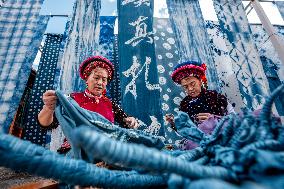
Duan Yinmei (R), an inheritor of the tie-dye technique of Bai ethnic group, and handicraftsman Duan Lilan create knots on fabrics in a dyehouse in Zhoucheng Village of Dali Bai Autonomous Prefecture, southwest China's Yunnan Province, November 21, 2025. Known as the hometown of the tie-dye technique of Bai ethnic group, Zhoucheng Village hosts over 200 households engaging in tie-dye businesses, with the number of employees exceeding 4,000. As a traditional folk technique of the Bai ethnic group, tie-dye boasts a history spanning over a thousand years and was included in the first batch of China's national intangible cultural heritage list in 2006. Tying and dyeing are the core steps in the process of making indigo tie-dye products. Artisans use needles and threads to create various patterns on the fabric, which are then dyed with plant-based dyes, resulting in blue backgrounds adorned with vivid white patterns. Photo by Hu Chao/Xinhua/ABACAPRESS.COM

  •  
Wuhekou Wetland

Wuhekou Wetland

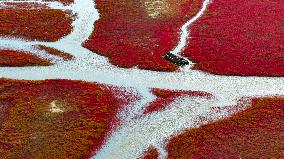
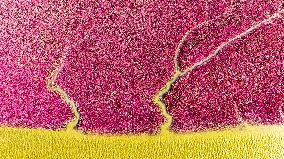
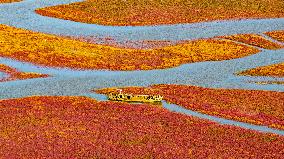
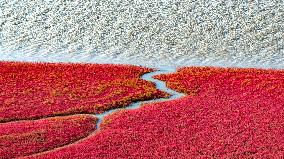
The red Suaeda glauca in the Wuhekou Wetland of West Coast New Area has dyed the beach red in Qingdao City, Shandong Province, China on June 12, 2025.

  •  
Wuhekou Wetland

Wuhekou Wetland

The red Suaeda glauca in the Wuhekou Wetland of West Coast New Area has dyed the beach red in Qingdao City, Shandong Province, China on June 12, 2025.

  •  
Wuhekou Wetland

Wuhekou Wetland

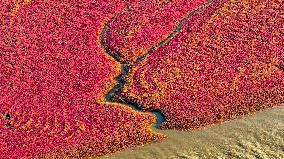
QINGDAO, CHINA - JUNE 12, 2025 - The red Suaeda glauca in the Wuhekou Wetland of West Coast New Area has dyed the beach red in Qingdao City, Shandong Province, China on June 12, 2025.

  •  
Wuhekou Wetland

Wuhekou Wetland

QINGDAO, CHINA - JUNE 12, 2025 - The red Suaeda glauca in the Wuhekou Wetland of West Coast New Area has dyed the beach red in Qingdao City, Shandong Province, China on June 12, 2025.

  •  
Wuhekou Wetland

Wuhekou Wetland

QINGDAO, CHINA - JUNE 12, 2025 - The red Suaeda glauca in the Wuhekou Wetland of West Coast New Area has dyed the beach red in Qingdao City, Shandong Province, China on June 12, 2025.

  •  
DC: 2025 White House Easter Egg Roll Preview

DC: 2025 White House Easter Egg Roll Preview

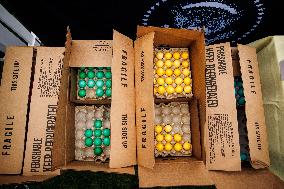
Dyed eggs are seen during a preview of the 2025 Easter Egg Roll on the South Lawn of the White House on April 21, 2025 in Washington, D.C. (Photo by Samuel Corum/Pool/ABACAPRESS.COM)

  •  
Wuxia Gorge Scenery - China

Wuxia Gorge Scenery - China

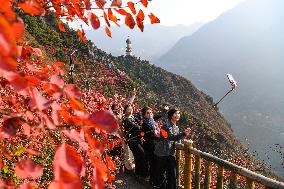
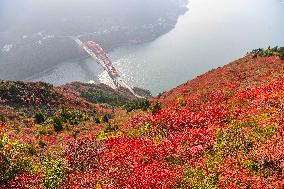
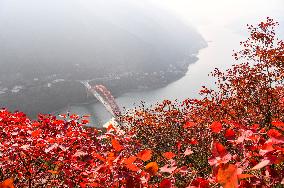
An aerial drone photo shows a cruise sailing in Wuxia Gorge, one of the Three Gorges on the Yangtze River, in Wushan County, southwest China's Chongqing, December 18, 2024. Red leaves have recently dyed mountains along the Wuxia Gorge, creating a picturesque scenery that attracts numerous tourists. In the meantime, authorities of Wushan County are committed to developing cultural tourism by hosting the Wushan Red Leaf Festival and other related programs. Photo by Wang Quanchao/Xinhua/ABACAPRESS.COM

  •  
Wuxia Gorge Scenery - China

Wuxia Gorge Scenery - China

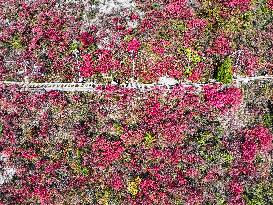
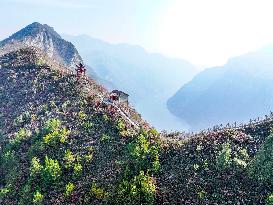
An aerial drone photo shows tourists enjoying themselves at a scenic spot near Wuxia Gorge, one of the Three Gorges on the Yangtze River, in Wushan County, southwest China's Chongqing, December 18, 2024. Red leaves have recently dyed mountains along the Wuxia Gorge, creating a picturesque scenery that attracts numerous tourists. In the meantime, authorities of Wushan County are committed to developing cultural tourism by hosting the Wushan Red Leaf Festival and other related programs. Photo by Wang Quanchao/Xinhua/ABACAPRESS.COM

  •  
Wuxia Gorge Scenery - China

Wuxia Gorge Scenery - China

Tourists take selfies at a scenic spot near Wuxia Gorge, one of the Three Gorges on the Yangtze River, in Wushan County, southwest China's Chongqing, December 18, 2024. Red leaves have recently dyed mountains along the Wuxia Gorge, creating a picturesque scenery that attracts numerous tourists. In the meantime, authorities of Wushan County are committed to developing cultural tourism by hosting the Wushan Red Leaf Festival and other related programs. Photo by Wang Quanchao/Xinhua/ABACAPRESS.COM

  •  
Wuxia Gorge Scenery - China

Wuxia Gorge Scenery - China

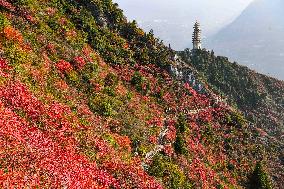
This photo shows a view of Wuxia Gorge, one of the Three Gorges on the Yangtze River, in Wushan County, southwest China's Chongqing, December 18, 2024. Red leaves have recently dyed mountains along the Wuxia Gorge, creating a picturesque scenery that attracts numerous tourists. In the meantime, authorities of Wushan County are committed to developing cultural tourism by hosting the Wushan Red Leaf Festival and other related programs. Photo by Wang Quanchao/Xinhua/ABACAPRESS.COM

  •  
Wuxia Gorge Scenery - China

Wuxia Gorge Scenery - China

An aerial drone photo shows tourists enjoying themselves at a scenic spot near Wuxia Gorge, one of the Three Gorges on the Yangtze River, in Wushan County, southwest China's Chongqing, December 18, 2024. Red leaves have recently dyed mountains along the Wuxia Gorge, creating a picturesque scenery that attracts numerous tourists. In the meantime, authorities of Wushan County are committed to developing cultural tourism by hosting the Wushan Red Leaf Festival and other related programs. Photo by Wang Quanchao/Xinhua/ABACAPRESS.COM

  •  
Wuxia Gorge Scenery - China

Wuxia Gorge Scenery - China

An aerial drone photo shows tourists enjoying themselves at a scenic spot near Wuxia Gorge, one of the Three Gorges on the Yangtze River, in Wushan County, southwest China's Chongqing, December 18, 2024. Red leaves have recently dyed mountains along the Wuxia Gorge, creating a picturesque scenery that attracts numerous tourists. In the meantime, authorities of Wushan County are committed to developing cultural tourism by hosting the Wushan Red Leaf Festival and other related programs. Photo by Wang Quanchao/Xinhua/ABACAPRESS.COM

  •  
Wuxia Gorge Scenery - China

Wuxia Gorge Scenery - China

This photo shows a scenic spot near Wuxia Gorge, one of the Three Gorges on the Yangtze River, in Wushan County, southwest China's Chongqing, December 18, 2024. Red leaves have recently dyed mountains along the Wuxia Gorge, creating a picturesque scenery that attracts numerous tourists. In the meantime, authorities of Wushan County are committed to developing cultural tourism by hosting the Wushan Red Leaf Festival and other related programs. Photo by Wang Quanchao/Xinhua/ABACAPRESS.COM

  •  
Wuxia Gorge Scenery - China

Wuxia Gorge Scenery - China

This photo shows a view of Wuxia Gorge, one of the Three Gorges on the Yangtze River, in Wushan County, southwest China's Chongqing, December 18, 2024. Red leaves have recently dyed mountains along the Wuxia Gorge, creating a picturesque scenery that attracts numerous tourists. In the meantime, authorities of Wushan County are committed to developing cultural tourism by hosting the Wushan Red Leaf Festival and other related programs. Photo by Wang Quanchao/Xinhua/ABACAPRESS.COM

  •  
Wuxia Gorge Scenery - China

Wuxia Gorge Scenery - China

An aerial drone photo shows a view of a scenic spot overlooking Wuxia Gorge, one of the Three Gorges on the Yangtze River, in Wushan County, southwest China's Chongqing, December 18, 2024. Red leaves have recently dyed mountains along the Wuxia Gorge, creating a picturesque scenery that attracts numerous tourists. In the meantime, authorities of Wushan County are committed to developing cultural tourism by hosting the Wushan Red Leaf Festival and other related programs. Photo by Wang Quanchao/Xinhua/ABACAPRESS.COM

  •  
Wuxia Gorge Scenery - China

Wuxia Gorge Scenery - China

An aerial drone photo shows ships sailing in Wuxia Gorge, one of the Three Gorges on the Yangtze River, in Wushan County, southwest China's Chongqing, December 18, 2024. Red leaves have recently dyed mountains along the Wuxia Gorge, creating a picturesque scenery that attracts numerous tourists. In the meantime, authorities of Wushan County are committed to developing cultural tourism by hosting the Wushan Red Leaf Festival and other related programs. Photo by Wang Quanchao/Xinhua/ABACAPRESS.COM

  •  
Wuxia Gorge Scenery - China

Wuxia Gorge Scenery - China

An aerial drone photo shows a view of Wuxia Gorge, one of the Three Gorges on the Yangtze River, in Wushan County, southwest China's Chongqing, December 18, 2024. Red leaves have recently dyed mountains along the Wuxia Gorge, creating a picturesque scenery that attracts numerous tourists. In the meantime, authorities of Wushan County are committed to developing cultural tourism by hosting the Wushan Red Leaf Festival and other related programs. Photo by Wang Quanchao/Xinhua/ABACAPRESS.COM

  •  
Bangladeshi Dyeing Workers – Dhaka

Bangladeshi Dyeing Workers – Dhaka

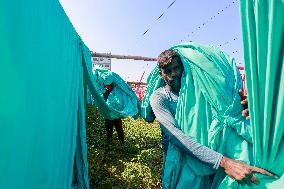
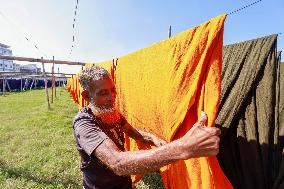
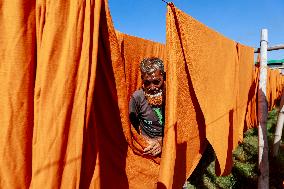
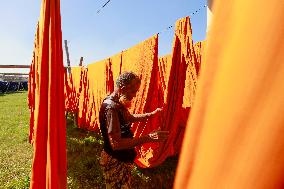
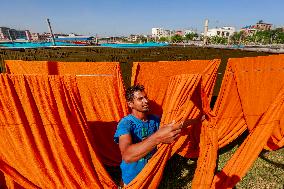
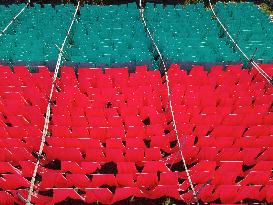
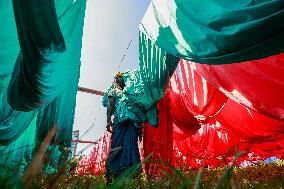
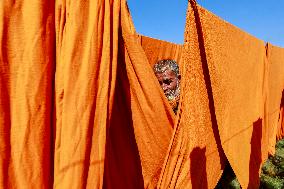
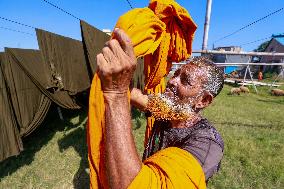
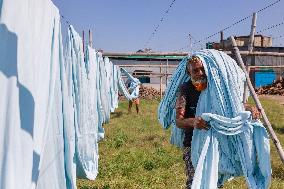
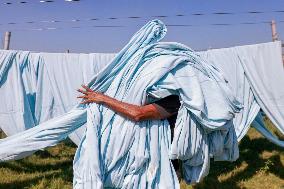
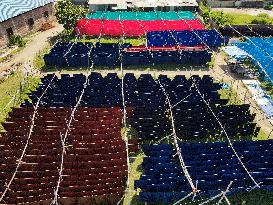
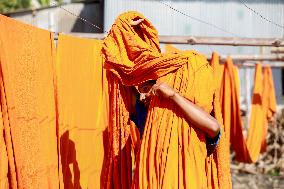
Bangladeshi workers collect fabric after dry them under the sun at a dyeing factory in Narayanganj, near Dhaka, Bangladesh, on November 9, 2024. In Narayanganj’s Fatullah, vibrantly dyed fabrics stretch across an open field, glowing as they dry under the sun. Factory workers pour their heart and soul into each step of the dyeing process, transforming raw fabric into material that will soon become T-shirts. Photo by Suvra Kanti Das/ABACAPRESS.COM

  •  
Bangladeshi Dyeing Workers – Dhaka

Bangladeshi Dyeing Workers – Dhaka

Bangladeshi workers collect fabric after dry them under the sun at a dyeing factory in Narayanganj, near Dhaka, Bangladesh, on November 9, 2024. In Narayanganj’s Fatullah, vibrantly dyed fabrics stretch across an open field, glowing as they dry under the sun. Factory workers pour their heart and soul into each step of the dyeing process, transforming raw fabric into material that will soon become T-shirts. Photo by Suvra Kanti Das/ABACAPRESS.COM

  •  
Bangladeshi Dyeing Workers – Dhaka

Bangladeshi Dyeing Workers – Dhaka

Bangladeshi workers collect fabric after dry them under the sun at a dyeing factory in Narayanganj, near Dhaka, Bangladesh, on November 9, 2024. In Narayanganj’s Fatullah, vibrantly dyed fabrics stretch across an open field, glowing as they dry under the sun. Factory workers pour their heart and soul into each step of the dyeing process, transforming raw fabric into material that will soon become T-shirts. Photo by Suvra Kanti Das/ABACAPRESS.COM

  •  
Bangladeshi Dyeing Workers – Dhaka

Bangladeshi Dyeing Workers – Dhaka

Bangladeshi workers collect fabric after dry them under the sun at a dyeing factory in Narayanganj, near Dhaka, Bangladesh, on November 9, 2024. In Narayanganj’s Fatullah, vibrantly dyed fabrics stretch across an open field, glowing as they dry under the sun. Factory workers pour their heart and soul into each step of the dyeing process, transforming raw fabric into material that will soon become T-shirts. Photo by Suvra Kanti Das/ABACAPRESS.COM

  •  
Bangladeshi Dyeing Workers – Dhaka

Bangladeshi Dyeing Workers – Dhaka

Bangladeshi workers collect fabric after dry them under the sun at a dyeing factory in Narayanganj, near Dhaka, Bangladesh, on November 9, 2024. In Narayanganj’s Fatullah, vibrantly dyed fabrics stretch across an open field, glowing as they dry under the sun. Factory workers pour their heart and soul into each step of the dyeing process, transforming raw fabric into material that will soon become T-shirts. Photo by Suvra Kanti Das/ABACAPRESS.COM

  •  
Bangladeshi Dyeing Workers – Dhaka

Bangladeshi Dyeing Workers – Dhaka

Bangladeshi workers collect fabric after dry them under the sun at a dyeing factory in Narayanganj, near Dhaka, Bangladesh, on November 9, 2024. In Narayanganj’s Fatullah, vibrantly dyed fabrics stretch across an open field, glowing as they dry under the sun. Factory workers pour their heart and soul into each step of the dyeing process, transforming raw fabric into material that will soon become T-shirts. Photo by Suvra Kanti Das/ABACAPRESS.COM

  •  
Bangladeshi Dyeing Workers – Dhaka

Bangladeshi Dyeing Workers – Dhaka

Bangladeshi workers collect fabric after dry them under the sun at a dyeing factory in Narayanganj, near Dhaka, Bangladesh, on November 9, 2024. In Narayanganj’s Fatullah, vibrantly dyed fabrics stretch across an open field, glowing as they dry under the sun. Factory workers pour their heart and soul into each step of the dyeing process, transforming raw fabric into material that will soon become T-shirts. Photo by Suvra Kanti Das/ABACAPRESS.COM

  •  
Bangladeshi Dyeing Workers – Dhaka

Bangladeshi Dyeing Workers – Dhaka

Bangladeshi workers collect fabric after dry them under the sun at a dyeing factory in Narayanganj, near Dhaka, Bangladesh, on November 9, 2024. In Narayanganj’s Fatullah, vibrantly dyed fabrics stretch across an open field, glowing as they dry under the sun. Factory workers pour their heart and soul into each step of the dyeing process, transforming raw fabric into material that will soon become T-shirts. Photo by Suvra Kanti Das/ABACAPRESS.COM

  •  
Bangladeshi Dyeing Workers – Dhaka

Bangladeshi Dyeing Workers – Dhaka

Bangladeshi workers collect fabric after dry them under the sun at a dyeing factory in Narayanganj, near Dhaka, Bangladesh, on November 9, 2024. In Narayanganj’s Fatullah, vibrantly dyed fabrics stretch across an open field, glowing as they dry under the sun. Factory workers pour their heart and soul into each step of the dyeing process, transforming raw fabric into material that will soon become T-shirts. Photo by Suvra Kanti Das/ABACAPRESS.COM

  •  
Bangladeshi Dyeing Workers – Dhaka

Bangladeshi Dyeing Workers – Dhaka

Bangladeshi workers collect fabric after dry them under the sun at a dyeing factory in Narayanganj, near Dhaka, Bangladesh, on November 9, 2024. In Narayanganj’s Fatullah, vibrantly dyed fabrics stretch across an open field, glowing as they dry under the sun. Factory workers pour their heart and soul into each step of the dyeing process, transforming raw fabric into material that will soon become T-shirts. Photo by Suvra Kanti Das/ABACAPRESS.COM

  •  
Bangladeshi Dyeing Workers – Dhaka

Bangladeshi Dyeing Workers – Dhaka

Bangladeshi workers collect fabric after dry them under the sun at a dyeing factory in Narayanganj, near Dhaka, Bangladesh, on November 9, 2024. In Narayanganj’s Fatullah, vibrantly dyed fabrics stretch across an open field, glowing as they dry under the sun. Factory workers pour their heart and soul into each step of the dyeing process, transforming raw fabric into material that will soon become T-shirts. Photo by Suvra Kanti Das/ABACAPRESS.COM

  •  
Bangladeshi Dyeing Workers – Dhaka

Bangladeshi Dyeing Workers – Dhaka

Bangladeshi workers collect fabric after dry them under the sun at a dyeing factory in Narayanganj, near Dhaka, Bangladesh, on November 9, 2024. In Narayanganj’s Fatullah, vibrantly dyed fabrics stretch across an open field, glowing as they dry under the sun. Factory workers pour their heart and soul into each step of the dyeing process, transforming raw fabric into material that will soon become T-shirts. Photo by Suvra Kanti Das/ABACAPRESS.COM

  •  
Bangladeshi Dyeing Workers – Dhaka

Bangladeshi Dyeing Workers – Dhaka

Bangladeshi workers collect fabric after dry them under the sun at a dyeing factory in Narayanganj, near Dhaka, Bangladesh, on November 9, 2024. In Narayanganj’s Fatullah, vibrantly dyed fabrics stretch across an open field, glowing as they dry under the sun. Factory workers pour their heart and soul into each step of the dyeing process, transforming raw fabric into material that will soon become T-shirts. Photo by Suvra Kanti Das/ABACAPRESS.COM

  •  
Gingko leaves dyed in autumn colors

Gingko leaves dyed in autumn colors

Gingko leaves dyed in autumn colors=October 30,2024,Japan

  •  
Gingko leaves dyed in autumn colors

Gingko leaves dyed in autumn colors

Gingko leaves dyed in autumn colors=October 30,2024,Japan

  •  
Pet-A-Palooza Event - Vancouver

Pet-A-Palooza Event - Vancouver

A dog with pink-dyed fur is spotted during the Pet-A-Palooza event in Vancouver, British Columbia, Canada, August 25, 2024. Pet-A-Palooza, also known as the Day of the Dog, is an annual summer celebration for local pups and their owners. This year's event offered a variety of dog-related activities and entertainment, attracting thousands of dog owners and their furry companions. Photo by Liang Sen/Xinhua/ABACAPRESS.COM

  • Main
  • Top
  • Editorial
  • Creative
  • About Us
  • About ILG
  • Terms of use
  • Company
  • BEHIND
  • Price List
  • Single Plan
  • Monthly Plan
  • Services
  • Shooting
  • Rights Clearance
  • Support
  • FAQ
  • How To Buy
  • Contact Us
  • Become a Partner

© KYODO NEWS IMAGES INC

All Rights Reserved.

  • Editorial
  • Olympics
  • News
  • Sports
  • Japan
  • Tech
  • Royal
  • Disaster
  • NorthKorea
  • Old Japan
  • SNS
  • Creative
  • Food
  • Japan
  • Landscape
  • Animal
  • Popular
  • #Ukraine
  • #Russia
  • #coronavirus
  • #N. Korea
  • #China
  • #Thailand
  • #Ukraine
  • #Russia
  • #coronavirus
  • #N. Korea
  • #China
  • #Thailand
  • Food
  • Japan
  • Landscape
  • Animal
  • Olympics
  • News
  • Sports
  • Japan
  • Tech
  • Royal
  • Disaster
  • NorthKorea
  • Old Japan
  • SNS