•  
River Pollution - Dhaka

River Pollution - Dhaka

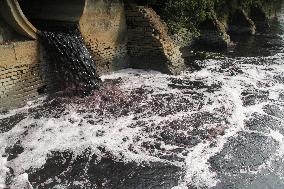
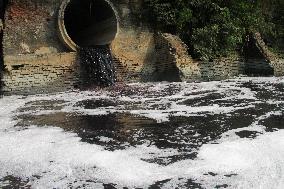
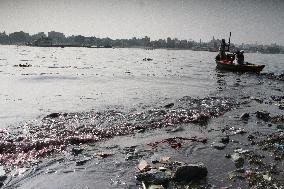
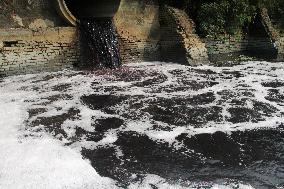
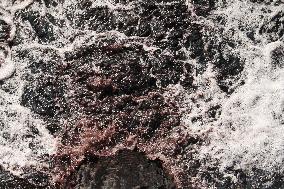
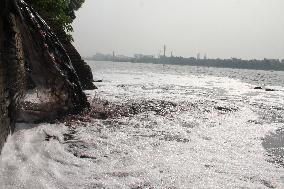
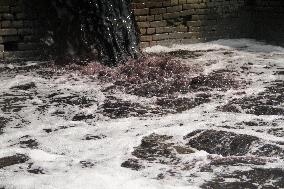
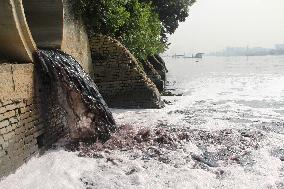
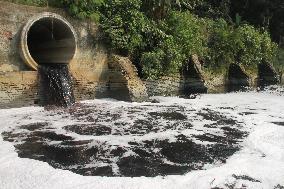
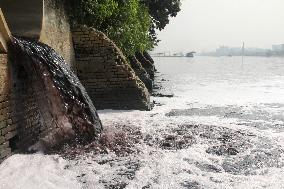
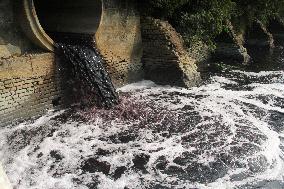
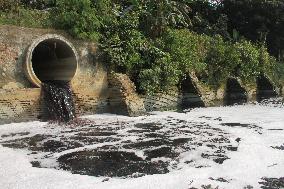
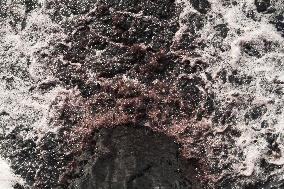
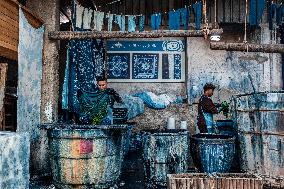
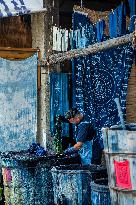
Waste from over a hundred print, knit, dyeing, and plastic factories in Dhaka, Bangladesh, flows into the Buriganga River each day, turning its water toxic with high levels of ammonia, oil, grease, and phenol, as seen in Dhaka, Bangladesh, on December 08, 2025. Photo by Habibur Rahman/ABACAPRESS.COM

  •  
River Pollution - Dhaka

River Pollution - Dhaka

Waste from over a hundred print, knit, dyeing, and plastic factories in Dhaka, Bangladesh, flows into the Buriganga River each day, turning its water toxic with high levels of ammonia, oil, grease, and phenol, as seen in Dhaka, Bangladesh, on December 08, 2025. Photo by Habibur Rahman/ABACAPRESS.COM

  •  
River Pollution - Dhaka

River Pollution - Dhaka

Waste from over a hundred print, knit, dyeing, and plastic factories in Dhaka, Bangladesh, flows into the Buriganga River each day, turning its water toxic with high levels of ammonia, oil, grease, and phenol, as seen in Dhaka, Bangladesh, on December 08, 2025. Photo by Habibur Rahman/ABACAPRESS.COM

  •  
River Pollution - Dhaka

River Pollution - Dhaka

Waste from over a hundred print, knit, dyeing, and plastic factories in Dhaka, Bangladesh, flows into the Buriganga River each day, turning its water toxic with high levels of ammonia, oil, grease, and phenol, as seen in Dhaka, Bangladesh, on December 08, 2025. Photo by Habibur Rahman/ABACAPRESS.COM

  •  
River Pollution - Dhaka

River Pollution - Dhaka

Waste from over a hundred print, knit, dyeing, and plastic factories in Dhaka, Bangladesh, flows into the Buriganga River each day, turning its water toxic with high levels of ammonia, oil, grease, and phenol, as seen in Dhaka, Bangladesh, on December 08, 2025. Photo by Habibur Rahman/ABACAPRESS.COM

  •  
River Pollution - Dhaka

River Pollution - Dhaka

Waste from over a hundred print, knit, dyeing, and plastic factories in Dhaka, Bangladesh, flows into the Buriganga River each day, turning its water toxic with high levels of ammonia, oil, grease, and phenol, as seen in Dhaka, Bangladesh, on December 08, 2025. Photo by Habibur Rahman/ABACAPRESS.COM

  •  
River Pollution - Dhaka

River Pollution - Dhaka

Waste from over a hundred print, knit, dyeing, and plastic factories in Dhaka, Bangladesh, flows into the Buriganga River each day, turning its water toxic with high levels of ammonia, oil, grease, and phenol, as seen in Dhaka, Bangladesh, on December 08, 2025. Photo by Habibur Rahman/ABACAPRESS.COM

  •  
River Pollution - Dhaka

River Pollution - Dhaka

Waste from over a hundred print, knit, dyeing, and plastic factories in Dhaka, Bangladesh, flows into the Buriganga River each day, turning its water toxic with high levels of ammonia, oil, grease, and phenol, as seen in Dhaka, Bangladesh, on December 08, 2025. Photo by Habibur Rahman/ABACAPRESS.COM

  •  
River Pollution - Dhaka

River Pollution - Dhaka

Waste from over a hundred print, knit, dyeing, and plastic factories in Dhaka, Bangladesh, flows into the Buriganga River each day, turning its water toxic with high levels of ammonia, oil, grease, and phenol, as seen in Dhaka, Bangladesh, on December 08, 2025. Photo by Habibur Rahman/ABACAPRESS.COM

  •  
River Pollution - Dhaka

River Pollution - Dhaka

Waste from over a hundred print, knit, dyeing, and plastic factories in Dhaka, Bangladesh, flows into the Buriganga River each day, turning its water toxic with high levels of ammonia, oil, grease, and phenol, as seen in Dhaka, Bangladesh, on December 08, 2025. Photo by Habibur Rahman/ABACAPRESS.COM

  •  
River Pollution - Dhaka

River Pollution - Dhaka

Waste from over a hundred print, knit, dyeing, and plastic factories in Dhaka, Bangladesh, flows into the Buriganga River each day, turning its water toxic with high levels of ammonia, oil, grease, and phenol, as seen in Dhaka, Bangladesh, on December 08, 2025. Photo by Habibur Rahman/ABACAPRESS.COM

  •  
River Pollution - Dhaka

River Pollution - Dhaka

Waste from over a hundred print, knit, dyeing, and plastic factories in Dhaka, Bangladesh, flows into the Buriganga River each day, turning its water toxic with high levels of ammonia, oil, grease, and phenol, as seen in Dhaka, Bangladesh, on December 08, 2025. Photo by Habibur Rahman/ABACAPRESS.COM

  •  
River Pollution - Dhaka

River Pollution - Dhaka

Waste from over a hundred print, knit, dyeing, and plastic factories in Dhaka, Bangladesh, flows into the Buriganga River each day, turning its water toxic with high levels of ammonia, oil, grease, and phenol, as seen in Dhaka, Bangladesh, on December 08, 2025. Photo by Habibur Rahman/ABACAPRESS.COM

  •  
Tie-Dye Technique Of Bai Ethnic Group - Chin

Tie-Dye Technique Of Bai Ethnic Group - Chin

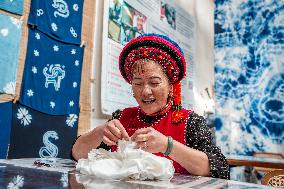
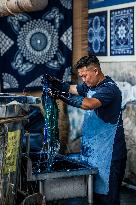
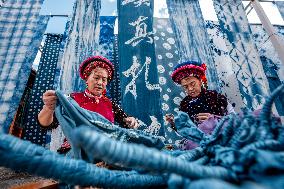
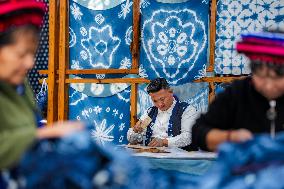
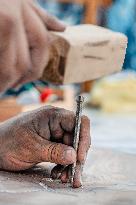
Duan Yuan, an inheritor of the tie-dye technique of Bai ethnic group, makes tie-dye designs in a dyehouse in Zhoucheng Village of Dali Bai Autonomous Prefecture, southwest China's Yunnan Province, November 21, 2025. Known as the hometown of the tie-dye technique of Bai ethnic group, Zhoucheng Village hosts over 200 households engaging in tie-dye businesses, with the number of employees exceeding 4,000. As a traditional folk technique of the Bai ethnic group, tie-dye boasts a history spanning over a thousand years and was included in the first batch of China's national intangible cultural heritage list in 2006. Tying and dyeing are the core steps in the process of making indigo tie-dye products. Artisans use needles and threads to create various patterns on the fabric, which are then dyed with plant-based dyes, resulting in blue backgrounds adorned with vivid white patterns. Photo by Hu Chao/Xinhua/ABACAPRESS.COM

  •  
Tie-Dye Technique Of Bai Ethnic Group - Chin

Tie-Dye Technique Of Bai Ethnic Group - Chin

Duan Yinmei, an inheritor of the tie-dye technique of Bai ethnic group, creates knots on fabrics in a dyehouse in Zhoucheng Village of Dali Bai Autonomous Prefecture, southwest China's Yunnan Province, November 21, 2025. Known as the hometown of the tie-dye technique of Bai ethnic group, Zhoucheng Village hosts over 200 households engaging in tie-dye businesses, with the number of employees exceeding 4,000. As a traditional folk technique of the Bai ethnic group, tie-dye boasts a history spanning over a thousand years and was included in the first batch of China's national intangible cultural heritage list in 2006. Tying and dyeing are the core steps in the process of making indigo tie-dye products. Artisans use needles and threads to create various patterns on the fabric, which are then dyed with plant-based dyes, resulting in blue backgrounds adorned with vivid white patterns. Photo by Hu Chao/Xinhua/ABACAPRESS.COM

  •  
Tie-Dye Technique Of Bai Ethnic Group - Chin

Tie-Dye Technique Of Bai Ethnic Group - Chin

A woman experiences the tie-dye technique of Bai ethnic group in a dyehouse in Zhoucheng Village of Dali Bai Autonomous Prefecture, southwest China's Yunnan Province, November 21, 2025. Known as the hometown of the tie-dye technique of Bai ethnic group, Zhoucheng Village hosts over 200 households engaging in tie-dye businesses, with the number of employees exceeding 4,000. As a traditional folk technique of the Bai ethnic group, tie-dye boasts a history spanning over a thousand years and was included in the first batch of China's national intangible cultural heritage list in 2006. Tying and dyeing are the core steps in the process of making indigo tie-dye products. Artisans use needles and threads to create various patterns on the fabric, which are then dyed with plant-based dyes, resulting in blue backgrounds adorned with vivid white patterns. Photo by Hu Chao/Xinhua/ABACAPRESS.COM

  •  
Tie-Dye Technique Of Bai Ethnic Group - Chin

Tie-Dye Technique Of Bai Ethnic Group - Chin

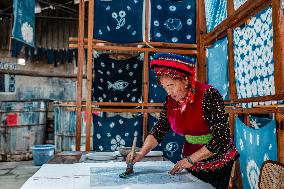
Duan Yinmei, an inheritor of the tie-dye technique of Bai ethnic group, dyes patterns on fabrics in a dyehouse in Zhoucheng Village of Dali Bai Autonomous Prefecture, southwest China's Yunnan Province, November 21, 2025. Known as the hometown of the tie-dye technique of Bai ethnic group, Zhoucheng Village hosts over 200 households engaging in tie-dye businesses, with the number of employees exceeding 4,000. As a traditional folk technique of the Bai ethnic group, tie-dye boasts a history spanning over a thousand years and was included in the first batch of China's national intangible cultural heritage list in 2006. Tying and dyeing are the core steps in the process of making indigo tie-dye products. Artisans use needles and threads to create various patterns on the fabric, which are then dyed with plant-based dyes, resulting in blue backgrounds adorned with vivid white patterns. Photo by Hu Chao/Xinhua/ABACAPRESS.COM

  •  
Tie-Dye Technique Of Bai Ethnic Group - Chin

Tie-Dye Technique Of Bai Ethnic Group - Chin

Duan Yuan, an inheritor of the tie-dye technique of Bai ethnic group, rinses dyed fabrics in a dyehouse in Zhoucheng Village of Dali Bai Autonomous Prefecture, southwest China's Yunnan Province, November 21, 2025. Known as the hometown of the tie-dye technique of Bai ethnic group, Zhoucheng Village hosts over 200 households engaging in tie-dye businesses, with the number of employees exceeding 4,000. As a traditional folk technique of the Bai ethnic group, tie-dye boasts a history spanning over a thousand years and was included in the first batch of China's national intangible cultural heritage list in 2006. Tying and dyeing are the core steps in the process of making indigo tie-dye products. Artisans use needles and threads to create various patterns on the fabric, which are then dyed with plant-based dyes, resulting in blue backgrounds adorned with vivid white patterns. Photo by Hu Chao/Xinhua/ABACAPRESS.COM

  •  
Tie-Dye Technique Of Bai Ethnic Group - Chin

Tie-Dye Technique Of Bai Ethnic Group - Chin

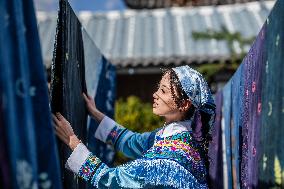
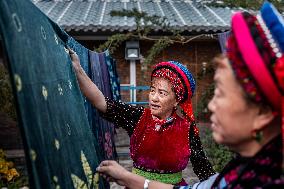
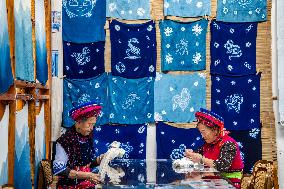
Duan Yinmei (L), an inheritor of the tie-dye technique of Bai ethnic group, and handicraftsman Duan Lilan dry tie-dye fabrics in a dyehouse in Zhoucheng Village of Dali Bai Autonomous Prefecture, southwest China's Yunnan Province, November 21, 2025. Known as the hometown of the tie-dye technique of Bai ethnic group, Zhoucheng Village hosts over 200 households engaging in tie-dye businesses, with the number of employees exceeding 4,000. As a traditional folk technique of the Bai ethnic group, tie-dye boasts a history spanning over a thousand years and was included in the first batch of China's national intangible cultural heritage list in 2006. Tying and dyeing are the core steps in the process of making indigo tie-dye products. Artisans use needles and threads to create various patterns on the fabric, which are then dyed with plant-based dyes, resulting in blue backgrounds adorned with vivid white patterns. Photo by Hu Chao/Xinhua/ABACAPRESS.COM

  •  
Tie-Dye Technique Of Bai Ethnic Group - Chin

Tie-Dye Technique Of Bai Ethnic Group - Chin

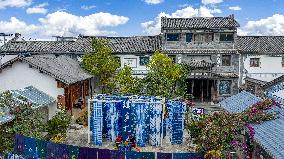
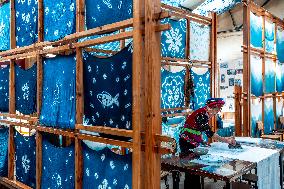
An aerial drone photo shows a scene at a dyehouse in Zhoucheng Village of Dali Bai Autonomous Prefecture, southwest China's Yunnan Province, November 21, 2025. Known as the hometown of the tie-dye technique of Bai ethnic group, Zhoucheng Village hosts over 200 households engaging in tie-dye businesses, with the number of employees exceeding 4,000. As a traditional folk technique of the Bai ethnic group, tie-dye boasts a history spanning over a thousand years and was included in the first batch of China's national intangible cultural heritage list in 2006. Tying and dyeing are the core steps in the process of making indigo tie-dye products. Artisans use needles and threads to create various patterns on the fabric, which are then dyed with plant-based dyes, resulting in blue backgrounds adorned with vivid white patterns. Photo by Hu Chao/Xinhua/ABACAPRESS.COM

  •  
Tie-Dye Technique Of Bai Ethnic Group - Chin

Tie-Dye Technique Of Bai Ethnic Group - Chin

Duan Yinmei (L), an inheritor of the tie-dye technique of Bai ethnic group, and handicraftsman Duan Lilan untie knots on fabrics in a dyehouse in Zhoucheng Village of Dali Bai Autonomous Prefecture, southwest China's Yunnan Province, November 21, 2025. Known as the hometown of the tie-dye technique of Bai ethnic group, Zhoucheng Village hosts over 200 households engaging in tie-dye businesses, with the number of employees exceeding 4,000. As a traditional folk technique of the Bai ethnic group, tie-dye boasts a history spanning over a thousand years and was included in the first batch of China's national intangible cultural heritage list in 2006. Tying and dyeing are the core steps in the process of making indigo tie-dye products. Artisans use needles and threads to create various patterns on the fabric, which are then dyed with plant-based dyes, resulting in blue backgrounds adorned with vivid white patterns. Photo by Hu Chao/Xinhua/ABACAPRESS.COM

  •  
Tie-Dye Technique Of Bai Ethnic Group - Chin

Tie-Dye Technique Of Bai Ethnic Group - Chin

Duan Yinmei (L), an inheritor of the tie-dye technique of Bai ethnic group, and handicraftsman Duan Lilan untie knots on fabrics in a dyehouse in Zhoucheng Village of Dali Bai Autonomous Prefecture, southwest China's Yunnan Province, November 21, 2025. Known as the hometown of the tie-dye technique of Bai ethnic group, Zhoucheng Village hosts over 200 households engaging in tie-dye businesses, with the number of employees exceeding 4,000. As a traditional folk technique of the Bai ethnic group, tie-dye boasts a history spanning over a thousand years and was included in the first batch of China's national intangible cultural heritage list in 2006. Tying and dyeing are the core steps in the process of making indigo tie-dye products. Artisans use needles and threads to create various patterns on the fabric, which are then dyed with plant-based dyes, resulting in blue backgrounds adorned with vivid white patterns. Photo by Hu Chao/Xinhua/ABACAPRESS.COM

  •  
Tie-Dye Technique Of Bai Ethnic Group - Chin

Tie-Dye Technique Of Bai Ethnic Group - Chin

Duan Yuan (L), an inheritor of the tie-dye technique of Bai ethnic group, dyes fabrics in a dyehouse in Zhoucheng Village of Dali Bai Autonomous Prefecture, southwest China's Yunnan Province, November 21, 2025. Known as the hometown of the tie-dye technique of Bai ethnic group, Zhoucheng Village hosts over 200 households engaging in tie-dye businesses, with the number of employees exceeding 4,000. As a traditional folk technique of the Bai ethnic group, tie-dye boasts a history spanning over a thousand years and was included in the first batch of China's national intangible cultural heritage list in 2006. Tying and dyeing are the core steps in the process of making indigo tie-dye products. Artisans use needles and threads to create various patterns on the fabric, which are then dyed with plant-based dyes, resulting in blue backgrounds adorned with vivid white patterns. Photo by Hu Chao/Xinhua/ABACAPRESS.COM

  •  
Tie-Dye Technique Of Bai Ethnic Group - Chin

Tie-Dye Technique Of Bai Ethnic Group - Chin

Duan Yuan, an inheritor of the tie-dye technique of Bai ethnic group, makes tie-dye designs in a dyehouse in Zhoucheng Village of Dali Bai Autonomous Prefecture, southwest China's Yunnan Province, November 21, 2025. Known as the hometown of the tie-dye technique of Bai ethnic group, Zhoucheng Village hosts over 200 households engaging in tie-dye businesses, with the number of employees exceeding 4,000. As a traditional folk technique of the Bai ethnic group, tie-dye boasts a history spanning over a thousand years and was included in the first batch of China's national intangible cultural heritage list in 2006. Tying and dyeing are the core steps in the process of making indigo tie-dye products. Artisans use needles and threads to create various patterns on the fabric, which are then dyed with plant-based dyes, resulting in blue backgrounds adorned with vivid white patterns. Photo by Hu Chao/Xinhua/ABACAPRESS.COM

  •  
Tie-Dye Technique Of Bai Ethnic Group - Chin

Tie-Dye Technique Of Bai Ethnic Group - Chin

Duan Yuan, an inheritor of the tie-dye technique of Bai ethnic group, dyes fabrics in a dyehouse in Zhoucheng Village of Dali Bai Autonomous Prefecture, southwest China's Yunnan Province, November 21, 2025. Known as the hometown of the tie-dye technique of Bai ethnic group, Zhoucheng Village hosts over 200 households engaging in tie-dye businesses, with the number of employees exceeding 4,000. As a traditional folk technique of the Bai ethnic group, tie-dye boasts a history spanning over a thousand years and was included in the first batch of China's national intangible cultural heritage list in 2006. Tying and dyeing are the core steps in the process of making indigo tie-dye products. Artisans use needles and threads to create various patterns on the fabric, which are then dyed with plant-based dyes, resulting in blue backgrounds adorned with vivid white patterns. Photo by Hu Chao/Xinhua/ABACAPRESS.COM

  •  
Tie-Dye Technique Of Bai Ethnic Group - Chin

Tie-Dye Technique Of Bai Ethnic Group - Chin

Duan Yuan, an inheritor of the tie-dye technique of Bai ethnic group, dyes fabrics in a dyehouse in Zhoucheng Village of Dali Bai Autonomous Prefecture, southwest China's Yunnan Province, November 21, 2025. Known as the hometown of the tie-dye technique of Bai ethnic group, Zhoucheng Village hosts over 200 households engaging in tie-dye businesses, with the number of employees exceeding 4,000. As a traditional folk technique of the Bai ethnic group, tie-dye boasts a history spanning over a thousand years and was included in the first batch of China's national intangible cultural heritage list in 2006. Tying and dyeing are the core steps in the process of making indigo tie-dye products. Artisans use needles and threads to create various patterns on the fabric, which are then dyed with plant-based dyes, resulting in blue backgrounds adorned with vivid white patterns. Photo by Hu Chao/Xinhua/ABACAPRESS.COM

  •  
Tie-Dye Technique Of Bai Ethnic Group - Chin

Tie-Dye Technique Of Bai Ethnic Group - Chin

Duan Yuan, an inheritor of the tie-dye technique of Bai ethnic group, makes tie-dye designs in a dyehouse in Zhoucheng Village of Dali Bai Autonomous Prefecture, southwest China's Yunnan Province, November 21, 2025. Known as the hometown of the tie-dye technique of Bai ethnic group, Zhoucheng Village hosts over 200 households engaging in tie-dye businesses, with the number of employees exceeding 4,000. As a traditional folk technique of the Bai ethnic group, tie-dye boasts a history spanning over a thousand years and was included in the first batch of China's national intangible cultural heritage list in 2006. Tying and dyeing are the core steps in the process of making indigo tie-dye products. Artisans use needles and threads to create various patterns on the fabric, which are then dyed with plant-based dyes, resulting in blue backgrounds adorned with vivid white patterns. Photo by Hu Chao/Xinhua/ABACAPRESS.COM

  •  
Tie-Dye Technique Of Bai Ethnic Group - Chin

Tie-Dye Technique Of Bai Ethnic Group - Chin

Duan Yinmei, an inheritor of the tie-dye technique of Bai ethnic group, unties knots on fabrics in a dyehouse in Zhoucheng Village of Dali Bai Autonomous Prefecture, southwest China's Yunnan Province, November 21, 2025. Known as the hometown of the tie-dye technique of Bai ethnic group, Zhoucheng Village hosts over 200 households engaging in tie-dye businesses, with the number of employees exceeding 4,000. As a traditional folk technique of the Bai ethnic group, tie-dye boasts a history spanning over a thousand years and was included in the first batch of China's national intangible cultural heritage list in 2006. Tying and dyeing are the core steps in the process of making indigo tie-dye products. Artisans use needles and threads to create various patterns on the fabric, which are then dyed with plant-based dyes, resulting in blue backgrounds adorned with vivid white patterns. Photo by Hu Chao/Xinhua/ABACAPRESS.COM

  •  
Tie-Dye Technique Of Bai Ethnic Group - Chin

Tie-Dye Technique Of Bai Ethnic Group - Chin

Duan Yinmei, an inheritor of the tie-dye technique of Bai ethnic group, dyes patterns on fabrics in a dyehouse in Zhoucheng Village of Dali Bai Autonomous Prefecture, southwest China's Yunnan Province, November 21, 2025. Known as the hometown of the tie-dye technique of Bai ethnic group, Zhoucheng Village hosts over 200 households engaging in tie-dye businesses, with the number of employees exceeding 4,000. As a traditional folk technique of the Bai ethnic group, tie-dye boasts a history spanning over a thousand years and was included in the first batch of China's national intangible cultural heritage list in 2006. Tying and dyeing are the core steps in the process of making indigo tie-dye products. Artisans use needles and threads to create various patterns on the fabric, which are then dyed with plant-based dyes, resulting in blue backgrounds adorned with vivid white patterns. Photo by Hu Chao/Xinhua/ABACAPRESS.COM

  •  
Tie-Dye Technique Of Bai Ethnic Group - Chin

Tie-Dye Technique Of Bai Ethnic Group - Chin

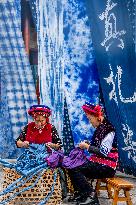
Duan Yinmei (R), an inheritor of the tie-dye technique of Bai ethnic group, and handicraftsman Duan Lilan create knots on fabrics in a dyehouse in Zhoucheng Village of Dali Bai Autonomous Prefecture, southwest China's Yunnan Province, November 21, 2025. Known as the hometown of the tie-dye technique of Bai ethnic group, Zhoucheng Village hosts over 200 households engaging in tie-dye businesses, with the number of employees exceeding 4,000. As a traditional folk technique of the Bai ethnic group, tie-dye boasts a history spanning over a thousand years and was included in the first batch of China's national intangible cultural heritage list in 2006. Tying and dyeing are the core steps in the process of making indigo tie-dye products. Artisans use needles and threads to create various patterns on the fabric, which are then dyed with plant-based dyes, resulting in blue backgrounds adorned with vivid white patterns. Photo by Hu Chao/Xinhua/ABACAPRESS.COM

  •  
Princess Kako visits Kyoto guesthouse

Princess Kako visits Kyoto guesthouse

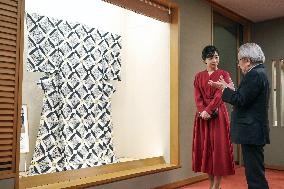
Japanese Princess Kako is briefed about a kimono on display from Kunihiko Moriguchi, living national treasure for his mastery of "yuzen" resist dyeing technique, during a visit to a guesthouse operated by Panasonic Holdings Corp. in Kyoto on Oct. 9, 2025. (Pool photo)

  •  
Incense Sticks Traditional Making - Vietnam

Incense Sticks Traditional Making - Vietnam

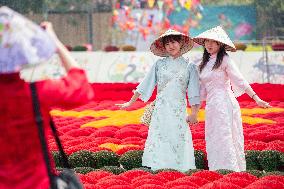
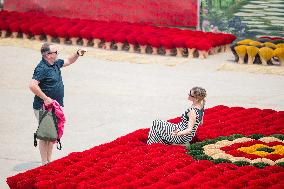
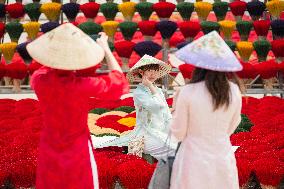
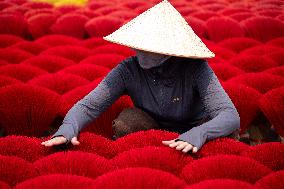
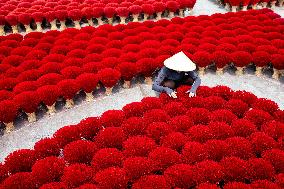
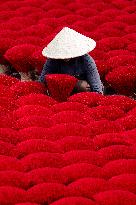
Tourists pose for photos amid bundles of incense sticks in Quang Phu Cau Village, Vietnam, March 24, 2025. Quang Phu Cau Village, 35 kilometers south of Hanoi, has a long tradition of making incense sticks. These incense sticks need to go through a dozens of processes, such as bamboo splitting, dyeing, powder wrapping and drying, to be made. When bundles of incense sticks are spread out in courtyards and fields for drying, its various colors like vermilion, bright yellow, indigo, emerald green and others form a spectacular scene, attracting many tourists and photographers. Photo by Zhu Wei/Xinhua/ABACAPRESS.COM

  •  
Incense Sticks Traditional Making - Vietnam

Incense Sticks Traditional Making - Vietnam

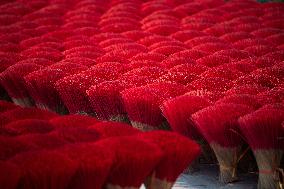
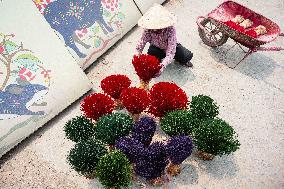
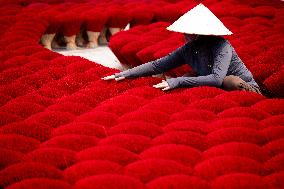
This photo shows bundles of incense sticks placed at a courtyard in Quang Phu Cau Village, Vietnam, March 24, 2025. Quang Phu Cau Village, 35 kilometers south of Hanoi, has a long tradition of making incense sticks. These incense sticks need to go through a dozens of processes, such as bamboo splitting, dyeing, powder wrapping and drying, to be made. When bundles of incense sticks are spread out in courtyards and fields for drying, its various colors like vermilion, bright yellow, indigo, emerald green and others form a spectacular scene, attracting many tourists and photographers. Photo by Zhu Wei/Xinhua/ABACAPRESS.COM

  •  
Incense Sticks Traditional Making - Vietnam

Incense Sticks Traditional Making - Vietnam

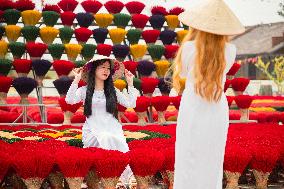
A tourist poses for photos amid bundles of incense sticks in Quang Phu Cau Village, Vietnam, March 24, 2025. Quang Phu Cau Village, 35 kilometers south of Hanoi, has a long tradition of making incense sticks. These incense sticks need to go through a dozens of processes, such as bamboo splitting, dyeing, powder wrapping and drying, to be made. When bundles of incense sticks are spread out in courtyards and fields for drying, its various colors like vermilion, bright yellow, indigo, emerald green and others form a spectacular scene, attracting many tourists and photographers. Photo by Zhu Wei/Xinhua/ABACAPRESS.COM

  •  
Incense Sticks Traditional Making - Vietnam

Incense Sticks Traditional Making - Vietnam

A tourist poses for photos amid bundles of incense sticks in Quang Phu Cau Village, Vietnam, March 24, 2025. Quang Phu Cau Village, 35 kilometers south of Hanoi, has a long tradition of making incense sticks. These incense sticks need to go through a dozens of processes, such as bamboo splitting, dyeing, powder wrapping and drying, to be made. When bundles of incense sticks are spread out in courtyards and fields for drying, its various colors like vermilion, bright yellow, indigo, emerald green and others form a spectacular scene, attracting many tourists and photographers. Photo by Zhu Wei/Xinhua/ABACAPRESS.COM

  •  
Incense Sticks Traditional Making - Vietnam

Incense Sticks Traditional Making - Vietnam

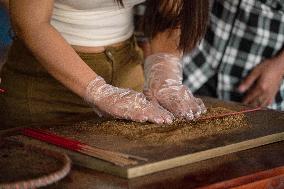
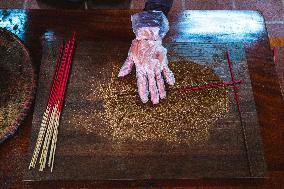
A tourist tries to make an incense stick in Quang Phu Cau Village, Vietnam, March 24, 2025. Quang Phu Cau Village, 35 kilometers south of Hanoi, has a long tradition of making incense sticks. These incense sticks need to go through a dozens of processes, such as bamboo splitting, dyeing, powder wrapping and drying, to be made. When bundles of incense sticks are spread out in courtyards and fields for drying, its various colors like vermilion, bright yellow, indigo, emerald green and others form a spectacular scene, attracting many tourists and photographers. Photo by Zhu Wei/Xinhua/ABACAPRESS.COM

  •  
Incense Sticks Traditional Making - Vietnam

Incense Sticks Traditional Making - Vietnam

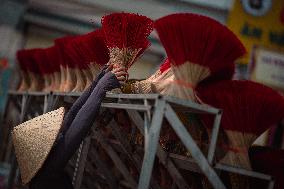
A villager arranges incense sticks in Quang Phu Cau Village, Vietnam, March 24, 2025. Quang Phu Cau Village, 35 kilometers south of Hanoi, has a long tradition of making incense sticks. These incense sticks need to go through a dozens of processes, such as bamboo splitting, dyeing, powder wrapping and drying, to be made. When bundles of incense sticks are spread out in courtyards and fields for drying, its various colors like vermilion, bright yellow, indigo, emerald green and others form a spectacular scene, attracting many tourists and photographers. Photo by Zhu Wei/Xinhua/ABACAPRESS.COM

  •  
Incense Sticks Traditional Making - Vietnam

Incense Sticks Traditional Making - Vietnam

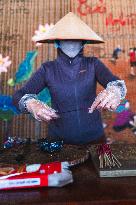
A villager demonstrates how to make incense sticks in Quang Phu Cau Village, Vietnam, March 24, 2025. Quang Phu Cau Village, 35 kilometers south of Hanoi, has a long tradition of making incense sticks. These incense sticks need to go through a dozens of processes, such as bamboo splitting, dyeing, powder wrapping and drying, to be made. When bundles of incense sticks are spread out in courtyards and fields for drying, its various colors like vermilion, bright yellow, indigo, emerald green and others form a spectacular scene, attracting many tourists and photographers. Photo by Zhu Wei/Xinhua/ABACAPRESS.COM

  •  
Incense Sticks Traditional Making - Vietnam

Incense Sticks Traditional Making - Vietnam

A tourist poses for photos amid bundles of incense sticks in Quang Phu Cau Village, Vietnam, March 24, 2025. Quang Phu Cau Village, 35 kilometers south of Hanoi, has a long tradition of making incense sticks. These incense sticks need to go through a dozens of processes, such as bamboo splitting, dyeing, powder wrapping and drying, to be made. When bundles of incense sticks are spread out in courtyards and fields for drying, its various colors like vermilion, bright yellow, indigo, emerald green and others form a spectacular scene, attracting many tourists and photographers. Photo by Zhu Wei/Xinhua/ABACAPRESS.COM

  •  
Incense Sticks Traditional Making - Vietnam

Incense Sticks Traditional Making - Vietnam

A villager arranges incense sticks in Quang Phu Cau Village, Vietnam, March 24, 2025. Quang Phu Cau Village, 35 kilometers south of Hanoi, has a long tradition of making incense sticks. These incense sticks need to go through a dozens of processes, such as bamboo splitting, dyeing, powder wrapping and drying, to be made. When bundles of incense sticks are spread out in courtyards and fields for drying, its various colors like vermilion, bright yellow, indigo, emerald green and others form a spectacular scene, attracting many tourists and photographers. Photo by Zhu Wei/Xinhua/ABACAPRESS.COM

  •  
Incense Sticks Traditional Making - Vietnam

Incense Sticks Traditional Making - Vietnam

A villager demonstrates how to make incense sticks in Quang Phu Cau Village, Vietnam, March 24, 2025. Quang Phu Cau Village, 35 kilometers south of Hanoi, has a long tradition of making incense sticks. These incense sticks need to go through a dozens of processes, such as bamboo splitting, dyeing, powder wrapping and drying, to be made. When bundles of incense sticks are spread out in courtyards and fields for drying, its various colors like vermilion, bright yellow, indigo, emerald green and others form a spectacular scene, attracting many tourists and photographers. Photo by Zhu Wei/Xinhua/ABACAPRESS.COM

  •  
Incense Sticks Traditional Making - Vietnam

Incense Sticks Traditional Making - Vietnam

A villager arranges incense sticks in Quang Phu Cau Village, Vietnam, March 24, 2025. Quang Phu Cau Village, 35 kilometers south of Hanoi, has a long tradition of making incense sticks. These incense sticks need to go through a dozens of processes, such as bamboo splitting, dyeing, powder wrapping and drying, to be made. When bundles of incense sticks are spread out in courtyards and fields for drying, its various colors like vermilion, bright yellow, indigo, emerald green and others form a spectacular scene, attracting many tourists and photographers. Photo by Zhu Wei/Xinhua/ABACAPRESS.COM

  •  
Incense Sticks Traditional Making - Vietnam

Incense Sticks Traditional Making - Vietnam

A villager arranges incense sticks in Quang Phu Cau Village, Vietnam, March 24, 2025. Quang Phu Cau Village, 35 kilometers south of Hanoi, has a long tradition of making incense sticks. These incense sticks need to go through a dozens of processes, such as bamboo splitting, dyeing, powder wrapping and drying, to be made. When bundles of incense sticks are spread out in courtyards and fields for drying, its various colors like vermilion, bright yellow, indigo, emerald green and others form a spectacular scene, attracting many tourists and photographers. Photo by Zhu Wei/Xinhua/ABACAPRESS.COM

  •  
Incense Sticks Traditional Making - Vietnam

Incense Sticks Traditional Making - Vietnam

A villager puts a bundle of incense sticks onto a shelf in Quang Phu Cau Village, Vietnam, March 24, 2025. Quang Phu Cau Village, 35 kilometers south of Hanoi, has a long tradition of making incense sticks. These incense sticks need to go through a dozens of processes, such as bamboo splitting, dyeing, powder wrapping and drying, to be made. When bundles of incense sticks are spread out in courtyards and fields for drying, its various colors like vermilion, bright yellow, indigo, emerald green and others form a spectacular scene, attracting many tourists and photographers. Photo by Zhu Wei/Xinhua/ABACAPRESS.COM

  •  
Incense Sticks Traditional Making - Vietnam

Incense Sticks Traditional Making - Vietnam

A villager arranges incense sticks in Quang Phu Cau Village, Vietnam, March 24, 2025. Quang Phu Cau Village, 35 kilometers south of Hanoi, has a long tradition of making incense sticks. These incense sticks need to go through a dozens of processes, such as bamboo splitting, dyeing, powder wrapping and drying, to be made. When bundles of incense sticks are spread out in courtyards and fields for drying, its various colors like vermilion, bright yellow, indigo, emerald green and others form a spectacular scene, attracting many tourists and photographers. Photo by Zhu Wei/Xinhua/ABACAPRESS.COM

  •  
White House fountain flows green for Saint Patrick’s Day

White House fountain flows green for Saint Patrick’s Day

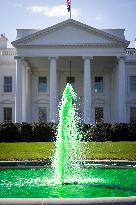
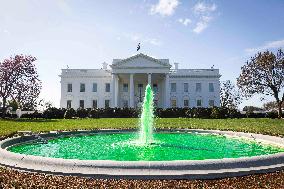
The White House fountain flows green for Saint Patrick’s Day in Washington, DC, USA, 17 March 2025. Former President Barack Obama started the tradition of dyeing the White House fountains in 2012.

  •  
White House fountain flows green for Saint Patrick’s Day

White House fountain flows green for Saint Patrick’s Day

The White House fountain flows green for Saint Patrick’s Day in Washington, DC, USA, 17 March 2025. Former President Barack Obama started the tradition of dyeing the White House fountains in 2012.

  •  
White House fountain flows green for Saint Patrick’s Day

White House fountain flows green for Saint Patrick’s Day

The White House fountain flows green for Saint Patrick’s Day in Washington, DC, USA, 17 March 2025. Former President Barack Obama started the tradition of dyeing the White House fountains in 2012.

  •  
White House fountain flows green for Saint Patrick’s Day

White House fountain flows green for Saint Patrick’s Day

The White House fountain flows green for Saint Patrick’s Day in Washington, DC, USA, 17 March 2025. Former President Barack Obama started the tradition of dyeing the White House fountains in 2012.

  •  

US: Chicago River Turns Green for St. Patrick’s Day Celebration

Chicago kicked off the St. Patrick’s Day weekend with the annual tradition of local plumbers unions dyeing the Chicago River green on Saturday, March 15.

  • Main
  • Top
  • Editorial
  • Creative
  • About Us
  • About ILG
  • Terms of use
  • Company
  • BEHIND
  • Price List
  • Single Plan
  • Monthly Plan
  • Services
  • Shooting
  • Rights Clearance
  • Support
  • FAQ
  • How To Buy
  • Contact Us
  • Become a Partner

© KYODO NEWS IMAGES INC

All Rights Reserved.

  • Editorial
  • Olympics
  • News
  • Sports
  • Japan
  • Tech
  • Royal
  • Disaster
  • NorthKorea
  • Old Japan
  • SNS
  • Creative
  • Food
  • Japan
  • Landscape
  • Animal
  • Popular
  • #Ukraine
  • #Thailand
  • #coronavirus
  • #N. Korea
  • #Russia
  • #China
  • #Ukraine
  • #Thailand
  • #coronavirus
  • #N. Korea
  • #Russia
  • #China
  • Food
  • Japan
  • Landscape
  • Animal
  • Olympics
  • News
  • Sports
  • Japan
  • Tech
  • Royal
  • Disaster
  • NorthKorea
  • Old Japan
  • SNS