•  
Exhibition of China's Terracotta Warriors - Budapest

Exhibition of China's Terracotta Warriors - Budapest

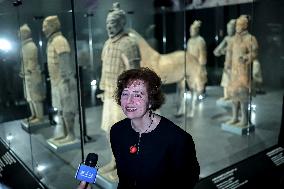
Curator Gyorgyi Fajcsak speaks during an interview with Xinhua at the opening ceremony of an exhibition of China's Terracotta Warriors in Budapest, Hungary, Nov. 27, 2025. The Museum of Fine Arts in Budapest on Thursday opened one of the most significant Chinese cultural exhibitions ever held in Hungary, presenting more than 150 ancient artworks from the Qin and Han dynasties, including ten original Terracotta Warriors. Titled "Civilization of the Qin and Han Dynasties - The First Chinese Emperor's Terracotta Warriors," the exhibition is jointly organized by the Museum of Fine Arts in Budapest and the Shaanxi Provincial Cultural Heritage Administration, and it will run for six months starting from Friday. TO GO WITH "Budapest museum unveils China's Terracotta Warriors" (Photo by David Balogh/Xinhua/ABACAPRESS.COM)

  •  
Exhibition of China's Terracotta Warriors - Budapest

Exhibition of China's Terracotta Warriors - Budapest

Laszlo Baan, director general of the Museum of Fine Arts, speaks during an interview with Xinhua at the opening ceremony of an exhibition of China's Terracotta Warriors in Budapest, Hungary, Nov. 27, 2025. The Museum of Fine Arts in Budapest on Thursday opened one of the most significant Chinese cultural exhibitions ever held in Hungary, presenting more than 150 ancient artworks from the Qin and Han dynasties, including ten original Terracotta Warriors. Titled "Civilization of the Qin and Han Dynasties - The First Chinese Emperor's Terracotta Warriors," the exhibition is jointly organized by the Museum of Fine Arts in Budapest and the Shaanxi Provincial Cultural Heritage Administration, and it will run for six months starting from Friday. TO GO WITH "Budapest museum unveils China's Terracotta Warriors" (Photo by David Balogh/Xinhua/ABACAPRESS.COM)

  •  
Exhibition of China's Terracotta Warriors - Budapest

Exhibition of China's Terracotta Warriors - Budapest

Laszlo Baan, director general of the Museum of Fine Arts, delivers a speech at the opening ceremony of an exhibition of China's Terracotta Warriors in Budapest, Hungary, Nov. 27, 2025. The Museum of Fine Arts in Budapest on Thursday opened one of the most significant Chinese cultural exhibitions ever held in Hungary, presenting more than 150 ancient artworks from the Qin and Han dynasties, including ten original Terracotta Warriors. Titled "Civilization of the Qin and Han Dynasties - The First Chinese Emperor's Terracotta Warriors," the exhibition is jointly organized by the Museum of Fine Arts in Budapest and the Shaanxi Provincial Cultural Heritage Administration, and it will run for six months starting from Friday. TO GO WITH "Budapest museum unveils China's Terracotta Warriors" (Photo by David Balogh/Xinhua/ABACAPRESS.COM)

  •  
Civilization of the Qin and Han Dynasties - Budapest

Civilization of the Qin and Han Dynasties - Budapest

Laszlo Baan, director general of the Museum of Fine Arts in Budapest, speaks during the opening ceremony of the exhibition "Civilization of the Qin and Han Dynasties - The First Chinese Emperor's Terracotta Warriors" in Budapest, Hungary, Nov. 27, 2025. The Museum of Fine Arts in Budapest on Thursday opened one of the most significant Chinese cultural exhibitions ever held in Hungary, presenting more than 150 ancient artworks from the Qin and Han dynasties (221 BC-220 AD), including ten original Terracotta Warriors. Titled "Civilization of the Qin and Han Dynasties - The First Chinese Emperor's Terracotta Warriors," the exhibition is jointly organized by the Museum of Fine Arts in Budapest and the Shaanxi Provincial Cultural Heritage Administration, and it will run for six months starting from Friday. Photo by David Balogh/Xinhua/ABACAPRESS.COM

  •  
Civilization of the Qin and Han Dynasties - Budapest

Civilization of the Qin and Han Dynasties - Budapest

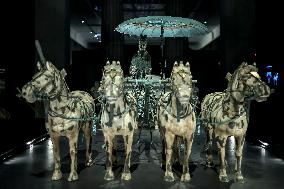
Exhibits are pictured at the exhibition "Civilization of the Qin and Han Dynasties - The First Chinese Emperor's Terracotta Warriors" at the Museum of Fine Arts in Budapest, Hungary, Nov. 27, 2025. The Museum of Fine Arts in Budapest on Thursday opened one of the most significant Chinese cultural exhibitions ever held in Hungary, presenting more than 150 ancient artworks from the Qin and Han dynasties (221 BC-220 AD), including ten original Terracotta Warriors. Titled "Civilization of the Qin and Han Dynasties - The First Chinese Emperor's Terracotta Warriors," the exhibition is jointly organized by the Museum of Fine Arts in Budapest and the Shaanxi Provincial Cultural Heritage Administration, and it will run for six months starting from Friday. Photo by David Balogh/Xinhua/ABACAPRESS.COM

  •  
Civilization of the Qin and Han Dynasties - Budapest

Civilization of the Qin and Han Dynasties - Budapest

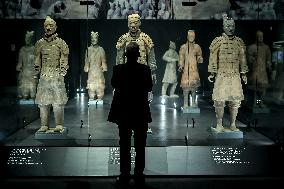
A visitor views exhibits at the exhibition "Civilization of the Qin and Han Dynasties - The First Chinese Emperor's Terracotta Warriors" at the Museum of Fine Arts in Budapest, Hungary, Nov. 27, 2025. The Museum of Fine Arts in Budapest on Thursday opened one of the most significant Chinese cultural exhibitions ever held in Hungary, presenting more than 150 ancient artworks from the Qin and Han dynasties (221 BC-220 AD), including ten original Terracotta Warriors. Titled "Civilization of the Qin and Han Dynasties - The First Chinese Emperor's Terracotta Warriors," the exhibition is jointly organized by the Museum of Fine Arts in Budapest and the Shaanxi Provincial Cultural Heritage Administration, and it will run for six months starting from Friday. Photo by David Balogh/Xinhua/ABACAPRESS.COM

  •  
Civilization of the Qin and Han Dynasties - Budapest

Civilization of the Qin and Han Dynasties - Budapest

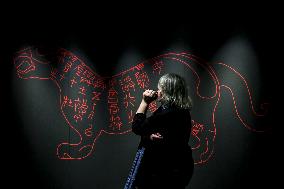
A woman visits the exhibition "Civilization of the Qin and Han Dynasties - The First Chinese Emperor's Terracotta Warriors" at the Museum of Fine Arts in Budapest, Hungary, Nov. 27, 2025. The Museum of Fine Arts in Budapest on Thursday opened one of the most significant Chinese cultural exhibitions ever held in Hungary, presenting more than 150 ancient artworks from the Qin and Han dynasties (221 BC-220 AD), including ten original Terracotta Warriors. Titled "Civilization of the Qin and Han Dynasties - The First Chinese Emperor's Terracotta Warriors," the exhibition is jointly organized by the Museum of Fine Arts in Budapest and the Shaanxi Provincial Cultural Heritage Administration, and it will run for six months starting from Friday. Photo by David Balogh/Xinhua/ABACAPRESS.COM

  •  
Civilization of the Qin and Han Dynasties - Budapest

Civilization of the Qin and Han Dynasties - Budapest

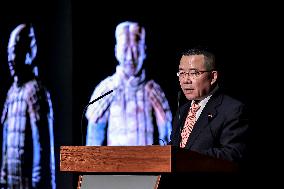
Chinese Ambassador to Hungary Gong Tao speaks during the opening ceremony of the exhibition "Civilization of the Qin and Han Dynasties - The First Chinese Emperor's Terracotta Warriors" in Budapest, Hungary, Nov. 27, 2025. The Museum of Fine Arts in Budapest on Thursday opened one of the most significant Chinese cultural exhibitions ever held in Hungary, presenting more than 150 ancient artworks from the Qin and Han dynasties (221 BC-220 AD), including ten original Terracotta Warriors. Titled "Civilization of the Qin and Han Dynasties - The First Chinese Emperor's Terracotta Warriors," the exhibition is jointly organized by the Museum of Fine Arts in Budapest and the Shaanxi Provincial Cultural Heritage Administration, and it will run for six months starting from Friday. Photo by David Balogh/Xinhua/ABACAPRESS.COM

  •  
Civilization of the Qin and Han Dynasties - Budapest

Civilization of the Qin and Han Dynasties - Budapest

Hungarian President Tamas Sulyok speaks during the opening ceremony of the exhibition "Civilization of the Qin and Han Dynasties - The First Chinese Emperor's Terracotta Warriors" in Budapest, Hungary, Nov. 27, 2025. The Museum of Fine Arts in Budapest on Thursday opened one of the most significant Chinese cultural exhibitions ever held in Hungary, presenting more than 150 ancient artworks from the Qin and Han dynasties (221 BC-220 AD), including ten original Terracotta Warriors. Titled "Civilization of the Qin and Han Dynasties - The First Chinese Emperor's Terracotta Warriors," the exhibition is jointly organized by the Museum of Fine Arts in Budapest and the Shaanxi Provincial Cultural Heritage Administration, and it will run for six months starting from Friday. Photo by David Balogh/Xinhua/ABACAPRESS.COM

  •  
Civilization of the Qin and Han Dynasties - Budapest

Civilization of the Qin and Han Dynasties - Budapest

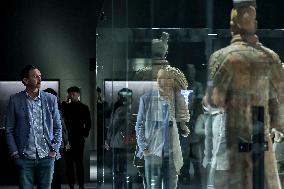
A visitor views exhibits at the exhibition "Civilization of the Qin and Han Dynasties - The First Chinese Emperor's Terracotta Warriors" at the Museum of Fine Arts in Budapest, Hungary, Nov. 27, 2025. The Museum of Fine Arts in Budapest on Thursday opened one of the most significant Chinese cultural exhibitions ever held in Hungary, presenting more than 150 ancient artworks from the Qin and Han dynasties (221 BC-220 AD), including ten original Terracotta Warriors. Titled "Civilization of the Qin and Han Dynasties - The First Chinese Emperor's Terracotta Warriors," the exhibition is jointly organized by the Museum of Fine Arts in Budapest and the Shaanxi Provincial Cultural Heritage Administration, and it will run for six months starting from Friday. Photo by David Balogh/Xinhua/ABACAPRESS.COM

  •  
Civilization of the Qin and Han Dynasties - Budapest

Civilization of the Qin and Han Dynasties - Budapest

A visitor views exhibits at the exhibition "Civilization of the Qin and Han Dynasties - The First Chinese Emperor's Terracotta Warriors" at the Museum of Fine Arts in Budapest, Hungary, Nov. 27, 2025. The Museum of Fine Arts in Budapest on Thursday opened one of the most significant Chinese cultural exhibitions ever held in Hungary, presenting more than 150 ancient artworks from the Qin and Han dynasties (221 BC-220 AD), including ten original Terracotta Warriors. Titled "Civilization of the Qin and Han Dynasties - The First Chinese Emperor's Terracotta Warriors," the exhibition is jointly organized by the Museum of Fine Arts in Budapest and the Shaanxi Provincial Cultural Heritage Administration, and it will run for six months starting from Friday. Photo by David Balogh/Xinhua/ABACAPRESS.COM

  •  
Civilization of the Qin and Han Dynasties - Budapest

Civilization of the Qin and Han Dynasties - Budapest

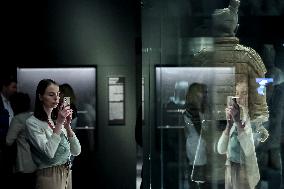
A visitor takes photos of exhibits at the exhibition "Civilization of the Qin and Han Dynasties - The First Chinese Emperor's Terracotta Warriors" at the Museum of Fine Arts in Budapest, Hungary, Nov. 27, 2025. The Museum of Fine Arts in Budapest on Thursday opened one of the most significant Chinese cultural exhibitions ever held in Hungary, presenting more than 150 ancient artworks from the Qin and Han dynasties (221 BC-220 AD), including ten original Terracotta Warriors. Titled "Civilization of the Qin and Han Dynasties - The First Chinese Emperor's Terracotta Warriors," the exhibition is jointly organized by the Museum of Fine Arts in Budapest and the Shaanxi Provincial Cultural Heritage Administration, and it will run for six months starting from Friday. Photo by David Balogh/Xinhua/ABACAPRESS.COM

  •  
Civilization of the Qin and Han Dynasties - Budapest

Civilization of the Qin and Han Dynasties - Budapest

A visitor takes photos of exhibits at the exhibition "Civilization of the Qin and Han Dynasties - The First Chinese Emperor's Terracotta Warriors" at the Museum of Fine Arts in Budapest, Hungary, Nov. 27, 2025. The Museum of Fine Arts in Budapest on Thursday opened one of the most significant Chinese cultural exhibitions ever held in Hungary, presenting more than 150 ancient artworks from the Qin and Han dynasties (221 BC-220 AD), including ten original Terracotta Warriors. Titled "Civilization of the Qin and Han Dynasties - The First Chinese Emperor's Terracotta Warriors," the exhibition is jointly organized by the Museum of Fine Arts in Budapest and the Shaanxi Provincial Cultural Heritage Administration, and it will run for six months starting from Friday. Photo by David Balogh/Xinhua/ABACAPRESS.COM

  •  
Tourists Visit the Palace Museum - Beijing

Tourists Visit the Palace Museum - Beijing

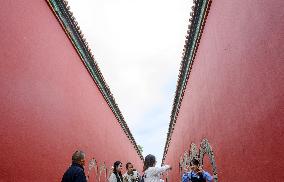
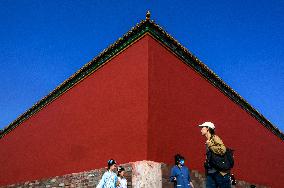
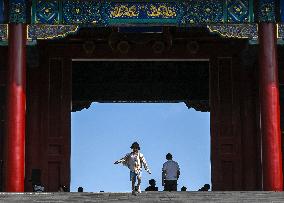
Tourists visit the Palace Museum in Beijing, capital of China, October 3, 2025. This year marks the 100th anniversary of the founding of China's Palace Museum, also known as the Forbidden City. The Forbidden City, which was constructed between 1406 and 1420, was once the imperial palaces of the Ming (1368-1644) and Qing (1644-1912) dynasties. It is a UNESCO inscribed World Cultural Heritage and has one of the world's largest and most intact ancient wooden structures. The Palace Museum was established in 1925 on the base of the former imperial compound. Historically off-limits as an imperial residence, the Forbidden City now is one of the most-visited museums in China. Photo by Xinhua/Jin Liangkuai/ABACAPRESS.COM

  •  
Tourists Visit the Palace Museum - Beijing

Tourists Visit the Palace Museum - Beijing

Tourists visit the Palace Museum in Beijing, capital of China, October 3, 2025. This year marks the 100th anniversary of the founding of China's Palace Museum, also known as the Forbidden City. The Forbidden City, which was constructed between 1406 and 1420, was once the imperial palaces of the Ming (1368-1644) and Qing (1644-1912) dynasties. It is a UNESCO inscribed World Cultural Heritage and has one of the world's largest and most intact ancient wooden structures. The Palace Museum was established in 1925 on the base of the former imperial compound. Historically off-limits as an imperial residence, the Forbidden City now is one of the most-visited museums in China. Photo by Xinhua/Jin Liangkuai/ABACAPRESS.COM

  •  
Tourists Visit the Palace Museum - Beijing

Tourists Visit the Palace Museum - Beijing

Tourists visit the Palace Museum in Beijing, capital of China, October 2, 2025. This year marks the 100th anniversary of the founding of China's Palace Museum, also known as the Forbidden City. The Forbidden City, which was constructed between 1406 and 1420, was once the imperial palaces of the Ming (1368-1644) and Qing (1644-1912) dynasties. It is a UNESCO inscribed World Cultural Heritage and has one of the world's largest and most intact ancient wooden structures. The Palace Museum was established in 1925 on the base of the former imperial compound. Historically off-limits as an imperial residence, the Forbidden City now is one of the most-visited museums in China. Photo by Xinhua/Jin Liangkuai/ABACAPRESS.COM

  •  
Tourists Visit the Palace Museum - Beijing

Tourists Visit the Palace Museum - Beijing

Tourists visit the Palace Museum in Beijing, capital of China, October 2, 2025. This year marks the 100th anniversary of the founding of China's Palace Museum, also known as the Forbidden City. The Forbidden City, which was constructed between 1406 and 1420, was once the imperial palaces of the Ming (1368-1644) and Qing (1644-1912) dynasties. It is a UNESCO inscribed World Cultural Heritage and has one of the world's largest and most intact ancient wooden structures. The Palace Museum was established in 1925 on the base of the former imperial compound. Historically off-limits as an imperial residence, the Forbidden City now is one of the most-visited museums in China. Photo by Xinhua/Jin Liangkuai/ABACAPRESS.COM

  •  
Tourists Visit the Palace Museum - Beijing

Tourists Visit the Palace Museum - Beijing

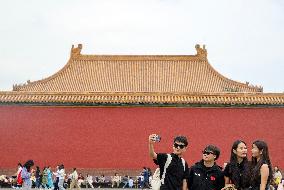
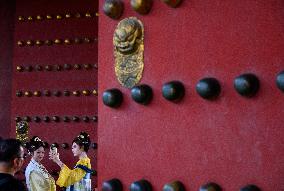
Tourists in traditional costumes take pictures at the Palace Museum in Beijing, capital of China, October 2, 2025. This year marks the 100th anniversary of the founding of China's Palace Museum, also known as the Forbidden City. The Forbidden City, which was constructed between 1406 and 1420, was once the imperial palaces of the Ming (1368-1644) and Qing (1644-1912) dynasties. It is a UNESCO inscribed World Cultural Heritage and has one of the world's largest and most intact ancient wooden structures. The Palace Museum was established in 1925 on the base of the former imperial compound. Historically off-limits as an imperial residence, the Forbidden City now is one of the most-visited museums in China. Photo by Xinhua/Jin Liangkuai/ABACAPRESS.COM

  •  
Tourists Visit the Palace Museum - Beijing

Tourists Visit the Palace Museum - Beijing

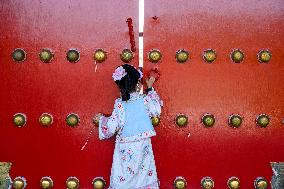
A little girl in traditional costumes is pictured at the Palace Museum in Beijing, capital of China, October 2, 2025. This year marks the 100th anniversary of the founding of China's Palace Museum, also known as the Forbidden City. The Forbidden City, which was constructed between 1406 and 1420, was once the imperial palaces of the Ming (1368-1644) and Qing (1644-1912) dynasties. It is a UNESCO inscribed World Cultural Heritage and has one of the world's largest and most intact ancient wooden structures. The Palace Museum was established in 1925 on the base of the former imperial compound. Historically off-limits as an imperial residence, the Forbidden City now is one of the most-visited museums in China. Photo by Xinhua/Jin Liangkuai/ABACAPRESS.COM

  •  
Zigong International Dinosaur Lantern Show - China

Zigong International Dinosaur Lantern Show - China

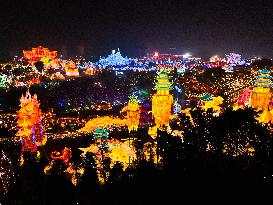
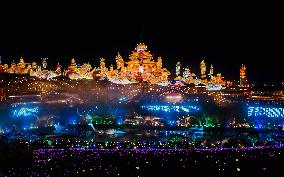
A drone photo shows light installations at the 31st Zigong International Dinosaur Lantern Show in Zigong, southwest China's Sichuan Province, on January 17, 2025. The national-level intangible cultural heritage project Zigong lantern show boasts a long history, as it can be traced back to the Tang (618-907) and Song (960-1279) dynasties. In 1964, Zigong held the first lantern show celebrating the Spring Festival. So far, making colorful lanterns has become a popular industry here, with Zigong lanterns having been displayed in more than 80 countries and regions. Making a Zigong lantern involves many craftsmen, including art designers, bench workers, mechanics, electricians and paperhanging workers. The complete process can hardly be found in other places in China. Photo by Wang Xi/Xinhua/ABACAPRESS.COM

  •  
Zigong International Dinosaur Lantern Show - China

Zigong International Dinosaur Lantern Show - China

A drone photo shows light installations at the 31st Zigong International Dinosaur Lantern Show in Zigong, southwest China's Sichuan Province, on January 17, 2025. The national-level intangible cultural heritage project Zigong lantern show boasts a long history, as it can be traced back to the Tang (618-907) and Song (960-1279) dynasties. In 1964, Zigong held the first lantern show celebrating the Spring Festival. So far, making colorful lanterns has become a popular industry here, with Zigong lanterns having been displayed in more than 80 countries and regions. Making a Zigong lantern involves many craftsmen, including art designers, bench workers, mechanics, electricians and paperhanging workers. The complete process can hardly be found in other places in China. Photo by Wang Xi/Xinhua/ABACAPRESS.COM

  •  
Zigong International Dinosaur Lantern Show - China

Zigong International Dinosaur Lantern Show - China

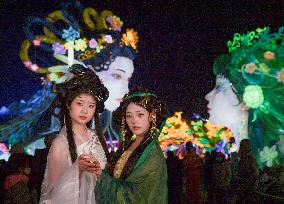
Tourists pose for photos at the 31st Zigong International Dinosaur Lantern Show in Zigong, southwest China's Sichuan Province, on January 17, 2025. The national-level intangible cultural heritage project Zigong lantern show boasts a long history, as it can be traced back to the Tang (618-907) and Song (960-1279) dynasties. In 1964, Zigong held the first lantern show celebrating the Spring Festival. So far, making colorful lanterns has become a popular industry here, with Zigong lanterns having been displayed in more than 80 countries and regions. Making a Zigong lantern involves many craftsmen, including art designers, bench workers, mechanics, electricians and paperhanging workers. The complete process can hardly be found in other places in China. Photo by Wang Xi/Xinhua/ABACAPRESS.COM

  •  
Zigong International Dinosaur Lantern Show - China

Zigong International Dinosaur Lantern Show - China

A tourist visits Colorful Lantern Museum of China in Zigong, southwest China's Sichuan Province, on January 18, 2025. The national-level intangible cultural heritage project Zigong lantern show boasts a long history, as it can be traced back to the Tang (618-907) and Song (960-1279) dynasties. In 1964, Zigong held the first lantern show celebrating the Spring Festival. So far, making colorful lanterns has become a popular industry here, with Zigong lanterns having been displayed in more than 80 countries and regions. Making a Zigong lantern involves many craftsmen, including art designers, bench workers, mechanics, electricians and paperhanging workers. The complete process can hardly be found in other places in China. Photo by Xinhua/ABACAPRESS.COM/Xu Bingjie

  •  
Zigong International Dinosaur Lantern Show - China

Zigong International Dinosaur Lantern Show - China

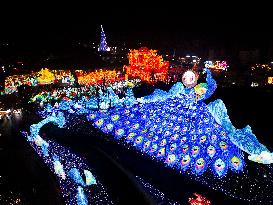
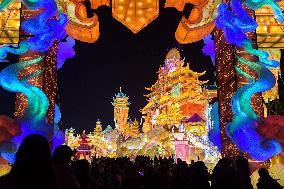
Light installations are seen at the 31st Zigong International Dinosaur Lantern Show in Zigong, southwest China's Sichuan Province, on January 29, 2025. The national-level intangible cultural heritage project Zigong lantern show boasts a long history, as it can be traced back to the Tang (618-907) and Song (960-1279) dynasties. In 1964, Zigong held the first lantern show celebrating the Spring Festival. So far, making colorful lanterns has become a popular industry here, with Zigong lanterns having been displayed in more than 80 countries and regions. Making a Zigong lantern involves many craftsmen, including art designers, bench workers, mechanics, electricians and paperhanging workers. The complete process can hardly be found in other places in China. Photo by Xinhua/ABACAPRESS.COM

  •  
Zigong International Dinosaur Lantern Show - China

Zigong International Dinosaur Lantern Show - China

Tourists visit the 31st Zigong International Dinosaur Lantern Show in Zigong, southwest China's Sichuan Province, on January 17, 2025. The national-level intangible cultural heritage project Zigong lantern show boasts a long history, as it can be traced back to the Tang (618-907) and Song (960-1279) dynasties. In 1964, Zigong held the first lantern show celebrating the Spring Festival. So far, making colorful lanterns has become a popular industry here, with Zigong lanterns having been displayed in more than 80 countries and regions. Making a Zigong lantern involves many craftsmen, including art designers, bench workers, mechanics, electricians and paperhanging workers. The complete process can hardly be found in other places in China. Photo by Wang Xi/Xinhua/ABACAPRESS.COM

  •  
Zigong International Dinosaur Lantern Show - China

Zigong International Dinosaur Lantern Show - China

Tourists visit the 31st Zigong International Dinosaur Lantern Show in Zigong, southwest China's Sichuan Province, on January 17, 2025. The national-level intangible cultural heritage project Zigong lantern show boasts a long history, as it can be traced back to the Tang (618-907) and Song (960-1279) dynasties. In 1964, Zigong held the first lantern show celebrating the Spring Festival. So far, making colorful lanterns has become a popular industry here, with Zigong lanterns having been displayed in more than 80 countries and regions. Making a Zigong lantern involves many craftsmen, including art designers, bench workers, mechanics, electricians and paperhanging workers. The complete process can hardly be found in other places in China. Photo by Wang Xi/Xinhua/ABACAPRESS.COM

  •  
Zigong International Dinosaur Lantern Show - China

Zigong International Dinosaur Lantern Show - China

Tourists visit the 31st Zigong International Dinosaur Lantern Show in Zigong, southwest China's Sichuan Province, on January 17, 2025. The national-level intangible cultural heritage project Zigong lantern show boasts a long history, as it can be traced back to the Tang (618-907) and Song (960-1279) dynasties. In 1964, Zigong held the first lantern show celebrating the Spring Festival. So far, making colorful lanterns has become a popular industry here, with Zigong lanterns having been displayed in more than 80 countries and regions. Making a Zigong lantern involves many craftsmen, including art designers, bench workers, mechanics, electricians and paperhanging workers. The complete process can hardly be found in other places in China. Photo by Wang Xi/Xinhua/ABACAPRESS.COM

  •  
Three Bridges Built in Three Different Dynasties in Guizhou

Three Bridges Built in Three Different Dynasties in Guizhou

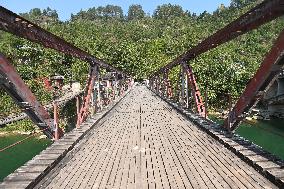
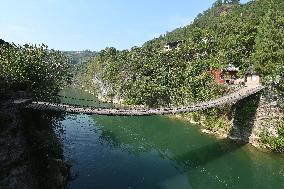
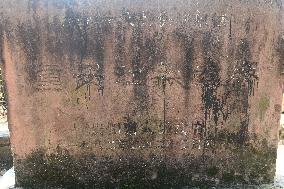
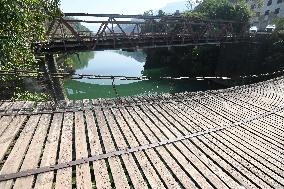
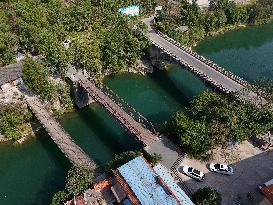
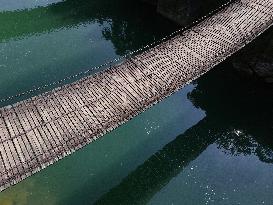
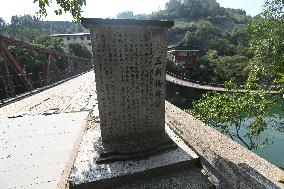
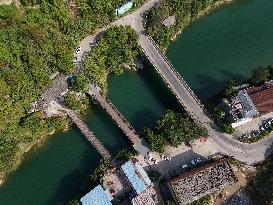
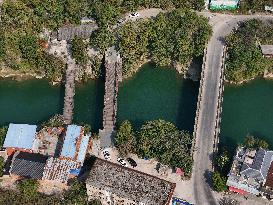
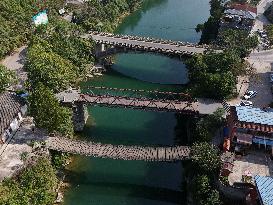
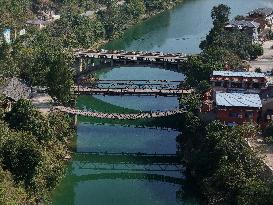
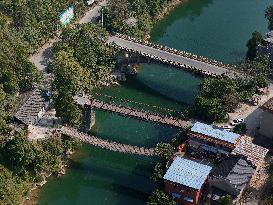
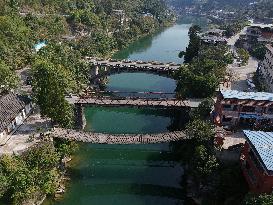
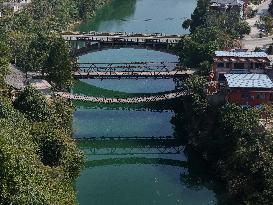
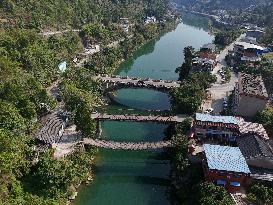
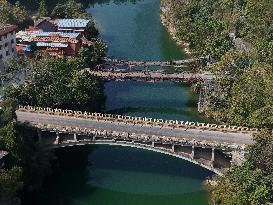
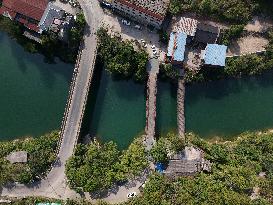
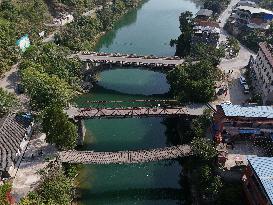
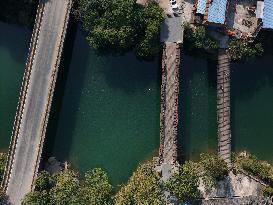
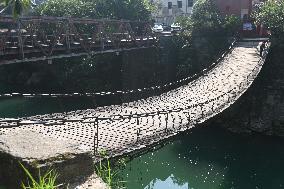
QIANDONGNAN, CHINA - NOVEMBER 3, 2024 - Aerial footage taken on Nov 3, 2024 shows three Bridges built in three different dynasties over the Zhong 'an River in Huangping county, Qiandongnan Prefecture, Guizhou province, China. One is an iron cable bridge 148 years ago, one is an iron bridge built in 1938, and the other is a reinforced concrete arch bridge built in 1996.

  •  
Three Bridges Built in Three Different Dynasties in Guizhou

Three Bridges Built in Three Different Dynasties in Guizhou

QIANDONGNAN, CHINA - NOVEMBER 3, 2024 - Aerial footage taken on Nov 3, 2024 shows three Bridges built in three different dynasties over the Zhong 'an River in Huangping county, Qiandongnan Prefecture, Guizhou province, China. One is an iron cable bridge 148 years ago, one is an iron bridge built in 1938, and the other is a reinforced concrete arch bridge built in 1996.

  •  
Three Bridges Built in Three Different Dynasties in Guizhou

Three Bridges Built in Three Different Dynasties in Guizhou

QIANDONGNAN, CHINA - NOVEMBER 3, 2024 - Aerial footage taken on Nov 3, 2024 shows three Bridges built in three different dynasties over the Zhong 'an River in Huangping county, Qiandongnan Prefecture, Guizhou province, China. One is an iron cable bridge 148 years ago, one is an iron bridge built in 1938, and the other is a reinforced concrete arch bridge built in 1996.

  •  
Three Bridges Built in Three Different Dynasties in Guizhou

Three Bridges Built in Three Different Dynasties in Guizhou

QIANDONGNAN, CHINA - NOVEMBER 3, 2024 - Aerial footage taken on Nov 3, 2024 shows three Bridges built in three different dynasties over the Zhong 'an River in Huangping county, Qiandongnan Prefecture, Guizhou province, China. One is an iron cable bridge 148 years ago, one is an iron bridge built in 1938, and the other is a reinforced concrete arch bridge built in 1996.

  •  
Three Bridges Built in Three Different Dynasties in Guizhou

Three Bridges Built in Three Different Dynasties in Guizhou

QIANDONGNAN, CHINA - NOVEMBER 3, 2024 - Aerial footage taken on Nov 3, 2024 shows three Bridges built in three different dynasties over the Zhong 'an River in Huangping county, Qiandongnan Prefecture, Guizhou province, China. One is an iron cable bridge 148 years ago, one is an iron bridge built in 1938, and the other is a reinforced concrete arch bridge built in 1996.

  •  
Three Bridges Built in Three Different Dynasties in Guizhou

Three Bridges Built in Three Different Dynasties in Guizhou

QIANDONGNAN, CHINA - NOVEMBER 3, 2024 - Aerial footage taken on Nov 3, 2024 shows three Bridges built in three different dynasties over the Zhong 'an River in Huangping county, Qiandongnan Prefecture, Guizhou province, China. One is an iron cable bridge 148 years ago, one is an iron bridge built in 1938, and the other is a reinforced concrete arch bridge built in 1996.

  •  
Three Bridges Built in Three Different Dynasties in Guizhou

Three Bridges Built in Three Different Dynasties in Guizhou

QIANDONGNAN, CHINA - NOVEMBER 3, 2024 - Aerial footage taken on Nov 3, 2024 shows three Bridges built in three different dynasties over the Zhong 'an River in Huangping county, Qiandongnan Prefecture, Guizhou province, China. One is an iron cable bridge 148 years ago, one is an iron bridge built in 1938, and the other is a reinforced concrete arch bridge built in 1996.

  •  
Three Bridges Built in Three Different Dynasties in Guizhou

Three Bridges Built in Three Different Dynasties in Guizhou

QIANDONGNAN, CHINA - NOVEMBER 3, 2024 - Aerial footage taken on Nov 3, 2024 shows three Bridges built in three different dynasties over the Zhong 'an River in Huangping county, Qiandongnan Prefecture, Guizhou province, China. One is an iron cable bridge 148 years ago, one is an iron bridge built in 1938, and the other is a reinforced concrete arch bridge built in 1996.

  •  
Three Bridges Built in Three Different Dynasties in Guizhou

Three Bridges Built in Three Different Dynasties in Guizhou

QIANDONGNAN, CHINA - NOVEMBER 3, 2024 - Aerial footage taken on Nov 3, 2024 shows three Bridges built in three different dynasties over the Zhong 'an River in Huangping county, Qiandongnan Prefecture, Guizhou province, China. One is an iron cable bridge 148 years ago, one is an iron bridge built in 1938, and the other is a reinforced concrete arch bridge built in 1996.

  •  
Three Bridges Built in Three Different Dynasties in Guizhou

Three Bridges Built in Three Different Dynasties in Guizhou

QIANDONGNAN, CHINA - NOVEMBER 3, 2024 - Aerial footage taken on Nov 3, 2024 shows three Bridges built in three different dynasties over the Zhong 'an River in Huangping county, Qiandongnan Prefecture, Guizhou province, China. One is an iron cable bridge 148 years ago, one is an iron bridge built in 1938, and the other is a reinforced concrete arch bridge built in 1996.

  •  
Three Bridges Built in Three Different Dynasties in Guizhou

Three Bridges Built in Three Different Dynasties in Guizhou

QIANDONGNAN, CHINA - NOVEMBER 3, 2024 - Aerial footage taken on Nov 3, 2024 shows three Bridges built in three different dynasties over the Zhong 'an River in Huangping county, Qiandongnan Prefecture, Guizhou province, China. One is an iron cable bridge 148 years ago, one is an iron bridge built in 1938, and the other is a reinforced concrete arch bridge built in 1996.

  •  
Three Bridges Built in Three Different Dynasties in Guizhou

Three Bridges Built in Three Different Dynasties in Guizhou

QIANDONGNAN, CHINA - NOVEMBER 3, 2024 - Aerial footage taken on Nov 3, 2024 shows three Bridges built in three different dynasties over the Zhong 'an River in Huangping county, Qiandongnan Prefecture, Guizhou province, China. One is an iron cable bridge 148 years ago, one is an iron bridge built in 1938, and the other is a reinforced concrete arch bridge built in 1996.

  •  
Three Bridges Built in Three Different Dynasties in Guizhou

Three Bridges Built in Three Different Dynasties in Guizhou

QIANDONGNAN, CHINA - NOVEMBER 3, 2024 - Aerial footage taken on Nov 3, 2024 shows three Bridges built in three different dynasties over the Zhong 'an River in Huangping county, Qiandongnan Prefecture, Guizhou province, China. One is an iron cable bridge 148 years ago, one is an iron bridge built in 1938, and the other is a reinforced concrete arch bridge built in 1996.

  •  
Three Bridges Built in Three Different Dynasties in Guizhou

Three Bridges Built in Three Different Dynasties in Guizhou

QIANDONGNAN, CHINA - NOVEMBER 3, 2024 - Aerial footage taken on Nov 3, 2024 shows three Bridges built in three different dynasties over the Zhong 'an River in Huangping county, Qiandongnan Prefecture, Guizhou province, China. One is an iron cable bridge 148 years ago, one is an iron bridge built in 1938, and the other is a reinforced concrete arch bridge built in 1996.

  •  
Three Bridges Built in Three Different Dynasties in Guizhou

Three Bridges Built in Three Different Dynasties in Guizhou

QIANDONGNAN, CHINA - NOVEMBER 3, 2024 - Aerial footage taken on Nov 3, 2024 shows three Bridges built in three different dynasties over the Zhong 'an River in Huangping county, Qiandongnan Prefecture, Guizhou province, China. One is an iron cable bridge 148 years ago, one is an iron bridge built in 1938, and the other is a reinforced concrete arch bridge built in 1996.

  •  
Three Bridges Built in Three Different Dynasties in Guizhou

Three Bridges Built in Three Different Dynasties in Guizhou

QIANDONGNAN, CHINA - NOVEMBER 3, 2024 - Aerial footage taken on Nov 3, 2024 shows three Bridges built in three different dynasties over the Zhong 'an River in Huangping county, Qiandongnan Prefecture, Guizhou province, China. One is an iron cable bridge 148 years ago, one is an iron bridge built in 1938, and the other is a reinforced concrete arch bridge built in 1996.

  •  
Three Bridges Built in Three Different Dynasties in Guizhou

Three Bridges Built in Three Different Dynasties in Guizhou

QIANDONGNAN, CHINA - NOVEMBER 3, 2024 - Aerial footage taken on Nov 3, 2024 shows three Bridges built in three different dynasties over the Zhong 'an River in Huangping county, Qiandongnan Prefecture, Guizhou province, China. One is an iron cable bridge 148 years ago, one is an iron bridge built in 1938, and the other is a reinforced concrete arch bridge built in 1996.

  •  
Three Bridges Built in Three Different Dynasties in Guizhou

Three Bridges Built in Three Different Dynasties in Guizhou

QIANDONGNAN, CHINA - NOVEMBER 3, 2024 - Aerial footage taken on Nov 3, 2024 shows three Bridges built in three different dynasties over the Zhong 'an River in Huangping county, Qiandongnan Prefecture, Guizhou province, China. One is an iron cable bridge 148 years ago, one is an iron bridge built in 1938, and the other is a reinforced concrete arch bridge built in 1996.

  •  
Three Bridges Built in Three Different Dynasties in Guizhou

Three Bridges Built in Three Different Dynasties in Guizhou

QIANDONGNAN, CHINA - NOVEMBER 3, 2024 - Aerial footage taken on Nov 3, 2024 shows three Bridges built in three different dynasties over the Zhong 'an River in Huangping county, Qiandongnan Prefecture, Guizhou province, China. One is an iron cable bridge 148 years ago, one is an iron bridge built in 1938, and the other is a reinforced concrete arch bridge built in 1996.

  •  
Three Bridges Built in Three Different Dynasties in Guizhou

Three Bridges Built in Three Different Dynasties in Guizhou

QIANDONGNAN, CHINA - NOVEMBER 3, 2024 - Aerial footage taken on Nov 3, 2024 shows three Bridges built in three different dynasties over the Zhong 'an River in Huangping county, Qiandongnan Prefecture, Guizhou province, China. One is an iron cable bridge 148 years ago, one is an iron bridge built in 1938, and the other is a reinforced concrete arch bridge built in 1996.

  •  
Three Bridges Built in Three Different Dynasties in Guizhou

Three Bridges Built in Three Different Dynasties in Guizhou

QIANDONGNAN, CHINA - NOVEMBER 3, 2024 - Aerial footage taken on Nov 3, 2024 shows three Bridges built in three different dynasties over the Zhong 'an River in Huangping county, Qiandongnan Prefecture, Guizhou province, China. One is an iron cable bridge 148 years ago, one is an iron bridge built in 1938, and the other is a reinforced concrete arch bridge built in 1996.

  •  
Three Bridges Built in Three Different Dynasties in Guizhou

Three Bridges Built in Three Different Dynasties in Guizhou

QIANDONGNAN, CHINA - NOVEMBER 3, 2024 - Aerial footage taken on Nov 3, 2024 shows three Bridges built in three different dynasties over the Zhong 'an River in Huangping county, Qiandongnan Prefecture, Guizhou province, China. One is an iron cable bridge 148 years ago, one is an iron bridge built in 1938, and the other is a reinforced concrete arch bridge built in 1996.

  •  
Women's Relics Exhibition in Changsha

Women's Relics Exhibition in Changsha

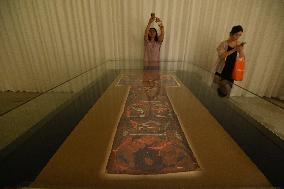
CHANGSHA, CHINA - SEPTEMBER 11, 2024 - An exhibition of Women's Relics from the Han and Roman Dynasties is on display at the Hunan Museum in Changsha, Central China's Hunan province, Sept 11, 2024. More than 200 sets of cultural relics related to women in China's Han Dynasty and Ancient Rome reproduce the colorful lives of women in Eastern and Western cultures 2,000 years ago.

  • Main
  • Top
  • Editorial
  • Creative
  • About Us
  • About ILG
  • Terms of use
  • Company
  • BEHIND
  • Price List
  • Single Plan
  • Monthly Plan
  • Services
  • Shooting
  • Rights Clearance
  • Support
  • FAQ
  • How To Buy
  • Contact Us
  • Become a Partner

© KYODO NEWS IMAGES INC

All Rights Reserved.

  • Editorial
  • Olympics
  • News
  • Sports
  • Japan
  • Tech
  • Royal
  • Disaster
  • NorthKorea
  • Old Japan
  • SNS
  • Creative
  • Food
  • Japan
  • Landscape
  • Animal
  • Popular
  • #Ukraine
  • #China
  • #coronavirus
  • #N. Korea
  • #Thailand
  • #Russia
  • #Ukraine
  • #China
  • #coronavirus
  • #N. Korea
  • #Thailand
  • #Russia
  • Food
  • Japan
  • Landscape
  • Animal
  • Olympics
  • News
  • Sports
  • Japan
  • Tech
  • Royal
  • Disaster
  • NorthKorea
  • Old Japan
  • SNS