•  
RELAY Communications Satellite

RELAY Communications Satellite

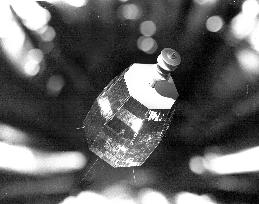
The RELAY communications satellite shown in a December 11, 1962 photo released by NASA. The 172-pound spacecraft eight sided prism is 33 inches high and 29 inches in diameter at tis broad end. The exterior composed of eight honeycomb aluminum panels studded with 8,215 solar cells. The communications satellite prime function will be used for technical experiments although public demonstrations of television, telephone calls, teletype photo facsimile, and high speed data will be transmitted. The 18-inch long wideband communications antenna points toward the Earth while Relay travels through space. Three of the four telemetry antennas are shown extending from the broad end. Mounted on the center panel are special solar cells and diodes which will be tested for radiation damage. Relay 1 was launched atop a Delta B rocket on December 13, 1962, from LC-17A at Cape Canaveral Air Force Station. Credit: NASA via CNP

  •  
Dreamliner battery probe

Dreamliner battery probe

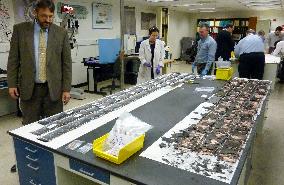
WASHINGTON, United States - Photo shows parts of a decomposed battery from a Japan Airlines Co. Dreamliner jet, unveiled to the media at the office of the U.S. National Transportation Safety Board in Washington on Jan. 24, 2013. The panel, which is looking into an electric fire on the aircraft at Boston airport earlier in January, said that three of eight cells composing the lithium-ion battery were particularly damaged.

  •  
Dreamliner battery probe

Dreamliner battery probe

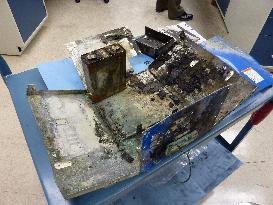
WASHINGTON, United States - Photo shows a battery of a Japan Airlines Co. Dreamliner jet unveiled to the media at the office of the U.S. National Transportation Safety Board in Washington on Jan. 24, 2013. The panel, which is looking into an electric fire on the aircraft at Boston airport earlier in January, said that three of eight cells composing the lithium-ion battery were particularly damaged.

  •  
Amazing survival power of water bears

Amazing survival power of water bears

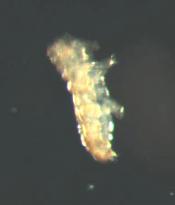
TOKYO, Japan - Water bears, a slow-moving animal measuring less than 1 millimeter in length (photo), can survive extremely high atmospheric pressure equivalent to 75,000 atmospheres, according to experiments conducted by researchers at Okayama University. The eight-legged water bears are known to survive in extreme environmental conditions, such as minus 250 C temperatures, extreme dryness and heavy radiation. Fumihisa Ono, an Okayama University physics professor involved in the project, says researchers applied 75,000 atmospheres of pressure to 20 dried up water bears and found that they all came back to life six hours later when they were given water moisture. Five of them were still alive 12 hours later. Scientists say the cells of most animals die when exposed to more than 3,000 atmospheres. (Photo provided by Fumihisa Ono) (Kyodo)

  • Main
  • Top
  • Editorial
  • Creative
  • About Us
  • About ILG
  • Terms of use
  • Company
  • BEHIND
  • Price List
  • Single Plan
  • Monthly Plan
  • Services
  • Shooting
  • Rights Clearance
  • Support
  • FAQ
  • How To Buy
  • Contact Us
  • Become a Partner

© KYODO NEWS IMAGES INC

All Rights Reserved.

  • Editorial
  • Olympics
  • News
  • Sports
  • Japan
  • Tech
  • Royal
  • Disaster
  • NorthKorea
  • Old Japan
  • SNS
  • Creative
  • Food
  • Japan
  • Landscape
  • Animal
  • Popular
  • #Ukraine
  • #Russia
  • #coronavirus
  • #N. Korea
  • #Thailand
  • #China
  • #Ukraine
  • #Russia
  • #coronavirus
  • #N. Korea
  • #Thailand
  • #China
  • Food
  • Japan
  • Landscape
  • Animal
  • Olympics
  • News
  • Sports
  • Japan
  • Tech
  • Royal
  • Disaster
  • NorthKorea
  • Old Japan
  • SNS