•  
Cluj-Napoca in Romania

Cluj-Napoca in Romania

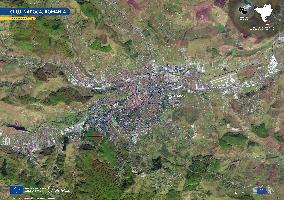
Handout photo dated on October 17, 2025 shows Cluj-Napoca in Romania. On 17 October 2025, one of the Copernicus Sentinel-2 satellites acquired this image of Cluj-Napoca, a major urban centre in north-western Romania. Surrounded by rolling hills and agricultural land, the city is noted for its dynamic growth and strategic role in regional development. Cluj-Napoca also received the label of the EU Mission for Climate-Neutral and Smart Cities in 2023. Cluj-Napoca is currently one of ten pilot cities selected for the Horizon Europe CLMS-Cities project, which combines satellite-based products from the Copernicus Land Monitoring Service (CLMS) with additional environmental and urban data to improve modelling of urban-scale CO₂ emissions. These integrated datasets help local authorities in tracking changes and designing more effective climate strategies, thereby supporting the development of data-driven urban policies aligned with the European Green Deal. Photo by European Union, Copernicus Sentinel-2 imagery via AB

  •  
Air Pollution in Bangladesh

Air Pollution in Bangladesh

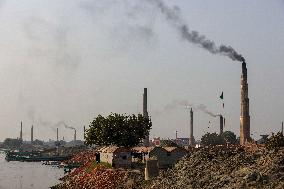
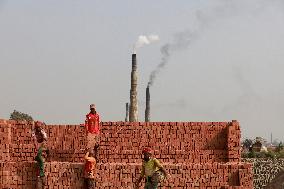
Smoke rises from the chimneys of brickfields in Keraniganj, on the outskirts of Dhaka, Bangladesh, on 27 November 2025. Emissions from traditional brick kilns remain a major contributor to the country’s severe air pollution, posing ongoing risks to both the environment and the health of the workers exposed to these hazardous conditions. Photo by Suvra Kanti Das/ABACAPRESS.COM

  •  
Air Pollution in Bangladesh

Air Pollution in Bangladesh

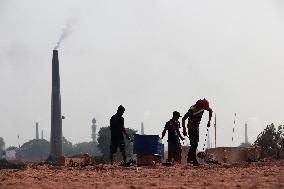
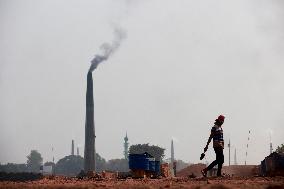
Brick kiln workers labor amid thick smoke rising from the chimney in Keraniganj, on the outskirts of Dhaka, Bangladesh, on 27 November 2025. Emissions from traditional brick kilns remain a major contributor to the country’s severe air pollution, posing ongoing risks to both the environment and the health of those who work in these hazardous conditions. Photo by Suvra Kanti Das/ABACAPRESS.COM

  •  
Air Pollution in Bangladesh

Air Pollution in Bangladesh

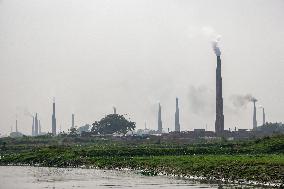
Smoke rises from the chimneys of brickfields in Keraniganj, on the outskirts of Dhaka, Bangladesh, on 27 November 2025. Emissions from traditional brick kilns remain a major contributor to the country’s severe air pollution, posing ongoing risks to both the environment and the health of the workers exposed to these hazardous conditions. Photo by Suvra Kanti Das/ABACAPRESS.COM

  •  
Air Pollution in Bangladesh

Air Pollution in Bangladesh

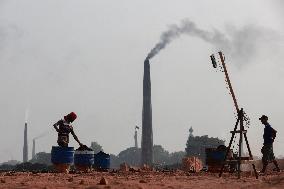
Brick kiln workers labor amid thick smoke rising from the chimney in Keraniganj, on the outskirts of Dhaka, Bangladesh, on 27 November 2025. Emissions from traditional brick kilns remain a major contributor to the country’s severe air pollution, posing ongoing risks to both the environment and the health of those who work in these hazardous conditions. Photo by Suvra Kanti Das/ABACAPRESS.COM

  •  
Air Pollution in Bangladesh

Air Pollution in Bangladesh

Brick kiln workers labor amid thick smoke rising from the chimney in Keraniganj, on the outskirts of Dhaka, Bangladesh, on 27 November 2025. Emissions from traditional brick kilns remain a major contributor to the country’s severe air pollution, posing ongoing risks to both the environment and the health of those who work in these hazardous conditions. Photo by Suvra Kanti Das/ABACAPRESS.COM

  •  
Air Pollution in Bangladesh

Air Pollution in Bangladesh

Brick kiln workers labor amid thick smoke rising from the chimney in Keraniganj, on the outskirts of Dhaka, Bangladesh, on 27 November 2025. Emissions from traditional brick kilns remain a major contributor to the country’s severe air pollution, posing ongoing risks to both the environment and the health of those who work in these hazardous conditions. Photo by Suvra Kanti Das/ABACAPRESS.COM

  •  
Air Pollution in Bangladesh

Air Pollution in Bangladesh

Smoke rises from the chimneys of brickfields in Keraniganj, on the outskirts of Dhaka, Bangladesh, on 27 November 2025. Emissions from traditional brick kilns remain a major contributor to the country’s severe air pollution, posing ongoing risks to both the environment and the health of the workers exposed to these hazardous conditions. Photo by Suvra Kanti Das/ABACAPRESS.COM

  •  
Air Pollution in Bangladesh

Air Pollution in Bangladesh

Brick kiln workers labor amid thick smoke rising from the chimney in Keraniganj, on the outskirts of Dhaka, Bangladesh, on 27 November 2025. Emissions from traditional brick kilns remain a major contributor to the country’s severe air pollution, posing ongoing risks to both the environment and the health of those who work in these hazardous conditions. Photo by Suvra Kanti Das/ABACAPRESS.COM

  •  
First images From Copernicus Sentinel-5A

First images From Copernicus Sentinel-5A

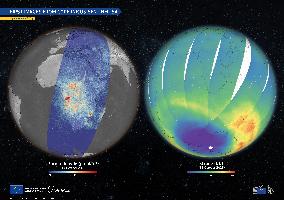
Handout photo dated October 13, 2025 shows Copernicus Sentinel-5A has delivered its first images after its launch on 13 August 2025, marking a significant milestone in the monitoring of air quality from space. The Sentinel-5 mission provides observations of key air pollutants, essential climate variables, and stratospheric ozone, which is the protective layer shielding life on Earth from harmful ultraviolet radiation. This visualisation, created with Sentinel-5A data acquired on 13 October 2025, shows atmospheric concentrations of two trace gases: ozone (O₃) and formaldehyde (HCHO). The image on the left presents the formaldehyde vertical column density. Elevated concentrations along the northwestern coast of Angola are linked to emissions from wildfires, while increased levels over the Central African Republic stem from a combination of fire activity and biogenic emissions. The image on the right shows a global map of ozone. The hole in stratospheric ozone above Antarctica is clearly visible, with column den

  •  
Satellite Views of Hayli Gubbi Volcano Eruption

Satellite Views of Hayli Gubbi Volcano Eruption

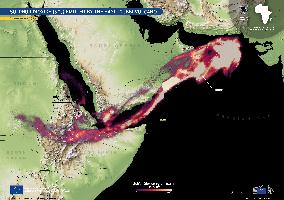
Handout photo dated on November 23, 2025 shows The Day Atmosphere Air Pollution Dust & Haze Volcanoes. On 23 November 2025, the Hayli Gubbi volcano in Ethiopia, located approximately 800 kilometres north-east of Addis Ababa, erupted for the first time in nearly 12,000 years. As a result of the eruption, a large sulfur dioxide (SO₂) plume was emitted into the atmosphere. This image, derived from data acquired by the Copernicus Sentinel-5P satellite on 24 November, shows the plume extending for approximately 3,700 kilometres from Ethiopia to the Arabian Sea. The atmospheric monitoring capabilities of Copernicus Sentinel-5P support the detection and tracking of volcanic gas emissions, which are important for aviation safety, air quality assessments, and climate monitoring. Photo by European Union, Copernicus Sentinel-5P imagery via ABACAPRESS.COM

  •  
Environmental Pollution In Bangladesh

Environmental Pollution In Bangladesh

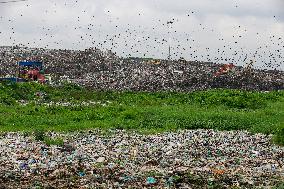
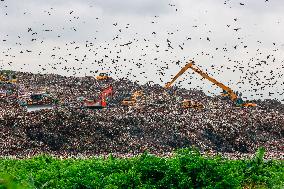
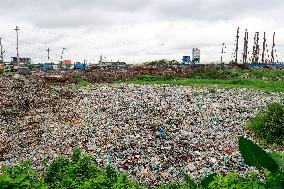
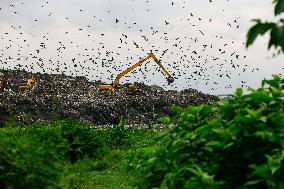
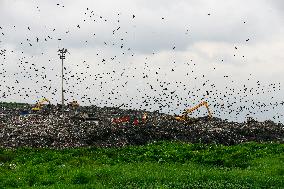
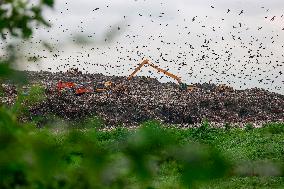
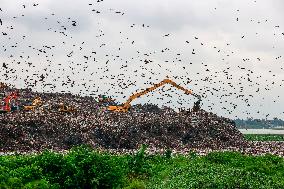
October 02, 2025, Outskirts of Dhaka, Bangladesh: Birds swarm over a massive dumpyard on the outskirts of Dhaka, where mountains of waste and heavy machinery dominate the landscape. The landfill, a major source of environmental pollution, threatens nearby habitats and forces birds to forage dangerously close to toxic waste. To free up space, the city authorities often resort to burning solid waste, according to garbage collectors, releasing carbon dioxide (CO₂), nitrogen compounds, ammonia, sulfides, and other hazardous gases into the air, not to mention the foul smell that envelops an area of at least three-square kilometres. Environmental experts warn that CH₄ emissions significantly contribute to global warming by trapping atmospheric heat. Furthermore, the black smoke produced from burning waste exacerbates air pollution, posing serious health risks to residents. Photo by Suvra Kanti Das/ABACAPRESS.COM

  •  
Environmental Pollution In Bangladesh

Environmental Pollution In Bangladesh

October 02, 2025, Outskirts of Dhaka, Bangladesh: Birds swarm over a massive dumpyard on the outskirts of Dhaka, where mountains of waste and heavy machinery dominate the landscape. The landfill, a major source of environmental pollution, threatens nearby habitats and forces birds to forage dangerously close to toxic waste. To free up space, the city authorities often resort to burning solid waste, according to garbage collectors, releasing carbon dioxide (CO₂), nitrogen compounds, ammonia, sulfides, and other hazardous gases into the air, not to mention the foul smell that envelops an area of at least three-square kilometres. Environmental experts warn that CH₄ emissions significantly contribute to global warming by trapping atmospheric heat. Furthermore, the black smoke produced from burning waste exacerbates air pollution, posing serious health risks to residents. Photo by Suvra Kanti Das/ABACAPRESS.COM

  •  
Environmental Pollution In Bangladesh

Environmental Pollution In Bangladesh

October 02, 2025, Outskirts of Dhaka, Bangladesh: Birds swarm over a massive dumpyard on the outskirts of Dhaka, where mountains of waste and heavy machinery dominate the landscape. The landfill, a major source of environmental pollution, threatens nearby habitats and forces birds to forage dangerously close to toxic waste. To free up space, the city authorities often resort to burning solid waste, according to garbage collectors, releasing carbon dioxide (CO₂), nitrogen compounds, ammonia, sulfides, and other hazardous gases into the air, not to mention the foul smell that envelops an area of at least three-square kilometres. Environmental experts warn that CH₄ emissions significantly contribute to global warming by trapping atmospheric heat. Furthermore, the black smoke produced from burning waste exacerbates air pollution, posing serious health risks to residents. Photo by Suvra Kanti Das/ABACAPRESS.COM

  •  
Environmental Pollution In Bangladesh

Environmental Pollution In Bangladesh

October 02, 2025, Outskirts of Dhaka, Bangladesh: Birds swarm over a massive dumpyard on the outskirts of Dhaka, where mountains of waste and heavy machinery dominate the landscape. The landfill, a major source of environmental pollution, threatens nearby habitats and forces birds to forage dangerously close to toxic waste. To free up space, the city authorities often resort to burning solid waste, according to garbage collectors, releasing carbon dioxide (CO₂), nitrogen compounds, ammonia, sulfides, and other hazardous gases into the air, not to mention the foul smell that envelops an area of at least three-square kilometres. Environmental experts warn that CH₄ emissions significantly contribute to global warming by trapping atmospheric heat. Furthermore, the black smoke produced from burning waste exacerbates air pollution, posing serious health risks to residents. Photo by Suvra Kanti Das/ABACAPRESS.COM

  •  
Environmental Pollution In Bangladesh

Environmental Pollution In Bangladesh

October 02, 2025, Outskirts of Dhaka, Bangladesh: Birds swarm over a massive dumpyard on the outskirts of Dhaka, where mountains of waste and heavy machinery dominate the landscape. The landfill, a major source of environmental pollution, threatens nearby habitats and forces birds to forage dangerously close to toxic waste. To free up space, the city authorities often resort to burning solid waste, according to garbage collectors, releasing carbon dioxide (CO₂), nitrogen compounds, ammonia, sulfides, and other hazardous gases into the air, not to mention the foul smell that envelops an area of at least three-square kilometres. Environmental experts warn that CH₄ emissions significantly contribute to global warming by trapping atmospheric heat. Furthermore, the black smoke produced from burning waste exacerbates air pollution, posing serious health risks to residents. Photo by Suvra Kanti Das/ABACAPRESS.COM

  •  
Environmental Pollution In Bangladesh

Environmental Pollution In Bangladesh

October 02, 2025, Outskirts of Dhaka, Bangladesh: Birds swarm over a massive dumpyard on the outskirts of Dhaka, where mountains of waste and heavy machinery dominate the landscape. The landfill, a major source of environmental pollution, threatens nearby habitats and forces birds to forage dangerously close to toxic waste. To free up space, the city authorities often resort to burning solid waste, according to garbage collectors, releasing carbon dioxide (CO₂), nitrogen compounds, ammonia, sulfides, and other hazardous gases into the air, not to mention the foul smell that envelops an area of at least three-square kilometres. Environmental experts warn that CH₄ emissions significantly contribute to global warming by trapping atmospheric heat. Furthermore, the black smoke produced from burning waste exacerbates air pollution, posing serious health risks to residents. Photo by Suvra Kanti Das/ABACAPRESS.COM

  •  
Environmental Pollution In Bangladesh

Environmental Pollution In Bangladesh

October 02, 2025, Outskirts of Dhaka, Bangladesh: Birds swarm over a massive dumpyard on the outskirts of Dhaka, where mountains of waste and heavy machinery dominate the landscape. The landfill, a major source of environmental pollution, threatens nearby habitats and forces birds to forage dangerously close to toxic waste. To free up space, the city authorities often resort to burning solid waste, according to garbage collectors, releasing carbon dioxide (CO₂), nitrogen compounds, ammonia, sulfides, and other hazardous gases into the air, not to mention the foul smell that envelops an area of at least three-square kilometres. Environmental experts warn that CH₄ emissions significantly contribute to global warming by trapping atmospheric heat. Furthermore, the black smoke produced from burning waste exacerbates air pollution, posing serious health risks to residents. Photo by Suvra Kanti Das/ABACAPRESS.COM

  •  
Construction Site of An Offshore Photovoltaic Power Plant - China

Construction Site of An Offshore Photovoltaic Power Plant - China

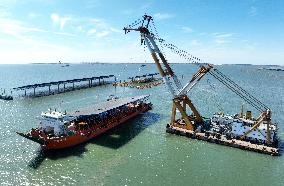
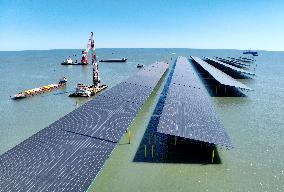
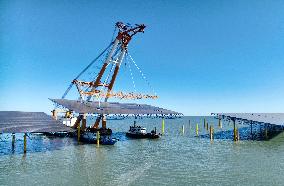
A drone photo taken on September 18, 2025 shows the construction site of an offshore photovoltaic power plant in Changli County, north China's Hebei Province. At present, a pilot offshore photovoltaic demonstration project of Hebei Province, with a designed installed capacity of 1.8 million kilowatts, is being advanced steadily at the sea area of Changli County. Upon completion, it is expected to generate about 2.7 billion kilowatt-hours of electricity annually, saving 840,000 tonnes of standard coal and reducing 2.16 million tonnes of carbon dioxide emissions each year. Photo by Xinhua/Yang Shiyao/ABACAPRESS.COM

  •  
Construction Site of An Offshore Photovoltaic Power Plant - China

Construction Site of An Offshore Photovoltaic Power Plant - China

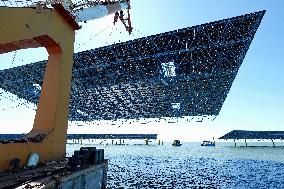
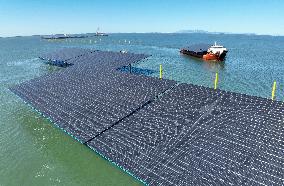
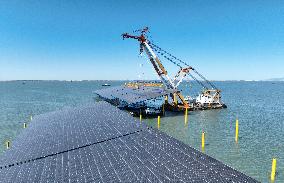
This photo taken on September 18, 2025 shows the construction site of an offshore photovoltaic power plant in Changli County, north China's Hebei Province. At present, a pilot offshore photovoltaic demonstration project of Hebei Province, with a designed installed capacity of 1.8 million kilowatts, is being advanced steadily at the sea area of Changli County. Upon completion, it is expected to generate about 2.7 billion kilowatt-hours of electricity annually, saving 840,000 tonnes of standard coal and reducing 2.16 million tonnes of carbon dioxide emissions each year. Photo by Xinhua/Yang Shiyao/ABACAPRESS.COM

  •  
Construction Site of An Offshore Photovoltaic Power Plant - China

Construction Site of An Offshore Photovoltaic Power Plant - China

A drone photo taken on September 18, 2025 shows the construction site of an offshore photovoltaic power plant in Changli County, north China's Hebei Province. At present, a pilot offshore photovoltaic demonstration project of Hebei Province, with a designed installed capacity of 1.8 million kilowatts, is being advanced steadily at the sea area of Changli County. Upon completion, it is expected to generate about 2.7 billion kilowatt-hours of electricity annually, saving 840,000 tonnes of standard coal and reducing 2.16 million tonnes of carbon dioxide emissions each year. Photo by Xinhua/Yang Shiyao/ABACAPRESS.COM

  •  
Construction Site of An Offshore Photovoltaic Power Plant - China

Construction Site of An Offshore Photovoltaic Power Plant - China

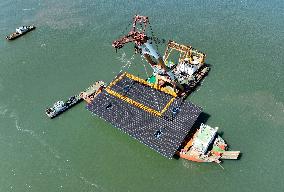
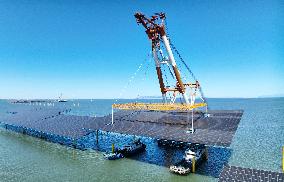
A drone photo taken on September 18, 2025 shows a ship transporting photovoltaic power generation panels at the construction site of an offshore photovoltaic power plant in Changli County, north China's Hebei Province. At present, a pilot offshore photovoltaic demonstration project of Hebei Province, with a designed installed capacity of 1.8 million kilowatts, is being advanced steadily at the sea area of Changli County. Upon completion, it is expected to generate about 2.7 billion kilowatt-hours of electricity annually, saving 840,000 tonnes of standard coal and reducing 2.16 million tonnes of carbon dioxide emissions each year. Photo by Xinhua/Yang Shiyao/ABACAPRESS.COM

  •  
Construction Site of An Offshore Photovoltaic Power Plant - China

Construction Site of An Offshore Photovoltaic Power Plant - China

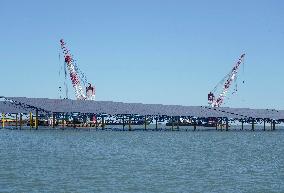
This photo taken on September 18, 2025 shows the construction site of an offshore photovoltaic power plant in Changli County, north China's Hebei Province. At present, a pilot offshore photovoltaic demonstration project of Hebei Province, with a designed installed capacity of 1.8 million kilowatts, is being advanced steadily at the sea area of Changli County. Upon completion, it is expected to generate about 2.7 billion kilowatt-hours of electricity annually, saving 840,000 tonnes of standard coal and reducing 2.16 million tonnes of carbon dioxide emissions each year. Photo by Xinhua/Yang Shiyao/ABACAPRESS.COM

  •  
Construction Site of An Offshore Photovoltaic Power Plant - China

Construction Site of An Offshore Photovoltaic Power Plant - China

A drone photo taken on September 18, 2025 shows the construction site of an offshore photovoltaic power plant in Changli County, north China's Hebei Province. At present, a pilot offshore photovoltaic demonstration project of Hebei Province, with a designed installed capacity of 1.8 million kilowatts, is being advanced steadily at the sea area of Changli County. Upon completion, it is expected to generate about 2.7 billion kilowatt-hours of electricity annually, saving 840,000 tonnes of standard coal and reducing 2.16 million tonnes of carbon dioxide emissions each year. Photo by Xinhua/Yang Shiyao/ABACAPRESS.COM

  •  
Construction Site of An Offshore Photovoltaic Power Plant - China

Construction Site of An Offshore Photovoltaic Power Plant - China

A drone photo taken on September 18, 2025 shows the construction site of an offshore photovoltaic power plant in Changli County, north China's Hebei Province. At present, a pilot offshore photovoltaic demonstration project of Hebei Province, with a designed installed capacity of 1.8 million kilowatts, is being advanced steadily at the sea area of Changli County. Upon completion, it is expected to generate about 2.7 billion kilowatt-hours of electricity annually, saving 840,000 tonnes of standard coal and reducing 2.16 million tonnes of carbon dioxide emissions each year. Photo by Xinhua/Yang Shiyao/ABACAPRESS.COM

  •  
Construction Site of An Offshore Photovoltaic Power Plant - China

Construction Site of An Offshore Photovoltaic Power Plant - China

A drone photo taken on September 18, 2025 shows the construction site of an offshore photovoltaic power plant in Changli County, north China's Hebei Province. At present, a pilot offshore photovoltaic demonstration project of Hebei Province, with a designed installed capacity of 1.8 million kilowatts, is being advanced steadily at the sea area of Changli County. Upon completion, it is expected to generate about 2.7 billion kilowatt-hours of electricity annually, saving 840,000 tonnes of standard coal and reducing 2.16 million tonnes of carbon dioxide emissions each year. Photo by Xinhua/Yang Shiyao/ABACAPRESS.COM

  •  
Construction Site of An Offshore Photovoltaic Power Plant - China

Construction Site of An Offshore Photovoltaic Power Plant - China

A drone photo taken on September 18, 2025 shows the construction site of an offshore photovoltaic power plant in Changli County, north China's Hebei Province. At present, a pilot offshore photovoltaic demonstration project of Hebei Province, with a designed installed capacity of 1.8 million kilowatts, is being advanced steadily at the sea area of Changli County. Upon completion, it is expected to generate about 2.7 billion kilowatt-hours of electricity annually, saving 840,000 tonnes of standard coal and reducing 2.16 million tonnes of carbon dioxide emissions each year. Photo by Xinhua/Yang Shiyao/ABACAPRESS.COM

  •  
CO2-reducing pavement at Osaka expo

CO2-reducing pavement at Osaka expo

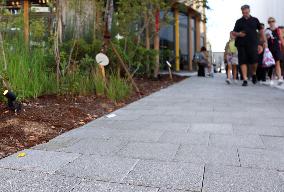
Photo taken on Aug. 21, 2025, shows pavement on the premises of Germany's pavilion at the World Exposition in Osaka, made of blocks containing woodchips for absorption and containment of carbon dioxide emissions in the air.

  •  
World First Super-scale Zero-carbon Building in Qingdao

World First Super-scale Zero-carbon Building in Qingdao

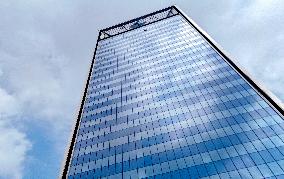
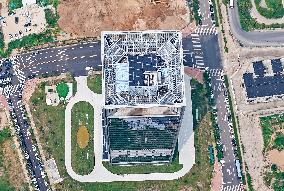
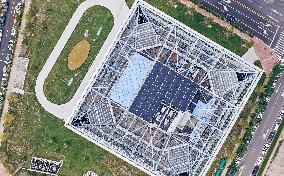
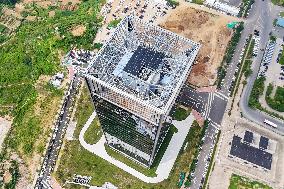
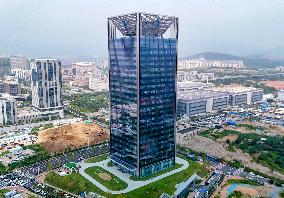
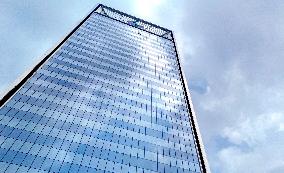
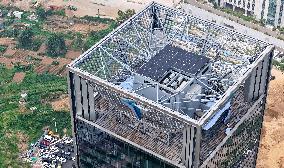
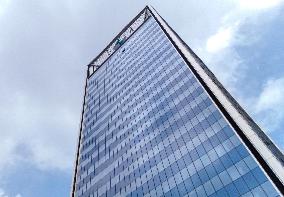
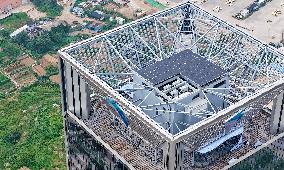
QINGDAO, CHINA - AUGUST 25, 2025 - The world's first "super-scale zero-carbon building", Qingdao, Shandong Province, China on August 25, 2025. This building has achieved 100% self-sufficiency in green electricity through technologies such as integrated photovoltaic curtain walls, secondary battery energy storage, and the coordinated charging and discharging of new energy vehicles, reducing carbon emissions by approximately 2,500 tons annually.

  •  
World First Super-scale Zero-carbon Building in Qingdao

World First Super-scale Zero-carbon Building in Qingdao

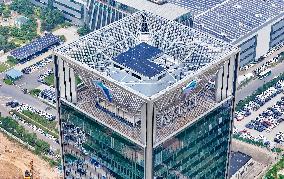
QINGDAO, CHINA - AUGUST 25, 2025 - The integrated photovoltaic glass curtain wall of the world's first "ultra-advanced zero-carbon building" provides green energy for the building in Qingdao, Shandong Province, China on August 25, 2025. This building has achieved 100% self-sufficiency in green electricity through technologies such as integrated photovoltaic curtain walls, secondary battery energy storage, and the coordinated charging and discharging of new energy vehicles, reducing carbon emissions by approximately 2,500 tons annually.

  •  
World First Super-scale Zero-carbon Building in Qingdao

World First Super-scale Zero-carbon Building in Qingdao

QINGDAO, CHINA - AUGUST 25, 2025 - The world's first "super-scale zero-carbon building", Qingdao, Shandong Province, China on August 25, 2025. This building has achieved 100% self-sufficiency in green electricity through technologies such as integrated photovoltaic curtain walls, secondary battery energy storage, and the coordinated charging and discharging of new energy vehicles, reducing carbon emissions by approximately 2,500 tons annually.

  •  
World First Super-scale Zero-carbon Building in Qingdao

World First Super-scale Zero-carbon Building in Qingdao

QINGDAO, CHINA - AUGUST 25, 2025 - The world's first "super-scale zero-carbon building", Qingdao, Shandong Province, China, August 25, 2025. This building has achieved 100% self-sufficiency in green electricity through technologies such as integrated photovoltaic curtain walls, secondary battery energy storage, and the coordinated charging and discharging of new energy vehicles, reducing carbon emissions by approximately 2,500 tons annually.

  •  
World First Super-scale Zero-carbon Building in Qingdao

World First Super-scale Zero-carbon Building in Qingdao

QINGDAO, CHINA - AUGUST 25, 2025 - The world's first "super-scale zero-carbon building", Qingdao, Shandong Province, China, August 25, 2025. This building has achieved 100% self-sufficiency in green electricity through technologies such as integrated photovoltaic curtain walls, secondary battery energy storage, and the coordinated charging and discharging of new energy vehicles, reducing carbon emissions by approximately 2,500 tons annually.

  •  
World First Super-scale Zero-carbon Building in Qingdao

World First Super-scale Zero-carbon Building in Qingdao

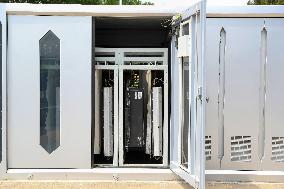
QINGDAO, CHINA - AUGUST 25, 2025 - The world's first "super-advanced zero-carbon building" tiered battery energy storage system stores the excess electricity generated by photovoltaic glass curtain walls and uses it during peak power supply and consumption periods in Qingdao, Shandong Province, China on August 25, 2025. This building has achieved 100% self-sufficiency in green electricity through technologies such as integrated photovoltaic curtain walls, secondary battery energy storage, and the coordinated charging and discharging of new energy vehicles, reducing carbon emissions by approximately 2,500 tons annually.

  •  
World First Super-scale Zero-carbon Building in Qingdao

World First Super-scale Zero-carbon Building in Qingdao

QINGDAO, CHINA - AUGUST 25, 2025 - The world's first "super-scale zero-carbon building", Qingdao, Shandong Province, China on August 25, 2025. This building has achieved 100% self-sufficiency in green electricity through technologies such as integrated photovoltaic curtain walls, secondary battery energy storage, and the coordinated charging and discharging of new energy vehicles, reducing carbon emissions by approximately 2,500 tons annually.

  •  
World First Super-scale Zero-carbon Building in Qingdao

World First Super-scale Zero-carbon Building in Qingdao

QINGDAO, CHINA - AUGUST 25, 2025 - The fully automatic ultra-fast three-dimensional parking system of the wTorld's first "ultra-advanced zero-carbon building" only requires 300 vehicles to provide 10 kilowatt-hours of electricity per day to solve nearly half of the building's energy consumption. Qingdao, Shandong Province, China on August 25, 2025. This building has achieved 100% self-sufficiency in green electricity through technologies such as integrated photovoltaic curtain walls, secondary battery energy storage, and the coordinated charging and discharging of new energy vehicles, reducing carbon emissions by approximately 2,500 tons annually.

  •  
World First Super-scale Zero-carbon Building in Qingdao

World First Super-scale Zero-carbon Building in Qingdao

QINGDAO, CHINA - AUGUST 25, 2025 - The world's first "super-scale zero-carbon building", Qingdao, Shandong Province, China on August 25, 2025. This building has achieved 100% self-sufficiency in green electricity through technologies such as integrated photovoltaic curtain walls, secondary battery energy storage, and the coordinated charging and discharging of new energy vehicles, reducing carbon emissions by approximately 2,500 tons annually.

  •  
World First Super-scale Zero-carbon Building in Qingdao

World First Super-scale Zero-carbon Building in Qingdao

QINGDAO, CHINA - AUGUST 25, 2025 - The world's first "super-scale zero-carbon building", Qingdao, Shandong Province, China on August 25, 2025. This building has achieved 100% self-sufficiency in green electricity through technologies such as integrated photovoltaic curtain walls, secondary battery energy storage, and the coordinated charging and discharging of new energy vehicles, reducing carbon emissions by approximately 2,500 tons annually.

  •  
World First Super-scale Zero-carbon Building in Qingdao

World First Super-scale Zero-carbon Building in Qingdao

QINGDAO, CHINA - AUGUST 25, 2025 - The integrated photovoltaic glass curtain wall of the world's first "ultra-advanced zero-carbon building" provides green energy for the building in Qingdao, Shandong Province, China on August 25, 2025. This building has achieved 100% self-sufficiency in green electricity through technologies such as integrated photovoltaic curtain walls, secondary battery energy storage, and the coordinated charging and discharging of new energy vehicles, reducing carbon emissions by approximately 2,500 tons annually.

  •  
World First Super-scale Zero-carbon Building in Qingdao

World First Super-scale Zero-carbon Building in Qingdao

QINGDAO, CHINA - AUGUST 25, 2025 - The integrated photovoltaic glass curtain wall of the world's first "ultra-advanced zero-carbon building" provides green energy for the building in Qingdao, Shandong Province, China on August 25, 2025. This building has achieved 100% self-sufficiency in green electricity through technologies such as integrated photovoltaic curtain walls, secondary battery energy storage, and the coordinated charging and discharging of new energy vehicles, reducing carbon emissions by approximately 2,500 tons annually.

  •  
World First Super-scale Zero-carbon Building in Qingdao

World First Super-scale Zero-carbon Building in Qingdao

QINGDAO, CHINA - AUGUST 25, 2025 - The world's first "super-scale zero-carbon building", Qingdao, Shandong Province, China on August 25, 2025. This building has achieved 100% self-sufficiency in green electricity through technologies such as integrated photovoltaic curtain walls, secondary battery energy storage, and the coordinated charging and discharging of new energy vehicles, reducing carbon emissions by approximately 2,500 tons annually.

  •  
World First Super-scale Zero-carbon Building in Qingdao

World First Super-scale Zero-carbon Building in Qingdao

QINGDAO, CHINA - AUGUST 25, 2025 - The integrated photovoltaic glass curtain wall of the world's first "ultra-advanced zero-carbon building" provides green energy for the building in Qingdao, Shandong Province, China on August 25, 2025. This building has achieved 100% self-sufficiency in green electricity through technologies such as integrated photovoltaic curtain walls, secondary battery energy storage, and the coordinated charging and discharging of new energy vehicles, reducing carbon emissions by approximately 2,500 tons annually.

  •  
World First Super-scale Zero-carbon Building in Qingdao

World First Super-scale Zero-carbon Building in Qingdao

QINGDAO, CHINA - AUGUST 25, 2025 - The world's first "super-scale zero-carbon building", Qingdao, Shandong Province, China, August 25, 2025. This building has achieved 100% self-sufficiency in green electricity through technologies such as integrated photovoltaic curtain walls, secondary battery energy storage, and the coordinated charging and discharging of new energy vehicles, reducing carbon emissions by approximately 2,500 tons annually.

  •  
World First Super-scale Zero-carbon Building in Qingdao

World First Super-scale Zero-carbon Building in Qingdao

QINGDAO, CHINA - AUGUST 25, 2025 - The world's first "super-scale zero-carbon building", Qingdao, Shandong Province, China on August 25, 2025. This building has achieved 100% self-sufficiency in green electricity through technologies such as integrated photovoltaic curtain walls, secondary battery energy storage, and the coordinated charging and discharging of new energy vehicles, reducing carbon emissions by approximately 2,500 tons annually.

  •  
Satellite View of Severe wildfires in Spain and Portugal

Satellite View of Severe wildfires in Spain and Portugal

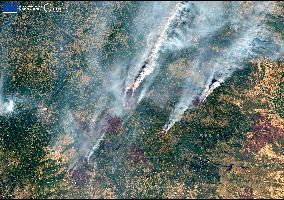
Handout photo dated on August 16, 2025 shows Massive wildfires are spreading in north-west and western Spain, forcing the evacuation of thousands of residents. By 17 August 2025, Spain had already recorded its highest annual total of estimated fire emissions in the 23-year Copernicus Atmosphere Monitoring Service (CAMS) dataset. This Copernicus Sentinel-2 image acquired on 16 August 2025 shows dense smoke plumes rising from active fires near the city of Ourense, located in the autonomous community of Galicia, northwestern Spain. Portugal has also been severely affected by the fires, with northern and central regions hit the hardest. According to CAMS data, the country’s estimated emissions have nearly reached the highest annual totals of 2003 and 2005. To support national authorities, the Copernicus Emergency Management Service (CEMS) has been activated to provide emergency mapping services. Further information is available here. Spain, Portugal. Photo by European Union, Copernicus Sentinel-2 imagery via ABAC

  •  
Canada Wildfires Impact North America's Air Quality

Canada Wildfires Impact North America's Air Quality

Handout photo dated on August 3, 2025, shows Canada is currently facing an intense fire season, with hundreds of active wildfires across Saskatchewan, Alberta, and Manitoba, prompting the evacuation of thousands of residents. Smoke from these fires has severely degraded air quality both locally and across borders, including the United States. This false colour image, acquired by one of the Copernicus Sentinel-3 satellites on 3 August 2025, shows the smoke cloud from the wildfires engulfing skies over Canada and the US. According to the Copernicus Atmosphere Monitoring Service (CAMS), June and July 2025 saw severe wildfire activity in Canada, with daily total wildfire intensity and emissions consistently above the 2003-2024 average throughout the summer. August 3, 2025. Photo by European Union, Copernicus Sentinel-3 imagery via ABACAPRESS.COM

  •  
Trump administration moves to repeal Biden climate rules

Trump administration moves to repeal Biden climate rules

U.S. Environmental Protection Agency Administrator Lee Zeldin speaks at a press conference in Washington on June 11, 2025, announcing that the administration of President Donald Trump has proposed repealing rules passed under former President Joe Biden to curb greenhouse gas emissions, mercury and other air pollutants from power plants.

  •  
Trump administration moves to repeal Biden climate rules

Trump administration moves to repeal Biden climate rules

U.S. Environmental Protection Agency Administrator Lee Zeldin speaks at a press conference in Washington on June 11, 2025, announcing that the administration of President Donald Trump has proposed repealing rules passed under former President Joe Biden to curb greenhouse gas emissions, mercury and other air pollutants from power plants.

  •  
Ecological Planning Council - Paris

Ecological Planning Council - Paris

President Emmanuel Macron and Prime Minister Francois Bayrou at the Elysee Presidential palace in Paris on March 31, 2025. France's President is convening an ecological planning council on March 31, 2025 to mark a "remobilisation", particularly in the areas of transport and housing, after the rate of decline in French emissions ran out of steam last year, the Elysee Palace said on March 28, 2025. Photo by Eric Tschaen/Pool/ABACAPRESS.COM

  •  
Ecological Planning Council - Paris

Ecological Planning Council - Paris

President Emmanuel Macron and Prime Minister Francois Bayrou at the Elysee Presidential palace in Paris on March 31, 2025. France's President is convening an ecological planning council on March 31, 2025 to mark a "remobilisation", particularly in the areas of transport and housing, after the rate of decline in French emissions ran out of steam last year, the Elysee Palace said on March 28, 2025. Photo by Eric Tschaen/Pool/ABACAPRESS.COM

  • Main
  • Top
  • Editorial
  • Creative
  • About Us
  • About ILG
  • Terms of use
  • Company
  • BEHIND
  • Price List
  • Single Plan
  • Monthly Plan
  • Services
  • Shooting
  • Rights Clearance
  • Support
  • FAQ
  • How To Buy
  • Contact Us
  • Become a Partner

© KYODO NEWS IMAGES INC

All Rights Reserved.

  • Editorial
  • Olympics
  • News
  • Sports
  • Japan
  • Tech
  • Royal
  • Disaster
  • NorthKorea
  • Old Japan
  • SNS
  • Creative
  • Food
  • Japan
  • Landscape
  • Animal
  • Popular
  • #Ukraine
  • #Thailand
  • #coronavirus
  • #N. Korea
  • #China
  • #Russia
  • #Ukraine
  • #Thailand
  • #coronavirus
  • #N. Korea
  • #China
  • #Russia
  • Food
  • Japan
  • Landscape
  • Animal
  • Olympics
  • News
  • Sports
  • Japan
  • Tech
  • Royal
  • Disaster
  • NorthKorea
  • Old Japan
  • SNS