•  
Giant Rocks Arrive in Piazza Maggiore - Bologna

Giant Rocks Arrive in Piazza Maggiore - Bologna

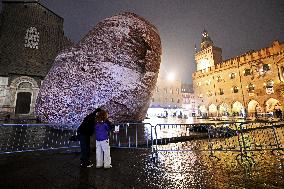
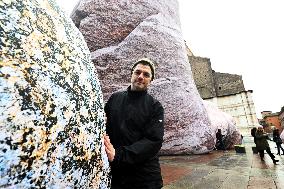
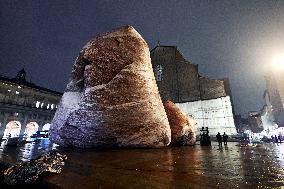
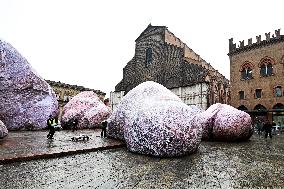
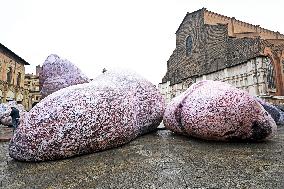
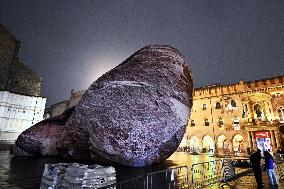
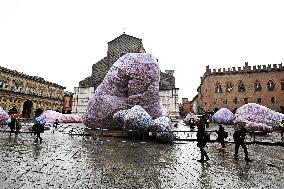
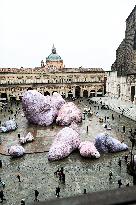
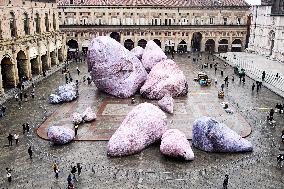
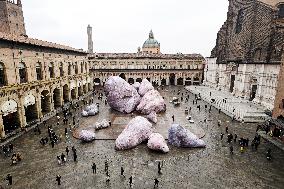
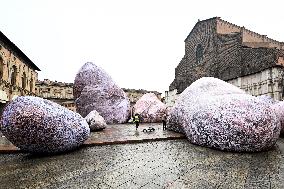
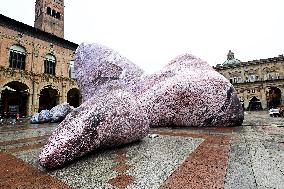
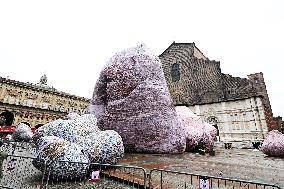
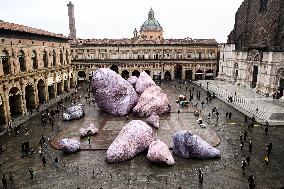
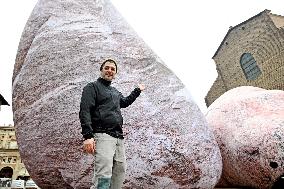
Bologna, megaliths in Piazza Maggiore: enormous inflatable fabric boulders – representing Illumia and Bologna Festival's gift to the city – form the installation 'Iwagumi-Dismisura sul Crescentone'. The installation by Australian studio ENESS Bologna, Italy on December 18, 2025. Photo by Gianni Schicchi/IPA/ABACAPRESS.COM

  •  
Giant Rocks Arrive in Piazza Maggiore - Bologna

Giant Rocks Arrive in Piazza Maggiore - Bologna

Bologna, megaliths in Piazza Maggiore: enormous inflatable fabric boulders – representing Illumia and Bologna Festival's gift to the city – form the installation 'Iwagumi-Dismisura sul Crescentone'. The installation by Australian studio ENESS Bologna, Italy on December 18, 2025. Photo by Gianni Schicchi/IPA/ABACAPRESS.COM

  •  
Giant Rocks Arrive in Piazza Maggiore - Bologna

Giant Rocks Arrive in Piazza Maggiore - Bologna

Bologna, megaliths in Piazza Maggiore: enormous inflatable fabric boulders – representing Illumia and Bologna Festival's gift to the city – form the installation 'Iwagumi-Dismisura sul Crescentone'. The installation by Australian studio ENESS Bologna, Italy on December 18, 2025. Photo by Gianni Schicchi/IPA/ABACAPRESS.COM

  •  
Giant Rocks Arrive in Piazza Maggiore - Bologna

Giant Rocks Arrive in Piazza Maggiore - Bologna

Bologna, megaliths in Piazza Maggiore: enormous inflatable fabric boulders – representing Illumia and Bologna Festival's gift to the city – form the installation 'Iwagumi-Dismisura sul Crescentone'. The installation by Australian studio ENESS Bologna, Italy on December 18, 2025. Photo by Gianni Schicchi/IPA/ABACAPRESS.COM

  •  
Giant Rocks Arrive in Piazza Maggiore - Bologna

Giant Rocks Arrive in Piazza Maggiore - Bologna

Bologna, megaliths in Piazza Maggiore: enormous inflatable fabric boulders – representing Illumia and Bologna Festival's gift to the city – form the installation 'Iwagumi-Dismisura sul Crescentone'. The installation by Australian studio ENESS Bologna, Italy on December 18, 2025. Photo by Gianni Schicchi/IPA/ABACAPRESS.COM

  •  
Giant Rocks Arrive in Piazza Maggiore - Bologna

Giant Rocks Arrive in Piazza Maggiore - Bologna

Bologna, megaliths in Piazza Maggiore: enormous inflatable fabric boulders – representing Illumia and Bologna Festival's gift to the city – form the installation 'Iwagumi-Dismisura sul Crescentone'. The installation by Australian studio ENESS Bologna, Italy on December 18, 2025. Photo by Gianni Schicchi/IPA/ABACAPRESS.COM

  •  
Giant Rocks Arrive in Piazza Maggiore - Bologna

Giant Rocks Arrive in Piazza Maggiore - Bologna

Bologna, megaliths in Piazza Maggiore: enormous inflatable fabric boulders – representing Illumia and Bologna Festival's gift to the city – form the installation 'Iwagumi-Dismisura sul Crescentone'. The installation by Australian studio ENESS Bologna, Italy on December 18, 2025. Photo by Gianni Schicchi/IPA/ABACAPRESS.COM

  •  
Giant Rocks Arrive in Piazza Maggiore - Bologna

Giant Rocks Arrive in Piazza Maggiore - Bologna

Bologna, megaliths in Piazza Maggiore: enormous inflatable fabric boulders – representing Illumia and Bologna Festival's gift to the city – form the installation 'Iwagumi-Dismisura sul Crescentone'. The installation by Australian studio ENESS Bologna, Italy on December 18, 2025. Photo by Gianni Schicchi/IPA/ABACAPRESS.COM

  •  
Giant Rocks Arrive in Piazza Maggiore - Bologna

Giant Rocks Arrive in Piazza Maggiore - Bologna

Bologna, megaliths in Piazza Maggiore: enormous inflatable fabric boulders – representing Illumia and Bologna Festival's gift to the city – form the installation 'Iwagumi-Dismisura sul Crescentone'. The installation by Australian studio ENESS Bologna, Italy on December 18, 2025. Photo by Gianni Schicchi/IPA/ABACAPRESS.COM

  •  
Giant Rocks Arrive in Piazza Maggiore - Bologna

Giant Rocks Arrive in Piazza Maggiore - Bologna

Bologna, megaliths in Piazza Maggiore: enormous inflatable fabric boulders – representing Illumia and Bologna Festival's gift to the city – form the installation 'Iwagumi-Dismisura sul Crescentone'. The installation by Australian studio ENESS Bologna, Italy on December 18, 2025. Photo by Gianni Schicchi/IPA/ABACAPRESS.COM

  •  
Giant Rocks Arrive in Piazza Maggiore - Bologna

Giant Rocks Arrive in Piazza Maggiore - Bologna

Bologna, megaliths in Piazza Maggiore: enormous inflatable fabric boulders – representing Illumia and Bologna Festival's gift to the city – form the installation 'Iwagumi-Dismisura sul Crescentone'. The installation by Australian studio ENESS Bologna, Italy on December 18, 2025. Photo by Gianni Schicchi/IPA/ABACAPRESS.COM

  •  
Giant Rocks Arrive in Piazza Maggiore - Bologna

Giant Rocks Arrive in Piazza Maggiore - Bologna

Bologna, megaliths in Piazza Maggiore: enormous inflatable fabric boulders – representing Illumia and Bologna Festival's gift to the city – form the installation 'Iwagumi-Dismisura sul Crescentone'. The installation by Australian studio ENESS Bologna, Italy on December 18, 2025. Photo by Gianni Schicchi/IPA/ABACAPRESS.COM

  •  
Giant Rocks Arrive in Piazza Maggiore - Bologna

Giant Rocks Arrive in Piazza Maggiore - Bologna

Bologna, megaliths in Piazza Maggiore: enormous inflatable fabric boulders – representing Illumia and Bologna Festival's gift to the city – form the installation 'Iwagumi-Dismisura sul Crescentone'. The installation by Australian studio ENESS Bologna, Italy on December 18, 2025. Photo by Gianni Schicchi/IPA/ABACAPRESS.COM

  •  
Giant Rocks Arrive in Piazza Maggiore - Bologna

Giant Rocks Arrive in Piazza Maggiore - Bologna

Bologna, megaliths in Piazza Maggiore: enormous inflatable fabric boulders – representing Illumia and Bologna Festival's gift to the city – form the installation 'Iwagumi-Dismisura sul Crescentone'. The installation by Australian studio ENESS Bologna, Italy on December 18, 2025. Photo by Gianni Schicchi/IPA/ABACAPRESS.COM

  •  
Giant Rocks Arrive in Piazza Maggiore - Bologna

Giant Rocks Arrive in Piazza Maggiore - Bologna

Bologna, megaliths in Piazza Maggiore: enormous inflatable fabric boulders – representing Illumia and Bologna Festival's gift to the city – form the installation 'Iwagumi-Dismisura sul Crescentone'. The installation by Australian studio ENESS Bologna, Italy on December 18, 2025. Photo by Gianni Schicchi/IPA/ABACAPRESS.COM

  •  
Giant Rocks Arrive in Piazza Maggiore - Bologna

Giant Rocks Arrive in Piazza Maggiore - Bologna

Bologna, megaliths in Piazza Maggiore: enormous inflatable fabric boulders – representing Illumia and Bologna Festival's gift to the city – form the installation 'Iwagumi-Dismisura sul Crescentone'. The installation by Australian studio ENESS Bologna, Italy on December 18, 2025. Photo by Gianni Schicchi/IPA/ABACAPRESS.COM

  •  
Giant Rocks Arrive in Piazza Maggiore - Bologna

Giant Rocks Arrive in Piazza Maggiore - Bologna

Bologna, megaliths in Piazza Maggiore: enormous inflatable fabric boulders – representing Illumia and Bologna Festival's gift to the city – form the installation 'Iwagumi-Dismisura sul Crescentone'. The installation by Australian studio ENESS Bologna, Italy on December 18, 2025. Photo by Gianni Schicchi/IPA/ABACAPRESS.COM

  •  
Tie-Dye Technique Of Bai Ethnic Group - Chin

Tie-Dye Technique Of Bai Ethnic Group - Chin

Duan Yuan, an inheritor of the tie-dye technique of Bai ethnic group, makes tie-dye designs in a dyehouse in Zhoucheng Village of Dali Bai Autonomous Prefecture, southwest China's Yunnan Province, November 21, 2025. Known as the hometown of the tie-dye technique of Bai ethnic group, Zhoucheng Village hosts over 200 households engaging in tie-dye businesses, with the number of employees exceeding 4,000. As a traditional folk technique of the Bai ethnic group, tie-dye boasts a history spanning over a thousand years and was included in the first batch of China's national intangible cultural heritage list in 2006. Tying and dyeing are the core steps in the process of making indigo tie-dye products. Artisans use needles and threads to create various patterns on the fabric, which are then dyed with plant-based dyes, resulting in blue backgrounds adorned with vivid white patterns. Photo by Hu Chao/Xinhua/ABACAPRESS.COM

  •  
Tie-Dye Technique Of Bai Ethnic Group - Chin

Tie-Dye Technique Of Bai Ethnic Group - Chin

Duan Yinmei, an inheritor of the tie-dye technique of Bai ethnic group, creates knots on fabrics in a dyehouse in Zhoucheng Village of Dali Bai Autonomous Prefecture, southwest China's Yunnan Province, November 21, 2025. Known as the hometown of the tie-dye technique of Bai ethnic group, Zhoucheng Village hosts over 200 households engaging in tie-dye businesses, with the number of employees exceeding 4,000. As a traditional folk technique of the Bai ethnic group, tie-dye boasts a history spanning over a thousand years and was included in the first batch of China's national intangible cultural heritage list in 2006. Tying and dyeing are the core steps in the process of making indigo tie-dye products. Artisans use needles and threads to create various patterns on the fabric, which are then dyed with plant-based dyes, resulting in blue backgrounds adorned with vivid white patterns. Photo by Hu Chao/Xinhua/ABACAPRESS.COM

  •  
Tie-Dye Technique Of Bai Ethnic Group - Chin

Tie-Dye Technique Of Bai Ethnic Group - Chin

A woman experiences the tie-dye technique of Bai ethnic group in a dyehouse in Zhoucheng Village of Dali Bai Autonomous Prefecture, southwest China's Yunnan Province, November 21, 2025. Known as the hometown of the tie-dye technique of Bai ethnic group, Zhoucheng Village hosts over 200 households engaging in tie-dye businesses, with the number of employees exceeding 4,000. As a traditional folk technique of the Bai ethnic group, tie-dye boasts a history spanning over a thousand years and was included in the first batch of China's national intangible cultural heritage list in 2006. Tying and dyeing are the core steps in the process of making indigo tie-dye products. Artisans use needles and threads to create various patterns on the fabric, which are then dyed with plant-based dyes, resulting in blue backgrounds adorned with vivid white patterns. Photo by Hu Chao/Xinhua/ABACAPRESS.COM

  •  
Tie-Dye Technique Of Bai Ethnic Group - Chin

Tie-Dye Technique Of Bai Ethnic Group - Chin

Duan Yinmei, an inheritor of the tie-dye technique of Bai ethnic group, dyes patterns on fabrics in a dyehouse in Zhoucheng Village of Dali Bai Autonomous Prefecture, southwest China's Yunnan Province, November 21, 2025. Known as the hometown of the tie-dye technique of Bai ethnic group, Zhoucheng Village hosts over 200 households engaging in tie-dye businesses, with the number of employees exceeding 4,000. As a traditional folk technique of the Bai ethnic group, tie-dye boasts a history spanning over a thousand years and was included in the first batch of China's national intangible cultural heritage list in 2006. Tying and dyeing are the core steps in the process of making indigo tie-dye products. Artisans use needles and threads to create various patterns on the fabric, which are then dyed with plant-based dyes, resulting in blue backgrounds adorned with vivid white patterns. Photo by Hu Chao/Xinhua/ABACAPRESS.COM

  •  
Tie-Dye Technique Of Bai Ethnic Group - Chin

Tie-Dye Technique Of Bai Ethnic Group - Chin

Duan Yuan, an inheritor of the tie-dye technique of Bai ethnic group, rinses dyed fabrics in a dyehouse in Zhoucheng Village of Dali Bai Autonomous Prefecture, southwest China's Yunnan Province, November 21, 2025. Known as the hometown of the tie-dye technique of Bai ethnic group, Zhoucheng Village hosts over 200 households engaging in tie-dye businesses, with the number of employees exceeding 4,000. As a traditional folk technique of the Bai ethnic group, tie-dye boasts a history spanning over a thousand years and was included in the first batch of China's national intangible cultural heritage list in 2006. Tying and dyeing are the core steps in the process of making indigo tie-dye products. Artisans use needles and threads to create various patterns on the fabric, which are then dyed with plant-based dyes, resulting in blue backgrounds adorned with vivid white patterns. Photo by Hu Chao/Xinhua/ABACAPRESS.COM

  •  
Tie-Dye Technique Of Bai Ethnic Group - Chin

Tie-Dye Technique Of Bai Ethnic Group - Chin

Duan Yinmei (L), an inheritor of the tie-dye technique of Bai ethnic group, and handicraftsman Duan Lilan dry tie-dye fabrics in a dyehouse in Zhoucheng Village of Dali Bai Autonomous Prefecture, southwest China's Yunnan Province, November 21, 2025. Known as the hometown of the tie-dye technique of Bai ethnic group, Zhoucheng Village hosts over 200 households engaging in tie-dye businesses, with the number of employees exceeding 4,000. As a traditional folk technique of the Bai ethnic group, tie-dye boasts a history spanning over a thousand years and was included in the first batch of China's national intangible cultural heritage list in 2006. Tying and dyeing are the core steps in the process of making indigo tie-dye products. Artisans use needles and threads to create various patterns on the fabric, which are then dyed with plant-based dyes, resulting in blue backgrounds adorned with vivid white patterns. Photo by Hu Chao/Xinhua/ABACAPRESS.COM

  •  
Tie-Dye Technique Of Bai Ethnic Group - Chin

Tie-Dye Technique Of Bai Ethnic Group - Chin

An aerial drone photo shows a scene at a dyehouse in Zhoucheng Village of Dali Bai Autonomous Prefecture, southwest China's Yunnan Province, November 21, 2025. Known as the hometown of the tie-dye technique of Bai ethnic group, Zhoucheng Village hosts over 200 households engaging in tie-dye businesses, with the number of employees exceeding 4,000. As a traditional folk technique of the Bai ethnic group, tie-dye boasts a history spanning over a thousand years and was included in the first batch of China's national intangible cultural heritage list in 2006. Tying and dyeing are the core steps in the process of making indigo tie-dye products. Artisans use needles and threads to create various patterns on the fabric, which are then dyed with plant-based dyes, resulting in blue backgrounds adorned with vivid white patterns. Photo by Hu Chao/Xinhua/ABACAPRESS.COM

  •  
Tie-Dye Technique Of Bai Ethnic Group - Chin

Tie-Dye Technique Of Bai Ethnic Group - Chin

Duan Yinmei (L), an inheritor of the tie-dye technique of Bai ethnic group, and handicraftsman Duan Lilan untie knots on fabrics in a dyehouse in Zhoucheng Village of Dali Bai Autonomous Prefecture, southwest China's Yunnan Province, November 21, 2025. Known as the hometown of the tie-dye technique of Bai ethnic group, Zhoucheng Village hosts over 200 households engaging in tie-dye businesses, with the number of employees exceeding 4,000. As a traditional folk technique of the Bai ethnic group, tie-dye boasts a history spanning over a thousand years and was included in the first batch of China's national intangible cultural heritage list in 2006. Tying and dyeing are the core steps in the process of making indigo tie-dye products. Artisans use needles and threads to create various patterns on the fabric, which are then dyed with plant-based dyes, resulting in blue backgrounds adorned with vivid white patterns. Photo by Hu Chao/Xinhua/ABACAPRESS.COM

  •  
Tie-Dye Technique Of Bai Ethnic Group - Chin

Tie-Dye Technique Of Bai Ethnic Group - Chin

Duan Yinmei (L), an inheritor of the tie-dye technique of Bai ethnic group, and handicraftsman Duan Lilan untie knots on fabrics in a dyehouse in Zhoucheng Village of Dali Bai Autonomous Prefecture, southwest China's Yunnan Province, November 21, 2025. Known as the hometown of the tie-dye technique of Bai ethnic group, Zhoucheng Village hosts over 200 households engaging in tie-dye businesses, with the number of employees exceeding 4,000. As a traditional folk technique of the Bai ethnic group, tie-dye boasts a history spanning over a thousand years and was included in the first batch of China's national intangible cultural heritage list in 2006. Tying and dyeing are the core steps in the process of making indigo tie-dye products. Artisans use needles and threads to create various patterns on the fabric, which are then dyed with plant-based dyes, resulting in blue backgrounds adorned with vivid white patterns. Photo by Hu Chao/Xinhua/ABACAPRESS.COM

  •  
Tie-Dye Technique Of Bai Ethnic Group - Chin

Tie-Dye Technique Of Bai Ethnic Group - Chin

Duan Yuan (L), an inheritor of the tie-dye technique of Bai ethnic group, dyes fabrics in a dyehouse in Zhoucheng Village of Dali Bai Autonomous Prefecture, southwest China's Yunnan Province, November 21, 2025. Known as the hometown of the tie-dye technique of Bai ethnic group, Zhoucheng Village hosts over 200 households engaging in tie-dye businesses, with the number of employees exceeding 4,000. As a traditional folk technique of the Bai ethnic group, tie-dye boasts a history spanning over a thousand years and was included in the first batch of China's national intangible cultural heritage list in 2006. Tying and dyeing are the core steps in the process of making indigo tie-dye products. Artisans use needles and threads to create various patterns on the fabric, which are then dyed with plant-based dyes, resulting in blue backgrounds adorned with vivid white patterns. Photo by Hu Chao/Xinhua/ABACAPRESS.COM

  •  
Tie-Dye Technique Of Bai Ethnic Group - Chin

Tie-Dye Technique Of Bai Ethnic Group - Chin

Duan Yuan, an inheritor of the tie-dye technique of Bai ethnic group, makes tie-dye designs in a dyehouse in Zhoucheng Village of Dali Bai Autonomous Prefecture, southwest China's Yunnan Province, November 21, 2025. Known as the hometown of the tie-dye technique of Bai ethnic group, Zhoucheng Village hosts over 200 households engaging in tie-dye businesses, with the number of employees exceeding 4,000. As a traditional folk technique of the Bai ethnic group, tie-dye boasts a history spanning over a thousand years and was included in the first batch of China's national intangible cultural heritage list in 2006. Tying and dyeing are the core steps in the process of making indigo tie-dye products. Artisans use needles and threads to create various patterns on the fabric, which are then dyed with plant-based dyes, resulting in blue backgrounds adorned with vivid white patterns. Photo by Hu Chao/Xinhua/ABACAPRESS.COM

  •  
Tie-Dye Technique Of Bai Ethnic Group - Chin

Tie-Dye Technique Of Bai Ethnic Group - Chin

Duan Yuan, an inheritor of the tie-dye technique of Bai ethnic group, dyes fabrics in a dyehouse in Zhoucheng Village of Dali Bai Autonomous Prefecture, southwest China's Yunnan Province, November 21, 2025. Known as the hometown of the tie-dye technique of Bai ethnic group, Zhoucheng Village hosts over 200 households engaging in tie-dye businesses, with the number of employees exceeding 4,000. As a traditional folk technique of the Bai ethnic group, tie-dye boasts a history spanning over a thousand years and was included in the first batch of China's national intangible cultural heritage list in 2006. Tying and dyeing are the core steps in the process of making indigo tie-dye products. Artisans use needles and threads to create various patterns on the fabric, which are then dyed with plant-based dyes, resulting in blue backgrounds adorned with vivid white patterns. Photo by Hu Chao/Xinhua/ABACAPRESS.COM

  •  
Tie-Dye Technique Of Bai Ethnic Group - Chin

Tie-Dye Technique Of Bai Ethnic Group - Chin

Duan Yuan, an inheritor of the tie-dye technique of Bai ethnic group, dyes fabrics in a dyehouse in Zhoucheng Village of Dali Bai Autonomous Prefecture, southwest China's Yunnan Province, November 21, 2025. Known as the hometown of the tie-dye technique of Bai ethnic group, Zhoucheng Village hosts over 200 households engaging in tie-dye businesses, with the number of employees exceeding 4,000. As a traditional folk technique of the Bai ethnic group, tie-dye boasts a history spanning over a thousand years and was included in the first batch of China's national intangible cultural heritage list in 2006. Tying and dyeing are the core steps in the process of making indigo tie-dye products. Artisans use needles and threads to create various patterns on the fabric, which are then dyed with plant-based dyes, resulting in blue backgrounds adorned with vivid white patterns. Photo by Hu Chao/Xinhua/ABACAPRESS.COM

  •  
Tie-Dye Technique Of Bai Ethnic Group - Chin

Tie-Dye Technique Of Bai Ethnic Group - Chin

Duan Yuan, an inheritor of the tie-dye technique of Bai ethnic group, makes tie-dye designs in a dyehouse in Zhoucheng Village of Dali Bai Autonomous Prefecture, southwest China's Yunnan Province, November 21, 2025. Known as the hometown of the tie-dye technique of Bai ethnic group, Zhoucheng Village hosts over 200 households engaging in tie-dye businesses, with the number of employees exceeding 4,000. As a traditional folk technique of the Bai ethnic group, tie-dye boasts a history spanning over a thousand years and was included in the first batch of China's national intangible cultural heritage list in 2006. Tying and dyeing are the core steps in the process of making indigo tie-dye products. Artisans use needles and threads to create various patterns on the fabric, which are then dyed with plant-based dyes, resulting in blue backgrounds adorned with vivid white patterns. Photo by Hu Chao/Xinhua/ABACAPRESS.COM

  •  
Tie-Dye Technique Of Bai Ethnic Group - Chin

Tie-Dye Technique Of Bai Ethnic Group - Chin

Duan Yinmei, an inheritor of the tie-dye technique of Bai ethnic group, unties knots on fabrics in a dyehouse in Zhoucheng Village of Dali Bai Autonomous Prefecture, southwest China's Yunnan Province, November 21, 2025. Known as the hometown of the tie-dye technique of Bai ethnic group, Zhoucheng Village hosts over 200 households engaging in tie-dye businesses, with the number of employees exceeding 4,000. As a traditional folk technique of the Bai ethnic group, tie-dye boasts a history spanning over a thousand years and was included in the first batch of China's national intangible cultural heritage list in 2006. Tying and dyeing are the core steps in the process of making indigo tie-dye products. Artisans use needles and threads to create various patterns on the fabric, which are then dyed with plant-based dyes, resulting in blue backgrounds adorned with vivid white patterns. Photo by Hu Chao/Xinhua/ABACAPRESS.COM

  •  
Tie-Dye Technique Of Bai Ethnic Group - Chin

Tie-Dye Technique Of Bai Ethnic Group - Chin

Duan Yinmei, an inheritor of the tie-dye technique of Bai ethnic group, dyes patterns on fabrics in a dyehouse in Zhoucheng Village of Dali Bai Autonomous Prefecture, southwest China's Yunnan Province, November 21, 2025. Known as the hometown of the tie-dye technique of Bai ethnic group, Zhoucheng Village hosts over 200 households engaging in tie-dye businesses, with the number of employees exceeding 4,000. As a traditional folk technique of the Bai ethnic group, tie-dye boasts a history spanning over a thousand years and was included in the first batch of China's national intangible cultural heritage list in 2006. Tying and dyeing are the core steps in the process of making indigo tie-dye products. Artisans use needles and threads to create various patterns on the fabric, which are then dyed with plant-based dyes, resulting in blue backgrounds adorned with vivid white patterns. Photo by Hu Chao/Xinhua/ABACAPRESS.COM

  •  
Tie-Dye Technique Of Bai Ethnic Group - Chin

Tie-Dye Technique Of Bai Ethnic Group - Chin

Duan Yinmei (R), an inheritor of the tie-dye technique of Bai ethnic group, and handicraftsman Duan Lilan create knots on fabrics in a dyehouse in Zhoucheng Village of Dali Bai Autonomous Prefecture, southwest China's Yunnan Province, November 21, 2025. Known as the hometown of the tie-dye technique of Bai ethnic group, Zhoucheng Village hosts over 200 households engaging in tie-dye businesses, with the number of employees exceeding 4,000. As a traditional folk technique of the Bai ethnic group, tie-dye boasts a history spanning over a thousand years and was included in the first batch of China's national intangible cultural heritage list in 2006. Tying and dyeing are the core steps in the process of making indigo tie-dye products. Artisans use needles and threads to create various patterns on the fabric, which are then dyed with plant-based dyes, resulting in blue backgrounds adorned with vivid white patterns. Photo by Hu Chao/Xinhua/ABACAPRESS.COM

  •  

China: Clever Cat in Henan Climbs Cloth to Reach Home Window

On October 27, in Henan, a household cat returned home but found itself stuck downstairs. The black-and-white cat meowed loudly to call its owner. The owner dropped a long piece of cloth from the window above, letting it hang to the ground. The cat gripped the fabric tightly and skillfully climbed all the way up to the window.

  •  
Laurent Saint-Martin Visit To Rennes

Laurent Saint-Martin Visit To Rennes

Mr. Laurent SAINT-MARTIN, Minister Delegate for Foreign Trade and French Nationals Abroad, is traveling to Ille-et-Vilaine this Wednesday September 3rd. The Minister is traveling to Thorigné-Fouillard near Rennes for the 8th stop on his regional tour exploring Brittany's economic fabric. He visited the Ostrea company, internationally renowned for its production of low-carbon materials based on the reuse of organic waste (shells) and minerals. Photo by Billioux/ABACAPRESS.COM

  •  
Laurent Saint-Martin Visit To Rennes

Laurent Saint-Martin Visit To Rennes

Mr. Laurent SAINT-MARTIN, Minister Delegate for Foreign Trade and French Nationals Abroad, is traveling to Ille-et-Vilaine this Wednesday September 3rd. The Minister is traveling to Thorigné-Fouillard near Rennes for the 8th stop on his regional tour exploring Brittany's economic fabric. He visited the Ostrea company, internationally renowned for its production of low-carbon materials based on the reuse of organic waste (shells) and minerals. Photo by Billioux/ABACAPRESS.COM

  •  
Laurent Saint-Martin Visit To Rennes

Laurent Saint-Martin Visit To Rennes

Illustration of OSTREA's publicity, during the visit of Mr. Laurent SAINT-MARTIN, Minister Delegate for Foreign Trade and French Nationals Abroad this Wednesday September 3rd. The Minister is traveling to Thorigné-Fouillard near Rennes for the 8th stop on his regional tour exploring Brittany's economic fabric. He visited the Ostrea company, internationally renowned for its production of low-carbon materials based on the reuse of organic waste (shells) and minerals. Photo by Billioux/ABACAPRESS.COM

  •  
Laurent Saint-Martin Visit To Rennes

Laurent Saint-Martin Visit To Rennes

Portrait of Camille Callennec, co-founder of the company OSTREA during the visit of Laurent SAINT-MARTIN, Minister Delegate for Foreign Trade and French Nationals Abroad, is traveling to Ille-et-Vilaine this Wednesday September 3rd. The Minister is traveling to Thorigné-Fouillard near Rennes for the 8th stop on his regional tour exploring Brittany's economic fabric. He visited the Ostrea company, internationally renowned for its production of low-carbon materials based on the reuse of organic waste (shells) and minerals. Photo by Billioux/ABACAPRESS.COM

  •  
Laurent Saint-Martin Visit To Rennes

Laurent Saint-Martin Visit To Rennes

Portrait of Camille Callennec, co-founder of the company OSTREA during the visit of Laurent SAINT-MARTIN, Minister Delegate for Foreign Trade and French Nationals Abroad, is traveling to Ille-et-Vilaine this Wednesday September 3rd. The Minister is traveling to Thorigné-Fouillard near Rennes for the 8th stop on his regional tour exploring Brittany's economic fabric. He visited the Ostrea company, internationally renowned for its production of low-carbon materials based on the reuse of organic waste (shells) and minerals. Photo by Billioux/ABACAPRESS.COM

  •  
Laurent Saint-Martin Visit To Rennes

Laurent Saint-Martin Visit To Rennes

Mr. Laurent SAINT-MARTIN, Minister Delegate for Foreign Trade and French Nationals Abroad, is traveling to Ille-et-Vilaine this Wednesday September 3rd. The Minister is traveling to Thorigné-Fouillard near Rennes for the 8th stop on his regional tour exploring Brittany's economic fabric. He visited the Ostrea company, internationally renowned for its production of low-carbon materials based on the reuse of organic waste (shells) and minerals. Photo by Billioux/ABACAPRESS.COM

  •  
Laurent Saint-Martin Visit To Rennes

Laurent Saint-Martin Visit To Rennes

Portrait of Camille Callennec, co-founder of the company OSTREA during the visit of Laurent SAINT-MARTIN, Minister Delegate for Foreign Trade and French Nationals Abroad, is traveling to Ille-et-Vilaine this Wednesday September 3rd. The Minister is traveling to Thorigné-Fouillard near Rennes for the 8th stop on his regional tour exploring Brittany's economic fabric. He visited the Ostrea company, internationally renowned for its production of low-carbon materials based on the reuse of organic waste (shells) and minerals. Photo by Billioux/ABACAPRESS.COM

  •  
Laurent Saint-Martin Visit To Rennes

Laurent Saint-Martin Visit To Rennes

Mr. Laurent SAINT-MARTIN, Minister Delegate for Foreign Trade and French Nationals Abroad, is traveling to Ille-et-Vilaine this Wednesday September 3rd. The Minister is traveling to Thorigné-Fouillard near Rennes for the 8th stop on his regional tour exploring Brittany's economic fabric. He visited the Ostrea company, internationally renowned for its production of low-carbon materials based on the reuse of organic waste (shells) and minerals. Photo by Billioux/ABACAPRESS.COM

  •  
Laurent Saint-Martin Visit To Rennes

Laurent Saint-Martin Visit To Rennes

Mr. Laurent SAINT-MARTIN, Minister Delegate for Foreign Trade and French Nationals Abroad, is traveling to Ille-et-Vilaine this Wednesday September 3rd. The Minister is traveling to Thorigné-Fouillard near Rennes for the 8th stop on his regional tour exploring Brittany's economic fabric. He visited the Ostrea company, internationally renowned for its production of low-carbon materials based on the reuse of organic waste (shells) and minerals. Photo by Billioux/ABACAPRESS.COM

  •  
Laurent Saint-Martin Visit To Rennes

Laurent Saint-Martin Visit To Rennes

Mr. Laurent SAINT-MARTIN, Minister Delegate for Foreign Trade and French Nationals Abroad, is traveling to Ille-et-Vilaine this Wednesday September 3rd. The Minister is traveling to Thorigné-Fouillard near Rennes for the 8th stop on his regional tour exploring Brittany's economic fabric. He visited the Ostrea company, internationally renowned for its production of low-carbon materials based on the reuse of organic waste (shells) and minerals. Photo by Billioux/ABACAPRESS.COM

  •  
Laurent Saint-Martin Visit To Rennes

Laurent Saint-Martin Visit To Rennes

Mr. Laurent SAINT-MARTIN, Minister Delegate for Foreign Trade and French Nationals Abroad, is traveling to Ille-et-Vilaine this Wednesday September 3rd. The Minister is traveling to Thorigné-Fouillard near Rennes for the 8th stop on his regional tour exploring Brittany's economic fabric. He visited the Ostrea company, internationally renowned for its production of low-carbon materials based on the reuse of organic waste (shells) and minerals. Photo by Billioux/ABACAPRESS.COM

  •  
Laurent Saint-Martin Visit To Rennes

Laurent Saint-Martin Visit To Rennes

Mr. Laurent SAINT-MARTIN, Minister Delegate for Foreign Trade and French Nationals Abroad, is traveling to Ille-et-Vilaine this Wednesday September 3rd. The Minister is traveling to Thorigné-Fouillard near Rennes for the 8th stop on his regional tour exploring Brittany's economic fabric. He visited the Ostrea company, internationally renowned for its production of low-carbon materials based on the reuse of organic waste (shells) and minerals. Photo by Billioux/ABACAPRESS.COM

  •  
Laurent Saint-Martin Visit To Rennes

Laurent Saint-Martin Visit To Rennes

Mr. Laurent SAINT-MARTIN, Minister Delegate for Foreign Trade and French Nationals Abroad, is traveling to Ille-et-Vilaine this Wednesday September 3rd. The Minister is traveling to Thorigné-Fouillard near Rennes for the 8th stop on his regional tour exploring Brittany's economic fabric. He visited the Ostrea company, internationally renowned for its production of low-carbon materials based on the reuse of organic waste (shells) and minerals. Photo by Billioux/ABACAPRESS.COM

  •  
Laurent Saint-Martin Visit To Rennes

Laurent Saint-Martin Visit To Rennes

Mr. Laurent SAINT-MARTIN, Minister Delegate for Foreign Trade and French Nationals Abroad, is traveling to Ille-et-Vilaine this Wednesday September 3rd. The Minister is traveling to Thorigné-Fouillard near Rennes for the 8th stop on his regional tour exploring Brittany's economic fabric. He visited the Ostrea company, internationally renowned for its production of low-carbon materials based on the reuse of organic waste (shells) and minerals. Photo by Billioux/ABACAPRESS.COM

  •  
Laurent Saint-Martin Visit To Rennes

Laurent Saint-Martin Visit To Rennes

Mr. Laurent SAINT-MARTIN, Minister Delegate for Foreign Trade and French Nationals Abroad, is traveling to Ille-et-Vilaine this Wednesday September 3rd. The Minister is traveling to Thorigné-Fouillard near Rennes for the 8th stop on his regional tour exploring Brittany's economic fabric. He visited the Ostrea company, internationally renowned for its production of low-carbon materials based on the reuse of organic waste (shells) and minerals. Photo by Billioux/ABACAPRESS.COM

  • Main
  • Top
  • Editorial
  • Creative
  • About Us
  • About ILG
  • Terms of use
  • Company
  • BEHIND
  • Price List
  • Single Plan
  • Monthly Plan
  • Services
  • Shooting
  • Rights Clearance
  • Support
  • FAQ
  • How To Buy
  • Contact Us
  • Become a Partner

© KYODO NEWS IMAGES INC

All Rights Reserved.

  • Editorial
  • Olympics
  • News
  • Sports
  • Japan
  • Tech
  • Royal
  • Disaster
  • NorthKorea
  • Old Japan
  • SNS
  • Creative
  • Food
  • Japan
  • Landscape
  • Animal
  • Popular
  • #Ukraine
  • #China
  • #coronavirus
  • #N. Korea
  • #Thailand
  • #Russia
  • #Ukraine
  • #China
  • #coronavirus
  • #N. Korea
  • #Thailand
  • #Russia
  • Food
  • Japan
  • Landscape
  • Animal
  • Olympics
  • News
  • Sports
  • Japan
  • Tech
  • Royal
  • Disaster
  • NorthKorea
  • Old Japan
  • SNS