•  
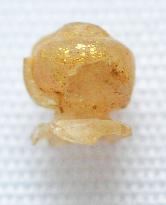
Ancient glass bead unearthed in Japan

Ancient glass bead unearthed in Japan

file photo taken in June 2012 shows a glass bead excavated from the fifth-century Utsukushi No. 1 burial mound in Nagaokakyo, Kyoto Prefecture, western Japan. The bead was found to have the same composition as those discovered in the territory of the Roman Empire.

  •  

Roman-era sphinx, stele discovered in southern Egypt

STORY: Roman-era sphinx, stele discovered in southern Egypt DATELINE: March 7, 2023 LENGTH: 00:00:58 LOCATION: Cairo CATEGORY: CULTURE SHOTLIST: 1. various of the discovered artifacts 2. various of temples STORYLINE: An Egyptian archaeological mission unveiled a lime-stone sphinx and a stele that dated back to the Roman era in Qena province, southern Egypt, the country's Antiquity Ministry said in a statement on Monday. The sphinx-shaped statue represents one of the Roman emperors wearing a Nemes headdress, which is the striped head-cloth typically worn by pharaohs, and a cobra on the forehead. "According to initial examination of its face, the statue most probably was for Claudius, the fourth Roman emperor, ruling from 41 to 54 AD," the statement said. The statement added that the archaeological team also found a stele below the statute, which was carved with texts in hieroglyphs and demotics, an ancient Egyptian writing system used from roughly 650 BC to the fifth century AD. The discoveries were mad

  •  
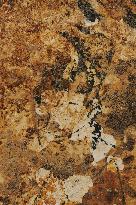
Murals at ancient tomb in N. Korea

Murals at ancient tomb in N. Korea

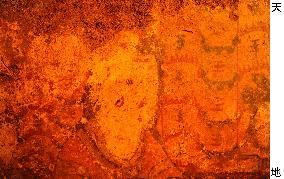
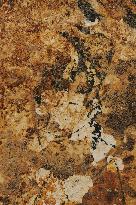
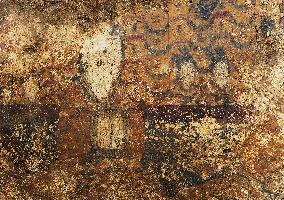
PYONGYANG, North Korea - Photo shows a mural painting that seems to depict the face of a warrior at a newly-unearthed Koguryo mural tomb dating back to around the fifth century. Kyodo News reported on Aug. 14, 2010 that it sent a team of journalists and scholars to Pyongyang and conducted joint research on the Tongsan-dong mural tomb in the capital's Raknang district with the Archaeological Institute of North Korea's Academy of Social Sciences.

  •  
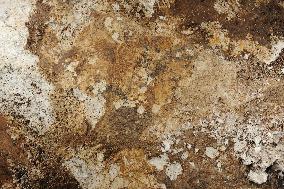
Murals at ancient tomb in N. Korea

Murals at ancient tomb in N. Korea

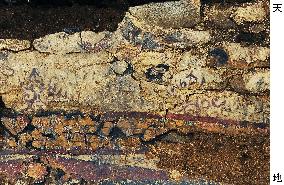
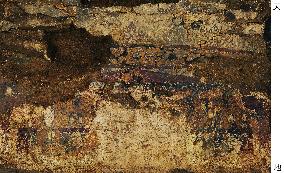
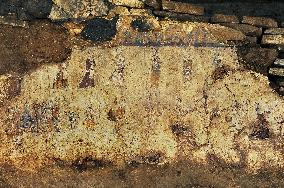
PYONGYANG, North Korea - Photo shows a mural painting that seems to depict a procession at a newly-unearthed Koguryo mural tomb dating back to around the fifth century. Kyodo News reported on Aug. 14, 2010 that it sent a team of journalists and scholars to Pyongyang and conducted joint research on the Tongsan-dong mural tomb in the capital's Raknang district with the Archaeological Institute of North Korea's Academy of Social Sciences.

  •  
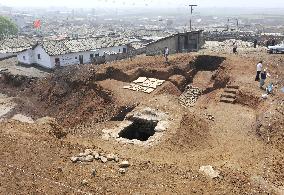
Ancient tomb in N. Korea

Ancient tomb in N. Korea

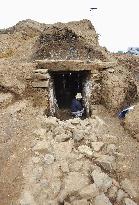
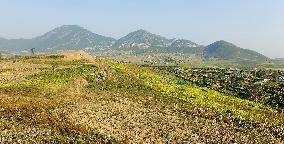
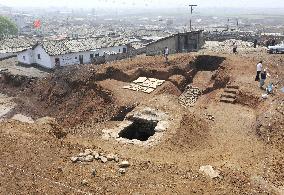
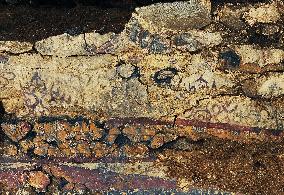
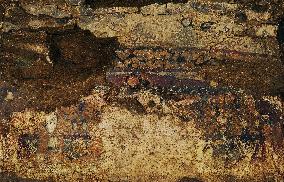
PYONGYANG, North Korea - Photos show the newly-unearthed Tongsan-dong mural tomb, a Koguryo relic dating back to around the fifth century. Kyodo News reported on Aug. 14, 2010 that it sent a team of journalists and scholars to Pyongyang and conducted joint research on the tomb in the capital's Raknang district with the Archaeological Institute of North Korea's Academy of Social Sciences.

  •  
Ancient tomb in N. Korea

Ancient tomb in N. Korea

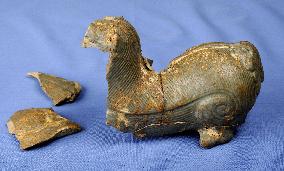
PYONGYANG, North Korea - Photo shows a celadon candleholder featuring a kind of animal found in the newly-unearthed Tongsan-dong mural tomb, a Koguryo relic dating back to around the fifth century. Kyodo News reported on Aug. 14, 2010 that it sent a team of journalists and scholars to Pyongyang and conducted joint research on the tomb in the capital's Raknang district with the Archaeological Institute of North Korea's Academy of Social Sciences.

  •  
Ancient tomb in N. Korea

Ancient tomb in N. Korea

PYONGYANG, North Korea - Photos show the newly-unearthed Tongsan-dong mural tomb, a Koguryo relic dating back to around the fifth century. Kyodo News reported on Aug. 14, 2010 that it sent a team of journalists and scholars to Pyongyang and conducted joint research on the tomb in the capital's Raknang district with the Archaeological Institute of North Korea's Academy of Social Sciences.

  •  
Murals at ancient tomb in N. Korea

Murals at ancient tomb in N. Korea

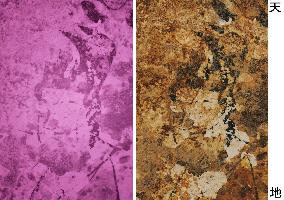
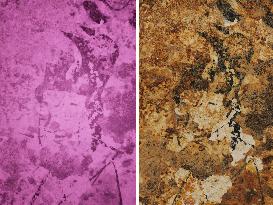
PYONGYANG, North Korea - Combination photo shows a mural painting (R) that seems to depict the face of a warrior at a newly-unearthed Koguryo mural tomb dating back to around the fifth century and an infrared version (L). Kyodo News reported on Aug. 14, 2010 that it sent a team of journalists and scholars to Pyongyang and conducted joint research on the Tongsan-dong mural tomb in the capital's Raknang district with the Archaeological Institute of North Korea's Academy of Social Sciences.

  •  
Murals at ancient tomb in N. Korea

Murals at ancient tomb in N. Korea

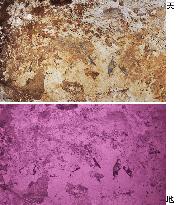
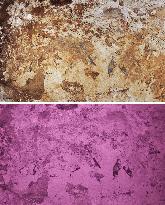
PYONGYANG, North Korea - Combination photo shows a mural painting (top) that seems to depict a procession at a newly-unearthed Koguryo mural tomb dating back to around the fifth century and an infrared version (bottom). Kyodo News reported on Aug. 14, 2010 that it sent a team of journalists and scholars to Pyongyang and conducted joint research on the Tongsan-dong mural tomb in the capital's Raknang district with the Archaeological Institute of North Korea's Academy of Social Sciences.

  •  
Clay figures found lined up at tomb mound in western Japan

Clay figures found lined up at tomb mound in western Japan

FUJIIDERA, Japan - Clay figures are lined up in circles on a terrace (foreground) at the Higashiyama rectangular-shaped tomb mound in Habikino, Osaka Prefecture, western Japan, on Aug. 7, 2014. The tomb, built in the early fifth century, is attached to the Konda-gobyoyama tumulus believed to belong to Emperor Ojin, described in ancient documents as Japan's 15th emperor.

  •  
Murals of Okto-ri tomb in Nampho, N. Korea

Murals of Okto-ri tomb in Nampho, N. Korea

TOKYO, Japan - Photo taken in October 2011 shows murals on stone chamber walls -- men and women clad in ethnic costumes on the east wall and a design consisting of Chinese characters, pronounced ''tae (dae)'' and ''wang'' in Korean on the north wall -- at the Okto-ri tomb in Nampho, North Korea. The tomb dating back to the late fourth century to the early fifth century during the Koguryo dynasty was excavated in 2010 and disclosed to the foreign media for the first time in October 2011.

  •  
Murals of Okto-ri tomb in Nampho, N. Korea

Murals of Okto-ri tomb in Nampho, N. Korea

TOKYO, Japan - Photo taken in October 2011 shows murals on a stone chamber's east wall which depict men and women in ethnic costumes, some of them dancing, at the Okto-ri tomb in Nampho, North Korea. The tomb dating back to the late fourth century to the early fifth century during the Koguryo dynasty was excavated in 2010 and disclosed to the foreign media for the first time in October 2011.

  •  
Okto-ri tomb in Nampho, N. Korea

Okto-ri tomb in Nampho, N. Korea

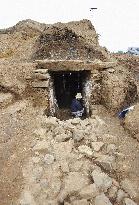
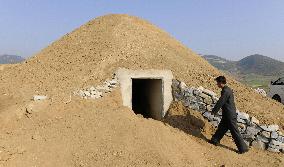
TOKYO, Japan - A man walks into the Okto-ri tomb in Nampho, North Korea, which was disclosed to the foreign media for the first time in October 2011. The tomb dating back to the late fourth century to the early fifth century during the Koguryo dynasty was excavated in 2010.

  •  
Murals of Okto-ri tomb in Nampho, N. Korea

Murals of Okto-ri tomb in Nampho, N. Korea

TOKYO, Japan - Image captured by ultraviolet photography shows the face of a maid painted on a stone chamber wall in the Okto-ri tomb, Nampho, North Korea, in October 2011. The maid's lips are painted in red. The tomb dating back to the late fourth century to the early fifth century during the Koguryo dynasty was disclosed to the foreign media for the first time in October 2011.

  •  
Okto-ri tomb in Nampho, N. Korea

Okto-ri tomb in Nampho, N. Korea

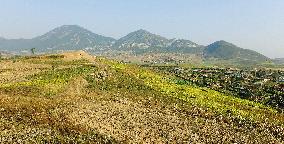
TOKYO, Japan - Photo taken in October 2011 shows the surroundings of the Okto-ri tomb (on a hill in L) in Nampho, North Korea. The person who was buried in the tomb dating back to the late fourth century to the early fifth century during the Koguryo dynasty is believed to be a local leader and lord of a castle on a mountain (L back).

  •  
Murals of Okto-ri tomb in Nampho, N. Korea

Murals of Okto-ri tomb in Nampho, N. Korea

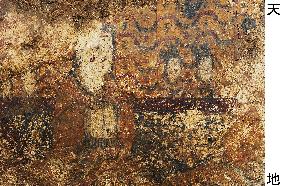
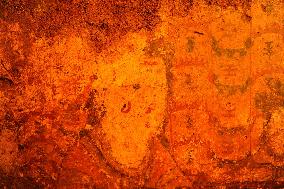
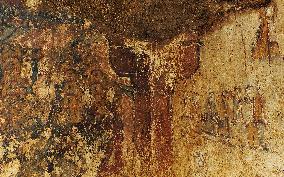
TOKYO, Japan - Photo taken in October 2011 shows murals on a stone chamber wall in the Okto-ri tomb, dating back to the late fourth century to the early fifth century during the Koguryo dynasty, in Nampho, North Korea. The paintings depict a beam (edged with red lines), flames above the beam and a foot of a black tortoise, one of ''Four Guardian Deities,'' above the flames.

  •  
Murals of Okto-ri tomb in Nampho, N. Korea

Murals of Okto-ri tomb in Nampho, N. Korea

TOKYO, Japan - Photo taken in October 2011 shows murals on a stone chamber wall in the Okto-ri tomb, dating back to the late fourth century to the early fifth century during the Koguryo dynasty, in Nampho, North Korea. An image of the buried couple believed to have been painted there was almost unrecognizable. A beam painted in yellow appears to divide the real world (below) and an imaginary world (above).

  •  
Murals of Okto-ri tomb in Nampho, N. Korea

Murals of Okto-ri tomb in Nampho, N. Korea

TOKYO, Japan - Photo taken in October 2011 shows maids painted on a stone wall chamber of the Okto-ri tomb, dating back to the late fourth century to the early fifth century during the Koguryo dynasty, in Nampho, North Korea. A maid with higher status is depicted larger and those with lower status were painted smaller.

  •  
Ancient waterfowl figure

Ancient waterfowl figure

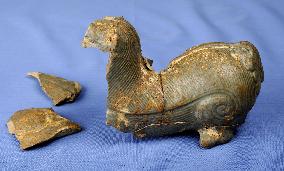
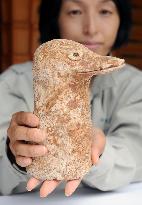
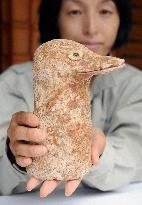
KYOTO, Japan - An ancient clay figure featuring a waterfowl is shown to reporters on July 28, 2010, after it was unearthed by municipal authorities at the late fifth century Igenoyama tomb in Nagaokakyo, Kyoto Prefecture.

  •  
5th century clay ship found in Mie tomb

5th century clay ship found in Mie tomb

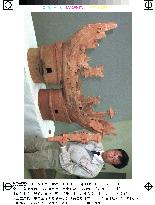
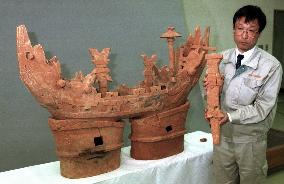
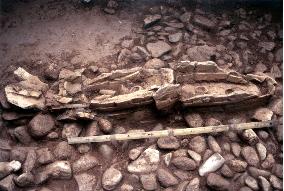
TSU, Japan - Photo shows a clay model ship excavated for the first time in Japan from a fifth century tomb in Mie Prefecture, western Japan. A municipal official holds a clay sword that was used to decorate the ship, which measures 1.4 meters long and 25 centimeters at its widest part. Local archaeologists said April 10 that the ship was thought to carry away the souls of the deceased to heaven. ''It must have been a ship for dead people to make a journey to the afterworld,'' said Kazuhiro Tatsumi, an archaeologist at Doshisha University's archaeological museum, noting the similarity to custom in ancient Egypt.

  •  
5th century clay ship found in Mie tomb

5th century clay ship found in Mie tomb

TSU, Japan - Photo shows a clay model ship excavated for the first time in Japan from a fifth century tomb in Mie Prefecture, western Japan. A municipal official holds a clay sword that was used to decorate the ship, which measures 1.4 meters long and 25 centimeters at its widest part. Local archaeologists said April 10 that the ship was thought to carry away the souls of the deceased to heaven. ''It must have been a ship for dead people to make a journey to the afterworld,'' said Kazuhiro Tatsumi, an archaeologist at Doshisha University's archaeological museum, noting the similarity to custom in ancient Egypt.

  •  
Murals at ancient tomb in N. Korea

Murals at ancient tomb in N. Korea

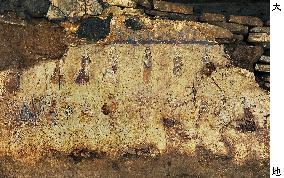
PYONGYANG, North Korea - Combination photo shows a mural painting (top) that seems to depict a procession at a newly-unearthed Koguryo mural tomb dating back to around the fifth century and an infrared version (bottom). Kyodo News reported on Aug. 14, 2010 that it sent a team of journalists and scholars to Pyongyang and conducted joint research on the Tongsan-dong mural tomb in the capital's Raknang district with the Archaeological Institute of North Korea's Academy of Social Sciences. (Kyodo)

  •  
Murals at ancient tomb in N. Korea

Murals at ancient tomb in N. Korea

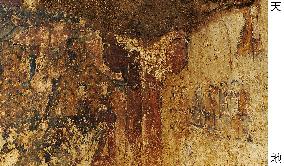
PYONGYANG, North Korea - Photo shows a mural painting that seems to depict the face of a warrior at a newly-unearthed Koguryo mural tomb dating back to around the fifth century. Kyodo News reported on Aug. 14, 2010 that it sent a team of journalists and scholars to Pyongyang and conducted joint research on the Tongsan-dong mural tomb in the capital's Raknang district with the Archaeological Institute of North Korea's Academy of Social Sciences. (Kyodo)

  •  
Murals at ancient tomb in N. Korea

Murals at ancient tomb in N. Korea

PYONGYANG, North Korea - Combination photo shows a mural painting (R) that seems to depict the face of a warrior at a newly-unearthed Koguryo mural tomb dating back to around the fifth century and an infrared version (L). Kyodo News reported on Aug. 14, 2010 that it sent a team of journalists and scholars to Pyongyang and conducted joint research on the Tongsan-dong mural tomb in the capital's Raknang district with the Archaeological Institute of North Korea's Academy of Social Sciences. (Kyodo)

  •  
Ancient tomb in N. Korea

Ancient tomb in N. Korea

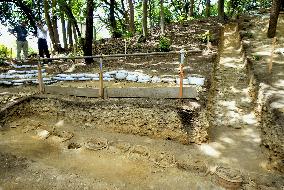
PYONGYANG, North Korea - Photos show the newly-unearthed Tongsan-dong mural tomb, a Koguryo relic dating back to around the fifth century. Kyodo News reported on Aug. 14, 2010 that it sent a team of journalists and scholars to Pyongyang and conducted joint research on the tomb in the capital's Raknang district with the Archaeological Institute of North Korea's Academy of Social Sciences. (Kyodo)

  •  
Ancient tomb in N. Korea

Ancient tomb in N. Korea

PYONGYANG, North Korea - Photo shows a celadon candleholder featuring a kind of animal found in the newly-unearthed Tongsan-dong mural tomb, a Koguryo relic dating back to around the fifth century. Kyodo News reported on Aug. 14, 2010 that it sent a team of journalists and scholars to Pyongyang and conducted joint research on the tomb in the capital's Raknang district with the Archaeological Institute of North Korea's Academy of Social Sciences. (Kyodo)

  •  
Ancient tomb in N. Korea

Ancient tomb in N. Korea

PYONGYANG, North Korea - Photos show the newly-unearthed Tongsan-dong mural tomb, a Koguryo relic dating back to around the fifth century. Kyodo News reported on Aug. 14, 2010 that it sent a team of journalists and scholars to Pyongyang and conducted joint research on the tomb in the capital's Raknang district with the Archaeological Institute of North Korea's Academy of Social Sciences. (Kyodo)

  •  
Murals at ancient tomb in N. Korea

Murals at ancient tomb in N. Korea

PYONGYANG, North Korea - Photo shows a mural painting that seems to depict a procession at a newly-unearthed Koguryo mural tomb dating back to around the fifth century. Kyodo News reported on Aug. 14, 2010 that it sent a team of journalists and scholars to Pyongyang and conducted joint research on the Tongsan-dong mural tomb in the capital's Raknang district with the Archaeological Institute of North Korea's Academy of Social Sciences. (Kyodo)

  •  
Ancient waterfowl figure

Ancient waterfowl figure

KYOTO, Japan - An ancient clay figure featuring a waterfowl is shown to reporters on July 28, 2010, after it was unearthed by municipal authorities at the late fifth century Igenoyama tomb in Nagaokakyo, Kyoto Prefecture. (Kyodo)

  •  
Murals of Okto-ri tomb in Nampho, N. Korea

Murals of Okto-ri tomb in Nampho, N. Korea

TOKYO, Japan - Photo taken in October 2011 shows murals on a stone chamber wall in the Okto-ri tomb, dating back to the late fourth century to the early fifth century during the Koguryo dynasty, in Nampho, North Korea. The paintings depict a beam (edged with red lines), flames above the beam and a foot of a black tortoise, one of ''Four Guardian Deities,'' above the flames. (Kyodo)

  •  
Murals of Okto-ri tomb in Nampho, N. Korea

Murals of Okto-ri tomb in Nampho, N. Korea

TOKYO, Japan - Photo taken in October 2011 shows murals on a stone chamber's east wall which depict men and women in ethnic costumes, some of them dancing, at the Okto-ri tomb in Nampho, North Korea. The tomb dating back to the late fourth century to the early fifth century during the Koguryo dynasty was excavated in 2010 and disclosed to the foreign media for the first time in October 2011. (Kyodo)

  •  
Murals of Okto-ri tomb in Nampho, N. Korea

Murals of Okto-ri tomb in Nampho, N. Korea

TOKYO, Japan - Photo taken in October 2011 shows maids painted on a stone wall chamber of the Okto-ri tomb, dating back to the late fourth century to the early fifth century during the Koguryo dynasty, in Nampho, North Korea. A maid with higher status is depicted larger and those with lower status were painted smaller. (Kyodo)

  •  
Murals of Okto-ri tomb in Nampho, N. Korea

Murals of Okto-ri tomb in Nampho, N. Korea

TOKYO, Japan - Photo taken in October 2011 shows murals on a stone chamber wall in the Okto-ri tomb, dating back to the late fourth century to the early fifth century during the Koguryo dynasty, in Nampho, North Korea. An image of the buried couple believed to have been painted there was almost unrecognizable. A beam painted in yellow appears to divide the real world (below) and an imaginary world (above). (Kyodo)

  •  
Murals of Okto-ri tomb in Nampho, N. Korea

Murals of Okto-ri tomb in Nampho, N. Korea

TOKYO, Japan - Image captured by ultraviolet photography shows the face of a maid painted on a stone chamber wall in the Okto-ri tomb, Nampho, North Korea, in October 2011. The maid's lips are painted in red. The tomb dating back to the late fourth century to the early fifth century during the Koguryo dynasty was disclosed to the foreign media for the first time in October 2011. (Kyodo)

  •  
Okto-ri tomb in Nampho, N. Korea

Okto-ri tomb in Nampho, N. Korea

TOKYO, Japan - Photo taken in October 2011 shows the surroundings of the Okto-ri tomb (on a hill in L) in Nampho, North Korea. The person who was buried in the tomb dating back to the late fourth century to the early fifth century during the Koguryo dynasty is believed to be a local leader and lord of a castle on a mountain (L back). (Kyodo)

  •  
Okto-ri tomb in Nampho, N. Korea

Okto-ri tomb in Nampho, N. Korea

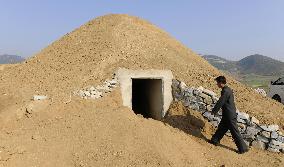
TOKYO, Japan - A man walks into the Okto-ri tomb in Nampho, North Korea, which was disclosed to the foreign media for the first time in October 2011. The tomb dating back to the late fourth century to the early fifth century during the Koguryo dynasty was excavated in 2010. (Kyodo)

  •  
Murals of Okto-ri tomb in Nampho, N. Korea

Murals of Okto-ri tomb in Nampho, N. Korea

TOKYO, Japan - Photo taken in October 2011 shows murals on stone chamber walls -- men and women clad in ethnic costumes on the east wall and a design consisting of Chinese characters, pronounced ''tae (dae)'' and ''wang'' in Korean on the north wall -- at the Okto-ri tomb in Nampho, North Korea. The tomb dating back to the late fourth century to the early fifth century during the Koguryo dynasty was excavated in 2010 and disclosed to the foreign media for the first time in October 2011. (Kyodo)

  •  
Ancient Japanese mounded tomb

Ancient Japanese mounded tomb

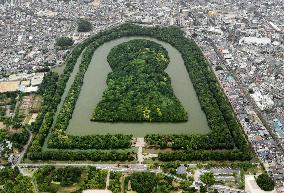
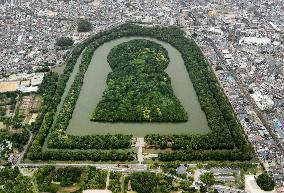
Photo taken in June 2017 shows Daisen Kofun, Japan's largest ancient mounded tomb, built in the fifth century, in Sakai, Osaka Prefecture. It is officially designated as the tomb of Emperor Nintoku. (Kyodo) ==Kyodo

  •  
Japan's largest tomb mound

Japan's largest tomb mound

Photo taken in June 2017 shows Daisen Kofun, Japan's largest ancient mound, in Sakai in Osaka Prefecture, western Japan. The tomb, officially designated as that of Emperor Nintoku and one of the three largest in the world, together with the Mausoleum of the First Qin Emperor in China and the Great Pyramid of Giza in Egypt, was at least 40 meters larger when it was first constructed in the fifth century, the Imperial Household Agency said on April 12, 2018. (Kyodo) ==Kyodo

  •  
Ruins of "ondol" Korean underfloor heating system found in west Japan

Ruins of "ondol" Korean underfloor heating system found in west Japan

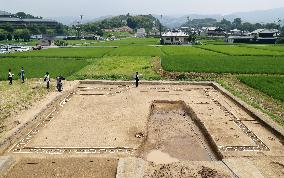
The remnants of a smoke path stretching from a fire hole to the building under an "ondol" Korean underfloor heating system are shown to the press in Takatori, Nara Prefecture, western Japan, on July 30, 2015. They are believed to have been made by people from the Korean Peninsula in the late fifth century. ==Kyodo

  •  
Ruins of large-walled 5th-century structure found in western Japan

Ruins of large-walled 5th-century structure found in western Japan

The remnants of a large-walled structure believed to have been built by people from the Korean Peninsula in the late fifth century are shown to the press in Takatori, Nara Prefecture, western Japan, on July 30, 2015. The ruins of what is believed to have been an "ondol" Korean underfloor heating system are seen in the back on the left side. (Kyodo) ==Kyodo

  •  
Remains of Japan's oldest rice paddies found in Miyazaki

Remains of Japan's oldest rice paddies found in Miyazaki

MIYAZAKI, Japan - Local authorities said Feb. 20 they have discovered the remains of one of Japan's oldest rice paddies in Miyakonojo, Miyazaki Prefecture. The 1,400-square-meter site (shown in photo provided by the Miyazaki Nichinichi Shimbun) is estimated to be the remains of rice paddies dating back to the fourth or fifth century B.C. Rice became the principal Japanese staple crop after it was introduced into the country from China or the Korean Peninsula.

  •  
How clay ship lay in Mie tomb

How clay ship lay in Mie tomb

TSU, Japan - This photo released April 10 by the Matsusaka city education board in Mie Prefecture shows how a clay ship lay when it was excavated from a fifth century tomb in the western Japan prefecture. The ship is laid so that the bow (left) faces in the direction of Ise Bay to the east.

  • Main
  • Top
  • Editorial
  • Creative
  • About Us
  • About ILG
  • Terms of use
  • Company
  • BEHIND
  • Price List
  • Single Plan
  • Monthly Plan
  • Services
  • Shooting
  • Rights Clearance
  • Support
  • FAQ
  • How To Buy
  • Contact Us
  • Become a Partner

© KYODO NEWS IMAGES INC

All Rights Reserved.

  • Editorial
  • Olympics
  • News
  • Sports
  • Japan
  • Tech
  • Royal
  • Disaster
  • NorthKorea
  • Old Japan
  • SNS
  • Creative
  • Food
  • Japan
  • Landscape
  • Animal
  • Popular
  • #Ukraine
  • #China
  • #coronavirus
  • #N. Korea
  • #Thailand
  • #Russia
  • #Ukraine
  • #China
  • #coronavirus
  • #N. Korea
  • #Thailand
  • #Russia
  • Food
  • Japan
  • Landscape
  • Animal
  • Olympics
  • News
  • Sports
  • Japan
  • Tech
  • Royal
  • Disaster
  • NorthKorea
  • Old Japan
  • SNS