•  
Tara Ceremonial ship launching for Arctic Exploration - France

Tara Ceremonial ship launching for Arctic Exploration - France

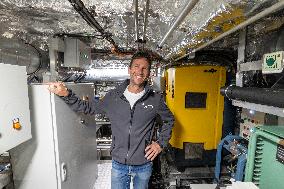
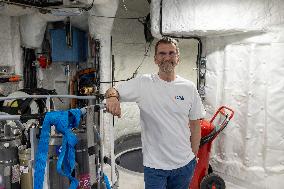
Lorient (56), April 24, 2025: christening of the Tara Polar Station, an Arctic scientific exploration vessel designed by architect Olivier Petit and the Tara Ocean Foundation. The aim of the multidisciplinary scientific team will be to gain a better understanding of this environment, which is still little-known, yet so decisive in understanding the causes and consequences of climate change. Visit of the Tara Polar Station with oceanographer Marcel Babin, scientific director of the first expedition. LoÔc Valette, Technical Director of the Tara Ocean Foundation, here in the engine room - Photo by Galivel F/ANDBZ/ABACAPRESS.COM

  •  
Tara Ceremonial ship launching for Arctic Exploration - France

Tara Ceremonial ship launching for Arctic Exploration - France

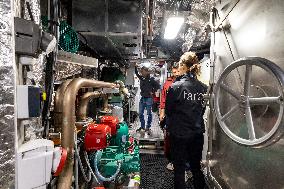
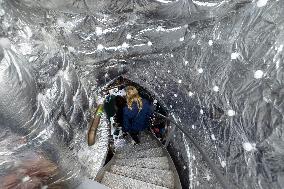
Lorient (56), April 24, 2025: christening of the Tara Polar Station, an Arctic scientific exploration vessel designed by architect Olivier Petit and the Tara Ocean Foundation. The aim of the multidisciplinary scientific team will be to gain a better understanding of this environment, which is still little-known, yet so decisive in understanding the causes and consequences of climate change. Visit to the Tara Polar Station with oceanographer Marcel Babin, scientific director of the first expedition - Photo by Galivel F/ANDBZ/ABACAPRESS.COM

  •  
Tara Ceremonial ship launching for Arctic Exploration - France

Tara Ceremonial ship launching for Arctic Exploration - France

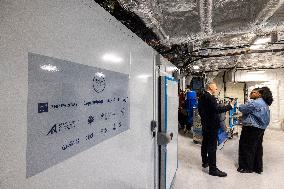
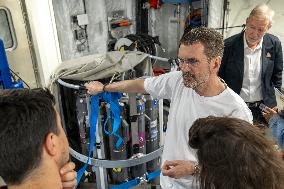
Lorient (56), April 24, 2025: christening of the Tara Polar Station, an Arctic scientific exploration vessel designed by architect Olivier Petit and the Tara Ocean Foundation. The aim of the multidisciplinary scientific team will be to gain a better understanding of this environment, which is still little-known, yet so decisive in understanding the causes and consequences of climate change. Visit to the Tara Polar Station with oceanographer Marcel Babin, scientific director of the first expedition - Photo by Galivel F/ANDBZ/ABACAPRESS.COM

  •  
Tara Ceremonial ship launching for Arctic Exploration - France

Tara Ceremonial ship launching for Arctic Exploration - France

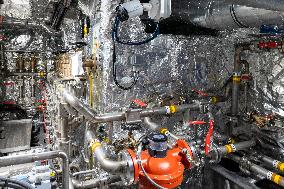
Lorient (56), April 24, 2025: christening of the Tara Polar Station, an Arctic scientific exploration vessel designed by architect Olivier Petit and the Tara Ocean Foundation. The aim of the multidisciplinary scientific team will be to gain a better understanding of this environment, which is still little-known, yet so decisive in understanding the causes and consequences of climate change. Visit to the Tara Polar Station with oceanographer Marcel Babin, scientific director of the first expedition - Photo by Galivel F/ANDBZ/ABACAPRESS.COM

  •  
Tara Ceremonial ship launching for Arctic Exploration - France

Tara Ceremonial ship launching for Arctic Exploration - France

Lorient (56), April 24, 2025: christening of the Tara Polar Station, an Arctic scientific exploration vessel designed by architect Olivier Petit and the Tara Ocean Foundation. The aim of the multidisciplinary scientific team will be to gain a better understanding of this environment, which is still little-known, yet so decisive in understanding the causes and consequences of climate change. Visit to the Tara Polar Station with oceanographer Marcel Babin, scientific director of the first expedition - Photo by Galivel F/ANDBZ/ABACAPRESS.COM

  •  
Tara Ceremonial ship launching for Arctic Exploration - France

Tara Ceremonial ship launching for Arctic Exploration - France

Lorient (56), April 24, 2025: christening of the Tara Polar Station, an Arctic scientific exploration vessel designed by architect Olivier Petit and the Tara Ocean Foundation. The aim of the multidisciplinary scientific team will be to gain a better understanding of this environment, which is still little-known, yet so decisive in understanding the causes and consequences of climate change. Visit to the Tara Polar Station with oceanographer Marcel Babin, scientific director of the first expedition - Photo by Galivel F/ANDBZ/ABACAPRESS.COM

  •  
Tara Ceremonial ship launching for Arctic Exploration - France

Tara Ceremonial ship launching for Arctic Exploration - France

Lorient (56), April 24, 2025: christening of the Tara Polar Station, an Arctic scientific exploration vessel designed by architect Olivier Petit and the Tara Ocean Foundation. The aim of the multidisciplinary scientific team will be to gain a better understanding of this environment, which is still little-known, yet so decisive in understanding the causes and consequences of climate change. Visit to the Tara Polar Station with oceanographer Marcel Babin, scientific director of the first expedition - Photo by Galivel F/ANDBZ/ABACAPRESS.COM

  •  
Tara Ceremonial ship launching for Arctic Exploration - France

Tara Ceremonial ship launching for Arctic Exploration - France

Lorient (56), April 24, 2025: christening of the Tara Polar Station, an Arctic scientific exploration vessel designed by architect Olivier Petit and the Tara Ocean Foundation. The aim of the multidisciplinary scientific team will be to gain a better understanding of this environment, which is still little-known, yet so decisive in understanding the causes and consequences of climate change. Visit to the Tara Polar Station with oceanographer Marcel Babin, scientific director of the first expedition - Photo by Galivel F/ANDBZ/ABACAPRESS.COM

  •  
Tara Ceremonial ship launching for Arctic Exploration - France

Tara Ceremonial ship launching for Arctic Exploration - France

Lorient (56), April 24, 2025: christening of the Tara Polar Station, an Arctic scientific exploration vessel designed by architect Olivier Petit and the Tara Ocean Foundation. The aim of the multidisciplinary scientific team will be to gain a better understanding of this environment, which is still little-known, yet so decisive in understanding the causes and consequences of climate change. Visit to the Tara Polar Station with oceanographer Marcel Babin, scientific director of the first expedition - Photo by Galivel F/ANDBZ/ABACAPRESS.COM

  •  
China Launches New Satellite Group

China Launches New Satellite Group

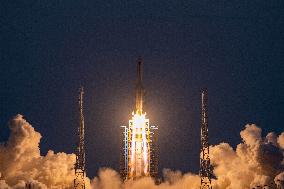
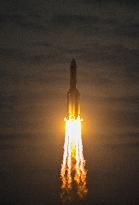
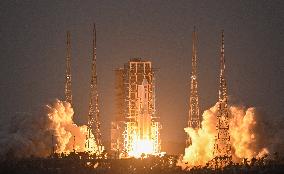
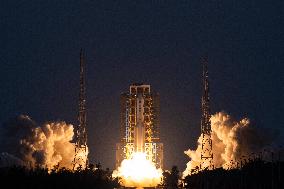
A group of low Earth orbit satellites is launched by a Long March-5B carrier rocket with a Yuanzheng-2 (Expedition-2) upper stage atop the rocket from the Wenchang Space Launch Site in south China's Hainan Province, December 16, 2024. China successfully sent the first group of low Earth orbit satellites for a satellite internet constellation on Monday. At 6:00 p.m. (Beijing Time), this group of satellites was launched and the satellites have entered the preset orbits. Photo by Du Xinxin/Xinhua/ABACAPRESS.COM

  •  
China Launches New Satellite Group

China Launches New Satellite Group

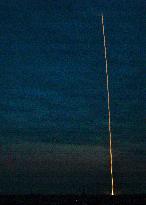
A group of low Earth orbit satellites is launched by a Long March-5B carrier rocket with a Yuanzheng-2 (Expedition-2) upper stage atop the rocket from the Wenchang Space Launch Site in south China's Hainan Province, December 16, 2024. China successfully sent the first group of low Earth orbit satellites for a satellite internet constellation on Monday. At 6:00 p.m. (Beijing Time), this group of satellites was launched and the satellites have entered the preset orbits. Photo by Yang Guanyu/Xinhua/ABACAPRESS.COM

  •  
China Launches New Satellite Group

China Launches New Satellite Group

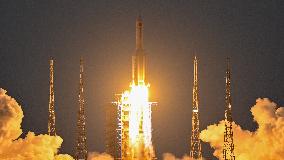
A group of low Earth orbit satellites is launched by a Long March-5B carrier rocket with a Yuanzheng-2 (Expedition-2) upper stage atop the rocket from the Wenchang Space Launch Site in south China's Hainan Province, December 16, 2024. China successfully sent the first group of low Earth orbit satellites for a satellite internet constellation on Monday. At 6:00 p.m. (Beijing Time), this group of satellites was launched and the satellites have entered the preset orbits. Photo by Yang Guanyu/Xinhua/ABACAPRESS.COM

  •  
China Launches New Satellite Group

China Launches New Satellite Group

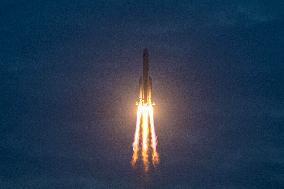
A group of low Earth orbit satellites is launched by a Long March-5B carrier rocket with a Yuanzheng-2 (Expedition-2) upper stage atop the rocket from the Wenchang Space Launch Site in south China's Hainan Province, December 16, 2024. China successfully sent the first group of low Earth orbit satellites for a satellite internet constellation on Monday. At 6:00 p.m. (Beijing Time), this group of satellites was launched and the satellites have entered the preset orbits. Photo by Yang Guanyu/Xinhua/ABACAPRESS.COM

  •  
China Launches New Satellite Group

China Launches New Satellite Group

A group of low Earth orbit satellites is launched by a Long March-5B carrier rocket with a Yuanzheng-2 (Expedition-2) upper stage atop the rocket from the Wenchang Space Launch Site in south China's Hainan Province, December 16, 2024. China successfully sent the first group of low Earth orbit satellites for a satellite internet constellation on Monday. At 6:00 p.m. (Beijing Time), this group of satellites was launched and the satellites have entered the preset orbits. Photo by Du Xinxin/Xinhua/ABACAPRESS.COM

  •  
China Launches New Satellite Group

China Launches New Satellite Group

A group of low Earth orbit satellites is launched by a Long March-5B carrier rocket with a Yuanzheng-2 (Expedition-2) upper stage atop the rocket from the Wenchang Space Launch Site in south China's Hainan Province, December 16, 2024. China successfully sent the first group of low Earth orbit satellites for a satellite internet constellation on Monday. At 6:00 p.m. (Beijing Time), this group of satellites was launched and the satellites have entered the preset orbits. Photo by Yang Guanyu/Xinhua/ABACAPRESS.COM

  •  
China Launches New Satellite Group

China Launches New Satellite Group

A group of low Earth orbit satellites is launched by a Long March-5B carrier rocket with a Yuanzheng-2 (Expedition-2) upper stage atop the rocket from the Wenchang Space Launch Site in south China's Hainan Province, December 16, 2024. China successfully sent the first group of low Earth orbit satellites for a satellite internet constellation on Monday. At 6:00 p.m. (Beijing Time), this group of satellites was launched and the satellites have entered the preset orbits. Photo by Du Xinxin/Xinhua/ABACAPRESS.COM

  •  
China Launches New Satellite Group

China Launches New Satellite Group

A group of low Earth orbit satellites is launched by a Long March-5B carrier rocket with a Yuanzheng-2 (Expedition-2) upper stage atop the rocket from the Wenchang Space Launch Site in south China's Hainan Province, December 16, 2024. China successfully sent the first group of low Earth orbit satellites for a satellite internet constellation on Monday. At 6:00 p.m. (Beijing Time), this group of satellites was launched and the satellites have entered the preset orbits. Photo by Yang Guanyu/Xinhua/ABACAPRESS.COM

  •  
Thanksgiving Beyond Earth

Thanksgiving Beyond Earth

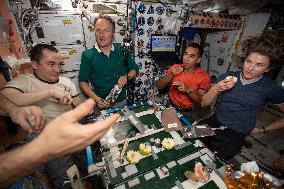
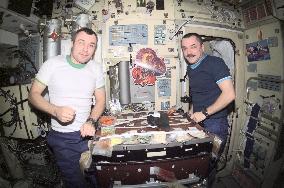
Handout photo dated November 25, 2021 shows Expedition 66 crew members gather for a Thanksgiving meal inside the International Space Station's Unity module. From left, are Roscosmos cosmonaut Pyotr Dubrov; ESA (European Space Agency) astronaut Matthias Maurer; and NASA astronauts Raja Chari. Iss066e083038 . Since 1973, astronauts have celebrated Thanksgiving in space, bringing a cherished tradition far beyond Earth. The first Thanksgiving in orbit took place aboard Skylab during the Skylab 4 mission, where astronauts Gerald Carr, Edward Gibson, and William Pogue marked the day with an improvised meal after a spacewalk. Over the years, this tradition has evolved, with crews on shuttles, space stations, and orbiters finding creative ways to honor the holiday. From shrimp cocktail and irradiated turkey aboard the Space Shuttle Atlantis in 1985 to tortilla-based meals introduced by Mexican astronaut Rodolfo Neri Vela, culinary adaptations have played a key role. Thanksgiving in space often features improvised dec

  •  
Thanksgiving Beyond Earth

Thanksgiving Beyond Earth

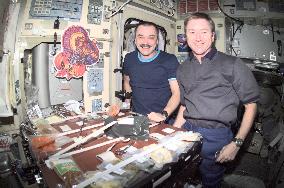
Handout photo dated November 22, 2001 shows Astronaut Frank L. Culbertson (left), Expedition 3 mission commander, and cosmonaut Vladimir N. Dezhurov, flight engineer representing Rosaviakosmos, eat a Thanksgiving meal in the Zvezda Service Module on the International Space Station (ISS). ISS003-E-08151 . Since 1973, astronauts have celebrated Thanksgiving in space, bringing a cherished tradition far beyond Earth. The first Thanksgiving in orbit took place aboard Skylab during the Skylab 4 mission, where astronauts Gerald Carr, Edward Gibson, and William Pogue marked the day with an improvised meal after a spacewalk. Over the years, this tradition has evolved, with crews on shuttles, space stations, and orbiters finding creative ways to honor the holiday. From shrimp cocktail and irradiated turkey aboard the Space Shuttle Atlantis in 1985 to tortilla-based meals introduced by Mexican astronaut Rodolfo Neri Vela, culinary adaptations have played a key role. Thanksgiving in space often features improvised decora

  •  
Thanksgiving Beyond Earth

Thanksgiving Beyond Earth

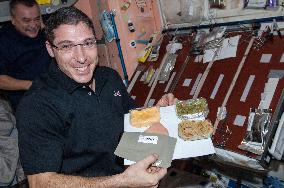
Handout photo dated November 28, 2013 shows NASA astronaut Michael Hopkins, Expedition 38 flight engineer, poses for a photo with his Thanksgiving meal in the Unity node of the International Space Station. ISS038-E-009300 . Since 1973, astronauts have celebrated Thanksgiving in space, bringing a cherished tradition far beyond Earth. The first Thanksgiving in orbit took place aboard Skylab during the Skylab 4 mission, where astronauts Gerald Carr, Edward Gibson, and William Pogue marked the day with an improvised meal after a spacewalk. Over the years, this tradition has evolved, with crews on shuttles, space stations, and orbiters finding creative ways to honor the holiday. From shrimp cocktail and irradiated turkey aboard the Space Shuttle Atlantis in 1985 to tortilla-based meals introduced by Mexican astronaut Rodolfo Neri Vela, culinary adaptations have played a key role. Thanksgiving in space often features improvised decorations, shared greetings, and culturally diverse menus, such as the "den blagodaren

  •  
Thanksgiving Beyond Earth

Thanksgiving Beyond Earth

Handout photo dated November 25, 2021 shows Expedition 66 crew members gather for a Thanksgiving meal inside the International Space Station's Unity module. From left, are NASA astronaut Thomas Marshburn with Roscosmos cosmonauts Anton Shkaplerov and Pyotr Dubrov. iss066e083008 . Since 1973, astronauts have celebrated Thanksgiving in space, bringing a cherished tradition far beyond Earth. The first Thanksgiving in orbit took place aboard Skylab during the Skylab 4 mission, where astronauts Gerald Carr, Edward Gibson, and William Pogue marked the day with an improvised meal after a spacewalk. Over the years, this tradition has evolved, with crews on shuttles, space stations, and orbiters finding creative ways to honor the holiday. From shrimp cocktail and irradiated turkey aboard the Space Shuttle Atlantis in 1985 to tortilla-based meals introduced by Mexican astronaut Rodolfo Neri Vela, culinary adaptations have played a key role. Thanksgiving in space often features improvised decorations, shared greetings,

  •  
Thanksgiving Beyond Earth

Thanksgiving Beyond Earth

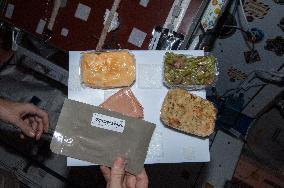
Handout photo dated November 28, 2013 shows NASA astronaut Michael Hopkins (mostly out of frame), Expedition 38 flight engineer, offers a close-up view of his Thanksgiving meal in the Unity node of the International Space Station. ISS038-E-009304 . Since 1973, astronauts have celebrated Thanksgiving in space, bringing a cherished tradition far beyond Earth. The first Thanksgiving in orbit took place aboard Skylab during the Skylab 4 mission, where astronauts Gerald Carr, Edward Gibson, and William Pogue marked the day with an improvised meal after a spacewalk. Over the years, this tradition has evolved, with crews on shuttles, space stations, and orbiters finding creative ways to honor the holiday. From shrimp cocktail and irradiated turkey aboard the Space Shuttle Atlantis in 1985 to tortilla-based meals introduced by Mexican astronaut Rodolfo Neri Vela, culinary adaptations have played a key role. Thanksgiving in space often features improvised decorations, shared greetings, and culturally diverse menus, su

  •  
Thanksgiving Beyond Earth

Thanksgiving Beyond Earth

Handout photo dated November 27, 2018 shows Getting all ten members of an aggregation consisting of seven Endeavour astronauts and three Expedition 18 crewmembers into a single photo wasn't easy as the two crews shared a Thanksgiving meal on the middeck of the orbiter. Astronaut Sandra Magnus, Expedition 18 flight engineer, appears at top center. Clockwise from her position are astronauts Shane Kimbrough and Eric Boe, along with cosmonaut Yury Lonchakov, and astronauts Steve Bowen (partially visible behind Lonchakov), Donald Pettit, Michael Fincke, Gregory Chamitoff, Heidemarie Stefanyshyn-Piper and Chris Ferguson (partially visible at top right). Ferguson is STS-126 commander, and Fincke is commander for the station crew. Since 1973, astronauts have celebrated Thanksgiving in space, bringing a cherished tradition far beyond Earth. The first Thanksgiving in orbit took place aboard Skylab during the Skylab 4 mission, where astronauts Gerald Carr, Edward Gibson, and William Pogue marked the day with an improvis

  •  
Thanksgiving Beyond Earth

Thanksgiving Beyond Earth

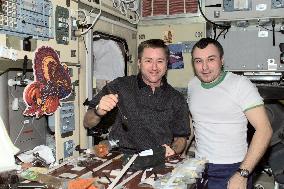
Handout photo dated November 22, 2001 shows Cosmonaut Mikhail Tyurin (left), Expedition 3 flight engineer, and astronaut Frank L. Culbertson, mission commander, eat a Thanksgiving meal in the Zvezda Service Module on the International Space Station (ISS). Tyurin represents Rosaviakosmos. ISS003-E-08147 . Since 1973, astronauts have celebrated Thanksgiving in space, bringing a cherished tradition far beyond Earth. The first Thanksgiving in orbit took place aboard Skylab during the Skylab 4 mission, where astronauts Gerald Carr, Edward Gibson, and William Pogue marked the day with an improvised meal after a spacewalk. Over the years, this tradition has evolved, with crews on shuttles, space stations, and orbiters finding creative ways to honor the holiday. From shrimp cocktail and irradiated turkey aboard the Space Shuttle Atlantis in 1985 to tortilla-based meals introduced by Mexican astronaut Rodolfo Neri Vela, culinary adaptations have played a key role. Thanksgiving in space often features improvised decora

  •  
Thanksgiving Beyond Earth

Thanksgiving Beyond Earth

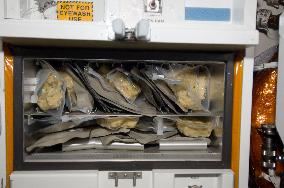
Handout photo dated November 27, 2008 Not far away from this close-up scene of the galley on the Space Shuttle Endeavour were nine astronauts and a cosmonaut eager to share a Thanksgiving meal to top off almost two weeks of joint activities, including an involved home improvement project on the International Space Station. Unlike most of their families and friends on Earth, who probably went through pains to prepare elaborate meals for this festive occasion, the STS-126 and Expedition 18 crewmembers merely needed add water to these prepared packets. Since 1973, astronauts have celebrated Thanksgiving in space, bringing a cherished tradition far beyond Earth. The first Thanksgiving in orbit took place aboard Skylab during the Skylab 4 mission, where astronauts Gerald Carr, Edward Gibson, and William Pogue marked the day with an improvised meal after a spacewalk. Over the years, this tradition has evolved, with crews on shuttles, space stations, and orbiters finding creative ways to honor the holiday. From shri

  •  
Thanksgiving Beyond Earth

Thanksgiving Beyond Earth

Handout photo dated September 22, 2001 shows Cosmonauts Vladimir N. Dezhurov (left) and Mikhail Tyurin, both Expedition 3 flight engineers representing Rosaviakosmos, eat a Thanksgiving meal in the Zvezda Service Module on the International Space Station (ISS). ISS003-E-08146 . Since 1973, astronauts have celebrated Thanksgiving in space, bringing a cherished tradition far beyond Earth. The first Thanksgiving in orbit took place aboard Skylab during the Skylab 4 mission, where astronauts Gerald Carr, Edward Gibson, and William Pogue marked the day with an improvised meal after a spacewalk. Over the years, this tradition has evolved, with crews on shuttles, space stations, and orbiters finding creative ways to honor the holiday. From shrimp cocktail and irradiated turkey aboard the Space Shuttle Atlantis in 1985 to tortilla-based meals introduced by Mexican astronaut Rodolfo Neri Vela, culinary adaptations have played a key role. Thanksgiving in space often features improvised decorations, shared greetings, an

  •  
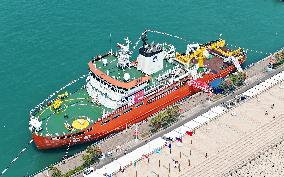
Xuelong 2 Research Ship

Xuelong 2 Research Ship

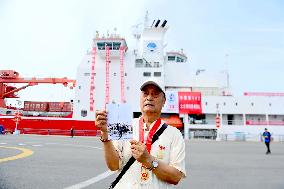
QINGDAO, CHINA - JULY 5, 2024 - Sun Mingzhong, 77, a member of China's first Antarctic expedition, sees off the Xuelong 2 research ship in Qingdao, Shandong province, China, July 5, 2024.

  •  
Xuelong 2 Research Ship

Xuelong 2 Research Ship

QINGDAO, CHINA - JULY 5, 2024 - Sun Mingzhong, 77, a member of China's first Antarctic expedition, shows a photo of himself working in Antarctica in front of the Xuelong 2 research ship in Qingdao, Shandong province, China, July 5, 2024.

  •  
CHINA-SHANDONG-QINGDAO-XUELONG 2-JIDI-PUBLIC VISIT (CN)

CHINA-SHANDONG-QINGDAO-XUELONG 2-JIDI-PUBLIC VISIT (CN)

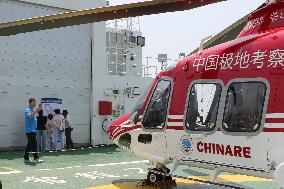
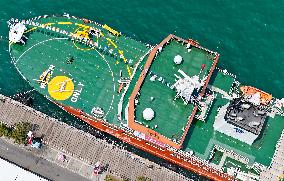
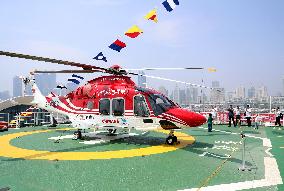
(240703) -- QINGDAO, July 3, 2024 Photo by Xinhua/ABACAPRESS.COM) -- Visitors are pictured aboard China's icebreaker Xuelong 2 at the pier of Qingdao Olympic Sailing Center in Qingdao, east China's Shandong Province on July 3, 2024. China's icebreaker Xuelong 2 and icebreaker research vessel Jidi were open to public here on Wednesday. This is also the first time for Jidi, China's independently designed and built icebreaker research vessel, to allow for public visit since its official delivery on June 24 this year. Xuelong 2 is capable of scientific research in waters with high ice density for collection of data on hydrology, chemistry and ecology. Its maiden voyage to the Antarctic was accomplished during China's 36th Antarctic expedition in 2019. It was also deployed for the country's 40th Antarctic scientific expedition succeeded in April this year. Photo by Xinhua/ABACAPRESS.COM/Cao Jiayue)

  •  
#CHINA-SHANDONG-QINGDAO-XUELONG 2-JIDI-PUBLIC VISIT (CN)

#CHINA-SHANDONG-QINGDAO-XUELONG 2-JIDI-PUBLIC VISIT (CN)

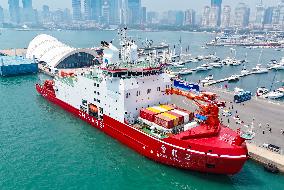
(240703) -- QINGDAO, July 3, 2024 Photo by Xinhua/ABACAPRESS.COM) -- An aerial drone photo taken on July 3, 2024 shows China's icebreaker Xuelong 2 berthing at the pier of Qingdao Olympic Sailing Center in Qingdao, east China's Shandong Province. China's icebreaker Xuelong 2 and icebreaker research vessel Jidi were open to public here on Wednesday. This is also the first time for Jidi, China's independently designed and built icebreaker research vessel, to allow for public visit since its official delivery on June 24 this year. Xuelong 2 is capable of scientific research in waters with high ice density for collection of data on hydrology, chemistry and ecology. Its maiden voyage to the Antarctic was accomplished during China's 36th Antarctic expedition in 2019. It was also deployed for the country's 40th Antarctic scientific expedition succeeded in April this year. (Photo by Zhang Jingang/Xinhua/ABACAPRESS.COM

  •  
#CHINA-SHANDONG-QINGDAO-XUELONG 2-JIDI-PUBLIC VISIT (CN)

#CHINA-SHANDONG-QINGDAO-XUELONG 2-JIDI-PUBLIC VISIT (CN)

(240703) -- QINGDAO, July 3, 2024 Photo by Xinhua/ABACAPRESS.COM) -- An aerial drone photo taken on July 3, 2024 shows China's icebreaker research vessel Jidi berthing at the pier of Qingdao Olympic Sailing Center in Qingdao, east China's Shandong Province. China's icebreaker Xuelong 2 and icebreaker research vessel Jidi were open to public here on Wednesday. This is also the first time for Jidi, China's independently designed and built icebreaker research vessel, to allow for public visit since its official delivery on June 24 this year. Xuelong 2 is capable of scientific research in waters with high ice density for collection of data on hydrology, chemistry and ecology. Its maiden voyage to the Antarctic was accomplished during China's 36th Antarctic expedition in 2019. It was also deployed for the country's 40th Antarctic scientific expedition succeeded in April this year. (Photo by Zhang Jingang/Xinhua/ABACAPRESS.COM

  •  
#CHINA-SHANDONG-QINGDAO-XUELONG 2-JIDI-PUBLIC VISIT (CN)

#CHINA-SHANDONG-QINGDAO-XUELONG 2-JIDI-PUBLIC VISIT (CN)

(240703) -- QINGDAO, July 3, 2024 Photo by Xinhua/ABACAPRESS.COM) -- An aerial drone photo taken on July 3, 2024 shows China's icebreaker research vessel Jidi berthing at the pier of Qingdao Olympic Sailing Center in Qingdao, east China's Shandong Province. China's icebreaker Xuelong 2 and icebreaker research vessel Jidi were open to public here on Wednesday. This is also the first time for Jidi, China's independently designed and built icebreaker research vessel, to allow for public visit since its official delivery on June 24 this year. Xuelong 2 is capable of scientific research in waters with high ice density for collection of data on hydrology, chemistry and ecology. Its maiden voyage to the Antarctic was accomplished during China's 36th Antarctic expedition in 2019. It was also deployed for the country's 40th Antarctic scientific expedition succeeded in April this year. (Photo by Zhang Jingang/Xinhua/ABACAPRESS.COM

  •  
#CHINA-SHANDONG-QINGDAO-XUELONG 2-JIDI-PUBLIC VISIT (CN)

#CHINA-SHANDONG-QINGDAO-XUELONG 2-JIDI-PUBLIC VISIT (CN)

(240703) -- QINGDAO, July 3, 2024 Photo by Xinhua/ABACAPRESS.COM) -- Visitors are pictured on China's icebreaker Xuelong 2 at the pier of Qingdao Olympic Sailing Center in Qingdao, east China's Shandong Province on July 3, 2024. China's icebreaker Xuelong 2 and icebreaker research vessel Jidi were open to public here on Wednesday. This is also the first time for Jidi, China's independently designed and built icebreaker research vessel, to allow for public visit since its official delivery on June 24 this year. Xuelong 2 is capable of scientific research in waters with high ice density for collection of data on hydrology, chemistry and ecology. Its maiden voyage to the Antarctic was accomplished during China's 36th Antarctic expedition in 2019. It was also deployed for the country's 40th Antarctic scientific expedition succeeded in April this year. (Photo by Zhang Jingang/Xinhua/ABACAPRESS.COM

  •  
#CHINA-SHANDONG-QINGDAO-XUELONG 2-JIDI-PUBLIC VISIT (CN)

#CHINA-SHANDONG-QINGDAO-XUELONG 2-JIDI-PUBLIC VISIT (CN)

(240703) -- QINGDAO, July 3, 2024 Photo by Xinhua/ABACAPRESS.COM) -- This photo taken on July 3, 2024 shows China's icebreaker Xuelong 2 berthing at the pier of Qingdao Olympic Sailing Center in Qingdao, east China's Shandong Province. China's icebreaker Xuelong 2 and icebreaker research vessel Jidi were open to public here on Wednesday. This is also the first time for Jidi, China's independently designed and built icebreaker research vessel, to allow for public visit since its official delivery on June 24 this year. Xuelong 2 is capable of scientific research in waters with high ice density for collection of data on hydrology, chemistry and ecology. Its maiden voyage to the Antarctic was accomplished during China's 36th Antarctic expedition in 2019. It was also deployed for the country's 40th Antarctic scientific expedition succeeded in April this year. (Photo by Zhang Jingang/Xinhua/ABACAPRESS.COM

  •  
#CHINA-SHANDONG-QINGDAO-XUELONG 2-JIDI-PUBLIC VISIT (CN)

#CHINA-SHANDONG-QINGDAO-XUELONG 2-JIDI-PUBLIC VISIT (CN)

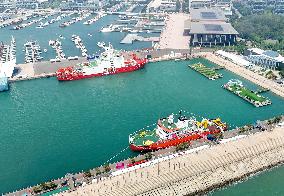
(240703) -- QINGDAO, July 3, 2024 Photo by Xinhua/ABACAPRESS.COM) -- An aerial drone photo taken on July 3, 2024 shows China's icebreaker Xuelong 2 (back) and icebreaker research vessel Jidi (front) berthing at the pier of Qingdao Olympic Sailing Center in Qingdao, east China's Shandong Province. China's icebreaker Xuelong 2 and icebreaker research vessel Jidi were open to public here on Wednesday. This is also the first time for Jidi, China's independently designed and built icebreaker research vessel, to allow for public visit since its official delivery on June 24 this year. Xuelong 2 is capable of scientific research in waters with high ice density for collection of data on hydrology, chemistry and ecology. Its maiden voyage to the Antarctic was accomplished during China's 36th Antarctic expedition in 2019. It was also deployed for the country's 40th Antarctic scientific expedition succeeded in April this year. (Photo by Zhang Jingang/Xinhua/ABACAPRESS.COM

  •  
NORWAY-NY-ALESUND-YELLOW RIVER STATION-CHINESE RESEARCHERS

NORWAY-NY-ALESUND-YELLOW RIVER STATION-CHINESE RESEARCHERS

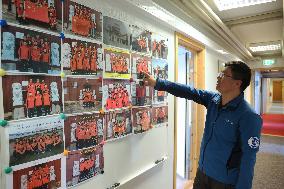
(240626) -- NY-ALESUND, June 26, 2024 Photo by Xinhua/ABACAPRESS.COM) -- Hu Zhengyi, a member of the Chinese Arctic expedition team, points to one of the photos of Chinese Arctic expedition teams at the Yellow River Station in Ny-Alesund, Svalbard, Norway, June 23, 2024. Situated at 79 degrees north latitude in the northwestern region of Spitsbergen, the largest island in Norway's Arctic Svalbard archipelago, Ny-Alesund is the world's northernmost permanent settlement. Once a thriving coal mining town, Ny-Alesund now buzzes with the activities of polar researchers. Since the Yellow River Station's inception in 2004, China has established a significant presence in this scientific sanctuary, carrying out a range of observations and investigations in glaciology, terrestrial ecology, marine ecology, space physics, and other fields. By the end of 2023, the Yellow River Station had supported more than 250 scientific research projects and hosted over 660 researchers. As China's first Arctic research station, it has

  •  
NORWAY-NY-ALESUND-YELLOW RIVER STATION-CHINESE RESEARCHERS

NORWAY-NY-ALESUND-YELLOW RIVER STATION-CHINESE RESEARCHERS

(240626) -- NY-ALESUND, June 26, 2024 Photo by Xinhua/ABACAPRESS.COM) -- Zhao Hongying, a member of the Chinese Arctic expedition team, carries out a sampling operation at the Yellow River Station in Ny-Alesund, Svalbard, Norway, June 21, 2024. Situated at 79 degrees north latitude in the northwestern region of Spitsbergen, the largest island in Norway's Arctic Svalbard archipelago, Ny-Alesund is the world's northernmost permanent settlement. Once a thriving coal mining town, Ny-Alesund now buzzes with the activities of polar researchers. Since the Yellow River Station's inception in 2004, China has established a significant presence in this scientific sanctuary, carrying out a range of observations and investigations in glaciology, terrestrial ecology, marine ecology, space physics, and other fields. By the end of 2023, the Yellow River Station had supported more than 250 scientific research projects and hosted over 660 researchers. As China's first Arctic research station, it has witnessed not only the deve

  •  
NORWAY-NY-ALESUND-YELLOW RIVER STATION-CHINESE RESEARCHERS

NORWAY-NY-ALESUND-YELLOW RIVER STATION-CHINESE RESEARCHERS

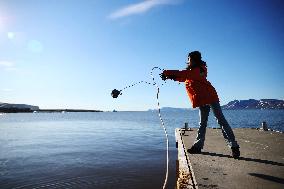
(240626) -- NY-ALESUND, June 26, 2024 Photo by Xinhua/ABACAPRESS.COM) -- Wu Xiaohan, a member of the Chinese Arctic expedition team, takes a sample of sea water in Ny-Alesund, Svalbard, Norway, June 21, 2024. Situated at 79 degrees north latitude in the northwestern region of Spitsbergen, the largest island in Norway's Arctic Svalbard archipelago, Ny-Alesund is the world's northernmost permanent settlement. Once a thriving coal mining town, Ny-Alesund now buzzes with the activities of polar researchers. Since the Yellow River Station's inception in 2004, China has established a significant presence in this scientific sanctuary, carrying out a range of observations and investigations in glaciology, terrestrial ecology, marine ecology, space physics, and other fields. By the end of 2023, the Yellow River Station had supported more than 250 scientific research projects and hosted over 660 researchers. As China's first Arctic research station, it has witnessed not only the development of China's polar research ef

  •  
NORWAY-NY-ALESUND-YELLOW RIVER STATION-CHINESE RESEARCHERS

NORWAY-NY-ALESUND-YELLOW RIVER STATION-CHINESE RESEARCHERS

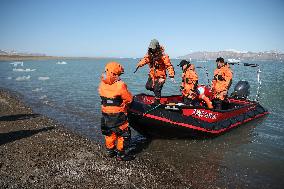
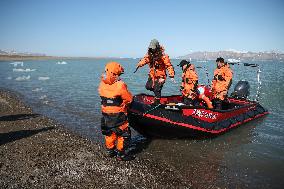
(240626) -- NY-ALESUND, June 26, 2024 Photo by Xinhua/ABACAPRESS.COM) -- Members of the Chinese Arctic expedition team take a boat out for sampling in Ny-Alesund, Svalbard, Norway, June 22, 2024. Situated at 79 degrees north latitude in the northwestern region of Spitsbergen, the largest island in Norway's Arctic Svalbard archipelago, Ny-Alesund is the world's northernmost permanent settlement. Once a thriving coal mining town, Ny-Alesund now buzzes with the activities of polar researchers. Since the Yellow River Station's inception in 2004, China has established a significant presence in this scientific sanctuary, carrying out a range of observations and investigations in glaciology, terrestrial ecology, marine ecology, space physics, and other fields. By the end of 2023, the Yellow River Station had supported more than 250 scientific research projects and hosted over 660 researchers. As China's first Arctic research station, it has witnessed not only the development of China's polar research efforts but als

  •  
NORWAY-NY-ALESUND-YELLOW RIVER STATION-CHINESE RESEARCHERS

NORWAY-NY-ALESUND-YELLOW RIVER STATION-CHINESE RESEARCHERS

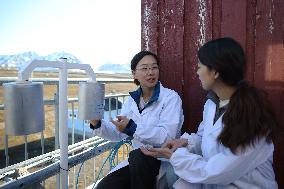
(240626) -- NY-ALESUND, June 26, 2024 Photo by Xinhua/ABACAPRESS.COM) -- Members of the Chinese Arctic expedition team Zhao Hongying (L) and Wu Xiaohan communicate at the Yellow River Station in Ny-Alesund, Svalbard, Norway, June 21, 2024. Situated at 79 degrees north latitude in the northwestern region of Spitsbergen, the largest island in Norway's Arctic Svalbard archipelago, Ny-Alesund is the world's northernmost permanent settlement. Once a thriving coal mining town, Ny-Alesund now buzzes with the activities of polar researchers. Since the Yellow River Station's inception in 2004, China has established a significant presence in this scientific sanctuary, carrying out a range of observations and investigations in glaciology, terrestrial ecology, marine ecology, space physics, and other fields. By the end of 2023, the Yellow River Station had supported more than 250 scientific research projects and hosted over 660 researchers. As China's first Arctic research station, it has witnessed not only the developme

  •  
NORWAY-NY-ALESUND-YELLOW RIVER STATION-CHINESE RESEARCHERS

NORWAY-NY-ALESUND-YELLOW RIVER STATION-CHINESE RESEARCHERS

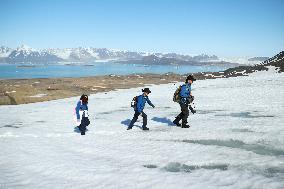
(240626) -- NY-ALESUND, June 26, 2024 Photo by Xinhua/ABACAPRESS.COM) -- Members of the Chinese Arctic expedition team Hu Zhengyi (R), Zhao Hongying (C) and Wu Xiaohan go out for sampling in Ny-Alesund, Svalbard, Norway, June 22, 2024. Situated at 79 degrees north latitude in the northwestern region of Spitsbergen, the largest island in Norway's Arctic Svalbard archipelago, Ny-Alesund is the world's northernmost permanent settlement. Once a thriving coal mining town, Ny-Alesund now buzzes with the activities of polar researchers. Since the Yellow River Station's inception in 2004, China has established a significant presence in this scientific sanctuary, carrying out a range of observations and investigations in glaciology, terrestrial ecology, marine ecology, space physics, and other fields. By the end of 2023, the Yellow River Station had supported more than 250 scientific research projects and hosted over 660 researchers. As China's first Arctic research station, it has witnessed not only the development o

  •  
NORWAY-NY-ALESUND-YELLOW RIVER STATION-CHINESE RESEARCHERS

NORWAY-NY-ALESUND-YELLOW RIVER STATION-CHINESE RESEARCHERS

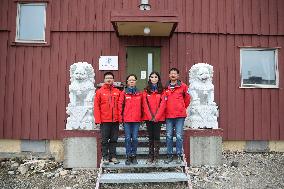
(240626) -- NY-ALESUND, June 26, 2024 Photo by Xinhua/ABACAPRESS.COM) -- Members of the Chinese Arctic expedition team Hu Zhengyi, Zhao Hongying, Wu Xiaohan and Xu Hao (from L to R) pose for a group photo at the Yellow River Station in Ny-Alesund, Svalbard, Norway, June 23, 2024. Situated at 79 degrees north latitude in the northwestern region of Spitsbergen, the largest island in Norway's Arctic Svalbard archipelago, Ny-Alesund is the world's northernmost permanent settlement. Once a thriving coal mining town, Ny-Alesund now buzzes with the activities of polar researchers. Since the Yellow River Station's inception in 2004, China has established a significant presence in this scientific sanctuary, carrying out a range of observations and investigations in glaciology, terrestrial ecology, marine ecology, space physics, and other fields. By the end of 2023, the Yellow River Station had supported more than 250 scientific research projects and hosted over 660 researchers. As China's first Arctic research station

  •  
NORWAY-NY-ALESUND-YELLOW RIVER STATION-CHINESE RESEARCHERS

NORWAY-NY-ALESUND-YELLOW RIVER STATION-CHINESE RESEARCHERS

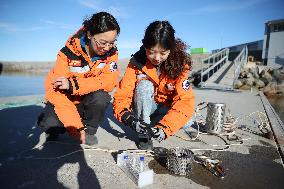
(240626) -- NY-ALESUND, June 26, 2024 Photo by Xinhua/ABACAPRESS.COM) -- Members of the Chinese Arctic expedition team Zhao Hongying (L) and Wu Xiaohan take samples of sea water in Ny-Alesund, Svalbard, Norway, June 21, 2024. Situated at 79 degrees north latitude in the northwestern region of Spitsbergen, the largest island in Norway's Arctic Svalbard archipelago, Ny-Alesund is the world's northernmost permanent settlement. Once a thriving coal mining town, Ny-Alesund now buzzes with the activities of polar researchers. Since the Yellow River Station's inception in 2004, China has established a significant presence in this scientific sanctuary, carrying out a range of observations and investigations in glaciology, terrestrial ecology, marine ecology, space physics, and other fields. By the end of 2023, the Yellow River Station had supported more than 250 scientific research projects and hosted over 660 researchers. As China's first Arctic research station, it has witnessed not only the development of China's

  •  
NORWAY-NY-ALESUND-YELLOW RIVER STATION-CHINESE RESEARCHERS

NORWAY-NY-ALESUND-YELLOW RIVER STATION-CHINESE RESEARCHERS

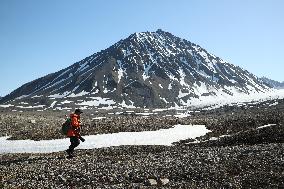
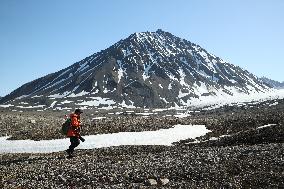
(240626) -- NY-ALESUND, June 26, 2024 Photo by Xinhua/ABACAPRESS.COM) -- Hu Zhengyi, a member of the Chinese Arctic expedition team, walks out for sampling in Ny-Alesund, Svalbard, Norway, June 22, 2024. Situated at 79 degrees north latitude in the northwestern region of Spitsbergen, the largest island in Norway's Arctic Svalbard archipelago, Ny-Alesund is the world's northernmost permanent settlement. Once a thriving coal mining town, Ny-Alesund now buzzes with the activities of polar researchers. Since the Yellow River Station's inception in 2004, China has established a significant presence in this scientific sanctuary, carrying out a range of observations and investigations in glaciology, terrestrial ecology, marine ecology, space physics, and other fields. By the end of 2023, the Yellow River Station had supported more than 250 scientific research projects and hosted over 660 researchers. As China's first Arctic research station, it has witnessed not only the development of China's polar research efforts

  •  
NORWAY-NY-ALESUND-YELLOW RIVER STATION-CHINESE RESEARCHERS

NORWAY-NY-ALESUND-YELLOW RIVER STATION-CHINESE RESEARCHERS

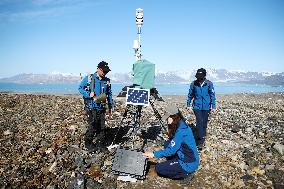
(240626) -- NY-ALESUND, June 26, 2024 Photo by Xinhua/ABACAPRESS.COM) -- Members of the Chinese Arctic expedition team Hu Zhengyi (L), Zhao Hongying (R) and Wu Xiaohan check the equipment in Ny-Alesund, Svalbard, Norway, June 22, 2024. Situated at 79 degrees north latitude in the northwestern region of Spitsbergen, the largest island in Norway's Arctic Svalbard archipelago, Ny-Alesund is the world's northernmost permanent settlement. Once a thriving coal mining town, Ny-Alesund now buzzes with the activities of polar researchers. Since the Yellow River Station's inception in 2004, China has established a significant presence in this scientific sanctuary, carrying out a range of observations and investigations in glaciology, terrestrial ecology, marine ecology, space physics, and other fields. By the end of 2023, the Yellow River Station had supported more than 250 scientific research projects and hosted over 660 researchers. As China's first Arctic research station, it has witnessed not only the development o

  •  
NORWAY-NY-ALESUND-YELLOW RIVER STATION-CHINESE RESEARCHERS

NORWAY-NY-ALESUND-YELLOW RIVER STATION-CHINESE RESEARCHERS

(240626) -- NY-ALESUND, June 26, 2024 Photo by Xinhua/ABACAPRESS.COM) -- Hu Zhengyi (R), a member of the Chinese Arctic expedition team, communicates with Special Advisor of Norwegian Polar Institute Kim Holmen at the Yellow River Station in Ny-Alesund, Svalbard, Norway, June 21, 2024. Situated at 79 degrees north latitude in the northwestern region of Spitsbergen, the largest island in Norway's Arctic Svalbard archipelago, Ny-Alesund is the world's northernmost permanent settlement. Once a thriving coal mining town, Ny-Alesund now buzzes with the activities of polar researchers. Since the Yellow River Station's inception in 2004, China has established a significant presence in this scientific sanctuary, carrying out a range of observations and investigations in glaciology, terrestrial ecology, marine ecology, space physics, and other fields. By the end of 2023, the Yellow River Station had supported more than 250 scientific research projects and hosted over 660 researchers. As China's first Arctic research s

  •  
NORWAY-NY-ALESUND-YELLOW RIVER STATION-CHINESE RESEARCHERS

NORWAY-NY-ALESUND-YELLOW RIVER STATION-CHINESE RESEARCHERS

(240626) -- NY-ALESUND, June 26, 2024 Photo by Xinhua/ABACAPRESS.COM) -- Hu Zhengyi, a member of the Chinese Arctic expedition team, works at the Yellow River Station in Ny-Alesund, Svalbard, Norway, June 21, 2024. Situated at 79 degrees north latitude in the northwestern region of Spitsbergen, the largest island in Norway's Arctic Svalbard archipelago, Ny-Alesund is the world's northernmost permanent settlement. Once a thriving coal mining town, Ny-Alesund now buzzes with the activities of polar researchers. Since the Yellow River Station's inception in 2004, China has established a significant presence in this scientific sanctuary, carrying out a range of observations and investigations in glaciology, terrestrial ecology, marine ecology, space physics, and other fields. By the end of 2023, the Yellow River Station had supported more than 250 scientific research projects and hosted over 660 researchers. As China's first Arctic research station, it has witnessed not only the development of China's polar resea

  •  
NORWAY-NY-ALESUND-YELLOW RIVER STATION-CHINESE RESEARCHERS

NORWAY-NY-ALESUND-YELLOW RIVER STATION-CHINESE RESEARCHERS

(240626) -- NY-ALESUND, June 26, 2024 (Xinhua) -- Hu Zhengyi, a member of the Chinese Arctic expedition team, walks out for sampling in Ny-Alesund, Svalbard, Norway, June 22, 2024. Situated at 79 degrees north latitude in the northwestern region of Spitsbergen, the largest island in Norway's Arctic Svalbard archipelago, Ny-Alesund is the world's northernmost permanent settlement. Once a thriving coal mining town, Ny-Alesund now buzzes with the activities of polar researchers. Since the Yellow River Station's inception in 2004, China has established a significant presence in this scientific sanctuary, carrying out a range of observations and investigations in glaciology, terrestrial ecology, marine ecology, space physics, and other fields. By the end of 2023, the Yellow River Station had supported more than 250 scientific research projects and hosted over 660 researchers. As China's first Arctic research station, it has witnessed not only the development of China's polar research efforts but also the e

  •  
NORWAY-NY-ALESUND-YELLOW RIVER STATION-CHINESE RESEARCHERS

NORWAY-NY-ALESUND-YELLOW RIVER STATION-CHINESE RESEARCHERS

(240626) -- NY-ALESUND, June 26, 2024 (Xinhua) -- Members of the Chinese Arctic expedition team take a boat out for sampling in Ny-Alesund, Svalbard, Norway, June 22, 2024. Situated at 79 degrees north latitude in the northwestern region of Spitsbergen, the largest island in Norway's Arctic Svalbard archipelago, Ny-Alesund is the world's northernmost permanent settlement. Once a thriving coal mining town, Ny-Alesund now buzzes with the activities of polar researchers. Since the Yellow River Station's inception in 2004, China has established a significant presence in this scientific sanctuary, carrying out a range of observations and investigations in glaciology, terrestrial ecology, marine ecology, space physics, and other fields. By the end of 2023, the Yellow River Station had supported more than 250 scientific research projects and hosted over 660 researchers. As China's first Arctic research station, it has witnessed not only the development of China's polar research efforts but also the endeavor

  •  
NORWAY-NY-ALESUND-YELLOW RIVER STATION-CHINESE RESEARCHERS

NORWAY-NY-ALESUND-YELLOW RIVER STATION-CHINESE RESEARCHERS

(240626) -- NY-ALESUND, June 26, 2024 (Xinhua) -- Hu Zhengyi, a member of the Chinese Arctic expedition team, points to one of the photos of Chinese Arctic expedition teams at the Yellow River Station in Ny-Alesund, Svalbard, Norway, June 23, 2024. Situated at 79 degrees north latitude in the northwestern region of Spitsbergen, the largest island in Norway's Arctic Svalbard archipelago, Ny-Alesund is the world's northernmost permanent settlement. Once a thriving coal mining town, Ny-Alesund now buzzes with the activities of polar researchers. Since the Yellow River Station's inception in 2004, China has established a significant presence in this scientific sanctuary, carrying out a range of observations and investigations in glaciology, terrestrial ecology, marine ecology, space physics, and other fields. By the end of 2023, the Yellow River Station had supported more than 250 scientific research projects and hosted over 660 researchers. As China's first Arctic research station, it has witnessed not o

  • Main
  • Top
  • Editorial
  • Creative
  • About Us
  • About ILG
  • Terms of use
  • Company
  • BEHIND
  • Price List
  • Single Plan
  • Monthly Plan
  • Services
  • Shooting
  • Rights Clearance
  • Support
  • FAQ
  • How To Buy
  • Contact Us
  • Become a Partner

© KYODO NEWS IMAGES INC

All Rights Reserved.

  • Editorial
  • Olympics
  • News
  • Sports
  • Japan
  • Tech
  • Royal
  • Disaster
  • NorthKorea
  • Old Japan
  • SNS

  • Creative
  • Food
  • Japan
  • Landscape
  • Animal
  • Popular
  • #Ukraine
  • #Thailand
  • #coronavirus
  • #N. Korea
  • #Russia
  • #China
  • #Ukraine
  • #Thailand
  • #coronavirus
  • #N. Korea
  • #Russia
  • #China
  • Food
  • Japan
  • Landscape
  • Animal
  • Olympics
  • News
  • Sports
  • Japan
  • Tech
  • Royal
  • Disaster
  • NorthKorea
  • Old Japan
  • SNS