•  
Robot Chemist - China

Robot Chemist - China

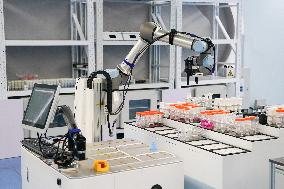
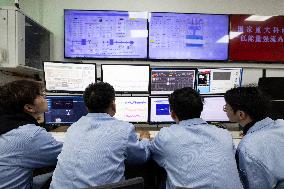
Robot Xiaolai performs an experiment at the state key laboratory of precision and intelligent chemistry of the University of Science and Technology of China (USTC) in Hefei, east China's Anhui Province, November 24, 2025. Traditional chemical research has long relied on continuous trial and error by scientists. With the development of artificial intelligence and robotic automation technologies, it has become possible to design experiments and issue instructions through intelligent platforms, using robots to replace human labor in experiential operations, which enhances experimental efficiency and precision. In 2021, after eight years of dedicated effort by a research team from USTC, Xiaolai, the first-generation "robot chemist," was successfully developed. After several years of iterations, the second-generation dual-armed humanoid robot Xiaolin has been put into operation, capable of performing more complex tasks. It has evolved from a substitute of human labor to a "research partner." According to Zhu Zhuoy

  •  
Robot Chemist - China

Robot Chemist - China

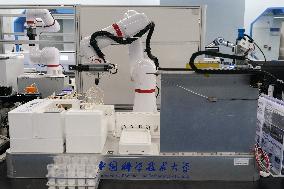
Robot Xiaolai performs an experiment at the state key laboratory of precision and intelligent chemistry of the University of Science and Technology of China (USTC) in Hefei, east China's Anhui Province, November 24, 2025. Traditional chemical research has long relied on continuous trial and error by scientists. With the development of artificial intelligence and robotic automation technologies, it has become possible to design experiments and issue instructions through intelligent platforms, using robots to replace human labor in experiential operations, which enhances experimental efficiency and precision. In 2021, after eight years of dedicated effort by a research team from USTC, Xiaolai, the first-generation "robot chemist," was successfully developed. After several years of iterations, the second-generation dual-armed humanoid robot Xiaolin has been put into operation, capable of performing more complex tasks. It has evolved from a substitute of human labor to a "research partner." According to Zhu Zhuoy

  •  
Robot Chemist - China

Robot Chemist - China

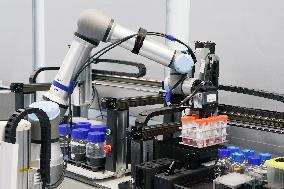
Robot Xiaolai performs an experiment at the state key laboratory of precision and intelligent chemistry of the University of Science and Technology of China (USTC) in Hefei, east China's Anhui Province, November 24, 2025. Traditional chemical research has long relied on continuous trial and error by scientists. With the development of artificial intelligence and robotic automation technologies, it has become possible to design experiments and issue instructions through intelligent platforms, using robots to replace human labor in experiential operations, which enhances experimental efficiency and precision. In 2021, after eight years of dedicated effort by a research team from USTC, Xiaolai, the first-generation "robot chemist," was successfully developed. After several years of iterations, the second-generation dual-armed humanoid robot Xiaolin has been put into operation, capable of performing more complex tasks. It has evolved from a substitute of human labor to a "research partner." According to Zhu Zhuoy

  •  
Low-Energy High-Intensity Heavy-Ion Accelerator Facility - China

Low-Energy High-Intensity Heavy-Ion Accelerator Facility - China

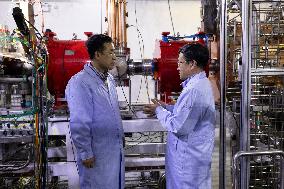
Zhao Hongwei (R), an academician of the Chinese Academy of Sciences (CAS), and Sun Liangting, a researcher with the Institute of Modern Physics of the CAS, discuss on experiment progress in front of the low-energy high-intensity heavy-ion accelerator facility (LEAF) on December 10, 2024. The world's first stand-alone low-energy high-intensity heavy-ion accelerator facility (LEAF), developed by the Institute of Modern Physics of the Chinese Academy of Sciences, recently passed the expert panel acceptance inspection organized by the National Natural Science Foundation of China. The LEAF can provide intense heavy-ion beams and mixed ion beams of various charge states from light to heavy elements, offering advantages such as high beam intensity, high charge state, diverse ion species, and a wide range of energy variations. With the upgrading of ion accelerators and the evolution of accelerator technologies, frontier research in ion beam physics has continuously deepened human understanding of the world, and relat

  •  
Low-Energy High-Intensity Heavy-Ion Accelerator Facility - China

Low-Energy High-Intensity Heavy-Ion Accelerator Facility - China

Researchers observe experiment progress at the control room of the low-energy high-intensity heavy-ion accelerator facility (LEAF) on December 10, 2024. The world's first stand-alone low-energy high-intensity heavy-ion accelerator facility (LEAF), developed by the Institute of Modern Physics of the Chinese Academy of Sciences, recently passed the expert panel acceptance inspection organized by the National Natural Science Foundation of China. The LEAF can provide intense heavy-ion beams and mixed ion beams of various charge states from light to heavy elements, offering advantages such as high beam intensity, high charge state, diverse ion species, and a wide range of energy variations. With the upgrading of ion accelerators and the evolution of accelerator technologies, frontier research in ion beam physics has continuously deepened human understanding of the world, and related application technologies have been widely adopted in various fields. Photo by Jin Liwang/Xinhua/ABACAPRESS.COM

  •  
Zhejiang University High Gravity Laboratory

Zhejiang University High Gravity Laboratory

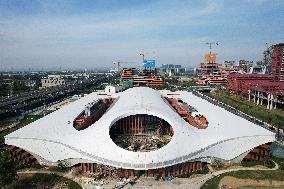
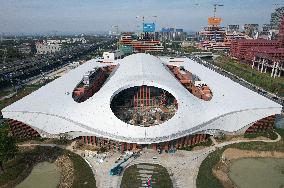
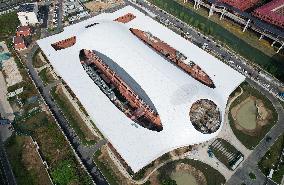
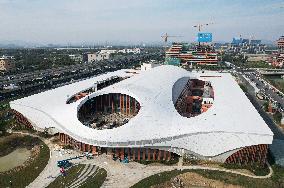
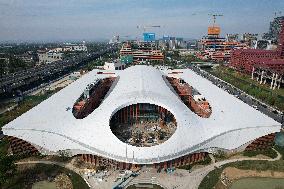
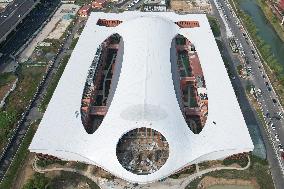
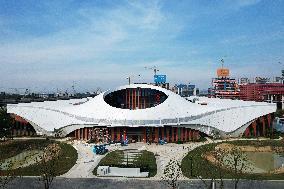
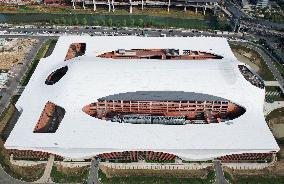
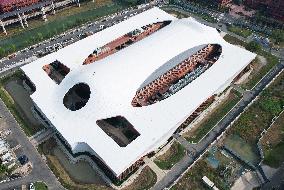
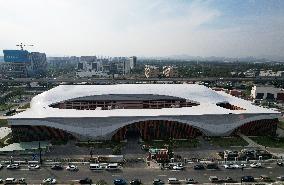
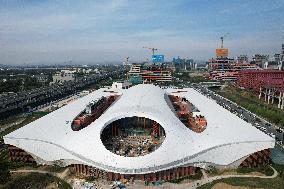
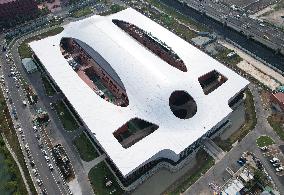
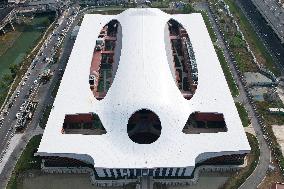
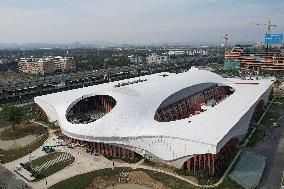
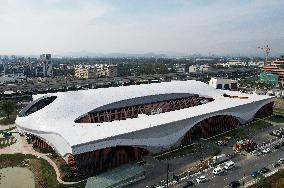
HANGZHOU, CHINA - NOVEMBER 8, 2024 - An aerial photo shows the install compeleted facade of the experimental building of Zhejiang University's High gravity centrifugal Simulation and Experimental Device project in Hangzhou, Zhejiang province, China, November 8, 2024. The Zhejiang University Supergravity centrifuge Simulation and Experimental Equipment project is the first national major science and technology infrastructure project in Zhejiang Province. After completion, it will become a multidisciplinary scientific experiment facility with the largest capacity of supergravity centrifuge and the strongest function of experimental chamber in the world.

  •  
Zhejiang University High Gravity Laboratory

Zhejiang University High Gravity Laboratory

HANGZHOU, CHINA - NOVEMBER 8, 2024 - An aerial photo shows the install compeleted facade of the experimental building of Zhejiang University's High gravity centrifugal Simulation and Experimental Device project in Hangzhou, Zhejiang province, China, November 8, 2024. The Zhejiang University Supergravity centrifuge Simulation and Experimental Equipment project is the first national major science and technology infrastructure project in Zhejiang Province. After completion, it will become a multidisciplinary scientific experiment facility with the largest capacity of supergravity centrifuge and the strongest function of experimental chamber in the world.

  •  
Zhejiang University High Gravity Laboratory

Zhejiang University High Gravity Laboratory

HANGZHOU, CHINA - NOVEMBER 8, 2024 - An aerial photo shows the install compeleted facade of the experimental building of Zhejiang University's High gravity centrifugal Simulation and Experimental Device project in Hangzhou, Zhejiang province, China, November 8, 2024. The Zhejiang University Supergravity centrifuge Simulation and Experimental Equipment project is the first national major science and technology infrastructure project in Zhejiang Province. After completion, it will become a multidisciplinary scientific experiment facility with the largest capacity of supergravity centrifuge and the strongest function of experimental chamber in the world.

  •  
Zhejiang University High Gravity Laboratory

Zhejiang University High Gravity Laboratory

HANGZHOU, CHINA - NOVEMBER 8, 2024 - An aerial photo shows the install compeleted facade of the experimental building of Zhejiang University's High gravity centrifugal Simulation and Experimental Device project in Hangzhou, Zhejiang province, China, November 8, 2024. The Zhejiang University Supergravity centrifuge Simulation and Experimental Equipment project is the first national major science and technology infrastructure project in Zhejiang Province. After completion, it will become a multidisciplinary scientific experiment facility with the largest capacity of supergravity centrifuge and the strongest function of experimental chamber in the world.

  •  
Zhejiang University High Gravity Laboratory

Zhejiang University High Gravity Laboratory

HANGZHOU, CHINA - NOVEMBER 8, 2024 - An aerial photo shows the install compeleted facade of the experimental building of Zhejiang University's High gravity centrifugal Simulation and Experimental Device project in Hangzhou, Zhejiang province, China, November 8, 2024. The Zhejiang University Supergravity centrifuge Simulation and Experimental Equipment project is the first national major science and technology infrastructure project in Zhejiang Province. After completion, it will become a multidisciplinary scientific experiment facility with the largest capacity of supergravity centrifuge and the strongest function of experimental chamber in the world.

  •  
Zhejiang University High Gravity Laboratory

Zhejiang University High Gravity Laboratory

HANGZHOU, CHINA - NOVEMBER 8, 2024 - An aerial photo shows the install compeleted facade of the experimental building of Zhejiang University's High gravity centrifugal Simulation and Experimental Device project in Hangzhou, Zhejiang province, China, November 8, 2024. The Zhejiang University Supergravity centrifuge Simulation and Experimental Equipment project is the first national major science and technology infrastructure project in Zhejiang Province. After completion, it will become a multidisciplinary scientific experiment facility with the largest capacity of supergravity centrifuge and the strongest function of experimental chamber in the world.

  •  
Zhejiang University High Gravity Laboratory

Zhejiang University High Gravity Laboratory

HANGZHOU, CHINA - NOVEMBER 8, 2024 - An aerial photo shows the install compeleted facade of the experimental building of Zhejiang University's High gravity centrifugal Simulation and Experimental Device project in Hangzhou, Zhejiang province, China, November 8, 2024. The Zhejiang University Supergravity centrifuge Simulation and Experimental Equipment project is the first national major science and technology infrastructure project in Zhejiang Province. After completion, it will become a multidisciplinary scientific experiment facility with the largest capacity of supergravity centrifuge and the strongest function of experimental chamber in the world.

  •  
Zhejiang University High Gravity Laboratory

Zhejiang University High Gravity Laboratory

HANGZHOU, CHINA - NOVEMBER 8, 2024 - An aerial photo shows the install compeleted facade of the experimental building of Zhejiang University's High gravity centrifugal Simulation and Experimental Device project in Hangzhou, Zhejiang province, China, November 8, 2024. The Zhejiang University Supergravity centrifuge Simulation and Experimental Equipment project is the first national major science and technology infrastructure project in Zhejiang Province. After completion, it will become a multidisciplinary scientific experiment facility with the largest capacity of supergravity centrifuge and the strongest function of experimental chamber in the world.

  •  
Zhejiang University High Gravity Laboratory

Zhejiang University High Gravity Laboratory

HANGZHOU, CHINA - NOVEMBER 8, 2024 - An aerial photo shows the install compeleted facade of the experimental building of Zhejiang University's High gravity centrifugal Simulation and Experimental Device project in Hangzhou, Zhejiang province, China, November 8, 2024. The Zhejiang University Supergravity centrifuge Simulation and Experimental Equipment project is the first national major science and technology infrastructure project in Zhejiang Province. After completion, it will become a multidisciplinary scientific experiment facility with the largest capacity of supergravity centrifuge and the strongest function of experimental chamber in the world.

  •  
Zhejiang University High Gravity Laboratory

Zhejiang University High Gravity Laboratory

HANGZHOU, CHINA - NOVEMBER 8, 2024 - An aerial photo shows the install compeleted facade of the experimental building of Zhejiang University's High gravity centrifugal Simulation and Experimental Device project in Hangzhou, Zhejiang province, China, November 8, 2024. The Zhejiang University Supergravity centrifuge Simulation and Experimental Equipment project is the first national major science and technology infrastructure project in Zhejiang Province. After completion, it will become a multidisciplinary scientific experiment facility with the largest capacity of supergravity centrifuge and the strongest function of experimental chamber in the world.

  •  
Zhejiang University High Gravity Laboratory

Zhejiang University High Gravity Laboratory

HANGZHOU, CHINA - NOVEMBER 8, 2024 - An aerial photo shows the install compeleted facade of the experimental building of Zhejiang University's High gravity centrifugal Simulation and Experimental Device project in Hangzhou, Zhejiang province, China, November 8, 2024. The Zhejiang University Supergravity centrifuge Simulation and Experimental Equipment project is the first national major science and technology infrastructure project in Zhejiang Province. After completion, it will become a multidisciplinary scientific experiment facility with the largest capacity of supergravity centrifuge and the strongest function of experimental chamber in the world.

  •  
Zhejiang University High Gravity Laboratory

Zhejiang University High Gravity Laboratory

HANGZHOU, CHINA - NOVEMBER 8, 2024 - An aerial photo shows the install compeleted facade of the experimental building of Zhejiang University's High gravity centrifugal Simulation and Experimental Device project in Hangzhou, Zhejiang province, China, November 8, 2024. The Zhejiang University Supergravity centrifuge Simulation and Experimental Equipment project is the first national major science and technology infrastructure project in Zhejiang Province. After completion, it will become a multidisciplinary scientific experiment facility with the largest capacity of supergravity centrifuge and the strongest function of experimental chamber in the world.

  •  
Zhejiang University High Gravity Laboratory

Zhejiang University High Gravity Laboratory

HANGZHOU, CHINA - NOVEMBER 8, 2024 - An aerial photo shows the install compeleted facade of the experimental building of Zhejiang University's High gravity centrifugal Simulation and Experimental Device project in Hangzhou, Zhejiang province, China, November 8, 2024. The Zhejiang University Supergravity centrifuge Simulation and Experimental Equipment project is the first national major science and technology infrastructure project in Zhejiang Province. After completion, it will become a multidisciplinary scientific experiment facility with the largest capacity of supergravity centrifuge and the strongest function of experimental chamber in the world.

  •  
Zhejiang University High Gravity Laboratory

Zhejiang University High Gravity Laboratory

HANGZHOU, CHINA - NOVEMBER 8, 2024 - An aerial photo shows the install compeleted facade of the experimental building of Zhejiang University's High gravity centrifugal Simulation and Experimental Device project in Hangzhou, Zhejiang province, China, November 8, 2024. The Zhejiang University Supergravity centrifuge Simulation and Experimental Equipment project is the first national major science and technology infrastructure project in Zhejiang Province. After completion, it will become a multidisciplinary scientific experiment facility with the largest capacity of supergravity centrifuge and the strongest function of experimental chamber in the world.

  •  
Zhejiang University High Gravity Laboratory

Zhejiang University High Gravity Laboratory

HANGZHOU, CHINA - NOVEMBER 8, 2024 - An aerial photo shows the install compeleted facade of the experimental building of Zhejiang University's High gravity centrifugal Simulation and Experimental Device project in Hangzhou, Zhejiang province, China, November 8, 2024. The Zhejiang University Supergravity centrifuge Simulation and Experimental Equipment project is the first national major science and technology infrastructure project in Zhejiang Province. After completion, it will become a multidisciplinary scientific experiment facility with the largest capacity of supergravity centrifuge and the strongest function of experimental chamber in the world.

  •  
First Class in Qingdao

First Class in Qingdao

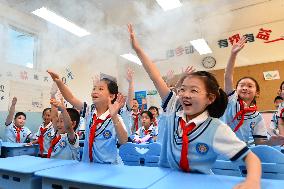
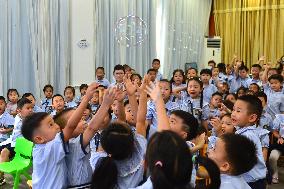
QINGDAO, CHINA - SEPTEMBER 2, 2024 - Children experience the "air cannon" science experiment during the "first class" at Kaiping Road Primary School in Qingdao, East China's Shandong province, Sept 2, 2024.

  •  
First Class in Qingdao

First Class in Qingdao

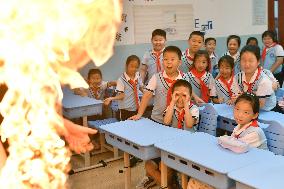
QINGDAO, CHINA - SEPTEMBER 2, 2024 - Children watch the "flame palm" science experiment at Kaiping Road Primary School in Qingdao, east China's Shandong province, Sept 2, 2024.

  •  
First Class in Qingdao

First Class in Qingdao

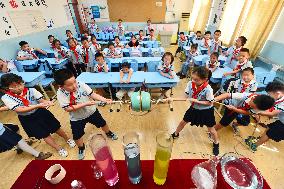
QINGDAO, CHINA - SEPTEMBER 2, 2024 - Children experience a "vacuum" science experiment at Kaiping Road Primary School in Qingdao, east China's Shandong province, Sept 2, 2024.

  •  
First Class in Qingdao

First Class in Qingdao

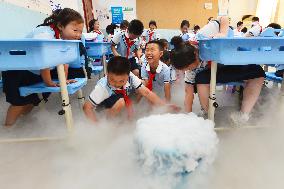
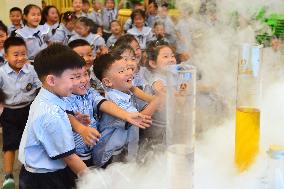
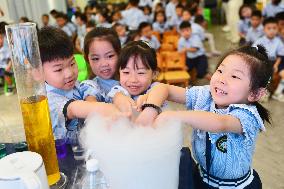
QINGDAO, CHINA - SEPTEMBER 2, 2024 - Children experience a science experiment called "Misty Wonderland" at Kaiping Road Primary School in Qingdao, east China's Shandong province, Sept 2, 2024.

  •  
First Class in Qingdao

First Class in Qingdao

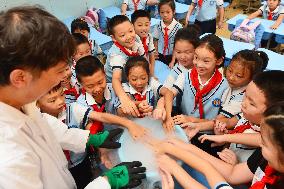
QINGDAO, CHINA - SEPTEMBER 2, 2024 - Children experience a science experiment of dry ice during the "first class" at Baocheng Kindergarten in Qingdao, East China's Shandong province, Sept 2, 2024.

  •  
First Class in Qingdao

First Class in Qingdao

QINGDAO, CHINA - SEPTEMBER 2, 2024 - Children experience a science experiment of dry ice during the "first class" at Baocheng Kindergarten in Qingdao, East China's Shandong province, Sept 2, 2024.

  •  
First Class in Qingdao

First Class in Qingdao

QINGDAO, CHINA - SEPTEMBER 2, 2024 - Children experience a dry ice science experiment at Kaiping Road Primary School in Qingdao, east China's Shandong province, Sept 2, 2024.

  •  
First Class in Qingdao

First Class in Qingdao

QINGDAO, CHINA - SEPTEMBER 2, 2024 - Children perform a "bubble floating" science experiment during the "first class" at Baocheng Kindergarten in Qingdao, East China's Shandong province, Sept 2, 2024.

  •  
First Class in Qingdao

First Class in Qingdao

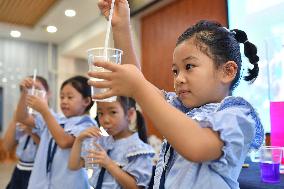
QINGDAO, CHINA - SEPTEMBER 2, 2024 - Children experience the "magic water" science experiment during the "first class" at Baocheng Kindergarten in Qingdao, East China's Shandong province, Sept 2, 2024.

  •  
Ffirst Beijing International Science Festival

Ffirst Beijing International Science Festival

BEIJING, CHINA - AUGUST 8, 2024 - A child experiences the "thermal expansion and cold contraction experiment" at the first Beijing International Science Festival in Beijing, China, August 8, 2024.

  •  
Ffirst Beijing International Science Festival

Ffirst Beijing International Science Festival

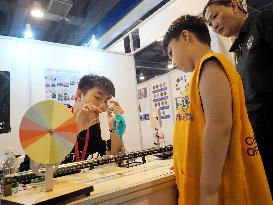
BEIJING, CHINA - AUGUST 8, 2024 - A child experiences a lens imaging experiment at the first Beijing International Science Festival 2024 in Beijing, China, August 8, 2024.

  •  
Ffirst Beijing International Science Festival

Ffirst Beijing International Science Festival

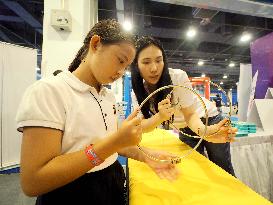
BEIJING, CHINA - AUGUST 8, 2024 - A child experiences the "Energy Ring experiment" at the first Beijing International Science Festival 2024 in Beijing, China, August 8, 2024.

  •  
Ffirst Beijing International Science Festival

Ffirst Beijing International Science Festival

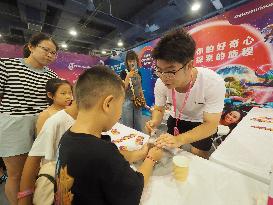
BEIJING, CHINA - AUGUST 8, 2024 - A child experiences the "acid-base discoloration experiment of Purple Cabbage" at the first Beijing International Science Festival in Beijing, China, August 8, 2024.

  •  
Ffirst Beijing International Science Festival

Ffirst Beijing International Science Festival

BEIJING, CHINA - AUGUST 8, 2024 - A child experiences the "balloon heating experiment" at the first Beijing International Science Festival in Beijing, China, August 8, 2024.

  •  
Ffirst Beijing International Science Festival

Ffirst Beijing International Science Festival

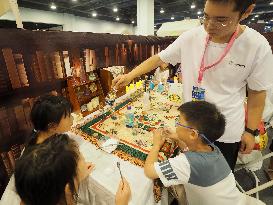
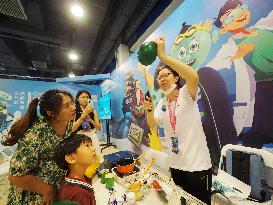
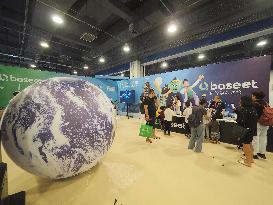
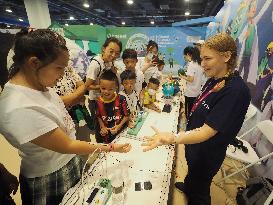
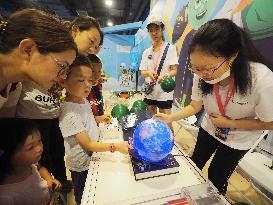
BEIJING, CHINA - AUGUST 8, 2024 - Visitors visit a scientific experiment at the first Beijing International Science Festival 2024 in Beijing, China, August 8, 2024.

  •  
Ffirst Beijing International Science Festival

Ffirst Beijing International Science Festival

BEIJING, CHINA - AUGUST 8, 2024 - A child experiences the "Earth Magnetic Field Experiment" at the first Beijing International Science Festival in Beijing, China, August 8, 2024.

  •  
Ffirst Beijing International Science Festival

Ffirst Beijing International Science Festival

BEIJING, CHINA - AUGUST 8, 2024 - A child experiences a "current conduction experiment" at the first Beijing International Science Festival in Beijing, China, August 8, 2024.

  •  
Chinese Experience in Desert Controi

Chinese Experience in Desert Controi

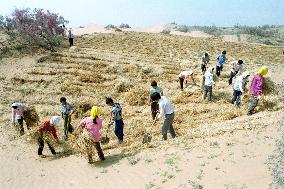
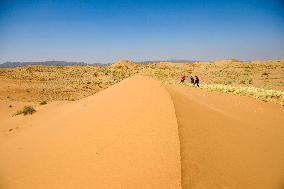
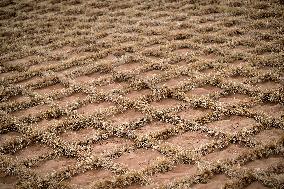
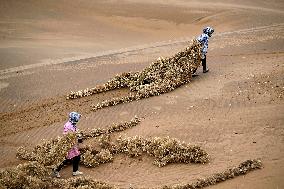
Workers set up straw checkerboards in Zhongwei, northwest China's Ningxia Hui Autonomous Region, Sept. 24, 1994. In the 1950s, to protect China's first railway that runs through a desert, the city of Zhongwei embarked on a journey of desert mitigation. Scientists at the Shapotou Desert Research and Experiment Station, part of the Northwest Institute of Eco-Environment and Resources of the Chinese Academy of Sciences, along with local residents, developed straw checkerboards to stabilize the sand and prevent dunes from shifting. Tang Ximing, a senior engineer at a state-owned forestry farm in Zhongwei, crafted a steel tool that differs from regular shovels by featuring two horizontal bars at the front tip. This innovative tool enables the planting of seedling roots 50 centimeters deep into the moist sand layer. This simple tool increases the survival rate of afforestation by 25 percent to over 85 percent. It has been widely promoted and used in afforestation projects across other regions in northern China. In

  •  
Chinese Experience in Desert Controi

Chinese Experience in Desert Controi

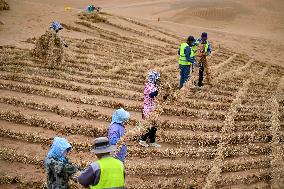
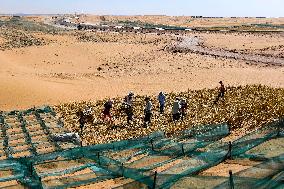
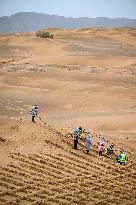
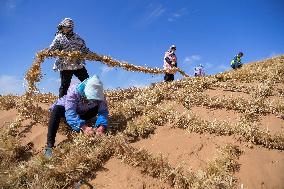
Workers pave straw checkerboards in the Tengger Desert, in Zhongwei of northwest China's Ningxia Hui Autonomous Region, May 29, 2024. In the 1950s, to protect China's first railway that runs through a desert, the city of Zhongwei embarked on a journey of desert mitigation. Scientists at the Shapotou Desert Research and Experiment Station, part of the Northwest Institute of Eco-Environment and Resources of the Chinese Academy of Sciences, along with local residents, developed straw checkerboards to stabilize the sand and prevent dunes from shifting. Tang Ximing, a senior engineer at a state-owned forestry farm in Zhongwei, crafted a steel tool that differs from regular shovels by featuring two horizontal bars at the front tip. This innovative tool enables the planting of seedling roots 50 centimeters deep into the moist sand layer. This simple tool increases the survival rate of afforestation by 25 percent to over 85 percent. It has been widely promoted and used in afforestation projects across other regions i

  •  
Chinese Experience in Desert Controi

Chinese Experience in Desert Controi

Workers pave straw checkerboards in the Tengger Desert, in Zhongwei of northwest China's Ningxia Hui Autonomous Region, May 30, 2024. In the 1950s, to protect China's first railway that runs through a desert, the city of Zhongwei embarked on a journey of desert mitigation. Scientists at the Shapotou Desert Research and Experiment Station, part of the Northwest Institute of Eco-Environment and Resources of the Chinese Academy of Sciences, along with local residents, developed straw checkerboards to stabilize the sand and prevent dunes from shifting. Tang Ximing, a senior engineer at a state-owned forestry farm in Zhongwei, crafted a steel tool that differs from regular shovels by featuring two horizontal bars at the front tip. This innovative tool enables the planting of seedling roots 50 centimeters deep into the moist sand layer. This simple tool increases the survival rate of afforestation by 25 percent to over 85 percent. It has been widely promoted and used in afforestation projects across other regions i

  •  
Chinese Experience in Desert Controi

Chinese Experience in Desert Controi

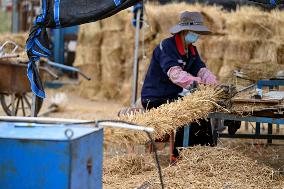
Workers produce straw checkerboard materials in Zhongwei of northwest China's Ningxia Hui Autonomous Region, May 29, 2024. In the 1950s, to protect China's first railway that runs through a desert, the city of Zhongwei embarked on a journey of desert mitigation. Scientists at the Shapotou Desert Research and Experiment Station, part of the Northwest Institute of Eco-Environment and Resources of the Chinese Academy of Sciences, along with local residents, developed straw checkerboards to stabilize the sand and prevent dunes from shifting. Tang Ximing, a senior engineer at a state-owned forestry farm in Zhongwei, crafted a steel tool that differs from regular shovels by featuring two horizontal bars at the front tip. This innovative tool enables the planting of seedling roots 50 centimeters deep into the moist sand layer. This simple tool increases the survival rate of afforestation by 25 percent to over 85 percent. It has been widely promoted and used in afforestation projects across other regions in northern

  •  
Chinese Experience in Desert Controi

Chinese Experience in Desert Controi

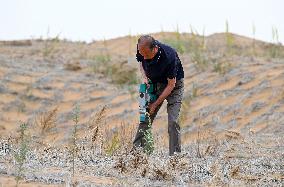
Tang Ximing, a senior engineer at a state-owned forestry farm in Zhongwei, demonstrates an upgraded electric seedling planter invented by himself in northwest China's Ningxia Hui Autonomous Region, June 1, 2024. In the 1950s, to protect China's first railway that runs through a desert, the city of Zhongwei embarked on a journey of desert mitigation. Scientists at the Shapotou Desert Research and Experiment Station, part of the Northwest Institute of Eco-Environment and Resources of the Chinese Academy of Sciences, along with local residents, developed straw checkerboards to stabilize the sand and prevent dunes from shifting. Tang Ximing, a senior engineer at a state-owned forestry farm in Zhongwei, crafted a steel tool that differs from regular shovels by featuring two horizontal bars at the front tip. This innovative tool enables the planting of seedling roots 50 centimeters deep into the moist sand layer. This simple tool increases the survival rate of afforestation by 25 percent to over 85 percent. It has

  •  
Chinese Experience in Desert Controi

Chinese Experience in Desert Controi

Workers set up straw checkerboards in Zhongwei, northwest China's Ningxia Hui Autonomous Region, June 13, 2019. In the 1950s, to protect China's first railway that runs through a desert, the city of Zhongwei embarked on a journey of desert mitigation. Scientists at the Shapotou Desert Research and Experiment Station, part of the Northwest Institute of Eco-Environment and Resources of the Chinese Academy of Sciences, along with local residents, developed straw checkerboards to stabilize the sand and prevent dunes from shifting. Tang Ximing, a senior engineer at a state-owned forestry farm in Zhongwei, crafted a steel tool that differs from regular shovels by featuring two horizontal bars at the front tip. This innovative tool enables the planting of seedling roots 50 centimeters deep into the moist sand layer. This simple tool increases the survival rate of afforestation by 25 percent to over 85 percent. It has been widely promoted and used in afforestation projects across other regions in northern China. In 2

  •  
Chinese Experience in Desert Controi

Chinese Experience in Desert Controi

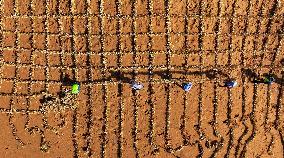
An aerial drone photo taken on Sept. 7, 2020 shows workers paving straw checkerboards near a section of an express way in the Tengger Desert, northwest China's Ningxia Hui Autonomous Region. In the 1950s, to protect China's first railway that runs through a desert, the city of Zhongwei embarked on a journey of desert mitigation. Scientists at the Shapotou Desert Research and Experiment Station, part of the Northwest Institute of Eco-Environment and Resources of the Chinese Academy of Sciences, along with local residents, developed straw checkerboards to stabilize the sand and prevent dunes from shifting. Tang Ximing, a senior engineer at a state-owned forestry farm in Zhongwei, crafted a steel tool that differs from regular shovels by featuring two horizontal bars at the front tip. This innovative tool enables the planting of seedling roots 50 centimeters deep into the moist sand layer. This simple tool increases the survival rate of afforestation by 25 percent to over 85 percent. It has been widely promoted

  •  
Chinese Experience in Desert Controi

Chinese Experience in Desert Controi

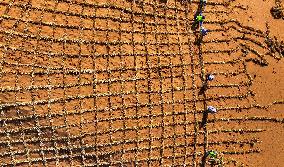
An aerial drone photo taken on May 30, 2024 shows workers paving straw checkerboards in the Tengger Desert, in Zhongwei of northwest China's Ningxia Hui Autonomous Region. In the 1950s, to protect China's first railway that runs through a desert, the city of Zhongwei embarked on a journey of desert mitigation. Scientists at the Shapotou Desert Research and Experiment Station, part of the Northwest Institute of Eco-Environment and Resources of the Chinese Academy of Sciences, along with local residents, developed straw checkerboards to stabilize the sand and prevent dunes from shifting. Tang Ximing, a senior engineer at a state-owned forestry farm in Zhongwei, crafted a steel tool that differs from regular shovels by featuring two horizontal bars at the front tip. This innovative tool enables the planting of seedling roots 50 centimeters deep into the moist sand layer. This simple tool increases the survival rate of afforestation by 25 percent to over 85 percent. It has been widely promoted and used in affores

  •  
Chinese Experience in Desert Controi

Chinese Experience in Desert Controi

An aerial drone photo taken on May 30, 2024 shows workers paving straw checkerboards in the Tengger Desert, in Zhongwei of northwest China's Ningxia Hui Autonomous Region. In the 1950s, to protect China's first railway that runs through a desert, the city of Zhongwei embarked on a journey of desert mitigation. Scientists at the Shapotou Desert Research and Experiment Station, part of the Northwest Institute of Eco-Environment and Resources of the Chinese Academy of Sciences, along with local residents, developed straw checkerboards to stabilize the sand and prevent dunes from shifting. Tang Ximing, a senior engineer at a state-owned forestry farm in Zhongwei, crafted a steel tool that differs from regular shovels by featuring two horizontal bars at the front tip. This innovative tool enables the planting of seedling roots 50 centimeters deep into the moist sand layer. This simple tool increases the survival rate of afforestation by 25 percent to over 85 percent. It has been widely promoted and used in affores

  •  
Chinese Experience in Desert Controi

Chinese Experience in Desert Controi

Workers pave straw checkerboards in the Tengger Desert, in Zhongwei of northwest China's Ningxia Hui Autonomous Region, May 29, 2024. In the 1950s, to protect China's first railway that runs through a desert, the city of Zhongwei embarked on a journey of desert mitigation. Scientists at the Shapotou Desert Research and Experiment Station, part of the Northwest Institute of Eco-Environment and Resources of the Chinese Academy of Sciences, along with local residents, developed straw checkerboards to stabilize the sand and prevent dunes from shifting. Tang Ximing, a senior engineer at a state-owned forestry farm in Zhongwei, crafted a steel tool that differs from regular shovels by featuring two horizontal bars at the front tip. This innovative tool enables the planting of seedling roots 50 centimeters deep into the moist sand layer. This simple tool increases the survival rate of afforestation by 25 percent to over 85 percent. It has been widely promoted and used in afforestation projects across other regions i

  •  
Chinese Experience in Desert Controi

Chinese Experience in Desert Controi

Workers pave straw checkerboards in the Tengger Desert, in Zhongwei of northwest China's Ningxia Hui Autonomous Region, May 30, 2024. In the 1950s, to protect China's first railway that runs through a desert, the city of Zhongwei embarked on a journey of desert mitigation. Scientists at the Shapotou Desert Research and Experiment Station, part of the Northwest Institute of Eco-Environment and Resources of the Chinese Academy of Sciences, along with local residents, developed straw checkerboards to stabilize the sand and prevent dunes from shifting. Tang Ximing, a senior engineer at a state-owned forestry farm in Zhongwei, crafted a steel tool that differs from regular shovels by featuring two horizontal bars at the front tip. This innovative tool enables the planting of seedling roots 50 centimeters deep into the moist sand layer. This simple tool increases the survival rate of afforestation by 25 percent to over 85 percent. It has been widely promoted and used in afforestation projects across other regions i

  •  
Chinese Experience in Desert Controi

Chinese Experience in Desert Controi

An aerial drone photo taken on May 29, 2024 shows straw checkerboards in the Tengger Desert, northwest China's Ningxia Hui Autonomous Region. In the 1950s, to protect China's first railway that runs through a desert, the city of Zhongwei embarked on a journey of desert mitigation. Scientists at the Shapotou Desert Research and Experiment Station, part of the Northwest Institute of Eco-Environment and Resources of the Chinese Academy of Sciences, along with local residents, developed straw checkerboards to stabilize the sand and prevent dunes from shifting. Tang Ximing, a senior engineer at a state-owned forestry farm in Zhongwei, crafted a steel tool that differs from regular shovels by featuring two horizontal bars at the front tip. This innovative tool enables the planting of seedling roots 50 centimeters deep into the moist sand layer. This simple tool increases the survival rate of afforestation by 25 percent to over 85 percent. It has been widely promoted and used in afforestation projects across other r

  •  
Chinese Experience in Desert Controi

Chinese Experience in Desert Controi

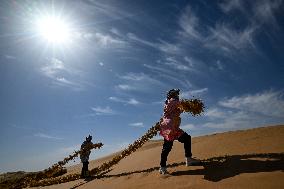
Workers carry straw checkerboards in the Tengger Desert, in Zhongwei of northwest China's Ningxia Hui Autonomous Region, May 30, 2024. In the 1950s, to protect China's first railway that runs through a desert, the city of Zhongwei embarked on a journey of desert mitigation. Scientists at the Shapotou Desert Research and Experiment Station, part of the Northwest Institute of Eco-Environment and Resources of the Chinese Academy of Sciences, along with local residents, developed straw checkerboards to stabilize the sand and prevent dunes from shifting. Tang Ximing, a senior engineer at a state-owned forestry farm in Zhongwei, crafted a steel tool that differs from regular shovels by featuring two horizontal bars at the front tip. This innovative tool enables the planting of seedling roots 50 centimeters deep into the moist sand layer. This simple tool increases the survival rate of afforestation by 25 percent to over 85 percent. It has been widely promoted and used in afforestation projects across other regions

  • Main
  • Top
  • Editorial
  • Creative
  • About Us
  • About ILG
  • Terms of use
  • Company
  • BEHIND
  • Price List
  • Single Plan
  • Monthly Plan
  • Services
  • Shooting
  • Rights Clearance
  • Support
  • FAQ
  • How To Buy
  • Contact Us
  • Become a Partner

© KYODO NEWS IMAGES INC

All Rights Reserved.

  • Editorial
  • Olympics
  • News
  • Sports
  • Japan
  • Tech
  • Royal
  • Disaster
  • NorthKorea
  • Old Japan
  • SNS
  • Creative
  • Food
  • Japan
  • Landscape
  • Animal
  • Popular
  • #Ukraine
  • #Thailand
  • #coronavirus
  • #N. Korea
  • #Russia
  • #China
  • #Ukraine
  • #Thailand
  • #coronavirus
  • #N. Korea
  • #Russia
  • #China
  • Food
  • Japan
  • Landscape
  • Animal
  • Olympics
  • News
  • Sports
  • Japan
  • Tech
  • Royal
  • Disaster
  • NorthKorea
  • Old Japan
  • SNS