•  
Cave On The Moon Could Be A Future Base

Cave On The Moon Could Be A Future Base

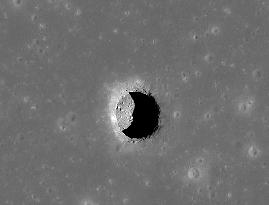
Hand out photo shows the Mare Tranquillitatis pit as seen by NASA's Lunar Reconnaissance Orbiter. Radar data from NASA’s Lunar Reconnaissance Orbiter have revealed what they think may be the deepest known cave on the moon, with a "skylight" entrance 330 feet (100 meters) wide. The cave, which could potentially be a location for a future moon base, is in Mare Tranquillitatis—Latin for Sea of Tranquility—close to the landing spot of Apollo 11, the first mission to land people on the moon 55 years ago this week. Researchers at the University of Trento in Italy have revealed more about Mare Tranquillitatis Pit in a paper published on Monday July 15, 2024 in Nature Astronomy. It is one of about 200 on the moon. A pit is an opening on the lunar surface that could be an entrance to a cave or lava tube. The latter forms when underground rivers of lava empty out. Pits are believed to form when parts of a lava tube's ceiling collapse, and those that directly expose the interior are called skylights. About 16 of the 200

  •  
Cave On The Moon Could Be A Future Base

Cave On The Moon Could Be A Future Base

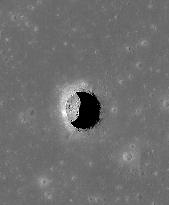
Hand out photo shows the Mare Tranquillitatis pit as seen by NASA's Lunar Reconnaissance Orbiter. Radar data from NASA’s Lunar Reconnaissance Orbiter have revealed what they think may be the deepest known cave on the moon, with a "skylight" entrance 330 feet (100 meters) wide. The cave, which could potentially be a location for a future moon base, is in Mare Tranquillitatis—Latin for Sea of Tranquility—close to the landing spot of Apollo 11, the first mission to land people on the moon 55 years ago this week. Researchers at the University of Trento in Italy have revealed more about Mare Tranquillitatis Pit in a paper published on Monday July 15, 2024 in Nature Astronomy. It is one of about 200 on the moon. A pit is an opening on the lunar surface that could be an entrance to a cave or lava tube. The latter forms when underground rivers of lava empty out. Pits are believed to form when parts of a lava tube's ceiling collapse, and those that directly expose the interior are called skylights. About 16 of the 200

  •  

China's Chang'e-6 brings back first samples from moon's far side to Earth

STORY: China's Chang'e-6 brings back first samples from moon's far side to Earth SHOOTING TIME: June 25, 2024 DATELINE: June 25, 2024 LENGTH: 00:00:51 LOCATION: HOHHOT, China CATEGORY: TECHNOLOGY SHOTLIST: 1. various of the site STORYLINE: The returner of the Chang'e-6 probe touched down on Earth on Tuesday, bringing back the world's first samples collected from the moon's far side. The return capsule landed precisely in the designated area in Siziwang Banner, north China's Inner Mongolia Autonomous Region, and the mission is a complete success, according to the China National Space Administration (CNSA). Chang'e-6 is one of the most complex and challenging missions in China's space exploration efforts to date. Consisting of an orbiter, a returner, a lander and an ascender, it was launched on May 3 this year, and has gone through various stages such as Earth-moon transfer, near-moon braking, lunar orbiting and separation of the lander-ascender combination and the orbiter-returner combination. S

  •  
(EyesonSci)CHINA-CHANG'E-6-LUNAR ORBIT-DOCKING-SAMPLES TRANSFER (CN)

(EyesonSci)CHINA-CHANG'E-6-LUNAR ORBIT-DOCKING-SAMPLES TRANSFER (CN)

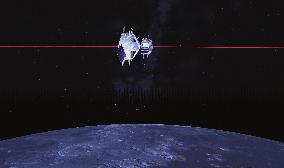
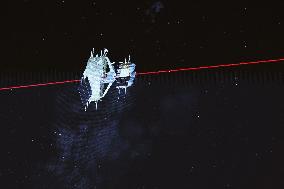
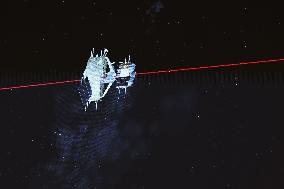
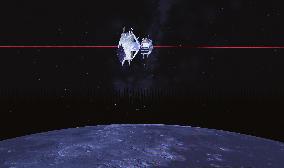
(240606) -- BEIJING, June 6, 2024 Photo by Xinhua/ABACAPRESS.COM) -- This video animation image displayed at Beijing Aerospace Control Center (BACC) on June 6, 2024 shows the ascender of China's Chang'e-6 probe rendezvousing and docking with the probe's orbiter-returner combination in lunar orbit. The ascender of China's Chang'e-6 probe successfully rendezvoused and docked with the probe's orbiter-returner combination in lunar orbit at 2:48 p.m. (Beijing Time) on Thursday, the China National Space Administration (CNSA) announced. The container carrying the world's first samples from the far side of the moon had been transferred from the ascender to the returner safely by 3:24 p.m., the CNSA said. This is the second time that Chinese spacecraft carried out rendezvous and docking in lunar orbit, with Chang'e-5 realizing the first one in 2020. Photo by Xinhua/ABACAPRESS.COM/Jin Liwang)

  •  
(EyesonSci)CHINA-CHANG'E-6-LUNAR ORBIT-DOCKING-SAMPLES TRANSFER (CN)

(EyesonSci)CHINA-CHANG'E-6-LUNAR ORBIT-DOCKING-SAMPLES TRANSFER (CN)

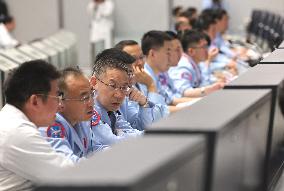
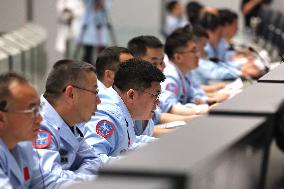
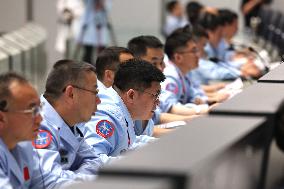
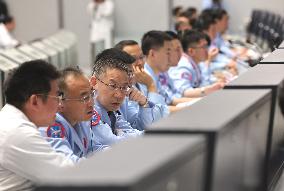
(240606) -- BEIJING, June 6, 2024 Photo by Xinhua/ABACAPRESS.COM) -- Technical personnel work at the Beijing Aerospace Control Center (BACC) in Beijing, capital of China, June 6, 2024. The ascender of China's Chang'e-6 probe successfully rendezvoused and docked with the probe's orbiter-returner combination in lunar orbit at 2:48 p.m. (Beijing Time) on Thursday, the China National Space Administration (CNSA) announced. The container carrying the world's first samples from the far side of the moon had been transferred from the ascender to the returner safely by 3:24 p.m., the CNSA said. This is the second time that Chinese spacecraft carried out rendezvous and docking in lunar orbit, with Chang'e-5 realizing the first one in 2020. Photo by Xinhua/ABACAPRESS.COM/Jin Liwang)

  •  
(EyesonSci)CHINA-CHANG'E-6-LUNAR ORBIT-DOCKING-SAMPLES TRANSFER (CN)

(EyesonSci)CHINA-CHANG'E-6-LUNAR ORBIT-DOCKING-SAMPLES TRANSFER (CN)

(240606) -- BEIJING, June 6, 2024 Photo by Xinhua/ABACAPRESS.COM) -- This video animation image displayed at Beijing Aerospace Control Center (BACC) on June 6, 2024 shows the ascender of China's Chang'e-6 probe rendezvousing and docking with the probe's orbiter-returner combination in lunar orbit. The ascender of China's Chang'e-6 probe successfully rendezvoused and docked with the probe's orbiter-returner combination in lunar orbit at 2:48 p.m. (Beijing Time) on Thursday, the China National Space Administration (CNSA) announced. The container carrying the world's first samples from the far side of the moon had been transferred from the ascender to the returner safely by 3:24 p.m., the CNSA said. This is the second time that Chinese spacecraft carried out rendezvous and docking in lunar orbit, with Chang'e-5 realizing the first one in 2020. Photo by Xinhua/ABACAPRESS.COM/Jin Liwang)

  •  
(EyesonSci)CHINA-CHANG'E-6-LUNAR ORBIT-DOCKING-SAMPLES TRANSFER (CN)

(EyesonSci)CHINA-CHANG'E-6-LUNAR ORBIT-DOCKING-SAMPLES TRANSFER (CN)

(240606) -- BEIJING, June 6, 2024 Photo by Xinhua/ABACAPRESS.COM) -- Technical personnel work at the Beijing Aerospace Control Center (BACC) in Beijing, capital of China, June 6, 2024. The ascender of China's Chang'e-6 probe successfully rendezvoused and docked with the probe's orbiter-returner combination in lunar orbit at 2:48 p.m. (Beijing Time) on Thursday, the China National Space Administration (CNSA) announced. The container carrying the world's first samples from the far side of the moon had been transferred from the ascender to the returner safely by 3:24 p.m., the CNSA said. This is the second time that Chinese spacecraft carried out rendezvous and docking in lunar orbit, with Chang'e-5 realizing the first one in 2020. Photo by Xinhua/ABACAPRESS.COM/Jin Liwang)

  •  
(EyesonSci)CHINA-CHANG'E-6-LUNAR ORBIT-DOCKING-SAMPLES TRANSFER (CN)

(EyesonSci)CHINA-CHANG'E-6-LUNAR ORBIT-DOCKING-SAMPLES TRANSFER (CN)

(240606) -- BEIJING, June 6, 2024 (Xinhua) -- Technical personnel work at the Beijing Aerospace Control Center (BACC) in Beijing, capital of China, June 6, 2024. The ascender of China's Chang'e-6 probe successfully rendezvoused and docked with the probe's orbiter-returner combination in lunar orbit at 2:48 p.m. (Beijing Time) on Thursday, the China National Space Administration (CNSA) announced. The container carrying the world's first samples from the far side of the moon had been transferred from the ascender to the returner safely by 3:24 p.m., the CNSA said. This is the second time that Chinese spacecraft carried out rendezvous and docking in lunar orbit, with Chang'e-5 realizing the first one in 2020. (Xinhua/Jin Liwang)

  •  
(EyesonSci)CHINA-CHANG'E-6-LUNAR ORBIT-DOCKING-SAMPLES TRANSFER (CN)

(EyesonSci)CHINA-CHANG'E-6-LUNAR ORBIT-DOCKING-SAMPLES TRANSFER (CN)

(240606) -- BEIJING, June 6, 2024 (Xinhua) -- Technical personnel work at the Beijing Aerospace Control Center (BACC) in Beijing, capital of China, June 6, 2024. The ascender of China's Chang'e-6 probe successfully rendezvoused and docked with the probe's orbiter-returner combination in lunar orbit at 2:48 p.m. (Beijing Time) on Thursday, the China National Space Administration (CNSA) announced. The container carrying the world's first samples from the far side of the moon had been transferred from the ascender to the returner safely by 3:24 p.m., the CNSA said. This is the second time that Chinese spacecraft carried out rendezvous and docking in lunar orbit, with Chang'e-5 realizing the first one in 2020. (Xinhua/Jin Liwang)

  •  
(EyesonSci)CHINA-CHANG'E-6-LUNAR ORBIT-DOCKING-SAMPLES TRANSFER (CN)

(EyesonSci)CHINA-CHANG'E-6-LUNAR ORBIT-DOCKING-SAMPLES TRANSFER (CN)

(240606) -- BEIJING, June 6, 2024 (Xinhua) -- This video animation image displayed at Beijing Aerospace Control Center (BACC) on June 6, 2024 shows the ascender of China's Chang'e-6 probe rendezvousing and docking with the probe's orbiter-returner combination in lunar orbit. The ascender of China's Chang'e-6 probe successfully rendezvoused and docked with the probe's orbiter-returner combination in lunar orbit at 2:48 p.m. (Beijing Time) on Thursday, the China National Space Administration (CNSA) announced. The container carrying the world's first samples from the far side of the moon had been transferred from the ascender to the returner safely by 3:24 p.m., the CNSA said. This is the second time that Chinese spacecraft carried out rendezvous and docking in lunar orbit, with Chang'e-5 realizing the first one in 2020. (Xinhua/Jin Liwang)

  •  
(EyesonSci)CHINA-CHANG'E-6-LUNAR ORBIT-DOCKING-SAMPLES TRANSFER (CN)

(EyesonSci)CHINA-CHANG'E-6-LUNAR ORBIT-DOCKING-SAMPLES TRANSFER (CN)

(240606) -- BEIJING, June 6, 2024 (Xinhua) -- This video animation image displayed at Beijing Aerospace Control Center (BACC) on June 6, 2024 shows the ascender of China's Chang'e-6 probe rendezvousing and docking with the probe's orbiter-returner combination in lunar orbit. The ascender of China's Chang'e-6 probe successfully rendezvoused and docked with the probe's orbiter-returner combination in lunar orbit at 2:48 p.m. (Beijing Time) on Thursday, the China National Space Administration (CNSA) announced. The container carrying the world's first samples from the far side of the moon had been transferred from the ascender to the returner safely by 3:24 p.m., the CNSA said. This is the second time that Chinese spacecraft carried out rendezvous and docking in lunar orbit, with Chang'e-5 realizing the first one in 2020. (Xinhua/Jin Liwang)

  •  

China's Chang'e-6 lands on moon's far side to collect samples

STORY: China's Chang'e-6 lands on moon's far side to collect samples SHOOTING TIME: June 2, 2024 DATELINE: June 2, 2024 LENGTH: 00:01:02 LOCATION: Beijing CATEGORY: TECHNOLOGY/SCIENCE SHOTLIST: 1. footage of Chang'e-6 touching down on the far side of the moon 2. launching of Chang'e-6 on May 3 STORYLINE: China's Chang'e-6 touched down on the far side of the moon on Sunday morning, and will collect samples from this rarely explored terrain for the first time in human history, the China National Space Administration (CNSA) announced. Supported by the Queqiao-2 relay satellite, the lander-ascender combination of the Chang'e-6 probe successfully landed at the designated landing area at 6:23 a.m. (Beijing Time) in the South Pole-Aitken (SPA) Basin. Chang'e-6 consists of an orbiter, a returner, a lander and an ascender. Since its launch on May 3 this year, it has gone through various stages such as Earth-moon transfer, near-moon braking, lunar orbiting and landing descent. The CNSA said the lander-asce

  •  
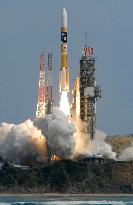
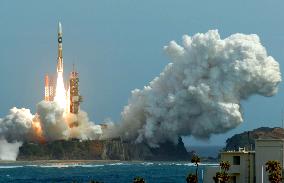
Japan launches 1st lunar explorer

Japan launches 1st lunar explorer

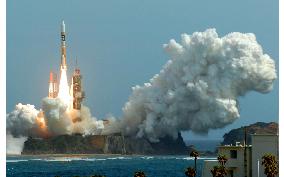
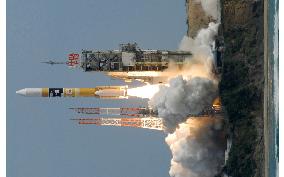
TANEGASHIMA, Japan - A domestically developed H-2A rocket carrying Japan's first lunar orbiter is launched from the Tanegashima Space Center in Kagoshima Prefecture on Sept. 14. The rocket carries the Selenological and Engineering Explorer, nicknamed ''Kaguya'' after a moon princess in an ancient Japanese folktale.

  •  
Japan launches 1st lunar explorer

Japan launches 1st lunar explorer

TANEGASHIMA, Japan - A domestically developed H-2A rocket carrying Japan's first lunar orbiter is launched from the Tanegashima Space Center in Kagoshima Prefecture on Sept. 14. The rocket carries the Selenological and Engineering Explorer, nicknamed ''Kaguya'' after a moon princess in an ancient Japanese folktale.

  •  
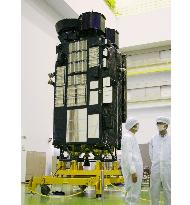
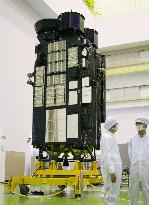
Japan's 1st lunar orbiter spacecraft on display

Japan's 1st lunar orbiter spacecraft on display

TANEGASHIMA, Japan - Japan's first lunar orbiter Kaguya, scheduled to be launched Aug. 16 aboard an H-2A rocket, is on display at the Tanegashima Space Center in Kagoshima Prefecture on June 18. According to the Japan Aerospace Exploration Agency, the 3-ton, 5.5-meter-tall unmanned spacecraft will be used to collect scientific data to help scientists better understand about the origin of the moon and its transformational history. Among the scientific data to be observed during the orbiter's one-year mission include the moon's gravity, distribution of its magnetic field and the structure of the moon surface.

  •  
Japan's 1st lunar orbiter spacecraft on display

Japan's 1st lunar orbiter spacecraft on display

TANEGASHIMA, Japan - Japan's first lunar orbiter Kaguya, scheduled to be launched Aug. 16 aboard an H-2A rocket, is on display at the Tanegashima Space Center in Kagoshima Prefecture on June 18. According to the Japan Aerospace Exploration Agency, the 3-ton, 5.5-meter-tall unmanned spacecraft will be used to collect scientific data to help scientists better understand about the origin of the moon and its transformational history. Among the scientific data to be observed during the orbiter's one-year mission include the moon's gravity, distribution of its magnetic field and the structure of the moon surface. (Kyodo)

  •  
Japan launches 1st lunar explorer

Japan launches 1st lunar explorer

TANEGASHIMA, Japan - A domestically developed H-2A rocket carrying Japan's first lunar orbiter is launched from the Tanegashima Space Center in Kagoshima Prefecture on Sept. 14. The rocket carries the Selenological and Engineering Explorer, nicknamed ''Kaguya'' after a moon princess in an ancient Japanese folktale. (Kyodo)

  •  
Japan launches 1st lunar explorer

Japan launches 1st lunar explorer

TANEGASHIMA, Japan - A domestically developed H-2A rocket carrying Japan's first lunar orbiter is launched from the Tanegashima Space Center in Kagoshima Prefecture on Sept. 14. The rocket carries the Selenological and Engineering Explorer, nicknamed ''Kaguya'' after a moon princess in an ancient Japanese folktale. (Kyodo)

  • Main
  • Top
  • Editorial
  • Creative
  • About Us
  • About ILG
  • Terms of use
  • Company
  • BEHIND
  • Price List
  • Single Plan
  • Monthly Plan
  • Services
  • Shooting
  • Rights Clearance
  • Support
  • FAQ
  • How To Buy
  • Contact Us
  • Become a Partner

© KYODO NEWS IMAGES INC

All Rights Reserved.

  • Editorial
  • Olympics
  • News
  • Sports
  • Japan
  • Tech
  • Royal
  • Disaster
  • NorthKorea
  • Old Japan
  • SNS
  • Creative
  • Food
  • Japan
  • Landscape
  • Animal
  • Popular
  • #Ukraine
  • #Russia
  • #coronavirus
  • #N. Korea
  • #China
  • #Thailand
  • #Ukraine
  • #Russia
  • #coronavirus
  • #N. Korea
  • #China
  • #Thailand
  • Food
  • Japan
  • Landscape
  • Animal
  • Olympics
  • News
  • Sports
  • Japan
  • Tech
  • Royal
  • Disaster
  • NorthKorea
  • Old Japan
  • SNS