•  
XINHUA PHOTOS OF THE DAY

XINHUA PHOTOS OF THE DAY

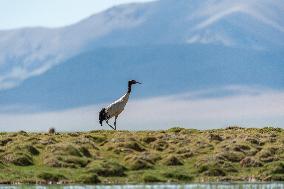
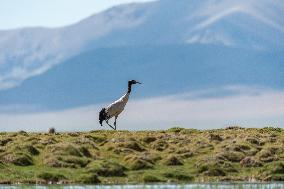
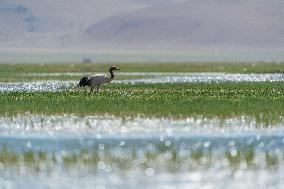
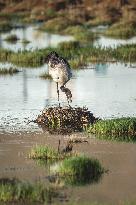
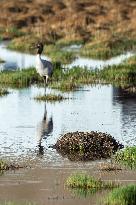
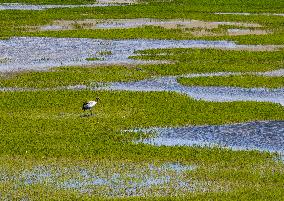
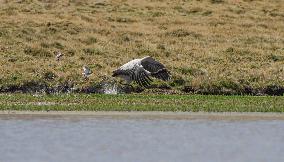
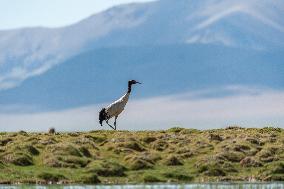
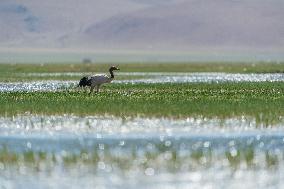
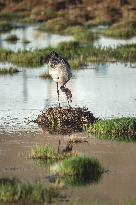
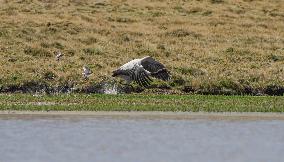
(240610) -- BEIJING, June 10, 2024 Photo by Xinhua/ABACAPRESS.COM) -- A black-necked crane is seen at a wetland in Xainza County of Nagqu City, southwest China's Xizang Autonomous Region, June 8, 2024. The black-necked crane, a species under first-class state protection in China, mainly inhabits plateau meadows and marshes at an altitude of 2,500 to 5,000 meters. Every year around the time of June, pairs of black-necked cranes migrate to Xainza County to build nests and hatch eggs on grass piers surrounded by water. Black-necked cranes usually lay one or two eggs in every nest, and the incubation period is about 30 days. In recent years, Xizang has continuously strengthened the protection of the habitat of black-necked cranes, and their living environment has been effectively improved. The dotted wetlands in Xainza County have attracted a large number of black-necked cranes to breed their offspring. Photo by Xinhua/ABACAPRESS.COM/Tenzing Nima Qadhup)

  •  
XINHUA PHOTOS OF THE DAY

XINHUA PHOTOS OF THE DAY

(240610) -- BEIJING, June 10, 2024 (Xinhua) -- A black-necked crane is seen at a wetland in Xainza County of Nagqu City, southwest China's Xizang Autonomous Region, June 8, 2024. The black-necked crane, a species under first-class state protection in China, mainly inhabits plateau meadows and marshes at an altitude of 2,500 to 5,000 meters. Every year around the time of June, pairs of black-necked cranes migrate to Xainza County to build nests and hatch eggs on grass piers surrounded by water. Black-necked cranes usually lay one or two eggs in every nest, and the incubation period is about 30 days. In recent years, Xizang has continuously strengthened the protection of the habitat of black-necked cranes, and their living environment has been effectively improved. The dotted wetlands in Xainza County have attracted a large number of black-necked cranes to breed their offspring. (Xinhua/Tenzing Nima Qadhup)

  •  
(InXizang)CHINA-XIZANG-XAINZA-BLACK-NECKED CRANES (CN)

(InXizang)CHINA-XIZANG-XAINZA-BLACK-NECKED CRANES (CN)

(240609) -- LHASA, June 9, 2024 Photo by Xinhua/ABACAPRESS.COM) -- A black-necked crane is seen at a wetland in Xainza County of Nagqu City, southwest China's Xizang Autonomous Region, June 8, 2024. The black-necked crane, a species under first-class state protection in China, mainly inhabits plateau meadows and marshes at an altitude of 2,500 to 5,000 meters. Every year around the time of June, pairs of black-necked cranes migrate to Xainza County to build nests and hatch eggs on grass piers surrounded by water. Black-necked cranes usually lay one or two eggs in every nest, and the incubation period is about 30 days. In recent years, Xizang has continuously strengthened the protection of the habitat of black-necked cranes, and their living environment has been effectively improved. The dotted wetlands in Xainza County have attracted a large number of black-necked cranes to breed their offspring. Photo by Xinhua/ABACAPRESS.COM/Tenzing Nima Qadhup)

  •  
(InXizang)CHINA-XIZANG-XAINZA-BLACK-NECKED CRANES (CN)

(InXizang)CHINA-XIZANG-XAINZA-BLACK-NECKED CRANES (CN)

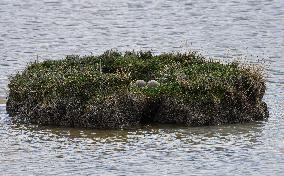
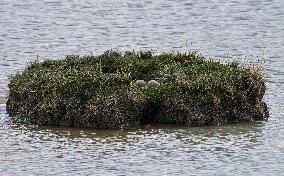
(240609) -- LHASA, June 9, 2024 Photo by Xinhua/ABACAPRESS.COM) -- Eggs of black-necked crane are seen at a wetland in Xainza County of Nagqu City, southwest China's Xizang Autonomous Region, June 7, 2024. The black-necked crane, a species under first-class state protection in China, mainly inhabits plateau meadows and marshes at an altitude of 2,500 to 5,000 meters. Every year around the time of June, pairs of black-necked cranes migrate to Xainza County to build nests and hatch eggs on grass piers surrounded by water. Black-necked cranes usually lay one or two eggs in every nest, and the incubation period is about 30 days. In recent years, Xizang has continuously strengthened the protection of the habitat of black-necked cranes, and their living environment has been effectively improved. The dotted wetlands in Xainza County have attracted a large number of black-necked cranes to breed their offspring. Photo by Xinhua/ABACAPRESS.COM/Jigme Dorje)

  •  
(InXizang)CHINA-XIZANG-XAINZA-BLACK-NECKED CRANES (CN)

(InXizang)CHINA-XIZANG-XAINZA-BLACK-NECKED CRANES (CN)

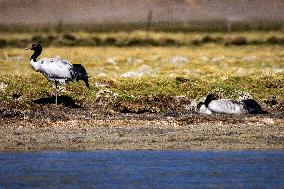
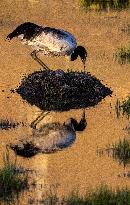
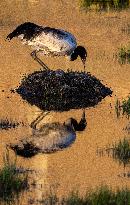
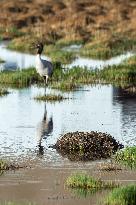
(240609) -- LHASA, June 9, 2024 Photo by Xinhua/ABACAPRESS.COM) -- A black-necked crane watches over the eggs at a wetland in Xainza County of Nagqu City, southwest China's Xizang Autonomous Region, June 7, 2024. The black-necked crane, a species under first-class state protection in China, mainly inhabits plateau meadows and marshes at an altitude of 2,500 to 5,000 meters. Every year around the time of June, pairs of black-necked cranes migrate to Xainza County to build nests and hatch eggs on grass piers surrounded by water. Black-necked cranes usually lay one or two eggs in every nest, and the incubation period is about 30 days. In recent years, Xizang has continuously strengthened the protection of the habitat of black-necked cranes, and their living environment has been effectively improved. The dotted wetlands in Xainza County have attracted a large number of black-necked cranes to breed their offspring. Photo by Xinhua/ABACAPRESS.COM/Tenzing Nima Qadhup)

  •  
(InXizang)CHINA-XIZANG-XAINZA-BLACK-NECKED CRANES (CN)

(InXizang)CHINA-XIZANG-XAINZA-BLACK-NECKED CRANES (CN)

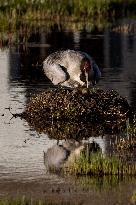
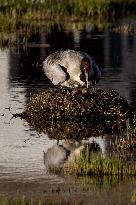
(240609) -- LHASA, June 9, 2024 Photo by Xinhua/ABACAPRESS.COM) -- A black-necked crane hatches eggs at a wetland in Xainza County of Nagqu City, southwest China's Xizang Autonomous Region, June 7, 2024. The black-necked crane, a species under first-class state protection in China, mainly inhabits plateau meadows and marshes at an altitude of 2,500 to 5,000 meters. Every year around the time of June, pairs of black-necked cranes migrate to Xainza County to build nests and hatch eggs on grass piers surrounded by water. Black-necked cranes usually lay one or two eggs in every nest, and the incubation period is about 30 days. In recent years, Xizang has continuously strengthened the protection of the habitat of black-necked cranes, and their living environment has been effectively improved. The dotted wetlands in Xainza County have attracted a large number of black-necked cranes to breed their offspring. Photo by Xinhua/ABACAPRESS.COM/Jiang Fan)

  •  
(InXizang)CHINA-XIZANG-XAINZA-BLACK-NECKED CRANES (CN)

(InXizang)CHINA-XIZANG-XAINZA-BLACK-NECKED CRANES (CN)

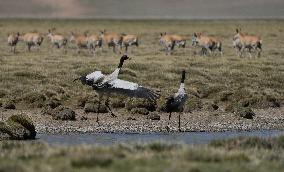
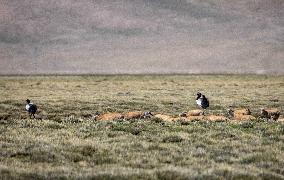
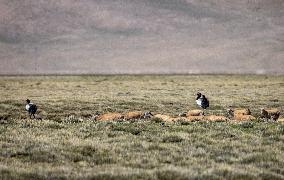
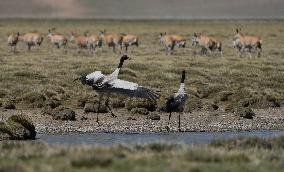
(240609) -- LHASA, June 9, 2024 Photo by Xinhua/ABACAPRESS.COM) -- Black-necked cranes search for food with Tibetan antelopes at a wetland in Xainza County of Nagqu City, southwest China's Xizang Autonomous Region, June 8, 2024. The black-necked crane, a species under first-class state protection in China, mainly inhabits plateau meadows and marshes at an altitude of 2,500 to 5,000 meters. Every year around the time of June, pairs of black-necked cranes migrate to Xainza County to build nests and hatch eggs on grass piers surrounded by water. Black-necked cranes usually lay one or two eggs in every nest, and the incubation period is about 30 days. In recent years, Xizang has continuously strengthened the protection of the habitat of black-necked cranes, and their living environment has been effectively improved. The dotted wetlands in Xainza County have attracted a large number of black-necked cranes to breed their offspring. Photo by Xinhua/ABACAPRESS.COM/Jigme Dorje)

  •  
(InXizang)CHINA-XIZANG-XAINZA-BLACK-NECKED CRANES (CN)

(InXizang)CHINA-XIZANG-XAINZA-BLACK-NECKED CRANES (CN)

(240609) -- LHASA, June 9, 2024 Photo by Xinhua/ABACAPRESS.COM) -- A black-necked crane watches over the eggs at a wetland in Xainza County of Nagqu City, southwest China's Xizang Autonomous Region, June 7, 2024. The black-necked crane, a species under first-class state protection in China, mainly inhabits plateau meadows and marshes at an altitude of 2,500 to 5,000 meters. Every year around the time of June, pairs of black-necked cranes migrate to Xainza County to build nests and hatch eggs on grass piers surrounded by water. Black-necked cranes usually lay one or two eggs in every nest, and the incubation period is about 30 days. In recent years, Xizang has continuously strengthened the protection of the habitat of black-necked cranes, and their living environment has been effectively improved. The dotted wetlands in Xainza County have attracted a large number of black-necked cranes to breed their offspring. Photo by Xinhua/ABACAPRESS.COM/Tenzing Nima Qadhup)

  •  
(InXizang)CHINA-XIZANG-XAINZA-BLACK-NECKED CRANES (CN)

(InXizang)CHINA-XIZANG-XAINZA-BLACK-NECKED CRANES (CN)

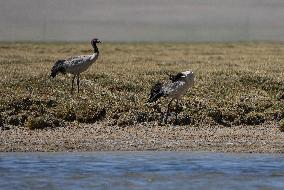
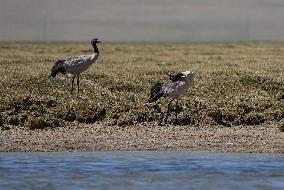
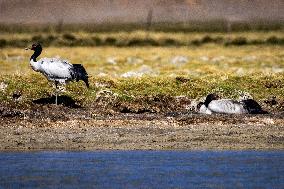
(240609) -- LHASA, June 9, 2024 Photo by Xinhua/ABACAPRESS.COM) -- Black-necked cranes are seen at a wetland in Xainza County of Nagqu City, southwest China's Xizang Autonomous Region, June 7, 2024. The black-necked crane, a species under first-class state protection in China, mainly inhabits plateau meadows and marshes at an altitude of 2,500 to 5,000 meters. Every year around the time of June, pairs of black-necked cranes migrate to Xainza County to build nests and hatch eggs on grass piers surrounded by water. Black-necked cranes usually lay one or two eggs in every nest, and the incubation period is about 30 days. In recent years, Xizang has continuously strengthened the protection of the habitat of black-necked cranes, and their living environment has been effectively improved. The dotted wetlands in Xainza County have attracted a large number of black-necked cranes to breed their offspring. Photo by Xinhua/ABACAPRESS.COM/Jiang Fan)

  •  
(InXizang)CHINA-XIZANG-XAINZA-BLACK-NECKED CRANES (CN)

(InXizang)CHINA-XIZANG-XAINZA-BLACK-NECKED CRANES (CN)

(240609) -- LHASA, June 9, 2024 Photo by Xinhua/ABACAPRESS.COM) -- Black-necked cranes search for food with Tibetan antelopes at a wetland in Xainza County of Nagqu City, southwest China's Xizang Autonomous Region, June 8, 2024. The black-necked crane, a species under first-class state protection in China, mainly inhabits plateau meadows and marshes at an altitude of 2,500 to 5,000 meters. Every year around the time of June, pairs of black-necked cranes migrate to Xainza County to build nests and hatch eggs on grass piers surrounded by water. Black-necked cranes usually lay one or two eggs in every nest, and the incubation period is about 30 days. In recent years, Xizang has continuously strengthened the protection of the habitat of black-necked cranes, and their living environment has been effectively improved. The dotted wetlands in Xainza County have attracted a large number of black-necked cranes to breed their offspring. Photo by Xinhua/ABACAPRESS.COM/Jiang Fan)

  •  
(InXizang)CHINA-XIZANG-XAINZA-BLACK-NECKED CRANES (CN)

(InXizang)CHINA-XIZANG-XAINZA-BLACK-NECKED CRANES (CN)

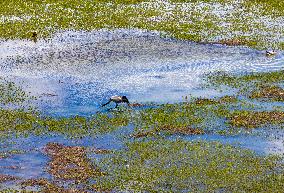
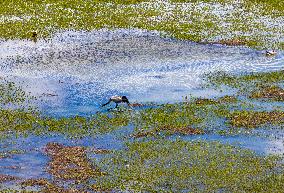
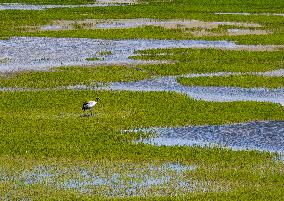
(240609) -- LHASA, June 9, 2024 Photo by Xinhua/ABACAPRESS.COM) -- A drone photo taken on June 8, 2024 shows a black-necked crane searching for food at a wetland in Xainza County of Nagqu City, southwest China's Xizang Autonomous Region. The black-necked crane, a species under first-class state protection in China, mainly inhabits plateau meadows and marshes at an altitude of 2,500 to 5,000 meters. Every year around the time of June, pairs of black-necked cranes migrate to Xainza County to build nests and hatch eggs on grass piers surrounded by water. Black-necked cranes usually lay one or two eggs in every nest, and the incubation period is about 30 days. In recent years, Xizang has continuously strengthened the protection of the habitat of black-necked cranes, and their living environment has been effectively improved. The dotted wetlands in Xainza County have attracted a large number of black-necked cranes to breed their offspring. Photo by Xinhua/ABACAPRESS.COM/Jiang Fan)

  •  
(InXizang)CHINA-XIZANG-XAINZA-BLACK-NECKED CRANES (CN)

(InXizang)CHINA-XIZANG-XAINZA-BLACK-NECKED CRANES (CN)

(240609) -- LHASA, June 9, 2024 Photo by Xinhua/ABACAPRESS.COM) -- A black-necked crane watches over the eggs at a wetland in Xainza County of Nagqu City, southwest China's Xizang Autonomous Region, June 7, 2024. The black-necked crane, a species under first-class state protection in China, mainly inhabits plateau meadows and marshes at an altitude of 2,500 to 5,000 meters. Every year around the time of June, pairs of black-necked cranes migrate to Xainza County to build nests and hatch eggs on grass piers surrounded by water. Black-necked cranes usually lay one or two eggs in every nest, and the incubation period is about 30 days. In recent years, Xizang has continuously strengthened the protection of the habitat of black-necked cranes, and their living environment has been effectively improved. The dotted wetlands in Xainza County have attracted a large number of black-necked cranes to breed their offspring. Photo by Xinhua/ABACAPRESS.COM/Jigme Dorje)

  •  
(InXizang)CHINA-XIZANG-XAINZA-BLACK-NECKED CRANES (CN)

(InXizang)CHINA-XIZANG-XAINZA-BLACK-NECKED CRANES (CN)

(240609) -- LHASA, June 9, 2024 Photo by Xinhua/ABACAPRESS.COM) -- A black-necked crane hatches eggs at a wetland in Xainza County of Nagqu City, southwest China's Xizang Autonomous Region, June 7, 2024. The black-necked crane, a species under first-class state protection in China, mainly inhabits plateau meadows and marshes at an altitude of 2,500 to 5,000 meters. Every year around the time of June, pairs of black-necked cranes migrate to Xainza County to build nests and hatch eggs on grass piers surrounded by water. Black-necked cranes usually lay one or two eggs in every nest, and the incubation period is about 30 days. In recent years, Xizang has continuously strengthened the protection of the habitat of black-necked cranes, and their living environment has been effectively improved. The dotted wetlands in Xainza County have attracted a large number of black-necked cranes to breed their offspring. Photo by Xinhua/ABACAPRESS.COM/Jiang Fan)

  •  
(InXizang)CHINA-XIZANG-XAINZA-BLACK-NECKED CRANES (CN)

(InXizang)CHINA-XIZANG-XAINZA-BLACK-NECKED CRANES (CN)

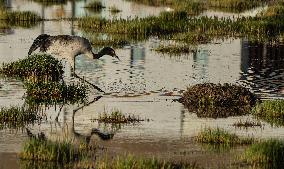
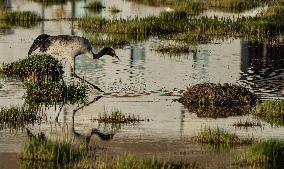
(240609) -- LHASA, June 9, 2024 Photo by Xinhua/ABACAPRESS.COM) -- A black-necked crane searches for food at a wetland in Xainza County of Nagqu City, southwest China's Xizang Autonomous Region, June 7, 2024. The black-necked crane, a species under first-class state protection in China, mainly inhabits plateau meadows and marshes at an altitude of 2,500 to 5,000 meters. Every year around the time of June, pairs of black-necked cranes migrate to Xainza County to build nests and hatch eggs on grass piers surrounded by water. Black-necked cranes usually lay one or two eggs in every nest, and the incubation period is about 30 days. In recent years, Xizang has continuously strengthened the protection of the habitat of black-necked cranes, and their living environment has been effectively improved. The dotted wetlands in Xainza County have attracted a large number of black-necked cranes to breed their offspring. Photo by Xinhua/ABACAPRESS.COM/Jigme Dorje)

  •  
(InXizang)CHINA-XIZANG-XAINZA-BLACK-NECKED CRANES (CN)

(InXizang)CHINA-XIZANG-XAINZA-BLACK-NECKED CRANES (CN)

(240609) -- LHASA, June 9, 2024 Photo by Xinhua/ABACAPRESS.COM) -- Black-necked cranes are seen at a wetland in Xainza County of Nagqu City, southwest China's Xizang Autonomous Region, June 8, 2024. The black-necked crane, a species under first-class state protection in China, mainly inhabits plateau meadows and marshes at an altitude of 2,500 to 5,000 meters. Every year around the time of June, pairs of black-necked cranes migrate to Xainza County to build nests and hatch eggs on grass piers surrounded by water. Black-necked cranes usually lay one or two eggs in every nest, and the incubation period is about 30 days. In recent years, Xizang has continuously strengthened the protection of the habitat of black-necked cranes, and their living environment has been effectively improved. The dotted wetlands in Xainza County have attracted a large number of black-necked cranes to breed their offspring. Photo by Xinhua/ABACAPRESS.COM/Jigme Dorje)

  •  
(InXizang)CHINA-XIZANG-XAINZA-BLACK-NECKED CRANES (CN)

(InXizang)CHINA-XIZANG-XAINZA-BLACK-NECKED CRANES (CN)

(240609) -- LHASA, June 9, 2024 Photo by Xinhua/ABACAPRESS.COM) -- A drone photo taken on June 8, 2024 shows a black-necked crane searching for food at a wetland in Xainza County of Nagqu City, southwest China's Xizang Autonomous Region. The black-necked crane, a species under first-class state protection in China, mainly inhabits plateau meadows and marshes at an altitude of 2,500 to 5,000 meters. Every year around the time of June, pairs of black-necked cranes migrate to Xainza County to build nests and hatch eggs on grass piers surrounded by water. Black-necked cranes usually lay one or two eggs in every nest, and the incubation period is about 30 days. In recent years, Xizang has continuously strengthened the protection of the habitat of black-necked cranes, and their living environment has been effectively improved. The dotted wetlands in Xainza County have attracted a large number of black-necked cranes to breed their offspring. Photo by Xinhua/ABACAPRESS.COM/Jiang Fan)

  •  
(InXizang)CHINA-XIZANG-XAINZA-BLACK-NECKED CRANES (CN)

(InXizang)CHINA-XIZANG-XAINZA-BLACK-NECKED CRANES (CN)

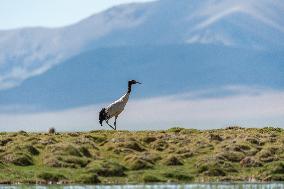
(240609) -- LHASA, June 9, 2024 Photo by Xinhua/ABACAPRESS.COM) -- A black-necked crane is seen at a wetland in Xainza County of Nagqu City, southwest China's Xizang Autonomous Region, June 8, 2024. The black-necked crane, a species under first-class state protection in China, mainly inhabits plateau meadows and marshes at an altitude of 2,500 to 5,000 meters. Every year around the time of June, pairs of black-necked cranes migrate to Xainza County to build nests and hatch eggs on grass piers surrounded by water. Black-necked cranes usually lay one or two eggs in every nest, and the incubation period is about 30 days. In recent years, Xizang has continuously strengthened the protection of the habitat of black-necked cranes, and their living environment has been effectively improved. The dotted wetlands in Xainza County have attracted a large number of black-necked cranes to breed their offspring. Photo by Xinhua/ABACAPRESS.COM/Tenzing Nima Qadhup)

  •  
(InXizang)CHINA-XIZANG-XAINZA-BLACK-NECKED CRANES (CN)

(InXizang)CHINA-XIZANG-XAINZA-BLACK-NECKED CRANES (CN)

(240609) -- LHASA, June 9, 2024 (Xinhua) -- Black-necked cranes search for food with Tibetan antelopes at a wetland in Xainza County of Nagqu City, southwest China's Xizang Autonomous Region, June 8, 2024. The black-necked crane, a species under first-class state protection in China, mainly inhabits plateau meadows and marshes at an altitude of 2,500 to 5,000 meters. Every year around the time of June, pairs of black-necked cranes migrate to Xainza County to build nests and hatch eggs on grass piers surrounded by water. Black-necked cranes usually lay one or two eggs in every nest, and the incubation period is about 30 days. In recent years, Xizang has continuously strengthened the protection of the habitat of black-necked cranes, and their living environment has been effectively improved. The dotted wetlands in Xainza County have attracted a large number of black-necked cranes to breed their offspring. (Xinhua/Jiang Fan)

  •  
(InXizang)CHINA-XIZANG-XAINZA-BLACK-NECKED CRANES (CN)

(InXizang)CHINA-XIZANG-XAINZA-BLACK-NECKED CRANES (CN)

(240609) -- LHASA, June 9, 2024 (Xinhua) -- Black-necked cranes are seen at a wetland in Xainza County of Nagqu City, southwest China's Xizang Autonomous Region, June 8, 2024. The black-necked crane, a species under first-class state protection in China, mainly inhabits plateau meadows and marshes at an altitude of 2,500 to 5,000 meters. Every year around the time of June, pairs of black-necked cranes migrate to Xainza County to build nests and hatch eggs on grass piers surrounded by water. Black-necked cranes usually lay one or two eggs in every nest, and the incubation period is about 30 days. In recent years, Xizang has continuously strengthened the protection of the habitat of black-necked cranes, and their living environment has been effectively improved. The dotted wetlands in Xainza County have attracted a large number of black-necked cranes to breed their offspring. (Xinhua/Jigme Dorje)

  •  
(InXizang)CHINA-XIZANG-XAINZA-BLACK-NECKED CRANES (CN)

(InXizang)CHINA-XIZANG-XAINZA-BLACK-NECKED CRANES (CN)

(240609) -- LHASA, June 9, 2024 (Xinhua) -- A drone photo taken on June 8, 2024 shows a black-necked crane searching for food at a wetland in Xainza County of Nagqu City, southwest China's Xizang Autonomous Region. The black-necked crane, a species under first-class state protection in China, mainly inhabits plateau meadows and marshes at an altitude of 2,500 to 5,000 meters. Every year around the time of June, pairs of black-necked cranes migrate to Xainza County to build nests and hatch eggs on grass piers surrounded by water. Black-necked cranes usually lay one or two eggs in every nest, and the incubation period is about 30 days. In recent years, Xizang has continuously strengthened the protection of the habitat of black-necked cranes, and their living environment has been effectively improved. The dotted wetlands in Xainza County have attracted a large number of black-necked cranes to breed their offspring. (Xinhua/Jiang Fan)

  •  
(InXizang)CHINA-XIZANG-XAINZA-BLACK-NECKED CRANES (CN)

(InXizang)CHINA-XIZANG-XAINZA-BLACK-NECKED CRANES (CN)

(240609) -- LHASA, June 9, 2024 (Xinhua) -- A black-necked crane is seen at a wetland in Xainza County of Nagqu City, southwest China's Xizang Autonomous Region, June 8, 2024. The black-necked crane, a species under first-class state protection in China, mainly inhabits plateau meadows and marshes at an altitude of 2,500 to 5,000 meters. Every year around the time of June, pairs of black-necked cranes migrate to Xainza County to build nests and hatch eggs on grass piers surrounded by water. Black-necked cranes usually lay one or two eggs in every nest, and the incubation period is about 30 days. In recent years, Xizang has continuously strengthened the protection of the habitat of black-necked cranes, and their living environment has been effectively improved. The dotted wetlands in Xainza County have attracted a large number of black-necked cranes to breed their offspring. (Xinhua/Tenzing Nima Qadhup)

  •  
(InXizang)CHINA-XIZANG-XAINZA-BLACK-NECKED CRANES (CN)

(InXizang)CHINA-XIZANG-XAINZA-BLACK-NECKED CRANES (CN)

(240609) -- LHASA, June 9, 2024 (Xinhua) -- A drone photo taken on June 8, 2024 shows a black-necked crane searching for food at a wetland in Xainza County of Nagqu City, southwest China's Xizang Autonomous Region. The black-necked crane, a species under first-class state protection in China, mainly inhabits plateau meadows and marshes at an altitude of 2,500 to 5,000 meters. Every year around the time of June, pairs of black-necked cranes migrate to Xainza County to build nests and hatch eggs on grass piers surrounded by water. Black-necked cranes usually lay one or two eggs in every nest, and the incubation period is about 30 days. In recent years, Xizang has continuously strengthened the protection of the habitat of black-necked cranes, and their living environment has been effectively improved. The dotted wetlands in Xainza County have attracted a large number of black-necked cranes to breed their offspring. (Xinhua/Jiang Fan)

  •  
(InXizang)CHINA-XIZANG-XAINZA-BLACK-NECKED CRANES (CN)

(InXizang)CHINA-XIZANG-XAINZA-BLACK-NECKED CRANES (CN)

(240609) -- LHASA, June 9, 2024 (Xinhua) -- A black-necked crane hatches eggs at a wetland in Xainza County of Nagqu City, southwest China's Xizang Autonomous Region, June 7, 2024. The black-necked crane, a species under first-class state protection in China, mainly inhabits plateau meadows and marshes at an altitude of 2,500 to 5,000 meters. Every year around the time of June, pairs of black-necked cranes migrate to Xainza County to build nests and hatch eggs on grass piers surrounded by water. Black-necked cranes usually lay one or two eggs in every nest, and the incubation period is about 30 days. In recent years, Xizang has continuously strengthened the protection of the habitat of black-necked cranes, and their living environment has been effectively improved. The dotted wetlands in Xainza County have attracted a large number of black-necked cranes to breed their offspring. (Xinhua/Jiang Fan)

  •  
(InXizang)CHINA-XIZANG-XAINZA-BLACK-NECKED CRANES (CN)

(InXizang)CHINA-XIZANG-XAINZA-BLACK-NECKED CRANES (CN)

(240609) -- LHASA, June 9, 2024 (Xinhua) -- A black-necked crane hatches eggs at a wetland in Xainza County of Nagqu City, southwest China's Xizang Autonomous Region, June 7, 2024. The black-necked crane, a species under first-class state protection in China, mainly inhabits plateau meadows and marshes at an altitude of 2,500 to 5,000 meters. Every year around the time of June, pairs of black-necked cranes migrate to Xainza County to build nests and hatch eggs on grass piers surrounded by water. Black-necked cranes usually lay one or two eggs in every nest, and the incubation period is about 30 days. In recent years, Xizang has continuously strengthened the protection of the habitat of black-necked cranes, and their living environment has been effectively improved. The dotted wetlands in Xainza County have attracted a large number of black-necked cranes to breed their offspring. (Xinhua/Jiang Fan)

  •  
(InXizang)CHINA-XIZANG-XAINZA-BLACK-NECKED CRANES (CN)

(InXizang)CHINA-XIZANG-XAINZA-BLACK-NECKED CRANES (CN)

(240609) -- LHASA, June 9, 2024 (Xinhua) -- A black-necked crane watches over the eggs at a wetland in Xainza County of Nagqu City, southwest China's Xizang Autonomous Region, June 7, 2024. The black-necked crane, a species under first-class state protection in China, mainly inhabits plateau meadows and marshes at an altitude of 2,500 to 5,000 meters. Every year around the time of June, pairs of black-necked cranes migrate to Xainza County to build nests and hatch eggs on grass piers surrounded by water. Black-necked cranes usually lay one or two eggs in every nest, and the incubation period is about 30 days. In recent years, Xizang has continuously strengthened the protection of the habitat of black-necked cranes, and their living environment has been effectively improved. The dotted wetlands in Xainza County have attracted a large number of black-necked cranes to breed their offspring. (Xinhua/Tenzing Nima Qadhup)

  •  
(InXizang)CHINA-XIZANG-XAINZA-BLACK-NECKED CRANES (CN)

(InXizang)CHINA-XIZANG-XAINZA-BLACK-NECKED CRANES (CN)

(240609) -- LHASA, June 9, 2024 (Xinhua) -- A black-necked crane watches over the eggs at a wetland in Xainza County of Nagqu City, southwest China's Xizang Autonomous Region, June 7, 2024. The black-necked crane, a species under first-class state protection in China, mainly inhabits plateau meadows and marshes at an altitude of 2,500 to 5,000 meters. Every year around the time of June, pairs of black-necked cranes migrate to Xainza County to build nests and hatch eggs on grass piers surrounded by water. Black-necked cranes usually lay one or two eggs in every nest, and the incubation period is about 30 days. In recent years, Xizang has continuously strengthened the protection of the habitat of black-necked cranes, and their living environment has been effectively improved. The dotted wetlands in Xainza County have attracted a large number of black-necked cranes to breed their offspring. (Xinhua/Jigme Dorje)

  •  
(InXizang)CHINA-XIZANG-XAINZA-BLACK-NECKED CRANES (CN)

(InXizang)CHINA-XIZANG-XAINZA-BLACK-NECKED CRANES (CN)

(240609) -- LHASA, June 9, 2024 (Xinhua) -- Black-necked cranes are seen at a wetland in Xainza County of Nagqu City, southwest China's Xizang Autonomous Region, June 7, 2024. The black-necked crane, a species under first-class state protection in China, mainly inhabits plateau meadows and marshes at an altitude of 2,500 to 5,000 meters. Every year around the time of June, pairs of black-necked cranes migrate to Xainza County to build nests and hatch eggs on grass piers surrounded by water. Black-necked cranes usually lay one or two eggs in every nest, and the incubation period is about 30 days. In recent years, Xizang has continuously strengthened the protection of the habitat of black-necked cranes, and their living environment has been effectively improved. The dotted wetlands in Xainza County have attracted a large number of black-necked cranes to breed their offspring. (Xinhua/Jiang Fan)

  •  
(InXizang)CHINA-XIZANG-XAINZA-BLACK-NECKED CRANES (CN)

(InXizang)CHINA-XIZANG-XAINZA-BLACK-NECKED CRANES (CN)

(240609) -- LHASA, June 9, 2024 (Xinhua) -- A black-necked crane is seen at a wetland in Xainza County of Nagqu City, southwest China's Xizang Autonomous Region, June 8, 2024. The black-necked crane, a species under first-class state protection in China, mainly inhabits plateau meadows and marshes at an altitude of 2,500 to 5,000 meters. Every year around the time of June, pairs of black-necked cranes migrate to Xainza County to build nests and hatch eggs on grass piers surrounded by water. Black-necked cranes usually lay one or two eggs in every nest, and the incubation period is about 30 days. In recent years, Xizang has continuously strengthened the protection of the habitat of black-necked cranes, and their living environment has been effectively improved. The dotted wetlands in Xainza County have attracted a large number of black-necked cranes to breed their offspring. (Xinhua/Tenzing Nima Qadhup)

  •  
(InXizang)CHINA-XIZANG-XAINZA-BLACK-NECKED CRANES (CN)

(InXizang)CHINA-XIZANG-XAINZA-BLACK-NECKED CRANES (CN)

(240609) -- LHASA, June 9, 2024 (Xinhua) -- A black-necked crane searches for food at a wetland in Xainza County of Nagqu City, southwest China's Xizang Autonomous Region, June 7, 2024. The black-necked crane, a species under first-class state protection in China, mainly inhabits plateau meadows and marshes at an altitude of 2,500 to 5,000 meters. Every year around the time of June, pairs of black-necked cranes migrate to Xainza County to build nests and hatch eggs on grass piers surrounded by water. Black-necked cranes usually lay one or two eggs in every nest, and the incubation period is about 30 days. In recent years, Xizang has continuously strengthened the protection of the habitat of black-necked cranes, and their living environment has been effectively improved. The dotted wetlands in Xainza County have attracted a large number of black-necked cranes to breed their offspring. (Xinhua/Jigme Dorje)

  •  
(InXizang)CHINA-XIZANG-XAINZA-BLACK-NECKED CRANES (CN)

(InXizang)CHINA-XIZANG-XAINZA-BLACK-NECKED CRANES (CN)

(240609) -- LHASA, June 9, 2024 (Xinhua) -- Eggs of black-necked crane are seen at a wetland in Xainza County of Nagqu City, southwest China's Xizang Autonomous Region, June 7, 2024. The black-necked crane, a species under first-class state protection in China, mainly inhabits plateau meadows and marshes at an altitude of 2,500 to 5,000 meters. Every year around the time of June, pairs of black-necked cranes migrate to Xainza County to build nests and hatch eggs on grass piers surrounded by water. Black-necked cranes usually lay one or two eggs in every nest, and the incubation period is about 30 days. In recent years, Xizang has continuously strengthened the protection of the habitat of black-necked cranes, and their living environment has been effectively improved. The dotted wetlands in Xainza County have attracted a large number of black-necked cranes to breed their offspring. (Xinhua/Jigme Dorje)

  •  
(InXizang)CHINA-XIZANG-XAINZA-BLACK-NECKED CRANES (CN)

(InXizang)CHINA-XIZANG-XAINZA-BLACK-NECKED CRANES (CN)

(240609) -- LHASA, June 9, 2024 (Xinhua) -- Black-necked cranes search for food with Tibetan antelopes at a wetland in Xainza County of Nagqu City, southwest China's Xizang Autonomous Region, June 8, 2024. The black-necked crane, a species under first-class state protection in China, mainly inhabits plateau meadows and marshes at an altitude of 2,500 to 5,000 meters. Every year around the time of June, pairs of black-necked cranes migrate to Xainza County to build nests and hatch eggs on grass piers surrounded by water. Black-necked cranes usually lay one or two eggs in every nest, and the incubation period is about 30 days. In recent years, Xizang has continuously strengthened the protection of the habitat of black-necked cranes, and their living environment has been effectively improved. The dotted wetlands in Xainza County have attracted a large number of black-necked cranes to breed their offspring. (Xinhua/Jigme Dorje)

  •  
(InXizang)CHINA-XIZANG-XAINZA-BLACK-NECKED CRANES (CN)

(InXizang)CHINA-XIZANG-XAINZA-BLACK-NECKED CRANES (CN)

(240609) -- LHASA, June 9, 2024 (Xinhua) -- A black-necked crane watches over the eggs at a wetland in Xainza County of Nagqu City, southwest China's Xizang Autonomous Region, June 7, 2024. The black-necked crane, a species under first-class state protection in China, mainly inhabits plateau meadows and marshes at an altitude of 2,500 to 5,000 meters. Every year around the time of June, pairs of black-necked cranes migrate to Xainza County to build nests and hatch eggs on grass piers surrounded by water. Black-necked cranes usually lay one or two eggs in every nest, and the incubation period is about 30 days. In recent years, Xizang has continuously strengthened the protection of the habitat of black-necked cranes, and their living environment has been effectively improved. The dotted wetlands in Xainza County have attracted a large number of black-necked cranes to breed their offspring. (Xinhua/Tenzing Nima Qadhup)

  •  
SOUTH KOREA-CHANGNYEOUNG COUNTY-CRESTED IBIS

SOUTH KOREA-CHANGNYEOUNG COUNTY-CRESTED IBIS

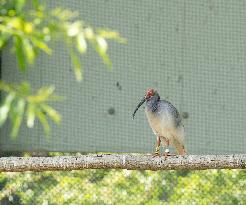
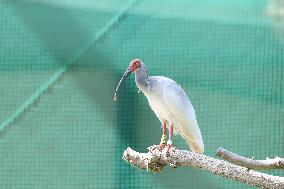
(240524) -- SEOUL, May 24, 2024 (Xinhua) -- A crested ibis is pictured at the Upo Crested Ibis Restoration Center in Changnyeong, South Korea, May 20, 2024. The crested ibis, which used to be widely distributed in China, Japan, South Korea and other East Asian regions, has become an endangered bird species worldwide, rarely seen in South Korea since the 1980s. In 2008, the crested ibis couple "Yang Zhou" and "Long Ting" arrived and settled down at the Upo Crested Ibis Restoration Center in Changnyeong as a gift from China to South Korea. Another two male crested ibises "Jin Shui" and "Bai Shi" were sent to South Korea in 2013. Years of hard work has seen over 500 offspring of the four crested ibises given birth to in South Korea, of which more than 300 were successfully released into the wild. In 2021, two crested ibis chicks were bred in the wild in South Korea, which is the first time in more than 4 decades that the birth of wild crested ibis was observed in the country. Now a main habitat for c

  •  
SOUTH KOREA-CHANGNYEOUNG COUNTY-CRESTED IBIS

SOUTH KOREA-CHANGNYEOUNG COUNTY-CRESTED IBIS

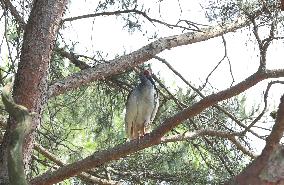
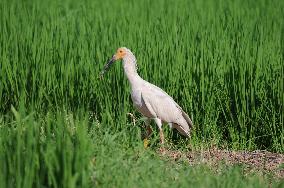
(240524) -- SEOUL, May 24, 2024 (Xinhua) -- A released crested ibis is pictured in Changnyeong, South Korea, May 20, 2024. The crested ibis, which used to be widely distributed in China, Japan, South Korea and other East Asian regions, has become an endangered bird species worldwide, rarely seen in South Korea since the 1980s. In 2008, the crested ibis couple "Yang Zhou" and "Long Ting" arrived and settled down at the Upo Crested Ibis Restoration Center in Changnyeong as a gift from China to South Korea. Another two male crested ibises "Jin Shui" and "Bai Shi" were sent to South Korea in 2013. Years of hard work has seen over 500 offspring of the four crested ibises given birth to in South Korea, of which more than 300 were successfully released into the wild. In 2021, two crested ibis chicks were bred in the wild in South Korea, which is the first time in more than 4 decades that the birth of wild crested ibis was observed in the country. Now a main habitat for crested ibis in South Korea, Changn

  •  
SOUTH KOREA-CHANGNYEOUNG COUNTY-CRESTED IBIS

SOUTH KOREA-CHANGNYEOUNG COUNTY-CRESTED IBIS

(240524) -- SEOUL, May 24, 2024 (Xinhua) -- This photo taken on May 20, 2024 shows a nursery room for crested ibis chicks at the Upo Crested Ibis Restoration Center in Changnyeong, South Korea. The crested ibis, which used to be widely distributed in China, Japan, South Korea and other East Asian regions, has become an endangered bird species worldwide, rarely seen in South Korea since the 1980s. In 2008, the crested ibis couple "Yang Zhou" and "Long Ting" arrived and settled down at the Upo Crested Ibis Restoration Center in Changnyeong as a gift from China to South Korea. Another two male crested ibises "Jin Shui" and "Bai Shi" were sent to South Korea in 2013. Years of hard work has seen over 500 offspring of the four crested ibises given birth to in South Korea, of which more than 300 were successfully released into the wild. In 2021, two crested ibis chicks were bred in the wild in South Korea, which is the first time in more than 4 decades that the birth of wild crested ibis was observed in the

  •  
SOUTH KOREA-CHANGNYEOUNG COUNTY-CRESTED IBIS

SOUTH KOREA-CHANGNYEOUNG COUNTY-CRESTED IBIS

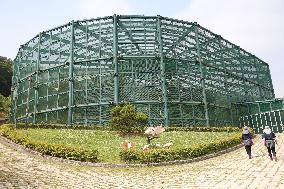
(240524) -- SEOUL, May 24, 2024 (Xinhua) -- This photo taken on May 21, 2024 shows the Upo Crested Ibis Restoration Center in Changnyeong, South Korea. The crested ibis, which used to be widely distributed in China, Japan, South Korea and other East Asian regions, has become an endangered bird species worldwide, rarely seen in South Korea since the 1980s. In 2008, the crested ibis couple "Yang Zhou" and "Long Ting" arrived and settled down at the Upo Crested Ibis Restoration Center in Changnyeong as a gift from China to South Korea. Another two male crested ibises "Jin Shui" and "Bai Shi" were sent to South Korea in 2013. Years of hard work has seen over 500 offspring of the four crested ibises given birth to in South Korea, of which more than 300 were successfully released into the wild. In 2021, two crested ibis chicks were bred in the wild in South Korea, which is the first time in more than 4 decades that the birth of wild crested ibis was observed in the country. Now a main habitat for creste

  •  
SOUTH KOREA-CHANGNYEOUNG COUNTY-CRESTED IBIS

SOUTH KOREA-CHANGNYEOUNG COUNTY-CRESTED IBIS

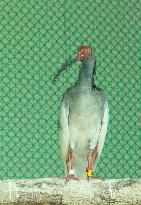
(240524) -- SEOUL, May 24, 2024 (Xinhua) -- Crested ibis "Long Ting" is pictured at the Upo Crested Ibis Restoration Center in Changnyeong, South Korea, May 20, 2024. The crested ibis, which used to be widely distributed in China, Japan, South Korea and other East Asian regions, has become an endangered bird species worldwide, rarely seen in South Korea since the 1980s. In 2008, the crested ibis couple "Yang Zhou" and "Long Ting" arrived and settled down at the Upo Crested Ibis Restoration Center in Changnyeong as a gift from China to South Korea. Another two male crested ibises "Jin Shui" and "Bai Shi" were sent to South Korea in 2013. Years of hard work has seen over 500 offspring of the four crested ibises given birth to in South Korea, of which more than 300 were successfully released into the wild. In 2021, two crested ibis chicks were bred in the wild in South Korea, which is the first time in more than 4 decades that the birth of wild crested ibis was observed in the country. Now a main hab

  •  
SOUTH KOREA-CHANGNYEOUNG COUNTY-CRESTED IBIS

SOUTH KOREA-CHANGNYEOUNG COUNTY-CRESTED IBIS

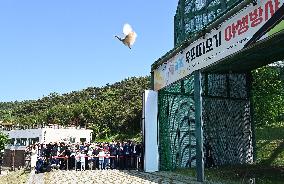
(240524) -- SEOUL, May 24, 2024 (Xinhua) -- A crested ibis is released into the wild in Changnyeong, South Korea, May 10, 2024. The crested ibis, which used to be widely distributed in China, Japan, South Korea and other East Asian regions, has become an endangered bird species worldwide, rarely seen in South Korea since the 1980s. In 2008, the crested ibis couple "Yang Zhou" and "Long Ting" arrived and settled down at the Upo Crested Ibis Restoration Center in Changnyeong as a gift from China to South Korea. Another two male crested ibises "Jin Shui" and "Bai Shi" were sent to South Korea in 2013. Years of hard work has seen over 500 offspring of the four crested ibises given birth to in South Korea, of which more than 300 were successfully released into the wild. In 2021, two crested ibis chicks were bred in the wild in South Korea, which is the first time in more than 4 decades that the birth of wild crested ibis was observed in the country. Now a main habitat for crested ibis in South Korea, C

  •  
SOUTH KOREA-CHANGNYEOUNG COUNTY-CRESTED IBIS

SOUTH KOREA-CHANGNYEOUNG COUNTY-CRESTED IBIS

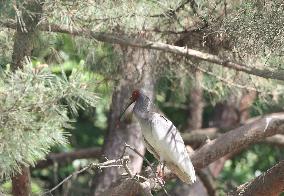
(240524) -- SEOUL, May 24, 2024 (Xinhua) -- This undated file photo shows a released crested ibis near Changnyeong, South Korea. The crested ibis, which used to be widely distributed in China, Japan, South Korea and other East Asian regions, has become an endangered bird species worldwide, rarely seen in South Korea since the 1980s. In 2008, the crested ibis couple "Yang Zhou" and "Long Ting" arrived and settled down at the Upo Crested Ibis Restoration Center in Changnyeong as a gift from China to South Korea. Another two male crested ibises "Jin Shui" and "Bai Shi" were sent to South Korea in 2013. Years of hard work has seen over 500 offspring of the four crested ibises given birth to in South Korea, of which more than 300 were successfully released into the wild. In 2021, two crested ibis chicks were bred in the wild in South Korea, which is the first time in more than 4 decades that the birth of wild crested ibis was observed in the country. Now a main habitat for crested ibis in South Korea,

  •  
SOUTH KOREA-CHANGNYEOUNG COUNTY-CRESTED IBIS

SOUTH KOREA-CHANGNYEOUNG COUNTY-CRESTED IBIS

(240524) -- SEOUL, May 24, 2024 (Xinhua) -- A crested ibis is pictured at the Upo Crested Ibis Restoration Center in Changnyeong, South Korea, May 20, 2024. The crested ibis, which used to be widely distributed in China, Japan, South Korea and other East Asian regions, has become an endangered bird species worldwide, rarely seen in South Korea since the 1980s. In 2008, the crested ibis couple "Yang Zhou" and "Long Ting" arrived and settled down at the Upo Crested Ibis Restoration Center in Changnyeong as a gift from China to South Korea. Another two male crested ibises "Jin Shui" and "Bai Shi" were sent to South Korea in 2013. Years of hard work has seen over 500 offspring of the four crested ibises given birth to in South Korea, of which more than 300 were successfully released into the wild. In 2021, two crested ibis chicks were bred in the wild in South Korea, which is the first time in more than 4 decades that the birth of wild crested ibis was observed in the country. Now a main habitat for c

  •  
SOUTH KOREA-CHANGNYEOUNG COUNTY-CRESTED IBIS

SOUTH KOREA-CHANGNYEOUNG COUNTY-CRESTED IBIS

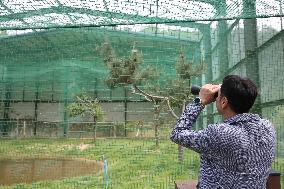
(240524) -- SEOUL, May 24, 2024 (Xinhua) -- Breeder Han Yeong-In observes crested ibises at the Upo Crested Ibis Restoration Center in Changnyeong, South Korea, May 21, 2024. The crested ibis, which used to be widely distributed in China, Japan, South Korea and other East Asian regions, has become an endangered bird species worldwide, rarely seen in South Korea since the 1980s. In 2008, the crested ibis couple "Yang Zhou" and "Long Ting" arrived and settled down at the Upo Crested Ibis Restoration Center in Changnyeong as a gift from China to South Korea. Another two male crested ibises "Jin Shui" and "Bai Shi" were sent to South Korea in 2013. Years of hard work has seen over 500 offspring of the four crested ibises given birth to in South Korea, of which more than 300 were successfully released into the wild. In 2021, two crested ibis chicks were bred in the wild in South Korea, which is the first time in more than 4 decades that the birth of wild crested ibis was observed in the country. Now a

  •  
SOUTH KOREA-CHANGNYEOUNG COUNTY-CRESTED IBIS

SOUTH KOREA-CHANGNYEOUNG COUNTY-CRESTED IBIS

(240524) -- SEOUL, May 24, 2024 (Xinhua) -- This photo taken on May 21, 2024 shows a training facility for crested ibis before their release at the Upo Crested Ibis Restoration Center in Changnyeong, South Korea. The crested ibis, which used to be widely distributed in China, Japan, South Korea and other East Asian regions, has become an endangered bird species worldwide, rarely seen in South Korea since the 1980s. In 2008, the crested ibis couple "Yang Zhou" and "Long Ting" arrived and settled down at the Upo Crested Ibis Restoration Center in Changnyeong as a gift from China to South Korea. Another two male crested ibises "Jin Shui" and "Bai Shi" were sent to South Korea in 2013. Years of hard work has seen over 500 offspring of the four crested ibises given birth to in South Korea, of which more than 300 were successfully released into the wild. In 2021, two crested ibis chicks were bred in the wild in South Korea, which is the first time in more than 4 decades that the birth of wild crested ibis w

  •  
SOUTH KOREA-CHANGNYEOUNG COUNTY-CRESTED IBIS

SOUTH KOREA-CHANGNYEOUNG COUNTY-CRESTED IBIS

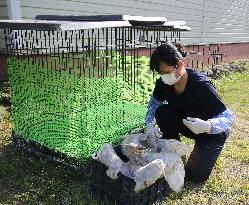
(240524) -- SEOUL, May 24, 2024 (Xinhua) -- A staff member takes care of crested ibis chicks at the Upo Crested Ibis Restoration Center in Changnyeong, South Korea, May 20, 2024. The crested ibis, which used to be widely distributed in China, Japan, South Korea and other East Asian regions, has become an endangered bird species worldwide, rarely seen in South Korea since the 1980s. In 2008, the crested ibis couple "Yang Zhou" and "Long Ting" arrived and settled down at the Upo Crested Ibis Restoration Center in Changnyeong as a gift from China to South Korea. Another two male crested ibises "Jin Shui" and "Bai Shi" were sent to South Korea in 2013. Years of hard work has seen over 500 offspring of the four crested ibises given birth to in South Korea, of which more than 300 were successfully released into the wild. In 2021, two crested ibis chicks were bred in the wild in South Korea, which is the first time in more than 4 decades that the birth of wild crested ibis was observed in the country. No

  •  
SOUTH KOREA-CHANGNYEOUNG COUNTY-CRESTED IBIS

SOUTH KOREA-CHANGNYEOUNG COUNTY-CRESTED IBIS

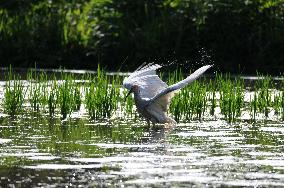
(240524) -- SEOUL, May 24, 2024 (Xinhua) -- A released crested ibis is pictured in Changnyeong, South Korea, May 20, 2024. The crested ibis, which used to be widely distributed in China, Japan, South Korea and other East Asian regions, has become an endangered bird species worldwide, rarely seen in South Korea since the 1980s. In 2008, the crested ibis couple "Yang Zhou" and "Long Ting" arrived and settled down at the Upo Crested Ibis Restoration Center in Changnyeong as a gift from China to South Korea. Another two male crested ibises "Jin Shui" and "Bai Shi" were sent to South Korea in 2013. Years of hard work has seen over 500 offspring of the four crested ibises given birth to in South Korea, of which more than 300 were successfully released into the wild. In 2021, two crested ibis chicks were bred in the wild in South Korea, which is the first time in more than 4 decades that the birth of wild crested ibis was observed in the country. Now a main habitat for crested ibis in South Korea, Changn

  •  
SOUTH KOREA-CHANGNYEOUNG COUNTY-CRESTED IBIS

SOUTH KOREA-CHANGNYEOUNG COUNTY-CRESTED IBIS

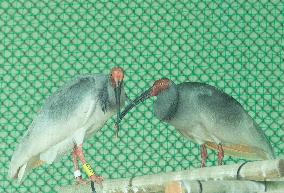
(240524) -- SEOUL, May 24, 2024 (Xinhua) -- Crested ibis "Jin Shui" (R) is pictured at the Upo Crested Ibis Restoration Center in Changnyeong, South Korea, May 20, 2024. The crested ibis, which used to be widely distributed in China, Japan, South Korea and other East Asian regions, has become an endangered bird species worldwide, rarely seen in South Korea since the 1980s. In 2008, the crested ibis couple "Yang Zhou" and "Long Ting" arrived and settled down at the Upo Crested Ibis Restoration Center in Changnyeong as a gift from China to South Korea. Another two male crested ibises "Jin Shui" and "Bai Shi" were sent to South Korea in 2013. Years of hard work has seen over 500 offspring of the four crested ibises given birth to in South Korea, of which more than 300 were successfully released into the wild. In 2021, two crested ibis chicks were bred in the wild in South Korea, which is the first time in more than 4 decades that the birth of wild crested ibis was observed in the country. Now a main

  •  
SOUTH KOREA-CHANGNYEOUNG COUNTY-CRESTED IBIS

SOUTH KOREA-CHANGNYEOUNG COUNTY-CRESTED IBIS

(240524) -- SEOUL, May 24, 2024 (Xinhua) -- This undated file photo shows a released crested ibis near Changnyeong, South Korea. The crested ibis, which used to be widely distributed in China, Japan, South Korea and other East Asian regions, has become an endangered bird species worldwide, rarely seen in South Korea since the 1980s. In 2008, the crested ibis couple "Yang Zhou" and "Long Ting" arrived and settled down at the Upo Crested Ibis Restoration Center in Changnyeong as a gift from China to South Korea. Another two male crested ibises "Jin Shui" and "Bai Shi" were sent to South Korea in 2013. Years of hard work has seen over 500 offspring of the four crested ibises given birth to in South Korea, of which more than 300 were successfully released into the wild. In 2021, two crested ibis chicks were bred in the wild in South Korea, which is the first time in more than 4 decades that the birth of wild crested ibis was observed in the country. Now a main habitat for crested ibis in South Korea,

  •  

Human rights abuses behind Canada's unmarked graves

STORY: Human rights abuses behind Canada's unmarked graves DATELINE: Sept. 2, 2023 LENGTH: 00:02:13 LOCATION: SASKATCHEWAN, Canada CATEGORY: SOCIETY SHOTLIST: 1. various of the cemetery 2. SOUNDBITE 1 (English): CANDYCE PAUL, Member of Emergency Management Team in La Plonge at The English River First Nation, Saskatchewan 3. SOUNDBITE 2 (English): DAWN MCINTYRE, Offspring of a survivor in Saskatchewan 4. SOUNDBITE 3 (English): PATRICK DJONAIRE, Survivor of Beauval Indian Residential School 5. various of a memorial monument STORYLINE: Recently, 93 potential unmarked child and infant graves were uncovered at a former residential school in Saskatchewan, Canada. Local residents believe that colonialism and human rights abuses behind the residential school system are continuously challenging Canada. SOUNDBITE 1 (English): CANDYCE PAUL, Member of Emergency Management Team in La Plonge at The English River First Nation, Saskatchewan "We want the government to acknowledge those deaths and those wrongdoings, wheth

  •  
CHINA-QINGHAI-HOH XIL-TIBETAN ANTELOPES-GUARDIANS(CN)

CHINA-QINGHAI-HOH XIL-TIBETAN ANTELOPES-GUARDIANS(CN)

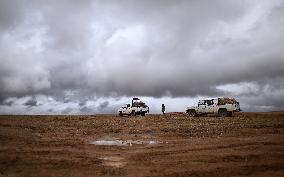
(230815) -- XINING, Aug. 15, 2023 (Xinhua) -- A staffer with the Drolkar Lake protection station of the Hoh Xil management office checks the condition of trapped vehicles in Hoh Xil, northwest China's Qinghai Province, June 16, 2023. Located in Sanjiangyuan National Park, Hoh Xil is an important habitat for Tibetan antelopes which enjoy first-class state protection in China. Around May each year, tens of thousands of pregnant Tibetan antelopes start their migration to Hoh Xil to give birth, leaving with their offspring in late July. The Drolkar Lake area in Hoh Xil is a crucial birthplace of the species. Renowned as one of the world's most breathtaking migrations of hoofed animals, this majestic journey of Tibetan antelopes has to confront with extreme weather and invasion of wild animals. Patrollers of Hoh Xil have been guarding Tibetan antelopes for decades. Hoh Xil stands as China's largest world natural heritage site, maintaining a high-altitude ecosystem and iconic species of the Qinghai-Tibet Plateau

  •  
CHINA-QINGHAI-HOH XIL-TIBETAN ANTELOPES-GUARDIANS(CN)

CHINA-QINGHAI-HOH XIL-TIBETAN ANTELOPES-GUARDIANS(CN)

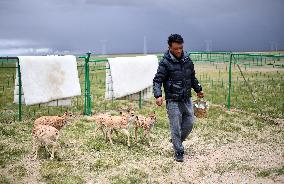
(230815) -- XINING, Aug. 15, 2023 (Xinhua) -- A staffer of the Hoh Xil management office is pictured with rescued Tibetan antelope calves in Hoh Xil, northwest China's Qinghai Province, July 28, 2023. Located in Sanjiangyuan National Park, Hoh Xil is an important habitat for Tibetan antelopes which enjoy first-class state protection in China. Around May each year, tens of thousands of pregnant Tibetan antelopes start their migration to Hoh Xil to give birth, leaving with their offspring in late July. The Drolkar Lake area in Hoh Xil is a crucial birthplace of the species. Renowned as one of the world's most breathtaking migrations of hoofed animals, this majestic journey of Tibetan antelopes has to confront with extreme weather and invasion of wild animals. Patrollers of Hoh Xil have been guarding Tibetan antelopes for decades. Hoh Xil stands as China's largest world natural heritage site, maintaining a high-altitude ecosystem and iconic species of the Qinghai-Tibet Plateau. Since the establishment of Hoh

  •  
CHINA-QINGHAI-HOH XIL-TIBETAN ANTELOPES-GUARDIANS(CN)

CHINA-QINGHAI-HOH XIL-TIBETAN ANTELOPES-GUARDIANS(CN)

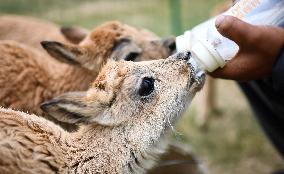
(230815) -- XINING, Aug. 15, 2023 (Xinhua) -- A staffer of the Hoh Xil management office feeds rescued Tibetan antelope calves in Hoh Xil, northwest China's Qinghai Province, July 28, 2023. Located in Sanjiangyuan National Park, Hoh Xil is an important habitat for Tibetan antelopes which enjoy first-class state protection in China. Around May each year, tens of thousands of pregnant Tibetan antelopes start their migration to Hoh Xil to give birth, leaving with their offspring in late July. The Drolkar Lake area in Hoh Xil is a crucial birthplace of the species. Renowned as one of the world's most breathtaking migrations of hoofed animals, this majestic journey of Tibetan antelopes has to confront with extreme weather and invasion of wild animals. Patrollers of Hoh Xil have been guarding Tibetan antelopes for decades. Hoh Xil stands as China's largest world natural heritage site, maintaining a high-altitude ecosystem and iconic species of the Qinghai-Tibet Plateau. Since the establishment of Hoh Xil Nationa

  • Main
  • Top
  • Editorial
  • Creative
  • About Us
  • About ILG
  • Terms of use
  • Company
  • BEHIND
  • Price List
  • Single Plan
  • Monthly Plan
  • Services
  • Shooting
  • Rights Clearance
  • Support
  • FAQ
  • How To Buy
  • Contact Us
  • Become a Partner

© KYODO NEWS IMAGES INC

All Rights Reserved.

  • Editorial
  • Olympics
  • News
  • Sports
  • Japan
  • Tech
  • Royal
  • Disaster
  • NorthKorea
  • Old Japan
  • SNS

  • Creative
  • Food
  • Japan
  • Landscape
  • Animal
  • Popular
  • #Ukraine
  • #Russia
  • #coronavirus
  • #N. Korea
  • #Thailand
  • #China
  • #Ukraine
  • #Russia
  • #coronavirus
  • #N. Korea
  • #Thailand
  • #China
  • Food
  • Japan
  • Landscape
  • Animal
  • Olympics
  • News
  • Sports
  • Japan
  • Tech
  • Royal
  • Disaster
  • NorthKorea
  • Old Japan
  • SNS