•  
Louboutin Employee Suspected of Stealing Nearly 1.5 Million Euros Worth of Merchandise

Louboutin Employee Suspected of Stealing Nearly 1.5 Million Euros Worth of Merchandise

File photo dated April 17, 2007 shows Victoria Beckham will have the perfect birthday gift from husband David : a short trip to Paris, just the two of them. Arrived by private jet, the couple heads first, in a British Bentley, to Christian Louboutin store where Posh tried on a few pair of shoes and chose just one. After David gave his credit card, they went to Colette where they bought a new video camera. After such a good afternoon, David and Posh get back to the Ritz hotel in Paris, France on April 17, 2007. A young woman employed by luxury brand Louboutin has been brought to court for the theft of over 700 pairs of shoes and 700 pieces of leather goods. The case came to light thanks to a publication on social networks. Photos of previously unseen models, never before presented to the public, alerted the Louboutin teams. The investigation quickly led to the identification of the culprit, a young woman who held a position of responsibility within the company. Investigations revealed a well-honed modus operan

  •  
Twins in Elementary School in Handan

Twins in Elementary School in Handan

HANDAN, CHINA - SEPTEMBER 4, 2024 - Nine pairs of new twins in the first grade of a primary school pose together in Handan, Hebei province, China, Sept 4, 2024.

  •  
Twins in Elementary School in Handan

Twins in Elementary School in Handan

HANDAN, CHINA - SEPTEMBER 4, 2024 - Nine pairs of newborn twins are seen together in the first grade of a primary school in Handan, Hebei province, China, Sept 4, 2024.

  •  
Twins in Elementary School in Handan

Twins in Elementary School in Handan

HANDAN, CHINA - SEPTEMBER 4, 2024 - Nine pairs of newborn twins are seen together in the first grade of a primary school in Handan, Hebei province, China, Sept 4, 2024.

  •  
Twins in Elementary School in Handan

Twins in Elementary School in Handan

HANDAN, CHINA - SEPTEMBER 4, 2024 - Nine pairs of newborn twins are seen together in the first grade of a primary school in Handan, Hebei province, China, Sept 4, 2024.

  •  
Twins in Elementary School in Handan

Twins in Elementary School in Handan

HANDAN, CHINA - SEPTEMBER 4, 2024 - Nine pairs of twins in the first grade of a primary school run around the school in Handan, Hebei province, China, Sept 4, 2024.

  •  
XINHUA PHOTOS OF THE DAY

XINHUA PHOTOS OF THE DAY

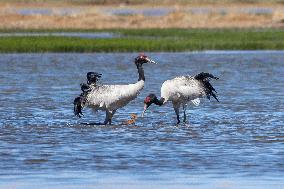
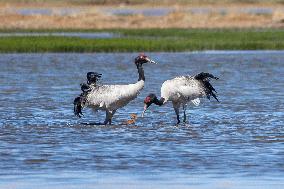
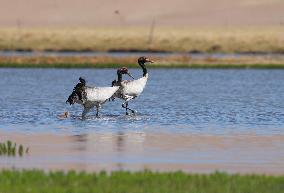
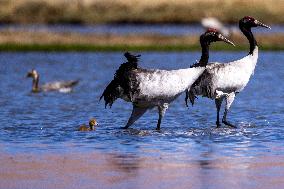
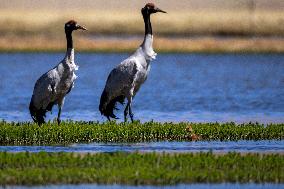
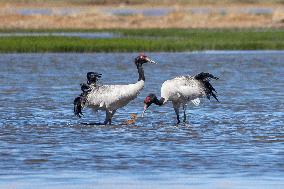
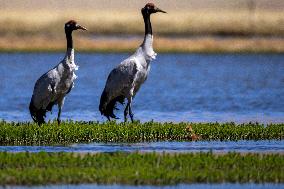
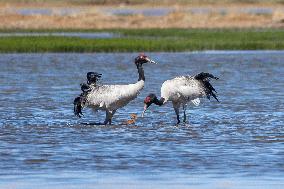
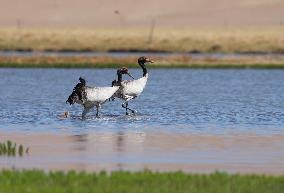
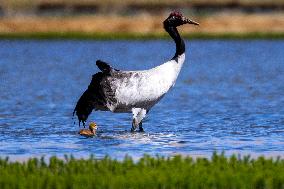
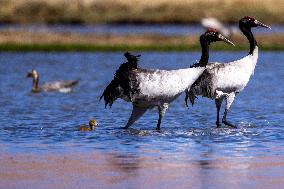
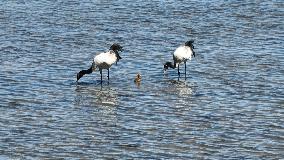
(240611) -- BEIJING, June 11, 2024 Photo by Xinhua/ABACAPRESS.COM) -- Two black-necked cranes and their baby are seen at a wetland in Xainza County of Nagqu City, southwest China's Xizang Autonomous Region, June 9, 2024. Black-necked crane couples are breeding babies in wetlands at an altitude of about 4,700 meters in Xainza County. Every year around the time of June, pairs of black-necked cranes migrate to Xainza County to hatch eggs on grass piers surrounded by water. The black-necked crane, a species under first-class state protection in China, mainly inhabits plateau meadows and marshes at an altitude of 2,500 to 5,000 meters. Photo by Xinhua/ABACAPRESS.COM/Tenzing Nima Qadhup)

  •  
XINHUA PHOTOS OF THE DAY

XINHUA PHOTOS OF THE DAY

(240611) -- BEIJING, June 11, 2024 (Xinhua) -- Two black-necked cranes and their baby are seen at a wetland in Xainza County of Nagqu City, southwest China's Xizang Autonomous Region, June 9, 2024. Black-necked crane couples are breeding babies in wetlands at an altitude of about 4,700 meters in Xainza County. Every year around the time of June, pairs of black-necked cranes migrate to Xainza County to hatch eggs on grass piers surrounded by water. The black-necked crane, a species under first-class state protection in China, mainly inhabits plateau meadows and marshes at an altitude of 2,500 to 5,000 meters. (Xinhua/Tenzing Nima Qadhup)

  •  
(InXizang)CHINA-XIZANG-XAINZA-BLACK-NECKED CRANE BABY (CN)

(InXizang)CHINA-XIZANG-XAINZA-BLACK-NECKED CRANE BABY (CN)

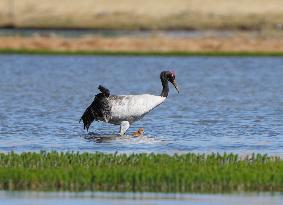
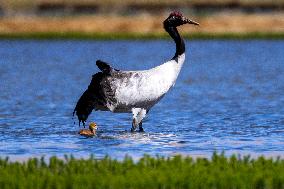
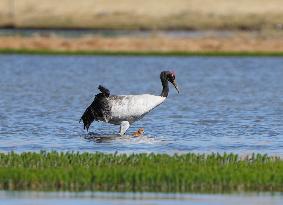
(240610) -- LHASA, June 10, 2024 Photo by Xinhua/ABACAPRESS.COM) -- A black-necked crane and its baby are seen at a wetland in Xainza County of Nagqu City, southwest China's Xizang Autonomous Region, June 9, 2024. Black-necked crane couples are breeding babies in wetlands at an altitude of about 4,700 meters in Xainza County. Every year around the time of June, pairs of black-necked cranes migrate to Xainza County to hatch eggs on grass piers surrounded by water. The black-necked crane, a species under first-class state protection in China, mainly inhabits plateau meadows and marshes at an altitude of 2,500 to 5,000 meters. Photo by Xinhua/ABACAPRESS.COM/Tenzing Nima Qadhup)

  •  
(InXizang)CHINA-XIZANG-XAINZA-BLACK-NECKED CRANE BABY (CN)

(InXizang)CHINA-XIZANG-XAINZA-BLACK-NECKED CRANE BABY (CN)

(240610) -- LHASA, June 10, 2024 Photo by Xinhua/ABACAPRESS.COM) -- A black-necked crane and its baby are seen at a wetland in Xainza County of Nagqu City, southwest China's Xizang Autonomous Region, June 9, 2024. Black-necked crane couples are breeding babies in wetlands at an altitude of about 4,700 meters in Xainza County. Every year around the time of June, pairs of black-necked cranes migrate to Xainza County to hatch eggs on grass piers surrounded by water. The black-necked crane, a species under first-class state protection in China, mainly inhabits plateau meadows and marshes at an altitude of 2,500 to 5,000 meters. Photo by Xinhua/ABACAPRESS.COM/Jiang Fan)

  •  
(InXizang)CHINA-XIZANG-XAINZA-BLACK-NECKED CRANE BABY (CN)

(InXizang)CHINA-XIZANG-XAINZA-BLACK-NECKED CRANE BABY (CN)

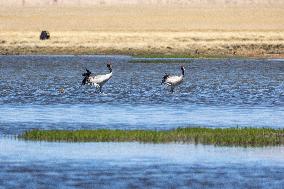
(240610) -- LHASA, June 10, 2024 Photo by Xinhua/ABACAPRESS.COM) -- Two black-necked cranes and their baby are seen at a wetland in Xainza County of Nagqu City, southwest China's Xizang Autonomous Region, June 9, 2024. Black-necked crane couples are breeding babies in wetlands at an altitude of about 4,700 meters in Xainza County. Every year around the time of June, pairs of black-necked cranes migrate to Xainza County to hatch eggs on grass piers surrounded by water. The black-necked crane, a species under first-class state protection in China, mainly inhabits plateau meadows and marshes at an altitude of 2,500 to 5,000 meters. Photo by Xinhua/ABACAPRESS.COM/Jigme Dorje)

  •  
(InXizang)CHINA-XIZANG-XAINZA-BLACK-NECKED CRANE BABY (CN)

(InXizang)CHINA-XIZANG-XAINZA-BLACK-NECKED CRANE BABY (CN)

(240610) -- LHASA, June 10, 2024 Photo by Xinhua/ABACAPRESS.COM) -- A black-necked crane and its baby are seen at a wetland in Xainza County of Nagqu City, southwest China's Xizang Autonomous Region, June 9, 2024. Black-necked crane couples are breeding babies in wetlands at an altitude of about 4,700 meters in Xainza County. Every year around the time of June, pairs of black-necked cranes migrate to Xainza County to hatch eggs on grass piers surrounded by water. The black-necked crane, a species under first-class state protection in China, mainly inhabits plateau meadows and marshes at an altitude of 2,500 to 5,000 meters. Photo by Xinhua/ABACAPRESS.COM/Jigme Dorje)

  •  
(InXizang)CHINA-XIZANG-XAINZA-BLACK-NECKED CRANE BABY (CN)

(InXizang)CHINA-XIZANG-XAINZA-BLACK-NECKED CRANE BABY (CN)

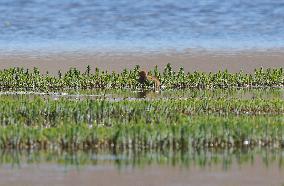
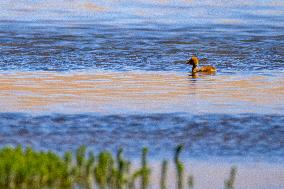
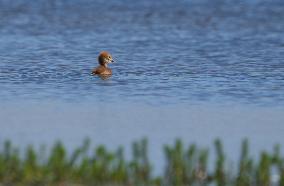
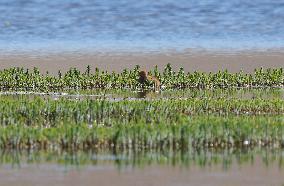
(240610) -- LHASA, June 10, 2024 Photo by Xinhua/ABACAPRESS.COM) -- A black-necked crane baby is seen at a wetland in Xainza County of Nagqu City, southwest China's Xizang Autonomous Region, June 9, 2024. Black-necked crane couples are breeding babies in wetlands at an altitude of about 4,700 meters in Xainza County. Every year around the time of June, pairs of black-necked cranes migrate to Xainza County to hatch eggs on grass piers surrounded by water. The black-necked crane, a species under first-class state protection in China, mainly inhabits plateau meadows and marshes at an altitude of 2,500 to 5,000 meters. Photo by Xinhua/ABACAPRESS.COM/Jigme Dorje)

  •  
(InXizang)CHINA-XIZANG-XAINZA-BLACK-NECKED CRANE BABY (CN)

(InXizang)CHINA-XIZANG-XAINZA-BLACK-NECKED CRANE BABY (CN)

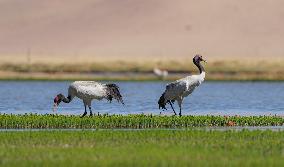
(240610) -- LHASA, June 10, 2024 Photo by Xinhua/ABACAPRESS.COM) -- Two black-necked cranes and their baby are seen at a wetland in Xainza County of Nagqu City, southwest China's Xizang Autonomous Region, June 9, 2024. Black-necked crane couples are breeding babies in wetlands at an altitude of about 4,700 meters in Xainza County. Every year around the time of June, pairs of black-necked cranes migrate to Xainza County to hatch eggs on grass piers surrounded by water. The black-necked crane, a species under first-class state protection in China, mainly inhabits plateau meadows and marshes at an altitude of 2,500 to 5,000 meters. Photo by Xinhua/ABACAPRESS.COM/Jiang Fan)

  •  
(InXizang)CHINA-XIZANG-XAINZA-BLACK-NECKED CRANE BABY (CN)

(InXizang)CHINA-XIZANG-XAINZA-BLACK-NECKED CRANE BABY (CN)

(240610) -- LHASA, June 10, 2024 Photo by Xinhua/ABACAPRESS.COM) -- A black-necked crane baby is seen at a wetland in Xainza County of Nagqu City, southwest China's Xizang Autonomous Region, June 9, 2024. Black-necked crane couples are breeding babies in wetlands at an altitude of about 4,700 meters in Xainza County. Every year around the time of June, pairs of black-necked cranes migrate to Xainza County to hatch eggs on grass piers surrounded by water. The black-necked crane, a species under first-class state protection in China, mainly inhabits plateau meadows and marshes at an altitude of 2,500 to 5,000 meters. Photo by Xinhua/ABACAPRESS.COM/Jigme Dorje)

  •  
(InXizang)CHINA-XIZANG-XAINZA-BLACK-NECKED CRANE BABY (CN)

(InXizang)CHINA-XIZANG-XAINZA-BLACK-NECKED CRANE BABY (CN)

(240610) -- LHASA, June 10, 2024 Photo by Xinhua/ABACAPRESS.COM) -- Two black-necked cranes and their baby are seen at a wetland in Xainza County of Nagqu City, southwest China's Xizang Autonomous Region, June 9, 2024. Black-necked crane couples are breeding babies in wetlands at an altitude of about 4,700 meters in Xainza County. Every year around the time of June, pairs of black-necked cranes migrate to Xainza County to hatch eggs on grass piers surrounded by water. The black-necked crane, a species under first-class state protection in China, mainly inhabits plateau meadows and marshes at an altitude of 2,500 to 5,000 meters. Photo by Xinhua/ABACAPRESS.COM/Jigme Dorje)

  •  
(InXizang)CHINA-XIZANG-XAINZA-BLACK-NECKED CRANE BABY (CN)

(InXizang)CHINA-XIZANG-XAINZA-BLACK-NECKED CRANE BABY (CN)

(240610) -- LHASA, June 10, 2024 Photo by Xinhua/ABACAPRESS.COM) -- Two black-necked cranes and their baby are seen at a wetland in Xainza County of Nagqu City, southwest China's Xizang Autonomous Region, June 9, 2024. Black-necked crane couples are breeding babies in wetlands at an altitude of about 4,700 meters in Xainza County. Every year around the time of June, pairs of black-necked cranes migrate to Xainza County to hatch eggs on grass piers surrounded by water. The black-necked crane, a species under first-class state protection in China, mainly inhabits plateau meadows and marshes at an altitude of 2,500 to 5,000 meters. Photo by Xinhua/ABACAPRESS.COM/Jiang Fan)

  •  
(InXizang)CHINA-XIZANG-XAINZA-BLACK-NECKED CRANE BABY (CN)

(InXizang)CHINA-XIZANG-XAINZA-BLACK-NECKED CRANE BABY (CN)

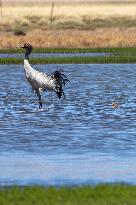
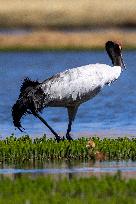
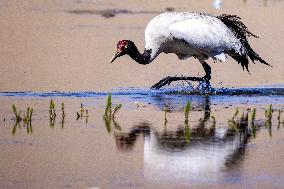
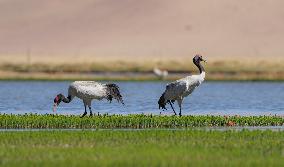
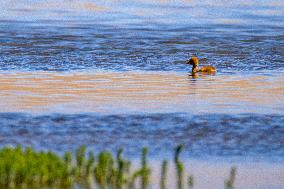
(240610) -- LHASA, June 10, 2024 Photo by Xinhua/ABACAPRESS.COM) -- A black-necked crane forages at a wetland in Xainza County of Nagqu City, southwest China's Xizang Autonomous Region, June 9, 2024. Black-necked crane couples are breeding babies in wetlands at an altitude of about 4,700 meters in Xainza County. Every year around the time of June, pairs of black-necked cranes migrate to Xainza County to hatch eggs on grass piers surrounded by water. The black-necked crane, a species under first-class state protection in China, mainly inhabits plateau meadows and marshes at an altitude of 2,500 to 5,000 meters. Photo by Xinhua/ABACAPRESS.COM/Jiang Fan)

  •  
(InXizang)CHINA-XIZANG-XAINZA-BLACK-NECKED CRANE BABY (CN)

(InXizang)CHINA-XIZANG-XAINZA-BLACK-NECKED CRANE BABY (CN)

(240610) -- LHASA, June 10, 2024 Photo by Xinhua/ABACAPRESS.COM) -- Two black-necked cranes and their baby are seen at a wetland in Xainza County of Nagqu City, southwest China's Xizang Autonomous Region, June 9, 2024. Black-necked crane couples are breeding babies in wetlands at an altitude of about 4,700 meters in Xainza County. Every year around the time of June, pairs of black-necked cranes migrate to Xainza County to hatch eggs on grass piers surrounded by water. The black-necked crane, a species under first-class state protection in China, mainly inhabits plateau meadows and marshes at an altitude of 2,500 to 5,000 meters. Photo by Xinhua/ABACAPRESS.COM/Tenzing Nima Qadhup)

  •  
(InXizang)CHINA-XIZANG-XAINZA-BLACK-NECKED CRANE BABY (CN)

(InXizang)CHINA-XIZANG-XAINZA-BLACK-NECKED CRANE BABY (CN)

(240610) -- LHASA, June 10, 2024 Photo by Xinhua/ABACAPRESS.COM) -- A black-necked crane and its baby are seen at a wetland in Xainza County of Nagqu City, southwest China's Xizang Autonomous Region, June 9, 2024. Black-necked crane couples are breeding babies in wetlands at an altitude of about 4,700 meters in Xainza County. Every year around the time of June, pairs of black-necked cranes migrate to Xainza County to hatch eggs on grass piers surrounded by water. The black-necked crane, a species under first-class state protection in China, mainly inhabits plateau meadows and marshes at an altitude of 2,500 to 5,000 meters. Photo by Xinhua/ABACAPRESS.COM/Jiang Fan)

  •  
(InXizang)CHINA-XIZANG-XAINZA-BLACK-NECKED CRANE BABY (CN)

(InXizang)CHINA-XIZANG-XAINZA-BLACK-NECKED CRANE BABY (CN)

(240610) -- LHASA, June 10, 2024 Photo by Xinhua/ABACAPRESS.COM) -- Two black-necked cranes and their baby are seen at a wetland in Xainza County of Nagqu City, southwest China's Xizang Autonomous Region, June 9, 2024. Black-necked crane couples are breeding babies in wetlands at an altitude of about 4,700 meters in Xainza County. Every year around the time of June, pairs of black-necked cranes migrate to Xainza County to hatch eggs on grass piers surrounded by water. The black-necked crane, a species under first-class state protection in China, mainly inhabits plateau meadows and marshes at an altitude of 2,500 to 5,000 meters. Photo by Xinhua/ABACAPRESS.COM/Tenzing Nima Qadhup)

  •  
(InXizang)CHINA-XIZANG-XAINZA-BLACK-NECKED CRANE BABY (CN)

(InXizang)CHINA-XIZANG-XAINZA-BLACK-NECKED CRANE BABY (CN)

(240610) -- LHASA, June 10, 2024 Photo by Xinhua/ABACAPRESS.COM) -- Two black-necked cranes and their baby are seen at a wetland in Xainza County of Nagqu City, southwest China's Xizang Autonomous Region, June 9, 2024. Black-necked crane couples are breeding babies in wetlands at an altitude of about 4,700 meters in Xainza County. Every year around the time of June, pairs of black-necked cranes migrate to Xainza County to hatch eggs on grass piers surrounded by water. The black-necked crane, a species under first-class state protection in China, mainly inhabits plateau meadows and marshes at an altitude of 2,500 to 5,000 meters. Photo by Xinhua/ABACAPRESS.COM/Jigme Dorje)

  •  
(InXizang)CHINA-XIZANG-XAINZA-BLACK-NECKED CRANE BABY (CN)

(InXizang)CHINA-XIZANG-XAINZA-BLACK-NECKED CRANE BABY (CN)

(240610) -- LHASA, June 10, 2024 Photo by Xinhua/ABACAPRESS.COM) -- A black-necked crane baby is seen at a wetland in Xainza County of Nagqu City, southwest China's Xizang Autonomous Region, June 9, 2024. Black-necked crane couples are breeding babies in wetlands at an altitude of about 4,700 meters in Xainza County. Every year around the time of June, pairs of black-necked cranes migrate to Xainza County to hatch eggs on grass piers surrounded by water. The black-necked crane, a species under first-class state protection in China, mainly inhabits plateau meadows and marshes at an altitude of 2,500 to 5,000 meters. Photo by Xinhua/ABACAPRESS.COM/Jiang Fan)

  •  
(InXizang)CHINA-XIZANG-XAINZA-BLACK-NECKED CRANE BABY (CN)

(InXizang)CHINA-XIZANG-XAINZA-BLACK-NECKED CRANE BABY (CN)

(240610) -- LHASA, June 10, 2024 (Xinhua) -- A black-necked crane baby is seen at a wetland in Xainza County of Nagqu City, southwest China's Xizang Autonomous Region, June 9, 2024. Black-necked crane couples are breeding babies in wetlands at an altitude of about 4,700 meters in Xainza County. Every year around the time of June, pairs of black-necked cranes migrate to Xainza County to hatch eggs on grass piers surrounded by water. The black-necked crane, a species under first-class state protection in China, mainly inhabits plateau meadows and marshes at an altitude of 2,500 to 5,000 meters. (Xinhua/Jigme Dorje)

  •  
(InXizang)CHINA-XIZANG-XAINZA-BLACK-NECKED CRANE BABY (CN)

(InXizang)CHINA-XIZANG-XAINZA-BLACK-NECKED CRANE BABY (CN)

(240610) -- LHASA, June 10, 2024 (Xinhua) -- Two black-necked cranes and their baby are seen at a wetland in Xainza County of Nagqu City, southwest China's Xizang Autonomous Region, June 9, 2024. Black-necked crane couples are breeding babies in wetlands at an altitude of about 4,700 meters in Xainza County. Every year around the time of June, pairs of black-necked cranes migrate to Xainza County to hatch eggs on grass piers surrounded by water. The black-necked crane, a species under first-class state protection in China, mainly inhabits plateau meadows and marshes at an altitude of 2,500 to 5,000 meters. (Xinhua/Jiang Fan)

  •  
(InXizang)CHINA-XIZANG-XAINZA-BLACK-NECKED CRANE BABY (CN)

(InXizang)CHINA-XIZANG-XAINZA-BLACK-NECKED CRANE BABY (CN)

(240610) -- LHASA, June 10, 2024 (Xinhua) -- Two black-necked cranes and their baby are seen at a wetland in Xainza County of Nagqu City, southwest China's Xizang Autonomous Region, June 9, 2024. Black-necked crane couples are breeding babies in wetlands at an altitude of about 4,700 meters in Xainza County. Every year around the time of June, pairs of black-necked cranes migrate to Xainza County to hatch eggs on grass piers surrounded by water. The black-necked crane, a species under first-class state protection in China, mainly inhabits plateau meadows and marshes at an altitude of 2,500 to 5,000 meters. (Xinhua/Tenzing Nima Qadhup)

  •  
(InXizang)CHINA-XIZANG-XAINZA-BLACK-NECKED CRANE BABY (CN)

(InXizang)CHINA-XIZANG-XAINZA-BLACK-NECKED CRANE BABY (CN)

(240610) -- LHASA, June 10, 2024 (Xinhua) -- Two black-necked cranes and their baby are seen at a wetland in Xainza County of Nagqu City, southwest China's Xizang Autonomous Region, June 9, 2024. Black-necked crane couples are breeding babies in wetlands at an altitude of about 4,700 meters in Xainza County. Every year around the time of June, pairs of black-necked cranes migrate to Xainza County to hatch eggs on grass piers surrounded by water. The black-necked crane, a species under first-class state protection in China, mainly inhabits plateau meadows and marshes at an altitude of 2,500 to 5,000 meters. (Xinhua/Tenzing Nima Qadhup)

  •  
(InXizang)CHINA-XIZANG-XAINZA-BLACK-NECKED CRANE BABY (CN)

(InXizang)CHINA-XIZANG-XAINZA-BLACK-NECKED CRANE BABY (CN)

(240610) -- LHASA, June 10, 2024 (Xinhua) -- A black-necked crane and its baby are seen at a wetland in Xainza County of Nagqu City, southwest China's Xizang Autonomous Region, June 9, 2024. Black-necked crane couples are breeding babies in wetlands at an altitude of about 4,700 meters in Xainza County. Every year around the time of June, pairs of black-necked cranes migrate to Xainza County to hatch eggs on grass piers surrounded by water. The black-necked crane, a species under first-class state protection in China, mainly inhabits plateau meadows and marshes at an altitude of 2,500 to 5,000 meters. (Xinhua/Jigme Dorje)

  •  
(InXizang)CHINA-XIZANG-XAINZA-BLACK-NECKED CRANE BABY (CN)

(InXizang)CHINA-XIZANG-XAINZA-BLACK-NECKED CRANE BABY (CN)

(240610) -- LHASA, June 10, 2024 (Xinhua) -- Two black-necked cranes and their baby are seen at a wetland in Xainza County of Nagqu City, southwest China's Xizang Autonomous Region, June 9, 2024. Black-necked crane couples are breeding babies in wetlands at an altitude of about 4,700 meters in Xainza County. Every year around the time of June, pairs of black-necked cranes migrate to Xainza County to hatch eggs on grass piers surrounded by water. The black-necked crane, a species under first-class state protection in China, mainly inhabits plateau meadows and marshes at an altitude of 2,500 to 5,000 meters. (Xinhua/Jigme Dorje)

  •  
(InXizang)CHINA-XIZANG-XAINZA-BLACK-NECKED CRANE BABY (CN)

(InXizang)CHINA-XIZANG-XAINZA-BLACK-NECKED CRANE BABY (CN)

(240610) -- LHASA, June 10, 2024 (Xinhua) -- A black-necked crane baby is seen at a wetland in Xainza County of Nagqu City, southwest China's Xizang Autonomous Region, June 9, 2024. Black-necked crane couples are breeding babies in wetlands at an altitude of about 4,700 meters in Xainza County. Every year around the time of June, pairs of black-necked cranes migrate to Xainza County to hatch eggs on grass piers surrounded by water. The black-necked crane, a species under first-class state protection in China, mainly inhabits plateau meadows and marshes at an altitude of 2,500 to 5,000 meters. (Xinhua/Jigme Dorje)

  •  
(InXizang)CHINA-XIZANG-XAINZA-BLACK-NECKED CRANE BABY (CN)

(InXizang)CHINA-XIZANG-XAINZA-BLACK-NECKED CRANE BABY (CN)

(240610) -- LHASA, June 10, 2024 (Xinhua) -- A black-necked crane and its baby are seen at a wetland in Xainza County of Nagqu City, southwest China's Xizang Autonomous Region, June 9, 2024. Black-necked crane couples are breeding babies in wetlands at an altitude of about 4,700 meters in Xainza County. Every year around the time of June, pairs of black-necked cranes migrate to Xainza County to hatch eggs on grass piers surrounded by water. The black-necked crane, a species under first-class state protection in China, mainly inhabits plateau meadows and marshes at an altitude of 2,500 to 5,000 meters. (Xinhua/Jiang Fan)

  •  
(InXizang)CHINA-XIZANG-XAINZA-BLACK-NECKED CRANE BABY (CN)

(InXizang)CHINA-XIZANG-XAINZA-BLACK-NECKED CRANE BABY (CN)

(240610) -- LHASA, June 10, 2024 (Xinhua) -- A black-necked crane and its baby are seen at a wetland in Xainza County of Nagqu City, southwest China's Xizang Autonomous Region, June 9, 2024. Black-necked crane couples are breeding babies in wetlands at an altitude of about 4,700 meters in Xainza County. Every year around the time of June, pairs of black-necked cranes migrate to Xainza County to hatch eggs on grass piers surrounded by water. The black-necked crane, a species under first-class state protection in China, mainly inhabits plateau meadows and marshes at an altitude of 2,500 to 5,000 meters. (Xinhua/Tenzing Nima Qadhup)

  •  
(InXizang)CHINA-XIZANG-XAINZA-BLACK-NECKED CRANE BABY (CN)

(InXizang)CHINA-XIZANG-XAINZA-BLACK-NECKED CRANE BABY (CN)

(240610) -- LHASA, June 10, 2024 (Xinhua) -- Two black-necked cranes and their baby are seen at a wetland in Xainza County of Nagqu City, southwest China's Xizang Autonomous Region, June 9, 2024. Black-necked crane couples are breeding babies in wetlands at an altitude of about 4,700 meters in Xainza County. Every year around the time of June, pairs of black-necked cranes migrate to Xainza County to hatch eggs on grass piers surrounded by water. The black-necked crane, a species under first-class state protection in China, mainly inhabits plateau meadows and marshes at an altitude of 2,500 to 5,000 meters. (Xinhua/Jiang Fan)

  •  
(InXizang)CHINA-XIZANG-XAINZA-BLACK-NECKED CRANE BABY (CN)

(InXizang)CHINA-XIZANG-XAINZA-BLACK-NECKED CRANE BABY (CN)

(240610) -- LHASA, June 10, 2024 (Xinhua) -- Two black-necked cranes and their baby are seen at a wetland in Xainza County of Nagqu City, southwest China's Xizang Autonomous Region, June 9, 2024. Black-necked crane couples are breeding babies in wetlands at an altitude of about 4,700 meters in Xainza County. Every year around the time of June, pairs of black-necked cranes migrate to Xainza County to hatch eggs on grass piers surrounded by water. The black-necked crane, a species under first-class state protection in China, mainly inhabits plateau meadows and marshes at an altitude of 2,500 to 5,000 meters. (Xinhua/Jigme Dorje)

  •  
(InXizang)CHINA-XIZANG-XAINZA-BLACK-NECKED CRANE BABY (CN)

(InXizang)CHINA-XIZANG-XAINZA-BLACK-NECKED CRANE BABY (CN)

(240610) -- LHASA, June 10, 2024 (Xinhua) -- A black-necked crane baby is seen at a wetland in Xainza County of Nagqu City, southwest China's Xizang Autonomous Region, June 9, 2024. Black-necked crane couples are breeding babies in wetlands at an altitude of about 4,700 meters in Xainza County. Every year around the time of June, pairs of black-necked cranes migrate to Xainza County to hatch eggs on grass piers surrounded by water. The black-necked crane, a species under first-class state protection in China, mainly inhabits plateau meadows and marshes at an altitude of 2,500 to 5,000 meters. (Xinhua/Jiang Fan)

  •  
(InXizang)CHINA-XIZANG-XAINZA-BLACK-NECKED CRANE BABY (CN)

(InXizang)CHINA-XIZANG-XAINZA-BLACK-NECKED CRANE BABY (CN)

(240610) -- LHASA, June 10, 2024 (Xinhua) -- A black-necked crane forages at a wetland in Xainza County of Nagqu City, southwest China's Xizang Autonomous Region, June 9, 2024. Black-necked crane couples are breeding babies in wetlands at an altitude of about 4,700 meters in Xainza County. Every year around the time of June, pairs of black-necked cranes migrate to Xainza County to hatch eggs on grass piers surrounded by water. The black-necked crane, a species under first-class state protection in China, mainly inhabits plateau meadows and marshes at an altitude of 2,500 to 5,000 meters. (Xinhua/Jiang Fan)

  •  
(InXizang)CHINA-XIZANG-XAINZA-BLACK-NECKED CRANE BABY (CN)

(InXizang)CHINA-XIZANG-XAINZA-BLACK-NECKED CRANE BABY (CN)

(240610) -- LHASA, June 10, 2024 (Xinhua) -- A black-necked crane and its baby are seen at a wetland in Xainza County of Nagqu City, southwest China's Xizang Autonomous Region, June 9, 2024. Black-necked crane couples are breeding babies in wetlands at an altitude of about 4,700 meters in Xainza County. Every year around the time of June, pairs of black-necked cranes migrate to Xainza County to hatch eggs on grass piers surrounded by water. The black-necked crane, a species under first-class state protection in China, mainly inhabits plateau meadows and marshes at an altitude of 2,500 to 5,000 meters. (Xinhua/Jiang Fan)

  •  
(InXizang)CHINA-XIZANG-XAINZA-BLACK-NECKED CRANE BABY (CN)

(InXizang)CHINA-XIZANG-XAINZA-BLACK-NECKED CRANE BABY (CN)

(240610) -- LHASA, June 10, 2024 (Xinhua) -- Two black-necked cranes and their baby are seen at a wetland in Xainza County of Nagqu City, southwest China's Xizang Autonomous Region, June 9, 2024. Black-necked crane couples are breeding babies in wetlands at an altitude of about 4,700 meters in Xainza County. Every year around the time of June, pairs of black-necked cranes migrate to Xainza County to hatch eggs on grass piers surrounded by water. The black-necked crane, a species under first-class state protection in China, mainly inhabits plateau meadows and marshes at an altitude of 2,500 to 5,000 meters. (Xinhua/Jigme Dorje)

  •  
XINHUA PHOTOS OF THE DAY

XINHUA PHOTOS OF THE DAY

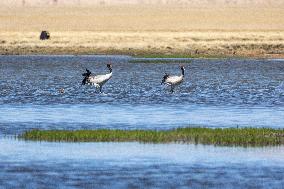
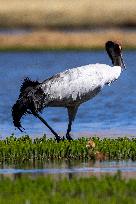
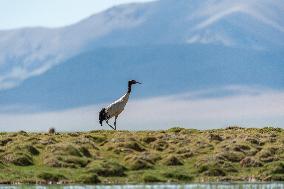
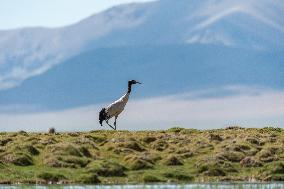
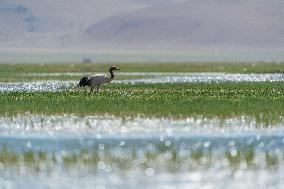
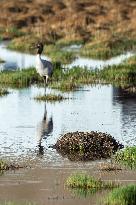
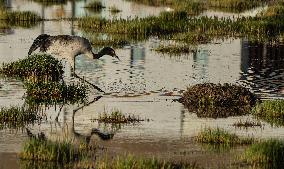
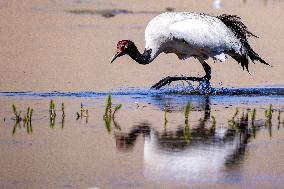
(240610) -- BEIJING, June 10, 2024 Photo by Xinhua/ABACAPRESS.COM) -- A black-necked crane is seen at a wetland in Xainza County of Nagqu City, southwest China's Xizang Autonomous Region, June 8, 2024. The black-necked crane, a species under first-class state protection in China, mainly inhabits plateau meadows and marshes at an altitude of 2,500 to 5,000 meters. Every year around the time of June, pairs of black-necked cranes migrate to Xainza County to build nests and hatch eggs on grass piers surrounded by water. Black-necked cranes usually lay one or two eggs in every nest, and the incubation period is about 30 days. In recent years, Xizang has continuously strengthened the protection of the habitat of black-necked cranes, and their living environment has been effectively improved. The dotted wetlands in Xainza County have attracted a large number of black-necked cranes to breed their offspring. Photo by Xinhua/ABACAPRESS.COM/Tenzing Nima Qadhup)

  •  
XINHUA PHOTOS OF THE DAY

XINHUA PHOTOS OF THE DAY

(240610) -- BEIJING, June 10, 2024 (Xinhua) -- A black-necked crane is seen at a wetland in Xainza County of Nagqu City, southwest China's Xizang Autonomous Region, June 8, 2024. The black-necked crane, a species under first-class state protection in China, mainly inhabits plateau meadows and marshes at an altitude of 2,500 to 5,000 meters. Every year around the time of June, pairs of black-necked cranes migrate to Xainza County to build nests and hatch eggs on grass piers surrounded by water. Black-necked cranes usually lay one or two eggs in every nest, and the incubation period is about 30 days. In recent years, Xizang has continuously strengthened the protection of the habitat of black-necked cranes, and their living environment has been effectively improved. The dotted wetlands in Xainza County have attracted a large number of black-necked cranes to breed their offspring. (Xinhua/Tenzing Nima Qadhup)

  •  
(InXizang)CHINA-XIZANG-XAINZA-BLACK-NECKED CRANES (CN)

(InXizang)CHINA-XIZANG-XAINZA-BLACK-NECKED CRANES (CN)

(240609) -- LHASA, June 9, 2024 Photo by Xinhua/ABACAPRESS.COM) -- A black-necked crane is seen at a wetland in Xainza County of Nagqu City, southwest China's Xizang Autonomous Region, June 8, 2024. The black-necked crane, a species under first-class state protection in China, mainly inhabits plateau meadows and marshes at an altitude of 2,500 to 5,000 meters. Every year around the time of June, pairs of black-necked cranes migrate to Xainza County to build nests and hatch eggs on grass piers surrounded by water. Black-necked cranes usually lay one or two eggs in every nest, and the incubation period is about 30 days. In recent years, Xizang has continuously strengthened the protection of the habitat of black-necked cranes, and their living environment has been effectively improved. The dotted wetlands in Xainza County have attracted a large number of black-necked cranes to breed their offspring. Photo by Xinhua/ABACAPRESS.COM/Tenzing Nima Qadhup)

  •  
(InXizang)CHINA-XIZANG-XAINZA-BLACK-NECKED CRANES (CN)

(InXizang)CHINA-XIZANG-XAINZA-BLACK-NECKED CRANES (CN)

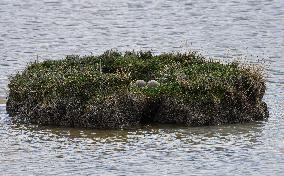
(240609) -- LHASA, June 9, 2024 Photo by Xinhua/ABACAPRESS.COM) -- Eggs of black-necked crane are seen at a wetland in Xainza County of Nagqu City, southwest China's Xizang Autonomous Region, June 7, 2024. The black-necked crane, a species under first-class state protection in China, mainly inhabits plateau meadows and marshes at an altitude of 2,500 to 5,000 meters. Every year around the time of June, pairs of black-necked cranes migrate to Xainza County to build nests and hatch eggs on grass piers surrounded by water. Black-necked cranes usually lay one or two eggs in every nest, and the incubation period is about 30 days. In recent years, Xizang has continuously strengthened the protection of the habitat of black-necked cranes, and their living environment has been effectively improved. The dotted wetlands in Xainza County have attracted a large number of black-necked cranes to breed their offspring. Photo by Xinhua/ABACAPRESS.COM/Jigme Dorje)

  •  
(InXizang)CHINA-XIZANG-XAINZA-BLACK-NECKED CRANES (CN)

(InXizang)CHINA-XIZANG-XAINZA-BLACK-NECKED CRANES (CN)

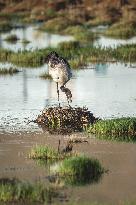
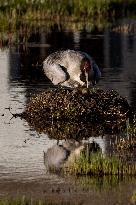
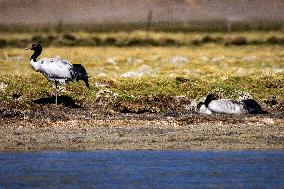
(240609) -- LHASA, June 9, 2024 Photo by Xinhua/ABACAPRESS.COM) -- A black-necked crane watches over the eggs at a wetland in Xainza County of Nagqu City, southwest China's Xizang Autonomous Region, June 7, 2024. The black-necked crane, a species under first-class state protection in China, mainly inhabits plateau meadows and marshes at an altitude of 2,500 to 5,000 meters. Every year around the time of June, pairs of black-necked cranes migrate to Xainza County to build nests and hatch eggs on grass piers surrounded by water. Black-necked cranes usually lay one or two eggs in every nest, and the incubation period is about 30 days. In recent years, Xizang has continuously strengthened the protection of the habitat of black-necked cranes, and their living environment has been effectively improved. The dotted wetlands in Xainza County have attracted a large number of black-necked cranes to breed their offspring. Photo by Xinhua/ABACAPRESS.COM/Tenzing Nima Qadhup)

  •  
(InXizang)CHINA-XIZANG-XAINZA-BLACK-NECKED CRANES (CN)

(InXizang)CHINA-XIZANG-XAINZA-BLACK-NECKED CRANES (CN)

(240609) -- LHASA, June 9, 2024 Photo by Xinhua/ABACAPRESS.COM) -- A black-necked crane hatches eggs at a wetland in Xainza County of Nagqu City, southwest China's Xizang Autonomous Region, June 7, 2024. The black-necked crane, a species under first-class state protection in China, mainly inhabits plateau meadows and marshes at an altitude of 2,500 to 5,000 meters. Every year around the time of June, pairs of black-necked cranes migrate to Xainza County to build nests and hatch eggs on grass piers surrounded by water. Black-necked cranes usually lay one or two eggs in every nest, and the incubation period is about 30 days. In recent years, Xizang has continuously strengthened the protection of the habitat of black-necked cranes, and their living environment has been effectively improved. The dotted wetlands in Xainza County have attracted a large number of black-necked cranes to breed their offspring. Photo by Xinhua/ABACAPRESS.COM/Jiang Fan)

  •  
(InXizang)CHINA-XIZANG-XAINZA-BLACK-NECKED CRANES (CN)

(InXizang)CHINA-XIZANG-XAINZA-BLACK-NECKED CRANES (CN)

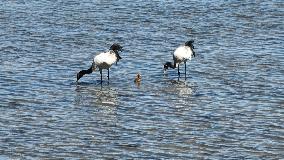
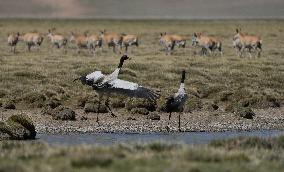
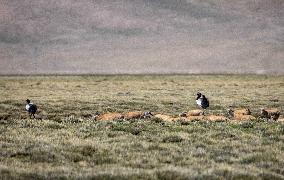
(240609) -- LHASA, June 9, 2024 Photo by Xinhua/ABACAPRESS.COM) -- Black-necked cranes search for food with Tibetan antelopes at a wetland in Xainza County of Nagqu City, southwest China's Xizang Autonomous Region, June 8, 2024. The black-necked crane, a species under first-class state protection in China, mainly inhabits plateau meadows and marshes at an altitude of 2,500 to 5,000 meters. Every year around the time of June, pairs of black-necked cranes migrate to Xainza County to build nests and hatch eggs on grass piers surrounded by water. Black-necked cranes usually lay one or two eggs in every nest, and the incubation period is about 30 days. In recent years, Xizang has continuously strengthened the protection of the habitat of black-necked cranes, and their living environment has been effectively improved. The dotted wetlands in Xainza County have attracted a large number of black-necked cranes to breed their offspring. Photo by Xinhua/ABACAPRESS.COM/Jigme Dorje)

  •  
(InXizang)CHINA-XIZANG-XAINZA-BLACK-NECKED CRANES (CN)

(InXizang)CHINA-XIZANG-XAINZA-BLACK-NECKED CRANES (CN)

(240609) -- LHASA, June 9, 2024 Photo by Xinhua/ABACAPRESS.COM) -- A black-necked crane watches over the eggs at a wetland in Xainza County of Nagqu City, southwest China's Xizang Autonomous Region, June 7, 2024. The black-necked crane, a species under first-class state protection in China, mainly inhabits plateau meadows and marshes at an altitude of 2,500 to 5,000 meters. Every year around the time of June, pairs of black-necked cranes migrate to Xainza County to build nests and hatch eggs on grass piers surrounded by water. Black-necked cranes usually lay one or two eggs in every nest, and the incubation period is about 30 days. In recent years, Xizang has continuously strengthened the protection of the habitat of black-necked cranes, and their living environment has been effectively improved. The dotted wetlands in Xainza County have attracted a large number of black-necked cranes to breed their offspring. Photo by Xinhua/ABACAPRESS.COM/Tenzing Nima Qadhup)

  •  
(InXizang)CHINA-XIZANG-XAINZA-BLACK-NECKED CRANES (CN)

(InXizang)CHINA-XIZANG-XAINZA-BLACK-NECKED CRANES (CN)

(240609) -- LHASA, June 9, 2024 Photo by Xinhua/ABACAPRESS.COM) -- Black-necked cranes are seen at a wetland in Xainza County of Nagqu City, southwest China's Xizang Autonomous Region, June 7, 2024. The black-necked crane, a species under first-class state protection in China, mainly inhabits plateau meadows and marshes at an altitude of 2,500 to 5,000 meters. Every year around the time of June, pairs of black-necked cranes migrate to Xainza County to build nests and hatch eggs on grass piers surrounded by water. Black-necked cranes usually lay one or two eggs in every nest, and the incubation period is about 30 days. In recent years, Xizang has continuously strengthened the protection of the habitat of black-necked cranes, and their living environment has been effectively improved. The dotted wetlands in Xainza County have attracted a large number of black-necked cranes to breed their offspring. Photo by Xinhua/ABACAPRESS.COM/Jiang Fan)

  •  
(InXizang)CHINA-XIZANG-XAINZA-BLACK-NECKED CRANES (CN)

(InXizang)CHINA-XIZANG-XAINZA-BLACK-NECKED CRANES (CN)

(240609) -- LHASA, June 9, 2024 Photo by Xinhua/ABACAPRESS.COM) -- Black-necked cranes search for food with Tibetan antelopes at a wetland in Xainza County of Nagqu City, southwest China's Xizang Autonomous Region, June 8, 2024. The black-necked crane, a species under first-class state protection in China, mainly inhabits plateau meadows and marshes at an altitude of 2,500 to 5,000 meters. Every year around the time of June, pairs of black-necked cranes migrate to Xainza County to build nests and hatch eggs on grass piers surrounded by water. Black-necked cranes usually lay one or two eggs in every nest, and the incubation period is about 30 days. In recent years, Xizang has continuously strengthened the protection of the habitat of black-necked cranes, and their living environment has been effectively improved. The dotted wetlands in Xainza County have attracted a large number of black-necked cranes to breed their offspring. Photo by Xinhua/ABACAPRESS.COM/Jiang Fan)

  •  
(InXizang)CHINA-XIZANG-XAINZA-BLACK-NECKED CRANES (CN)

(InXizang)CHINA-XIZANG-XAINZA-BLACK-NECKED CRANES (CN)

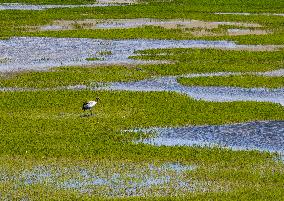
(240609) -- LHASA, June 9, 2024 Photo by Xinhua/ABACAPRESS.COM) -- A drone photo taken on June 8, 2024 shows a black-necked crane searching for food at a wetland in Xainza County of Nagqu City, southwest China's Xizang Autonomous Region. The black-necked crane, a species under first-class state protection in China, mainly inhabits plateau meadows and marshes at an altitude of 2,500 to 5,000 meters. Every year around the time of June, pairs of black-necked cranes migrate to Xainza County to build nests and hatch eggs on grass piers surrounded by water. Black-necked cranes usually lay one or two eggs in every nest, and the incubation period is about 30 days. In recent years, Xizang has continuously strengthened the protection of the habitat of black-necked cranes, and their living environment has been effectively improved. The dotted wetlands in Xainza County have attracted a large number of black-necked cranes to breed their offspring. Photo by Xinhua/ABACAPRESS.COM/Jiang Fan)

  •  
(InXizang)CHINA-XIZANG-XAINZA-BLACK-NECKED CRANES (CN)

(InXizang)CHINA-XIZANG-XAINZA-BLACK-NECKED CRANES (CN)

(240609) -- LHASA, June 9, 2024 Photo by Xinhua/ABACAPRESS.COM) -- A black-necked crane watches over the eggs at a wetland in Xainza County of Nagqu City, southwest China's Xizang Autonomous Region, June 7, 2024. The black-necked crane, a species under first-class state protection in China, mainly inhabits plateau meadows and marshes at an altitude of 2,500 to 5,000 meters. Every year around the time of June, pairs of black-necked cranes migrate to Xainza County to build nests and hatch eggs on grass piers surrounded by water. Black-necked cranes usually lay one or two eggs in every nest, and the incubation period is about 30 days. In recent years, Xizang has continuously strengthened the protection of the habitat of black-necked cranes, and their living environment has been effectively improved. The dotted wetlands in Xainza County have attracted a large number of black-necked cranes to breed their offspring. Photo by Xinhua/ABACAPRESS.COM/Jigme Dorje)

  • Main
  • Top
  • Editorial
  • Creative
  • About Us
  • About ILG
  • Terms of use
  • Company
  • BEHIND
  • Price List
  • Single Plan
  • Monthly Plan
  • Services
  • Shooting
  • Rights Clearance
  • Support
  • FAQ
  • How To Buy
  • Contact Us
  • Become a Partner

© KYODO NEWS IMAGES INC

All Rights Reserved.

  • Editorial
  • Olympics
  • News
  • Sports
  • Japan
  • Tech
  • Royal
  • Disaster
  • NorthKorea
  • Old Japan
  • SNS
  • Creative
  • Food
  • Japan
  • Landscape
  • Animal
  • Popular
  • #Ukraine
  • #Thailand
  • #coronavirus
  • #N. Korea
  • #Russia
  • #China
  • #Ukraine
  • #Thailand
  • #coronavirus
  • #N. Korea
  • #Russia
  • #China
  • Food
  • Japan
  • Landscape
  • Animal
  • Olympics
  • News
  • Sports
  • Japan
  • Tech
  • Royal
  • Disaster
  • NorthKorea
  • Old Japan
  • SNS