•  
Star Explosion Reveals New Space Ingredients

Star Explosion Reveals New Space Ingredients

Handout - Scientists have spotted chlorine and potassium hiding inside the remains of a blown-up star for the first time. Using Japan’s XRISM space telescope, they found these elements inside the giant cloud of debris left behind by the supernova called Cassiopeia A. The explosion happened about 11,000 light-years from Earth, but it is still giving up new secrets today. The find shows how stars don’t just light up the sky, they also make many of the elements that help build planets and life. Even long after a star explodes, it can still teach us something new about the universe. This discovery was published in a scientific paper on December 4 this year, and the image was released on January 28, 2024, using data from NASA’s Chandra telescope along with Hubble, Webb and Spitzer. Photo by Image credit: X-ray: NASA/CXC/SAO; Optical: NASA/ESA/STScI; IR: NASA/ESA/CSA/STScI/Milisavljevic et al., NASA/JPL/CalTech; Image Processing: NASA/CXC/SAO/J. Schmidt and K. Arcand via ABACAPRESS.COM

  •  
Red Spider Nebula

Red Spider Nebula

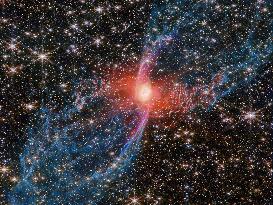
Handout photo dated on October 26, 2025 shows Red Spider Nebula. Using its Near-InfraRed Camera (NIRCam), NASA’s James Webb Space Telescope captured never-before-seen details of the Red Spider Nebula, a planetary nebula, in this image released on Oct. 26, 2025. NIRCam is Webb’s primary near-infrared imager, providing high-resolution imaging and spectroscopy for a wide variety of investigations. Webb’s new view of the Red Spider Nebula reveals for the first time the full extent of the nebula’s outstretched lobes, which form the ‘legs’ of the spider. These lobes, shown in blue, are traced by light emitted from H2 molecules, which contain two hydrogen atoms bonded together. Stretching over the entirety of NIRCam’s field of view, these lobes are shown to be closed, bubble-like structures that each extend about 3 light-years. Outflowing gas from the center of the nebula has inflated these massive bubbles over thousands of years. Photo by ESA/Webb, NASA & CSA, J. H. Kastner (Rochester Institute of Technolo via ABAC

  •  

New Australian telescope to enable deep space communication

STORY: New Australian telescope to enable deep space communication SHOOTING TIME: Dec. 7, 2023 DATELINE: Dec. 8, 2023 LENGTH: 00:00:30 LOCATION: Canberra CATEGORY: TECHNOLOGY SHOTLIST: 1. various of the observatory STORYLINE: A new telescope in Australia's capital city Canberra will enable communication with astronauts from the moon to deep space. Officially opened on Wednesday, the Australian National University's Quantum Optical Ground Station uses adaptive optical technology and lasers to send and receive data from space, allowing for communication with, and filming of, the next generation of crewed space missions. Based at the Australian National University (ANU) Mount Stromlo Observatory in Canberra's west, the station will also drive research on advanced communication technologies. "It's a world-first, in terms of next-generation capability for global communications," Anna Moore, Director of the ANU Institute for Space, told state media the Australian Broadcasting Corporation (ABC). T

  •  
EUROPEAN SPACE AGENCY-EUCLID-TELESCOPE-IMAGES

EUROPEAN SPACE AGENCY-EUCLID-TELESCOPE-IMAGES

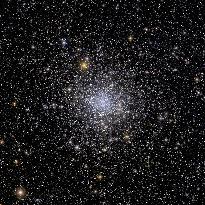
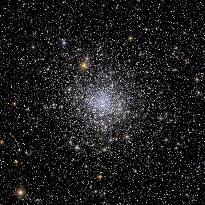
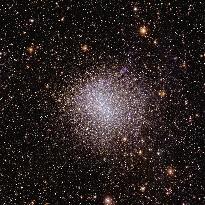
(231108) -- PARIS, Nov. 8, 2023 (Xinhua) -- This image provided by the European Space Agency on Nov. 7, 2023 shows the space telescope Euclid's view of globular cluster NGC 6397. The European Space Agency released Euclid's first photos on Tuesday. (European Space Agency hand out via Xinhua)(ESA/Euclid/Euclid Consortium/NASA, image processing by J.-C. Cuillandre (CEA Paris-Saclay), G. Anselmi, CC BY-SA 3.0 IGO)

  •  
EUROPEAN SPACE AGENCY-EUCLID-TELESCOPE-IMAGES

EUROPEAN SPACE AGENCY-EUCLID-TELESCOPE-IMAGES

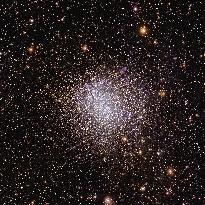
(231108) -- PARIS, Nov. 8, 2023 (Xinhua) -- This image provided by the European Space Agency on Nov. 7, 2023 shows the space telescope Euclid's view of irregular galaxy NGC 6822. The European Space Agency released Euclid's first photos on Tuesday. (European Space Agency hand out via Xinhua)(ESA/Euclid/Euclid Consortium/NASA, image processing by J.-C. Cuillandre (CEA Paris-Saclay), G. Anselmi, CC BY-SA 3.0 IGO)

  •  
EUROPEAN SPACE AGENCY-EUCLID-TELESCOPE-IMAGES

EUROPEAN SPACE AGENCY-EUCLID-TELESCOPE-IMAGES

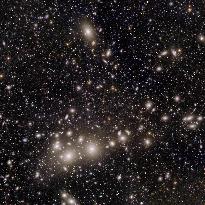
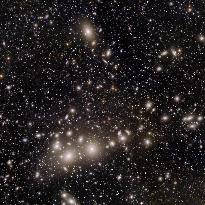
(231108) -- PARIS, Nov. 8, 2023 (Xinhua) -- This image provided by the European Space Agency on Nov. 7, 2023 shows the space telescope Euclid's view of the Perseus cluster of galaxies. The European Space Agency released Euclid's first photos on Tuesday. (European Space Agency hand out via Xinhua)(ESA/Euclid/Euclid Consortium/NASA, image processing by J.-C. Cuillandre (CEA Paris-Saclay), G. Anselmi, CC BY-SA 3.0 IGO)

  •  
EUROPEAN SPACE AGENCY-EUCLID-TELESCOPE-IMAGES

EUROPEAN SPACE AGENCY-EUCLID-TELESCOPE-IMAGES

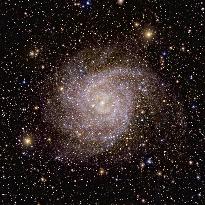
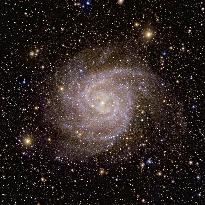
(231108) -- PARIS, Nov. 8, 2023 (Xinhua) -- This image provided by the European Space Agency on Nov. 7, 2023 shows the space telescope Euclid's view of spiral galaxy IC 342. The European Space Agency released Euclid's first photos on Tuesday. (European Space Agency hand out via Xinhua)(ESA/Euclid/Euclid Consortium/NASA, image processing by J.-C. Cuillandre (CEA Paris-Saclay), G. Anselmi, CC BY-SA 3.0 IGO)

  •  
EUROPEAN SPACE AGENCY-EUCLID-TELESCOPE-IMAGES

EUROPEAN SPACE AGENCY-EUCLID-TELESCOPE-IMAGES

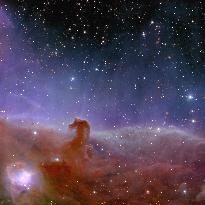
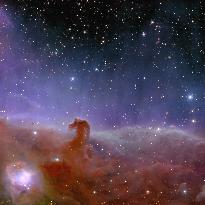
(231108) -- PARIS, Nov. 8, 2023 (Xinhua) -- This image provided by the European Space Agency on Nov. 7, 2023 shows the space telescope Euclid's view of the Horsehead Nebula. The European Space Agency released Euclid's first photos on Tuesday. (European Space Agency hand out via Xinhua)(ESA/Euclid/Euclid Consortium/NASA, image processing by J.-C. Cuillandre (CEA Paris-Saclay), G. Anselmi, CC BY-SA 3.0 IGO)

  •  
Stunning First Full-Colour Images From Euclid Telescope

Stunning First Full-Colour Images From Euclid Telescope

HANDOUT - Spiral galaxy IC 342. The European Space Agency's (ESA) Euclid space mission unveiled its first five full-colour images of the cosmos on Tuesday, November 7, 2023. Launched in July, Euclid is a cutting-edge telescope tasked with mapping a third of the extragalactic sky, shedding light on how dark matter and dark energy shape our universe. This ambitious mission is unique in its ability to capture razor-sharp astronomical images across a vast expanse of the sky, offering unprecedented insights into the far reaches of the universe. The initial set of images serves as a testament to Euclid's unparalleled capability to construct the most extensive 3D map of the universe to date. Among the images, the most captivating is a panoramic view of the Horsehead Nebula, also known as Barnard 33, situated in the Orion constellation approximately 1,375 light-years away. The nebula, with its striking equine shape, stands as the nearest giant star-forming region to Earth. Positioned just south of the prominent star

  •  
Stunning First Full-Colour Images From Euclid Telescope

Stunning First Full-Colour Images From Euclid Telescope

HANDOUT - his image shows: Globular cluster NGC 6397. The European Space Agency's (ESA) Euclid space mission unveiled its first five full-colour images of the cosmos on Tuesday, November 7, 2023. Launched in July, Euclid is a cutting-edge telescope tasked with mapping a third of the extragalactic sky, shedding light on how dark matter and dark energy shape our universe. This ambitious mission is unique in its ability to capture razor-sharp astronomical images across a vast expanse of the sky, offering unprecedented insights into the far reaches of the universe. The initial set of images serves as a testament to Euclid's unparalleled capability to construct the most extensive 3D map of the universe to date. Among the images, the most captivating is a panoramic view of the Horsehead Nebula, also known as Barnard 33, situated in the Orion constellation approximately 1,375 light-years away. The nebula, with its striking equine shape, stands as the nearest giant star-forming region to Earth. Positioned just south

  •  
Stunning First Full-Colour Images From Euclid Telescope

Stunning First Full-Colour Images From Euclid Telescope

HANDOUT - The Perseus Cluster of galaxies. The European Space Agency's (ESA) Euclid space mission unveiled its first five full-colour images of the cosmos on Tuesday, November 7, 2023. Launched in July, Euclid is a cutting-edge telescope tasked with mapping a third of the extragalactic sky, shedding light on how dark matter and dark energy shape our universe. This ambitious mission is unique in its ability to capture razor-sharp astronomical images across a vast expanse of the sky, offering unprecedented insights into the far reaches of the universe. The initial set of images serves as a testament to Euclid's unparalleled capability to construct the most extensive 3D map of the universe to date. Among the images, the most captivating is a panoramic view of the Horsehead Nebula, also known as Barnard 33, situated in the Orion constellation approximately 1,375 light-years away. The nebula, with its striking equine shape, stands as the nearest giant star-forming region to Earth. Positioned just south of the prom

  •  
Stunning First Full-Colour Images From Euclid Telescope

Stunning First Full-Colour Images From Euclid Telescope

HANDOUT - The Horse's Head Nebula. The European Space Agency's (ESA) Euclid space mission unveiled its first five full-colour images of the cosmos on Tuesday, November 7, 2023. Launched in July, Euclid is a cutting-edge telescope tasked with mapping a third of the extragalactic sky, shedding light on how dark matter and dark energy shape our universe. This ambitious mission is unique in its ability to capture razor-sharp astronomical images across a vast expanse of the sky, offering unprecedented insights into the far reaches of the universe. The initial set of images serves as a testament to Euclid's unparalleled capability to construct the most extensive 3D map of the universe to date. Among the images, the most captivating is a panoramic view of the Horsehead Nebula, also known as Barnard 33, situated in the Orion constellation approximately 1,375 light-years away. The nebula, with its striking equine shape, stands as the nearest giant star-forming region to Earth. Positioned just south of the prominent st

  •  
Stunning First Full-Colour Images From Euclid Telescope

Stunning First Full-Colour Images From Euclid Telescope

HANDOUT - Irregular galaxy NGC 6822. The European Space Agency's (ESA) Euclid space mission unveiled its first five full-colour images of the cosmos on Tuesday, November 7, 2023. Launched in July, Euclid is a cutting-edge telescope tasked with mapping a third of the extragalactic sky, shedding light on how dark matter and dark energy shape our universe. This ambitious mission is unique in its ability to capture razor-sharp astronomical images across a vast expanse of the sky, offering unprecedented insights into the far reaches of the universe. The initial set of images serves as a testament to Euclid's unparalleled capability to construct the most extensive 3D map of the universe to date. Among the images, the most captivating is a panoramic view of the Horsehead Nebula, also known as Barnard 33, situated in the Orion constellation approximately 1,375 light-years away. The nebula, with its striking equine shape, stands as the nearest giant star-forming region to Earth. Positioned just south of the prominent

  •  
NASA X-ray Telescopes Reveal the 'Bones' of a Ghostly Cosmic Hand

NASA X-ray Telescopes Reveal the 'Bones' of a Ghostly Cosmic Hand

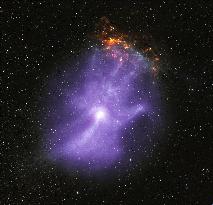
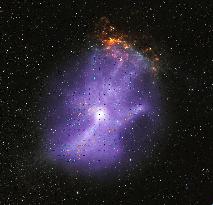
Handout - New composite image showing pulsar wind nebula (referred to as MSH 15-52) resembling a human hand, combining Chandra telescope data (seen in orange (low-energy X-rays), green, and blue (higher-energy X-rays)), while the diffuse purple represents the IXPE X-ray telescope observations. Scientists say they have revealed the "bones" of a ghostly cosmic hand. Two of NASA’s X-ray space telescopes have combined their imaging powers to unveil the magnetic field “bones” of a remarkable hand-shaped structure in space. The space agency says that together these telescopes reveal the behaviour of a dead collapsed star that lives on through plumes of particles of energised matter and antimatter. In 2001, NASA’s Chandra X-ray Observatory first observed the pulsar PSR B1509-58 and revealed that its pulsar wind nebula (referred to as MSH 15-52) resembles a human hand. The pulsar is located at the base of the “palm” of the nebula, while MSH 15-52 is located 16,000 light-years from Earth. Now, NASA’s newest X-ray tele

  •  
NASA X-ray Telescopes Reveal the 'Bones' of a Ghostly Cosmic Hand

NASA X-ray Telescopes Reveal the 'Bones' of a Ghostly Cosmic Hand

Handout - New composite image showing pulsar wind nebula (referred to as MSH 15-52) resembling a human hand, combining Chandra telescope data (seen in orange (low-energy X-rays), green, and blue (higher-energy X-rays)), while the diffuse purple represents the IXPE X-ray telescope observations. This image shows vectors that represent the magnetic field “bones” revealed by the two X-ray space telescopes. Scientists say they have revealed the "bones" of a ghostly cosmic hand. Two of NASA’s X-ray space telescopes have combined their imaging powers to unveil the magnetic field “bones” of a remarkable hand-shaped structure in space. The space agency says that together these telescopes reveal the behaviour of a dead collapsed star that lives on through plumes of particles of energised matter and antimatter. In 2001, NASA’s Chandra X-ray Observatory first observed the pulsar PSR B1509-58 and revealed that its pulsar wind nebula (referred to as MSH 15-52) resembles a human hand. The pulsar is located at the base of th

  •  
NASA X-ray Telescopes Reveal the 'Bones' of a Ghostly Cosmic Hand

NASA X-ray Telescopes Reveal the 'Bones' of a Ghostly Cosmic Hand

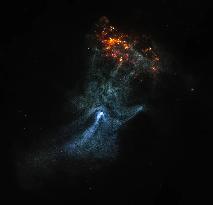
Handout - In 2001, NASA’s Chandra X-ray Observatory first observed the pulsar PSR B1509-58 and revealed that its pulsar wind nebula (referred to as MSH 15-52) resembles a human hand. Scientists say they have revealed the "bones" of a ghostly cosmic hand. Two of NASA’s X-ray space telescopes have combined their imaging powers to unveil the magnetic field “bones” of a remarkable hand-shaped structure in space. The space agency says that together these telescopes reveal the behaviour of a dead collapsed star that lives on through plumes of particles of energised matter and antimatter. In 2001, NASA’s Chandra X-ray Observatory first observed the pulsar PSR B1509-58 and revealed that its pulsar wind nebula (referred to as MSH 15-52) resembles a human hand. The pulsar is located at the base of the “palm” of the nebula, while MSH 15-52 is located 16,000 light-years from Earth. Now, NASA’s newest X-ray telescope, the Imaging X-ray Polarimetry Explorer (IXPE), has observed MSH 15-52 for about 17 days, the longest it h

  •  
Galactic Island Of Tranquillity

Galactic Island Of Tranquillity

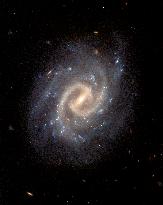
Handout photo shows The tranquil spiral galaxy UGC 12295 basks leisurely in this image from the NASA/ESA Hubble Space Telescope. This galaxy lies around 192 million light-years away in the constellation Pisces, and is almost face-on when viewed from Earth, displaying a bright central bar and tightly wound spiral arms. Despite appearing as an island of tranquillity in this image, UGC 12295 played host to a catastrophically violent explosion - a supernova - that was first detected in 2015. This supernova prompted two different teams of astronomers to propose Hubble observations of UGC 12295 that would sift through the wreckage of this vast stellar explosion. Supernovae are the explosive deaths of massive stars, and are responsible for forging many of the elements found here on Earth. The first team of astronomers used Hubble’s Wide Field Camera 3 (WFC3) to examine the detritus left behind by the supernova in order to better understand the evolution of matter in our Universe.  The second team of astronomers also

  •  
Webb Celebrates First Year of Science With Close-up on Birth of Sun-like Stars

Webb Celebrates First Year of Science With Close-up on Birth of Sun-like Stars

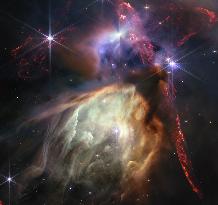
Handout - The first anniversary image from NASA’s James Webb Space Telescope displays star birth like it’s never been seen before, full of detailed, impressionistic texture. The subject is the Rho Ophiuchi cloud complex, the closest star-forming region to Earth. It is a relatively small, quiet stellar nursery, but you’d never know it from Webb’s chaotic close-up. Jets bursting from young stars crisscross the image, impacting the surrounding interstellar gas and lighting up molecular hydrogen, shown in red. Some stars display the telltale shadow of a circumstellar disk, the makings of future planetary systems. July 12, 2023. Photo by Klaus Pontoppidan/STScI, ASA, ESA, CSA /NASA via ABACAPRESS.COM

  •  
View Of Comet Helps Solve Mystery Of Earth's Abundant Water

View Of Comet Helps Solve Mystery Of Earth's Abundant Water

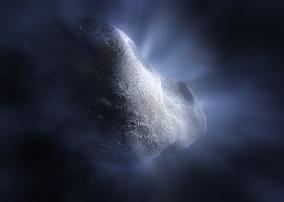
Handout - This artist’s concept of Comet 238P/Read shows the main belt comet sublimating—its water ice vaporising as its orbit approaches the Sun. This is significant, as the sublimation is what distinguishes comets from asteroids, creating their distinctive tail and hazy halo, or coma. The James Webb Space Telescope’s detection of water vapor at Comet Read is a major benchmark in the study of main belt comets, and in the broader investigation of the origin of Earth’s abundant water. NASA's James Webb Space Telescope has enabled another long-sought scientific breakthrough, this time for solar system scientists studying the origins of Earth's abundant water. Using Webb's NIRSpec (Near-Infrared Spectrograph) instrument, astronomers have confirmed gas – specifically water vapor – around a comet in the main asteroid belt for the first time, indicating that water ice from the primordial solar system can be preserved in that region. Comet Read is a main belt comet – an object that resides in the main asteroid belt

  •  
View Of Comet Helps Solve Mystery Of Earth's Abundant Water

View Of Comet Helps Solve Mystery Of Earth's Abundant Water

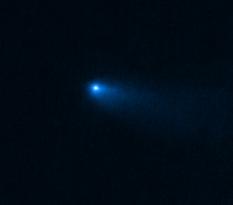
Handout - This image of Comet 238P/Read was captured by the NIRCam (Near-Infrared Camera) instrument on NASA’s James Webb Space Telescope on September 8, 2022. It displays the hazy halo, called the coma, and tail that are characteristic of comets, as opposed to asteroids. The dusty coma and tail result from the vaporization of ices as the Sun warms the main body of the comet. NASA's James Webb Space Telescope has enabled another long-sought scientific breakthrough, this time for solar system scientists studying the origins of Earth's abundant water. Using Webb's NIRSpec (Near-Infrared Spectrograph) instrument, astronomers have confirmed gas – specifically water vapor – around a comet in the main asteroid belt for the first time, indicating that water ice from the primordial solar system can be preserved in that region. Comet Read is a main belt comet – an object that resides in the main asteroid belt but which periodically displays a halo, or coma, and tail like a comet. Main belt comets themselves are a fair

  •  
Yearender: Xinhua's top 10 world news events in 2022

Yearender: Xinhua's top 10 world news events in 2022

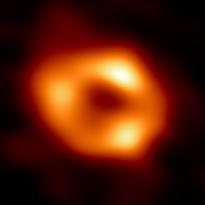
(221230) -- BEIJING, Dec. 30, 2022 (Xinhua) -- This photo unveiled on May 12, 2022 shows the first image of the supermassive black hole at the center of the Milky Way galaxy. The image was produced by a global research team called the Event Horizon Telescope (EHT), using observations from a worldwide network of radio telescopes. Xinhua's top 10 world news events in 2022 Highlights abound in humankind's space exploration The year of 2022 marks continuous progress in humankind's exploration of the vast universe. On May 12, astronomers around the world, including China, unveiled the first-ever image of Sagittarius A*, the supermassive black hole at the center of the Milky Way. On July 11, the United States released the first full-color image taken by the James Webb Space Telescope. On Sept. 26, NASA conducted its first planetary defense test mission, with a spacecraft intentionally slammed into an asteroid in a test to protect Earth in case of an asteroid impact threat. China has also made continuo

  •  
Japan's new rocket Epsilon launched successfully

Japan's new rocket Epsilon launched successfully

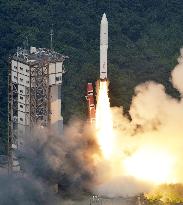
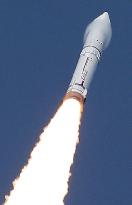
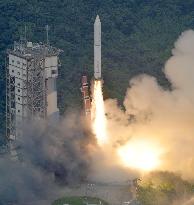
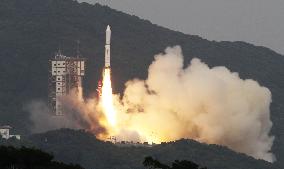
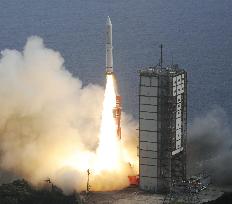
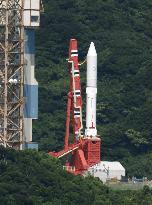
KIMOTSUKI, Japan - Photo taken from a Kyodo News helicopter shows Japan's new solid-fuel rocket Epsilon lifting off from the launch pad at the Uchinoura Space Center in Kagoshima Prefecture, southern Japan, at 2 p.m. on Sept. 14, 2013. According to the JAXA space agency, the Epsilon, Japan's first new rocket in 12 years, later released a space telescope into orbit as planned.

  •  
Japan's new rocket Epsilon launched successfully

Japan's new rocket Epsilon launched successfully

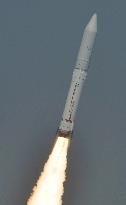
KIMOTSUKI, Japan - Japan's new solid-fuel rocket Epsilon ascends in the sky after lifting off from the launch pad at the Uchinoura Space Center in Kagoshima Prefecture, southern Japan, at 2 p.m. on Sept. 14, 2013. According the JAXA space agency, the Epsilon, Japan's first new rocket in 12 years, later released a space telescope into orbit as planned.

  •  
Japan's new rocket Epsilon launched successfully

Japan's new rocket Epsilon launched successfully

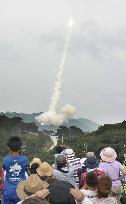
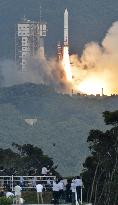
KIMOTSUKI, Japan - Spectators look on as Japan's new solid-fuel rocket Epsilon ascends in the sky after lifting off from the launch pad at the Uchinoura Space Center in Kagoshima Prefecture, southern Japan, at 2 p.m. on Sept. 14, 2013. According to the JAXA space agency, the Epsilon, Japan's first new rocket in 12 years, later released a space telescope into orbit as planned.

  •  
Japan's new rocket Epsilon launched successfully

Japan's new rocket Epsilon launched successfully

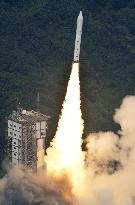
KIMOTSUKI, Japan - Photo taken from a Kyodo News helicopter shows Japan's new solid-fuel rocket Epsilon lifting off from the launch pad at the Uchinoura Space Center in Kagoshima Prefecture, southern Japan, at 2 p.m. on Sept. 14, 2013. According to the JAXA space agency, the Epsilon, Japan's first new rocket in 12 years, later released a space telescope into orbit as planned.

  •  
Japan's new rocket Epsilon launched successfully

Japan's new rocket Epsilon launched successfully

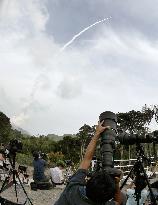
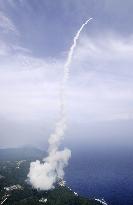
KIMOTSUKI, Japan - Photo shows white smoke left behind in the sky after Japan's new solid-fuel rocket Epsilon lifts off from the launch pad at the Uchinoura Space Center in Kagoshima Prefecture, southern Japan, at 2 p.m. on Sept. 14, 2013. According to the JAXA space agency, the Epsilon, Japan's first new rocket in 12 years, later released a space telescope into orbit as planned. (Photo taken with fish-eye lens)

  •  
Japan's new rocket Epsilon launched successfully

Japan's new rocket Epsilon launched successfully

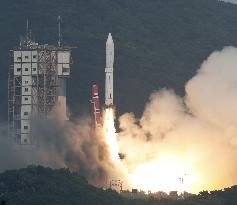
KIMOTSUKI, Japan - Japan's new solid-fuel rocket Epsilon lifts off from the launch pad at the Uchinoura Space Center in Kagoshima Prefecture, southern Japan, at 2 p.m. on Sept. 14, 2013. According to the JAXA space agency, the Epsilon, Japan's first new rocket in 12 years, later released a space telescope into orbit as planned.

  •  
Japan's new rocket Epsilon launched successfully

Japan's new rocket Epsilon launched successfully

KIMOTSUKI, Japan - Photo taken from a Kyodo News helicopter shows Japan's new solid-fuel rocket Epsilon lifting off from the launch pad at the Uchinoura Space Center in Kagoshima Prefecture, southern Japan, at 2 p.m. on Sept. 14, 2013. According to the JAXA space agency, the Epsilon, Japan's first new rocket in 12 years, later released a space telescope into orbit as planned.

  •  
Japan's new rocket Epsilon launched successfully

Japan's new rocket Epsilon launched successfully

KIMOTSUKI, Japan - Japan's new solid-fuel rocket Epsilon lifts off from the launch pad at the Uchinoura Space Center in Kagoshima Prefecture, southern Japan, at 2 p.m. on Sept. 14, 2013. According to the JAXA space agency, the Epsilon, Japan's first new rocket in 12 years, later released a space telescope into orbit as planned.

  •  
Japan's new rocket Epsilon launched successfully

Japan's new rocket Epsilon launched successfully

KIMOTSUKI, Japan - Photo taken from a Kyodo News helicopter shows Japan's new solid-fuel rocket Epsilon ascending in the sky after lifting off from the launch pad at the Uchinoura Space Center in Kagoshima Prefecture, southern Japan, at 2 p.m. on Sept. 14, 2013. According to the JAXA space agency, the Epsilon, Japan's first new rocket in 12 years, later released a space telescope into orbit as planned.

  •  
Japan's new rocket Epsilon launched successfully

Japan's new rocket Epsilon launched successfully

KIMOTSUKI, Japan - Japan's new solid-fuel rocket Epsilon lifts off from the launch pad at the Uchinoura Space Center in Kagoshima Prefecture, southern Japan, at 2 p.m. on Sept. 14, 2013. According to the JAXA space agency, the Epsilon, Japan's first new rocket in 12 years, later released a space telescope into orbit as planned.

  •  
Japan's new rocket Epsilon launched successfully

Japan's new rocket Epsilon launched successfully

KIMOTSUKI, Japan - Photo taken from a Kyodo News helicopter shows white smoke left behind in the sky after Japan's new solid-fuel rocket Epsilon lifts off from the launch pad at the Uchinoura Space Center in Kagoshima Prefecture, southern Japan, at 2 p.m. on Sept. 14, 2013. According to the JAXA space agency, the Epsilon, Japan's first new rocket in 12 years, later released a space telescope into orbit as planned.

  •  
Japan's new rocket Epsilon launched successfully

Japan's new rocket Epsilon launched successfully

KIMOTSUKI, Japan - Japan's new solid-fuel rocket Epsilon lifts off from the launch pad at the Uchinoura Space Center in Kagoshima Prefecture, southern Japan, at 2 p.m. on Sept. 14, 2013. According to the JAXA space agency, the Epsilon, Japan's first new rocket in 12 years, later released a space telescope into orbit as planned.

  •  
Japan's new rocket Epsilon launched successfully

Japan's new rocket Epsilon launched successfully

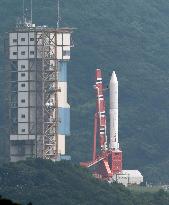
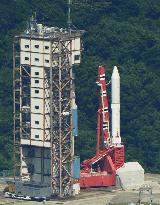
KIMOTSUKI, Japan - Photo shows Japan's new solid-fuel rocket Epsilon at the Uchinoura Space Center in Kagoshima Prefecture, southern Japan, at 11:07 a.m. on Sept. 14, 2013, ahead of its liftoff later that day. The Epsilon, Japan's first new rocket in 12 years, was launched successfully at 2 p.m. and, according to the JAXA space agency, later released a space telescope into orbit as planned.

  •  
Japan postpones launch of new rocket Epsilon

Japan postpones launch of new rocket Epsilon

KIMOTSUKI, Japan - Photo taken at 1:45 p.m. on Aug. 27, 2013, shows the new rocket Epsilon at the Uchinoura Space Center in the town of Kimotsuki, Kagoshima Prefecture, which was scheduled to lift off at that time. The state-run Japan Aerospace Exploration Agency postponed at the last minute the launch of the new type of solid-fuel rocket carrying the world's first space telescope for observing planets.

  •  
Japan postpones launch of new rocket Epsilon

Japan postpones launch of new rocket Epsilon

KIMOTSUKI, Japan - People watch the new rocket Epsilon in the town of Kimotsuki, Kagoshima Prefecture, on Aug. 27, 2013, after the scheduled time for liftoff from the Uchinoura Space Center. The state-run Japan Aerospace Exploration Agency postponed at the last minute the launch of the new type of solid-fuel rocket carrying the world's first space telescope for observing planets.

  •  
Japan postpones launch of new rocket Epsilon

Japan postpones launch of new rocket Epsilon

KIMOTSUKI, Japan - Photo taken from a Kyodo News helicopter at 1:51 p.m. on Aug. 27, 2013, shows the new rocket Epsilon at the Uchinoura Space Center in the town of Kimotsuki, Kagoshima Prefecture, which was scheduled to lift off at 1:45 p.m. The state-run Japan Aerospace Exploration Agency postponed at the last minute the launch of the new type of solid-fuel rocket carrying the world's first space telescope for observing planets.

  •  
U.S.-GREENBELT-JAMES WEBB SPACE TELESCOPE-UNIVERSE-FIRST FULL-COLOR IMAGES

U.S.-GREENBELT-JAMES WEBB SPACE TELESCOPE-UNIVERSE-FIRST FULL-COLOR IMAGES

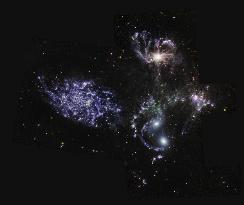
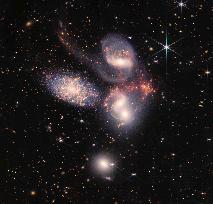
(220712) -- GREENBELT (U.S.), July 12, 2022 (Xinhua) -- Image released by NASA on July 12, 2022 shows Stephan's Quintet, a collection of five galaxies, as seen by MIRI from James Webb Space Telescope. NASA released James Webb Space Telescope's first full-color images of the universe and their spectroscopic data on Tuesday, revealing the unprecedented and detailed views of the universe. (NASA, ESA, CSA, STScI/Handout via Xinhua)

  •  
U.S.-GREENBELT-JAMES WEBB SPACE TELESCOPE-UNIVERSE-FIRST FULL-COLOR IMAGES

U.S.-GREENBELT-JAMES WEBB SPACE TELESCOPE-UNIVERSE-FIRST FULL-COLOR IMAGES

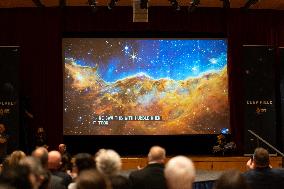
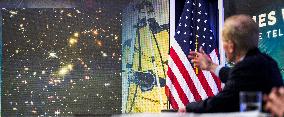
(220712) -- GREENBELT (U.S.), July 12, 2022 (Xinhua) -- The image captured by NASA's James Webb Space Telescope of the star-forming region called NGC 3324 in the Carina Nebula is seen on a screen at NASA's Goddard Space Flight Center in Greenbelt, Maryland, the Untied States, on July 12, 2022. NASA released James Webb Space Telescope's first full-color images of the universe and their spectroscopic data on Tuesday, revealing the unprecedented and detailed views of the universe. (NASA/Taylor Mickal/Handout via Xinhua)

  •  
U.S.-GREENBELT-JAMES WEBB SPACE TELESCOPE-UNIVERSE-FIRST FULL-COLOR IMAGES

U.S.-GREENBELT-JAMES WEBB SPACE TELESCOPE-UNIVERSE-FIRST FULL-COLOR IMAGES

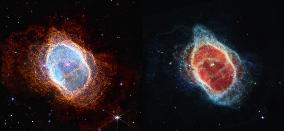
(220712) -- GREENBELT (U.S.), July 12, 2022 (Xinhua) -- Image released by NASA on July 12, 2022 shows a side-by-side comparison of the Southern Ring Nebula in near-infrared light (L) and mid-infrared light (R) from NASA's James Webb Space Telescope. NASA released James Webb Space Telescope's first full-color images of the universe and their spectroscopic data on Tuesday, revealing the unprecedented and detailed views of the universe. (NASA, ESA, CSA, STScI/Handout via Xinhua)

  •  
U.S.-GREENBELT-JAMES WEBB SPACE TELESCOPE-UNIVERSE-FIRST FULL-COLOR IMAGES

U.S.-GREENBELT-JAMES WEBB SPACE TELESCOPE-UNIVERSE-FIRST FULL-COLOR IMAGES

(220712) -- GREENBELT (U.S.), July 12, 2022 (Xinhua) -- Image released by NASA on July 12, 2022 shows Stephan's Quintet, a group of five galaxies that appear close to each other in the sky: two in the middle, one toward the top, one to the upper left, and one toward the bottom. NASA released James Webb Space Telescope's first full-color images of the universe and their spectroscopic data on Tuesday, revealing the unprecedented and detailed views of the universe. (NASA, ESA, CSA, STScI/Handout via Xinhua)

  •  
U.S.-GREENBELT-JAMES WEBB SPACE TELESCOPE-UNIVERSE-FIRST FULL-COLOR IMAGES

U.S.-GREENBELT-JAMES WEBB SPACE TELESCOPE-UNIVERSE-FIRST FULL-COLOR IMAGES

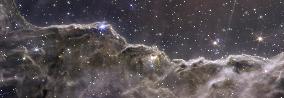
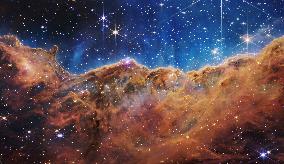
(220712) -- GREENBELT (U.S.), July 12, 2022 (Xinhua) -- Image released by NASA on July 12, 2022 shows a composite image of the Cosmic Cliffs in the Carina Nebula, created with James Webb Space Telescope's NIRCam and MIRI. NASA released James Webb Space Telescope's first full-color images of the universe and their spectroscopic data on Tuesday, revealing the unprecedented and detailed views of the universe. (NASA, ESA, CSA, STScI/Handout via Xinhua)

  •  
U.S.-GREENBELT-JAMES WEBB SPACE TELESCOPE-UNIVERSE-FIRST FULL-COLOR IMAGES

U.S.-GREENBELT-JAMES WEBB SPACE TELESCOPE-UNIVERSE-FIRST FULL-COLOR IMAGES

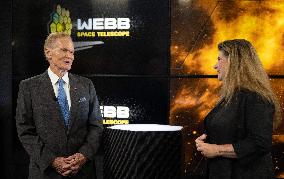
(220712) -- GREENBELT (U.S.), July 12, 2022 (Xinhua) -- NASA Administrator Bill Nelson (L) speaks with Assistant Director of Science at NASA's Goddard Space Flight Center Michelle Thaller at NASA's Goddard Space Flight Center in Greenbelt, Maryland, the Untied States, on July 12, 2022. NASA released James Webb Space Telescope's first full-color images of the universe and their spectroscopic data on Tuesday, revealing the unprecedented and detailed views of the universe. (NASA/Bill Ingalls/Handout via Xinhua)

  •  
U.S.-GREENBELT-JAMES WEBB SPACE TELESCOPE-UNIVERSE-FIRST FULL-COLOR IMAGES

U.S.-GREENBELT-JAMES WEBB SPACE TELESCOPE-UNIVERSE-FIRST FULL-COLOR IMAGES

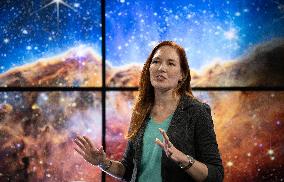
(220712) -- GREENBELT (U.S.), July 12, 2022 (Xinhua) -- NASA James Webb Space Telescope Deputy Project Scientist for Communications Amber Straughn speaks about the infrared image of the star-forming region called NGC 3324 in the Carina Nebula as it is shown on a screen during a broadcast releasing the telescope's first full-color images at NASA's Goddard Space Flight Center in Greenbelt, Maryland, the Untied States, on July 12, 2022. NASA released James Webb Space Telescope's first full-color images of the universe and their spectroscopic data on Tuesday, revealing the unprecedented and detailed views of the universe. (NASA/Bill Ingalls/Handout via Xinhua)

  •  
U.S.-GREENBELT-JAMES WEBB SPACE TELESCOPE-UNIVERSE-FIRST FULL-COLOR IMAGES

U.S.-GREENBELT-JAMES WEBB SPACE TELESCOPE-UNIVERSE-FIRST FULL-COLOR IMAGES

(220712) -- GREENBELT (U.S.), July 12, 2022 (Xinhua) -- Image released by NASA on July 12, 2022 shows the edge of a nearby, young, star-forming region called NGC 3324 in the Carina Nebula. Captured in infrared light by NASA's James Webb Space Telescope, the image reveals for the first time previously invisible areas of star birth. NASA released James Webb Space Telescope's first full-color images of the universe and their spectroscopic data on Tuesday, revealing the unprecedented and detailed views of the universe. (NASA, ESA, CSA, STScI/Handout via Xinhua)

  •  
U.S.-JAMES WEBB SPACE TELESCOPE-FIRST IMAGE

U.S.-JAMES WEBB SPACE TELESCOPE-FIRST IMAGE

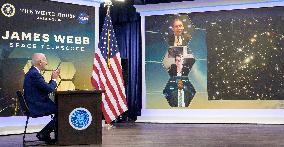
(220712) -- WASHINGTON, D.C., July 12, 2022 (Xinhua) -- U.S. President Joe Biden (2nd L) attends a preview event to release one of the James Webb Space Telescope's first images at the White House in Washington, D.C., the United States, July 11, 2022. U.S. President Joe Biden released one of the James Webb Space Telescope's first images in a preview event at the White House on Monday. This first image from Webb is the deepest and sharpest infrared image of the distant universe to date, NASA said. This image of galaxy cluster SMACS 0723 is filled with thousands of galaxies, including the faintest objects ever observed in the infrared, which have appeared in Webb's view for the first time, said NASA. (NASA/Bill Ingalls/Handout via Xinhua)

  •  
U.S.-JAMES WEBB SPACE TELESCOPE-FIRST IMAGE

U.S.-JAMES WEBB SPACE TELESCOPE-FIRST IMAGE

(220712) -- WASHINGTON, D.C., July 12, 2022 (Xinhua) -- NASA Administrator Bill Nelson describes the first image from the James Webb Space Telescope at the White House in Washington, D.C., the United States, July 11, 2022. U.S. President Joe Biden released one of the James Webb Space Telescope's first images in a preview event at the White House on Monday. This first image from Webb is the deepest and sharpest infrared image of the distant universe to date, NASA said. This image of galaxy cluster SMACS 0723 is filled with thousands of galaxies, including the faintest objects ever observed in the infrared, which have appeared in Webb's view for the first time, said NASA. (NASA/Bill Ingalls/Handout via Xinhua)

  •  
U.S.-JAMES WEBB SPACE TELESCOPE-FIRST IMAGE

U.S.-JAMES WEBB SPACE TELESCOPE-FIRST IMAGE

(220712) -- WASHINGTON, D.C., July 12, 2022 (Xinhua) -- U.S. President Joe Biden attends a preview event to release one of the James Webb Space Telescope's first images at the White House in Washington, D.C., the United States, July 11, 2022. U.S. President Joe Biden released one of the James Webb Space Telescope's first images in a preview event at the White House on Monday. This first image from Webb is the deepest and sharpest infrared image of the distant universe to date, NASA said. This image of galaxy cluster SMACS 0723 is filled with thousands of galaxies, including the faintest objects ever observed in the infrared, which have appeared in Webb's view for the first time, said NASA. (NASA/Bill Ingalls/Handout via Xinhua)

  •  
U.S.-JAMES WEBB SPACE TELESCOPE-FIRST IMAGE

U.S.-JAMES WEBB SPACE TELESCOPE-FIRST IMAGE

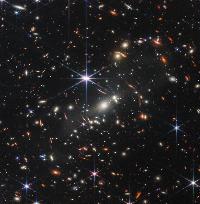
(220712) -- WASHINGTON, D.C., July 12, 2022 (Xinhua) -- Image released by NASA on July 11, 2022 shows galaxy cluster SMACS 0723, captured by the James Webb Space Telescope. U.S. President Joe Biden released one of the James Webb Space Telescope's first images in a preview event at the White House on Monday. This first image from Webb is the deepest and sharpest infrared image of the distant universe to date, NASA said. This image of galaxy cluster SMACS 0723 is filled with thousands of galaxies, including the faintest objects ever observed in the infrared, which have appeared in Webb's view for the first time, said NASA. (NASA/ESA/CSA/STScI/Handout via Xinhua)

  •  
Hubble Space Telescope's First Observations Since Being Fixed

Hubble Space Telescope's First Observations Since Being Fixed

Members of the Hubble operations team work in the control room July 15, 2021, to restore Hubble to science operations. NASA Begins Switch to Backup Spacecraft Hardware. Today, NASA began a switch to backup spacecraft hardware on Hubble in response to an ongoing problem with its payload computer. This will be a multi-day event. If successful, the next step will be for science instruments to be brought back into operation. Editorial Use Only. Handout Photo by Goddard/Rebecca Roth/NASA/ABACAPRESS.COM

  • Main
  • Top
  • Editorial
  • Creative
  • About Us
  • About ILG
  • Terms of use
  • Company
  • BEHIND
  • Price List
  • Single Plan
  • Monthly Plan
  • Services
  • Shooting
  • Rights Clearance
  • Support
  • FAQ
  • How To Buy
  • Contact Us
  • Become a Partner

© KYODO NEWS IMAGES INC

All Rights Reserved.

  • Editorial
  • Olympics
  • News
  • Sports
  • Japan
  • Tech
  • Royal
  • Disaster
  • NorthKorea
  • Old Japan
  • SNS
  • Creative
  • Food
  • Japan
  • Landscape
  • Animal
  • Popular
  • #Ukraine
  • #Thailand
  • #coronavirus
  • #N. Korea
  • #Russia
  • #China
  • #Ukraine
  • #Thailand
  • #coronavirus
  • #N. Korea
  • #Russia
  • #China
  • Food
  • Japan
  • Landscape
  • Animal
  • Olympics
  • News
  • Sports
  • Japan
  • Tech
  • Royal
  • Disaster
  • NorthKorea
  • Old Japan
  • SNS