•  
Iraqi Deminer Loses Legs Clearing Mines - Iraq

Iraqi Deminer Loses Legs Clearing Mines - Iraq

Boys play soccer across a field using Hoshyar Ali's prosthetic legs as goal posts in Halabja, Iraq, on November 20, 2025. Hoshyar Ali has been clearing landmines for over four decades, a task he began after the Iran-Iraq war when thousands of mines were planted along the border. Despite losing both legs and several family members to explosions, he continues to volunteer in mine removal. Locals call him “man of the mines,” and he is building a museum in his village to display defused explosives for future generations. Photo by Showan Sulaiman/Middle East Images/ABACAPRESS.COM

  •  
Iraqi Deminer Loses Legs Clearing Mines - Iraq

Iraqi Deminer Loses Legs Clearing Mines - Iraq

Hoshyar Ali sits in the driver's seat of a car in Halabja, Iraq, on November 20, 2025. He has been clearing landmines for over four decades, a task he began after the Iran-Iraq war when thousands of mines were planted along the border. Despite losing both legs and several family members to explosions, he continues to volunteer in mine removal. Locals call him “man of the mines,” and he is building a museum in his village to display defused explosives for future generations. Photo by Showan Sulaiman/Middle East Images/ABACAPRESS.COM

  •  
Iraqi Deminer Loses Legs Clearing Mines - Iraq

Iraqi Deminer Loses Legs Clearing Mines - Iraq

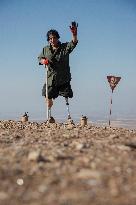
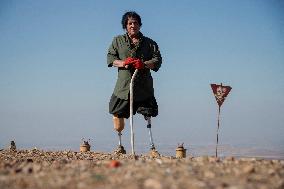
Hoshyar Ali stands among landmines and a warning sign in Halabja, Iraq, on November 20, 2025. He has been clearing landmines for over four decades, a task he began after the Iran-Iraq war when thousands of mines were planted along the border. Despite losing both legs and several family members to explosions, he continues to volunteer in mine removal. Locals call him “man of the mines,” and he is building a museum in his village to display defused explosives for future generations. Photo by Showan Sulaiman/Middle East Images/ABACAPRESS.COM

  •  
Iraqi Deminer Loses Legs Clearing Mines - Iraq

Iraqi Deminer Loses Legs Clearing Mines - Iraq

Hoshyar Ali bends over to inspect a landmine on a hillside in Halabja, Iraq, on November 20, 2025. He has been clearing landmines for over four decades, a task he began after the Iran-Iraq war when thousands of mines were planted along the border. Despite losing both legs and several family members to explosions, he continues to volunteer in mine removal. Locals call him “man of the mines,” and he is building a museum in his village to display defused explosives for future generations. Photo by Showan Sulaiman/Middle East Images/ABACAPRESS.COM

  •  
Iraqi Deminer Loses Legs Clearing Mines - Iraq

Iraqi Deminer Loses Legs Clearing Mines - Iraq

Six boys walk across a field carrying Hoshyar Ali's prosthetic legs in Halabja, Iraq, on November 20, 2025. Hoshyar Ali has been clearing landmines for over four decades, a task he began after the Iran-Iraq war when thousands of mines were planted along the border. Despite losing both legs and several family members to explosions, he continues to volunteer in mine removal. Locals call him “man of the mines,” and he is building a museum in his village to display defused explosives for future generations. Photo by Showan Sulaiman/Middle East Images/ABACAPRESS.COM

  •  
Iraqi Deminer Loses Legs Clearing Mines - Iraq

Iraqi Deminer Loses Legs Clearing Mines - Iraq

Four anti-personnel landmines are displayed on a wooden shelf in Hoshyar Ali's room, turned museum, in Halabja, Iraq, on November 20, 2025. He has been clearing landmines for over four decades, a task he began after the Iran-Iraq war when thousands of mines were planted along the border. Despite losing both legs and several family members to explosions, he continues to volunteer in mine removal. Locals call him “man of the mines,” and he is building a museum in his village to display defused explosives for future generations. Photo by Showan Sulaiman/Middle East Images/ABACAPRESS.COM

  •  
Iraqi Deminer Loses Legs Clearing Mines - Iraq

Iraqi Deminer Loses Legs Clearing Mines - Iraq

Prosthetic legs and a crutch are displayed in front of a shelf of deactivated explosives in Hoshyar Ali's room, turned museum, in Halabja, Iraq, on November 20, 2025. He has been clearing landmines for over four decades, a task he began after the Iran-Iraq war when thousands of mines were planted along the border. Despite losing both legs and several family members to explosions, he continues to volunteer in mine removal. Locals call him “man of the mines,” and he is building a museum in his village to display defused explosives for future generations. Photo by Showan Sulaiman/Middle East Images/ABACAPRESS.COM

  •  
Iraqi Deminer Loses Legs Clearing Mines - Iraq

Iraqi Deminer Loses Legs Clearing Mines - Iraq

Four anti-personnel landmines are displayed on a wooden shelf in Hoshyar Ali's room, turned museum, in Halabja, Iraq, on November 20, 2025. He has been clearing landmines for over four decades, a task he began after the Iran-Iraq war when thousands of mines were planted along the border. Despite losing both legs and several family members to explosions, he continues to volunteer in mine removal. Locals call him “man of the mines,” and he is building a museum in his village to display defused explosives for future generations. Photo by Showan Sulaiman/Middle East Images/ABACAPRESS.COM

  •  
Iraqi Deminer Loses Legs Clearing Mines - Iraq

Iraqi Deminer Loses Legs Clearing Mines - Iraq

Hoshyar Ali holds a deactivated explosive device in his room, turned museum, in Halabja, Iraq, on November 20, 2025. He has been clearing landmines for over four decades, a task he began after the Iran-Iraq war when thousands of mines were planted along the border. Despite losing both legs and several family members to explosions, he continues to volunteer in mine removal. Locals call him “man of the mines,” and he is building a museum in his village to display defused explosives for future generations. Photo by Showan Sulaiman/Middle East Images/ABACAPRESS.COM

  •  
Iraqi Deminer Loses Legs Clearing Mines - Iraq

Iraqi Deminer Loses Legs Clearing Mines - Iraq

A triangular danger sign is placed near a missile casing collected by Hoshyar Ali in Halabja, Iraq, on November 20, 2025. He has been clearing landmines for over four decades, a task he began after the Iran-Iraq war when thousands of mines were planted along the border. Despite losing both legs and several family members to explosions, he continues to volunteer in mine removal. Locals call him “man of the mines,” and he is building a museum in his village to display defused explosives for future generations. Photo by Showan Sulaiman/Middle East Images/ABACAPRESS.COM

  •  
Iraqi Deminer Loses Legs Clearing Mines - Iraq

Iraqi Deminer Loses Legs Clearing Mines - Iraq

Six deactivated rusty mortar shells collected by Hoshyar Ali rest near a concrete wall in Halabja, Iraq, on November 20, 2025. He has been clearing landmines for over four decades, a task he began after the Iran-Iraq war when thousands of mines were planted along the border. Despite losing both legs and several family members to explosions, he continues to volunteer in mine removal. Locals call him “man of the mines,” and he is building a museum in his village to display defused explosives for future generations. Photo by Showan Sulaiman/Middle East Images/ABACAPRESS.COM

  •  
Iraqi Deminer Loses Legs Clearing Mines - Iraq

Iraqi Deminer Loses Legs Clearing Mines - Iraq

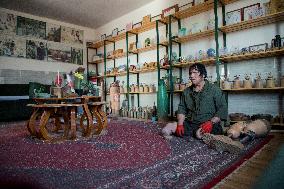
Hoshyar Ali sits in his room, now a museum filled with deactivated explosives and awards, with his two prosthetic legs beside him, in Halabja, Iraq, on November 20, 2025. He has been clearing landmines for over four decades, a task he began after the Iran-Iraq war when thousands of mines were planted along the border. Despite losing both legs and several family members to explosions, he continues to volunteer in mine removal. Locals call him “man of the mines,” and he is building a museum in his village to display defused explosives for future generations. Photo by Showan Sulaiman/Middle East Images/ABACAPRESS.COM

  •  
Iraqi Deminer Loses Legs Clearing Mines - Iraq

Iraqi Deminer Loses Legs Clearing Mines - Iraq

Hoshyar Ali holds a tool and a knife while sitting near landmines on a hillside in Halabja, Iraq, on November 20, 2025. He has been clearing landmines for over four decades, a task he began after the Iran-Iraq war when thousands of mines were planted along the border. Despite losing both legs and several family members to explosions, he continues to volunteer in mine removal. Locals call him “man of the mines,” and he is building a museum in his village to display defused explosives for future generations. Photo by Showan Sulaiman/Middle East Images/ABACAPRESS.COM

  •  
Iraqi Deminer Loses Legs Clearing Mines - Iraq

Iraqi Deminer Loses Legs Clearing Mines - Iraq

Hoshyar Ali uses a mine detector to find landmines on a hillside in Halabja, Iraq, on November 20, 2025. He has been clearing landmines for over four decades, a task he began after the Iran-Iraq war when thousands of mines were planted along the border. Despite losing both legs and several family members to explosions, he continues to volunteer in mine removal. Locals call him “man of the mines,” and he is building a museum in his village to display defused explosives for future generations. Photo by Showan Sulaiman/Middle East Images/ABACAPRESS.COM

  •  
Iraqi Deminer Loses Legs Clearing Mines - Iraq

Iraqi Deminer Loses Legs Clearing Mines - Iraq

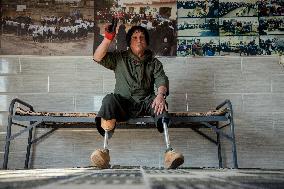
Hoshyar Ali sits on a metal-framed bed, with pictures of his achievements on the wall, and gives a V sign in Halabja, Iraq, on November 20, 2025. He has been clearing landmines for over four decades, a task he began after the Iran-Iraq war when thousands of mines were planted along the border. Despite losing both legs and several family members to explosions, he continues to volunteer in mine removal. Locals call him “man of the mines,” and he is building a museum in his village to display defused explosives for future generations. Photo by Showan Sulaiman/Middle East Images/ABACAPRESS.COM

  •  
Iraqi Deminer Loses Legs Clearing Mines - Iraq

Iraqi Deminer Loses Legs Clearing Mines - Iraq

Hoshyar Ali sits in his room, now a museum filled with deactivated explosives and awards, with his two prosthetic legs beside him, in Halabja, Iraq, on November 20, 2025. He has been clearing landmines for over four decades, a task he began after the Iran-Iraq war when thousands of mines were planted along the border. Despite losing both legs and several family members to explosions, he continues to volunteer in mine removal. Locals call him “man of the mines,” and he is building a museum in his village to display defused explosives for future generations. Photo by Showan Sulaiman/Middle East Images/ABACAPRESS.COM

  •  
Iraqi Deminer Loses Legs Clearing Mines - Iraq

Iraqi Deminer Loses Legs Clearing Mines - Iraq

Hoshyar Ali stands among landmines and a warning sign in Halabja, Iraq, on November 20, 2025. He has been clearing landmines for over four decades, a task he began after the Iran-Iraq war when thousands of mines were planted along the border. Despite losing both legs and several family members to explosions, he continues to volunteer in mine removal. Locals call him “man of the mines,” and he is building a museum in his village to display defused explosives for future generations. Photo by Showan Sulaiman/Middle East Images/ABACAPRESS.COM

  •  
Iraqi Deminer Loses Legs Clearing Mines - Iraq

Iraqi Deminer Loses Legs Clearing Mines - Iraq

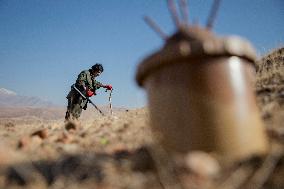
A landmine uncovered by Hoshyar Ali remains partially buried in rocky soil in Halabja, Iraq, on November 20, 2025. He has been clearing landmines for over four decades, a task he began after the Iran-Iraq war when thousands of mines were planted along the border. Despite losing both legs and several family members to explosions, he continues to volunteer in mine removal. Locals call him “man of the mines,” and he is building a museum in his village to display defused explosives for future generations. Photo by Showan Sulaiman/Middle East Images/ABACAPRESS.COM

  •  
Laurent Mauvignier Wins Goncourt Prize For “La Maison Vide” - Paris

Laurent Mauvignier Wins Goncourt Prize For “La Maison Vide” - Paris

Laurent Mauvignier's "La Maison vide", a family saga spanning three generations and marked by two world wars, won the Prix Goncourt by six votes to four against Caroline Lamarche's "Le bel obscur", on November 4, 2025, in Paris, France. The president of the Academy, Philippe Claudel announced the winner of France's most prestigious literary prizeat midday at Drouant, a famous restaurant near the Opera in Paris. Photo by Dennis Prezat/ABACAPRESS.COM

  •  
Laurent Mauvignier Wins Goncourt Prize For “La Maison Vide” - Paris

Laurent Mauvignier Wins Goncourt Prize For “La Maison Vide” - Paris

Laurent Mauvignier's "La Maison vide", a family saga spanning three generations and marked by two world wars, won the Prix Goncourt by six votes to four against Caroline Lamarche's "Le bel obscur", on November 4, 2025, in Paris, France. The president of the Academy, Philippe Claudel announced the winner of France's most prestigious literary prizeat midday at Drouant, a famous restaurant near the Opera in Paris. Photo by Dennis Prezat/ABACAPRESS.COM

  •  
Laurent Mauvignier Wins Goncourt Prize For “La Maison Vide” - Paris

Laurent Mauvignier Wins Goncourt Prize For “La Maison Vide” - Paris

Laurent Mauvignier's "La Maison vide", a family saga spanning three generations and marked by two world wars, won the Prix Goncourt by six votes to four against Caroline Lamarche's "Le bel obscur", on November 4, 2025, in Paris, France. The president of the Academy, Philippe Claudel announced the winner of France's most prestigious literary prizeat midday at Drouant, a famous restaurant near the Opera in Paris. Photo by Dennis Prezat/ABACAPRESS.COM

  •  
Laurent Mauvignier Wins Goncourt Prize For “La Maison Vide” - Paris

Laurent Mauvignier Wins Goncourt Prize For “La Maison Vide” - Paris

Laurent Mauvignier and Philippe Claudel. Laurent Mauvignier's "La Maison vide", a family saga spanning three generations and marked by two world wars, won the Prix Goncourt by six votes to four against Caroline Lamarche's "Le bel obscur", on November 4, 2025, in Paris, France. The president of the Academy, Philippe Claudel announced the winner of France's most prestigious literary prizeat midday at Drouant, a famous restaurant near the Opera in Paris. Photo by Dennis Prezat/ABACAPRESS.COM

  •  
Laurent Mauvignier Wins Goncourt Prize For “La Maison Vide” - Paris

Laurent Mauvignier Wins Goncourt Prize For “La Maison Vide” - Paris

The ten jurors met at midday at Drouant, a famous restaurant near the Opera in Paris, to agree on the winner of France's most prestigious literary prize. Laurent Mauvignier's "La Maison vide", a family saga spanning three generations and marked by two world wars, won the Prix Goncourt by six votes to four against Caroline Lamarche's "Le bel obscur", on November 4, 2025, in Paris, France. Photo by Dennis Prezat/ABACAPRESS.COM

  •  
Laurent Mauvignier Wins Goncourt Prize For “La Maison Vide” - Paris

Laurent Mauvignier Wins Goncourt Prize For “La Maison Vide” - Paris

The ten jurors met at midday at Drouant, a famous restaurant near the Opera in Paris, to agree on the winner of France's most prestigious literary prize. Laurent Mauvignier's "La Maison vide", a family saga spanning three generations and marked by two world wars, won the Prix Goncourt by six votes to four against Caroline Lamarche's "Le bel obscur", on November 4, 2025, in Paris, France. Photo by Dennis Prezat/ABACAPRESS.COM

  •  
Laurent Mauvignier Wins Goncourt Prize For “La Maison Vide” - Paris

Laurent Mauvignier Wins Goncourt Prize For “La Maison Vide” - Paris

Laurent Mauvignier and Philippe Claudel. Laurent Mauvignier's "La Maison vide", a family saga spanning three generations and marked by two world wars, won the Prix Goncourt by six votes to four against Caroline Lamarche's "Le bel obscur", on November 4, 2025, in Paris, France. The president of the Academy, Philippe Claudel announced the winner of France's most prestigious literary prizeat midday at Drouant, a famous restaurant near the Opera in Paris. Photo by Dennis Prezat/ABACAPRESS.COM

  •  
Laurent Mauvignier Wins Goncourt Prize For “La Maison Vide” - Paris

Laurent Mauvignier Wins Goncourt Prize For “La Maison Vide” - Paris

Laurent Mauvignier's "La Maison vide", a family saga spanning three generations and marked by two world wars, won the Prix Goncourt by six votes to four against Caroline Lamarche's "Le bel obscur", on November 4, 2025, in Paris, France. The president of the Academy, Philippe Claudel announced the winner of France's most prestigious literary prizeat midday at Drouant, a famous restaurant near the Opera in Paris. Photo by Dennis Prezat/ABACAPRESS.COM

  •  
Laurent Mauvignier Wins Goncourt Prize For “La Maison Vide” - Paris

Laurent Mauvignier Wins Goncourt Prize For “La Maison Vide” - Paris

Laurent Mauvignier's "La Maison vide", a family saga spanning three generations and marked by two world wars, won the Prix Goncourt by six votes to four against Caroline Lamarche's "Le bel obscur", on November 4, 2025, in Paris, France. The president of the Academy, Philippe Claudel announced the winner of France's most prestigious literary prizeat midday at Drouant, a famous restaurant near the Opera in Paris. Photo by Dennis Prezat/ABACAPRESS.COM

  •  
Laurent Mauvignier Wins Goncourt Prize For “La Maison Vide” - Paris

Laurent Mauvignier Wins Goncourt Prize For “La Maison Vide” - Paris

The ten jurors met at midday at Drouant, a famous restaurant near the Opera in Paris, to agree on the winner of France's most prestigious literary prize. Laurent Mauvignier's "La Maison vide", a family saga spanning three generations and marked by two world wars, won the Prix Goncourt by six votes to four against Caroline Lamarche's "Le bel obscur", on November 4, 2025, in Paris, France. Photo by Dennis Prezat/ABACAPRESS.COM

  •  
Laurent Mauvignier Wins Goncourt Prize For “La Maison Vide” - Paris

Laurent Mauvignier Wins Goncourt Prize For “La Maison Vide” - Paris

Laurent Mauvignier's "La Maison vide", a family saga spanning three generations and marked by two world wars, won the Prix Goncourt by six votes to four against Caroline Lamarche's "Le bel obscur", on November 4, 2025, in Paris, France. The president of the Academy, Philippe Claudel announced the winner of France's most prestigious literary prizeat midday at Drouant, a famous restaurant near the Opera in Paris. Photo by Dennis Prezat/ABACAPRESS.COM

  •  
Laurent Mauvignier Wins Goncourt Prize For “La Maison Vide” - Paris

Laurent Mauvignier Wins Goncourt Prize For “La Maison Vide” - Paris

Laurent Mauvignier and Philippe Claudel. Laurent Mauvignier's "La Maison vide", a family saga spanning three generations and marked by two world wars, won the Prix Goncourt by six votes to four against Caroline Lamarche's "Le bel obscur", on November 4, 2025, in Paris, France. The president of the Academy, Philippe Claudel announced the winner of France's most prestigious literary prizeat midday at Drouant, a famous restaurant near the Opera in Paris. Photo by Dennis Prezat/ABACAPRESS.COM

  •  
Laurent Mauvignier Wins Goncourt Prize For “La Maison Vide” - Paris

Laurent Mauvignier Wins Goncourt Prize For “La Maison Vide” - Paris

Laurent Mauvignier's "La Maison vide", a family saga spanning three generations and marked by two world wars, won the Prix Goncourt by six votes to four against Caroline Lamarche's "Le bel obscur", on November 4, 2025, in Paris, France. The president of the Academy, Philippe Claudel announced the winner of France's most prestigious literary prizeat midday at Drouant, a famous restaurant near the Opera in Paris. Photo by Dennis Prezat/ABACAPRESS.COM

  •  
Laurent Mauvignier Wins Goncourt Prize For “La Maison Vide” - Paris

Laurent Mauvignier Wins Goncourt Prize For “La Maison Vide” - Paris

Laurent Mauvignier's "La Maison vide", a family saga spanning three generations and marked by two world wars, won the Prix Goncourt by six votes to four against Caroline Lamarche's "Le bel obscur", on November 4, 2025, in Paris, France. The president of the Academy, Philippe Claudel announced the winner of France's most prestigious literary prizeat midday at Drouant, a famous restaurant near the Opera in Paris. Photo by Dennis Prezat/ABACAPRESS.COM

  •  
(InXizang)CHINA-XIZANG-FORMER SERF-NEW LIFE-YESHE SAMDRUP (CN)

(InXizang)CHINA-XIZANG-FORMER SERF-NEW LIFE-YESHE SAMDRUP (CN)

(240402) -- LHASA, April 2, 2024 (Xinhua) -- Yeshe Samdrup's daughter-in-law serves tea to him in Doilungdeqen District in Lhasa, southwest China's Xizang Autonomous Region, March 13, 2024. Yeshe Samdrup was born in 1936. When he recalls his childhood memories, he remembers the experience as he collected the dry dung fuel for the serf owner and got only a little bit of food as payment. It was almost impossible to have meat as food at that time. "As the serf owner throw some bones, we have to fight with dogs for the marrow inside the bones," according to Yeshe, "we work as men at daytime and guard the house as dogs at nighttime." In March 1959, people in Xizang launched the democratic reform that ended the region's feudal serfdom. This changed Yeshe's life from living like a "talking animal" to being a real human. Thanks to the democratic reform, a total of two hectares of land, together with the house, cattle and sheep, were assigned to Yeshe's family. Today, there are 30 members of four generations in Yeshe

  •  
(InXizang)CHINA-XIZANG-FORMER SERF-NEW LIFE-YESHE SAMDRUP (CN)

(InXizang)CHINA-XIZANG-FORMER SERF-NEW LIFE-YESHE SAMDRUP (CN)

(240402) -- LHASA, April 2, 2024 (Xinhua) -- Yeshe Samdrup is seen in Doilungdeqen District in Lhasa, southwest China's Xizang Autonomous Region, March 13, 2024. Yeshe Samdrup was born in 1936. When he recalls his childhood memories, he remembers the experience as he collected the dry dung fuel for the serf owner and got only a little bit of food as payment. It was almost impossible to have meat as food at that time. "As the serf owner throw some bones, we have to fight with dogs for the marrow inside the bones," according to Yeshe, "we work as men at daytime and guard the house as dogs at nighttime." In March 1959, people in Xizang launched the democratic reform that ended the region's feudal serfdom. This changed Yeshe's life from living like a "talking animal" to being a real human. Thanks to the democratic reform, a total of two hectares of land, together with the house, cattle and sheep, were assigned to Yeshe's family. Today, there are 30 members of four generations in Yeshe's family. Yeshe has so many

  •  
(InXizang)CHINA-XIZANG-FORMER SERF-NEW LIFE-YESHE SAMDRUP (CN)

(InXizang)CHINA-XIZANG-FORMER SERF-NEW LIFE-YESHE SAMDRUP (CN)

(240402) -- LHASA, April 2, 2024 (Xinhua) -- Yeshe Samdrup drinks tea in Doilungdeqen District in Lhasa, southwest China's Xizang Autonomous Region, March 13, 2024. Yeshe Samdrup was born in 1936. When he recalls his childhood memories, he remembers the experience as he collected the dry dung fuel for the serf owner and got only a little bit of food as payment. It was almost impossible to have meat as food at that time. "As the serf owner throw some bones, we have to fight with dogs for the marrow inside the bones," according to Yeshe, "we work as men at daytime and guard the house as dogs at nighttime." In March 1959, people in Xizang launched the democratic reform that ended the region's feudal serfdom. This changed Yeshe's life from living like a "talking animal" to being a real human. Thanks to the democratic reform, a total of two hectares of land, together with the house, cattle and sheep, were assigned to Yeshe's family. Today, there are 30 members of four generations in Yeshe's family. Yeshe has so m

  •  
(InXizang)CHINA-XIZANG-FORMER SERF-NEW LIFE-YESHE SAMDRUP (CN)

(InXizang)CHINA-XIZANG-FORMER SERF-NEW LIFE-YESHE SAMDRUP (CN)

(240402) -- LHASA, April 2, 2024 (Xinhua) -- Yeshe Samdrup prepares to close the curtain and watch TV in Doilungdeqen District in Lhasa, southwest China's Xizang Autonomous Region, March 13, 2024. Yeshe Samdrup was born in 1936. When he recalls his childhood memories, he remembers the experience as he collected the dry dung fuel for the serf owner and got only a little bit of food as payment. It was almost impossible to have meat as food at that time. "As the serf owner throw some bones, we have to fight with dogs for the marrow inside the bones," according to Yeshe, "we work as men at daytime and guard the house as dogs at nighttime." In March 1959, people in Xizang launched the democratic reform that ended the region's feudal serfdom. This changed Yeshe's life from living like a "talking animal" to being a real human. Thanks to the democratic reform, a total of two hectares of land, together with the house, cattle and sheep, were assigned to Yeshe's family. Today, there are 30 members of four generations i

  •  
(InXizang)CHINA-XIZANG-FORMER SERF-NEW LIFE-SICHOD WANGMO (CN)

(InXizang)CHINA-XIZANG-FORMER SERF-NEW LIFE-SICHOD WANGMO (CN)

(240329) -- LHASA, March 29, 2024 (Xinhua) -- Sichod Wangmo (C) celebrates the Tibetan New Year with her family in Jiagen Village in Damxung County of Lhasa, southwest China's Xizang Autonomous Region, Feb. 10, 2024. Sichod Wangmo, 85, is a resident of Jiagen Village in Damxung County of Lhasa, southwest China's Xizang Autonomous Region. In old Xizang, Sichod Wangmo was a serf. Her mother passed away when she was very young. Young Sichod Wangmo made a living with her grandma by pasturing for a serf owner. They didn't have their own cattle and sheep, but they still needed to pay various taxes which were too high for them to afford. In March 1959, people in Xizang launched the democratic reform that ended the region's feudal serfdom. Sichod Wangmo felt her life was turning on a new page since she was allocated five yaks by the government. Now, Sichod Wangmo's family has grown into a big one with four generations of over 100 members. This year, Sichod Wangmo's family members came together for a reunio

  •  
(InXizang)CHINA-XIZANG-FORMER SERF-NEW LIFE-SICHOD WANGMO (CN)

(InXizang)CHINA-XIZANG-FORMER SERF-NEW LIFE-SICHOD WANGMO (CN)

(240329) -- LHASA, March 29, 2024 (Xinhua) -- This photo taken on March 13, 2024 shows a portrait of Sichod Wangmo. Sichod Wangmo, 85, is a resident of Jiagen Village in Damxung County of Lhasa, southwest China's Xizang Autonomous Region. In old Xizang, Sichod Wangmo was a serf. Her mother passed away when she was very young. Young Sichod Wangmo made a living with her grandma by pasturing for a serf owner. They didn't have their own cattle and sheep, but they still needed to pay various taxes which were too high for them to afford. In March 1959, people in Xizang launched the democratic reform that ended the region's feudal serfdom. Sichod Wangmo felt her life was turning on a new page since she was allocated five yaks by the government. Now, Sichod Wangmo's family has grown into a big one with four generations of over 100 members. This year, Sichod Wangmo's family members came together for a reunion to celebrate the Tibetan New Year in Jiagen Village. Surrounded by her loved ones, Sichod Wangmo ch

  •  
(InXizang)CHINA-XIZANG-FORMER SERF-NEW LIFE-SICHOD WANGMO (CN)

(InXizang)CHINA-XIZANG-FORMER SERF-NEW LIFE-SICHOD WANGMO (CN)

(240329) -- LHASA, March 29, 2024 (Xinhua) -- Sichod Wangmo is pictured at her home in Jiagen Village in Damxung County of Lhasa, southwest China's Xizang Autonomous Region, March 13, 2024. Sichod Wangmo, 85, is a resident of Jiagen Village in Damxung County of Lhasa, southwest China's Xizang Autonomous Region. In old Xizang, Sichod Wangmo was a serf. Her mother passed away when she was very young. Young Sichod Wangmo made a living with her grandma by pasturing for a serf owner. They didn't have their own cattle and sheep, but they still needed to pay various taxes which were too high for them to afford. In March 1959, people in Xizang launched the democratic reform that ended the region's feudal serfdom. Sichod Wangmo felt her life was turning on a new page since she was allocated five yaks by the government. Now, Sichod Wangmo's family has grown into a big one with four generations of over 100 members. This year, Sichod Wangmo's family members came together for a reunion to celebrate the Tibetan

  •  
(InXizang)CHINA-XIZANG-FORMER SERF-NEW LIFE-SICHOD WANGMO (CN)

(InXizang)CHINA-XIZANG-FORMER SERF-NEW LIFE-SICHOD WANGMO (CN)

(240329) -- LHASA, March 29, 2024 (Xinhua) -- Sichod Wangmo (L) and a family member greet each other in Jiagen Village in Damxung County of Lhasa, southwest China's Xizang Autonomous Region, Feb. 10, 2024. Sichod Wangmo, 85, is a resident of Jiagen Village in Damxung County of Lhasa, southwest China's Xizang Autonomous Region. In old Xizang, Sichod Wangmo was a serf. Her mother passed away when she was very young. Young Sichod Wangmo made a living with her grandma by pasturing for a serf owner. They didn't have their own cattle and sheep, but they still needed to pay various taxes which were too high for them to afford. In March 1959, people in Xizang launched the democratic reform that ended the region's feudal serfdom. Sichod Wangmo felt her life was turning on a new page since she was allocated five yaks by the government. Now, Sichod Wangmo's family has grown into a big one with four generations of over 100 members. This year, Sichod Wangmo's family members came together for a reunion to celebr

  •  
(InXizang)CHINA-XIZANG-FORMER SERF-NEW LIFE-SICHOD WANGMO (CN)

(InXizang)CHINA-XIZANG-FORMER SERF-NEW LIFE-SICHOD WANGMO (CN)

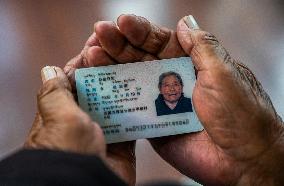
(240329) -- LHASA, March 29, 2024 (Xinhua) -- This photo taken on March 13, 2024 shows the ID card of Sichod Wangmo. Sichod Wangmo, 85, is a resident of Jiagen Village in Damxung County of Lhasa, southwest China's Xizang Autonomous Region. In old Xizang, Sichod Wangmo was a serf. Her mother passed away when she was very young. Young Sichod Wangmo made a living with her grandma by pasturing for a serf owner. They didn't have their own cattle and sheep, but they still needed to pay various taxes which were too high for them to afford. In March 1959, people in Xizang launched the democratic reform that ended the region's feudal serfdom. Sichod Wangmo felt her life was turning on a new page since she was allocated five yaks by the government. Now, Sichod Wangmo's family has grown into a big one with four generations of over 100 members. This year, Sichod Wangmo's family members came together for a reunion to celebrate the Tibetan New Year in Jiagen Village. Surrounded by her loved ones, Sichod Wangmo c

  •  
(InXizang)CHINA-XIZANG-FORMER SERF-NEW LIFE-SICHOD WANGMO (CN)

(InXizang)CHINA-XIZANG-FORMER SERF-NEW LIFE-SICHOD WANGMO (CN)

(240329) -- LHASA, March 29, 2024 (Xinhua) -- Sichod Wangmo (C, front) poses for a group photo with her family in Jiagen Village in Damxung County of Lhasa, southwest China's Xizang Autonomous Region, Feb. 10, 2024. Sichod Wangmo, 85, is a resident of Jiagen Village in Damxung County of Lhasa, southwest China's Xizang Autonomous Region. In old Xizang, Sichod Wangmo was a serf. Her mother passed away when she was very young. Young Sichod Wangmo made a living with her grandma by pasturing for a serf owner. They didn't have their own cattle and sheep, but they still needed to pay various taxes which were too high for them to afford. In March 1959, people in Xizang launched the democratic reform that ended the region's feudal serfdom. Sichod Wangmo felt her life was turning on a new page since she was allocated five yaks by the government. Now, Sichod Wangmo's family has grown into a big one with four generations of over 100 members. This year, Sichod Wangmo's family members came together for a reunion

  •  

Bernardo Arevalo sworn in as Guatemalan president

STORY: Bernardo Arevalo sworn in as Guatemalan president SHOOTING TIME: Jan. 15, 2024 DATELINE: Jan. 16, 2024 LENGTH: 00:01:25 LOCATION: Guatemala City CATEGORY: POLITICS SHOTLIST: 1. SOUNDBITE (Spanish): BERNARDO AREVALO, President of Guatemala 2. various of the sworn-in ceremony 3. various of street views in Guatemala City STORYLINE: Bernardo Arevalo was sworn in on Monday minutes after midnight at the National Theater in Guatemala City as the new president of the Central American country for the 2024-2028 term. SOUNDBITE (Spanish): BERNARDO AREVALO, President of Guatemala "This generation of Guatemalans has led as an example of dignity and determination for the generations that will follow us today. Now we can only look to the future with optimism, hope and faith. Our nation, made up of its four peoples, is facing an exceptional and unexpected opportunity to transform the course of our history. Let's take advantage of it and Long Live Guatemala." Bernardo Arevalo won Guatemala's presidential election

  •  
XINHUA-PICTURES OF THE YEAR 2023-CHINA NEWS

XINHUA-PICTURES OF THE YEAR 2023-CHINA NEWS

(240105) -- BEIJING, Jan. 5, 2024 (Xinhua) -- Children and grandchildren of Tseten celebrate a traditional festival at their home in Lhaze County, southwest China's Xizang Autonomous Region, Jan. 22, 2023. Born in 1943, Tseten was a "Tralpa" (serf) before the campaign of democratic reform in Xizang. In March 1959, democratic reform was launched in Xizang and feudal serfdom was finally abolished. Nowadays, 11 members of four generations of Tseten's family live in plenty in their newly-built two-story house. (Xinhua/Sun Fei)

  •  

Chinese micro-carving master creates incredible works of art

STORY: Chinese micro-carving master creates incredible works of art DATELINE: Aug. 3, 2023 LENGTH: 00:00:16 LOCATION: CHONGQING, China CATEGORY: CULTURE SHOTLIST: 1. various of Pan Qihui and his masterpieces STORYLINE: Pan Qihui is an intangible cultural heritage inheritor with over 40 years of experience in miniature sculpture that employs materials as gold, jade, porcelain, and even hair to create exquisite mini-artworks. In Pan's masterpiece "Pipa Xing," he carved the long narrative poem "Pipa Xing" on four human hairs, which are used as strings in a mini Pipa, a kind of traditional Chinese instrument. Pan also recreated a mini version of the celebrated Chinese picture "Along the River During the Qingming Festival," with the entire length of the work being about 5 centimeters. In 2018, Pan was granted the title of master of Chinese arts and crafts. Now, Pan is trying his best to pass down his skills to younger generations. Xinhua News Agency correspondents reporting from Chongqing, China. (XHTV)

  •  
CHINA-FUJIAN-FUZHOU-DRAGON BOAT PRODUCTION (CN)

CHINA-FUJIAN-FUZHOU-DRAGON BOAT PRODUCTION (CN)

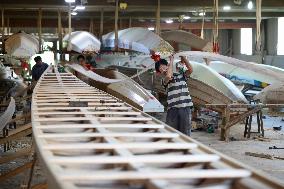
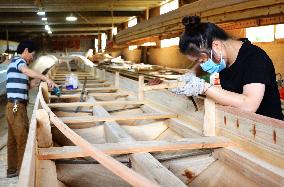
(230615) -- FUZHOU, June 15, 2023 (Xinhua) -- Craftsmen make a dragon boat in Fangzhuang Village, Minhou County, Fuzhou City, southeast China's Fujian Province, June 12, 2023. With the approaching of Dragon Boat Festival, craftsmen in Fangzhuang Village of Minhou County, Fuzhou City of southeast China's Fujian Province, have become increasingly busy. The village's four large dragon boat factories are working tirelessly to fulfill their orders for the upcoming festival. Each year, over 200 dragon boats are sold from here to various parts of China and countries like Japan, Singapore and the United States. Fangzhuang has a rich history of shipbuilding dating back to the Ming Dynasty (1368-1644). Later generations saw the business opportunities presented by dragon boats and began designing and manufacturing traditional Fuzhou-style dragon boats themselves. During its heyday in the 1970s, there were twelve shipyards in the village with hundreds of employees. Making a dragon boat requires several steps incl

  •  
CHINA-FUJIAN-FUZHOU-DRAGON BOAT PRODUCTION (CN)

CHINA-FUJIAN-FUZHOU-DRAGON BOAT PRODUCTION (CN)

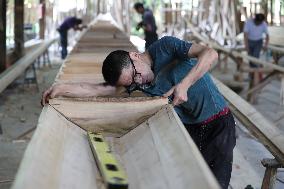
(230615) -- FUZHOU, June 15, 2023 (Xinhua) -- Fang Shaohuang, a local intangible cultural heritage inheritor, checks a traditional dragon boat in Fangzhuang Village, Minhou County, Fuzhou City, southeast China's Fujian Province, May 23, 2023. With the approaching of Dragon Boat Festival, craftsmen in Fangzhuang Village of Minhou County, Fuzhou City of southeast China's Fujian Province, have become increasingly busy. The village's four large dragon boat factories are working tirelessly to fulfill their orders for the upcoming festival. Each year, over 200 dragon boats are sold from here to various parts of China and countries like Japan, Singapore and the United States. Fangzhuang has a rich history of shipbuilding dating back to the Ming Dynasty (1368-1644). Later generations saw the business opportunities presented by dragon boats and began designing and manufacturing traditional Fuzhou-style dragon boats themselves. During its heyday in the 1970s, there were twelve shipyards in the village with hundre

  •  
CHINA-FUJIAN-FUZHOU-DRAGON BOAT PRODUCTION (CN)

CHINA-FUJIAN-FUZHOU-DRAGON BOAT PRODUCTION (CN)

(230615) -- FUZHOU, June 15, 2023 (Xinhua) -- Craftsmen make a dragon boat in Fangzhuang Village, Minhou County, Fuzhou City, southeast China's Fujian Province, May 23, 2023. With the approaching of Dragon Boat Festival, craftsmen in Fangzhuang Village of Minhou County, Fuzhou City of southeast China's Fujian Province, have become increasingly busy. The village's four large dragon boat factories are working tirelessly to fulfill their orders for the upcoming festival. Each year, over 200 dragon boats are sold from here to various parts of China and countries like Japan, Singapore and the United States. Fangzhuang has a rich history of shipbuilding dating back to the Ming Dynasty (1368-1644). Later generations saw the business opportunities presented by dragon boats and began designing and manufacturing traditional Fuzhou-style dragon boats themselves. During its heyday in the 1970s, there were twelve shipyards in the village with hundreds of employees. Making a dragon boat requires several steps inclu

  •  
CHINA-FUJIAN-FUZHOU-DRAGON BOAT PRODUCTION (CN)

CHINA-FUJIAN-FUZHOU-DRAGON BOAT PRODUCTION (CN)

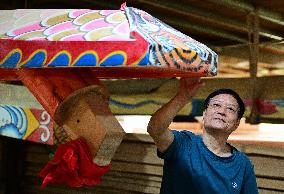
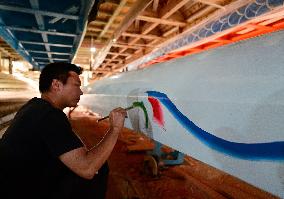
(230615) -- FUZHOU, June 15, 2023 (Xinhua) -- A craftsman paints a dragon boat in Fangzhuang Village, Minhou County, Fuzhou City, southeast China's Fujian Province, May 23, 2023. With the approaching of Dragon Boat Festival, craftsmen in Fangzhuang Village of Minhou County, Fuzhou City of southeast China's Fujian Province, have become increasingly busy. The village's four large dragon boat factories are working tirelessly to fulfill their orders for the upcoming festival. Each year, over 200 dragon boats are sold from here to various parts of China and countries like Japan, Singapore and the United States. Fangzhuang has a rich history of shipbuilding dating back to the Ming Dynasty (1368-1644). Later generations saw the business opportunities presented by dragon boats and began designing and manufacturing traditional Fuzhou-style dragon boats themselves. During its heyday in the 1970s, there were twelve shipyards in the village with hundreds of employees. Making a dragon boat requires several steps i

  •  
CHINA-FUJIAN-FUZHOU-DRAGON BOAT PRODUCTION (CN)

CHINA-FUJIAN-FUZHOU-DRAGON BOAT PRODUCTION (CN)

(230615) -- FUZHOU, June 15, 2023 (Xinhua) -- Craftsmen make a dragon boat in Fangzhuang Village, Minhou County, Fuzhou City, southeast China's Fujian Province, June 12, 2023. With the approaching of Dragon Boat Festival, craftsmen in Fangzhuang Village of Minhou County, Fuzhou City of southeast China's Fujian Province, have become increasingly busy. The village's four large dragon boat factories are working tirelessly to fulfill their orders for the upcoming festival. Each year, over 200 dragon boats are sold from here to various parts of China and countries like Japan, Singapore and the United States. Fangzhuang has a rich history of shipbuilding dating back to the Ming Dynasty (1368-1644). Later generations saw the business opportunities presented by dragon boats and began designing and manufacturing traditional Fuzhou-style dragon boats themselves. During its heyday in the 1970s, there were twelve shipyards in the village with hundreds of employees. Making a dragon boat requires several steps incl

  • Main
  • Top
  • Editorial
  • Creative
  • About Us
  • About ILG
  • Terms of use
  • Company
  • BEHIND
  • Price List
  • Single Plan
  • Monthly Plan
  • Services
  • Shooting
  • Rights Clearance
  • Support
  • FAQ
  • How To Buy
  • Contact Us
  • Become a Partner

© KYODO NEWS IMAGES INC

All Rights Reserved.

  • Editorial
  • Olympics
  • News
  • Sports
  • Japan
  • Tech
  • Royal
  • Disaster
  • NorthKorea
  • Old Japan
  • SNS

  • Creative
  • Food
  • Japan
  • Landscape
  • Animal
  • Popular
  • #Ukraine
  • #China
  • #coronavirus
  • #N. Korea
  • #Thailand
  • #Russia
  • #Ukraine
  • #China
  • #coronavirus
  • #N. Korea
  • #Thailand
  • #Russia
  • Food
  • Japan
  • Landscape
  • Animal
  • Olympics
  • News
  • Sports
  • Japan
  • Tech
  • Royal
  • Disaster
  • NorthKorea
  • Old Japan
  • SNS