•  
Hubble Seeks Clusters in Lost Galaxy

Hubble Seeks Clusters in Lost Galaxy

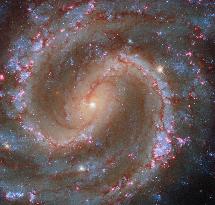
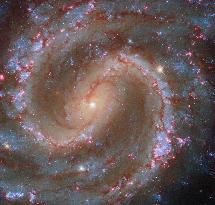
Handout Photo shows NASA/ESA Hubble Space Telescope image features the spiral galaxy NGC 4535, which is situated about 50 million light-years away in the constellation Virgo (the Maiden). Through a small telescope, this galaxy appears extremely faint, giving it the nickname ‘Lost Galaxy’. With a mirror spanning nearly eight feet (2.4 meters) across and its location above Earth’s light-obscuring atmosphere, Hubble can easily observe dim galaxies like NGC 4535 and pick out features like its massive spiral arms and central bar of stars. This image features NGC 4535’s young star clusters, which dot the galaxy’s spiral arms. Glowing-pink clouds surround many of these bright-blue star groupings. These clouds, called H II (‘H-two’) regions, are a sign that the galaxy is home to especially young, hot, and massive stars that blaze with high-energy radiation. Such massive stars shake up their surroundings by heating their birth clouds with powerful stellar winds, eventually exploding as supernovae. The image incorporat

  •  
Hubble Seeks Clusters in ‘Lost Galaxy’

Hubble Seeks Clusters in ‘Lost Galaxy’

NASA/ESA Hubble Space Telescope image features the spiral galaxy NGC 4535, which is situated about 50 million light-years away in the constellation Virgo (the Maiden). Through a small telescope, this galaxy appears extremely faint, giving it the nickname ‘Lost Galaxy’. With a mirror spanning nearly eight feet (2.4 meters) across and its location above Earth’s light-obscuring atmosphere, Hubble can easily observe dim galaxies like NGC 4535 and pick out features like its massive spiral arms and central bar of stars. This image features NGC 4535’s young star clusters, which dot the galaxy’s spiral arms. Glowing-pink clouds surround many of these bright-blue star groupings. These clouds, called H II (‘H-two’) regions, are a sign that the galaxy is home to especially young, hot, and massive stars that blaze with high-energy radiation. Such massive stars shake up their surroundings by heating their birth clouds with powerful stellar winds, eventually exploding as supernovae. The image incorporates data from an obse

  •  
Webb Reveals Sombrero Galaxy's Hidden Details

Webb Reveals Sombrero Galaxy's Hidden Details

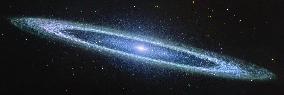
Handout photo dated November 25, 2024 shows NASA’s James Webb Space Telescope recently imaged the Sombrero Galaxy with its MIRI (Mid-Infrared Instrument), resolving the clumpy nature of the dust along the galaxy’s outer ring. NASA’s James Webb Space Telescope captures the Sombrero Galaxy (Messier 104) in stunning mid-infrared detail. This oblong galaxy, named for its resemblance to a wide-brimmed hat, reveals intricate clumps of dust along its outer ring, illuminated in shades of blue and white. Speckles of stars scatter its inner disk, while distant galaxies dot the black cosmic canvas in the background. The new image, taken with Webb's MIRI instrument, offers unprecedented insight into the galaxy’s structure and the faint traces of young star-forming regions. November 25, 2024. Photo by NASA via ABACAPRESS.COM

  •  
Webb Reveals Sombrero Galaxy's Hidden Details

Webb Reveals Sombrero Galaxy's Hidden Details

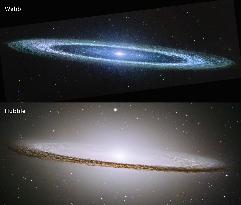
Handout photo dated November 25, 2024 shows the view of the famous Sombrero Galaxy in mid-infrared light (top) and visible light (bottom). The James Webb Space Telescope’s MIRI (Mid-Infrared Instrument) reveals the smooth inner disk of the galaxy, while the Hubble Space Telescope’s visible-light image shows the large and extended glow of the central bulge of stars. NASA’s James Webb Space Telescope captures the Sombrero Galaxy (Messier 104) in stunning mid-infrared detail. This oblong galaxy, named for its resemblance to a wide-brimmed hat, reveals intricate clumps of dust along its outer ring, illuminated in shades of blue and white. Speckles of stars scatter its inner disk, while distant galaxies dot the black cosmic canvas in the background. The new image, taken with Webb's MIRI instrument, offers unprecedented insight into the galaxy’s structure and the faint traces of young star-forming regions. November 25, 2024. Photo by NASA via ABACAPRESS.COM

  •  
James Webb Telescope Finds Most Distant Known Galaxy

James Webb Telescope Finds Most Distant Known Galaxy

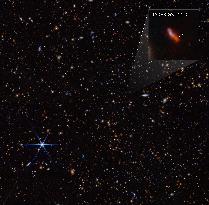
Handout infrared image from NASA’s James Webb Space Telescope (also called Webb or JWST) was taken by the NIRCam (Near-Infrared Camera) for the JWST Advanced Deep Extragalactic Survey, or JADES, program. The NIRCam data was used to determine which galaxies to study further with spectroscopic observations. One such galaxy, JADES-GS-z14-0 (shown in the pullout), was determined to be at a redshift of 14.32 (+0.08/-0.20), making it the current record-holder for the most distant known galaxy. This corresponds to a time less than 300 million years after the big bang. In the background image, blue represents light at 0.9, 1.15, and 1.5 microns (filters F090W + F115W + F150W), green is 2.0 and 2.77 microns (F200W + F277W), and red is 3.56, 4.1, and 4.44 microns (F356W + F410M + F444W). The pullout image shows light at 0.9 and 1.15 microns (F090W + F115W) as blue, 1.5 and 2.0 microns (F150W + F200W) as green, and 2.77 microns (F277W) as red. Photo by Nasa via ABACAPRESS.COM

  •  
EUROPEAN SPACE AGENCY-EUCLID-TELESCOPE-IMAGES

EUROPEAN SPACE AGENCY-EUCLID-TELESCOPE-IMAGES

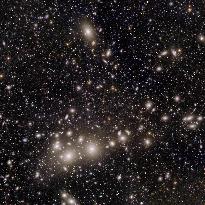
(231108) -- PARIS, Nov. 8, 2023 (Xinhua) -- This image provided by the European Space Agency on Nov. 7, 2023 shows the space telescope Euclid's view of the Perseus cluster of galaxies. The European Space Agency released Euclid's first photos on Tuesday. (European Space Agency hand out via Xinhua)(ESA/Euclid/Euclid Consortium/NASA, image processing by J.-C. Cuillandre (CEA Paris-Saclay), G. Anselmi, CC BY-SA 3.0 IGO)

  •  
Stunning First Full-Colour Images From Euclid Telescope

Stunning First Full-Colour Images From Euclid Telescope

HANDOUT - The Perseus Cluster of galaxies. The European Space Agency's (ESA) Euclid space mission unveiled its first five full-colour images of the cosmos on Tuesday, November 7, 2023. Launched in July, Euclid is a cutting-edge telescope tasked with mapping a third of the extragalactic sky, shedding light on how dark matter and dark energy shape our universe. This ambitious mission is unique in its ability to capture razor-sharp astronomical images across a vast expanse of the sky, offering unprecedented insights into the far reaches of the universe. The initial set of images serves as a testament to Euclid's unparalleled capability to construct the most extensive 3D map of the universe to date. Among the images, the most captivating is a panoramic view of the Horsehead Nebula, also known as Barnard 33, situated in the Orion constellation approximately 1,375 light-years away. The nebula, with its striking equine shape, stands as the nearest giant star-forming region to Earth. Positioned just south of the prom

  •  
National Science Popularization Day

National Science Popularization Day

ZHANGYE, CHINA - SEPTEMBER 18, 2023 - Volunteers teach primary school students about galaxies in Zhangye city, Gansu province, China, Sept 18, 2023.

  •  
National Science Popularization Day

National Science Popularization Day

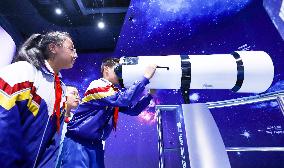
ZHANGYE, CHINA - SEPTEMBER 18, 2023 - Primary school students use an astronomical telescope to observe galaxies in Zhangye city, Gansu province, China, Sept 18, 2023.

  •  
Japan astronomer urges galaxy observation in Antarctica

Japan astronomer urges galaxy observation in Antarctica

TOKYO, Japan - Naomasa Nakai, a professor at Tsukuba University northeast of Tokyo and leading expert on black holes, poses in this file photo taken on Oct. 24, 2014. He is calling for astronomical observations in Antarctica to find facts about galaxies.

  •  

Towns in U.S. West embrace starlight to pursue "dark sky economy"

STORY: Towns in U.S. West embrace starlight to pursue "dark sky economy" DATELINE: Nov. 12, 2022 LENGTH: 00:01:45 LOCATION: FLAGSTAFF, U.S. CATEGORY: SOCIETY SHOTLIST: 1. various of the interior of Lowell Observatory 2. various of tourists at Lowell Observatory STORYLINE: Championed by dark sky advocates and bolstered by economic incentives, towns and parks around the U.S. West are making strides to preserve night sky views. Flagstaff, a city of Arizona with some 80,000 residents, has achieved worldwide recognition for innovative leadership in the protection of dark skies back IN the 1950s. On Oct. 24, 2001, it was recognized as the world's First International Dark Sky City. The certification spurred wonder, economic development and employment as tourists visit the city, surrounded by mountains, desert and ponderosa pine forests, and especially Mars Hill, where astronomer Vesto Slipher first discovered information about the velocity of galaxies from 1912 to 1914, and Clyde Tombaugh discovered Pluto in 19

  •  
U.S.-GREENBELT-JAMES WEBB SPACE TELESCOPE-UNIVERSE-FIRST FULL-COLOR IMAGES

U.S.-GREENBELT-JAMES WEBB SPACE TELESCOPE-UNIVERSE-FIRST FULL-COLOR IMAGES

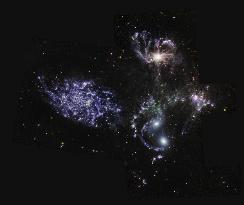
(220712) -- GREENBELT (U.S.), July 12, 2022 (Xinhua) -- Image released by NASA on July 12, 2022 shows Stephan's Quintet, a collection of five galaxies, as seen by MIRI from James Webb Space Telescope. NASA released James Webb Space Telescope's first full-color images of the universe and their spectroscopic data on Tuesday, revealing the unprecedented and detailed views of the universe. (NASA, ESA, CSA, STScI/Handout via Xinhua)

  •  
U.S.-GREENBELT-JAMES WEBB SPACE TELESCOPE-UNIVERSE-FIRST FULL-COLOR IMAGES

U.S.-GREENBELT-JAMES WEBB SPACE TELESCOPE-UNIVERSE-FIRST FULL-COLOR IMAGES

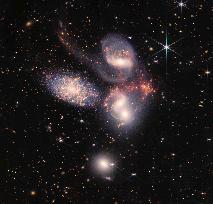
(220712) -- GREENBELT (U.S.), July 12, 2022 (Xinhua) -- Image released by NASA on July 12, 2022 shows Stephan's Quintet, a group of five galaxies that appear close to each other in the sky: two in the middle, one toward the top, one to the upper left, and one toward the bottom. NASA released James Webb Space Telescope's first full-color images of the universe and their spectroscopic data on Tuesday, revealing the unprecedented and detailed views of the universe. (NASA, ESA, CSA, STScI/Handout via Xinhua)

  •  
U.S.-JAMES WEBB SPACE TELESCOPE-FIRST IMAGE

U.S.-JAMES WEBB SPACE TELESCOPE-FIRST IMAGE

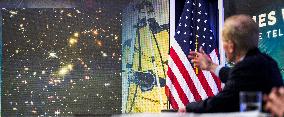
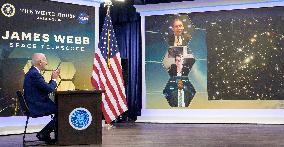
(220712) -- WASHINGTON, D.C., July 12, 2022 (Xinhua) -- U.S. President Joe Biden (2nd L) attends a preview event to release one of the James Webb Space Telescope's first images at the White House in Washington, D.C., the United States, July 11, 2022. U.S. President Joe Biden released one of the James Webb Space Telescope's first images in a preview event at the White House on Monday. This first image from Webb is the deepest and sharpest infrared image of the distant universe to date, NASA said. This image of galaxy cluster SMACS 0723 is filled with thousands of galaxies, including the faintest objects ever observed in the infrared, which have appeared in Webb's view for the first time, said NASA. (NASA/Bill Ingalls/Handout via Xinhua)

  •  
U.S.-JAMES WEBB SPACE TELESCOPE-FIRST IMAGE

U.S.-JAMES WEBB SPACE TELESCOPE-FIRST IMAGE

(220712) -- WASHINGTON, D.C., July 12, 2022 (Xinhua) -- NASA Administrator Bill Nelson describes the first image from the James Webb Space Telescope at the White House in Washington, D.C., the United States, July 11, 2022. U.S. President Joe Biden released one of the James Webb Space Telescope's first images in a preview event at the White House on Monday. This first image from Webb is the deepest and sharpest infrared image of the distant universe to date, NASA said. This image of galaxy cluster SMACS 0723 is filled with thousands of galaxies, including the faintest objects ever observed in the infrared, which have appeared in Webb's view for the first time, said NASA. (NASA/Bill Ingalls/Handout via Xinhua)

  •  
U.S.-JAMES WEBB SPACE TELESCOPE-FIRST IMAGE

U.S.-JAMES WEBB SPACE TELESCOPE-FIRST IMAGE

(220712) -- WASHINGTON, D.C., July 12, 2022 (Xinhua) -- U.S. President Joe Biden attends a preview event to release one of the James Webb Space Telescope's first images at the White House in Washington, D.C., the United States, July 11, 2022. U.S. President Joe Biden released one of the James Webb Space Telescope's first images in a preview event at the White House on Monday. This first image from Webb is the deepest and sharpest infrared image of the distant universe to date, NASA said. This image of galaxy cluster SMACS 0723 is filled with thousands of galaxies, including the faintest objects ever observed in the infrared, which have appeared in Webb's view for the first time, said NASA. (NASA/Bill Ingalls/Handout via Xinhua)

  •  
U.S.-JAMES WEBB SPACE TELESCOPE-FIRST IMAGE

U.S.-JAMES WEBB SPACE TELESCOPE-FIRST IMAGE

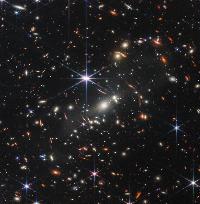
(220712) -- WASHINGTON, D.C., July 12, 2022 (Xinhua) -- Image released by NASA on July 11, 2022 shows galaxy cluster SMACS 0723, captured by the James Webb Space Telescope. U.S. President Joe Biden released one of the James Webb Space Telescope's first images in a preview event at the White House on Monday. This first image from Webb is the deepest and sharpest infrared image of the distant universe to date, NASA said. This image of galaxy cluster SMACS 0723 is filled with thousands of galaxies, including the faintest objects ever observed in the infrared, which have appeared in Webb's view for the first time, said NASA. (NASA/ESA/CSA/STScI/Handout via Xinhua)

  •  
NASA Delays The James Webb Space Telescope Launch Again

NASA Delays The James Webb Space Telescope Launch Again

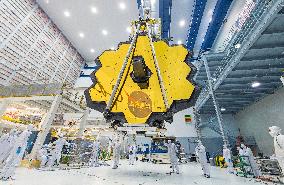
★Handout photo dated April 25, 2017 of In this photo, NASA technicians lifted the telescope using a crane and moved it inside a clean room at NASAs Goddard Space Flight Center in Greenbelt, Maryland. Once launched into space, the Webb telescopes 18-segmented gold mirror is specially designed to capture infrared light from the first galaxies that formed in the early universe, and will help the telescope peer inside dust clouds where stars and planetary systems are forming today. Last summer, NASA and the European Space Agency (ESA) set an October 31, 2021, launch date for the $ 10 billion James Webb Space Telescope, but it's having to delay the science observatory's trip into space once again. Thankfully, the launch might take place just a few weeks later, in November or early December. A rescheduled date is unlikely to be confirmed until later this summer or perhaps in the fall. The instr

  •  
NASA Delays The James Webb Space Telescope Launch Again

NASA Delays The James Webb Space Telescope Launch Again

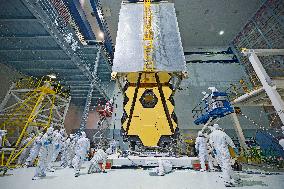
★Handout photo dated November 30, 2016 of what looks like a teleporter from science fiction being draped over NASA's James Webb Space Telescope, is actually a "clean tent." The clean tent protects Webb from dust and dirt when engineers at NASA's Goddard Space Flight Center in Greenbelt, Maryland transport the next generation space telescope out of the relatively dust-free cleanroom and into the shirtsleeve environment of the vibration and acoustics testing areas. In two years, a rocket will be the transporter that carries the Webb into space so it can orbit one million miles from Earth and peer back over 13.5 billion years to see the first stars and galaxies forming out of the darkness of the early universe. Last summer, NASA and the European Space Agency (ESA) set an October 31, 2021, launch date for the $ 10 billion James Webb Space Telescope, but it's having to delay the science observ

  •  
Japan launches H-2A rocket carrying astronomy satellite

Japan launches H-2A rocket carrying astronomy satellite

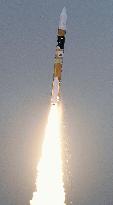
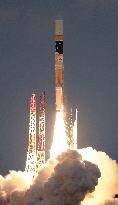
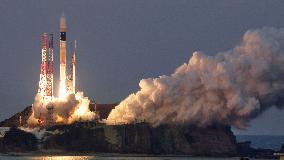
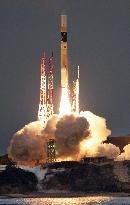
An H-2A rocket carrying an X-ray astronomy satellite is successfully launched from the Tanegashima Space Center in Kagoshima Prefecture, southwestern Japan on Feb. 17, 2016. Scientists hope to observe distant black holes and galaxies with the satellite to study the mysteries surrounding the evolution of the universe. (Kyodo) ==Kyodo

  •  
Japan launches H-2A rocket carrying astronomy satellite

Japan launches H-2A rocket carrying astronomy satellite

An H-2A rocket carrying an X-ray astronomy satellite is successfully launched from the Tanegashima Space Center in Kagoshima Prefecture, southwestern Japan on Feb. 17, 2016. Scientists hope to observe distant black holes and galaxies with the satellite to study the mysteries surrounding the evolution of the universe. (Kyodo) ==Kyodo

  •  
Japan launches H-2A rocket carrying astronomy satellite

Japan launches H-2A rocket carrying astronomy satellite

An H-2A rocket carrying an X-ray astronomy satellite is successfully launched from the Tanegashima Space Center in Kagoshima Prefecture, southwestern Japan on Feb. 17, 2016. Scientists hope to observe distant black holes and galaxies with the satellite to study the mysteries surrounding the evolution of the universe. (Kyodo) ==Kyodo

  •  
Japan launches H-2A rocket carrying astronomy satellite

Japan launches H-2A rocket carrying astronomy satellite

An H-2A rocket carrying an X-ray astronomy satellite is successfully launched from the Tanegashima Space Center in Kagoshima Prefecture, southwestern Japan on Feb. 17, 2016. Scientists hope to observe distant black holes and galaxies with the satellite to study the mysteries surrounding the evolution of the universe. (Kyodo) ==Kyodo

  •  
Japan astronomer urges galaxy observation in Antarctica

Japan astronomer urges galaxy observation in Antarctica

TOKYO, Japan - Naomasa Nakai, a professor at Tsukuba University northeast of Tokyo and leading expert on black holes, poses in this file photo taken on Oct. 24, 2014. He is calling for astronomical observations in Antarctica to find facts about galaxies. (Kyodo)

  •  
Huge Chilean radio telescope to seek new planets, galaxies

Huge Chilean radio telescope to seek new planets, galaxies

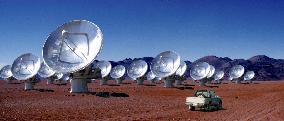
TOKYO, Japan - A graphics released April 4 by the National Astronomical Observatory of Japan (NAOJ) shows a high-altitude radio telescope which scientists from Japan, Europe and North America agreed to build in Chile. The Atacama Large Millimeter/Submillimeter Array (ALMA), the largest of its kind in the world, will mainly consist of 64 moveable 12-meter-diameter dishes distributed in a circle 10 kilometers in diameter.

  • Main
  • Top
  • Editorial
  • Creative
  • About Us
  • About ILG
  • Terms of use
  • Company
  • BEHIND
  • Price List
  • Single Plan
  • Monthly Plan
  • Services
  • Shooting
  • Rights Clearance
  • Support
  • FAQ
  • How To Buy
  • Contact Us
  • Become a Partner

© KYODO NEWS IMAGES INC

All Rights Reserved.

  • Editorial
  • Olympics
  • News
  • Sports
  • Japan
  • Tech
  • Royal
  • Disaster
  • NorthKorea
  • Old Japan
  • SNS
  • Creative
  • Food
  • Japan
  • Landscape
  • Animal
  • Popular
  • #Ukraine
  • #China
  • #coronavirus
  • #N. Korea
  • #Russia
  • #Thailand
  • #Ukraine
  • #China
  • #coronavirus
  • #N. Korea
  • #Russia
  • #Thailand
  • Food
  • Japan
  • Landscape
  • Animal
  • Olympics
  • News
  • Sports
  • Japan
  • Tech
  • Royal
  • Disaster
  • NorthKorea
  • Old Japan
  • SNS