•  
October 2025, the Third Warmest October on Record

October 2025, the Third Warmest October on Record

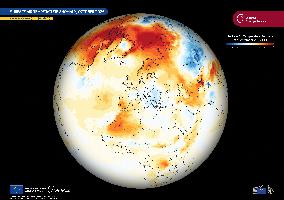
Handout photo dated on 2025 shows The Copernicus Climate Change Service (C3S) has published its latest monthly Climate Bulletin, which focuses on key climate trends in October 2025. The bulletin reports that October 2025 was the third-warmest October globally, with an average surface air temperature of 15.14°C, 0.70°C above the 1991-2020 average for the month. This data visualisation, produced using C3S data, illustrates the surface air temperature anomalies across part of the Northern Hemisphere in October 2025. Warmer-than-average temperatures have been observed over much of northern and western Europe, where the average temperature was 10.19°C, 0.60°C above the average for the month. The Arctic Ocean northeast of Svalbard and the Canadian Arctic Archipelago have also been particularly affected, with surface air temperature anomalies reaching up to 8 °C above average. Photo by European Union, Copernicus Climate Change Service Data via ABACAPRESS.COM

  •  
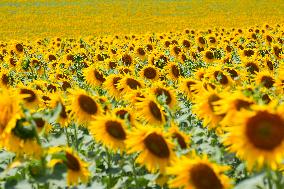
Sunflower Field Illustrations - Spain

Sunflower Field Illustrations - Spain

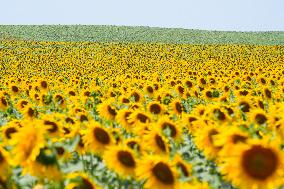
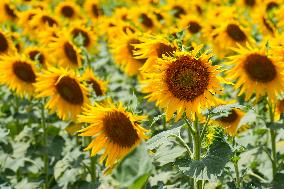
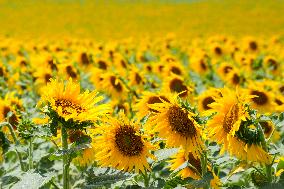
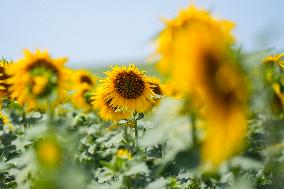
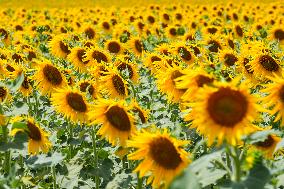
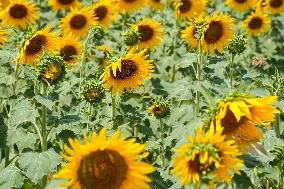
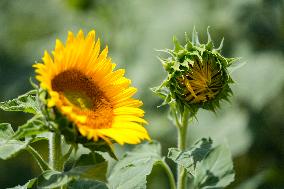
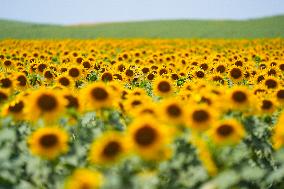
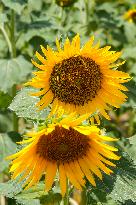
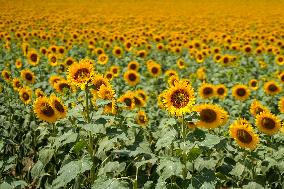
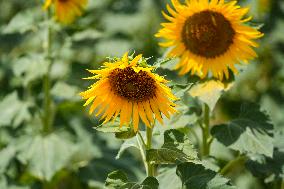
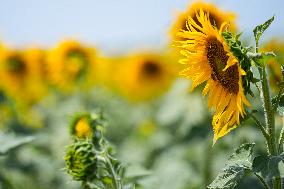
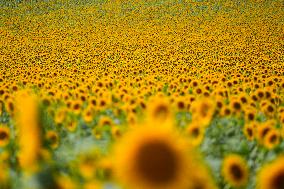
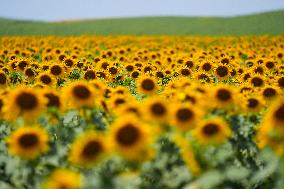
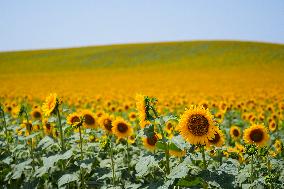
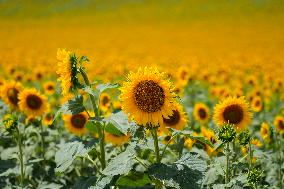
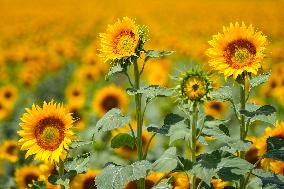
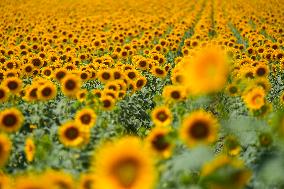
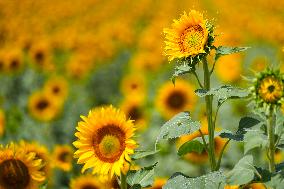
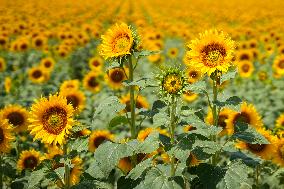
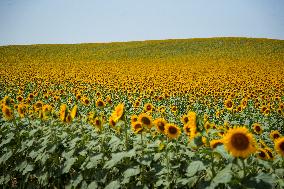
Images of a field of sunflowers in bloom in the Sevillian town of Sanlucar la Mayor, on June 20, 2025, in Seville, Andalusia, Spain. This Saturday, June 21, at 2 hours 42 minutes UTC, according to calculations by the National Astronomical Observatory, the summer solstice will occur, a phenomenon in which the Sun reaches its maximum declination projecting its light over the maximum geographic latitude on Earth. This astronomical event starts the summer in the northern hemisphere and the winter in the southern hemisphere. In addition, the day of the summer solstice corresponds to the longest day of the year, since it is the day on which the Sun rises the earliest and the day on which it sets the latest. Photo by Joaquin Corchero/Europa Press/ABACAPRESS.COM

  •  
Sunflower Field Illustrations - Spain

Sunflower Field Illustrations - Spain

Images of a field of sunflowers in bloom in the Sevillian town of Sanlucar la Mayor, on June 20, 2025, in Seville, Andalusia, Spain. This Saturday, June 21, at 2 hours 42 minutes UTC, according to calculations by the National Astronomical Observatory, the summer solstice will occur, a phenomenon in which the Sun reaches its maximum declination projecting its light over the maximum geographic latitude on Earth. This astronomical event starts the summer in the northern hemisphere and the winter in the southern hemisphere. In addition, the day of the summer solstice corresponds to the longest day of the year, since it is the day on which the Sun rises the earliest and the day on which it sets the latest. Photo by Joaquin Corchero/Europa Press/ABACAPRESS.COM

  •  
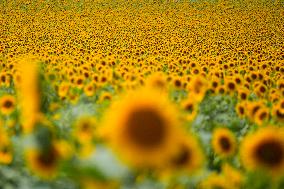
Sunflower Field Illustrations - Spain

Sunflower Field Illustrations - Spain

Images of a field of sunflowers in bloom in the Sevillian town of Sanlucar la Mayor, on June 20, 2025, in Seville, Andalusia, Spain. This Saturday, June 21, at 2 hours 42 minutes UTC, according to calculations by the National Astronomical Observatory, the summer solstice will occur, a phenomenon in which the Sun reaches its maximum declination projecting its light over the maximum geographic latitude on Earth. This astronomical event starts the summer in the northern hemisphere and the winter in the southern hemisphere. In addition, the day of the summer solstice corresponds to the longest day of the year, since it is the day on which the Sun rises the earliest and the day on which it sets the latest. Photo by Joaquin Corchero/Europa Press/ABACAPRESS.COM

  •  
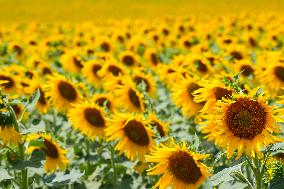
Sunflower Field Illustrations - Spain

Sunflower Field Illustrations - Spain

Images of a field of sunflowers in bloom in the Sevillian town of Sanlucar la Mayor, on June 20, 2025, in Seville, Andalusia, Spain. This Saturday, June 21, at 2 hours 42 minutes UTC, according to calculations by the National Astronomical Observatory, the summer solstice will occur, a phenomenon in which the Sun reaches its maximum declination projecting its light over the maximum geographic latitude on Earth. This astronomical event starts the summer in the northern hemisphere and the winter in the southern hemisphere. In addition, the day of the summer solstice corresponds to the longest day of the year, since it is the day on which the Sun rises the earliest and the day on which it sets the latest. Photo by Joaquin Corchero/Europa Press/ABACAPRESS.COM

  •  
Sunflower Field Illustrations - Spain

Sunflower Field Illustrations - Spain

Images of a field of sunflowers in bloom in the Sevillian town of Sanlucar la Mayor, on June 20, 2025, in Seville, Andalusia, Spain. This Saturday, June 21, at 2 hours 42 minutes UTC, according to calculations by the National Astronomical Observatory, the summer solstice will occur, a phenomenon in which the Sun reaches its maximum declination projecting its light over the maximum geographic latitude on Earth. This astronomical event starts the summer in the northern hemisphere and the winter in the southern hemisphere. In addition, the day of the summer solstice corresponds to the longest day of the year, since it is the day on which the Sun rises the earliest and the day on which it sets the latest. Photo by Joaquin Corchero/Europa Press/ABACAPRESS.COM

  •  
Sunflower Field Illustrations - Spain

Sunflower Field Illustrations - Spain

Images of a field of sunflowers in bloom in the Sevillian town of Sanlucar la Mayor, on June 20, 2025, in Seville, Andalusia, Spain. This Saturday, June 21, at 2 hours 42 minutes UTC, according to calculations by the National Astronomical Observatory, the summer solstice will occur, a phenomenon in which the Sun reaches its maximum declination projecting its light over the maximum geographic latitude on Earth. This astronomical event starts the summer in the northern hemisphere and the winter in the southern hemisphere. In addition, the day of the summer solstice corresponds to the longest day of the year, since it is the day on which the Sun rises the earliest and the day on which it sets the latest. Photo by Joaquin Corchero/Europa Press/ABACAPRESS.COM

  •  
Sunflower Field Illustrations - Spain

Sunflower Field Illustrations - Spain

Images of a field of sunflowers in bloom in the Sevillian town of Sanlucar la Mayor, on June 20, 2025, in Seville, Andalusia, Spain. This Saturday, June 21, at 2 hours 42 minutes UTC, according to calculations by the National Astronomical Observatory, the summer solstice will occur, a phenomenon in which the Sun reaches its maximum declination projecting its light over the maximum geographic latitude on Earth. This astronomical event starts the summer in the northern hemisphere and the winter in the southern hemisphere. In addition, the day of the summer solstice corresponds to the longest day of the year, since it is the day on which the Sun rises the earliest and the day on which it sets the latest. Photo by Joaquin Corchero/Europa Press/ABACAPRESS.COM

  •  
Sunflower Field Illustrations - Spain

Sunflower Field Illustrations - Spain

Images of a field of sunflowers in bloom in the Sevillian town of Sanlucar la Mayor, on June 20, 2025, in Seville, Andalusia, Spain. This Saturday, June 21, at 2 hours 42 minutes UTC, according to calculations by the National Astronomical Observatory, the summer solstice will occur, a phenomenon in which the Sun reaches its maximum declination projecting its light over the maximum geographic latitude on Earth. This astronomical event starts the summer in the northern hemisphere and the winter in the southern hemisphere. In addition, the day of the summer solstice corresponds to the longest day of the year, since it is the day on which the Sun rises the earliest and the day on which it sets the latest. Photo by Joaquin Corchero/Europa Press/ABACAPRESS.COM

  •  
Sunflower Field Illustrations - Spain

Sunflower Field Illustrations - Spain

Images of a field of sunflowers in bloom in the Sevillian town of Sanlucar la Mayor, on June 20, 2025, in Seville, Andalusia, Spain. This Saturday, June 21, at 2 hours 42 minutes UTC, according to calculations by the National Astronomical Observatory, the summer solstice will occur, a phenomenon in which the Sun reaches its maximum declination projecting its light over the maximum geographic latitude on Earth. This astronomical event starts the summer in the northern hemisphere and the winter in the southern hemisphere. In addition, the day of the summer solstice corresponds to the longest day of the year, since it is the day on which the Sun rises the earliest and the day on which it sets the latest. Photo by Joaquin Corchero/Europa Press/ABACAPRESS.COM

  •  
Sunflower Field Illustrations - Spain

Sunflower Field Illustrations - Spain

Images of a field of sunflowers in bloom in the Sevillian town of Sanlucar la Mayor, on June 20, 2025, in Seville, Andalusia, Spain. This Saturday, June 21, at 2 hours 42 minutes UTC, according to calculations by the National Astronomical Observatory, the summer solstice will occur, a phenomenon in which the Sun reaches its maximum declination projecting its light over the maximum geographic latitude on Earth. This astronomical event starts the summer in the northern hemisphere and the winter in the southern hemisphere. In addition, the day of the summer solstice corresponds to the longest day of the year, since it is the day on which the Sun rises the earliest and the day on which it sets the latest. Photo by Joaquin Corchero/Europa Press/ABACAPRESS.COM

  •  
Sunflower Field Illustrations - Spain

Sunflower Field Illustrations - Spain

Images of a field of sunflowers in bloom in the Sevillian town of Sanlucar la Mayor, on June 20, 2025, in Seville, Andalusia, Spain. This Saturday, June 21, at 2 hours 42 minutes UTC, according to calculations by the National Astronomical Observatory, the summer solstice will occur, a phenomenon in which the Sun reaches its maximum declination projecting its light over the maximum geographic latitude on Earth. This astronomical event starts the summer in the northern hemisphere and the winter in the southern hemisphere. In addition, the day of the summer solstice corresponds to the longest day of the year, since it is the day on which the Sun rises the earliest and the day on which it sets the latest. Photo by Joaquin Corchero/Europa Press/ABACAPRESS.COM

  •  
Sunflower Field Illustrations - Spain

Sunflower Field Illustrations - Spain

Images of a field of sunflowers in bloom in the Sevillian town of Sanlucar la Mayor, on June 20, 2025, in Seville, Andalusia, Spain. This Saturday, June 21, at 2 hours 42 minutes UTC, according to calculations by the National Astronomical Observatory, the summer solstice will occur, a phenomenon in which the Sun reaches its maximum declination projecting its light over the maximum geographic latitude on Earth. This astronomical event starts the summer in the northern hemisphere and the winter in the southern hemisphere. In addition, the day of the summer solstice corresponds to the longest day of the year, since it is the day on which the Sun rises the earliest and the day on which it sets the latest. Photo by Joaquin Corchero/Europa Press/ABACAPRESS.COM

  •  
Sunflower Field Illustrations - Spain

Sunflower Field Illustrations - Spain

Images of a field of sunflowers in bloom in the Sevillian town of Sanlucar la Mayor, on June 20, 2025, in Seville, Andalusia, Spain. This Saturday, June 21, at 2 hours 42 minutes UTC, according to calculations by the National Astronomical Observatory, the summer solstice will occur, a phenomenon in which the Sun reaches its maximum declination projecting its light over the maximum geographic latitude on Earth. This astronomical event starts the summer in the northern hemisphere and the winter in the southern hemisphere. In addition, the day of the summer solstice corresponds to the longest day of the year, since it is the day on which the Sun rises the earliest and the day on which it sets the latest. Photo by Joaquin Corchero/Europa Press/ABACAPRESS.COM

  •  
Sunflower Field Illustrations - Spain

Sunflower Field Illustrations - Spain

Images of a field of sunflowers in bloom in the Sevillian town of Sanlucar la Mayor, on June 20, 2025, in Seville, Andalusia, Spain. This Saturday, June 21, at 2 hours 42 minutes UTC, according to calculations by the National Astronomical Observatory, the summer solstice will occur, a phenomenon in which the Sun reaches its maximum declination projecting its light over the maximum geographic latitude on Earth. This astronomical event starts the summer in the northern hemisphere and the winter in the southern hemisphere. In addition, the day of the summer solstice corresponds to the longest day of the year, since it is the day on which the Sun rises the earliest and the day on which it sets the latest. Photo by Joaquin Corchero/Europa Press/ABACAPRESS.COM

  •  
Sunflower Field Illustrations - Spain

Sunflower Field Illustrations - Spain

Images of a field of sunflowers in bloom in the Sevillian town of Sanlucar la Mayor, on June 20, 2025, in Seville, Andalusia, Spain. This Saturday, June 21, at 2 hours 42 minutes UTC, according to calculations by the National Astronomical Observatory, the summer solstice will occur, a phenomenon in which the Sun reaches its maximum declination projecting its light over the maximum geographic latitude on Earth. This astronomical event starts the summer in the northern hemisphere and the winter in the southern hemisphere. In addition, the day of the summer solstice corresponds to the longest day of the year, since it is the day on which the Sun rises the earliest and the day on which it sets the latest. Photo by Joaquin Corchero/Europa Press/ABACAPRESS.COM

  •  
Sunflower Field Illustrations - Spain

Sunflower Field Illustrations - Spain

Images of a field of sunflowers in bloom in the Sevillian town of Sanlucar la Mayor, on June 20, 2025, in Seville, Andalusia, Spain. This Saturday, June 21, at 2 hours 42 minutes UTC, according to calculations by the National Astronomical Observatory, the summer solstice will occur, a phenomenon in which the Sun reaches its maximum declination projecting its light over the maximum geographic latitude on Earth. This astronomical event starts the summer in the northern hemisphere and the winter in the southern hemisphere. In addition, the day of the summer solstice corresponds to the longest day of the year, since it is the day on which the Sun rises the earliest and the day on which it sets the latest. Photo by Joaquin Corchero/Europa Press/ABACAPRESS.COM

  •  
Sunflower Field Illustrations - Spain

Sunflower Field Illustrations - Spain

Images of a field of sunflowers in bloom in the Sevillian town of Sanlucar la Mayor, on June 20, 2025, in Seville, Andalusia, Spain. This Saturday, June 21, at 2 hours 42 minutes UTC, according to calculations by the National Astronomical Observatory, the summer solstice will occur, a phenomenon in which the Sun reaches its maximum declination projecting its light over the maximum geographic latitude on Earth. This astronomical event starts the summer in the northern hemisphere and the winter in the southern hemisphere. In addition, the day of the summer solstice corresponds to the longest day of the year, since it is the day on which the Sun rises the earliest and the day on which it sets the latest. Photo by Joaquin Corchero/Europa Press/ABACAPRESS.COM

  •  
Sunflower Field Illustrations - Spain

Sunflower Field Illustrations - Spain

Images of a field of sunflowers in bloom in the Sevillian town of Sanlucar la Mayor, on June 20, 2025, in Seville, Andalusia, Spain. This Saturday, June 21, at 2 hours 42 minutes UTC, according to calculations by the National Astronomical Observatory, the summer solstice will occur, a phenomenon in which the Sun reaches its maximum declination projecting its light over the maximum geographic latitude on Earth. This astronomical event starts the summer in the northern hemisphere and the winter in the southern hemisphere. In addition, the day of the summer solstice corresponds to the longest day of the year, since it is the day on which the Sun rises the earliest and the day on which it sets the latest. Photo by Joaquin Corchero/Europa Press/ABACAPRESS.COM

  •  
Sunflower Field Illustrations - Spain

Sunflower Field Illustrations - Spain

Images of a field of sunflowers in bloom in the Sevillian town of Sanlucar la Mayor, on June 20, 2025, in Seville, Andalusia, Spain. This Saturday, June 21, at 2 hours 42 minutes UTC, according to calculations by the National Astronomical Observatory, the summer solstice will occur, a phenomenon in which the Sun reaches its maximum declination projecting its light over the maximum geographic latitude on Earth. This astronomical event starts the summer in the northern hemisphere and the winter in the southern hemisphere. In addition, the day of the summer solstice corresponds to the longest day of the year, since it is the day on which the Sun rises the earliest and the day on which it sets the latest. Photo by Joaquin Corchero/Europa Press/ABACAPRESS.COM

  •  
Sunflower Field Illustrations - Spain

Sunflower Field Illustrations - Spain

Images of a field of sunflowers in bloom in the Sevillian town of Sanlucar la Mayor, on June 20, 2025, in Seville, Andalusia, Spain. This Saturday, June 21, at 2 hours 42 minutes UTC, according to calculations by the National Astronomical Observatory, the summer solstice will occur, a phenomenon in which the Sun reaches its maximum declination projecting its light over the maximum geographic latitude on Earth. This astronomical event starts the summer in the northern hemisphere and the winter in the southern hemisphere. In addition, the day of the summer solstice corresponds to the longest day of the year, since it is the day on which the Sun rises the earliest and the day on which it sets the latest. Photo by Joaquin Corchero/Europa Press/ABACAPRESS.COM

  •  
Sunflower Field Illustrations - Spain

Sunflower Field Illustrations - Spain

Images of a field of sunflowers in bloom in the Sevillian town of Sanlucar la Mayor, on June 20, 2025, in Seville, Andalusia, Spain. This Saturday, June 21, at 2 hours 42 minutes UTC, according to calculations by the National Astronomical Observatory, the summer solstice will occur, a phenomenon in which the Sun reaches its maximum declination projecting its light over the maximum geographic latitude on Earth. This astronomical event starts the summer in the northern hemisphere and the winter in the southern hemisphere. In addition, the day of the summer solstice corresponds to the longest day of the year, since it is the day on which the Sun rises the earliest and the day on which it sets the latest. Photo by Joaquin Corchero/Europa Press/ABACAPRESS.COM

  •  
Sunflower Field Illustrations - Spain

Sunflower Field Illustrations - Spain

Images of a field of sunflowers in bloom in the Sevillian town of Sanlucar la Mayor, on June 20, 2025, in Seville, Andalusia, Spain. This Saturday, June 21, at 2 hours 42 minutes UTC, according to calculations by the National Astronomical Observatory, the summer solstice will occur, a phenomenon in which the Sun reaches its maximum declination projecting its light over the maximum geographic latitude on Earth. This astronomical event starts the summer in the northern hemisphere and the winter in the southern hemisphere. In addition, the day of the summer solstice corresponds to the longest day of the year, since it is the day on which the Sun rises the earliest and the day on which it sets the latest. Photo by Joaquin Corchero/Europa Press/ABACAPRESS.COM

  •  
Sunflower Field Illustrations - Spain

Sunflower Field Illustrations - Spain

Images of a field of sunflowers in bloom in the Sevillian town of Sanlucar la Mayor, on June 20, 2025, in Seville, Andalusia, Spain. This Saturday, June 21, at 2 hours 42 minutes UTC, according to calculations by the National Astronomical Observatory, the summer solstice will occur, a phenomenon in which the Sun reaches its maximum declination projecting its light over the maximum geographic latitude on Earth. This astronomical event starts the summer in the northern hemisphere and the winter in the southern hemisphere. In addition, the day of the summer solstice corresponds to the longest day of the year, since it is the day on which the Sun rises the earliest and the day on which it sets the latest. Photo by Joaquin Corchero/Europa Press/ABACAPRESS.COM

  •  
Sunflower Field Illustrations - Spain

Sunflower Field Illustrations - Spain

Images of a field of sunflowers in bloom in the Sevillian town of Sanlucar la Mayor, on June 20, 2025, in Seville, Andalusia, Spain. This Saturday, June 21, at 2 hours 42 minutes UTC, according to calculations by the National Astronomical Observatory, the summer solstice will occur, a phenomenon in which the Sun reaches its maximum declination projecting its light over the maximum geographic latitude on Earth. This astronomical event starts the summer in the northern hemisphere and the winter in the southern hemisphere. In addition, the day of the summer solstice corresponds to the longest day of the year, since it is the day on which the Sun rises the earliest and the day on which it sets the latest. Photo by Joaquin Corchero/Europa Press/ABACAPRESS.COM

  •  
Sunflower Field Illustrations - Spain

Sunflower Field Illustrations - Spain

Images of a field of sunflowers in bloom in the Sevillian town of Sanlucar la Mayor, on June 20, 2025, in Seville, Andalusia, Spain. This Saturday, June 21, at 2 hours 42 minutes UTC, according to calculations by the National Astronomical Observatory, the summer solstice will occur, a phenomenon in which the Sun reaches its maximum declination projecting its light over the maximum geographic latitude on Earth. This astronomical event starts the summer in the northern hemisphere and the winter in the southern hemisphere. In addition, the day of the summer solstice corresponds to the longest day of the year, since it is the day on which the Sun rises the earliest and the day on which it sets the latest. Photo by Joaquin Corchero/Europa Press/ABACAPRESS.COM

  •  
Spring Illustrations - Rotterdam

Spring Illustrations - Rotterdam

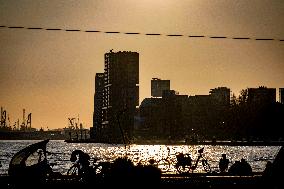
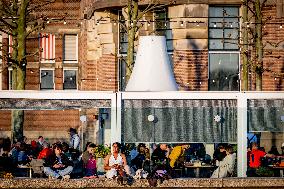
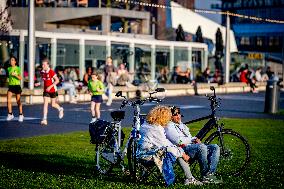
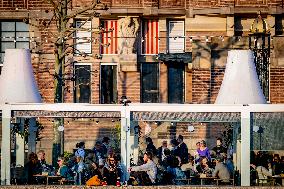
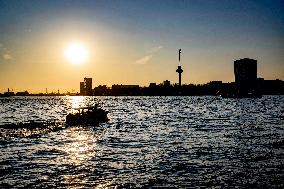
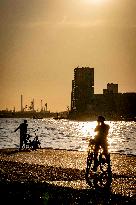
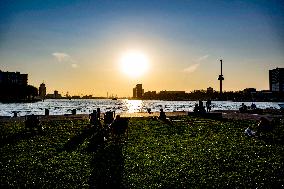
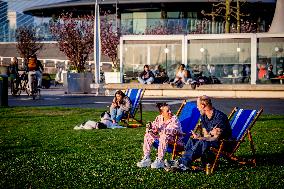
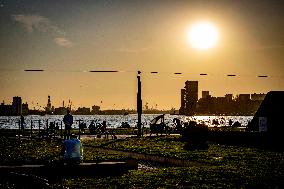
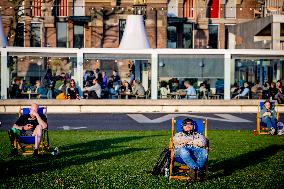
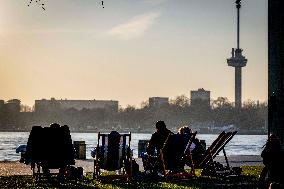
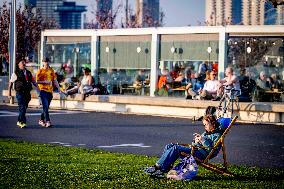
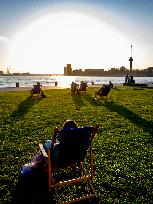
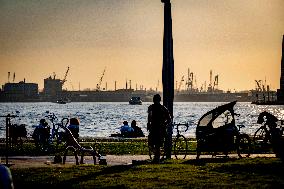
People are enjoying the sun at the beginning of spring in Rotterdam, The Netherlands on March 20, 2025. Spring has just begun. The sun crossed the equator on Thursday at 10:01 European time and is now above the northern hemisphere. The days are longer than the nights. Photo by Robin Utrecht/ABACAPRESS.COM

  •  
Spring Illustrations - Rotterdam

Spring Illustrations - Rotterdam

People are enjoying the sun at the beginning of spring in Rotterdam, The Netherlands on March 20, 2025. Spring has just begun. The sun crossed the equator on Thursday at 10:01 European time and is now above the northern hemisphere. The days are longer than the nights. Photo by Robin Utrecht/ABACAPRESS.COM

  •  
Spring Illustrations - Rotterdam

Spring Illustrations - Rotterdam

People are enjoying the sun at the beginning of spring in Rotterdam, The Netherlands on March 20, 2025. Spring has just begun. The sun crossed the equator on Thursday at 10:01 European time and is now above the northern hemisphere. The days are longer than the nights. Photo by Robin Utrecht/ABACAPRESS.COM

  •  
Spring Illustrations - Rotterdam

Spring Illustrations - Rotterdam

People are enjoying the sun at the beginning of spring in Rotterdam, The Netherlands on March 20, 2025. Spring has just begun. The sun crossed the equator on Thursday at 10:01 European time and is now above the northern hemisphere. The days are longer than the nights. Photo by Robin Utrecht/ABACAPRESS.COM

  •  
Spring Illustrations - Rotterdam

Spring Illustrations - Rotterdam

People are enjoying the sun at the beginning of spring in Rotterdam, The Netherlands on March 20, 2025. Spring has just begun. The sun crossed the equator on Thursday at 10:01 European time and is now above the northern hemisphere. The days are longer than the nights. Photo by Robin Utrecht/ABACAPRESS.COM

  •  
Spring Illustrations - Rotterdam

Spring Illustrations - Rotterdam

People are enjoying the sun at the beginning of spring in Rotterdam, The Netherlands on March 20, 2025. Spring has just begun. The sun crossed the equator on Thursday at 10:01 European time and is now above the northern hemisphere. The days are longer than the nights. Photo by Robin Utrecht/ABACAPRESS.COM

  •  
Spring Illustrations - Rotterdam

Spring Illustrations - Rotterdam

People are enjoying the sun at the beginning of spring in Rotterdam, The Netherlands on March 20, 2025. Spring has just begun. The sun crossed the equator on Thursday at 10:01 European time and is now above the northern hemisphere. The days are longer than the nights. Photo by Robin Utrecht/ABACAPRESS.COM

  •  
Spring Illustrations - Rotterdam

Spring Illustrations - Rotterdam

People are enjoying the sun at the beginning of spring in Rotterdam, The Netherlands on March 20, 2025. Spring has just begun. The sun crossed the equator on Thursday at 10:01 European time and is now above the northern hemisphere. The days are longer than the nights. Photo by Robin Utrecht/ABACAPRESS.COM

  •  
Spring Illustrations - Rotterdam

Spring Illustrations - Rotterdam

People are enjoying the sun at the beginning of spring in Rotterdam, The Netherlands on March 20, 2025. Spring has just begun. The sun crossed the equator on Thursday at 10:01 European time and is now above the northern hemisphere. The days are longer than the nights. Photo by Robin Utrecht/ABACAPRESS.COM

  •  
Spring Illustrations - Rotterdam

Spring Illustrations - Rotterdam

People are enjoying the sun at the beginning of spring in Rotterdam, The Netherlands on March 20, 2025. Spring has just begun. The sun crossed the equator on Thursday at 10:01 European time and is now above the northern hemisphere. The days are longer than the nights. Photo by Robin Utrecht/ABACAPRESS.COM

  •  
Spring Illustrations - Rotterdam

Spring Illustrations - Rotterdam

People are enjoying the sun at the beginning of spring in Rotterdam, The Netherlands on March 20, 2025. Spring has just begun. The sun crossed the equator on Thursday at 10:01 European time and is now above the northern hemisphere. The days are longer than the nights. Photo by Robin Utrecht/ABACAPRESS.COM

  •  
Spring Illustrations - Rotterdam

Spring Illustrations - Rotterdam

People are enjoying the sun at the beginning of spring in Rotterdam, The Netherlands on March 20, 2025. Spring has just begun. The sun crossed the equator on Thursday at 10:01 European time and is now above the northern hemisphere. The days are longer than the nights. Photo by Robin Utrecht/ABACAPRESS.COM

  •  
Spring Illustrations - Rotterdam

Spring Illustrations - Rotterdam

People are enjoying the sun at the beginning of spring in Rotterdam, The Netherlands on March 20, 2025. Spring has just begun. The sun crossed the equator on Thursday at 10:01 European time and is now above the northern hemisphere. The days are longer than the nights. Photo by Robin Utrecht/ABACAPRESS.COM

  •  
Spring Illustrations - Rotterdam

Spring Illustrations - Rotterdam

People are enjoying the sun at the beginning of spring in Rotterdam, The Netherlands on March 20, 2025. Spring has just begun. The sun crossed the equator on Thursday at 10:01 European time and is now above the northern hemisphere. The days are longer than the nights. Photo by Robin Utrecht/ABACAPRESS.COM

  •  
Spring Illustrations - Rotterdam

Spring Illustrations - Rotterdam

People are enjoying the sun at the beginning of spring in Rotterdam, The Netherlands on March 20, 2025. Spring has just begun. The sun crossed the equator on Thursday at 10:01 European time and is now above the northern hemisphere. The days are longer than the nights. Photo by Robin Utrecht/ABACAPRESS.COM

  •  
Spring Illustrations - Rotterdam

Spring Illustrations - Rotterdam

People are enjoying the sun at the beginning of spring in Rotterdam, The Netherlands on March 20, 2025. Spring has just begun. The sun crossed the equator on Thursday at 10:01 European time and is now above the northern hemisphere. The days are longer than the nights. Photo by Robin Utrecht/ABACAPRESS.COM

  •  
AUSTRALIA-CANBERRA-JULY CHRISTMAS

AUSTRALIA-CANBERRA-JULY CHRISTMAS

(240630) -- CANBERRA, June 30, 2024 Photo by Xinhua/ABACAPRESS.COM) -- A girl poses for photos behind a decoration during the July Christmas event in Canberra, Australia, June 30, 2024. Canberra's July Christmas event took place here from June 27 to 30. As a unique celebration in the Southern Hemisphere, July Christmas stems from Australians' longing for a traditional white Christmas. Since December is summer in Australia, people celebrate a "fake" Christmas in July to experience a snowy festive atmosphere. During this time, people gather to exchange blessings and enjoy the joy of Christmas in advance. (Photo by Chu Chen/Xinhua/ABACAPRESS.COM

  •  
AUSTRALIA-CANBERRA-JULY CHRISTMAS

AUSTRALIA-CANBERRA-JULY CHRISTMAS

(240630) -- CANBERRA, June 30, 2024 Photo by Xinhua/ABACAPRESS.COM) -- People enjoy themselves during the July Christmas event in Canberra, Australia, June 30, 2024. Canberra's July Christmas event took place here from June 27 to 30. As a unique celebration in the Southern Hemisphere, July Christmas stems from Australians' longing for a traditional white Christmas. Since December is summer in Australia, people celebrate a "fake" Christmas in July to experience a snowy festive atmosphere. During this time, people gather to exchange blessings and enjoy the joy of Christmas in advance. (Photo by Chu Chen/Xinhua/ABACAPRESS.COM

  •  
AUSTRALIA-CANBERRA-JULY CHRISTMAS

AUSTRALIA-CANBERRA-JULY CHRISTMAS

(240630) -- CANBERRA, June 30, 2024 Photo by Xinhua/ABACAPRESS.COM) -- A woman buys food during the July Christmas event in Canberra, Australia, June 30, 2024. Canberra's July Christmas event took place here from June 27 to 30. As a unique celebration in the Southern Hemisphere, July Christmas stems from Australians' longing for a traditional white Christmas. Since December is summer in Australia, people celebrate a "fake" Christmas in July to experience a snowy festive atmosphere. During this time, people gather to exchange blessings and enjoy the joy of Christmas in advance. (Photo by Chu Chen/Xinhua/ABACAPRESS.COM

  •  
AUSTRALIA-CANBERRA-JULY CHRISTMAS

AUSTRALIA-CANBERRA-JULY CHRISTMAS

(240630) -- CANBERRA, June 30, 2024 Photo by Xinhua/ABACAPRESS.COM) -- Children are pictured during the July Christmas event in Canberra, Australia, June 30, 2024. Canberra's July Christmas event took place here from June 27 to 30. As a unique celebration in the Southern Hemisphere, July Christmas stems from Australians' longing for a traditional white Christmas. Since December is summer in Australia, people celebrate a "fake" Christmas in July to experience a snowy festive atmosphere. During this time, people gather to exchange blessings and enjoy the joy of Christmas in advance. (Photo by Chu Chen/Xinhua/ABACAPRESS.COM

  •  
AUSTRALIA-CANBERRA-JULY CHRISTMAS

AUSTRALIA-CANBERRA-JULY CHRISTMAS

(240630) -- CANBERRA, June 30, 2024 Photo by Xinhua/ABACAPRESS.COM) -- Children are pictured during the July Christmas event in Canberra, Australia, June 30, 2024. Canberra's July Christmas event took place here from June 27 to 30. As a unique celebration in the Southern Hemisphere, July Christmas stems from Australians' longing for a traditional white Christmas. Since December is summer in Australia, people celebrate a "fake" Christmas in July to experience a snowy festive atmosphere. During this time, people gather to exchange blessings and enjoy the joy of Christmas in advance. (Photo by Chu Chen/Xinhua/ABACAPRESS.COM

  •  
AUSTRALIA-CANBERRA-JULY CHRISTMAS

AUSTRALIA-CANBERRA-JULY CHRISTMAS

(240630) -- CANBERRA, June 30, 2024 Photo by Xinhua/ABACAPRESS.COM) -- People enjoy themselves during the July Christmas event in Canberra, Australia, June 30, 2024. Canberra's July Christmas event took place here from June 27 to 30. As a unique celebration in the Southern Hemisphere, July Christmas stems from Australians' longing for a traditional white Christmas. Since December is summer in Australia, people celebrate a "fake" Christmas in July to experience a snowy festive atmosphere. During this time, people gather to exchange blessings and enjoy the joy of Christmas in advance. (Photo by Chu Chen/Xinhua/ABACAPRESS.COM

  •  
House Hearings - Washington

House Hearings - Washington

Eric Jacobstein, Deputy Assistant Secretary, Bureau of Western Hemisphere Affairs, U.S. Department of State, left, and Greg Howell, Senior Deputy Assistant Administrator, Bureau for Latin America and the Caribbean, U.S. Agency for International Development, right, appear before a House Committee on Foreign Affairs, Subcommittee on the Western Hemisphere hearing "The Curse of Socialism in Central America and the Caribbean" in the Rayburn House Office Building in Washington, DC, USA, Thursday, June 27, 2024. Photo by Rod Lamkey/CNP/ABACAPRESS.COM

  •  
House Hearings - Washington

House Hearings - Washington

United States Representative Joaquin Castro (Democrat of Texas) questions the panel of Eric Jacobstein, Deputy Assistant Secretary, Bureau of Western Hemisphere Affairs, U.S. Department of State and Greg Howell, Senior Deputy Assistant Administrator, Bureau for Latin America and the Caribbean, U.S. Agency for International Development, during a House Committee on Foreign Affairs, Subcommittee on the Western Hemisphere hearing "The Curse of Socialism in Central America and the Caribbean" in the Rayburn House Office Building in Washington, DC, USA, Thursday, June 27, 2024. Photo by Rod Lamkey/CNP/ABACAPRESS.COM

  • Main
  • Top
  • Editorial
  • Creative
  • About Us
  • About ILG
  • Terms of use
  • Company
  • BEHIND
  • Price List
  • Single Plan
  • Monthly Plan
  • Services
  • Shooting
  • Rights Clearance
  • Support
  • FAQ
  • How To Buy
  • Contact Us
  • Become a Partner

© KYODO NEWS IMAGES INC

All Rights Reserved.

  • Editorial
  • Olympics
  • News
  • Sports
  • Japan
  • Tech
  • Royal
  • Disaster
  • NorthKorea
  • Old Japan
  • SNS
  • Creative
  • Food
  • Japan
  • Landscape
  • Animal
  • Popular
  • #Ukraine
  • #Thailand
  • #coronavirus
  • #N. Korea
  • #Russia
  • #China
  • #Ukraine
  • #Thailand
  • #coronavirus
  • #N. Korea
  • #Russia
  • #China
  • Food
  • Japan
  • Landscape
  • Animal
  • Olympics
  • News
  • Sports
  • Japan
  • Tech
  • Royal
  • Disaster
  • NorthKorea
  • Old Japan
  • SNS