•  
Jarud Woodblock Painting in Inner Mongolia - China

Jarud Woodblock Painting in Inner Mongolia - China

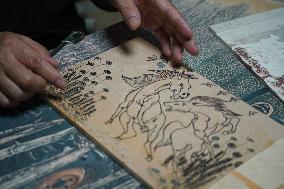
Painter Qi Tongyue introduces an unfinished Jarud woodblock painting at a woodblock painting institute in Jarud Banner, north China's Inner Mongolia Autonomous Region, Aug. 10, 2025. The creation of a Jarud woodblock painting work, which originated in Jarud Banner in the late 1950s, has to go through more than a dozen steps, finished with engraving knife, woodblock and ink. The Jarud genre of woodblock painting was listed as one of the intangible cultural heritages of Inner Mongolia Autonomous Region in 2009. Nowadays, woodblock painting artists in Jarud, professional and amateur alike, are turning out vast amount of artworks that reflect their modern life on the grasslands. Photo by Liu Wenhui/Xinhua/ABACAPRESS.COM

  •  
Jarud Woodblock Painting in Inner Mongolia - China

Jarud Woodblock Painting in Inner Mongolia - China

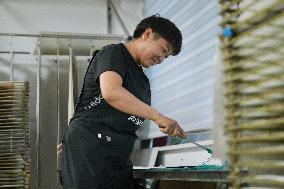
Painter Chen Qimeg prepares pigments for her painting at a woodblock painting institute in Jarud Banner, north China's Inner Mongolia Autonomous Region, Aug. 10, 2025. The creation of a Jarud woodblock painting work, which originated in Jarud Banner in the late 1950s, has to go through more than a dozen steps, finished with engraving knife, woodblock and ink. The Jarud genre of woodblock painting was listed as one of the intangible cultural heritages of Inner Mongolia Autonomous Region in 2009. Nowadays, woodblock painting artists in Jarud, professional and amateur alike, are turning out vast amount of artworks that reflect their modern life on the grasslands. Photo by Liu Wenhui/Xinhua/ABACAPRESS.COM

  •  
Jarud Woodblock Painting in Inner Mongolia - China

Jarud Woodblock Painting in Inner Mongolia - China

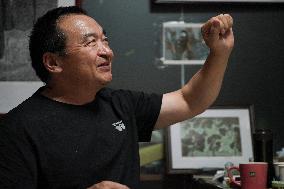
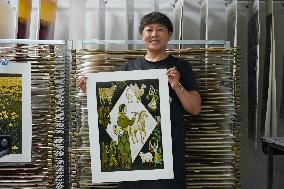
Painter Qi Tongyue introduces his artworks at a woodblock painting institute in Jarud Banner, north China's Inner Mongolia Autonomous Region, Aug. 10, 2025. The creation of a Jarud woodblock painting work, which originated in Jarud Banner in the late 1950s, has to go through more than a dozen steps, finished with engraving knife, woodblock and ink. The Jarud genre of woodblock painting was listed as one of the intangible cultural heritages of Inner Mongolia Autonomous Region in 2009. Nowadays, woodblock painting artists in Jarud, professional and amateur alike, are turning out vast amount of artworks that reflect their modern life on the grasslands. Photo by Liu Wenhui/Xinhua/ABACAPRESS.COM

  •  
Jarud Woodblock Painting in Inner Mongolia - China

Jarud Woodblock Painting in Inner Mongolia - China

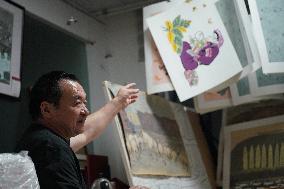
Painter Qi Tongyue introduces his artworks at a woodblock painting institute in Jarud Banner, north China's Inner Mongolia Autonomous Region, Aug. 10, 2025. The creation of a Jarud woodblock painting work, which originated in Jarud Banner in the late 1950s, has to go through more than a dozen steps, finished with engraving knife, woodblock and ink. The Jarud genre of woodblock painting was listed as one of the intangible cultural heritages of Inner Mongolia Autonomous Region in 2009. Nowadays, woodblock painting artists in Jarud, professional and amateur alike, are turning out vast amount of artworks that reflect their modern life on the grasslands. Photo by Liu Wenhui/Xinhua/ABACAPRESS.COM

  •  
Jarud Woodblock Painting in Inner Mongolia - China

Jarud Woodblock Painting in Inner Mongolia - China

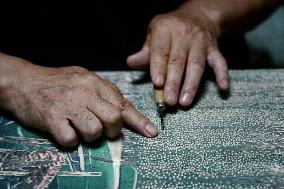
Painter Qi Tongyue creates a Jarud woodblock painting at a woodblock painting institute in Jarud Banner, north China's Inner Mongolia Autonomous Region, Aug. 10, 2025. The creation of a Jarud woodblock painting work, which originated in Jarud Banner in the late 1950s, has to go through more than a dozen steps, finished with engraving knife, woodblock and ink. The Jarud genre of woodblock painting was listed as one of the intangible cultural heritages of Inner Mongolia Autonomous Region in 2009. Nowadays, woodblock painting artists in Jarud, professional and amateur alike, are turning out vast amount of artworks that reflect their modern life on the grasslands. Photo by Liu Wenhui/Xinhua/ABACAPRESS.COM

  •  
Jarud Woodblock Painting in Inner Mongolia - China

Jarud Woodblock Painting in Inner Mongolia - China

Painter Chen Qimeg shows one of her artworks at a woodblock painting institute in Jarud Banner, north China's Inner Mongolia Autonomous Region, Aug. 10, 2025. The creation of a Jarud woodblock painting work, which originated in Jarud Banner in the late 1950s, has to go through more than a dozen steps, finished with engraving knife, woodblock and ink. The Jarud genre of woodblock painting was listed as one of the intangible cultural heritages of Inner Mongolia Autonomous Region in 2009. Nowadays, woodblock painting artists in Jarud, professional and amateur alike, are turning out vast amount of artworks that reflect their modern life on the grasslands. Photo by Liu Wenhui/Xinhua/ABACAPRESS.COM

  •  
Preserving Tradition And Innovating Duck Culture - Bejing

Preserving Tradition And Innovating Duck Culture - Bejing

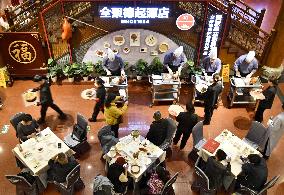
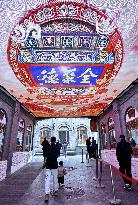
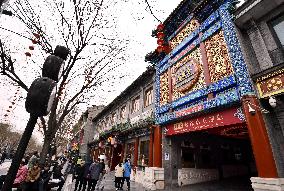
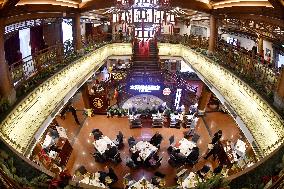
B Customers have meals at the first-ever store of Quanjude on the Qianmen Street in Beijing, capital of China, March 25, 2025. Peking Duck, a representative cuisine of Beijing, has won popularity across the world for its golden, crispy skin and juicy, flavorful meat. Set up by Yang Quanren in 1864 in Beijing, "Quanjude", a time-honored brand for Peking duck, has become a must-go for visitors from both home and abroad. In 2008, Quanjude's craft of making Peking Duck was listed in the second batch of national intangible cultural heritages. The cooking craft of Peking Duck, which has been passed down for seven generations in Quanjude, is mainly used in two steps, preparation and roasting. To ensure the quality of its duck, Quanjude only chooses a type of local ducks which are fed and raised in a special way so that the proportion of the fat in the duck meat is strictly under control. During the roasting procedure, Quanjude uses wood from hard fruit trees and open fire to get a better taste. Meanwhile, the chef w

  •  
Preserving Tradition And Innovating Duck Culture - Bejing

Preserving Tradition And Innovating Duck Culture - Bejing

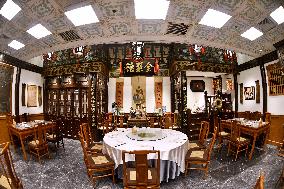
B This photo taken on March 25, 2025 shows the replica of an old Quanjude store at its first-ever store on the Qianmen Street in Beijing, capital of China, March 25, 2025. Peking Duck, a representative cuisine of Beijing, has won popularity across the world for its golden, crispy skin and juicy, flavorful meat. Set up by Yang Quanren in 1864 in Beijing, "Quanjude", a time-honored brand for Peking duck, has become a must-go for visitors from both home and abroad. In 2008, Quanjude's craft of making Peking Duck was listed in the second batch of national intangible cultural heritages. The cooking craft of Peking Duck, which has been passed down for seven generations in Quanjude, is mainly used in two steps, preparation and roasting. To ensure the quality of its duck, Quanjude only chooses a type of local ducks which are fed and raised in a special way so that the proportion of the fat in the duck meat is strictly under control. During the roasting procedure, Quanjude uses wood from hard fruit trees and open fire

  •  
Preserving Tradition And Innovating Duck Culture - Bejing

Preserving Tradition And Innovating Duck Culture - Bejing

B A chef learns the dish presentation at the Hepingmen store of Quanjude in Beijing, capital of China, March 13, 2025. Peking Duck, a representative cuisine of Beijing, has won popularity across the world for its golden, crispy skin and juicy, flavorful meat. Set up by Yang Quanren in 1864 in Beijing, "Quanjude", a time-honored brand for Peking duck, has become a must-go for visitors from both home and abroad. In 2008, Quanjude's craft of making Peking Duck was listed in the second batch of national intangible cultural heritages. The cooking craft of Peking Duck, which has been passed down for seven generations in Quanjude, is mainly used in two steps, preparation and roasting. To ensure the quality of its duck, Quanjude only chooses a type of local ducks which are fed and raised in a special way so that the proportion of the fat in the duck meat is strictly under control. During the roasting procedure, Quanjude uses wood from hard fruit trees and open fire to get a better taste. Meanwhile, the chef will also

  •  
Preserving Tradition And Innovating Duck Culture - Bejing

Preserving Tradition And Innovating Duck Culture - Bejing

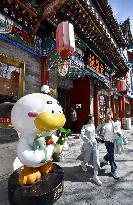
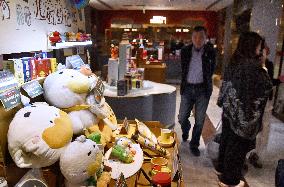
B A mascot of Quanjude is displayed at the entrance of an experience store of Quanjude on the Qianmen Street in Beijing, capital of China, March 25, 2025. Peking Duck, a representative cuisine of Beijing, has won popularity across the world for its golden, crispy skin and juicy, flavorful meat. Set up by Yang Quanren in 1864 in Beijing, "Quanjude", a time-honored brand for Peking duck, has become a must-go for visitors from both home and abroad. In 2008, Quanjude's craft of making Peking Duck was listed in the second batch of national intangible cultural heritages. The cooking craft of Peking Duck, which has been passed down for seven generations in Quanjude, is mainly used in two steps, preparation and roasting. To ensure the quality of its duck, Quanjude only chooses a type of local ducks which are fed and raised in a special way so that the proportion of the fat in the duck meat is strictly under control. During the roasting procedure, Quanjude uses wood from hard fruit trees and open fire to get a better

  •  
Preserving Tradition And Innovating Duck Culture - Bejing

Preserving Tradition And Innovating Duck Culture - Bejing

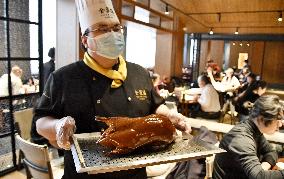
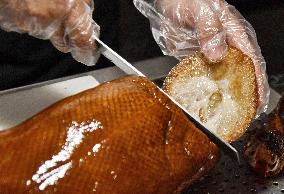
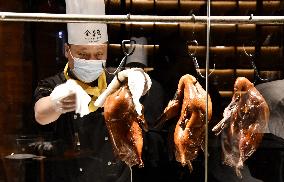
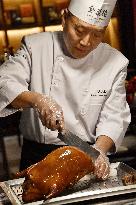
B A chef prepares to slice Peking Duck for customers at the Hepingmen store of Quanjude in Beijing, capital of China, March 13, 2025. Peking Duck, a representative cuisine of Beijing, has won popularity across the world for its golden, crispy skin and juicy, flavorful meat. Set up by Yang Quanren in 1864 in Beijing, "Quanjude", a time-honored brand for Peking duck, has become a must-go for visitors from both home and abroad. In 2008, Quanjude's craft of making Peking Duck was listed in the second batch of national intangible cultural heritages. The cooking craft of Peking Duck, which has been passed down for seven generations in Quanjude, is mainly used in two steps, preparation and roasting. To ensure the quality of its duck, Quanjude only chooses a type of local ducks which are fed and raised in a special way so that the proportion of the fat in the duck meat is strictly under control. During the roasting procedure, Quanjude uses wood from hard fruit trees and open fire to get a better taste. Meanwhile, the

  •  
Preserving Tradition And Innovating Duck Culture - Bejing

Preserving Tradition And Innovating Duck Culture - Bejing

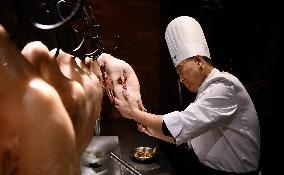
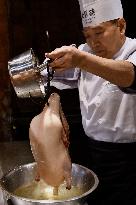
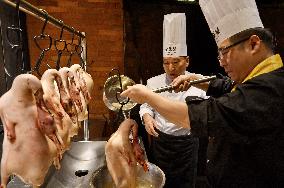
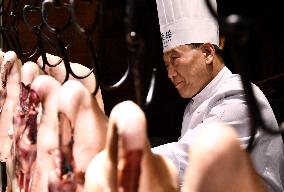
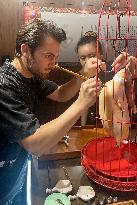
B Wu Yubo prepares the duck at the Hepingmen store of Quanjude in Beijing, capital of China, March 13, 2025. Peking Duck, a representative cuisine of Beijing, has won popularity across the world for its golden, crispy skin and juicy, flavorful meat. Set up by Yang Quanren in 1864 in Beijing, "Quanjude", a time-honored brand for Peking duck, has become a must-go for visitors from both home and abroad. In 2008, Quanjude's craft of making Peking Duck was listed in the second batch of national intangible cultural heritages. The cooking craft of Peking Duck, which has been passed down for seven generations in Quanjude, is mainly used in two steps, preparation and roasting. To ensure the quality of its duck, Quanjude only chooses a type of local ducks which are fed and raised in a special way so that the proportion of the fat in the duck meat is strictly under control. During the roasting procedure, Quanjude uses wood from hard fruit trees and open fire to get a better taste. Meanwhile, the chef will also use a lon

  •  
Preserving Tradition And Innovating Duck Culture - Bejing

Preserving Tradition And Innovating Duck Culture - Bejing

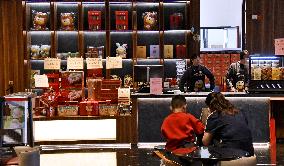
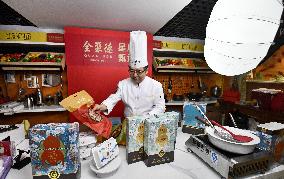
B Cultural creative products are displayed at the Hepingmen store of Quanjude in Beijing, capital of China, March 13, 2025. Peking Duck, a representative cuisine of Beijing, has won popularity across the world for its golden, crispy skin and juicy, flavorful meat. Set up by Yang Quanren in 1864 in Beijing, "Quanjude", a time-honored brand for Peking duck, has become a must-go for visitors from both home and abroad. In 2008, Quanjude's craft of making Peking Duck was listed in the second batch of national intangible cultural heritages. The cooking craft of Peking Duck, which has been passed down for seven generations in Quanjude, is mainly used in two steps, preparation and roasting. To ensure the quality of its duck, Quanjude only chooses a type of local ducks which are fed and raised in a special way so that the proportion of the fat in the duck meat is strictly under control. During the roasting procedure, Quanjude uses wood from hard fruit trees and open fire to get a better taste. Meanwhile, the chef will

  •  
Preserving Tradition And Innovating Duck Culture - Bejing

Preserving Tradition And Innovating Duck Culture - Bejing

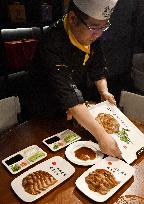
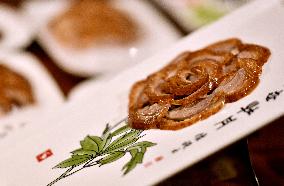
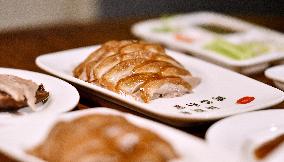
B A plate of sliced Peking Duck is displayed at the Hepingmen store of Quanjude in Beijing, capital of China, March 13, 2025. Peking Duck, a representative cuisine of Beijing, has won popularity across the world for its golden, crispy skin and juicy, flavorful meat. Set up by Yang Quanren in 1864 in Beijing, "Quanjude", a time-honored brand for Peking duck, has become a must-go for visitors from both home and abroad. In 2008, Quanjude's craft of making Peking Duck was listed in the second batch of national intangible cultural heritages. The cooking craft of Peking Duck, which has been passed down for seven generations in Quanjude, is mainly used in two steps, preparation and roasting. To ensure the quality of its duck, Quanjude only chooses a type of local ducks which are fed and raised in a special way so that the proportion of the fat in the duck meat is strictly under control. During the roasting procedure, Quanjude uses wood from hard fruit trees and open fire to get a better taste. Meanwhile, the chef wi

  •  
Preserving Tradition And Innovating Duck Culture - Bejing

Preserving Tradition And Innovating Duck Culture - Bejing

B People walk to the first-ever store of Quanjude on the Qianmen Street in Beijing, capital of China, March 14, 2025. Peking Duck, a representative cuisine of Beijing, has won popularity across the world for its golden, crispy skin and juicy, flavorful meat. Set up by Yang Quanren in 1864 in Beijing, "Quanjude", a time-honored brand for Peking duck, has become a must-go for visitors from both home and abroad. In 2008, Quanjude's craft of making Peking Duck was listed in the second batch of national intangible cultural heritages. The cooking craft of Peking Duck, which has been passed down for seven generations in Quanjude, is mainly used in two steps, preparation and roasting. To ensure the quality of its duck, Quanjude only chooses a type of local ducks which are fed and raised in a special way so that the proportion of the fat in the duck meat is strictly under control. During the roasting procedure, Quanjude uses wood from hard fruit trees and open fire to get a better taste. Meanwhile, the chef will also

  •  
Preserving Tradition And Innovating Duck Culture - Bejing

Preserving Tradition And Innovating Duck Culture - Bejing

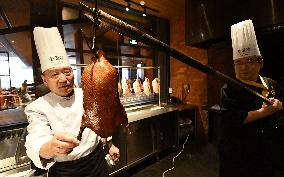
B Wu Yubo shows the skills of roasting ducks at the Hepingmen store of Quanjude in Beijing, capital of China, March 13, 2025. Peking Duck, a representative cuisine of Beijing, has won popularity across the world for its golden, crispy skin and juicy, flavorful meat. Set up by Yang Quanren in 1864 in Beijing, "Quanjude", a time-honored brand for Peking duck, has become a must-go for visitors from both home and abroad. In 2008, Quanjude's craft of making Peking Duck was listed in the second batch of national intangible cultural heritages. The cooking craft of Peking Duck, which has been passed down for seven generations in Quanjude, is mainly used in two steps, preparation and roasting. To ensure the quality of its duck, Quanjude only chooses a type of local ducks which are fed and raised in a special way so that the proportion of the fat in the duck meat is strictly under control. During the roasting procedure, Quanjude uses wood from hard fruit trees and open fire to get a better taste. Meanwhile, the chef wi

  •  
Preserving Tradition And Innovating Duck Culture - Bejing

Preserving Tradition And Innovating Duck Culture - Bejing

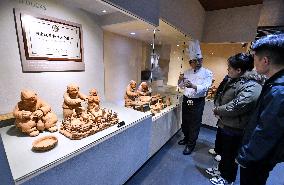
B People visit a museum of Quanjude at the Hepingmen store of Quanjude in Beijing, capital of China, March 13, 2025. Peking Duck, a representative cuisine of Beijing, has won popularity across the world for its golden, crispy skin and juicy, flavorful meat. Set up by Yang Quanren in 1864 in Beijing, "Quanjude", a time-honored brand for Peking duck, has become a must-go for visitors from both home and abroad. In 2008, Quanjude's craft of making Peking Duck was listed in the second batch of national intangible cultural heritages. The cooking craft of Peking Duck, which has been passed down for seven generations in Quanjude, is mainly used in two steps, preparation and roasting. To ensure the quality of its duck, Quanjude only chooses a type of local ducks which are fed and raised in a special way so that the proportion of the fat in the duck meat is strictly under control. During the roasting procedure, Quanjude uses wood from hard fruit trees and open fire to get a better taste. Meanwhile, the chef will also u

  •  
Preserving Tradition And Innovating Duck Culture - Bejing

Preserving Tradition And Innovating Duck Culture - Bejing

B Wu Yubo prepares a duck at the Hepingmen store of Quanjude in Beijing, capital of China, March 13, 2025. Peking Duck, a representative cuisine of Beijing, has won popularity across the world for its golden, crispy skin and juicy, flavorful meat. Set up by Yang Quanren in 1864 in Beijing, "Quanjude", a time-honored brand for Peking duck, has become a must-go for visitors from both home and abroad. In 2008, Quanjude's craft of making Peking Duck was listed in the second batch of national intangible cultural heritages. The cooking craft of Peking Duck, which has been passed down for seven generations in Quanjude, is mainly used in two steps, preparation and roasting. To ensure the quality of its duck, Quanjude only chooses a type of local ducks which are fed and raised in a special way so that the proportion of the fat in the duck meat is strictly under control. During the roasting procedure, Quanjude uses wood from hard fruit trees and open fire to get a better taste. Meanwhile, the chef will also use a long

  •  
Preserving Tradition And Innovating Duck Culture - Bejing

Preserving Tradition And Innovating Duck Culture - Bejing

B The first-ever store of Quanjude is seen on the Qianmen Street in Beijing, capital of China, March 14, 2025. Peking Duck, a representative cuisine of Beijing, has won popularity across the world for its golden, crispy skin and juicy, flavorful meat. Set up by Yang Quanren in 1864 in Beijing, "Quanjude", a time-honored brand for Peking duck, has become a must-go for visitors from both home and abroad. In 2008, Quanjude's craft of making Peking Duck was listed in the second batch of national intangible cultural heritages. The cooking craft of Peking Duck, which has been passed down for seven generations in Quanjude, is mainly used in two steps, preparation and roasting. To ensure the quality of its duck, Quanjude only chooses a type of local ducks which are fed and raised in a special way so that the proportion of the fat in the duck meat is strictly under control. During the roasting procedure, Quanjude uses wood from hard fruit trees and open fire to get a better taste. Meanwhile, the chef will also use a l

  •  
Preserving Tradition And Innovating Duck Culture - Bejing

Preserving Tradition And Innovating Duck Culture - Bejing

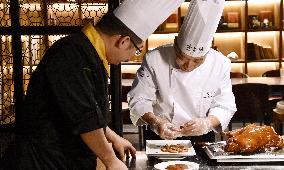
B Wu Yubo (L) teaches his apprentice to prepare ducks at the Hepingmen store of Quanjude in Beijing, capital of China, March 13, 2025. Peking Duck, a representative cuisine of Beijing, has won popularity across the world for its golden, crispy skin and juicy, flavorful meat. Set up by Yang Quanren in 1864 in Beijing, "Quanjude", a time-honored brand for Peking duck, has become a must-go for visitors from both home and abroad. In 2008, Quanjude's craft of making Peking Duck was listed in the second batch of national intangible cultural heritages. The cooking craft of Peking Duck, which has been passed down for seven generations in Quanjude, is mainly used in two steps, preparation and roasting. To ensure the quality of its duck, Quanjude only chooses a type of local ducks which are fed and raised in a special way so that the proportion of the fat in the duck meat is strictly under control. During the roasting procedure, Quanjude uses wood from hard fruit trees and open fire to get a better taste. Meanwhile, th

  •  
Preserving Tradition And Innovating Duck Culture - Bejing

Preserving Tradition And Innovating Duck Culture - Bejing

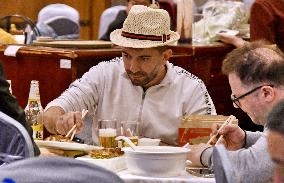
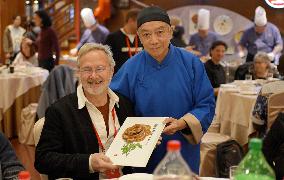
B A foreign guest eats Peking Duck at the first-ever store of Quanjude on the Qianmen Street in Beijing, capital of China, March 25, 2025. Peking Duck, a representative cuisine of Beijing, has won popularity across the world for its golden, crispy skin and juicy, flavorful meat. Set up by Yang Quanren in 1864 in Beijing, "Quanjude", a time-honored brand for Peking duck, has become a must-go for visitors from both home and abroad. In 2008, Quanjude's craft of making Peking Duck was listed in the second batch of national intangible cultural heritages. The cooking craft of Peking Duck, which has been passed down for seven generations in Quanjude, is mainly used in two steps, preparation and roasting. To ensure the quality of its duck, Quanjude only chooses a type of local ducks which are fed and raised in a special way so that the proportion of the fat in the duck meat is strictly under control. During the roasting procedure, Quanjude uses wood from hard fruit trees and open fire to get a better taste. Meanwhile

  •  
Preserving Tradition And Innovating Duck Culture - Bejing

Preserving Tradition And Innovating Duck Culture - Bejing

B Wu Yubo shows how to slice a duck at the Hepingmen store of Quanjude in Beijing, capital of China, March 13, 2025. Peking Duck, a representative cuisine of Beijing, has won popularity across the world for its golden, crispy skin and juicy, flavorful meat. Set up by Yang Quanren in 1864 in Beijing, "Quanjude", a time-honored brand for Peking duck, has become a must-go for visitors from both home and abroad. In 2008, Quanjude's craft of making Peking Duck was listed in the second batch of national intangible cultural heritages. The cooking craft of Peking Duck, which has been passed down for seven generations in Quanjude, is mainly used in two steps, preparation and roasting. To ensure the quality of its duck, Quanjude only chooses a type of local ducks which are fed and raised in a special way so that the proportion of the fat in the duck meat is strictly under control. During the roasting procedure, Quanjude uses wood from hard fruit trees and open fire to get a better taste. Meanwhile, the chef will also u

  •  
Preserving Tradition And Innovating Duck Culture - Bejing

Preserving Tradition And Innovating Duck Culture - Bejing

B Wu Yubo teaches his apprentice to arrange a plate at the Hepingmen store of Quanjude in Beijing, capital of China, March 13, 2025. Peking Duck, a representative cuisine of Beijing, has won popularity across the world for its golden, crispy skin and juicy, flavorful meat. Set up by Yang Quanren in 1864 in Beijing, "Quanjude", a time-honored brand for Peking duck, has become a must-go for visitors from both home and abroad. In 2008, Quanjude's craft of making Peking Duck was listed in the second batch of national intangible cultural heritages. The cooking craft of Peking Duck, which has been passed down for seven generations in Quanjude, is mainly used in two steps, preparation and roasting. To ensure the quality of its duck, Quanjude only chooses a type of local ducks which are fed and raised in a special way so that the proportion of the fat in the duck meat is strictly under control. During the roasting procedure, Quanjude uses wood from hard fruit trees and open fire to get a better taste. Meanwhile, the

  •  
Preserving Tradition And Innovating Duck Culture - Bejing

Preserving Tradition And Innovating Duck Culture - Bejing

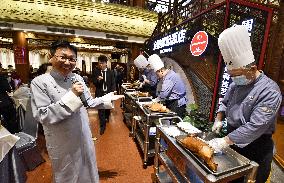
B A chef prepares to promote Peking Duck through online streaming at the Hepingmen store of Quanjude in Beijing, capital of China, March 13, 2025. Peking Duck, a representative cuisine of Beijing, has won popularity across the world for its golden, crispy skin and juicy, flavorful meat. Set up by Yang Quanren in 1864 in Beijing, "Quanjude", a time-honored brand for Peking duck, has become a must-go for visitors from both home and abroad. In 2008, Quanjude's craft of making Peking Duck was listed in the second batch of national intangible cultural heritages. The cooking craft of Peking Duck, which has been passed down for seven generations in Quanjude, is mainly used in two steps, preparation and roasting. To ensure the quality of its duck, Quanjude only chooses a type of local ducks which are fed and raised in a special way so that the proportion of the fat in the duck meat is strictly under control. During the roasting procedure, Quanjude uses wood from hard fruit trees and open fire to get a better taste. M

  •  
Preserving Tradition And Innovating Duck Culture - Bejing

Preserving Tradition And Innovating Duck Culture - Bejing

B Customers taste Peking Ducks at the first-ever store of Quanjude on the Qianmen Street in Beijing, capital of China, March 25, 2025. Peking Duck, a representative cuisine of Beijing, has won popularity across the world for its golden, crispy skin and juicy, flavorful meat. Set up by Yang Quanren in 1864 in Beijing, "Quanjude", a time-honored brand for Peking duck, has become a must-go for visitors from both home and abroad. In 2008, Quanjude's craft of making Peking Duck was listed in the second batch of national intangible cultural heritages. The cooking craft of Peking Duck, which has been passed down for seven generations in Quanjude, is mainly used in two steps, preparation and roasting. To ensure the quality of its duck, Quanjude only chooses a type of local ducks which are fed and raised in a special way so that the proportion of the fat in the duck meat is strictly under control. During the roasting procedure, Quanjude uses wood from hard fruit trees and open fire to get a better taste. Meanwhile, th

  •  
Preserving Tradition And Innovating Duck Culture - Bejing

Preserving Tradition And Innovating Duck Culture - Bejing

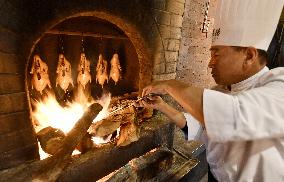
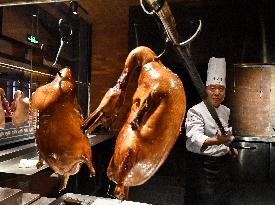
B Wu Yubo takes roasted ducks out of an oven at the Hepingmen store of Quanjude in Beijing, capital of China, March 13, 2025. Peking Duck, a representative cuisine of Beijing, has won popularity across the world for its golden, crispy skin and juicy, flavorful meat. Set up by Yang Quanren in 1864 in Beijing, "Quanjude", a time-honored brand for Peking duck, has become a must-go for visitors from both home and abroad. In 2008, Quanjude's craft of making Peking Duck was listed in the second batch of national intangible cultural heritages. The cooking craft of Peking Duck, which has been passed down for seven generations in Quanjude, is mainly used in two steps, preparation and roasting. To ensure the quality of its duck, Quanjude only chooses a type of local ducks which are fed and raised in a special way so that the proportion of the fat in the duck meat is strictly under control. During the roasting procedure, Quanjude uses wood from hard fruit trees and open fire to get a better taste. Meanwhile, the chef wi

  •  
Preserving Tradition And Innovating Duck Culture - Bejing

Preserving Tradition And Innovating Duck Culture - Bejing

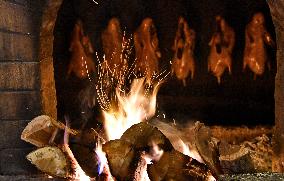
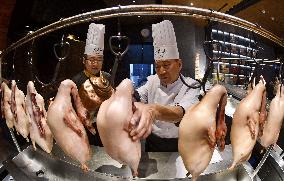
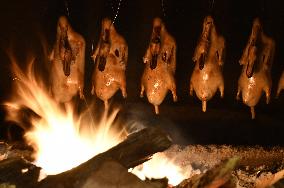
B Ducks are being roasted in an oven at the Hepingmen store of Quanjude in Beijing, capital of China, March 13, 2025. Peking Duck, a representative cuisine of Beijing, has won popularity across the world for its golden, crispy skin and juicy, flavorful meat. Set up by Yang Quanren in 1864 in Beijing, "Quanjude", a time-honored brand for Peking duck, has become a must-go for visitors from both home and abroad. In 2008, Quanjude's craft of making Peking Duck was listed in the second batch of national intangible cultural heritages. The cooking craft of Peking Duck, which has been passed down for seven generations in Quanjude, is mainly used in two steps, preparation and roasting. To ensure the quality of its duck, Quanjude only chooses a type of local ducks which are fed and raised in a special way so that the proportion of the fat in the duck meat is strictly under control. During the roasting procedure, Quanjude uses wood from hard fruit trees and open fire to get a better taste. Meanwhile, the chef will also

  •  
Preserving Tradition And Innovating Duck Culture - Bejing

Preserving Tradition And Innovating Duck Culture - Bejing

B A chef prepares to slice a roasted duck at the Hepingmen store of Quanjude in Beijing, capital of China, March 13, 2025. Peking Duck, a representative cuisine of Beijing, has won popularity across the world for its golden, crispy skin and juicy, flavorful meat. Set up by Yang Quanren in 1864 in Beijing, "Quanjude", a time-honored brand for Peking duck, has become a must-go for visitors from both home and abroad. In 2008, Quanjude's craft of making Peking Duck was listed in the second batch of national intangible cultural heritages. The cooking craft of Peking Duck, which has been passed down for seven generations in Quanjude, is mainly used in two steps, preparation and roasting. To ensure the quality of its duck, Quanjude only chooses a type of local ducks which are fed and raised in a special way so that the proportion of the fat in the duck meat is strictly under control. During the roasting procedure, Quanjude uses wood from hard fruit trees and open fire to get a better taste. Meanwhile, the chef will

  •  
Preserving Tradition And Innovating Duck Culture - Bejing

Preserving Tradition And Innovating Duck Culture - Bejing

B Ducks are being roasted in an oven at the Hepingmen store of Quanjude in Beijing, capital of China, March 13, 2025. Peking Duck, a representative cuisine of Beijing, has won popularity across the world for its golden, crispy skin and juicy, flavorful meat. Set up by Yang Quanren in 1864 in Beijing, "Quanjude", a time-honored brand for Peking duck, has become a must-go for visitors from both home and abroad. In 2008, Quanjude's craft of making Peking Duck was listed in the second batch of national intangible cultural heritages. The cooking craft of Peking Duck, which has been passed down for seven generations in Quanjude, is mainly used in two steps, preparation and roasting. To ensure the quality of its duck, Quanjude only chooses a type of local ducks which are fed and raised in a special way so that the proportion of the fat in the duck meat is strictly under control. During the roasting procedure, Quanjude uses wood from hard fruit trees and open fire to get a better taste. Meanwhile, the chef will also

  •  
Preserving Tradition And Innovating Duck Culture - Bejing

Preserving Tradition And Innovating Duck Culture - Bejing

B Wu Yubo checks the prepared duck at the Hepingmen store of Quanjude in Beijing, capital of China, March 13, 2025. Peking Duck, a representative cuisine of Beijing, has won popularity across the world for its golden, crispy skin and juicy, flavorful meat. Set up by Yang Quanren in 1864 in Beijing, "Quanjude", a time-honored brand for Peking duck, has become a must-go for visitors from both home and abroad. In 2008, Quanjude's craft of making Peking Duck was listed in the second batch of national intangible cultural heritages. The cooking craft of Peking Duck, which has been passed down for seven generations in Quanjude, is mainly used in two steps, preparation and roasting. To ensure the quality of its duck, Quanjude only chooses a type of local ducks which are fed and raised in a special way so that the proportion of the fat in the duck meat is strictly under control. During the roasting procedure, Quanjude uses wood from hard fruit trees and open fire to get a better taste. Meanwhile, the chef will also us

  •  
Preserving Tradition And Innovating Duck Culture - Bejing

Preserving Tradition And Innovating Duck Culture - Bejing

B Customers look at cultural creative products of Quanjude at one of its experience stores on the Qianmen Street in Beijing, capital of China, March 25, 2025. Peking Duck, a representative cuisine of Beijing, has won popularity across the world for its golden, crispy skin and juicy, flavorful meat. Set up by Yang Quanren in 1864 in Beijing, "Quanjude", a time-honored brand for Peking duck, has become a must-go for visitors from both home and abroad. In 2008, Quanjude's craft of making Peking Duck was listed in the second batch of national intangible cultural heritages. The cooking craft of Peking Duck, which has been passed down for seven generations in Quanjude, is mainly used in two steps, preparation and roasting. To ensure the quality of its duck, Quanjude only chooses a type of local ducks which are fed and raised in a special way so that the proportion of the fat in the duck meat is strictly under control. During the roasting procedure, Quanjude uses wood from hard fruit trees and open fire to get a bet

  •  
Preserving Tradition And Innovating Duck Culture - Bejing

Preserving Tradition And Innovating Duck Culture - Bejing

B Wu Yubo shows how to slice a duck at the Hepingmen store of Quanjude in Beijing, capital of China, March 13, 2025. Peking Duck, a representative cuisine of Beijing, has won popularity across the world for its golden, crispy skin and juicy, flavorful meat. Set up by Yang Quanren in 1864 in Beijing, "Quanjude", a time-honored brand for Peking duck, has become a must-go for visitors from both home and abroad. In 2008, Quanjude's craft of making Peking Duck was listed in the second batch of national intangible cultural heritages. The cooking craft of Peking Duck, which has been passed down for seven generations in Quanjude, is mainly used in two steps, preparation and roasting. To ensure the quality of its duck, Quanjude only chooses a type of local ducks which are fed and raised in a special way so that the proportion of the fat in the duck meat is strictly under control. During the roasting procedure, Quanjude uses wood from hard fruit trees and open fire to get a better taste. Meanwhile, the chef will also u

  •  
Preserving Tradition And Innovating Duck Culture - Bejing

Preserving Tradition And Innovating Duck Culture - Bejing

B This undated file photo shows a foreign tourist experiencing the making of Peking Duck at the Hepingmen store of Quanjude in Beijing, capital of China. Peking Duck, a representative cuisine of Beijing, has won popularity across the world for its golden, crispy skin and juicy, flavorful meat. Set up by Yang Quanren in 1864 in Beijing, "Quanjude", a time-honored brand for Peking duck, has become a must-go for visitors from both home and abroad. In 2008, Quanjude's craft of making Peking Duck was listed in the second batch of national intangible cultural heritages. The cooking craft of Peking Duck, which has been passed down for seven generations in Quanjude, is mainly used in two steps, preparation and roasting. To ensure the quality of its duck, Quanjude only chooses a type of local ducks which are fed and raised in a special way so that the proportion of the fat in the duck meat is strictly under control. During the roasting procedure, Quanjude uses wood from hard fruit trees and open fire to get a better t

  •  
Preserving Tradition And Innovating Duck Culture - Bejing

Preserving Tradition And Innovating Duck Culture - Bejing

B A staff member introduces the history of Quanjude to customers at its first-ever store on the Qianmen Street in Beijing, capital of China, March 25, 2025. Peking Duck, a representative cuisine of Beijing, has won popularity across the world for its golden, crispy skin and juicy, flavorful meat. Set up by Yang Quanren in 1864 in Beijing, "Quanjude", a time-honored brand for Peking duck, has become a must-go for visitors from both home and abroad. In 2008, Quanjude's craft of making Peking Duck was listed in the second batch of national intangible cultural heritages. The cooking craft of Peking Duck, which has been passed down for seven generations in Quanjude, is mainly used in two steps, preparation and roasting. To ensure the quality of its duck, Quanjude only chooses a type of local ducks which are fed and raised in a special way so that the proportion of the fat in the duck meat is strictly under control. During the roasting procedure, Quanjude uses wood from hard fruit trees and open fire to get a bette

  •  
Preserving Tradition And Innovating Duck Culture - Bejing

Preserving Tradition And Innovating Duck Culture - Bejing

B Wu Yubo checks a roasted duck at the Hepingmen store of Quanjude in Beijing, capital of China, March 13, 2025. Peking Duck, a representative cuisine of Beijing, has won popularity across the world for its golden, crispy skin and juicy, flavorful meat. Set up by Yang Quanren in 1864 in Beijing, "Quanjude", a time-honored brand for Peking duck, has become a must-go for visitors from both home and abroad. In 2008, Quanjude's craft of making Peking Duck was listed in the second batch of national intangible cultural heritages. The cooking craft of Peking Duck, which has been passed down for seven generations in Quanjude, is mainly used in two steps, preparation and roasting. To ensure the quality of its duck, Quanjude only chooses a type of local ducks which are fed and raised in a special way so that the proportion of the fat in the duck meat is strictly under control. During the roasting procedure, Quanjude uses wood from hard fruit trees and open fire to get a better taste. Meanwhile, the chef will also use a

  •  
Preserving Tradition And Innovating Duck Culture - Bejing

Preserving Tradition And Innovating Duck Culture - Bejing

B A plate of sliced Peking Duck is displayed at the Hepingmen store of Quanjude in Beijing, capital of China, March 13, 2025. Peking Duck, a representative cuisine of Beijing, has won popularity across the world for its golden, crispy skin and juicy, flavorful meat. Set up by Yang Quanren in 1864 in Beijing, "Quanjude", a time-honored brand for Peking duck, has become a must-go for visitors from both home and abroad. In 2008, Quanjude's craft of making Peking Duck was listed in the second batch of national intangible cultural heritages. The cooking craft of Peking Duck, which has been passed down for seven generations in Quanjude, is mainly used in two steps, preparation and roasting. To ensure the quality of its duck, Quanjude only chooses a type of local ducks which are fed and raised in a special way so that the proportion of the fat in the duck meat is strictly under control. During the roasting procedure, Quanjude uses wood from hard fruit trees and open fire to get a better taste. Meanwhile, the chef wi

  •  
Preserving Tradition And Innovating Duck Culture - Bejing

Preserving Tradition And Innovating Duck Culture - Bejing

B Wu Yubo (R) teaches his apprentice at the Hepingmen store of Quanjude in Beijing, capital of China, March 13, 2025. Peking Duck, a representative cuisine of Beijing, has won popularity across the world for its golden, crispy skin and juicy, flavorful meat. Set up by Yang Quanren in 1864 in Beijing, "Quanjude", a time-honored brand for Peking duck, has become a must-go for visitors from both home and abroad. In 2008, Quanjude's craft of making Peking Duck was listed in the second batch of national intangible cultural heritages. The cooking craft of Peking Duck, which has been passed down for seven generations in Quanjude, is mainly used in two steps, preparation and roasting. To ensure the quality of its duck, Quanjude only chooses a type of local ducks which are fed and raised in a special way so that the proportion of the fat in the duck meat is strictly under control. During the roasting procedure, Quanjude uses wood from hard fruit trees and open fire to get a better taste. Meanwhile, the chef will also

  •  
Preserving Tradition And Innovating Duck Culture - Bejing

Preserving Tradition And Innovating Duck Culture - Bejing

B This undated file photo shows a foreign tourist posing for photos with a waiter in traditional costumes at the first-ever store of Quanjude on the Qianmen Street in Beijing, capital of China. Peking Duck, a representative cuisine of Beijing, has won popularity across the world for its golden, crispy skin and juicy, flavorful meat. Set up by Yang Quanren in 1864 in Beijing, "Quanjude", a time-honored brand for Peking duck, has become a must-go for visitors from both home and abroad. In 2008, Quanjude's craft of making Peking Duck was listed in the second batch of national intangible cultural heritages. The cooking craft of Peking Duck, which has been passed down for seven generations in Quanjude, is mainly used in two steps, preparation and roasting. To ensure the quality of its duck, Quanjude only chooses a type of local ducks which are fed and raised in a special way so that the proportion of the fat in the duck meat is strictly under control. During the roasting procedure, Quanjude uses wood from hard fru

  •  
Wuqiao Acrobatics - China

Wuqiao Acrobatics - China

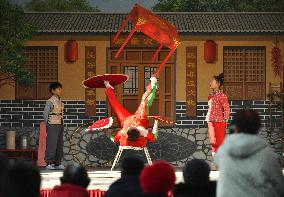
An acrobat performs at a culture and entertainment facility in Wuqiao County, north China's Hebei Province, December 17, 2024. The origin of Wuqiao acrobatics can be traced back to the Han Dynasty (202 B.C.-220 A.D.). It was inscribed as one of the first batch of intangible cultural heritages at the state level in 2006. Dubbed the "cradle of Chinese acrobatics," Wuqiao has in recent years scaled up its efforts to sustain and popularize this time-honored treasure. Photo by Mu Yu/Xinhua/ABACAPRESS.COM

  •  
Wuqiao Acrobatics - China

Wuqiao Acrobatics - China

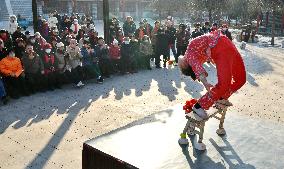
An acrobat performs a contortion stunt at a culture and entertainment facility in Wuqiao County, north China's Hebei Province, December 17, 2024. The origin of Wuqiao acrobatics can be traced back to the Han Dynasty (202 B.C.-220 A.D.). It was inscribed as one of the first batch of intangible cultural heritages at the state level in 2006. Dubbed the "cradle of Chinese acrobatics," Wuqiao has in recent years scaled up its efforts to sustain and popularize this time-honored treasure. Photo by Mu Yu/Xinhua/ABACAPRESS.COM

  •  
Wuqiao Acrobatics - China

Wuqiao Acrobatics - China

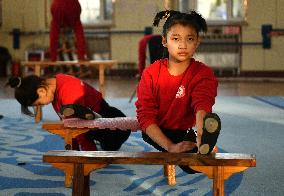
Students practice at the Hebei Wuqiao Acrobatic Art School in Wuqiao County, north China's Hebei Province, December 17, 2024. The origin of Wuqiao acrobatics can be traced back to the Han Dynasty (202 B.C.-220 A.D.). It was inscribed as one of the first batch of intangible cultural heritages at the state level in 2006. Dubbed the "cradle of Chinese acrobatics," Wuqiao has in recent years scaled up its efforts to sustain and popularize this time-honored treasure. Photo by Mu Yu/Xinhua/ABACAPRESS.COM

  •  
Wuqiao Acrobatics - China

Wuqiao Acrobatics - China

Students practice magic under an instructor's supervision at the Hebei Wuqiao Acrobatic Art School in Wuqiao County, north China's Hebei Province, December 17, 2024. The origin of Wuqiao acrobatics can be traced back to the Han Dynasty (202 B.C.-220 A.D.). It was inscribed as one of the first batch of intangible cultural heritages at the state level in 2006. Dubbed the "cradle of Chinese acrobatics," Wuqiao has in recent years scaled up its efforts to sustain and popularize this time-honored treasure. Photo by Mu Yu/Xinhua/ABACAPRESS.COM

  •  
Wuqiao Acrobatics - China

Wuqiao Acrobatics - China

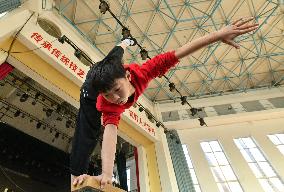
A student practices at the Hebei Wuqiao Acrobatic Art School in Wuqiao County, north China's Hebei Province, December 17, 2024. The origin of Wuqiao acrobatics can be traced back to the Han Dynasty (202 B.C.-220 A.D.). It was inscribed as one of the first batch of intangible cultural heritages at the state level in 2006. Dubbed the "cradle of Chinese acrobatics," Wuqiao has in recent years scaled up its efforts to sustain and popularize this time-honored treasure. Photo by Mu Yu/Xinhua/ABACAPRESS.COM

  •  
Wuqiao Acrobatics - China

Wuqiao Acrobatics - China

An acrobat performs with a special trumpet at a culture and entertainment facility in Wuqiao County, north China's Hebei Province, December 17, 2024. The origin of Wuqiao acrobatics can be traced back to the Han Dynasty (202 B.C.-220 A.D.). It was inscribed as one of the first batch of intangible cultural heritages at the state level in 2006. Dubbed the "cradle of Chinese acrobatics," Wuqiao has in recent years scaled up its efforts to sustain and popularize this time-honored treasure. Photo by Mu Yu/Xinhua/ABACAPRESS.COM

  •  
Wuqiao Acrobatics - China

Wuqiao Acrobatics - China

Students practice at the Hebei Wuqiao Acrobatic Art School in Wuqiao County, north China's Hebei Province, December 17, 2024. The origin of Wuqiao acrobatics can be traced back to the Han Dynasty (202 B.C.-220 A.D.). It was inscribed as one of the first batch of intangible cultural heritages at the state level in 2006. Dubbed the "cradle of Chinese acrobatics," Wuqiao has in recent years scaled up its efforts to sustain and popularize this time-honored treasure. Photo by Mu Yu/Xinhua/ABACAPRESS.COM

  •  
Wuqiao Acrobatics - China

Wuqiao Acrobatics - China

A student practices Diabolo at the Hebei Wuqiao Acrobatic Art School in Wuqiao County, north China's Hebei Province, December 17, 2024. The origin of Wuqiao acrobatics can be traced back to the Han Dynasty (202 B.C.-220 A.D.). It was inscribed as one of the first batch of intangible cultural heritages at the state level in 2006. Dubbed the "cradle of Chinese acrobatics," Wuqiao has in recent years scaled up its efforts to sustain and popularize this time-honored treasure. Photo by Mu Yu/Xinhua/ABACAPRESS.COM

  •  
Wuqiao Acrobatics - China

Wuqiao Acrobatics - China

An acrobat climbs a ladder of blades at a culture and entertainment facility in Wuqiao County, north China's Hebei Province, December 17, 2024. The origin of Wuqiao acrobatics can be traced back to the Han Dynasty (202 B.C.-220 A.D.). It was inscribed as one of the first batch of intangible cultural heritages at the state level in 2006. Dubbed the "cradle of Chinese acrobatics," Wuqiao has in recent years scaled up its efforts to sustain and popularize this time-honored treasure. Photo by Mu Yu/Xinhua/ABACAPRESS.COM

  •  
Wuqiao Acrobatics - China

Wuqiao Acrobatics - China

A student practices juggling with hats at the Hebei Wuqiao Acrobatic Art School in Wuqiao County, north China's Hebei Province, December 17, 2024. The origin of Wuqiao acrobatics can be traced back to the Han Dynasty (202 B.C.-220 A.D.). It was inscribed as one of the first batch of intangible cultural heritages at the state level in 2006. Dubbed the "cradle of Chinese acrobatics," Wuqiao has in recent years scaled up its efforts to sustain and popularize this time-honored treasure. Photo by Mu Yu/Xinhua/ABACAPRESS.COM

  •  
Wuqiao Acrobatics - China

Wuqiao Acrobatics - China

An acrobat performs a stunt of Hard Qigong, a traditional Chinese martial art, at a culture and entertainment facility in Wuqiao County, north China's Hebei Province, December 17, 2024. The origin of Wuqiao acrobatics can be traced back to the Han Dynasty (202 B.C.-220 A.D.). It was inscribed as one of the first batch of intangible cultural heritages at the state level in 2006. Dubbed the "cradle of Chinese acrobatics," Wuqiao has in recent years scaled up its efforts to sustain and popularize this time-honored treasure. Photo by Mu Yu/Xinhua/ABACAPRESS.COM

  •  
Wuqiao Acrobatics - China

Wuqiao Acrobatics - China

Students practice under an instructor's supervision at the Hebei Wuqiao Acrobatic Art School in Wuqiao County, north China's Hebei Province, December 17, 2024. The origin of Wuqiao acrobatics can be traced back to the Han Dynasty (202 B.C.-220 A.D.). It was inscribed as one of the first batch of intangible cultural heritages at the state level in 2006. Dubbed the "cradle of Chinese acrobatics," Wuqiao has in recent years scaled up its efforts to sustain and popularize this time-honored treasure. Photo by Mu Yu/Xinhua/ABACAPRESS.COM

  • Main
  • Top
  • Editorial
  • Creative
  • About Us
  • About ILG
  • Terms of use
  • Company
  • BEHIND
  • Price List
  • Single Plan
  • Monthly Plan
  • Services
  • Shooting
  • Rights Clearance
  • Support
  • FAQ
  • How To Buy
  • Contact Us
  • Become a Partner

© KYODO NEWS IMAGES INC

All Rights Reserved.

  • Editorial
  • Olympics
  • News
  • Sports
  • Japan
  • Tech
  • Royal
  • Disaster
  • NorthKorea
  • Old Japan
  • SNS
  • Creative
  • Food
  • Japan
  • Landscape
  • Animal
  • Popular
  • #Ukraine
  • #Russia
  • #coronavirus
  • #N. Korea
  • #Thailand
  • #China
  • #Ukraine
  • #Russia
  • #coronavirus
  • #N. Korea
  • #Thailand
  • #China
  • Food
  • Japan
  • Landscape
  • Animal
  • Olympics
  • News
  • Sports
  • Japan
  • Tech
  • Royal
  • Disaster
  • NorthKorea
  • Old Japan
  • SNS