•  
XINHUA PHOTOS OF THE DAY

XINHUA PHOTOS OF THE DAY

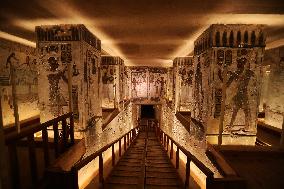
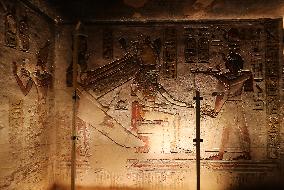
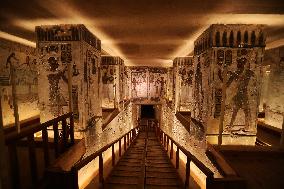
(240419) -- BEIJING, April 19, 2024 (Xinhua) -- This photo taken on April 8, 2024 shows mural paintings at the Valley of the Kings in Luxor, Egypt. Luxor, the ancient city of Thebes in southern Egypt, was the pharaohs' capital at the height of their power during the New Kingdom from the 16th century BC to the 11th century BC. Seen by many as the world's largest open-air museum, it is home to famous Tutankhamen's tomb in the Valley of the Kings and the ruins of the huge Karnak Temple Complex and Luxor Temple. The Yin Ruins, which is located in Anyang of central China's Henan Province, is the first documented late Shang Dynasty (1600-1046 B.C.) capital site in China, as confirmed by archaeological excavations and oracle bone inscriptions. Luxor and the Yin Ruins have, respectively, witnessed the historic highlights of the development of Egypt and China, the two ancient civilizations. April 18 marks the International Day for Monuments and Sites. It is a sound occasion to explore the trace of past glor

  •  
CHINA-EGYPT-YIN RUINS-LUXOR-ANCIENT CIVILIZATION (CN)

CHINA-EGYPT-YIN RUINS-LUXOR-ANCIENT CIVILIZATION (CN)

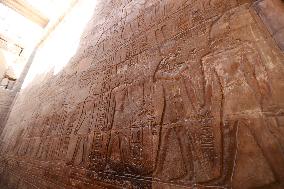
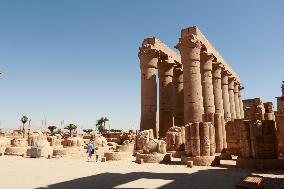
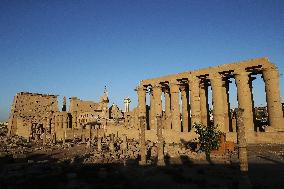
(240418) -- BEIJING, April 18, 2024 (Xinhua) -- This photo taken on April 9, 2024 shows murals at Luxor Temple in Luxor, Egypt. Luxor, the ancient city of Thebes in southern Egypt, was the pharaohs' capital at the height of their power during the New Kingdom from the 16th century BC to the 11th century BC. Seen by many as the world's largest open-air museum, it is home to famous Tutankhamen's tomb in the Valley of the Kings and the ruins of the huge Karnak Temple Complex and Luxor Temple. The Yin Ruins, which is located in Anyang of central China's Henan Province, is the first documented late Shang Dynasty (1600-1046 B.C.) capital site in China, as confirmed by archaeological excavations and oracle bone inscriptions. Luxor and the Yin Ruins have, respectively, witnessed the historic highlights of the development of Egypt and China, the two ancient civilizations. April 18 marks the International Day for Monuments and Sites. It is a sound occasion to explore the trace of past glory and have a touch w

  •  
CHINA-EGYPT-YIN RUINS-LUXOR-ANCIENT CIVILIZATION (CN)

CHINA-EGYPT-YIN RUINS-LUXOR-ANCIENT CIVILIZATION (CN)

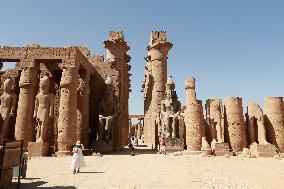
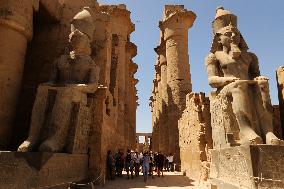
(240418) -- BEIJING, April 18, 2024 (Xinhua) -- This photo taken on April 9, 2024 shows people visiting Luxor Temple in Luxor, Egypt. Luxor, the ancient city of Thebes in southern Egypt, was the pharaohs' capital at the height of their power during the New Kingdom from the 16th century BC to the 11th century BC. Seen by many as the world's largest open-air museum, it is home to famous Tutankhamen's tomb in the Valley of the Kings and the ruins of the huge Karnak Temple Complex and Luxor Temple. The Yin Ruins, which is located in Anyang of central China's Henan Province, is the first documented late Shang Dynasty (1600-1046 B.C.) capital site in China, as confirmed by archaeological excavations and oracle bone inscriptions. Luxor and the Yin Ruins have, respectively, witnessed the historic highlights of the development of Egypt and China, the two ancient civilizations. April 18 marks the International Day for Monuments and Sites. It is a sound occasion to explore the trace of past glory and have a t

  •  
CHINA-EGYPT-YIN RUINS-LUXOR-ANCIENT CIVILIZATION (CN)

CHINA-EGYPT-YIN RUINS-LUXOR-ANCIENT CIVILIZATION (CN)

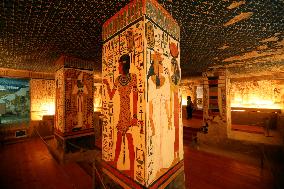
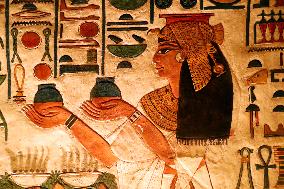
(240418) -- BEIJING, April 18, 2024 (Xinhua) -- This photo taken on Jan. 24, 2023 shows mural paintings inside the tomb of Nefertari at the Valley of the Queens in Luxor, Egypt. Luxor, the ancient city of Thebes in southern Egypt, was the pharaohs' capital at the height of their power during the New Kingdom from the 16th century BC to the 11th century BC. Seen by many as the world's largest open-air museum, it is home to famous Tutankhamen's tomb in the Valley of the Kings and the ruins of the huge Karnak Temple Complex and Luxor Temple. The Yin Ruins, which is located in Anyang of central China's Henan Province, is the first documented late Shang Dynasty (1600-1046 B.C.) capital site in China, as confirmed by archaeological excavations and oracle bone inscriptions. Luxor and the Yin Ruins have, respectively, witnessed the historic highlights of the development of Egypt and China, the two ancient civilizations. April 18 marks the International Day for Monuments and Sites. It is a sound occasion to

  •  
CHINA-EGYPT-YIN RUINS-LUXOR-ANCIENT CIVILIZATION (CN)

CHINA-EGYPT-YIN RUINS-LUXOR-ANCIENT CIVILIZATION (CN)

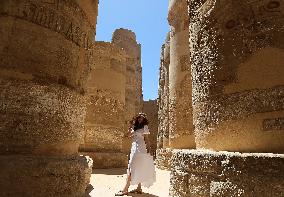
(240418) -- BEIJING, April 18, 2024 (Xinhua) -- This photo taken on April 8, 2024 shows visitors taking pictures at Karnak Temple in Luxor, Egypt. Luxor, the ancient city of Thebes in southern Egypt, was the pharaohs' capital at the height of their power during the New Kingdom from the 16th century BC to the 11th century BC. Seen by many as the world's largest open-air museum, it is home to famous Tutankhamen's tomb in the Valley of the Kings and the ruins of the huge Karnak Temple Complex and Luxor Temple. The Yin Ruins, which is located in Anyang of central China's Henan Province, is the first documented late Shang Dynasty (1600-1046 B.C.) capital site in China, as confirmed by archaeological excavations and oracle bone inscriptions. Luxor and the Yin Ruins have, respectively, witnessed the historic highlights of the development of Egypt and China, the two ancient civilizations. April 18 marks the International Day for Monuments and Sites. It is a sound occasion to explore the trace of past glory

  •  
CHINA-EGYPT-YIN RUINS-LUXOR-ANCIENT CIVILIZATION (CN)

CHINA-EGYPT-YIN RUINS-LUXOR-ANCIENT CIVILIZATION (CN)

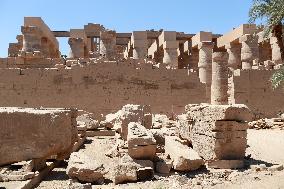
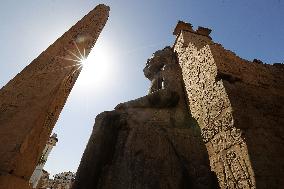
(240418) -- BEIJING, April 18, 2024 (Xinhua) -- This photo taken on April 8, 2024 shows Karnak Temple Complex in Luxor, Egypt. Luxor, the ancient city of Thebes in southern Egypt, was the pharaohs' capital at the height of their power during the New Kingdom from the 16th century BC to the 11th century BC. Seen by many as the world's largest open-air museum, it is home to famous Tutankhamen's tomb in the Valley of the Kings and the ruins of the huge Karnak Temple Complex and Luxor Temple. The Yin Ruins, which is located in Anyang of central China's Henan Province, is the first documented late Shang Dynasty (1600-1046 B.C.) capital site in China, as confirmed by archaeological excavations and oracle bone inscriptions. Luxor and the Yin Ruins have, respectively, witnessed the historic highlights of the development of Egypt and China, the two ancient civilizations. April 18 marks the International Day for Monuments and Sites. It is a sound occasion to explore the trace of past glory and have a touch wi

  •  
CHINA-EGYPT-YIN RUINS-LUXOR-ANCIENT CIVILIZATION (CN)

CHINA-EGYPT-YIN RUINS-LUXOR-ANCIENT CIVILIZATION (CN)

(240418) -- BEIJING, April 18, 2024 (Xinhua) -- This photo taken on Jan. 24, 2023 shows mural paintings inside the tomb of Nefertari at the Valley of the Queens in Luxor, Egypt. Luxor, the ancient city of Thebes in southern Egypt, was the pharaohs' capital at the height of their power during the New Kingdom from the 16th century BC to the 11th century BC. Seen by many as the world's largest open-air museum, it is home to famous Tutankhamen's tomb in the Valley of the Kings and the ruins of the huge Karnak Temple Complex and Luxor Temple. The Yin Ruins, which is located in Anyang of central China's Henan Province, is the first documented late Shang Dynasty (1600-1046 B.C.) capital site in China, as confirmed by archaeological excavations and oracle bone inscriptions. Luxor and the Yin Ruins have, respectively, witnessed the historic highlights of the development of Egypt and China, the two ancient civilizations. April 18 marks the International Day for Monuments and Sites. It is a sound occasion to

  •  
CHINA-EGYPT-YIN RUINS-LUXOR-ANCIENT CIVILIZATION (CN)

CHINA-EGYPT-YIN RUINS-LUXOR-ANCIENT CIVILIZATION (CN)

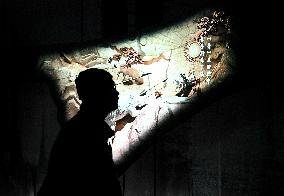
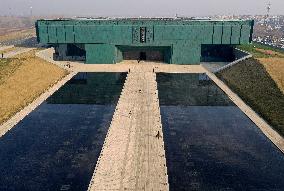
(240418) -- BEIJING, April 18, 2024 (Xinhua) -- This photo taken on Feb. 26, 2024 shows a man visiting the new building of Yinxu Museum in Anyang, central China's Henan Province. Luxor, the ancient city of Thebes in southern Egypt, was the pharaohs' capital at the height of their power during the New Kingdom from the 16th century BC to the 11th century BC. Seen by many as the world's largest open-air museum, it is home to famous Tutankhamen's tomb in the Valley of the Kings and the ruins of the huge Karnak Temple Complex and Luxor Temple. The Yin Ruins, which is located in Anyang of central China's Henan Province, is the first documented late Shang Dynasty (1600-1046 B.C.) capital site in China, as confirmed by archaeological excavations and oracle bone inscriptions. Luxor and the Yin Ruins have, respectively, witnessed the historic highlights of the development of Egypt and China, the two ancient civilizations. April 18 marks the International Day for Monuments and Sites. It is a sound occasion to

  •  
CHINA-EGYPT-YIN RUINS-LUXOR-ANCIENT CIVILIZATION (CN)

CHINA-EGYPT-YIN RUINS-LUXOR-ANCIENT CIVILIZATION (CN)

(240418) -- BEIJING, April 18, 2024 (Xinhua) -- This photo taken on April 9, 2024 shows people visiting Luxor Temple in Luxor, Egypt. Luxor, the ancient city of Thebes in southern Egypt, was the pharaohs' capital at the height of their power during the New Kingdom from the 16th century BC to the 11th century BC. Seen by many as the world's largest open-air museum, it is home to famous Tutankhamen's tomb in the Valley of the Kings and the ruins of the huge Karnak Temple Complex and Luxor Temple. The Yin Ruins, which is located in Anyang of central China's Henan Province, is the first documented late Shang Dynasty (1600-1046 B.C.) capital site in China, as confirmed by archaeological excavations and oracle bone inscriptions. Luxor and the Yin Ruins have, respectively, witnessed the historic highlights of the development of Egypt and China, the two ancient civilizations. April 18 marks the International Day for Monuments and Sites. It is a sound occasion to explore the trace of past glory and have a t

  •  
CHINA-EGYPT-YIN RUINS-LUXOR-ANCIENT CIVILIZATION (CN)

CHINA-EGYPT-YIN RUINS-LUXOR-ANCIENT CIVILIZATION (CN)

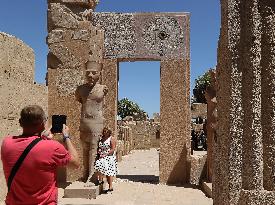
(240418) -- BEIJING, April 18, 2024 (Xinhua) -- This photo taken on April 8, 2024 shows a visitor posing for pictures at Luxor Temple in Luxor, Egypt. Luxor, the ancient city of Thebes in southern Egypt, was the pharaohs' capital at the height of their power during the New Kingdom from the 16th century BC to the 11th century BC. Seen by many as the world's largest open-air museum, it is home to famous Tutankhamen's tomb in the Valley of the Kings and the ruins of the huge Karnak Temple Complex and Luxor Temple. The Yin Ruins, which is located in Anyang of central China's Henan Province, is the first documented late Shang Dynasty (1600-1046 B.C.) capital site in China, as confirmed by archaeological excavations and oracle bone inscriptions. Luxor and the Yin Ruins have, respectively, witnessed the historic highlights of the development of Egypt and China, the two ancient civilizations. April 18 marks the International Day for Monuments and Sites. It is a sound occasion to explore the trace of past g

  •  
CHINA-EGYPT-YIN RUINS-LUXOR-ANCIENT CIVILIZATION (CN)

CHINA-EGYPT-YIN RUINS-LUXOR-ANCIENT CIVILIZATION (CN)

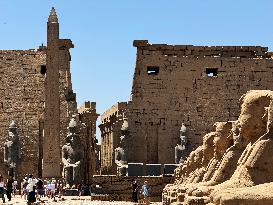
(240418) -- BEIJING, April 18, 2024 (Xinhua) -- This photo taken on April 9, 2024 shows people visiting Luxor Temple and the Avenue of the Sphinxes in Luxor, Egypt. Luxor, the ancient city of Thebes in southern Egypt, was the pharaohs' capital at the height of their power during the New Kingdom from the 16th century BC to the 11th century BC. Seen by many as the world's largest open-air museum, it is home to famous Tutankhamen's tomb in the Valley of the Kings and the ruins of the huge Karnak Temple Complex and Luxor Temple. The Yin Ruins, which is located in Anyang of central China's Henan Province, is the first documented late Shang Dynasty (1600-1046 B.C.) capital site in China, as confirmed by archaeological excavations and oracle bone inscriptions. Luxor and the Yin Ruins have, respectively, witnessed the historic highlights of the development of Egypt and China, the two ancient civilizations. April 18 marks the International Day for Monuments and Sites. It is a sound occasion to explore the t

  •  
CHINA-EGYPT-YIN RUINS-LUXOR-ANCIENT CIVILIZATION (CN)

CHINA-EGYPT-YIN RUINS-LUXOR-ANCIENT CIVILIZATION (CN)

(240418) -- BEIJING, April 18, 2024 (Xinhua) -- This photo taken on April 8, 2024 shows mural paintings at the Valley of the Kings in Luxor, Egypt. Luxor, the ancient city of Thebes in southern Egypt, was the pharaohs' capital at the height of their power during the New Kingdom from the 16th century BC to the 11th century BC. Seen by many as the world's largest open-air museum, it is home to famous Tutankhamen's tomb in the Valley of the Kings and the ruins of the huge Karnak Temple Complex and Luxor Temple. The Yin Ruins, which is located in Anyang of central China's Henan Province, is the first documented late Shang Dynasty (1600-1046 B.C.) capital site in China, as confirmed by archaeological excavations and oracle bone inscriptions. Luxor and the Yin Ruins have, respectively, witnessed the historic highlights of the development of Egypt and China, the two ancient civilizations. April 18 marks the International Day for Monuments and Sites. It is a sound occasion to explore the trace of past glor

  •  
CHINA-EGYPT-YIN RUINS-LUXOR-ANCIENT CIVILIZATION (CN)

CHINA-EGYPT-YIN RUINS-LUXOR-ANCIENT CIVILIZATION (CN)

(240418) -- BEIJING, April 18, 2024 (Xinhua) -- This photo taken on April 9, 2024 shows people visiting Luxor Temple in Luxor, Egypt. Luxor, the ancient city of Thebes in southern Egypt, was the pharaohs' capital at the height of their power during the New Kingdom from the 16th century BC to the 11th century BC. Seen by many as the world's largest open-air museum, it is home to famous Tutankhamen's tomb in the Valley of the Kings and the ruins of the huge Karnak Temple Complex and Luxor Temple. The Yin Ruins, which is located in Anyang of central China's Henan Province, is the first documented late Shang Dynasty (1600-1046 B.C.) capital site in China, as confirmed by archaeological excavations and oracle bone inscriptions. Luxor and the Yin Ruins have, respectively, witnessed the historic highlights of the development of Egypt and China, the two ancient civilizations. April 18 marks the International Day for Monuments and Sites. It is a sound occasion to explore the trace of past glory and have a t

  •  
CHINA-EGYPT-YIN RUINS-LUXOR-ANCIENT CIVILIZATION (CN)

CHINA-EGYPT-YIN RUINS-LUXOR-ANCIENT CIVILIZATION (CN)

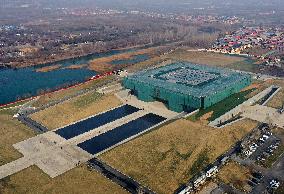
(240418) -- BEIJING, April 18, 2024 (Xinhua) -- An aerial drone photo taken on Feb. 26, 2024 shows the new building of Yinxu Museum in Anyang, central China's Henan Province. Luxor, the ancient city of Thebes in southern Egypt, was the pharaohs' capital at the height of their power during the New Kingdom from the 16th century BC to the 11th century BC. Seen by many as the world's largest open-air museum, it is home to famous Tutankhamen's tomb in the Valley of the Kings and the ruins of the huge Karnak Temple Complex and Luxor Temple. The Yin Ruins, which is located in Anyang of central China's Henan Province, is the first documented late Shang Dynasty (1600-1046 B.C.) capital site in China, as confirmed by archaeological excavations and oracle bone inscriptions. Luxor and the Yin Ruins have, respectively, witnessed the historic highlights of the development of Egypt and China, the two ancient civilizations. April 18 marks the International Day for Monuments and Sites. It is a sound occasion to exp

  •  
CHINA-EGYPT-YIN RUINS-LUXOR-ANCIENT CIVILIZATION (CN)

CHINA-EGYPT-YIN RUINS-LUXOR-ANCIENT CIVILIZATION (CN)

(240418) -- BEIJING, April 18, 2024 (Xinhua) -- An aerial drone photo taken on Feb. 26, 2024 shows the new building of Yinxu Museum in Anyang, central China's Henan Province. Luxor, the ancient city of Thebes in southern Egypt, was the pharaohs' capital at the height of their power during the New Kingdom from the 16th century BC to the 11th century BC. Seen by many as the world's largest open-air museum, it is home to famous Tutankhamen's tomb in the Valley of the Kings and the ruins of the huge Karnak Temple Complex and Luxor Temple. The Yin Ruins, which is located in Anyang of central China's Henan Province, is the first documented late Shang Dynasty (1600-1046 B.C.) capital site in China, as confirmed by archaeological excavations and oracle bone inscriptions. Luxor and the Yin Ruins have, respectively, witnessed the historic highlights of the development of Egypt and China, the two ancient civilizations. April 18 marks the International Day for Monuments and Sites. It is a sound occasion to exp

  •  
CHINA-EGYPT-YIN RUINS-LUXOR-ANCIENT CIVILIZATION (CN)

CHINA-EGYPT-YIN RUINS-LUXOR-ANCIENT CIVILIZATION (CN)

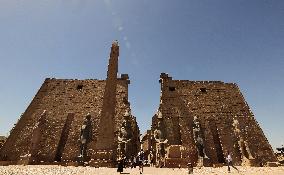
(240418) -- BEIJING, April 18, 2024 (Xinhua) -- This photo taken on April 9, 2024 shows a view of Luxor Temple in Luxor, Egypt. Luxor, the ancient city of Thebes in southern Egypt, was the pharaohs' capital at the height of their power during the New Kingdom from the 16th century BC to the 11th century BC. Seen by many as the world's largest open-air museum, it is home to famous Tutankhamen's tomb in the Valley of the Kings and the ruins of the huge Karnak Temple Complex and Luxor Temple. The Yin Ruins, which is located in Anyang of central China's Henan Province, is the first documented late Shang Dynasty (1600-1046 B.C.) capital site in China, as confirmed by archaeological excavations and oracle bone inscriptions. Luxor and the Yin Ruins have, respectively, witnessed the historic highlights of the development of Egypt and China, the two ancient civilizations. April 18 marks the International Day for Monuments and Sites. It is a sound occasion to explore the trace of past glory and have a touch w

  •  
CHINA-EGYPT-YIN RUINS-LUXOR-ANCIENT CIVILIZATION (CN)

CHINA-EGYPT-YIN RUINS-LUXOR-ANCIENT CIVILIZATION (CN)

(240418) -- BEIJING, April 18, 2024 (Xinhua) -- This photo taken on April 8, 2024 shows mural paintings at the Valley of the Kings in Luxor, Egypt. Luxor, the ancient city of Thebes in southern Egypt, was the pharaohs' capital at the height of their power during the New Kingdom from the 16th century BC to the 11th century BC. Seen by many as the world's largest open-air museum, it is home to famous Tutankhamen's tomb in the Valley of the Kings and the ruins of the huge Karnak Temple Complex and Luxor Temple. The Yin Ruins, which is located in Anyang of central China's Henan Province, is the first documented late Shang Dynasty (1600-1046 B.C.) capital site in China, as confirmed by archaeological excavations and oracle bone inscriptions. Luxor and the Yin Ruins have, respectively, witnessed the historic highlights of the development of Egypt and China, the two ancient civilizations. April 18 marks the International Day for Monuments and Sites. It is a sound occasion to explore the trace of past glor

  •  
CHINA-EGYPT-YIN RUINS-LUXOR-ANCIENT CIVILIZATION (CN)

CHINA-EGYPT-YIN RUINS-LUXOR-ANCIENT CIVILIZATION (CN)

(240418) -- BEIJING, April 18, 2024 (Xinhua) -- This photo taken on April 9, 2024 shows a view at the Luxor Temple in Luxor, Egypt. Luxor, the ancient city of Thebes in southern Egypt, was the pharaohs' capital at the height of their power during the New Kingdom from the 16th century BC to the 11th century BC. Seen by many as the world's largest open-air museum, it is home to famous Tutankhamen's tomb in the Valley of the Kings and the ruins of the huge Karnak Temple Complex and Luxor Temple. The Yin Ruins, which is located in Anyang of central China's Henan Province, is the first documented late Shang Dynasty (1600-1046 B.C.) capital site in China, as confirmed by archaeological excavations and oracle bone inscriptions. Luxor and the Yin Ruins have, respectively, witnessed the historic highlights of the development of Egypt and China, the two ancient civilizations. April 18 marks the International Day for Monuments and Sites. It is a sound occasion to explore the trace of past glory and have a tou

  •  
CHINA-EGYPT-YIN RUINS-LUXOR-ANCIENT CIVILIZATION (CN)

CHINA-EGYPT-YIN RUINS-LUXOR-ANCIENT CIVILIZATION (CN)

(240418) -- BEIJING, April 18, 2024 (Xinhua) -- This photo taken on April 9, 2024 shows people visiting Luxor Temple in Luxor, Egypt. Luxor, the ancient city of Thebes in southern Egypt, was the pharaohs' capital at the height of their power during the New Kingdom from the 16th century BC to the 11th century BC. Seen by many as the world's largest open-air museum, it is home to famous Tutankhamen's tomb in the Valley of the Kings and the ruins of the huge Karnak Temple Complex and Luxor Temple. The Yin Ruins, which is located in Anyang of central China's Henan Province, is the first documented late Shang Dynasty (1600-1046 B.C.) capital site in China, as confirmed by archaeological excavations and oracle bone inscriptions. Luxor and the Yin Ruins have, respectively, witnessed the historic highlights of the development of Egypt and China, the two ancient civilizations. April 18 marks the International Day for Monuments and Sites. It is a sound occasion to explore the trace of past glory and have a t

  •  
Motsuji in Hiraizumi

Motsuji in Hiraizumi

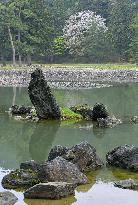
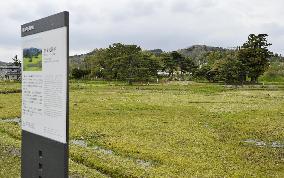
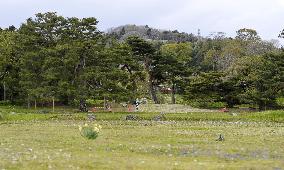
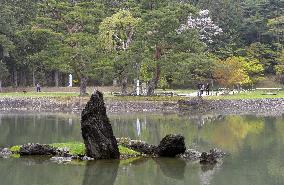
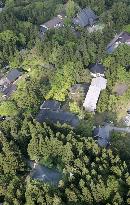
SENDAI, Japan - File photo taken on May 7, 2011, shows a garden at Motsuji, a Buddhist temple in the historic town of Hiraizumi, Iwate Prefecture. The Hiraizumi area with its historic monuments and sites is a candidate to become a UNESCO World Heritage site.

  •  
Remains of Muryokoin in Hiraizumi

Remains of Muryokoin in Hiraizumi

SENDAI, Japan - File photo taken on May 7, 2011, shows the remains of Muryokoin, a Buddhist temple in the historic town of Hiraizumi, Iwate Prefecture. The Hiraizumi area with its historic monuments and sites is a candidate to become a UNESCO World Heritage site.

  •  
Remains of Muryokoin in Hiraizumi

Remains of Muryokoin in Hiraizumi

SENDAI, Japan - File photo taken on May 7, 2011, shows the remains of Muryokoin, a Buddhist temple in the historic town of Hiraizumi, Iwate Prefecture. The Hiraizumi area with its historic monuments and sites is a candidate to become a UNESCO World Heritage site.

  •  
Hiraizumi in northeast Japan to be World Heritage site

Hiraizumi in northeast Japan to be World Heritage site

HIRAIZUMI, Japan - Photo taken May 7, 2011, shows the garden of Motsuji, a Buddhist temple, in Hiraizumi, Iwate Prefecture. The Japanese government said the same day that an advisory panel to UNESCO has recommended registering the historic area in northeastern Japan and the Ogasawara Islands off Tokyo as World Heritage sites.

  •  
Hiraizumi in northeast Japan to be World Heritage site

Hiraizumi in northeast Japan to be World Heritage site

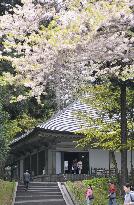
HIRAIZUMI, Japan - Photo taken May 7, 2011, shows Chusonji, a Buddhist temple, in Hiraizumi, Iwate Prefecture. An advisory panel to UNESCO has recommended registering the historic area in northeastern Japan and the Ogasawara Islands off Tokyo as World Heritage sites, the Japanese government said the same day.

  •  
Hiraizumi in northeast Japan to be World Heritage site

Hiraizumi in northeast Japan to be World Heritage site

TOKYO, Japan - File photo taken in May 2008 shows Chusonji, a Buddhist temple known for its Golden Hall, located in Hiraizumi, Iwate Prefecture. An advisory panel to UNESCO has recommended registering the historic area in northeastern Japan and the Ogasawara Islands off Tokyo as World Heritage sites, the Japanese government said May 7, 2011.

  •  
Nikko jubilant as shrines, temple added to Heritage List

Nikko jubilant as shrines, temple added to Heritage List

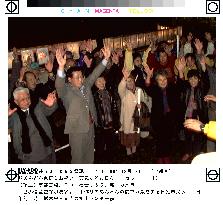
NIKKO, Japan - Citizens of the historic town Nikko celebrate early in the morning of Dec. 2 after the United Nations agency in charge of safeguarding the world's historical sites put three famous Nikko religious sites on the World Heritage List. The U.N. World Heritage Committee added Toshogu Shrine, Futarasan Shrine and Rinnoji Temple in Nikko, Tochigi Prefecture during a meeting in Marrakesh, Morocco.

  •  
View in front of the gate of katase ryukoji temple

View in front of the gate of katase ryukoji temple

Jyakukozan Ryukoji Temple. Nichiren was arrested in Ankokuronji at Nagoe for interrogation by the regent Hojo Tokimune. He came to Ryunokuchi and prayed facing south at midnight, and is said to have been saved from beheading by miracles. This is the so-called Honan of Ryunokuchi , and Ryukoji Temple was built there after the death of Nichiren.==Date:unknown, Place:Fujisawa, Photo:unknown, (Credit:Nagasaki University Library/Kyodo News Images) [Cabinet Number19‐44‐0]

  •  
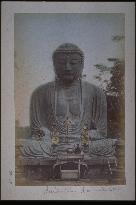
Daibutsu (the Great Buddha) of Kamakura

Daibutsu (the Great Buddha) of Kamakura

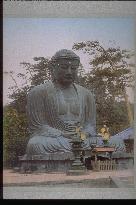
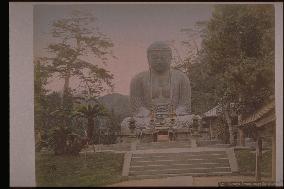
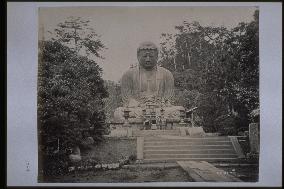
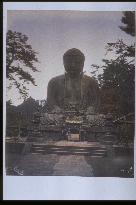
The Daibutsu is the main Buddha at the Kotokuin and used to be inside a building called the Daibutsuden. It was originally a wooden statue, but in Azuma Kagami (historical record of the Kamakura Shogunate), there is mention of starting to mold the gold and copper Shakanyorai Buddha (actually Amida statue) in 1252 in Fukasawa.==Date:unknown, Place:Kamakura, Photo:Ogawa Kazumasa, (Credit:Nagasaki University Library/Kyodo News Images) [Cabinet Number10‐17‐0]

  •  
Daibutsu (the Great Buddha) of Kamakura

Daibutsu (the Great Buddha) of Kamakura

The Daibutsu (Great Buddha) is the main Buddha of the Kotokuin (Daiisan Kotokuin Josenji). The statue was initially enshrined in a hall like the Daibutsu in Nara. Old records show that the priest Joko of Toe planned the construction of the Buddha in 1236, the year that Hojo Yasutoki was Shikken (regent).==Date:unknown, Place:Kamakura, Photo:Kusakabe Kinbei, (Credit:Nagasaki University Library/Kyodo News Images) [Cabinet Number4‐26‐0]

  •  
Daibutsu (the Great Buddha) of Kamakura

Daibutsu (the Great Buddha) of Kamakura

The Great Buddha of Kamakura is a seated Amitabha Buddha (Amida Nyorai) made of bronze. Designated as a National Treasure in 1897, it is the main object of worship at Kohtokuin Shojosenji Temple. Historic documents state that work began on a gilt statue of Shaka Nyorai Buddha about 13.5 meters in height in the year 1252. It is not known when it became a statue of Amida Buddha. The exact date of the photograph is unknown.==Date:1904, Place:Kamakura, Photo:unknown, (Credit:Nagasaki University Library/Kyodo News Images) [Cabinet Number98‐4‐0]

  •  
Daibutsu (the Great Buddha) of Kamakura

Daibutsu (the Great Buddha) of Kamakura

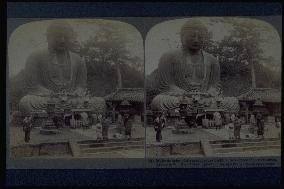
The bronze lanterns on both sides of the statue were donated in January 1712 and still exist today. Behind them are the two stones presumed to be foundations of the former Great Buddha building. The label under the caption on the lower right border of the stereograph reads Copyright 1904 by Underwood & Underwood, indicating that the photograph was taken around 1904.==Date:1904, Place:Kamakura, Photo:Underwood, (Credit:Nagasaki University Library/Kyodo News Images) [Cabinet Number97‐86‐0]

  •  
The five-story pagoda and Kondo, Shitennoji Temple

The five-story pagoda and Kondo, Shitennoji Temple

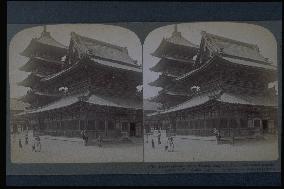
One of the seven buildings built by Shotoku Taishi. The picture is that of the five-story pagoda (to the rear) and the Golden Hall (fore).==Date:1904, Place:Osaka, Photo:Underwood, (Credit:Nagasaki University Library/Kyodo News Images) [Cabinet Number97‐20‐0]

  •  
The city of Osaka seen from Shitennoji Temple

The city of Osaka seen from Shitennoji Temple

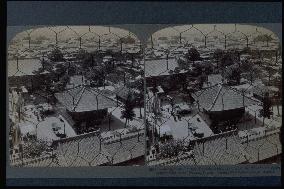
View from the five-story pagoda at Shitenoji Temple, looking west. Visible are the gallery and Saijumon (gate) in the foreground, the sutra repository above these, and Saidaimon to the upper left.==Date:1904, Place:Osaka, Photo:Underwood, (Credit:Nagasaki University Library/Kyodo News Images) [Cabinet Number97‐6‐0]

  •  
Daibutsu (the Great Buddha) of Kamakura

Daibutsu (the Great Buddha) of Kamakura

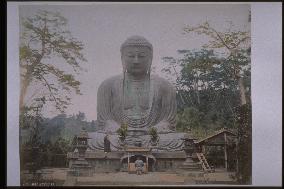
The words STILLFRIED(?) C. 1875 are visible on the mount. This photograph is said to have been taken by Stillfried around 1875, but the presence of the same temporary shack as that in photograph #2748 and the signboard on the left reading Names of Donors for Reconstruction Work suggest that it was taken a little later, probably the second decade of the Meiji Period.==Date:about 1875, Place:Kamakura, Photo:R. Stillfried, (Credit:Nagasaki University Library/Kyodo News Images) [Cabinet Number96‐70‐0]

  •  
Kondo of Shitennoji Temple

Kondo of Shitennoji Temple

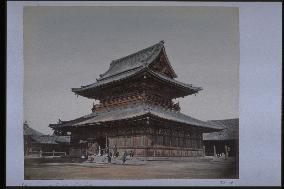
The overall view of the Golden Hall, the main building at Shitenoji Temple.==Date:unknown, Place:Osaka, Photo:Usui Shuzaburo, (Credit:Nagasaki University Library/Kyodo News Images) [Cabinet Number94‐15‐0]

  •  
Daibutsu (the Great Buddha) of Kamakura

Daibutsu (the Great Buddha) of Kamakura

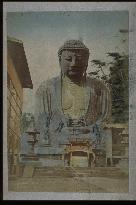
The photograph bears the inscription One Hundred Nineteen 119. There are no bronze lotus petals. The building on the right side of the statue is probably the same as that in photograph #3997. The sharply-raking finials on the two bronze lanterns in front of the statue indicate that this photograph was taken at the beginning of the Meiji Period, but there seems to be a slight time difference from photograph #3997.==Date:unknown, Place:Kamakura, Photo:Usui Shuzaburo, (Credit:Nagasaki University Library/Kyodo News Images) [Cabinet Number94‐10‐0]

  •  
Daibutsu (the Great Buddha) of Kamakura

Daibutsu (the Great Buddha) of Kamakura

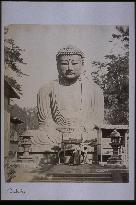
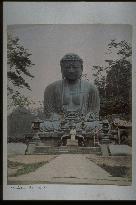
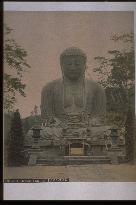
The two large flat stones in front of the statue may be the foundation stones of the former temple building. Recent excavations revealed several foundation bases, evidence that the former temple building had a north-south length of about 42.5 meters and an east-west width of 44 meters. The exact date of this photograph is unknown. The Great Buddha is an object of worship and climbing upon it is prohibited today.==Date:unknown, Place:Kamakura, Photo:unknown, (Credit:Nagasaki University Library/Kyodo News Images) [Cabinet Number93‐37‐0]

  •  
Daibutsu (the Great Buddha) of Kamakura

Daibutsu (the Great Buddha) of Kamakura

The exact date of the photograph is unknown. The only historical information about the former Great Buddha Hall is that it collapsed twice, once in 1334 and again in 1369. Since there is no record of reconstruction after the earthquake of 1498, it is like that the statue has been exposed outdoors since that time. The Great Buddha is an object of worship and climbing upon it is prohibited today.==Date:unknown, Place:Kamakura, Photo:unknown, (Credit:Nagasaki University Library/Kyodo News Images) [Cabinet Number92‐15‐0]

  •  
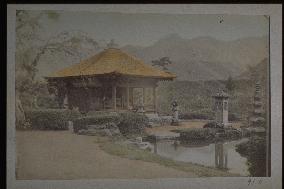
Dainichi-do Temple,Nikko

Dainichi-do Temple,Nikko

This famous sight on the Chuzenji Road running beside Daiya River was a popular stopover for tourists visiting Nikko, Kanmanga-fuchi and Urami Falls. The garden, including Dainichi Hall, was destroyed by the flood of 1902, and the remaining Jizo Hall was washed away by another flood in 1919. These severe natural disasters changes the topography of the area.==Date:unknown, Place:Nikko, Photo:unknown, (Credit:Nagasaki University Library/Kyodo News Images) [Cabinet Number91‐6‐0]

  •  
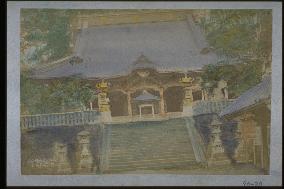
Tatsuno-dera Temple,Katase

Tatsuno-dera Temple,Katase

This is the Ryukoji main hall completed in 1832, a wooden building roughly 22 metres wide and 27 metres deep. The official name of the temple is Jakkozan Ryukoji. According to temple records, Nippo, an apprentice of Nichiren, built the temple in 1337, but this was just a small hut at first. The temple buildings were constructed in 1601. Both the lanterns at the bottom of the stairs and the washing place on the right exist today.==Date:unknown, Place:Fujisawa, Photo:unknown, (Credit:Nagasaki University Library/Kyodo News Images) [Cabinet Number90‐30‐0]

  •  
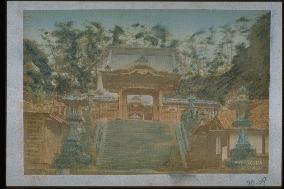
Tatsuno-dera Temple,Katase

Tatsuno-dera Temple,Katase

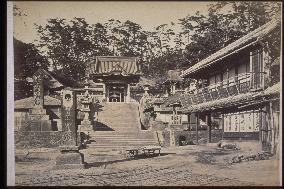
The main hall is visible through the Sanmon (main gate). The official name of the temple is Jakkozan Ryukoji Temple. The construction of the gate in 1864 was sponsored by Kashimaya, a wealthy merchant house in Osaka. The main hall, Sanmon, and the all night lanterns remain to this day. The construction of Nio Gate at the bottom of the stairs in 1973 changed the landscape dramatically.==Date:unknown, Place:Fujisawa, Photo:unknown, (Credit:Nagasaki University Library/Kyodo News Images) [Cabinet Number90‐29‐0]

  •  
Daibutsu (the Great Buddha) of Kamakura

Daibutsu (the Great Buddha) of Kamakura

The photograph was probably taken around the same time as photograph #2748. Kotokuin Temple began to collect donations for the reconstruction of the temple in 1879. However, a change in public opinion caused the plan to be suspended in 1889. It is documented that the donated money was later used to enlarge the temple grounds, to plant trees, and to build rest areas. The Great Buddha is an object of worship and climbing upon it is prohibited today.==Date:unknown, Place:Kamakura, Photo:unknown, (Credit:Nagasaki University Library/Kyodo News Images) [Cabinet Number90‐28‐0]

  •  
Daibutsu (the Great Buddha) of Kamakura

Daibutsu (the Great Buddha) of Kamakura

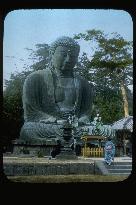
The photograph is entitled Daibutzu Kamakura. The bronze lotus petals are visible, but the building on the right of the Buddha is more dilapidated than it appears in photograph #2747. Therefore, this photograph was probably taken later than photograph #2747, in the early part of the Meiji Period. It is recorded that these petals were made in 1736. The Great Buddha is an object of worship and climbing upon it is prohibited today.==Date:unknown, Place:Kamakura, Photo:unknown, (Credit:Nagasaki University Library/Kyodo News Images) [Cabinet Number87‐30‐0]

  •  
The approach to Enkakuji Temple,Kamakura

The approach to Enkakuji Temple,Kamakura

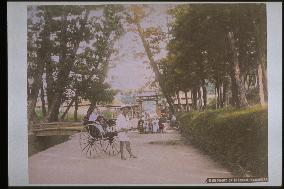
View of the Enkakuji Temple entrance area from the site of present-day Kita-Kamakura Station. There are two gates facing the street in front of the temple. The one in the background is the southeast gate. The temple is on the other side of the bridge. A horse road passes behind the mound on the right. It is possible that commoners were forbidden to use this gate during the Edo Period. The rickshaw in the centre seems to be an early model, indicating that this photograph was taken at the beginning of the Meiji Period.==Date:unknown, Place:Kamakura, Photo:unknown, (Credit:Nagasaki University Library/Kyodo News Images) [Cabinet Number86‐8‐0]

  •  
Daibutsu (the Great Buddha) of Kamakura

Daibutsu (the Great Buddha) of Kamakura

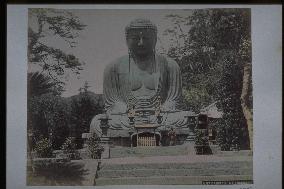
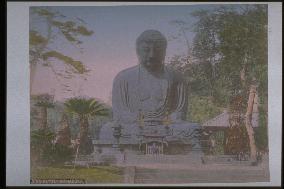
The photograph is labeled 9 DAIBUTSU, KAMAKURA. The two flat rocks in front of the statue could be foundation stones of the former building. A simple structure with a thatched roof is visible behind the cycad tree to the left of the statue. The exact date is not known.==Date:unknown, Place:Kamakura, Photo:unknown, (Credit:Nagasaki University Library/Kyodo News Images) [Cabinet Number86‐9‐0]

  •  
Daibutsu (the Great Buddha) of Kamakura

Daibutsu (the Great Buddha) of Kamakura

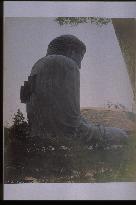
The photograph is labeled L22 DAI BUTSU(SIDE). The thatched roof in the background is that of the kuri (priests' quarters). There are doors (still extant) in the Buddha's back. It is reported that these doors were donated by the subtemples of Kenchoji Temple in 1736. The exact date of this photograph is unknown.==Date:unknown, Place:Kamakura, Photo:A. Farsari, (Credit:Nagasaki University Library/Kyodo News Images) [Cabinet Number82‐19‐0]

  •  
Daibutsu (the Great Buddha) of Kamakura

Daibutsu (the Great Buddha) of Kamakura

The photograph is labeled L19 DAIBUTSU (A). The building to the right side of the statue is the same as that in photograph #3375, and there are three large flat stones at the lower left side of the statue. Also, there are roof tiles piled up under the bronze altar placed in front of the pedestal. The Great Buddha is an object of worship and climbing upon it is prohibited today.==Date:unknown, Place:Kamakura, Photo:A. Farsari, (Credit:Nagasaki University Library/Kyodo News Images) [Cabinet Number82‐18‐0]

  •  
Daibutsu (the Great Buddha) of Kamakura

Daibutsu (the Great Buddha) of Kamakura

The photograph is labeled No.534 DAIBUTSU AT KAMAKURA. The exact date is unknown. People are standing in the cupped hands of the statue and other spots. The palm of the statue is large, possibly about 3.8 square meters. The Great Buddha is an object of worship and climbing upon it is prohibited today.==Date:unknown, Place:Kamakura, Photo:Tamamura Kozaburo, (Credit:Nagasaki University Library/Kyodo News Images) [Cabinet Number80‐18‐0]

  •  
Shitennoji Temple

Shitennoji Temple

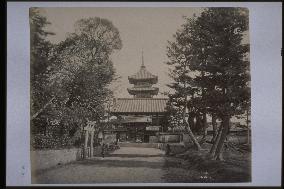
View from south of Shitenoji Temple. Nandaimon and Chumon gastes and the five-story pagoda are visible.==Date:unknown, Place:Osaka, Photo:R. Stillfried, (Credit:Nagasaki University Library/Kyodo News Images) [Cabinet Number78‐44‐0]

  •  
Daibutsu (the Great Buddha) of Kamakura

Daibutsu (the Great Buddha) of Kamakura

Two bronze lotus petals (four existing today) are visible on the front of the pedestal, and a simple building stands on the right. There are large flat stones in front of the lotus petals to both the left and right. The fact that the petals are intact and the accompanying structure is different indicates that this photograph was taken later than the beginning of the Meiji Period when photograph #4464 was apparently taken. The Great Buddha is an object of worship and climbing upon it is prohibited today.==Date:unknown, Place:Kamakura, Photo:R. Stillfried, (Credit:Nagasaki University Library/Kyodo News Images) [Cabinet Number78‐15‐0]

  • Main
  • Top
  • Editorial
  • Creative
  • About Us
  • About ILG
  • Terms of use
  • Company
  • BEHIND
  • Price List
  • Single Plan
  • Monthly Plan
  • Services
  • Shooting
  • Rights Clearance
  • Support
  • FAQ
  • How To Buy
  • Contact Us
  • Become a Partner

© KYODO NEWS IMAGES INC

All Rights Reserved.

  • Editorial
  • Olympics
  • News
  • Sports
  • Japan
  • Tech
  • Royal
  • Disaster
  • NorthKorea
  • Old Japan
  • SNS
  • Creative
  • Food
  • Japan
  • Landscape
  • Animal
  • Popular
  • #Ukraine
  • #Thailand
  • #coronavirus
  • #N. Korea
  • #Russia
  • #China
  • #Ukraine
  • #Thailand
  • #coronavirus
  • #N. Korea
  • #Russia
  • #China
  • Food
  • Japan
  • Landscape
  • Animal
  • Olympics
  • News
  • Sports
  • Japan
  • Tech
  • Royal
  • Disaster
  • NorthKorea
  • Old Japan
  • SNS