•  
Environmental Pollution In Bangladesh

Environmental Pollution In Bangladesh

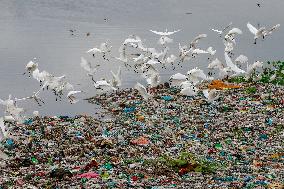
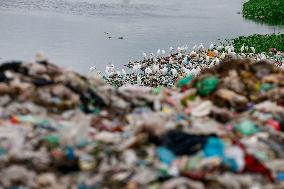
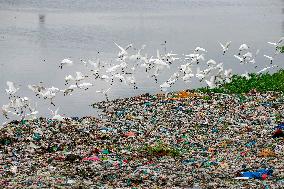
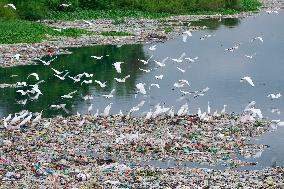
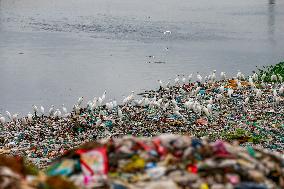
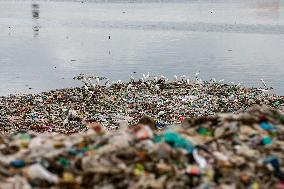
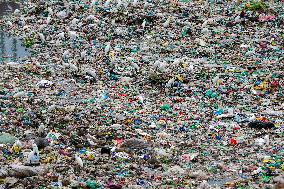
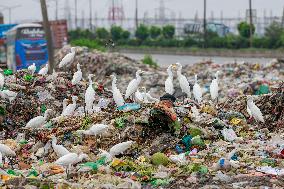
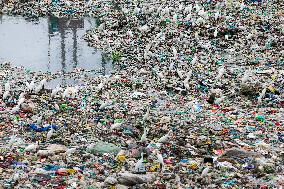
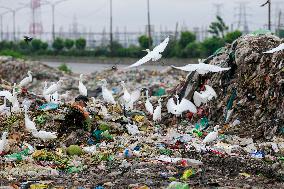
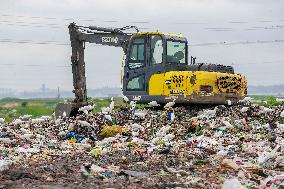
October 02, 2025, Dhaka, Bangladesh: The rivers and canals around Dhaka were once vital sanctuaries of biodiversity. Countless fish swam in their waters, serving as the main food source for fish-eating birds. But now that scene belongs to the past. What was once clear water is now occupied by heaps of garbage. Plastic, polythene, industrial waste, and household trash have severely polluted the water. Faced with a food crisis, fish-eating egrets are being forced to search for food in these piles of waste. Their natural food—fish—is no longer easily available, compelling them to look for alternatives. In Bangladesh, the filling up of rivers and wetlands, illegal encroachment, and plastic pollution together are pushing aquatic ecosystems towards destruction. These wetlands once provided shelter to thousands of native and migratory birds. But in recent years, their numbers have sharply declined. From the haors to Dhaka’s Turag and Balu rivers and other wetlands, the picture is the same: encroachment, landfilling,

  •  
Environmental Pollution In Bangladesh

Environmental Pollution In Bangladesh

October 02, 2025, Dhaka, Bangladesh: The rivers and canals around Dhaka were once vital sanctuaries of biodiversity. Countless fish swam in their waters, serving as the main food source for fish-eating birds. But now that scene belongs to the past. What was once clear water is now occupied by heaps of garbage. Plastic, polythene, industrial waste, and household trash have severely polluted the water. Faced with a food crisis, fish-eating egrets are being forced to search for food in these piles of waste. Their natural food—fish—is no longer easily available, compelling them to look for alternatives. In Bangladesh, the filling up of rivers and wetlands, illegal encroachment, and plastic pollution together are pushing aquatic ecosystems towards destruction. These wetlands once provided shelter to thousands of native and migratory birds. But in recent years, their numbers have sharply declined. From the haors to Dhaka’s Turag and Balu rivers and other wetlands, the picture is the same: encroachment, landfilling,

  •  
Environmental Pollution In Bangladesh

Environmental Pollution In Bangladesh

October 02, 2025, Dhaka, Bangladesh: The rivers and canals around Dhaka were once vital sanctuaries of biodiversity. Countless fish swam in their waters, serving as the main food source for fish-eating birds. But now that scene belongs to the past. What was once clear water is now occupied by heaps of garbage. Plastic, polythene, industrial waste, and household trash have severely polluted the water. Faced with a food crisis, fish-eating egrets are being forced to search for food in these piles of waste. Their natural food—fish—is no longer easily available, compelling them to look for alternatives. In Bangladesh, the filling up of rivers and wetlands, illegal encroachment, and plastic pollution together are pushing aquatic ecosystems towards destruction. These wetlands once provided shelter to thousands of native and migratory birds. But in recent years, their numbers have sharply declined. From the haors to Dhaka’s Turag and Balu rivers and other wetlands, the picture is the same: encroachment, landfilling,

  •  
Environmental Pollution In Bangladesh

Environmental Pollution In Bangladesh

October 02, 2025, Dhaka, Bangladesh: The rivers and canals around Dhaka were once vital sanctuaries of biodiversity. Countless fish swam in their waters, serving as the main food source for fish-eating birds. But now that scene belongs to the past. What was once clear water is now occupied by heaps of garbage. Plastic, polythene, industrial waste, and household trash have severely polluted the water. Faced with a food crisis, fish-eating egrets are being forced to search for food in these piles of waste. Their natural food—fish—is no longer easily available, compelling them to look for alternatives. In Bangladesh, the filling up of rivers and wetlands, illegal encroachment, and plastic pollution together are pushing aquatic ecosystems towards destruction. These wetlands once provided shelter to thousands of native and migratory birds. But in recent years, their numbers have sharply declined. From the haors to Dhaka’s Turag and Balu rivers and other wetlands, the picture is the same: encroachment, landfilling,

  •  
Environmental Pollution In Bangladesh

Environmental Pollution In Bangladesh

October 02, 2025, Dhaka, Bangladesh: The rivers and canals around Dhaka were once vital sanctuaries of biodiversity. Countless fish swam in their waters, serving as the main food source for fish-eating birds. But now that scene belongs to the past. What was once clear water is now occupied by heaps of garbage. Plastic, polythene, industrial waste, and household trash have severely polluted the water. Faced with a food crisis, fish-eating egrets are being forced to search for food in these piles of waste. Their natural food—fish—is no longer easily available, compelling them to look for alternatives. In Bangladesh, the filling up of rivers and wetlands, illegal encroachment, and plastic pollution together are pushing aquatic ecosystems towards destruction. These wetlands once provided shelter to thousands of native and migratory birds. But in recent years, their numbers have sharply declined. From the haors to Dhaka’s Turag and Balu rivers and other wetlands, the picture is the same: encroachment, landfilling,

  •  
Environmental Pollution In Bangladesh

Environmental Pollution In Bangladesh

October 02, 2025, Dhaka, Bangladesh: The rivers and canals around Dhaka were once vital sanctuaries of biodiversity. Countless fish swam in their waters, serving as the main food source for fish-eating birds. But now that scene belongs to the past. What was once clear water is now occupied by heaps of garbage. Plastic, polythene, industrial waste, and household trash have severely polluted the water. Faced with a food crisis, fish-eating egrets are being forced to search for food in these piles of waste. Their natural food—fish—is no longer easily available, compelling them to look for alternatives. In Bangladesh, the filling up of rivers and wetlands, illegal encroachment, and plastic pollution together are pushing aquatic ecosystems towards destruction. These wetlands once provided shelter to thousands of native and migratory birds. But in recent years, their numbers have sharply declined. From the haors to Dhaka’s Turag and Balu rivers and other wetlands, the picture is the same: encroachment, landfilling,

  •  
Environmental Pollution In Bangladesh

Environmental Pollution In Bangladesh

October 02, 2025, Dhaka, Bangladesh: The rivers and canals around Dhaka were once vital sanctuaries of biodiversity. Countless fish swam in their waters, serving as the main food source for fish-eating birds. But now that scene belongs to the past. What was once clear water is now occupied by heaps of garbage. Plastic, polythene, industrial waste, and household trash have severely polluted the water. Faced with a food crisis, fish-eating egrets are being forced to search for food in these piles of waste. Their natural food—fish—is no longer easily available, compelling them to look for alternatives. In Bangladesh, the filling up of rivers and wetlands, illegal encroachment, and plastic pollution together are pushing aquatic ecosystems towards destruction. These wetlands once provided shelter to thousands of native and migratory birds. But in recent years, their numbers have sharply declined. From the haors to Dhaka’s Turag and Balu rivers and other wetlands, the picture is the same: encroachment, landfilling,

  •  
Environmental Pollution In Bangladesh

Environmental Pollution In Bangladesh

October 02, 2025, Dhaka, Bangladesh: The rivers and canals around Dhaka were once vital sanctuaries of biodiversity. Countless fish swam in their waters, serving as the main food source for fish-eating birds. But now that scene belongs to the past. What was once clear water is now occupied by heaps of garbage. Plastic, polythene, industrial waste, and household trash have severely polluted the water. Faced with a food crisis, fish-eating egrets are being forced to search for food in these piles of waste. Their natural food—fish—is no longer easily available, compelling them to look for alternatives. In Bangladesh, the filling up of rivers and wetlands, illegal encroachment, and plastic pollution together are pushing aquatic ecosystems towards destruction. These wetlands once provided shelter to thousands of native and migratory birds. But in recent years, their numbers have sharply declined. From the haors to Dhaka’s Turag and Balu rivers and other wetlands, the picture is the same: encroachment, landfilling,

  •  
Environmental Pollution In Bangladesh

Environmental Pollution In Bangladesh

October 02, 2025, Dhaka, Bangladesh: The rivers and canals around Dhaka were once vital sanctuaries of biodiversity. Countless fish swam in their waters, serving as the main food source for fish-eating birds. But now that scene belongs to the past. What was once clear water is now occupied by heaps of garbage. Plastic, polythene, industrial waste, and household trash have severely polluted the water. Faced with a food crisis, fish-eating egrets are being forced to search for food in these piles of waste. Their natural food—fish—is no longer easily available, compelling them to look for alternatives. In Bangladesh, the filling up of rivers and wetlands, illegal encroachment, and plastic pollution together are pushing aquatic ecosystems towards destruction. These wetlands once provided shelter to thousands of native and migratory birds. But in recent years, their numbers have sharply declined. From the haors to Dhaka’s Turag and Balu rivers and other wetlands, the picture is the same: encroachment, landfilling,

  •  
Environmental Pollution In Bangladesh

Environmental Pollution In Bangladesh

October 02, 2025, Dhaka, Bangladesh: The rivers and canals around Dhaka were once vital sanctuaries of biodiversity. Countless fish swam in their waters, serving as the main food source for fish-eating birds. But now that scene belongs to the past. What was once clear water is now occupied by heaps of garbage. Plastic, polythene, industrial waste, and household trash have severely polluted the water. Faced with a food crisis, fish-eating egrets are being forced to search for food in these piles of waste. Their natural food—fish—is no longer easily available, compelling them to look for alternatives. In Bangladesh, the filling up of rivers and wetlands, illegal encroachment, and plastic pollution together are pushing aquatic ecosystems towards destruction. These wetlands once provided shelter to thousands of native and migratory birds. But in recent years, their numbers have sharply declined. From the haors to Dhaka’s Turag and Balu rivers and other wetlands, the picture is the same: encroachment, landfilling,

  •  
Environmental Pollution In Bangladesh

Environmental Pollution In Bangladesh

October 02, 2025, Dhaka, Bangladesh: The rivers and canals around Dhaka were once vital sanctuaries of biodiversity. Countless fish swam in their waters, serving as the main food source for fish-eating birds. But now that scene belongs to the past. What was once clear water is now occupied by heaps of garbage. Plastic, polythene, industrial waste, and household trash have severely polluted the water. Faced with a food crisis, fish-eating egrets are being forced to search for food in these piles of waste. Their natural food—fish—is no longer easily available, compelling them to look for alternatives. In Bangladesh, the filling up of rivers and wetlands, illegal encroachment, and plastic pollution together are pushing aquatic ecosystems towards destruction. These wetlands once provided shelter to thousands of native and migratory birds. But in recent years, their numbers have sharply declined. From the haors to Dhaka’s Turag and Balu rivers and other wetlands, the picture is the same: encroachment, landfilling,

  •  

People in Gaza's Rafah struggling amidst conflict and piled debris

STORY: People in Gaza's Rafah struggling amidst conflict and piled debris SHOOTING TIME: April 20, 2024 DATELINE: April 22, 2024 LENGTH: 00:01:37 LOCATION: GAZA, Palestine CATEGORY: SOCIETY/HEALTH SHOTLIST: 1. various of areas inflicted by mounting waste in Gaza 2. SOUNDBITE 1 (Arabic): EMAD ABDUL RAHMAN, Resident in Rafah 3. SOUNDBITE 2 (Arabic): MARWAN AL-HAMS, Head of the Health Emergency Committee in Gaza STORYLINE: As municipal services come to a standstill in Rafah, southern Gaza, residents face the burden of coping with mounting waste. Emad Adul Rahman, a 45-year-old father of four, has to take on a two-kilometer trek daily to dispose of household waste. SOUNDBITE 1 (Arabic): EMAD ABDUL RAHMAN, Resident in Rafah "Because of the mosquitoes, all the children are sick and garbage is thrown everywhere. We hope that local authorities will fulfill their duties and address this waste issue." Rahman said the prolonged absence of services had resulted in a buildup of garbage and sewage in their living are

  •  
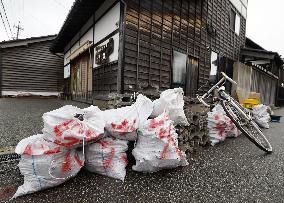
Aftermath of strong earthquake in central Japan

Aftermath of strong earthquake in central Japan

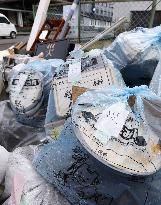
Garbage bags full of discarded household items are pictured on Feb. 6, 2024, on a street in Wajima, Ishikawa Prefecture, following a powerful earthquake in central Japan on Jan. 1.

  •  
Aftermath of strong earthquake in central Japan

Aftermath of strong earthquake in central Japan

Garbage bags full of discarded household items are pictured on Feb. 6, 2024, on a street in Wajima, Ishikawa Prefecture, following a powerful earthquake in central Japan on Jan. 1.

  •  
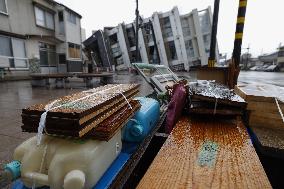
Aftermath of strong earthquake in central Japan

Aftermath of strong earthquake in central Japan

Discarded household items are pictured on Feb. 6, 2024, on a street in Wajima, Ishikawa Prefecture, before being collected by garbage pickup workers, with a toppled building in the background following a powerful earthquake in central Japan on Jan. 1.

  •  
Aftermath of strong earthquake in central Japan

Aftermath of strong earthquake in central Japan

Discarded household items are pictured on Feb. 6, 2024, on a street in Wajima, Ishikawa Prefecture, before being collected by garbage pickup workers, with a toppled building in the background following a powerful earthquake in central Japan on Jan. 1.

  •  
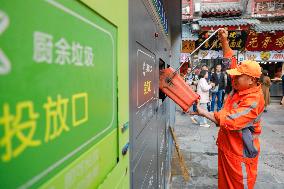
A Household Waste Sorting Box in Jinan

A Household Waste Sorting Box in Jinan

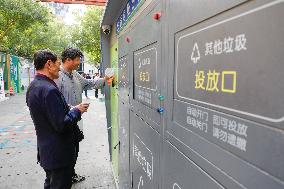
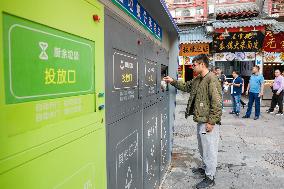
JINAN, CHINA - OCTOBER 16, 2023 - A sanitation worker puts garbage into a household waste sorting box in Jinan, Shandong province, China, Oct 16, 2023.

  •  
A Household Waste Sorting Box in Jinan

A Household Waste Sorting Box in Jinan

JINAN, CHINA - OCTOBER 16, 2023 - A tourist puts garbage into a household waste sorting box in Jinan, Shandong province, China, Oct 16, 2023.

  •  
A Household Waste Sorting Box in Jinan

A Household Waste Sorting Box in Jinan

JINAN, CHINA - OCTOBER 16, 2023 - A tourist puts garbage into a household waste sorting box in Jinan, Shandong province, China, Oct 16, 2023.

  •  

How does Beijing dispose of garbage in areas under closed-off management

STORY: How does Beijing dispose of garbage in areas under closed-off management? DATELINE: May 31, 2022 LENGTH: 00:00:53 LOCATION: Beijing CATEGORY: SOCIETY SHOTLIST: 1. various of workers collecting and transporting household garbage STORYLINE: As Beijing battles a new round of COVID-19 resurgence, the city is also stepping up efforts to deal with household garbage in areas under closed-off management. Beijing Sanitation Group has invested over 100 vehicles and over 160 staff members at more than a dozen key areas to ensure that garbage is collected, transported and processed in a timely and effective manner. At the same time, the company has also launched two incineration plants to burn waste on arrival and clean up the waste generated on a daily basis. At the same time, the company has also worked to ensure that household garbage in areas under closed-off management and those outside do not mix with each other. The vehicles involved in the removal of the household waste are strictly disinfected on a

  •  

Beijing properly handles epidemic-related waste

STORY: Beijing properly handles epidemic-related waste DATELINE: May 11, 2022 LENGTH: 00:00:38 LOCATION: BEIJING CATEGORY: HEALTH SHOTLIST: 1. various of staff disposing of epidemic-related waste STORYLINE: Beijing is disposing of epidemic-related waste in a strict and proper manner amid the COVID-19 resurgence. COVID-19 medical waste is disinfected three times when being packaged and placed into garbage trucks. It must be transported and treated on the same day. Domestic waste in areas under closed-off management is also handled in a timely and strict way. SOUNDBITE (Chinese): LI SHUMAO, Official with waste management in Chaoyang District "At present, the household garbage in areas under closed-off management is directly transported by specific vehicles and personnel to Gao'antun for incineration." Xinhua News Agency correspondents reporting from Beijing. (XHTV)

  •  

How does Shanghai dispose of medical waste amid epidemic ?

STORY: How does Shanghai dispose of medical waste amid epidemic ? DATELINE: April 29, 2022 LENGTH: 00:00:54 LOCATION: SHANGHAI, China CATEGORY: HEALTH SHOTLIST: 1. various of the waste disposal STORYLINE: Medical waste disposal has become a challenge for the Chinese megacity Shanghai, which has been battling against a new round of COVID-19 resurgence. The output of Shanghai's household garbage, especially medical waste, has increased dramatically. Epidemic-related waste coming from designated hospitals, makeshift hospitals, ports and airports in Shanghai has to be treated properly. More than 100 special vehicles for medical waste have worked day and night to collect and transport medical waste and household garbage from quarantine sites to cope with the rising volume of epidemic-related waste disposal every day. Large dump vehicles and loaders were used to improve the loading efficiency. The total collection and transportation capacity increased rapidly from 370 tons per day to 1,500 tons per day, more

  •  

Volunteers dedicated to clean up Yangtze River's longest tributary for years

STORY: Volunteers dedicated to clean up Yangtze River's longest tributary for years DATELINE: April 24, 2022 LENGTH: 00:01:59 LOCATION: XI'AN, China CATEGORY: ENVIRONMENT SHOTLIST: various of volunteersSOUNDBITE 1(Chinese): LIU YUMEI, Team memberSOUNDBITE 2(Chinese): LIU YUMEI, Team memberSOUNDBITE 3 (Chinese): YAN XIANMIAO, Team member STORYLINE: A group of housewives from Xuyang City in northwest China's Shaanxi Province have been volunteering for years to clean up the banks along the Han River, the longest tributary of the Yangtze River. Founded in 2017, the number of its members has grown from 9 to 70 now. SOUNDBITE 1(Chinese): LIU YUMEI, Team member "We are all housewives. In addition to taking care of kids, we volunteer to join the team to protect the river." SOUNDBITE 2 (Chinese): LIU YUMEI, Team member "We mainly clean up plastic trash, including plastic bags, bottles and some household garbage." SOUNDBITE 3 (Chinese): YAN XIANMIAO, Team member "We want to make the river cleaner and the environ

  •  
Police raid garbage disposal company over Manila shipment

Police raid garbage disposal company over Manila shipment

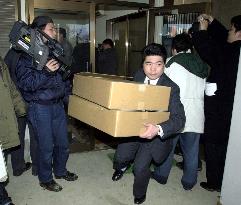
YUKI, Japan - A police officer takes out boxes of documents from the office of Nisso Ltd., an industrial-waste disposal company, in Yuki, Ibaraki Prefecture, on Jan. 14. Police raided Nisso's office on suspicion that it illegally exported 2,700 tons of household and medical waste to the Philippines last year.

  •  
Containers of waste return to Japan from Philippines

Containers of waste return to Japan from Philippines

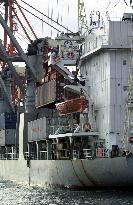
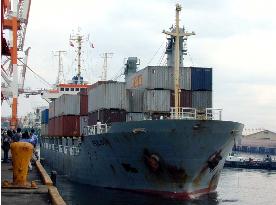
TOKYO, Japan - Containers of hazardous garbage shipped from Manila are unloaded from a vessel in Tokyo port on Jan. 11. The hospital and household waste was allegedly illegally exported to the Philippines in July by a Japanese industrial waste disposal company. A total of 122 such containers arrived in Tokyo on Jan. 10.

  •  
Hazardous waste-carrying ship heading for Tokyo

Hazardous waste-carrying ship heading for Tokyo

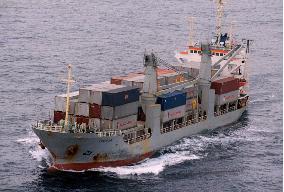
TOKYO, Japan - The photo, taken by a Kyodo News helicopter at a point about 120 kilometers south-southwest of Omaezaki, Shizuoka Prefecture, shows the MV Pulsar, a Panamanian-registered containership, heading for Tokyo port on Jan. 9. The vessel is sailing at a speed of about 4 knots per hour, carrying 122 containers of hazardous garbage shipped from Manila. The hospital and household waste had been illegally exported to the Philippines in July and is being shipped back to Japan. The containers are to be unloaded at Tokyo port on Jan. 11.

  •  
Japan ships waste back from Philippines

Japan ships waste back from Philippines

MANILA, Philippines - A Panamanian-registered containership, the MV Pulsar, leaves Manila on Dec. 31 bound for Japan with 122 containers of hazardous garbage. The Japanese government chartered the ship for the shipment of the hospital and household waste, which was illegally exported to Manila in July.

  • Main
  • Top
  • Editorial
  • Creative
  • About Us
  • About ILG
  • Terms of use
  • Company
  • BEHIND
  • Price List
  • Single Plan
  • Monthly Plan
  • Services
  • Shooting
  • Rights Clearance
  • Support
  • FAQ
  • How To Buy
  • Contact Us
  • Become a Partner

© KYODO NEWS IMAGES INC

All Rights Reserved.

  • Editorial
  • Olympics
  • News
  • Sports
  • Japan
  • Tech
  • Royal
  • Disaster
  • NorthKorea
  • Old Japan
  • SNS
  • Creative
  • Food
  • Japan
  • Landscape
  • Animal
  • Popular
  • #Ukraine
  • #China
  • #coronavirus
  • #N. Korea
  • #Russia
  • #Thailand
  • #Ukraine
  • #China
  • #coronavirus
  • #N. Korea
  • #Russia
  • #Thailand
  • Food
  • Japan
  • Landscape
  • Animal
  • Olympics
  • News
  • Sports
  • Japan
  • Tech
  • Royal
  • Disaster
  • NorthKorea
  • Old Japan
  • SNS