•  
Star Explosion Reveals New Space Ingredients

Star Explosion Reveals New Space Ingredients

Handout - Scientists have spotted chlorine and potassium hiding inside the remains of a blown-up star for the first time. Using Japan’s XRISM space telescope, they found these elements inside the giant cloud of debris left behind by the supernova called Cassiopeia A. The explosion happened about 11,000 light-years from Earth, but it is still giving up new secrets today. The find shows how stars don’t just light up the sky, they also make many of the elements that help build planets and life. Even long after a star explodes, it can still teach us something new about the universe. This discovery was published in a scientific paper on December 4 this year, and the image was released on January 28, 2024, using data from NASA’s Chandra telescope along with Hubble, Webb and Spitzer. Photo by Image credit: X-ray: NASA/CXC/SAO; Optical: NASA/ESA/STScI; IR: NASA/ESA/CSA/STScI/Milisavljevic et al., NASA/JPL/CalTech; Image Processing: NASA/CXC/SAO/J. Schmidt and K. Arcand via ABACAPRESS.COM

  •  
Hubble Seeks Clusters in Lost Galaxy

Hubble Seeks Clusters in Lost Galaxy

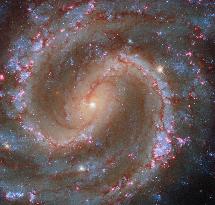
Handout Photo shows NASA/ESA Hubble Space Telescope image features the spiral galaxy NGC 4535, which is situated about 50 million light-years away in the constellation Virgo (the Maiden). Through a small telescope, this galaxy appears extremely faint, giving it the nickname ‘Lost Galaxy’. With a mirror spanning nearly eight feet (2.4 meters) across and its location above Earth’s light-obscuring atmosphere, Hubble can easily observe dim galaxies like NGC 4535 and pick out features like its massive spiral arms and central bar of stars. This image features NGC 4535’s young star clusters, which dot the galaxy’s spiral arms. Glowing-pink clouds surround many of these bright-blue star groupings. These clouds, called H II (‘H-two’) regions, are a sign that the galaxy is home to especially young, hot, and massive stars that blaze with high-energy radiation. Such massive stars shake up their surroundings by heating their birth clouds with powerful stellar winds, eventually exploding as supernovae. The image incorporat

  •  
Hubble Seeks Clusters in ‘Lost Galaxy’

Hubble Seeks Clusters in ‘Lost Galaxy’

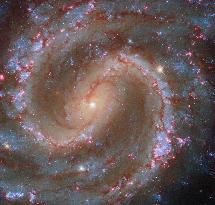
NASA/ESA Hubble Space Telescope image features the spiral galaxy NGC 4535, which is situated about 50 million light-years away in the constellation Virgo (the Maiden). Through a small telescope, this galaxy appears extremely faint, giving it the nickname ‘Lost Galaxy’. With a mirror spanning nearly eight feet (2.4 meters) across and its location above Earth’s light-obscuring atmosphere, Hubble can easily observe dim galaxies like NGC 4535 and pick out features like its massive spiral arms and central bar of stars. This image features NGC 4535’s young star clusters, which dot the galaxy’s spiral arms. Glowing-pink clouds surround many of these bright-blue star groupings. These clouds, called H II (‘H-two’) regions, are a sign that the galaxy is home to especially young, hot, and massive stars that blaze with high-energy radiation. Such massive stars shake up their surroundings by heating their birth clouds with powerful stellar winds, eventually exploding as supernovae. The image incorporates data from an obse

  •  
Webb Reveals Sombrero Galaxy's Hidden Details

Webb Reveals Sombrero Galaxy's Hidden Details

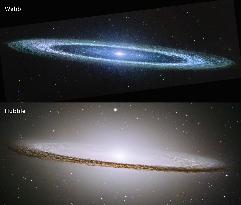
Handout photo dated November 25, 2024 shows the view of the famous Sombrero Galaxy in mid-infrared light (top) and visible light (bottom). The James Webb Space Telescope’s MIRI (Mid-Infrared Instrument) reveals the smooth inner disk of the galaxy, while the Hubble Space Telescope’s visible-light image shows the large and extended glow of the central bulge of stars. NASA’s James Webb Space Telescope captures the Sombrero Galaxy (Messier 104) in stunning mid-infrared detail. This oblong galaxy, named for its resemblance to a wide-brimmed hat, reveals intricate clumps of dust along its outer ring, illuminated in shades of blue and white. Speckles of stars scatter its inner disk, while distant galaxies dot the black cosmic canvas in the background. The new image, taken with Webb's MIRI instrument, offers unprecedented insight into the galaxy’s structure and the faint traces of young star-forming regions. November 25, 2024. Photo by NASA via ABACAPRESS.COM

  •  
Pillars of Creation Star in New Visualization from NASA's Hubble and Webb Telescopes

Pillars of Creation Star in New Visualization from NASA's Hubble and Webb Telescopes

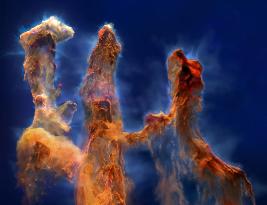
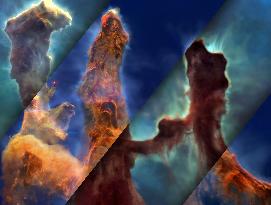
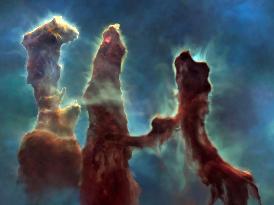
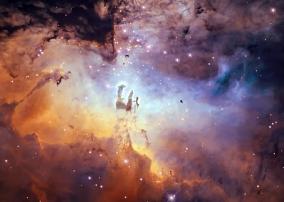
HANDOUT - The Pillars of Creation are one of the most iconic and beautiful sights in deep space - and now NASA has released a 3D visualisation allowing us to really see inside the most stunning part of the Eagle Nebula. Made famous in 1995 by NASA's Hubble Space Telescope, the Pillars of Creation are giant clouds where stars are born. Using data from NASA's Hubble and James Webb space telescopes, astronomers have created a comprehensive and detailed multiwavelength look at these towering celestial structures. By flying past and amongst the pillars, viewers experience their three-dimensional structure and see how they look different in the Hubble visible-light view versus the Webb infrared-light view," explained principal visualization scientist Frank Summers of the Space Telescope Science Institute (STScI) in Baltimore, who led the movie development team for NASA's Universe of Learning. The four Pillars of Creation, made primarily of cool molecular hydrogen and dust, are being eroded by the fierce winds and p

  •  
Pillars of Creation Star in New Visualization from NASA's Hubble and Webb Telescopes

Pillars of Creation Star in New Visualization from NASA's Hubble and Webb Telescopes

HANDOUT - The Pillars of Creation are one of the most iconic and beautiful sights in deep space - and now NASA has released a 3D visualisation allowing us to really see inside the most stunning part of the Eagle Nebula. Made famous in 1995 by NASA's Hubble Space Telescope, the Pillars of Creation are giant clouds where stars are born. Using data from NASA's Hubble and James Webb space telescopes, astronomers have created a comprehensive and detailed multiwavelength look at these towering celestial structures. By flying past and amongst the pillars, viewers experience their three-dimensional structure and see how they look different in the Hubble visible-light view versus the Webb infrared-light view," explained principal visualization scientist Frank Summers of the Space Telescope Science Institute (STScI) in Baltimore, who led the movie development team for NASA's Universe of Learning. The four Pillars of Creation, made primarily of cool molecular hydrogen and dust, are being eroded by the fierce winds and p

  •  
Pillars of Creation Star in New Visualization from NASA's Hubble and Webb Telescopes

Pillars of Creation Star in New Visualization from NASA's Hubble and Webb Telescopes

HANDOUT - The Pillars of Creation are one of the most iconic and beautiful sights in deep space - and now NASA has released a 3D visualisation allowing us to really see inside the most stunning part of the Eagle Nebula. Made famous in 1995 by NASA's Hubble Space Telescope, the Pillars of Creation are giant clouds where stars are born. Using data from NASA's Hubble and James Webb space telescopes, astronomers have created a comprehensive and detailed multiwavelength look at these towering celestial structures. By flying past and amongst the pillars, viewers experience their three-dimensional structure and see how they look different in the Hubble visible-light view versus the Webb infrared-light view," explained principal visualization scientist Frank Summers of the Space Telescope Science Institute (STScI) in Baltimore, who led the movie development team for NASA's Universe of Learning. The four Pillars of Creation, made primarily of cool molecular hydrogen and dust, are being eroded by the fierce winds and p

  •  
Pillars of Creation Star in New Visualization from NASA's Hubble and Webb Telescopes

Pillars of Creation Star in New Visualization from NASA's Hubble and Webb Telescopes

HANDOUT - The Pillars of Creation are one of the most iconic and beautiful sights in deep space - and now NASA has released a 3D visualisation allowing us to really see inside the most stunning part of the Eagle Nebula. Made famous in 1995 by NASA's Hubble Space Telescope, the Pillars of Creation are giant clouds where stars are born. Using data from NASA's Hubble and James Webb space telescopes, astronomers have created a comprehensive and detailed multiwavelength look at these towering celestial structures. By flying past and amongst the pillars, viewers experience their three-dimensional structure and see how they look different in the Hubble visible-light view versus the Webb infrared-light view," explained principal visualization scientist Frank Summers of the Space Telescope Science Institute (STScI) in Baltimore, who led the movie development team for NASA's Universe of Learning. The four Pillars of Creation, made primarily of cool molecular hydrogen and dust, are being eroded by the fierce winds and p

  •  
Hubble Spots the Little Dumbbell Nebula

Hubble Spots the Little Dumbbell Nebula

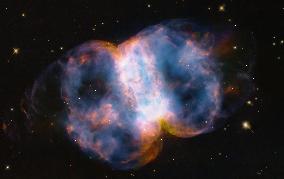
Handout - In celebration of the 34th anniversary of the launch of NASA’s Hubble Space Telescope, astronomers took a snapshot of the Little Dumbbell Nebula, also known as Messier 76, or M76, located 3,400 light-years away in the northern circumpolar constellation Perseus. The name ‘Little Dumbbell’ comes from its shape that is a two-lobed structure of colorful, mottled, glowing gases resembling a balloon that’s been pinched around a middle waist. Like an inflating balloon, the lobes are expanding into space from a dying star seen as a white dot in the center. Blistering ultraviolet radiation from the super-hot star is causing the gases to glow. The red color is from nitrogen, and blue is from oxygen. Photo by NASA, ESA, STScI via ABACAPRESS.COM

  •  
Hubble Tracks Jupiter’s Stormy Weather

Hubble Tracks Jupiter’s Stormy Weather

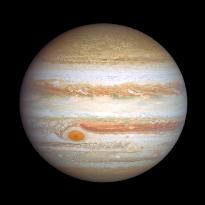
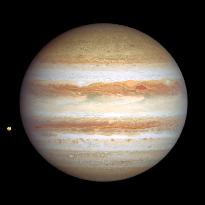
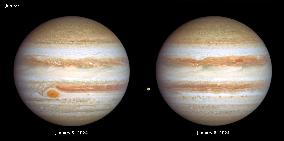
Handout - Hubble Image of Jupiter’s Storm Activity and Io Taken January 6, 2024. NASA's Hubble Space Telescope imaged both sides of the giant planet, Jupiter, on January 5-6, 2024. Incredible new pictures show the stormy weather on Jupiter. The images, captured by NASA's Hubble Space Telescope on January 5-6, 2024, provide a view of both hemispheres of the planet. The space agency said Thursday (14 March) the visuals feature the largest planet in the Solar System "in all its banded glory". One image depicts the 'Great Red Spot,' the Solar System's largest storm, with a size massive enough to swallow the Earth. NASA explain that Hubble monitors Jupiter and the other outer solar system planets every year under the Outer Planet Atmospheres Legacy program (OPAL). OPAL focuses on long-term observations of Jupiter, Saturn, Uranus, and Neptune to monitor and understand changes in their atmospheres, including variations in weather patterns, cloud formations, and other atmospheric phenomena. "This is because these lar

  •  
Hubble Tracks Jupiter’s Stormy Weather

Hubble Tracks Jupiter’s Stormy Weather

Handout - Hubble Image of Jupiter Taken January 5, 2024. NASA's Hubble Space Telescope imaged both sides of the giant planet, Jupiter, on January 5-6, 2024. Incredible new pictures show the stormy weather on Jupiter. The images, captured by NASA's Hubble Space Telescope on January 5-6, 2024, provide a view of both hemispheres of the planet. The space agency said Thursday (14 March) the visuals feature the largest planet in the Solar System "in all its banded glory". One image depicts the 'Great Red Spot,' the Solar System's largest storm, with a size massive enough to swallow the Earth. NASA explain that Hubble monitors Jupiter and the other outer solar system planets every year under the Outer Planet Atmospheres Legacy program (OPAL). OPAL focuses on long-term observations of Jupiter, Saturn, Uranus, and Neptune to monitor and understand changes in their atmospheres, including variations in weather patterns, cloud formations, and other atmospheric phenomena. "This is because these large worlds are shrouded i

  •  
Hubble Tracks Jupiter’s Stormy Weather

Hubble Tracks Jupiter’s Stormy Weather

Handout - Hubble Views Jupiter, January 2024. NASA's Hubble Space Telescope imaged both sides of the giant planet, Jupiter, on January 5-6, 2024. Incredible new pictures show the stormy weather on Jupiter. The images, captured by NASA's Hubble Space Telescope on January 5-6, 2024, provide a view of both hemispheres of the planet. The space agency said Thursday (14 March) the visuals feature the largest planet in the Solar System "in all its banded glory". One image depicts the 'Great Red Spot,' the Solar System's largest storm, with a size massive enough to swallow the Earth. NASA explain that Hubble monitors Jupiter and the other outer solar system planets every year under the Outer Planet Atmospheres Legacy program (OPAL). OPAL focuses on long-term observations of Jupiter, Saturn, Uranus, and Neptune to monitor and understand changes in their atmospheres, including variations in weather patterns, cloud formations, and other atmospheric phenomena. "This is because these large worlds are shrouded in clouds an

  •  
Galactic Island Of Tranquillity

Galactic Island Of Tranquillity

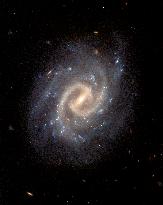
Handout photo shows The tranquil spiral galaxy UGC 12295 basks leisurely in this image from the NASA/ESA Hubble Space Telescope. This galaxy lies around 192 million light-years away in the constellation Pisces, and is almost face-on when viewed from Earth, displaying a bright central bar and tightly wound spiral arms. Despite appearing as an island of tranquillity in this image, UGC 12295 played host to a catastrophically violent explosion - a supernova - that was first detected in 2015. This supernova prompted two different teams of astronomers to propose Hubble observations of UGC 12295 that would sift through the wreckage of this vast stellar explosion. Supernovae are the explosive deaths of massive stars, and are responsible for forging many of the elements found here on Earth. The first team of astronomers used Hubble’s Wide Field Camera 3 (WFC3) to examine the detritus left behind by the supernova in order to better understand the evolution of matter in our Universe.  The second team of astronomers also

  •  
CANADA-TORONTO-ONTARIO SCIENCE CENTER-MARCH BREAK

CANADA-TORONTO-ONTARIO SCIENCE CENTER-MARCH BREAK

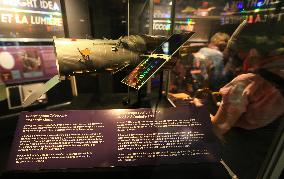
(220317) -- TORONTO, March 17, 2022 (Xinhua) -- People look at a model of the Hubble Space Telescope at Ontario Science Center in Toronto, Ontario, Canada, March 16, 2022. The Ontario Science Center attracts many parents and children during five days of March Break this year. (Photo by Zou Zheng/Xinhua)

  •  
Hubble Space Telescope's First Observations Since Being Fixed

Hubble Space Telescope's First Observations Since Being Fixed

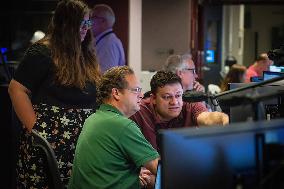
Members of the Hubble operations team work in the control room July 15, 2021, to restore Hubble to science operations. NASA Begins Switch to Backup Spacecraft Hardware. Today, NASA began a switch to backup spacecraft hardware on Hubble in response to an ongoing problem with its payload computer. This will be a multi-day event. If successful, the next step will be for science instruments to be brought back into operation. Editorial Use Only. Handout Photo by Goddard/Rebecca Roth/NASA/ABACAPRESS.COM

  •  
Hubble Space Telescope's First Observations Since Being Fixed

Hubble Space Telescope's First Observations Since Being Fixed

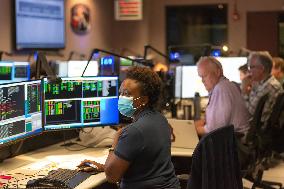
Nzinga Tull, Hubble systems anomaly response manager at NASAs Goddard Space Flight Center in Greenbelt, Maryland, USA, works in the control room July 15, 2021, to restore Hubble to full science operations. The team proceeded carefully and systematically from there. Over the following two weeks, more than 50 people worked to review, update, and vet the procedures to switch to backup hardware, testing them on a high-fidelity simulator and holding a formal review of the proposed plan. Editorial Use Only. Handout Photo by Rebecca Roth/GSFC NASA/ABACAPRESS.COM

  •  
NASA Delays The James Webb Space Telescope Launch Again

NASA Delays The James Webb Space Telescope Launch Again

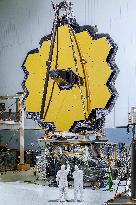
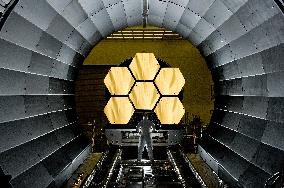
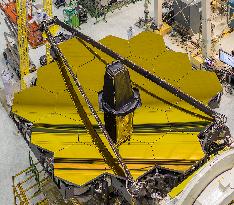
★Handout photo dated November 22, 2016 of the primary mirror of NASA's James Webb Space Telescope consisting of 18 hexagonal mirrors looks like a giant puzzle piece standing in the massive clean room of NASA's Goddard Space Flight Center in Greenbelt, Maryland. Appropriately, combined with the rest of the observatory, the mirrors will help piece together puzzles scientists have been trying to solve throughout the cosmos. Last summer, NASA and the European Space Agency (ESA) set an October 31, 2021, launch date for the $ 10 billion James Webb Space Telescope, but it's having to delay the science observatory's trip into space once again. Thankfully, the launch might take place just a few weeks later, in November or early December. A rescheduled date is unlikely to be confirmed until later this summer or perhaps in the fall. The instrument, successor to NASA's Hubble Space Telescope, which i

  •  
NASA Delays The James Webb Space Telescope Launch Again

NASA Delays The James Webb Space Telescope Launch Again

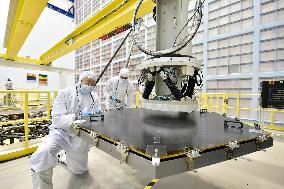
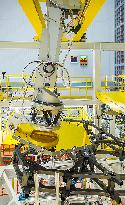
★Handout photo dated November 20, 2015 of a. Last summer, NASA and the European Space Agency (ESA) set an October 31, 2021, launch date for the $ 10 billion James Webb Space Telescope, but it's having to delay the science observatory's trip into space once again. Thankfully, the launch might take place just a few weeks later, in November or early December. A rescheduled date is unlikely to be confirmed until later this summer or perhaps in the fall. The instrument, successor to NASA's Hubble Space Telescope, which is the largest science observatory ever placed into space, will launch on a European Ariane 5 rocket from a spaceport in French Guiana. Photo by NASA via ABACAPRESS.COM primary mirror segment (black hexagonal shape) from the James Webb Space Telescope was mounted on a grey/silver robotic arm at NASA Goddard Space Flight Center. The arm will install the mirror onto the Telescope

  •  
NASA Delays The James Webb Space Telescope Launch Again

NASA Delays The James Webb Space Telescope Launch Again

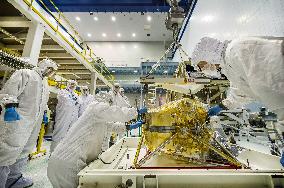
★Handout photo dated July 27, 2013 of the optics module of the James Webb Space Telescope's primary imager, the Near Infrared Camera, arrived at NASA's Goddard Space Flight Center in Greenbelt, Md. In this photo, Lockheed Martin engineers attach a lift sling to the NIRCam instrument. Last summer, NASA and the European Space Agency (ESA) set an October 31, 2021, launch date for the $ 10 billion James Webb Space Telescope, but it's having to delay the science observatory's trip into space once again. Thankfully, the launch might take place just a few weeks later, in November or early December. A rescheduled date is unlikely to be confirmed until later this summer or perhaps in the fall. The instrument, successor to NASA's Hubble Space Telescope, which is the largest science observatory ever placed into space, will launch on a European Ariane 5 rocket from a spaceport in French Guiana. Photo

  •  
NASA Delays The James Webb Space Telescope Launch Again

NASA Delays The James Webb Space Telescope Launch Again

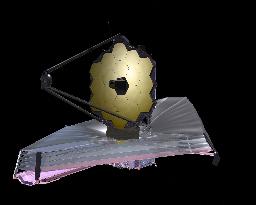
★Handout photo dated June 27, 2014 of The James Webb Space Telescope (sometimes called JWST or Webb) is an orbiting infrared observatory that will complement and extend the discoveries of the Hubble Space Telescope, with longer wavelength coverage and greatly improved sensitivity. Last summer, NASA and the European Space Agency (ESA) set an October 31, 2021, launch date for the $ 10 billion James Webb Space Telescope, but it's having to delay the science observatory's trip into space once again. Thankfully, the launch might take place just a few weeks later, in November or early December. A rescheduled date is unlikely to be confirmed until later this summer or perhaps in the fall. The instrument, successor to NASA's Hubble Space Telescope, which is the largest science observatory ever placed into space, will launch on a European Ariane 5 rocket from a spaceport in French Guiana. Photo by

  •  
NASA Delays The James Webb Space Telescope Launch Again

NASA Delays The James Webb Space Telescope Launch Again

Handout photo dated April 15, 2011 of NASA engineer Ernie Wright looks on as the first six flight ready James Webb Space Telescope's primary mirror segments are prepped to begin final cryogenic testing at NASA's Marshall Space Flight Center. Last summer, NASA and the European Space Agency (ESA) set an October 31, 2021, launch date for the $ 10 billion James Webb Space Telescope, but it's having to delay the science observatory's trip into space once again. Thankfully, the launch might take place just a few weeks later, in November or early December. A rescheduled date is unlikely to be confirmed until later this summer or perhaps in the fall. The instrument, successor to NASA's Hubble Space Telescope, which is the largest science observatory ever placed into space, will launch on a European Ariane 5 rocket from a spaceport in French Guiana. Photo by NASA via ABACAPRESS.COM

  •  
NASA Delays The James Webb Space Telescope Launch Again

NASA Delays The James Webb Space Telescope Launch Again

★Handout photo dated April 29, 2016 of Inside the clean room at NASA's Goddard Space Flight Center, the golden James Webb Space Telescope is viewed from overhead with its secondary mirror booms stowed. This is the position the secondary mirror will be in during launch. Last summer, NASA and the European Space Agency (ESA) set an October 31, 2021, launch date for the $ 10 billion James Webb Space Telescope, but it's having to delay the science observatory's trip into space once again. Thankfully, the launch might take place just a few weeks later, in November or early December. A rescheduled date is unlikely to be confirmed until later this summer or perhaps in the fall. The instrument, successor to NASA's Hubble Space Telescope, which is the largest science observatory ever placed into space, will launch on a European Ariane 5 rocket from a spaceport in French Guiana. Photo by NASA via AB

  •  
NASA Delays The James Webb Space Telescope Launch Again

NASA Delays The James Webb Space Telescope Launch Again

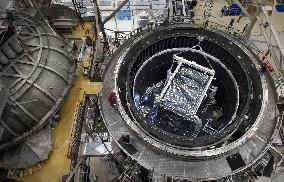
★Handout photo dated October 22, 2014 of After 116 days of being subjected to extremely frigid temperatures like that in space, the heart of the James Webb Space Telescope, the Integrated Science Instrument Module (ISIM) and its sensitive instruments, emerged unscathed from the thermal vacuum chamber at NASA's Goddard Space Flight Center in Greenbelt, Maryland. Last summer, NASA and the European Space Agency (ESA) set an October 31, 2021, launch date for the $ 10 billion James Webb Space Telescope, but it's having to delay the science observatory's trip into space once again. Thankfully, the launch might take place just a few weeks later, in November or early December. A rescheduled date is unlikely to be confirmed until later this summer or perhaps in the fall. The instrument, successor to NASA's Hubble Space Telescope, which is the largest science observatory ever placed into space, wil

  •  
NASA Delays The James Webb Space Telescope Launch Again

NASA Delays The James Webb Space Telescope Launch Again

★Handout photo dated November 26, 2013 of The robotic arm lifts and lowers a golden James Webb Space Telescope flight spare primary mirror segment onto a test piece of backplane at NASA's Goddard Space Flight Center in Greenbelt, Md. While the team practices the positioning that will be done on the actual telescope in the cleanroom, Dave Sime, an assembly crew chief, inspects the mirror placement from the underside of the backplane. Last summer, NASA and the European Space Agency (ESA) set an October 31, 2021, launch date for the $ 10 billion James Webb Space Telescope, but it's having to delay the science observatory's trip into space once again. Thankfully, the launch might take place just a few weeks later, in November or early December. A rescheduled date is unlikely to be confirmed until later this summer or perhaps in the fall. The instrument, successor to NASA's Hubble Space Telesc

  •  
First light images taken by Japan's 'Subaru' telescope

First light images taken by Japan's 'Subaru' telescope

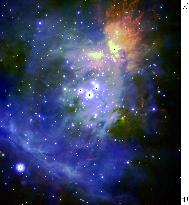
This handout photo of the Orion nebula, released by the National Astronomical Observatory of Japan (NAOJ) on Jan. 29, has been taken using 'Subaru,' one of the world's largest optical-infrared telescopes located in Hawaii. It shows sharp images of four bright stars called Trapezium, which are normally concealed behind gas clouds. The Subaru Telescope, named after the Japanese word for Pleiades, made verifiable observations of objects 5 billion light years away in the Milky Way Galaxy in two hours, compared with the seven hours it took the orbiting Hubble Telescope, NAOJ officials said. ==Kyodo

  •  
Good Boy! (2003)

Good Boy! (2003)

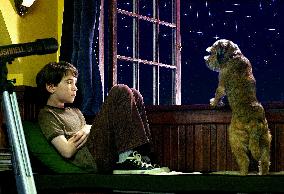
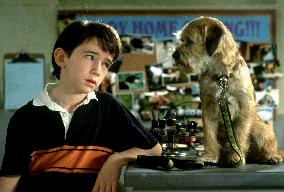
Liam Aiken, Hubble & Brittany Moldowan Characters: Owen Baker,Hubble & Connie Fleming Film: Good Boy! (2003) 10 October 2003 Date: 10 October 2003

  •  
Good Boy! (2003)

Good Boy! (2003)

Hubble & Liam Aiken Characters: Hubble & Owen Baker Film: Good Boy! (2003) 10 October 2003 Date: 10 October 2003

  •  
Good Boy! (2003)

Good Boy! (2003)

Hubble & Liam Aiken Characters: Hubble & Owen Baker Film: Good Boy! (2003) 10 October 2003 Date: 10 October 2003

  •  
Good Boy! (2003)

Good Boy! (2003)

Liam Aiken & Hubble Characters: Owen Baker & Hubble Film: Good Boy! (2003) 10 October 2003 Date: 10 October 2003

  •  
Good Boy! (2003)

Good Boy! (2003)

Hubble & Liam Aiken Characters: Hubble & Owen Baker Film: Good Boy! (2003) 10 October 2003 Date: 10 October 2003

  •  
Good Boy! (2003)

Good Boy! (2003)

Liam Aiken & Hubble Characters: Owen Baker & Hubble Film: Good Boy! (2003) 10 October 2003 Date: 10 October 2003

  •  
Good Boy! (2003)

Good Boy! (2003)

Liam Aiken & Hubble Characters: Owen Baker & Hubble Film: Good Boy! (2003) 10 October 2003 Date: 10 October 2003

  •  
Good Boy! (2003)

Good Boy! (2003)

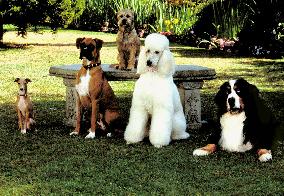
Nelly, Wilson, Hubble, Barbara Ann & Shep Characters: Nelly,Wilson,Hubble,Barbara Ann & Shep Film: Good Boy! (2003) 10 October 2003 Date: 10 October 2003

  •  
Good Boy! (2003)

Good Boy! (2003)

Hubble & John Robert Hoffman Characters: Hubble & Film: Good Boy! (2003) 10 October 2003 Date: 10 October 2003

  •  
Good Boy! (2003)

Good Boy! (2003)

Hubble & Liam Aiken Characters: Hubble & Owen Baker Film: Good Boy! (2003) 10 October 2003 Date: 10 October 2003

  •  
Good Boy! (2003)

Good Boy! (2003)

Liam Aiken & Hubble Characters: Owen Baker & Hubble Film: Good Boy! (2003) 10 October 2003 Date: 10 October 2003

  •  
Good Boy! (2003)

Good Boy! (2003)

Hubble & Liam Aiken Characters: Hubble & Owen Baker Film: Good Boy! (2003) 10 October 2003 Date: 10 October 2003

  •  
Good Boy! (2003)

Good Boy! (2003)

Kevin Nealon, Molly Shannon, Hubble & Liam Aiken Characters: Mr. Baker,Mrs. Baker,Hubble & Owen Baker Film: Good Boy! (2003) 10 October 2003 Date: 10 October 2003

  •  
Good Boy! (2003)

Good Boy! (2003)

Liam Aiken & Hubble Characters: Owen Baker & Hubble Film: Good Boy! (2003) 10 October 2003 Date: 10 October 2003

  •  
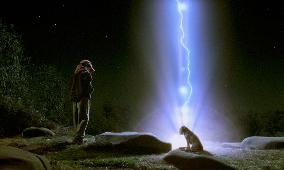
Good Boy! (2003)

Good Boy! (2003)

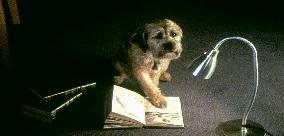
Hubble Characters: Hubble Film: Good Boy! (2003) 10 October 2003 Date: 10 October 2003

  •  
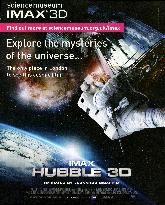
IMAX: HUBBLE 3D

IMAX: HUBBLE 3D

IMAX: HUBBLE 3D Date: 2010

  • Main
  • Top
  • Editorial
  • Creative
  • About Us
  • About ILG
  • Terms of use
  • Company
  • BEHIND
  • Price List
  • Single Plan
  • Monthly Plan
  • Services
  • Shooting
  • Rights Clearance
  • Support
  • FAQ
  • How To Buy
  • Contact Us
  • Become a Partner

© KYODO NEWS IMAGES INC

All Rights Reserved.

  • Editorial
  • Olympics
  • News
  • Sports
  • Japan
  • Tech
  • Royal
  • Disaster
  • NorthKorea
  • Old Japan
  • SNS
  • Creative
  • Food
  • Japan
  • Landscape
  • Animal
  • Popular
  • #Ukraine
  • #Russia
  • #coronavirus
  • #N. Korea
  • #Thailand
  • #China
  • #Ukraine
  • #Russia
  • #coronavirus
  • #N. Korea
  • #Thailand
  • #China
  • Food
  • Japan
  • Landscape
  • Animal
  • Olympics
  • News
  • Sports
  • Japan
  • Tech
  • Royal
  • Disaster
  • NorthKorea
  • Old Japan
  • SNS