•  
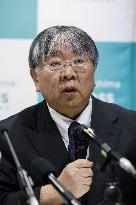
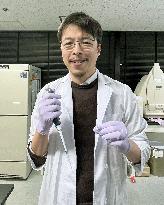
Reproductive genetics scientist Hayashi

Reproductive genetics scientist Hayashi

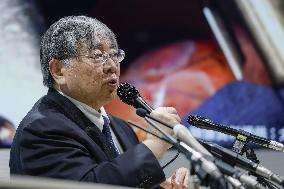
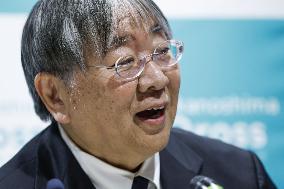
SUITA, Japan, July 31 Kyodo - Photo taken on Jan. 18, 2023, shows Osaka University Professor Katsuhiko Hayashi at a university campus in Suita, Osaka Prefecture. The reproductive genetics scientist's team succeeded in producing mice eggs using iPS cells. (Kyodo)

  •  
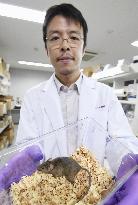
Mouse born using iPS cell

Mouse born using iPS cell

FUKUOKA, Japan, July 31 Kyodo - Photo taken on Oct. 14, 2016, at a Kyushu University Hospital campus in Fukuoka, southwestern Japan, shows Kyushu University professor Katsuhiko Hayashi, who specializes in reproductive genetics, with a baby mouse born using an egg produced from an iPS cell.(Kyodo)

  •  
Kyoto University Center for iPS Cell Research and Application CiRA Signage and logo

Kyoto University Center for iPS Cell Research and Application CiRA Signage and logo

Kyoto University Center for iPS Cell Research and Application CiRA Signage and logo=May 8,2025,Kyoto

  •  
Signboard and logo of Kyoto University iPS Cell Research Foundation

Signboard and logo of Kyoto University iPS Cell Research Foundation

Signboard and logo of Kyoto University iPS Cell Research Foundation=May 8,2025,Kyoto

  •  
Signboard and logo of Kyoto University iPS Cell Research Foundation

Signboard and logo of Kyoto University iPS Cell Research Foundation

Signboard and logo of Kyoto University iPS Cell Research Foundation=May 8,2025,Kyoto

  •  
Kyoto University Center for iPS Cell Research and Application CiRA Signage and logo

Kyoto University Center for iPS Cell Research and Application CiRA Signage and logo

Kyoto University Center for iPS Cell Research and Application CiRA Signage and logo=May 8,2025,Kyoto

  •  
Signboard and logo of Kyoto University iPS Cell Research Foundation

Signboard and logo of Kyoto University iPS Cell Research Foundation

Signboard and logo of Kyoto University iPS Cell Research Foundation=May 8,2025,Kyoto

  •  
Kyoto University Center for iPS Cell Research and Application CiRA Signage and logo

Kyoto University Center for iPS Cell Research and Application CiRA Signage and logo

Kyoto University Center for iPS Cell Research and Application CiRA Signage and logo=May 8,2025,Kyoto

  •  
Signboard and logo of Kyoto University iPS Cell Research Foundation

Signboard and logo of Kyoto University iPS Cell Research Foundation

Signboard and logo of Kyoto University iPS Cell Research Foundation=May 8,2025,Kyoto

  •  
Kyoto University Center for iPS Cell Research and Application CiRA Signage and logo

Kyoto University Center for iPS Cell Research and Application CiRA Signage and logo

Kyoto University Center for iPS Cell Research and Application CiRA Signage and logo=May 8,2025,Kyoto

  •  
Kyoto University Center for iPS Cell Research and Application CiRA Signage and logo

Kyoto University Center for iPS Cell Research and Application CiRA Signage and logo

Kyoto University Center for iPS Cell Research and Application CiRA Signage and logo=May 8,2025,Kyoto

  •  
Kyoto University Center for iPS Cell Research and Application CiRA Signage and logo

Kyoto University Center for iPS Cell Research and Application CiRA Signage and logo

Kyoto University Center for iPS Cell Research and Application CiRA Signage and logo=May 8,2025,Kyoto

  •  
Kyoto University Center for iPS Cell Research and Application CiRA Signage and logo

Kyoto University Center for iPS Cell Research and Application CiRA Signage and logo

Kyoto University Center for iPS Cell Research and Application CiRA Signage and logo=May 8,2025,Kyoto

  •  
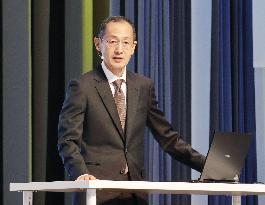
Sweden's day at Osaka expo

Sweden's day at Osaka expo

Kyoto University's Shinya Yamanaka, who won the Nobel Prize in physiology or medicine in 2012 for developing iPS cells, makes a speech at a ceremony in Osaka on May 14, 2025, marking the event's Sweden day.

  •  
World Exposition opens in Osaka

World Exposition opens in Osaka

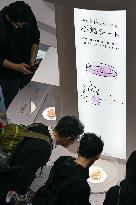
Visitors observe myocardial sheets created from iPS cells at Osaka Healthcare Pavilion on the opening day of the 2025 World Exposition in Osaka, western Japan, on April 13, 2025.

  •  

Chinese vocational workshop helps foster skilled workforce in Portugal

STORY: Chinese vocational workshop helps foster skilled workforce in Portugal DATELINE: Oct. 16, 2023 LENGTH: 00:02:06 LOCATION: TIANJIN, China CATEGORY: TECHNOLOGY SHOTLIST: 1. various of Tianjin Vocational College of Mechanics and Electricity and students studying in the Luban Workshop 2. SOUNDBITE 1 (English): HUGO FRAZZO, Graduate of Polytechnic Institute of Setubal 3. various of the students studying in the Luban Workshop 4. SOUNDBITE 2 (Chinese): ZHANG WEIJIN, President of Tianjin Vocational College of Mechanics and Electricity STORYLINE: The Luban Workshop, named after Lu Ban, an ancient Chinese woodcraft master, is a Chinese vocational workshop program training talent overseas. In Portugal, a Luban Workshop was co-founded by the Polytechnic Institute of Setubal (IPS) and Tianjin Vocational College of Mechanics and Electricity in north China's Tianjin Municipality in 2018. It is the first of its kind on the European continent, and mainly offers two majors -- electrical automation and industrial ro

  •  

CIFTIS offers platform to showcase progress in China's animation industry: insider

STORY: CIFTIS offers platform to showcase progress in China's animation industry: insider DATELINE: Aug. 30, 2023 LENGTH: 00:01:17 LOCATION: GUANGZHOU, China CATEGORY: ECONOMY SHOTLIST: 1. various of the CIFTIS 2. various of Winsing Animation 3. SOUNDBITE (Chinese): YAN BING, Vice president of WinSing Animation STORYLINE: A senior manager with Winsing, a leading animation company in China, has said that the upcoming China International Fair for Trade in Services (CIFTIS) will offer a platform to showcase the progress in China's animation industry. This year's edition of the CIFTIS, one of the world's largest and most comprehensive fairs for trade in services, will be held in Beijing from Sept. 2 to 6. SOUNDBITE (Chinese): YAN BING, Vice president of WinSing Animation "Our company produces original animated cartoon series. We boast popular animation IPs including 'GG Bond' and 'GoGoBus.' This time, we'll showcase some of our high-quality works co-produced with overseas companies. We hope that through the

  •  
Nobel laureate researcher Shinya Yamanaka

Nobel laureate researcher Shinya Yamanaka

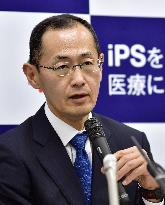
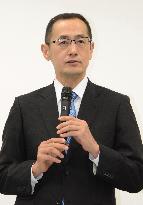
KYOTO, Japan, Dec. 19 Kyodo - Nobel laureate researcher Shinya Yamanaka, who heads Kyoto University's Center for iPS Cell Research and Application, speaks at a press conference in Kyoto on Dec. 18, 2018.

  •  
World's 1st transplant surgery using iPS cells conducted

World's 1st transplant surgery using iPS cells conducted

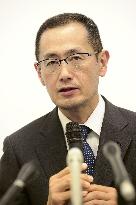
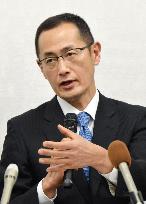
KYOTO, Japan - Kyoto University professor Shinya Yamanaka holds a press conference in Kyoto on Sept. 12, 2014, after a Japanese research team transplanted retinal cells grown from induced pluripotent stem cells to a woman in her 70s earlier in the day, marking the first time iPS-derived cells have been introduced into a human body by surgery. Yamanaka developed iPS cells, a type of stem cells that can grow into various human body tissue.

  •  
World's 1st transplant surgery using iPS cells conducted

World's 1st transplant surgery using iPS cells conducted

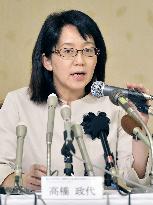
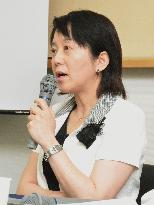
KOBE, Japan - Masayo Takahashi, researcher of the Riken Center for Developmental Biology, holds a press conference in Kobe, western Japan, on Sept. 12, 2014, after a Japanese research team led by Takahashi transplanted retinal cells grown from induced pluripotent stem cells to a woman in her 70s. It marked the first time iPS-derived cells have been introduced into a human body by surgery.

  •  
World's 1st transplant surgery using iPS cells conducted

World's 1st transplant surgery using iPS cells conducted

KOBE, Japan - Masayo Takahashi, researcher of the Riken Center for Developmental Biology, smiles during a press conference in Kobe, western Japan, on Sept. 12, 2014, after a Japanese research team led by Takahashi transplanted retinal cells grown from induced pluripotent stem cells to a woman in her 70s. It marked the first time iPS-derived cells have been introduced into a human body by surgery.

  •  
World's 1st iPS cell transplant

World's 1st iPS cell transplant

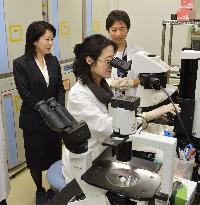
OSAKA, Japan - Masayo Takahashi (L), project leader at Riken Center for Developmental Biology, inspects an experiment at Riken's stem cell culture laboratory in Kobe, western Japan, in February 2013. A Japanese team has recently conducted the world's first surgery to implant tissue derived from induced pluripotent stem cells into a human body as part of the clinical study led by Takahashi and others.

  •  
World's 1st iPS cell transplant

World's 1st iPS cell transplant

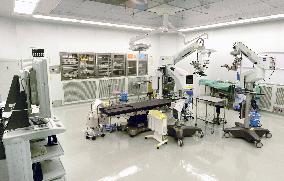
KOBE, Japan - The operation room of the Institute of Biomedical Research and Innovation Hospital in Kobe, western Japan, is seen on Sept. 10, 2014. The world's first surgery to implant retinal tissue derived from induced pluripotent stem cells into a human body was performed there in September 2014.

  •  
World's 1st transplant surgery using iPS cells conducted

World's 1st transplant surgery using iPS cells conducted

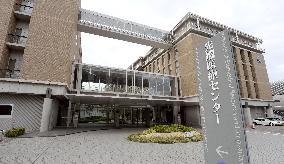
KOBE, Japan - Photo taken Sept. 10, 2014, shows the Institute of Biomedical Research and Innovation Hospital in Kobe, western Japan. At the hospital on Sept. 12, a Japanese research team transplanted retinal cells grown from induced pluripotent stem cells to a woman in her 70s, marking the first time iPS-derived cells have been introduced into a human body by surgery.

  •  
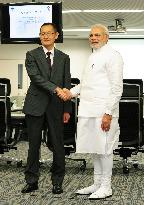
Indian leader Modi meets Nobel laureate Yamanaka in Kyoto

Indian leader Modi meets Nobel laureate Yamanaka in Kyoto

KYOTO, Japan - Indian Prime Minister Narendra Modi (R) shakes hands with Nobel Prize laureate Shinya Yamanaka, professor and head of Kyoto University's Center for iPS Cell Research and Application, at the center in Kyoto, western Japan, on Aug. 31, 2014. Modi is said to be keen in promoting stem cell research in India as it may lead to finding an effective treatment for people suffering from blood diseases.

  •  
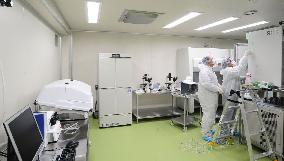
Kyoto Univ. facility for platelet mass production

Kyoto Univ. facility for platelet mass production

KYOTO, Japan - A clean room set up at Kyoto University Hospital's Clinical Research Center for Medical Equipment Development to produce large quantities of platelets for blood transfusions from induced pluripotent stem cells, also known as iPS cells, is shown to the media on March 17, 2014, a day before it officially begins operations.

  •  
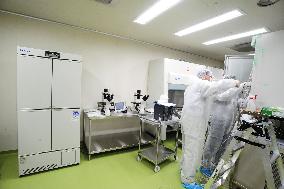
Kyoto Univ. facility for platelet mass production

Kyoto Univ. facility for platelet mass production

KYOTO, Japan - A clean room set up at Kyoto University Hospital's Clinical Research Center for Medical Equipment Development to produce large quantities of platelets for blood transfusions from induced pluripotent stem cells, also known as iPS cells, is shown to the media on March 17, 2014, a day before it officially begins operations.

  •  
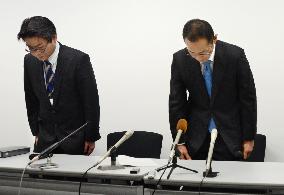
Kyoto Univ.'s Yamanaka

Kyoto Univ.'s Yamanaka

KYOTO, Japan - Shinya Yamanaka (R), who heads Kyoto University's Center for iPS Cell Research and Application, apologizes during a press conference at the university in Kyoto on March 1, 2014, following revelations that the university's laboratory conducting experiments on induced pluripotent stem cells has been warned by the science ministry about its careless control of genetically engineered mice.

  •  
Kyoto Univ.'s Yamanaka

Kyoto Univ.'s Yamanaka

KYOTO, Japan - Shinya Yamanaka, who heads Kyoto University's Center for iPS Cell Research and Application, holds a press conference at the university in Kyoto on March 1, 2014, following revelations that the university's laboratory conducting experiments on induced pluripotent stem cells has been warned by the science ministry about its careless control of genetically engineered mice.

  •  
Kyoto Univ.'s Yamanaka

Kyoto Univ.'s Yamanaka

KYOTO, Japan - Shinya Yamanaka, who heads Kyoto University's Center for iPS Cell Research and Application, holds a press conference at the university in Kyoto on March 1, 2014, following revelations that the university's laboratory conducting experiments on induced pluripotent stem cells has been warned by the science ministry about its careless control of genetically engineered mice.

  •  
World's 1st iPS clinical research to begin

World's 1st iPS clinical research to begin

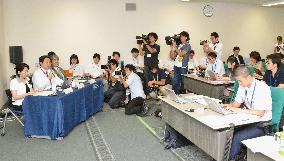
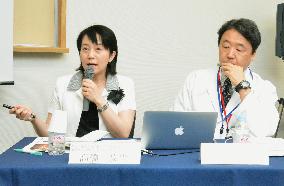
KOBE, Japan - Masayo Takahashi, project leader from the state-backed scientific research institute Riken, speaks at a news conference in Kobe, Hyogo Prefecture, on July 30, 2013. Riken and the Foundation for Biomedical Research and Innovation said that the world's first clinical research using induced pluripotent stem cells, known as iPS cells, for the regeneration of retina will begin on August 1, 2013.

  •  
World's 1st iPS clinical research to begin

World's 1st iPS clinical research to begin

KOBE, Japan - Masayo Takahashi (far L), project leader from the state-backed scientific research institute Riken, speaks at a news conference in Kobe, Hyogo Prefecture, on July 30, 2013. Riken and the Foundation for Biomedical Research and Innovation said that the world's first clinical research using induced pluripotent stem cells, known as iPS cells, for the regeneration of retina will begin on August 1, 2013.

  •  
World's 1st iPS clinical research to begin

World's 1st iPS clinical research to begin

KOBE, Japan - Masayo Takahashi, project leader from the state-backed scientific research institute Riken, speaks at a news conference in Kobe, Hyogo Prefecture, on July 30, 2013. Riken and the Foundation for Biomedical Research and Innovation said that the world's first clinical research using induced pluripotent stem cells, known as iPS cells, for the regeneration of retina will begin on August 1, 2013.

  •  
World's 1st iPS clinical research to begin

World's 1st iPS clinical research to begin

KOBE, Japan - Masayo Takahashi, project leader from the state-backed scientific research institute Riken, speaks at a news conference in Kobe, Hyogo Prefecture, on July 30, 2013. Riken and the Foundation for Biomedical Research and Innovation said that the world's first clinical research using induced pluripotent stem cells, known as iPS cells, for the regeneration of retina will begin on August 1, 2013.

  •  
World's 1st iPS clinical research to begin

World's 1st iPS clinical research to begin

KOBE, Japan - Masayo Takahashi (L), project leader from the state-backed scientific research institute Riken, speaks at a news conference in Kobe, Hyogo Prefecture, on July 30, 2013. Riken and the Foundation for Biomedical Research and Innovation said that the world's first clinical research using induced pluripotent stem cells, known as iPS cells, for the regeneration of retina will begin on August 1, 2013.

  •  
Clinical research using iPS cells approved

Clinical research using iPS cells approved

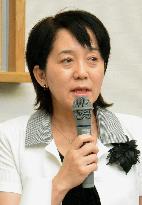
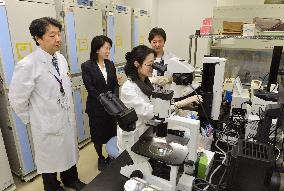
TOKYO, Japan - File photo taken in February 2013 shows Masayo Takahashi (2nd from L), an ophthalmologist who heads Riken's research team on retinal regeneration, and other researchers seeing an experiment on cultured stem cells in Kobe, Hyogo Prefecture. On June 26, 2013, a Japanese government panel approved a clinical research plan by the Riken governmental scientific research institute and the Foundation for Biomedical Research and Innovation to use human induced pluripotent stem cells, known as iPS cells, for regenerating retinas. It would be the world's first clinical research using iPS cells that can grow into any type of human body tissue.

  •  
Clinical research using iPS cells approved

Clinical research using iPS cells approved

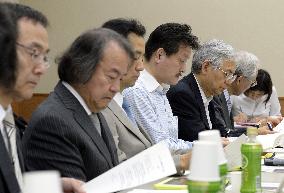
TOKYO, Japan - Members of a health ministry panel hold a meeting in Tokyo on June 26, 2013, on whether to approve the world's first clinical research using human induced pluripotent stem cells, known as iPS cells, which can grow into any type of human tissue. The panel approved a clinical research plan by the Riken governmental scientific research institute and the Foundation for Biomedical Research and Innovation to use iPS cells for regenerating retinas.

  •  
Project on iPS cell stock

Project on iPS cell stock

KYOTO, Japan - A Japanese Red Cross Society employee displays a poster at a blood donation center in Kyoto on June 17, 2013, as the group launches a campaign in Kyoto and Osaka urging blood donors to cooperate in an induced pluripotent stem cell stock project spearheaded by iPS cell developer and Nobel Prize winner Shinya Yamanaka.

  •  
Imperial garden party

Imperial garden party

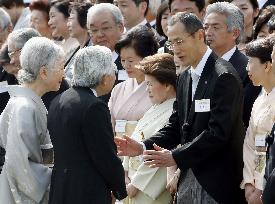
TOKYO, Japan - Emperor Akihito (2nd from L in front) and Empress Michiko (L in front) exchange words with Kyoto University professor Shinya Yamanaka, who won the 2012 Nobel Prize in physiology or medicine for his advanced research on iPS cells, during a spring garden party at the Akasaka Imperial Garden in Tokyo on April 18, 2013.

  •  
Riken eyes iPS clinical research

Riken eyes iPS clinical research

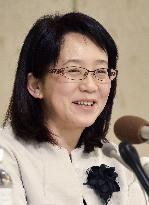
KOBE, Japan - Masayo Takahashi (L), an ophthalmologist who heads Riken's research team on retinal regeneration at the Riken Center for Development Biology, speaks during a press conference in Kobe, western Japan, on Feb. 28, 2013. Riken, Japan's state-backed scientific research institute, applied for government permission the same day for its plan to conduct clinical research using induced pluripotent stem cells, known as iPS cells, to regenerate retina.

  •  
Riken eyes iPS clinical research

Riken eyes iPS clinical research

KOBE, Japan - Masayo Takahashi (L), an ophthalmologist who heads Riken's research team on retinal regeneration at the Riken Center for Development Biology, speaks during a press conference in Kobe, western Japan, on Feb. 28, 2013. Riken, Japan's state-backed scientific research institute, applied for government permission the same day for its plan to conduct clinical research using induced pluripotent stem cells, known as iPS cells, to regenerate retina.

  •  
Abe meets Nobel laureates

Abe meets Nobel laureates

KOBE, Japan - Japanese Prime Minister Shinzo Abe (front) visits a laboratory belonging to Riken, a company that deals with the research of induced pluripotent stem cells in Kobe, western Japan, on Jan. 11, 2013. At left is Shinya Yamanaka, who won the 2012 Nobel Prize in medicine for the research of iPS cells. At center is Ryoji Noyori, Riken president and Nobel Prize in chemistry laureate. (Pool photo)

  •  
Nobel laureate visits minister

Nobel laureate visits minister

TOKYO, Japan - Kyoto University professor Shinya Yamanaka (L), a 2012 Nobel Prize in medicine laureate, visits education minister Hakubun Shimomura (R) at the ministry in Tokyo on Jan. 10, 2013. The minister pledged government support of 110 billion yen over 10 years for research on induced pluripotent stem cells, or iPS cells.

  •  
Marathons growing as means of collecting donations in Japan

Marathons growing as means of collecting donations in Japan

TOKYO, Japan - Photo shows a page of the online fundraising site "Just Giving Japan," which Kyoto University professor Shinya Yamanaka used to call for donations to the iPS Cell Research Fund established by the university. Yamanaka, co-winner of the 2012 Nobel Prize in Physiology or Medicine, heads the Center for iPS Cell Research and Application at the university.

  •  
Japan's Yamanaka receives Israel's Wolf Prize

Japan's Yamanaka receives Israel's Wolf Prize

JERUSALEM, Israel - Shinya Yamanaka (L), a professor at Kyoto University known for developing the multipurpose iPS cell, and Rudolf Jaenisch, a German researcher of the technology and professor at the Massachusetts Institute of Technology, pose in Jerusalem on May 29, 2011, as they won the 2011 Wolf Prize for medicine.

  •  
Prof. Yamanaka receives Balzan Prize for work on iPS cells

Prof. Yamanaka receives Balzan Prize for work on iPS cells

ROME, Italy - Shinya Yamanaka, professor at Kyoto University, holds up a certificate for the Balzan Prize in Rome on Nov. 19, 2010, after winning the award for his pioneering work in producing induced pluripotent stem cells, or iPS cells.

  •  
Professor Yamanaka receives Kyoto Prize

Professor Yamanaka receives Kyoto Prize

KYOTO, Japan - Shinya Yamanaka, a Kyoto University professor known for developing technologies to generate induced pluripotent stem cells, or iPS cells, receives a thread ball as a memento at the award ceremony in Kyoto on Nov. 10, 2010, for the 2010 Kyoto Prize, an international prize presented by the Inamori Foundation. Yamanaka was recognized for his contributions in the field of biotechnology and medical technology.

  •  
3 men receive Kyoto Prize

3 men receive Kyoto Prize

KYOTO, Japan - 2010 Kyoto Prize laureates (from L) Shinya Yamanaka, a Kyoto University professor known for developing technologies to generate induced pluripotent stem cells, or iPS cells, Hungarian mathematician Laszlo Lovasz and South African artist William Kentridge pose with the award at a press conference in Kyoto on Nov. 10, 2010. The international prize is annually presented by the Inamori Foundation to those who have made significant contributions in the field of advanced technology, basic sciences, as well as arts and philosophy.

  •  
Stem cell pioneer Yamanaka receives Kyoto award

Stem cell pioneer Yamanaka receives Kyoto award

KYOTO, Japan - Shinya Yamanaka (R), professor at Kyoto University's Institute for Integrated Cell-Material Sciences, receives the Kyoto Medal of Honor during a ceremony in the city Oct. 15, 2010 for his contribution in the field of induced pluripotent stem cells, or iPS cells.

  •  
Stem cell pioneer Yamanaka receives Kyoto Medal of Honor

Stem cell pioneer Yamanaka receives Kyoto Medal of Honor

KYOTO, Japan - Shinya Yamanaka, professor at Kyoto University, speaks about his joy in receiving the Kyoto Medal of Honor in the city Oct. 15, 2010. Yamanaka, who developed a technology to generate induced pluripotent stem cells, or iPS cells, said helping patients would be his way of returning the favor.

  • Main
  • Top
  • Editorial
  • Creative
  • About Us
  • About ILG
  • Terms of use
  • Company
  • BEHIND
  • Price List
  • Single Plan
  • Monthly Plan
  • Services
  • Shooting
  • Rights Clearance
  • Support
  • FAQ
  • How To Buy
  • Contact Us
  • Become a Partner

© KYODO NEWS IMAGES INC

All Rights Reserved.

  • Editorial
  • Olympics
  • News
  • Sports
  • Japan
  • Tech
  • Royal
  • Disaster
  • NorthKorea
  • Old Japan
  • SNS
  • Creative
  • Food
  • Japan
  • Landscape
  • Animal
  • Popular
  • #Ukraine
  • #Russia
  • #coronavirus
  • #N. Korea
  • #China
  • #Thailand
  • #Ukraine
  • #Russia
  • #coronavirus
  • #N. Korea
  • #China
  • #Thailand
  • Food
  • Japan
  • Landscape
  • Animal
  • Olympics
  • News
  • Sports
  • Japan
  • Tech
  • Royal
  • Disaster
  • NorthKorea
  • Old Japan
  • SNS