•  

Spain: Waterspout Forms Off Murcia Coast Near La Manga del Mar Menor

A waterspout was spotted off the coast of La Manga del Mar Menor, Murcia, Spain, on the morning of Thursday, May 7, amid increased atmospheric instability in the southeastern Iberian Peninsula.

  •  
Wife of ousted S. Korean president Yoon sentenced to 4 years

Wife of ousted S. Korean president Yoon sentenced to 4 years

People watch a televised Seoul High Court ruling on Kim Keon Hee, wife of South Korea's ousted President Yoon Suk Yeol, in Seoul on April 28, 2026. The appeals court increased her sentence from 20 months to four years in prison on corruption charges.

  •  
Wife of ousted S. Korean president Yoon sentenced to 4 years

Wife of ousted S. Korean president Yoon sentenced to 4 years

People watch a televised Seoul High Court ruling on Kim Keon Hee, wife of South Korea's ousted President Yoon Suk Yeol, in Seoul on April 28, 2026. The appeals court increased her sentence from 20 months to four years in prison on corruption charges.

  •  

US: Aerial Footage Shows Firefighting Near St. Augustine Amid Florida Wildfires

Wildfires have increased across Florida as dry, windy conditions continued to fuel fire danger statewide, with active fires burning nearly 13,000 acres as of Tuesday, April 21, mostly in the northern half of the state. This video, captured from an aircraft at 8,000 feet, shows firefighting operations southwest of St. Augustine, Florida, as red flag warnings and burn restrictions expanded across the region.

  •  
Powerful earthquake hits northeastern Japan

Powerful earthquake hits northeastern Japan

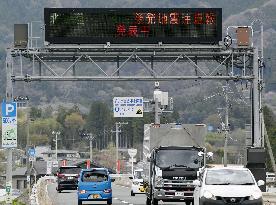
An electronic bulletin board in Rikuzentakata, Iwate Prefecture shows on April 21, 2026, that the weather agency's "Off the Coast of Hokkaido and Sanriku Subsequent Earthquake Advisory" is in place, alerting people about the increased risk of another strong earthquake following a powerful one that hit northeastern and northern Japan the previous day.

  •  

US: Hawaii Braces for Another ‘Kona’ Storm Just Days After Historic Storm

Just four days after a powerful 'Kona' storm swept through Hawaii with flooding rains and winds exceeding 100 mph, a second Kona low arrived on Thursday, March 19, threatening renewed flooding across the already saturated islands. The new system was forecast to be weaker than the previous storm, but officials warned that the saturated ground significantly increased the risk of flash flooding and landslides.

  •  
SNCF Reseau Railway Track Heating System - Rambouillet

SNCF Reseau Railway Track Heating System - Rambouillet

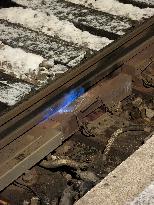
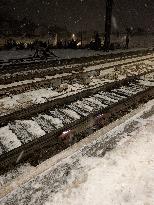
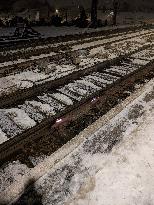
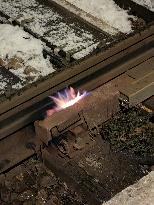
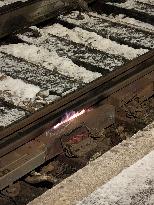
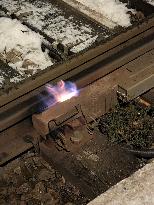
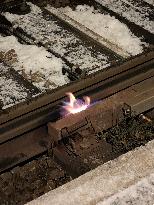
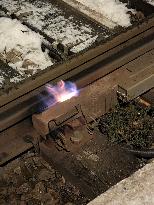
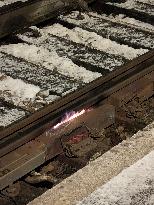
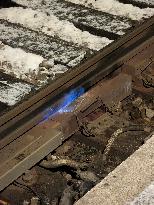
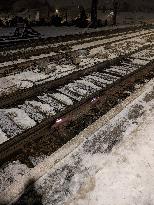
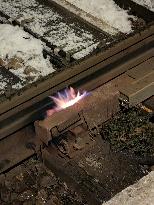
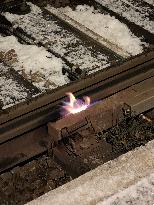
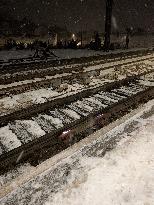
Illustration – SNCF Réseau's track heating system during the cold snap that has been affecting France for the past two days. During periods of snowfall, ice accumulation can damage railway infrastructure and cause delays. Frost on overhead lines, for example, can paralyze certain lines. To deal with this, SNCF Réseau deploys several measures: switch heaters to free switches from ice, increased monitoring by staff, de-icing of overhead lines using electrical circuits and heating gas, and the use of scraper locomotives. Rambouillet, France, January 7, 2026. Photo by Christopher Charpaud/ABACAPRESS.COM

  •  
SNCF Reseau Railway Track Heating System - Rambouillet

SNCF Reseau Railway Track Heating System - Rambouillet

Illustration – SNCF Réseau's track heating system during the cold snap that has been affecting France for the past two days. During periods of snowfall, ice accumulation can damage railway infrastructure and cause delays. Frost on overhead lines, for example, can paralyze certain lines. To deal with this, SNCF Réseau deploys several measures: switch heaters to free switches from ice, increased monitoring by staff, de-icing of overhead lines using electrical circuits and heating gas, and the use of scraper locomotives. Rambouillet, France, January 7, 2026. Photo by Christopher Charpaud/ABACAPRESS.COM

  •  
SNCF Reseau Railway Track Heating System - Rambouillet

SNCF Reseau Railway Track Heating System - Rambouillet

Illustration – SNCF Réseau's track heating system during the cold snap that has been affecting France for the past two days. During periods of snowfall, ice accumulation can damage railway infrastructure and cause delays. Frost on overhead lines, for example, can paralyze certain lines. To deal with this, SNCF Réseau deploys several measures: switch heaters to free switches from ice, increased monitoring by staff, de-icing of overhead lines using electrical circuits and heating gas, and the use of scraper locomotives. Rambouillet, France, January 7, 2026. Photo by Christopher Charpaud/ABACAPRESS.COM

  •  
SNCF Reseau Railway Track Heating System - Rambouillet

SNCF Reseau Railway Track Heating System - Rambouillet

Illustration – SNCF Réseau's track heating system during the cold snap that has been affecting France for the past two days. During periods of snowfall, ice accumulation can damage railway infrastructure and cause delays. Frost on overhead lines, for example, can paralyze certain lines. To deal with this, SNCF Réseau deploys several measures: switch heaters to free switches from ice, increased monitoring by staff, de-icing of overhead lines using electrical circuits and heating gas, and the use of scraper locomotives. Rambouillet, France, January 7, 2026. Photo by Christopher Charpaud/ABACAPRESS.COM

  •  
SNCF Reseau Railway Track Heating System - Rambouillet

SNCF Reseau Railway Track Heating System - Rambouillet

Illustration – SNCF Réseau's track heating system during the cold snap that has been affecting France for the past two days. During periods of snowfall, ice accumulation can damage railway infrastructure and cause delays. Frost on overhead lines, for example, can paralyze certain lines. To deal with this, SNCF Réseau deploys several measures: switch heaters to free switches from ice, increased monitoring by staff, de-icing of overhead lines using electrical circuits and heating gas, and the use of scraper locomotives. Rambouillet, France, January 7, 2026. Photo by Christopher Charpaud/ABACAPRESS.COM

  •  
SNCF Reseau Railway Track Heating System - Rambouillet

SNCF Reseau Railway Track Heating System - Rambouillet

Illustration – SNCF Réseau's track heating system during the cold snap that has been affecting France for the past two days. During periods of snowfall, ice accumulation can damage railway infrastructure and cause delays. Frost on overhead lines, for example, can paralyze certain lines. To deal with this, SNCF Réseau deploys several measures: switch heaters to free switches from ice, increased monitoring by staff, de-icing of overhead lines using electrical circuits and heating gas, and the use of scraper locomotives. Rambouillet, France, January 7, 2026. Photo by Christopher Charpaud/ABACAPRESS.COM

  •  
SNCF Reseau Railway Track Heating System - Rambouillet

SNCF Reseau Railway Track Heating System - Rambouillet

Illustration – SNCF Réseau's track heating system during the cold snap that has been affecting France for the past two days. During periods of snowfall, ice accumulation can damage railway infrastructure and cause delays. Frost on overhead lines, for example, can paralyze certain lines. To deal with this, SNCF Réseau deploys several measures: switch heaters to free switches from ice, increased monitoring by staff, de-icing of overhead lines using electrical circuits and heating gas, and the use of scraper locomotives. Rambouillet, France, January 7, 2026. Photo by Christopher Charpaud/ABACAPRESS.COM

  •  
SNCF Reseau Railway Track Heating System - Rambouillet

SNCF Reseau Railway Track Heating System - Rambouillet

Illustration – SNCF Réseau's track heating system during the cold snap that has been affecting France for the past two days. During periods of snowfall, ice accumulation can damage railway infrastructure and cause delays. Frost on overhead lines, for example, can paralyze certain lines. To deal with this, SNCF Réseau deploys several measures: switch heaters to free switches from ice, increased monitoring by staff, de-icing of overhead lines using electrical circuits and heating gas, and the use of scraper locomotives. Rambouillet, France, January 7, 2025. Photo by Christopher Charpaud/ABACAPRESS.COM

  •  
SNCF Reseau Railway Track Heating System - Rambouillet

SNCF Reseau Railway Track Heating System - Rambouillet

Illustration – SNCF Réseau's track heating system during the cold snap that has been affecting France for the past two days. During periods of snowfall, ice accumulation can damage railway infrastructure and cause delays. Frost on overhead lines, for example, can paralyze certain lines. To deal with this, SNCF Réseau deploys several measures: switch heaters to free switches from ice, increased monitoring by staff, de-icing of overhead lines using electrical circuits and heating gas, and the use of scraper locomotives. Rambouillet, France, January 7, 2025. Photo by Christopher Charpaud/ABACAPRESS.COM

  •  
SNCF Reseau Railway Track Heating System - Rambouillet

SNCF Reseau Railway Track Heating System - Rambouillet

Illustration – SNCF Réseau's track heating system during the cold snap that has been affecting France for the past two days. During periods of snowfall, ice accumulation can damage railway infrastructure and cause delays. Frost on overhead lines, for example, can paralyze certain lines. To deal with this, SNCF Réseau deploys several measures: switch heaters to free switches from ice, increased monitoring by staff, de-icing of overhead lines using electrical circuits and heating gas, and the use of scraper locomotives. Rambouillet, France, January 7, 2025. Photo by Christopher Charpaud/ABACAPRESS.COM

  •  
SNCF Reseau Railway Track Heating System - Rambouillet

SNCF Reseau Railway Track Heating System - Rambouillet

Illustration – SNCF Réseau's track heating system during the cold snap that has been affecting France for the past two days. During periods of snowfall, ice accumulation can damage railway infrastructure and cause delays. Frost on overhead lines, for example, can paralyze certain lines. To deal with this, SNCF Réseau deploys several measures: switch heaters to free switches from ice, increased monitoring by staff, de-icing of overhead lines using electrical circuits and heating gas, and the use of scraper locomotives. Rambouillet, France, January 7, 2025. Photo by Christopher Charpaud/ABACAPRESS.COM

  •  
SNCF Reseau Railway Track Heating System - Rambouillet

SNCF Reseau Railway Track Heating System - Rambouillet

Illustration – SNCF Réseau's track heating system during the cold snap that has been affecting France for the past two days. During periods of snowfall, ice accumulation can damage railway infrastructure and cause delays. Frost on overhead lines, for example, can paralyze certain lines. To deal with this, SNCF Réseau deploys several measures: switch heaters to free switches from ice, increased monitoring by staff, de-icing of overhead lines using electrical circuits and heating gas, and the use of scraper locomotives. Rambouillet, France, January 7, 2025. Photo by Christopher Charpaud/ABACAPRESS.COM

  •  
SNCF Reseau Railway Track Heating System - Rambouillet

SNCF Reseau Railway Track Heating System - Rambouillet

Illustration – SNCF Réseau's track heating system during the cold snap that has been affecting France for the past two days. During periods of snowfall, ice accumulation can damage railway infrastructure and cause delays. Frost on overhead lines, for example, can paralyze certain lines. To deal with this, SNCF Réseau deploys several measures: switch heaters to free switches from ice, increased monitoring by staff, de-icing of overhead lines using electrical circuits and heating gas, and the use of scraper locomotives. Rambouillet, France, January 7, 2025. Photo by Christopher Charpaud/ABACAPRESS.COM

  •  
SNCF Reseau Railway Track Heating System - Rambouillet

SNCF Reseau Railway Track Heating System - Rambouillet

Illustration – SNCF Réseau's track heating system during the cold snap that has been affecting France for the past two days. During periods of snowfall, ice accumulation can damage railway infrastructure and cause delays. Frost on overhead lines, for example, can paralyze certain lines. To deal with this, SNCF Réseau deploys several measures: switch heaters to free switches from ice, increased monitoring by staff, de-icing of overhead lines using electrical circuits and heating gas, and the use of scraper locomotives. Rambouillet, France, January 7, 2025. Photo by Christopher Charpaud/ABACAPRESS.COM

  •  
Lake Urmia Environmental Disaster - Iran

Lake Urmia Environmental Disaster - Iran

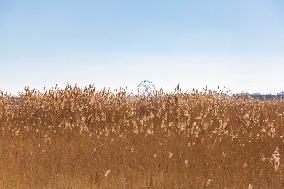
A view shows dry reeds on the dry bed of Lake Urmia in northwestern Iran on December 20, 2025. Lake Urmia, once the largest lake in the Middle East, has dramatically shrunk due to prolonged drought, the damming of rivers feeding the lake, and extensive groundwater extraction in the surrounding area. Although increased rainfall and water diversion briefly helped restore water levels in 2019, renewed drought and administrative mismanagement in the early 2020s reversed the trend, and satellite imagery shows the lake has almost entirely dried up by September 2025. Photo by Morteza Aminoroayayi/Middle East Images/ABACAPRESS.COM

  •  
Lake Urmia Environmental Disaster - Iran

Lake Urmia Environmental Disaster - Iran

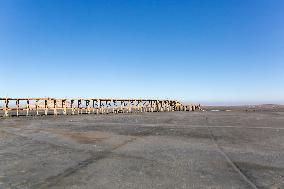
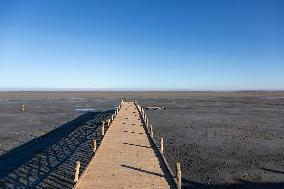
A view shows a wooden pier on the dry bed of Lake Urmia in northwestern Iran on December 20, 2025. Lake Urmia, once the largest lake in the Middle East, has dramatically shrunk due to prolonged drought, the damming of rivers feeding the lake, and extensive groundwater extraction in the surrounding area. Although increased rainfall and water diversion briefly helped restore water levels in 2019, renewed drought and administrative mismanagement in the early 2020s reversed the trend, and satellite imagery shows the lake has almost entirely dried up by September 2025. Photo by Morteza Aminoroayayi/Middle East Images/ABACAPRESS.COM

  •  
Lake Urmia Environmental Disaster - Iran

Lake Urmia Environmental Disaster - Iran

A view shows a wooden pier on the dry bed of Lake Urmia in northwestern Iran on December 20, 2025. Lake Urmia, once the largest lake in the Middle East, has dramatically shrunk due to prolonged drought, the damming of rivers feeding the lake, and extensive groundwater extraction in the surrounding area. Although increased rainfall and water diversion briefly helped restore water levels in 2019, renewed drought and administrative mismanagement in the early 2020s reversed the trend, and satellite imagery shows the lake has almost entirely dried up by September 2025. Photo by Morteza Aminoroayayi/Middle East Images/ABACAPRESS.COM

  •  
Lake Urmia Environmental Disaster - Iran

Lake Urmia Environmental Disaster - Iran

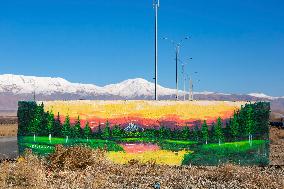
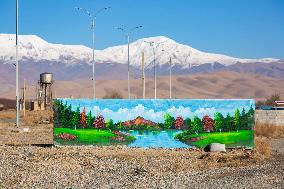
A view shows a mural depicting a landscape painted on a concrete wall near Sharafkhaneh port at Lake Urmia in northwestern Iran on December 19, 2025. Lake Urmia, once the largest lake in the Middle East, has dramatically shrunk due to prolonged drought, the damming of rivers feeding the lake, and extensive groundwater extraction in the surrounding area. Although increased rainfall and water diversion briefly helped restore water levels in 2019, renewed drought and administrative mismanagement in the early 2020s reversed the trend, and satellite imagery shows the lake has almost entirely dried up by September 2025. Photo by Morteza Aminoroayayi/Middle East Images/ABACAPRESS.COM

  •  
Lake Urmia Environmental Disaster - Iran

Lake Urmia Environmental Disaster - Iran

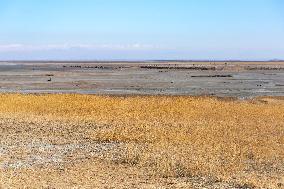
A view shows dry grass and the dry bed of Lake Urmia in northwestern Iran on December 20, 2025. Lake Urmia, once the largest lake in the Middle East, has dramatically shrunk due to prolonged drought, the damming of rivers feeding the lake, and extensive groundwater extraction in the surrounding area. Although increased rainfall and water diversion briefly helped restore water levels in 2019, renewed drought and administrative mismanagement in the early 2020s reversed the trend, and satellite imagery shows the lake has almost entirely dried up by September 2025. Photo by Morteza Aminoroayayi/Middle East Images/ABACAPRESS.COM

  •  
Lake Urmia Environmental Disaster - Iran

Lake Urmia Environmental Disaster - Iran

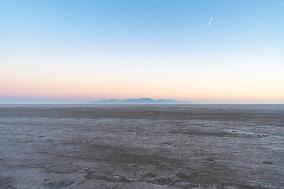
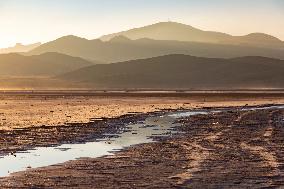
A view shows the dry bed of Lake Urmia in northwestern Iran on December 19, 2025. Lake Urmia, once the largest lake in the Middle East, has dramatically shrunk due to prolonged drought, the damming of rivers feeding the lake, and extensive groundwater extraction in the surrounding area. Although increased rainfall and water diversion briefly helped restore water levels in 2019, renewed drought and administrative mismanagement in the early 2020s reversed the trend, and satellite imagery shows the lake has almost entirely dried up by September 2025. Photo by Morteza Aminoroayayi/Middle East Images/ABACAPRESS.COM

  •  
Lake Urmia Environmental Disaster - Iran

Lake Urmia Environmental Disaster - Iran

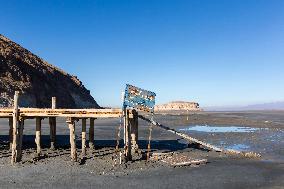
A view shows a rusty sign next to a wooden pier on the dry bed of Lake Urmia in northwestern Iran on December 20, 2025. Lake Urmia, once the largest lake in the Middle East, has dramatically shrunk due to prolonged drought, the damming of rivers feeding the lake, and extensive groundwater extraction in the surrounding area. Although increased rainfall and water diversion briefly helped restore water levels in 2019, renewed drought and administrative mismanagement in the early 2020s reversed the trend, and satellite imagery shows the lake has almost entirely dried up by September 2025. Photo by Morteza Aminoroayayi/Middle East Images/ABACAPRESS.COM

  •  
Lake Urmia Environmental Disaster - Iran

Lake Urmia Environmental Disaster - Iran

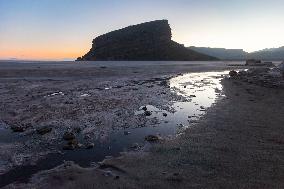
A view shows a shallow stream near a rocky cliff on the bed of Lake Urmia in northwestern Iran on December 19, 2025. Lake Urmia, once the largest lake in the Middle East, has dramatically shrunk due to prolonged drought, the damming of rivers feeding the lake, and extensive groundwater extraction in the surrounding area. Although increased rainfall and water diversion briefly helped restore water levels in 2019, renewed drought and administrative mismanagement in the early 2020s reversed the trend, and satellite imagery shows the lake has almost entirely dried up by September 2025. Photo by Morteza Aminoroayayi/Middle East Images/ABACAPRESS.COM

  •  
Lake Urmia Environmental Disaster - Iran

Lake Urmia Environmental Disaster - Iran

A view shows a wooden pier on the dry bed of Lake Urmia in northwestern Iran on December 20, 2025. Lake Urmia, once the largest lake in the Middle East, has dramatically shrunk due to prolonged drought, the damming of rivers feeding the lake, and extensive groundwater extraction in the surrounding area. Although increased rainfall and water diversion briefly helped restore water levels in 2019, renewed drought and administrative mismanagement in the early 2020s reversed the trend, and satellite imagery shows the lake has almost entirely dried up by September 2025. Photo by Morteza Aminoroayayi/Middle East Images/ABACAPRESS.COM

  •  
Lake Urmia Environmental Disaster - Iran

Lake Urmia Environmental Disaster - Iran

A view shows tire tracks running alongside a shallow stream on the bed of Lake Urmia in northwestern Iran on December 19, 2025. Lake Urmia, once the largest lake in the Middle East, has dramatically shrunk due to prolonged drought, the damming of rivers feeding the lake, and extensive groundwater extraction in the surrounding area. Although increased rainfall and water diversion briefly helped restore water levels in 2019, renewed drought and administrative mismanagement in the early 2020s reversed the trend, and satellite imagery shows the lake has almost entirely dried up by September 2025. Photo by Morteza Aminoroayayi/Middle East Images/ABACAPRESS.COM

  •  
Lake Urmia Environmental Disaster - Iran

Lake Urmia Environmental Disaster - Iran

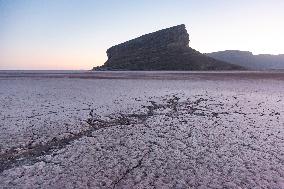
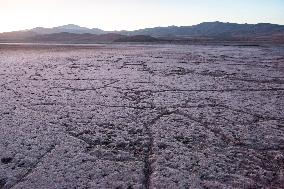
Salt formations cover the cracked surface of the dried bed of Lake Urmia in northwestern Iran on December 19, 2025. Lake Urmia, once the largest lake in the Middle East, has dramatically shrunk due to prolonged drought, the damming of rivers feeding the lake and extensive groundwater extraction in the surrounding area. Although increased rainfall and water diversion briefly helped restore water levels in 2019, renewed drought and administrative mismanagement in the early 2020s reversed the trend, and satellite imagery shows the lake has almost entirely dried up by September 2025. Photo by Morteza Aminoroayayi/Middle East Images/ABACAPRESS.COM

  •  
Lake Urmia Environmental Disaster - Iran

Lake Urmia Environmental Disaster - Iran

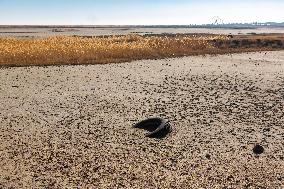
A discarded tire sits near dry reeds on the dry bed of Lake Urmia in northwestern Iran on December 20, 2025. Lake Urmia, once the largest lake in the Middle East, has dramatically shrunk due to prolonged drought, the damming of rivers feeding the lake, and extensive groundwater extraction in the surrounding area. Although increased rainfall and water diversion briefly helped restore water levels in 2019, renewed drought and administrative mismanagement in the early 2020s reversed the trend, and satellite imagery shows the lake has almost entirely dried up by September 2025. Photo by Morteza Aminoroayayi/Middle East Images/ABACAPRESS.COM

  •  
Lake Urmia Environmental Disaster - Iran

Lake Urmia Environmental Disaster - Iran

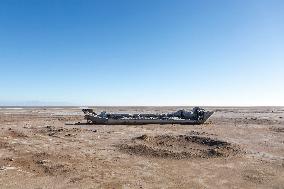
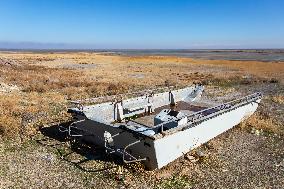
Remnants of a boat sit on the dry bed of Lake Urmia in northwestern Iran on December 19, 2025. Lake Urmia, once the largest lake in the Middle East, has dramatically shrunk due to prolonged drought, the damming of rivers feeding the lake, and extensive groundwater extraction in the surrounding area. Although increased rainfall and water diversion briefly helped restore water levels in 2019, renewed drought and administrative mismanagement in the early 2020s reversed the trend, and satellite imagery shows the lake has almost entirely dried up by September 2025. Photo by Morteza Aminoroayayi/Middle East Images/ABACAPRESS.COM

  •  
Lake Urmia Environmental Disaster - Iran

Lake Urmia Environmental Disaster - Iran

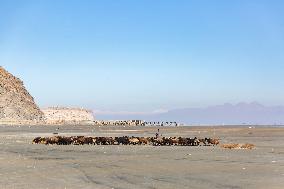
A shepherd guides a flock of sheep on the dry bed of Lake Urmia in northwestern Iran on December 20, 2025. Lake Urmia, once the largest lake in the Middle East, has dramatically shrunk due to prolonged drought, the damming of rivers feeding the lake, and extensive groundwater extraction in the surrounding area. Although increased rainfall and water diversion briefly helped restore water levels in 2019, renewed drought and administrative mismanagement in the early 2020s reversed the trend, and satellite imagery shows the lake has almost entirely dried up by September 2025. Photo by Morteza Aminoroayayi/Middle East Images/ABACAPRESS.COM

  •  
Lake Urmia Environmental Disaster - Iran

Lake Urmia Environmental Disaster - Iran

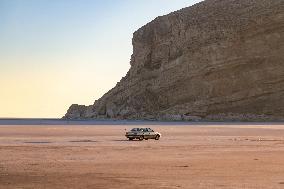
A car drives near a rocky cliff on the dry bed of Lake Urmia in northwestern Iran on December 19, 2025. Lake Urmia, once the largest lake in the Middle East, has dramatically shrunk due to prolonged drought, the damming of rivers feeding the lake, and extensive groundwater extraction in the surrounding area. Although increased rainfall and water diversion briefly helped restore water levels in 2019, renewed drought and administrative mismanagement in the early 2020s reversed the trend, and satellite imagery shows the lake has almost entirely dried up by September 2025. Photo by Morteza Aminoroayayi/Middle East Images/ABACAPRESS.COM

  •  
Lake Urmia Environmental Disaster - Iran

Lake Urmia Environmental Disaster - Iran

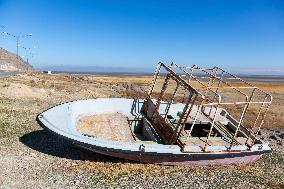
A rusty boat sits next to a road near Lake Urmia in northwestern Iran on December 20, 2025. Lake Urmia, once the largest lake in the Middle East, has dramatically shrunk due to prolonged drought, the damming of rivers feeding the lake, and extensive groundwater extraction in the surrounding area. Although increased rainfall and water diversion briefly helped restore water levels in 2019, renewed drought and administrative mismanagement in the early 2020s reversed the trend, and satellite imagery shows the lake has almost entirely dried up by September 2025. Photo by Morteza Aminoroayayi/Middle East Images/ABACAPRESS.COM

  •  
Lake Urmia Environmental Disaster - Iran

Lake Urmia Environmental Disaster - Iran

A view shows a wooden pier on the dry bed of Lake Urmia in northwestern Iran on December 19, 2025. Lake Urmia, once the largest lake in the Middle East, has dramatically shrunk due to prolonged drought, the damming of rivers feeding the lake, and extensive groundwater extraction in the surrounding area. Although increased rainfall and water diversion briefly helped restore water levels in 2019, renewed drought and administrative mismanagement in the early 2020s reversed the trend, and satellite imagery shows the lake has almost entirely dried up by September 2025. Photo by Morteza Aminoroayayi/Middle East Images/ABACAPRESS.COM

  •  
Lake Urmia Environmental Disaster - Iran

Lake Urmia Environmental Disaster - Iran

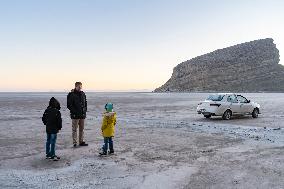
A man and two children stand near a car and a rocky cliff on the dry bed of Lake Urmia in northwestern Iran on December 19, 2025. Lake Urmia, once the largest lake in the Middle East, has dramatically shrunk due to prolonged drought, the damming of rivers feeding the lake, and extensive groundwater extraction in the surrounding area. Although increased rainfall and water diversion briefly helped restore water levels in 2019, renewed drought and administrative mismanagement in the early 2020s reversed the trend, and satellite imagery shows the lake has almost entirely dried up by September 2025. Photo by Morteza Aminoroayayi/Middle East Images/ABACAPRESS.COM

  •  
Lake Urmia Environmental Disaster - Iran

Lake Urmia Environmental Disaster - Iran

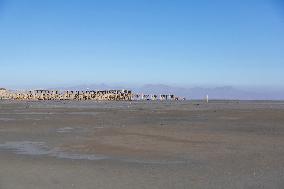
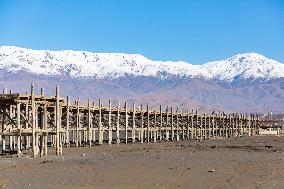
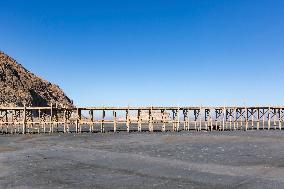
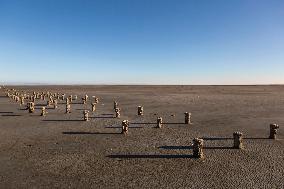
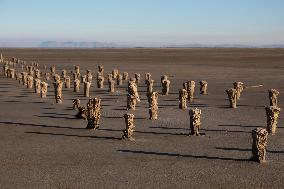
A view shows rows of wooden posts protruding from the dry bed of Lake Urmia in northwestern Iran on December 20, 2025. Lake Urmia, once the largest lake in the Middle East, has dramatically shrunk due to prolonged drought, the damming of rivers feeding the lake, and extensive groundwater extraction in the surrounding area. Although increased rainfall and water diversion briefly helped restore water levels in 2019, renewed drought and administrative mismanagement in the early 2020s reversed the trend, and satellite imagery shows the lake has almost entirely dried up by September 2025. Photo by Morteza Aminoroayayi/Middle East Images/ABACAPRESS.COM

  •  
Lake Urmia Environmental Disaster - Iran

Lake Urmia Environmental Disaster - Iran

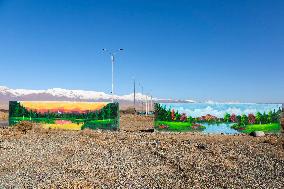
A view shows murals depicting nature scenes painted on concrete walls near Sharafkhaneh port at Lake Urmia in northwestern Iran on December 19, 2025. Lake Urmia, once the largest lake in the Middle East, has dramatically shrunk due to prolonged drought, the damming of rivers feeding the lake, and extensive groundwater extraction in the surrounding area. Although increased rainfall and water diversion briefly helped restore water levels in 2019, renewed drought and administrative mismanagement in the early 2020s reversed the trend, and satellite imagery shows the lake has almost entirely dried up by September 2025. Photo by Morteza Aminoroayayi/Middle East Images/ABACAPRESS.COM

  •  
Lake Urmia Environmental Disaster - Iran

Lake Urmia Environmental Disaster - Iran

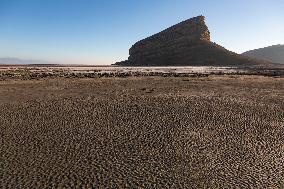
A view shows the dry bed of Lake Urmia in northwestern Iran on December 19, 2025. Lake Urmia, once the largest lake in the Middle East, has dramatically shrunk due to prolonged drought, the damming of rivers feeding the lake, and extensive groundwater extraction in the surrounding area. Although increased rainfall and water diversion briefly helped restore water levels in 2019, renewed drought and administrative mismanagement in the early 2020s reversed the trend, and satellite imagery shows the lake has almost entirely dried up by September 2025. Photo by Morteza Aminoroayayi/Middle East Images/ABACAPRESS.COM

  •  
Lake Urmia Environmental Disaster - Iran

Lake Urmia Environmental Disaster - Iran

A view shows a wooden pier on the dry bed of Lake Urmia in northwestern Iran on December 20, 2025. Lake Urmia, once the largest lake in the Middle East, has dramatically shrunk due to prolonged drought, the damming of rivers feeding the lake, and extensive groundwater extraction in the surrounding area. Although increased rainfall and water diversion briefly helped restore water levels in 2019, renewed drought and administrative mismanagement in the early 2020s reversed the trend, and satellite imagery shows the lake has almost entirely dried up by September 2025. Photo by Morteza Aminoroayayi/Middle East Images/ABACAPRESS.COM

  •  
Lake Urmia Environmental Disaster - Iran

Lake Urmia Environmental Disaster - Iran

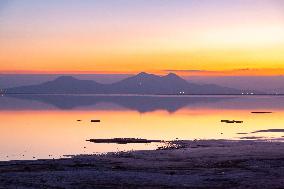
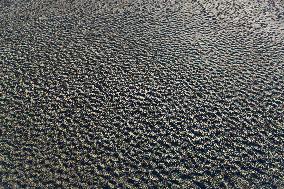
A view shows reflections on the surface of Lake Urmia in northwestern Iran on December 18, 2025. Lake Urmia, once the largest lake in the Middle East, has dramatically shrunk due to prolonged drought, the damming of rivers feeding the lake, and extensive groundwater extraction in the surrounding area. Although increased rainfall and water diversion briefly helped restore water levels in 2019, renewed drought and administrative mismanagement in the early 2020s reversed the trend, and satellite imagery shows the lake has almost entirely dried up by September 2025. Photo by Morteza Aminoroayayi/Middle East Images/ABACAPRESS.COM

  •  
Lake Urmia Environmental Disaster - Iran

Lake Urmia Environmental Disaster - Iran

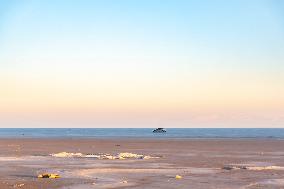
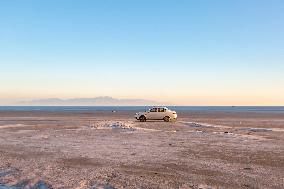
A car drives on the dry bed of Lake Urmia in northwestern Iran on December 19, 2025. Lake Urmia, once the largest lake in the Middle East, has dramatically shrunk due to prolonged drought, the damming of rivers feeding the lake, and extensive groundwater extraction in the surrounding area. Although increased rainfall and water diversion briefly helped restore water levels in 2019, renewed drought and administrative mismanagement in the early 2020s reversed the trend, and satellite imagery shows the lake has almost entirely dried up by September 2025. Photo by Morteza Aminoroayayi/Middle East Images/ABACAPRESS.COM

  •  
Lake Urmia Environmental Disaster - Iran

Lake Urmia Environmental Disaster - Iran

A view shows a mural depicting a landscape painted on a concrete wall near Sharafkhaneh port at Lake Urmia in northwestern Iran on December 19, 2025. Lake Urmia, once the largest lake in the Middle East, has dramatically shrunk due to prolonged drought, the damming of rivers feeding the lake, and extensive groundwater extraction in the surrounding area. Although increased rainfall and water diversion briefly helped restore water levels in 2019, renewed drought and administrative mismanagement in the early 2020s reversed the trend, and satellite imagery shows the lake has almost entirely dried up by September 2025. Photo by Morteza Aminoroayayi/Middle East Images/ABACAPRESS.COM

  •  
Lake Urmia Environmental Disaster - Iran

Lake Urmia Environmental Disaster - Iran

A view shows rows of wooden posts protruding from the dry bed of Lake Urmia in northwestern Iran on December 20, 2025. Lake Urmia, once the largest lake in the Middle East, has dramatically shrunk due to prolonged drought, the damming of rivers feeding the lake, and extensive groundwater extraction in the surrounding area. Although increased rainfall and water diversion briefly helped restore water levels in 2019, renewed drought and administrative mismanagement in the early 2020s reversed the trend, and satellite imagery shows the lake has almost entirely dried up by September 2025. Photo by Morteza Aminoroayayi/Middle East Images/ABACAPRESS.COM

  •  
Lake Urmia Environmental Disaster - Iran

Lake Urmia Environmental Disaster - Iran

Salt formations cover the cracked surface of the dried bed of Lake Urmia in northwestern Iran on December 19, 2025. Lake Urmia, once the largest lake in the Middle East, has dramatically shrunk due to prolonged drought, the damming of rivers feeding the lake and extensive groundwater extraction in the surrounding area. Although increased rainfall and water diversion briefly helped restore water levels in 2019, renewed drought and administrative mismanagement in the early 2020s reversed the trend, and satellite imagery shows the lake has almost entirely dried up by September 2025. Photo by Morteza Aminoroayayi/Middle East Images/ABACAPRESS.COM

  •  
Lake Urmia Environmental Disaster - Iran

Lake Urmia Environmental Disaster - Iran

Remains of a boat sits near the dry bed of Lake Urmia in northwestern Iran on December 20, 2025. Lake Urmia, once the largest lake in the Middle East, has dramatically shrunk due to prolonged drought, the damming of rivers feeding the lake, and extensive groundwater extraction in the surrounding area. Although increased rainfall and water diversion briefly helped restore water levels in 2019, renewed drought and administrative mismanagement in the early 2020s reversed the trend, and satellite imagery shows the lake has almost entirely dried up by September 2025. Photo by Morteza Aminoroayayi/Middle East Images/ABACAPRESS.COM

  •  
Lake Urmia Environmental Disaster - Iran

Lake Urmia Environmental Disaster - Iran

A car drives on the dry bed of Lake Urmia in northwestern Iran on December 19, 2025. Lake Urmia, once the largest lake in the Middle East, has dramatically shrunk due to prolonged drought, the damming of rivers feeding the lake, and extensive groundwater extraction in the surrounding area. Although increased rainfall and water diversion briefly helped restore water levels in 2019, renewed drought and administrative mismanagement in the early 2020s reversed the trend, and satellite imagery shows the lake has almost entirely dried up by September 2025. Photo by Morteza Aminoroayayi/Middle East Images/ABACAPRESS.COM

  •  
Lake Urmia Environmental Disaster - Iran

Lake Urmia Environmental Disaster - Iran

A view shows the dry bed of Lake Urmia in northwestern Iran on December 19, 2025. Lake Urmia, once the largest lake in the Middle East, has dramatically shrunk due to prolonged drought, the damming of rivers feeding the lake, and extensive groundwater extraction in the surrounding area. Although increased rainfall and water diversion briefly helped restore water levels in 2019, renewed drought and administrative mismanagement in the early 2020s reversed the trend, and satellite imagery shows the lake has almost entirely dried up by September 2025. Photo by Morteza Aminoroayayi/Middle East Images/ABACAPRESS.COM

  • Main
  • Top
  • Editorial
  • Creative
  • About Us
  • About ILG
  • Terms of use
  • Company
  • BEHIND
  • Price List
  • Single Plan
  • Monthly Plan
  • Services
  • Shooting
  • Rights Clearance
  • Support
  • FAQ
  • How To Buy
  • Contact Us
  • Become a Partner

© KYODO NEWS IMAGES INC

All Rights Reserved.

  • Editorial
  • Olympics
  • News
  • Sports
  • Japan
  • Tech
  • Royal
  • Disaster
  • NorthKorea
  • Old Japan
  • SNS
  • Creative
  • Food
  • Japan
  • Landscape
  • Animal
  • Popular
  • #Ukraine
  • #Thailand
  • #coronavirus
  • #N. Korea
  • #China
  • #Russia
  • #Ukraine
  • #Thailand
  • #coronavirus
  • #N. Korea
  • #China
  • #Russia
  • Food
  • Japan
  • Landscape
  • Animal
  • Olympics
  • News
  • Sports
  • Japan
  • Tech
  • Royal
  • Disaster
  • NorthKorea
  • Old Japan
  • SNS