•  
Tie-Dye Technique Of Bai Ethnic Group - Chin

Tie-Dye Technique Of Bai Ethnic Group - Chin

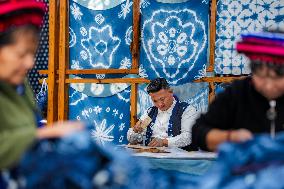
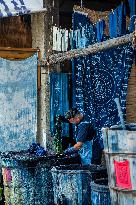
Duan Yuan, an inheritor of the tie-dye technique of Bai ethnic group, makes tie-dye designs in a dyehouse in Zhoucheng Village of Dali Bai Autonomous Prefecture, southwest China's Yunnan Province, November 21, 2025. Known as the hometown of the tie-dye technique of Bai ethnic group, Zhoucheng Village hosts over 200 households engaging in tie-dye businesses, with the number of employees exceeding 4,000. As a traditional folk technique of the Bai ethnic group, tie-dye boasts a history spanning over a thousand years and was included in the first batch of China's national intangible cultural heritage list in 2006. Tying and dyeing are the core steps in the process of making indigo tie-dye products. Artisans use needles and threads to create various patterns on the fabric, which are then dyed with plant-based dyes, resulting in blue backgrounds adorned with vivid white patterns. Photo by Hu Chao/Xinhua/ABACAPRESS.COM

  •  
Tie-Dye Technique Of Bai Ethnic Group - Chin

Tie-Dye Technique Of Bai Ethnic Group - Chin

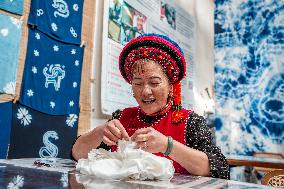
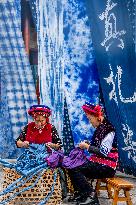
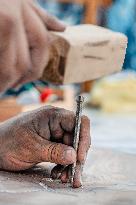
Duan Yinmei, an inheritor of the tie-dye technique of Bai ethnic group, creates knots on fabrics in a dyehouse in Zhoucheng Village of Dali Bai Autonomous Prefecture, southwest China's Yunnan Province, November 21, 2025. Known as the hometown of the tie-dye technique of Bai ethnic group, Zhoucheng Village hosts over 200 households engaging in tie-dye businesses, with the number of employees exceeding 4,000. As a traditional folk technique of the Bai ethnic group, tie-dye boasts a history spanning over a thousand years and was included in the first batch of China's national intangible cultural heritage list in 2006. Tying and dyeing are the core steps in the process of making indigo tie-dye products. Artisans use needles and threads to create various patterns on the fabric, which are then dyed with plant-based dyes, resulting in blue backgrounds adorned with vivid white patterns. Photo by Hu Chao/Xinhua/ABACAPRESS.COM

  •  
Tie-Dye Technique Of Bai Ethnic Group - Chin

Tie-Dye Technique Of Bai Ethnic Group - Chin

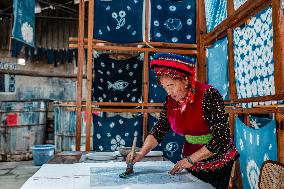
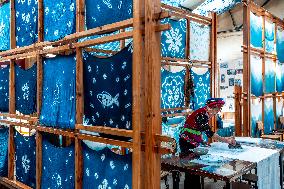
Duan Yinmei, an inheritor of the tie-dye technique of Bai ethnic group, dyes patterns on fabrics in a dyehouse in Zhoucheng Village of Dali Bai Autonomous Prefecture, southwest China's Yunnan Province, November 21, 2025. Known as the hometown of the tie-dye technique of Bai ethnic group, Zhoucheng Village hosts over 200 households engaging in tie-dye businesses, with the number of employees exceeding 4,000. As a traditional folk technique of the Bai ethnic group, tie-dye boasts a history spanning over a thousand years and was included in the first batch of China's national intangible cultural heritage list in 2006. Tying and dyeing are the core steps in the process of making indigo tie-dye products. Artisans use needles and threads to create various patterns on the fabric, which are then dyed with plant-based dyes, resulting in blue backgrounds adorned with vivid white patterns. Photo by Hu Chao/Xinhua/ABACAPRESS.COM

  •  
Tie-Dye Technique Of Bai Ethnic Group - Chin

Tie-Dye Technique Of Bai Ethnic Group - Chin

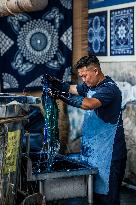
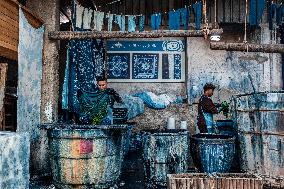
Duan Yuan, an inheritor of the tie-dye technique of Bai ethnic group, rinses dyed fabrics in a dyehouse in Zhoucheng Village of Dali Bai Autonomous Prefecture, southwest China's Yunnan Province, November 21, 2025. Known as the hometown of the tie-dye technique of Bai ethnic group, Zhoucheng Village hosts over 200 households engaging in tie-dye businesses, with the number of employees exceeding 4,000. As a traditional folk technique of the Bai ethnic group, tie-dye boasts a history spanning over a thousand years and was included in the first batch of China's national intangible cultural heritage list in 2006. Tying and dyeing are the core steps in the process of making indigo tie-dye products. Artisans use needles and threads to create various patterns on the fabric, which are then dyed with plant-based dyes, resulting in blue backgrounds adorned with vivid white patterns. Photo by Hu Chao/Xinhua/ABACAPRESS.COM

  •  
Tie-Dye Technique Of Bai Ethnic Group - Chin

Tie-Dye Technique Of Bai Ethnic Group - Chin

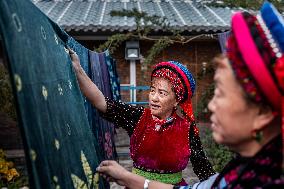
Duan Yinmei (L), an inheritor of the tie-dye technique of Bai ethnic group, and handicraftsman Duan Lilan dry tie-dye fabrics in a dyehouse in Zhoucheng Village of Dali Bai Autonomous Prefecture, southwest China's Yunnan Province, November 21, 2025. Known as the hometown of the tie-dye technique of Bai ethnic group, Zhoucheng Village hosts over 200 households engaging in tie-dye businesses, with the number of employees exceeding 4,000. As a traditional folk technique of the Bai ethnic group, tie-dye boasts a history spanning over a thousand years and was included in the first batch of China's national intangible cultural heritage list in 2006. Tying and dyeing are the core steps in the process of making indigo tie-dye products. Artisans use needles and threads to create various patterns on the fabric, which are then dyed with plant-based dyes, resulting in blue backgrounds adorned with vivid white patterns. Photo by Hu Chao/Xinhua/ABACAPRESS.COM

  •  
Tie-Dye Technique Of Bai Ethnic Group - Chin

Tie-Dye Technique Of Bai Ethnic Group - Chin

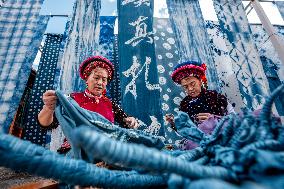
Duan Yinmei (L), an inheritor of the tie-dye technique of Bai ethnic group, and handicraftsman Duan Lilan untie knots on fabrics in a dyehouse in Zhoucheng Village of Dali Bai Autonomous Prefecture, southwest China's Yunnan Province, November 21, 2025. Known as the hometown of the tie-dye technique of Bai ethnic group, Zhoucheng Village hosts over 200 households engaging in tie-dye businesses, with the number of employees exceeding 4,000. As a traditional folk technique of the Bai ethnic group, tie-dye boasts a history spanning over a thousand years and was included in the first batch of China's national intangible cultural heritage list in 2006. Tying and dyeing are the core steps in the process of making indigo tie-dye products. Artisans use needles and threads to create various patterns on the fabric, which are then dyed with plant-based dyes, resulting in blue backgrounds adorned with vivid white patterns. Photo by Hu Chao/Xinhua/ABACAPRESS.COM

  •  
Tie-Dye Technique Of Bai Ethnic Group - Chin

Tie-Dye Technique Of Bai Ethnic Group - Chin

Duan Yinmei (L), an inheritor of the tie-dye technique of Bai ethnic group, and handicraftsman Duan Lilan untie knots on fabrics in a dyehouse in Zhoucheng Village of Dali Bai Autonomous Prefecture, southwest China's Yunnan Province, November 21, 2025. Known as the hometown of the tie-dye technique of Bai ethnic group, Zhoucheng Village hosts over 200 households engaging in tie-dye businesses, with the number of employees exceeding 4,000. As a traditional folk technique of the Bai ethnic group, tie-dye boasts a history spanning over a thousand years and was included in the first batch of China's national intangible cultural heritage list in 2006. Tying and dyeing are the core steps in the process of making indigo tie-dye products. Artisans use needles and threads to create various patterns on the fabric, which are then dyed with plant-based dyes, resulting in blue backgrounds adorned with vivid white patterns. Photo by Hu Chao/Xinhua/ABACAPRESS.COM

  •  
Tie-Dye Technique Of Bai Ethnic Group - Chin

Tie-Dye Technique Of Bai Ethnic Group - Chin

Duan Yuan (L), an inheritor of the tie-dye technique of Bai ethnic group, dyes fabrics in a dyehouse in Zhoucheng Village of Dali Bai Autonomous Prefecture, southwest China's Yunnan Province, November 21, 2025. Known as the hometown of the tie-dye technique of Bai ethnic group, Zhoucheng Village hosts over 200 households engaging in tie-dye businesses, with the number of employees exceeding 4,000. As a traditional folk technique of the Bai ethnic group, tie-dye boasts a history spanning over a thousand years and was included in the first batch of China's national intangible cultural heritage list in 2006. Tying and dyeing are the core steps in the process of making indigo tie-dye products. Artisans use needles and threads to create various patterns on the fabric, which are then dyed with plant-based dyes, resulting in blue backgrounds adorned with vivid white patterns. Photo by Hu Chao/Xinhua/ABACAPRESS.COM

  •  
Tie-Dye Technique Of Bai Ethnic Group - Chin

Tie-Dye Technique Of Bai Ethnic Group - Chin

Duan Yuan, an inheritor of the tie-dye technique of Bai ethnic group, makes tie-dye designs in a dyehouse in Zhoucheng Village of Dali Bai Autonomous Prefecture, southwest China's Yunnan Province, November 21, 2025. Known as the hometown of the tie-dye technique of Bai ethnic group, Zhoucheng Village hosts over 200 households engaging in tie-dye businesses, with the number of employees exceeding 4,000. As a traditional folk technique of the Bai ethnic group, tie-dye boasts a history spanning over a thousand years and was included in the first batch of China's national intangible cultural heritage list in 2006. Tying and dyeing are the core steps in the process of making indigo tie-dye products. Artisans use needles and threads to create various patterns on the fabric, which are then dyed with plant-based dyes, resulting in blue backgrounds adorned with vivid white patterns. Photo by Hu Chao/Xinhua/ABACAPRESS.COM

  •  
Tie-Dye Technique Of Bai Ethnic Group - Chin

Tie-Dye Technique Of Bai Ethnic Group - Chin

Duan Yuan, an inheritor of the tie-dye technique of Bai ethnic group, dyes fabrics in a dyehouse in Zhoucheng Village of Dali Bai Autonomous Prefecture, southwest China's Yunnan Province, November 21, 2025. Known as the hometown of the tie-dye technique of Bai ethnic group, Zhoucheng Village hosts over 200 households engaging in tie-dye businesses, with the number of employees exceeding 4,000. As a traditional folk technique of the Bai ethnic group, tie-dye boasts a history spanning over a thousand years and was included in the first batch of China's national intangible cultural heritage list in 2006. Tying and dyeing are the core steps in the process of making indigo tie-dye products. Artisans use needles and threads to create various patterns on the fabric, which are then dyed with plant-based dyes, resulting in blue backgrounds adorned with vivid white patterns. Photo by Hu Chao/Xinhua/ABACAPRESS.COM

  •  
Tie-Dye Technique Of Bai Ethnic Group - Chin

Tie-Dye Technique Of Bai Ethnic Group - Chin

Duan Yuan, an inheritor of the tie-dye technique of Bai ethnic group, dyes fabrics in a dyehouse in Zhoucheng Village of Dali Bai Autonomous Prefecture, southwest China's Yunnan Province, November 21, 2025. Known as the hometown of the tie-dye technique of Bai ethnic group, Zhoucheng Village hosts over 200 households engaging in tie-dye businesses, with the number of employees exceeding 4,000. As a traditional folk technique of the Bai ethnic group, tie-dye boasts a history spanning over a thousand years and was included in the first batch of China's national intangible cultural heritage list in 2006. Tying and dyeing are the core steps in the process of making indigo tie-dye products. Artisans use needles and threads to create various patterns on the fabric, which are then dyed with plant-based dyes, resulting in blue backgrounds adorned with vivid white patterns. Photo by Hu Chao/Xinhua/ABACAPRESS.COM

  •  
Tie-Dye Technique Of Bai Ethnic Group - Chin

Tie-Dye Technique Of Bai Ethnic Group - Chin

Duan Yuan, an inheritor of the tie-dye technique of Bai ethnic group, makes tie-dye designs in a dyehouse in Zhoucheng Village of Dali Bai Autonomous Prefecture, southwest China's Yunnan Province, November 21, 2025. Known as the hometown of the tie-dye technique of Bai ethnic group, Zhoucheng Village hosts over 200 households engaging in tie-dye businesses, with the number of employees exceeding 4,000. As a traditional folk technique of the Bai ethnic group, tie-dye boasts a history spanning over a thousand years and was included in the first batch of China's national intangible cultural heritage list in 2006. Tying and dyeing are the core steps in the process of making indigo tie-dye products. Artisans use needles and threads to create various patterns on the fabric, which are then dyed with plant-based dyes, resulting in blue backgrounds adorned with vivid white patterns. Photo by Hu Chao/Xinhua/ABACAPRESS.COM

  •  
Tie-Dye Technique Of Bai Ethnic Group - Chin

Tie-Dye Technique Of Bai Ethnic Group - Chin

Duan Yinmei, an inheritor of the tie-dye technique of Bai ethnic group, unties knots on fabrics in a dyehouse in Zhoucheng Village of Dali Bai Autonomous Prefecture, southwest China's Yunnan Province, November 21, 2025. Known as the hometown of the tie-dye technique of Bai ethnic group, Zhoucheng Village hosts over 200 households engaging in tie-dye businesses, with the number of employees exceeding 4,000. As a traditional folk technique of the Bai ethnic group, tie-dye boasts a history spanning over a thousand years and was included in the first batch of China's national intangible cultural heritage list in 2006. Tying and dyeing are the core steps in the process of making indigo tie-dye products. Artisans use needles and threads to create various patterns on the fabric, which are then dyed with plant-based dyes, resulting in blue backgrounds adorned with vivid white patterns. Photo by Hu Chao/Xinhua/ABACAPRESS.COM

  •  
Tie-Dye Technique Of Bai Ethnic Group - Chin

Tie-Dye Technique Of Bai Ethnic Group - Chin

Duan Yinmei, an inheritor of the tie-dye technique of Bai ethnic group, dyes patterns on fabrics in a dyehouse in Zhoucheng Village of Dali Bai Autonomous Prefecture, southwest China's Yunnan Province, November 21, 2025. Known as the hometown of the tie-dye technique of Bai ethnic group, Zhoucheng Village hosts over 200 households engaging in tie-dye businesses, with the number of employees exceeding 4,000. As a traditional folk technique of the Bai ethnic group, tie-dye boasts a history spanning over a thousand years and was included in the first batch of China's national intangible cultural heritage list in 2006. Tying and dyeing are the core steps in the process of making indigo tie-dye products. Artisans use needles and threads to create various patterns on the fabric, which are then dyed with plant-based dyes, resulting in blue backgrounds adorned with vivid white patterns. Photo by Hu Chao/Xinhua/ABACAPRESS.COM

  •  
Tie-Dye Technique Of Bai Ethnic Group - Chin

Tie-Dye Technique Of Bai Ethnic Group - Chin

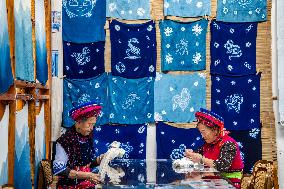
Duan Yinmei (R), an inheritor of the tie-dye technique of Bai ethnic group, and handicraftsman Duan Lilan create knots on fabrics in a dyehouse in Zhoucheng Village of Dali Bai Autonomous Prefecture, southwest China's Yunnan Province, November 21, 2025. Known as the hometown of the tie-dye technique of Bai ethnic group, Zhoucheng Village hosts over 200 households engaging in tie-dye businesses, with the number of employees exceeding 4,000. As a traditional folk technique of the Bai ethnic group, tie-dye boasts a history spanning over a thousand years and was included in the first batch of China's national intangible cultural heritage list in 2006. Tying and dyeing are the core steps in the process of making indigo tie-dye products. Artisans use needles and threads to create various patterns on the fabric, which are then dyed with plant-based dyes, resulting in blue backgrounds adorned with vivid white patterns. Photo by Hu Chao/Xinhua/ABACAPRESS.COM

  •  
Straw-Woven Dragon Performance - China

Straw-Woven Dragon Performance - China

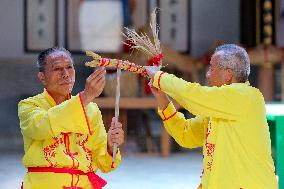
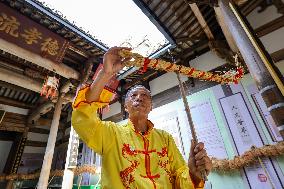
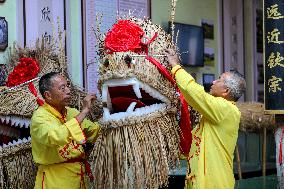
Bao Guanjin (L), an inheritor of straw-woven dragon craftsmanship, works with a villager to make a mini straw-woven dragon at Shuyuan Village, Huizhou District of Huangshan City, east China's Anhui Province, October 4, 2025. As China's Mid-Autumn Festival approaches, villagers at Shuyuan Village highlights their celebration with the straw-woven dragon performance. Shuyuan's straw-woven dragon has been listed as a municipal-level intangible cultural heritage that boasts a history spanning over three centuries. Once the date for a dragon performance is slated at the village, locals would spontaneously collect and contribute straws for weaving of the dragon - an omen for a bountiful harvest. The straw-woven dragon performance on the occasion of the Mid-Autumn Festival has well blended cultural experience into sightseeing, which serves as a major tourist attraction this year. Photo by Fan Chengzhu/Xinhua/ABACAPRESS.COM

  •  
Straw-Woven Dragon Performance - China

Straw-Woven Dragon Performance - China

Bao Guanjin (L), an inheritor of straw-woven dragon craftsmanship, makes a mini straw-woven dragon at Shuyuan Village, Huizhou District of Huangshan City, east China's Anhui Province, October 4, 2025. As China's Mid-Autumn Festival approaches, villagers at Shuyuan Village highlights their celebration with the straw-woven dragon performance. Shuyuan's straw-woven dragon has been listed as a municipal-level intangible cultural heritage that boasts a history spanning over three centuries. Once the date for a dragon performance is slated at the village, locals would spontaneously collect and contribute straws for weaving of the dragon - an omen for a bountiful harvest. The straw-woven dragon performance on the occasion of the Mid-Autumn Festival has well blended cultural experience into sightseeing, which serves as a major tourist attraction this year. Photo by Fan Chengzhu/Xinhua/ABACAPRESS.COM

  •  
Straw-Woven Dragon Performance - China

Straw-Woven Dragon Performance - China

Bao Guanjin (L), an inheritor of straw-woven dragon craftsmanship, works with a villager to check a finished straw-woven dragon at Shuyuan Village, Huizhou District of Huangshan City, east China's Anhui Province, October 4, 2025. As China's Mid-Autumn Festival approaches, villagers at Shuyuan Village highlights their celebration with the straw-woven dragon performance. Shuyuan's straw-woven dragon has been listed as a municipal-level intangible cultural heritage that boasts a history spanning over three centuries. Once the date for a dragon performance is slated at the village, locals would spontaneously collect and contribute straws for weaving of the dragon - an omen for a bountiful harvest. The straw-woven dragon performance on the occasion of the Mid-Autumn Festival has well blended cultural experience into sightseeing, which serves as a major tourist attraction this year. Photo by Fan Chengzhu/Xinhua/ABACAPRESS.COM

  •  
3rd XIAN INTERNATIONAL ELDERLY INDUSTRY EXPO in Xi'an

3rd XIAN INTERNATIONAL ELDERLY INDUSTRY EXPO in Xi'an

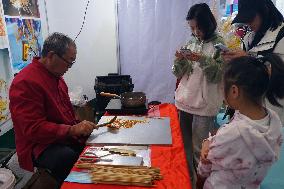
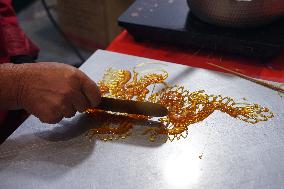
XI'AN, CHINA - SEPTEMBER 20, 2025 - Zhang Wanjun, a 66 year old inheritor of intangible cultural heritage sugar paintings, made sugar paintings in the shape of Chinese Loong at the Third Xi'an International Industry EXPO in Xi'an, Shaanxi Province, China on September 20, 2025.

  •  
3rd XIAN INTERNATIONAL ELDERLY INDUSTRY EXPO in Xi'an

3rd XIAN INTERNATIONAL ELDERLY INDUSTRY EXPO in Xi'an

XI'AN, CHINA - SEPTEMBER 20, 2025 - Zhang Wanjun, a 66 year old inheritor of intangible cultural heritage sugar paintings, made sugar paintings in the shape of Chinese Loong at the Third Xi'an International Industry EXPO in Xi'an, Shaanxi Province, China on September 20, 2025.

  •  
3rd XIAN INTERNATIONAL ELDERLY INDUSTRY EXPO in Xi'an

3rd XIAN INTERNATIONAL ELDERLY INDUSTRY EXPO in Xi'an

XI'AN, CHINA - SEPTEMBER 20, 2025 - Zhang Wanjun, a 66 year old inheritor of intangible cultural heritage sugar paintings, made sugar paintings in the shape of Chinese Loong at the Third Xi'an International Industry EXPO in Xi'an, Shaanxi Province, China on September 20, 2025.

  •  
3rd XIAN INTERNATIONAL ELDERLY INDUSTRY EXPO in Xi'an

3rd XIAN INTERNATIONAL ELDERLY INDUSTRY EXPO in Xi'an

XI'AN, CHINA - SEPTEMBER 20, 2025 - Zhang Wanjun, a 66 year old inheritor of intangible cultural heritage sugar paintings, made sugar paintings in the shape of Chinese Loong at the Third Xi'an International Industry EXPO in Xi'an, Shaanxi Province, China on September 20, 2025.

  •  
3rd XIAN INTERNATIONAL ELDERLY INDUSTRY EXPO in Xi'an

3rd XIAN INTERNATIONAL ELDERLY INDUSTRY EXPO in Xi'an

XI'AN, CHINA - SEPTEMBER 20, 2025 - Zhang Wanjun, a 66 year old inheritor of intangible cultural heritage sugar paintings, made sugar paintings in the shape of Chinese Loong at the Third Xi'an International Industry EXPO in Xi'an, Shaanxi Province, China on September 20, 2025.

  •  
Daily life Kirgiz Autonomous Prefecture

Daily life Kirgiz Autonomous Prefecture

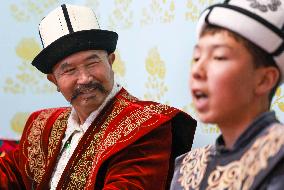
Jangnur Turganbay , a renowned inheritor of the "Manas" epic, teaches his apprentice to sing at his home in Artux City in the Kirgiz Autonomous Prefecture of Kizilsu, northwest China's Xinjiang Uygur Autonomous Region, April 21, 2025. Photo byWang Fei/Xinhua/ABACAPRESS/COM

  •  
Intangible Cultural Heritage Noodles

Intangible Cultural Heritage Noodles

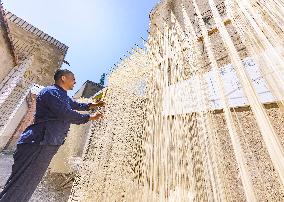
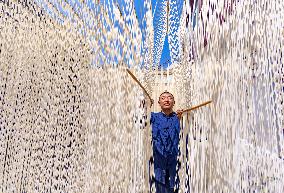
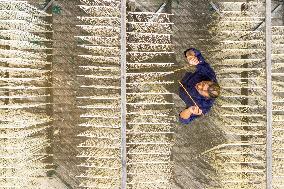
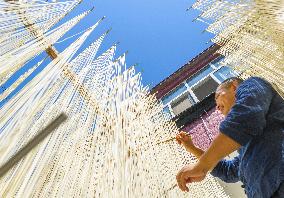
Zhu Qichao, inheritor of intangible cultural heritage of hanging noodles, is drying hanging noodles in Shuanggou Town, Sihong County, Suqian City, Jiangsu Province, China on August 29, 2025.

  •  
Intangible Cultural Heritage Noodles

Intangible Cultural Heritage Noodles

SUQIAN, CHINA - AUGUST 29, 2025 - Zhu Qichao, inheritor of intangible cultural heritage of hanging noodles, is drying hanging noodles in Shuanggou Town, Sihong County, Suqian City, Jiangsu Province, China on August 29, 2025.

  •  
Intangible Cultural Heritage Noodles

Intangible Cultural Heritage Noodles

SUQIAN, CHINA - AUGUST 29, 2025 - Zhu Qichao, inheritor of intangible cultural heritage of hanging noodles, is drying hanging noodles in Shuanggou Town, Sihong County, Suqian City, Jiangsu Province, China on August 29, 2025.

  •  
Intangible Cultural Heritage Noodles

Intangible Cultural Heritage Noodles

SUQIAN, CHINA - AUGUST 29, 2025 - Zhu Qichao, inheritor of intangible cultural heritage of hanging noodles, is drying hanging noodles in Shuanggou Town, Sihong County, Suqian City, Jiangsu Province, China on August 29, 2025.

  •  
Intangible Cultural Heritage Noodles

Intangible Cultural Heritage Noodles

SUQIAN, CHINA - AUGUST 29, 2025 - Zhu Qichao, inheritor of intangible cultural heritage of hanging noodles, is drying hanging noodles in Shuanggou Town, Sihong County, Suqian City, Jiangsu Province, China on August 29, 2025.

  •  
MR Fitness

MR Fitness

GUIYANG, CHINA - JUNE 4, 2025 - He Liyong, the sixth-generation inheritor of Yang-style Tai Chi, is explaining Tai Chi moves through MR Equipment in Guiyang City, Guizhou Province, China on June 4, 2025.

  •  
MR Fitness

MR Fitness

GUIYANG, CHINA - JUNE 4, 2025 - He Liyong, the sixth-generation inheritor of Yang-style Tai Chi, is explaining Tai Chi moves through MR Equipment in Guiyang City, Guizhou Province, China on June 4, 2025.

  •  
Tea Harvest Saison - China

Tea Harvest Saison - China

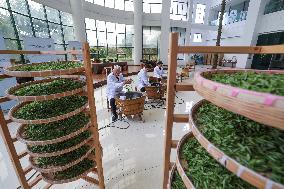
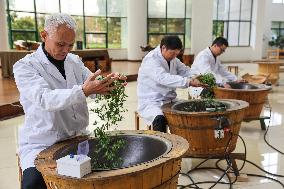
Pan Jintu (1st L), an inheritor of Wuzhou Juyan tea making technique, processes tea leaves with his colleagues at a tea company in Jinhua City of east China's Zhejiang Province, March 31, 2025. The Wuzhou (ancient name of Jinhua) Juyan tea has recently entered its harvest season. The making technique of the Juyan tea, together with that of Longjing tea (West Lake Dragon Well tea), Changxing Zisun tea (a tea variety originated from Changxing County) and some other reputed tea varieties in Zhejiang, was inscribed on the World Intangible Cultural Heritage List in 2022. In recent years, with joint efforts from leading tea companies and Juyan tea making technique inheritors, Juyan tea has quickened its pace of development and moved towards standardized production and industrialization. The development of Juyan tea industry has promoted local eco-tourism and helped increase incomes of local farmers. Photo by Xinhua/Xu Yu/ABACAPRESS.COM

  •  
Tea Harvest Saison - China

Tea Harvest Saison - China

Pan Jintu (1st L), an inheritor of Wuzhou Juyan tea making technique, processes tea leaves with his colleagues at a tea company in Jinhua City of east China's Zhejiang Province, March 31, 2025. The Wuzhou (ancient name of Jinhua) Juyan tea has recently entered its harvest season. The making technique of the Juyan tea, together with that of Longjing tea (West Lake Dragon Well tea), Changxing Zisun tea (a tea variety originated from Changxing County) and some other reputed tea varieties in Zhejiang, was inscribed on the World Intangible Cultural Heritage List in 2022. In recent years, with joint efforts from leading tea companies and Juyan tea making technique inheritors, Juyan tea has quickened its pace of development and moved towards standardized production and industrialization. The development of Juyan tea industry has promoted local eco-tourism and helped increase incomes of local farmers. Photo by Xinhua/Xu Yu/ABACAPRESS.COM

  •  
Shadow Play Inheritor Of Langzhong - China

Shadow Play Inheritor Of Langzhong - China

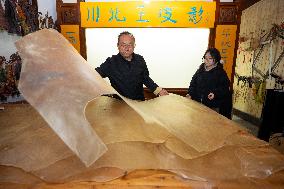
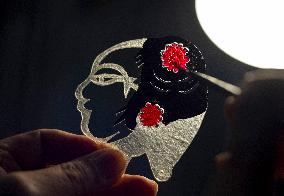
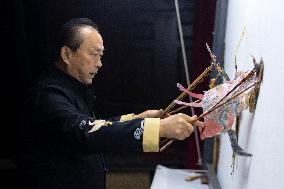
Wang Biao (L) and one of his apprentices select cowhide, a raw material for shadow play puppets, at a museum for Wang's Shadow Play art in Langzhong City, southwest China's Sichuan Province, on February 19, 2025. Shadow play, also known as shadow puppetry, is a traditional Chinese folk art inscribed in UNESCO's list of intangible cultural heritage of humanity in 2011. Wang's Shadow Play is a representative genre of Langzhong Shadow Play popular in northern Sichuan in southwest China, originated with artist Wang Yuansheng during the Qing Dynasty (1644-1911), and has been passed on between generations since then. Wang Biao, 60, a seventh-generation inheritor of Wang's Shadow Play, takes preserving and promoting the art as his life-time course. Wang Biao started to learn the art from his grandfather in his early childhood, and he followed him to stage performances all over the country in the 1980s. He restarted his shadow play troupe in Chengdu despite a shrinking audience for this art in 2000, and started to gi

  •  
Shadow Play Inheritor Of Langzhong - China

Shadow Play Inheritor Of Langzhong - China

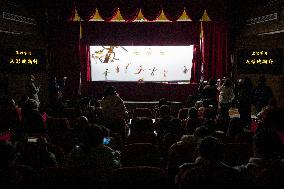
People watch a shadow play at a museum for Wang's Shadow Play art in Langzhong City, southwest China's Sichuan Province, on February 19, 2025. Shadow play, also known as shadow puppetry, is a traditional Chinese folk art inscribed in UNESCO's list of intangible cultural heritage of humanity in 2011. Wang's Shadow Play is a representative genre of Langzhong Shadow Play popular in northern Sichuan in southwest China, originated with artist Wang Yuansheng during the Qing Dynasty (1644-1911), and has been passed on between generations since then. Wang Biao, 60, a seventh-generation inheritor of Wang's Shadow Play, takes preserving and promoting the art as his life-time course. Wang Biao started to learn the art from his grandfather in his early childhood, and he followed him to stage performances all over the country in the 1980s. He restarted his shadow play troupe in Chengdu despite a shrinking audience for this art in 2000, and started to give performances at local parks and schools. In 2004, he led his troupe

  •  
Shadow Play Inheritor Of Langzhong - China

Shadow Play Inheritor Of Langzhong - China

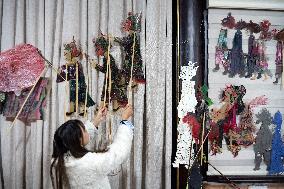
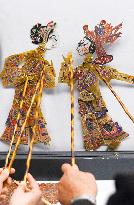
An apprentice of Wang Biao arranges shadow play puppets at a museum for Wang's Shadow Play art in Langzhong City, southwest China's Sichuan Province, on February 19, 2025. Shadow play, also known as shadow puppetry, is a traditional Chinese folk art inscribed in UNESCO's list of intangible cultural heritage of humanity in 2011. Wang's Shadow Play is a representative genre of Langzhong Shadow Play popular in northern Sichuan in southwest China, originated with artist Wang Yuansheng during the Qing Dynasty (1644-1911), and has been passed on between generations since then. Wang Biao, 60, a seventh-generation inheritor of Wang's Shadow Play, takes preserving and promoting the art as his life-time course. Wang Biao started to learn the art from his grandfather in his early childhood, and he followed him to stage performances all over the country in the 1980s. He restarted his shadow play troupe in Chengdu despite a shrinking audience for this art in 2000, and started to give performances at local parks and school

  •  
Shadow Play Inheritor Of Langzhong - China

Shadow Play Inheritor Of Langzhong - China

Wang Biao performs a shadow play at a museum for Wang's Shadow Play art in Langzhong City, southwest China's Sichuan Province, on February 19, 2025. Shadow play, also known as shadow puppetry, is a traditional Chinese folk art inscribed in UNESCO's list of intangible cultural heritage of humanity in 2011. Wang's Shadow Play is a representative genre of Langzhong Shadow Play popular in northern Sichuan in southwest China, originated with artist Wang Yuansheng during the Qing Dynasty (1644-1911), and has been passed on between generations since then. Wang Biao, 60, a seventh-generation inheritor of Wang's Shadow Play, takes preserving and promoting the art as his life-time course. Wang Biao started to learn the art from his grandfather in his early childhood, and he followed him to stage performances all over the country in the 1980s. He restarted his shadow play troupe in Chengdu despite a shrinking audience for this art in 2000, and started to give performances at local parks and schools. In 2004, he led his

  •  
Shadow Play Inheritor Of Langzhong - China

Shadow Play Inheritor Of Langzhong - China

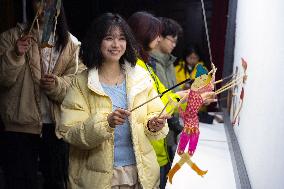
Young audiences try their hands on shadow play performance at a museum for Wang's Shadow Play art in Langzhong City, southwest China's Sichuan Province, on February 19, 2025. Shadow play, also known as shadow puppetry, is a traditional Chinese folk art inscribed in UNESCO's list of intangible cultural heritage of humanity in 2011. Wang's Shadow Play is a representative genre of Langzhong Shadow Play popular in northern Sichuan in southwest China, originated with artist Wang Yuansheng during the Qing Dynasty (1644-1911), and has been passed on between generations since then. Wang Biao, 60, a seventh-generation inheritor of Wang's Shadow Play, takes preserving and promoting the art as his life-time course. Wang Biao started to learn the art from his grandfather in his early childhood, and he followed him to stage performances all over the country in the 1980s. He restarted his shadow play troupe in Chengdu despite a shrinking audience for this art in 2000, and started to give performances at local parks and sch

  •  
Shadow Play Inheritor Of Langzhong - China

Shadow Play Inheritor Of Langzhong - China

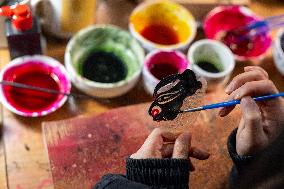
Wang Biao colors a shadow play puppet at a museum for Wang's Shadow Play art in Langzhong City, southwest China's Sichuan Province, on February 19, 2025. Shadow play, also known as shadow puppetry, is a traditional Chinese folk art inscribed in UNESCO's list of intangible cultural heritage of humanity in 2011. Wang's Shadow Play is a representative genre of Langzhong Shadow Play popular in northern Sichuan in southwest China, originated with artist Wang Yuansheng during the Qing Dynasty (1644-1911), and has been passed on between generations since then. Wang Biao, 60, a seventh-generation inheritor of Wang's Shadow Play, takes preserving and promoting the art as his life-time course. Wang Biao started to learn the art from his grandfather in his early childhood, and he followed him to stage performances all over the country in the 1980s. He restarted his shadow play troupe in Chengdu despite a shrinking audience for this art in 2000, and started to give performances at local parks and schools. In 2004, he led

  •  
Shadow Play Inheritor Of Langzhong - China

Shadow Play Inheritor Of Langzhong - China

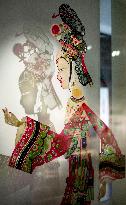
This photo taken on on February 19, 2025 shows a shadow play puppet displayed at a museum for Wang's Shadow Play art in Langzhong City, southwest China's Sichuan Province. Shadow play, also known as shadow puppetry, is a traditional Chinese folk art inscribed in UNESCO's list of intangible cultural heritage of humanity in 2011. Wang's Shadow Play is a representative genre of Langzhong Shadow Play popular in northern Sichuan in southwest China, originated with artist Wang Yuansheng during the Qing Dynasty (1644-1911), and has been passed on between generations since then. Wang Biao, 60, a seventh-generation inheritor of Wang's Shadow Play, takes preserving and promoting the art as his life-time course. Wang Biao started to learn the art from his grandfather in his early childhood, and he followed him to stage performances all over the country in the 1980s. He restarted his shadow play troupe in Chengdu despite a shrinking audience for this art in 2000, and started to give performances at local parks and school

  •  
Shadow Play Inheritor Of Langzhong - China

Shadow Play Inheritor Of Langzhong - China

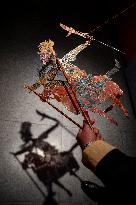
Wang Biao demonstrates shadow play puppet manipulating skills at a museum for Wang's Shadow Play art in Langzhong City, southwest China's Sichuan Province, on February 19, 2025. Shadow play, also known as shadow puppetry, is a traditional Chinese folk art inscribed in UNESCO's list of intangible cultural heritage of humanity in 2011. Wang's Shadow Play is a representative genre of Langzhong Shadow Play popular in northern Sichuan in southwest China, originated with artist Wang Yuansheng during the Qing Dynasty (1644-1911), and has been passed on between generations since then. Wang Biao, 60, a seventh-generation inheritor of Wang's Shadow Play, takes preserving and promoting the art as his life-time course. Wang Biao started to learn the art from his grandfather in his early childhood, and he followed him to stage performances all over the country in the 1980s. He restarted his shadow play troupe in Chengdu despite a shrinking audience for this art in 2000, and started to give performances at local parks and

  •  
Shadow Play Inheritor Of Langzhong - China

Shadow Play Inheritor Of Langzhong - China

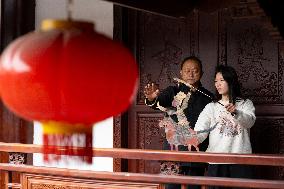
Wang Biao (L) instructs one of his apprentices during a shadow play practice session at a museum for Wang's Shadow Play art in Langzhong City, southwest China's Sichuan Province, on February 19, 2025. Shadow play, also known as shadow puppetry, is a traditional Chinese folk art inscribed in UNESCO's list of intangible cultural heritage of humanity in 2011. Wang's Shadow Play is a representative genre of Langzhong Shadow Play popular in northern Sichuan in southwest China, originated with artist Wang Yuansheng during the Qing Dynasty (1644-1911), and has been passed on between generations since then. Wang Biao, 60, a seventh-generation inheritor of Wang's Shadow Play, takes preserving and promoting the art as his life-time course. Wang Biao started to learn the art from his grandfather in his early childhood, and he followed him to stage performances all over the country in the 1980s. He restarted his shadow play troupe in Chengdu despite a shrinking audience for this art in 2000, and started to give performan

  •  
Shadow Play Inheritor Of Langzhong - China

Shadow Play Inheritor Of Langzhong - China

An apprentice of Wang Biao colors a shadow play puppet at a museum for Wang's Shadow Play art in Langzhong City, southwest China's Sichuan Province, on February 19, 2025. Shadow play, also known as shadow puppetry, is a traditional Chinese folk art inscribed in UNESCO's list of intangible cultural heritage of humanity in 2011. Wang's Shadow Play is a representative genre of Langzhong Shadow Play popular in northern Sichuan in southwest China, originated with artist Wang Yuansheng during the Qing Dynasty (1644-1911), and has been passed on between generations since then. Wang Biao, 60, a seventh-generation inheritor of Wang's Shadow Play, takes preserving and promoting the art as his life-time course. Wang Biao started to learn the art from his grandfather in his early childhood, and he followed him to stage performances all over the country in the 1980s. He restarted his shadow play troupe in Chengdu despite a shrinking audience for this art in 2000, and started to give performances at local parks and schools

  •  
Shadow Play Inheritor Of Langzhong - China

Shadow Play Inheritor Of Langzhong - China

Wang Biao (R) and one of his apprentices perform a shadow play at a museum for Wang's Shadow Play art in Langzhong City, southwest China's Sichuan Province, on February 19, 2025. Shadow play, also known as shadow puppetry, is a traditional Chinese folk art inscribed in UNESCO's list of intangible cultural heritage of humanity in 2011. Wang's Shadow Play is a representative genre of Langzhong Shadow Play popular in northern Sichuan in southwest China, originated with artist Wang Yuansheng during the Qing Dynasty (1644-1911), and has been passed on between generations since then. Wang Biao, 60, a seventh-generation inheritor of Wang's Shadow Play, takes preserving and promoting the art as his life-time course. Wang Biao started to learn the art from his grandfather in his early childhood, and he followed him to stage performances all over the country in the 1980s. He restarted his shadow play troupe in Chengdu despite a shrinking audience for this art in 2000, and started to give performances at local parks and

  •  
International Students Experience Chinese Lunar New Year customs

International Students Experience Chinese Lunar New Year customs

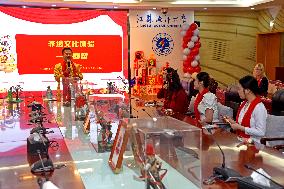
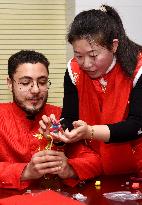
LIANYUNGANG, CHINA - JANUARY 22, 2025 - An intangible cultural heritage inheritor teaches foreign students to make dough sculptures at Jiangsu Ocean University in Lianyungang, East China's Jiangsu province, Jan 22, 2025.

  •  
International Students Experience Chinese Lunar New Year customs

International Students Experience Chinese Lunar New Year customs

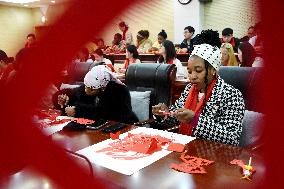
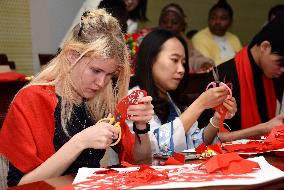
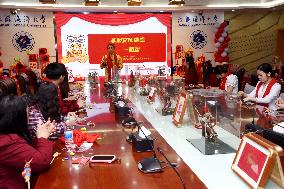
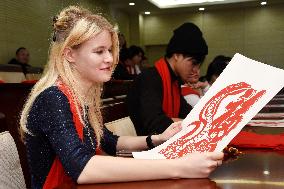
LIANYUNGANG, CHINA - JANUARY 22, 2025 - An intangible cultural heritage inheritor teaches foreign students paper-cutting at Jiangsu Ocean University in Lianyungang, East China's Jiangsu province, Jan 22, 2025.

  •  
International Students Experience Chinese Lunar New Year customs

International Students Experience Chinese Lunar New Year customs

LIANYUNGANG, CHINA - JANUARY 22, 2025 - An intangible cultural heritage inheritor teaches foreign students paper-cutting at Jiangsu Ocean University in Lianyungang, East China's Jiangsu province, Jan 22, 2025.

  •  
International Students Experience Chinese Lunar New Year customs

International Students Experience Chinese Lunar New Year customs

LIANYUNGANG, CHINA - JANUARY 22, 2025 - An intangible cultural heritage inheritor teaches foreign students to make dough sculptures at Jiangsu Ocean University in Lianyungang, East China's Jiangsu province, Jan 22, 2025.

  •  
International Students Experience Chinese Lunar New Year customs

International Students Experience Chinese Lunar New Year customs

LIANYUNGANG, CHINA - JANUARY 22, 2025 - An intangible cultural heritage inheritor teaches foreign students paper-cutting at Jiangsu Ocean University in Lianyungang, East China's Jiangsu province, Jan 22, 2025.

  •  
International Students Experience Chinese Lunar New Year customs

International Students Experience Chinese Lunar New Year customs

LIANYUNGANG, CHINA - JANUARY 22, 2025 - An intangible cultural heritage inheritor teaches foreign students to make dough sculptures at Jiangsu Ocean University in Lianyungang, East China's Jiangsu province, Jan 22, 2025.

  • Main
  • Top
  • Editorial
  • Creative
  • About Us
  • About ILG
  • Terms of use
  • Company
  • BEHIND
  • Price List
  • Single Plan
  • Monthly Plan
  • Services
  • Shooting
  • Rights Clearance
  • Support
  • FAQ
  • How To Buy
  • Contact Us
  • Become a Partner

© KYODO NEWS IMAGES INC

All Rights Reserved.

  • Editorial
  • Olympics
  • News
  • Sports
  • Japan
  • Tech
  • Royal
  • Disaster
  • NorthKorea
  • Old Japan
  • SNS
  • Creative
  • Food
  • Japan
  • Landscape
  • Animal
  • Popular
  • #Ukraine
  • #China
  • #coronavirus
  • #N. Korea
  • #Russia
  • #Thailand
  • #Ukraine
  • #China
  • #coronavirus
  • #N. Korea
  • #Russia
  • #Thailand
  • Food
  • Japan
  • Landscape
  • Animal
  • Olympics
  • News
  • Sports
  • Japan
  • Tech
  • Royal
  • Disaster
  • NorthKorea
  • Old Japan
  • SNS