•  
Cursive Calligraphy Work

Cursive Calligraphy Work

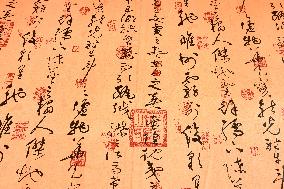
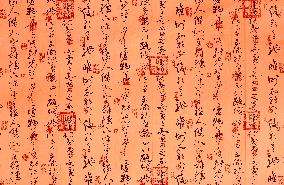
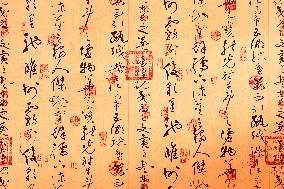
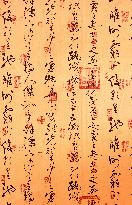
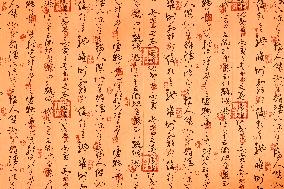
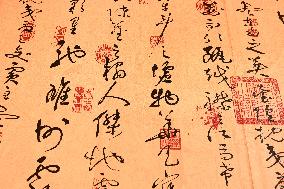
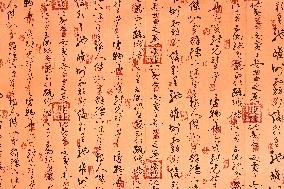
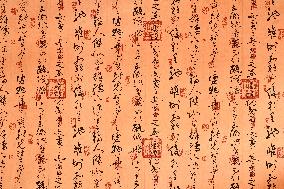
NANNING, CHINA - FEBRUARY 15, 2025 - A cursive calligraphy work of "Preface to Tengwang Pavilion" is seen in Nanning, South China's Guangxi Zhuang autonomous region, Feb 15, 2025. Calligraphy, as the treasure of Chinese traditional culture, inherits the spiritual lifeblood of the Chinese nation with its unique artistic charm. It is a double feast of vision and spirit.

  •  
Cursive Calligraphy Work

Cursive Calligraphy Work

NANNING, CHINA - FEBRUARY 15, 2025 - A cursive calligraphy work of "Preface to Tengwang Pavilion" is seen in Nanning, South China's Guangxi Zhuang autonomous region, Feb 15, 2025. Calligraphy, as the treasure of Chinese traditional culture, inherits the spiritual lifeblood of the Chinese nation with its unique artistic charm. It is a double feast of vision and spirit.

  •  
Cursive Calligraphy Work

Cursive Calligraphy Work

NANNING, CHINA - FEBRUARY 15, 2025 - A cursive calligraphy work of "Preface to Tengwang Pavilion" is seen in Nanning, South China's Guangxi Zhuang autonomous region, Feb 15, 2025. Calligraphy, as the treasure of Chinese traditional culture, inherits the spiritual lifeblood of the Chinese nation with its unique artistic charm. It is a double feast of vision and spirit.

  •  
Cursive Calligraphy Work

Cursive Calligraphy Work

NANNING, CHINA - FEBRUARY 15, 2025 - A cursive calligraphy work of "Preface to Tengwang Pavilion" is seen in Nanning, South China's Guangxi Zhuang autonomous region, Feb 15, 2025. Calligraphy, as the treasure of Chinese traditional culture, inherits the spiritual lifeblood of the Chinese nation with its unique artistic charm. It is a double feast of vision and spirit.

  •  
Cursive Calligraphy Work

Cursive Calligraphy Work

NANNING, CHINA - FEBRUARY 15, 2025 - A cursive calligraphy work of "Preface to Tengwang Pavilion" is seen in Nanning, South China's Guangxi Zhuang autonomous region, Feb 15, 2025. Calligraphy, as the treasure of Chinese traditional culture, inherits the spiritual lifeblood of the Chinese nation with its unique artistic charm. It is a double feast of vision and spirit.

  •  
Cursive Calligraphy Work

Cursive Calligraphy Work

NANNING, CHINA - FEBRUARY 15, 2025 - A cursive calligraphy work of "Preface to Tengwang Pavilion" is seen in Nanning, South China's Guangxi Zhuang autonomous region, Feb 15, 2025. Calligraphy, as the treasure of Chinese traditional culture, inherits the spiritual lifeblood of the Chinese nation with its unique artistic charm. It is a double feast of vision and spirit.

  •  
Cursive Calligraphy Work

Cursive Calligraphy Work

NANNING, CHINA - FEBRUARY 15, 2025 - A cursive calligraphy work of "Preface to Tengwang Pavilion" is seen in Nanning, South China's Guangxi Zhuang autonomous region, Feb 15, 2025. Calligraphy, as the treasure of Chinese traditional culture, inherits the spiritual lifeblood of the Chinese nation with its unique artistic charm. It is a double feast of vision and spirit.

  •  
Cursive Calligraphy Work

Cursive Calligraphy Work

NANNING, CHINA - FEBRUARY 15, 2025 - A cursive calligraphy work of "Preface to Tengwang Pavilion" is seen in Nanning, South China's Guangxi Zhuang autonomous region, Feb 15, 2025. Calligraphy, as the treasure of Chinese traditional culture, inherits the spiritual lifeblood of the Chinese nation with its unique artistic charm. It is a double feast of vision and spirit.

  •  
(MASTER OF CRAFTS)CHINA-SICHUAN-LUZHOU-YUTAN DRAGON DANCE-INHERITOR (CN)

(MASTER OF CRAFTS)CHINA-SICHUAN-LUZHOU-YUTAN DRAGON DANCE-INHERITOR (CN)

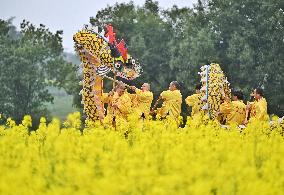
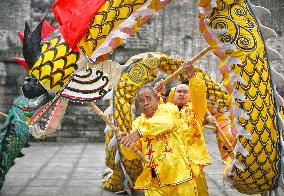
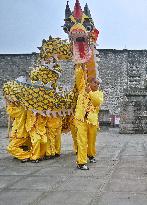
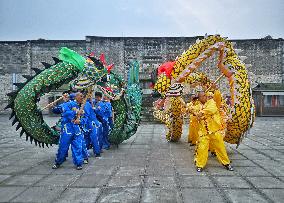
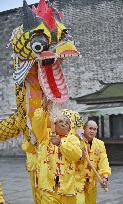
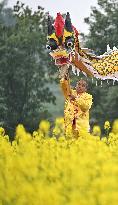
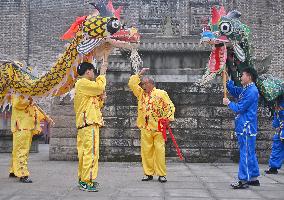
(240208) -- LUZHOU, Feb. 8, 2024 (Xinhua) -- Luo Deshu (1st L) performs Yutan Dragon Dance with his team members in Fangdong Town, Luxian County of southwest China's Sichuan Province, Feb. 1, 2024. Yutan Dragon Dance, a traditional Chinese dragon dance in Luxian County of southwest China's Sichuan Province, is performed by local people to pray for good weather and harvest since the ancient time. In 2006, it was listed as a national-level intangible cultural heritage. Luo Deshu, 75, is an inheritor of the Yutan Dragon Dance. Luo started to learn the folk art since four years old. He not only inherits the performing skills from his father Luo Yinkun but also integrates acrobatics and other performing styles into the dragon dance. "The essence of the dragon dance is vividness, which demands the performer to coordinate his eyes, hands, feet with his mind, " said Luo. Nowadays, Luo teaches dragon dance at primary schools every week. He also plans to set up a Yutan Dragon Dance team for regular performa

  •  
(MASTER OF CRAFTS)CHINA-SICHUAN-LUZHOU-YUTAN DRAGON DANCE-INHERITOR (CN)

(MASTER OF CRAFTS)CHINA-SICHUAN-LUZHOU-YUTAN DRAGON DANCE-INHERITOR (CN)

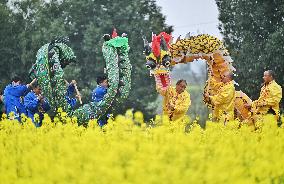
(240208) -- LUZHOU, Feb. 8, 2024 (Xinhua) -- Luo Deshu (3rd R) performs Yutan Dragon Dance with his team members in Fangdong Town, Luxian County of southwest China's Sichuan Province, Feb. 1, 2024. Yutan Dragon Dance, a traditional Chinese dragon dance in Luxian County of southwest China's Sichuan Province, is performed by local people to pray for good weather and harvest since the ancient time. In 2006, it was listed as a national-level intangible cultural heritage. Luo Deshu, 75, is an inheritor of the Yutan Dragon Dance. Luo started to learn the folk art since four years old. He not only inherits the performing skills from his father Luo Yinkun but also integrates acrobatics and other performing styles into the dragon dance. "The essence of the dragon dance is vividness, which demands the performer to coordinate his eyes, hands, feet with his mind, " said Luo. Nowadays, Luo teaches dragon dance at primary schools every week. He also plans to set up a Yutan Dragon Dance team for regular performa

  •  
(MASTER OF CRAFTS)CHINA-SICHUAN-LUZHOU-YUTAN DRAGON DANCE-INHERITOR (CN)

(MASTER OF CRAFTS)CHINA-SICHUAN-LUZHOU-YUTAN DRAGON DANCE-INHERITOR (CN)

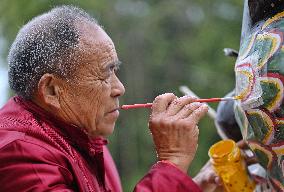
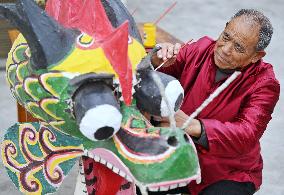
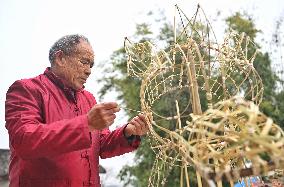
(240208) -- LUZHOU, Feb. 8, 2024 (Xinhua) -- Luo Deshu paints the head of a dragon in Fangdong Town, Luxian County of southwest China's Sichuan Province, Feb. 1, 2024. Yutan Dragon Dance, a traditional Chinese dragon dance in Luxian County of southwest China's Sichuan Province, is performed by local people to pray for good weather and harvest since the ancient time. In 2006, it was listed as a national-level intangible cultural heritage. Luo Deshu, 75, is an inheritor of the Yutan Dragon Dance. Luo started to learn the folk art since four years old. He not only inherits the performing skills from his father Luo Yinkun but also integrates acrobatics and other performing styles into the dragon dance. "The essence of the dragon dance is vividness, which demands the performer to coordinate his eyes, hands, feet with his mind, " said Luo. Nowadays, Luo teaches dragon dance at primary schools every week. He also plans to set up a Yutan Dragon Dance team for regular performances, aiming to better promote

  •  
(MASTER OF CRAFTS)CHINA-SICHUAN-LUZHOU-YUTAN DRAGON DANCE-INHERITOR (CN)

(MASTER OF CRAFTS)CHINA-SICHUAN-LUZHOU-YUTAN DRAGON DANCE-INHERITOR (CN)

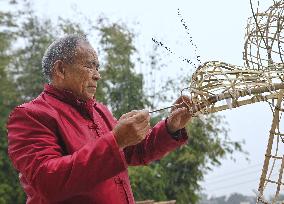
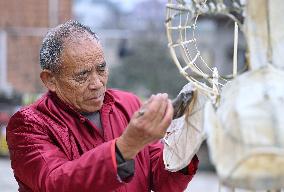
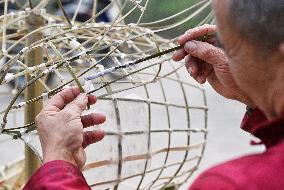
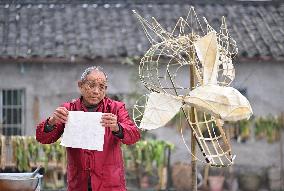
(240208) -- LUZHOU, Feb. 8, 2024 (Xinhua) -- Luo Deshu makes the framework of a dragon in Fangdong Town, Luxian County of southwest China's Sichuan Province, Feb. 1, 2024. Yutan Dragon Dance, a traditional Chinese dragon dance in Luxian County of southwest China's Sichuan Province, is performed by local people to pray for good weather and harvest since the ancient time. In 2006, it was listed as a national-level intangible cultural heritage. Luo Deshu, 75, is an inheritor of the Yutan Dragon Dance. Luo started to learn the folk art since four years old. He not only inherits the performing skills from his father Luo Yinkun but also integrates acrobatics and other performing styles into the dragon dance. "The essence of the dragon dance is vividness, which demands the performer to coordinate his eyes, hands, feet with his mind, " said Luo. Nowadays, Luo teaches dragon dance at primary schools every week. He also plans to set up a Yutan Dragon Dance team for regular performances, aiming to better pro

  •  
(MASTER OF CRAFTS)CHINA-SICHUAN-LUZHOU-YUTAN DRAGON DANCE-INHERITOR (CN)

(MASTER OF CRAFTS)CHINA-SICHUAN-LUZHOU-YUTAN DRAGON DANCE-INHERITOR (CN)

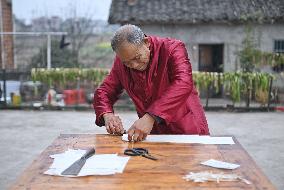
(240208) -- LUZHOU, Feb. 8, 2024 (Xinhua) -- Luo Deshu cuts papers to make the head of a dragon in Fangdong Town, Luxian County of southwest China's Sichuan Province, Feb. 1, 2024. Yutan Dragon Dance, a traditional Chinese dragon dance in Luxian County of southwest China's Sichuan Province, is performed by local people to pray for good weather and harvest since the ancient time. In 2006, it was listed as a national-level intangible cultural heritage. Luo Deshu, 75, is an inheritor of the Yutan Dragon Dance. Luo started to learn the folk art since four years old. He not only inherits the performing skills from his father Luo Yinkun but also integrates acrobatics and other performing styles into the dragon dance. "The essence of the dragon dance is vividness, which demands the performer to coordinate his eyes, hands, feet with his mind, " said Luo. Nowadays, Luo teaches dragon dance at primary schools every week. He also plans to set up a Yutan Dragon Dance team for regular performances, aiming to b

  •  
(MASTER OF CRAFTS)CHINA-SICHUAN-LUZHOU-YUTAN DRAGON DANCE-INHERITOR (CN)

(MASTER OF CRAFTS)CHINA-SICHUAN-LUZHOU-YUTAN DRAGON DANCE-INHERITOR (CN)

(240208) -- LUZHOU, Feb. 8, 2024 (Xinhua) -- Luo Deshu (front) performs Yutan Dragon Dance with his team members in Fangdong Town, Luxian County of southwest China's Sichuan Province, Feb. 1, 2024. Yutan Dragon Dance, a traditional Chinese dragon dance in Luxian County of southwest China's Sichuan Province, is performed by local people to pray for good weather and harvest since the ancient time. In 2006, it was listed as a national-level intangible cultural heritage. Luo Deshu, 75, is an inheritor of the Yutan Dragon Dance. Luo started to learn the folk art since four years old. He not only inherits the performing skills from his father Luo Yinkun but also integrates acrobatics and other performing styles into the dragon dance. "The essence of the dragon dance is vividness, which demands the performer to coordinate his eyes, hands, feet with his mind, " said Luo. Nowadays, Luo teaches dragon dance at primary schools every week. He also plans to set up a Yutan Dragon Dance team for regular performa

  •  
(MASTER OF CRAFTS)CHINA-SICHUAN-LUZHOU-YUTAN DRAGON DANCE-INHERITOR (CN)

(MASTER OF CRAFTS)CHINA-SICHUAN-LUZHOU-YUTAN DRAGON DANCE-INHERITOR (CN)

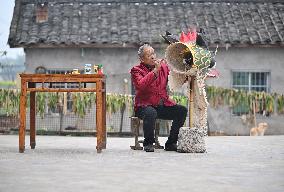
(240208) -- LUZHOU, Feb. 8, 2024 (Xinhua) -- Luo Deshu makes the head of a dragon in Fangdong Town, Luxian County of southwest China's Sichuan Province, Feb. 1, 2024. Yutan Dragon Dance, a traditional Chinese dragon dance in Luxian County of southwest China's Sichuan Province, is performed by local people to pray for good weather and harvest since the ancient time. In 2006, it was listed as a national-level intangible cultural heritage. Luo Deshu, 75, is an inheritor of the Yutan Dragon Dance. Luo started to learn the folk art since four years old. He not only inherits the performing skills from his father Luo Yinkun but also integrates acrobatics and other performing styles into the dragon dance. "The essence of the dragon dance is vividness, which demands the performer to coordinate his eyes, hands, feet with his mind, " said Luo. Nowadays, Luo teaches dragon dance at primary schools every week. He also plans to set up a Yutan Dragon Dance team for regular performances, aiming to better promote

  •  
(MASTER OF CRAFTS)CHINA-SICHUAN-LUZHOU-YUTAN DRAGON DANCE-INHERITOR (CN)

(MASTER OF CRAFTS)CHINA-SICHUAN-LUZHOU-YUTAN DRAGON DANCE-INHERITOR (CN)

(240208) -- LUZHOU, Feb. 8, 2024 (Xinhua) -- Luo Deshu makes the framework of a dragon in Fangdong Town, Luxian County of southwest China's Sichuan Province, Feb. 1, 2024. Yutan Dragon Dance, a traditional Chinese dragon dance in Luxian County of southwest China's Sichuan Province, is performed by local people to pray for good weather and harvest since the ancient time. In 2006, it was listed as a national-level intangible cultural heritage. Luo Deshu, 75, is an inheritor of the Yutan Dragon Dance. Luo started to learn the folk art since four years old. He not only inherits the performing skills from his father Luo Yinkun but also integrates acrobatics and other performing styles into the dragon dance. "The essence of the dragon dance is vividness, which demands the performer to coordinate his eyes, hands, feet with his mind, " said Luo. Nowadays, Luo teaches dragon dance at primary schools every week. He also plans to set up a Yutan Dragon Dance team for regular performances, aiming to better pro

  •  
(MASTER OF CRAFTS)CHINA-SICHUAN-LUZHOU-YUTAN DRAGON DANCE-INHERITOR (CN)

(MASTER OF CRAFTS)CHINA-SICHUAN-LUZHOU-YUTAN DRAGON DANCE-INHERITOR (CN)

(240208) -- LUZHOU, Feb. 8, 2024 (Xinhua) -- Luo Deshu performs Yutan Dragon Dance with his team members in Fangdong Town, Luxian County of southwest China's Sichuan Province, Feb. 1, 2024. Yutan Dragon Dance, a traditional Chinese dragon dance in Luxian County of southwest China's Sichuan Province, is performed by local people to pray for good weather and harvest since the ancient time. In 2006, it was listed as a national-level intangible cultural heritage. Luo Deshu, 75, is an inheritor of the Yutan Dragon Dance. Luo started to learn the folk art since four years old. He not only inherits the performing skills from his father Luo Yinkun but also integrates acrobatics and other performing styles into the dragon dance. "The essence of the dragon dance is vividness, which demands the performer to coordinate his eyes, hands, feet with his mind, " said Luo. Nowadays, Luo teaches dragon dance at primary schools every week. He also plans to set up a Yutan Dragon Dance team for regular performances, ai

  •  
(MASTER OF CRAFTS)CHINA-SICHUAN-LUZHOU-YUTAN DRAGON DANCE-INHERITOR (CN)

(MASTER OF CRAFTS)CHINA-SICHUAN-LUZHOU-YUTAN DRAGON DANCE-INHERITOR (CN)

(240208) -- LUZHOU, Feb. 8, 2024 (Xinhua) -- Luo Deshu paints the head of a dragon in Fangdong Town, Luxian County of southwest China's Sichuan Province, Feb. 1, 2024. Yutan Dragon Dance, a traditional Chinese dragon dance in Luxian County of southwest China's Sichuan Province, is performed by local people to pray for good weather and harvest since the ancient time. In 2006, it was listed as a national-level intangible cultural heritage. Luo Deshu, 75, is an inheritor of the Yutan Dragon Dance. Luo started to learn the folk art since four years old. He not only inherits the performing skills from his father Luo Yinkun but also integrates acrobatics and other performing styles into the dragon dance. "The essence of the dragon dance is vividness, which demands the performer to coordinate his eyes, hands, feet with his mind, " said Luo. Nowadays, Luo teaches dragon dance at primary schools every week. He also plans to set up a Yutan Dragon Dance team for regular performances, aiming to better promote

  •  
(MASTER OF CRAFTS)CHINA-SICHUAN-LUZHOU-YUTAN DRAGON DANCE-INHERITOR (CN)

(MASTER OF CRAFTS)CHINA-SICHUAN-LUZHOU-YUTAN DRAGON DANCE-INHERITOR (CN)

(240208) -- LUZHOU, Feb. 8, 2024 (Xinhua) -- Luo Deshu paints the head of a dragon in Fangdong Town, Luxian County of southwest China's Sichuan Province, Feb. 1, 2024. Yutan Dragon Dance, a traditional Chinese dragon dance in Luxian County of southwest China's Sichuan Province, is performed by local people to pray for good weather and harvest since the ancient time. In 2006, it was listed as a national-level intangible cultural heritage. Luo Deshu, 75, is an inheritor of the Yutan Dragon Dance. Luo started to learn the folk art since four years old. He not only inherits the performing skills from his father Luo Yinkun but also integrates acrobatics and other performing styles into the dragon dance. "The essence of the dragon dance is vividness, which demands the performer to coordinate his eyes, hands, feet with his mind, " said Luo. Nowadays, Luo teaches dragon dance at primary schools every week. He also plans to set up a Yutan Dragon Dance team for regular performances, aiming to better promote

  •  
(MASTER OF CRAFTS)CHINA-SICHUAN-LUZHOU-YUTAN DRAGON DANCE-INHERITOR (CN)

(MASTER OF CRAFTS)CHINA-SICHUAN-LUZHOU-YUTAN DRAGON DANCE-INHERITOR (CN)

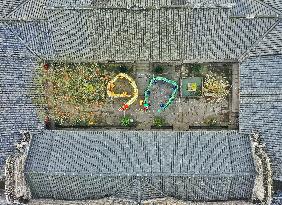
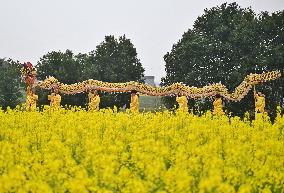
(240208) -- LUZHOU, Feb. 8, 2024 (Xinhua) -- An aerial drone photo taken on Feb. 1, 2024 shows Luo Deshu performing Yutan Dragon Dance with his team members in Fangdong Town, Luxian County of southwest China's Sichuan Province. Yutan Dragon Dance, a traditional Chinese dragon dance in Luxian County of southwest China's Sichuan Province, is performed by local people to pray for good weather and harvest since the ancient time. In 2006, it was listed as a national-level intangible cultural heritage. Luo Deshu, 75, is an inheritor of the Yutan Dragon Dance. Luo started to learn the folk art since four years old. He not only inherits the performing skills from his father Luo Yinkun but also integrates acrobatics and other performing styles into the dragon dance. "The essence of the dragon dance is vividness, which demands the performer to coordinate his eyes, hands, feet with his mind, " said Luo. Nowadays, Luo teaches dragon dance at primary schools every week. He also plans to set up a Yutan Dragon D

  •  
(MASTER OF CRAFTS)CHINA-SICHUAN-LUZHOU-YUTAN DRAGON DANCE-INHERITOR (CN)

(MASTER OF CRAFTS)CHINA-SICHUAN-LUZHOU-YUTAN DRAGON DANCE-INHERITOR (CN)

(240208) -- LUZHOU, Feb. 8, 2024 (Xinhua) -- Luo Deshu (R, front) performs Yutan Dragon Dance with his team members in Fangdong Town, Luxian County of southwest China's Sichuan Province, Feb. 1, 2024. Yutan Dragon Dance, a traditional Chinese dragon dance in Luxian County of southwest China's Sichuan Province, is performed by local people to pray for good weather and harvest since the ancient time. In 2006, it was listed as a national-level intangible cultural heritage. Luo Deshu, 75, is an inheritor of the Yutan Dragon Dance. Luo started to learn the folk art since four years old. He not only inherits the performing skills from his father Luo Yinkun but also integrates acrobatics and other performing styles into the dragon dance. "The essence of the dragon dance is vividness, which demands the performer to coordinate his eyes, hands, feet with his mind, " said Luo. Nowadays, Luo teaches dragon dance at primary schools every week. He also plans to set up a Yutan Dragon Dance team for regular perfo

  •  
(MASTER OF CRAFTS)CHINA-SICHUAN-LUZHOU-YUTAN DRAGON DANCE-INHERITOR (CN)

(MASTER OF CRAFTS)CHINA-SICHUAN-LUZHOU-YUTAN DRAGON DANCE-INHERITOR (CN)

(240208) -- LUZHOU, Feb. 8, 2024 (Xinhua) -- Luo Deshu (1st L) performs Yutan Dragon Dance with his team members in Fangdong Town, Luxian County of southwest China's Sichuan Province, Feb. 1, 2024. Yutan Dragon Dance, a traditional Chinese dragon dance in Luxian County of southwest China's Sichuan Province, is performed by local people to pray for good weather and harvest since the ancient time. In 2006, it was listed as a national-level intangible cultural heritage. Luo Deshu, 75, is an inheritor of the Yutan Dragon Dance. Luo started to learn the folk art since four years old. He not only inherits the performing skills from his father Luo Yinkun but also integrates acrobatics and other performing styles into the dragon dance. "The essence of the dragon dance is vividness, which demands the performer to coordinate his eyes, hands, feet with his mind, " said Luo. Nowadays, Luo teaches dragon dance at primary schools every week. He also plans to set up a Yutan Dragon Dance team for regular performa

  •  
(MASTER OF CRAFTS)CHINA-SICHUAN-LUZHOU-YUTAN DRAGON DANCE-INHERITOR (CN)

(MASTER OF CRAFTS)CHINA-SICHUAN-LUZHOU-YUTAN DRAGON DANCE-INHERITOR (CN)

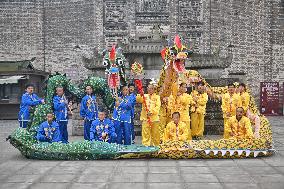
(240208) -- LUZHOU, Feb. 8, 2024 (Xinhua) -- Luo Deshu (C) poses for a photo with his Yutan Dragon Dance team members in Fangdong Town, Luxian County of southwest China's Sichuan Province, Feb. 1, 2024. Yutan Dragon Dance, a traditional Chinese dragon dance in Luxian County of southwest China's Sichuan Province, is performed by local people to pray for good weather and harvest since the ancient time. In 2006, it was listed as a national-level intangible cultural heritage. Luo Deshu, 75, is an inheritor of the Yutan Dragon Dance. Luo started to learn the folk art since four years old. He not only inherits the performing skills from his father Luo Yinkun but also integrates acrobatics and other performing styles into the dragon dance. "The essence of the dragon dance is vividness, which demands the performer to coordinate his eyes, hands, feet with his mind, " said Luo. Nowadays, Luo teaches dragon dance at primary schools every week. He also plans to set up a Yutan Dragon Dance team for regular per

  •  
(MASTER OF CRAFTS)CHINA-SICHUAN-LUZHOU-YUTAN DRAGON DANCE-INHERITOR (CN)

(MASTER OF CRAFTS)CHINA-SICHUAN-LUZHOU-YUTAN DRAGON DANCE-INHERITOR (CN)

(240208) -- LUZHOU, Feb. 8, 2024 (Xinhua) -- Luo Deshu (front) performs Yutan Dragon Dance with his team members in Fangdong Town, Luxian County of southwest China's Sichuan Province, Feb. 1, 2024. Yutan Dragon Dance, a traditional Chinese dragon dance in Luxian County of southwest China's Sichuan Province, is performed by local people to pray for good weather and harvest since the ancient time. In 2006, it was listed as a national-level intangible cultural heritage. Luo Deshu, 75, is an inheritor of the Yutan Dragon Dance. Luo started to learn the folk art since four years old. He not only inherits the performing skills from his father Luo Yinkun but also integrates acrobatics and other performing styles into the dragon dance. "The essence of the dragon dance is vividness, which demands the performer to coordinate his eyes, hands, feet with his mind, " said Luo. Nowadays, Luo teaches dragon dance at primary schools every week. He also plans to set up a Yutan Dragon Dance team for regular performa

  •  
(MASTER OF CRAFTS)CHINA-SICHUAN-LUZHOU-YUTAN DRAGON DANCE-INHERITOR (CN)

(MASTER OF CRAFTS)CHINA-SICHUAN-LUZHOU-YUTAN DRAGON DANCE-INHERITOR (CN)

(240208) -- LUZHOU, Feb. 8, 2024 (Xinhua) -- Luo Deshu performs Yutan Dragon Dance with his team members in Fangdong Town, Luxian County of southwest China's Sichuan Province, Feb. 1, 2024. Yutan Dragon Dance, a traditional Chinese dragon dance in Luxian County of southwest China's Sichuan Province, is performed by local people to pray for good weather and harvest since the ancient time. In 2006, it was listed as a national-level intangible cultural heritage. Luo Deshu, 75, is an inheritor of the Yutan Dragon Dance. Luo started to learn the folk art since four years old. He not only inherits the performing skills from his father Luo Yinkun but also integrates acrobatics and other performing styles into the dragon dance. "The essence of the dragon dance is vividness, which demands the performer to coordinate his eyes, hands, feet with his mind, " said Luo. Nowadays, Luo teaches dragon dance at primary schools every week. He also plans to set up a Yutan Dragon Dance team for regular performances, ai

  •  
(MASTER OF CRAFTS)CHINA-SICHUAN-LUZHOU-YUTAN DRAGON DANCE-INHERITOR (CN)

(MASTER OF CRAFTS)CHINA-SICHUAN-LUZHOU-YUTAN DRAGON DANCE-INHERITOR (CN)

(240208) -- LUZHOU, Feb. 8, 2024 (Xinhua) -- Luo Deshu (C) guides youngsters to perform Yutan Dragon Dance in Fangdong Town, Luxian County of southwest China's Sichuan Province, Feb. 1, 2024. Yutan Dragon Dance, a traditional Chinese dragon dance in Luxian County of southwest China's Sichuan Province, is performed by local people to pray for good weather and harvest since the ancient time. In 2006, it was listed as a national-level intangible cultural heritage. Luo Deshu, 75, is an inheritor of the Yutan Dragon Dance. Luo started to learn the folk art since four years old. He not only inherits the performing skills from his father Luo Yinkun but also integrates acrobatics and other performing styles into the dragon dance. "The essence of the dragon dance is vividness, which demands the performer to coordinate his eyes, hands, feet with his mind, " said Luo. Nowadays, Luo teaches dragon dance at primary schools every week. He also plans to set up a Yutan Dragon Dance team for regular performances,

  •  
(MASTER OF CRAFTS)CHINA-SICHUAN-LUZHOU-YUTAN DRAGON DANCE-INHERITOR (CN)

(MASTER OF CRAFTS)CHINA-SICHUAN-LUZHOU-YUTAN DRAGON DANCE-INHERITOR (CN)

(240208) -- LUZHOU, Feb. 8, 2024 (Xinhua) -- Luo Deshu makes the framework of a dragon in Fangdong Town, Luxian County of southwest China's Sichuan Province, Feb. 1, 2024. Yutan Dragon Dance, a traditional Chinese dragon dance in Luxian County of southwest China's Sichuan Province, is performed by local people to pray for good weather and harvest since the ancient time. In 2006, it was listed as a national-level intangible cultural heritage. Luo Deshu, 75, is an inheritor of the Yutan Dragon Dance. Luo started to learn the folk art since four years old. He not only inherits the performing skills from his father Luo Yinkun but also integrates acrobatics and other performing styles into the dragon dance. "The essence of the dragon dance is vividness, which demands the performer to coordinate his eyes, hands, feet with his mind, " said Luo. Nowadays, Luo teaches dragon dance at primary schools every week. He also plans to set up a Yutan Dragon Dance team for regular performances, aiming to better pro

  •  
(MASTER OF CRAFTS)CHINA-SICHUAN-LUZHOU-YUTAN DRAGON DANCE-INHERITOR (CN)

(MASTER OF CRAFTS)CHINA-SICHUAN-LUZHOU-YUTAN DRAGON DANCE-INHERITOR (CN)

(240208) -- LUZHOU, Feb. 8, 2024 (Xinhua) -- Luo Deshu makes the head of a dragon in Fangdong Town, Luxian County of southwest China's Sichuan Province, Feb. 1, 2024. Yutan Dragon Dance, a traditional Chinese dragon dance in Luxian County of southwest China's Sichuan Province, is performed by local people to pray for good weather and harvest since the ancient time. In 2006, it was listed as a national-level intangible cultural heritage. Luo Deshu, 75, is an inheritor of the Yutan Dragon Dance. Luo started to learn the folk art since four years old. He not only inherits the performing skills from his father Luo Yinkun but also integrates acrobatics and other performing styles into the dragon dance. "The essence of the dragon dance is vividness, which demands the performer to coordinate his eyes, hands, feet with his mind, " said Luo. Nowadays, Luo teaches dragon dance at primary schools every week. He also plans to set up a Yutan Dragon Dance team for regular performances, aiming to better promote

  •  
(MASTER OF CRAFTS)CHINA-GUANGDONG-GUANGZHOU EMBROIDERY-INHERITOR (CN)

(MASTER OF CRAFTS)CHINA-GUANGDONG-GUANGZHOU EMBROIDERY-INHERITOR (CN)

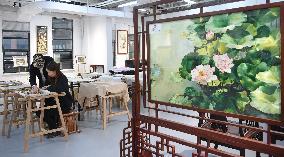
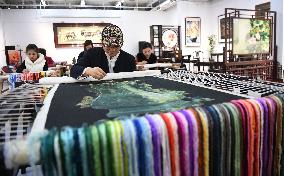
(230418) -- GUANGZHOU, April 18, 2023 (Xinhua) -- This photo taken on April 4, 2023 shows a piece of Guangzhou embroidery artwork by Wang Xinyuan in Guangzhou, south China's Guangdong Province. Cantonese embroidery is one of the four famous embroideries in China. Guangzhou embroidery, part of Cantonese embroidery, dates back to the Tang Dynasty (618-907) and has a history of more than 1,000 years. Boasting of over 30 kinds of stitches, Guangzhou embroidery is well known for complicated composition, vivid image, rich colour and lustre, and varied styles. In May of 2006, it was listed as one of the national-level intangible cultural heritages in China. Wang Xinyuan, a representative inheritor of Guangzhou embroidery, has been engaged in the walk for over 20 years. He not only inherits the tradition, but also seeks for innovation. In 1982, Wang was born in a tailor family in Wuning County of east China's Jiangxi Province. Due to the influence of his parents, he could darn his own clothes at ten years old. He

  •  
(MASTER OF CRAFTS)CHINA-GUANGDONG-GUANGZHOU EMBROIDERY-INHERITOR (CN)

(MASTER OF CRAFTS)CHINA-GUANGDONG-GUANGZHOU EMBROIDERY-INHERITOR (CN)

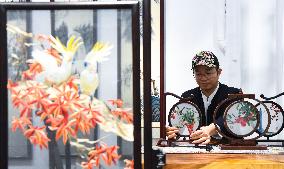
(230418) -- GUANGZHOU, April 18, 2023 (Xinhua) -- Wang Xinyuan shows a piece of traditional Guangzhou embroidery artwork at his studio in Liwan District of Guangzhou, south China's Guangdong Province, Dec. 6, 2022. Cantonese embroidery is one of the four famous embroideries in China. Guangzhou embroidery, part of Cantonese embroidery, dates back to the Tang Dynasty (618-907) and has a history of more than 1,000 years. Boasting of over 30 kinds of stitches, Guangzhou embroidery is well known for complicated composition, vivid image, rich colour and lustre, and varied styles. In May of 2006, it was listed as one of the national-level intangible cultural heritages in China. Wang Xinyuan, a representative inheritor of Guangzhou embroidery, has been engaged in the walk for over 20 years. He not only inherits the tradition, but also seeks for innovation. In 1982, Wang was born in a tailor family in Wuning County of east China's Jiangxi Province. Due to the influence of his parents, he could darn his own clothes

  •  
(MASTER OF CRAFTS)CHINA-GUANGDONG-GUANGZHOU EMBROIDERY-INHERITOR (CN)

(MASTER OF CRAFTS)CHINA-GUANGDONG-GUANGZHOU EMBROIDERY-INHERITOR (CN)

(230418) -- GUANGZHOU, April 18, 2023 (Xinhua) -- This photo taken on April 4, 2023 shows a piece of Guangzhou embroidery artwork by Wang Xinyuan in Guangzhou, south China's Guangdong Province. Cantonese embroidery is one of the four famous embroideries in China. Guangzhou embroidery, part of Cantonese embroidery, dates back to the Tang Dynasty (618-907) and has a history of more than 1,000 years. Boasting of over 30 kinds of stitches, Guangzhou embroidery is well known for complicated composition, vivid image, rich colour and lustre, and varied styles. In May of 2006, it was listed as one of the national-level intangible cultural heritages in China. Wang Xinyuan, a representative inheritor of Guangzhou embroidery, has been engaged in the walk for over 20 years. He not only inherits the tradition, but also seeks for innovation. In 1982, Wang was born in a tailor family in Wuning County of east China's Jiangxi Province. Due to the influence of his parents, he could darn his own clothes at ten years old. He

  •  
(MASTER OF CRAFTS)CHINA-GUANGDONG-GUANGZHOU EMBROIDERY-INHERITOR (CN)

(MASTER OF CRAFTS)CHINA-GUANGDONG-GUANGZHOU EMBROIDERY-INHERITOR (CN)

(230418) -- GUANGZHOU, April 18, 2023 (Xinhua) -- This photo taken on Dec. 6, 2022 shows a piece of Guangzhou embroidery artwork by Wang Xinyuan in Guangzhou, south China's Guangdong Province. Cantonese embroidery is one of the four famous embroideries in China. Guangzhou embroidery, part of Cantonese embroidery, dates back to the Tang Dynasty (618-907) and has a history of more than 1,000 years. Boasting of over 30 kinds of stitches, Guangzhou embroidery is well known for complicated composition, vivid image, rich colour and lustre, and varied styles. In May of 2006, it was listed as one of the national-level intangible cultural heritages in China. Wang Xinyuan, a representative inheritor of Guangzhou embroidery, has been engaged in the walk for over 20 years. He not only inherits the tradition, but also seeks for innovation. In 1982, Wang was born in a tailor family in Wuning County of east China's Jiangxi Province. Due to the influence of his parents, he could darn his own clothes at ten years old. He s

  •  
(MASTER OF CRAFTS)CHINA-GUANGDONG-GUANGZHOU EMBROIDERY-INHERITOR (CN)

(MASTER OF CRAFTS)CHINA-GUANGDONG-GUANGZHOU EMBROIDERY-INHERITOR (CN)

(230418) -- GUANGZHOU, April 18, 2023 (Xinhua) -- Wang Xinyuan teaches an apprentice at his studio in Liwan District of Guangzhou, south China's Guangdong Province, Dec. 6, 2022. Cantonese embroidery is one of the four famous embroideries in China. Guangzhou embroidery, part of Cantonese embroidery, dates back to the Tang Dynasty (618-907) and has a history of more than 1,000 years. Boasting of over 30 kinds of stitches, Guangzhou embroidery is well known for complicated composition, vivid image, rich colour and lustre, and varied styles. In May of 2006, it was listed as one of the national-level intangible cultural heritages in China. Wang Xinyuan, a representative inheritor of Guangzhou embroidery, has been engaged in the walk for over 20 years. He not only inherits the tradition, but also seeks for innovation. In 1982, Wang was born in a tailor family in Wuning County of east China's Jiangxi Province. Due to the influence of his parents, he could darn his own clothes at ten years old. He started to know

  •  
(MASTER OF CRAFTS)CHINA-GUANGDONG-GUANGZHOU EMBROIDERY-INHERITOR (CN)

(MASTER OF CRAFTS)CHINA-GUANGDONG-GUANGZHOU EMBROIDERY-INHERITOR (CN)

(230418) -- GUANGZHOU, April 18, 2023 (Xinhua) -- Wang Xinyuan arranges Guangzhou embroidery artworks at his studio in Liwan District of Guangzhou, south China's Guangdong Province, Dec. 6, 2022. Cantonese embroidery is one of the four famous embroideries in China. Guangzhou embroidery, part of Cantonese embroidery, dates back to the Tang Dynasty (618-907) and has a history of more than 1,000 years. Boasting of over 30 kinds of stitches, Guangzhou embroidery is well known for complicated composition, vivid image, rich colour and lustre, and varied styles. In May of 2006, it was listed as one of the national-level intangible cultural heritages in China. Wang Xinyuan, a representative inheritor of Guangzhou embroidery, has been engaged in the walk for over 20 years. He not only inherits the tradition, but also seeks for innovation. In 1982, Wang was born in a tailor family in Wuning County of east China's Jiangxi Province. Due to the influence of his parents, he could darn his own clothes at ten years old. H

  •  
(MASTER OF CRAFTS)CHINA-GUANGDONG-GUANGZHOU EMBROIDERY-INHERITOR (CN)

(MASTER OF CRAFTS)CHINA-GUANGDONG-GUANGZHOU EMBROIDERY-INHERITOR (CN)

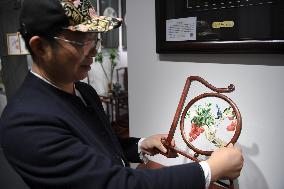
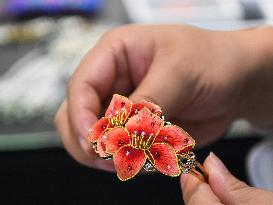
(230418) -- GUANGZHOU, April 18, 2023 (Xinhua) -- Wang Xinyuan shows a creative cultural product of Guangzhou embroidery at his studio in Liwan District of Guangzhou, south China's Guangdong Province, Dec. 6, 2022. Cantonese embroidery is one of the four famous embroideries in China. Guangzhou embroidery, part of Cantonese embroidery, dates back to the Tang Dynasty (618-907) and has a history of more than 1,000 years. Boasting of over 30 kinds of stitches, Guangzhou embroidery is well known for complicated composition, vivid image, rich colour and lustre, and varied styles. In May of 2006, it was listed as one of the national-level intangible cultural heritages in China. Wang Xinyuan, a representative inheritor of Guangzhou embroidery, has been engaged in the walk for over 20 years. He not only inherits the tradition, but also seeks for innovation. In 1982, Wang was born in a tailor family in Wuning County of east China's Jiangxi Province. Due to the influence of his parents, he could darn his own clothes

  •  
(MASTER OF CRAFTS)CHINA-GUANGDONG-GUANGZHOU EMBROIDERY-INHERITOR (CN)

(MASTER OF CRAFTS)CHINA-GUANGDONG-GUANGZHOU EMBROIDERY-INHERITOR (CN)

(230418) -- GUANGZHOU, April 18, 2023 (Xinhua) -- Wang Xinyuan looks at a piece of Guangzhou embroidery artwork at his studio in Liwan District of Guangzhou, south China's Guangdong Province, Dec. 6, 2022. Cantonese embroidery is one of the four famous embroideries in China. Guangzhou embroidery, part of Cantonese embroidery, dates back to the Tang Dynasty (618-907) and has a history of more than 1,000 years. Boasting of over 30 kinds of stitches, Guangzhou embroidery is well known for complicated composition, vivid image, rich colour and lustre, and varied styles. In May of 2006, it was listed as one of the national-level intangible cultural heritages in China. Wang Xinyuan, a representative inheritor of Guangzhou embroidery, has been engaged in the walk for over 20 years. He not only inherits the tradition, but also seeks for innovation. In 1982, Wang was born in a tailor family in Wuning County of east China's Jiangxi Province. Due to the influence of his parents, he could darn his own clothes at ten ye

  •  
(MASTER OF CRAFTS)CHINA-GUANGDONG-GUANGZHOU EMBROIDERY-INHERITOR (CN)

(MASTER OF CRAFTS)CHINA-GUANGDONG-GUANGZHOU EMBROIDERY-INHERITOR (CN)

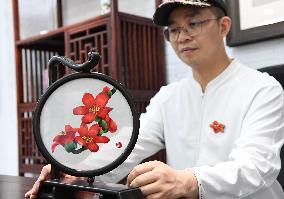
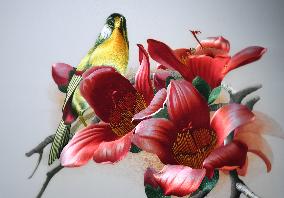
(230418) -- GUANGZHOU, April 18, 2023 (Xinhua) -- Wang Xinyuan introduces a piece of Guangzhou embroidery artwork on silk cotton flowers at his studio in Liwan District of Guangzhou, south China's Guangdong Province, April 4, 2023. Cantonese embroidery is one of the four famous embroideries in China. Guangzhou embroidery, part of Cantonese embroidery, dates back to the Tang Dynasty (618-907) and has a history of more than 1,000 years. Boasting of over 30 kinds of stitches, Guangzhou embroidery is well known for complicated composition, vivid image, rich colour and lustre, and varied styles. In May of 2006, it was listed as one of the national-level intangible cultural heritages in China. Wang Xinyuan, a representative inheritor of Guangzhou embroidery, has been engaged in the walk for over 20 years. He not only inherits the tradition, but also seeks for innovation. In 1982, Wang was born in a tailor family in Wuning County of east China's Jiangxi Province. Due to the influence of his parents, he could darn

  •  
(MASTER OF CRAFTS)CHINA-GUANGDONG-GUANGZHOU EMBROIDERY-INHERITOR (CN)

(MASTER OF CRAFTS)CHINA-GUANGDONG-GUANGZHOU EMBROIDERY-INHERITOR (CN)

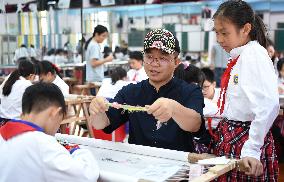
(230418) -- GUANGZHOU, April 18, 2023 (Xinhua) -- Wang Xinyuan guides students in a class on Guangzhou embroidery at a primary school in Liwan District of Guangzhou, south China's Guangdong Province, Oct. 12, 2022. Cantonese embroidery is one of the four famous embroideries in China. Guangzhou embroidery, part of Cantonese embroidery, dates back to the Tang Dynasty (618-907) and has a history of more than 1,000 years. Boasting of over 30 kinds of stitches, Guangzhou embroidery is well known for complicated composition, vivid image, rich colour and lustre, and varied styles. In May of 2006, it was listed as one of the national-level intangible cultural heritages in China. Wang Xinyuan, a representative inheritor of Guangzhou embroidery, has been engaged in the walk for over 20 years. He not only inherits the tradition, but also seeks for innovation. In 1982, Wang was born in a tailor family in Wuning County of east China's Jiangxi Province. Due to the influence of his parents, he could darn his own clothes

  •  
(MASTER OF CRAFTS)CHINA-GUANGDONG-GUANGZHOU EMBROIDERY-INHERITOR (CN)

(MASTER OF CRAFTS)CHINA-GUANGDONG-GUANGZHOU EMBROIDERY-INHERITOR (CN)

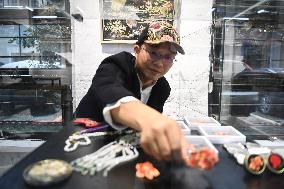
(230418) -- GUANGZHOU, April 18, 2023 (Xinhua) -- Wang Xinyuan arranges creative cultural products of Guangzhou embroidery at his studio in Liwan District of Guangzhou, south China's Guangdong Province, Dec. 6, 2022. Cantonese embroidery is one of the four famous embroideries in China. Guangzhou embroidery, part of Cantonese embroidery, dates back to the Tang Dynasty (618-907) and has a history of more than 1,000 years. Boasting of over 30 kinds of stitches, Guangzhou embroidery is well known for complicated composition, vivid image, rich colour and lustre, and varied styles. In May of 2006, it was listed as one of the national-level intangible cultural heritages in China. Wang Xinyuan, a representative inheritor of Guangzhou embroidery, has been engaged in the walk for over 20 years. He not only inherits the tradition, but also seeks for innovation. In 1982, Wang was born in a tailor family in Wuning County of east China's Jiangxi Province. Due to the influence of his parents, he could darn his own clothe

  •  
(MASTER OF CRAFTS)CHINA-GUANGDONG-GUANGZHOU EMBROIDERY-INHERITOR (CN)

(MASTER OF CRAFTS)CHINA-GUANGDONG-GUANGZHOU EMBROIDERY-INHERITOR (CN)

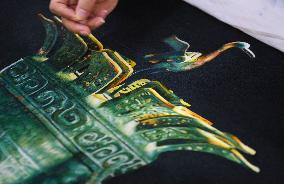
(230418) -- GUANGZHOU, April 18, 2023 (Xinhua) -- Wang Xinyuan makes a piece of Guangzhou embroidery artwork on bronze ware at his studio in Liwan District of Guangzhou, south China's Guangdong Province, Dec. 6, 2022. Cantonese embroidery is one of the four famous embroideries in China. Guangzhou embroidery, part of Cantonese embroidery, dates back to the Tang Dynasty (618-907) and has a history of more than 1,000 years. Boasting of over 30 kinds of stitches, Guangzhou embroidery is well known for complicated composition, vivid image, rich colour and lustre, and varied styles. In May of 2006, it was listed as one of the national-level intangible cultural heritages in China. Wang Xinyuan, a representative inheritor of Guangzhou embroidery, has been engaged in the walk for over 20 years. He not only inherits the tradition, but also seeks for innovation. In 1982, Wang was born in a tailor family in Wuning County of east China's Jiangxi Province. Due to the influence of his parents, he could darn his own cloth

  •  
(MASTER OF CRAFTS)CHINA-GUANGDONG-GUANGZHOU EMBROIDERY-INHERITOR (CN)

(MASTER OF CRAFTS)CHINA-GUANGDONG-GUANGZHOU EMBROIDERY-INHERITOR (CN)

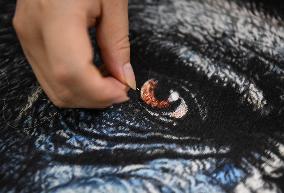
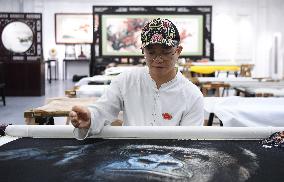
(230418) -- GUANGZHOU, April 18, 2023 (Xinhua) -- Wang Xinyuan makes a piece of Guangzhou embroidery artwork on gorilla at his studio in Liwan District of Guangzhou, south China's Guangdong Province, April 4, 2023. Cantonese embroidery is one of the four famous embroideries in China. Guangzhou embroidery, part of Cantonese embroidery, dates back to the Tang Dynasty (618-907) and has a history of more than 1,000 years. Boasting of over 30 kinds of stitches, Guangzhou embroidery is well known for complicated composition, vivid image, rich colour and lustre, and varied styles. In May of 2006, it was listed as one of the national-level intangible cultural heritages in China. Wang Xinyuan, a representative inheritor of Guangzhou embroidery, has been engaged in the walk for over 20 years. He not only inherits the tradition, but also seeks for innovation. In 1982, Wang was born in a tailor family in Wuning County of east China's Jiangxi Province. Due to the influence of his parents, he could darn his own clothes

  •  
(MASTER OF CRAFTS)CHINA-GUANGDONG-GUANGZHOU EMBROIDERY-INHERITOR (CN)

(MASTER OF CRAFTS)CHINA-GUANGDONG-GUANGZHOU EMBROIDERY-INHERITOR (CN)

(230418) -- GUANGZHOU, April 18, 2023 (Xinhua) -- Wang Xinyuan makes a piece of Guangzhou embroidery artwork on gorilla at his studio in Liwan District of Guangzhou, south China's Guangdong Province, April 4, 2023. Cantonese embroidery is one of the four famous embroideries in China. Guangzhou embroidery, part of Cantonese embroidery, dates back to the Tang Dynasty (618-907) and has a history of more than 1,000 years. Boasting of over 30 kinds of stitches, Guangzhou embroidery is well known for complicated composition, vivid image, rich colour and lustre, and varied styles. In May of 2006, it was listed as one of the national-level intangible cultural heritages in China. Wang Xinyuan, a representative inheritor of Guangzhou embroidery, has been engaged in the walk for over 20 years. He not only inherits the tradition, but also seeks for innovation. In 1982, Wang was born in a tailor family in Wuning County of east China's Jiangxi Province. Due to the influence of his parents, he could darn his own clothes

  •  
(MASTER OF CRAFTS)CHINA-GUANGDONG-GUANGZHOU EMBROIDERY-INHERITOR (CN)

(MASTER OF CRAFTS)CHINA-GUANGDONG-GUANGZHOU EMBROIDERY-INHERITOR (CN)

(230418) -- GUANGZHOU, April 18, 2023 (Xinhua) -- Wang Xinyuan makes a piece of Guangzhou embroidery artwork on bronze ware at his studio in Liwan District of Guangzhou, south China's Guangdong Province, Dec. 6, 2022. Cantonese embroidery is one of the four famous embroideries in China. Guangzhou embroidery, part of Cantonese embroidery, dates back to the Tang Dynasty (618-907) and has a history of more than 1,000 years. Boasting of over 30 kinds of stitches, Guangzhou embroidery is well known for complicated composition, vivid image, rich colour and lustre, and varied styles. In May of 2006, it was listed as one of the national-level intangible cultural heritages in China. Wang Xinyuan, a representative inheritor of Guangzhou embroidery, has been engaged in the walk for over 20 years. He not only inherits the tradition, but also seeks for innovation. In 1982, Wang was born in a tailor family in Wuning County of east China's Jiangxi Province. Due to the influence of his parents, he could darn his own cloth

  •  
(MASTER OF CRAFTS)CHINA-GUANGDONG-GUANGZHOU EMBROIDERY-INHERITOR (CN)

(MASTER OF CRAFTS)CHINA-GUANGDONG-GUANGZHOU EMBROIDERY-INHERITOR (CN)

(230418) -- GUANGZHOU, April 18, 2023 (Xinhua) -- This photo taken on April 4, 2023 shows a piece of Guangzhou embroidery artwork by Wang Xinyuan in Guangzhou, south China's Guangdong Province. Cantonese embroidery is one of the four famous embroideries in China. Guangzhou embroidery, part of Cantonese embroidery, dates back to the Tang Dynasty (618-907) and has a history of more than 1,000 years. Boasting of over 30 kinds of stitches, Guangzhou embroidery is well known for complicated composition, vivid image, rich colour and lustre, and varied styles. In May of 2006, it was listed as one of the national-level intangible cultural heritages in China. Wang Xinyuan, a representative inheritor of Guangzhou embroidery, has been engaged in the walk for over 20 years. He not only inherits the tradition, but also seeks for innovation. In 1982, Wang was born in a tailor family in Wuning County of east China's Jiangxi Province. Due to the influence of his parents, he could darn his own clothes at ten years old. He

  •  
(MASTER OF CRAFTS)CHINA-GUANGDONG-GUANGZHOU EMBROIDERY-INHERITOR (CN)

(MASTER OF CRAFTS)CHINA-GUANGDONG-GUANGZHOU EMBROIDERY-INHERITOR (CN)

(230418) -- GUANGZHOU, April 18, 2023 (Xinhua) -- Wang Xinyuan makes a piece of Guangzhou embroidery artwork on gorilla at his studio in Liwan District of Guangzhou, south China's Guangdong Province, April 4, 2023. Cantonese embroidery is one of the four famous embroideries in China. Guangzhou embroidery, part of Cantonese embroidery, dates back to the Tang Dynasty (618-907) and has a history of more than 1,000 years. Boasting of over 30 kinds of stitches, Guangzhou embroidery is well known for complicated composition, vivid image, rich colour and lustre, and varied styles. In May of 2006, it was listed as one of the national-level intangible cultural heritages in China. Wang Xinyuan, a representative inheritor of Guangzhou embroidery, has been engaged in the walk for over 20 years. He not only inherits the tradition, but also seeks for innovation. In 1982, Wang was born in a tailor family in Wuning County of east China's Jiangxi Province. Due to the influence of his parents, he could darn his own clothes

  •  
GERMANY-BERLIN-DEFENSE MINISTER-CEREMONY

GERMANY-BERLIN-DEFENSE MINISTER-CEREMONY

(230120) -- BERLIN, Jan. 20, 2023 (Xinhua) -- Boris Pistorius (R) and Christine Lambrecht attend a ceremony at the Bellevue Palace in Berlin, Germany, Jan. 19, 2023. Germany's new Minister of Defense, Boris Pistorius, took office on Thursday. Taking over his predecessor, Christine Lambrecht, he inherits the task of rehabilitating an aging army long affected by austerity measures. (Xinhua/Ren Pengfei)

  •  
Mitsubishi Motors launches fully remodeled Delica minivan

Mitsubishi Motors launches fully remodeled Delica minivan

TOKYO, Japan - Mitsubishi Motors Corp. President Osamu Masuko stands y the company's new Delica minivan during a presentation in Tokyo on Jan. 31. The four-wheel-drive ''Delica D:5'' minivan, which is equipped with a 2.4 liter engine, is the fifth generation of the model since its debut in 1968 and inherits the toughness of a sport utility vehicle.

  •  

Xinjiang, My home: inheritors of Hami Uyghur embroidery

STORY: Xinjiang, My home: inheritors of Hami Uyghur embroidery DATELINE: March 20, 2022 LENGTH: 00:02:22 LOCATION: URUMQI, China CATEGORY: SOCIETY SHOTLIST: 1. various of girl wearing Hami Uyghur embroidery costume 2. SOUNDBITE 1 (Uyghur): HAJIR SEMAT, Inheritor of Hami Uyghur embroidery 3. SOUNDBITE 2 (Chinese): MAHMUTI, Son of Hajir Semat 4. SOUNDBITE 3 (Chinese): GUZELINUR, Granddaughter of Hajir Semat 5. SOUNDBITE 4 (Chinese): HAJIR SEMAT, Inheritor of Hami Uyghur embroidery 6. SOUNDBITE 5 (Chinese): MAHMUTI, Son of Hajir Semat 7. SOUNDBITE 6 (Uygur): HAJIR SEMAT, Inheritor of Hami Uyghur embroidery 8. SOUNDBITE 7 (Chinese): MAHMUTI, Son of Hajir Semat 9. various of customers buying Hami Uyghur embroidery costume STORYLINE: Hajir Semat, the seventh-generation inheritor of Hami Uyghur embroidery, lives in Hami, northwest China's Xinjiang Uygur Autonomous Region. She, together with her son and granddaughter, inherits and develops the traditional craftsmanship in their own ways. SOUNDBITE 1 (Uyghur): HAJ

  •  
Retired Bulgarian sumo wrestler inherits traditional elder's name

Retired Bulgarian sumo wrestler inherits traditional elder's name

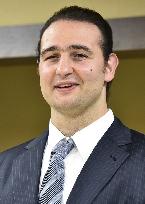
Retired professional sumo wrestler Kotooshu from Bulgaria is shown in this undated file photo. The former ozeki inherited the traditional sumo elder's name of Naruto on Feb. 12, 2015. He is currently a coach at the Sadogatake sumo stable. (Kyodo) ==Kyodo

  •  
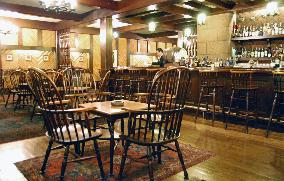
"Leach Bar" inherits spirit of Japanese folk art

"Leach Bar" inherits spirit of Japanese folk art

Photo taken April 29, 2016 shows the inside of the Leach Bar at the Rihga Royal Hotel in Osaka, a bar created based on a concept provided by British potter Bernard Leach. (Kyodo) ==Kyodo

  • Main
  • Top
  • Editorial
  • Creative
  • About Us
  • About ILG
  • Terms of use
  • Company
  • BEHIND
  • Price List
  • Single Plan
  • Monthly Plan
  • Services
  • Shooting
  • Rights Clearance
  • Support
  • FAQ
  • How To Buy
  • Contact Us
  • Become a Partner

© KYODO NEWS IMAGES INC

All Rights Reserved.

  • Editorial
  • Olympics
  • News
  • Sports
  • Japan
  • Tech
  • Royal
  • Disaster
  • NorthKorea
  • Old Japan
  • SNS
  • Creative
  • Food
  • Japan
  • Landscape
  • Animal
  • Popular
  • #Ukraine
  • #Russia
  • #coronavirus
  • #N. Korea
  • #Thailand
  • #China
  • #Ukraine
  • #Russia
  • #coronavirus
  • #N. Korea
  • #Thailand
  • #China
  • Food
  • Japan
  • Landscape
  • Animal
  • Olympics
  • News
  • Sports
  • Japan
  • Tech
  • Royal
  • Disaster
  • NorthKorea
  • Old Japan
  • SNS