•  
Robot Chemist - China

Robot Chemist - China

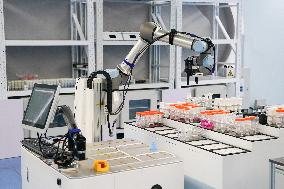
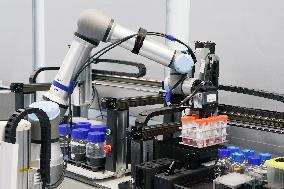
Robot Xiaolai performs an experiment at the state key laboratory of precision and intelligent chemistry of the University of Science and Technology of China (USTC) in Hefei, east China's Anhui Province, November 24, 2025. Traditional chemical research has long relied on continuous trial and error by scientists. With the development of artificial intelligence and robotic automation technologies, it has become possible to design experiments and issue instructions through intelligent platforms, using robots to replace human labor in experiential operations, which enhances experimental efficiency and precision. In 2021, after eight years of dedicated effort by a research team from USTC, Xiaolai, the first-generation "robot chemist," was successfully developed. After several years of iterations, the second-generation dual-armed humanoid robot Xiaolin has been put into operation, capable of performing more complex tasks. It has evolved from a substitute of human labor to a "research partner." According to Zhu Zhuoy

  •  
Robot Chemist - China

Robot Chemist - China

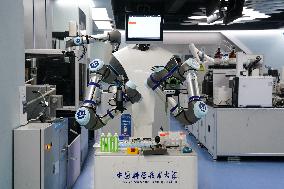
Robot Xiaolin is pictured at the state key laboratory of precision and intelligent chemistry of the University of Science and Technology of China (USTC) in Hefei, east China's Anhui Province, November 24, 2025. Traditional chemical research has long relied on continuous trial and error by scientists. With the development of artificial intelligence and robotic automation technologies, it has become possible to design experiments and issue instructions through intelligent platforms, using robots to replace human labor in experiential operations, which enhances experimental efficiency and precision. In 2021, after eight years of dedicated effort by a research team from USTC, Xiaolai, the first-generation "robot chemist," was successfully developed. After several years of iterations, the second-generation dual-armed humanoid robot Xiaolin has been put into operation, capable of performing more complex tasks. It has evolved from a substitute of human labor to a "research partner." According to Zhu Zhuoying, a prof

  •  
Robot Chemist - China

Robot Chemist - China

Robot Xiaolin is pictured at the state key laboratory of precision and intelligent chemistry of the University of Science and Technology of China (USTC) in Hefei, east China's Anhui Province, November 24, 2025. Traditional chemical research has long relied on continuous trial and error by scientists. With the development of artificial intelligence and robotic automation technologies, it has become possible to design experiments and issue instructions through intelligent platforms, using robots to replace human labor in experiential operations, which enhances experimental efficiency and precision. In 2021, after eight years of dedicated effort by a research team from USTC, Xiaolai, the first-generation "robot chemist," was successfully developed. After several years of iterations, the second-generation dual-armed humanoid robot Xiaolin has been put into operation, capable of performing more complex tasks. It has evolved from a substitute of human labor to a "research partner." According to Zhu Zhuoying, a prof

  •  
Robot Chemist - China

Robot Chemist - China

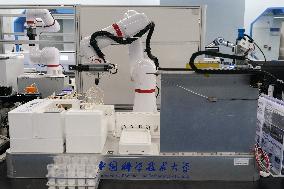
Robot Xiaolai performs an experiment at the state key laboratory of precision and intelligent chemistry of the University of Science and Technology of China (USTC) in Hefei, east China's Anhui Province, November 24, 2025. Traditional chemical research has long relied on continuous trial and error by scientists. With the development of artificial intelligence and robotic automation technologies, it has become possible to design experiments and issue instructions through intelligent platforms, using robots to replace human labor in experiential operations, which enhances experimental efficiency and precision. In 2021, after eight years of dedicated effort by a research team from USTC, Xiaolai, the first-generation "robot chemist," was successfully developed. After several years of iterations, the second-generation dual-armed humanoid robot Xiaolin has been put into operation, capable of performing more complex tasks. It has evolved from a substitute of human labor to a "research partner." According to Zhu Zhuoy

  •  
Robot Chemist - China

Robot Chemist - China

Robot Xiaolai performs an experiment at the state key laboratory of precision and intelligent chemistry of the University of Science and Technology of China (USTC) in Hefei, east China's Anhui Province, November 24, 2025. Traditional chemical research has long relied on continuous trial and error by scientists. With the development of artificial intelligence and robotic automation technologies, it has become possible to design experiments and issue instructions through intelligent platforms, using robots to replace human labor in experiential operations, which enhances experimental efficiency and precision. In 2021, after eight years of dedicated effort by a research team from USTC, Xiaolai, the first-generation "robot chemist," was successfully developed. After several years of iterations, the second-generation dual-armed humanoid robot Xiaolin has been put into operation, capable of performing more complex tasks. It has evolved from a substitute of human labor to a "research partner." According to Zhu Zhuoy

  •  
Robot Chemist - China

Robot Chemist - China

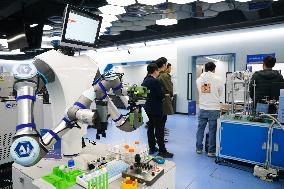
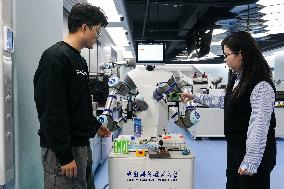
Professor Zhu Zhuoying (R) and doctoral student Guo Lulu have a discussion in front of Robot Xiaolin at the state key laboratory of precision and intelligent chemistry of the University of Science and Technology of China (USTC) in Hefei, east China's Anhui Province, November 24, 2025. Traditional chemical research has long relied on continuous trial and error by scientists. With the development of artificial intelligence and robotic automation technologies, it has become possible to design experiments and issue instructions through intelligent platforms, using robots to replace human labor in experiential operations, which enhances experimental efficiency and precision. In 2021, after eight years of dedicated effort by a research team from USTC, Xiaolai, the first-generation "robot chemist," was successfully developed. After several years of iterations, the second-generation dual-armed humanoid robot Xiaolin has been put into operation, capable of performing more complex tasks. It has evolved from a substitut

  •  
KENYA-NAIROBI-SUN TZU BOOK HOUSE

KENYA-NAIROBI-SUN TZU BOOK HOUSE

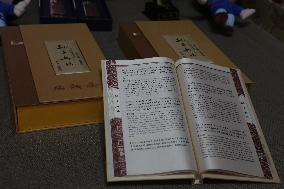
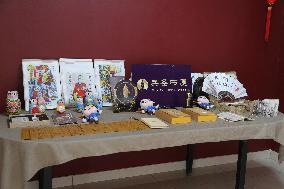
(240810) -- NAIROBI, Aug. 10, 2024 Photo by Xinhua/ABACAPRESS.COM) -- This photo taken on July 24, 2024 shows a bilingual version of "The Art of War" displayed in the "Sun Tzu Book House" at the Confucius Institute of Kenyatta University in Nairobi, Kenya. "Sun Tzu Book House," unveiled recently at the Confucius Institute of Kenyatta University, features various iterations of Sun Tzu's works, including some in silk, others in wood and scrolls. This is the first "Sun Tzu Book House" established abroad by east China's Shandong Province. TO GO WITH:"Feature: In "Sun Tzu Book House," ancient Chinese wisdom inspires young Africans" Photo by Xinhua/ABACAPRESS.COM/Zhang Jian)

  •  
KENYA-NAIROBI-SUN TZU BOOK HOUSE

KENYA-NAIROBI-SUN TZU BOOK HOUSE

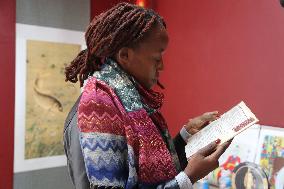
(240810) -- NAIROBI, Aug. 10, 2024 Photo by Xinhua/ABACAPRESS.COM) -- Phyllis Wahura Maina, a student from the Confucius Institute of Kenyatta University, reads in the "Sun Tzu Book House" in Nairobi, Kenya, July 24, 2024. "Sun Tzu Book House," unveiled recently at the Confucius Institute of Kenyatta University, features various iterations of Sun Tzu's works, including some in silk, others in wood and scrolls. This is the first "Sun Tzu Book House" established abroad by east China's Shandong Province. TO GO WITH:"Feature: In "Sun Tzu Book House," ancient Chinese wisdom inspires young Africans" Photo by Xinhua/ABACAPRESS.COM/Zhang Jian)

  •  
KENYA-NAIROBI-SUN TZU BOOK HOUSE

KENYA-NAIROBI-SUN TZU BOOK HOUSE

(240810) -- NAIROBI, Aug. 10, 2024 Photo by Xinhua/ABACAPRESS.COM) -- This photo taken on July 24, 2024 shows a corner of the "Sun Tzu Book House" at the Confucius Institute of Kenyatta University in Nairobi, Kenya. "Sun Tzu Book House," unveiled recently at the Confucius Institute of Kenyatta University, features various iterations of Sun Tzu's works, including some in silk, others in wood and scrolls. This is the first "Sun Tzu Book House" established abroad by east China's Shandong Province. TO GO WITH:"Feature: In "Sun Tzu Book House," ancient Chinese wisdom inspires young Africans" Photo by Xinhua/ABACAPRESS.COM/Zhang Jian)

  •  
KENYA-NAIROBI-SUN TZU BOOK HOUSE

KENYA-NAIROBI-SUN TZU BOOK HOUSE

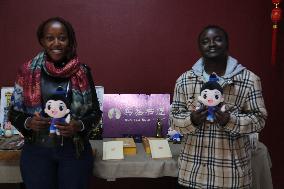
(240810) -- NAIROBI, Aug. 10, 2024 Photo by Xinhua/ABACAPRESS.COM) -- Eddy Paul Kirimi (R) and Phyllis Wahura Maina, students from the Confucius Institute of Kenyatta University, pose for photos in the "Sun Tzu Book House" in Nairobi, Kenya, July 24, 2024. "Sun Tzu Book House," unveiled recently at the Confucius Institute of Kenyatta University, features various iterations of Sun Tzu's works, including some in silk, others in wood and scrolls. This is the first "Sun Tzu Book House" established abroad by east China's Shandong Province. TO GO WITH:"Feature: In "Sun Tzu Book House," ancient Chinese wisdom inspires young Africans" Photo by Xinhua/ABACAPRESS.COM/Zhang Jian)

  • Main
  • Top
  • Editorial
  • Creative
  • About Us
  • About ILG
  • Terms of use
  • Company
  • BEHIND
  • Price List
  • Single Plan
  • Monthly Plan
  • Services
  • Shooting
  • Rights Clearance
  • Support
  • FAQ
  • How To Buy
  • Contact Us
  • Become a Partner

© KYODO NEWS IMAGES INC

All Rights Reserved.

  • Editorial
  • Olympics
  • News
  • Sports
  • Japan
  • Tech
  • Royal
  • Disaster
  • NorthKorea
  • Old Japan
  • SNS
  • Creative
  • Food
  • Japan
  • Landscape
  • Animal
  • Popular
  • #Ukraine
  • #China
  • #coronavirus
  • #N. Korea
  • #Thailand
  • #Russia
  • #Ukraine
  • #China
  • #coronavirus
  • #N. Korea
  • #Thailand
  • #Russia
  • Food
  • Japan
  • Landscape
  • Animal
  • Olympics
  • News
  • Sports
  • Japan
  • Tech
  • Royal
  • Disaster
  • NorthKorea
  • Old Japan
  • SNS