•  
Children take kabuki lessons to learn Japan's culture

Children take kabuki lessons to learn Japan's culture

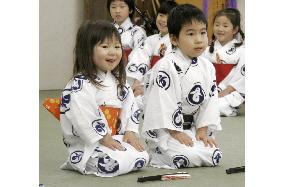
OSAKA, Japan - Yukino Tada (L), 2, is the youngest student at Matsuo Juku Kodomo Kabuki (kabuki cram school for children) in Osaka's Tennoji Ward.

  •  
Children take kabuki lessons to learn Japan's culture

Children take kabuki lessons to learn Japan's culture

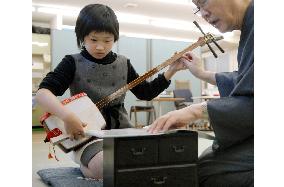
OSAKA, Japan - Mio Yamano, 6, receives a shamisen lesson from Toon Nakajima Katsusuke, at Matsuo Juku Kodomo Kabuki (kabuki cram school for children) in Osaka's Tennoji Ward.

  •  
Kyocera's Inamori sets up management school in N.Y.

Kyocera's Inamori sets up management school in N.Y.

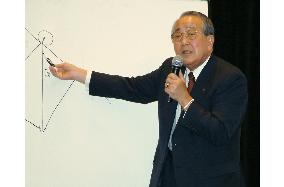
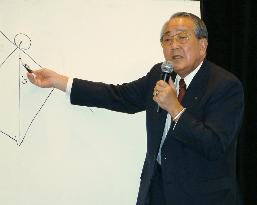
NEW YORK, United State - Kyocera Corp.'s honorary chairman Kazuo Inamori makes a lecture at ''Seiwa Juku'' in New York on April 13 as he opened his management school for entrepreneurs. It is the 57th of his schools, which provide a forum for him to share his knowledge and experience with other entrepreneurs heading small or medium-size companies.

  •  
Kyocera's Inamori sets up management school in N.Y.

Kyocera's Inamori sets up management school in N.Y.

NEW YORK, United State - Kyocera Corp.'s honorary chairman Kazuo Inamori makes a lecture at ''Seiwa Juku'' in New York on April 13 as he opened his management school for entrepreneurs. It is the 57th of his schools, which provide a forum for him to share his knowledge and experience with other entrepreneurs heading small or medium-size companies. (Kyodo)

  •  
Ozawa returns to podium with Mahler's 'Resurrection' after illne

Ozawa returns to podium with Mahler's 'Resurrection' after illne

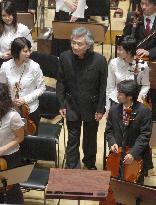
NAGOYA, Japan - Famed Japanese conductor Seiji Ozawa returns to the podium with Gustav Mahler's ''Resurrection'' symphony at a concert hall in Aichi Prefectural Art Theater in Nagoya on July 20 after being hospitalized in January for poor health and canceling his concert commitments. Ozawa, 70, conducted a performance of Mahler's Symphony No. 2 in C minor by the Seiji Ozawa Ongaku-juku Orchestra. (Kyodo)

  •  
Film cameras remain popular among Japanese fans

Film cameras remain popular among Japanese fans

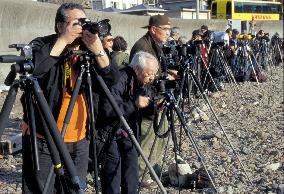
NISHIIZU, Japan - Many photographers take part in the ''Nikon Juku'' photo school held by Nikon Photo Products Inc. at the town of Nishiizu, Shizuoka Prefecture. (Kyodo)

  •  
Lake Ashi

Lake Ashi

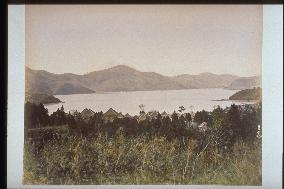
The same negative as the photo numbered 26-6. Not known which is older. In the center of the photo is the former Hakone juku, but the building with a flat roof is the Hafuya hotel, which later became the Hakone Hotel. To the right corner of the houses, was the feared sekisho (guardhouse) of Hakone.==Date:unknown, Place:Hakone, Photo:Suzuki Shin-ichi, (Credit:Nagasaki University Library/Kyodo News Images) [Cabinet Number41‐8‐0]

  •  
Nakasendo Matsuida Inns from Usui River

Nakasendo Matsuida Inns from Usui River

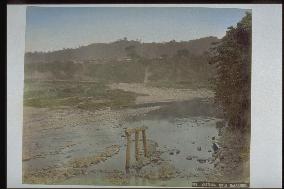
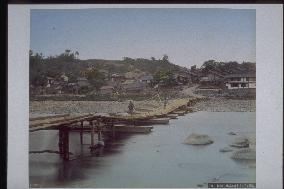
The Usui River which originates from Mt. Komochi to the east of Usui range on the former Nakasendo. The houses of Matsuida juku can be seen. The center fore may be a broken bridge. A man fishes with his pole. Usui River is famous for fishing ayu (sweetfish) to the present day.==Date:unknown, Place:Gunma, Photo:Kusakabe Kinbei, (Credit:Nagasaki University Library/Kyodo News Images) [Cabinet Number38‐55‐0]

  •  
Inns at Nakasendo Nagakubo

Inns at Nakasendo Nagakubo

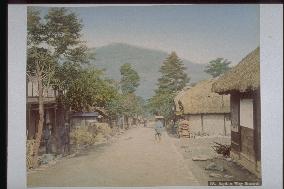
A view of Nagakubo village where Nagakubo juku, one of the jukus on the Nakasendo, was located. Thatched roofed houses line up, and a villager is seen to the left, and a traveler wearing a hat can be seen in the center. Nagakubo village was divided into the old and new town after the flooding in 1631.==Date:unknown, Place:Nagano, Photo:Kusakabe Kinbei, (Credit:Nagasaki University Library/Kyodo News Images) [Cabinet Number38‐46‐0]

  •  
Inns at Nakasendo Oiwake

Inns at Nakasendo Oiwake

Could be the eastern edge of Oiwake juku, over the Shojin Bridge and a little further onwards. Aburaya can be seen to the right, but this hotel prospered even when Oiwake became rather bleak during the Meiji and Taisho eras. The fact that many novelists such as Hori Tatsuo stayed there is famous.==Date:unknown, Place:Nagano, Photo:Kusakabe Kinbei, (Credit:Nagasaki University Library/Kyodo News Images) [Cabinet Number38‐49‐0]

  •  
Usui Pass from Nakasendo Sakamoto Inns

Usui Pass from Nakasendo Sakamoto Inns

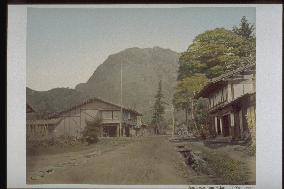
Sakamoto juku is located at the eastern foot of the range, and the 600 meters distance from here (500 meters above sea level) to the range is a climb of 450 meters. Hotels line along the road with a width of 15 meters. The mountain that looks like a pile of rocks is the Funzan. This path leads to Usui Range.==Date:unknown, Place:Gunma, Photo:Kusakabe Kinbei, (Credit:Nagasaki University Library/Kyodo News Images) [Cabinet Number38‐54‐0]

  •  
Mt. Asama from Nakasendo Karuisawa

Mt. Asama from Nakasendo Karuisawa

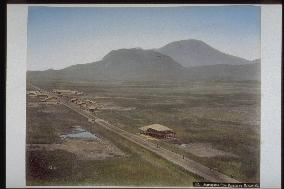
A view of the Mt. Asama from Karuizawa coming down west from Sakamoto juku on the Nakasendo over the Usui Range. Karuizawa prospered with its restaurants, but it was devastated in the explosion of Mt. Asama in 1783. As the new Usui Range road opens in the Meiji era, the village declines.==Date:unknown, Place:Nagano, Photo:Kusakabe Kinbei, (Credit:Nagasaki University Library/Kyodo News Images) [Cabinet Number38‐52‐0]

  •  
Ida River near Nakasendo Wada

Ida River near Nakasendo Wada

Wada village of Chiisagata gun located in the upper stream of the Yorita River is presently a typical Kaso village (most of the villagers have gone to the city to work, with a drastic population decrease), with remnants of the juku of the Nakasendo during the middle ages. Wada range is known to be the most difficult pass on the Nakasendo from the past.==Date:unknown, Place:Nagano, Photo:Kusakabe Kinbei, (Credit:Nagasaki University Library/Kyodo News Images) [Cabinet Number38‐44‐0]

  •  
Funa Bridge over Chikuma River at Nakasendo Shionada Inns

Funa Bridge over Chikuma River at Nakasendo Shionada Inns

A bridge connecting the Shionata juku and the kaido, located along the Nakasendo to the right bank of the Chikuma River. It was the responsibility of this juku to take care of this bridge and secure transport. The bridge was destroyed many times by the steep flow of the Chikuma River. The stone moor of that time exists to this day.==Date:unknown, Place:Nagano, Photo:Kusakabe Kinbei, (Credit:Nagasaki University Library/Kyodo News Images) [Cabinet Number38‐47‐0]

  •  
Inns at Nakasendo Shimo-no-Suwa and Suwa Lake

Inns at Nakasendo Shimo-no-Suwa and Suwa Lake

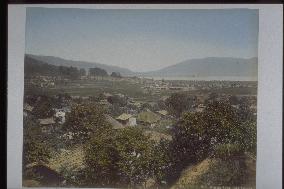
Shimosuwa village on the Nakasendo, one of the five kaidos. Shimosuwa is located to the northeast bank of Lake Suwa, and spreads with the Yashima highlands to the back. There are many spas in the juku, and was also called the city of spas. It is the terminal point of the Koshukaido.==Date:unknown, Place:Nagano, Photo:Kusakabe Kinbei, (Credit:Nagasaki University Library/Kyodo News Images) [Cabinet Number38‐40‐0]

  •  
Fire bell and inn at Nakasendo Shimo-no-Suwa

Fire bell and inn at Nakasendo Shimo-no-Suwa

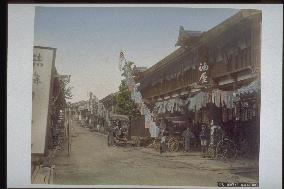
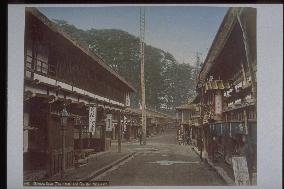
The townscape of Shimosuwa-juku(post town) on the Nakasendo. Tea houses line on both sides of the road and you can see the man at the foot of high ladder, hanging the fire bell in the center. In the back, you can see the Shaso(Shrine forest) of Suwa Taisha Shimosha Akimiya. Shimosuwa-juku is near Wada-toge(pass) and have much hot spings, it has prospered for a junction of Koshukaido.\r\n==Date:unknown, Place:Nagano, Photo:Kusakabe Kinbei, (Credit:Nagasaki University Library/Kyodo News Images) [Cabinet Number38‐39‐0]

  •  
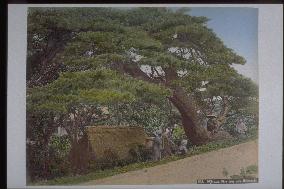
Pine tree at Nakasendo Senba

Pine tree at Nakasendo Senba

A view of the area around the entrance of Seba juku on the Nakasendo. Hijimatsu which occupies the whole photo, is probably the pine where Hosokawa Yusai placed his elbow and read poems. Travelers resting at the foot of the pine and women in work attire can be seen.==Date:unknown, Place:Nagano, Photo:Kusakabe Kinbei, (Credit:Nagasaki University Library/Kyodo News Images) [Cabinet Number38‐33‐0]

  •  
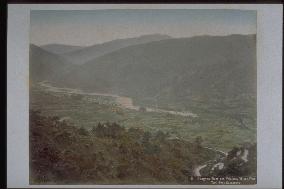
Yabuhara and Kiso River from Nakasendo Torii Pass

Yabuhara and Kiso River from Nakasendo Torii Pass

Looking down at the Kiso River and the Yabuhara village (presently Kiso village )from the Torii range on the Nakasendo. The Yabuhara juku of the village prospered as a resting place before the difficult path on the Nakasendo Kisoji of Torii range and the parting point leading to Hidatakayama on the Nagawado of Hida Kaido.==Date:unknown, Place:Nagano, Photo:Kusakabe Kinbei, (Credit:Nagasaki University Library/Kyodo News Images) [Cabinet Number38‐23‐0]

  •  
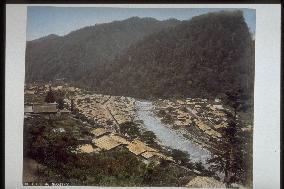
Inns at Nakasendo Fukushima

Inns at Nakasendo Fukushima

A distant view of one of the eleven Kiso lodgings of the Nakasendo, the Fukushima juku, which was established in Fukushima village. In the outskirts of the village, Fukushimazeki which was regarded to be four of the biggest sekisho (guard house). Fukushima was also famous as the entrance to the mountain of faith, Ontakesan.==Date:unknown, Place:Nagano, Photo:Kusakabe Kinbei, (Credit:Nagasaki University Library/Kyodo News Images) [Cabinet Number38‐16‐0]

  •  
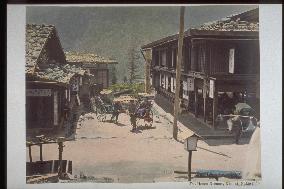
Teahouse at Nezame-no-toko Pass

Teahouse at Nezame-no-toko Pass

Probably the Fukushima juku with a sekisho on the Nakasendo, presently the Fukushimacho of Kisogun of Nagano prefecture. The annex of the Kiso family was built earlier than the other lodging villages in Kiso. The woman on the rickshaw in the center and a person with a balancing pole is seen in the bottom right.==Date:unknown, Place:Nagano, Photo:Kusakabe Kinbei, (Credit:Nagasaki University Library/Kyodo News Images) [Cabinet Number38‐10‐0]

  •  
Gorge over Kiso River near Nakasendo Uematsu?

Gorge over Kiso River near Nakasendo Uematsu?

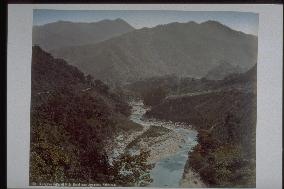
The Hon Bridge which is built over the Kiso River, one of the three fastest rivers in Japan, is seen small to the center of the photo. It is probably near Agematsu juku, on the Nakasendo. The villages of Agematsu juku were hit by numerous fires, but the shukuba was rebuilt every time.==Date:unknown, Place:Nagano, Photo:Kusakabe Kinbei, (Credit:Nagasaki University Library/Kyodo News Images) [Cabinet Number38‐15‐0]

  •  
Nezame-no-toko

Nezame-no-toko

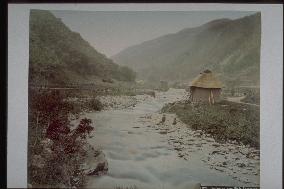
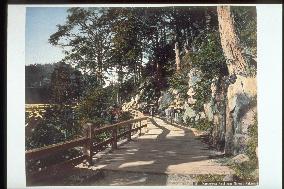
The Namerigawado, near the scenic location on the Nakasendo in Agematsu juku, Nezame no toko. A person with a parasol can be seen in a small shadow. The Nameri River originates from the Kiso Komagatake which is the main mountain in the Central Alps.==Date:unknown, Place:Nagano, Photo:Kusakabe Kinbei, (Credit:Nagasaki University Library/Kyodo News Images) [Cabinet Number38‐6‐0]

  • Main
  • Top
  • Editorial
  • Creative
  • About Us
  • About ILG
  • Terms of use
  • Company
  • BEHIND
  • Price List
  • Single Plan
  • Monthly Plan
  • Services
  • Shooting
  • Rights Clearance
  • Support
  • FAQ
  • How To Buy
  • Contact Us
  • Become a Partner

© KYODO NEWS IMAGES INC

All Rights Reserved.

  • Editorial
  • Olympics
  • News
  • Sports
  • Japan
  • Tech
  • Royal
  • Disaster
  • NorthKorea
  • Old Japan
  • SNS
  • Creative
  • Food
  • Japan
  • Landscape
  • Animal
  • Popular
  • #Ukraine
  • #China
  • #coronavirus
  • #N. Korea
  • #Russia
  • #Thailand
  • #Ukraine
  • #China
  • #coronavirus
  • #N. Korea
  • #Russia
  • #Thailand
  • Food
  • Japan
  • Landscape
  • Animal
  • Olympics
  • News
  • Sports
  • Japan
  • Tech
  • Royal
  • Disaster
  • NorthKorea
  • Old Japan
  • SNS