•  
Dying Karez in Hami

Dying Karez in Hami

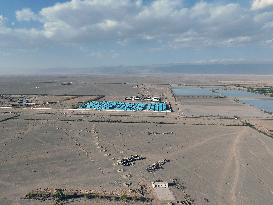
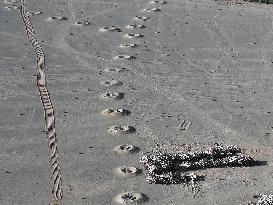
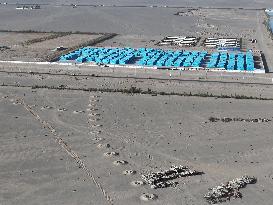
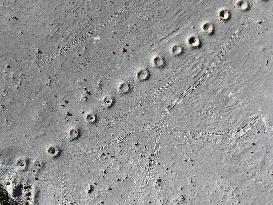
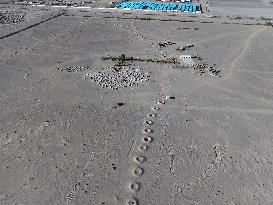
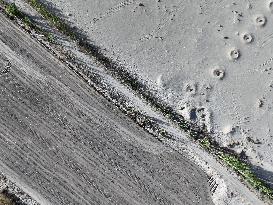
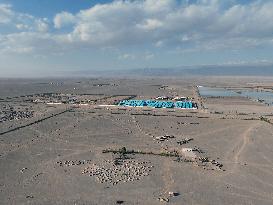
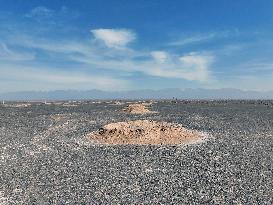
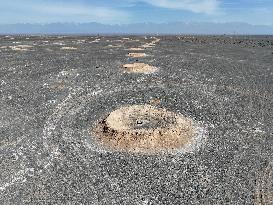
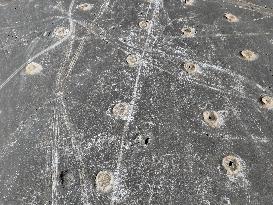
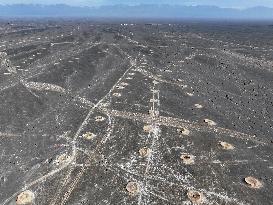
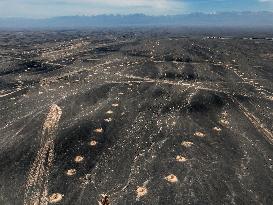
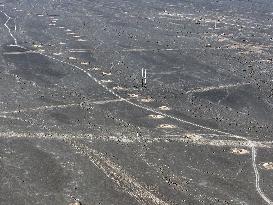
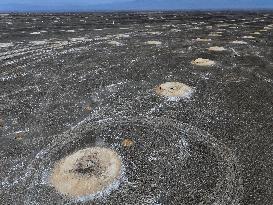
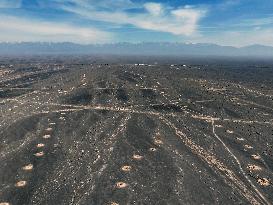
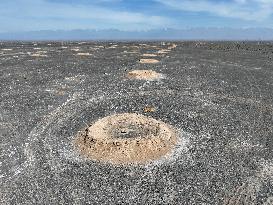
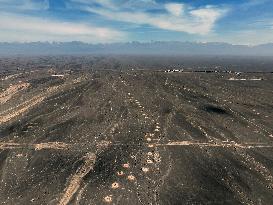
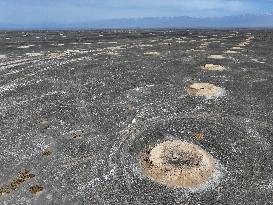
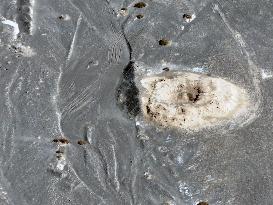
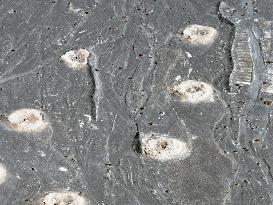
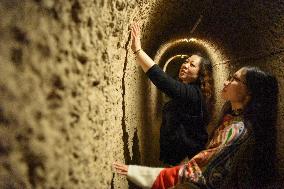
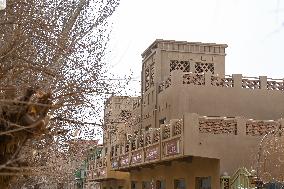
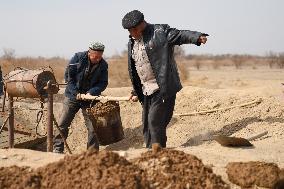
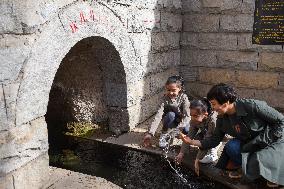
HAMI, CHINA - APRIL 21, 2024 - The dying Karez in Hami, Xinjiang province, April 21, 2024. Karez is a kind of underground water conservancy project created in the long historical development of the working people in the arid land.

  •  
Dying Karez in Hami

Dying Karez in Hami

HAMI, CHINA - APRIL 21, 2024 - The dying Karez in Hami, Xinjiang province, April 21, 2024. Karez is a kind of underground water conservancy project created in the long historical development of the working people in the arid land.

  •  
Dying Karez in Hami

Dying Karez in Hami

HAMI, CHINA - APRIL 21, 2024 - The dying Karez in Hami, Xinjiang province, April 21, 2024. Karez is a kind of underground water conservancy project created in the long historical development of the working people in the arid land.

  •  
Dying Karez in Hami

Dying Karez in Hami

HAMI, CHINA - APRIL 21, 2024 - The dying Karez in Hami, Xinjiang province, April 21, 2024. Karez is a kind of underground water conservancy project created in the long historical development of the working people in the arid land.

  •  
Dying Karez in Hami

Dying Karez in Hami

HAMI, CHINA - APRIL 21, 2024 - The dying Karez in Hami, Xinjiang province, April 21, 2024. Karez is a kind of underground water conservancy project created in the long historical development of the working people in the arid land.

  •  
Dying Karez in Hami

Dying Karez in Hami

HAMI, CHINA - APRIL 21, 2024 - The dying Karez in Hami, Xinjiang province, April 21, 2024. Karez is a kind of underground water conservancy project created in the long historical development of the working people in the arid land.

  •  
Dying Karez in Hami

Dying Karez in Hami

HAMI, CHINA - APRIL 21, 2024 - The dying Karez in Hami, Xinjiang province, April 21, 2024. Karez is a kind of underground water conservancy project created in the long historical development of the working people in the arid land.

  •  
Dying Karez in Hami

Dying Karez in Hami

HAMI, CHINA - APRIL 21, 2024 - The dying Karez in Hami, Xinjiang province, April 21, 2024. Karez is a kind of underground water conservancy project created in the long historical development of the working people in the arid land.

  •  
Dying Karez in Hami

Dying Karez in Hami

HAMI, CHINA - APRIL 21, 2024 - The dying Karez in Hami, Xinjiang province, April 21, 2024. Karez is a kind of underground water conservancy project created in the long historical development of the working people in the arid land.

  •  
Dying Karez in Hami

Dying Karez in Hami

HAMI, CHINA - APRIL 21, 2024 - The dying Karez in Hami, Xinjiang province, April 21, 2024. Karez is a kind of underground water conservancy project created in the long historical development of the working people in the arid land.

  •  
Dying Karez in Hami

Dying Karez in Hami

HAMI, CHINA - APRIL 21, 2024 - The dying Karez in Hami, Xinjiang province, April 21, 2024. Karez is a kind of underground water conservancy project created in the long historical development of the working people in the arid land.

  •  
Dying Karez in Hami

Dying Karez in Hami

HAMI, CHINA - APRIL 21, 2024 - The dying Karez in Hami, Xinjiang province, April 21, 2024. Karez is a kind of underground water conservancy project created in the long historical development of the working people in the arid land.

  •  
Karez

Karez

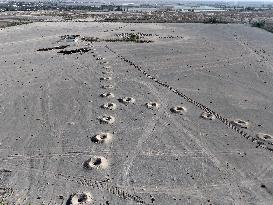
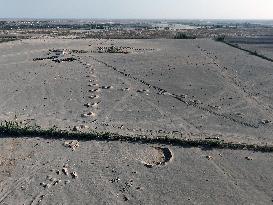
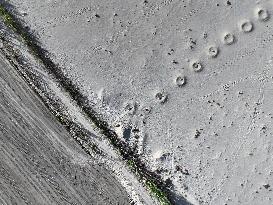
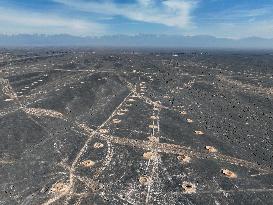
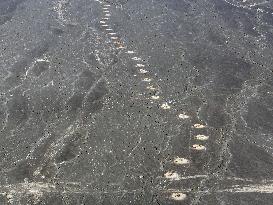
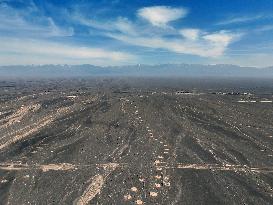
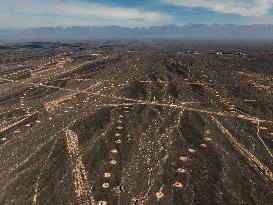
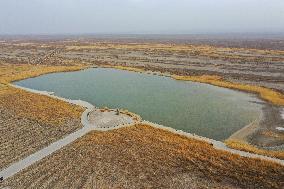
HAMI, CHINA - MARCH 31, 2024 - An aerial view of Karez, an ancient water project that uses the slope of the ground to extract groundwater without power, in an arid area of Hami, Xinjiang province, China, March 31, 2024.

  •  
Karez

Karez

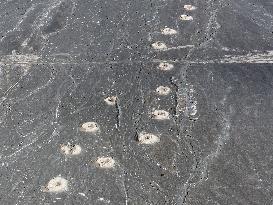
HAMI, CHINA - MARCH 31, 2024 - An aerial view of Karez, an ancient water project that uses the slope of the ground to extract groundwater without power, in an arid area of Hami, Xinjiang province, China, March 31, 2024.

  •  
Karez

Karez

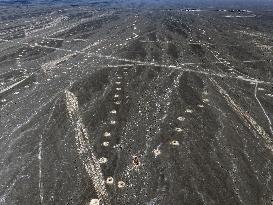
HAMI, CHINA - MARCH 31, 2024 - An aerial view of Karez, an ancient water project that uses the slope of the ground to extract groundwater without power, in an arid area of Hami, Xinjiang province, China, March 31, 2024.

  •  
Karez

Karez

HAMI, CHINA - MARCH 31, 2024 - An aerial view of Karez, an ancient water project that uses the slope of the ground to extract groundwater without power, in an arid area of Hami, Xinjiang province, China, March 31, 2024.

  •  
Karez

Karez

HAMI, CHINA - MARCH 31, 2024 - An aerial view of Karez, an ancient water project that uses the slope of the ground to extract groundwater without power, in an arid area of Hami, Xinjiang province, China, March 31, 2024.

  •  
Karez

Karez

HAMI, CHINA - MARCH 31, 2024 - An aerial view of Karez, an ancient water project that uses the slope of the ground to extract groundwater without power, in an arid area of Hami, Xinjiang province, China, March 31, 2024.

  •  
Karez

Karez

HAMI, CHINA - MARCH 31, 2024 - An aerial view of Karez, an ancient water project that uses the slope of the ground to extract groundwater without power, in an arid area of Hami, Xinjiang province, China, March 31, 2024.

  •  
Karez

Karez

HAMI, CHINA - MARCH 31, 2024 - An aerial view of Karez, an ancient water project that uses the slope of the ground to extract groundwater without power, in an arid area of Hami, Xinjiang province, China, March 31, 2024.

  •  
Karez

Karez

HAMI, CHINA - MARCH 31, 2024 - An aerial view of Karez, an ancient water project that uses the slope of the ground to extract groundwater without power, in an arid area of Hami, Xinjiang province, China, March 31, 2024.

  •  
Karez

Karez

HAMI, CHINA - MARCH 31, 2024 - An aerial view of Karez, an ancient water project that uses the slope of the ground to extract groundwater without power, in an arid area of Hami, Xinjiang province, China, March 31, 2024.

  •  
Karez

Karez

HAMI, CHINA - MARCH 31, 2024 - An aerial view of Karez, an ancient water project that uses the slope of the ground to extract groundwater without power, in an arid area of Hami, Xinjiang province, China, March 31, 2024.

  •  
Karez

Karez

HAMI, CHINA - MARCH 31, 2024 - An aerial view of Karez, an ancient water project that uses the slope of the ground to extract groundwater without power, in an arid area of Hami, Xinjiang province, China, March 31, 2024.

  •  
Karez

Karez

HAMI, CHINA - MARCH 31, 2024 - An aerial view of Karez, an ancient water project that uses the slope of the ground to extract groundwater without power, in an arid area of Hami, Xinjiang province, China, March 31, 2024.

  •  
Karez

Karez

HAMI, CHINA - MARCH 31, 2024 - An aerial view of Karez, an ancient water project that uses the slope of the ground to extract groundwater without power, in an arid area of Hami, Xinjiang province, China, March 31, 2024.

  •  
Karez

Karez

HAMI, CHINA - MARCH 31, 2024 - An aerial view of Karez, an ancient water project that uses the slope of the ground to extract groundwater without power, in an arid area of Hami, Xinjiang province, China, March 31, 2024.

  •  
Karez

Karez

HAMI, CHINA - MARCH 31, 2024 - An aerial view of Karez, an ancient water project that uses the slope of the ground to extract groundwater without power, in an arid area of Hami, Xinjiang province, China, March 31, 2024.

  •  
Karez

Karez

HAMI, CHINA - MARCH 31, 2024 - An aerial view of Karez, an ancient water project that uses the slope of the ground to extract groundwater without power, in an arid area of Hami, Xinjiang province, China, March 31, 2024.

  •  
Karez

Karez

HAMI, CHINA - MARCH 31, 2024 - An aerial view of Karez, an ancient water project that uses the slope of the ground to extract groundwater without power, in an arid area of Hami, Xinjiang province, China, March 31, 2024.

  •  
Karez

Karez

HAMI, CHINA - MARCH 31, 2024 - An aerial view of Karez, an ancient water project that uses the slope of the ground to extract groundwater without power, in an arid area of Hami, Xinjiang province, China, March 31, 2024.

  •  

Exploring Karez wells Ep. 3: Tourism brings fortune to locals

STORY: Exploring Karez wells Ep. 3: Tourism brings fortune to locals DATELINE: March 27, 2023 LENGTH: 0:01:44 LOCATION: TURPAN, China CATEGORY: SOCIETY SHOTLIST: 1. various of Karez wells 2. STANDUP 1 (English): ZHAO CHENJIE, Xinhua correspondent 3. SOUNDBITE 1 (Chinese): TURSUNNAY GUJIAHMAT, Tour guide, Turpan Karez Paradise 4. STANDUP 2 (English): ZHAO CHENJIE, Xinhua correspondent 5. SOUNDBITE 2 (Chinese): PARHAT RIXIT, Homestay owner, Yaer Township of Turpan City STORYLINE: STANDUP 1 (English): ZHAO CHENJIE, Xinhua correspondent "We are now at Turpan Karez Paradise in Xinjiang Uygur Autonomous Region. It is worth noticing that Karez is not only an irrigation system, but also a cultural heritage, which has also created a fortune for locals via tourism." As a precious historical and cultural heritage, Karez attracts a large number of domestic and foreign tourists every year. SOUNDBITE 1 (Chinese): TURSUNNAY GUJIAHMAT, Tour guide, Turpan Karez Paradise "In Turpan Karez Paradise, there are three Karez w

  •  

Exploring Karez wells Ep. 2: Dredging in 30-m-deep underground channel

STORY: Exploring Karez wells Ep. 2: Dredging in 30-m-deep underground channel DATELINE: March 26, 2023 LENGTH: 00:02:40 LOCATION: TURPAN, China CATEGORY: SOCIETY SHOTLIST: 1. various of China's Xinjiang Uygur Autonomous Region 2. STANDUP 1 (English): ZHAO CHENJIE, Xinhua correspondent 3. SOUNDBITE 1 (Chinese): MURAT NAIJMUTI, Culture and Tourism Bureau of Gaochang District, Turpan City 4. STANDUP 2 (English): ZHAO CHENJIE, Xinhua correspondent 5. STANDUP 3 (English): ZHAO CHENJIE, Xinhua correspondent 6. SOUNDBITE 2 (Chinese): MURAT NAIJMUTI, Culture and Tourism Bureau of Gaochang District, Turpan City 7. SOUNDBITE 3 (Local language): GAHIP WUPUR, Dredging worker 8. various of underground channels in China's Xinjiang STORYLINE: STANDUP 1 (English): ZHAO CHENJIE, Xinhua correspondent "This is Turpan in Xinjiang Uygur Autonomous Region. Today, we are at a dredging site of a Karez well, which has provided locals with water since ancient times. Mr. Murat Naijmuti, would you mind showing us the underground chan

  •  

Exploring Karez wells Ep. 1: Ancient irrigation project in China's desert

STORY: Exploring Karez wells Ep. 1: Ancient irrigation project in China's desert DATELINE: March 25, 2023 LENGTH: 00:02:58 LOCATION: TURPAN, China CATEGORY: SOCIETY SHOTLIST: 1. various of China's Xinjiang Uygur Autonomous Region 2. STANDUP 1 (English): ZHAO CHEN JIE, Xinhua correspondent 3. SOUNDBITE 1 (Chinese): MURAT NAIJMUTI, Official of Culture and Tourism Bureau of Gaochang District, Turpan City 4. various of Karez wells 5. SOUNDBITE 2 (Chinese): MURAT NAIJMUTI, Official of Culture and Tourism Bureau of Gaochang District, Turpan City 6. various of Turpan City 7. STANDUP 2 (English): ZHAO CHEN JIE, Xinhua correspondent 8. SOUNDBITE 3 (Uighur): GAHIP WUPUR, Huayuan Villager in Turpan City STORYLINE: Exploring Karez wells Ep. 1: Ancient irrigation project in China's desert Turpan City Xinjiang, China STANDUP 1 (English): ZHAO CHENJIE, Xinhua correspondent "When one mentions Turpan, people always link it with its scorching heat, as well as its delicious grapes. But in an environment that is of low pr

  •  
CHINA-XINJIANG-TURPAN-KAREZ (CN)

CHINA-XINJIANG-TURPAN-KAREZ (CN)

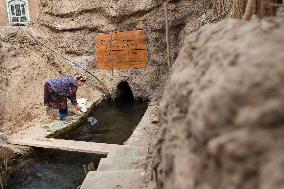
(230320) -- URUMQI, March 20, 2023 (Xinhua) -- A resident fetches water from the outlet of a karez well in Turpan, northwest China's Xinjiang Uygur Autonomous Region, March 7, 2023. Located at the southern foot of the Tianshan Mountains, Turpan in Xinjiang Uygur Autonomous Region is one of the driest and hottest places in China, with an average annual precipitation of only 16 millimeters and evaporation of up to 3,000 millimeters. In order to make this vast Gobi into a comfortable and livable oasis, the local people found new way as water reserve in karez well, an invention that provides water source from generations on. The karez wells consists of vertical shafts and subterranean canals that surface in the form of ditches and small ponds. The karez irrigation system, composed of vertical shafts, subterranean and ground canals, and small reservoirs, was built 2,000 years ago and is considered one of China's greatest surviving ancient man-made structures, along with the Great Wall and the Grand Canal. O

  •  
CHINA-XINJIANG-TURPAN-KAREZ (CN)

CHINA-XINJIANG-TURPAN-KAREZ (CN)

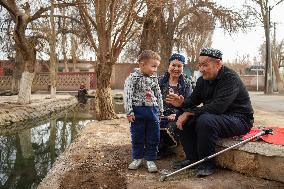
(230320) -- URUMQI, March 20, 2023 (Xinhua) -- A 73-year-old man tells his grandson the story of building karez wells when he was a child in Turpan, northwest China's Xinjiang Uygur Autonomous Region, March 7, 2023. Located at the southern foot of the Tianshan Mountains, Turpan in Xinjiang Uygur Autonomous Region is one of the driest and hottest places in China, with an average annual precipitation of only 16 millimeters and evaporation of up to 3,000 millimeters. In order to make this vast Gobi into a comfortable and livable oasis, the local people found new way as water reserve in karez well, an invention that provides water source from generations on. The karez wells consists of vertical shafts and subterranean canals that surface in the form of ditches and small ponds. The karez irrigation system, composed of vertical shafts, subterranean and ground canals, and small reservoirs, was built 2,000 years ago and is considered one of China's greatest surviving ancient man-made structures, along with the Gre

  •  
CHINA-XINJIANG-TURPAN-KAREZ (CN)

CHINA-XINJIANG-TURPAN-KAREZ (CN)

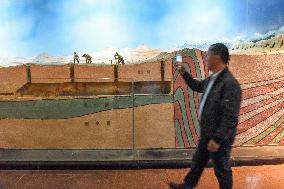
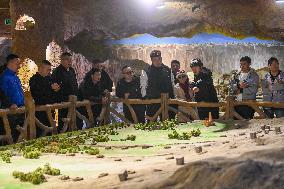
(230320) -- URUMQI, March 20, 2023 (Xinhua) -- A tourist views a model of karez wells at a scenic spot of karez wells in Turpan, northwest China's Xinjiang Uygur Autonomous Region, March 11, 2023. Located at the southern foot of the Tianshan Mountains, Turpan in Xinjiang Uygur Autonomous Region is one of the driest and hottest places in China, with an average annual precipitation of only 16 millimeters and evaporation of up to 3,000 millimeters. In order to make this vast Gobi into a comfortable and livable oasis, the local people found new way as water reserve in karez well, an invention that provides water source from generations on. The karez wells consists of vertical shafts and subterranean canals that surface in the form of ditches and small ponds. The karez irrigation system, composed of vertical shafts, subterranean and ground canals, and small reservoirs, was built 2,000 years ago and is considered one of China's greatest surviving ancient man-made structures, along with the Great Wall and the Gra

  •  
CHINA-XINJIANG-TURPAN-KAREZ (CN)

CHINA-XINJIANG-TURPAN-KAREZ (CN)

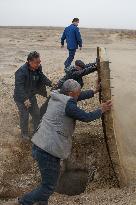
(230320) -- URUMQI, March 20, 2023 (Xinhua) -- Dredging workers open the cover of a vertical shaft of a karez well in Turpan, northwest China's Xinjiang Uygur Autonomous Region, March 9, 2023. Located at the southern foot of the Tianshan Mountains, Turpan in Xinjiang Uygur Autonomous Region is one of the driest and hottest places in China, with an average annual precipitation of only 16 millimeters and evaporation of up to 3,000 millimeters. In order to make this vast Gobi into a comfortable and livable oasis, the local people found new way as water reserve in karez well, an invention that provides water source from generations on. The karez wells consists of vertical shafts and subterranean canals that surface in the form of ditches and small ponds. The karez irrigation system, composed of vertical shafts, subterranean and ground canals, and small reservoirs, was built 2,000 years ago and is considered one of China's greatest surviving ancient man-made structures, along with the Great Wall and the Grand C

  •  
CHINA-XINJIANG-TURPAN-KAREZ (CN)

CHINA-XINJIANG-TURPAN-KAREZ (CN)

(230320) -- URUMQI, March 20, 2023 (Xinhua) -- This photo taken on March 7, 2023 shows the view of Aydingkol Lake in Turpan, northwest China's Xinjiang Uygur Autonomous Region. Located at the southern foot of the Tianshan Mountains, Turpan in Xinjiang Uygur Autonomous Region is one of the driest and hottest places in China, with an average annual precipitation of only 16 millimeters and evaporation of up to 3,000 millimeters. In order to make this vast Gobi into a comfortable and livable oasis, the local people found new way as water reserve in karez well, an invention that provides water source from generations on. The karez wells consists of vertical shafts and subterranean canals that surface in the form of ditches and small ponds. The karez irrigation system, composed of vertical shafts, subterranean and ground canals, and small reservoirs, was built 2,000 years ago and is considered one of China's greatest surviving ancient man-made structures, along with the Great Wall and the Grand Canal. Over t

  •  
CHINA-XINJIANG-TURPAN-KAREZ (CN)

CHINA-XINJIANG-TURPAN-KAREZ (CN)

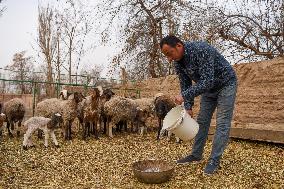
(230320) -- URUMQI, March 20, 2023 (Xinhua) -- A farmer pours water fetched from karez wells to feed sheep in Turpan, northwest China's Xinjiang Uygur Autonomous Region, March 7, 2023. Located at the southern foot of the Tianshan Mountains, Turpan in Xinjiang Uygur Autonomous Region is one of the driest and hottest places in China, with an average annual precipitation of only 16 millimeters and evaporation of up to 3,000 millimeters. In order to make this vast Gobi into a comfortable and livable oasis, the local people found new way as water reserve in karez well, an invention that provides water source from generations on. The karez wells consists of vertical shafts and subterranean canals that surface in the form of ditches and small ponds. The karez irrigation system, composed of vertical shafts, subterranean and ground canals, and small reservoirs, was built 2,000 years ago and is considered one of China's greatest surviving ancient man-made structures, along with the Great Wall and the Grand Canal.

  •  
CHINA-XINJIANG-TURPAN-KAREZ (CN)

CHINA-XINJIANG-TURPAN-KAREZ (CN)

(230320) -- URUMQI, March 20, 2023 (Xinhua) -- Tourists visit a folk park of karez wells in Turpan, northwest China's Xinjiang Uygur Autonomous Region, March 12, 2023. Located at the southern foot of the Tianshan Mountains, Turpan in Xinjiang Uygur Autonomous Region is one of the driest and hottest places in China, with an average annual precipitation of only 16 millimeters and evaporation of up to 3,000 millimeters. In order to make this vast Gobi into a comfortable and livable oasis, the local people found new way as water reserve in karez well, an invention that provides water source from generations on. The karez wells consists of vertical shafts and subterranean canals that surface in the form of ditches and small ponds. The karez irrigation system, composed of vertical shafts, subterranean and ground canals, and small reservoirs, was built 2,000 years ago and is considered one of China's greatest surviving ancient man-made structures, along with the Great Wall and the Grand Canal. Over the years,

  •  
CHINA-XINJIANG-TURPAN-KAREZ (CN)

CHINA-XINJIANG-TURPAN-KAREZ (CN)

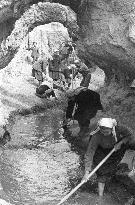
(230320) -- URUMQI, March 20, 2023 (Xinhua) -- This file photo taken in 1963 shows people maintaining a karez well in Turpan, northwest China's Xinjiang Uygur Autonomous Region. Located at the southern foot of the Tianshan Mountains, Turpan in Xinjiang Uygur Autonomous Region is one of the driest and hottest places in China, with an average annual precipitation of only 16 millimeters and evaporation of up to 3,000 millimeters. In order to make this vast Gobi into a comfortable and livable oasis, the local people found new way as water reserve in karez well, an invention that provides water source from generations on. The karez wells consists of vertical shafts and subterranean canals that surface in the form of ditches and small ponds. The karez irrigation system, composed of vertical shafts, subterranean and ground canals, and small reservoirs, was built 2,000 years ago and is considered one of China's greatest surviving ancient man-made structures, along with the Great Wall and the Grand Canal. Over

  •  
CHINA-XINJIANG-TURPAN-KAREZ (CN)

CHINA-XINJIANG-TURPAN-KAREZ (CN)

(230320) -- URUMQI, March 20, 2023 (Xinhua) -- Tourists visit a scenic spot of karez wells in Turpan, northwest China's Xinjiang Uygur Autonomous Region, March 11, 2023. Located at the southern foot of the Tianshan Mountains, Turpan in Xinjiang Uygur Autonomous Region is one of the driest and hottest places in China, with an average annual precipitation of only 16 millimeters and evaporation of up to 3,000 millimeters. In order to make this vast Gobi into a comfortable and livable oasis, the local people found new way as water reserve in karez well, an invention that provides water source from generations on. The karez wells consists of vertical shafts and subterranean canals that surface in the form of ditches and small ponds. The karez irrigation system, composed of vertical shafts, subterranean and ground canals, and small reservoirs, was built 2,000 years ago and is considered one of China's greatest surviving ancient man-made structures, along with the Great Wall and the Grand Canal. Over the year

  •  
CHINA-XINJIANG-TURPAN-KAREZ (CN)

CHINA-XINJIANG-TURPAN-KAREZ (CN)

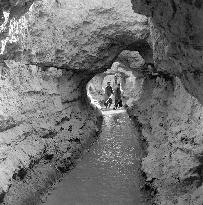
(230320) -- URUMQI, March 20, 2023 (Xinhua) -- This file photo taken on May 9, 1963 shows local farmers checking the conditions of water flow along an underground channel in Turpan, northwest China's Xinjiang Uygur Autonomous Region. Located at the southern foot of the Tianshan Mountains, Turpan in Xinjiang Uygur Autonomous Region is one of the driest and hottest places in China, with an average annual precipitation of only 16 millimeters and evaporation of up to 3,000 millimeters. In order to make this vast Gobi into a comfortable and livable oasis, the local people found new way as water reserve in karez well, an invention that provides water source from generations on. The karez wells consists of vertical shafts and subterranean canals that surface in the form of ditches and small ponds. The karez irrigation system, composed of vertical shafts, subterranean and ground canals, and small reservoirs, was built 2,000 years ago and is considered one of China's greatest surviving ancient man-made structures,

  •  
CHINA-XINJIANG-TURPAN-KAREZ (CN)

CHINA-XINJIANG-TURPAN-KAREZ (CN)

(230320) -- URUMQI, March 20, 2023 (Xinhua) -- This photo taken on March 11, 2023 shows a folk house in Turpan, northwest China's Xinjiang Uygur Autonomous Region. Located at the southern foot of the Tianshan Mountains, Turpan in Xinjiang Uygur Autonomous Region is one of the driest and hottest places in China, with an average annual precipitation of only 16 millimeters and evaporation of up to 3,000 millimeters. In order to make this vast Gobi into a comfortable and livable oasis, the local people found new way as water reserve in karez well, an invention that provides water source from generations on. The karez wells consists of vertical shafts and subterranean canals that surface in the form of ditches and small ponds. The karez irrigation system, composed of vertical shafts, subterranean and ground canals, and small reservoirs, was built 2,000 years ago and is considered one of China's greatest surviving ancient man-made structures, along with the Great Wall and the Grand Canal. Over the years, the

  •  
CHINA-XINJIANG-TURPAN-KAREZ (CN)

CHINA-XINJIANG-TURPAN-KAREZ (CN)

(230320) -- URUMQI, March 20, 2023 (Xinhua) -- Dredging workers dump mud from a karez well in Turpan, northwest China's Xinjiang Uygur Autonomous Region, March 9, 2023. Located at the southern foot of the Tianshan Mountains, Turpan in Xinjiang Uygur Autonomous Region is one of the driest and hottest places in China, with an average annual precipitation of only 16 millimeters and evaporation of up to 3,000 millimeters. In order to make this vast Gobi into a comfortable and livable oasis, the local people found new way as water reserve in karez well, an invention that provides water source from generations on. The karez wells consists of vertical shafts and subterranean canals that surface in the form of ditches and small ponds. The karez irrigation system, composed of vertical shafts, subterranean and ground canals, and small reservoirs, was built 2,000 years ago and is considered one of China's greatest surviving ancient man-made structures, along with the Great Wall and the Grand Canal. Over the years

  •  
CHINA-XINJIANG-TURPAN-KAREZ (CN)

CHINA-XINJIANG-TURPAN-KAREZ (CN)

(230320) -- URUMQI, March 20, 2023 (Xinhua) -- Tourists visit a scenic spot of karez wells in Turpan, northwest China's Xinjiang Uygur Autonomous Region, March 11, 2023. Located at the southern foot of the Tianshan Mountains, Turpan in Xinjiang Uygur Autonomous Region is one of the driest and hottest places in China, with an average annual precipitation of only 16 millimeters and evaporation of up to 3,000 millimeters. In order to make this vast Gobi into a comfortable and livable oasis, the local people found new way as water reserve in karez well, an invention that provides water source from generations on. The karez wells consists of vertical shafts and subterranean canals that surface in the form of ditches and small ponds. The karez irrigation system, composed of vertical shafts, subterranean and ground canals, and small reservoirs, was built 2,000 years ago and is considered one of China's greatest surviving ancient man-made structures, along with the Great Wall and the Grand Canal. Over the year

  • Main
  • Top
  • Editorial
  • Creative
  • About Us
  • About ILG
  • Terms of use
  • Company
  • BEHIND
  • Price List
  • Single Plan
  • Monthly Plan
  • Services
  • Shooting
  • Rights Clearance
  • Support
  • FAQ
  • How To Buy
  • Contact Us
  • Become a Partner

© KYODO NEWS IMAGES INC

All Rights Reserved.

  • Editorial
  • Olympics
  • News
  • Sports
  • Japan
  • Tech
  • Royal
  • Disaster
  • NorthKorea
  • Old Japan
  • SNS
  • Creative
  • Food
  • Japan
  • Landscape
  • Animal
  • Popular
  • #Ukraine
  • #Russia
  • #coronavirus
  • #N. Korea
  • #Thailand
  • #China
  • #Ukraine
  • #Russia
  • #coronavirus
  • #N. Korea
  • #Thailand
  • #China
  • Food
  • Japan
  • Landscape
  • Animal
  • Olympics
  • News
  • Sports
  • Japan
  • Tech
  • Royal
  • Disaster
  • NorthKorea
  • Old Japan
  • SNS