•  
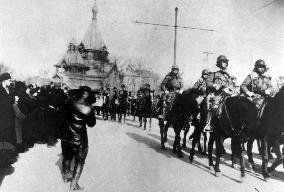
Kwantung Army in Harbin

Kwantung Army in Harbin

Soldiers of the Japanese military's Kwantung Army enter China's Harbin in February 1931.

  •  

New evidence of Japanese germ warfare unit made public

STORY: New evidence of Japanese germ warfare unit made public DATELINE: Sept. 4, 2023 LENGTH: 00:01:10 LOCATION: HARBIN, China CATEGORY: POLITICS/MILITARY SHOTLIST: 1. various of the exhibition hall 2. various of the rosters 3. SOUNDBITE (Chinese): JIN SHICHENG, Researcher with Exhibition Hall of Evidences of Crime Committed by Unit 731 of the Japanese Imperial Army STORYLINE: Two rosters of Japanese army hospitals that cooperated with Unit 731, a Japanese germ warfare army during World War II, have gone on public display for the first time in Harbin, northeast China's Heilongjiang Province. The rosters, compiled by the Japanese Kwantung Army in August 1940, were made public on Sunday at the Exhibition Hall of Evidences of Crime Committed by Unit 731 of the Japanese Imperial Army. The new discoveries further suggested that the Japanese army hospital in Harbin was closely related to Unit 731 and was an extension of medical crimes committed by Unit 731. SOUNDBITE (Chinese): JIN SHICHENG, Researcher w

  •  
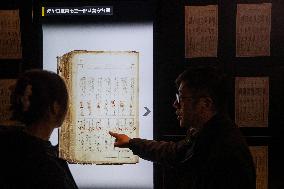
CHINA-HEILONGJIANG-JAPANESE GERM WARFARE UNIT-NEW EVIDENCE-EXHIBITION (CN)

CHINA-HEILONGJIANG-JAPANESE GERM WARFARE UNIT-NEW EVIDENCE-EXHIBITION (CN)

(221214) -- HARBIN, Dec. 14, 2022 (Xinhua) -- This photo taken on Dec. 10, 2022 shows a newly-exhibited roster of Unit 731 affiliated with the Japanese Kwantung Army at the Museum of Evidence of War Crimes by the Japanese Army Unit 731 in Harbin, capital of northeast China's Heilongjiang Province. More than 20,000 pieces of artifacts and documents are on exhibit for the first time in a museum in northeast China's Heilongjiang Province, testifying crimes against humanity by the notorious Japanese germ warfare army known as Unit 731 during the World War II. Following a preparation since September, the Museum of Evidence of War Crimes by the Japanese Army Unit 731 in Harbin, the provincial capital of Heilongjiang, put on the exhibition earlier this month. TO GO WITH "Across China: New evidence of Japanese germ warfare unit on exhibit" (Xinhua/Zhang Tao)

  •  
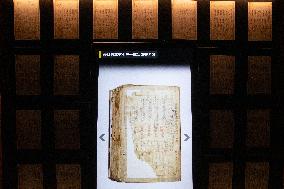
CHINA-HEILONGJIANG-JAPANESE GERM WARFARE UNIT-NEW EVIDENCE-EXHIBITION (CN)

CHINA-HEILONGJIANG-JAPANESE GERM WARFARE UNIT-NEW EVIDENCE-EXHIBITION (CN)

(221214) -- HARBIN, Dec. 14, 2022 (Xinhua) -- This photo taken on Dec. 10, 2022 shows a newly-exhibited roster of Unit 731 affiliated with the Japanese Kwantung Army at the Museum of Evidence of War Crimes by the Japanese Army Unit 731 in Harbin, capital of northeast China's Heilongjiang Province. More than 20,000 pieces of artifacts and documents are on exhibit for the first time in a museum in northeast China's Heilongjiang Province, testifying crimes against humanity by the notorious Japanese germ warfare army known as Unit 731 during the World War II. Following a preparation since September, the Museum of Evidence of War Crimes by the Japanese Army Unit 731 in Harbin, the provincial capital of Heilongjiang, put on the exhibition earlier this month. TO GO WITH "Across China: New evidence of Japanese germ warfare unit on exhibit" (Xinhua/Zhang Tao)

  •  

Chinese museum exhibits gun camera used by Japanese aggressors during invasion of China

STORY: Chinese museum exhibits gun camera used by Japanese aggressors during invasion of China DATELINE: Sept. 18, 2022 LENGTH: 0:00:59 LOCATION: HARBIN, China CATEGORY: OTHERS SHOTLIST: 1. various of the gun camera STORYLINE: To commemorate the 91st anniversary of the September 18 Incident, the Northeast Anti-Japanese United Army Museum in northeast China's Harbin exhibited a rare gun camera used by the Japanese aggressors during the invasion of China. The 97-centimeter-long gun camera has a barrel with a diameter of 8.3 centimeters. It's believed that the device was used by Japanese air forces in shooting training and combat activities. The camera shutter was connected with the trigger to record the shootings. The gun camera has empirical value for the study of the history of Japan's invasion of China. On September 18, 1931, the Japanese Kwantung Army stationed in northeast China destroyed a section of the railway near Liutiaohu and then falsely accused the Chinese military of causing the explosion.

  •  
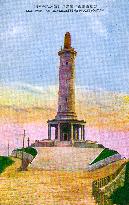
Lushun Baiyu Tower - Lushunkou, China (Ryojun)

Lushun Baiyu Tower - Lushunkou, China (Ryojun)

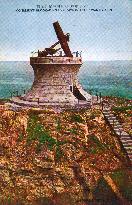
Lushun Baiyu Tower - built after the Russo-Japanese War by the Japanese to commemorate their 20, 000 war casualties at Ryojun (present-day Lushunkou, People's Republic of China formerly Port Arthur) - the major navy base for the Imperial Japanese Navy in the Kwantung Leased Territory before and during Second Sino-Japanese War (1937-1945). Date: circa 1930s

  •  
Monument to the Blockade Expedition - Lushunkou, China

Monument to the Blockade Expedition - Lushunkou, China

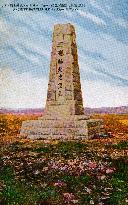
Monument to the Blockade Expedition built by the Japanese at Ryojun (present-day Lushunkou, People's Republic of China formerly Port Arthur) - the major navy base for the Imperial Japanese Navy in the Kwantung Leased Territory before and during Second Sino-Japanese War (1937-1945). Date: circa 1930s

  •  
Ancient Battlefield Memorial at Lushunkou, China (Ryojun)

Ancient Battlefield Memorial at Lushunkou, China (Ryojun)

Ancient Battlefield Memorial at Ryojun (present-day Lushunkou, People's Republic of China formerly Port Arthur) - the major navy base for the Imperial Japanese Navy in the Kwantung Leased Territory before and during Second Sino-Japanese War (1937-1945). Date: circa 1930s

  •  
Japanese surrender at Mukden

Japanese surrender at Mukden

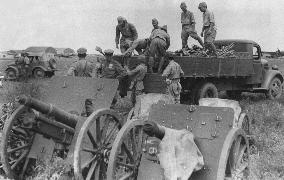
Soviet troops receive arms and munitions surrendered by units of the 63rd Division of the Kwantung Army of Japan at Mukden, Manchuria Date: August 1945

  •  
China - Dalian City

China - Dalian City

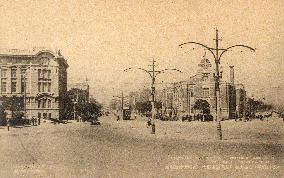
Dalian, China. The settlement was occupied by the British in 1858, returned to the Chinese in the 1880s, and then occupied by Japan in 1895 during the first Sino-Japanese War. With the unconditional surrender of Japan at the end of the Second World War, Dalian, passed to the Soviet Union, who had liberated the city in advance of the end of hostilities and governed the city until 1950, when the city was presented to the Chinese Communist government without any compensation. Date: circa 1910

  •  
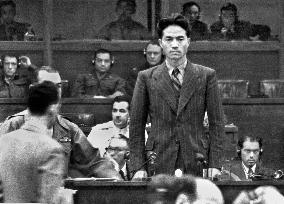
Ex-Imperial Japanese Army officer Sejima at Tokyo tribunal

Ex-Imperial Japanese Army officer Sejima at Tokyo tribunal

Ryuzo Sejima, a former Imperial Japanese Army officer who played a key role in the planning of many operations during the Pacific War and became a prisoner of war in Siberia after he served as a staff officer at the Manchuria-based Kwantung Army, testifies at the International Military Tribunal for the Far East in Tokyo on Oct. 18, 1946, after being flown from Vladivostok to appear at a hearing. Following his return to Japan after 11 years of hard labor in Siberia, Sejima went into business and later advised Prime Minister Yasuhiro Nakasone on the privatization of Nippon Telegraph and Telephone Public Corp. and Japanese National Railways in the 1980s.

  • Main
  • Top
  • Editorial
  • Creative
  • About Us
  • About ILG
  • Terms of use
  • Company
  • BEHIND
  • Price List
  • Single Plan
  • Monthly Plan
  • Services
  • Shooting
  • Rights Clearance
  • Support
  • FAQ
  • How To Buy
  • Contact Us
  • Become a Partner

© KYODO NEWS IMAGES INC

All Rights Reserved.

  • Editorial
  • Olympics
  • News
  • Sports
  • Japan
  • Tech
  • Royal
  • Disaster
  • NorthKorea
  • Old Japan
  • SNS
  • Creative
  • Food
  • Japan
  • Landscape
  • Animal
  • Popular
  • #Ukraine
  • #Thailand
  • #coronavirus
  • #N. Korea
  • #Russia
  • #China
  • #Ukraine
  • #Thailand
  • #coronavirus
  • #N. Korea
  • #Russia
  • #China
  • Food
  • Japan
  • Landscape
  • Animal
  • Olympics
  • News
  • Sports
  • Japan
  • Tech
  • Royal
  • Disaster
  • NorthKorea
  • Old Japan
  • SNS