•  
Intangible Cultural Heritage Ru Porcelain Art

Intangible Cultural Heritage Ru Porcelain Art

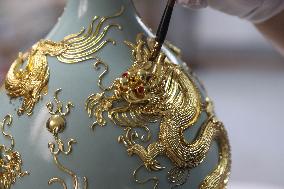
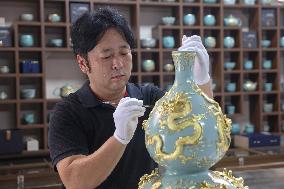
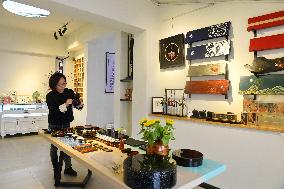
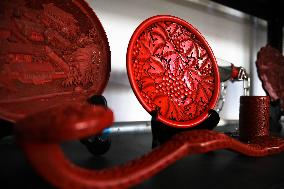
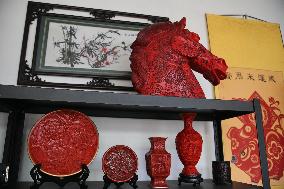
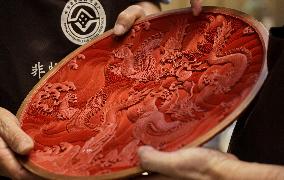
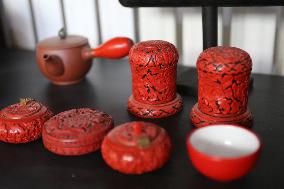
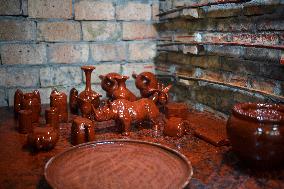
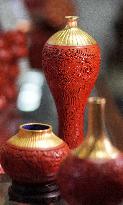
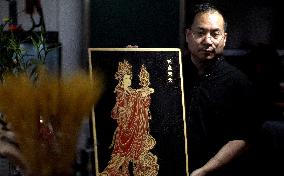
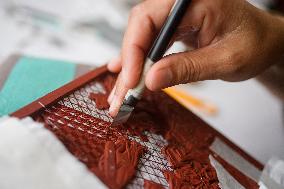
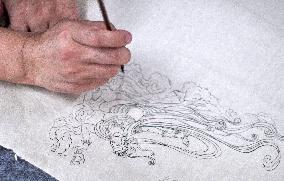
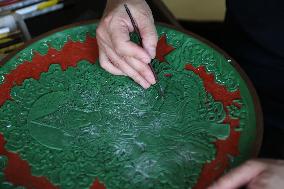
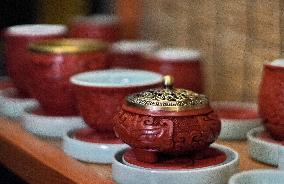
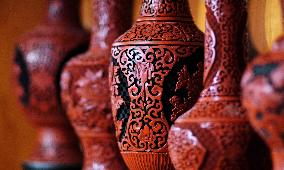
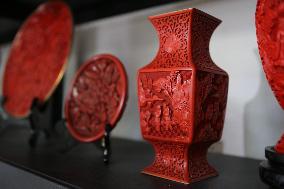
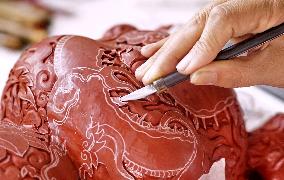
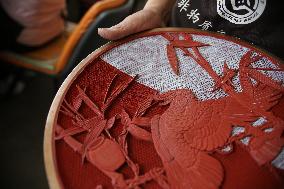
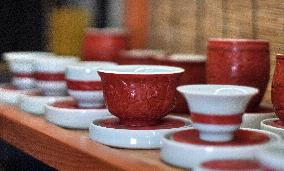
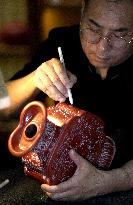
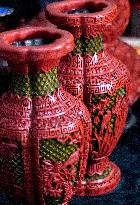
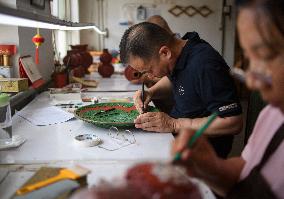
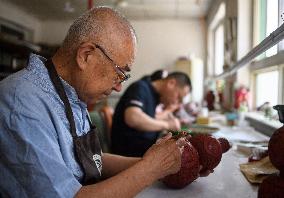
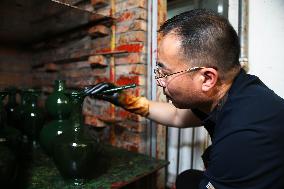
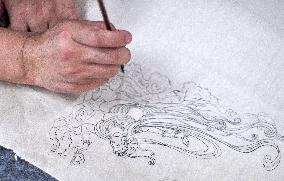
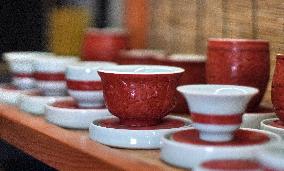
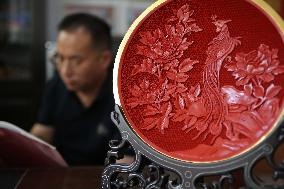
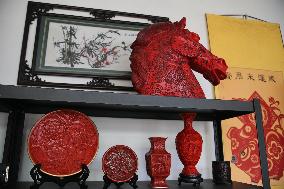
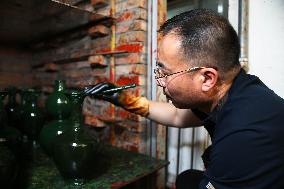
PINGDINGSHAN, CHINA - SEPTEMBER 2, 2025 - Artist Wang Junpei creates dragon shaped patterns on the surface of Ru porcelain using lacquer carving techniques in Pingdingshan City, Henan Province, China on September 2, 2025.

  •  
Intangible Cultural Heritage Ru Porcelain Art

Intangible Cultural Heritage Ru Porcelain Art

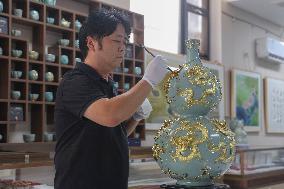
PINGDINGSHAN, CHINA - SEPTEMBER 2, 2025 - Artist Wang Junpei creates dragon shaped patterns on the surface of Ru porcelain using lacquer carving techniques in Pingdingshan City, Henan Province, China on September 2, 2025.

  •  
Intangible Cultural Heritage Ru Porcelain Art

Intangible Cultural Heritage Ru Porcelain Art

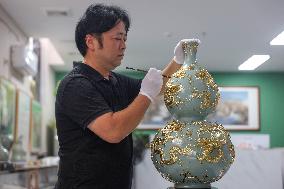
PINGDINGSHAN, CHINA - SEPTEMBER 2, 2025 - Artist Wang Junpei creates dragon shaped patterns on the surface of Ru porcelain using lacquer carving techniques in Pingdingshan City, Henan Province, China on September 2, 2025.

  •  
Intangible Cultural Heritage Ru Porcelain Art

Intangible Cultural Heritage Ru Porcelain Art

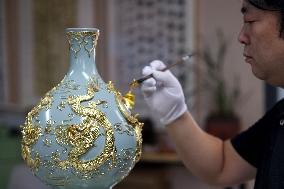
PINGDINGSHAN, CHINA - SEPTEMBER 2, 2025 - Artist Wang Junpei creates dragon shaped patterns on the surface of Ru porcelain using lacquer carving techniques in Pingdingshan City, Henan Province, China on September 2, 2025.

  •  
Intangible Cultural Heritage Ru Porcelain Art

Intangible Cultural Heritage Ru Porcelain Art

PINGDINGSHAN, CHINA - SEPTEMBER 2, 2025 - Artist Wang Junpei creates dragon shaped patterns on the surface of Ru porcelain using lacquer carving techniques in Pingdingshan City, Henan Province, China on September 2, 2025.

  •  
Princess Kako visits lacquerware training center

Princess Kako visits lacquerware training center

Japanese Princess Kako talks with lacquer artists during a visit to a lacquerware training center in Wajima in the central Japan prefecture of Ishikawa on April 17, 2025. (Pool photo)

  •  
Princess Kako visits lacquerware training center

Princess Kako visits lacquerware training center

Japanese Princess Kako talks with a lacquer artist during a visit to a lacquerware training center in Wajima in the central Japan prefecture of Ishikawa on April 17, 2025. (Pool photo)

  •  
Foreign Students Studying in China

Foreign Students Studying in China

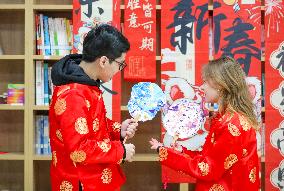
QINGDAO, CHINA - JANUARY 12, 2025 - Two foreign students look at each other's newly made lacquer fans at Shandong University of Science and Technology on Jan 12, 2025.

  •  
(Int'l Exchange)CHINA-HAINAN-HAIKOU-FOREIGNERS-LACQUER FAN (CN)

(Int'l Exchange)CHINA-HAINAN-HAIKOU-FOREIGNERS-LACQUER FAN (CN)

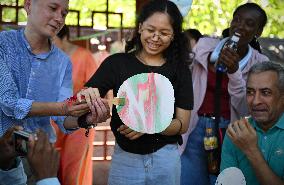
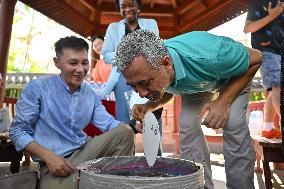
(240706) -- HAIKOU, July 6, 2024 Photo by Xinhua/ABACAPRESS.COM) -- Foreigners learn to make traditional Chinese lacquer fans in Haikou, south China's Hainan Province, July 6, 2024. Photo by Xinhua/ABACAPRESS.COM/Guo Cheng)

  •  
(Int'l Exchange)CHINA-HAINAN-HAIKOU-FOREIGNERS-LACQUER FAN (CN)

(Int'l Exchange)CHINA-HAINAN-HAIKOU-FOREIGNERS-LACQUER FAN (CN)

(240706) -- HAIKOU, July 6, 2024 Photo by Xinhua/ABACAPRESS.COM) -- Foreigners learn to make traditional Chinese lacquer fans in Haikou, south China's Hainan Province, July 6, 2024. Photo by Xinhua/ABACAPRESS.COM/Guo Cheng)

  •  
(Int'l Exchange)CHINA-HAINAN-HAIKOU-FOREIGNERS-LACQUER FAN (CN)

(Int'l Exchange)CHINA-HAINAN-HAIKOU-FOREIGNERS-LACQUER FAN (CN)

(240706) -- HAIKOU, July 6, 2024 Photo by Xinhua/ABACAPRESS.COM) -- Foreigners learn to make traditional Chinese lacquer fans in Haikou, south China's Hainan Province, July 6, 2024. Photo by Xinhua/ABACAPRESS.COM/Guo Cheng)

  •  
(Int'l Exchange)CHINA-HAINAN-HAIKOU-FOREIGNERS-LACQUER FAN (CN)

(Int'l Exchange)CHINA-HAINAN-HAIKOU-FOREIGNERS-LACQUER FAN (CN)

(240706) -- HAIKOU, July 6, 2024 Photo by Xinhua/ABACAPRESS.COM) -- Foreigners pose for a group photo with traditional Chinese lacquer fans made by themselves in Haikou, south China's Hainan Province, July 6, 2024. Photo by Xinhua/ABACAPRESS.COM/Guo Cheng)

  •  
(FujianPano)CHINA-FUJIAN-FUZHOU-ANCIENT ARCHITECTURE-PROTECTION (CN)

(FujianPano)CHINA-FUJIAN-FUZHOU-ANCIENT ARCHITECTURE-PROTECTION (CN)

(240609) -- FUZHOU, June 9, 2024 Photo by Xinhua/ABACAPRESS.COM) -- A studio for lacquer specialty artwork of Fuzhou is pictured in Lianjiang Village in Fuzhou, southeast China's Fujian Province, June 6, 2024. The municipal government of Fuzhou has taken various measures in recent years to protect ancient buildings and structures in the city, which are important heritages of great historical and cultural values. For their parts, these sites also serve as tourist attractions and help boost local tourism sector. Photo by Xinhua/ABACAPRESS.COM/Lin Shanchuan)

  •  
(FujianPano)CHINA-FUJIAN-FUZHOU-ANCIENT ARCHITECTURE-PROTECTION (CN)

(FujianPano)CHINA-FUJIAN-FUZHOU-ANCIENT ARCHITECTURE-PROTECTION (CN)

(240609) -- FUZHOU, June 9, 2024 (Xinhua) -- A studio for lacquer specialty artwork of Fuzhou is pictured in Lianjiang Village in Fuzhou, southeast China's Fujian Province, June 6, 2024. The municipal government of Fuzhou has taken various measures in recent years to protect ancient buildings and structures in the city, which are important heritages of great historical and cultural values. For their parts, these sites also serve as tourist attractions and help boost local tourism sector. (Xinhua/Lin Shanchuan)

  •  
(MASTER OF CRAFTS)CHINA-CARVED LACQUER-INHERITOR-STUDIO (CN)

(MASTER OF CRAFTS)CHINA-CARVED LACQUER-INHERITOR-STUDIO (CN)

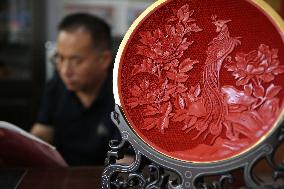
(240607) -- BEIJING, June 7, 2024 Photo by Xinhua/ABACAPRESS.COM) -- Zhu Jiang (L) and his father carry semi-finished carved lacquer wares for drying at his studio in Gu'an, north China's Hebei Province, May 30, 2024. Carved lacquer, dating back to the Tang Dynasty (618-907), greeted its peak time in Ming and Qing dynasties (1368-1911). Since the founding of the People's Republic of China in 1949, Beijing and Yangzhou have become the two centers for the craft of carved lacquer, which was listed as a national-level intangible cultural heritage in 2006. Carved lacquer differs in its colors, namely red, black or multiple colors. Its making procedures include designing, body shaping, lacquer making, coating, drawing, carving and grinding. The craftsman needs to smoothly use various kinds of knives to carve patterns on the ware, and even a little miss can destroy the whole artwork. The craft can only be grasped through three to five years of practice. Therefore, it is also called "the art of time." Born in 1976, Z

  •  
(MASTER OF CRAFTS)CHINA-CARVED LACQUER-INHERITOR-STUDIO (CN)

(MASTER OF CRAFTS)CHINA-CARVED LACQUER-INHERITOR-STUDIO (CN)

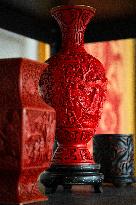
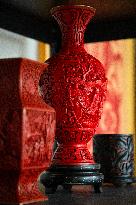
(240607) -- BEIJING, June 7, 2024 Photo by Xinhua/ABACAPRESS.COM) -- Carved lacquer artworks are displayed at Zhu Jiang's studio in Gu'an, north China's Hebei Province, May 30, 2024. Carved lacquer, dating back to the Tang Dynasty (618-907), greeted its peak time in Ming and Qing dynasties (1368-1911). Since the founding of the People's Republic of China in 1949, Beijing and Yangzhou have become the two centers for the craft of carved lacquer, which was listed as a national-level intangible cultural heritage in 2006. Carved lacquer differs in its colors, namely red, black or multiple colors. Its making procedures include designing, body shaping, lacquer making, coating, drawing, carving and grinding. The craftsman needs to smoothly use various kinds of knives to carve patterns on the ware, and even a little miss can destroy the whole artwork. The craft can only be grasped through three to five years of practice. Therefore, it is also called "the art of time." Born in 1976, Zhu Jiang, an inheritor of the craft

  •  
(MASTER OF CRAFTS)CHINA-CARVED LACQUER-INHERITOR-STUDIO (CN)

(MASTER OF CRAFTS)CHINA-CARVED LACQUER-INHERITOR-STUDIO (CN)

(240607) -- BEIJING, June 7, 2024 Photo by Xinhua/ABACAPRESS.COM) -- Carved lacquer artworks are displayed at Zhu Jiang's studio in Gu'an, north China's Hebei Province, May 30, 2024. Carved lacquer, dating back to the Tang Dynasty (618-907), greeted its peak time in Ming and Qing dynasties (1368-1911). Since the founding of the People's Republic of China in 1949, Beijing and Yangzhou have become the two centers for the craft of carved lacquer, which was listed as a national-level intangible cultural heritage in 2006. Carved lacquer differs in its colors, namely red, black or multiple colors. Its making procedures include designing, body shaping, lacquer making, coating, drawing, carving and grinding. The craftsman needs to smoothly use various kinds of knives to carve patterns on the ware, and even a little miss can destroy the whole artwork. The craft can only be grasped through three to five years of practice. Therefore, it is also called "the art of time." Born in 1976, Zhu Jiang, an inheritor of the craft

  •  
(MASTER OF CRAFTS)CHINA-CARVED LACQUER-INHERITOR-STUDIO (CN)

(MASTER OF CRAFTS)CHINA-CARVED LACQUER-INHERITOR-STUDIO (CN)

(240607) -- BEIJING, June 7, 2024 Photo by Xinhua/ABACAPRESS.COM) -- Carved lacquer artworks are displayed at Zhu Jiang's studio in Gu'an, north China's Hebei Province, May 30, 2024. Carved lacquer, dating back to the Tang Dynasty (618-907), greeted its peak time in Ming and Qing dynasties (1368-1911). Since the founding of the People's Republic of China in 1949, Beijing and Yangzhou have become the two centers for the craft of carved lacquer, which was listed as a national-level intangible cultural heritage in 2006. Carved lacquer differs in its colors, namely red, black or multiple colors. Its making procedures include designing, body shaping, lacquer making, coating, drawing, carving and grinding. The craftsman needs to smoothly use various kinds of knives to carve patterns on the ware, and even a little miss can destroy the whole artwork. The craft can only be grasped through three to five years of practice. Therefore, it is also called "the art of time." Born in 1976, Zhu Jiang, an inheritor of the craft

  •  
(MASTER OF CRAFTS)CHINA-CARVED LACQUER-INHERITOR-STUDIO (CN)

(MASTER OF CRAFTS)CHINA-CARVED LACQUER-INHERITOR-STUDIO (CN)

(240607) -- BEIJING, June 7, 2024 Photo by Xinhua/ABACAPRESS.COM) -- A piece of carved lacquer artwork on drying is displayed at Zhu Jiang's studio in Gu'an, north China's Hebei Province, May 30, 2024. Carved lacquer, dating back to the Tang Dynasty (618-907), greeted its peak time in Ming and Qing dynasties (1368-1911). Since the founding of the People's Republic of China in 1949, Beijing and Yangzhou have become the two centers for the craft of carved lacquer, which was listed as a national-level intangible cultural heritage in 2006. Carved lacquer differs in its colors, namely red, black or multiple colors. Its making procedures include designing, body shaping, lacquer making, coating, drawing, carving and grinding. The craftsman needs to smoothly use various kinds of knives to carve patterns on the ware, and even a little miss can destroy the whole artwork. The craft can only be grasped through three to five years of practice. Therefore, it is also called "the art of time." Born in 1976, Zhu Jiang, an inh

  •  
(MASTER OF CRAFTS)CHINA-CARVED LACQUER-INHERITOR-STUDIO (CN)

(MASTER OF CRAFTS)CHINA-CARVED LACQUER-INHERITOR-STUDIO (CN)

(240607) -- BEIJING, June 7, 2024 Photo by Xinhua/ABACAPRESS.COM) -- Carved lacquer artworks are displayed at Zhu Jiang's studio in Gu'an, north China's Hebei Province, May 30, 2024. Carved lacquer, dating back to the Tang Dynasty (618-907), greeted its peak time in Ming and Qing dynasties (1368-1911). Since the founding of the People's Republic of China in 1949, Beijing and Yangzhou have become the two centers for the craft of carved lacquer, which was listed as a national-level intangible cultural heritage in 2006. Carved lacquer differs in its colors, namely red, black or multiple colors. Its making procedures include designing, body shaping, lacquer making, coating, drawing, carving and grinding. The craftsman needs to smoothly use various kinds of knives to carve patterns on the ware, and even a little miss can destroy the whole artwork. The craft can only be grasped through three to five years of practice. Therefore, it is also called "the art of time." Born in 1976, Zhu Jiang, an inheritor of the craft

  •  
(MASTER OF CRAFTS)CHINA-CARVED LACQUER-INHERITOR-STUDIO (CN)

(MASTER OF CRAFTS)CHINA-CARVED LACQUER-INHERITOR-STUDIO (CN)

(240607) -- BEIJING, June 7, 2024 Photo by Xinhua/ABACAPRESS.COM) -- Semi-finished carved lacquer artworks are seen on drying at Zhu Jiang's studio in Gu'an, north China's Hebei Province, May 30, 2024. Carved lacquer, dating back to the Tang Dynasty (618-907), greeted its peak time in Ming and Qing dynasties (1368-1911). Since the founding of the People's Republic of China in 1949, Beijing and Yangzhou have become the two centers for the craft of carved lacquer, which was listed as a national-level intangible cultural heritage in 2006. Carved lacquer differs in its colors, namely red, black or multiple colors. Its making procedures include designing, body shaping, lacquer making, coating, drawing, carving and grinding. The craftsman needs to smoothly use various kinds of knives to carve patterns on the ware, and even a little miss can destroy the whole artwork. The craft can only be grasped through three to five years of practice. Therefore, it is also called "the art of time." Born in 1976, Zhu Jiang, an inh

  •  
(MASTER OF CRAFTS)CHINA-CARVED LACQUER-INHERITOR-STUDIO (CN)

(MASTER OF CRAFTS)CHINA-CARVED LACQUER-INHERITOR-STUDIO (CN)

(240607) -- BEIJING, June 7, 2024 Photo by Xinhua/ABACAPRESS.COM) -- Carved lacquer artworks are displayed at Zhu Jiang's studio in Beijing, capital of China, June 5, 2024. Carved lacquer, dating back to the Tang Dynasty (618-907), greeted its peak time in Ming and Qing dynasties (1368-1911). Since the founding of the People's Republic of China in 1949, Beijing and Yangzhou have become the two centers for the craft of carved lacquer, which was listed as a national-level intangible cultural heritage in 2006. Carved lacquer differs in its colors, namely red, black or multiple colors. Its making procedures include designing, body shaping, lacquer making, coating, drawing, carving and grinding. The craftsman needs to smoothly use various kinds of knives to carve patterns on the ware, and even a little miss can destroy the whole artwork. The craft can only be grasped through three to five years of practice. Therefore, it is also called "the art of time." Born in 1976, Zhu Jiang, an inheritor of the craft of carved

  •  
(MASTER OF CRAFTS)CHINA-CARVED LACQUER-INHERITOR-STUDIO (CN)

(MASTER OF CRAFTS)CHINA-CARVED LACQUER-INHERITOR-STUDIO (CN)

(240607) -- BEIJING, June 7, 2024 Photo by Xinhua/ABACAPRESS.COM) -- Zhu Jiang shows a piece of colorful carved lacquer artwork at his studio in Beijing, capital of China, June 5, 2024. Carved lacquer, dating back to the Tang Dynasty (618-907), greeted its peak time in Ming and Qing dynasties (1368-1911). Since the founding of the People's Republic of China in 1949, Beijing and Yangzhou have become the two centers for the craft of carved lacquer, which was listed as a national-level intangible cultural heritage in 2006. Carved lacquer differs in its colors, namely red, black or multiple colors. Its making procedures include designing, body shaping, lacquer making, coating, drawing, carving and grinding. The craftsman needs to smoothly use various kinds of knives to carve patterns on the ware, and even a little miss can destroy the whole artwork. The craft can only be grasped through three to five years of practice. Therefore, it is also called "the art of time." Born in 1976, Zhu Jiang, an inheritor of the cr

  •  
(MASTER OF CRAFTS)CHINA-CARVED LACQUER-INHERITOR-STUDIO (CN)

(MASTER OF CRAFTS)CHINA-CARVED LACQUER-INHERITOR-STUDIO (CN)

(240607) -- BEIJING, June 7, 2024 Photo by Xinhua/ABACAPRESS.COM) -- Zhu Jiang makes carved lacquer at his studio in Gu'an, north China's Hebei Province, May 30, 2024. Carved lacquer, dating back to the Tang Dynasty (618-907), greeted its peak time in Ming and Qing dynasties (1368-1911). Since the founding of the People's Republic of China in 1949, Beijing and Yangzhou have become the two centers for the craft of carved lacquer, which was listed as a national-level intangible cultural heritage in 2006. Carved lacquer differs in its colors, namely red, black or multiple colors. Its making procedures include designing, body shaping, lacquer making, coating, drawing, carving and grinding. The craftsman needs to smoothly use various kinds of knives to carve patterns on the ware, and even a little miss can destroy the whole artwork. The craft can only be grasped through three to five years of practice. Therefore, it is also called "the art of time." Born in 1976, Zhu Jiang, an inheritor of the craft of carved lacq

  •  
(MASTER OF CRAFTS)CHINA-CARVED LACQUER-INHERITOR-STUDIO (CN)

(MASTER OF CRAFTS)CHINA-CARVED LACQUER-INHERITOR-STUDIO (CN)

(240607) -- BEIJING, June 7, 2024 Photo by Xinhua/ABACAPRESS.COM) -- Zhu Jiang reads a book on carved lacquer at his studio in Gu'an, north China's Hebei Province, May 30, 2024. Carved lacquer, dating back to the Tang Dynasty (618-907), greeted its peak time in Ming and Qing dynasties (1368-1911). Since the founding of the People's Republic of China in 1949, Beijing and Yangzhou have become the two centers for the craft of carved lacquer, which was listed as a national-level intangible cultural heritage in 2006. Carved lacquer differs in its colors, namely red, black or multiple colors. Its making procedures include designing, body shaping, lacquer making, coating, drawing, carving and grinding. The craftsman needs to smoothly use various kinds of knives to carve patterns on the ware, and even a little miss can destroy the whole artwork. The craft can only be grasped through three to five years of practice. Therefore, it is also called "the art of time." Born in 1976, Zhu Jiang, an inheritor of the craft of c

  •  
(MASTER OF CRAFTS)CHINA-CARVED LACQUER-INHERITOR-STUDIO (CN)

(MASTER OF CRAFTS)CHINA-CARVED LACQUER-INHERITOR-STUDIO (CN)

(240607) -- BEIJING, June 7, 2024 Photo by Xinhua/ABACAPRESS.COM) -- Zhu Jiang designs a piece of carved lacquer artwork at his studio in Beijing, capital of China, June 5, 2024. Carved lacquer, dating back to the Tang Dynasty (618-907), greeted its peak time in Ming and Qing dynasties (1368-1911). Since the founding of the People's Republic of China in 1949, Beijing and Yangzhou have become the two centers for the craft of carved lacquer, which was listed as a national-level intangible cultural heritage in 2006. Carved lacquer differs in its colors, namely red, black or multiple colors. Its making procedures include designing, body shaping, lacquer making, coating, drawing, carving and grinding. The craftsman needs to smoothly use various kinds of knives to carve patterns on the ware, and even a little miss can destroy the whole artwork. The craft can only be grasped through three to five years of practice. Therefore, it is also called "the art of time." Born in 1976, Zhu Jiang, an inheritor of the craft of

  •  
(MASTER OF CRAFTS)CHINA-CARVED LACQUER-INHERITOR-STUDIO (CN)

(MASTER OF CRAFTS)CHINA-CARVED LACQUER-INHERITOR-STUDIO (CN)

(240607) -- BEIJING, June 7, 2024 Photo by Xinhua/ABACAPRESS.COM) -- Zhu Jiang makes carved lacquer at his studio in Gu'an, north China's Hebei Province, May 30, 2024. Carved lacquer, dating back to the Tang Dynasty (618-907), greeted its peak time in Ming and Qing dynasties (1368-1911). Since the founding of the People's Republic of China in 1949, Beijing and Yangzhou have become the two centers for the craft of carved lacquer, which was listed as a national-level intangible cultural heritage in 2006. Carved lacquer differs in its colors, namely red, black or multiple colors. Its making procedures include designing, body shaping, lacquer making, coating, drawing, carving and grinding. The craftsman needs to smoothly use various kinds of knives to carve patterns on the ware, and even a little miss can destroy the whole artwork. The craft can only be grasped through three to five years of practice. Therefore, it is also called "the art of time." Born in 1976, Zhu Jiang, an inheritor of the craft of carved lacq

  •  
(MASTER OF CRAFTS)CHINA-CARVED LACQUER-INHERITOR-STUDIO (CN)

(MASTER OF CRAFTS)CHINA-CARVED LACQUER-INHERITOR-STUDIO (CN)

(240607) -- BEIJING, June 7, 2024 Photo by Xinhua/ABACAPRESS.COM) -- Carved lacquer artworks are displayed at Zhu Jiang's studio in Beijing, capital of China, June 5, 2024. Carved lacquer, dating back to the Tang Dynasty (618-907), greeted its peak time in Ming and Qing dynasties (1368-1911). Since the founding of the People's Republic of China in 1949, Beijing and Yangzhou have become the two centers for the craft of carved lacquer, which was listed as a national-level intangible cultural heritage in 2006. Carved lacquer differs in its colors, namely red, black or multiple colors. Its making procedures include designing, body shaping, lacquer making, coating, drawing, carving and grinding. The craftsman needs to smoothly use various kinds of knives to carve patterns on the ware, and even a little miss can destroy the whole artwork. The craft can only be grasped through three to five years of practice. Therefore, it is also called "the art of time." Born in 1976, Zhu Jiang, an inheritor of the craft of carved

  •  
(MASTER OF CRAFTS)CHINA-CARVED LACQUER-INHERITOR-STUDIO (CN)

(MASTER OF CRAFTS)CHINA-CARVED LACQUER-INHERITOR-STUDIO (CN)

(240607) -- BEIJING, June 7, 2024 Photo by Xinhua/ABACAPRESS.COM) -- Carved lacquer artworks are displayed at Zhu Jiang's studio in Beijing, capital of China, June 5, 2024. Carved lacquer, dating back to the Tang Dynasty (618-907), greeted its peak time in Ming and Qing dynasties (1368-1911). Since the founding of the People's Republic of China in 1949, Beijing and Yangzhou have become the two centers for the craft of carved lacquer, which was listed as a national-level intangible cultural heritage in 2006. Carved lacquer differs in its colors, namely red, black or multiple colors. Its making procedures include designing, body shaping, lacquer making, coating, drawing, carving and grinding. The craftsman needs to smoothly use various kinds of knives to carve patterns on the ware, and even a little miss can destroy the whole artwork. The craft can only be grasped through three to five years of practice. Therefore, it is also called "the art of time." Born in 1976, Zhu Jiang, an inheritor of the craft of carved

  •  
(MASTER OF CRAFTS)CHINA-CARVED LACQUER-INHERITOR-STUDIO (CN)

(MASTER OF CRAFTS)CHINA-CARVED LACQUER-INHERITOR-STUDIO (CN)

(240607) -- BEIJING, June 7, 2024 Photo by Xinhua/ABACAPRESS.COM) -- Carved lacquer artworks are displayed at Zhu Jiang's studio in Gu'an, north China's Hebei Province, May 30, 2024. Carved lacquer, dating back to the Tang Dynasty (618-907), greeted its peak time in Ming and Qing dynasties (1368-1911). Since the founding of the People's Republic of China in 1949, Beijing and Yangzhou have become the two centers for the craft of carved lacquer, which was listed as a national-level intangible cultural heritage in 2006. Carved lacquer differs in its colors, namely red, black or multiple colors. Its making procedures include designing, body shaping, lacquer making, coating, drawing, carving and grinding. The craftsman needs to smoothly use various kinds of knives to carve patterns on the ware, and even a little miss can destroy the whole artwork. The craft can only be grasped through three to five years of practice. Therefore, it is also called "the art of time." Born in 1976, Zhu Jiang, an inheritor of the craft

  •  
(MASTER OF CRAFTS)CHINA-CARVED LACQUER-INHERITOR-STUDIO (CN)

(MASTER OF CRAFTS)CHINA-CARVED LACQUER-INHERITOR-STUDIO (CN)

(240607) -- BEIJING, June 7, 2024 Photo by Xinhua/ABACAPRESS.COM) -- Zhu Jiang makes carved lacquer at his studio in Gu'an, north China's Hebei Province, May 30, 2024. Carved lacquer, dating back to the Tang Dynasty (618-907), greeted its peak time in Ming and Qing dynasties (1368-1911). Since the founding of the People's Republic of China in 1949, Beijing and Yangzhou have become the two centers for the craft of carved lacquer, which was listed as a national-level intangible cultural heritage in 2006. Carved lacquer differs in its colors, namely red, black or multiple colors. Its making procedures include designing, body shaping, lacquer making, coating, drawing, carving and grinding. The craftsman needs to smoothly use various kinds of knives to carve patterns on the ware, and even a little miss can destroy the whole artwork. The craft can only be grasped through three to five years of practice. Therefore, it is also called "the art of time." Born in 1976, Zhu Jiang, an inheritor of the craft of carved lacq

  •  
(MASTER OF CRAFTS)CHINA-CARVED LACQUER-INHERITOR-STUDIO (CN)

(MASTER OF CRAFTS)CHINA-CARVED LACQUER-INHERITOR-STUDIO (CN)

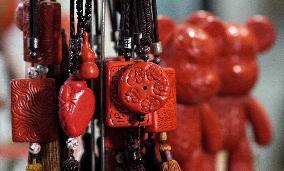
(240607) -- BEIJING, June 7, 2024 Photo by Xinhua/ABACAPRESS.COM) -- Accessories with carved lacquer are displayed at Zhu Jiang's studio in Beijing, capital of China, June 5, 2024. Carved lacquer, dating back to the Tang Dynasty (618-907), greeted its peak time in Ming and Qing dynasties (1368-1911). Since the founding of the People's Republic of China in 1949, Beijing and Yangzhou have become the two centers for the craft of carved lacquer, which was listed as a national-level intangible cultural heritage in 2006. Carved lacquer differs in its colors, namely red, black or multiple colors. Its making procedures include designing, body shaping, lacquer making, coating, drawing, carving and grinding. The craftsman needs to smoothly use various kinds of knives to carve patterns on the ware, and even a little miss can destroy the whole artwork. The craft can only be grasped through three to five years of practice. Therefore, it is also called "the art of time." Born in 1976, Zhu Jiang, an inheritor of the craft o

  •  
(MASTER OF CRAFTS)CHINA-CARVED LACQUER-INHERITOR-STUDIO (CN)

(MASTER OF CRAFTS)CHINA-CARVED LACQUER-INHERITOR-STUDIO (CN)

(240607) -- BEIJING, June 7, 2024 Photo by Xinhua/ABACAPRESS.COM) -- Carved lacquer artworks are displayed at Zhu Jiang's studio in Gu'an, north China's Hebei Province, May 30, 2024. Carved lacquer, dating back to the Tang Dynasty (618-907), greeted its peak time in Ming and Qing dynasties (1368-1911). Since the founding of the People's Republic of China in 1949, Beijing and Yangzhou have become the two centers for the craft of carved lacquer, which was listed as a national-level intangible cultural heritage in 2006. Carved lacquer differs in its colors, namely red, black or multiple colors. Its making procedures include designing, body shaping, lacquer making, coating, drawing, carving and grinding. The craftsman needs to smoothly use various kinds of knives to carve patterns on the ware, and even a little miss can destroy the whole artwork. The craft can only be grasped through three to five years of practice. Therefore, it is also called "the art of time." Born in 1976, Zhu Jiang, an inheritor of the craft

  •  
(MASTER OF CRAFTS)CHINA-CARVED LACQUER-INHERITOR-STUDIO (CN)

(MASTER OF CRAFTS)CHINA-CARVED LACQUER-INHERITOR-STUDIO (CN)

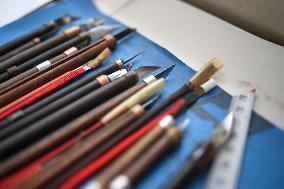
(240607) -- BEIJING, June 7, 2024 Photo by Xinhua/ABACAPRESS.COM) -- Knives for making carved lacquer are seen at Zhu Jiang's studio in Gu'an, north China's Hebei Province, May 30, 2024. Carved lacquer, dating back to the Tang Dynasty (618-907), greeted its peak time in Ming and Qing dynasties (1368-1911). Since the founding of the People's Republic of China in 1949, Beijing and Yangzhou have become the two centers for the craft of carved lacquer, which was listed as a national-level intangible cultural heritage in 2006. Carved lacquer differs in its colors, namely red, black or multiple colors. Its making procedures include designing, body shaping, lacquer making, coating, drawing, carving and grinding. The craftsman needs to smoothly use various kinds of knives to carve patterns on the ware, and even a little miss can destroy the whole artwork. The craft can only be grasped through three to five years of practice. Therefore, it is also called "the art of time." Born in 1976, Zhu Jiang, an inheritor of the c

  •  
(MASTER OF CRAFTS)CHINA-CARVED LACQUER-INHERITOR-STUDIO (CN)

(MASTER OF CRAFTS)CHINA-CARVED LACQUER-INHERITOR-STUDIO (CN)

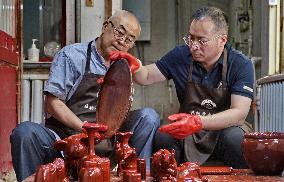
(240607) -- BEIJING, June 7, 2024 Photo by Xinhua/ABACAPRESS.COM) -- Zhu Qingyuan, father of Zhujiang, shows a piece of semi-finished carved lacquer artwork at Zhu Jiang's studio in Gu'an, north China's Hebei Province, May 30, 2024. Carved lacquer, dating back to the Tang Dynasty (618-907), greeted its peak time in Ming and Qing dynasties (1368-1911). Since the founding of the People's Republic of China in 1949, Beijing and Yangzhou have become the two centers for the craft of carved lacquer, which was listed as a national-level intangible cultural heritage in 2006. Carved lacquer differs in its colors, namely red, black or multiple colors. Its making procedures include designing, body shaping, lacquer making, coating, drawing, carving and grinding. The craftsman needs to smoothly use various kinds of knives to carve patterns on the ware, and even a little miss can destroy the whole artwork. The craft can only be grasped through three to five years of practice. Therefore, it is also called "the art of time."

  •  
(MASTER OF CRAFTS)CHINA-CARVED LACQUER-INHERITOR-STUDIO (CN)

(MASTER OF CRAFTS)CHINA-CARVED LACQUER-INHERITOR-STUDIO (CN)

(240607) -- BEIJING, June 7, 2024 Photo by Xinhua/ABACAPRESS.COM) -- Zhu Jiang checks semi-finished carved lacquer wares at his studio in Gu'an, north China's Hebei Province, May 30, 2024. Carved lacquer, dating back to the Tang Dynasty (618-907), greeted its peak time in Ming and Qing dynasties (1368-1911). Since the founding of the People's Republic of China in 1949, Beijing and Yangzhou have become the two centers for the craft of carved lacquer, which was listed as a national-level intangible cultural heritage in 2006. Carved lacquer differs in its colors, namely red, black or multiple colors. Its making procedures include designing, body shaping, lacquer making, coating, drawing, carving and grinding. The craftsman needs to smoothly use various kinds of knives to carve patterns on the ware, and even a little miss can destroy the whole artwork. The craft can only be grasped through three to five years of practice. Therefore, it is also called "the art of time." Born in 1976, Zhu Jiang, an inheritor of the

  •  
(MASTER OF CRAFTS)CHINA-CARVED LACQUER-INHERITOR-STUDIO (CN)

(MASTER OF CRAFTS)CHINA-CARVED LACQUER-INHERITOR-STUDIO (CN)

(240607) -- BEIJING, June 7, 2024 Photo by Xinhua/ABACAPRESS.COM) -- Carved lacquer artworks are displayed at Zhu Jiang's studio in Beijing, capital of China, June 5, 2024. Carved lacquer, dating back to the Tang Dynasty (618-907), greeted its peak time in Ming and Qing dynasties (1368-1911). Since the founding of the People's Republic of China in 1949, Beijing and Yangzhou have become the two centers for the craft of carved lacquer, which was listed as a national-level intangible cultural heritage in 2006. Carved lacquer differs in its colors, namely red, black or multiple colors. Its making procedures include designing, body shaping, lacquer making, coating, drawing, carving and grinding. The craftsman needs to smoothly use various kinds of knives to carve patterns on the ware, and even a little miss can destroy the whole artwork. The craft can only be grasped through three to five years of practice. Therefore, it is also called "the art of time." Born in 1976, Zhu Jiang, an inheritor of the craft of carved

  •  
(MASTER OF CRAFTS)CHINA-CARVED LACQUER-INHERITOR-STUDIO (CN)

(MASTER OF CRAFTS)CHINA-CARVED LACQUER-INHERITOR-STUDIO (CN)

(240607) -- BEIJING, June 7, 2024 Photo by Xinhua/ABACAPRESS.COM) -- Zhu Jiang draws lines on a semi-finished carved lacquer ware at his studio in Beijing, capital of China, June 5, 2024. Carved lacquer, dating back to the Tang Dynasty (618-907), greeted its peak time in Ming and Qing dynasties (1368-1911). Since the founding of the People's Republic of China in 1949, Beijing and Yangzhou have become the two centers for the craft of carved lacquer, which was listed as a national-level intangible cultural heritage in 2006. Carved lacquer differs in its colors, namely red, black or multiple colors. Its making procedures include designing, body shaping, lacquer making, coating, drawing, carving and grinding. The craftsman needs to smoothly use various kinds of knives to carve patterns on the ware, and even a little miss can destroy the whole artwork. The craft can only be grasped through three to five years of practice. Therefore, it is also called "the art of time." Born in 1976, Zhu Jiang, an inheritor of the

  •  
(MASTER OF CRAFTS)CHINA-CARVED LACQUER-INHERITOR-STUDIO (CN)

(MASTER OF CRAFTS)CHINA-CARVED LACQUER-INHERITOR-STUDIO (CN)

(240607) -- BEIJING, June 7, 2024 Photo by Xinhua/ABACAPRESS.COM) -- Carved lacquer artworks are displayed at Zhu Jiang's studio in Beijing, capital of China, June 5, 2024. Carved lacquer, dating back to the Tang Dynasty (618-907), greeted its peak time in Ming and Qing dynasties (1368-1911). Since the founding of the People's Republic of China in 1949, Beijing and Yangzhou have become the two centers for the craft of carved lacquer, which was listed as a national-level intangible cultural heritage in 2006. Carved lacquer differs in its colors, namely red, black or multiple colors. Its making procedures include designing, body shaping, lacquer making, coating, drawing, carving and grinding. The craftsman needs to smoothly use various kinds of knives to carve patterns on the ware, and even a little miss can destroy the whole artwork. The craft can only be grasped through three to five years of practice. Therefore, it is also called "the art of time." Born in 1976, Zhu Jiang, an inheritor of the craft of carved

  •  
(MASTER OF CRAFTS)CHINA-CARVED LACQUER-INHERITOR-STUDIO (CN)

(MASTER OF CRAFTS)CHINA-CARVED LACQUER-INHERITOR-STUDIO (CN)

(240607) -- BEIJING, June 7, 2024 Photo by Xinhua/ABACAPRESS.COM) -- Zhu Jiang makes carved lacquer at his studio in Gu'an, north China's Hebei Province, May 30, 2024. Carved lacquer, dating back to the Tang Dynasty (618-907), greeted its peak time in Ming and Qing dynasties (1368-1911). Since the founding of the People's Republic of China in 1949, Beijing and Yangzhou have become the two centers for the craft of carved lacquer, which was listed as a national-level intangible cultural heritage in 2006. Carved lacquer differs in its colors, namely red, black or multiple colors. Its making procedures include designing, body shaping, lacquer making, coating, drawing, carving and grinding. The craftsman needs to smoothly use various kinds of knives to carve patterns on the ware, and even a little miss can destroy the whole artwork. The craft can only be grasped through three to five years of practice. Therefore, it is also called "the art of time." Born in 1976, Zhu Jiang, an inheritor of the craft of carved lacq

  •  
(MASTER OF CRAFTS)CHINA-CARVED LACQUER-INHERITOR-STUDIO (CN)

(MASTER OF CRAFTS)CHINA-CARVED LACQUER-INHERITOR-STUDIO (CN)

(240607) -- BEIJING, June 7, 2024 Photo by Xinhua/ABACAPRESS.COM) -- Zhu Qingyuan, father of Zhu Jiang, makes carved lacquer at Zhu Jiang's studio in Gu'an, north China's Hebei Province, May 30, 2024. Carved lacquer, dating back to the Tang Dynasty (618-907), greeted its peak time in Ming and Qing dynasties (1368-1911). Since the founding of the People's Republic of China in 1949, Beijing and Yangzhou have become the two centers for the craft of carved lacquer, which was listed as a national-level intangible cultural heritage in 2006. Carved lacquer differs in its colors, namely red, black or multiple colors. Its making procedures include designing, body shaping, lacquer making, coating, drawing, carving and grinding. The craftsman needs to smoothly use various kinds of knives to carve patterns on the ware, and even a little miss can destroy the whole artwork. The craft can only be grasped through three to five years of practice. Therefore, it is also called "the art of time." Born in 1976, Zhu Jiang, an inhe

  •  
(MASTER OF CRAFTS)CHINA-CARVED LACQUER-INHERITOR-STUDIO (CN)

(MASTER OF CRAFTS)CHINA-CARVED LACQUER-INHERITOR-STUDIO (CN)

(240607) -- BEIJING, June 7, 2024 Photo by Xinhua/ABACAPRESS.COM) -- Zhu Jiang (R) and his father Zhu Qingyuan discuss lacquer coating at Zhu Jiang's studio in Gu'an, north China's Hebei Province, May 30, 2024. Carved lacquer, dating back to the Tang Dynasty (618-907), greeted its peak time in Ming and Qing dynasties (1368-1911). Since the founding of the People's Republic of China in 1949, Beijing and Yangzhou have become the two centers for the craft of carved lacquer, which was listed as a national-level intangible cultural heritage in 2006. Carved lacquer differs in its colors, namely red, black or multiple colors. Its making procedures include designing, body shaping, lacquer making, coating, drawing, carving and grinding. The craftsman needs to smoothly use various kinds of knives to carve patterns on the ware, and even a little miss can destroy the whole artwork. The craft can only be grasped through three to five years of practice. Therefore, it is also called "the art of time." Born in 1976, Zhu Jian

  •  
(MASTER OF CRAFTS)CHINA-CARVED LACQUER-INHERITOR-STUDIO (CN)

(MASTER OF CRAFTS)CHINA-CARVED LACQUER-INHERITOR-STUDIO (CN)

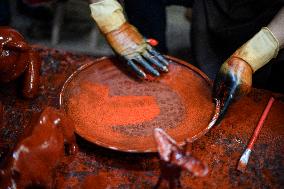
(240607) -- BEIJING, June 7, 2024 Photo by Xinhua/ABACAPRESS.COM) -- Zhu Jiang coats lacquer onto a plate at his studio in Gu'an, north China's Hebei Province, May 30, 2024. Carved lacquer, dating back to the Tang Dynasty (618-907), greeted its peak time in Ming and Qing dynasties (1368-1911). Since the founding of the People's Republic of China in 1949, Beijing and Yangzhou have become the two centers for the craft of carved lacquer, which was listed as a national-level intangible cultural heritage in 2006. Carved lacquer differs in its colors, namely red, black or multiple colors. Its making procedures include designing, body shaping, lacquer making, coating, drawing, carving and grinding. The craftsman needs to smoothly use various kinds of knives to carve patterns on the ware, and even a little miss can destroy the whole artwork. The craft can only be grasped through three to five years of practice. Therefore, it is also called "the art of time." Born in 1976, Zhu Jiang, an inheritor of the craft of carve

  •  
(MASTER OF CRAFTS)CHINA-CARVED LACQUER-INHERITOR-STUDIO (CN)

(MASTER OF CRAFTS)CHINA-CARVED LACQUER-INHERITOR-STUDIO (CN)

(240607) -- BEIJING, June 7, 2024 (Xinhua) -- Carved lacquer artworks are displayed at Zhu Jiang's studio in Gu'an, north China's Hebei Province, May 30, 2024. Carved lacquer, dating back to the Tang Dynasty (618-907), greeted its peak time in Ming and Qing dynasties (1368-1911). Since the founding of the People's Republic of China in 1949, Beijing and Yangzhou have become the two centers for the craft of carved lacquer, which was listed as a national-level intangible cultural heritage in 2006. Carved lacquer differs in its colors, namely red, black or multiple colors. Its making procedures include designing, body shaping, lacquer making, coating, drawing, carving and grinding. The craftsman needs to smoothly use various kinds of knives to carve patterns on the ware, and even a little miss can destroy the whole artwork. The craft can only be grasped through three to five years of practice. Therefore, it is also called "the art of time." Born in 1976, Zhu Jiang, an inheritor of the craft of carved lacque

  •  
(MASTER OF CRAFTS)CHINA-CARVED LACQUER-INHERITOR-STUDIO (CN)

(MASTER OF CRAFTS)CHINA-CARVED LACQUER-INHERITOR-STUDIO (CN)

(240607) -- BEIJING, June 7, 2024 (Xinhua) -- Zhu Jiang checks semi-finished carved lacquer wares at his studio in Gu'an, north China's Hebei Province, May 30, 2024. Carved lacquer, dating back to the Tang Dynasty (618-907), greeted its peak time in Ming and Qing dynasties (1368-1911). Since the founding of the People's Republic of China in 1949, Beijing and Yangzhou have become the two centers for the craft of carved lacquer, which was listed as a national-level intangible cultural heritage in 2006. Carved lacquer differs in its colors, namely red, black or multiple colors. Its making procedures include designing, body shaping, lacquer making, coating, drawing, carving and grinding. The craftsman needs to smoothly use various kinds of knives to carve patterns on the ware, and even a little miss can destroy the whole artwork. The craft can only be grasped through three to five years of practice. Therefore, it is also called "the art of time." Born in 1976, Zhu Jiang, an inheritor of the craft of carved

  •  
(MASTER OF CRAFTS)CHINA-CARVED LACQUER-INHERITOR-STUDIO (CN)

(MASTER OF CRAFTS)CHINA-CARVED LACQUER-INHERITOR-STUDIO (CN)

(240607) -- BEIJING, June 7, 2024 (Xinhua) -- Zhu Jiang designs a piece of carved lacquer artwork at his studio in Beijing, capital of China, June 5, 2024. Carved lacquer, dating back to the Tang Dynasty (618-907), greeted its peak time in Ming and Qing dynasties (1368-1911). Since the founding of the People's Republic of China in 1949, Beijing and Yangzhou have become the two centers for the craft of carved lacquer, which was listed as a national-level intangible cultural heritage in 2006. Carved lacquer differs in its colors, namely red, black or multiple colors. Its making procedures include designing, body shaping, lacquer making, coating, drawing, carving and grinding. The craftsman needs to smoothly use various kinds of knives to carve patterns on the ware, and even a little miss can destroy the whole artwork. The craft can only be grasped through three to five years of practice. Therefore, it is also called "the art of time." Born in 1976, Zhu Jiang, an inheritor of the craft of carved lacquer, l

  •  
(MASTER OF CRAFTS)CHINA-CARVED LACQUER-INHERITOR-STUDIO (CN)

(MASTER OF CRAFTS)CHINA-CARVED LACQUER-INHERITOR-STUDIO (CN)

(240607) -- BEIJING, June 7, 2024 (Xinhua) -- Zhu Jiang (L) and his father carry semi-finished carved lacquer wares for drying at his studio in Gu'an, north China's Hebei Province, May 30, 2024. Carved lacquer, dating back to the Tang Dynasty (618-907), greeted its peak time in Ming and Qing dynasties (1368-1911). Since the founding of the People's Republic of China in 1949, Beijing and Yangzhou have become the two centers for the craft of carved lacquer, which was listed as a national-level intangible cultural heritage in 2006. Carved lacquer differs in its colors, namely red, black or multiple colors. Its making procedures include designing, body shaping, lacquer making, coating, drawing, carving and grinding. The craftsman needs to smoothly use various kinds of knives to carve patterns on the ware, and even a little miss can destroy the whole artwork. The craft can only be grasped through three to five years of practice. Therefore, it is also called "the art of time." Born in 1976, Zhu Jiang, an inhe

  •  
(MASTER OF CRAFTS)CHINA-CARVED LACQUER-INHERITOR-STUDIO (CN)

(MASTER OF CRAFTS)CHINA-CARVED LACQUER-INHERITOR-STUDIO (CN)

(240607) -- BEIJING, June 7, 2024 (Xinhua) -- Carved lacquer artworks are displayed at Zhu Jiang's studio in Beijing, capital of China, June 5, 2024. Carved lacquer, dating back to the Tang Dynasty (618-907), greeted its peak time in Ming and Qing dynasties (1368-1911). Since the founding of the People's Republic of China in 1949, Beijing and Yangzhou have become the two centers for the craft of carved lacquer, which was listed as a national-level intangible cultural heritage in 2006. Carved lacquer differs in its colors, namely red, black or multiple colors. Its making procedures include designing, body shaping, lacquer making, coating, drawing, carving and grinding. The craftsman needs to smoothly use various kinds of knives to carve patterns on the ware, and even a little miss can destroy the whole artwork. The craft can only be grasped through three to five years of practice. Therefore, it is also called "the art of time." Born in 1976, Zhu Jiang, an inheritor of the craft of carved lacquer, learned

  •  
(MASTER OF CRAFTS)CHINA-CARVED LACQUER-INHERITOR-STUDIO (CN)

(MASTER OF CRAFTS)CHINA-CARVED LACQUER-INHERITOR-STUDIO (CN)

(240607) -- BEIJING, June 7, 2024 (Xinhua) -- Zhu Jiang reads a book on carved lacquer at his studio in Gu'an, north China's Hebei Province, May 30, 2024. Carved lacquer, dating back to the Tang Dynasty (618-907), greeted its peak time in Ming and Qing dynasties (1368-1911). Since the founding of the People's Republic of China in 1949, Beijing and Yangzhou have become the two centers for the craft of carved lacquer, which was listed as a national-level intangible cultural heritage in 2006. Carved lacquer differs in its colors, namely red, black or multiple colors. Its making procedures include designing, body shaping, lacquer making, coating, drawing, carving and grinding. The craftsman needs to smoothly use various kinds of knives to carve patterns on the ware, and even a little miss can destroy the whole artwork. The craft can only be grasped through three to five years of practice. Therefore, it is also called "the art of time." Born in 1976, Zhu Jiang, an inheritor of the craft of carved lacquer, le

  •  
(MASTER OF CRAFTS)CHINA-CARVED LACQUER-INHERITOR-STUDIO (CN)

(MASTER OF CRAFTS)CHINA-CARVED LACQUER-INHERITOR-STUDIO (CN)

(240607) -- BEIJING, June 7, 2024 (Xinhua) -- Carved lacquer artworks are displayed at Zhu Jiang's studio in Gu'an, north China's Hebei Province, May 30, 2024. Carved lacquer, dating back to the Tang Dynasty (618-907), greeted its peak time in Ming and Qing dynasties (1368-1911). Since the founding of the People's Republic of China in 1949, Beijing and Yangzhou have become the two centers for the craft of carved lacquer, which was listed as a national-level intangible cultural heritage in 2006. Carved lacquer differs in its colors, namely red, black or multiple colors. Its making procedures include designing, body shaping, lacquer making, coating, drawing, carving and grinding. The craftsman needs to smoothly use various kinds of knives to carve patterns on the ware, and even a little miss can destroy the whole artwork. The craft can only be grasped through three to five years of practice. Therefore, it is also called "the art of time." Born in 1976, Zhu Jiang, an inheritor of the craft of carved lacque

  • Main
  • Top
  • Editorial
  • Creative
  • About Us
  • About ILG
  • Terms of use
  • Company
  • BEHIND
  • Price List
  • Single Plan
  • Monthly Plan
  • Services
  • Shooting
  • Rights Clearance
  • Support
  • FAQ
  • How To Buy
  • Contact Us
  • Become a Partner

© KYODO NEWS IMAGES INC

All Rights Reserved.

  • Editorial
  • Olympics
  • News
  • Sports
  • Japan
  • Tech
  • Royal
  • Disaster
  • NorthKorea
  • Old Japan
  • SNS
  • Creative
  • Food
  • Japan
  • Landscape
  • Animal
  • Popular
  • #Ukraine
  • #China
  • #coronavirus
  • #N. Korea
  • #Russia
  • #Thailand
  • #Ukraine
  • #China
  • #coronavirus
  • #N. Korea
  • #Russia
  • #Thailand
  • Food
  • Japan
  • Landscape
  • Animal
  • Olympics
  • News
  • Sports
  • Japan
  • Tech
  • Royal
  • Disaster
  • NorthKorea
  • Old Japan
  • SNS