•  
Palestinians Protest Against Israeli Settlers Near Hebron - Palestine

Palestinians Protest Against Israeli Settlers Near Hebron - Palestine

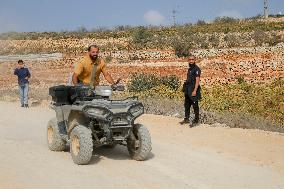
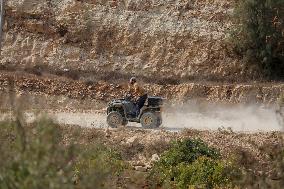
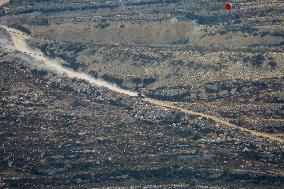
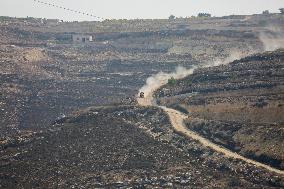
An Israeli settler kicks up dust as he rides past Palestinian farmers who are leaving the area, following their protest against Israeli settlers taking over their land, near Hebron, in the occupied West Bank, on November 13, 2025. Local farmers and landowners rally after Israeli forces declared the area a closed military zone. Photo by Mosab Shawer/Middle East Images/ABACAPRESS.COM

  •  
Palestinians Protest Against Israeli Settlers Near Hebron - Palestine

Palestinians Protest Against Israeli Settlers Near Hebron - Palestine

An Israeli settler rides past Palestinian farmers who are leaving the area, following their protest against Israeli settlers taking over their land, near Hebron, in the occupied West Bank, on November 13, 2025. Local farmers and landowners rally after Israeli forces declared the area a closed military zone. Photo by Mosab Shawer/Middle East Images/ABACAPRESS.COM

  •  
Palestinians Protest Against Israeli Settlers Near Hebron - Palestine

Palestinians Protest Against Israeli Settlers Near Hebron - Palestine

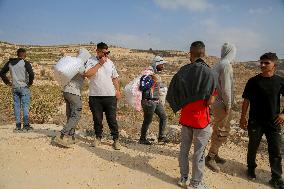
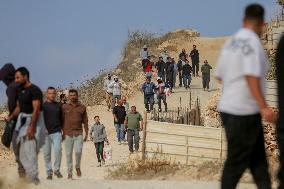
Palestinian farmers leave the area, following their protest against Israeli settlers taking over their land, near Hebron, in the occupied West Bank, on November 13, 2025. Local farmers and landowners rally after Israeli forces declared the area a closed military zone. Photo by Mosab Shawer/Middle East Images/ABACAPRESS.COM

  •  
Palestinians Protest Against Israeli Settlers Near Hebron - Palestine

Palestinians Protest Against Israeli Settlers Near Hebron - Palestine

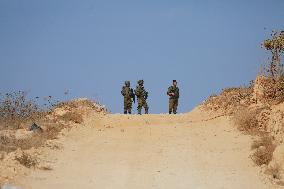
Armed Israeli forces prepare to confront Palestinians who have gathered to protest against Israeli forces taking over their land, near Hebron, in the occupied West Bank, on November 13, 2025. Local farmers and landowners rally after Israeli forces declared the area a closed military zone. Photo by Mosab Shawer/Middle East Images/ABACAPRESS.COM

  •  
Palestinians Protest Against Israeli Settlers Near Hebron - Palestine

Palestinians Protest Against Israeli Settlers Near Hebron - Palestine

Palestinian farmers leave the area, following their protest against Israeli settlers taking over their land, near Hebron, in the occupied West Bank, on November 13, 2025. Local farmers and landowners rally after Israeli forces declared the area a closed military zone. Photo by Mosab Shawer/Middle East Images/ABACAPRESS.COM

  •  
Palestinians Protest Against Israeli Settlers Near Hebron - Palestine

Palestinians Protest Against Israeli Settlers Near Hebron - Palestine

Palestinian farmers leave the area, following their protest against Israeli settlers taking over their land, near Hebron, in the occupied West Bank, on November 13, 2025. Local farmers and landowners rally after Israeli forces declared the area a closed military zone. Photo by Mosab Shawer/Middle East Images/ABACAPRESS.COM

  •  
Palestinians Protest Against Israeli Settlers Near Hebron - Palestine

Palestinians Protest Against Israeli Settlers Near Hebron - Palestine

Palestinian farmers leave the area, following their protest against Israeli settlers taking over their land, near Hebron, in the occupied West Bank, on November 13, 2025. Local farmers and landowners rally after Israeli forces declared the area a closed military zone. Photo by Mosab Shawer/Middle East Images/ABACAPRESS.COM

  •  
Palestinians Protest Against Israeli Settlers Near Hebron - Palestine

Palestinians Protest Against Israeli Settlers Near Hebron - Palestine

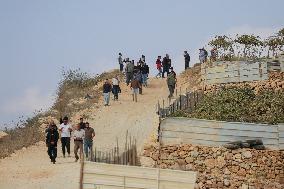
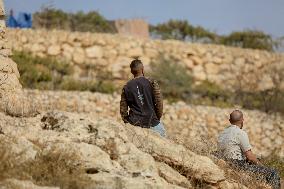
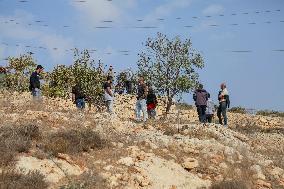
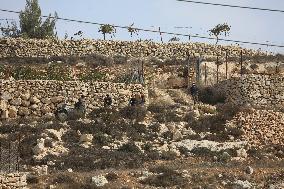
Palestinians gather to protest against Israeli settlers taking over their land, near Hebron, in the occupied West Bank, on November 13, 2025. Local farmers and landowners rally after Israeli forces declared the area a closed military zone. Photo by Mosab Shawer/Middle East Images/ABACAPRESS.COM

  •  
Palestinians Protest Against Israeli Settlers Near Hebron - Palestine

Palestinians Protest Against Israeli Settlers Near Hebron - Palestine

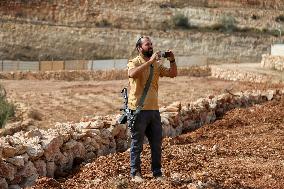
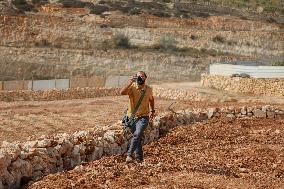
An Israeli settler takes pictures of Palestinians who have gathered to protest against Israeli forces taking over their land, near Hebron, in the occupied West Bank, on November 13, 2025. Local farmers and landowners rally after Israeli forces declared the area a closed military zone. Photo by Mosab Shawer/Middle East Images/ABACAPRESS.COM

  •  
Palestinians Protest Against Israeli Settlers Near Hebron - Palestine

Palestinians Protest Against Israeli Settlers Near Hebron - Palestine

Palestinians gather to protest against Israeli settlers taking over their land, near Hebron, in the occupied West Bank, on November 13, 2025. Local farmers and landowners rally after Israeli forces declared the area a closed military zone. Photo by Mosab Shawer/Middle East Images/ABACAPRESS.COM

  •  
Palestinians Protest Against Israeli Settlers Near Hebron - Palestine

Palestinians Protest Against Israeli Settlers Near Hebron - Palestine

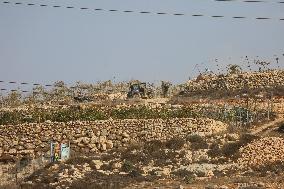
An Israeli settler rides an ATV to go and confront Palestinians who have gathered to protest against Israeli forces taking over their land, near Hebron, in the occupied West Bank, on November 13, 2025. Local farmers and landowners rally after Israeli forces declared the area a closed military zone. Photo by Mosab Shawer/Middle East Images/ABACAPRESS.COM

  •  
Palestinians Protest Against Israeli Settlers Near Hebron - Palestine

Palestinians Protest Against Israeli Settlers Near Hebron - Palestine

An Israeli settler takes pictures of Palestinians who have gathered to protest against Israeli forces taking over their land, near Hebron, in the occupied West Bank, on November 13, 2025. Local farmers and landowners rally after Israeli forces declared the area a closed military zone. Photo by Mosab Shawer/Middle East Images/ABACAPRESS.COM

  •  
Palestinians Protest Against Israeli Settlers Near Hebron - Palestine

Palestinians Protest Against Israeli Settlers Near Hebron - Palestine

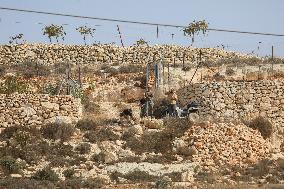
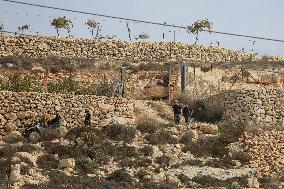
Armed Israeli settlers prepare to confront Palestinians who have gathered to protest against Israeli forces taking over their land, near Hebron, in the occupied West Bank, on November 13, 2025. Local farmers and landowners rally after Israeli forces declared the area a closed military zone. Photo by Mosab Shawer/Middle East Images/ABACAPRESS.COM

  •  
Palestinians Protest Against Israeli Settlers Near Hebron - Palestine

Palestinians Protest Against Israeli Settlers Near Hebron - Palestine

Armed Israeli settlers prepare to confront Palestinians who have gathered to protest against Israeli forces taking over their land, near Hebron, in the occupied West Bank, on November 13, 2025. Local farmers and landowners rally after Israeli forces declared the area a closed military zone. Photo by Mosab Shawer/Middle East Images/ABACAPRESS.COM

  •  
Palestinians Protest Against Israeli Settlers Near Hebron - Palestine

Palestinians Protest Against Israeli Settlers Near Hebron - Palestine

Armed Israeli settlers prepare to confront Palestinians who have gathered to protest against Israeli forces taking over their land, near Hebron, in the occupied West Bank, on November 13, 2025. Local farmers and landowners rally after Israeli forces declared the area a closed military zone. Photo by Mosab Shawer/Middle East Images/ABACAPRESS.COM

  •  
Palestinians Protest Against Israeli Settlers Near Hebron - Palestine

Palestinians Protest Against Israeli Settlers Near Hebron - Palestine

An Israeli settler rides an ATV to go and join other Israeli forces who prepare to confront Palestinians who have gathered to protest against Israeli forces taking over their land, near Hebron, in the occupied West Bank, on November 13, 2025. Local farmers and landowners rally after Israeli forces declared the area a closed military zone. Photo by Mosab Shawer/Middle East Images/ABACAPRESS.COM

  •  
Palestinians Protest Against Israeli Settlers Near Hebron - Palestine

Palestinians Protest Against Israeli Settlers Near Hebron - Palestine

Israeli settlers prepare to confront Palestinians who have gathered to protest against Israeli forces taking over their land, near Hebron, in the occupied West Bank, on November 13, 2025. Local farmers and landowners rally after Israeli forces declared the area a closed military zone. Photo by Mosab Shawer/Middle East Images/ABACAPRESS.COM

  •  
Palestinians Protest Against Israeli Settlers Near Hebron - Palestine

Palestinians Protest Against Israeli Settlers Near Hebron - Palestine

An Israeli settler rides an ATV to go and join other Israeli forces who prepare to confront Palestinians who have gathered to protest against Israeli forces taking over their land, near Hebron, in the occupied West Bank, on November 13, 2025. Local farmers and landowners rally after Israeli forces declared the area a closed military zone. Photo by Mosab Shawer/Middle East Images/ABACAPRESS.COM

  •  
Palestinians Protest Against Israeli Settlers Near Hebron - Palestine

Palestinians Protest Against Israeli Settlers Near Hebron - Palestine

An Israeli settler rides an ATV to go and join other Israeli forces who prepare to confront Palestinians who have gathered to protest against Israeli forces taking over their land, near Hebron, in the occupied West Bank, on November 13, 2025. Local farmers and landowners rally after Israeli forces declared the area a closed military zone. Photo by Mosab Shawer/Middle East Images/ABACAPRESS.COM

  •  
Amik Plain Agriculture Workers - Turkey

Amik Plain Agriculture Workers - Turkey

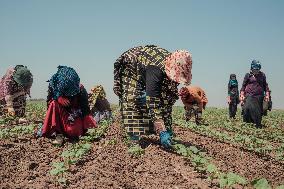
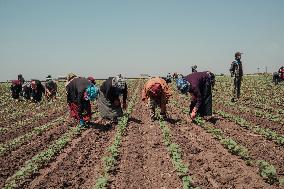
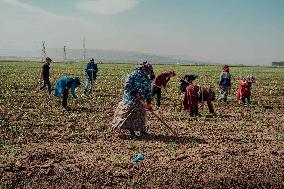
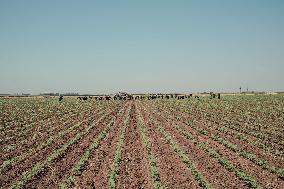
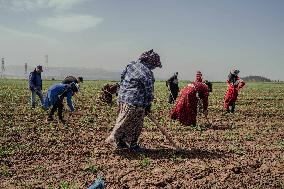
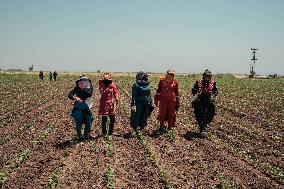
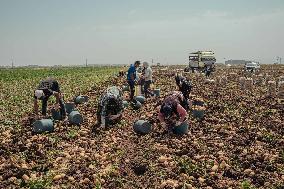
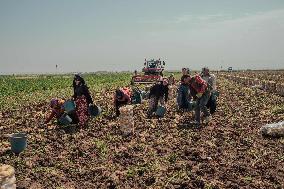
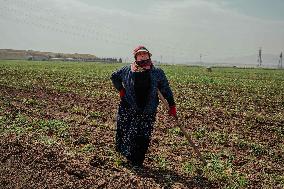
Seasonal farm workers work on a farm in Amik Plain, located on the Syrian border in Reyhanli district of Hatay, Turkey, on May 23, 2024. Thanks to its climate and fertile soil, farmers grow many crops in all seasons. The fertility of the plain continues to be a source of livelihood for agricultural workers. Apart from the region's people, seasonal workers from different provinces of Eastern and Southeastern Anatolia come to work in specific periods. The majority of the workers are Syrian families. Syrian Arabs and Kurds make up 80 percent of the workers. Workers come to the fields at dawn and work in the scorching heat until the evening. Landowners see young, old, and children as cheap labor with poor working conditions and wages. Child laborers earn 550 Turkish Liras (US$17) a day, while adult laborers earn between 1000 Turkish Liras (US$31) and 1700 Turkish Liras (US$53). Photo by Murat Kocabas/Middle East Images/ABACAPRESS.COM

  •  
Amik Plain Agriculture Workers - Turkey

Amik Plain Agriculture Workers - Turkey

Seasonal farm workers work on a farm in Amik Plain, located on the Syrian border in Reyhanli district of Hatay, Turkey, on May 23, 2024. Thanks to its climate and fertile soil, farmers grow many crops in all seasons. The fertility of the plain continues to be a source of livelihood for agricultural workers. Apart from the region's people, seasonal workers from different provinces of Eastern and Southeastern Anatolia come to work in specific periods. The majority of the workers are Syrian families. Syrian Arabs and Kurds make up 80 percent of the workers. Workers come to the fields at dawn and work in the scorching heat until the evening. Landowners see young, old, and children as cheap labor with poor working conditions and wages. Child laborers earn 550 Turkish Liras (US$17) a day, while adult laborers earn between 1000 Turkish Liras (US$31) and 1700 Turkish Liras (US$53). Photo by Murat Kocabas/Middle East Images/ABACAPRESS.COM

  •  
Amik Plain Agriculture Workers - Turkey

Amik Plain Agriculture Workers - Turkey

Seasonal farm workers work on a farm in Amik Plain, located on the Syrian border in Reyhanli district of Hatay, Turkey, on May 23, 2024. Thanks to its climate and fertile soil, farmers grow many crops in all seasons. The fertility of the plain continues to be a source of livelihood for agricultural workers. Apart from the region's people, seasonal workers from different provinces of Eastern and Southeastern Anatolia come to work in specific periods. The majority of the workers are Syrian families. Syrian Arabs and Kurds make up 80 percent of the workers. Workers come to the fields at dawn and work in the scorching heat until the evening. Landowners see young, old, and children as cheap labor with poor working conditions and wages. Child laborers earn 550 Turkish Liras (US$17) a day, while adult laborers earn between 1000 Turkish Liras (US$31) and 1700 Turkish Liras (US$53). Photo by Murat Kocabas/Middle East Images/ABACAPRESS.COM

  •  
Amik Plain Agriculture Workers - Turkey

Amik Plain Agriculture Workers - Turkey

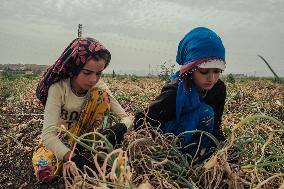
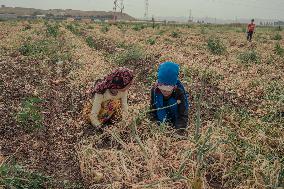
Two young seasonal farm workers pick onions in the farmlands of Amik Plain, located on the Syrian border in Reyhanli district of Hatay, Turkey, on May 23, 2024. Thanks to its climate and fertile soil, farmers grow many crops in all seasons. The fertility of the plain continues to be a source of livelihood for agricultural workers. Apart from the region's people, seasonal workers from different provinces of Eastern and Southeastern Anatolia come to work in specific periods. The majority of the workers are Syrian families. Syrian Arabs and Kurds make up 80 percent of the workers. Workers come to the fields at dawn and work in the scorching heat until the evening. Landowners see young, old, and children as cheap labor with poor working conditions and wages. Child laborers earn 550 Turkish Liras (US$17) a day, while adult laborers earn between 1000 Turkish Liras (US$31) and 1700 Turkish Liras (US$53). Photo by Murat Kocabas/Middle East Images/ABACAPRESS.COM

  •  
Amik Plain Agriculture Workers - Turkey

Amik Plain Agriculture Workers - Turkey

Two young seasonal farm workers pick onions in the farmlands of Amik Plain, located on the Syrian border in Reyhanli district of Hatay, Turkey, on May 23, 2024. Thanks to its climate and fertile soil, farmers grow many crops in all seasons. The fertility of the plain continues to be a source of livelihood for agricultural workers. Apart from the region's people, seasonal workers from different provinces of Eastern and Southeastern Anatolia come to work in specific periods. The majority of the workers are Syrian families. Syrian Arabs and Kurds make up 80 percent of the workers. Workers come to the fields at dawn and work in the scorching heat until the evening. Landowners see young, old, and children as cheap labor with poor working conditions and wages. Child laborers earn 550 Turkish Liras (US$17) a day, while adult laborers earn between 1000 Turkish Liras (US$31) and 1700 Turkish Liras (US$53). Photo by Murat Kocabas/Middle East Images/ABACAPRESS.COM

  •  
Amik Plain Agriculture Workers - Turkey

Amik Plain Agriculture Workers - Turkey

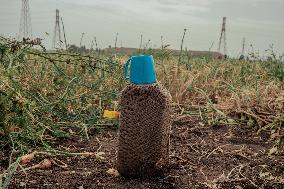
View of a water bottle of seanonal farm workers in the farmlands of Amik Plain, located on the Syrian border in Reyhanli district of Hatay, Turkey, on May 23, 2024. Thanks to its climate and fertile soil, farmers grow many crops in all seasons. The fertility of the plain continues to be a source of livelihood for agricultural workers. Apart from the region's people, seasonal workers from different provinces of Eastern and Southeastern Anatolia come to work in specific periods. The majority of the workers are Syrian families. Syrian Arabs and Kurds make up 80 percent of the workers. Workers come to the fields at dawn and work in the scorching heat until the evening. Landowners see young, old, and children as cheap labor with poor working conditions and wages. Child laborers earn 550 Turkish Liras (US$17) a day, while adult laborers earn between 1000 Turkish Liras (US$31) and 1700 Turkish Liras (US$53). Photo by Murat Kocabas/Middle East Images/ABACAPRESS.COM

  •  
Amik Plain Agriculture Workers - Turkey

Amik Plain Agriculture Workers - Turkey

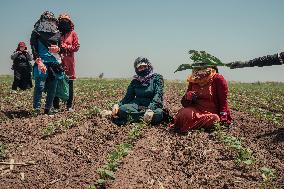
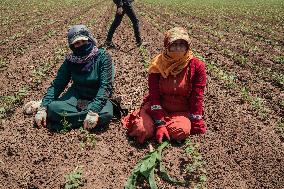
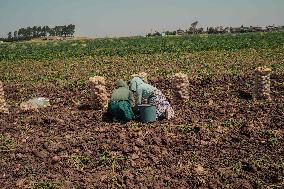
Seasonal farm workers take a break while working on a farm in Amik Plain, located on the Syrian border in Reyhanli district of Hatay, Turkey, on May 23, 2024. Thanks to its climate and fertile soil, farmers grow many crops in all seasons. The fertility of the plain continues to be a source of livelihood for agricultural workers. Apart from the region's people, seasonal workers from different provinces of Eastern and Southeastern Anatolia come to work in specific periods. The majority of the workers are Syrian families. Syrian Arabs and Kurds make up 80 percent of the workers. Workers come to the fields at dawn and work in the scorching heat until the evening. Landowners see young, old, and children as cheap labor with poor working conditions and wages. Child laborers earn 550 Turkish Liras (US$17) a day, while adult laborers earn between 1000 Turkish Liras (US$31) and 1700 Turkish Liras (US$53). Photo by Murat Kocabas/Middle East Images/ABACAPRESS.COM

  •  
Amik Plain Agriculture Workers - Turkey

Amik Plain Agriculture Workers - Turkey

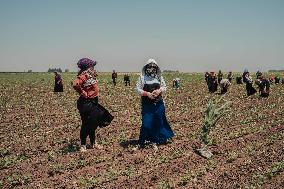
Seasonal farm workers work on a farm in Amik Plain, located on the Syrian border in Reyhanli district of Hatay, Turkey, on May 23, 2024. Thanks to its climate and fertile soil, farmers grow many crops in all seasons. The fertility of the plain continues to be a source of livelihood for agricultural workers. Apart from the region's people, seasonal workers from different provinces of Eastern and Southeastern Anatolia come to work in specific periods. The majority of the workers are Syrian families. Syrian Arabs and Kurds make up 80 percent of the workers. Workers come to the fields at dawn and work in the scorching heat until the evening. Landowners see young, old, and children as cheap labor with poor working conditions and wages. Child laborers earn 550 Turkish Liras (US$17) a day, while adult laborers earn between 1000 Turkish Liras (US$31) and 1700 Turkish Liras (US$53). Photo by Murat Kocabas/Middle East Images/ABACAPRESS.COM

  •  
Amik Plain Agriculture Workers - Turkey

Amik Plain Agriculture Workers - Turkey

Seasonal farm workers work on a farm in Amik Plain, located on the Syrian border in Reyhanli district of Hatay, Turkey, on May 23, 2024. Thanks to its climate and fertile soil, farmers grow many crops in all seasons. The fertility of the plain continues to be a source of livelihood for agricultural workers. Apart from the region's people, seasonal workers from different provinces of Eastern and Southeastern Anatolia come to work in specific periods. The majority of the workers are Syrian families. Syrian Arabs and Kurds make up 80 percent of the workers. Workers come to the fields at dawn and work in the scorching heat until the evening. Landowners see young, old, and children as cheap labor with poor working conditions and wages. Child laborers earn 550 Turkish Liras (US$17) a day, while adult laborers earn between 1000 Turkish Liras (US$31) and 1700 Turkish Liras (US$53). Photo by Murat Kocabas/Middle East Images/ABACAPRESS.COM

  •  
Amik Plain Agriculture Workers - Turkey

Amik Plain Agriculture Workers - Turkey

Seasonal farm workers take a break while working on a farm in Amik Plain, located on the Syrian border in Reyhanli district of Hatay, Turkey, on May 23, 2024. Thanks to its climate and fertile soil, farmers grow many crops in all seasons. The fertility of the plain continues to be a source of livelihood for agricultural workers. Apart from the region's people, seasonal workers from different provinces of Eastern and Southeastern Anatolia come to work in specific periods. The majority of the workers are Syrian families. Syrian Arabs and Kurds make up 80 percent of the workers. Workers come to the fields at dawn and work in the scorching heat until the evening. Landowners see young, old, and children as cheap labor with poor working conditions and wages. Child laborers earn 550 Turkish Liras (US$17) a day, while adult laborers earn between 1000 Turkish Liras (US$31) and 1700 Turkish Liras (US$53). Photo by Murat Kocabas/Middle East Images/ABACAPRESS.COM

  •  
Amik Plain Agriculture Workers - Turkey

Amik Plain Agriculture Workers - Turkey

Seasonal farm workers take a break while working on a farm in Amik Plain, located on the Syrian border in Reyhanli district of Hatay, Turkey, on May 23, 2024. Thanks to its climate and fertile soil, farmers grow many crops in all seasons. The fertility of the plain continues to be a source of livelihood for agricultural workers. Apart from the region's people, seasonal workers from different provinces of Eastern and Southeastern Anatolia come to work in specific periods. The majority of the workers are Syrian families. Syrian Arabs and Kurds make up 80 percent of the workers. Workers come to the fields at dawn and work in the scorching heat until the evening. Landowners see young, old, and children as cheap labor with poor working conditions and wages. Child laborers earn 550 Turkish Liras (US$17) a day, while adult laborers earn between 1000 Turkish Liras (US$31) and 1700 Turkish Liras (US$53). Photo by Murat Kocabas/Middle East Images/ABACAPRESS.COM

  •  
Amik Plain Agriculture Workers - Turkey

Amik Plain Agriculture Workers - Turkey

Seasonal farm workers take a break while working on a farm in Amik Plain, located on the Syrian border in Reyhanli district of Hatay, Turkey, on May 23, 2024. Thanks to its climate and fertile soil, farmers grow many crops in all seasons. The fertility of the plain continues to be a source of livelihood for agricultural workers. Apart from the region's people, seasonal workers from different provinces of Eastern and Southeastern Anatolia come to work in specific periods. The majority of the workers are Syrian families. Syrian Arabs and Kurds make up 80 percent of the workers. Workers come to the fields at dawn and work in the scorching heat until the evening. Landowners see young, old, and children as cheap labor with poor working conditions and wages. Child laborers earn 550 Turkish Liras (US$17) a day, while adult laborers earn between 1000 Turkish Liras (US$31) and 1700 Turkish Liras (US$53). Photo by Murat Kocabas/Middle East Images/ABACAPRESS.COM

  •  
Amik Plain Agriculture Workers - Turkey

Amik Plain Agriculture Workers - Turkey

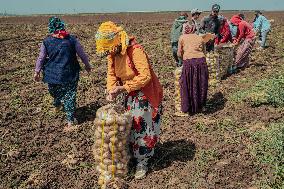
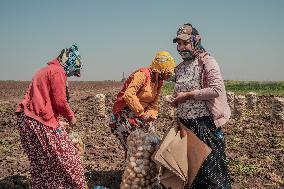
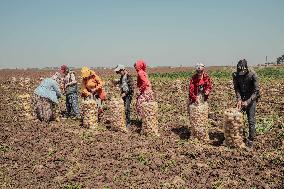
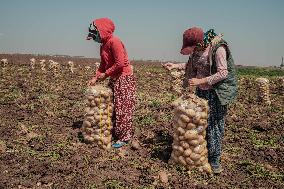
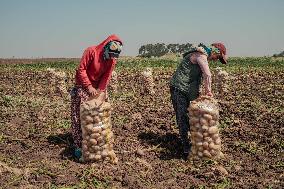
Seasonal farm workers stuff potatoes in gunny sacks in the farmlands of Amik Plain, located on the Syrian border in Reyhanli district of Hatay, Turkey, on May 23, 2024. Thanks to its climate and fertile soil, farmers grow many crops in all seasons. The fertility of the plain continues to be a source of livelihood for agricultural workers. Apart from the region's people, seasonal workers from different provinces of Eastern and Southeastern Anatolia come to work in specific periods. The majority of the workers are Syrian families. Syrian Arabs and Kurds make up 80 percent of the workers. Workers come to the fields at dawn and work in the scorching heat until the evening. Landowners see young, old, and children as cheap labor with poor working conditions and wages. Child laborers earn 550 Turkish Liras (US$17) a day, while adult laborers earn between 1000 Turkish Liras (US$31) and 1700 Turkish Liras (US$53). Photo by Murat Kocabas/Middle East Images/ABACAPRESS.COM

  •  
Amik Plain Agriculture Workers - Turkey

Amik Plain Agriculture Workers - Turkey

Seasonal farm workers stuff potatoes in sacks in the farmlands of Amik Plain, located on the Syrian border in Reyhanli district of Hatay, Turkey, on May 23, 2024. Thanks to its climate and fertile soil, farmers grow many crops in all seasons. The fertility of the plain continues to be a source of livelihood for agricultural workers. Apart from the region's people, seasonal workers from different provinces of Eastern and Southeastern Anatolia come to work in specific periods. The majority of the workers are Syrian families. Syrian Arabs and Kurds make up 80 percent of the workers. Workers come to the fields at dawn and work in the scorching heat until the evening. Landowners see young, old, and children as cheap labor with poor working conditions and wages. Child laborers earn 550 Turkish Liras (US$17) a day, while adult laborers earn between 1000 Turkish Liras (US$31) and 1700 Turkish Liras (US$53). Photo by Murat Kocabas/Middle East Images/ABACAPRESS.COM

  •  
Amik Plain Agriculture Workers - Turkey

Amik Plain Agriculture Workers - Turkey

Seasonal farm workers stuff potatoes in sacks in the farmlands of Amik Plain, located on the Syrian border in Reyhanli district of Hatay, Turkey, on May 23, 2024. Thanks to its climate and fertile soil, farmers grow many crops in all seasons. The fertility of the plain continues to be a source of livelihood for agricultural workers. Apart from the region's people, seasonal workers from different provinces of Eastern and Southeastern Anatolia come to work in specific periods. The majority of the workers are Syrian families. Syrian Arabs and Kurds make up 80 percent of the workers. Workers come to the fields at dawn and work in the scorching heat until the evening. Landowners see young, old, and children as cheap labor with poor working conditions and wages. Child laborers earn 550 Turkish Liras (US$17) a day, while adult laborers earn between 1000 Turkish Liras (US$31) and 1700 Turkish Liras (US$53). Photo by Murat Kocabas/Middle East Images/ABACAPRESS.COM

  •  
Amik Plain Agriculture Workers - Turkey

Amik Plain Agriculture Workers - Turkey

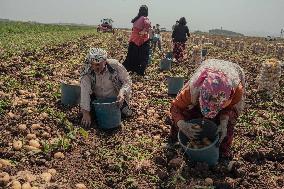
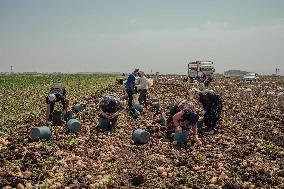
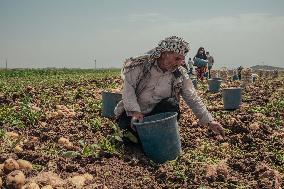
Seasonal farm workers pick potatoes in the farmlands of Amik Plain, located on the Syrian border in Reyhanli district of Hatay, Turkey, on May 23, 2024. Thanks to its climate and fertile soil, farmers grow many crops in all seasons. The fertility of the plain continues to be a source of livelihood for agricultural workers. Apart from the region's people, seasonal workers from different provinces of Eastern and Southeastern Anatolia come to work in specific periods. The majority of the workers are Syrian families. Syrian Arabs and Kurds make up 80 percent of the workers. Workers come to the fields at dawn and work in the scorching heat until the evening. Landowners see young, old, and children as cheap labor with poor working conditions and wages. Child laborers earn 550 Turkish Liras (US$17) a day, while adult laborers earn between 1000 Turkish Liras (US$31) and 1700 Turkish Liras (US$53). Photo by Murat Kocabas/Middle East Images/ABACAPRESS.COM

  •  
Amik Plain Agriculture Workers - Turkey

Amik Plain Agriculture Workers - Turkey

Seasonal farm workers stuff potatoes in sacks in the farmlands of Amik Plain, located on the Syrian border in Reyhanli district of Hatay, Turkey, on May 23, 2024. Thanks to its climate and fertile soil, farmers grow many crops in all seasons. The fertility of the plain continues to be a source of livelihood for agricultural workers. Apart from the region's people, seasonal workers from different provinces of Eastern and Southeastern Anatolia come to work in specific periods. The majority of the workers are Syrian families. Syrian Arabs and Kurds make up 80 percent of the workers. Workers come to the fields at dawn and work in the scorching heat until the evening. Landowners see young, old, and children as cheap labor with poor working conditions and wages. Child laborers earn 550 Turkish Liras (US$17) a day, while adult laborers earn between 1000 Turkish Liras (US$31) and 1700 Turkish Liras (US$53). Photo by Murat Kocabas/Middle East Images/ABACAPRESS.COM

  •  
Amik Plain Agriculture Workers - Turkey

Amik Plain Agriculture Workers - Turkey

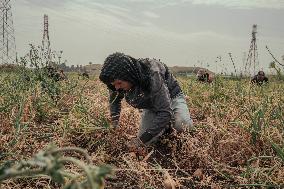
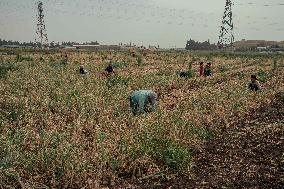
Seasonal farm workers pick onions in the farmlands of Amik Plain, located on the Syrian border in Reyhanli district of Hatay, Turkey, on May 23, 2024. Thanks to its climate and fertile soil, farmers grow many crops in all seasons. The fertility of the plain continues to be a source of livelihood for agricultural workers. Apart from the region's people, seasonal workers from different provinces of Eastern and Southeastern Anatolia come to work in specific periods. The majority of the workers are Syrian families. Syrian Arabs and Kurds make up 80 percent of the workers. Workers come to the fields at dawn and work in the scorching heat until the evening. Landowners see young, old, and children as cheap labor with poor working conditions and wages. Child laborers earn 550 Turkish Liras (US$17) a day, while adult laborers earn between 1000 Turkish Liras (US$31) and 1700 Turkish Liras (US$53). Photo by Murat Kocabas/Middle East Images/ABACAPRESS.COM

  •  
Amik Plain Agriculture Workers - Turkey

Amik Plain Agriculture Workers - Turkey

Seasonal farm workers pick potatoes in the farmlands of Amik Plain, located on the Syrian border in Reyhanli district of Hatay, Turkey, on May 23, 2024. Thanks to its climate and fertile soil, farmers grow many crops in all seasons. The fertility of the plain continues to be a source of livelihood for agricultural workers. Apart from the region's people, seasonal workers from different provinces of Eastern and Southeastern Anatolia come to work in specific periods. The majority of the workers are Syrian families. Syrian Arabs and Kurds make up 80 percent of the workers. Workers come to the fields at dawn and work in the scorching heat until the evening. Landowners see young, old, and children as cheap labor with poor working conditions and wages. Child laborers earn 550 Turkish Liras (US$17) a day, while adult laborers earn between 1000 Turkish Liras (US$31) and 1700 Turkish Liras (US$53). Photo by Murat Kocabas/Middle East Images/ABACAPRESS.COM

  •  
Amik Plain Agriculture Workers - Turkey

Amik Plain Agriculture Workers - Turkey

Seasonal farm workers stuff potatoes in sacks in the farmlands of Amik Plain, located on the Syrian border in Reyhanli district of Hatay, Turkey, on May 23, 2024. Thanks to its climate and fertile soil, farmers grow many crops in all seasons. The fertility of the plain continues to be a source of livelihood for agricultural workers. Apart from the region's people, seasonal workers from different provinces of Eastern and Southeastern Anatolia come to work in specific periods. The majority of the workers are Syrian families. Syrian Arabs and Kurds make up 80 percent of the workers. Workers come to the fields at dawn and work in the scorching heat until the evening. Landowners see young, old, and children as cheap labor with poor working conditions and wages. Child laborers earn 550 Turkish Liras (US$17) a day, while adult laborers earn between 1000 Turkish Liras (US$31) and 1700 Turkish Liras (US$53). Photo by Murat Kocabas/Middle East Images/ABACAPRESS.COM

  •  
Amik Plain Agriculture Workers - Turkey

Amik Plain Agriculture Workers - Turkey

Seasonal farm workers pick potatoes in the farmlands of Amik Plain, located on the Syrian border in Reyhanli district of Hatay, Turkey, on May 23, 2024. Thanks to its climate and fertile soil, farmers grow many crops in all seasons. The fertility of the plain continues to be a source of livelihood for agricultural workers. Apart from the region's people, seasonal workers from different provinces of Eastern and Southeastern Anatolia come to work in specific periods. The majority of the workers are Syrian families. Syrian Arabs and Kurds make up 80 percent of the workers. Workers come to the fields at dawn and work in the scorching heat until the evening. Landowners see young, old, and children as cheap labor with poor working conditions and wages. Child laborers earn 550 Turkish Liras (US$17) a day, while adult laborers earn between 1000 Turkish Liras (US$31) and 1700 Turkish Liras (US$53). Photo by Murat Kocabas/Middle East Images/ABACAPRESS.COM

  •  
Amik Plain Agriculture Workers - Turkey

Amik Plain Agriculture Workers - Turkey

Seasonal farm workers pick potatoes in the farmlands of Amik Plain, located on the Syrian border in Reyhanli district of Hatay, Turkey, on May 23, 2024. Thanks to its climate and fertile soil, farmers grow many crops in all seasons. The fertility of the plain continues to be a source of livelihood for agricultural workers. Apart from the region's people, seasonal workers from different provinces of Eastern and Southeastern Anatolia come to work in specific periods. The majority of the workers are Syrian families. Syrian Arabs and Kurds make up 80 percent of the workers. Workers come to the fields at dawn and work in the scorching heat until the evening. Landowners see young, old, and children as cheap labor with poor working conditions and wages. Child laborers earn 550 Turkish Liras (US$17) a day, while adult laborers earn between 1000 Turkish Liras (US$31) and 1700 Turkish Liras (US$53). Photo by Murat Kocabas/Middle East Images/ABACAPRESS.COM

  •  
Amik Plain Agriculture Workers - Turkey

Amik Plain Agriculture Workers - Turkey

Seasonal farm workers pick potatoes in the farmlands of Amik Plain, located on the Syrian border in Reyhanli district of Hatay, Turkey, on May 23, 2024. Thanks to its climate and fertile soil, farmers grow many crops in all seasons. The fertility of the plain continues to be a source of livelihood for agricultural workers. Apart from the region's people, seasonal workers from different provinces of Eastern and Southeastern Anatolia come to work in specific periods. The majority of the workers are Syrian families. Syrian Arabs and Kurds make up 80 percent of the workers. Workers come to the fields at dawn and work in the scorching heat until the evening. Landowners see young, old, and children as cheap labor with poor working conditions and wages. Child laborers earn 550 Turkish Liras (US$17) a day, while adult laborers earn between 1000 Turkish Liras (US$31) and 1700 Turkish Liras (US$53). Photo by Murat Kocabas/Middle East Images/ABACAPRESS.COM

  •  
Amik Plain Agriculture Workers - Turkey

Amik Plain Agriculture Workers - Turkey

Seasonal farm workers pick potatoes in the farmlands of Amik Plain, located on the Syrian border in Reyhanli district of Hatay, Turkey, on May 23, 2024. Thanks to its climate and fertile soil, farmers grow many crops in all seasons. The fertility of the plain continues to be a source of livelihood for agricultural workers. Apart from the region's people, seasonal workers from different provinces of Eastern and Southeastern Anatolia come to work in specific periods. The majority of the workers are Syrian families. Syrian Arabs and Kurds make up 80 percent of the workers. Workers come to the fields at dawn and work in the scorching heat until the evening. Landowners see young, old, and children as cheap labor with poor working conditions and wages. Child laborers earn 550 Turkish Liras (US$17) a day, while adult laborers earn between 1000 Turkish Liras (US$31) and 1700 Turkish Liras (US$53). Photo by Murat Kocabas/Middle East Images/ABACAPRESS.COM

  •  
Amik Plain Agriculture Workers - Turkey

Amik Plain Agriculture Workers - Turkey

Seasonal farm workers pick onions in the farmlands of Amik Plain, located on the Syrian border in Reyhanli district of Hatay, Turkey, on May 23, 2024. Thanks to its climate and fertile soil, farmers grow many crops in all seasons. The fertility of the plain continues to be a source of livelihood for agricultural workers. Apart from the region's people, seasonal workers from different provinces of Eastern and Southeastern Anatolia come to work in specific periods. The majority of the workers are Syrian families. Syrian Arabs and Kurds make up 80 percent of the workers. Workers come to the fields at dawn and work in the scorching heat until the evening. Landowners see young, old, and children as cheap labor with poor working conditions and wages. Child laborers earn 550 Turkish Liras (US$17) a day, while adult laborers earn between 1000 Turkish Liras (US$31) and 1700 Turkish Liras (US$53). Photo by Murat Kocabas/Middle East Images/ABACAPRESS.COM

  •  
Amik Plain Agriculture Workers - Turkey

Amik Plain Agriculture Workers - Turkey

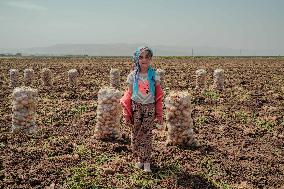
A girl stands next to the bags of potatoes picked by the seasonal farm workers in the farmlands of Amik Plain, located on the Syrian border in Reyhanli district of Hatay, Turkey, on May 23, 2024. Thanks to its climate and fertile soil, farmers grow many crops in all seasons. The fertility of the plain continues to be a source of livelihood for agricultural workers. Apart from the region's people, seasonal workers from different provinces of Eastern and Southeastern Anatolia come to work in specific periods. The majority of the workers are Syrian families. Syrian Arabs and Kurds make up 80 percent of the workers. Workers come to the fields at dawn and work in the scorching heat until the evening. Landowners see young, old, and children as cheap labor with poor working conditions and wages. Child laborers earn 550 Turkish Liras (US$17) a day, while adult laborers earn between 1000 Turkish Liras (US$31) and 1700 Turkish Liras (US$53). Photo by Murat Kocabas/Middle East Images/ABACAPRESS.COM

  •  
Amik Plain Agriculture Workers - Turkey

Amik Plain Agriculture Workers - Turkey

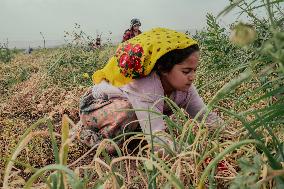
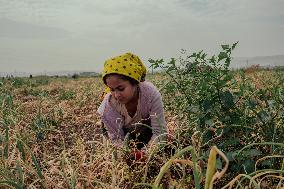
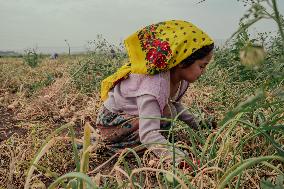
A girl picks onions in the farmlands of Amik Plain, located on the Syrian border in Reyhanli district of Hatay, Turkey, on May 23, 2024. Thanks to its climate and fertile soil, farmers grow many crops in all seasons. The fertility of the plain continues to be a source of livelihood for agricultural workers. Apart from the region's people, seasonal workers from different provinces of Eastern and Southeastern Anatolia come to work in specific periods. The majority of the workers are Syrian families. Syrian Arabs and Kurds make up 80 percent of the workers. Workers come to the fields at dawn and work in the scorching heat until the evening. Landowners see young, old, and children as cheap labor with poor working conditions and wages. Child laborers earn 550 Turkish Liras (US$17) a day, while adult laborers earn between 1000 Turkish Liras (US$31) and 1700 Turkish Liras (US$53). Photo by Murat Kocabas/Middle East Images/ABACAPRESS.COM

  •  
Amik Plain Agriculture Workers - Turkey

Amik Plain Agriculture Workers - Turkey

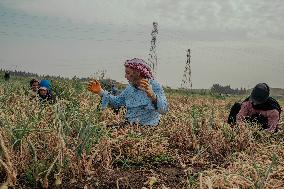
Seasonal farm workers pick onions in the farmlands of Amik Plain, located on the Syrian border in Reyhanli district of Hatay, Turkey, on May 23, 2024. Thanks to its climate and fertile soil, farmers grow many crops in all seasons. The fertility of the plain continues to be a source of livelihood for agricultural workers. Apart from the region's people, seasonal workers from different provinces of Eastern and Southeastern Anatolia come to work in specific periods. The majority of the workers are Syrian families. Syrian Arabs and Kurds make up 80 percent of the workers. Workers come to the fields at dawn and work in the scorching heat until the evening. Landowners see young, old, and children as cheap labor with poor working conditions and wages. Child laborers earn 550 Turkish Liras (US$17) a day, while adult laborers earn between 1000 Turkish Liras (US$31) and 1700 Turkish Liras (US$53). Photo by Murat Kocabas/Middle East Images/ABACAPRESS.COM

  •  
Amik Plain Agriculture Workers - Turkey

Amik Plain Agriculture Workers - Turkey

A girl picks onions in the farmlands of Amik Plain, located on the Syrian border in Reyhanli district of Hatay, Turkey, on May 23, 2024. Thanks to its climate and fertile soil, farmers grow many crops in all seasons. The fertility of the plain continues to be a source of livelihood for agricultural workers. Apart from the region's people, seasonal workers from different provinces of Eastern and Southeastern Anatolia come to work in specific periods. The majority of the workers are Syrian families. Syrian Arabs and Kurds make up 80 percent of the workers. Workers come to the fields at dawn and work in the scorching heat until the evening. Landowners see young, old, and children as cheap labor with poor working conditions and wages. Child laborers earn 550 Turkish Liras (US$17) a day, while adult laborers earn between 1000 Turkish Liras (US$31) and 1700 Turkish Liras (US$53). Photo by Murat Kocabas/Middle East Images/ABACAPRESS.COM

  •  
Amik Plain Agriculture Workers - Turkey

Amik Plain Agriculture Workers - Turkey

A girl picks onions in the farmlands of Amik Plain, located on the Syrian border in Reyhanli district of Hatay, Turkey, on May 23, 2024. Thanks to its climate and fertile soil, farmers grow many crops in all seasons. The fertility of the plain continues to be a source of livelihood for agricultural workers. Apart from the region's people, seasonal workers from different provinces of Eastern and Southeastern Anatolia come to work in specific periods. The majority of the workers are Syrian families. Syrian Arabs and Kurds make up 80 percent of the workers. Workers come to the fields at dawn and work in the scorching heat until the evening. Landowners see young, old, and children as cheap labor with poor working conditions and wages. Child laborers earn 550 Turkish Liras (US$17) a day, while adult laborers earn between 1000 Turkish Liras (US$31) and 1700 Turkish Liras (US$53). Photo by Murat Kocabas/Middle East Images/ABACAPRESS.COM

  •  
Amik Plain Agriculture Workers - Turkey

Amik Plain Agriculture Workers - Turkey

A seasonal farm worker takes a break while working on farm in Amik Plain, located on the Syrian border in Reyhanli district of Hatay, Turkey, on May 23, 2024. Thanks to its climate and fertile soil, farmers grow many crops in all seasons. The fertility of the plain continues to be a source of livelihood for agricultural workers. Apart from the region's people, seasonal workers from different provinces of Eastern and Southeastern Anatolia come to work in specific periods. The majority of the workers are Syrian families. Syrian Arabs and Kurds make up 80 percent of the workers. Workers come to the fields at dawn and work in the scorching heat until the evening. Landowners see young, old, and children as cheap labor with poor working conditions and wages. Child laborers earn 550 Turkish Liras (US$17) a day, while adult laborers earn between 1000 Turkish Liras (US$31) and 1700 Turkish Liras (US$53). Photo by Murat Kocabas/Middle East Images/ABACAPRESS.COM

  • Main
  • Top
  • Editorial
  • Creative
  • About Us
  • About ILG
  • Terms of use
  • Company
  • BEHIND
  • Price List
  • Single Plan
  • Monthly Plan
  • Services
  • Shooting
  • Rights Clearance
  • Support
  • FAQ
  • How To Buy
  • Contact Us
  • Become a Partner

© KYODO NEWS IMAGES INC

All Rights Reserved.

  • Editorial
  • Olympics
  • News
  • Sports
  • Japan
  • Tech
  • Royal
  • Disaster
  • NorthKorea
  • Old Japan
  • SNS
  • Creative
  • Food
  • Japan
  • Landscape
  • Animal
  • Popular
  • #Ukraine
  • #China
  • #coronavirus
  • #N. Korea
  • #Thailand
  • #Russia
  • #Ukraine
  • #China
  • #coronavirus
  • #N. Korea
  • #Thailand
  • #Russia
  • Food
  • Japan
  • Landscape
  • Animal
  • Olympics
  • News
  • Sports
  • Japan
  • Tech
  • Royal
  • Disaster
  • NorthKorea
  • Old Japan
  • SNS