•  
Venomous Lionfish Are Invading The Mediterranean Sea

Venomous Lionfish Are Invading The Mediterranean Sea

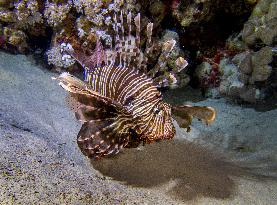
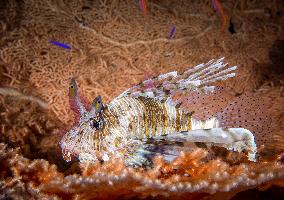
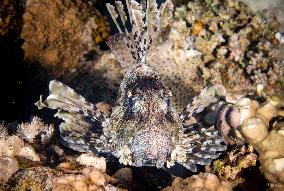
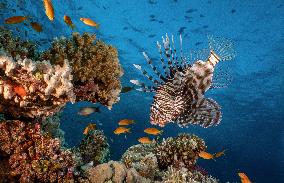
Illustration of a Lion Fish ( Poisson Lion, Pterois antennata) in the Red Sea, Egypt in June 2023. Venomous lionfish are invading the Mediterranean Sea. The lionfish, which originate from the Red Sea, probably entered the Mediterranean through the Suez Canal. Lionfish have no natural predators and reproduce on a massive scale. Photo by Christophe Geyres/ABACAPRESS.COM

  •  
Venomous Lionfish Are Invading The Mediterranean Sea

Venomous Lionfish Are Invading The Mediterranean Sea

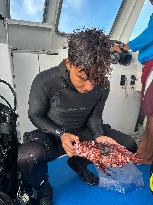
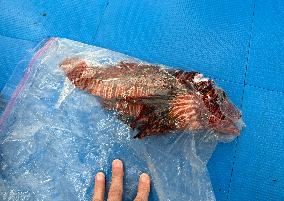
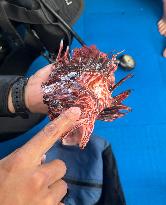
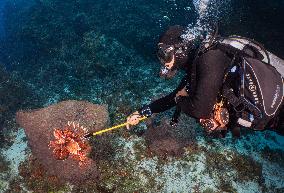
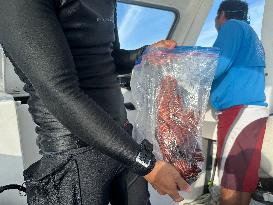
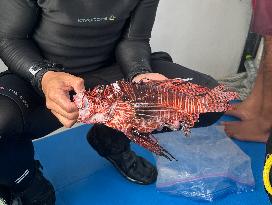
In Cozumel, Mexico, the Lion Fish ( Poisson Lion, Pterois volitans) is also considered invasive; Local dive masters are allowed to kill them. Feb 15 2024. Venomous lionfish are invading the Mediterranean Sea. The lionfish, which originate from the Red Sea, probably entered the Mediterranean through the Suez Canal. Lionfish have no natural predators and reproduce on a massive scale. Photo by Christophe Geyres/ABACAPRESS.COM

  •  
Venomous Lionfish Are Invading The Mediterranean Sea

Venomous Lionfish Are Invading The Mediterranean Sea

In Cozumel, Mexico, the Lion Fish ( Poisson Lion, Pterois volitans) is also considered invasive; Local dive masters are allowed to kill them. Feb 15 2024. Venomous lionfish are invading the Mediterranean Sea. The lionfish, which originate from the Red Sea, probably entered the Mediterranean through the Suez Canal. Lionfish have no natural predators and reproduce on a massive scale. Photo by Christophe Geyres/ABACAPRESS.COM

  •  
Venomous Lionfish Are Invading The Mediterranean Sea

Venomous Lionfish Are Invading The Mediterranean Sea

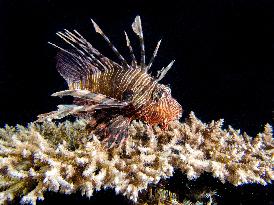
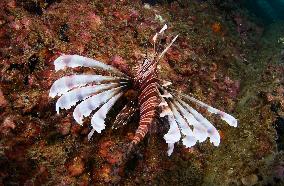
Illustration of a Lion Fish ( Poisson Lion, Pterois miles ) in the Red Sea, Egypt in October 2019. Venomous lionfish are invading the Mediterranean Sea. The lionfish, which originate from the Red Sea, probably entered the Mediterranean through the Suez Canal. Lionfish have no natural predators and reproduce on a massive scale. Photo by Christophe Geyres/ABACAPRESS.COM

  •  
Venomous Lionfish Are Invading The Mediterranean Sea

Venomous Lionfish Are Invading The Mediterranean Sea

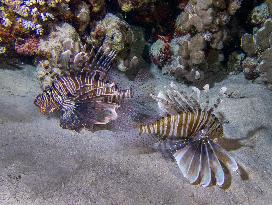
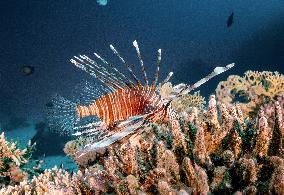
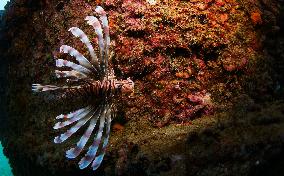
Illustration of a Lion Fish ( Poisson Lion, Pterois volitans) in the Red Sea, Egypt in May 2022. Venomous lionfish are invading the Mediterranean Sea. The lionfish, which originate from the Red Sea, probably entered the Mediterranean through the Suez Canal. Lionfish have no natural predators and reproduce on a massive scale. Photo by Christophe Geyres/ABACAPRESS.COM

  •  
Venomous Lionfish Are Invading The Mediterranean Sea

Venomous Lionfish Are Invading The Mediterranean Sea

In Cozumel, Mexico, the Lion Fish ( Poisson Lion, Pterois volitans) is also considered invasive; Local dive masters are allowed to kill them. Feb 15 2024. Venomous lionfish are invading the Mediterranean Sea. The lionfish, which originate from the Red Sea, probably entered the Mediterranean through the Suez Canal. Lionfish have no natural predators and reproduce on a massive scale. Photo by Christophe Geyres/ABACAPRESS.COM

  •  
Venomous Lionfish Are Invading The Mediterranean Sea

Venomous Lionfish Are Invading The Mediterranean Sea

In Cozumel, Mexico, the Lion Fish ( Poisson Lion, Pterois volitans) is also considered invasive; Local dive masters are allowed to kill them. Feb 15 2024. Venomous lionfish are invading the Mediterranean Sea. The lionfish, which originate from the Red Sea, probably entered the Mediterranean through the Suez Canal. Lionfish have no natural predators and reproduce on a massive scale. Photo by Christophe Geyres/ABACAPRESS.COM

  •  
Venomous Lionfish Are Invading The Mediterranean Sea

Venomous Lionfish Are Invading The Mediterranean Sea

Illustration of a Lion Fish ( Poisson Lion, Pterois volitans) in the Red Sea, Egypt in October 2021. Venomous lionfish are invading the Mediterranean Sea. The lionfish, which originate from the Red Sea, probably entered the Mediterranean through the Suez Canal. Lionfish have no natural predators and reproduce on a massive scale. Photo by Christophe Geyres/ABACAPRESS.COM

  •  
Venomous Lionfish Are Invading The Mediterranean Sea

Venomous Lionfish Are Invading The Mediterranean Sea

Illustration of a Lion Fish ( Poisson Lion, Pterois miles ) in the Red Sea, Egypt in June 2023. Venomous lionfish are invading the Mediterranean Sea. The lionfish, which originate from the Red Sea, probably entered the Mediterranean through the Suez Canal. Lionfish have no natural predators and reproduce on a massive scale. Photo by Christophe Geyres/ABACAPRESS.COM

  •  
Venomous Lionfish Are Invading The Mediterranean Sea

Venomous Lionfish Are Invading The Mediterranean Sea

Illustration of a Lion Fish ( Poisson Lion, Pterois miles ) in the Red Sea, Egypt in October 2019. Venomous lionfish are invading the Mediterranean Sea. The lionfish, which originate from the Red Sea, probably entered the Mediterranean through the Suez Canal. Lionfish have no natural predators and reproduce on a massive scale. Photo by Christophe Geyres/ABACAPRESS.COM

  •  
Venomous Lionfish Are Invading The Mediterranean Sea

Venomous Lionfish Are Invading The Mediterranean Sea

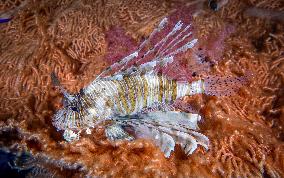
Illustration of a Lion Fish ( Poisson Lion, Pterois miles ) in the Red Sea, Egypt in June 2023. Venomous lionfish are invading the Mediterranean Sea. The lionfish, which originate from the Red Sea, probably entered the Mediterranean through the Suez Canal. Lionfish have no natural predators and reproduce on a massive scale. Photo by Christophe Geyres/ABACAPRESS.COM

  •  
Venomous Lionfish Are Invading The Mediterranean Sea

Venomous Lionfish Are Invading The Mediterranean Sea

Illustration of a Lion Fish ( Poisson Lion, Pterois miles ) in the Red Sea, Egypt in June 2023. Venomous lionfish are invading the Mediterranean Sea. The lionfish, which originate from the Red Sea, probably entered the Mediterranean through the Suez Canal. Lionfish have no natural predators and reproduce on a massive scale. Photo by Christophe Geyres/ABACAPRESS.COM

  •  
Venomous Lionfish Are Invading The Mediterranean Sea

Venomous Lionfish Are Invading The Mediterranean Sea

In Cozumel, Mexico, the Lion Fish ( Poisson Lion, Pterois volitans) is also considered invasive; Local dive masters are allowed to kill them. Feb 15 2024. Venomous lionfish are invading the Mediterranean Sea. The lionfish, which originate from the Red Sea, probably entered the Mediterranean through the Suez Canal. Lionfish have no natural predators and reproduce on a massive scale. Photo by Christophe Geyres/ABACAPRESS.COM

  •  
Venomous Lionfish Are Invading The Mediterranean Sea

Venomous Lionfish Are Invading The Mediterranean Sea

Illustration of a Lion Fish ( Poisson Lion, Pterois volitans) in the Red Sea, Egypt in October 2020. Venomous lionfish are invading the Mediterranean Sea. The lionfish, which originate from the Red Sea, probably entered the Mediterranean through the Suez Canal. Lionfish have no natural predators and reproduce on a massive scale. Photo by Christophe Geyres/ABACAPRESS.COM

  •  
Venomous Lionfish Are Invading The Mediterranean Sea

Venomous Lionfish Are Invading The Mediterranean Sea

Illustration of a Lion Fish ( Poisson Lion, Pterois volitans) in the Red Sea, Egypt in October 2020. Venomous lionfish are invading the Mediterranean Sea. The lionfish, which originate from the Red Sea, probably entered the Mediterranean through the Suez Canal. Lionfish have no natural predators and reproduce on a massive scale. Photo by Christophe Geyres/ABACAPRESS.COM

  •  
Venomous Lionfish Are Invading The Mediterranean Sea

Venomous Lionfish Are Invading The Mediterranean Sea

Illustration of a Lion Fish ( Poisson Lion, Pterois volitans) in the Red Sea, Egypt in October 2021. Venomous lionfish are invading the Mediterranean Sea. The lionfish, which originate from the Red Sea, probably entered the Mediterranean through the Suez Canal. Lionfish have no natural predators and reproduce on a massive scale. Photo by Christophe Geyres/ABACAPRESS.COM

  •  
Venomous Lionfish Are Invading The Mediterranean Sea

Venomous Lionfish Are Invading The Mediterranean Sea

In Cozumel, Mexico, the Lion Fish ( Poisson Lion, Pterois volitans) is also considered invasive; Local dive masters are allowed to kill them. Feb 15 2024. Venomous lionfish are invading the Mediterranean Sea. The lionfish, which originate from the Red Sea, probably entered the Mediterranean through the Suez Canal. Lionfish have no natural predators and reproduce on a massive scale. Photo by Christophe Geyres/ABACAPRESS.COM

  •  
Venomous Lionfish Are Invading The Mediterranean Sea

Venomous Lionfish Are Invading The Mediterranean Sea

Illustration of a Lion Fish ( Poisson Lion, Pterois volitans) in the Red Sea, Egypt in June 2023. Venomous lionfish are invading the Mediterranean Sea. The lionfish, which originate from the Red Sea, probably entered the Mediterranean through the Suez Canal. Lionfish have no natural predators and reproduce on a massive scale. Photo by Christophe Geyres/ABACAPRESS.COM

  •  
CHINA-HAINAN-SANYA-MARINE RANCH-DEVELOPMENT (CN)

CHINA-HAINAN-SANYA-MARINE RANCH-DEVELOPMENT (CN)

(240521) -- SANYA(HAINAN), May 21, 2024 (Xinhua) -- A lionfish is pictured in the Wuzhizhou Island's marine ranch in Sanya, south China's Hainan Province, May 17, 2024. Wuzhizhou Island's marine ranch, China's first tropical marine ranch, has made remarkable strides in marine ecological restoration and fishery resource conservation. Artificial reefs are utilized worldwide to enhance ocean ecology, by creating additional habitats for local aquatic organisms and fish. As of April 2024, the marine ranch has deployed approximately 80,000 cubic meters of artificial reefs and ship-reefs. These efforts have created a thriving marine ecosystem, complete with coral reefs, fish, shrimp and shellfish. Statistics reveal that over 51,000 corals have been successfully transplanted in the waters around Wuzhizhou Island. The area is now home to more than 300 species of coral reef fish, showcasing the rich biodiversity that has been nurtured through these conservation efforts. (Xinhua/Yang Guanyu)

  •  
CHINA-HAINAN-SANYA-MARINE RANCH-DEVELOPMENT (CN)

CHINA-HAINAN-SANYA-MARINE RANCH-DEVELOPMENT (CN)

(240521) -- SANYA(HAINAN), May 21, 2024 (Xinhua) -- A lionfish is pictured in the Wuzhizhou Island's marine ranch in Sanya, south China's Hainan Province, May 17, 2024. Wuzhizhou Island's marine ranch, China's first tropical marine ranch, has made remarkable strides in marine ecological restoration and fishery resource conservation. Artificial reefs are utilized worldwide to enhance ocean ecology, by creating additional habitats for local aquatic organisms and fish. As of April 2024, the marine ranch has deployed approximately 80,000 cubic meters of artificial reefs and ship-reefs. These efforts have created a thriving marine ecosystem, complete with coral reefs, fish, shrimp and shellfish. Statistics reveal that over 51,000 corals have been successfully transplanted in the waters around Wuzhizhou Island. The area is now home to more than 300 species of coral reef fish, showcasing the rich biodiversity that has been nurtured through these conservation efforts. (Xinhua/Yang Guanyu)

  • Main
  • Top
  • Editorial
  • Creative
  • About Us
  • About ILG
  • Terms of use
  • Company
  • BEHIND
  • Price List
  • Single Plan
  • Monthly Plan
  • Services
  • Shooting
  • Rights Clearance
  • Support
  • FAQ
  • How To Buy
  • Contact Us
  • Become a Partner

© KYODO NEWS IMAGES INC

All Rights Reserved.

  • Editorial
  • Olympics
  • News
  • Sports
  • Japan
  • Tech
  • Royal
  • Disaster
  • NorthKorea
  • Old Japan
  • SNS
  • Creative
  • Food
  • Japan
  • Landscape
  • Animal
  • Popular
  • #Ukraine
  • #Thailand
  • #coronavirus
  • #N. Korea
  • #Russia
  • #China
  • #Ukraine
  • #Thailand
  • #coronavirus
  • #N. Korea
  • #Russia
  • #China
  • Food
  • Japan
  • Landscape
  • Animal
  • Olympics
  • News
  • Sports
  • Japan
  • Tech
  • Royal
  • Disaster
  • NorthKorea
  • Old Japan
  • SNS