•  
High-Quality Compost Production In Patumbak - Indonesia

High-Quality Compost Production In Patumbak - Indonesia

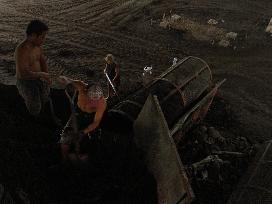
The activities of workers at PT Nousindo Nusatara Agri's compost processing plant are visible during the final process of material filtration in Patumbak, Deli Serdang, North Sumatra, Indonesia, on October 30, 2025. This deployment of heavy equipment is crucial for achieving the high production volume required to efficiently convert local livestock waste into thousands of tons of ready-to-use organic fertiliser, ensuring the industry can meet the substantial demand from local farming communities. Photo by Aditya Sutanta/ABACAPRESS.COM

  •  
Women Pluck Tea Leaves in Siliguri - India

Women Pluck Tea Leaves in Siliguri - India

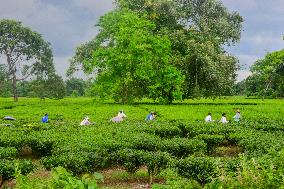
Female tea garden workers pluck tea leaves at Dagapur Tea Garden near Siliguri, India, on July 4, 2025. Dressed in traditional clothing and carrying baskets, they work under the morning sun amid lush plantations. The Siliguri region, in the Himalayan foothills, is known for tea production that supports local livelihoods and India’s export economy. Despite their crucial role, tea workers often face low wages and tough conditions, highlighting ongoing calls for labor reform. Photo by Diptendu Dutta/Middle East Images/ABACAPRESS.COM

  •  
Women Pluck Tea Leaves in Siliguri - India

Women Pluck Tea Leaves in Siliguri - India

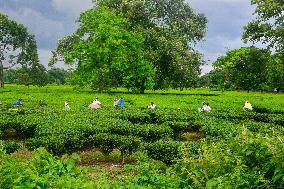
Female tea garden workers pluck tea leaves at Dagapur Tea Garden near Siliguri, India, on July 4, 2025. Dressed in traditional clothing and carrying baskets, they work under the morning sun amid lush plantations. The Siliguri region, in the Himalayan foothills, is known for tea production that supports local livelihoods and India’s export economy. Despite their crucial role, tea workers often face low wages and tough conditions, highlighting ongoing calls for labor reform. Photo by Diptendu Dutta/Middle East Images/ABACAPRESS.COM

  •  
Salt Harvest Declines Sharply - Iraq

Salt Harvest Declines Sharply - Iraq

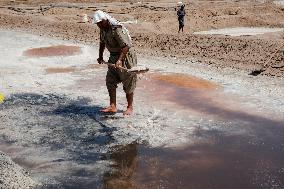
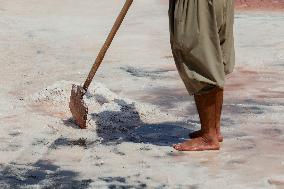
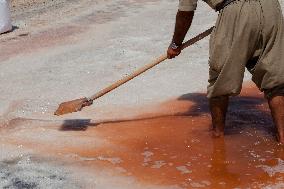
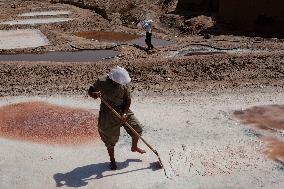
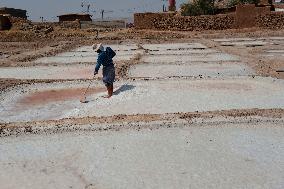
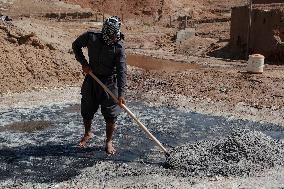
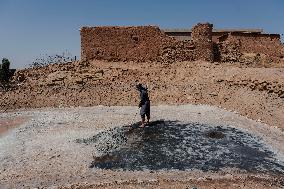
A worker uses a tool to scrape salt from a drying pond in Garmian, southwest of Sulaymaniyah, Iraq, on August 15, 2025. In the plains of Garmian, hundreds of residents continue an ancient salt-harvesting trade once known as "white gold." Production has sharply declined, with ponds now yielding less than a third of their former output, leaving villagers struggling against harsh natural conditions and poor infrastructure. Local harvester Peshkewt Saadoun explains that they collect two types of salt—coarse and fine—and notes that annual production has fallen from 800–900 tons in the past to about 250 tons today. Photo by Gailan Haji/Middle East Images/ABACAPRESS.COM

  •  
Salt Harvest Declines Sharply - Iraq

Salt Harvest Declines Sharply - Iraq

A worker uses a tool to scrape salt from a drying pond in Garmian, southwest of Sulaymaniyah, Iraq, on August 15, 2025. In the plains of Garmian, hundreds of residents continue an ancient salt-harvesting trade once known as "white gold." Production has sharply declined, with ponds now yielding less than a third of their former output, leaving villagers struggling against harsh natural conditions and poor infrastructure. Local harvester Peshkewt Saadoun explains that they collect two types of salt—coarse and fine—and notes that annual production has fallen from 800–900 tons in the past to about 250 tons today. Photo by Gailan Haji/Middle East Images/ABACAPRESS.COM

  •  
Salt Harvest Declines Sharply - Iraq

Salt Harvest Declines Sharply - Iraq

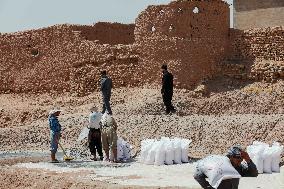
Men work around salt ponds in Garmian, southwest of Sulaymaniyah, Iraq, on August 15, 2025. In the plains of Garmian, hundreds of residents continue an ancient salt-harvesting trade once known as "white gold." Production has sharply declined, with ponds now yielding less than a third of their former output, leaving villagers struggling against harsh natural conditions and poor infrastructure. Local harvester Peshkewt Saadoun explains that they collect two types of salt—coarse and fine—and notes that annual production has fallen from 800–900 tons in the past to about 250 tons today. Photo by Gailan Haji/Middle East Images/ABACAPRESS.COM

  •  
Salt Harvest Declines Sharply - Iraq

Salt Harvest Declines Sharply - Iraq

A worker uses a tool to scrape salt from a drying pond in Garmian, southwest of Sulaymaniyah, Iraq, on August 15, 2025. In the plains of Garmian, hundreds of residents continue an ancient salt-harvesting trade once known as "white gold." Production has sharply declined, with ponds now yielding less than a third of their former output, leaving villagers struggling against harsh natural conditions and poor infrastructure. Local harvester Peshkewt Saadoun explains that they collect two types of salt—coarse and fine—and notes that annual production has fallen from 800–900 tons in the past to about 250 tons today. Photo by Gailan Haji/Middle East Images/ABACAPRESS.COM

  •  
Salt Harvest Declines Sharply - Iraq

Salt Harvest Declines Sharply - Iraq

A worker uses a tool to scrape salt from a drying pond in Garmian, southwest of Sulaymaniyah, Iraq, on August 15, 2025. In the plains of Garmian, hundreds of residents continue an ancient salt-harvesting trade once known as "white gold." Production has sharply declined, with ponds now yielding less than a third of their former output, leaving villagers struggling against harsh natural conditions and poor infrastructure. Local harvester Peshkewt Saadoun explains that they collect two types of salt—coarse and fine—and notes that annual production has fallen from 800–900 tons in the past to about 250 tons today. Photo by Gailan Haji/Middle East Images/ABACAPRESS.COM

  •  
Salt Harvest Declines Sharply - Iraq

Salt Harvest Declines Sharply - Iraq

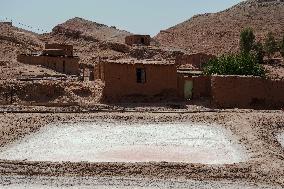
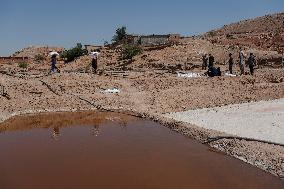
A salt pond lies in front of mud-brick homes in Garmian, southwest of Sulaymaniyah, Iraq, on August 15, 2025. In the plains of Garmian, hundreds of residents continue an ancient salt-harvesting trade once known as "white gold." Production has sharply declined, with ponds now yielding less than a third of their former output, leaving villagers struggling against harsh natural conditions and poor infrastructure. Local harvester Peshkewt Saadoun explains that they collect two types of salt—coarse and fine—and notes that annual production has fallen from 800–900 tons in the past to about 250 tons today. Photo by Gailan Haji/Middle East Images/ABACAPRESS.COM

  •  
Salt Harvest Declines Sharply - Iraq

Salt Harvest Declines Sharply - Iraq

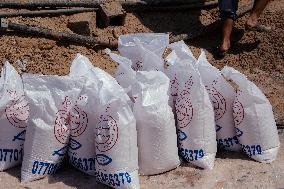
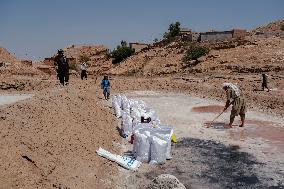
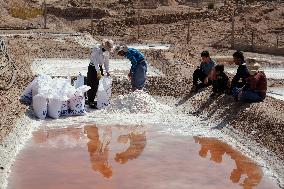
Bags of refined salt are stacked beside the ponds in Garmian, Iraqi Kurdistan, on August 15, 2025. In the plains of Garmian, hundreds of residents continue an ancient salt-harvesting trade once known as "white gold." Production has sharply declined, with ponds now yielding less than a third of their former output, leaving villagers struggling against harsh natural conditions and poor infrastructure. Local harvester Peshkewt Saadoun explains that they collect two types of salt—coarse and fine—and notes that annual production has fallen from 800–900 tons in the past to about 250 tons today. Photo by Gailan Haji/Middle East Images/ABACAPRESS.COM

  •  
Salt Harvest Declines Sharply - Iraq

Salt Harvest Declines Sharply - Iraq

A worker uses a tool to scrape salt from a drying pond in Garmian, southwest of Sulaymaniyah, Iraq, on August 15, 2025. In the plains of Garmian, hundreds of residents continue an ancient salt-harvesting trade once known as "white gold." Production has sharply declined, with ponds now yielding less than a third of their former output, leaving villagers struggling against harsh natural conditions and poor infrastructure. Local harvester Peshkewt Saadoun explains that they collect two types of salt—coarse and fine—and notes that annual production has fallen from 800–900 tons in the past to about 250 tons today. Photo by Gailan Haji/Middle East Images/ABACAPRESS.COM

  •  
Salt Harvest Declines Sharply - Iraq

Salt Harvest Declines Sharply - Iraq

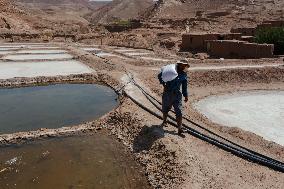
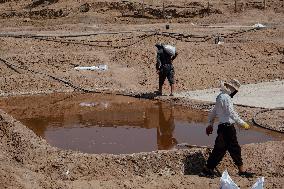
A worker carries a sack of salt across the ponds in Garmian, southwest of Sulaymaniyah, Iraq, on August 15, 2025. In the plains of Garmian, hundreds of residents continue an ancient salt-harvesting trade once known as "white gold." Production has sharply declined, with ponds now yielding less than a third of their former output, leaving villagers struggling against harsh natural conditions and poor infrastructure. Local harvester Peshkewt Saadoun explains that they collect two types of salt—coarse and fine—and notes that annual production has fallen from 800–900 tons in the past to about 250 tons today. Photo by Gailan Haji/Middle East Images/ABACAPRESS.COM

  •  
Salt Harvest Declines Sharply - Iraq

Salt Harvest Declines Sharply - Iraq

Men work around salt ponds in Garmian, southwest of Sulaymaniyah, Iraq, on August 15, 2025. In the plains of Garmian, hundreds of residents continue an ancient salt-harvesting trade once known as "white gold." Production has sharply declined, with ponds now yielding less than a third of their former output, leaving villagers struggling against harsh natural conditions and poor infrastructure. Local harvester Peshkewt Saadoun explains that they collect two types of salt—coarse and fine—and notes that annual production has fallen from 800–900 tons in the past to about 250 tons today. Photo by Gailan Haji/Middle East Images/ABACAPRESS.COM

  •  
Salt Harvest Declines Sharply - Iraq

Salt Harvest Declines Sharply - Iraq

Men work around salt ponds in Garmian, southwest of Sulaymaniyah, Iraq, on August 15, 2025. In the plains of Garmian, hundreds of residents continue an ancient salt-harvesting trade once known as "white gold." Production has sharply declined, with ponds now yielding less than a third of their former output, leaving villagers struggling against harsh natural conditions and poor infrastructure. Local harvester Peshkewt Saadoun explains that they collect two types of salt—coarse and fine—and notes that annual production has fallen from 800–900 tons in the past to about 250 tons today. Photo by Gailan Haji/Middle East Images/ABACAPRESS.COM

  •  
Salt Harvest Declines Sharply - Iraq

Salt Harvest Declines Sharply - Iraq

A worker uses a tool to scrape salt from a drying pond in Garmian, southwest of Sulaymaniyah, Iraq, on August 15, 2025. In the plains of Garmian, hundreds of residents continue an ancient salt-harvesting trade once known as "white gold." Production has sharply declined, with ponds now yielding less than a third of their former output, leaving villagers struggling against harsh natural conditions and poor infrastructure. Local harvester Peshkewt Saadoun explains that they collect two types of salt—coarse and fine—and notes that annual production has fallen from 800–900 tons in the past to about 250 tons today. Photo by Gailan Haji/Middle East Images/ABACAPRESS.COM

  •  
Salt Harvest Declines Sharply - Iraq

Salt Harvest Declines Sharply - Iraq

A worker uses a tool to scrape salt from a drying pond in Garmian, southwest of Sulaymaniyah, Iraq, on August 15, 2025. In the plains of Garmian, hundreds of residents continue an ancient salt-harvesting trade once known as "white gold." Production has sharply declined, with ponds now yielding less than a third of their former output, leaving villagers struggling against harsh natural conditions and poor infrastructure. Local harvester Peshkewt Saadoun explains that they collect two types of salt—coarse and fine—and notes that annual production has fallen from 800–900 tons in the past to about 250 tons today. Photo by Gailan Haji/Middle East Images/ABACAPRESS.COM

  •  
Salt Harvest Declines Sharply - Iraq

Salt Harvest Declines Sharply - Iraq

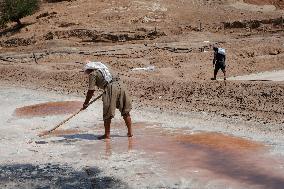
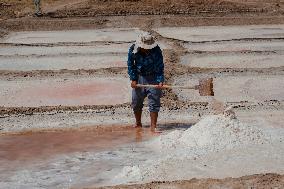
A worker uses a wooden tool to scrape salt from a drying pond in Garmian, southwest of Sulaymaniyah, Iraq, on August 15, 2025. In the plains of Garmian, hundreds of residents continue an ancient salt-harvesting trade once known as "white gold." Production has sharply declined, with ponds now yielding less than a third of their former output, leaving villagers struggling against harsh natural conditions and poor infrastructure. Local harvester Peshkewt Saadoun explains that they collect two types of salt—coarse and fine—and notes that annual production has fallen from 800–900 tons in the past to about 250 tons today. Photo by Gailan Haji/Middle East Images/ABACAPRESS.COM

  •  
Salt Harvest Declines Sharply - Iraq

Salt Harvest Declines Sharply - Iraq

Reflections of workers appear on the surface of a salt pond in Garmian, Iraqi Kurdistan, on August 15, 2025. In the plains of Garmian, hundreds of residents continue an ancient salt-harvesting trade once known as "white gold." Production has sharply declined, with ponds now yielding less than a third of their former output, leaving villagers struggling against harsh natural conditions and poor infrastructure. Local harvester Peshkewt Saadoun explains that they collect two types of salt—coarse and fine—and notes that annual production has fallen from 800–900 tons in the past to about 250 tons today. Photo by Gailan Haji/Middle East Images/ABACAPRESS.COM

  •  
Salt Harvest Declines Sharply - Iraq

Salt Harvest Declines Sharply - Iraq

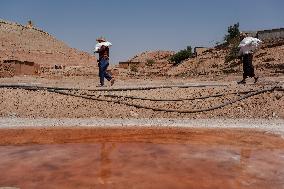
Workers carry salt bags past salt ponds in Khwelin village, southwest of Sulaymaniyah, Iraq, on August 15, 2025. In the plains of Garmian, hundreds of residents continue an ancient salt-harvesting trade once known as "white gold." Production has sharply declined, with ponds now yielding less than a third of their former output, leaving villagers struggling against harsh natural conditions and poor infrastructure. Local harvester Peshkewt Saadoun explains that they collect two types of salt—coarse and fine—and notes that annual production has fallen from 800–900 tons in the past to about 250 tons today. Photo by Gailan Haji/Middle East Images/ABACAPRESS.COM

  •  
Salt Harvest Declines Sharply - Iraq

Salt Harvest Declines Sharply - Iraq

A worker uses a wooden tool to scrape salt from a drying pond in Garmian, southwest of Sulaymaniyah, Iraq, on August 15, 2025. In the plains of Garmian, hundreds of residents continue an ancient salt-harvesting trade once known as "white gold." Production has sharply declined, with ponds now yielding less than a third of their former output, leaving villagers struggling against harsh natural conditions and poor infrastructure. Local harvester Peshkewt Saadoun explains that they collect two types of salt—coarse and fine—and notes that annual production has fallen from 800–900 tons in the past to about 250 tons today. Photo by Gailan Haji/Middle East Images/ABACAPRESS.COM

  •  
Salt Harvest Declines Sharply - Iraq

Salt Harvest Declines Sharply - Iraq

Villagers collect and bag salt in Garmian, Iraqi Kurdistan, on August 15, 2025. In the plains of Garmian, hundreds of residents continue an ancient salt-harvesting trade once known as "white gold." Production has sharply declined, with ponds now yielding less than a third of their former output, leaving villagers struggling against harsh natural conditions and poor infrastructure. Local harvester Peshkewt Saadoun explains that they collect two types of salt—coarse and fine—and notes that annual production has fallen from 800–900 tons in the past to about 250 tons today. Photo by Gailan Haji/Middle East Images/ABACAPRESS.COM

  •  
Salt Harvest Declines Sharply - Iraq

Salt Harvest Declines Sharply - Iraq

Workers carry salt bags past salt ponds in Khwelin village, southwest of Sulaymaniyah, Iraq, on August 15, 2025. In the plains of Garmian, hundreds of residents continue an ancient salt-harvesting trade once known as "white gold." Production has sharply declined, with ponds now yielding less than a third of their former output, leaving villagers struggling against harsh natural conditions and poor infrastructure. Local harvester Peshkewt Saadoun explains that they collect two types of salt—coarse and fine—and notes that annual production has fallen from 800–900 tons in the past to about 250 tons today. Photo by Gailan Haji/Middle East Images/ABACAPRESS.COM

  •  
Jasmine Flower Industry in Guangxi - China

Jasmine Flower Industry in Guangxi - China

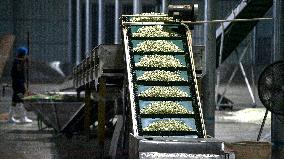
A production line of jasmine tea is pictured at a local tea plant in Hengzhou City, south China's Guangxi Zhuang Autonomous Region, on July 31, 2025. Hengzhou, dubbed the "hometown of jasmine in China," is home to some 340,000 jasmine flower farmers and over 180,000 mu (12,000 hectares) of jasmine fields. In recent years, the city has promoted the development of a whole industrial chain covering jasmine planting, processing and cultural tourism. Photo by Huang Xiaobang/Xinhua/ABACAPRESS.COM

  •  
Kashmiri Farmers Dry Almonds in Harvest Season - India

Kashmiri Farmers Dry Almonds in Harvest Season - India

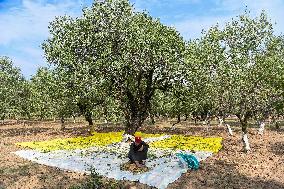
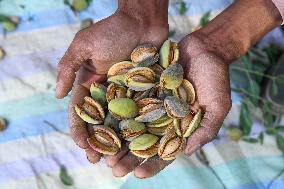
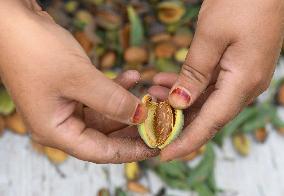
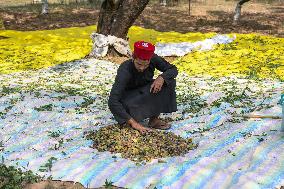
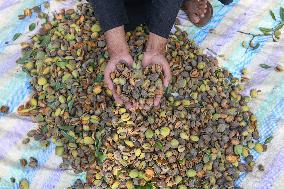
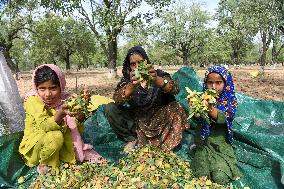
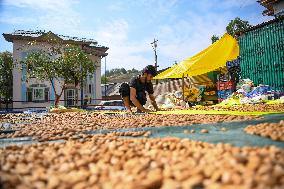
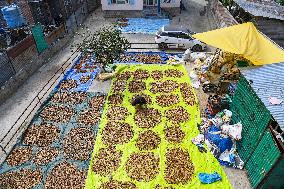
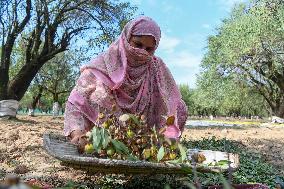
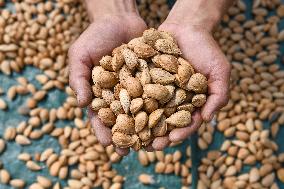
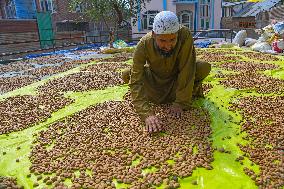
A Kashmiri farmer dries almonds during the harvesting season at a village in Pulwama district, south of Srinagar, on August 3, 2025. Almond cultivation is a key agricultural activity in the Kashmir Valley, contributing to the livelihoods of thousands of families. After harvesting, almonds are spread out under the sun to dry, a traditional method used to preserve and prepare the nuts for local markets and export. The season is labor-intensive, requiring manual effort for collection, sorting, and sun-drying. Despite challenges from erratic weather and limited infrastructure, farmers in the region continue to rely on almond production as a vital source of income. The annual harvest is also a symbol of rural resilience and cultural heritage in this conflict-affected region of northern India. Photo by Middle East Images/ABACAPRESS.COM

  •  
Kashmiri Farmers Dry Almonds in Harvest Season - India

Kashmiri Farmers Dry Almonds in Harvest Season - India

A Kashmiri farmer dries almonds during the harvesting season at a village in Pulwama district, south of Srinagar, on August 3, 2025. Almond cultivation is a key agricultural activity in the Kashmir Valley, contributing to the livelihoods of thousands of families. After harvesting, almonds are spread out under the sun to dry, a traditional method used to preserve and prepare the nuts for local markets and export. The season is labor-intensive, requiring manual effort for collection, sorting, and sun-drying. Despite challenges from erratic weather and limited infrastructure, farmers in the region continue to rely on almond production as a vital source of income. The annual harvest is also a symbol of rural resilience and cultural heritage in this conflict-affected region of northern India. Photo by Middle East Images/ABACAPRESS.COM

  •  
Kashmiri Farmers Dry Almonds in Harvest Season - India

Kashmiri Farmers Dry Almonds in Harvest Season - India

A Kashmiri farmer dries almonds during the harvesting season at a village in Pulwama district, south of Srinagar, on August 3, 2025. Almond cultivation is a key agricultural activity in the Kashmir Valley, contributing to the livelihoods of thousands of families. After harvesting, almonds are spread out under the sun to dry, a traditional method used to preserve and prepare the nuts for local markets and export. The season is labor-intensive, requiring manual effort for collection, sorting, and sun-drying. Despite challenges from erratic weather and limited infrastructure, farmers in the region continue to rely on almond production as a vital source of income. The annual harvest is also a symbol of rural resilience and cultural heritage in this conflict-affected region of northern India. Photo by Middle East Images/ABACAPRESS.COM

  •  
Kashmiri Farmers Dry Almonds in Harvest Season - India

Kashmiri Farmers Dry Almonds in Harvest Season - India

A Kashmiri farmer dries almonds during the harvesting season at a village in Pulwama district, south of Srinagar, on August 3, 2025. Almond cultivation is a key agricultural activity in the Kashmir Valley, contributing to the livelihoods of thousands of families. After harvesting, almonds are spread out under the sun to dry, a traditional method used to preserve and prepare the nuts for local markets and export. The season is labor-intensive, requiring manual effort for collection, sorting, and sun-drying. Despite challenges from erratic weather and limited infrastructure, farmers in the region continue to rely on almond production as a vital source of income. The annual harvest is also a symbol of rural resilience and cultural heritage in this conflict-affected region of northern India. Photo by Middle East Images/ABACAPRESS.COM

  •  
Kashmiri Farmers Dry Almonds in Harvest Season - India

Kashmiri Farmers Dry Almonds in Harvest Season - India

A Kashmiri farmer dries almonds during the harvesting season at a village in Pulwama district, south of Srinagar, on August 3, 2025. Almond cultivation is a key agricultural activity in the Kashmir Valley, contributing to the livelihoods of thousands of families. After harvesting, almonds are spread out under the sun to dry, a traditional method used to preserve and prepare the nuts for local markets and export. The season is labor-intensive, requiring manual effort for collection, sorting, and sun-drying. Despite challenges from erratic weather and limited infrastructure, farmers in the region continue to rely on almond production as a vital source of income. The annual harvest is also a symbol of rural resilience and cultural heritage in this conflict-affected region of northern India. Photo by Middle East Images/ABACAPRESS.COM

  •  
Kashmiri Farmers Dry Almonds in Harvest Season - India

Kashmiri Farmers Dry Almonds in Harvest Season - India

A Kashmiri farmer dries almonds during the harvesting season at a village in Pulwama district, south of Srinagar, on August 3, 2025. Almond cultivation is a key agricultural activity in the Kashmir Valley, contributing to the livelihoods of thousands of families. After harvesting, almonds are spread out under the sun to dry, a traditional method used to preserve and prepare the nuts for local markets and export. The season is labor-intensive, requiring manual effort for collection, sorting, and sun-drying. Despite challenges from erratic weather and limited infrastructure, farmers in the region continue to rely on almond production as a vital source of income. The annual harvest is also a symbol of rural resilience and cultural heritage in this conflict-affected region of northern India. Photo by Middle East Images/ABACAPRESS.COM

  •  
Kashmiri Farmers Dry Almonds in Harvest Season - India

Kashmiri Farmers Dry Almonds in Harvest Season - India

A Kashmiri farmer dries almonds during the harvesting season at a village in Pulwama district, south of Srinagar, on August 3, 2025. Almond cultivation is a key agricultural activity in the Kashmir Valley, contributing to the livelihoods of thousands of families. After harvesting, almonds are spread out under the sun to dry, a traditional method used to preserve and prepare the nuts for local markets and export. The season is labor-intensive, requiring manual effort for collection, sorting, and sun-drying. Despite challenges from erratic weather and limited infrastructure, farmers in the region continue to rely on almond production as a vital source of income. The annual harvest is also a symbol of rural resilience and cultural heritage in this conflict-affected region of northern India. Photo by Middle East Images/ABACAPRESS.COM

  •  
Kashmiri Farmers Dry Almonds in Harvest Season - India

Kashmiri Farmers Dry Almonds in Harvest Season - India

A Kashmiri farmer dries almonds during the harvesting season at a village in Pulwama district, south of Srinagar, on August 3, 2025. Almond cultivation is a key agricultural activity in the Kashmir Valley, contributing to the livelihoods of thousands of families. After harvesting, almonds are spread out under the sun to dry, a traditional method used to preserve and prepare the nuts for local markets and export. The season is labor-intensive, requiring manual effort for collection, sorting, and sun-drying. Despite challenges from erratic weather and limited infrastructure, farmers in the region continue to rely on almond production as a vital source of income. The annual harvest is also a symbol of rural resilience and cultural heritage in this conflict-affected region of northern India. Photo by Middle East Images/ABACAPRESS.COM

  •  
Kashmiri Farmers Dry Almonds in Harvest Season - India

Kashmiri Farmers Dry Almonds in Harvest Season - India

A Kashmiri farmer dries almonds during the harvesting season at a village in Pulwama district, south of Srinagar, on August 3, 2025. Almond cultivation is a key agricultural activity in the Kashmir Valley, contributing to the livelihoods of thousands of families. After harvesting, almonds are spread out under the sun to dry, a traditional method used to preserve and prepare the nuts for local markets and export. The season is labor-intensive, requiring manual effort for collection, sorting, and sun-drying. Despite challenges from erratic weather and limited infrastructure, farmers in the region continue to rely on almond production as a vital source of income. The annual harvest is also a symbol of rural resilience and cultural heritage in this conflict-affected region of northern India. Photo by Middle East Images/ABACAPRESS.COM

  •  
Kashmiri Farmers Dry Almonds in Harvest Season - India

Kashmiri Farmers Dry Almonds in Harvest Season - India

A Kashmiri farmer dries almonds during the harvesting season at a village in Pulwama district, south of Srinagar, on August 3, 2025. Almond cultivation is a key agricultural activity in the Kashmir Valley, contributing to the livelihoods of thousands of families. After harvesting, almonds are spread out under the sun to dry, a traditional method used to preserve and prepare the nuts for local markets and export. The season is labor-intensive, requiring manual effort for collection, sorting, and sun-drying. Despite challenges from erratic weather and limited infrastructure, farmers in the region continue to rely on almond production as a vital source of income. The annual harvest is also a symbol of rural resilience and cultural heritage in this conflict-affected region of northern India. Photo by Middle East Images/ABACAPRESS.COM

  •  
Kashmiri Farmers Dry Almonds in Harvest Season - India

Kashmiri Farmers Dry Almonds in Harvest Season - India

A Kashmiri farmer dries almonds during the harvesting season at a village in Pulwama district, south of Srinagar, on August 3, 2025. Almond cultivation is a key agricultural activity in the Kashmir Valley, contributing to the livelihoods of thousands of families. After harvesting, almonds are spread out under the sun to dry, a traditional method used to preserve and prepare the nuts for local markets and export. The season is labor-intensive, requiring manual effort for collection, sorting, and sun-drying. Despite challenges from erratic weather and limited infrastructure, farmers in the region continue to rely on almond production as a vital source of income. The annual harvest is also a symbol of rural resilience and cultural heritage in this conflict-affected region of northern India. Photo by Middle East Images/ABACAPRESS.COM

  •  
Violin Family Manufacturing - China

Violin Family Manufacturing - China

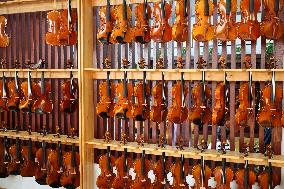
This photo taken on July 24, 2025 shows musical instruments on display at an enterprise in Queshan Violin Industrial Park, Queshan County of Zhumadian City, central China's Henan Province. In recent years, Queshan County has developed a complete industrial chain of the violin family manufacturing from raw material processing to instrument and accessories production. Local production accounts for more than 40 percent of the country's total output and the products are exported to European and American markets. During the War of Resistance against Japanese Aggression, Zhugou Township in Queshan County was once a key anti-Japanese base, and now the county is pursuing its development in modern manufacturing. Photo by Xinhua/Zhu Weixi/ABACAPRESS.COM

  •  
Violin Family Manufacturing - China

Violin Family Manufacturing - China

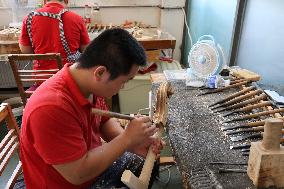
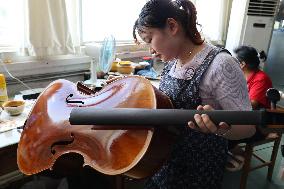
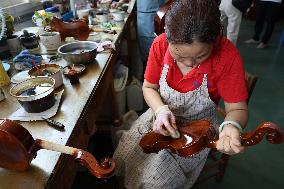
A worker works at a workshop in Queshan Violin Industrial Park, Queshan County of Zhumadian City, central China's Henan Province, July 24, 2025. In recent years, Queshan County has developed a complete industrial chain of the violin family manufacturing from raw material processing to instrument and accessories production. Local production accounts for more than 40 percent of the country's total output and the products are exported to European and American markets. During the War of Resistance against Japanese Aggression, Zhugou Township in Queshan County was once a key anti-Japanese base, and now the county is pursuing its development in modern manufacturing. Photo by Xinhua/Zhu Weixi/ABACAPRESS.COM

  •  
Violin Family Manufacturing - China

Violin Family Manufacturing - China

This photo taken on July 24, 2025 shows musical instruments on display at an enterprise in Queshan Violin Industrial Park, Queshan County of Zhumadian City, central China's Henan Province. In recent years, Queshan County has developed a complete industrial chain of the violin family manufacturing from raw material processing to instrument and accessories production. Local production accounts for more than 40 percent of the country's total output and the products are exported to European and American markets. During the War of Resistance against Japanese Aggression, Zhugou Township in Queshan County was once a key anti-Japanese base, and now the county is pursuing its development in modern manufacturing. Photo by Xinhua/Zhu Weixi/ABACAPRESS.COM

  •  
Violin Family Manufacturing - China

Violin Family Manufacturing - China

This photo taken on July 24, 2025 shows musical instruments on display at an enterprise in Queshan Violin Industrial Park, Queshan County of Zhumadian City, central China's Henan Province. In recent years, Queshan County has developed a complete industrial chain of the violin family manufacturing from raw material processing to instrument and accessories production. Local production accounts for more than 40 percent of the country's total output and the products are exported to European and American markets. During the War of Resistance against Japanese Aggression, Zhugou Township in Queshan County was once a key anti-Japanese base, and now the county is pursuing its development in modern manufacturing. Photo by Xinhua/Zhu Weixi/ABACAPRESS.COM

  •  
Violin Family Manufacturing - China

Violin Family Manufacturing - China

A worker works at a workshop in Queshan Violin Industrial Park, Queshan County of Zhumadian City, central China's Henan Province, July 24, 2025. In recent years, Queshan County has developed a complete industrial chain of the violin family manufacturing from raw material processing to instrument and accessories production. Local production accounts for more than 40 percent of the country's total output and the products are exported to European and American markets. During the War of Resistance against Japanese Aggression, Zhugou Township in Queshan County was once a key anti-Japanese base, and now the county is pursuing its development in modern manufacturing. Photo by Xinhua/Zhu Weixi/ABACAPRESS.COM

  •  
Violin Family Manufacturing - China

Violin Family Manufacturing - China

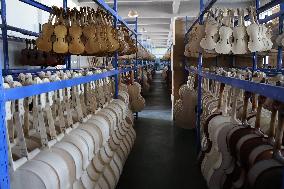
This photo taken on July 24, 2025 shows semi-finished musical instruments at an enterprise in Queshan Violin Industrial Park, Queshan County of Zhumadian City, central China's Henan Province. In recent years, Queshan County has developed a complete industrial chain of the violin family manufacturing from raw material processing to instrument and accessories production. Local production accounts for more than 40 percent of the country's total output and the products are exported to European and American markets. During the War of Resistance against Japanese Aggression, Zhugou Township in Queshan County was once a key anti-Japanese base, and now the county is pursuing its development in modern manufacturing. Photo by Xinhua/Zhu Weixi/ABACAPRESS.COM

  •  
Violin Family Manufacturing - China

Violin Family Manufacturing - China

This photo taken on July 24, 2025 shows musical instruments on display at an enterprise in Queshan Violin Industrial Park, Queshan County of Zhumadian City, central China's Henan Province. In recent years, Queshan County has developed a complete industrial chain of the violin family manufacturing from raw material processing to instrument and accessories production. Local production accounts for more than 40 percent of the country's total output and the products are exported to European and American markets. During the War of Resistance against Japanese Aggression, Zhugou Township in Queshan County was once a key anti-Japanese base, and now the county is pursuing its development in modern manufacturing. Photo by Xinhua/Zhu Weixi/ABACAPRESS.COM

  •  
Violin Family Manufacturing - China

Violin Family Manufacturing - China

Students perform at Queshan Violin Industrial Park in Queshan County of Zhumadian City, central China's Henan Province, July 24, 2025. In recent years, Queshan County has developed a complete industrial chain of the violin family manufacturing from raw material processing to instrument and accessories production. Local production accounts for more than 40 percent of the country's total output and the products are exported to European and American markets. During the War of Resistance against Japanese Aggression, Zhugou Township in Queshan County was once a key anti-Japanese base, and now the county is pursuing its development in modern manufacturing. Photo by Xinhua/Zhu Weixi/ABACAPRESS.COM

  •  
Violin Family Manufacturing - China

Violin Family Manufacturing - China

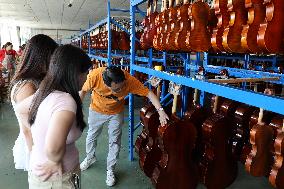
Clients check the quality of musical instruments at an enterprise in Queshan Violin Industrial Park, Queshan County of Zhumadian City, central China's Henan Province, July 24, 2025. In recent years, Queshan County has developed a complete industrial chain of the violin family manufacturing from raw material processing to instrument and accessories production. Local production accounts for more than 40 percent of the country's total output and the products are exported to European and American markets. During the War of Resistance against Japanese Aggression, Zhugou Township in Queshan County was once a key anti-Japanese base, and now the county is pursuing its development in modern manufacturing. Photo by Xinhua/Zhu Weixi/ABACAPRESS.COM

  •  
Violin Family Manufacturing - China

Violin Family Manufacturing - China

A worker works at a workshop in Queshan Violin Industrial Park, Queshan County of Zhumadian City, central China's Henan Province, July 24, 2025. In recent years, Queshan County has developed a complete industrial chain of the violin family manufacturing from raw material processing to instrument and accessories production. Local production accounts for more than 40 percent of the country's total output and the products are exported to European and American markets. During the War of Resistance against Japanese Aggression, Zhugou Township in Queshan County was once a key anti-Japanese base, and now the county is pursuing its development in modern manufacturing. Photo by Xinhua/Zhu Weixi/ABACAPRESS.COM

  •  
Violin Family Manufacturing - China

Violin Family Manufacturing - China

A tourist visits the exhibition hall of an enterprise at Queshan Violin Industrial Park in Queshan County of Zhumadian City, central China's Henan Province, July 24, 2025. In recent years, Queshan County has developed a complete industrial chain of the violin family manufacturing from raw material processing to instrument and accessories production. Local production accounts for more than 40 percent of the country's total output and the products are exported to European and American markets. During the War of Resistance against Japanese Aggression, Zhugou Township in Queshan County was once a key anti-Japanese base, and now the county is pursuing its development in modern manufacturing. Photo by Xinhua/Zhu Weixi/ABACAPRESS.COM

  •  
Violin Family Manufacturing - China

Violin Family Manufacturing - China

A worker works at a workshop in Queshan Violin Industrial Park, Queshan County of Zhumadian City, central China's Henan Province, July 24, 2025. In recent years, Queshan County has developed a complete industrial chain of the violin family manufacturing from raw material processing to instrument and accessories production. Local production accounts for more than 40 percent of the country's total output and the products are exported to European and American markets. During the War of Resistance against Japanese Aggression, Zhugou Township in Queshan County was once a key anti-Japanese base, and now the county is pursuing its development in modern manufacturing. Photo by Xinhua/Zhu Weixi/ABACAPRESS.COM

  •  
Violin Family Manufacturing - China

Violin Family Manufacturing - China

Students perform at Queshan Violin Industrial Park in Queshan County of Zhumadian City, central China's Henan Province, July 24, 2025. In recent years, Queshan County has developed a complete industrial chain of the violin family manufacturing from raw material processing to instrument and accessories production. Local production accounts for more than 40 percent of the country's total output and the products are exported to European and American markets. During the War of Resistance against Japanese Aggression, Zhugou Township in Queshan County was once a key anti-Japanese base, and now the county is pursuing its development in modern manufacturing. Photo by Xinhua/Zhu Weixi/ABACAPRESS.COM

  •  
Violin Family Manufacturing - China

Violin Family Manufacturing - China

A worker works at a workshop in Queshan Violin Industrial Park, Queshan County of Zhumadian City, central China's Henan Province, July 24, 2025. In recent years, Queshan County has developed a complete industrial chain of the violin family manufacturing from raw material processing to instrument and accessories production. Local production accounts for more than 40 percent of the country's total output and the products are exported to European and American markets. During the War of Resistance against Japanese Aggression, Zhugou Township in Queshan County was once a key anti-Japanese base, and now the county is pursuing its development in modern manufacturing. Photo by Xinhua/Zhu Weixi/ABACAPRESS.COM

  •  
Violin Family Manufacturing - China

Violin Family Manufacturing - China

This photo taken on July 24, 2025 shows musical instruments on display at an enterprise in Queshan Violin Industrial Park, Queshan County of Zhumadian City, central China's Henan Province. In recent years, Queshan County has developed a complete industrial chain of the violin family manufacturing from raw material processing to instrument and accessories production. Local production accounts for more than 40 percent of the country's total output and the products are exported to European and American markets. During the War of Resistance against Japanese Aggression, Zhugou Township in Queshan County was once a key anti-Japanese base, and now the county is pursuing its development in modern manufacturing. Photo by Xinhua/Zhu Weixi/ABACAPRESS.COM

  •  
Honda's 40 millionth motorbike in Vietnam

Honda's 40 millionth motorbike in Vietnam

Photo taken on June 30, 2025, shows the 40 millionth motorcycle produced by Japan's Honda Motor Co. in Vietnam, unveiled during a ceremony held at a factory near Hanoi. Honda's local unit, Honda Vietnam Co., began motorbike production in 1997 in Vietnam, where the company commands a motorcycle market share of over 80 percent.

  • Main
  • Top
  • Editorial
  • Creative
  • About Us
  • About ILG
  • Terms of use
  • Company
  • BEHIND
  • Price List
  • Single Plan
  • Monthly Plan
  • Services
  • Shooting
  • Rights Clearance
  • Support
  • FAQ
  • How To Buy
  • Contact Us
  • Become a Partner

© KYODO NEWS IMAGES INC

All Rights Reserved.

  • Editorial
  • Olympics
  • News
  • Sports
  • Japan
  • Tech
  • Royal
  • Disaster
  • NorthKorea
  • Old Japan
  • SNS
  • Creative
  • Food
  • Japan
  • Landscape
  • Animal
  • Popular
  • #Ukraine
  • #Thailand
  • #coronavirus
  • #N. Korea
  • #China
  • #Russia
  • #Ukraine
  • #Thailand
  • #coronavirus
  • #N. Korea
  • #China
  • #Russia
  • Food
  • Japan
  • Landscape
  • Animal
  • Olympics
  • News
  • Sports
  • Japan
  • Tech
  • Royal
  • Disaster
  • NorthKorea
  • Old Japan
  • SNS