•  
Fujian Fortified Manors - China

Fujian Fortified Manors - China

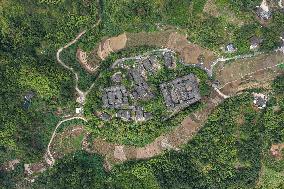
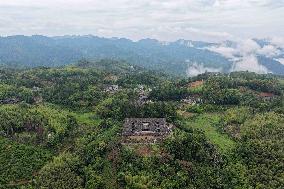
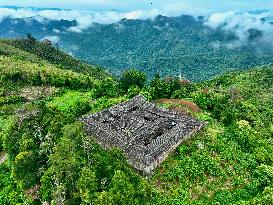
An aerial drone photo taken on May 20, 2025 shows Zhutou Manor in Yongtai County, southeast China's Fujian Province. Nestled in the Daiyun Mountain like scattered pearls, over 2,000 fortified manors in Yongtai County trace their origins to the Tang Dynasty 618-907 AD), flourishing later during the Ming 1368-1644) and Qing 1644-1911) eras. Today, increasing numbers of ancient manors and villages are being protected and revitalized. As historical heritage integrates with contemporary life and cultural landscapes merge with humanistic values, these age-old structures are radiating renewed vitality. Photo by Zhang Keren/Xinhua/ABACAPRESS.COM

  •  
Fujian Fortified Manors - China

Fujian Fortified Manors - China

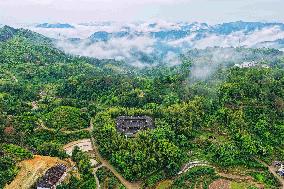
An aerial drone photo taken on May 20, 2025 shows Beishan Manor in Yongtai County, southeast China's Fujian Province. Nestled in the Daiyun Mountain like scattered pearls, over 2,000 fortified manors in Yongtai County trace their origins to the Tang Dynasty 618-907 AD), flourishing later during the Ming 1368-1644) and Qing 1644-1911) eras. Today, increasing numbers of ancient manors and villages are being protected and revitalized. As historical heritage integrates with contemporary life and cultural landscapes merge with humanistic values, these age-old structures are radiating renewed vitality. Photo by Zhang Keren/Xinhua/ABACAPRESS.COM

  •  
Fujian Fortified Manors - China

Fujian Fortified Manors - China

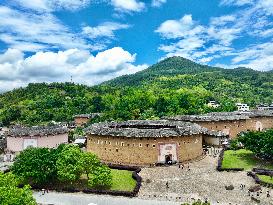
An aerial drone photo taken on May 21, 2025 shows a Tulou among mountains in Longyan, southeast China's Fujian Province. Fujian Tulou, the unique residential architecture of Fujian Province constructed between the 15th and 20th centuries, was inscribed on the UNESCO's World Heritage List in 2008. Set amongst rice, tea and tobacco fields, Tulou is earthen house. Several storeys high, it was built along an inward-looking, circular or square floor plan as housing for up to 800 people each. Tulou was built for defence purposes around a central open courtyard with only one entrance and windows to the outside only above the first floor. Housing a whole clan, Tulou functioned as village units and was known as "a little kingdom for the family" or "bustling small city." Photo by Wang Zecong/Xinhua/ABACAPRESS.COM

  •  
Fujian Fortified Manors - China

Fujian Fortified Manors - China

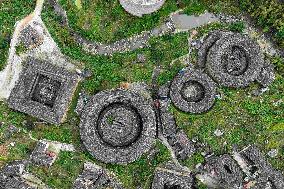
An aerial drone photo taken on May 22, 2025 shows the Chuxi Tulou Cluster in Longyan, southeast China's Fujian Province. Fujian Tulou, the unique residential architecture of Fujian Province constructed between the 15th and 20th centuries, was inscribed on the UNESCO's World Heritage List in 2008. Set amongst rice, tea and tobacco fields, Tulou is earthen house. Several storeys high, it was built along an inward-looking, circular or square floor plan as housing for up to 800 people each. Tulou was built for defence purposes around a central open courtyard with only one entrance and windows to the outside only above the first floor. Housing a whole clan, Tulou functioned as village units and was known as "a little kingdom for the family" or "bustling small city." Photo by Zhang Keren/Xinhua/ABACAPRESS.COM

  •  
Fujian Fortified Manors - China

Fujian Fortified Manors - China

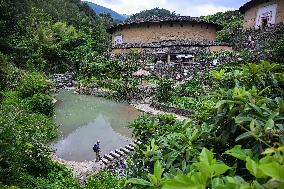
A resident spreads out unhusked rice to dry in Zhutou Manor in Yongtai County, southeast China's Fujian Province, on Octobre 2, 2023. Nestled in the Daiyun Mountain like scattered pearls, over 2,000 fortified manors in Yongtai County trace their origins to the Tang Dynasty 618-907 AD), flourishing later during the Ming 1368-1644) and Qing 1644-1911) eras. Today, increasing numbers of ancient manors and villages are being protected and revitalized. As historical heritage integrates with contemporary life and cultural landscapes merge with humanistic values, these age-old structures are radiating renewed vitality. Photo by Jiang Kehong/Xinhua/ABACAPRESS.COM

  •  
Fujian Fortified Manors - China

Fujian Fortified Manors - China

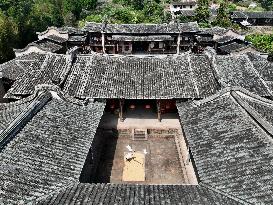
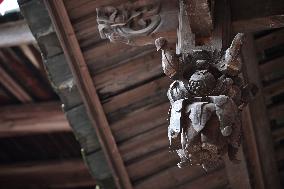
This photo taken on May 20, 2025 shows timber structural elements of a fortified manor in Yongtai County, southeast China's Fujian Province. Nestled in the Daiyun Mountain like scattered pearls, over 2,000 fortified manors in Yongtai County trace their origins to the Tang Dynasty 618-907 AD), flourishing later during the Ming 1368-1644) and Qing 1644-1911) eras. Today, increasing numbers of ancient manors and villages are being protected and revitalized. As historical heritage integrates with contemporary life and cultural landscapes merge with humanistic values, these age-old structures are radiating renewed vitality. Photo by Wang Zecong/Xinhua/ABACAPRESS.COM

  •  
Fujian Fortified Manors - China

Fujian Fortified Manors - China

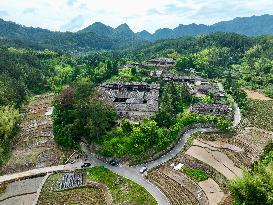
An aerial drone photo taken on May 20, 2025 shows Hecheng Manor in Yongtai County, southeast China's Fujian Province. Nestled in the Daiyun Mountain like scattered pearls, over 2,000 fortified manors in Yongtai County trace their origins to the Tang Dynasty 618-907 AD), flourishing later during the Ming 1368-1644) and Qing 1644-1911) eras. Today, increasing numbers of ancient manors and villages are being protected and revitalized. As historical heritage integrates with contemporary life and cultural landscapes merge with humanistic values, these age-old structures are radiating renewed vitality. Photo by Zhang Keren/Xinhua/ABACAPRESS.COM

  •  
Fujian Fortified Manors - China

Fujian Fortified Manors - China

A tourist visits the Chuxi Tulou Cluster in Longyan, southeast China's Fujian Province, May 22, 2025. Fujian Tulou, the unique residential architecture of Fujian Province constructed between the 15th and 20th centuries, was inscribed on the UNESCO's World Heritage List in 2008. Set amongst rice, tea and tobacco fields, Tulou is earthen house. Several storeys high, it was built along an inward-looking, circular or square floor plan as housing for up to 800 people each. Tulou was built for defence purposes around a central open courtyard with only one entrance and windows to the outside only above the first floor. Housing a whole clan, Tulou functioned as village units and was known as "a little kingdom for the family" or "bustling small city." Photo by Wang Zecong/Xinhua/ABACAPRESS.COM

  •  
Fujian Fortified Manors - China

Fujian Fortified Manors - China

An aerial drone photo taken on May 20, 2025 shows Hecheng Manor in Yongtai County, southeast China's Fujian Province. Nestled in the Daiyun Mountain like scattered pearls, over 2,000 fortified manors in Yongtai County trace their origins to the Tang Dynasty 618-907 AD), flourishing later during the Ming 1368-1644) and Qing 1644-1911) eras. Today, increasing numbers of ancient manors and villages are being protected and revitalized. As historical heritage integrates with contemporary life and cultural landscapes merge with humanistic values, these age-old structures are radiating renewed vitality. Photo by Wang Zecong/Xinhua/ABACAPRESS.COM

  •  
Fujian Fortified Manors - China

Fujian Fortified Manors - China

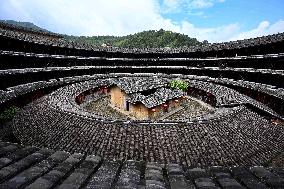
This photo taken on May 22, 2025 shows an interior view of the Jiqing Tulou in Longyan, southeast China's Fujian Province. Fujian Tulou, the unique residential architecture of Fujian Province constructed between the 15th and 20th centuries, was inscribed on the UNESCO's World Heritage List in 2008. Set amongst rice, tea and tobacco fields, Tulou is earthen house. Several storeys high, it was built along an inward-looking, circular or square floor plan as housing for up to 800 people each. Tulou was built for defence purposes around a central open courtyard with only one entrance and windows to the outside only above the first floor. Housing a whole clan, Tulou functioned as village units and was known as "a little kingdom for the family" or "bustling small city." Photo by Jiang Kehong/Xinhua/ABACAPRESS.COM

  •  
Fujian Fortified Manors - China

Fujian Fortified Manors - China

An aerial photo taken on May 20, 2025 shows Hecheng Manor in Yongtai County, southeast China's Fujian Province. Nestled in the Daiyun Mountain like scattered pearls, over 2,000 fortified manors in Yongtai County trace their origins to the Tang Dynasty 618-907 AD), flourishing later during the Ming 1368-1644) and Qing 1644-1911) eras. Today, increasing numbers of ancient manors and villages are being protected and revitalized. As historical heritage integrates with contemporary life and cultural landscapes merge with humanistic values, these age-old structures are radiating renewed vitality. Photo by Jiang Kehong/Xinhua/ABACAPRESS.COM

  •  
Fujian Fortified Manors - China

Fujian Fortified Manors - China

An aerial drone photo taken on May 21, 2025 shows the Chengqi Tulou in Longyan, southeast China's Fujian Province. Fujian Tulou, the unique residential architecture of Fujian Province constructed between the 15th and 20th centuries, was inscribed on the UNESCO's World Heritage List in 2008. Set amongst rice, tea and tobacco fields, Tulou is earthen house. Several storeys high, it was built along an inward-looking, circular or square floor plan as housing for up to 800 people each. Tulou was built for defence purposes around a central open courtyard with only one entrance and windows to the outside only above the first floor. Housing a whole clan, Tulou functioned as village units and was known as "a little kingdom for the family" or "bustling small city." Photo by Jiang Kehong/Xinhua/ABACAPRESS.COM

  •  
Fujian Fortified Manors - China

Fujian Fortified Manors - China

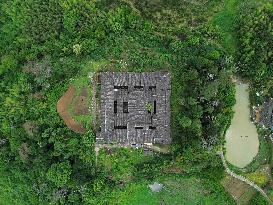
An aerial photo taken on May 20, 2025 shows Zhutou Manor in Yongtai County, southeast China's Fujian Province. Nestled in the Daiyun Mountain like scattered pearls, over 2,000 fortified manors in Yongtai County trace their origins to the Tang Dynasty 618-907 AD), flourishing later during the Ming 1368-1644) and Qing 1644-1911) eras. Today, increasing numbers of ancient manors and villages are being protected and revitalized. As historical heritage integrates with contemporary life and cultural landscapes merge with humanistic values, these age-old structures are radiating renewed vitality. Photo by Jiang Kehong/Xinhua/ABACAPRESS.COM

  •  
(InXizang)CHINA-XIZANG-FORMER SERF-NEW LIFE-DRAKPA WANGDEN (CN)

(InXizang)CHINA-XIZANG-FORMER SERF-NEW LIFE-DRAKPA WANGDEN (CN)

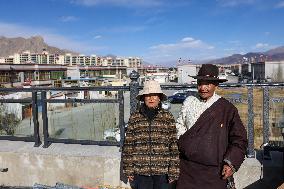
(240330) -- LHASA, March 30, 2024 (Xinhua) -- Drakpa Wangden poses for a photo with his daughter at his home at Yabda Village of Doilungdeqen District in Lhasa, southwest China's Xizang Autonomous Region, March 11, 2024. Born in 1944, Drakpa Wangden lives now in Doilungdeqen District of Lhasa, southwest China's Xizang Autonomous Region. Before the democratic reform, Drakpa Wangden and his family were serfs, working on manors affiliated with two monasteries in present-day Lhasa. For his family, each spring meant borrowing seeds from their masters, however, they could collect nothing during the autumn harvest. At that time, the sustenance of Drakpa Wangden's family of nine was a meager bowl of tsampa, a traditional Tibetan staple made from barley flour, no larger than the palm of a child's hand. In March 1959, people in Xizang launched a democratic reform that ended the region's feudal serfdom and Drakpa Wangden's family was freed along with about a million serfs. Under the systems of the people's con

  •  
(InXizang)CHINA-XIZANG-FORMER SERF-NEW LIFE-DRAKPA WANGDEN (CN)

(InXizang)CHINA-XIZANG-FORMER SERF-NEW LIFE-DRAKPA WANGDEN (CN)

(240330) -- LHASA, March 30, 2024 (Xinhua) -- Drakpa Wangden demonstrates photos and certificates of honor he won in Lhasa, southwest China's Xizang Autonomous Region, March 11, 2024. Born in 1944, Drakpa Wangden lives now in Doilungdeqen District of Lhasa, southwest China's Xizang Autonomous Region. Before the democratic reform, Drakpa Wangden and his family were serfs, working on manors affiliated with two monasteries in present-day Lhasa. For his family, each spring meant borrowing seeds from their masters, however, they could collect nothing during the autumn harvest. At that time, the sustenance of Drakpa Wangden's family of nine was a meager bowl of tsampa, a traditional Tibetan staple made from barley flour, no larger than the palm of a child's hand. In March 1959, people in Xizang launched a democratic reform that ended the region's feudal serfdom and Drakpa Wangden's family was freed along with about a million serfs. Under the systems of the people's congresses and regional ethnic autonomy

  •  
(InXizang)CHINA-XIZANG-FORMER SERF-NEW LIFE-DRAKPA WANGDEN (CN)

(InXizang)CHINA-XIZANG-FORMER SERF-NEW LIFE-DRAKPA WANGDEN (CN)

(240330) -- LHASA, March 30, 2024 (Xinhua) -- This photo taken on March 11, 2024 shows the ID card of Drakpa Wangden. Born in 1944, Drakpa Wangden lives now in Doilungdeqen District of Lhasa, southwest China's Xizang Autonomous Region. Before the democratic reform, Drakpa Wangden and his family were serfs, working on manors affiliated with two monasteries in present-day Lhasa. For his family, each spring meant borrowing seeds from their masters, however, they could collect nothing during the autumn harvest. At that time, the sustenance of Drakpa Wangden's family of nine was a meager bowl of tsampa, a traditional Tibetan staple made from barley flour, no larger than the palm of a child's hand. In March 1959, people in Xizang launched a democratic reform that ended the region's feudal serfdom and Drakpa Wangden's family was freed along with about a million serfs. Under the systems of the people's congresses and regional ethnic autonomy that were put in place after the reform, former serfs and slaves w

  •  
(InXizang)CHINA-XIZANG-FORMER SERF-NEW LIFE-DRAKPA WANGDEN (CN)

(InXizang)CHINA-XIZANG-FORMER SERF-NEW LIFE-DRAKPA WANGDEN (CN)

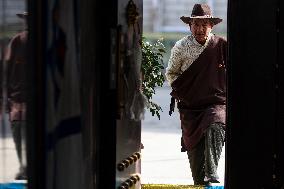
(240330) -- LHASA, March 30, 2024 (Xinhua) -- Drakpa Wangden walks into his home at Yabda Village of Doilungdeqen District in Lhasa, southwest China's Xizang Autonomous Region, March 11, 2024. Born in 1944, Drakpa Wangden lives now in Doilungdeqen District of Lhasa, southwest China's Xizang Autonomous Region. Before the democratic reform, Drakpa Wangden and his family were serfs, working on manors affiliated with two monasteries in present-day Lhasa. For his family, each spring meant borrowing seeds from their masters, however, they could collect nothing during the autumn harvest. At that time, the sustenance of Drakpa Wangden's family of nine was a meager bowl of tsampa, a traditional Tibetan staple made from barley flour, no larger than the palm of a child's hand. In March 1959, people in Xizang launched a democratic reform that ended the region's feudal serfdom and Drakpa Wangden's family was freed along with about a million serfs. Under the systems of the people's congresses and regional ethnic

  •  
(InXizang)CHINA-XIZANG-FORMER SERF-NEW LIFE-DRAKPA WANGDEN (CN)

(InXizang)CHINA-XIZANG-FORMER SERF-NEW LIFE-DRAKPA WANGDEN (CN)

(240330) -- LHASA, March 30, 2024 (Xinhua) -- The 80-year-old Drakpa Wangden shows his commemorative medal awarded to the Communist Party of China (CPC) members after five decades of Party membership in Lhasa, southwest China's Xizang Autonomous Region, March 11, 2024. Born in 1944, Drakpa Wangden lives now in Doilungdeqen District of Lhasa, southwest China's Xizang Autonomous Region. Before the democratic reform, Drakpa Wangden and his family were serfs, working on manors affiliated with two monasteries in present-day Lhasa. For his family, each spring meant borrowing seeds from their masters, however, they could collect nothing during the autumn harvest. At that time, the sustenance of Drakpa Wangden's family of nine was a meager bowl of tsampa, a traditional Tibetan staple made from barley flour, no larger than the palm of a child's hand. In March 1959, people in Xizang launched a democratic reform that ended the region's feudal serfdom and Drakpa Wangden's family was freed along with about a milli

  •  
(InXizang)CHINA-XIZANG-FORMER SERF-NEW LIFE-DRAKPA WANGDEN (CN)

(InXizang)CHINA-XIZANG-FORMER SERF-NEW LIFE-DRAKPA WANGDEN (CN)

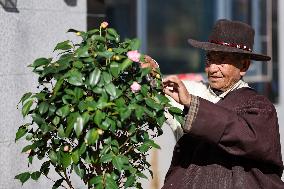
(240330) -- LHASA, March 30, 2024 (Xinhua) -- Drakpa Wangden prunes a potted flower outside his home at Yabda Village of Doilungdeqen District in Lhasa, southwest China's Xizang Autonomous Region, March 11, 2024. Born in 1944, Drakpa Wangden lives now in Doilungdeqen District of Lhasa, southwest China's Xizang Autonomous Region. Before the democratic reform, Drakpa Wangden and his family were serfs, working on manors affiliated with two monasteries in present-day Lhasa. For his family, each spring meant borrowing seeds from their masters, however, they could collect nothing during the autumn harvest. At that time, the sustenance of Drakpa Wangden's family of nine was a meager bowl of tsampa, a traditional Tibetan staple made from barley flour, no larger than the palm of a child's hand. In March 1959, people in Xizang launched a democratic reform that ended the region's feudal serfdom and Drakpa Wangden's family was freed along with about a million serfs. Under the systems of the people's congresses

  •  
Xinhua Headlines: Manor-turned museum tells changes of life in Tibet

Xinhua Headlines: Manor-turned museum tells changes of life in Tibet

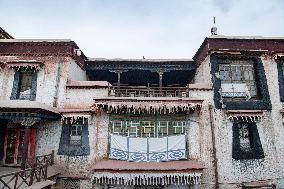
(230328) -- LHASA, March 28, 2023 (Xinhua) -- This photo taken on March 20, 2023 shows the former site of Palha Manor, one of the 12 manors in old Tibet, in Gyangze County in Xigaze, southwest China's Tibet Autonomous Region. (Xinhua/Sun Fei)

  •  

Last aristocratic manor in Tibet testament of cruel serfdom

STORY: Last aristocratic manor in Tibet testament of cruel serfdom DATELINE: March 28, 2023 LENGTH: 0:03:21 LOCATION: LHASA, China CATEGORY: SOCIETY SHOTLIST: 1. various of Palha Manor and Tibet 2. SOUNDBITE 1 (Tibetan): NORBU TSERING, Son of a former serf at Palha Manor 3. SOUNDBITE 2 (Tibetan): NORBU TSERING, Son of a former serf at Palha Manor 4. SOUNDBITE 3 (Tibetan): NORBU TSERING, Son of a former serf at Palha Manor 5. SOUNDBITE 4 (Tibetan): NORBU TSERING, Son of a former serf at Palha Manor STORYLINE: Palha Manor in Gyangze County under Xigaze in southwest China's Tibet Autonomous Region is the only remaining aristocratic manor of the 12 such manors in old Tibet. It is kept in its original shape as a museum, where one can see the luxurious lifestyle of the masters and the tragic fates of the serfs in the past. SOUNDBITE 1 (Tibetan): NORBU TSERING, Son of a former serf at Palha Manor "Thinking of the cruel life in the old Tibet, my heart hurts, and my nose can't help but get sour." Palha Manor is

  • Main
  • Top
  • Editorial
  • Creative
  • About Us
  • About ILG
  • Terms of use
  • Company
  • BEHIND
  • Price List
  • Single Plan
  • Monthly Plan
  • Services
  • Shooting
  • Rights Clearance
  • Support
  • FAQ
  • How To Buy
  • Contact Us
  • Become a Partner

© KYODO NEWS IMAGES INC

All Rights Reserved.

  • Editorial
  • Olympics
  • News
  • Sports
  • Japan
  • Tech
  • Royal
  • Disaster
  • NorthKorea
  • Old Japan
  • SNS
  • Creative
  • Food
  • Japan
  • Landscape
  • Animal
  • Popular
  • #Ukraine
  • #China
  • #coronavirus
  • #N. Korea
  • #Thailand
  • #Russia
  • #Ukraine
  • #China
  • #coronavirus
  • #N. Korea
  • #Thailand
  • #Russia
  • Food
  • Japan
  • Landscape
  • Animal
  • Olympics
  • News
  • Sports
  • Japan
  • Tech
  • Royal
  • Disaster
  • NorthKorea
  • Old Japan
  • SNS