•  
Nuclear disaster-hit village reclassified into 3 areas

Nuclear disaster-hit village reclassified into 3 areas

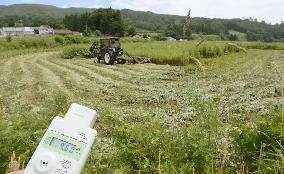
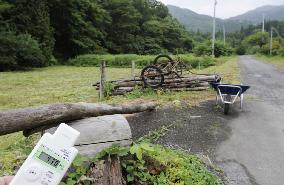
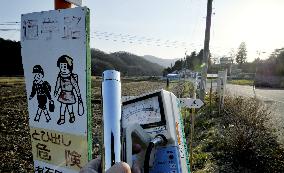
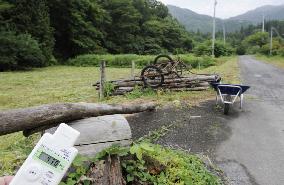
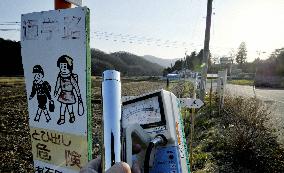
IITATE, Japan - Grass is being cut in the Nagadoro district of Iitate village, Fukushima Prefecture, on July 16, 2012, with a dosimeter (front) showing radiation levels of more than nine microsieverts per hour, before the government locks fences on roads leading to the district at midnight. The village, nearly all of whose residents have been evacuated since the March 2011 nuclear accident, was reclassified July 17 into three areas with varying levels of accessibility. Due to the high level of radiation exposure, the Nagadoro district was classified as "an area difficult to return to" for a long period of time.

  •  
Radiation near Fukushima plant

Radiation near Fukushima plant

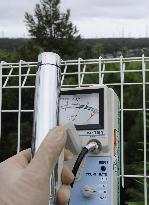
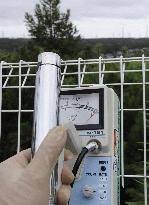
FUKUSHIMA, Japan - A dosimeter shows the radiation level topping 80 microsieverts per hour in a forest in the town of Okuma, Fukushima Prefecture, adjacent to the crippled Fukushima Daiichi Nuclear Power Station on Feb. 9, 2012.

  •  
High levels of radiation detected in Tokyo

High levels of radiation detected in Tokyo

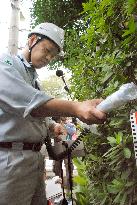
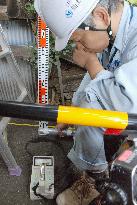
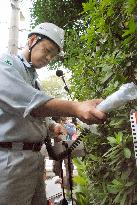
TOKYO, Japan - An expert measures radiation in a residential area of Tsurumaki in Setagaya Ward, Tokyo, on Oct. 13, 2011. Airborne radiation of up to 3.35 microsieverts per hour, exceeding readings in some evacuation zones around the crippled Fukushima Daiichi nuclear plant, was detected at a height of 1 meter in the area in the measurement commissioned by the ward office.

  •  
High levels of radiation detected in Tokyo

High levels of radiation detected in Tokyo

TOKYO, Japan - An expert measures radiation in a residential area of Tsurumaki in Setagaya Ward, Tokyo, on Oct. 13, 2011. Airborne radiation of up to 3.35 microsieverts per hour, exceeding readings in some evacuation zones around the crippled Fukushima Daiichi nuclear plant, was detected at a height of 1 meter in the area in the measurement commissioned by the ward office.

  •  
High levels of radiation detected in Tokyo

High levels of radiation detected in Tokyo

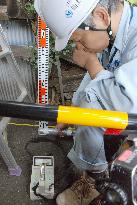
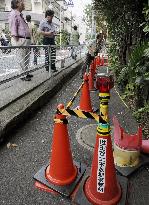
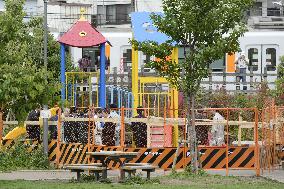
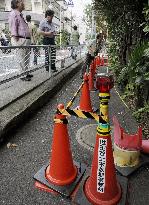
TOKYO, Japan - Photo taken on Oct. 13, 2011, shows part of a sidewalk in a residential area of Tsurumaki in Setagaya Ward, Tokyo, where airborne radiation of up to 3.35 microsieverts per hour, exceeding readings in some evacuation zones around the crippled Fukushima Daiichi nuclear plant, was detected the same day. Road cones have been placed around the site by the ward office, as the sidewalk is used as a route to a nearby elementary school.

  •  
Evacuees visit homes within 3 km of Fukushima plant for 1st time

Evacuees visit homes within 3 km of Fukushima plant for 1st time

HIRONO, Japan - A dosimeter shows over 30 microsieverts per hour of radiation in Okuma, Fukushima Prefecture, within 3 kilometers of the crippled Fukushima Daiichi nuclear power plant on Aug. 26, 2011.

  •  
Gov't designates new 'hot spots' near Fukushima plant

Gov't designates new 'hot spots' near Fukushima plant

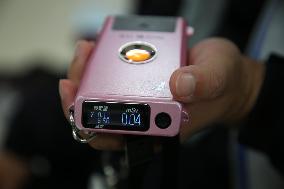
MINAMISOMA, Japan - A radiation counter (L bottom) shows 4.30 microsieverts per hour of radiation in Takanokura in the city of Minamisoma, Fukushima Prefecture, on July 21, 2011. The government the same day newly designated 59 households in Takanokura and three other areas in Minamisoma, near the crippled Fukushima Daiichi nuclear power plant, as located in ''hot spots'' recommended for evacuation.

  •  
Radioactive sludge

Radioactive sludge

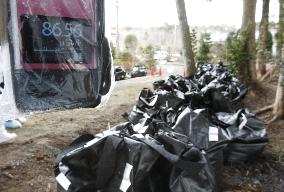
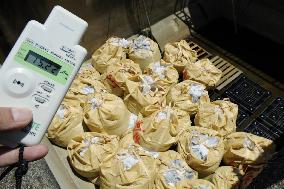
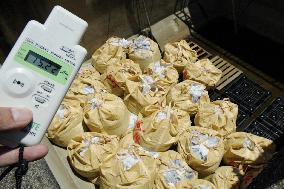
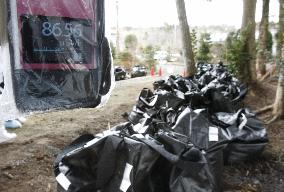
FUKUSHIMA, Japan - Photo taken June 15, 2011, shows bags of sludge contaminated with radioactive substances stored at a sewage treatment facility in the city of Fukushima, in the vicinity of the crippled Fukushima Daiichi nuclear power plant. A dosimeter indicates a radiation level of over 15 microsieverts per hour around 5 meters from the contaminated sludge. The storage tank is expected to be completely filled in about 6 months but the process to permanently dispose of the sludge has not been set.

  •  
Removing topsoil from Fukushima school playgrounds

Removing topsoil from Fukushima school playgrounds

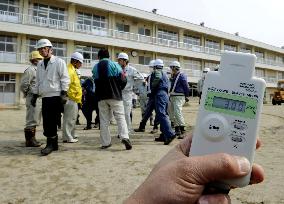
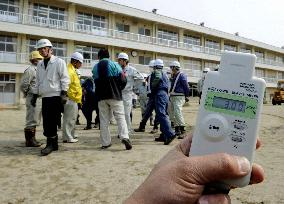
KORIYAMA, Japan - A radiation detector indicates a level of 3.0 microsieverts per hour at Kaoru Elementary School in Koriyama, Fukushima Prefecture, on April 27, 2011, ahead of work to remove playground topsoil amid radiation leaks from the crippled Fukushima Daiichi nuclear plant.

  •  
Radiation levels in Iitate

Radiation levels in Iitate

IITATE, Japan - A radiation reader indicates the level in the village of Iitate, Fukushima Prefecture, is 26 microsieverts per hour on the evening of April 13, 2011. The village is included in the government's new evacuation order due to high amounts of cumulative radioactive materials beyond the evacuation zone of a 20-kilometer radius from the Fukushima Daiichi nuclear power plant which was crippled by the massive quake and tsunami on March 11.

  •  
Radiation screening in Fukushima

Radiation screening in Fukushima

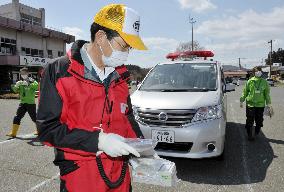
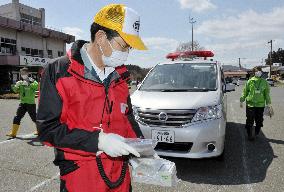
FUKUSHIMA, Japan - A man measures radiation levels in front of a community center in the village of Iitate, Fukushima Prefecture on April 12, 2011. It read 5.89 microsieverts per hour at the height of 1 meter from the ground and 8.3 microsieverts per hour on the ground surface. The prefecture is where the crippled Fukushima Daiichi nuclear power plant is located and the government has asked village leaders to have residents evacuate.

  •  
Radiation level sharply falls after soil removed at Tokyo park

Radiation level sharply falls after soil removed at Tokyo park

Officials of Tokyo's Toshima Ward check a playground in a park in the ward on April 24, 2014, after a radiation up to 480 microsieverts per hour was measured at ground level there. The radiation level sharply fell after some soil was removed from the park. (Kyodo) ==Kyodo

  •  
Reopened stretch of Joban Expressway shown to press

Reopened stretch of Joban Expressway shown to press

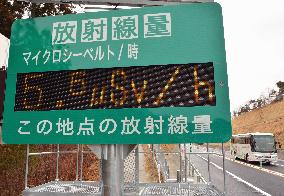
An electronic board shows a count of 5.5 microsieverts per hour in Futaba, Fukushima Prefecture, along a portion of the Joban Expressway between the Namie and Joban-Tomioka interchanges in the northeastern Japanese prefecture on Feb. 17, 2015. The stretch was shown to the press before it opens to traffic on March 1 after construction had been delayed due to radiation from the crippled Fukushima Daiichi nuclear power plant. (Kyodo) ==Kyodo

  •  
Crippled Fukushima Daiichi plant

Crippled Fukushima Daiichi plant

A Geiger counter shows a reporter was exposed to 40 microsieverts of radiation during a two-hour tour of the crippled Fukushima Daiichi nuclear plant in northeastern Japan on April 14, 2017. (Kyodo) ==Kyodo

  •  
Crippled Fukushima Daiichi plant

Crippled Fukushima Daiichi plant

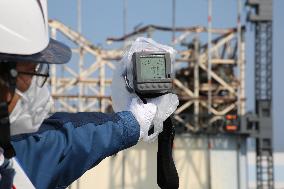
An official of Tokyo Electric Power Company Holdings Inc. holds a Geiger counter 80 meters from the melted down No. 1 reactor at the Fukushima Daiichi nuclear plant in the northeastern Japan town of Okuma on April 14, 2017, showing the radiation level at 150 microsieverts per hour, less than the exposure on a flight-trip flight between Tokyo and New York. (Kyodo) ==Kyodo

  •  
High levels of radiation detected in Tokyo

High levels of radiation detected in Tokyo

TOKYO, Japan - An expert measures radiation in a residential area of Tsurumaki in Setagaya Ward, Tokyo, on Oct. 13, 2011. Airborne radiation of up to 3.35 microsieverts per hour, exceeding readings in some evacuation zones around the crippled Fukushima Daiichi nuclear plant, was detected at a height of 1 meter in the area in the measurement commissioned by the ward office. (Kyodo)

  •  
High levels of radiation detected in Tokyo

High levels of radiation detected in Tokyo

TOKYO, Japan - Photo taken on Oct. 13, 2011, shows part of a sidewalk in a residential area of Tsurumaki in Setagaya Ward, Tokyo, where airborne radiation of up to 3.35 microsieverts per hour, exceeding readings in some evacuation zones around the crippled Fukushima Daiichi nuclear plant, was detected the same day. Road cones have been placed around the site by the ward office, as the sidewalk is used as a route to a nearby elementary school. (Kyodo)

  •  
High levels of radiation detected in Tokyo

High levels of radiation detected in Tokyo

TOKYO, Japan - An expert measures radiation in a residential area of Tsurumaki in Setagaya Ward, Tokyo, on Oct. 13, 2011. Airborne radiation of up to 3.35 microsieverts per hour, exceeding readings in some evacuation zones around the crippled Fukushima Daiichi nuclear plant, was detected at a height of 1 meter in the area in the measurement commissioned by the ward office. (Kyodo)

  •  
Evacuees visit homes within 3 km of Fukushima plant for 1st time

Evacuees visit homes within 3 km of Fukushima plant for 1st time

HIRONO, Japan - A dosimeter shows over 30 microsieverts per hour of radiation in Okuma, Fukushima Prefecture, within 3 kilometers of the crippled Fukushima Daiichi nuclear power plant on Aug. 26, 2011. (Kyodo)

  •  
Gov't designates new 'hot spots' near Fukushima plant

Gov't designates new 'hot spots' near Fukushima plant

MINAMISOMA, Japan - A radiation counter (L bottom) shows 4.30 microsieverts per hour of radiation in Takanokura in the city of Minamisoma, Fukushima Prefecture, on July 21, 2011. The government the same day newly designated 59 households in Takanokura and three other areas in Minamisoma, near the crippled Fukushima Daiichi nuclear power plant, as located in ''hot spots'' recommended for evacuation. (Kyodo)

  •  
Radioactive sludge

Radioactive sludge

FUKUSHIMA, Japan - Photo taken June 15, 2011, shows bags of sludge contaminated with radioactive substances stored at a sewage treatment facility in the city of Fukushima, in the vicinity of the crippled Fukushima Daiichi nuclear power plant. A dosimeter indicates a radiation level of over 15 microsieverts per hour around 5 meters from the contaminated sludge. The storage tank is expected to be completely filled in about 6 months but the process to permanently dispose of the sludge has not been set. (Kyodo)

  •  
Removing topsoil from Fukushima school playgrounds

Removing topsoil from Fukushima school playgrounds

KORIYAMA, Japan - A radiation detector indicates a level of 3.0 microsieverts per hour at Kaoru Elementary School in Koriyama, Fukushima Prefecture, on April 27, 2011, ahead of work to remove playground topsoil amid radiation leaks from the crippled Fukushima Daiichi nuclear plant. (Kyodo)

  •  
Radiation levels in Iitate

Radiation levels in Iitate

IITATE, Japan - A radiation reader indicates the level in the village of Iitate, Fukushima Prefecture, is 26 microsieverts per hour on the evening of April 13, 2011. The village is included in the government's new evacuation order due to high amounts of cumulative radioactive materials beyond the evacuation zone of a 20-kilometer radius from the Fukushima Daiichi nuclear power plant which was crippled by the massive quake and tsunami on March 11. (Kyodo)

  •  
Radiation screening in Fukushima

Radiation screening in Fukushima

FUKUSHIMA, Japan - A man measures radiation levels in front of a community center in the village of Iitate, Fukushima Prefecture on April 12, 2011. It read 5.89 microsieverts per hour at the height of 1 meter from the ground and 8.3 microsieverts per hour on the ground surface. The prefecture is where the crippled Fukushima Daiichi nuclear power plant is located and the government has asked village leaders to have residents evacuate. (Kyodo)

  •  
Radiation near Fukushima plant

Radiation near Fukushima plant

FUKUSHIMA, Japan - A dosimeter shows the radiation level topping 80 microsieverts per hour in a forest in the town of Okuma, Fukushima Prefecture, adjacent to the crippled Fukushima Daiichi Nuclear Power Station on Feb. 9, 2012. (Kyodo)

  •  
Fukushima complex opened to media for 1st time since March disast

Fukushima complex opened to media for 1st time since March disast

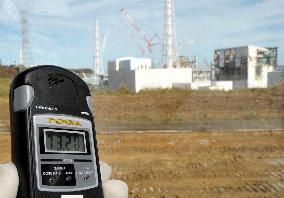
TOKYO, Japan - A dosimeter shows radiation levels of more than 70 microsieverts per hour on the morning of Nov. 12, 2011, in the premises of the Fukushima Daiichi nuclear power plant in Fukushima Prefecture, northeastern Japan. The government and the plant's operator, Tokyo Electric Power Co., allowed reporters to enter the plant that day for the first time since it was badly damaged by a series of explosions just after the March 11 earthquake and tsunami. (Pool photo)(Kyodo)

  • Main
  • Top
  • Editorial
  • Creative
  • About Us
  • About ILG
  • Terms of use
  • Company
  • BEHIND
  • Price List
  • Single Plan
  • Monthly Plan
  • Services
  • Shooting
  • Rights Clearance
  • Support
  • FAQ
  • How To Buy
  • Contact Us
  • Become a Partner

© KYODO NEWS IMAGES INC

All Rights Reserved.

  • Editorial
  • Olympics
  • News
  • Sports
  • Japan
  • Tech
  • Royal
  • Disaster
  • NorthKorea
  • Old Japan
  • SNS
  • Creative
  • Food
  • Japan
  • Landscape
  • Animal
  • Popular
  • #Ukraine
  • #Russia
  • #coronavirus
  • #N. Korea
  • #Thailand
  • #China
  • #Ukraine
  • #Russia
  • #coronavirus
  • #N. Korea
  • #Thailand
  • #China
  • Food
  • Japan
  • Landscape
  • Animal
  • Olympics
  • News
  • Sports
  • Japan
  • Tech
  • Royal
  • Disaster
  • NorthKorea
  • Old Japan
  • SNS