•  
Seagulls Migrate At Sunset - Franqueville

Seagulls Migrate At Sunset - Franqueville

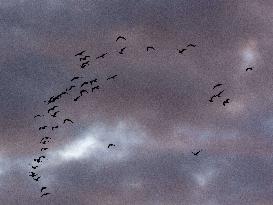
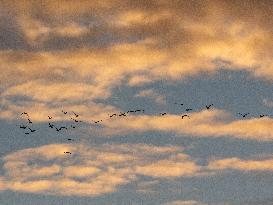
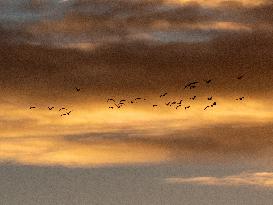
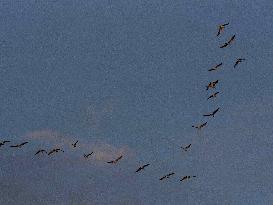
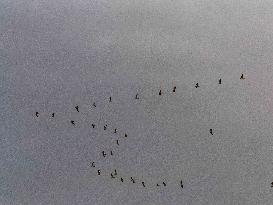
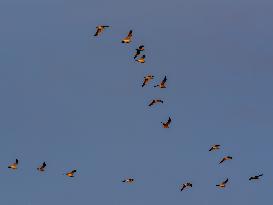
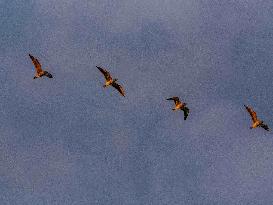
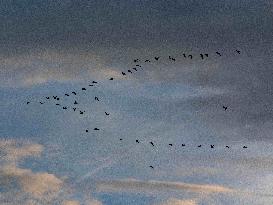
A formation of seagulls flies over a sunset in Franqueville, France. Franqueville, France, November 4, 2025. Photo by Mario Fourmy/ABACAPRESS.COM

  •  
Seagulls Migrate At Sunset - Franqueville

Seagulls Migrate At Sunset - Franqueville

A formation of seagulls flies over a sunset in Franqueville, France. Franqueville, France, November 4, 2025. Photo by Mario Fourmy/ABACAPRESS.COM

  •  
Seagulls Migrate At Sunset - Franqueville

Seagulls Migrate At Sunset - Franqueville

A formation of seagulls flies over a sunset in Franqueville, France. Franqueville, France, November 4, 2025. Photo by Mario Fourmy/ABACAPRESS.COM

  •  
Seagulls Migrate At Sunset - Franqueville

Seagulls Migrate At Sunset - Franqueville

A formation of seagulls flies over a sunset in Franqueville, France. Franqueville, France, November 4, 2025. Photo by Mario Fourmy/ABACAPRESS.COM

  •  
Seagulls Migrate At Sunset - Franqueville

Seagulls Migrate At Sunset - Franqueville

A formation of seagulls flies over a sunset in Franqueville, France. Franqueville, France, November 4, 2025. Photo by Mario Fourmy/ABACAPRESS.COM

  •  
Seagulls Migrate At Sunset - Franqueville

Seagulls Migrate At Sunset - Franqueville

A formation of seagulls flies over a sunset in Franqueville, France. Franqueville, France, November 4, 2025. Photo by Mario Fourmy/ABACAPRESS.COM

  •  
Seagulls Migrate At Sunset - Franqueville

Seagulls Migrate At Sunset - Franqueville

A formation of seagulls flies over a sunset in Franqueville, France. Franqueville, France, November 4, 2025. Photo by Mario Fourmy/ABACAPRESS.COM

  •  
Seagulls Migrate At Sunset - Franqueville

Seagulls Migrate At Sunset - Franqueville

A formation of seagulls flies over a sunset in Franqueville, France. Franqueville, France, November 4, 2025. Photo by Mario Fourmy/ABACAPRESS.COM

  •  
Seagulls Migrate At Sunset - Franqueville

Seagulls Migrate At Sunset - Franqueville

A formation of seagulls flies over a sunset in Franqueville, France. Franqueville, France, November 4, 2025. Photo by Mario Fourmy/ABACAPRESS.COM

  •  
Seagulls Migrate At Sunset - Franqueville

Seagulls Migrate At Sunset - Franqueville

A formation of seagulls flies over a sunset in Franqueville, France. Franqueville, France, November 4, 2025. Photo by Mario Fourmy/ABACAPRESS.COM

  •  
Seagulls Migrate At Sunset - Franqueville

Seagulls Migrate At Sunset - Franqueville

A formation of seagulls flies over a sunset in Franqueville, France. Franqueville, France, November 4, 2025. Photo by Mario Fourmy/ABACAPRESS.COM

  •  
Seagulls Migrate At Sunset - Franqueville

Seagulls Migrate At Sunset - Franqueville

A formation of seagulls flies over a sunset in Franqueville, France. Franqueville, France, November 4, 2025. Photo by Mario Fourmy/ABACAPRESS.COM

  •  
Large Herds of Animals Migrate from Tanzania to Kenya - Nairobi

Large Herds of Animals Migrate from Tanzania to Kenya - Nairobi

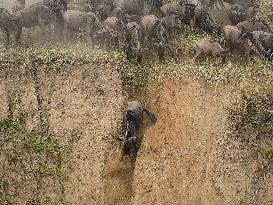
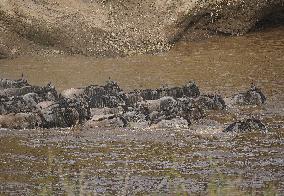
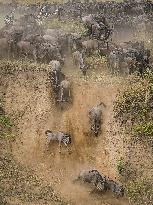
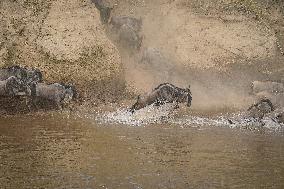
Wildebeests cross and reach the opposite bank of Mara River in the Masai Mara National Reserve in Kenya, on July 30, 2025. Starting in July each year, large herds of animals such as wildebeests and zebras migrate from Tanzania's Serengeti National Park to Kenya's Masai Mara National Reserve, forming a spectacular "river of life" across the savannahs and rivers. Photo by Xinhua/Han Xu/ABACAPRESS.COM

  •  
Large Herds of Animals Migrate from Tanzania to Kenya - Nairobi

Large Herds of Animals Migrate from Tanzania to Kenya - Nairobi

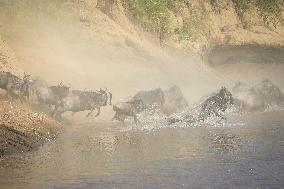
Wildebeests cross the Mara River in the Masai Mara National Reserve in Kenya, on July 30, 2025. Starting in July each year, large herds of animals such as wildebeests and zebras migrate from Tanzania's Serengeti National Park to Kenya's Masai Mara National Reserve, forming a spectacular "river of life" across the savannahs and rivers. Photo by Xinhua/Han Xu/ABACAPRESS.COM

  •  
Large Herds of Animals Migrate from Tanzania to Kenya - Nairobi

Large Herds of Animals Migrate from Tanzania to Kenya - Nairobi

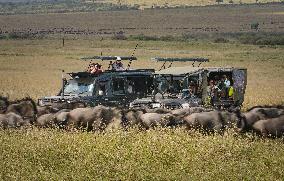
Wildebeests feed on the grasslands after successfully crossing the Mara River in the Masai Mara National Reserve in Kenya, on July 30, 2025. Starting in July each year, large herds of animals such as wildebeests and zebras migrate from Tanzania's Serengeti National Park to Kenya's Masai Mara National Reserve, forming a spectacular "river of life" across the savannahs and rivers. Photo by Xinhua/Han Xu/ABACAPRESS.COM

  •  
Large Herds of Animals Migrate from Tanzania to Kenya - Nairobi

Large Herds of Animals Migrate from Tanzania to Kenya - Nairobi

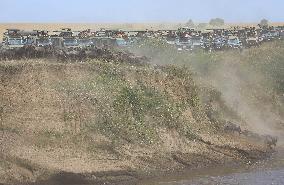
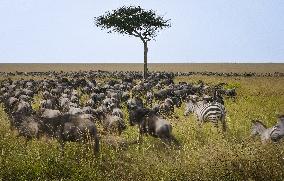
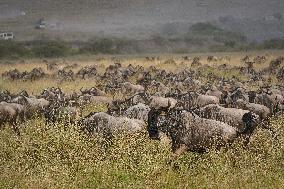
Wildebeests charge toward the Mara River in the Masai Mara National Reserve in Kenya, on July 30, 2025. Starting in July each year, large herds of animals such as wildebeests and zebras migrate from Tanzania's Serengeti National Park to Kenya's Masai Mara National Reserve, forming a spectacular "river of life" across the savannahs and rivers. Photo by Xinhua/Han Xu/ABACAPRESS.COM

  •  
Large Herds of Animals Migrate from Tanzania to Kenya - Nairobi

Large Herds of Animals Migrate from Tanzania to Kenya - Nairobi

Wildebeests charge toward the Mara River in the Masai Mara National Reserve in Kenya, on July 30, 2025. Starting in July each year, large herds of animals such as wildebeests and zebras migrate from Tanzania's Serengeti National Park to Kenya's Masai Mara National Reserve, forming a spectacular "river of life" across the savannahs and rivers. Photo by Xinhua/Han Xu/ABACAPRESS.COM

  •  
Large Herds of Animals Migrate from Tanzania to Kenya - Nairobi

Large Herds of Animals Migrate from Tanzania to Kenya - Nairobi

Wildebeests and zebras feed on the grasslands after successfully crossing the Mara River in the Masai Mara National Reserve in Kenya, on July 30, 2025. Starting in July each year, large herds of animals such as wildebeests and zebras migrate from Tanzania's Serengeti National Park to Kenya's Masai Mara National Reserve, forming a spectacular "river of life" across the savannahs and rivers. Photo by Xinhua/Han Xu/ABACAPRESS.COM

  •  
Large Herds of Animals Migrate from Tanzania to Kenya - Nairobi

Large Herds of Animals Migrate from Tanzania to Kenya - Nairobi

Wildebeests roam the grasslands after successfully crossing the Mara River in the Masai Mara National Reserve in Kenya, on July 30, 2025. Starting in July each year, large herds of animals such as wildebeests and zebras migrate from Tanzania's Serengeti National Park to Kenya's Masai Mara National Reserve, forming a spectacular "river of life" across the savannahs and rivers. Photo by Xinhua/Han Xu/ABACAPRESS.COM

  •  
Large Herds of Animals Migrate from Tanzania to Kenya - Nairobi

Large Herds of Animals Migrate from Tanzania to Kenya - Nairobi

Wildebeests cross the Mara River in the Masai Mara National Reserve in Kenya, on July 30, 2025. Starting in July each year, large herds of animals such as wildebeests and zebras migrate from Tanzania's Serengeti National Park to Kenya's Masai Mara National Reserve, forming a spectacular "river of life" across the savannahs and rivers. Photo by Xinhua/Han Xu/ABACAPRESS.COM

  •  
Large Herds of Animals Migrate from Tanzania to Kenya - Nairobi

Large Herds of Animals Migrate from Tanzania to Kenya - Nairobi

Wildebeests roam the grasslands after successfully crossing the Mara River in the Masai Mara National Reserve in Kenya, on July 30, 2025. Starting in July each year, large herds of animals such as wildebeests and zebras migrate from Tanzania's Serengeti National Park to Kenya's Masai Mara National Reserve, forming a spectacular "river of life" across the savannahs and rivers. Photo by Xinhua/Han Xu/ABACAPRESS.COM

  •  
Large Herds of Animals Migrate from Tanzania to Kenya - Nairobi

Large Herds of Animals Migrate from Tanzania to Kenya - Nairobi

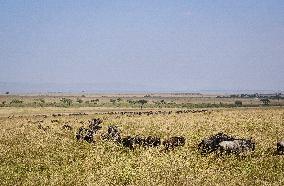
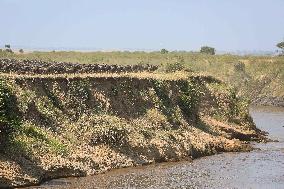
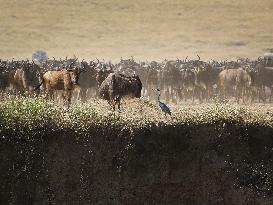
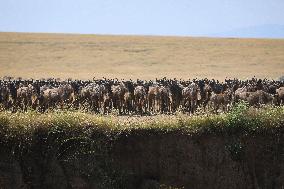
Herds of wildebeests gather and rest by the Mara River, preparing to cross, in the Masai Mara National Reserve in Kenya, on July 30, 2025. Starting in July each year, large herds of animals such as wildebeests and zebras migrate from Tanzania's Serengeti National Park to Kenya's Masai Mara National Reserve, forming a spectacular "river of life" across the savannahs and rivers. Photo by Xinhua/Han Xu/ABACAPRESS.COM

  •  
Large Herds of Animals Migrate from Tanzania to Kenya - Nairobi

Large Herds of Animals Migrate from Tanzania to Kenya - Nairobi

Herds of wildebeests gather and rest by the Mara River, preparing to cross, in the Masai Mara National Reserve in Kenya, on July 30, 2025. Starting in July each year, large herds of animals such as wildebeests and zebras migrate from Tanzania's Serengeti National Park to Kenya's Masai Mara National Reserve, forming a spectacular "river of life" across the savannahs and rivers. Photo by Xinhua/Han Xu/ABACAPRESS.COM

  •  
Large Herds of Animals Migrate from Tanzania to Kenya - Nairobi

Large Herds of Animals Migrate from Tanzania to Kenya - Nairobi

Herds of wildebeests gather and rest by the Mara River, preparing to cross, in the Masai Mara National Reserve in Kenya, on July 30, 2025. Starting in July each year, large herds of animals such as wildebeests and zebras migrate from Tanzania's Serengeti National Park to Kenya's Masai Mara National Reserve, forming a spectacular "river of life" across the savannahs and rivers. Photo by Xinhua/Han Xu/ABACAPRESS.COM

  •  
Large Herds of Animals Migrate from Tanzania to Kenya - Nairobi

Large Herds of Animals Migrate from Tanzania to Kenya - Nairobi

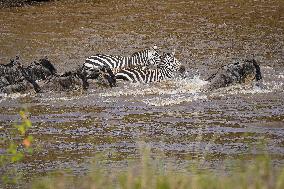
Wildebeests cross the Mara River in the Masai Mara National Reserve in Kenya, on July 30, 2025. Starting in July each year, large herds of animals such as wildebeests and zebras migrate from Tanzania's Serengeti National Park to Kenya's Masai Mara National Reserve, forming a spectacular "river of life" across the savannahs and rivers. Photo by Xinhua/Han Xu/ABACAPRESS.COM

  •  
Large Herds of Animals Migrate from Tanzania to Kenya - Nairobi

Large Herds of Animals Migrate from Tanzania to Kenya - Nairobi

Wildebeests charge toward the Mara River in the Masai Mara National Reserve in Kenya, on July 30, 2025. Starting in July each year, large herds of animals such as wildebeests and zebras migrate from Tanzania's Serengeti National Park to Kenya's Masai Mara National Reserve, forming a spectacular "river of life" across the savannahs and rivers. Photo by Xinhua/Han Xu/ABACAPRESS.COM

  •  
Large Herds of Animals Migrate from Tanzania to Kenya - Nairobi

Large Herds of Animals Migrate from Tanzania to Kenya - Nairobi

Wildebeests and zebras cross the Mara River in the Masai Mara National Reserve in Kenya, on July 30, 2025. Starting in July each year, large herds of animals such as wildebeests and zebras migrate from Tanzania's Serengeti National Park to Kenya's Masai Mara National Reserve, forming a spectacular "river of life" across the savannahs and rivers. Photo by Xinhua/Han Xu/ABACAPRESS.COM

  •  
Large Herds of Animals Migrate from Tanzania to Kenya - Nairobi

Large Herds of Animals Migrate from Tanzania to Kenya - Nairobi

Wildebeests cross the Mara River in the Masai Mara National Reserve in Kenya, on July 30, 2025. Starting in July each year, large herds of animals such as wildebeests and zebras migrate from Tanzania's Serengeti National Park to Kenya's Masai Mara National Reserve, forming a spectacular "river of life" across the savannahs and rivers. Photo by Xinhua/Han Xu/ABACAPRESS.COM

  •  
Tibetan Antelopes Migration - China

Tibetan Antelopes Migration - China

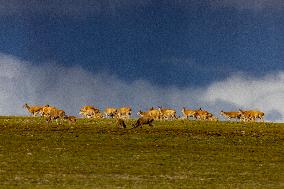
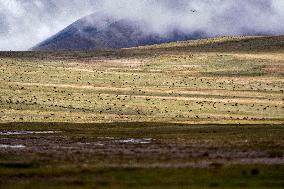
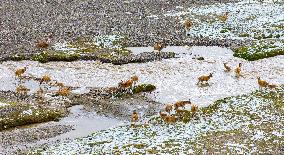
Tibetan antelopes prepare to cross the Senlong Zangbo River in Changtang National Nature Reserve in southwest China's Xizang Autonomous Region, July 14, 2025. The Senlong Zangbo River, located in Changtang National Nature Reserve in Nagqu, is a vital migration route for Tibetan antelopes. Each July, Tibetan antelope calves and their mothers cross the river and migrate to their habitats. Over the past three years, the number of Tibetan antelope migrating across this river has exceeded 150,000 each year. Thanks to effective conservation measures, the number of Tibetan antelopes in Xizang has increased to more than 300,000, according to data from the region's ecology and environment department. Photo by Jiang Fan /Xinhua/ABACAPRESS.COM

  •  
Tibetan Antelopes Migration - China

Tibetan Antelopes Migration - China

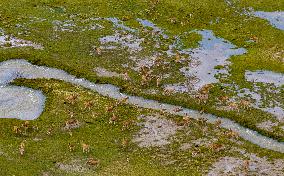
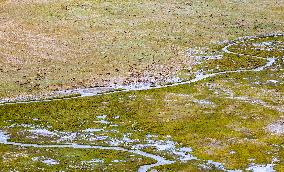
This aerial drone photo shows Tibetan antelopes crossing the Senlong Zangbo River in Changtang National Nature Reserve in southwest China's Xizang Autonomous Region, July 14, 2025. The Senlong Zangbo River, located in Changtang National Nature Reserve in Nagqu, is a vital migration route for Tibetan antelopes. Each July, Tibetan antelope calves and their mothers cross the river and migrate to their habitats. Over the past three years, the number of Tibetan antelope migrating across this river has exceeded 150,000 each year. Thanks to effective conservation measures, the number of Tibetan antelopes in Xizang has increased to more than 300,000, according to data from the region's ecology and environment department. Photo by Jiang Fan /Xinhua/ABACAPRESS.COM

  •  
Tibetan Antelopes Migration - China

Tibetan Antelopes Migration - China

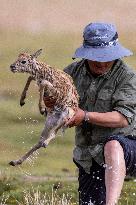
A ranger rescues a stranded Tibetan antelope calf in Changtang National Nature Reserve in southwest China's Xizang Autonomous Region, July 14, 2025. The Senlong Zangbo River, located in Changtang National Nature Reserve in Nagqu, is a vital migration route for Tibetan antelopes. Each July, Tibetan antelope calves and their mothers cross the river and migrate to their habitats. Over the past three years, the number of Tibetan antelope migrating across this river has exceeded 150,000 each year. Thanks to effective conservation measures, the number of Tibetan antelopes in Xizang has increased to more than 300,000, according to data from the region's ecology and environment department. Photo by Jiang Fan /Xinhua/ABACAPRESS.COM

  •  
Tibetan Antelopes Migration - China

Tibetan Antelopes Migration - China

Tibetan antelopes prepare to cross the Senlong Zangbo River in Changtang National Nature Reserve in southwest China's Xizang Autonomous Region, July 15, 2025. The Senlong Zangbo River, located in Changtang National Nature Reserve in Nagqu, is a vital migration route for Tibetan antelopes. Each July, Tibetan antelope calves and their mothers cross the river and migrate to their habitats. Over the past three years, the number of Tibetan antelope migrating across this river has exceeded 150,000 each year. Thanks to effective conservation measures, the number of Tibetan antelopes in Xizang has increased to more than 300,000, according to data from the region's ecology and environment department. Photo by Jiang Fan /Xinhua/ABACAPRESS.COM

  •  
Tibetan Antelopes Migration - China

Tibetan Antelopes Migration - China

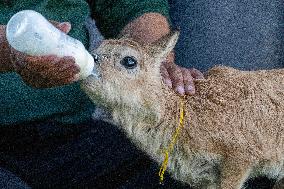
Ngawang Lodro, a staff member at a management station, feeds a Tibetan antelope calf in Changtang National Nature Reserve in southwest China's Xizang Autonomous Region, July 16, 2025. The Senlong Zangbo River, located in Changtang National Nature Reserve in Nagqu, is a vital migration route for Tibetan antelopes. Each July, Tibetan antelope calves and their mothers cross the river and migrate to their habitats. Over the past three years, the number of Tibetan antelope migrating across this river has exceeded 150,000 each year. Thanks to effective conservation measures, the number of Tibetan antelopes in Xizang has increased to more than 300,000, according to data from the region's ecology and environment department. Photo by Jiang Fan /Xinhua/ABACAPRESS.COM

  •  
Tibetan Antelopes Migration - China

Tibetan Antelopes Migration - China

This aerial drone photo taken on July 14, 2025 shows Tibetan antelopes crossing the Senlong Zangbo River in Changtang National Nature Reserve in southwest China's Xizang Autonomous Region. The Senlong Zangbo River, located in Changtang National Nature Reserve in Nagqu, is a vital migration route for Tibetan antelopes. Each July, Tibetan antelope calves and their mothers cross the river and migrate to their habitats. Over the past three years, the number of Tibetan antelope migrating across this river has exceeded 150,000 each year. Thanks to effective conservation measures, the number of Tibetan antelopes in Xizang has increased to more than 300,000, according to data from the region's ecology and environment department. Photo by Jiang Fan /Xinhua/ABACAPRESS.COM

  •  
Tibetan Antelopes Migration - China

Tibetan Antelopes Migration - China

This aerial drone photo shows Tibetan antelopes crossing the Senlong Zangbo River in Changtang National Nature Reserve in southwest China's Xizang Autonomous Region, July 14, 2025. The Senlong Zangbo River, located in Changtang National Nature Reserve in Nagqu, is a vital migration route for Tibetan antelopes. Each July, Tibetan antelope calves and their mothers cross the river and migrate to their habitats. Over the past three years, the number of Tibetan antelope migrating across this river has exceeded 150,000 each year. Thanks to effective conservation measures, the number of Tibetan antelopes in Xizang has increased to more than 300,000, according to data from the region's ecology and environment department. Photo by Jiang Fan /Xinhua/ABACAPRESS.COM

  •  
Oriental White Storks - Fungin

Oriental White Storks - Fungin

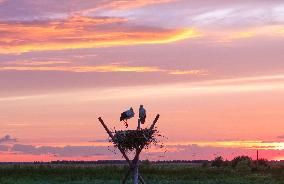
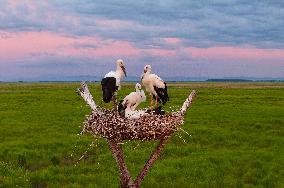
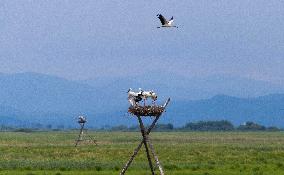
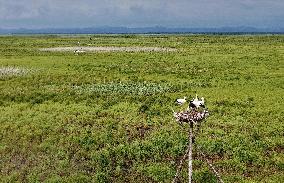
A drone photo taken on July 13, 2025 shows oriental white storks in an artificial nest at Sanhuanpao National Nature Reserve, in Fujin City, northeast China's Heilongjiang Province. Midsummer is the typical fledging season for oriental white stork chicks, which will later leave their parents. The bird species is under first-class national protection in China. Every spring, the birds migrate from the middle and lower reaches of the Yangtze River back to their breeding habitats in northeast China. Photo by Qu Yubao/Xinhua/ABACAPRESS.COM

  •  
Oriental White Storks - Fungin

Oriental White Storks - Fungin

A drone photo taken on July 13, 2025 shows oriental white storks in an artificial nest at Sanhuanpao National Nature Reserve, in Fujin City, northeast China's Heilongjiang Province. Midsummer is the typical fledging season for oriental white stork chicks, which will later leave their parents. The bird species is under first-class national protection in China. Every spring, the birds migrate from the middle and lower reaches of the Yangtze River back to their breeding habitats in northeast China. Photo by Qu Yubao/Xinhua/ABACAPRESS.COM

  •  
Oriental White Storks - Fungin

Oriental White Storks - Fungin

A drone photo taken on July 13, 2025 shows oriental white storks in an artificial nest at Sanhuanpao National Nature Reserve, in Fujin City, northeast China's Heilongjiang Province.. Midsummer is the typical fledging season for oriental white stork chicks, which will later leave their parents. The bird species is under first-class national protection in China. Every spring, the birds migrate from the middle and lower reaches of the Yangtze River back to their breeding habitats in northeast China. Photo by Qu Yubao/Xinhua/ABACAPRESS.COM

  •  
Oriental White Storks - Fungin

Oriental White Storks - Fungin

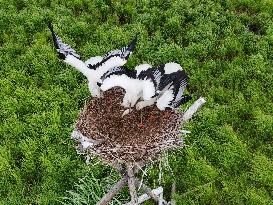
A drone photo taken on July 13, 2025 shows oriental white stork chicks feeding in an artificial nest at Sanhuanpao National Nature Reserve, in Fujin City, northeast China's Heilongjiang Province. Midsummer is the typical fledging season for oriental white stork chicks, which will later leave their parents. The bird species is under first-class national protection in China. Every spring, the birds migrate from the middle and lower reaches of the Yangtze River back to their breeding habitats in northeast China. Photo by Qu Yubao/Xinhua/ABACAPRESS.COM

  •  
Oriental White Storks - Fungin

Oriental White Storks - Fungin

A drone photo taken on July 13, 2025 shows oriental white storks at Sanhuanpao National Nature Reserve, in Fujin City, northeast China's Heilongjiang Province. Midsummer is the typical fledging season for oriental white stork chicks, which will later leave their parents. The bird species is under first-class national protection in China. Every spring, the birds migrate from the middle and lower reaches of the Yangtze River back to their breeding habitats in northeast China. Photo by Qu Yubao/Xinhua/ABACAPRESS.COM

  •  
Hoopoe - France

Hoopoe - France

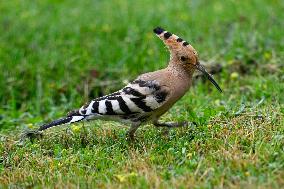
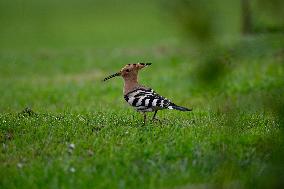
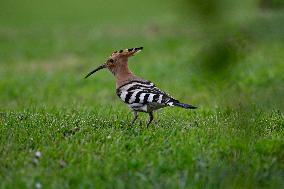
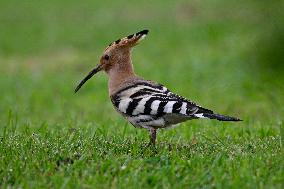
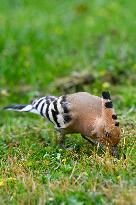
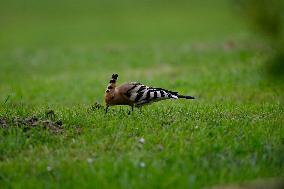
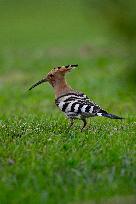
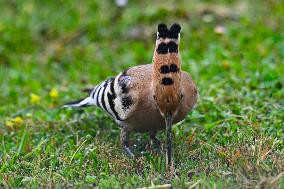
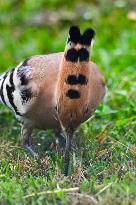
Hoopoe (Upupa epops) is a diurnal bird belonging to the Upupidae family. This migrant can be observed in gardens from the end of February until the end of August when the nesting period is over. It lives mainly in warm, sunny regions of France but also in Europe. It then leaves these geographical areas to migrate to tropical Africa in Payra-sur-l'Hers, France on april 26, 2025. Photo By Marie Hubert Psaila /ABACAPRESS.COM

  •  
Hoopoe - France

Hoopoe - France

Hoopoe (Upupa epops) is a diurnal bird belonging to the Upupidae family. This migrant can be observed in gardens from the end of February until the end of August when the nesting period is over. It lives mainly in warm, sunny regions of France but also in Europe. It then leaves these geographical areas to migrate to tropical Africa in Payra-sur-l'Hers, France on april 26, 2025. Photo By Marie Hubert Psaila /ABACAPRESS.COM

  •  
Hoopoe - France

Hoopoe - France

Hoopoe (Upupa epops) is a diurnal bird belonging to the Upupidae family. This migrant can be observed in gardens from the end of February until the end of August when the nesting period is over. It lives mainly in warm, sunny regions of France but also in Europe. It then leaves these geographical areas to migrate to tropical Africa in Payra-sur-l'Hers, France on april 26, 2025. Photo By Marie Hubert Psaila /ABACAPRESS.COM

  •  
Hoopoe - France

Hoopoe - France

Hoopoe (Upupa epops) is a diurnal bird belonging to the Upupidae family. This migrant can be observed in gardens from the end of February until the end of August when the nesting period is over. It lives mainly in warm, sunny regions of France but also in Europe. It then leaves these geographical areas to migrate to tropical Africa in Payra-sur-l'Hers, France on april 26, 2025. Photo By Marie Hubert Psaila /ABACAPRESS.COM

  •  
Hoopoe - France

Hoopoe - France

Hoopoe (Upupa epops) is a diurnal bird belonging to the Upupidae family. This migrant can be observed in gardens from the end of February until the end of August when the nesting period is over. It lives mainly in warm, sunny regions of France but also in Europe. It then leaves these geographical areas to migrate to tropical Africa in Payra-sur-l'Hers, France on april 26, 2025. Photo By Marie Hubert Psaila /ABACAPRESS.COM

  •  
Hoopoe - France

Hoopoe - France

Hoopoe (Upupa epops) is a diurnal bird belonging to the Upupidae family. This migrant can be observed in gardens from the end of February until the end of August when the nesting period is over. It lives mainly in warm, sunny regions of France but also in Europe. It then leaves these geographical areas to migrate to tropical Africa in Payra-sur-l'Hers, France on april 26, 2025. Photo By Marie Hubert Psaila /ABACAPRESS.COM

  •  
Hoopoe - France

Hoopoe - France

Hoopoe (Upupa epops) is a diurnal bird belonging to the Upupidae family. This migrant can be observed in gardens from the end of February until the end of August when the nesting period is over. It lives mainly in warm, sunny regions of France but also in Europe. It then leaves these geographical areas to migrate to tropical Africa in Payra-sur-l'Hers, France on april 26, 2025. Photo By Marie Hubert Psaila /ABACAPRESS.COM

  •  
Hoopoe - France

Hoopoe - France

Hoopoe (Upupa epops) is a diurnal bird belonging to the Upupidae family. This migrant can be observed in gardens from the end of February until the end of August when the nesting period is over. It lives mainly in warm, sunny regions of France but also in Europe. It then leaves these geographical areas to migrate to tropical Africa in Payra-sur-l'Hers, France on april 26, 2025. Photo By Marie Hubert Psaila /ABACAPRESS.COM

  •  
Hoopoe - France

Hoopoe - France

Hoopoe (Upupa epops) is a diurnal bird belonging to the Upupidae family. This migrant can be observed in gardens from the end of February until the end of August when the nesting period is over. It lives mainly in warm, sunny regions of France but also in Europe. It then leaves these geographical areas to migrate to tropical Africa in Payra-sur-l'Hers, France on april 26, 2025. Photo By Marie Hubert Psaila /ABACAPRESS.COM

  •  
Ethiopia Tigray in Crisis

Ethiopia Tigray in Crisis

Twelve-year-old Hana stands in the doorway of a classroom where she has lived since 2020 at an IDP centre in Adwa, Ethiopia on March 27, 2025. Though she treasures the books hidden under her bed, hunger constantly interrupts her studies. Her 17-year-old sister, Helen, was imprisoned in Libya after attempting to migrate to Europ, leaving Hana waiting, unaware she may never return. Photo by Middle East Images/ABACAPRESS.COM

  • Main
  • Top
  • Editorial
  • Creative
  • About Us
  • About ILG
  • Terms of use
  • Company
  • BEHIND
  • Price List
  • Single Plan
  • Monthly Plan
  • Services
  • Shooting
  • Rights Clearance
  • Support
  • FAQ
  • How To Buy
  • Contact Us
  • Become a Partner

© KYODO NEWS IMAGES INC

All Rights Reserved.

  • Editorial
  • Olympics
  • News
  • Sports
  • Japan
  • Tech
  • Royal
  • Disaster
  • NorthKorea
  • Old Japan
  • SNS
  • Creative
  • Food
  • Japan
  • Landscape
  • Animal
  • Popular
  • #Ukraine
  • #Russia
  • #coronavirus
  • #N. Korea
  • #China
  • #Thailand
  • #Ukraine
  • #Russia
  • #coronavirus
  • #N. Korea
  • #China
  • #Thailand
  • Food
  • Japan
  • Landscape
  • Animal
  • Olympics
  • News
  • Sports
  • Japan
  • Tech
  • Royal
  • Disaster
  • NorthKorea
  • Old Japan
  • SNS