•  

China: Young Shepherd Boy Carries Lamb Across Stream in Guizhou

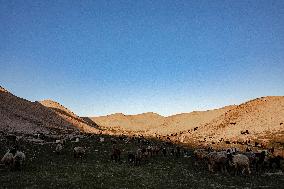
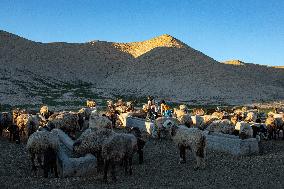
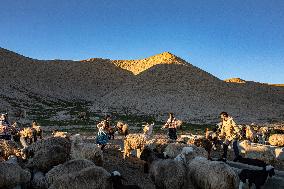
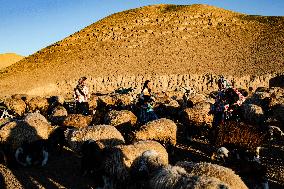
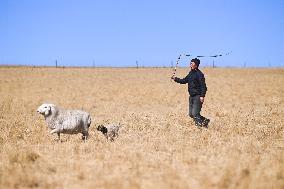
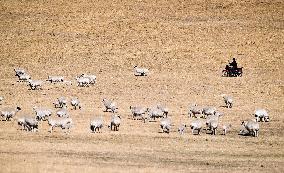
On April 6, 2026, in Bijie, Guizhou, a video captured a ten-year-old shepherd boy carefully stepping across a stream using scattered stones while holding a lamb securely in his arms. The boy moved slowly to keep his balance, showing patience and care as he ensured the young animal stayed safe from the flowing water. Behind him, the lamb’s mother trailed closely, appearing attentive and unwilling to leave her offspring, while a small dog accompanied them, adding to the pastoral scene.

  •  
Sheep form Chinese character for snake

Sheep form Chinese character for snake

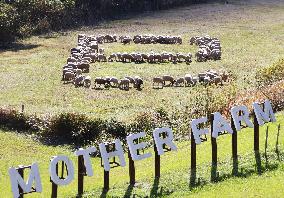
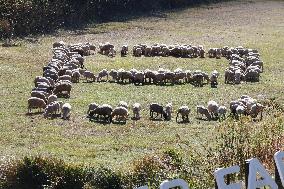
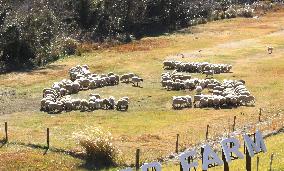
Sheep form the Chinese character for "snake" at the Mother Farm animal-themed park in Futtsu in Chiba Prefecture, eastern Japan, on Dec. 1, 2024, ahead of the start of the 2025 Year of the Snake in the Chinese zodiac.

  •  
Sheep form Chinese character for snake

Sheep form Chinese character for snake

Sheep form the Chinese character for "snake" at the Mother Farm animal-themed park in Futtsu in Chiba Prefecture, eastern Japan, on Dec. 1, 2024, ahead of the start of the 2025 Year of the Snake in the Chinese zodiac.

  •  

Traumatized Iraqi child struggles to overcome hardships after years of war

STORY: Traumatized Iraqi child struggles to overcome hardships after years of war SHOOTING TIME: Earlier footage DATELINE: June 1, 2024 LENGTH: 00:02:56 LOCATION: SALAHUDIN, Iraq CATEGORY: SOCIETY SHOTLIST: 1. various of Hathal Sabbar herding sheep 2. SOUNDBITE 1 (Arabic): HATHAL SABBAR, Iraqi child 3. SOUNDBITE 2 (Arabic): OUD, Local resident STORYLINE: Iraqi children have been struggling to escape the impacts of violence, displacement, and terrorism that swept the country following the U.S.-led invasion of Iraq in 2003. 10-year-old Hathal Sabbar living in the town of al-Dhuluiya in north Baghdad is one of them. Sabbar has suffered from poverty and insufficient education after his father was killed and his three uncles kidnapped by the Islamic State (IS) militants days after his birth. Not long after the death of his father, Sabbar's mother left home, which made his life even harder. He is now in the third grade of primary school, which is about 7 km from his home. Sabbar also needs to herd t

  •  
(InXizang)CHINA-XIZANG-FORMER SERF-NEW LIFE-SICHOD WANGMO (CN)

(InXizang)CHINA-XIZANG-FORMER SERF-NEW LIFE-SICHOD WANGMO (CN)

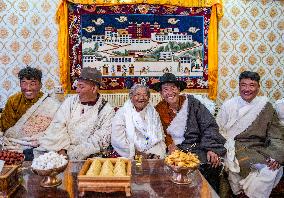
(240329) -- LHASA, March 29, 2024 (Xinhua) -- Sichod Wangmo (C) celebrates the Tibetan New Year with her family in Jiagen Village in Damxung County of Lhasa, southwest China's Xizang Autonomous Region, Feb. 10, 2024. Sichod Wangmo, 85, is a resident of Jiagen Village in Damxung County of Lhasa, southwest China's Xizang Autonomous Region. In old Xizang, Sichod Wangmo was a serf. Her mother passed away when she was very young. Young Sichod Wangmo made a living with her grandma by pasturing for a serf owner. They didn't have their own cattle and sheep, but they still needed to pay various taxes which were too high for them to afford. In March 1959, people in Xizang launched the democratic reform that ended the region's feudal serfdom. Sichod Wangmo felt her life was turning on a new page since she was allocated five yaks by the government. Now, Sichod Wangmo's family has grown into a big one with four generations of over 100 members. This year, Sichod Wangmo's family members came together for a reunio

  •  
(InXizang)CHINA-XIZANG-FORMER SERF-NEW LIFE-SICHOD WANGMO (CN)

(InXizang)CHINA-XIZANG-FORMER SERF-NEW LIFE-SICHOD WANGMO (CN)

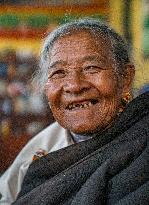
(240329) -- LHASA, March 29, 2024 (Xinhua) -- This photo taken on March 13, 2024 shows a portrait of Sichod Wangmo. Sichod Wangmo, 85, is a resident of Jiagen Village in Damxung County of Lhasa, southwest China's Xizang Autonomous Region. In old Xizang, Sichod Wangmo was a serf. Her mother passed away when she was very young. Young Sichod Wangmo made a living with her grandma by pasturing for a serf owner. They didn't have their own cattle and sheep, but they still needed to pay various taxes which were too high for them to afford. In March 1959, people in Xizang launched the democratic reform that ended the region's feudal serfdom. Sichod Wangmo felt her life was turning on a new page since she was allocated five yaks by the government. Now, Sichod Wangmo's family has grown into a big one with four generations of over 100 members. This year, Sichod Wangmo's family members came together for a reunion to celebrate the Tibetan New Year in Jiagen Village. Surrounded by her loved ones, Sichod Wangmo ch

  •  
(InXizang)CHINA-XIZANG-FORMER SERF-NEW LIFE-SICHOD WANGMO (CN)

(InXizang)CHINA-XIZANG-FORMER SERF-NEW LIFE-SICHOD WANGMO (CN)

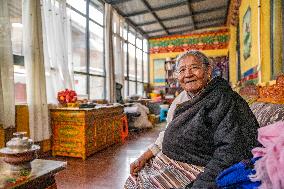
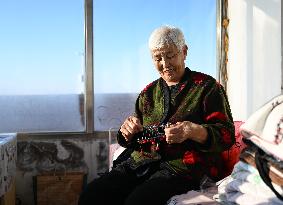
(240329) -- LHASA, March 29, 2024 (Xinhua) -- Sichod Wangmo is pictured at her home in Jiagen Village in Damxung County of Lhasa, southwest China's Xizang Autonomous Region, March 13, 2024. Sichod Wangmo, 85, is a resident of Jiagen Village in Damxung County of Lhasa, southwest China's Xizang Autonomous Region. In old Xizang, Sichod Wangmo was a serf. Her mother passed away when she was very young. Young Sichod Wangmo made a living with her grandma by pasturing for a serf owner. They didn't have their own cattle and sheep, but they still needed to pay various taxes which were too high for them to afford. In March 1959, people in Xizang launched the democratic reform that ended the region's feudal serfdom. Sichod Wangmo felt her life was turning on a new page since she was allocated five yaks by the government. Now, Sichod Wangmo's family has grown into a big one with four generations of over 100 members. This year, Sichod Wangmo's family members came together for a reunion to celebrate the Tibetan

  •  
(InXizang)CHINA-XIZANG-FORMER SERF-NEW LIFE-SICHOD WANGMO (CN)

(InXizang)CHINA-XIZANG-FORMER SERF-NEW LIFE-SICHOD WANGMO (CN)

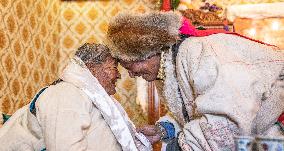
(240329) -- LHASA, March 29, 2024 (Xinhua) -- Sichod Wangmo (L) and a family member greet each other in Jiagen Village in Damxung County of Lhasa, southwest China's Xizang Autonomous Region, Feb. 10, 2024. Sichod Wangmo, 85, is a resident of Jiagen Village in Damxung County of Lhasa, southwest China's Xizang Autonomous Region. In old Xizang, Sichod Wangmo was a serf. Her mother passed away when she was very young. Young Sichod Wangmo made a living with her grandma by pasturing for a serf owner. They didn't have their own cattle and sheep, but they still needed to pay various taxes which were too high for them to afford. In March 1959, people in Xizang launched the democratic reform that ended the region's feudal serfdom. Sichod Wangmo felt her life was turning on a new page since she was allocated five yaks by the government. Now, Sichod Wangmo's family has grown into a big one with four generations of over 100 members. This year, Sichod Wangmo's family members came together for a reunion to celebr

  •  
(InXizang)CHINA-XIZANG-FORMER SERF-NEW LIFE-SICHOD WANGMO (CN)

(InXizang)CHINA-XIZANG-FORMER SERF-NEW LIFE-SICHOD WANGMO (CN)

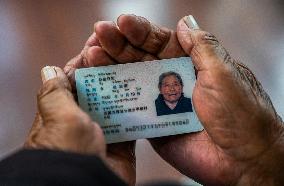
(240329) -- LHASA, March 29, 2024 (Xinhua) -- This photo taken on March 13, 2024 shows the ID card of Sichod Wangmo. Sichod Wangmo, 85, is a resident of Jiagen Village in Damxung County of Lhasa, southwest China's Xizang Autonomous Region. In old Xizang, Sichod Wangmo was a serf. Her mother passed away when she was very young. Young Sichod Wangmo made a living with her grandma by pasturing for a serf owner. They didn't have their own cattle and sheep, but they still needed to pay various taxes which were too high for them to afford. In March 1959, people in Xizang launched the democratic reform that ended the region's feudal serfdom. Sichod Wangmo felt her life was turning on a new page since she was allocated five yaks by the government. Now, Sichod Wangmo's family has grown into a big one with four generations of over 100 members. This year, Sichod Wangmo's family members came together for a reunion to celebrate the Tibetan New Year in Jiagen Village. Surrounded by her loved ones, Sichod Wangmo c

  •  
(InXizang)CHINA-XIZANG-FORMER SERF-NEW LIFE-SICHOD WANGMO (CN)

(InXizang)CHINA-XIZANG-FORMER SERF-NEW LIFE-SICHOD WANGMO (CN)

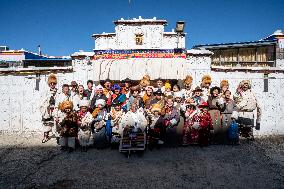
(240329) -- LHASA, March 29, 2024 (Xinhua) -- Sichod Wangmo (C, front) poses for a group photo with her family in Jiagen Village in Damxung County of Lhasa, southwest China's Xizang Autonomous Region, Feb. 10, 2024. Sichod Wangmo, 85, is a resident of Jiagen Village in Damxung County of Lhasa, southwest China's Xizang Autonomous Region. In old Xizang, Sichod Wangmo was a serf. Her mother passed away when she was very young. Young Sichod Wangmo made a living with her grandma by pasturing for a serf owner. They didn't have their own cattle and sheep, but they still needed to pay various taxes which were too high for them to afford. In March 1959, people in Xizang launched the democratic reform that ended the region's feudal serfdom. Sichod Wangmo felt her life was turning on a new page since she was allocated five yaks by the government. Now, Sichod Wangmo's family has grown into a big one with four generations of over 100 members. This year, Sichod Wangmo's family members came together for a reunion

  •  
CHINA-INNER MONGOLIA-HULUN BUIR-HERDSMEN-HORSE RACING (CN)

CHINA-INNER MONGOLIA-HULUN BUIR-HERDSMEN-HORSE RACING (CN)

(231222) -- HULUN BUIR, Dec. 22, 2023 (Xinhua) -- Erdendalai's mother Surenhwara plays puzzle games at home in Hulun Buir, north China's Inner Mongolia Autonomous Region, Dec. 16, 2023. Winter usually means challenges for herdsmen living on the grasslands. Severe cold and snow always affect their daily life. But for Erdendalai, a herdsman living in Hulun Buir, winter is still a busy season. In addition to taking care of more than 200 heads of cattle, sheep and horses he owns, Erdendalai also enjoys an important activity of horse racing. Horses have always been a reliable means of transportation and an indispensable partner in the life of herdsmen in Hulun Buir. Erdendalai was once an excellent horse racer, with medals and trophies all over his home. As years gone by, he became a horse trainer and took on an 17-year-old apprentice Nairag. This winter, Nairag and his schoolmate Ijil signed up to participate in the 20th Ice and Snow Nadam fair of the Inner Mongolia Autonomous Region. Erdendalai was a

  •  
(InTibet)CHINA-XIZANG-DAMXUNG-WINTER PASTURE-HERDER-LIFE (CN)

(InTibet)CHINA-XIZANG-DAMXUNG-WINTER PASTURE-HERDER-LIFE (CN)

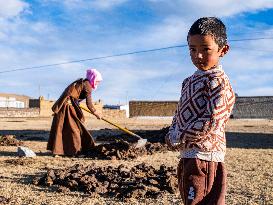
(231113) -- LHASA, Nov. 13, 2023 (Xinhua) -- A boy helps his mother make cow dung cakes to be used as heating fuel at a winter pasture in Dabug Village of Damxung County, southwest China's Xizang Autonomous Region, Nov. 10, 2023. The county of Damxung, meaning "carefully selected pasture" in Tibetan language, is located at the southern foothill of the Nyainqentanglha Range, with an average elevation of about 4,200 meters. Each September, 33-year-old villager Yonten and other herders migrate north to the lower winter pastures, to escape from the extreme cold and oxygen deficit on the plateau. With the implementation of the housing project for farmers and herders in Xizang in recent years, shelters made of brick and stone, movable board houses that have replaced yak hair tents, along with the upgraded facilities of electricity and water supply, have made grassland life much easier at the winter pastures. As the owner of more than 100 yaks and over 200 sheep, Yonten's annual income is expected to reac

  •  
The Kurds of Khorasan - Iran

The Kurds of Khorasan - Iran

Asmar and his daughter Faezeh are carrying newborn lambs that are kept separate and away from the mother sheep. They are one of the Kurdish nomadic families of Kermanj who were forced to migrate from their homeland to these areas to protect the eastern borders of Iran, and during this period they lost many of their cultural characteristics and behaviors. They are animal husbandry now and still speak Kurdish, but the clothes they wear are no longer Kurdish and their behaviors have completely changed and most of them do not even know where their original birthplace was. Golestan, Iran, March 2, 2022. Photo by Younes Mohammad/Middle East Images/ABACAPRESS.COM

  •  
The Kurds of Khorasan - Iran

The Kurds of Khorasan - Iran

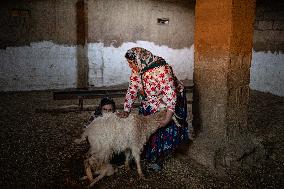
Asmar and her daughter Faezeh are breastfeeding a newborn lamb that are kept separate and away from the mother sheep. They are one of the Kurdish nomadic families of Kermanj who were forced to migrate from their homeland to these areas to protect the eastern borders of Iran, and during this period they lost many of their cultural characteristics and behaviors. They are animal husbandry now and still speak Kurdish, but the clothes they wear are no longer Kurdish and their behaviors have completely changed and most of them do not even know where their original birthplace was. Golestan, Iran, February 2, 2022. Photo by Younes Mohammad/Middle East Images/ABACAPRESS.COM

  •  
The Kurds of Khorasan - Iran

The Kurds of Khorasan - Iran

A view of the around Hadi's house that mother and lactating sheep are breastfeeding newborn lambs that are kept separate and away from the herd. They are one of the Kurdish nomadic families of Kermanj who were forced to migrate from their homeland to these areas to protect the eastern borders of Iran, and during this period they lost many of their cultural characteristics and behaviors. They are animal husbandry now and still speak Kurdish, but the clothes they wear are no longer Kurdish and their behaviors have completely changed and most of them do not even know where their original birthplace was. Golestan, Iran, February 2, 2022. Photo by Younes Mohammad/Middle East Images/ABACAPRESS.COM

  •  
The Kurds of Khorasan - Iran

The Kurds of Khorasan - Iran

Hadi's daughters are looking for mother and lactating sheep to breastfeeding newborn lambs that are kept separate and away from the herd. They are one of the Kurdish nomadic families of Kermanj who were forced to migrate from their homeland to these areas to protect the eastern borders of Iran, and during this period they lost many of their cultural characteristics and behaviors. They are animal husbandry now and still speak Kurdish, but the clothes they wear are no longer Kurdish and their behaviors have completely changed and most of them do not even know where their original birthplace was. Golestan, Iran, February 2, 2022. Photo by Younes Mohammad/Middle East Images/ABACAPRESS.COM

  •  
The Kurds of Khorasan - Iran

The Kurds of Khorasan - Iran

Hadi and his family are looking for mother and lactating sheep to breastfeeding newborn lambs that are kept separate and away from the herd. They are one of the Kurdish nomadic families of Kermanj who were forced to migrate from their homeland to these areas to protect the eastern borders of Iran, and during this period they lost many of their cultural characteristics and behaviors. They are animal husbandry now and still speak Kurdish, but the clothes they wear are no longer Kurdish and their behaviors have completely changed and most of them do not even know where their original birthplace was. Golestan, Iran, February 2, 2022. Photo by Younes Mohammad/Middle East Images/ABACAPRESS.COM

  •  
The Kurds of Khorasan - Iran

The Kurds of Khorasan - Iran

Hadi's family are looking for mother and lactating sheep to breastfeeding newborn lambs that are kept separate and away from the herd. They are one of the Kurdish nomadic families of Kermanj who were forced to migrate from their homeland to these areas to protect the eastern borders of Iran, and during this period they lost many of their cultural characteristics and behaviors. They are animal husbandry now and still speak Kurdish, but the clothes they wear are no longer Kurdish and their behaviors have completely changed and most of them do not even know where their original birthplace was. Golestan, Iran, February 2, 2022. Photo by Younes Mohammad/Middle East Images/ABACAPRESS.COM

  •  
The Kurds of Khorasan - Iran

The Kurds of Khorasan - Iran

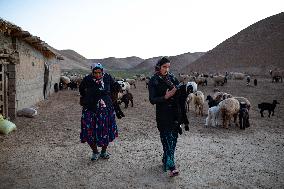
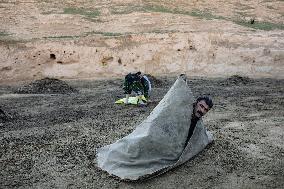
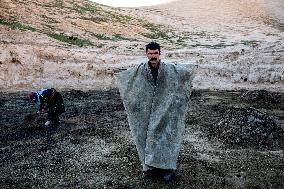
Hadi, dressed in a special cloak, is standing in the sheep pen at night while his mother is cleaning the place to get the herd back from grazing. Hadi or another member of his family must sleep among the sheep at night to protect them, and for this purpose they have prepared special cloak to keep them warm. They are one of the Kurdish nomadic families of Kermanj who were forced to migrate from their homeland to these areas to protect the eastern borders of Iran, and during this period they lost many of their cultural characteristics and behaviors. They are animal husbandry now and still speak Kurdish, but the clothes they wear are no longer Kurdish and their behaviors have completely changed and most of them do not even know where their original birthplace was. Golestan, Iran, February 2, 2022. Photo by Younes Mohammad/Middle East Images/ABACAPRESS.COM

  •  
The Kurds of Khorasan - Iran

The Kurds of Khorasan - Iran

Hadi, dressed in a special cloak, is standing in the sheep pen at night while his mother is cleaning the place to get the herd back from grazing. Hadi or another member of his family must sleep among the sheep at night to protect them, and for this purpose they have prepared special cloak to keep them warm. They are one of the Kurdish nomadic families of Kermanj who were forced to migrate from their homeland to these areas to protect the eastern borders of Iran, and during this period they lost many of their cultural characteristics and behaviors. They are animal husbandry now and still speak Kurdish, but the clothes they wear are no longer Kurdish and their behaviors have completely changed and most of them do not even know where their original birthplace was. Golestan, Iran, February 2, 2022. Photo by Younes Mohammad/Middle East Images/ABACAPRESS.COM

  •  
CHINA-QINGHAI-GRASSLAND-SHEPHERD FAMILY (CN)

CHINA-QINGHAI-GRASSLAND-SHEPHERD FAMILY (CN)

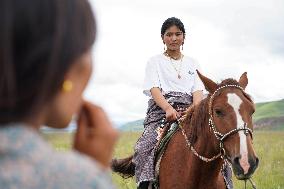
(230914) -- XINING, Sept. 14, 2023 (Xinhua) -- Tashi Choepel's daughter Rinchen Dolma (R) talks with her mother in Duosong Village, Huangnan Tibetan Autonomous Prefecture, northwest China's Qinghai Province, Aug. 17, 2023. Shepherd Tashi Choepel, 41 years old, lives with his wife, son and daughter in Duosong Village in the center of the Hequ Grassland, which is located along the Yellow River bordering northwest China's Qinghai and Gansu provinces and southwest China's Sichuan Province. He raises over 300 cattle and 400 plus sheep in his pasturage. His wife Dougekyi and daughter Rinchen Dolma milk them after breakfast everyday. The milk can bring about 300 yuan (about 41.3 U.S. dollars) per day for the family when the production and market are fine. The family will move to their winter pasturage in October. When his wife milks, Tashi Choepel will graze on horse or on motorcycle. With stable public order, he has no need to worry about the stealing of his livestock. His major problem comes with the wo

  •  

Video captures blue sheep breastfeeding cub in NW China

STORY: Video captures blue sheep breastfeeding cub in NW China DATELINE: July 20, 2023 LENGTH: 00:00:34 LOCATION: YINCHUAN, China CATEGORY: ENVIRONMENT SHOTLIST: 1. various of cliffs and blue sheep STORYLINE: A video clip recently recorded in Helan Mountain in northwest China's Ningxia Hui Autonomous Region showed a blue sheep mother breastfeeding her cub on a steep rock face. The blue sheep are under national protection in China and usually reside in areas with bare rocks about 2,100 meters to 6,300 meters above sea level in northwest and southwest China. Xinhua News Agency correspondents reporting from Yinchuan, China. (XHTV)

  •  
CHINA-INNER MONGOLIA-XILINGOL LEAGUE-ECONOMY-LIVESTOCK(CN)

CHINA-INNER MONGOLIA-XILINGOL LEAGUE-ECONOMY-LIVESTOCK(CN)

(230403) -- XILINGOL LEAGUE, April 3, 2023 (Xinhua) -- Herdsman Tsogdelger herds sheep in the pasture to make sure each lamb can find its mother for enough milk in West Ujimqin Banner of Xilingol League, north China's Inner Mongolia Autonomous Region, March 29, 2023. In spring, the busiest season of the year, Tsogdelger, a herdsman of the Mongolian ethnic group, and his family need to assist with lambing and feed livestock every day. More than 280 lambs have been born in his farm since March 18. From the beginning of this year until March 30, a total of 581,300 offspring were born in West Ujimqin Banner, including 100,900 large livestock and 480,400 small livestock, with a survival rate of 99.18%. (Xinhua/Bei He)

  •  
CHINA-INNER MONGOLIA-XILINGOL LEAGUE-ECONOMY-LIVESTOCK(CN)

CHINA-INNER MONGOLIA-XILINGOL LEAGUE-ECONOMY-LIVESTOCK(CN)

(230403) -- XILINGOL LEAGUE, April 3, 2023 (Xinhua) -- Herdsman Tsogdelger herds sheep in the pasture to make sure each lamb can find its mother for eating enough milk in West Ujimqin Banner of Xilingol League, north China's Inner Mongolia Autonomous Region, March 29, 2023. In spring, the busiest season of the year, Tsogdelger, a herdsman of the Mongolian ethnic group, and his family need to assist with lambing and feed livestock every day. More than 280 lambs have been born in his farm since March 18. From the beginning of this year until March 30, a total of 581,300 offspring were born in West Ujimqin Banner, including 100,900 large livestock and 480,400 small livestock, with a survival rate of 99.18%. (Xinhua/Bei He)

  •  
Mother sheep stroll on snow-covered ground in Sapporo

Mother sheep stroll on snow-covered ground in Sapporo

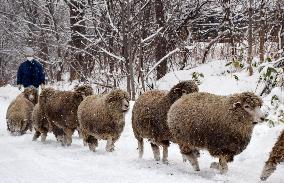
SAPPORO, Japan - A total of 32 mother sheep, including 13 pregnant sheep, walk on snow-covered ground of the National Agriculture and Food Research Organization in Sapporo, Hokkaido, on Dec. 25, 2014. They took a 1-kilometer, 15-minute walk to make up for a lack of exercise. The sheep will continue their walk in the snow almost every day until February.

  •  
Tourist attraction lights up to welcome Year of Sheep

Tourist attraction lights up to welcome Year of Sheep

CHIBA, Japan - Colorful illumination adorns a pasture at Mother Farm, a tourist attraction in Futtsu, Chiba Prefecture, east of Tokyo, on Dec. 17, 2014, under the theme "sheep carnival" to welcome the Year of the Sheep in 2015 according to the Chinese zodiac. The illumination event will run through Feb. 1, 2015.

  •  
CHINA-XINJIANG-TURPAN-JIAOHE ANCIENT CITY-CONSERVATORS (CN)

CHINA-XINJIANG-TURPAN-JIAOHE ANCIENT CITY-CONSERVATORS (CN)

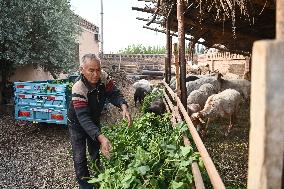
(220526) -- URUMQI, May 26, 2022 (Xinhua) -- Maiming Reheman feeds sheep in Turpan, northwest China's Xinjiang Uygur Autonomous Region, May 20, 2022. Gulibekge Maiming Reheman is a conservator of the cultural treasure trove of Jiaohe Ruins, the world's biggest and best-preserved relics of a clay-built city in Turpan, northwest China's Xinjiang Uygur Autonomous Region. Since 1972, Gulibekge's grandfather, father, and now herself have been devoted to the protection of the ancient city of Jiaohe. They have lived, worked and raised their children here, forming a deep bond with this city of over 2,000 years old, while espying the splendid and diverse history and culture of Xinjiang. Gulibekge, the family's third-generation cultural relics conservator in Jiaohe, has been inspired by her grandfather and father. She majored in history and cultural relics protection for her undergraduate and postgraduate studies respectively and returned to her hometown after graduation. Gulibekge is now the mother of two c

  •  
NORTH MACEDONIA-SKOPJE-ZOO-CUBS

NORTH MACEDONIA-SKOPJE-ZOO-CUBS

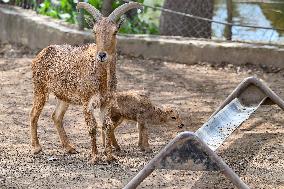
(220407) -- SKOPJE, April 7, 2022 (Xinhua) -- A newborn barbary sheep walks with its mother at the Zoo of Skopje in Skopje, North Macedonia, April 7, 2022. The Zoo of Skopje is experiencing a "baby boom" these days, with the birth of more than 30 offsprings of different species. (Photo by Tomislav Georgiev/Xinhua)

  •  
Sheep form hiragana for tiger

Sheep form hiragana for tiger

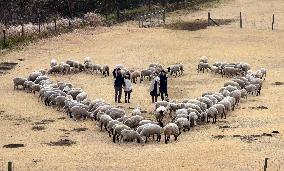
About 200 sheep form hiragana for "tora," meaning tiger, at Mother Farm in the Chiba Prefecture city of Futtsu, eastern Japan, on Dec. 19, 2021, ahead of the 2022 Year of the Tiger in the Chinese zodiac.

  •  
Valentine's Day event at Japanese farm

Valentine's Day event at Japanese farm

A flock of sheep surround couples in a heart shape during an event at Mother Farm in Futtsu, south of Tokyo, on Feb. 11, 2016, prior to Valentine's Day. In the event until Feb. 14, feed is placed on the ground so that the around 150 sheep quickly form a heart shape. (Kyodo) ==Kyodo

  •  
Mother, daughter pose by stuffed sheep in Beijing park

Mother, daughter pose by stuffed sheep in Beijing park

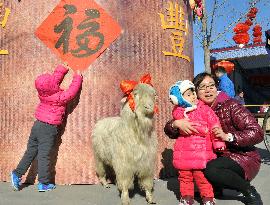
A Chinese mother and her daughter pose by a stuffed sheep in Beijing's Ditan Park on Feb. 18, 2015, at the start of the Chinese Lunar New Year holiday season. According to the Chinese zodiac, 2015 is the Year of the Sheep. (Kyodo) ==Kyodo

  •  
Mother sheep stroll on snow-covered ground in Sapporo

Mother sheep stroll on snow-covered ground in Sapporo

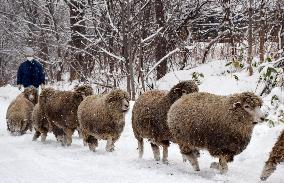
SAPPORO, Japan - A total of 32 mother sheep, including 13 pregnant sheep, walk on snow-covered ground of the National Agriculture and Food Research Organization in Sapporo, Hokkaido, on Dec. 25, 2014. They took a 1-kilometer, 15-minute walk to make up for a lack of exercise. The sheep will continue their walk in the snow almost every day until February. (Kyodo)

  •  
Tourist attraction lights up to welcome Year of Sheep

Tourist attraction lights up to welcome Year of Sheep

CHIBA, Japan - Colorful illumination adorns a pasture at Mother Farm, a tourist attraction in Futtsu, Chiba Prefecture, east of Tokyo, on Dec. 17, 2014, under the theme "sheep carnival" to welcome the Year of the Sheep in 2015 according to the Chinese zodiac. The illumination event will run through Feb. 1, 2015. (Kyodo)

  •  
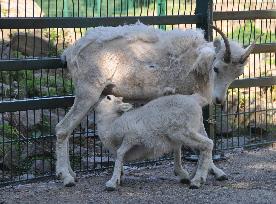
Dall sheep, thinhorn sheep (Ovis dalli), lamb

Dall sheep, thinhorn sheep (Ovis dalli), lamb

A lamb of dall sheep (Ovis dalli) is seen with mother in the Pilsen Zoo, Czech Republic, on July 24, 2019. (CTK Photo/Lada Peskova)

  •  
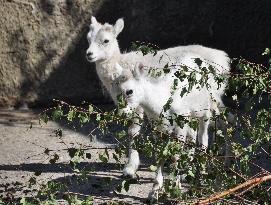
Dall sheep, thinhorn sheep (Ovis dalli), lamb, lambs

Dall sheep, thinhorn sheep (Ovis dalli), lamb, lambs

A lambs of dall sheep (Ovis dalli) are seen with mother in the Pilsen Zoo, Czech Republic, on July 24, 2019. (CTK Photo/Lada Peskova)

  •  
Japan's new era under Emperor Naruhito

Japan's new era under Emperor Naruhito

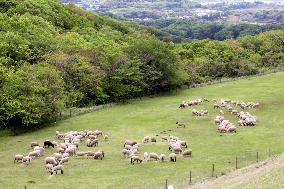
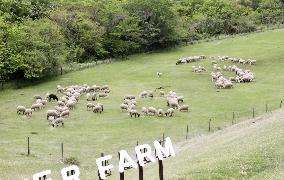
About 150 sheep form the Chinese characters for Reiwa, the name of Japan's new imperial era, at Mother Farm in Futtsu, Chiba Prefecture, on May 1, 2019, the first day of the era. (Kyodo) ==Kyodo

  •  
Japan's new era under Emperor Naruhito

Japan's new era under Emperor Naruhito

About 150 sheep form the Chinese characters for Reiwa, the name of Japan's new imperial era, at Mother Farm in Futtsu, Chiba Prefecture, on May 1, 2019, the first day of the era. (Kyodo) ==Kyodo

  • Main
  • Top
  • Editorial
  • Creative
  • About Us
  • About ILG
  • Terms of use
  • Company
  • BEHIND
  • Price List
  • Single Plan
  • Monthly Plan
  • Services
  • Shooting
  • Rights Clearance
  • Support
  • FAQ
  • How To Buy
  • Contact Us
  • Become a Partner

© KYODO NEWS IMAGES INC

All Rights Reserved.

  • Editorial
  • Olympics
  • News
  • Sports
  • Japan
  • Tech
  • Royal
  • Disaster
  • NorthKorea
  • Old Japan
  • SNS
  • Creative
  • Food
  • Japan
  • Landscape
  • Animal
  • Popular
  • #Ukraine
  • #Thailand
  • #coronavirus
  • #N. Korea
  • #Russia
  • #China
  • #Ukraine
  • #Thailand
  • #coronavirus
  • #N. Korea
  • #Russia
  • #China
  • Food
  • Japan
  • Landscape
  • Animal
  • Olympics
  • News
  • Sports
  • Japan
  • Tech
  • Royal
  • Disaster
  • NorthKorea
  • Old Japan
  • SNS